

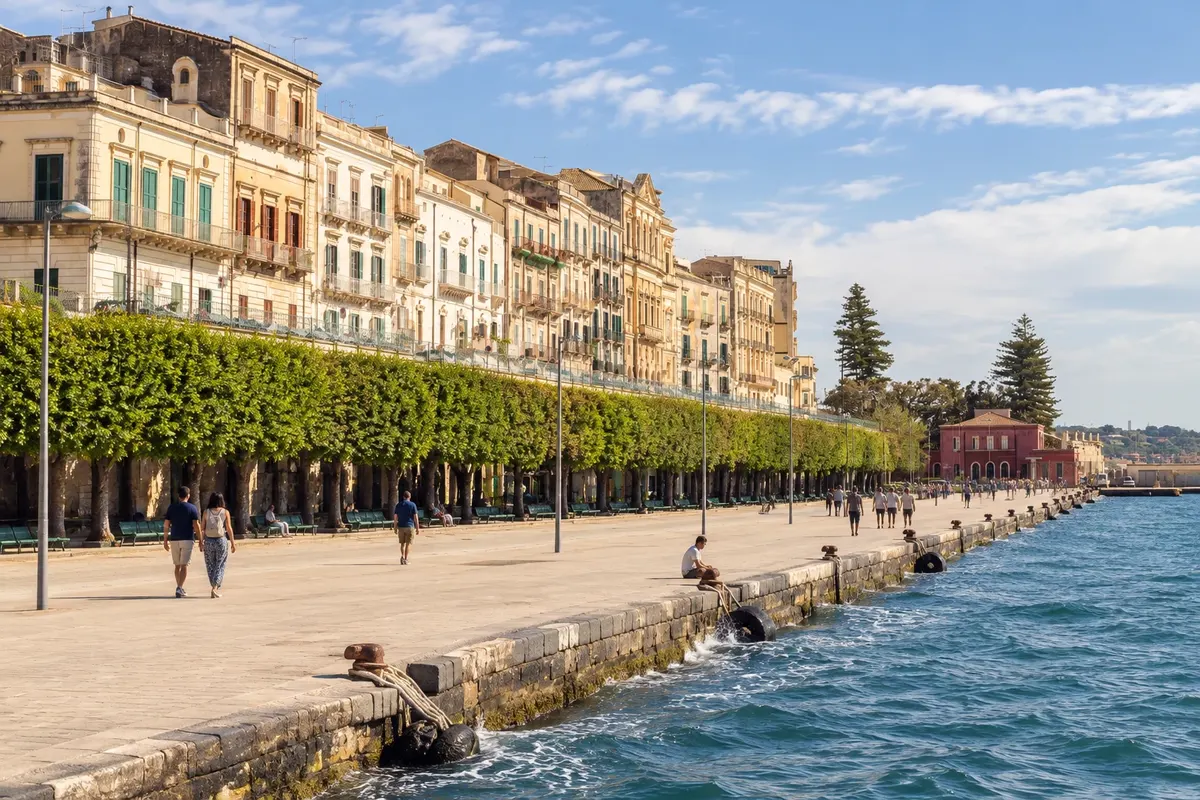
Zgodovinska mestna četrt
Ortigia
The island where Siracusa was founded, with narrow streets, Baroque palaces, the Temple of Apollo, the street market, the seafront and the Castello Maniace at the tip.

 Išči
 Brazilija
 Antarktika
 Argentina
 Bolivija
 Čile
 Kolumbija
 Ekvator
 Gvajana
 Francoska Gvajana
 Falklandski otoki (Malvini)
 Paragvaj
 Peru
 Surinam
 Urugvaj
 Venezuela
 Nemčija
 Avstrija
 Belgija
 Hrvaška
 Danska
 Slovaška
 Slovenija
 Španija
 Finska
 Francija
 Grčija
 Nizozemska
 Madžarska
 Irska
 IslandijaItalija
 Luksemburg
 Norveška
 Poljska
 Portugalska
 Združeno kraljestvo
 Češka
 Švedska
 Švica
 Turčija
 Bermudi
 Kanada
 Združene države Amerike
 Grenlandija
 Mehika
 Sveta Peter in Mihael
 Dominikanska republika
 JaponskaTurčija
 Južnoafriška republika
 Egipt
 Avstralija
 Fidži
 Nova Zelandija
 Papua Nova Gvineja
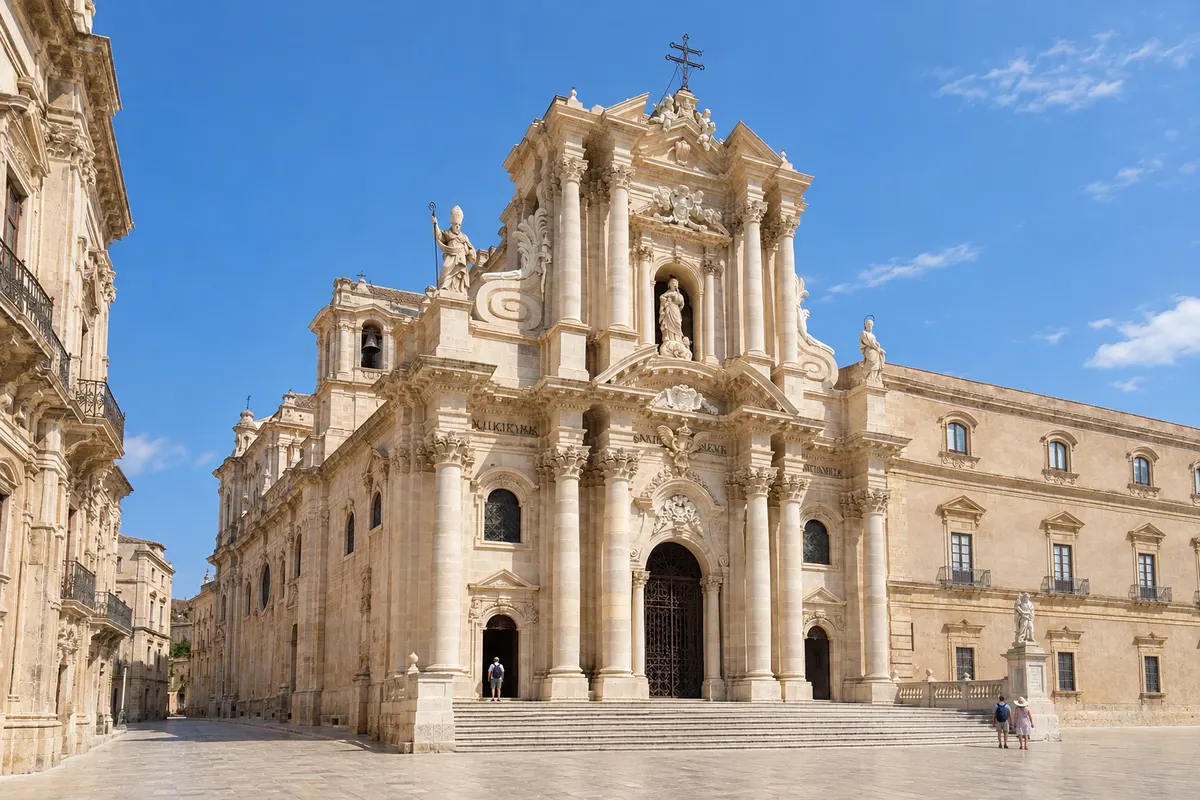
Sicília · Italija
Destinacija: Sicily.
Na fotografiji: Duomo di Siracusa, Ortigia
Illustrative images. The pictures in this guide are illustrations based on the real place, not photographs, and may differ from it.
Mesto
Siracusa, in southeast Sicily, was founded by Greek settlers from Corinth in the 8th century BC and came to rival Athens. It is the city of Archimedes. The old town is on the island of Ortigia, with the Duomo built over a Greek temple, the Fonte Aretusa and the Temple of Apollo. On the mainland, the Parco Archeologico della Neapolis has the Teatro Greco and the Orecchio di Dionisio, and the Museo Paolo Orsi houses the island's archaeology. Noto, the Baroque town, is nearby.
V vodniku še ni nastanitev – Syracuse.
kako do tja · koliko dni · načrt poti · vprašanja
Doživite kraj
The island where Siracusa was founded, with narrow streets, Baroque palaces, the Temple of Apollo, the street market, the seafront and the Castello Maniace at the tip.
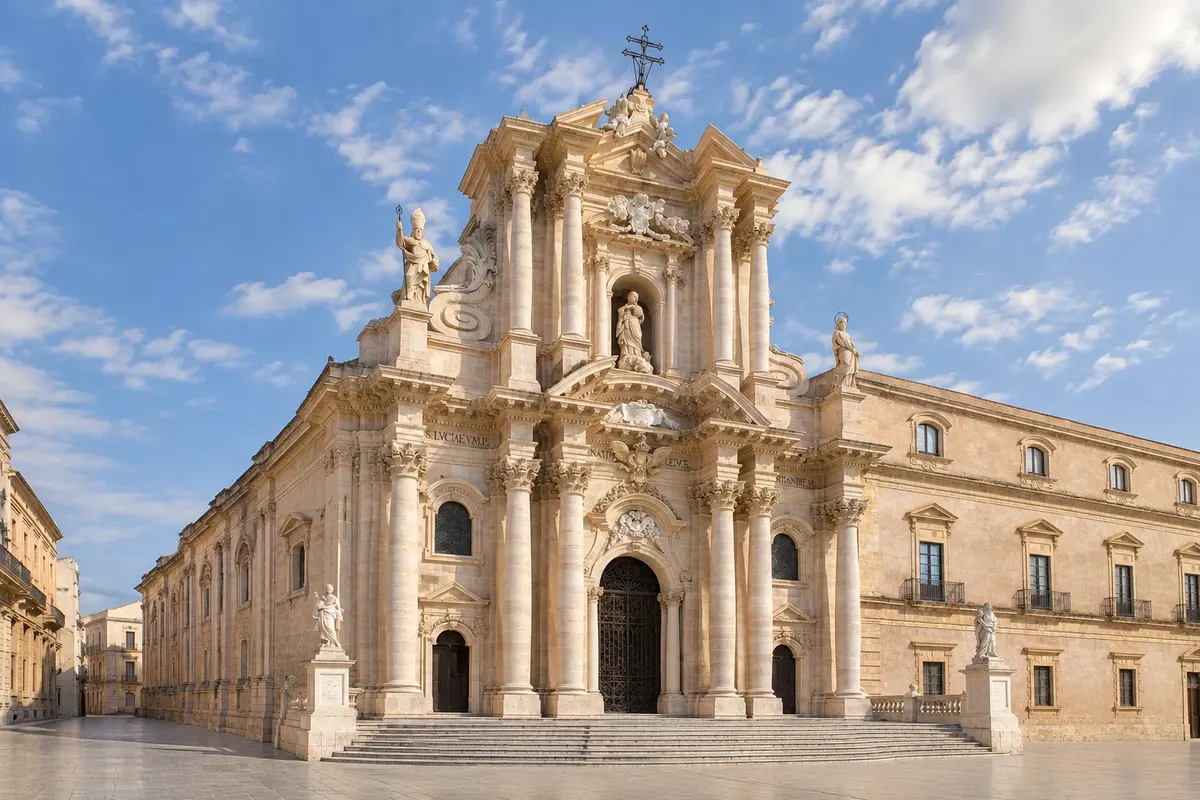
The cathedral of Siracusa, on the Piazza Duomo in Ortigia, built over the Temple of Athena from the 5th century BC. The Greek Doric columns remain standing within the walls.
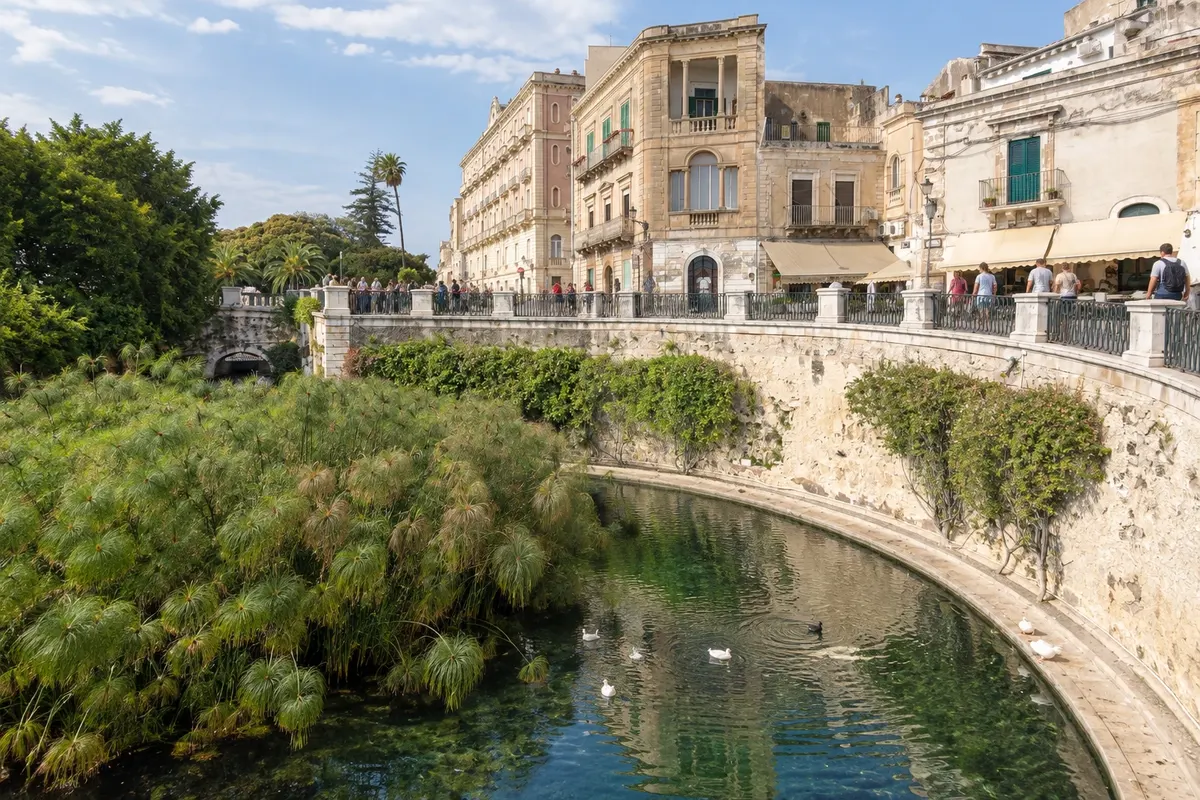
A freshwater spring by the sea in Ortigia, with papyrus plants and ducks, linked to the myth of the nymph Aretusa. It lies on the seafront, beside the Foro Italico promenade.
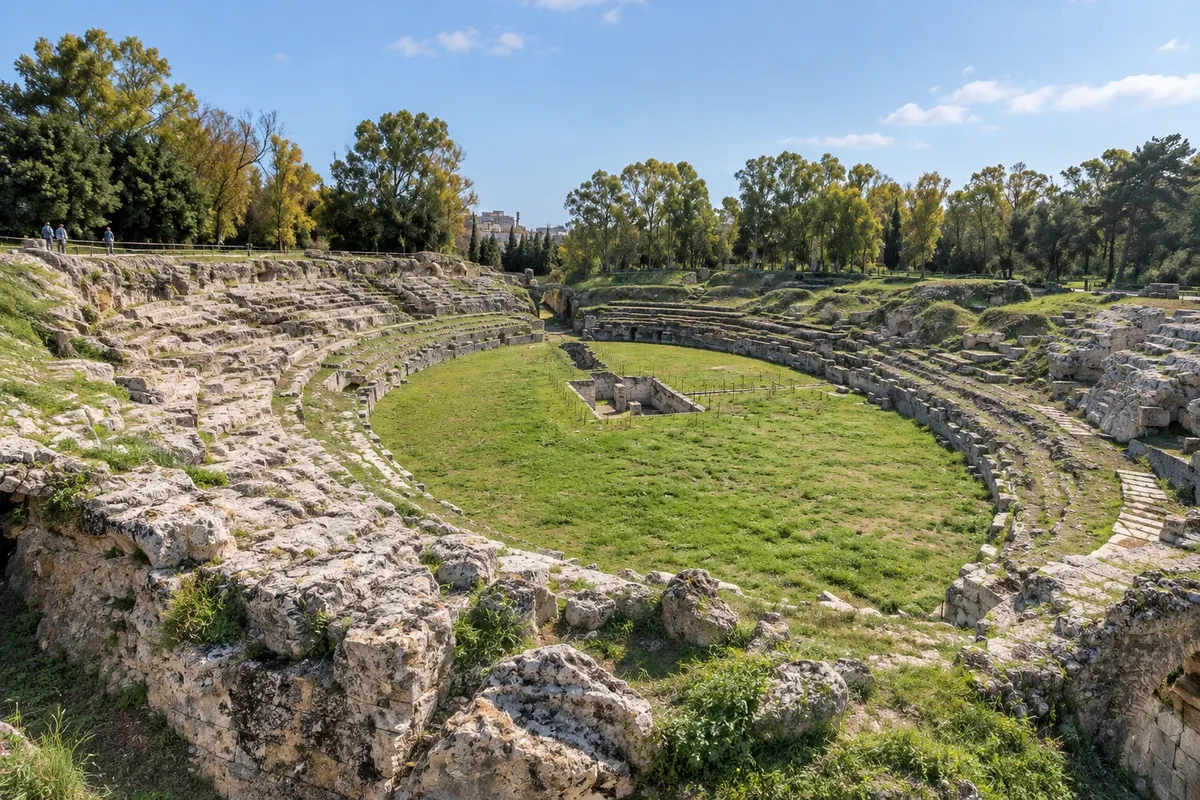
The large archaeological park of Siracusa, with the Teatro Greco cut into the rock, the Latomia del Paradiso with the Orecchio di Dionisio, the Ara di Ierone and the Roman amphitheatre.
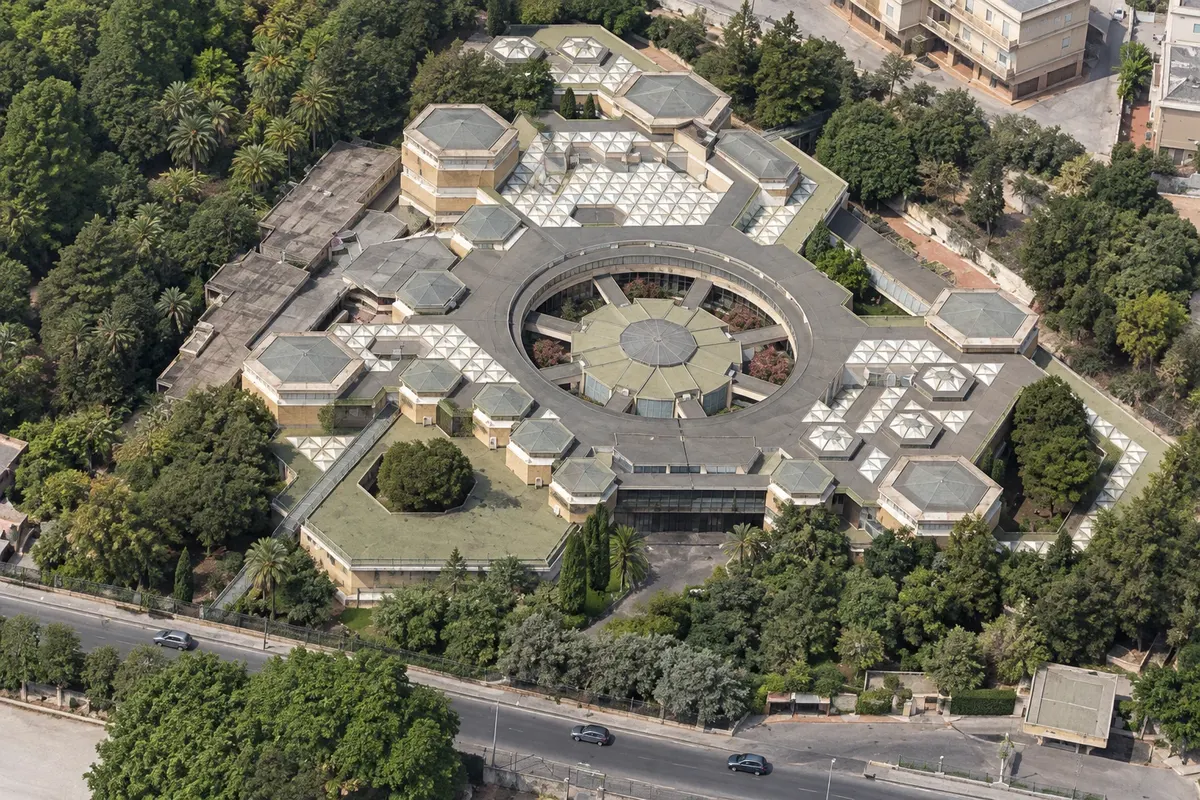
One of the largest archaeological museums in Europe, with pieces from prehistory to the Greek and Roman periods of eastern Sicily, including the Vênus Landolina.
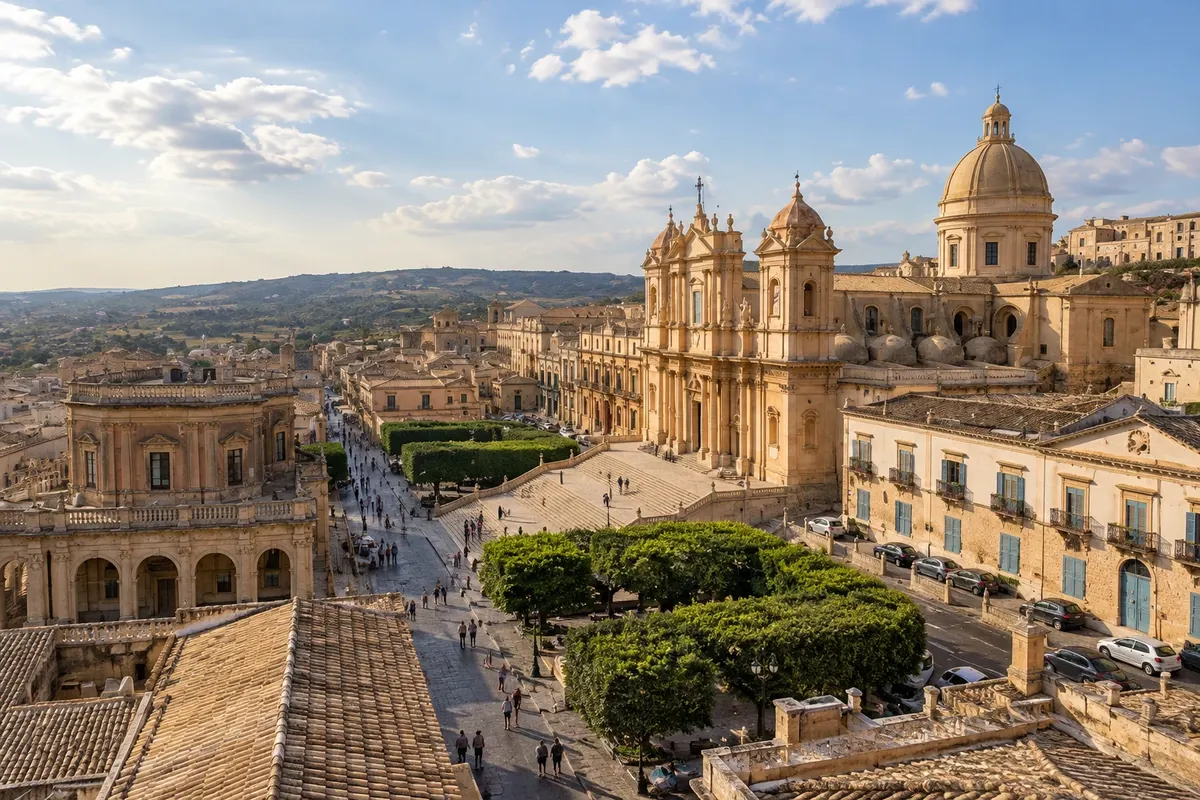
Baroque town about 35 km from Siracusa, rebuilt after the 1693 earthquake in golden limestone. It has the Cattedrale di San Nicolò and the Corso Vittorio Emanuele.
Pred odhodom
Syracuse – Sicily Destinacija Sicily približno 260 km stran (izhodišče: Palermo)
Razdalje so približne. Pred potovanjem preverite lete in vozne rede avtobusov, vlakov ali ladij.
Check before booking. Take a domestic flight from Rome or Milan to Catania (CTA), about 60 km away. From the airport there are direct buses to Siracusa in just over 1 hour. There are also regional trains from Catania. Siracusa station is about a 20-minute walk from Ortigia.
One day is enough for Ortigia and the Parco Archeologico della Neapolis. With two days you can add the Museo Paolo Orsi and a trip to Noto, about 35 km away. Siracusa also works as a base to visit other Baroque towns in the southeast, such as Modica and Ragusa.
April, May, June, September and October usually have pleasant weather. From May to July the Teatro Greco hosts the classical theatre season, with Greek tragedies and comedies. July and August are very hot. Winter is mild, with rainy days.
The seasons shown are the most usual ones; nature doesn't always follow the calendar.
For the city itself, no: Ortigia is best explored on foot and has a ZTL (limited traffic zone) closed to outside cars. The Neapolis is about a 25-minute walk from Ortigia or a few minutes by bus. For Noto there are trains and buses; a car helps if you want to visit several Baroque towns in one day.
Predlog poti
Pot povezuje znamenitosti na tej strani. Za oglede boste imeli dovolj časa.
Start at the Parco Archeologico della Neapolis at opening time, before the heat. See the Teatro Greco, the Latomia del Paradiso and the Orecchio di Dionisio.
Cross the bridge to Ortigia. Walk past the Temple of Apollo and the morning market, if it's still open, and have lunch on the island.
Enter the Duomo and notice the Greek columns embedded in the walls. Walk down to the Fonte Aretusa and stroll along the seafront to the tip of the island, where the Castello Maniace stands.
Return to the Piazza Duomo lit up and dine in one of Ortigia's narrow streets.
Dan 1
Spend the morning at the Parco Archeologico della Neapolis: Teatro Greco, Orecchio di Dionisio, Ara di Ierone and the Roman amphitheatre.
Walk to the Museo Archeologico Paolo Orsi, just a few minutes away. Allow at least 2 hours for the Greek collections.
Head to Ortigia, pass by the Temple of Apollo and walk along the Lungomare to the Fonte Aretusa.
Dine in Ortigia and walk past the Piazza Duomo lit up.
Dan 2
Take the train or bus to Noto, about 35 km. Climb the steps of the cathedral of San Nicolò and walk along the Corso Vittorio Emanuele.
See the balconies of the Palazzo Nicolaci on Via Nicolaci and the churches along the Corso. Try an almond sweet or a granita.
Return to Siracusa and enter the Duomo if you didn't on the first day.
Dine near the Fonte Aretusa or the Piazza Duomo.
Check before you go. Opening hours and days change, and places may close for renovations, holidays or events. This itinerary is a suggestion from Cidade Turismo, not a commitment: plan yours by checking directly with each place you intend to visit.
Pred odhodom
Yes. Buses and trains take just over an hour. One day is enough for the Neapolis and Ortigia, but staying overnight in Siracusa allows you to see Ortigia at night and include Noto.
The island where Siracusa was founded and where the historic center is located, connected to the mainland by bridges. There are the Duomo, the Fonte Aretusa and the Temple of Apollo.
The classical theatre season usually runs from May to July, with Greek plays staged on the ancient seating. On performance days, park visiting hours may be reduced. Check before you go.
Yes. Noto is a Baroque town rebuilt after the 1693 earthquake, about 35 km away. You can go by train or bus and return the same day.
Ortigia has small sea access points with platforms in summer. Sandy beaches are outside the town, to the south, like Fontane Bianche, about 20 km away.
Več kot vodnik


