Naples, Pompeii and Capri

Campania · Italija

Naples, Pompeii and Capri

The capital of Campânia, the ruins buried by Vesúvio in 79 AD, and the island of Capri, linked by regional train and boat from Nápoles.

South

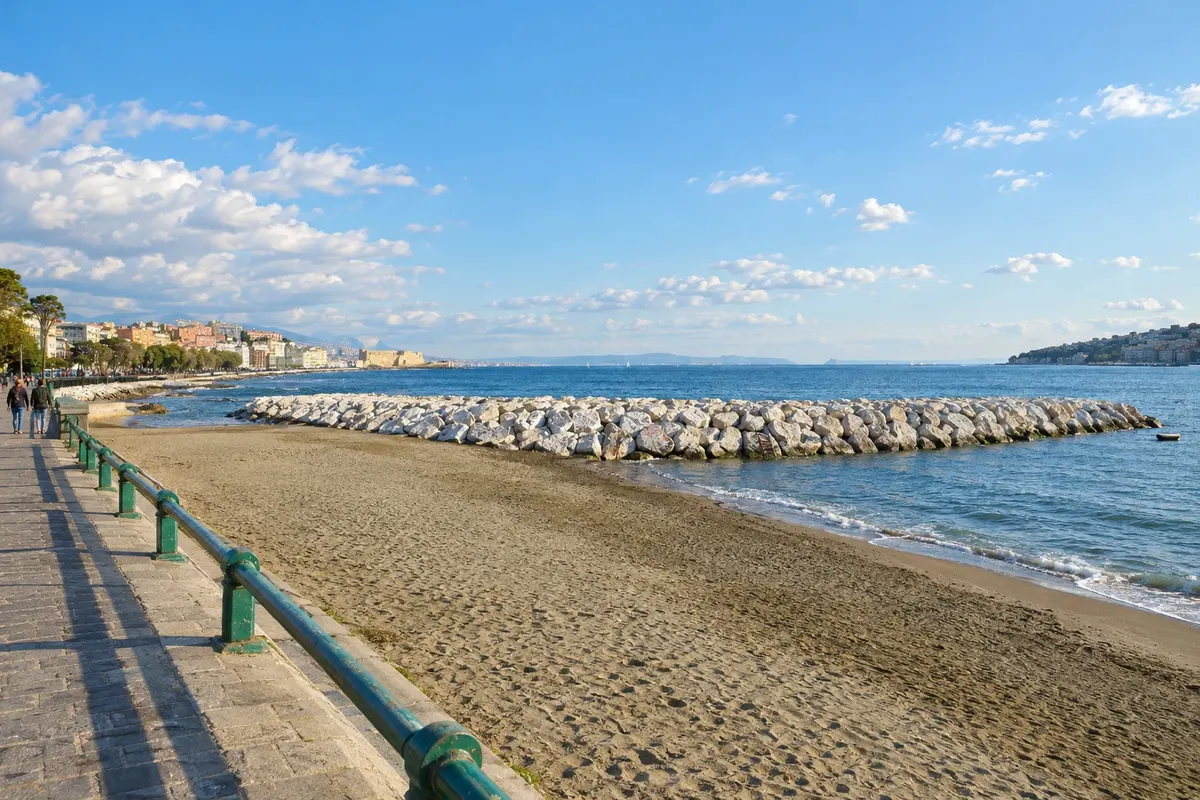
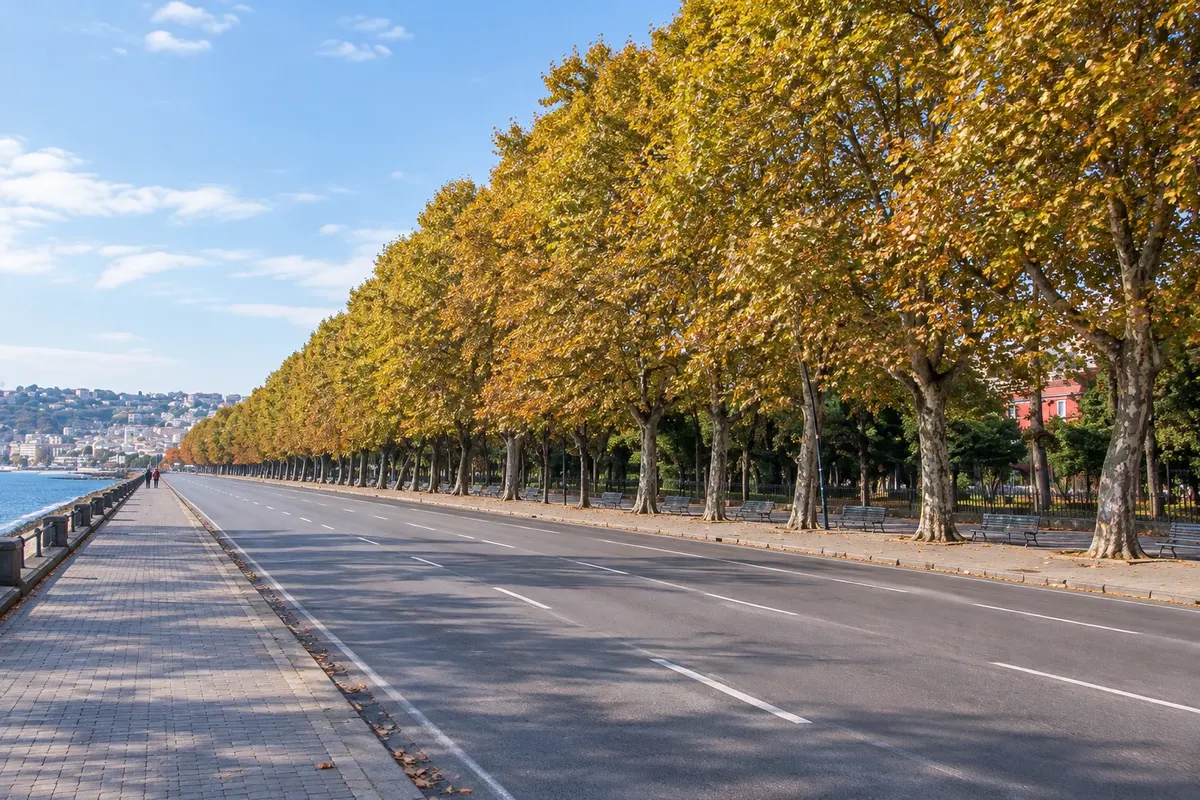
Na fotografiji: Lungomare Caracciolo, Napoli

Illustrative images. The pictures in this guide are illustrations based on the real place, not photographs, and may differ from it.

Na voljo v trgovini Google Play Pošljite svoje fotografije

Spoznajte kraj

Pokrajina, ki jo doživite
v svojem ritmu.

Nápoles is the capital of Campânia in southern Italy and the gateway to a stretch of coast that combines a big city, archaeological sites and an island. The historic centre, a UNESCO World Heritage Site, preserves streets laid out by the Greeks, Baroque churches, the Cappella Sansevero with the Cristo Velado and the Museo Archeologico Nazionale, which houses the mosaics and frescoes taken from Pompeia and Herculano.

About 25 kilometres away lies Pompeia. The Roman city was buried by the ashes of Vesúvio in 79 AD and today is one of the largest archaeological sites in the world, with streets, houses, baths and an amphitheatre. The modern town next to it revolves around the sanctuary of Nossa Senhora do Rosário. Herculano, the Villa di Poppea in Oplontis and the trail up to the crater of Vesúvio complete the tour of the volcano area.

Capri is the island at the end of the gulf, about 50 minutes by aliscafo (fast boat) from Nápoles. It has the Piazzetta, the Giardini di Augusto with views of the Faraglioni, Anacapri with the Villa San Michele and the Monte Solaro chairlift, the ruins of the Villa Jovis of emperor Tibério and the Grotta Azzurra, which is only visited by boat when the sea allows.

Neapolitan pizza, strong coffee and limoncello are part of the local culture.

This destination brings together 3 cities: Naples, Capri, Pompeii.

Delite: WhatsApp
Delite svoja popotniška doživetja s fotografijami Pošljite fotografije vsakega kraja, ki ste ga obiskali. Največje število fotografij na kraj: 5.

Ena destinacija, več poti

Mesta na tej poti

Začnite v enem mestu ali v načrt poti vključite več mest.

Naples, Pompeii and Capri – lega
CapriPompeiaNápoles

Obrisi: ISTAT, limites administrativos 2026, CC BY 4.0. Priredba: Cidade Turismo.

Kako do tja:Naples, Pompeii and Capri

✈ Aeroporto Internazionale di Napoli (Capodichino) (NAP)· 7 km do cilja (Naples)

Check before buying. Those arriving in Rome continue by high-speed train to Napoli Centrale in about 1h10. Nápoles also has an international airport (NAP). From Nápoles, the Circumvesuviana goes to Pompeia and boats depart from Molo Beverello for Capri.

Predlagana točka prihoda:Naples

Doživite kraj

Kaj početi – Naples, Pompeii and Capri

Naples Historic Centre
Naples · Campania · Zgodovinska mestna četrt

Naples Historic Centre

The historic center of Nápoles, a UNESCO World Heritage site, preserves the layout of the Greek city of Neápolis, intersected by the Spaccanapoli and the Via dei Tribunali.

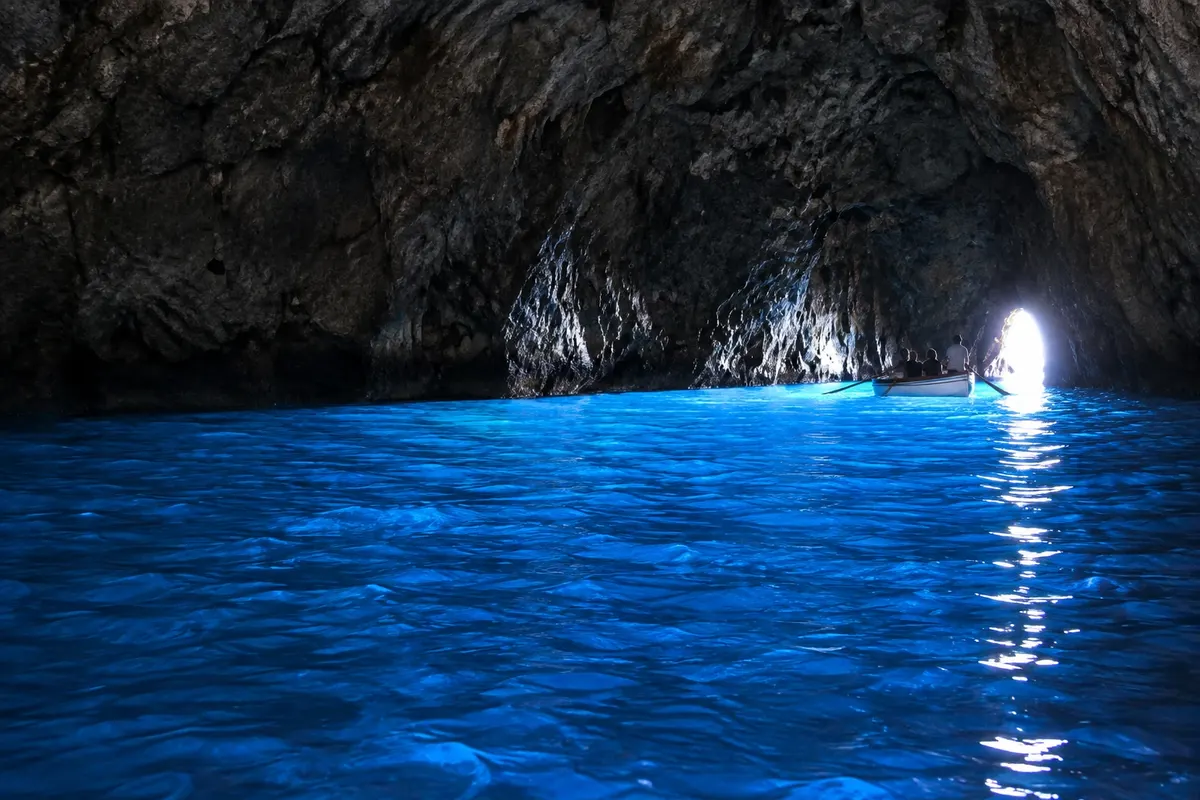
Blue Grotto (Grotta Azzurra)
Capri · Campania · Grotto

Blue Grotto (Grotta Azzurra)

Sea cave on the northwest coast of Capri, where the light that enters from below the water paints the sea blue. The entrance is made by lying down in a small rowing boat.

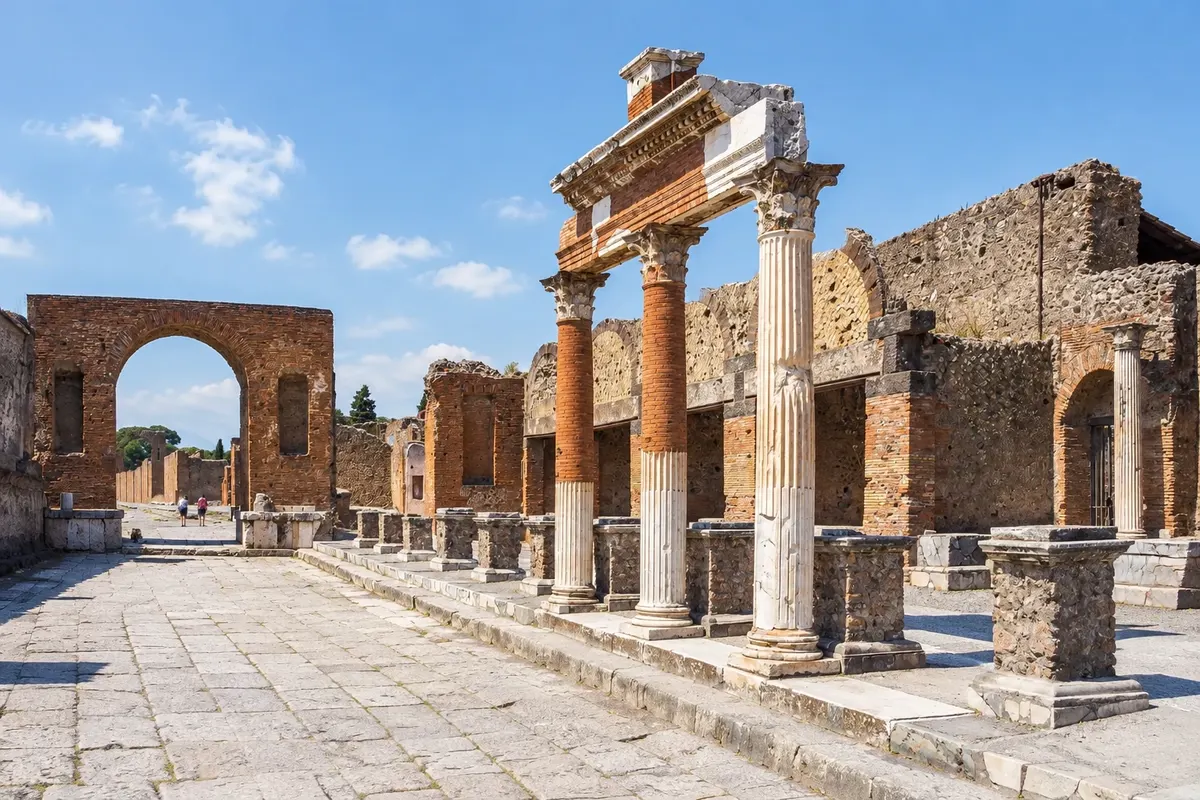
Archaeological Park of Pompeii
Pompeii · Campania · Arheološko najdišče

Archaeological Park of Pompeii

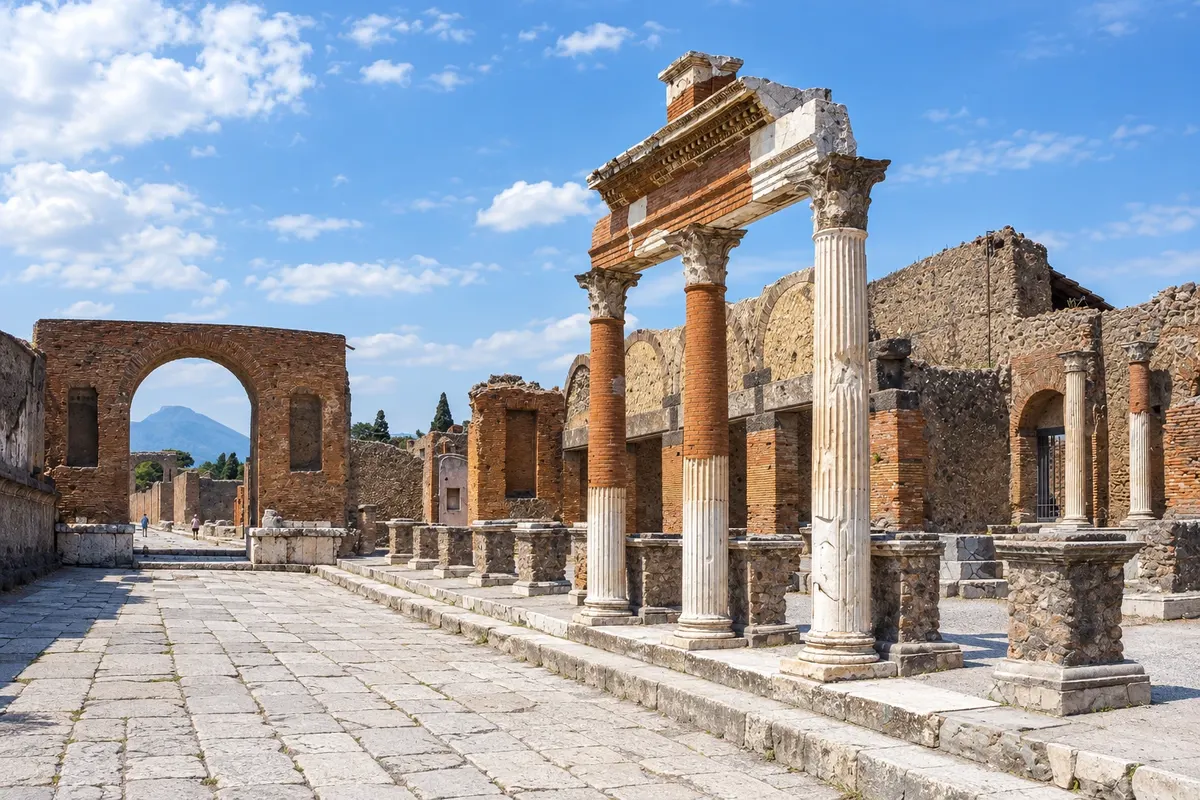
The Roman city buried by the eruption of Vesuvius in 79 AD, with streets, houses, baths, theatres and an amphitheatre. UNESCO World Heritage.

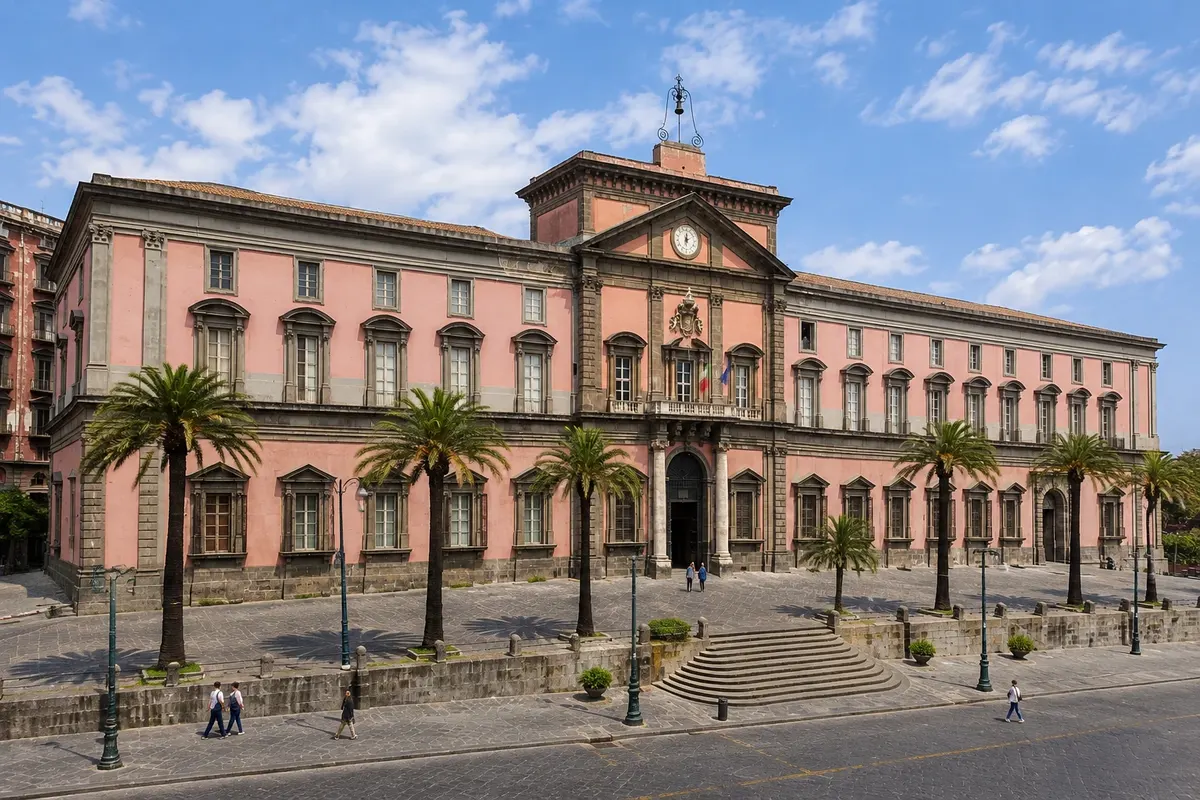
National Archaeological Museum, Naples
Naples · Campania · Muzej

National Archaeological Museum, Naples

The MANN houses one of the largest collections of Roman art in the world: sculptures from the Farnese collection and mosaics and frescoes taken from Pompeii and Herculaneum.

Naples, Pompeii and Capri – prikaži dodatne kraje (23)
Piazzetta of Capri
Capri · Campania · Trg

Piazzetta of Capri

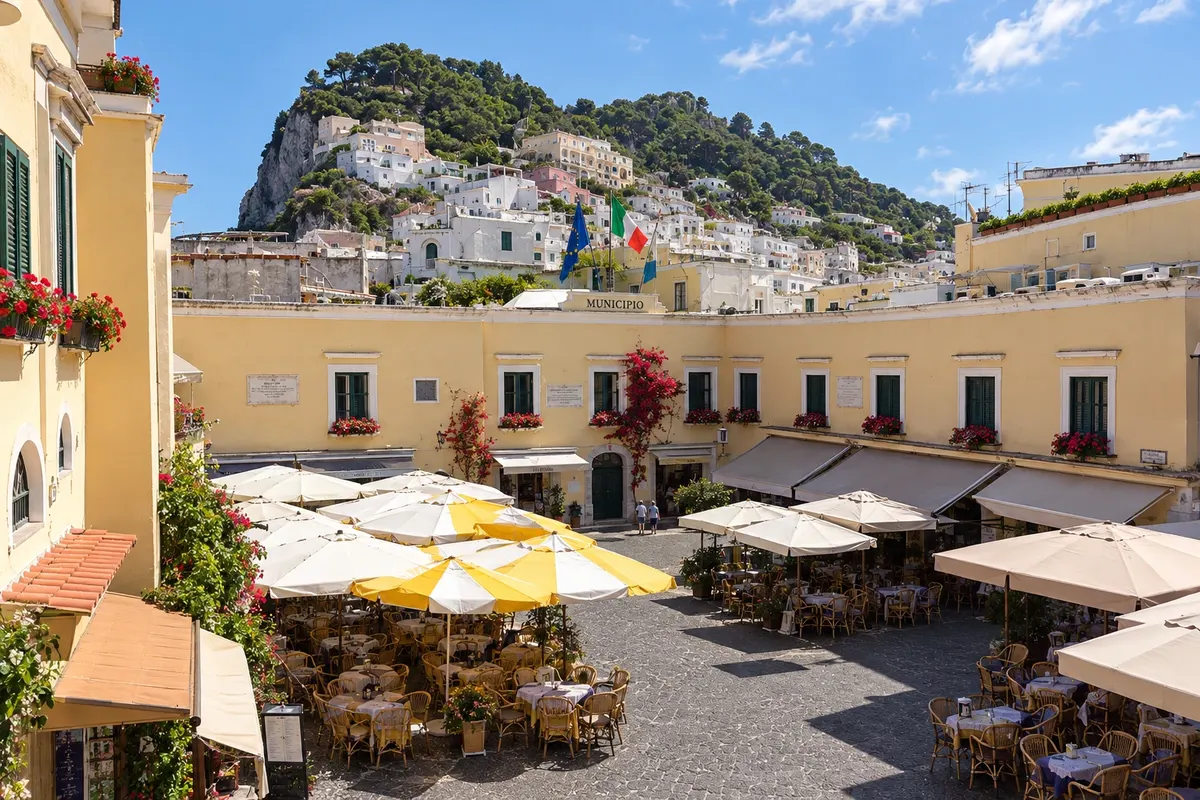
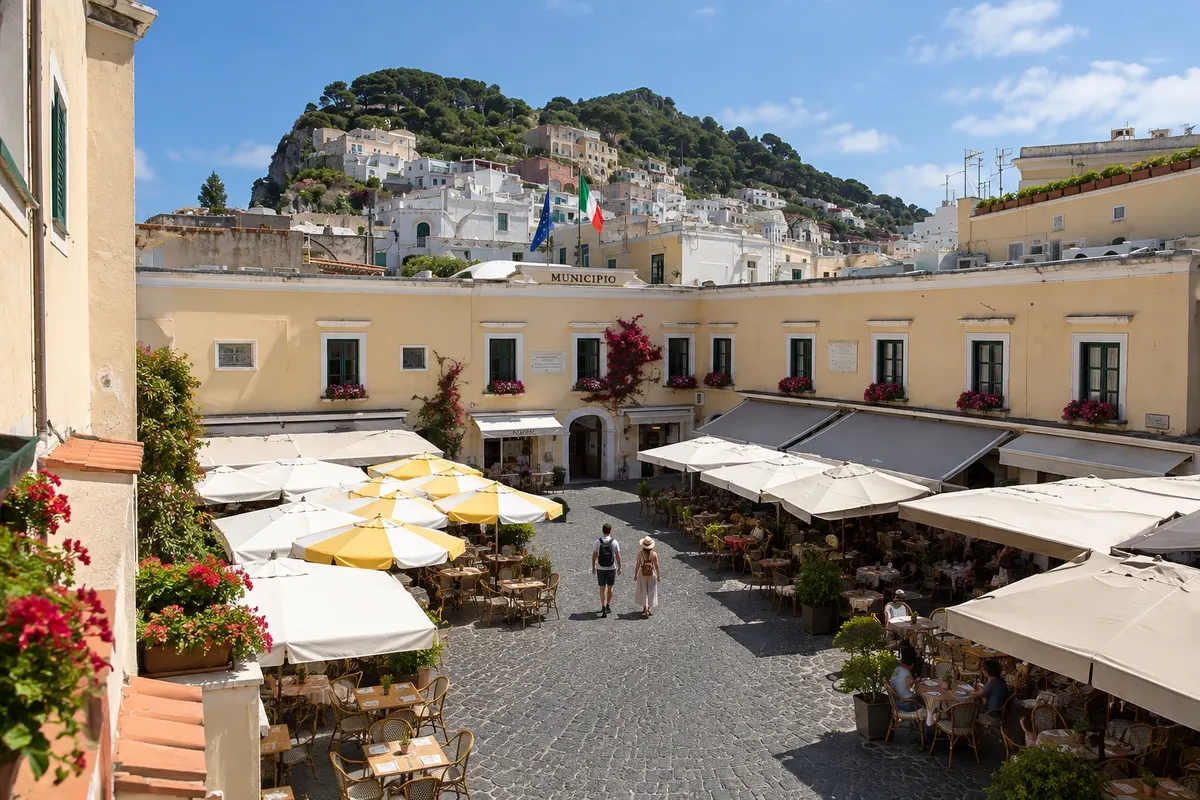
The Piazza Umberto I, the small square in the centre of the town of Capri, with the clock tower, the church of Santo Stefano and café tables.

Villa of the Mysteries
Pompeii · Campania · Ruins

Villa of the Mysteries

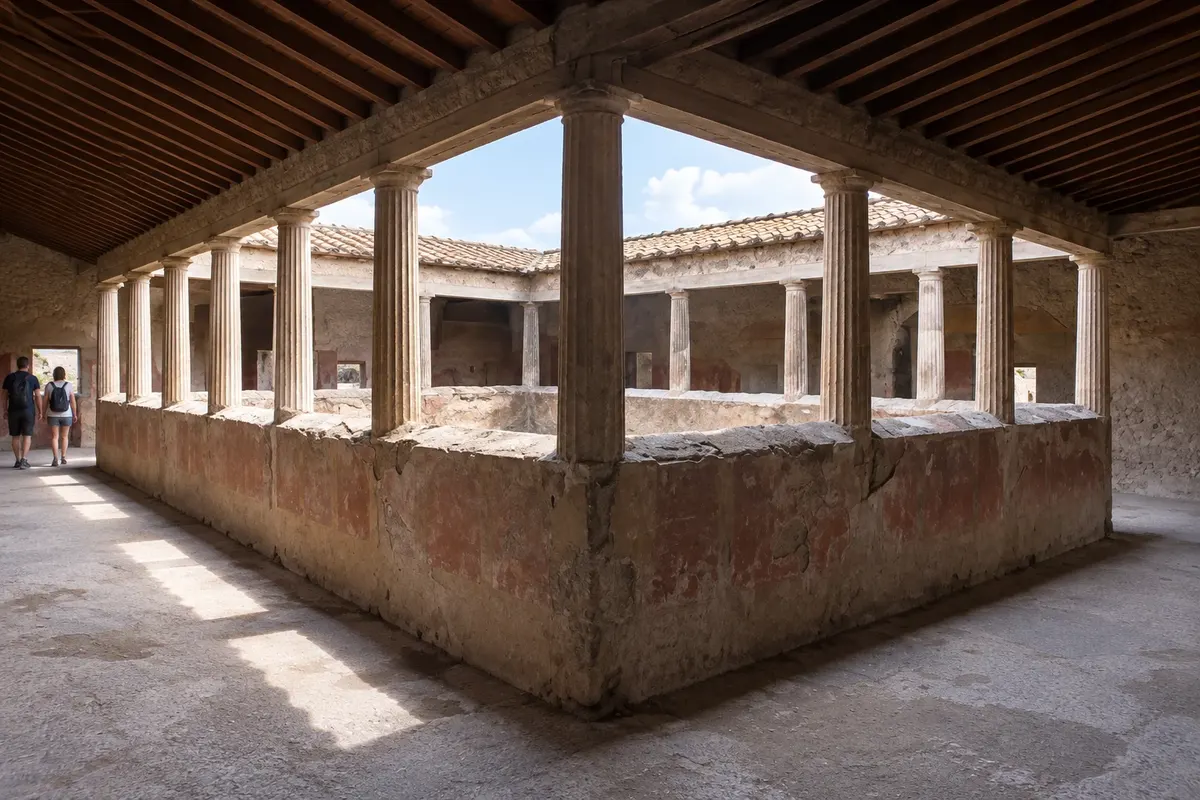
Large Roman villa outside Pompeia's walls, famous for the cycle of red-background frescoes depicting a rite linked to Dionysus.

Cappella Sansevero
Naples · Campania · Muzej

Cappella Sansevero

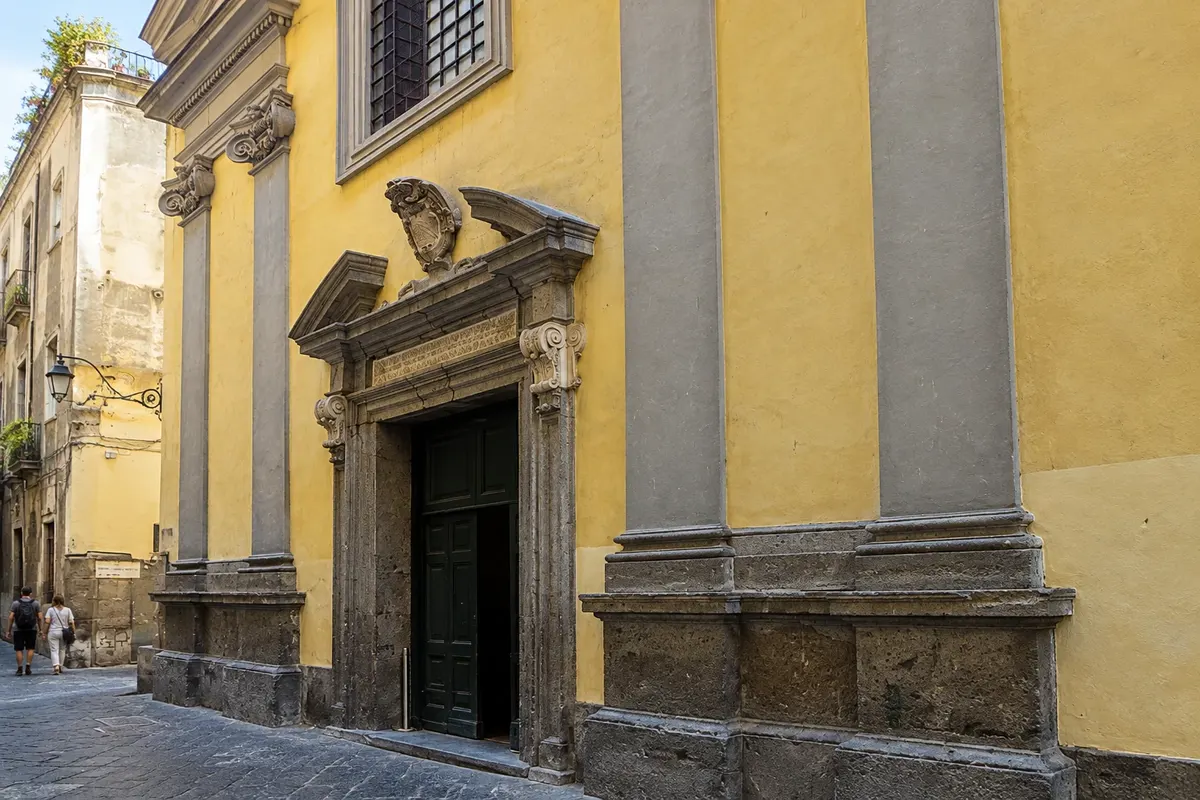
Baroque chapel in the historic center that houses the Veiled Christ, a marble sculpture by Giuseppe Sanmartino from 1753.

Gardens of Augustus
Capri · Campania · Garden

Gardens of Augustus

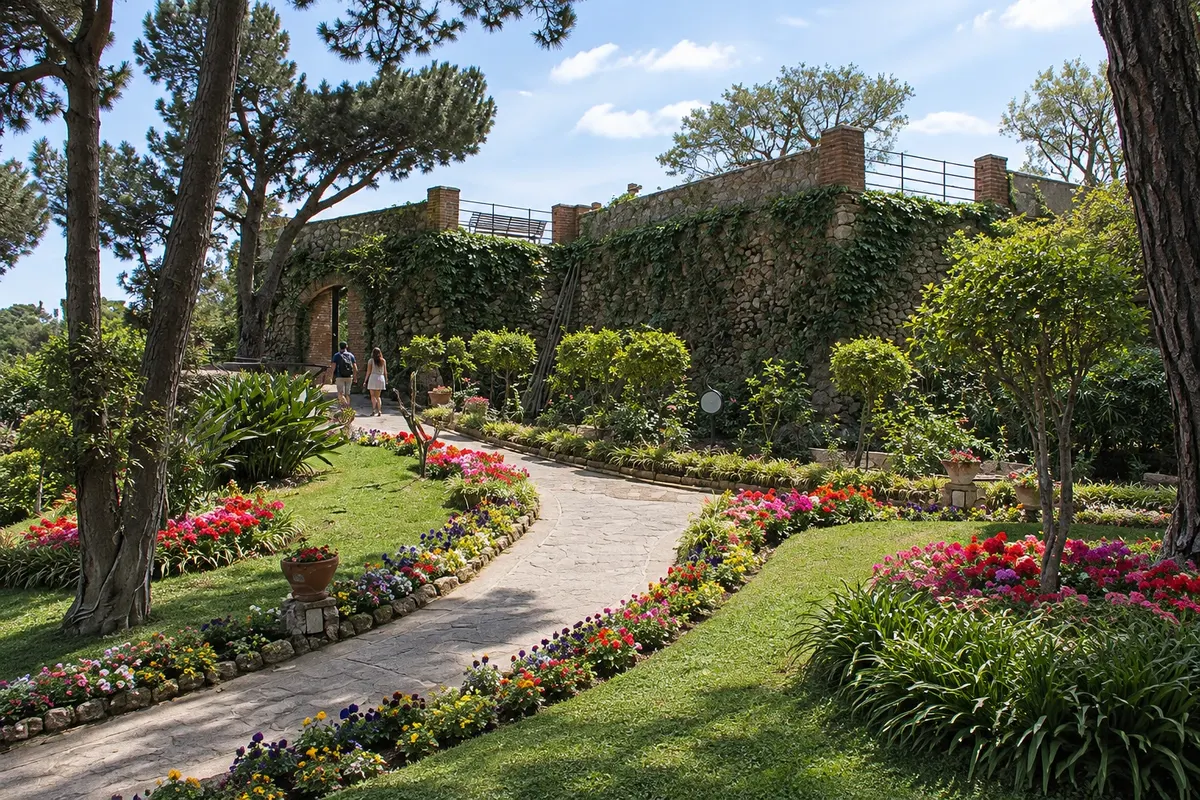
Terraced gardens on the south of the island, with views of the Faraglioni, the bay of Marina Piccola and the curves of Via Krupp.

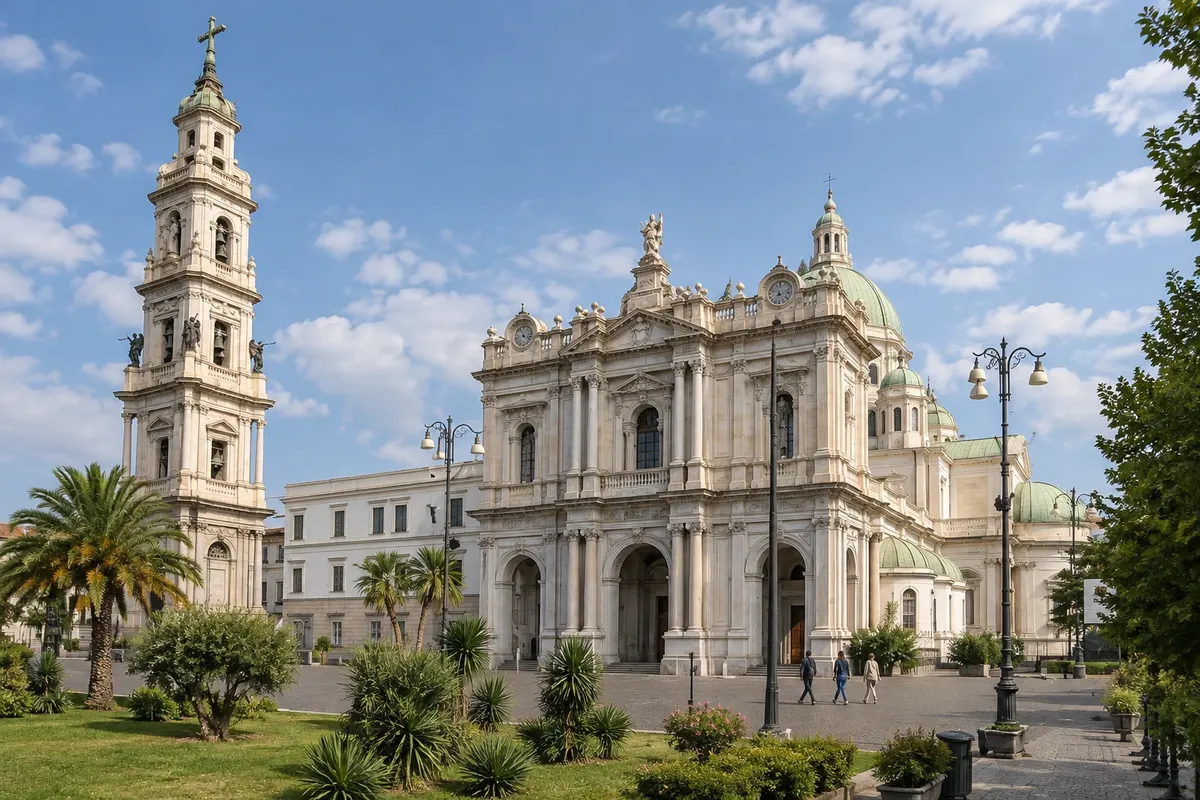
Sanctuary of the Blessed Virgin of the Rosary of Pompeii
Pompeii · Campania · Cerkev

Sanctuary of the Blessed Virgin of the Rosary of Pompeii

Late-19th-century basilica in the center of modern Pompeia, one of Italy's most visited Marian shrines.

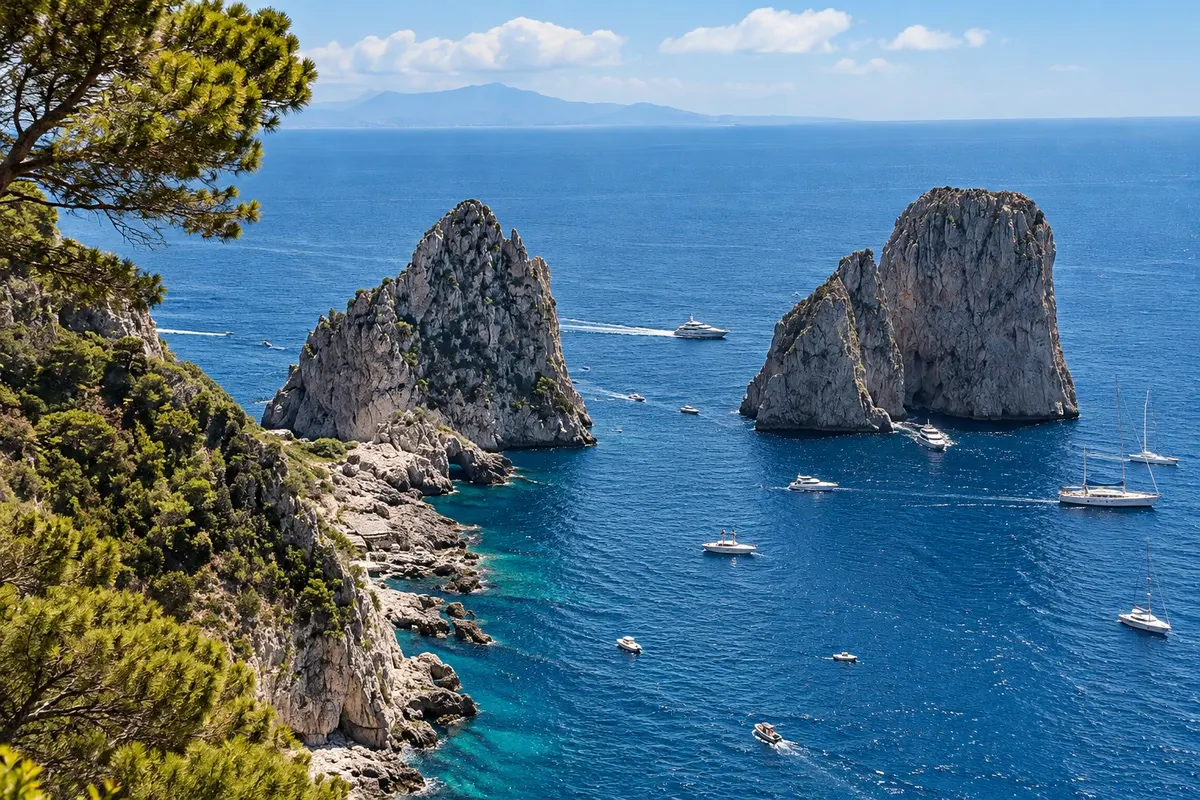
Faraglioni of Capri
Capri · Campania · Natural monument

Faraglioni of Capri

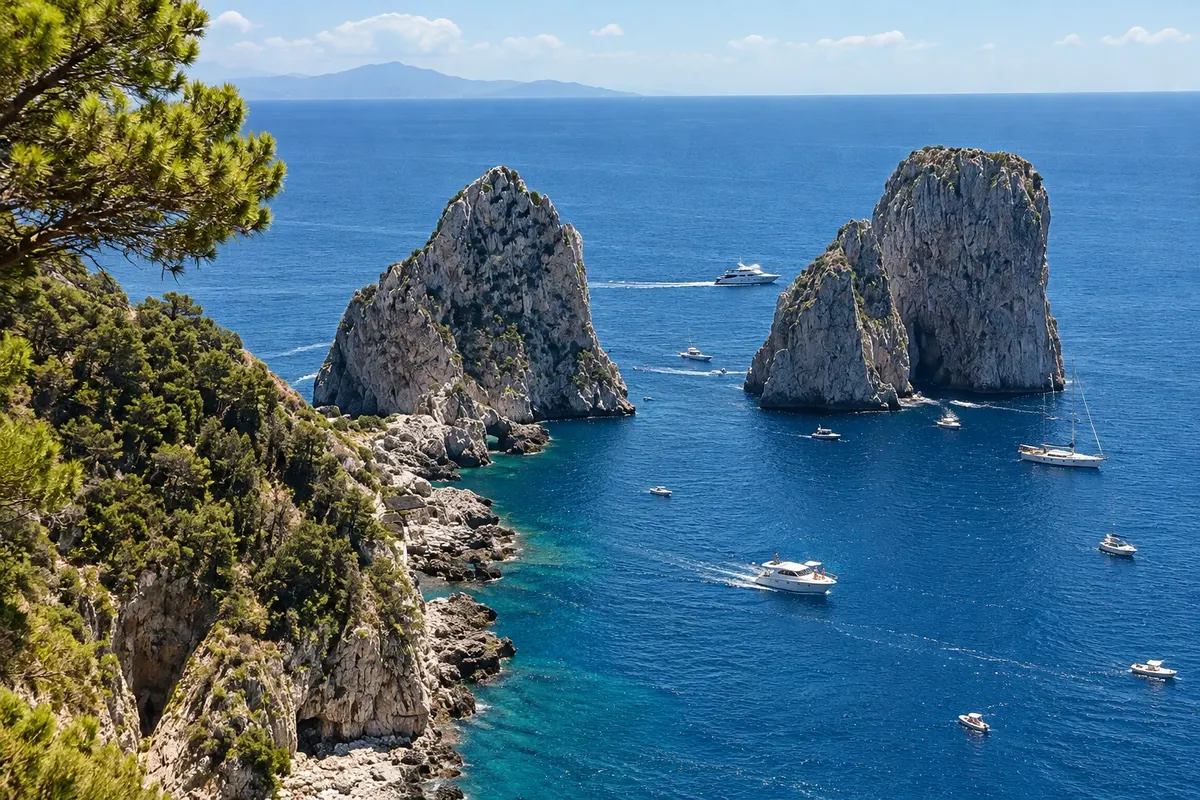
The three rocks that rise from the sea on Capri's southeast coast. One of them has an arch that boats pass through.

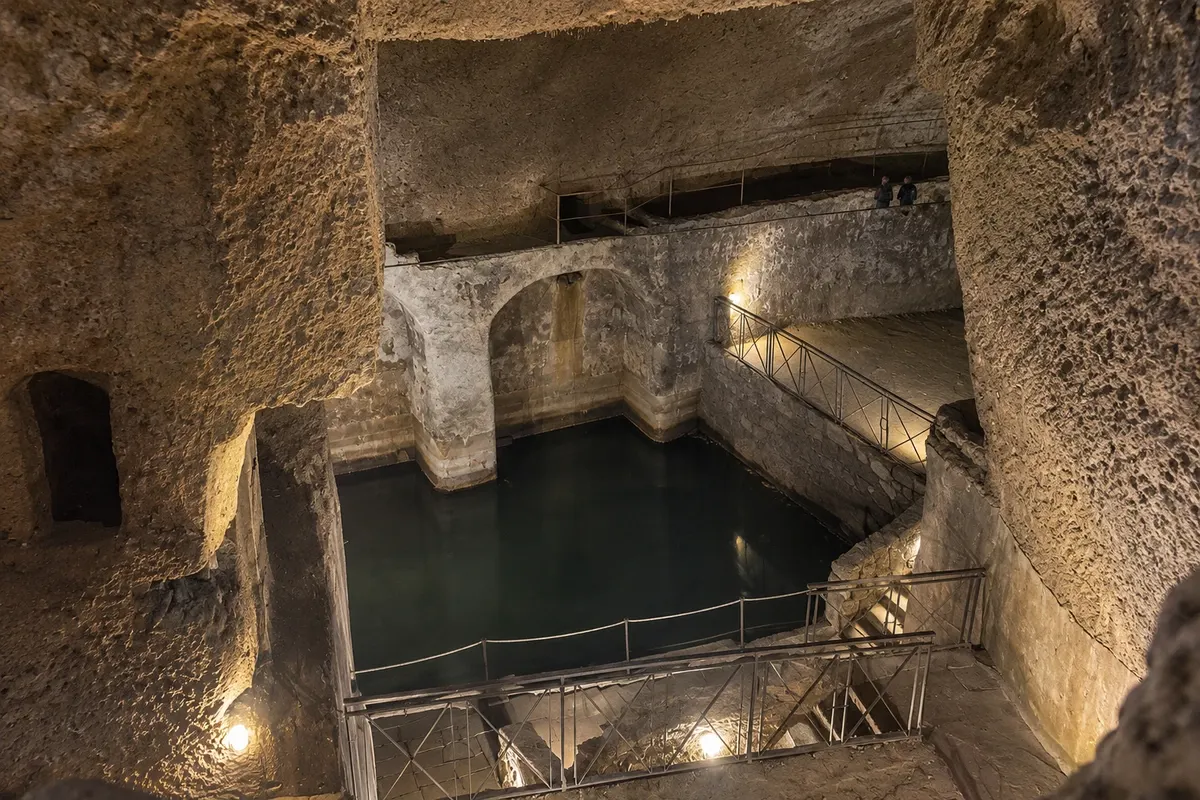
Napoli Sotterranea
Naples · Campania · Historic site

Napoli Sotterranea

Guided tour through the tunnels and cisterns carved into the tuff beneath the historic center, used as an aqueduct in Antiquity and as an air-raid shelter in World War II.

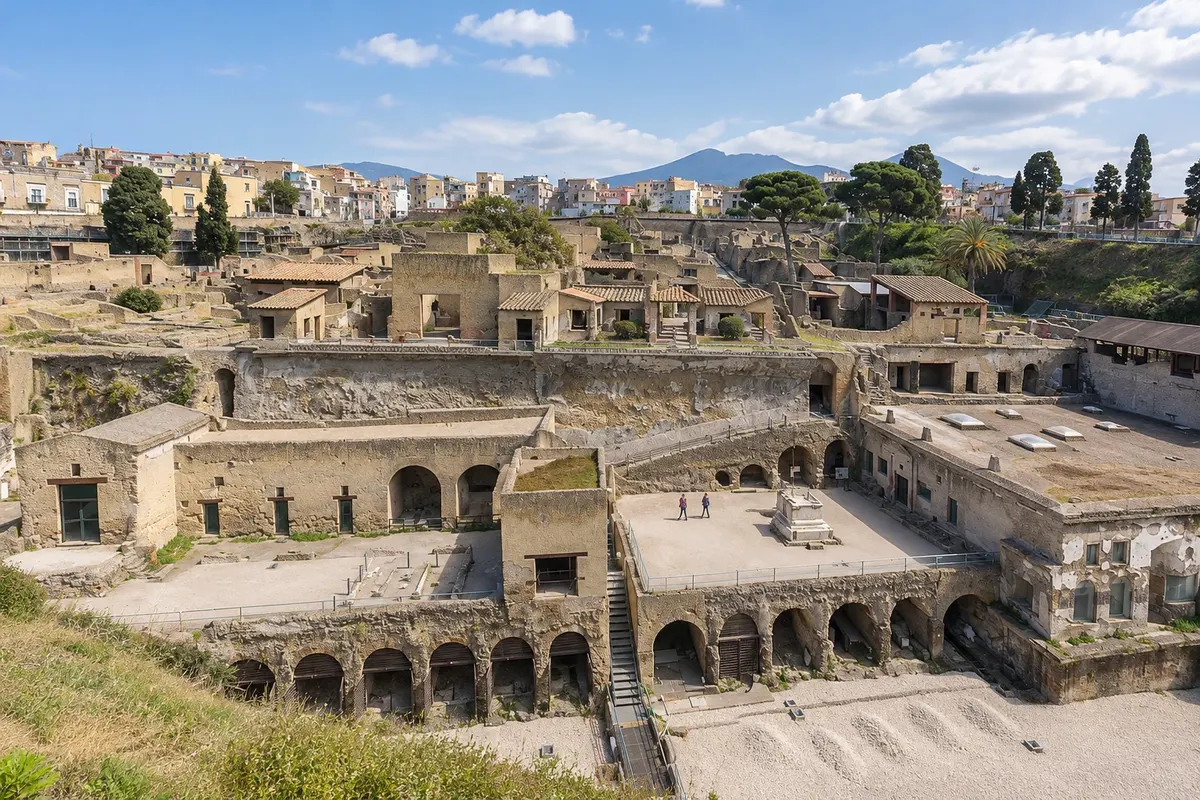
Archaeological Park of Herculaneum
Pompeii · Campania · Arheološko najdišče

Archaeological Park of Herculaneum

Herculano, the neighboring Roman town buried by the same AD 79 eruption, smaller than Pompeia and with two-storey houses and preserved wood.

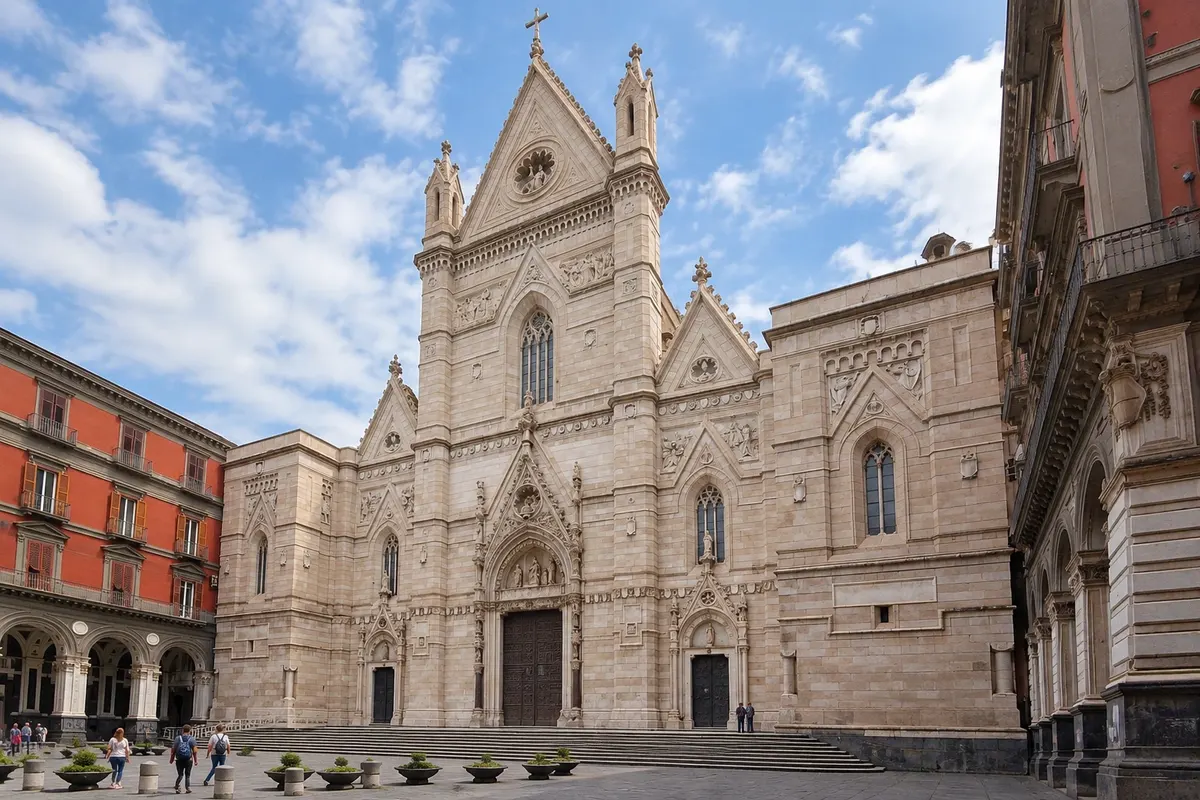
Cathedral of Naples (Duomo di Napoli)
Naples · Campania · Stolnica

Cathedral of Naples (Duomo di Napoli)

The cathedral of Naples, dedicated to Nossa Senhora da Assunção, houses the capela do Tesouro de San Gennaro, the city's patron saint.

Vesuvius – Great Cone
Pompeii · Campania · Park

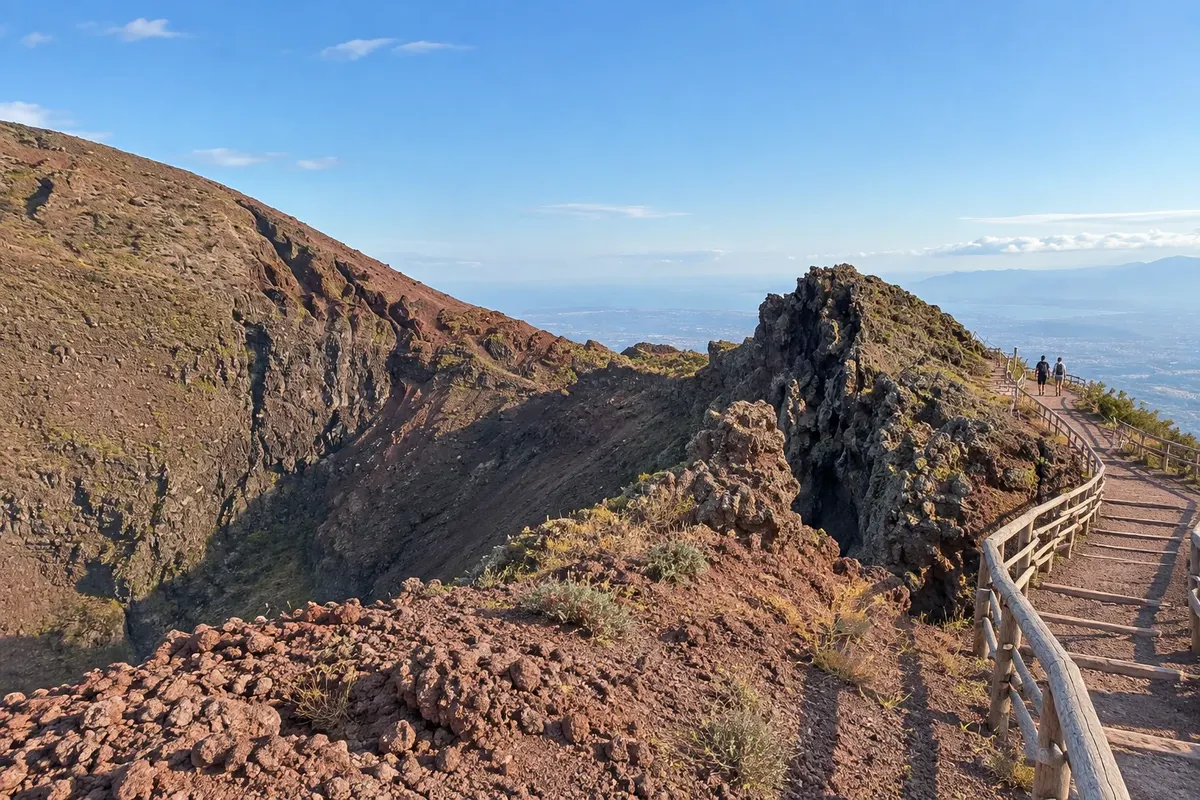
Vesuvius – Great Cone

Trail to the rim of the Vesúvio crater, the volcano that destroyed Pompeia, within the Vesúvio National Park. Tickets are sold online only, with timed entry.

Villa San Michele
Capri · Campania · House-museum

Villa San Michele

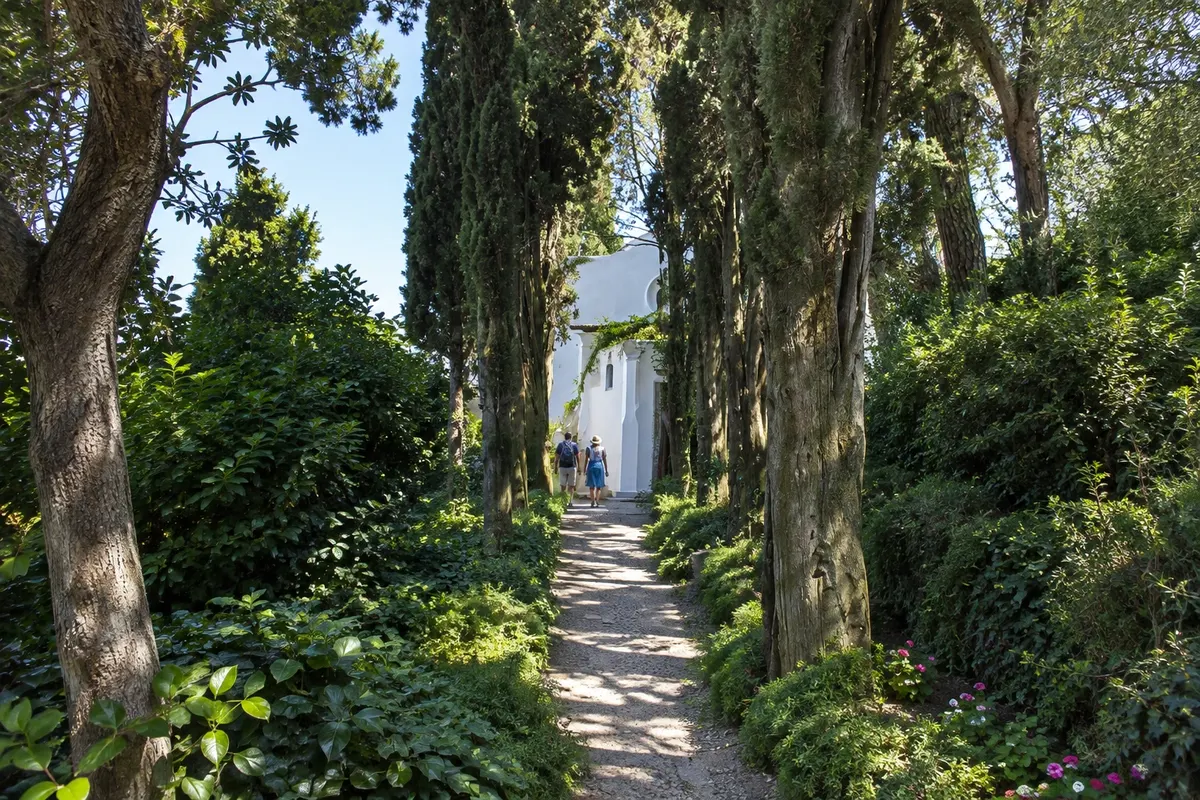
House and garden of the Swedish doctor and writer Axel Munthe in Anacapri, built over the remains of a Roman villa, with a view of the golfo de Nápoles.

Mount Solaro (Monte Solaro)
Capri · Campania · Razgledišče

Mount Solaro (Monte Solaro)

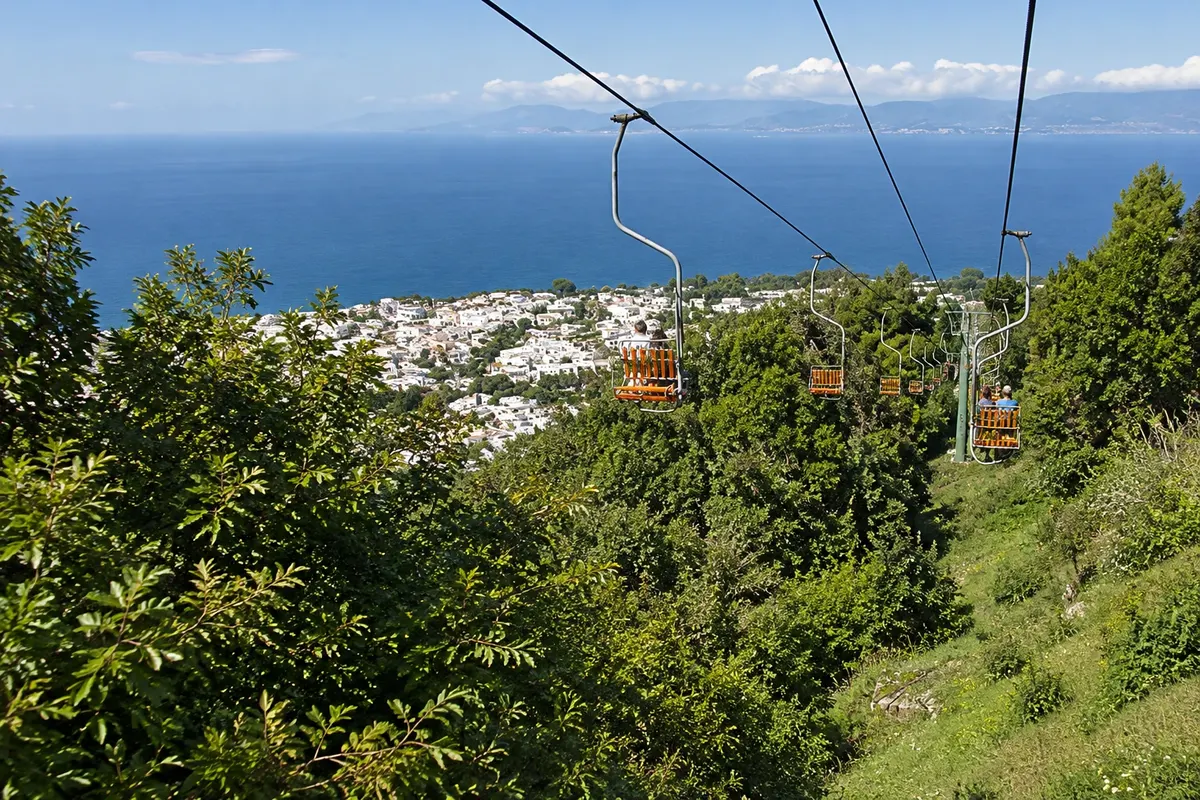
The highest point of Capri, at 589 meters, reached by a single-seat chairlift that departs from Anacapri.

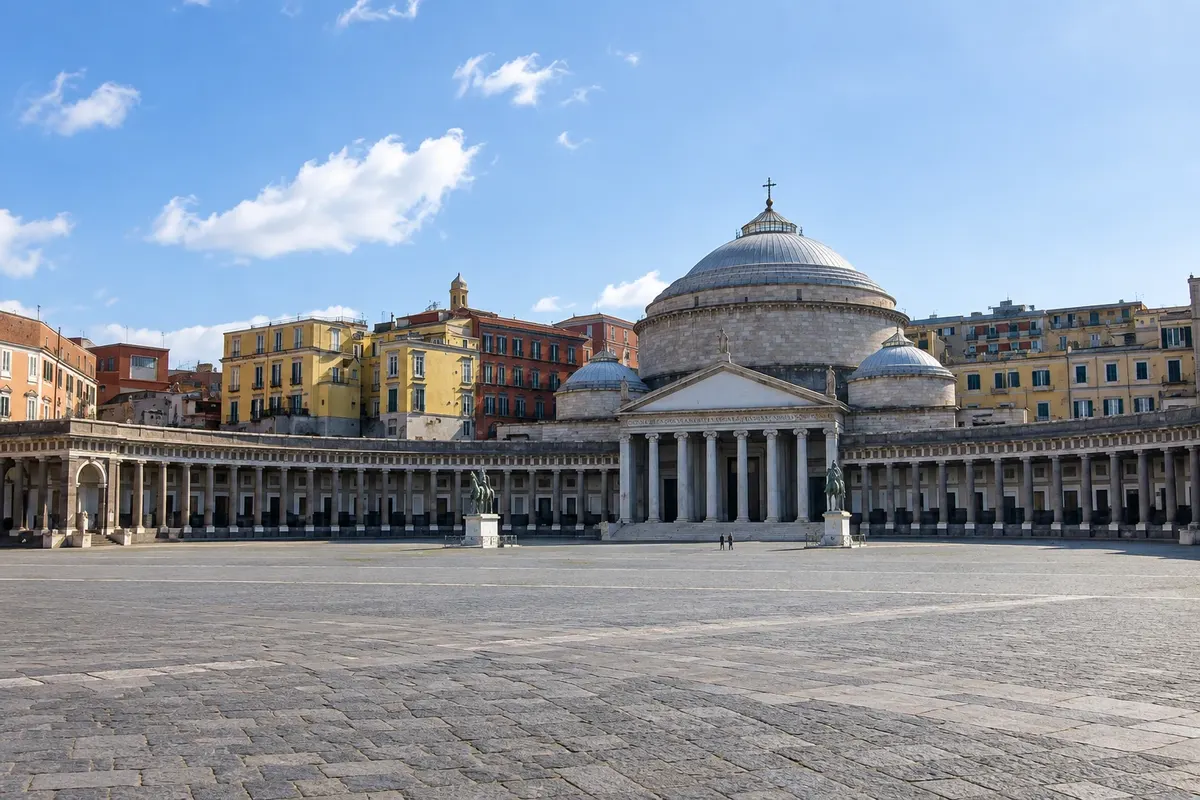
Piazza del Plebiscito
Naples · Campania · Trg

Piazza del Plebiscito

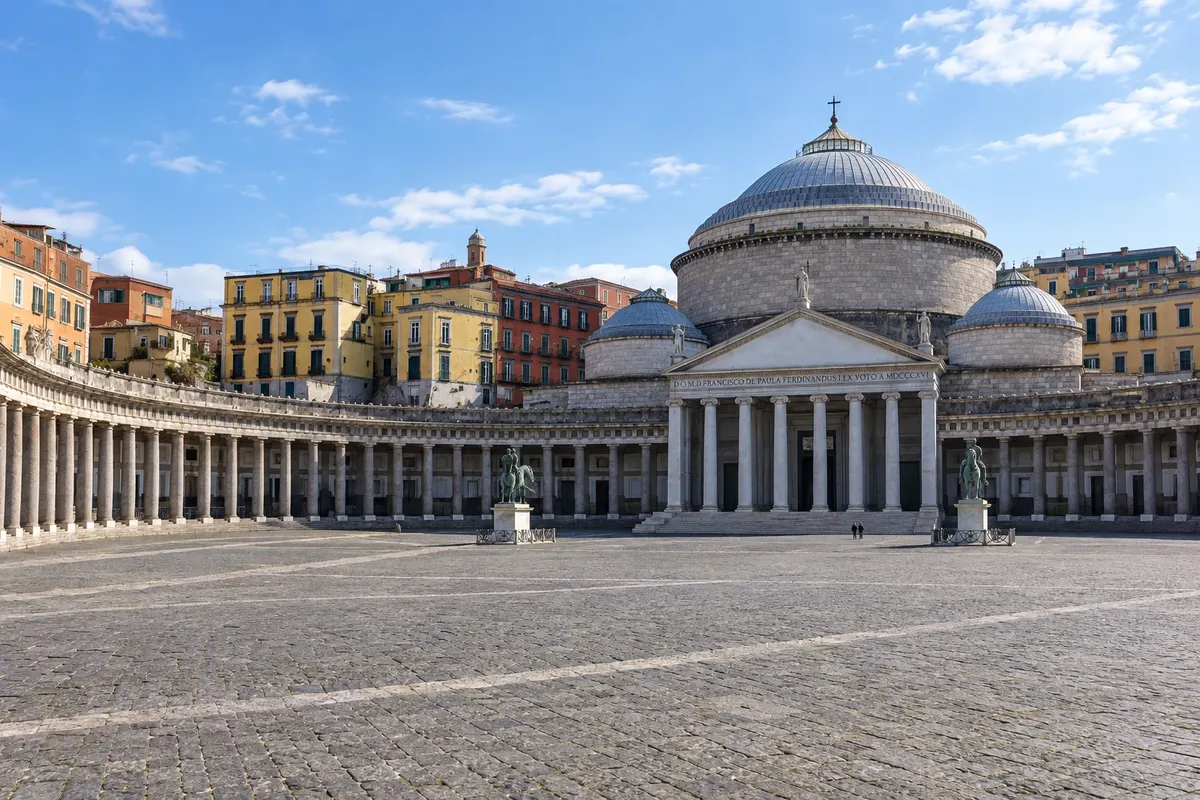
The largest square in Naples, between the Palazzo Reale and the church of San Francesco di Paola, with its semicircular colonnade.

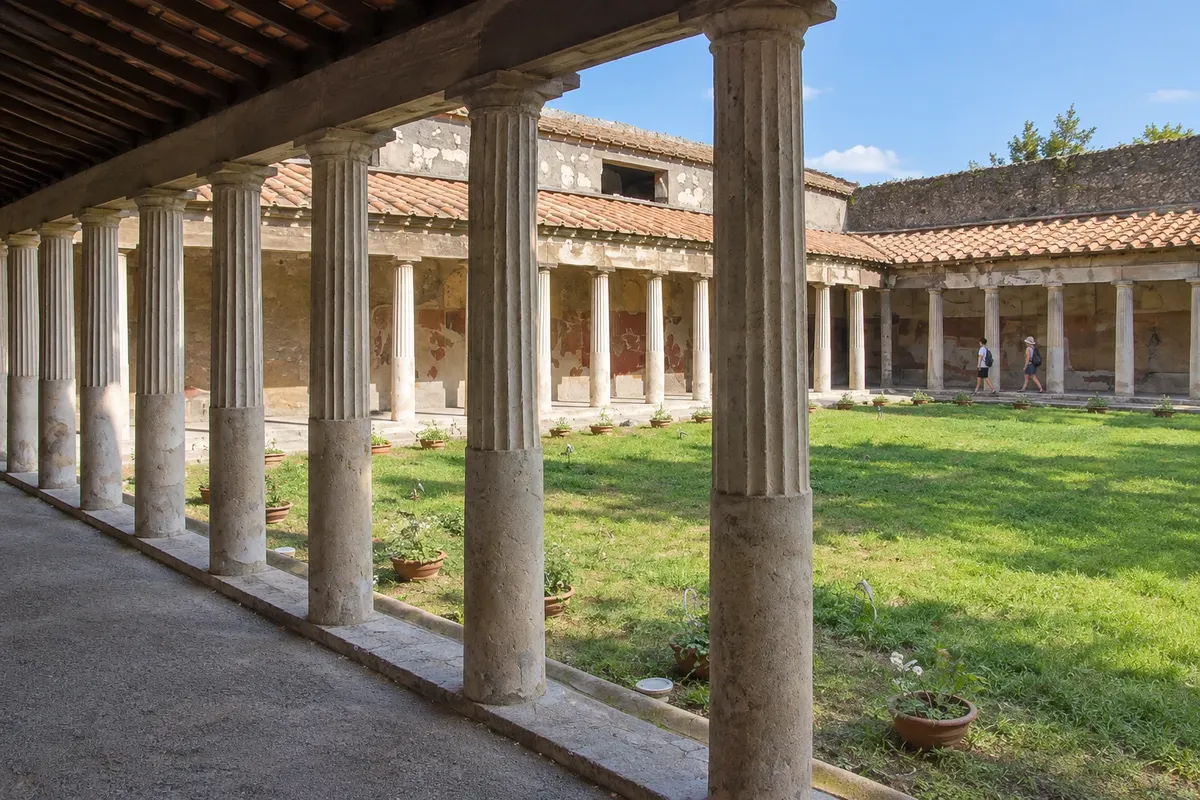
Villa of Poppaea (Oplontis)
Pompeii · Campania · Ruins

Villa of Poppaea (Oplontis)

Luxury Roman villa in Oplontis, now Torre Annunziata, attributed to Popeia, wife of Nero, with large frescoes and gardens.

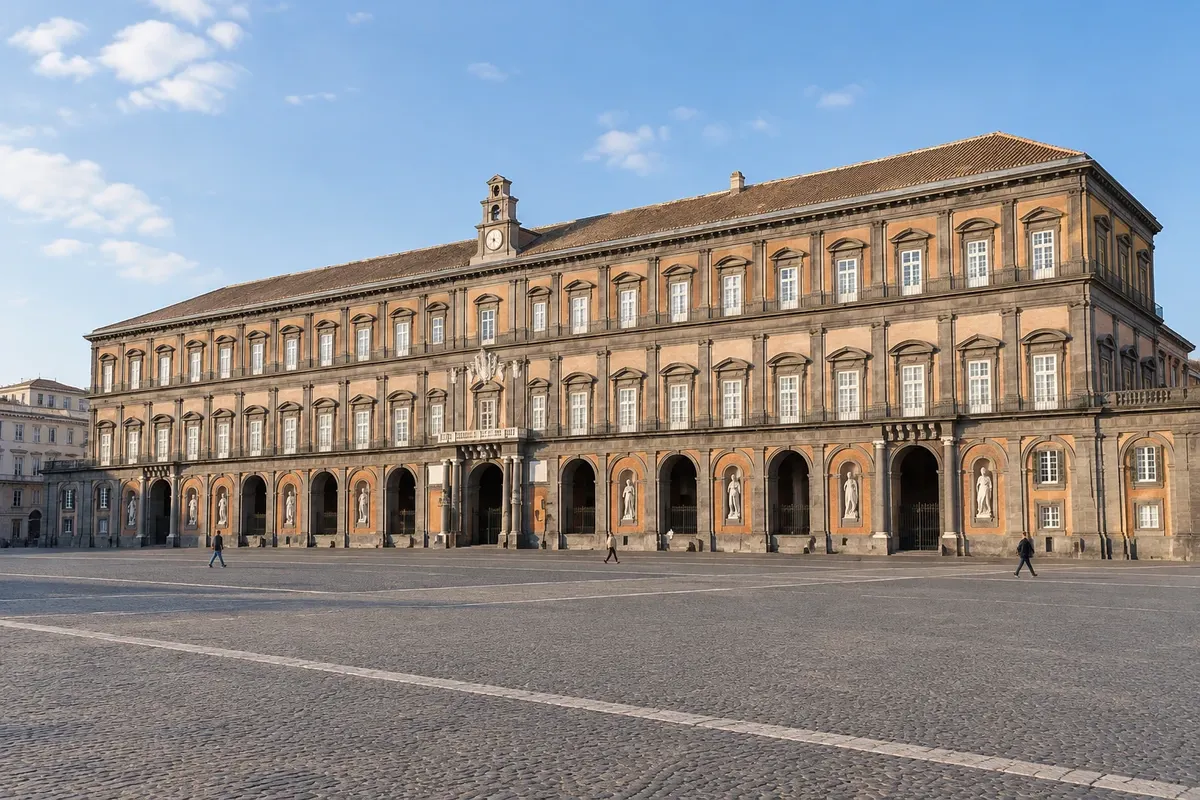
Royal Palace of Naples (Palazzo Reale di Napoli)
Naples · Campania · Palace

Royal Palace of Naples (Palazzo Reale di Napoli)

Palace of the Spanish viceroys and the Bourbon kings, with royal apartments, an honor staircase and a chapel, facing the Piazza del Plebiscito.

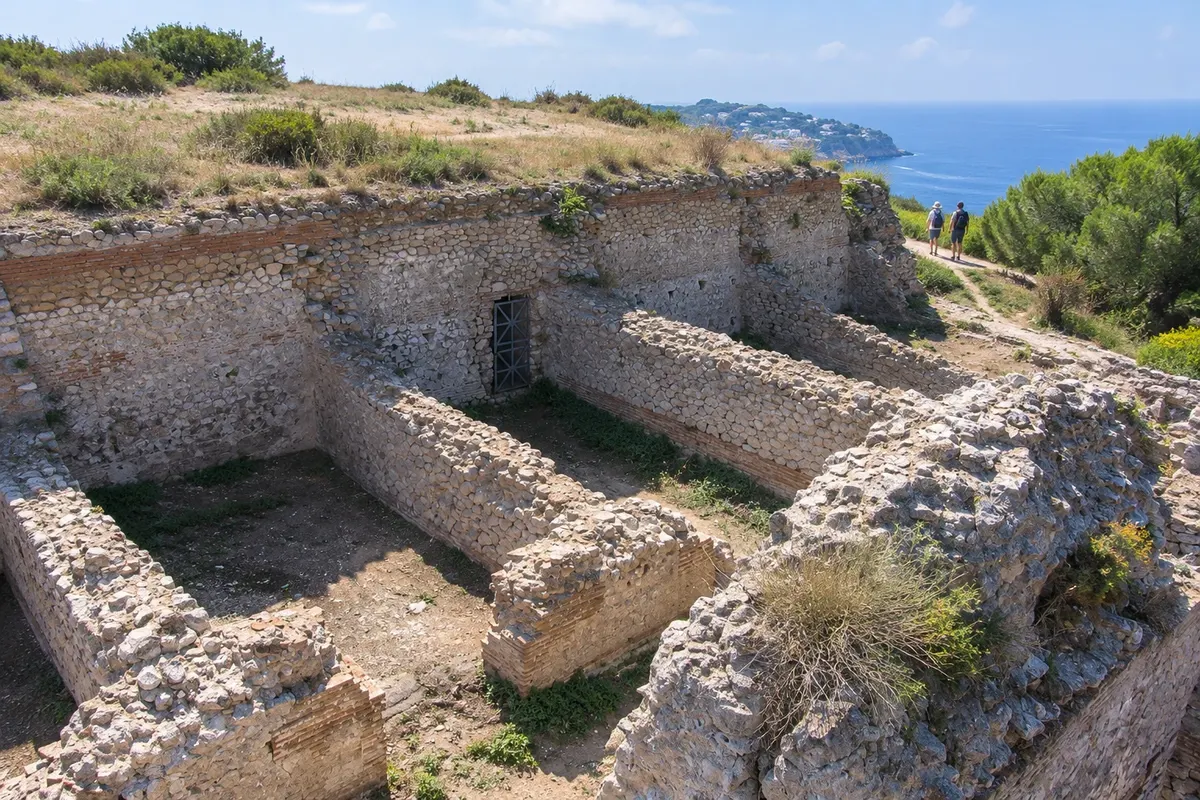
Villa Jovis
Capri · Campania · Ruins

Villa Jovis

Ruins of the largest villa of emperor Tibério, on the top of Monte Tiberio, at the northeastern tip of the island, overlooking the golfo de Nápoles.

Boat tour around the island
Capri · Campania · Boat tour

Boat tour around the island

Boat trip around Capri, departing from Marina Grande, passing the coastal grottos, the Faraglioni and the Punta Carena lighthouse.

Naples Waterfront (Lungomare di Napoli)
Naples · Campania · Street

Naples Waterfront (Lungomare di Napoli)

Naples' seafront along the Via Partenope and the Via Caracciolo, with the Castel dell'Ovo, the Borgo Marinari and views of the gulf stretching to Mount Vesuvius.

Castel Sant'Elmo
Naples · Campania · Grad

Castel Sant'Elmo

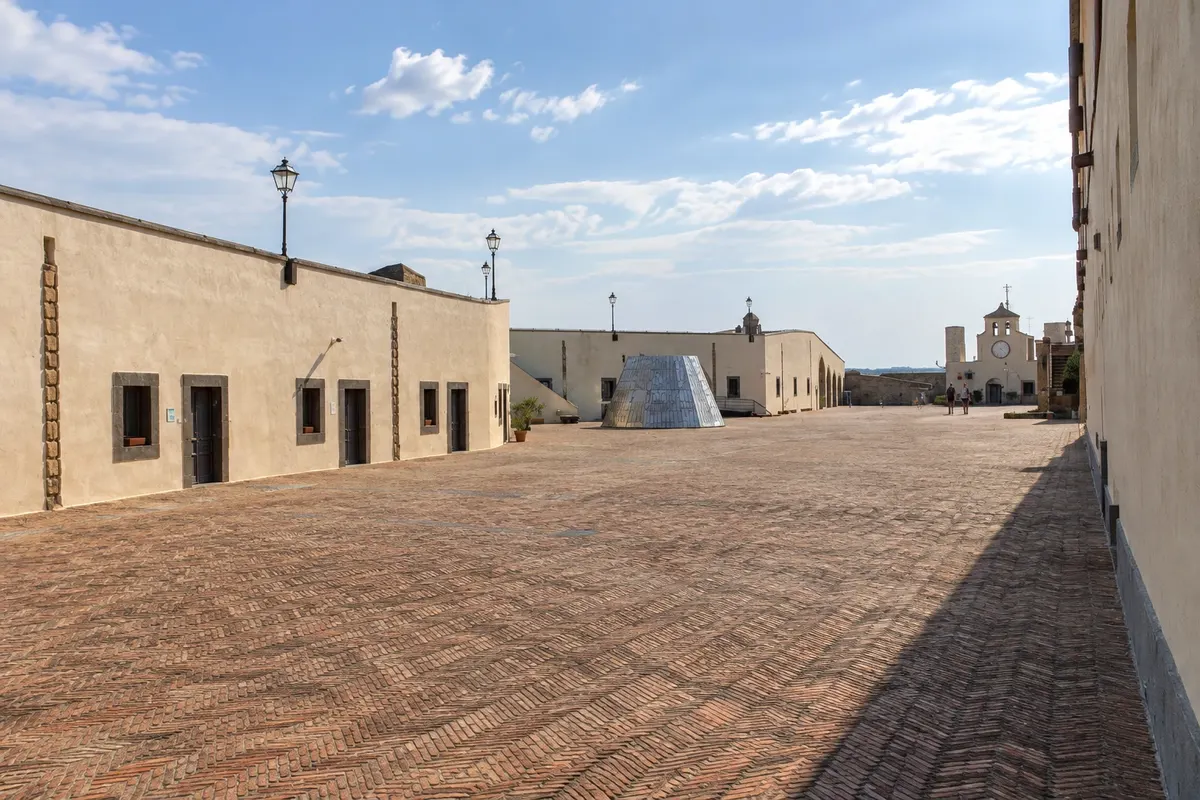
Star-shaped fortress atop the Vomero, with the widest view of Naples, the bay and Vesuvius.

Certosa and Museum of San Martino
Naples · Campania · Muzej

Certosa and Museum of San Martino

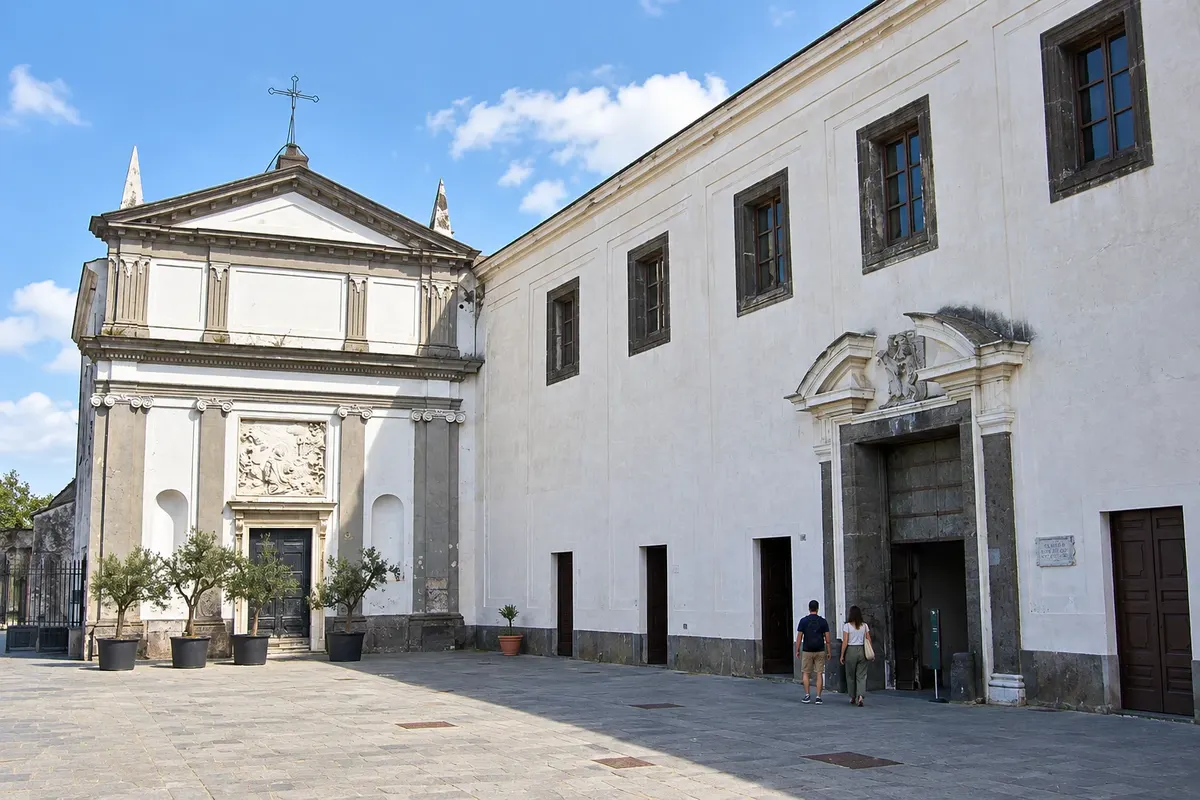
Former Carthusian monastery in the Vomero, now a museum, with a Baroque church, cloister and a large collection of Neapolitan nativity scenes.

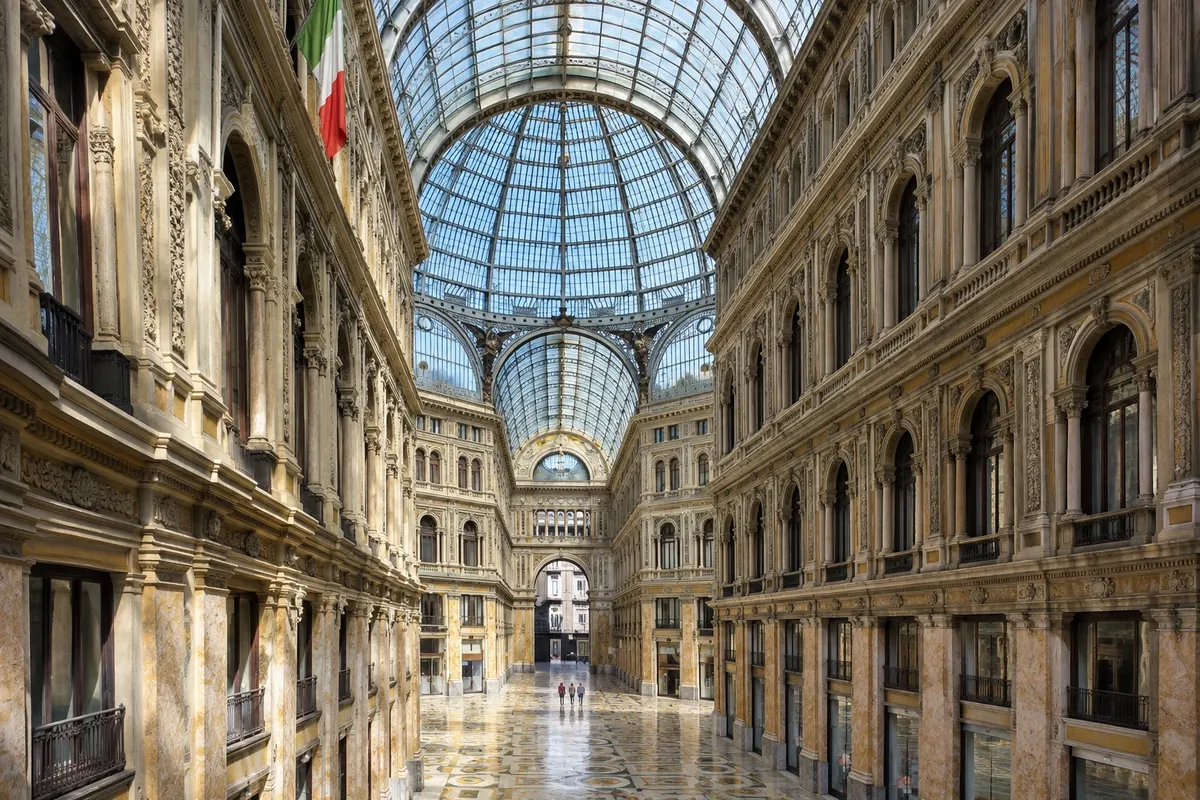
Galleria Umberto I
Naples · Campania · Architecture

Galleria Umberto I

Late 19th-century shopping arcade with a glass-and-iron dome, mosaic floor and an entrance facing the Teatro di San Carlo.

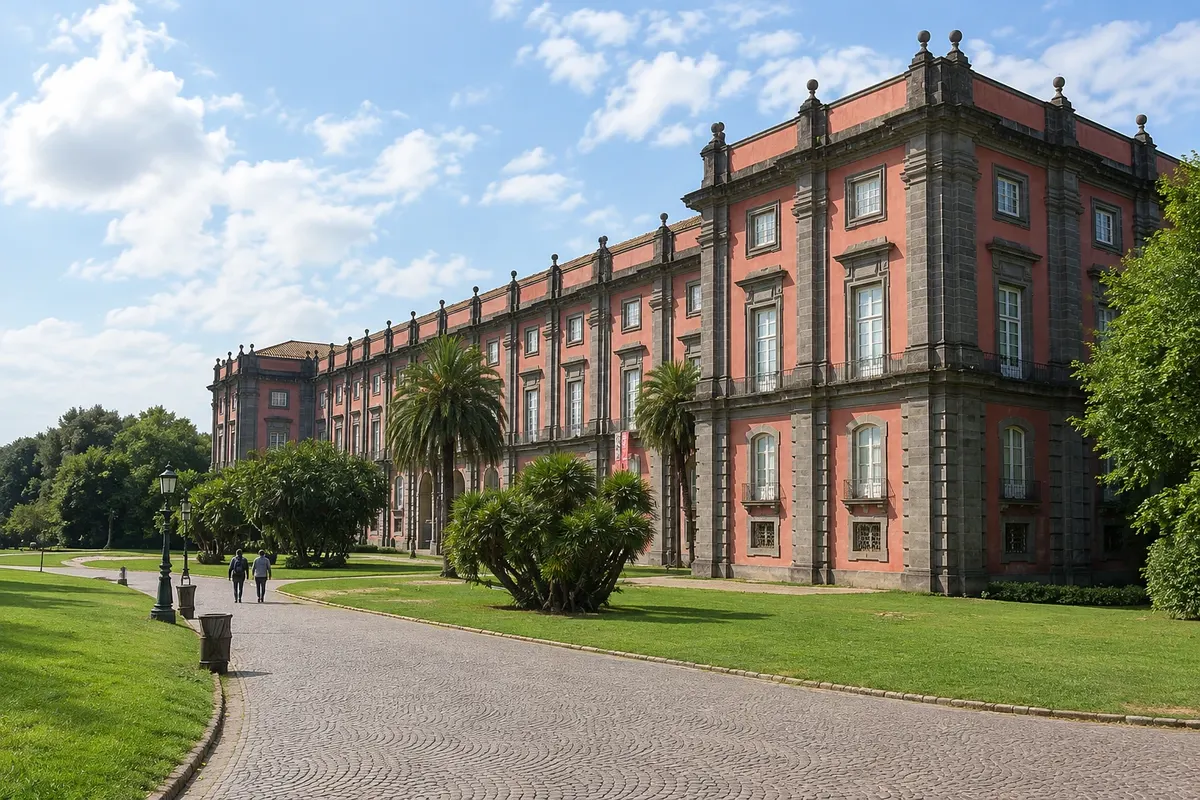
Capodimonte Museum and Royal Park
Naples · Campania · Muzej

Capodimonte Museum and Royal Park

Former Bourbon hunting palace high on Capodimonte, housing the Farnese painting collection (Titian, Raphael, Caravaggio) and a large park.

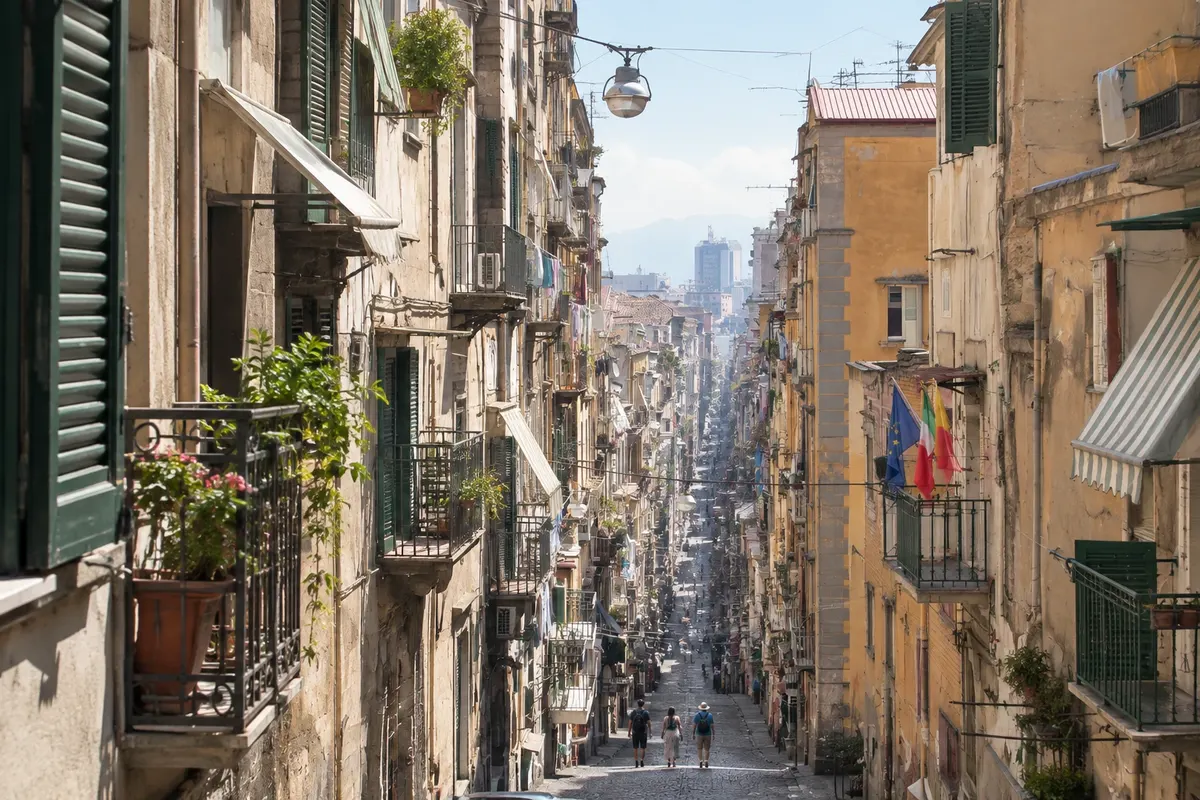
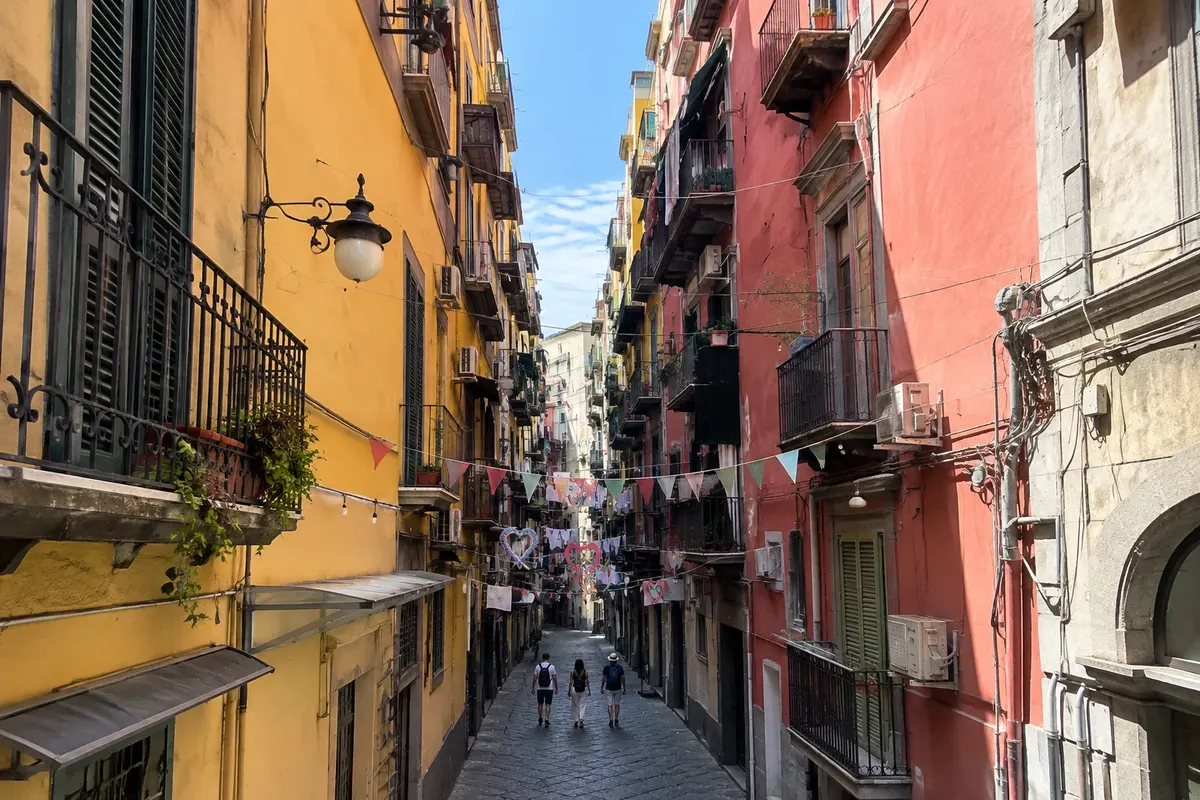
Spanish Quarters (Quartieri Spagnoli)
Naples · Campania · Zgodovinska mestna četrt

Spanish Quarters (Quartieri Spagnoli)

A neighbourhood of narrow, uphill streets beside the Via Toledo, built in the 16th century for Spanish troops, where the large Maradona mural is located.

Kaj izbrati pred odhodom

Izleti – Naples, Pompeii and Capri

Izhodišče, trajanje, potek, vključene storitve in okvirna cena vsakega izleta.

Naples historic center on foot: Spaccanapoli, the Duomo and San Gregorio Armeno

Odhod: Piazza del Gesù Nuovo (metro Dante or Toledo) Peš po starem mestnem jedru Približno 3 ure Dopoldne Lahko

The Centro storico di Napoli (Naples historic center), a UNESCO World Heritage site, follows the Greek layout of Neápolis: the Spaccanapoli, the straight street that 'splits' the city in two, starts at Piazza del Gesù Nuovo, with the church’s pointed stone façade and the majolica cloister of Santa Chiara, and continues past baroque churches, palaces and street stalls up to Via Duomo. Via San Gregorio Armeno is the street of presepi, with nativity-figure workshops year-round, from shepherds to politicians. The Duomo di Napoli (Naples Cathedral), from the 13th century, houses the Cappella del Tesoro di San Gennaro, with the bust and the blood of the patron saint, which the city expects to see liquefy on September 19, the first week of May and December 16, and the Basilica of Santa Restituta, from the 4th century, with the oldest baptistery in the West. Piazza San Domenico Maggiore and Via dei Tribunali, with historic pizzerias, complete the tour.

Kraji na poti: Centro storico di Napoli, Duomo di Napoli.

Vključuje: Self-guided walk. Cloister of Santa Chiara, Tesoro di San Gennaro and baptistery with separate paid admission; churches free of charge.

Nasvet: Start at 9:00, when shops open and the streets are still calm. Pizza on Via dei Tribunali can have a line: go before noon or at 15:00. Keep your phone put away when walking narrow streets, as in any large city.

Najboljši čas za obisk: Year-round. On September 19 the feast of San Gennaro; in December Via San Gregorio Armeno becomes impassable.

Museo Archeologico Nazionale: the treasures of Pompeii

Odhod: Museo metro (line 1) or Cavour (line 2) Museum Približno 3 ure Dopoldne ali popoldne Lahko

The Museo Archeologico Nazionale di Napoli (MANN) is the museum that complements Pompeii and Herculaneum: the mosaics from the House of the Faun, including the Battle of Alexander made of 1.5 million tesserae; the frescoes removed from the villas in the 18th century; the Secret Cabinet, with erotic objects that were locked away for centuries; the bronzes from the Villa dei Papiri of Herculaneum; the Farnese collection, featuring the Hercules and the Farnese Bull, the largest sculptural group of Antiquity carved from a single block; and the Egyptian collection, one of the largest in Italy. The building, the former 16th-century Palazzo degli Studi, has the meridian hall on the upper floor. It’s a museum to see before or after Pompeii, because almost everything that was in the houses is here.

Kraji na poti: Museo Archeologico Nazionale di Napoli.

Vključuje: Separate paid admission (ticket office on site or online); closed on Tuesdays; free entry on the first Sunday of the month. Audio guide available for an extra charge.

Nasvet: Go before Pompeii, preferably in the morning, and prioritize the mosaics, the frescoes and the Farnese collection; the Secret Cabinet has its own opening times. The combined Campania Artecard ticket includes the museum and transport.

Najboljši čas za obisk: Vse leto.

Cappella Sansevero and the Veiled Christ

Odhod: Via Francesco De Sanctis (Piazza San Domenico Maggiore) Chapel with reservation Približno 45 minut Dopoldne ali popoldne Lahko

The Cappella Sansevero, the family chapel of Prince Raimondo di Sangro, an 18th-century alchemist and Freemason, houses the Veiled Christ (Cristo Velato), Giuseppe Sanmartino’s 1753 sculpture in which the marble veil over Christ’s body appears like wet fabric—the most visited work in Naples. Surrounding it are allegorical sculptures of the virtues, such as Pudicizia, also veiled, and Disinganno, the man freeing himself from a marble net; on the ceiling, the Glory of Paradise. In the crypt are the “anatomical machines,” two skeletons with the circulatory system preserved by a method that still intrigues. The chapel is small and visits are timed with limited capacity; photography is not allowed.

Kraji na poti: Cappella Sansevero.

Vključuje: Separate paid ticket, with mandatory timed reservation on the official website (often sells out days in advance). Closed on Tuesdays.

Nasvet: Buy on the official Museo Cappella Sansevero website as soon as you have a date; weekend time slots sell out first. Combine it with the walk along the Spaccanapoli, 50 m away.

Najboljši čas za obisk: Vse leto.

Napoli Sotterranea: the city beneath the city

Odhod: Piazza San Gaetano, Via dei Tribunali Underground guided tour Približno 1 uro in 30 minut Dopoldne ali popoldne moderate (stairs and narrow passages)

Napoli Sotterranea (Naples Underground) descends 40 m via 136 steps to tuff cavities excavated by the Greeks in the 4th century BC to extract stone, later converted by the Romans into aqueducts and cisterns, used as a dump in subsequent centuries and as an air-raid shelter in World War II, preserving the furniture and toys left by people who lived there during the 1943 bombings. The guided tour visits the cisterns, the narrow section traveled by candlelight, the underground garden and, on the way back, the remains of the Roman theater where Nero sang, hidden beneath the houses of Via dei Tribunali and reached from inside an apartment. There are other networks beneath the city: the Galleria Borbonica, with old 1950s cars abandoned in the king’s tunnel, and the Catacombs of San Gennaro, in the Rione Sanità.

Kraji na poti: Napoli Sotterranea.

Vključuje: Separate paid ticket, with guided tour included (Italian and English), at fixed times; online booking recommended.

Nasvet: Bring a coat: the temperature underground is about 15 °C. If you are claustrophobic you can skip the candle-lit section and wait for the group’s return. The Galleria Borbonica and the catacombs are separate tours and require booking.

Najboljši čas za obisk: Vse leto.

Piazza del Plebiscito, Palazzo Reale and Galleria Umberto I

Odhod: Toledo metro (line 1) or Municipio Walk with palace Približno 3 ure Popoldne Lahko

Piazza del Plebiscito is the 25,000 m² square between the Palazzo Reale and the colonnade of the Basilica of San Francesco di Paola, inspired by the Pantheon, with the equestrian statues of Charles III and Ferdinand I; local tradition says to cross it blindfolded between the two statues, which no one manages. The Palazzo Reale di Napoli (Royal Palace), from 1600, seat of the Spanish viceroys and the Bourbons, features the marble staircase, historic apartments with the throne, the chapel and the court theater, and the National Library with the Herculaneum papyri. Next to it, the Teatro di San Carlo, from 1737, the oldest continuously active opera house in Europe, offers guided tours. The Galleria Umberto I, from 1890, the iron-and-glass arcade, opens onto Via Toledo, the shopping street; Caffè Gambrinus, on the square corner, has served Neapolitan coffee since 1860.

Kraji na poti: Piazza del Plebiscito, Palazzo Reale di Napoli, Galleria Umberto I.

Vključuje: Square and gallery free of charge. Palazzo Reale with separate paid admission (closed on Wednesdays). Visit to Teatro San Carlo requires separate paid admission, with set times.

Nasvet: Do this stretch in the late afternoon and finish at the Lungomare. Toledo metro station, with the blue mosaic by Óscar Tusquets, is worth descending to even if you don’t ride.

Najboljši čas za obisk: Vse leto.

Lungomare, Castel dell'Ovo and Chiaia

Odhod: Via Partenope (bus or on foot from Piazza del Plebiscito) Seafront walk Približno 2 uri late afternoon Lahko

The Lungomare di Napoli, the 3 km seafront from Via Partenope to Mergellina, is the Neapolitans' evening promenade, with the gulf, Vesuvius on one side and Capri in the distance, and no cars on the main stretch. Castel dell'Ovo, the Norman fortress on the islet of Megaride—where legend says Virgil hid an enchanted egg that supports the city—is linked to the seafront by a bridge, with the Borgo Marinari, the harbor for boats and restaurants, at its foot; the castle terraces are open to visitors when there are no works. Behind the seafront lies the Chiaia neighborhood, with the Villa Comunale, the park from 1780, the Riviera di Chiaia and the shopping streets Via dei Mille and Via Filangieri; the Museo Diego Aragona Pignatelli Cortes, in a neoclassical villa, shows how the aristocracy lived. From Mergellina the funicular climbs to Posillipo.

Kraji na poti: Lungomare di Napoli.

Vključuje: Free walk, no charge. Castel dell'Ovo is free when open (confirm). Pignatelli Museum requires admission.

Nasvet: Go between 6:00 PM and 8:00 PM and finish at the Borgo Marinari or a pizzeria on Via Partenope. On a clear day Vesuvius and Capri are fully visible; in the morning the light comes from behind the volcano.

Najboljši čas za obisk: All year; on summer evenings the seafront stays busy late.

Prikaži dodatne izlete (10)

Castel Sant'Elmo and Certosa di San Martino: Vomero

Odhod: Funicular Centrale (from Via Toledo) or Montesanto, up to Vomero Castle-viewpoint and monastery-museum Približno 3 ure Popoldne easy (funicular; ramps)

Vomero is the hill that overlooks Naples, reached in 5 minutes by the funiculars. Castel Sant'Elmo, the six-pointed star fortress built by the Spaniards in 1537 on the tuff, has from its terrace the widest view of the city: the entire gulf, Vesuvius, Capri, Ischia and the historic center below, and houses the Novecento a Napoli museum of 20th-century art. Next to it is the Certosa and Museo di San Martino, the Carthusian monastery from the 14th century remade in Baroque style by Cosimo Fanzago, with a church covered in marbles, the large cloister with the monks' cemetery surrounded by skulls, terraced gardens over the city and the museum, featuring the Cuciniello nativity scene, the largest Neapolitan nativity of the 18th century, the royal barges and the city's history section. The surrounding neighborhood is residential, with Via Scarlatti's shops and the Villa Floridiana.

Kraji na poti: Castel Sant'Elmo, Certosa and Museo di San Martino.

Vključuje: Castel Sant'Elmo and the Certosa have separate paid admission (the Certosa is closed on Wednesdays; the castle on Tuesdays). Funicular requires a separate paid ticket (urban ticket).

Nasvet: Take the funicular in the mid-afternoon, visit the Certosa first (it closes earlier) and finish on the castle terrace at sunset. Walk down the Pedamentina stairway (414 steps) to the center if there is still daylight.

Najboljši čas za obisk: Vse leto.

Capodimonte: the Bourbon palace and the art gallery

Odhod: Bus (R4, 168, C63) or Capodimonte Shuttle from the station Museum and park Približno 3 ure Dopoldne Lahko

The Museo e Real Bosco di Capodimonte occupies the palace that Charles of Bourbon began in 1738, high in the city, to house the Farnese collection he inherited from his mother: Titian (Danaë, the portrait of Paul III with his nephews), Masaccio, Botticelli, Bellini, Parmigianino (Antea), Bruegel (The Parable of the Blind), Caravaggio (The Flagellation of Christ) and drawings by Raphael and Michelangelo; on the second floor, 17th-century Neapolitan painting (Ribera, Luca Giordano, Artemisia Gentileschi), the queen Maria Amalia’s porcelain room and the royal apartments. The Real Bosco, the 134-hectare park, is the city’s largest green space, with the Capodimonte porcelain factory from 1743 and views over the gulf. The museum is far from the center and therefore peaceful.

Kraji na poti: Museo e Real Bosco di Capodimonte.

Vključuje: Separate paid admission (closed on Wednesdays); free on the first Sunday of the month. The park has no charge.

Nasvet: The Capodimonte Shuttle bus departs from Piazza Garibaldi and the Museo Archeologico; check the schedule. Reserve the entire morning, with lunch in the park.

Najboljši čas za obisk: Year-round; the park is a refuge in summer.

Quartieri Spagnoli: the narrow streets, the Maradona mural and street food

Odhod: Via Toledo (Toledo metro) Neighborhood walk Približno 2 uri Popoldne moderate (hills)

The Quartieri Spagnoli are a grid of narrow, steep streets opened in the 16th century to house Spanish troops, above Via Toledo: laundry hung between buildings, Vespas, roadside altars, grocers and neighborhood trattorie serving ragù and pasta e patate. On Via Emanuele De Deo, the Diego Maradona mural painted in 1990, after the second title, became an open-air shrine after the player's death, with photos, shirts and souvenir sellers around it; 'Largo Maradona' has queues all day. The neighborhood, which guidebooks warned against twenty years ago, is now one of the city's most visited, with guided tours and open kitchens; the Pignasecca, the street market on the edge of the neighborhood, is one of the oldest in the city.

Kraji na poti: Quartieri Spagnoli.

Vključuje: Free walk, no admission. Street food paid separately.

Nasvet: Go in the late afternoon, when the streets fill with locals; from Via Toledo, climb any side street. Eat the frittatina di pasta and the cuoppo of fried snacks from the stalls. As in any busy neighborhood, watch your bags.

Najboljši čas za obisk: Vse leto.

Pompeii: the Roman city under the ash

Odhod: Circumvesuviana, Pompei Scavi station - Villa dei Misteri (35 min from Naples) Archaeological site Približno 5 ur Ves dan moderate (uneven paving)

The Parco Archeologico di Pompei (Pompeii) is the town of about 12,000 inhabitants buried by the eruption of Vesuvius on August 24 (or October) in 79, discovered in 1748 and excavated since then over two thirds of the site: streets with cart ruts and stepping stones, the Forum with Vesuvius in the background, the Stabian baths, the Lupanar, the theatres, the amphitheatre for 20,000, bakeries with mills, thermopolia (food counters) and houses with frescoes and mosaics, such as the House of the Faun, the House of the Vettii and the House of the Tragic Poet, with the 'Cave Canem'. In the Garden of the Fugitives and in the Antiquarium are the plaster casts of bodies, made by filling the voids left in the ash. The Villa dei Misteri, on the outskirts, a 10-minute walk from the Porta Marina entrance, has the cycle of red frescoes depicting a Dionysian rite, the best preserved from Antiquity. Houses open on a rotation: not all are visitable on the same day.

Kraji na poti: Parco Archeologico di Pompei, Villa dei Misteri.

Vključuje: Paid admission separately, with timed entry on busy days, sold on the official website (Pompei or Pompei+ ticket, including the suburban villas); free on the first Sunday of the month. Audioguides and guided tours cost extra. Admission is nominal.

Nasvet: Enter through Porta Marina at 9:00 with water, a hat and sneakers; pick up the paper map at the entrance and choose a route of 3 to 4 hours (the website suggests itineraries). There are drinking fountains and a snack bar in the Forum. The park limits the number of visitors per day: buy in advance.

Najboljši čas za obisk: All year; from April to June and September to October the heat is bearable; in July and August go early and leave in the afternoon. In summer there are some nighttime openings on select days.

Herculaneum: the town buried by volcanic mud and ash

Odhod: Circumvesuviana, Ercolano Scavi station (20 min from Naples) Archaeological site Približno 2 uri in pol Dopoldne easy (compact site)

The Parco Archeologico di Ercolano (Herculaneum) is the seaside town of 4,000 residents buried under mud and volcanic ash flows at 400 °C, which carbonized and preserved wood, textiles, food and the upper floors of houses—something Pompeii lacks: wooden doors, beams, beds and shelves; the House of the Relief of Telephus; the House of Neptune and Amphitrite, with its blue mosaic; the baths; and the College of the Augustales. In the arches by the old shoreline are the skeletons of about 300 people who waited for rescue by sea. The site has 4.5 hectares excavated (the rest lies under the modern town of Ercolano), is compact and can be seen in two to three hours, with shade in several houses, and is usually quieter than Pompeii. From the station, the entrance is a 10-minute downhill walk along Via IV Novembre.

Kraji na poti: Parco Archeologico di Ercolano.

Vključuje: Separate paid admission (ticket office on site or online); free on the first Sunday of the month. Audio guide available for an extra fee.

Nasvet: Do Herculaneum in the morning and Vesuvius in the afternoon, by the bus that departs from Ercolano Scavi station: they are on the same line. The MAV, the virtual museum next door, reconstructs the towns in 3D.

Najboljši čas za obisk: Vse leto.

Vesuvius: the ascent to the Gran Cono

Odhod: Ercolano Scavi (Vesuvio Express bus) or Pompei (EAV bus) Bus and walk to the crater Približno 4 ure Dopoldne moderate (30 min ascent on gravel)

Vesuvius, at 1,281 m, is the active volcano that destroyed Pompeii and Herculaneum in AD 79, had its last eruption in 1944, and is monitored by the Vesuvius Observatory; the National Park protects the cone. Buses climb to the parking area at 1,000 m, and from there the gravel trail of about 800 m rises in 25–30 minutes to the rim of Vesuvius — the Gran Cono (Great Cone), a crater 500 m in diameter and 230 m deep, with fumaroles — and the walk along the rim looks out over the Gulf of Naples, the towns below, Capri and the Sorrento peninsula. Volcanologist guides accompany groups at the top. Access is by timed reservation and limited numbers; with strong wind, rain or fog the park closes the trail, and in winter visibility often fails.

Kraji na poti: Vesuvius – Gran Cono.

Vključuje: Park entrance paid separately, with a timed reservation, only on the official website (vesuviopark.vivaticket.it); buses are paid separately (Vesuvio Express from Ercolano, EAV from Pompei).

Nasvet: Buy the park ticket before taking the bus; without it you cannot enter. Bring a jacket even in summer (it’s windy at the top), closed sneakers, and water. Go in the morning, before the afternoon clouds; on cloudy days the hike is not worthwhile.

Najboljši čas za obisk: From April to October there are more clear days; in winter, only with a forecast for clear skies.

Sanctuary of Pompeii and the modern town

Odhod: Pompei (Circumvesuviana or Trenitalia station) Visit to the shrine Približno 1 uro Popoldne Lahko

The eclectic-style basilica, with a 1901 façade and an 80 m bell tower (with elevator and views over the excavations and Vesuvius), houses the painting of the Virgin of the Rosary in a gold-and-stone frame; the Supplication to the Virgin of Pompeii is recited on May 8 and on the first Sunday of October, when the square fills. The modern town has a square with cafés and souvenir shops; the excavations are a 15-minute walk away.

Kraji na poti: Santuario della Beata Vergine del Rosario di Pompei.

Vključuje: Basilica free of charge; climb to the bell tower paid separately. Free walk.

Nasvet: Combine with the day at the excavations: the basilica is a 15-minute walk from the exit at Piazza Anfiteatro. On the days of the Supplication (May 8 and the first Sunday of October) traffic and trains become very crowded.

Najboljši čas za obisk: Vse leto.

Capri: Piazzetta, Giardini di Augusto and the Faraglioni

Odhod: Marina Grande (ferry or hydrofoil from Naples or Sorrento) Round-trip boat trip and walk on the island about 7 hours Ves dan moderate (stairs and hills)

Capri, the 10 km² island opposite Sorrento, is reached in 50 minutes by hydrofoil from Naples or 25 minutes from Sorrento, arriving at Marina Grande, from where the funicular climbs in 4 minutes to the Piazzetta di Capri (Piazza Umberto I), with its cafés, the clock tower and the view over the gulf. Via Camerelle, lined with designer shops, leads to the Giardini di Augusto, the terraced 1918 gardens with the island's most photographed view: the Faraglioni di Capri, the three sea stacks up to 109 m high, and Via Krupp, the switchback road that descends to Marina Piccola. Via Tragara is the panoramic walk to the viewpoint over the Faraglioni. At the eastern tip is Villa Jovis, the residence of Emperor Tiberius, who ruled Rome from Capri between 27 and 37, a 45-minute uphill walk, with the Salto di Tiberio, the 300 m cliff. The island fills with day visitors between 10:00 and 17:00; those who stay overnight see a different Capri.

Kraji na poti: Piazzetta di Capri, Giardini di Augusto, Faraglioni di Capri, Villa Jovis.

Vključuje: Ferry or hydrofoil paid separately (reservation recommended in high season); funicular and bus paid separately. Giardini di Augusto and Villa Jovis have small entry fees.

Nasvet: Take the first hydrofoil of the morning and the last one of the afternoon; on rough seas boats are delayed or canceled. Use buses and the funicular (tickets at Marina Grande) and avoid taxis, which are expensive. Via Krupp is often closed because of rockfall: the view from the gardens is what’s worth it.

Najboljši čas za obisk: From April to October; in July and August the island is crowded; from November to March many hotels and restaurants close and boat services are reduced.

Anacapri, Villa San Michele and Monte Solaro by chairlift

Odhod: Capri (bus from the Piazzetta or from Marina Grande to Anacapri) Upper village, house-museum and chairlift Približno 4 ure Dopoldne easy (chairlift)

Anacapri, the upper village of the island, at 275 m, is quieter than Capri and is reached by the bus that climbs the winding coastal road. Villa San Michele, the house the Swedish physician Axel Munthe built between 1896 and 1910 atop a Roman villa, with its chapel, pergola, the Egyptian granite sphinx facing the gulf and the garden, is a museum and houses the Swedish foundation; Munthe’s book, A história de San Michele, was a worldwide bestseller. Piazza Vittoria has the single-seat chairlift that rises in 13 minutes to Monte Solaro, the island’s highest point, at 589 m, with 360-degree views of the Faraglioni, the gulfs of Naples and Salerno and, on a clear day, Calabria; the descent on the trail takes 1 hour, passing the hermitage of Santa Maria a Cetrella. The church of San Michele, in Anacapri, has a 1761 majolica floor with the Earthly Paradise, seen from above from a choir.

Kraji na poti: Villa San Michele, Monte Solaro.

Vključuje: Villa San Michele, the chairlift (return or one-way) and the church of San Michele have separate entrance fees. Bus costs extra.

Nasvet: Go to Anacapri in the morning, before the tour groups, ride up Monte Solaro with a clear sky and walk down. The Capri–Anacapri bus fills up: board at Marina Grande direct to Anacapri if you arrive by sea.

Najboljši čas za obisk: From April to October; the chairlift operates year-round, with reduced hours in winter and closed in strong winds.

Grotta Azzurra and the island tour by boat

Odhod: Marina Grande, Capri Boat trip with entry to the grotto Približno 2 uri in pol morning (best light until early afternoon) Lahko

The Grotta Azzurra (Blue Grotto) is the sea cave with an entrance about 1 m above the water through which rowboats enter by leaning back passengers: inside, sunlight enters through a submerged opening and lights the water an electric blue, over 54 m long and 15 m high; the Romans used it as Tiberius’s nymphaeum, with statues on the floor. Access is only with authorized boatmen, from launches or from the point on the Anacapri road, and depends on the sea: with waves or high tide the grotto closes, which is common. The Giro dell'isola in barca (island boat tour) of 2 hours, leaving from Marina Grande, passes the Grotta Bianca, Grotta Verde and Grotta del Corallo, the natural arch, Villa Malaparte on Punta Massullo and under the arch of the Faraglioni, and can include the stop at the Grotta Azzurra, with a switch to the rowboat.

Kraji na poti: Grotta Azzurra, Giro dell'isola in barca, Faraglioni di Capri.

Vključuje: Boat tour paid separately, per person (group) or per boat (private); entry to the Grotta Azzurra paid separately on site (archaeological site ticket plus the rowboat). Closes in rough seas.

Nasvet: Do the tour in the morning, when the grotto is more often open and the light is better; the line of boats at the grotto entrance can take an hour in July and August. Check at Marina Grande on the day whether the grotto is open before buying a tour that includes a stop there.

Najboljši čas za obisk: From April to October; the grotto closes in rough seas in any month.

Po dnevih

Naples, Pompeii and Capri – načrt poti. Število dni: 3, 5in7

Predlogi za načrtovanje poti. Vrstni red dni prilagodite vremenu in razpoložljivosti izletov.

3 dni · Naples, Pompeii and Capri in 3 days

ZaFirst time, arriving from Rome by train, with one day for each place. · Izhodišče:Naples, in the historic center or in Chiaia
  1. Dan 1 · Naples

    Arrival at Napoli Centrale (from Rome, 1 h 10 by high-speed train). Spaccanapoli, the Duomo and San Gregorio Armeno in the morning; Cappella Sansevero at the reserved time; afternoon at the Museo Archeologico; Piazza del Plebiscito and the Lungomare at sunset, pizza on Via dei Tribunali or Via Partenope.

  2. Dan 2 · Pompeii

    Circumvesuviana from Porta Nolana or Garibaldi to Pompei Scavi (35 minutes); the ruins with a timed-entry ticket, 4 to 5 hours, including the Villa dei Misteri; Sanctuary in the afternoon; return to Naples for the Quartieri Spagnoli in the evening.

  3. Dan 3 · Capri

    First hydrofoil from Molo Beverello (50 minutes); funicular to the Piazzetta, Giardini di Augusto and Via Tragara; bus to Anacapri for Villa San Michele and Mount Solaro; return late afternoon. Night in Vomero, with Castel Sant'Elmo, or on the Lungomare.

5 dni · Naples, Pompeii and Capri in 5 days: with Herculaneum, Vesuvius and one night in Capri
ZaFor anyone who wants both places, the volcano and an overnight on the island. · Izhodišče:Naples (3 nights) and Capri (1 night)
  1. Dan 1 · Naples: historic center

    Arrival. Spaccanapoli, the Duomo, San Gregorio Armeno; Cappella Sansevero booked; Napoli Sotterranea in the afternoon; pizza on Via dei Tribunali.

  2. Dan 2 · Naples: museums and waterfront

    Museo Archeologico in the morning; Piazza del Plebiscito, Palazzo Reale, Galleria Umberto and Via Toledo; funicular up to Vomero for the Certosa di San Martino and sunset at Castel Sant'Elmo; Quartieri Spagnoli in the evening.

  3. Dan 3 · Herculaneum and Vesuvius

    Circumvesuviana to Ercolano Scavi; Herculaneum in the morning (2 h 30); bus to Vesuvius with timed-entry ticket, ascent to the Gran Cono in the afternoon; return to Naples and dinner on the Lungomare.

  4. Dan 4 · Pompeii and Capri

    Pompeii right at opening, 4 hours; train to Sorrento (30 minutes) and hydrofoil to Capri late afternoon (25 minutes); Piazzetta and Giardini di Augusto at dusk, night in Capri with the island empty.

  5. Dan 5 · Capri

    Boat tour around the island with the Grotta Azzurra in the morning; Anacapri, Villa San Michele and Monte Solaro in the afternoon; hydrofoil back to Naples at the end of the day.

7 dni · Naples, Pompeii and Capri in 7 days: the whole bay
ZaOne week based in Naples and two nights split between Capri and Sorrento, without a car. · Izhodišče:Naples (5 nights) and Capri (2 nights)
  1. Dan 1 · Naples: historic center

    Arrival. Spaccanapoli, the Duomo and the Tesoro di San Gennaro, San Gregorio Armeno; Cappella Sansevero booked; Via dei Tribunali at night.

  2. Dan 2 · Naples: museums

    Museo Archeologico in the morning; Napoli Sotterranea or Galleria Borbonica in the afternoon; Piazza del Plebiscito and the Lungomare at sunset.

  3. Dan 3 · Pompeii

    Pompeii with timed-entry ticket, almost a full day, including the Villa dei Misteri; Sanctuary at the end of the afternoon.

  4. Dan 4 · Herculaneum and Vesuvius

    Circumvesiana to Ercolano Scavi for Herculaneum in the morning, with preserved wooden houses and the skeletons from the ancient beach; bus to Vesuvius in the afternoon with the park ticket reserved, and the return from the crater; dinner in the Quartieri Spagnoli.

  5. Dan 5 · Capodimonte and Vomero

    Capodimonte in the morning; funicular to Vomero, Certosa di San Martino and Castel Sant'Elmo; hydrofoil to Capri late afternoon and night on the island.

  6. Dan 6 · Capri

    Boat tour around the island in the morning, stopping at the Grotta Azzurra if the sea allows; walk up to Villa Jovis, with the Salto di Tiberio, after lunch; Via Tragara to the Faraglioni viewpoint at sunset and evening in the Piazzetta, with the island empty of day visitors.

  7. Dan 7 · Anacapri and return

    Anacapri, Villa San Michele and Monte Solaro; hydrofoil back to Naples or to Sorrento to continue on to the Amalfi Coast.

Najboljši čas za obisk

Kdaj se odpraviti:Naples, Pompeii and Capri po mesecih

Spring (April to June) and early autumn (September and October) usually have pleasant weather for walking around the ruins and going to the sea. July and August are hot and crowded, and there is little shade in Pompeia. In winter, from December to February, there are fewer boats to Capri and the Grotta Azzurra closes more often because of the sea.

The seasons shown are the most usual ones; nature doesn't always follow the calendar.

januar Veliko padavin

winter · city without tourists

Winter. At the Napoli Capodichino station, 1991–2020 normals: average 9.1 °C (highs around 13 °C) and about 92 mm of rain. Short, humid days with sun between fronts; Vesuvius can have snow at the summit and the trail closes in fog. Pompeii and the museums are empty; Capri nearly closed, with reduced boat service. On January 17, St. Anthony the Abbot—bonfires in the neighborhoods.

februar Veliko padavin

zima · pust

Winter. At the Napoli Capodichino station, 1991–2020 normals: average 9.4 °C and about 95 mm of rain. Carnival with neighborhood parades; museums quiet. Still too cold for Capri, which remains in winter mode. A good month for Pompeii and Herculaneum without heat or queues.

marec Veliko padavin

spring beginning · Pompeii without heat

Early spring. At the Napoli Capodichino station, 1991–2020 normals: average 11.9 °C and about 78 mm of rain. Days lengthen, almond trees on Vesuvius; hydrofoils to Capri return to normal frequency at the end of the month.

april Veliko padavin

spring · Easter and Capri reopening

Spring. At the Napoli Capodichino station, 1991–2020 normals: average 14.7 °C and about 99 mm of rain, in showers. Holy Week and Easter fill the historic center and Capri reopens hotels; April 25 is a holiday. Good time for Vesuvius, with clearer skies, and for Pompeii.

maj Zmerne padavine

spring · San Gennaro and the Supplica

Full spring. At the Napoli Capodichino station, 1991–2020 normals: average 19 °C and about 59 mm of rain. Ideal weather for everything: archaeological sites, the island, the seafront. On the first Saturday in May the first miracle of San Gennaro of the year is celebrated; on May 8 the Supplica in Pompeii. High demand; book Sansevero, Pompeii and the hydrofoils.

junij Malo padavin

summer · warm sea

Summer. At the Napoli Capodichino station, 1991–2020 normals: average 23.1 °C and about 33 mm of rain. Increasing heat, warm sea at Capri and along the coast. Pompeii and Vesuvius in the morning; museums in the afternoon. June 2 is a holiday for the Republic. Long nights on the Lungomare.

julij Malo padavin

summer · intense heat

Summer. At the Napoli Capodichino station, 1991–2020 normals: average 25.6 °C (highs above 31 °C) and about 29 mm of rain. Pompeii in full sun is tiring: enter at 9:00 and leave by noon, or go during night openings. Capri is crowded between 10:00 and 17:00. The sea offers a refuge.

avgust Malo padavin

summer · Ferragosto

Summer. At the Napoli Capodichino station, 1991–2020 normals: average 26.2 °C and about 36 mm of rain, with storms toward the end of the month. On August 15 many Neapolitans leave and neighborhood shops close; the sites and museums remain open. Capri and Sorrento at their peak; hydrofoils and hotels sold out without reservations.

september Zmerne padavine

end of summer · San Gennaro

End of summer. At the Napoli Capodichino station, 1991–2020 normals: average 22.2 °C and about 89 mm of rain, in storms. On September 19 the feast of San Gennaro is celebrated, with the expected miracle at the cathedral and the city in celebration. Sea still warm at Capri; Pompeii with bearable heat from the second half of the month. One of the best months.

oktober Veliko padavin

autumn · Supplica and golden light

Autumn. At the Napoli Capodichino station, 1991–2020 normals: average 18.4 °C and about 136 mm of rain, with some heavy-rain days. Mild afternoons, Pompeii and Vesuvius with pleasant temperatures; on the first Sunday, the Supplica in Pompeii. Capri begins to empty and boats are reduced at the end of the month.

november Veliko padavin

Jesen · najbolj namočen mesec

Late autumn. At the Napoli Capodichino station, 1991–2020 normals: average 13.9 °C and about 152 mm of rain, the rainiest month. Capri in winter mode, Vesuvius frequently closed by fog; Naples of museums and pizzerias. Day 1 is a public holiday.

december Veliko padavin

winter · nativity scenes and San Gennaro

Winter. At the Napoli Capodichino station, 1991–2020 normals: average 10.1 °C and about 112 mm of rain. Via San Gregorio Armeno becomes the heart of the city, with nativity scenes; on December 16 the third miracle of San Gennaro. Between Christmas and New Year the city fills up; New Year’s Eve on the Lungomare features fireworks. Capri largely closed.

Načrtujte pot

Kako do tja:Naples, Pompeii and Capri

By train from other cities

Napoli Centrale (Piazza Garibaldi) serves high-speed trains: Rome about 1 h 10, Firenze about 2 h 50, Milano about 4 h 20, Bari about 4 h (regional/Intercity, or high-speed via Caserta in less), Salerno 35 to 40 minutes. Some trains stop at Napoli Afragola, outside the city: check when buying. For Pompeii, Herculaneum and Sorrento, the Circumvesuviana (EAV) departs from Porta Nolana station and from Garibaldi (beneath Centrale): Ercolano Scavi 20 minutes, Pompei Scavi 35 minutes, Sorrento 1 h 10; trains have no reservation, are crowded and part of the fleet lacks air conditioning. Trenitalia also reaches Pompei (the modern town station) on the Salerno line, and the EAV Campania Express is a version with reserved seats for tourists.

By boat: Capri, Sorrento and the islands

From Molo Beverello, in Naples port (Municipio metro), hydrofoils to Capri depart (about 50 minutes; SNAV, NLG) and Caremar ferries from Calata Porta di Massa (about 1 h 20); from Sorrento, hydrofoils to Capri in 25 minutes. There are also boats to Ischia and Procida, and in season to Positano and Amalfi. Buy in advance in July and August and check sea conditions: with waves schedules are delayed or cancelled. Large luggage is charged separately on hydrofoils.

By car: Naples, ZTL and parking

The A1 (Autostrada del Sole) arrives from Rome at about 225 km; the A3 continues to Salerno and Calabria; the A16 goes to Bari. Driving in Naples is difficult: heavy traffic, ZTL (limited traffic zone) in the historic center, in Chiaia and on the waterfront, with cameras and fines sent by the rental company, and few parking spaces. For Pompeii and Herculaneum there are paid parking lots at the entrances; in Capri outside cars are not allowed in season. A car only makes sense to go inland or to Puglia; within the bay, train and boat do the job.

How to get around Naples

Metro line 1 (Garibaldi–Toledo–Museo–Vomero, with the “art stations”), line 2 (Trenitalia, Garibaldi–Cavour–Mergellina), four funiculars to Vomero and ANM buses; the urban ticket is valid for 90 minutes and there are daily and weekly passes, sold in tobacco shops and machines. The Campania Artecard (3 or 7 days) combines regional transport and museums, including Pompeii and the MANN. Official taxis are white, with fixed fares for the airport and the port displayed on the car; agree the price beforehand. The historic center and Chiaia are walkable.

Vstopnice in rezervacije

Pompeii: nominal ticket on the official site, with a timed entry on busy days and a limited daily quota. Vesuvius: park ticket with timed entry, only on the official site, before taking the bus. Cappella Sansevero: mandatory online reservation, days in advance. Museo Archeologico, Herculaneum, Palazzo Reale, Certosa and Capodimonte: buying online avoids queues; no charge on the first Sunday of the month at state museums. Capri: hydrofoils require reservation in high season. Naples and Capri charge a tourist tax per night, paid at accommodation; Capri charges a landing fee on the boat ticket. Check the current table.

Pred odhodom

Praktične informacije

Z nekaj načrtovanja boste imeli več časa za uživanje na poti.

Kdaj se odpraviti

Spring (April to June) and early autumn (September and October) usually have pleasant weather for walking around the ruins and going to the sea. July and August are hot and crowded, and there is little shade in Pompeia. In winter, from December to February, there are fewer boats to Capri and the Grotta Azzurra closes more often because of the sea.

The seasons shown are the most usual ones; nature doesn't always follow the calendar.

Koliko dni ostati

Three to four days work well: two in Nápoles (historic centre, museums and the waterfront), one in Pompeia (or Pompeia and Herculano, for those with stamina) and one in Capri. With five days you can include the ascent to Vesúvio and a night on the island. Pompeia and Capri can be done as day trips from Nápoles, returning to sleep in the city.

V katerem mestu prenočiti

In Nápoles, the historic centre (between Via dei Tribunali and Spaccanapoli) puts churches and the Cappella Sansevero within walking distance. The Via Toledo and Piazza del Plebiscito area is central and close to the port. Chiaia and the seafront on Via Partenope are by the sea, with easy access to Molo Beverello. Staying near Napoli Centrale is convenient for those catching an early train. In Capri, staying on the island lets you see the Piazzetta quieter at night; Anacapri is usually more peaceful. In Pompeia there is accommodation near the ruins’ entrance for those who want to start early. The tourist tax is charged at accommodation.

Spoštujte kraj

Odnesite svoje odpadke, upoštevajte oznake in podprite lokalne ponudnike. V naravi upoštevajte navodila za obiskovalce.

Odgovori na vaša vprašanja

Pogosta vprašanja – Naples, Pompeii and Capri

How many days should I reserve for Nápoles, Pompeia and Capri?

A comfortable minimum is three days: one for Nápoles, one for Pompeia and one for Capri. With four or five days you can see Nápoles’ museums at a relaxed pace, add Herculano or Vesúvio to the Pompeia visit, and spend a night in Capri.

Do I need to rent a car?

No. Nápoles has metro, funiculars and buses, and the historic centre is a limited-traffic zone (ZTL), closed to outside cars. The Circumvesuviana connects Nápoles to Herculano, Pompeia and Sorrento, and Capri is only reached by boat. On the island there are buses, taxis and the funicular; a visitor’s car is not the way to go.

Can you go to Pompeia and Capri from Rome in the same day?

Pompeia is possible with effort: a high-speed train to Nápoles (about 1h10) and then roughly 35–40 minutes on the Circumvesuviana to Pompei Scavi, making it feasible as a same-day round trip. Capri from Rome is too rushed because it depends on train and boat. It’s best to sleep in Nápoles and do each trip on a separate day.

What is the best time to go?

From April to June and in September and October the weather is usually good for walking and boats to Capri run more frequently. July and August are the hottest and busiest months. In winter there are fewer boats and the Grotta Azzurra closes more often because of the sea.

Odkrijte druge destinacije Iskanje po zvezni državi in mestu

Več kot vodnik