Cathedral of Santa Maria del Fiore (Florence Cathedral)
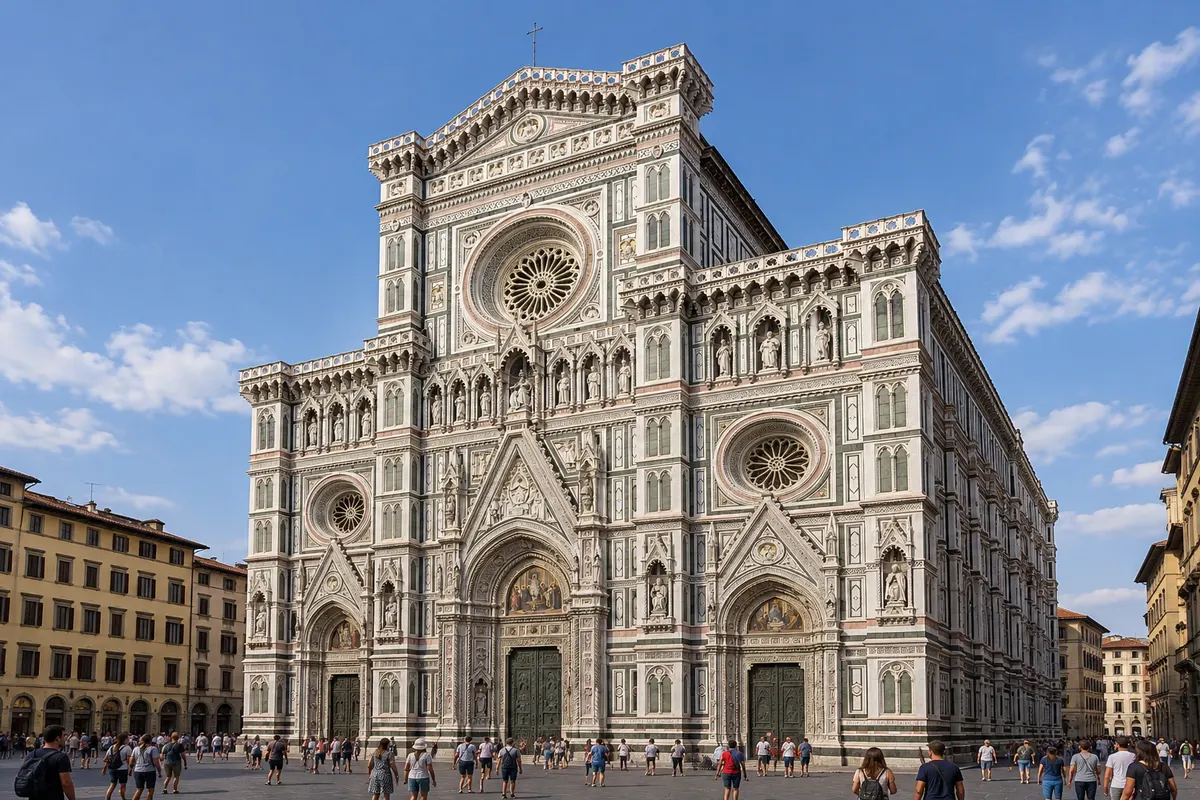
The cathedral of Florença, with a white, green and pink marble façade and Brunelleschi's dome. Under the floor are the ruins of the former church of Santa Reparata.
Antarktika
Tuscany · Italija
Cradle of the Renaissance on the banks of the Arno: Brunelleschi's dome, Michelangelo's Davi, the Uffizi and the Ponte Vecchio in a historic center you can explore on foot.
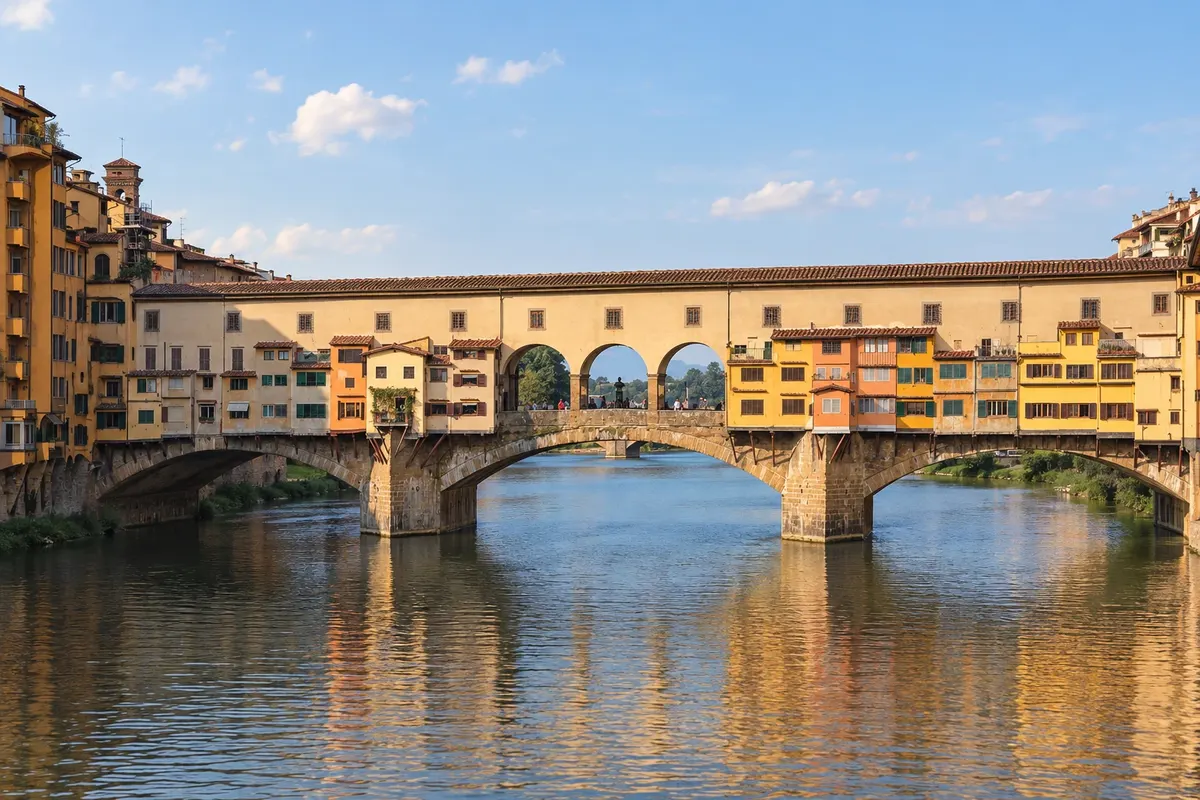
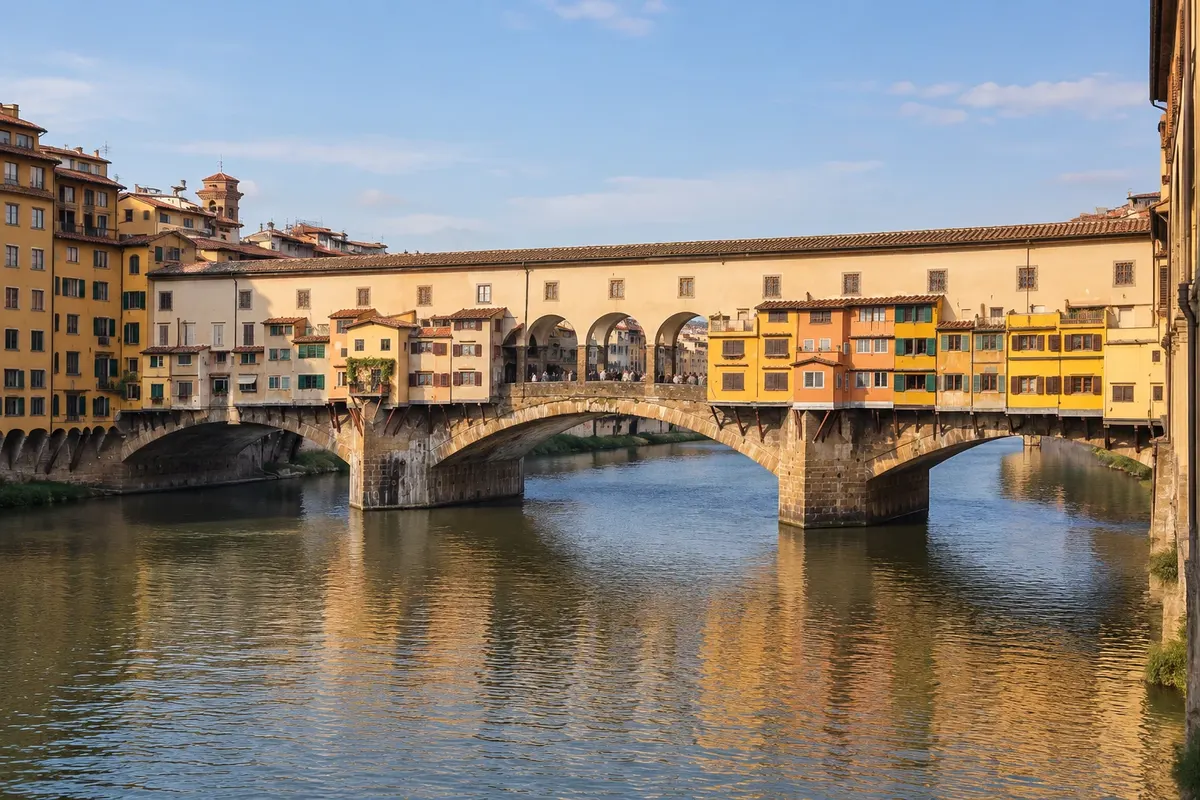
Na fotografiji: Ponte Vecchio, Florença
Illustrative images. The pictures in this guide are illustrations based on the real place, not photographs, and may differ from it.
Spoznajte kraj
Florença (Firenze, in Italian) is the capital of Tuscany and the city where the Renaissance took shape between the 14th and 16th centuries. The historic center, a UNESCO World Heritage Site, fits into a walk: from the Piazza del Duomo to the Piazza della Signoria is only a few minutes, and from there to the Ponte Vecchio just a little more.
The Médici family, bankers who ruled the city and later the Grand Duchy of Tuscany, commissioned much of what visitors see today. The collections they assembled are in the Galleria degli Uffizi and the Palazzo Pitti; the family's tombs are in the Cappelle Medicee, next to the Basilica di San Lorenzo.
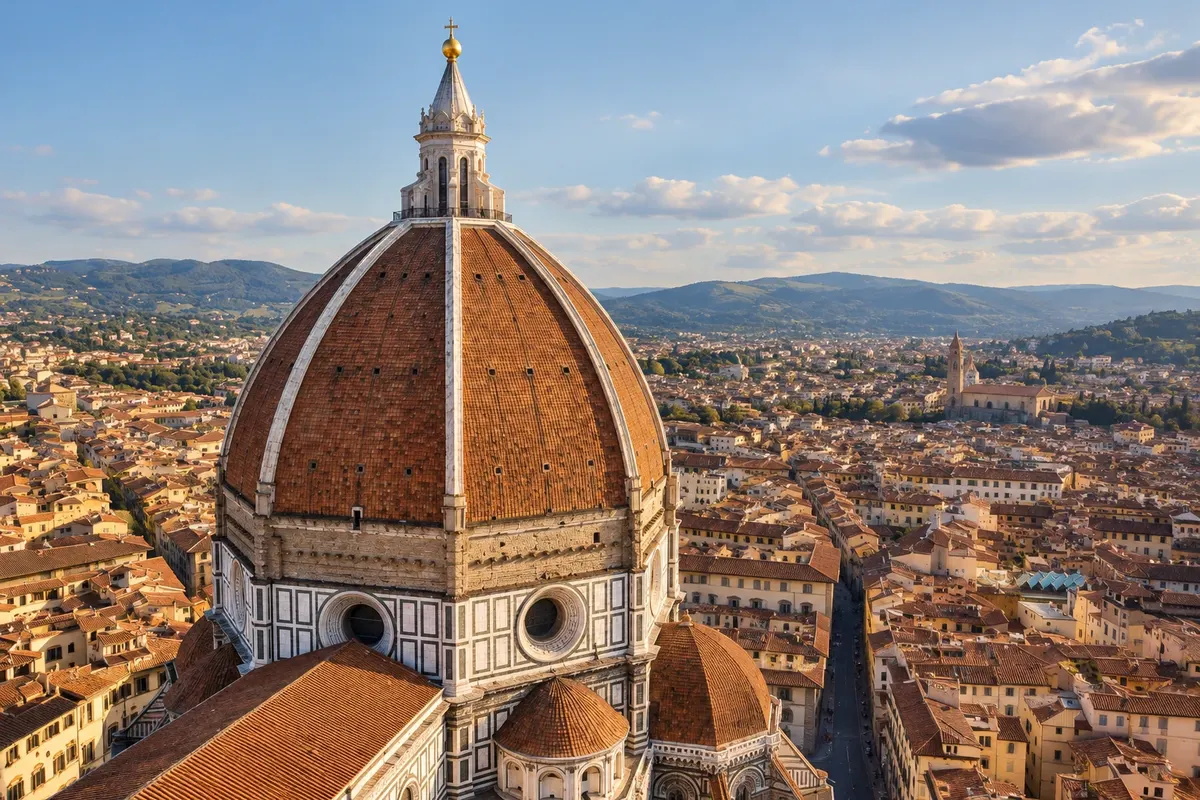
Brunelleschi's dome, atop the Cattedrale di Santa Maria del Fiore, dominates the skyline. Michelangelo is everywhere: the original Davi in the Galleria dell'Accademia, the Sagrestia Nuova in the Cappelle Medicee, the tomb in the Basilica di Santa Croce. On the other side of the Arno, the Oltrarno preserves artisan workshops, the Giardino di Boboli and the viewpoints of the Piazzale Michelangelo and San Miniato al Monte.
Florença is also the most practical base for exploring the rest of Tuscany. Fiesole sits on the hill just above the city, and the Chianti, a region of vineyards and villages, begins to the south. Siena, Pisa, San Gimignano and Lucca make convenient day trips by train or bus.
V vodniku še ni nastanitev – Florence.
kako do tja · koliko dni · načrt poti · vprašanja
✈ Aeroporto di Firenze-Peretola Amerigo Vespucci (FLR)· 6 km do cilja (Florence)
✈ Aeroporto di Pisa Galileo Galilei (PSA), kraj: Pisa· 85 km do cilja (Florence)
Confirm before buying. Those who land in Rome or Milan continue by high-speed train to Firenze Santa Maria Novella station in the center. the city airport (Firenze-Peretola) receives European flights, and Pisa airport is about an hour away by train.
Doživite kraj
The cathedral of Florença, with a white, green and pink marble façade and Brunelleschi's dome. Under the floor are the ruins of the former church of Santa Reparata.
The brick dome built by Filippo Brunelleschi between 1420 and 1436, without wooden centering. The climb has 463 steps and ends on the lantern terrace.
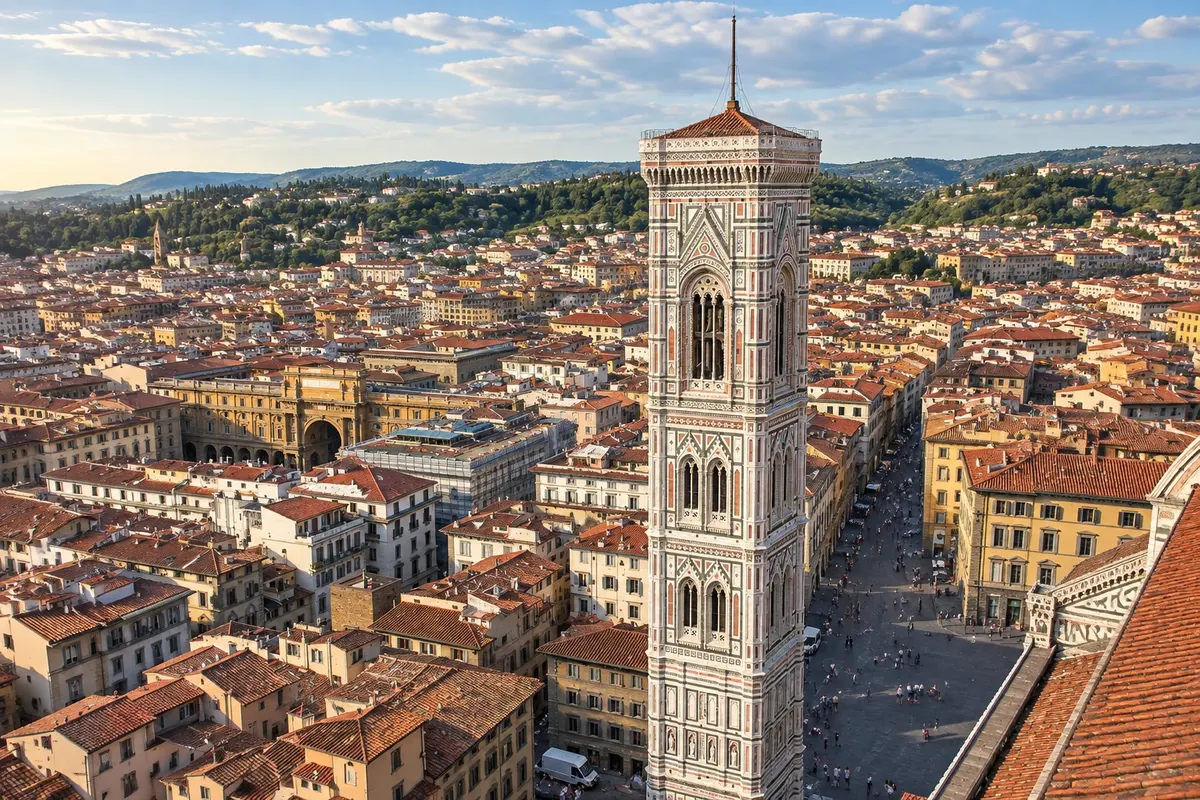
Duomo bell tower, 84.7 meters tall and clad in polychrome marble. Designed by Giotto in the 14th century, it has 414 steps to the terrace.
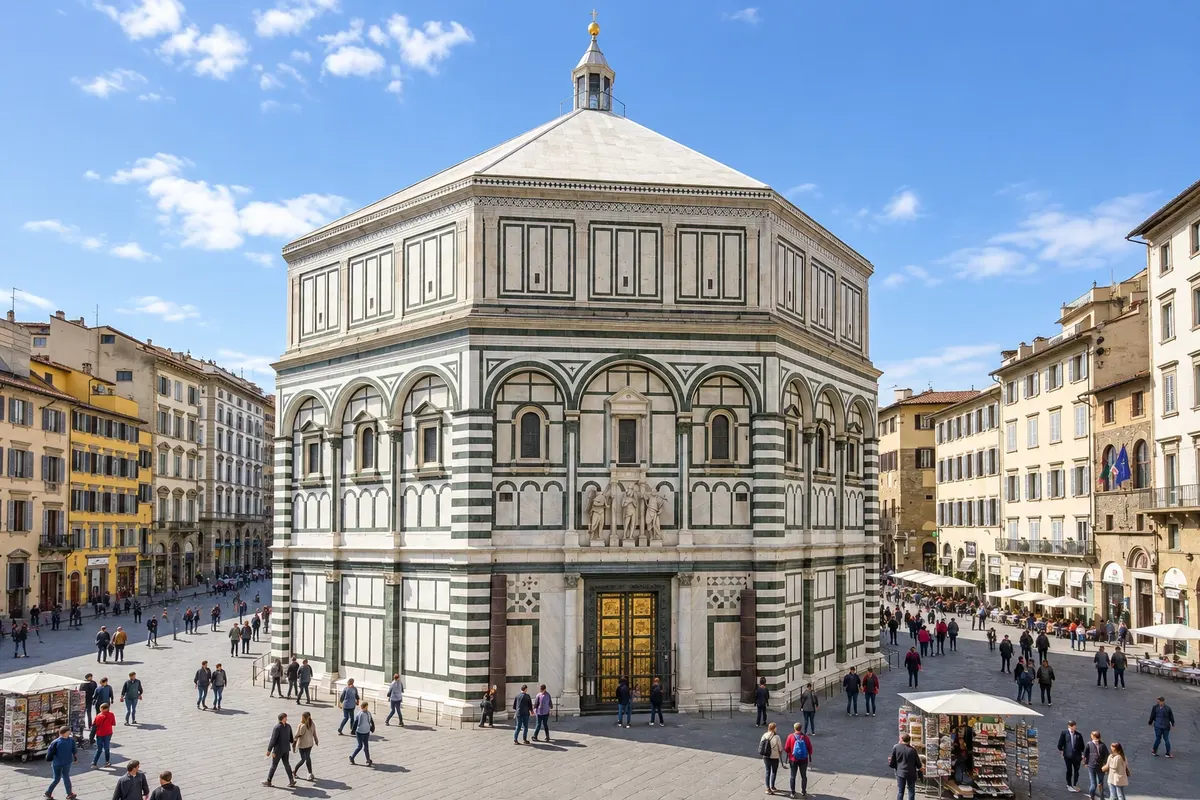
Octagonal baptistery in front of the cathedral, with bronze doors by Andrea Pisano and Lorenzo Ghiberti and an interior dome covered with medieval mosaics.
Museum behind the cathedral housing the original works from the Duomo complex: Ghiberti's doors, Michelangelo's Pietà Bandini and Donatello's Magdalene.
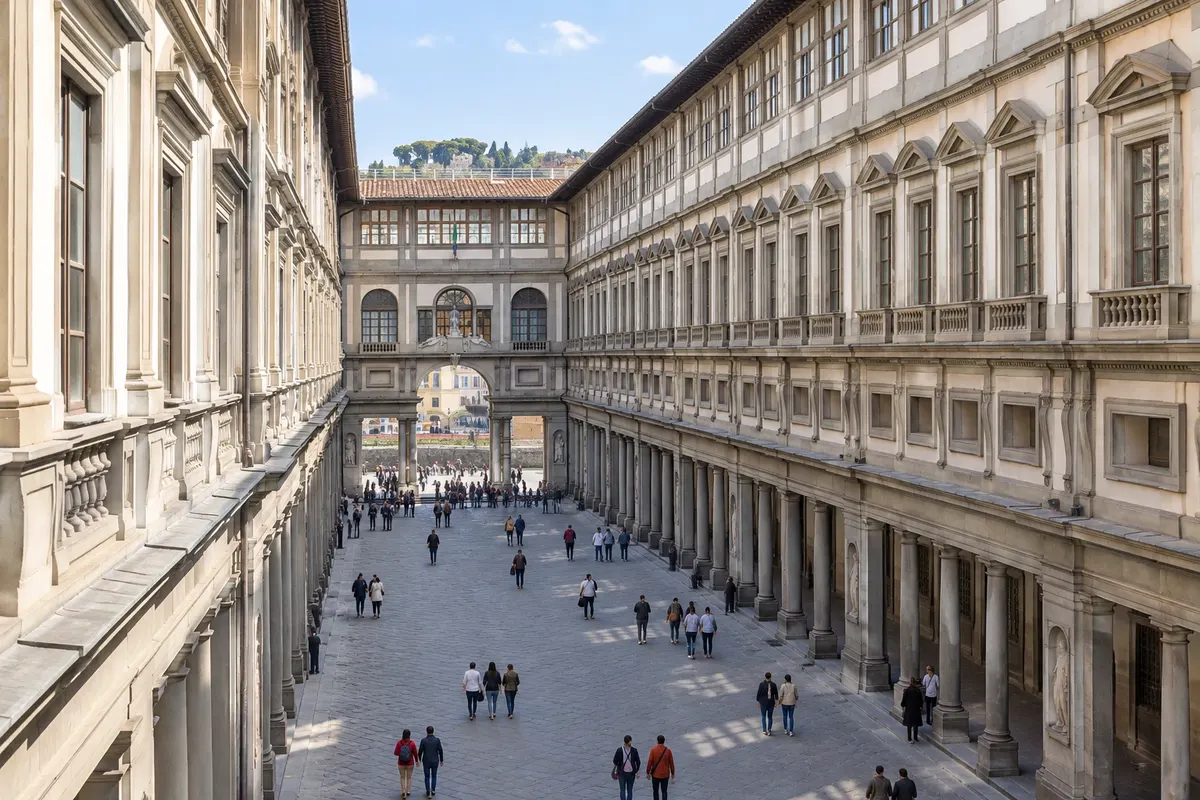
One of the world's most important art museums, with Botticelli, Leonardo, Raphael, Michelangelo and Caravaggio, housed in a Vasari building next to the Piazza della Signoria.
Museum that houses Michelangelo's original Davi, as well as the unfinished Prisioners, Florentine painting from the 13th to 16th centuries, and a collection of musical instruments.
The medieval bridge over the Arno with jewellers' shops on both sides, the only one in Florença that was not destroyed in World War II.
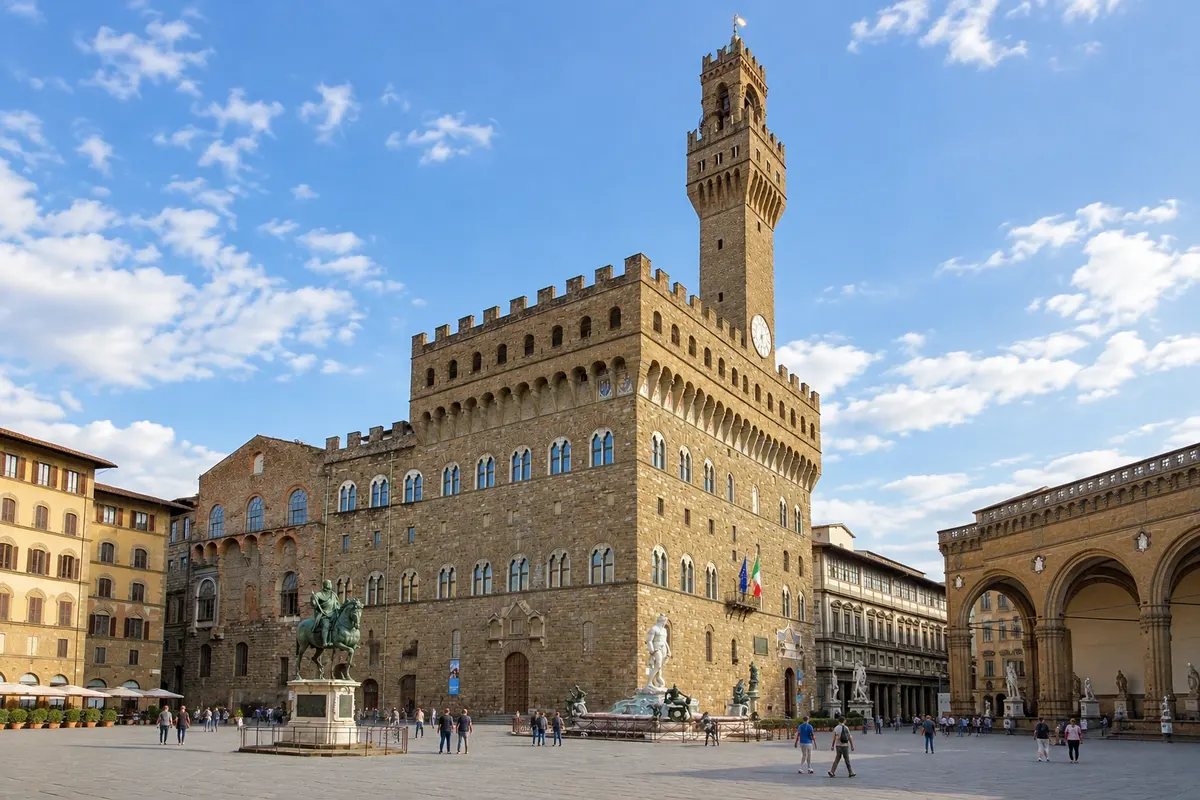
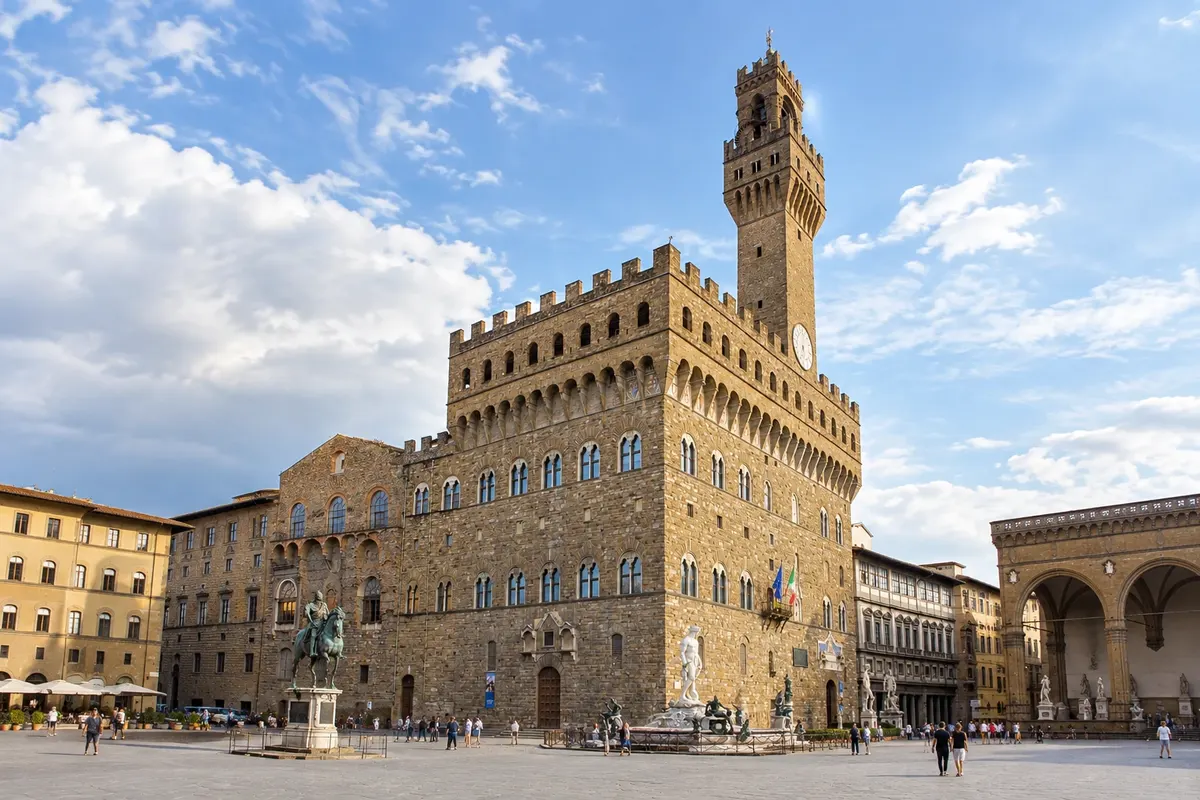
The civic square of Florença, in front of the Palazzo Vecchio, with the Fountain of Neptune, the copy of the Davi and the statues of the Loggia dei Lanzi, including the Perseu by Cellini.
Seat of Florença's government since the 14th century and still the city hall today, with the Salone dei Cinquecento, the Medici apartments and Arnolfo's tower, open to climb.
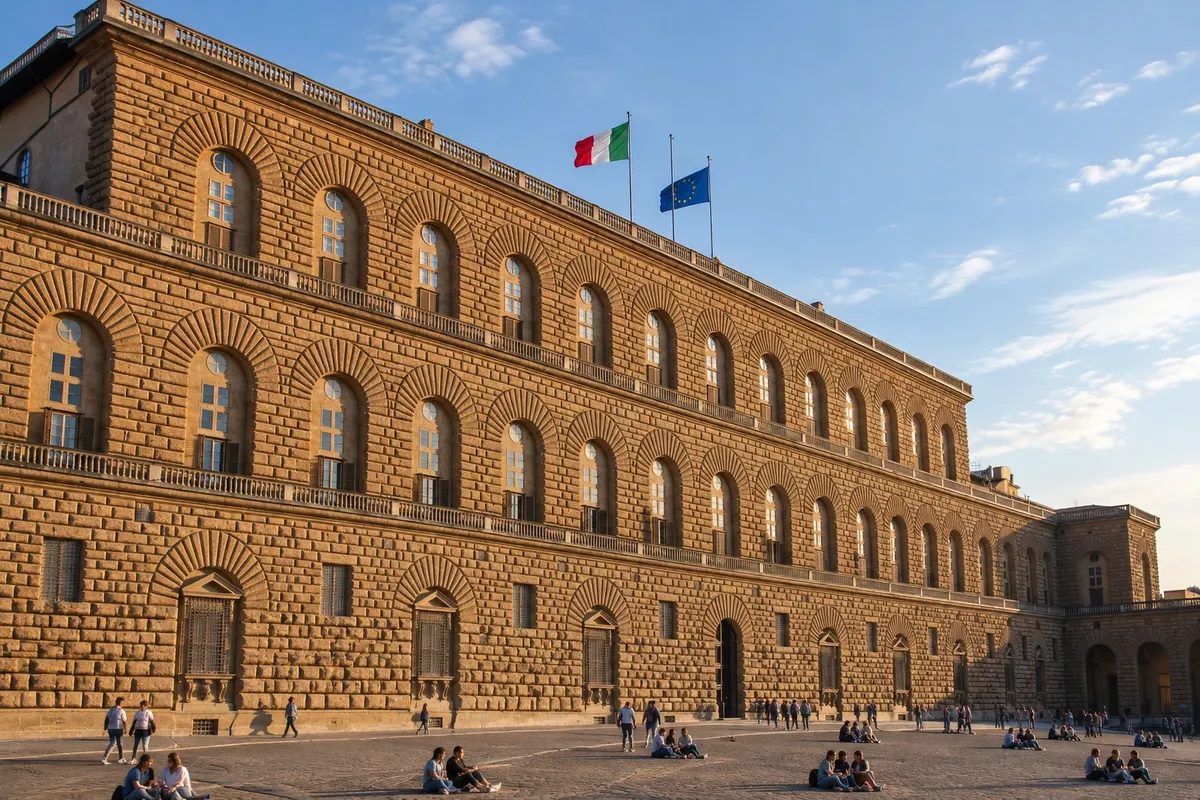
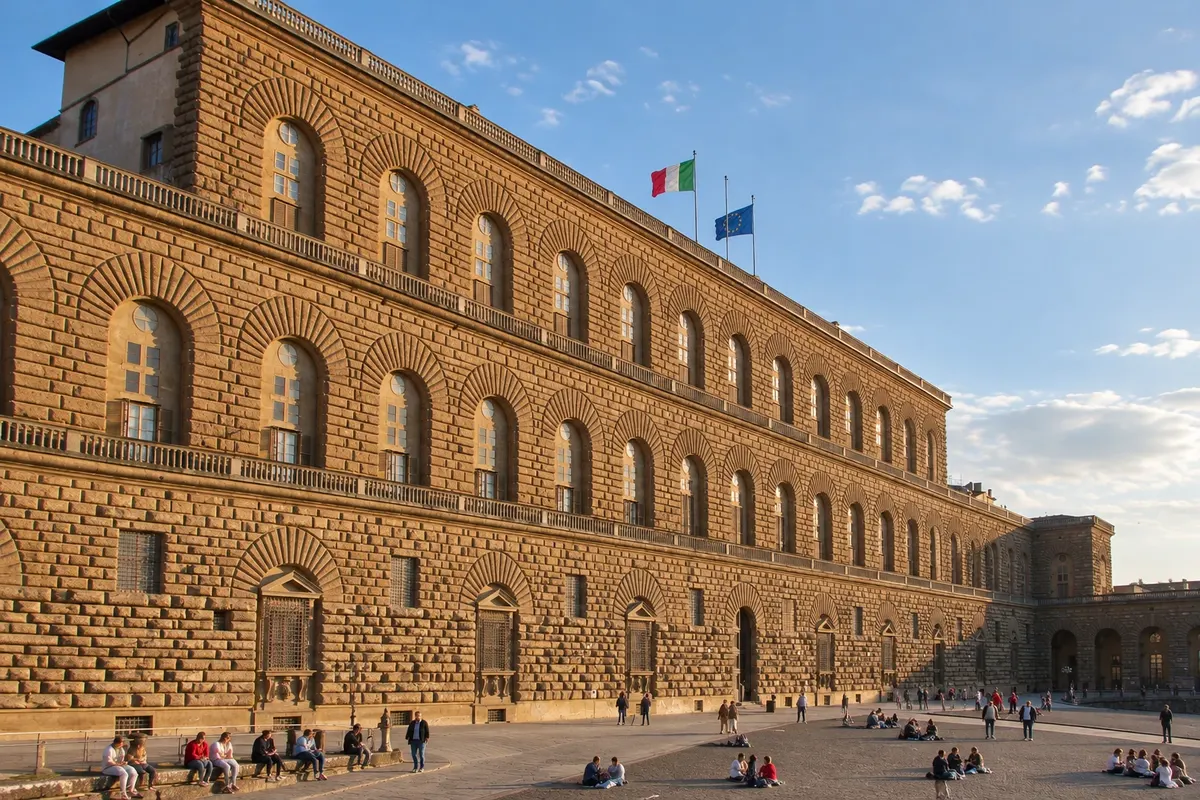
Former residence of the Medici, the Habsburg-Lorena and the kings of Italy, on the other side of the Arno, with the Galleria Palatina, the royal apartments and the fashion museum.
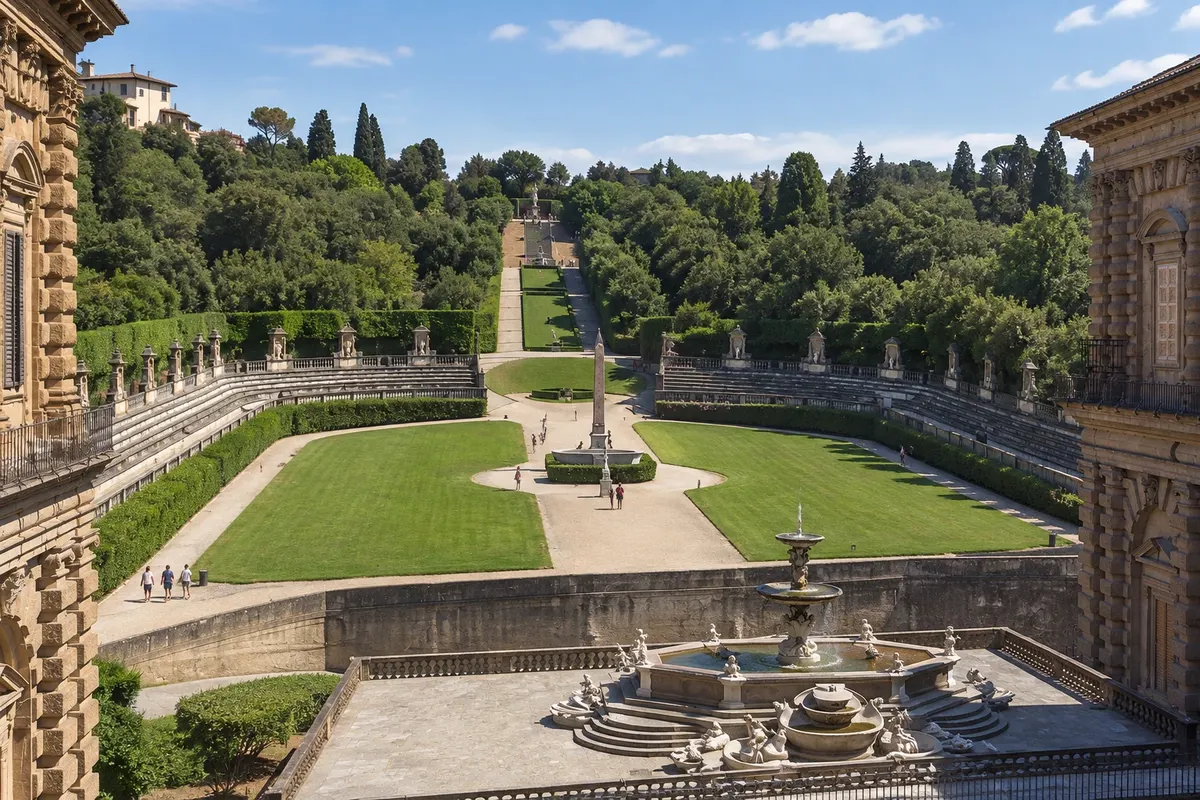
The Medici garden behind the Palazzo Pitti, a model of the Italian garden, with statues, fountains, the Grotta del Buontalenti and terraces overlooking Florença.
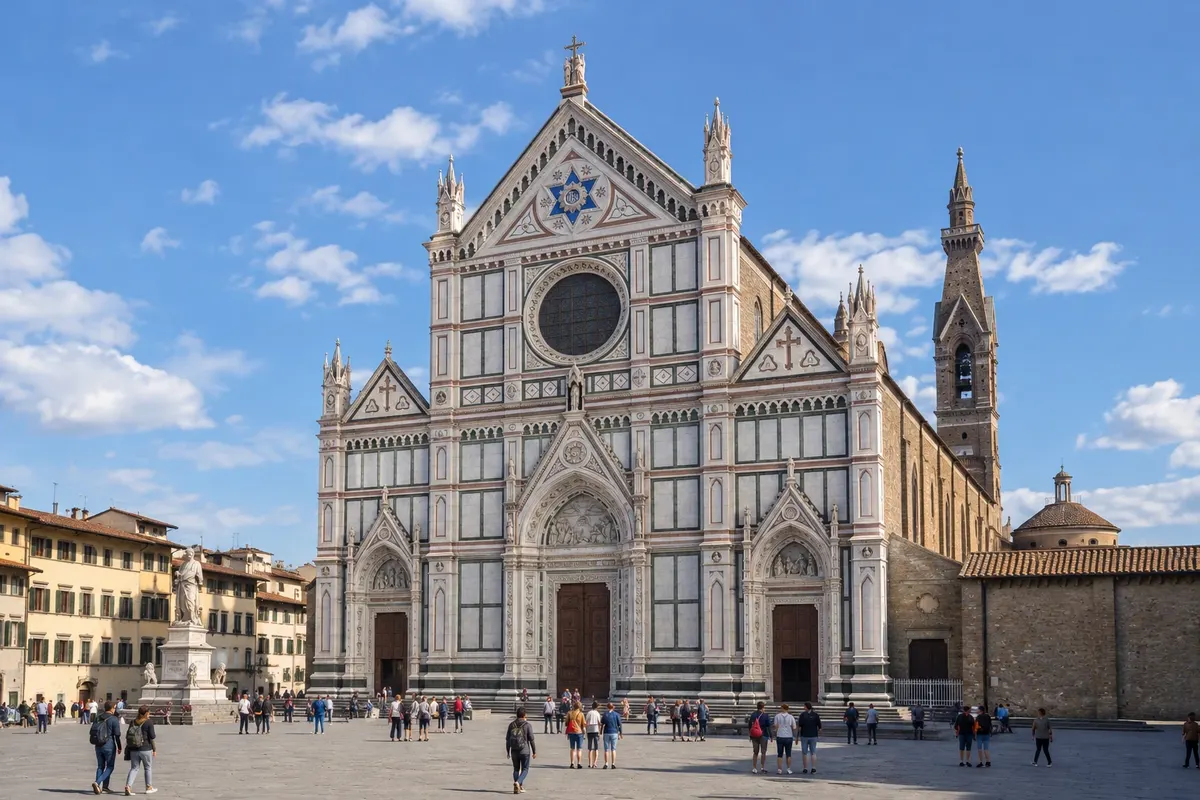
The largest Franciscan church in Florença, with the tombs of Michelangelo, Galileu, Maquiavel and Rossini, frescoes by Giotto and Brunelleschi's Capela Pazzi.
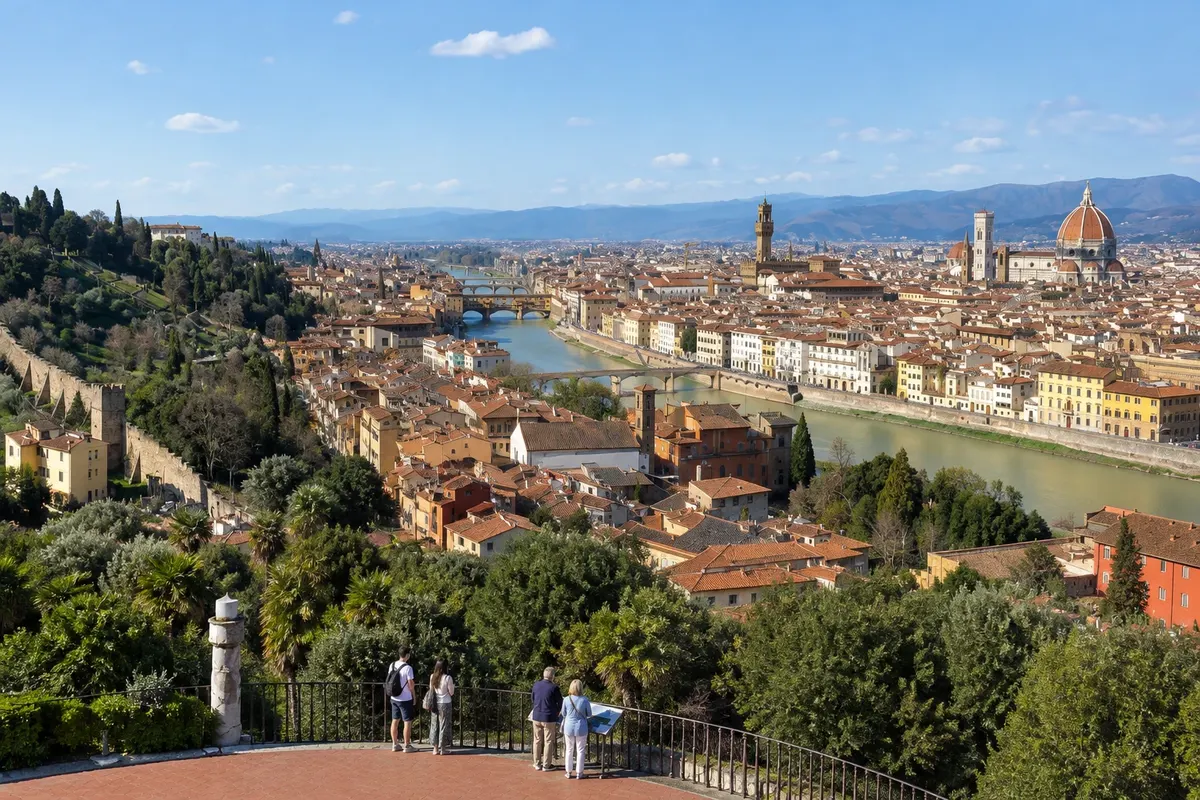
Panoramic terrace on the hill south of the Arno, with views over the entire historic center and a bronze copy of the Davi. A classic spot for sunset.
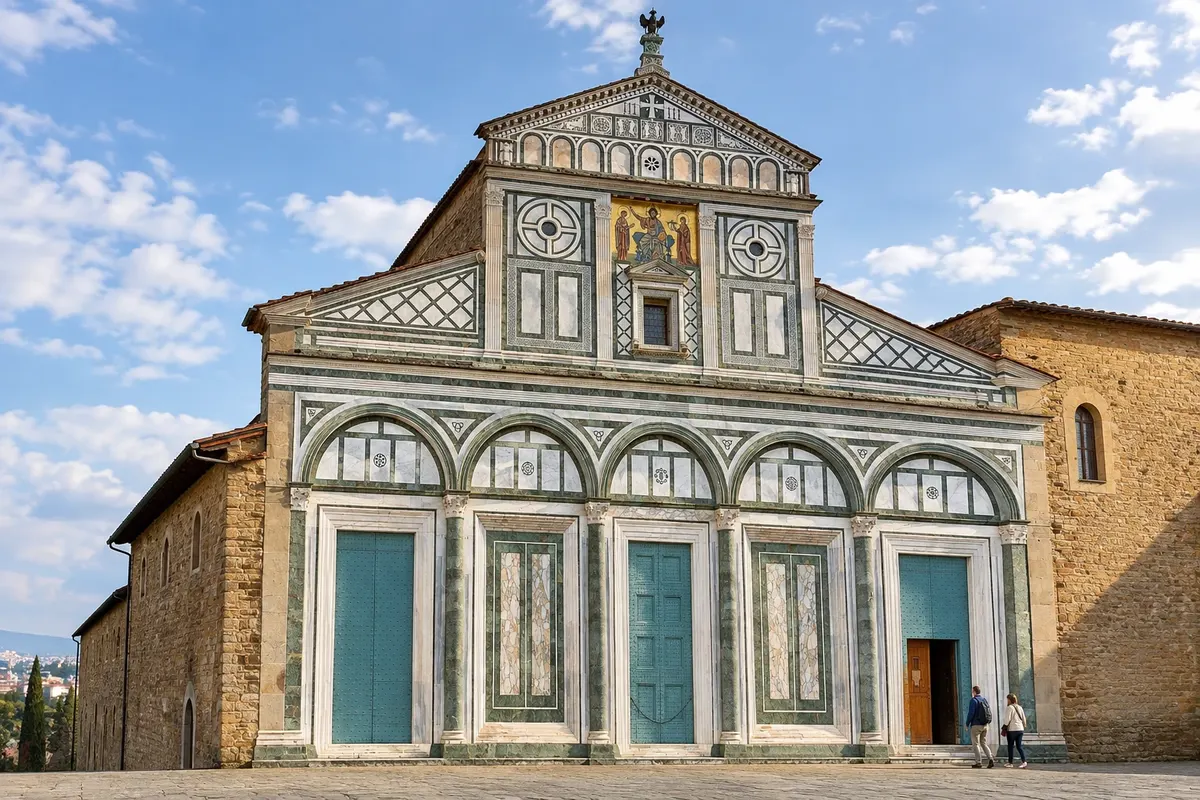
Romanesque basilica atop the hill above the Piazzale Michelangelo, with a white-and-green marble façade, mosaics and monks who chant the Gregorian office.
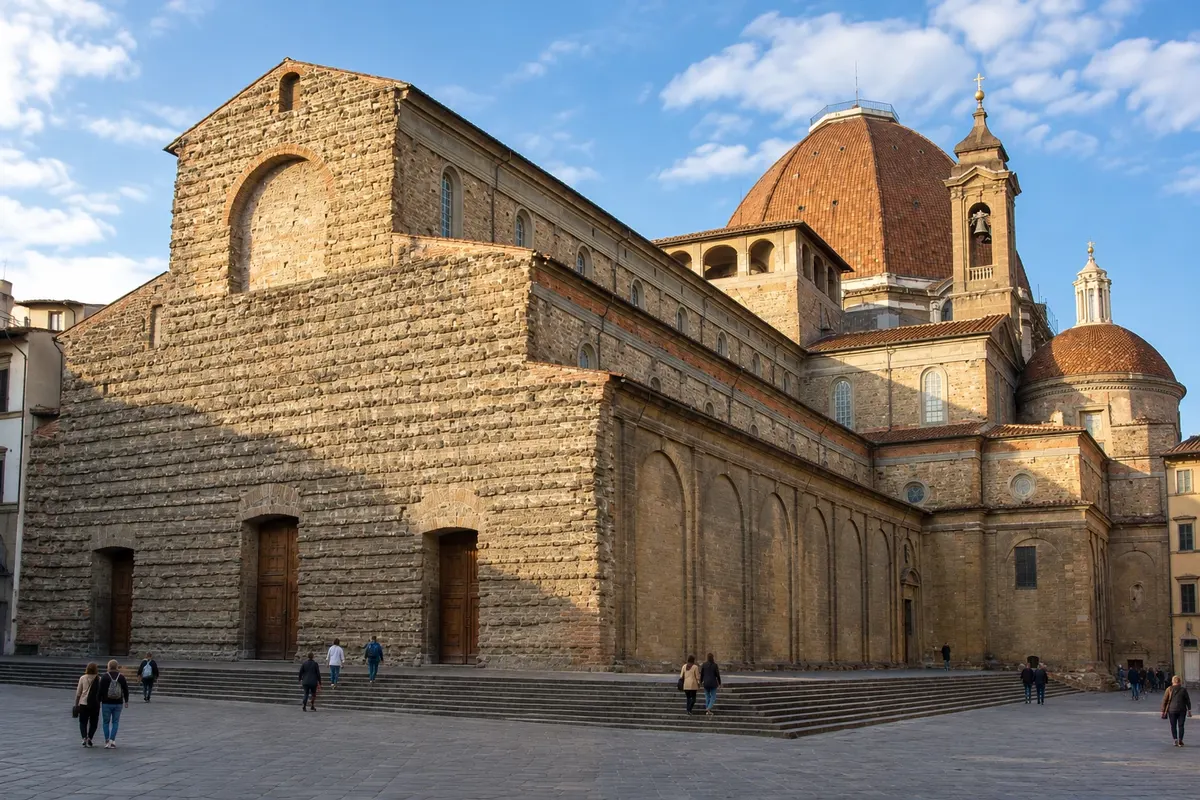
The Medici family church, designed by Brunelleschi, with the Sacristia Velha and, next to it, the Biblioteca Medicea Laurenziana designed by Michelangelo.
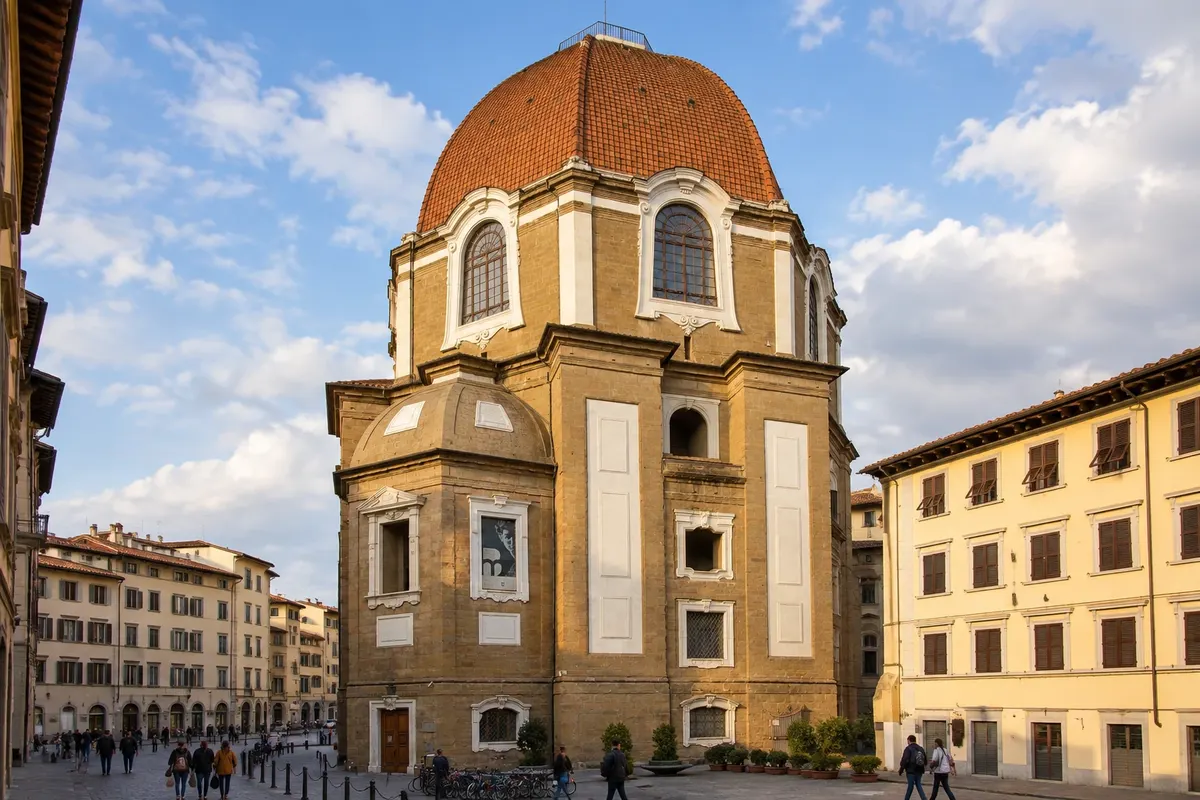
Mausoleum of the Medici family behind San Lorenzo, with the Cappella dei Principi veneered in hardstones and the Sagrestia Nuova, containing sculptures by Michelangelo.
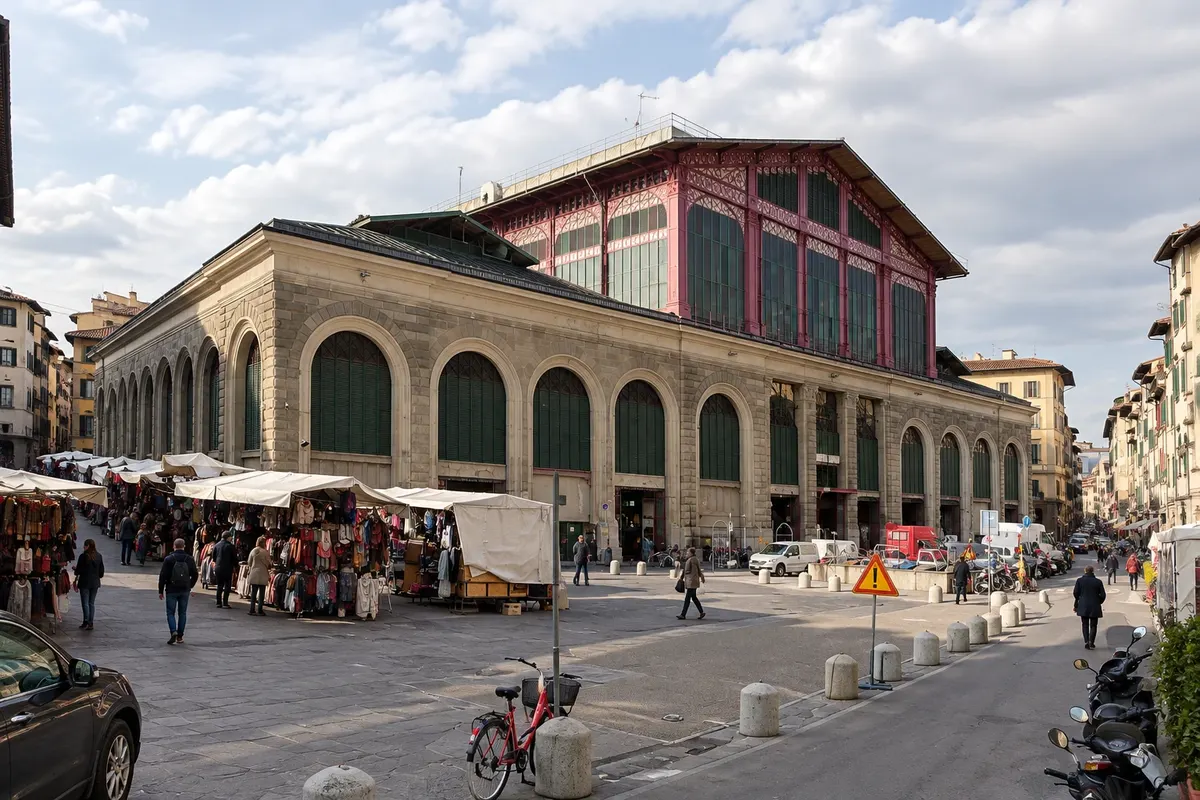
A covered iron-and-glass market from 1874 in the San Lorenzo neighborhood, with stalls selling meat, cheese and produce on the ground floor and a food court on the first floor.
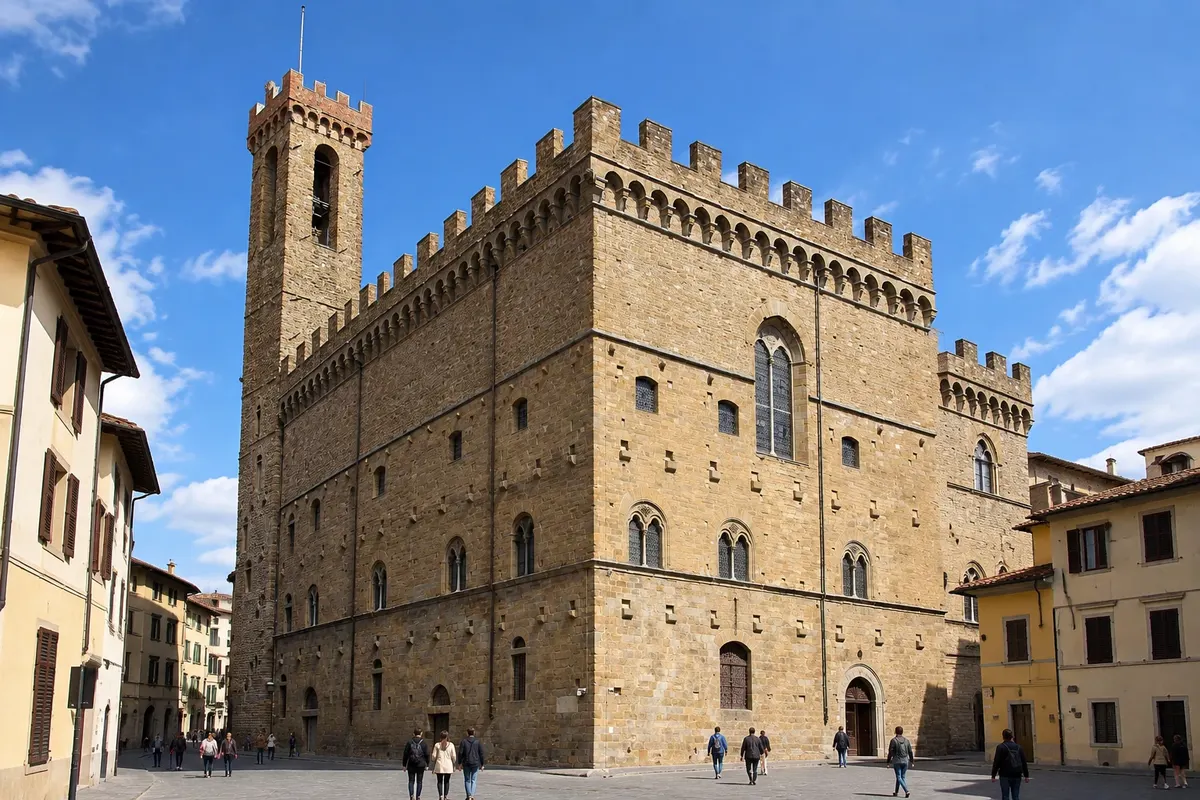
The principal museum of Italian Renaissance sculpture, housed in a 13th-century palace, featuring Donatello's bronze David and Michelangelo's Bacchus.
Dominican church opposite the train station, with a façade by Leon Battista Alberti, Masaccio's Trinity and frescoes by Ghirlandaio and Filippino Lippi.
The other side of the Arno, with craftsmen's workshops, the Piazza Santo Spirito and Brunelleschi's basilica, the Palazzo Pitti and the San Niccolò quarter at the foot of the Piazzale Michelangelo.
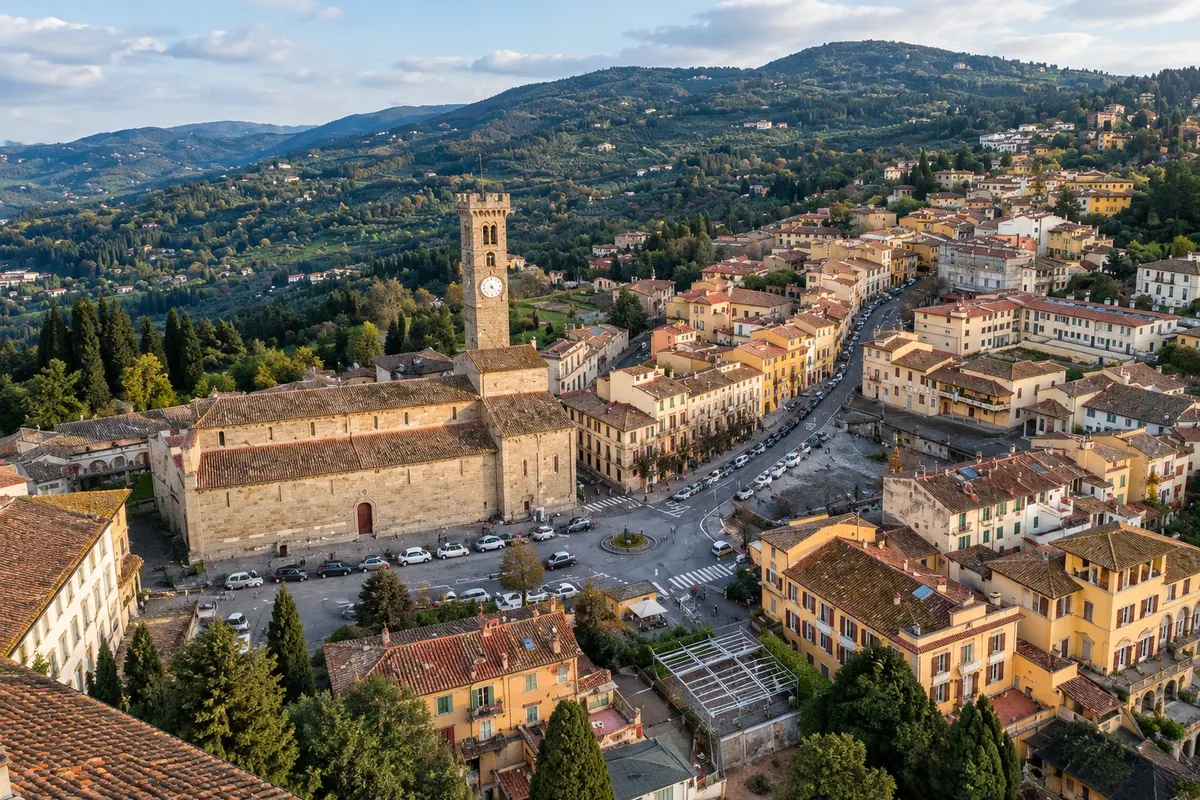
Etruscan hill town above Florence, about 8 km away, with a Roman theatre, archaeological museum and views of the whole city below.
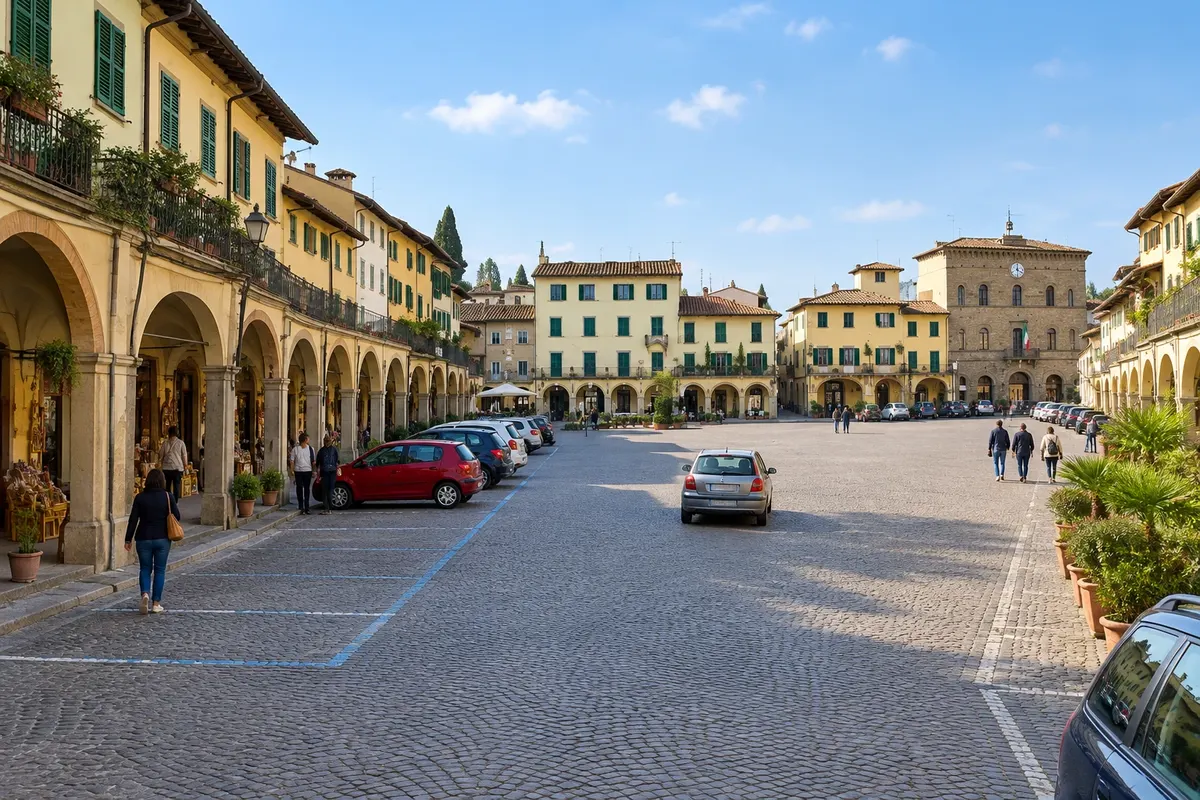
Small town considered the gateway to the Chianti, the region of vineyards and hills between Florença and Siena, with an arcaded square and the Chiantigiana road.
Kaj izbrati pred odhodom
Izhodišče, trajanje, potek, vključene storitve in okvirna cena vsakega izleta.
The Cattedrale di Santa Maria del Fiore (Florence Cathedral), begun in 1296, features a white, green and pink marble façade and the Cupola del Brunelleschi (Brunelleschi’s Dome), raised between 1420 and 1436 without supporting scaffolding, the largest masonry dome ever built. The climb goes between the dome’s two shells, along the inner gallery with the Last Judgment fresco by Vasari and Zuccari, and ends at the lantern, with the whole city at your feet. The Campanile di Giotto (Giotto’s Bell Tower), 85 m tall, has terraces mid-ascent and a view of the dome alongside. The Battistero di San Giovanni (Baptistery), from the 11th century, houses the gilded ceiling mosaic and Ghiberti’s bronze doors, whose original panels of the Gates of Paradise are in the Museo dell'Opera del Duomo, together with Michelangelo’s Pietà and Donatello’s Magdalene. The cathedral nave has free entry, with a queue; the climbs and the museum use the complex ticket.
Kraji na poti: Cattedrale di Santa Maria del Fiore, Cupola del Brunelleschi, Campanile di Giotto, Battistero di San Giovanni, Museo dell'Opera del Duomo.
Vključuje: Cathedral nave free entry (queue). Combined Opera del Duomo ticket (dome, bell tower, baptistery, museum and Santa Reparata crypt), paid separately, valid for three days; the dome climb requires a timed slot reserved at purchase. Audioguide at extra cost.
Nasvet: Book the dome timeslot on the Opera del Duomo website weeks in advance; without it you cannot climb. Narrow ascent and hot in summer: not recommended for people with claustrophobia. Climb the bell tower in the late afternoon to photograph the dome in good light.
Najboljši čas za obisk: All year. From April to October climbs get crowded; in January and February there are same-day slots available.
The Galleria degli Uffizi occupies the office building ('uffizi') built by Vasari for Cosimo I de' Medici in 1560 and brings together the family's collection: Leonardo's Annunciation and Adoration of the Magi, Botticelli's Primavera and The Birth of Venus, Michelangelo's Tondo Doni, Titian's Venus of Urbino, Caravaggio's Medusa and Bacchus, as well as works by Raphael, Piero della Francesca, Giotto and Cimabue. The route starts on the second floor, along the corridor with Roman statues and views of the Arno and the Ponte Vecchio, then descends to the first floor with the 16th- and 17th-century rooms. The Tribuna, the octagonal room of 1584, was the vault for the Medici's favorite pieces. Three hours cover the essentials; the corridors and the terrace café above the Loggia dei Lanzi provide places to rest.
Kraji na poti: Galleria degli Uffizi.
Vključuje: Separate paid admission, timed entry, sold on the official Uffizi website (reservation recommended; without it the line can exceed two hours). Closed on Mondays. Audio guide available for an extra fee. Free entry on the first Sunday of the month, without reservation.
Nasvet: Buy in advance on the official Gallerie degli Uffizi website and avoid resellers. The opening time (8:15) and the last two hours are less crowded. The combined ticket with Palazzo Pitti and Boboli is valid for those who will visit all three within five days.
Najboljši čas za obisk: All year. From November to February (outside the Christmas period) the museum is quieter; from April to October book weeks in advance.
The Galleria dell'Accademia houses Michelangelo's David, carved between 1501 and 1504 from a block of Carrara marble that other sculptors had rejected, measuring 5.17 m, installed in the museum in 1873 under a tribune with top lighting; the copy in the Piazza della Signoria marks the original location. In the corridor leading to the David are the four Prigioni (Slaves), unfinished figures by Michelangelo for the tomb of Julius II, and the Saint Matthew; in the other rooms, Florentine painting from the 13th to the 16th century, the plaster model of Giambologna's Rape of the Sabines, and the musical instruments museum, with pieces from the Medici collection, including a Stradivari cello. It is a small museum, with the queue concentrated at the door.
Kraji na poti: Galleria dell'Accademia.
Vključuje: Separate paid ticket, timed entry on the official website; without a reservation there is a line. Closed on Mondays. Free admission on the first Sunday of the month.
Nasvet: Book the first morning slot and combine it with Mercato Centrale and San Lorenzo, five minutes away. You can see the David in about an hour and leave the rest for the afternoon.
Najboljši čas za obisk: Open year-round; the line for walk-ins is long from April to October.
Piazza della Signoria has been Florence’s seat of power since the 14th century: the Loggia dei Lanzi, an open sculpture gallery (Perseus by Cellini, Rape of the Sabine Women by Giambologna), the Fountain of Neptune, the copy of David in front of the door of the Palazzo Vecchio, and the plaque where Savonarola was burned in 1498. The Palazzo Vecchio (Old Palace), with Arnolfo’s tower at 94 m, still serves as city hall: visit the Salone dei Cinquecento, with Vasari’s battle frescoes and Michelangelo’s Genius of Victory, Eleonora di Toledo’s apartments and the world map in the Sala delle Carte Geografiche; there are tours of secret corridors and the climb up the tower. From there, along the Via Por Santa Maria, you reach the Ponte Vecchio (Old Bridge), from 1345, with goldsmiths’ shops hanging over the Arno since 1593; above runs the Vasari Corridor, the Medici passage between the Uffizi and the Palazzo Pitti.
Kraji na poti: Piazza della Signoria, Palazzo Vecchio, Ponte Vecchio.
Vključuje: Square and bridge free of charge. Palazzo Vecchio: museum, tower and routes require separate fees (ticket office on site or online). Vasari Corridor has a separate paid visit and reservation.
Nasvet: Visit the Palazzo Vecchio late in the day: it usually closes later than other museums, except on Thursdays. Photograph the Ponte Vecchio from the Ponte Santa Trinita, downstream, at sunset. At night the goldsmiths’ shop windows are closed with wooden shutters.
Najboljši čas za obisk: All year; on summer evenings the square stays full late.
The Palazzo Pitti, bought by the Medici in 1549, was the residence of the grand dukes of Tuscany and later of the kings of Italy; today it houses the Galleria Palatina, with Raphael (Madonna della Seggiola, the Velata), Titian, Rubens and Caravaggio displayed as in the 18th century, wall to wall, in the royal rooms; the Royal Apartments; the Galleria d'Arte Moderna, featuring the Macchiaioli; the Tesoro dei Granduchi; and the Museo della Moda e del Costume. Behind it, the Giardino di Boboli, from 1550, is the model of the Italian garden: the amphitheater, the Fontana del Nettuno, the Viottolone of cypresses, the Grotta del Buontalenti, the Isolotto island and the Kaffeehaus terrace with a view of the dome. The Giardino Bardini, included on the same ticket, has the baroque staircase and the wisteria pergola, which blooms in April.
Kraji na poti: Palazzo Pitti, Giardino di Boboli.
Vključuje: Separate paid admission for the palace (museums) and another for Boboli with Bardini; the combined ticket with the Uffizi is valid for five days. Reservation recommended in high season. Closed on Mondays (palace) or on the first and last Mondays (garden); check ahead.
Nasvet: Do the garden at late afternoon, when the low light falls over the city from the Kaffeehaus and Forte di Belvedere. In April, the Bardini wisteria is the season’s signature. Bring water: there are not many fountains in the garden.
Najboljši čas za obisk: From March to October the garden is at its best; the wisteria blooms in April.
The Basilica di Santa Croce (Basilica of the Holy Cross), Franciscan, begun in 1294, is Italy’s pantheon: it houses the tombs of Michelangelo, Galileo, Machiavelli, Rossini and Foscolo, and Dante’s cenotaph (Dante is buried in Ravenna). The Bardi and Peruzzi chapels contain Giotto frescoes on the lives of Saint Francis and Saint John; Cimabue’s Crucifix, damaged in the 1966 flood, is in the refectory; in the cloister, Brunelleschi’s Cappella de' Pazzi is a model of Renaissance architecture. The square in front hosts the Calcio Storico in June, the medieval football between the four neighborhoods. In the surrounding streets are the leather workshops of the Scuola del Cuoio inside the convent, and the trattorias of the Sant'Ambrogio neighborhood, with its covered market.
Kraji na poti: Basilica di Santa Croce.
Vključuje: Separate paid ticket (box office on site or online); includes the cloister and museum. Worshippers in prayer enter free through the side chapel.
Nasvet: Go in the mid‑afternoon, after the morning groups have left. Combine it with the Mercato di Sant'Ambrogio (morning) or the climb to Piazzale Michelangelo, crossing the river via the Ponte alle Grazie.
Najboljši čas za obisk: All year. In June the square becomes the arena for the Calcio Storico, with grandstands that hide the facade for a few weeks.
Piazzale Michelangelo, an open terrace opened in 1869 on the hill south of the Arno, with the bronze copy of David, is Florence’s postcard view: the dome, the bell tower, the Palazzo Vecchio tower, Santa Croce and the bridges in a row. You can walk there in 20 minutes along the Poggi ramps from Porta San Niccolò, or take a bus. One hundred meters above, the Basilica di San Miniato al Monte, from the 11th century, is the city’s best-preserved Romanesque church, with its green-and-white marble facade, the zodiac mosaic floor, the crypt and the monumental cemetery where Collodi, the author of Pinocchio, is buried; Olivetan monks sing Vespers in Gregorian chant late in the afternoon. On the way down, the Giardino delle Rose, with sculptures by Folon, is open year-round.
Kraji na poti: Piazzale Michelangelo, Basilica di San Miniato al Monte.
Vključuje: Viewpoint and basilica free of charge. Bus requires a separate fare.
Nasvet: Go up about one hour before sunset: first San Miniato, with the vespers singing, then the Piazzale for the golden light. In summer the terrace fills up; the Giardino delle Rose, just below, offers the same view with fewer people.
Najboljši čas za obisk: All year. May has the roses in the Giardino delle Rose; in April and May the Giardino dell’Iris, beside the Piazzale, opens for a few weeks.
The Basilica di San Lorenzo, the Medici family church, was rebuilt by Brunelleschi from 1419 and kept an exposed brick facade, because Michelangelo’s project was never realized; inside are Donatello’s bronze pulpits and Brunelleschi’s Sagrestia Vecchia. The Cappelle Medicee (Medici Chapels), with a separate entrance behind the church, include the Cappella dei Principi, the mausoleum of the grand dukes with colored marbles, and the Sagrestia Nuova, designed by Michelangelo between 1520 and 1534, with the sculptures of Dawn, Dusk, Day and Night above the tombs of Lorenzo and Giuliano. The Biblioteca Laurenziana, in the cloister, has Michelangelo’s vestibule and staircase. Around it, a street leather market and, in the 1874 iron building, the Mercato Centrale: on the ground floor the butcher shops, cheeses and lampredotto (the tripe sandwich); on the upper floor the food court, open late.
Kraji na poti: Basilica di San Lorenzo, Cappelle Medicee, Mercato Centrale.
Vključuje: Basilica and Cappelle Medicee with separate paid tickets (the Sagrestia Nuova requires a timed entry on busy days). Market entry is free; food is paid separately.
Nasvet: Go to the Cappelle Medicee at opening and have lunch at the market; the ground floor closes in the early afternoon, the upper level does not. Haggle at the leather market and check that it is real leather.
Najboljši čas za obisk: All year. The market closes on Sundays on the ground floor.
The Museo Nazionale del Bargello occupies the palace of the capitano del popolo, from 1255, later a prison and the headquarters of the chief of police (bargello). Since 1865 it has been the sculpture museum: Donatello's bronze David, the first nude in sculpture since Antiquity, Donatello's Saint George and the Marzocco, Michelangelo's Bacchus and the Tondo Pitti, the two panels from the 1401 competition for the baptistery doors by Ghiberti and Brunelleschi, Giambologna's Mercury, and the glazed terracottas of the Della Robbia. The courtyard with its open staircase and the podestà coats of arms is one of the city's most beautiful. It is a museum with relatively few visitors compared with the Uffizi, and the route fits into two hours.
Kraji na poti: Museo Nazionale del Bargello.
Vključuje: Separate paid ticket (onsite ticket office or online). Reduced opening hours on some days; check the calendar on the Musei del Bargello website.
Nasvet: It's the right choice for a morning when the Uffizi are sold out. The ticket often includes the other sites of the Musei del Bargello (Orsanmichele, Palazzo Davanzati, Casa Martelli) at specified times; check.
Najboljši čas za obisk: Vse leto.
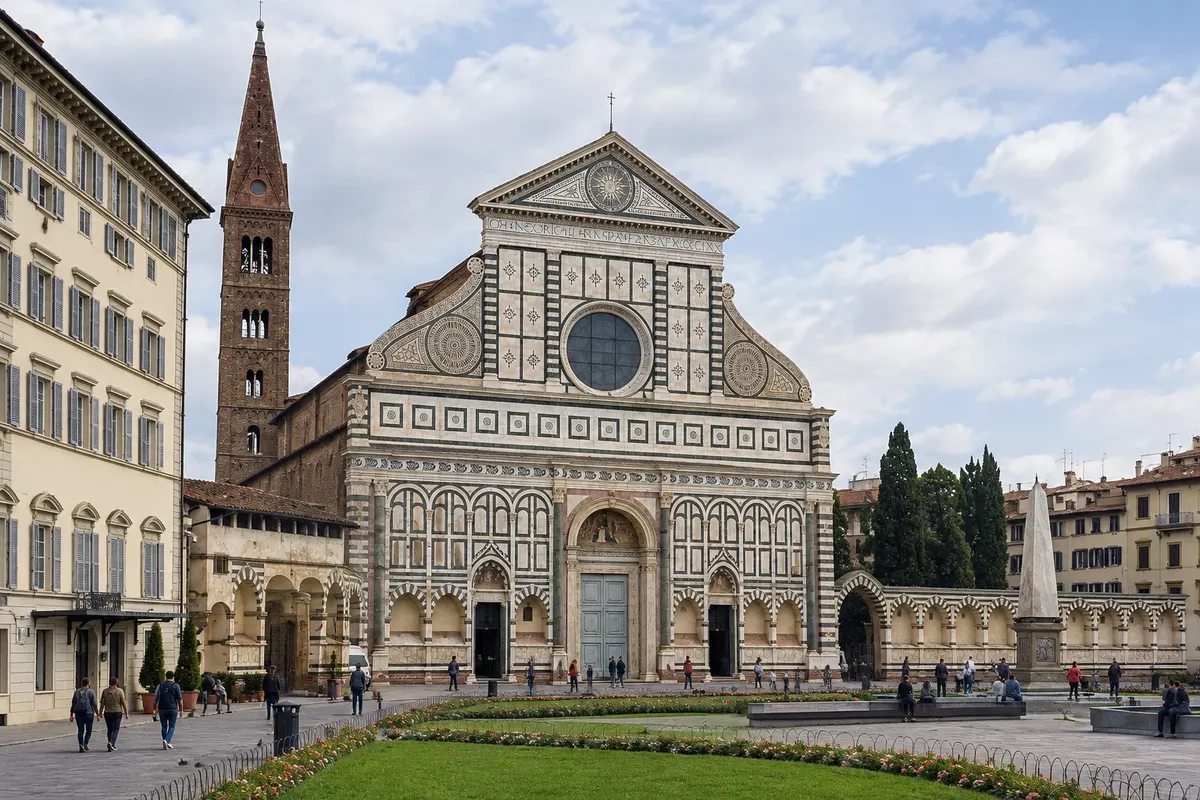
The Basilica di Santa Maria Novella, Dominican, has the marble façade designed by Leon Battista Alberti in 1470 and, inside, Masaccio’s Trinity (1427), the first use of mathematical perspective in painting, Ghirlandaio’s frescoes in the main chapel, Giotto’s and Brunelleschi’s crucifixes, and the cloisters with the Cappellone degli Spagnoli. Next door, on Via della Scala, the Officina Profumo-Farmaceutica di Santa Maria Novella, founded by the friars in 1221 and opened to the public in 1612, still sells eaux de cologne, soaps and the liqueur Alkermes in rooms with frescoes and old display cases, and has a small museum. The square in front, with the two obelisks along which the carriages of the Palio dei Cocchi raced, sits before the 1934 railway station, a work of Italian rationalism.
Kraji na poti: Basilica di Santa Maria Novella.
Vključuje: Basilica with separate paid entry (includes museum and cloisters). Officina free to visit; products are paid for separately.
Nasvet: The basilica is the last natural stop before catching the train: the station is opposite. The Officina fills with groups in the afternoon; in the morning it is quiet.
Najboljši čas za obisk: Vse leto.
The Oltrarno, "across the Arno," is the craftsmen’s quarter: furniture restorers, gilders, bookbinders and shoemakers on Via Maggio, Via dei Serragli and Via Toscanella, with workshop doors open. Piazza Santo Spirito, with Brunelleschi’s church of a plain facade and a morning market, is the neighborhood’s social center, with bars and outdoor tables late into the evening. At Santa Maria del Carmine, the Cappella Brancacci houses the frescoes by Masaccio and Masolino (1424–1428), including the Expulsion from Paradise and the Tribute Money, which Michelangelo came to copy as a young man; visits are in small groups and by reservation. On Via Romana, the Museo La Specola has the 18th-century anatomical wax collection. Borgo San Jacopo and Via de' Bardi along the river lead to the Ponte Vecchio from the rear.
Kraji na poti: Oltrarno.
Vključuje: Self-guided walk. Cappella Brancacci requires a separate paid ticket and reservation; Santo Spirito has no admission fee (sacristy and refectory are paid).
Nasvet: Book the Cappella Brancacci on the municipal museums' website: time slots are limited. Go to Piazza Santo Spirito at the end of the day; on the second Sunday of the month there is a crafts and antiques fair.
Najboljši čas za obisk: All year; on summer nights the square gets lively.
Fiesole, 300 m above Florence, was an Etruscan town before Florence existed. Bus 7 climbs in about 25 minutes to Piazza Mino, with the Romanesque cathedral of San Romolo. The Archaeological Area includes the Roman theatre from the 1st century BC, still used in July for the Estate Fiesolana festival, the baths, the Etruscan temple and a museum; the Museo Bandini holds Tuscan painting from the 13th to 15th centuries. The slope of Via San Francesco leads up to the convent of San Francesco, with a terrace overlooking Florence, a view of the dome from above and the Arno valley. The walk back along Via Vecchia Fiesolana passes villas and cypress walls to San Domenico, where Fra Angelico was a novice, and from there the bus descends to the town.
Kraji na poti: Fiesole.
Vključuje: Urban bus (standard ticket). Archaeological area and museums charged separately, with a combined ticket; San Francesco terrace free of charge.
Nasvet: Go in the mid-afternoon and wait for sunset on the San Francesco terrace; the last bus descends late, but check the timetable. It's a good respite on a hot day in the city.
Najboljši čas za obisk: From April to October the afternoons are long; in July there are evening performances at the Roman theatre.
Greve in Chianti, 30 km south of Florence via the Chiantigiana road (SR222), is the gateway to Chianti, the rolling-hill region of vineyards, olive groves and cypresses between Florence and Siena. Piazza Matteotti, triangular, with shop arcades and the statue of Verrazzano, the navigator born in the nearby castle, hosts a market on Saturdays; the Museo del Vino and the Antica Macelleria Falorni, open since 1729, are on the square. 2 km away, the walled village of Montefioralle is a ten-minute stroll among stone streets. The surrounding wineries (Castello di Verrazzano, Vicchiomaggio, Querciabella) welcome visitors for cellar tours and tastings by prior reservation; the visit is the main activity, and the driver should not taste. Autolinee Toscane bus 365 departs from Florence station and takes about one hour.
Kraji na poti: Greve in Chianti.
Vključuje: Bus fare paid separately (not covered by the urban ticket). Wineries: tours and tastings paid separately, with reservation. Wine Museum with admission.
Nasvet: Without a car, bus 365 serves Greve and Montefioralle; by car, follow the SR222 to Panzano and Castellina. In September the Expo del Chianti Classico takes over Greve’s square for a weekend.
Najboljši čas za obisk: From April to October the hills are green; September and early October are harvest time; in winter many wineries open only by reservation.

Po dnevih
Predlogi za načrtovanje poti. Vrstni red dni prilagodite vremenu in razpoložljivosti izletov.
Arrival at Santa Maria Novella station (from Rome, about 1 h 30 by Frecciarossa). Leave your bags and walk to the Duomo: climb the dome at your reserved time or the bell tower, see the baptistery and the Museo dell'Opera. In the afternoon, Piazza della Signoria, Palazzo Vecchio and the Ponte Vecchio; sunset from the Ponte Santa Trinita.
Galleria degli Uffizi at opening, with reservation, for three hours. Lunch near Sant'Ambrogio. In the afternoon, Basilica di Santa Croce and the leather workshop quarter; at the end of the day, climb to Piazzale Michelangelo and San Miniato al Monte.
Galleria dell'Accademia at the first time slot to see the David; Cappelle Medicee and lunch at the Mercato Centrale. In the afternoon, cross to the Oltrarno: Palazzo Pitti or Giardino di Boboli, Santo Spirito and the Cappella Brancacci with a reservation. Last night in Piazza Santo Spirito.
Arrival by train or from Peretola airport (tram T2 to the station). Duomo: Brunelleschi’s dome at the reserved time, baptistery and Museo dell'Opera. Late afternoon in Piazza della Signoria and on the Ponte Vecchio.
Uffizi in the morning, with a reservation. Lunch near the Mercato Centrale. In the afternoon, Palazzo Vecchio with Arnolfo's tower, and the Bargello if time allows. Dinner in Sant'Ambrogio.
Galleria dell'Accademia at opening; San Lorenzo and Cappelle Medicee; Santa Maria Novella in the afternoon or Santa Croce; Piazzale Michelangelo and San Miniato at sunset.
Palazzo Pitti in the morning (Galleria Palatina), Giardino di Boboli and Bardini in the afternoon; walk through the Oltrarno workshops, Cappella Brancacci with a reservation, evening in Piazza Santo Spirito.
Day trip: Fiesole by bus (half day, with the Roman theatre and the terrace of San Francesco) or Greve in Chianti by bus 365 or by car, with a winery booked. Return to Florence for the last night.
Arrival at Santa Maria Novella station or Peretola airport (tram T2 to the station). Afternoon in the Duomo complex: Brunelleschi’s dome at the reserved time, baptistery and Museo dell'Opera; Piazza della Signoria and Ponte Vecchio at the end of the day, with sunset viewed from the Ponte Santa Trinita.
Galleria degli Uffizi at opening, with a reservation, for about three hours, with a break at the rooftop café. Lunch in Sant'Ambrogio. In the afternoon, Basilica di Santa Croce and the neighborhood's leather workshops; late in the day, climb to Piazzale Michelangelo and vespers at San Miniato al Monte.
Galleria dell'Accademia at the first time slot to see the David; Cappelle Medicee including Michelangelo's Sagrestia Nuova and lunch at the Mercato Centrale. In the afternoon, the Museo Nazionale del Bargello, featuring Donatello's David; Santa Maria Novella and the historic pharmacy at the end of the day.
Palazzo Pitti in the morning, with the Galleria Palatina; Giardino di Boboli and Giardino Bardini after lunch, with the view from the Kaffeehaus. Late afternoon in the Oltrarno workshops and the Cappella Brancacci, with a reservation; evening in Piazza Santo Spirito.
Regional train to Pisa (about 1 hour) for the Piazza dei Miracoli in the morning; 30-minute train to Lucca for the afternoon on the walls and in the Piazza dell'Anfiteatro; return to Florence at night (1 h 20).
Autolinee Toscane fast bus 131 to Siena (about 1 h 15): Piazza del Campo, Duomo and Torre del Mangia; return in the late afternoon. Alternative: San Gimignano with a change in Poggibonsi.
Morning in Fiesole, with the Roman theatre and the terrace; afternoon free for shopping in the Oltrarno or a museum you missed; train or flight out the next day.
Najboljši čas za obisk
April, May, September and October usually have pleasant temperatures for walking. From June to August the heat is strong and museum lines grow. From November to February it’s colder, it rains more and there are fewer people.
The seasons shown are the most usual ones; nature doesn't always follow the calendar.
winter · empty museums
Winter. At the Firenze Peretola station (airport), 1991–2020 normals: average 6.6 °C (minimums near 2 °C) and about 58 mm of rain. Mornings with fog and frost, cold afternoons; snow is rare. This is the quietest month: Uffizi and Accademia easy to book, dome without queues. Heavy coat and closed shoes for the cobblestones.
zima · pust
Winter. At the Firenze Peretola station (airport), 1991–2020 normals: average 7.6 °C and about 64 mm of rain. Still cold, with clear days. Low activity, good for museums; Carnival brings children’s parades. Pitti Uomo, the fashion fair, fills hotels for a week in January and in June.
spring beginning · days lengthening
Early spring. At the Firenze Peretola station (airport), 1991–2020 normals: average 10.7 °C and about 61 mm of rain. Variable skies, mild afternoons. When Easter falls in March, the Scoppio del Carro on Easter Sunday in front of the Duomo fills the square.
spring · wisterias and Easter
Spring. At the Firenze Peretola station (airport), 1991–2020 normals: average 14 °C and about 67 mm of rain, in showers. Wisterias in the Giardino Bardini, irises in the garden beside Piazzale Michelangelo (open for a few weeks). Easter (when it falls in April) and April 25 fill the city: book museums and the dome weeks in advance.
spring · roses and Maggio Musicale
Full spring. At the Firenze Peretola station (airport), 1991–2020 normals: average 18.3 °C (highs of 24 °C) and about 63 mm of rain. Roses in the Giardino delle Rose, outdoor dinners. The Maggio Musicale Fiorentino, an opera and concert festival, runs from April to June. High activity.
summer · Calcio Storico
Summer. At Firenze Peretola station (airport), 1991–2020 normals: average 22.6 °C (highs around 29 °C) and about 45 mm of rain. Hot in the afternoons; museums are the refuge. On June 24, St. John, the patron saint: the end of the Calcio Storico at Piazza Santa Croce and fireworks over the Arno at night, seen from Piazzale Michelangelo. Pitti Uomo takes over the city for a week.
summer · intense heat
Summer. At Firenze Peretola station (airport), 1991–2020 normals: average 25.4 °C, with highs exceeding 32 °C on the Arno plain, and about 25 mm of rain. Florence is one of the hottest cities in Italy in summer: ruins and walks early, museums in the afternoon, Fiesole or Boboli for the breeze. The dome and bell tower are stifling at midday. Estate Fiesolana at the Roman theater.
summer · Ferragosto
Summer. At Firenze Peretola station (airport), 1991–2020 normals: average 25.4 °C and about 37 mm of rain, with storms at the end of the month. On August 15 many Florentines go away and neighborhood shops close; museums remain open and the city is quieter in the second half of the month. Bring a water bottle: there are public drinking fountains.
late summer · harvest in the Chianti
Late summer. At Firenze Peretola station (airport), 1991–2020 normals: average 20.9 °C and about 67 mm of rain. Warm days and cool nights; it’s the busiest time in the Chianti, with the grape harvest and the Expo del Chianti Classico in Greve. High traffic again; book museums in advance.
autumn · low light
Autumn. At the Firenze Peretola station (airport), 1991–2020 normals: average 16.1 °C and about 105 mm of rain, concentrated on heavy-rain days. Golden afternoons, chestnuts and new wine at the markets.
Jesen · najbolj namočen mesec
Late autumn. At the Firenze Peretola station (airport), 1991–2020 normals: average 11.1 °C and about 115 mm of rain, the wettest month. The 1st is a holiday. Few visitors, quiet museums; the Arno rises with the rains. Umbrella and waterproof shoes.
winter · Christmas
Winter. At the Firenze Peretola station (airport), 1991–2020 normals: average 7 °C and about 81 mm of rain. Short days, German Christmas market in Piazza Santa Croce (usually from late November to mid-December), nativity scene in Piazza del Duomo. Between Christmas and New Year the city fills up again; check museums for special hours.
Načrtujte pot
Firenze Santa Maria Novella station is in the center, a 10-minute walk from the Duomo. Frecciarossa (Trenitalia) and Italo trains: Rome in about 1 h 30, Bologna in 35 minutes, Milan in about 1 h 50, Venice in about 2 h, Naples in about 2 h 50. Some high-speed trains use Firenze Campo di Marte or Rifredi stations outside the center: check when booking. Regional trains, without reservation, connect Florence with Pisa (1 hour), Lucca (1 h 20), Arezzo (1 hour) and Siena (1 h 30, with a transfer in Empoli). Buy high-speed tickets in advance on the Trenitalia and Italo websites.
Florence is on the A1 (Milan–Rome), about 275 km from Rome and 300 km from Milan, and on the A11 to Pisa and Lucca. The entire historic center is a ZTL (limited traffic zone), with cameras that record license plates; fines arrive later via the rental company, even for those who only entered to drop luggage at a hotel. Leave the car in parking outside the ZTL (the station and Fortezza da Basso lots are the most used) or rent only for the day you go to Tuscany. Within the city everything is done on foot.
The city is walked on foot: from the Duomo to Ponte Vecchio is 10 minutes, to Piazzale Michelangelo 30. Trams T1 and T2 link the station to the airport and neighborhoods; Autolinee Toscane buses go up to Fiesole (7) and Piazzale Michelangelo (12 and 13). The 90-minute ticket is valid on buses and trams and is bought at tobacconists, machines, or by contactless card payment. The Firenze Card, for 72 hours, grants entry to dozens of museums (Uffizi and Accademia still require reservations even with the card). Taxis have fixed ranks; they do not stop in the street.
Galleria degli Uffizi and Galleria dell'Accademia: buy timed tickets on the official websites of the Gallerie degli Uffizi and the Accademia; without a reservation, lines can exceed two hours in high season. Brunelleschi’s Dome: the Opera del Duomo ticket requires a timed entry for the climb, booked weeks in advance. Cappella Brancacci and Palazzo Vecchio: on the municipal museums' website. Palazzo Pitti and Boboli: on the Uffizi website, with a five-day combined ticket. On the first Sunday of the month state museums do not charge admission, without reservation. Florence charges a nightly tourist tax, paid at your accommodation. Check the current table.
Pisa: regional train from Santa Maria Novella, about 1 hour. Lucca: regional train, around 1 h 20 (or 30 minutes from Pisa). Siena: Autolinee Toscane fast bus 131, about 1 h 15, departing from the station; by train it takes 1 h 30 with a transfer. San Gimignano: bus with a change in Poggibonsi, about 1 h 30. Bologna: 35 minutes by high-speed train. Fiesole: bus 7, 25 minutes. Greve in Chianti: bus 365, about 1 hour. Cinque Terre: train to La Spezia (about 2 h 20, with a transfer in Pisa) and the regional train for the five villages; it’s a lot for a single day. Check schedules on the Trenitalia and Autolinee Toscane websites.
Pred odhodom
Z nekaj načrtovanja boste imeli več časa za uživanje na poti.
April, May, September and October usually have pleasant temperatures for walking. From June to August the heat is strong and museum lines grow. From November to February it’s colder, it rains more and there are fewer people.
The seasons shown are the most usual ones; nature doesn't always follow the calendar.
Two days cover the essentials: Duomo, Uffizi, Accademia, Piazza della Signoria, Ponte Vecchio and the sunset at the Piazzale Michelangelo. With three days you can more leisurely include the Palazzo Pitti, the Giardino di Boboli, Santa Croce and the Oltrarno. Four or five days allow day trips to Fiesole, the Chianti, Siena or Pisa.
The historic center, between the Duomo and the Piazza della Signoria, makes most things walkable but is the busiest area. The surroundings of Santa Maria Novella station are convenient for those making day trips by train. Santa Croce has many restaurants and nightlife. In the Oltrarno, near Santo Spirito and the Palazzo Pitti, the atmosphere is neighborhood-like, with workshops and squares. The city's tourist tax is charged at accommodation.
Odnesite svoje odpadke, upoštevajte oznake in podprite lokalne ponudnike. V naravi upoštevajte navodila za obiskovalce.
Odgovori na vaša vprašanja
Two days cover the main museums and monuments, provided timed tickets (Uffizi, Accademia and the dome climb) are booked. Three days allow you to include the Palazzo Pitti, the Giardino di Boboli and the Oltrarno at a relaxed pace. For day trips to Fiesole, the Chianti, Siena or Pisa, add one day for each.
No. The historic center is a ZTL (limited traffic zone), closed to outside cars, and fines are charged to the renter. Everything is done on foot, and Fiesole is reachable by city bus. A car only makes sense for driving through the Chianti and Tuscan villages; in that case, pick up the vehicle at the city outskirts and leave it outside the center.
Yes, because the high-speed train takes about 1h30 between Roma Termini and Firenze Santa Maria Novella. But a day trip is short for the museums: choose between the Uffizi and the Accademia, book in advance and use the rest of the time for the Duomo, Piazza della Signoria and the Ponte Vecchio. Staying at least one night is much more rewarding.
Več kot vodnik