

Trg
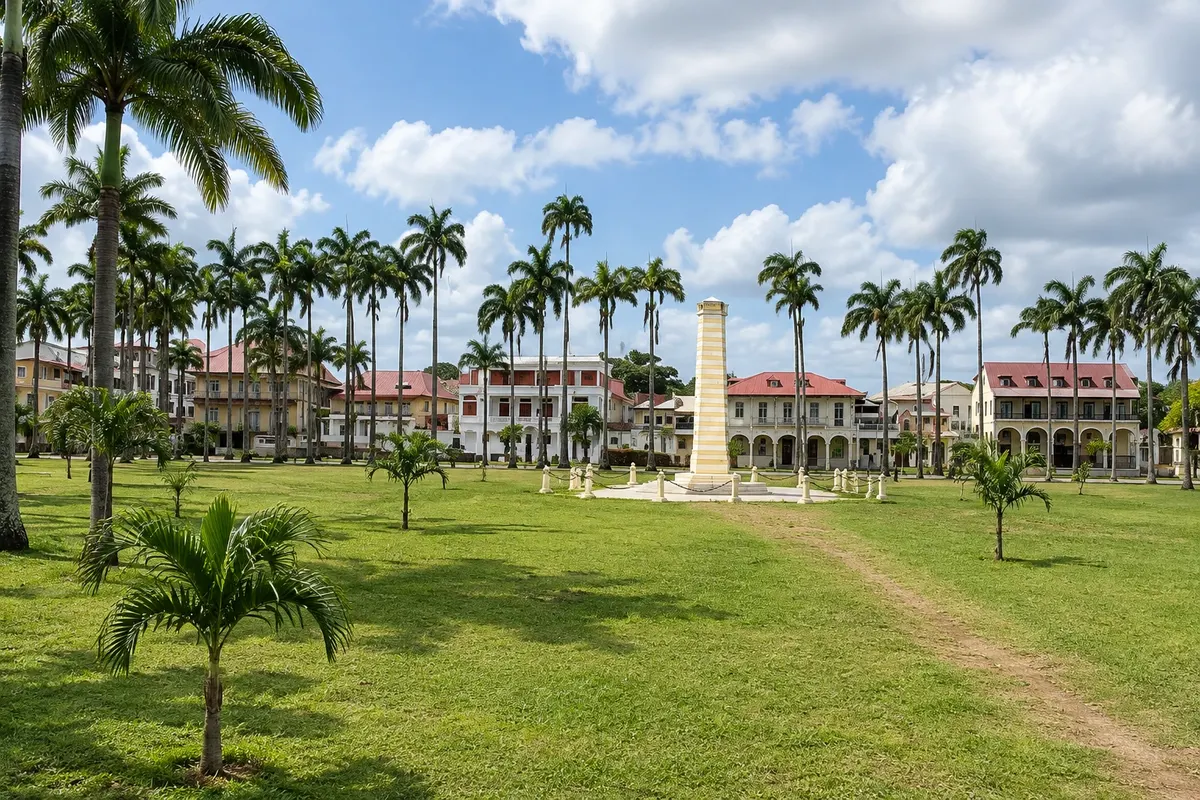
Place des Palmistes
Caiena's central square, with about 3 hectares of lawn and imperial palms, the statue of Félix Éboué and surrounding creole houses. At night, food stalls gather around the edges.

 Išči
 Brazilija
 Antarktika
 Argentina
 Bolivija
 Čile
 Kolumbija
 Ekvator
 GvajanaFrancoska Gvajana
 Falklandski otoki (Malvini)
 Paragvaj
 Peru
 Surinam
 Urugvaj
 Venezuela
 Nemčija
 Avstrija
 Belgija
 Hrvaška
 Danska
 Slovaška
 Slovenija
 Španija
 Finska
 Francija
 Grčija
 Nizozemska
 Madžarska
 Irska
 Islandija
 Italija
 Luksemburg
 Norveška
 Poljska
 Portugalska
 Združeno kraljestvo
 Češka
 Švedska
 Švica
 Turčija
 Bermudi
 Kanada
 Združene države Amerike
 Grenlandija
 Mehika
 Sveta Peter in Mihael
 Dominikanska republika
 JaponskaTurčija
 Južnoafriška republika
 Egipt
 Avstralija
 Fidži
 Nova Zelandija
 Papua Nova Gvineja
Cayenne · Francoska Gvajana Capital
Destinacija: Cayenne, Kourou and the Salvation Islands.
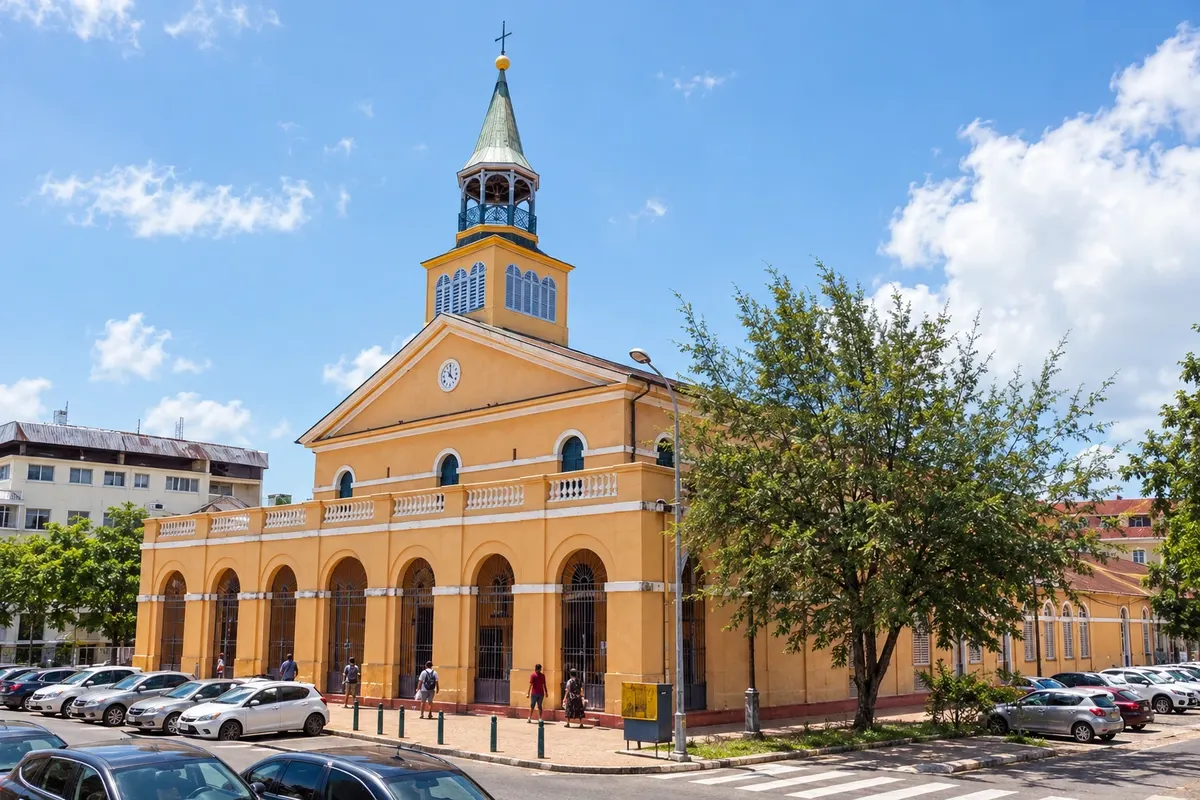
Na fotografiji: Catedral Saint-Sauveur de Caiena
Illustrative images. The pictures in this guide are illustrations based on the real place, not photographs, and may differ from it.
Mesto
Caiena, the capital of Guiana Francesa, sits on a peninsula between the Caiena River and the Atlantic. The old center brings together wooden creole houses around Place des Palmistes and Place Léopold-Héder, the Cathedral of Saint-Sauveur, the Alexandre-Franconie Museum and the central market, and Forte Cépérou dominates the city from the top of the hill. To the east, Rémire-Montjoly has the nearest beaches.
V vodniku še ni nastanitev – Cayenne.
kako do tja · koliko dni · načrt poti · vprašanja
Doživite kraj
Caiena's central square, with about 3 hectares of lawn and imperial palms, the statue of Félix Éboué and surrounding creole houses. At night, food stalls gather around the edges.
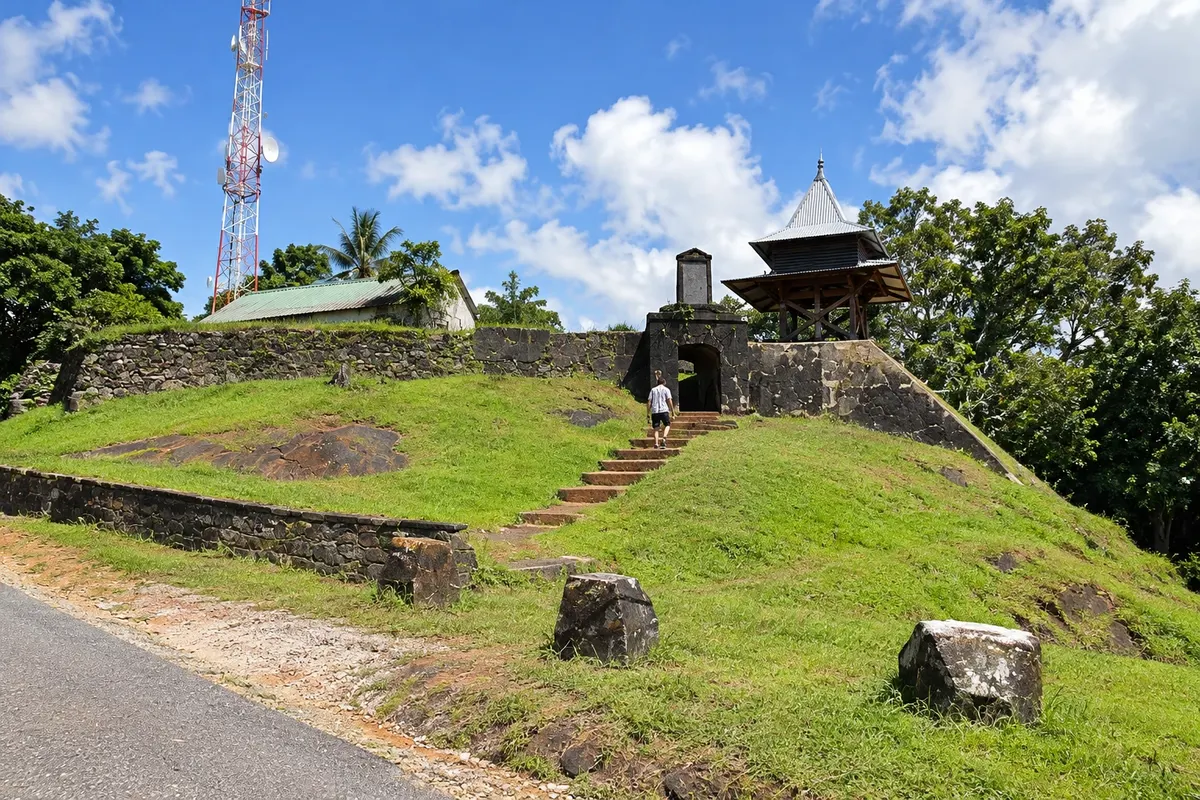
The ruins of the 17th-century fort atop Cépérou hill, where Caiena began. The climb starts at Place Léopold-Héder, passes murals by local artists and ends at a viewpoint over the city, the river mouth and the sea.
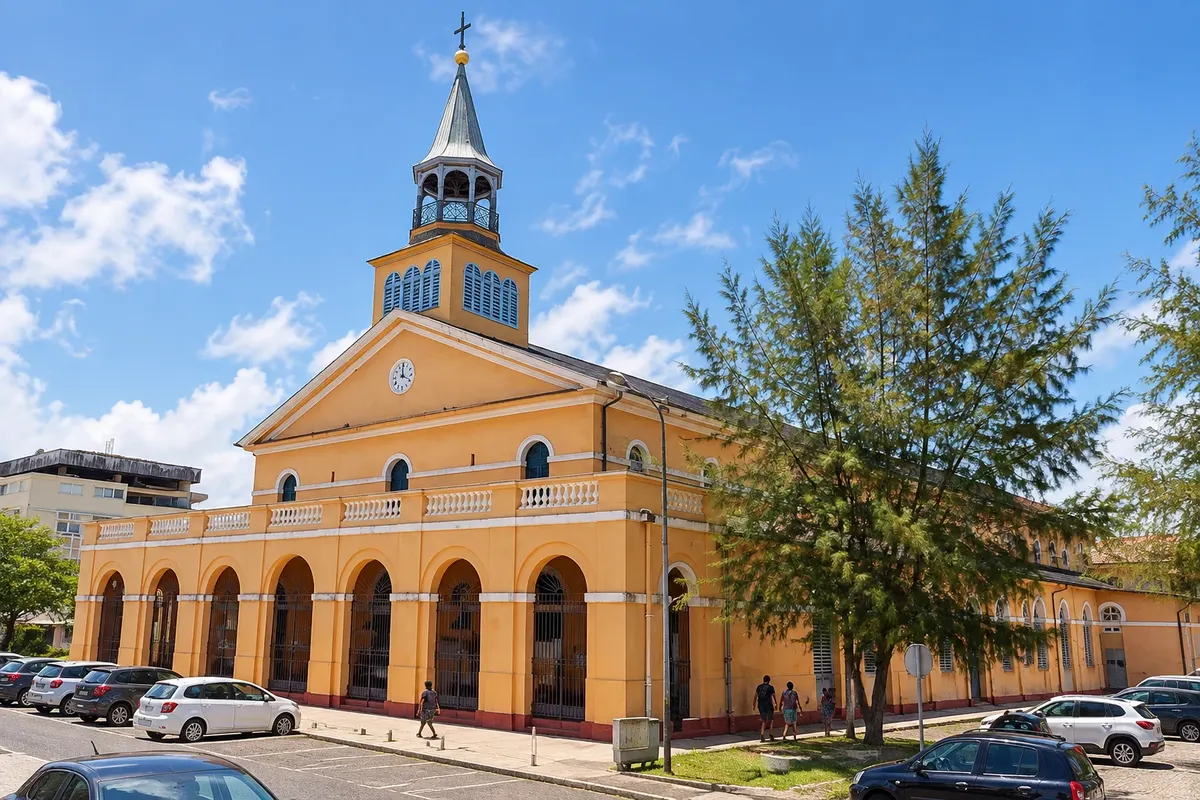
The cathedral of Caiena, built between 1825 and 1833 to replace the old church of Saint-Nicolas and raised to cathedral status in 1934. It is a historic monument, with a wooden tower and a bright interior.
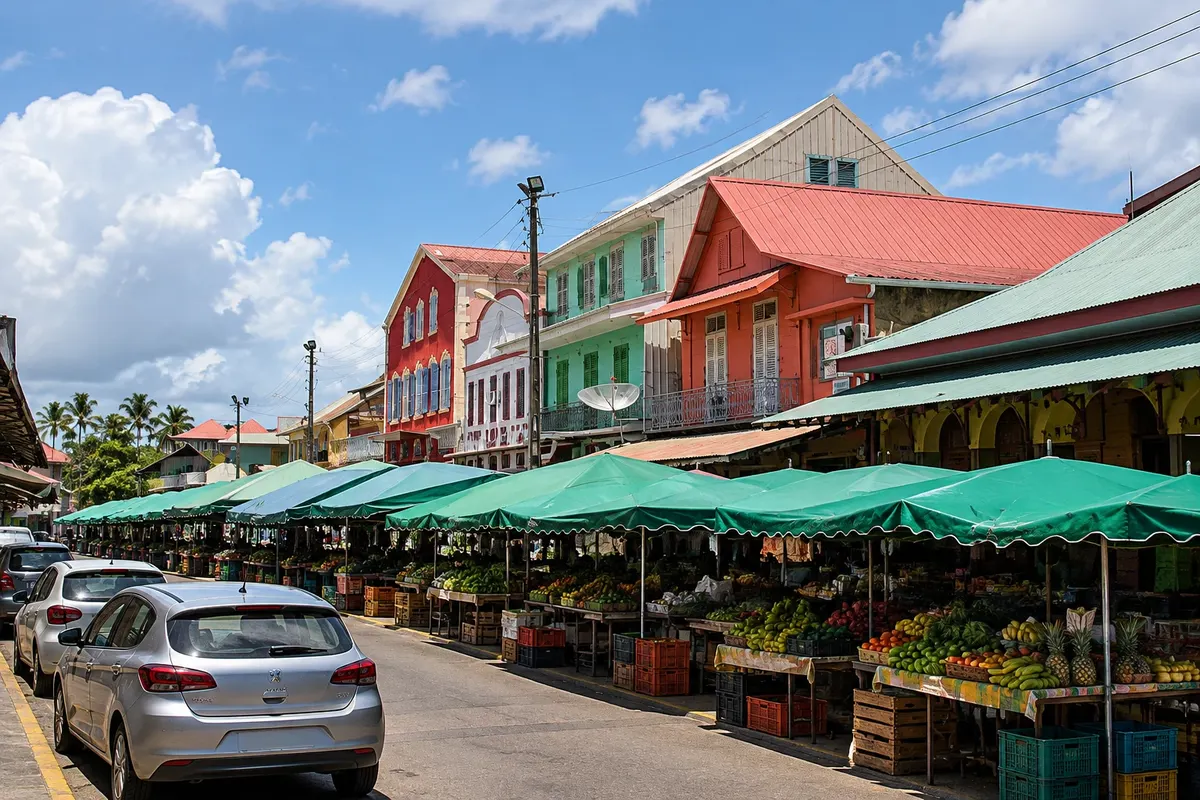
The central market of Caiena, with covered pavilions and stalls selling tropical fruit, spices, vegetables and fish, and the food stalls serving phô soup that have become a city tradition. It operates on market days in the morning.
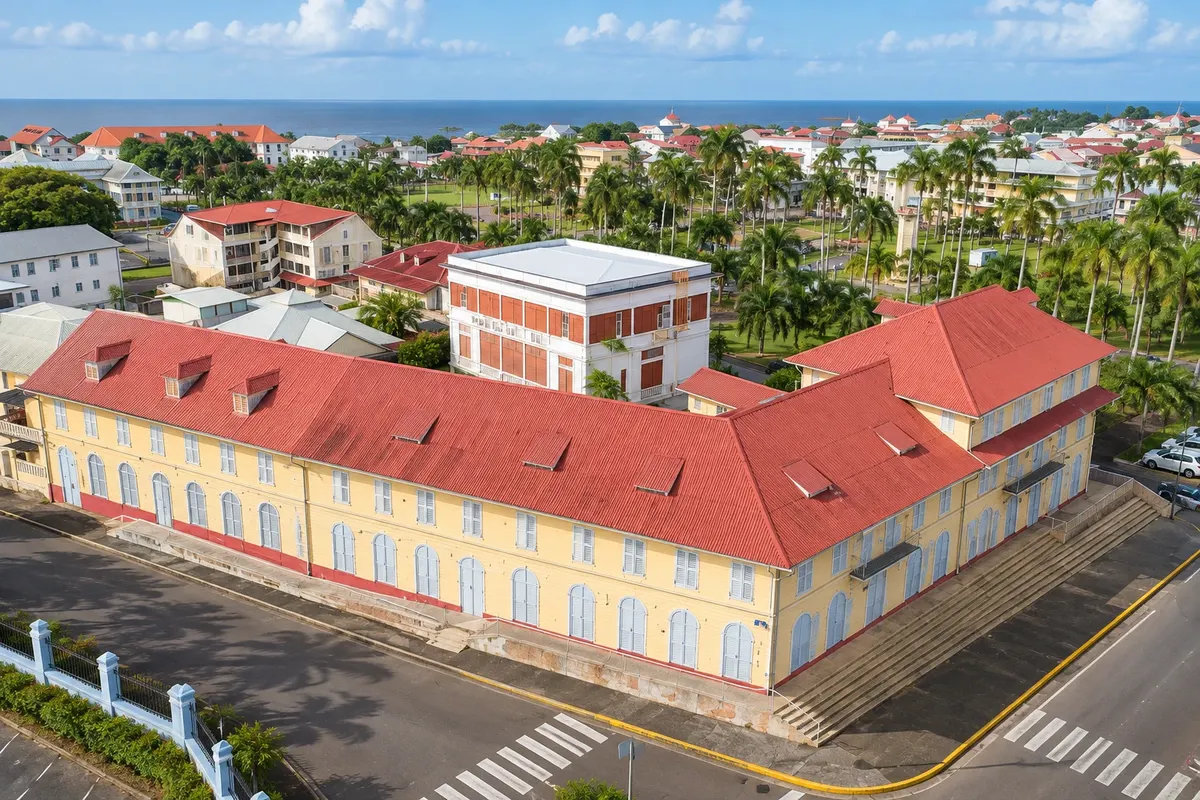
A departmental museum housed in a 19th-century Creole mansion facing Place des Palmistes, with collections of natural history, Indigenous archaeology and the history of Guiana, including paintings by a former convict from the bagne.
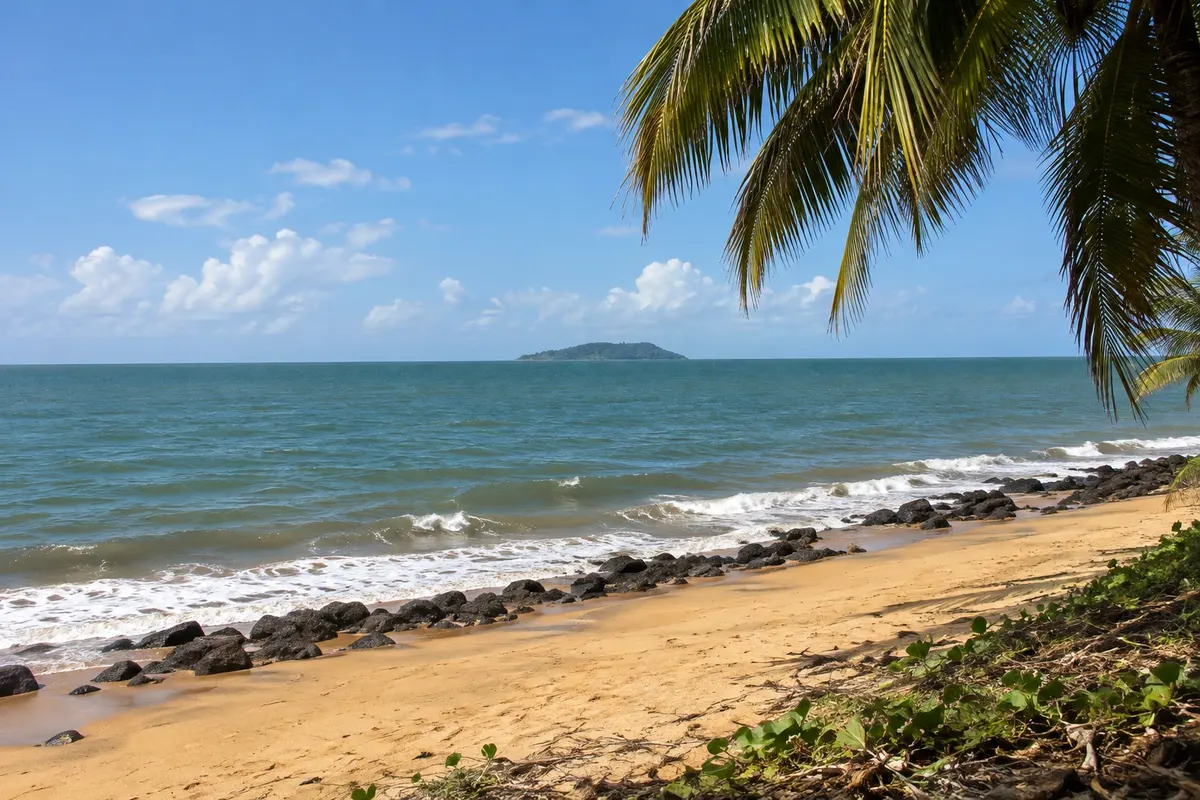
The beaches of the neighbouring town of Caiena, about 8 km from the centre: the long stretch of Montjoly and the Anse de Rémire, with rocks and views of the islets. The sea is muddy, carried by sediment from the Amazon.
Pred odhodom
Cayenne – Cayenne Destinacija Cayenne, Kourou and the Salvation Islands Capital
Razdalje so približne. Pred potovanjem preverite lete in vozne rede avtobusov, vlakov ali ladij.
Check before booking. Félix-Éboué Airport is in Matoury, about 13 km from downtown; taxi and rental car are the most practical options. By land, you can arrive from Oiapoque via the bridge to Saint-Georges and then about 190 km by road, with border control: bring your documents.
Two days: one for the old center on foot, with the market in the morning and Forte Cépérou in the late afternoon, and another for the beaches of Rémire-Montjoly. Caiena is also the base for day trips to Kourou and the Ilhas da Salvação.
From July to November it rains less and the sun appears more; October is usually the hottest month. From December to June rains are frequent, with a short break in March. At any time of year, walk around the center early in the morning or late in the afternoon. Carnival runs from early January until Ash Wednesday.
The seasons shown are the most usual ones; nature doesn't always follow the calendar.
Not for the old center, which is explored on foot. A car helps for the beaches of Rémire-Montjoly and is almost indispensable to go to Kourou and return the same day with flexibility, since public transport has few schedules.
Predlog poti
Pot povezuje znamenitosti na tej strani. Za oglede boste imeli dovolj časa.
Start at the central market on market days, with fruits, spices and pho soup from the stalls. Walk to the Place des Palmistes, with its imperial palms and the surrounding creole houses.
See the Catedral de Saint-Sauveur and the creole mansion of the Museu Alexandre-Franconie, facing the square. Check beforehand if the museum is open.
Climb via the Place Léopold-Héder to the Forte Cépérou to see the city, the river mouth and the sea in the soft light.
At night, the food stalls around the Place des Palmistes and the downtown restaurants are where the action is.
Dan 1
Central market, Place des Palmistes and the streets of creole houses in the center.
Museu Alexandre-Franconie and Catedral de Saint-Sauveur, with a lunch break in the center.
Ascent to the fort via the Place Léopold-Héder, with views of the city and the Atlantic.
Food stalls at the Place des Palmistes.
Dan 2
Go to Rémire-Montjoly and walk along the sand of Praia de Montjoly at low tide.
Head to Anse de Rémire, with the rocks and views of the islets offshore.
Stay on the waterfront of Rémire-Montjoly until late afternoon and return to Caiena.
Have dinner at a creole food restaurant in central Caiena.
Check before you go. Opening hours and days change, and places may close for renovations, holidays or events. This itinerary is a suggestion from Cidade Turismo, not a commitment: plan yours by checking directly with each place you intend to visit.
Pred odhodom
The Aeroporto Félix-Éboué is in Matoury, about 13 km from the center. Taxi and rental car are the most practical options; public transport to the airport is limited. For arrivals at night, arrange a transfer in advance.
The old center, yes: the Place des Palmistes, Place Léopold-Héder, the cathedral, the museum, the market and Forte Cépérou are a few minutes from each other. For the beaches of Rémire-Montjoly, use a car or taxi.
The most popular beaches are in Rémire-Montjoly, about 8 km from the center: Praia de Montjoly and Anse de Rémire. The sea has murky, brown-green water because of sediments the Amazon River carries along the coast.
The Guianese carnival runs from Epiphany (early January) until Ash Wednesday. On Sundays there are street parades, and on Friday and Saturday nights the touloulou balls, where female revellers are costumed from head to toe. Dates change each year; check before you go.
Več kot vodnik


