Medieval City of Rhodes
Walled city built by the Knights of Saint John between 1309 and 1522, a World Heritage Site. About 4 km of walls, a dry moat, monumental gates, the knights' quarter and Ottoman streets with minarets and wooden balconies.
Antarktika
South Aegean · Grčija
The largest island of the Dodecaneso holds the walled city of the Cavaleiros de São João, the acropolis of Lindos above the sea, sandy beaches and a valley where butterflies often land in summer.
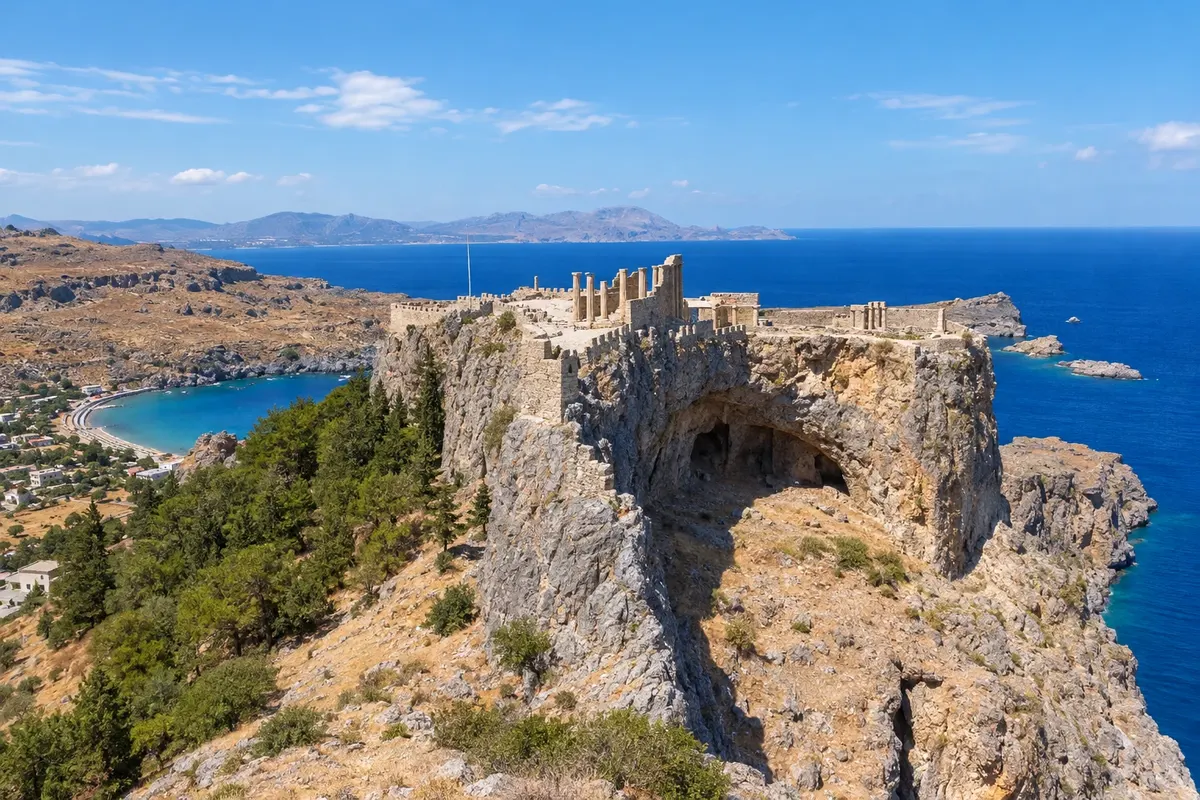
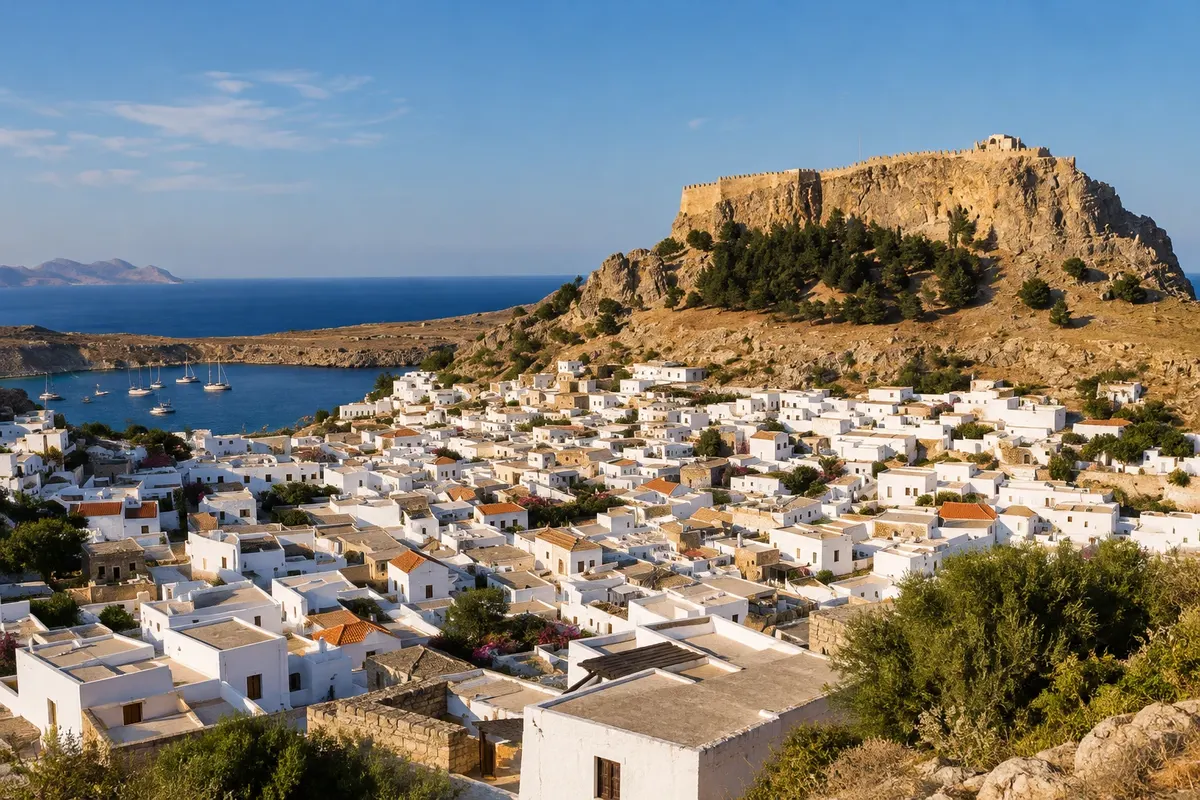
Na fotografiji: Acrópole de Lindos
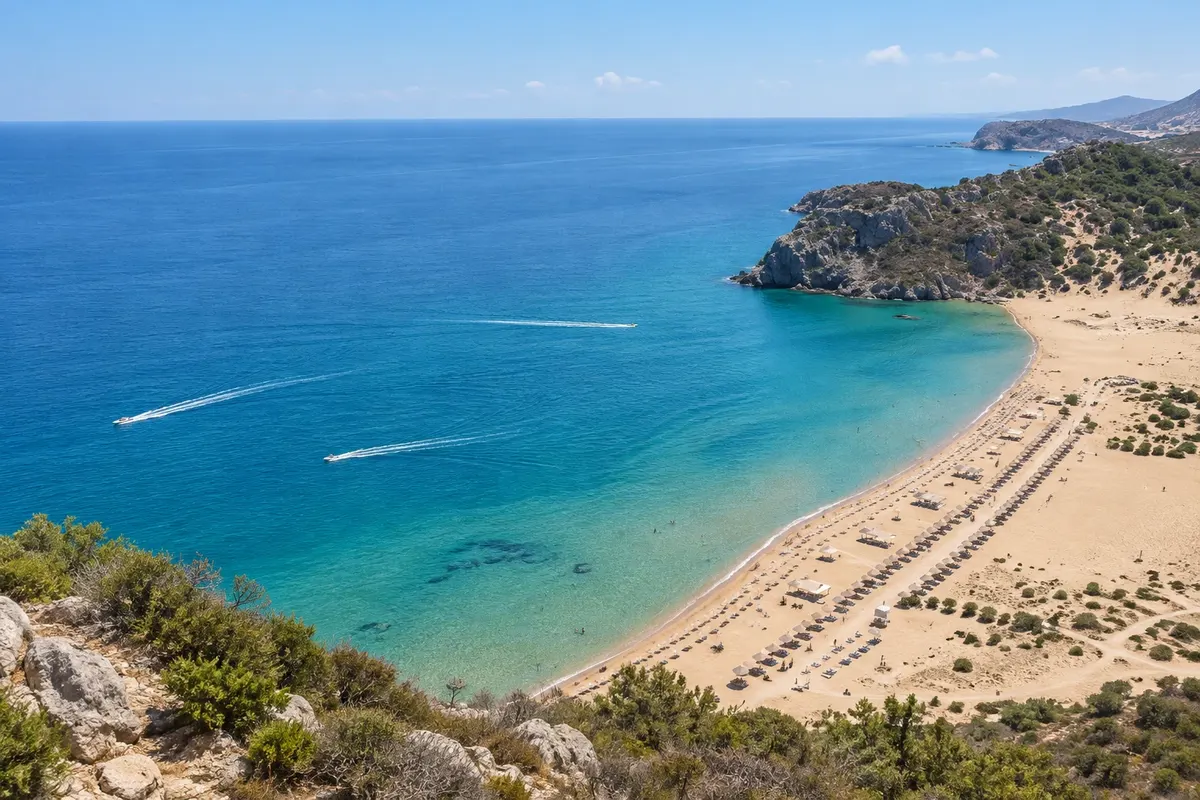
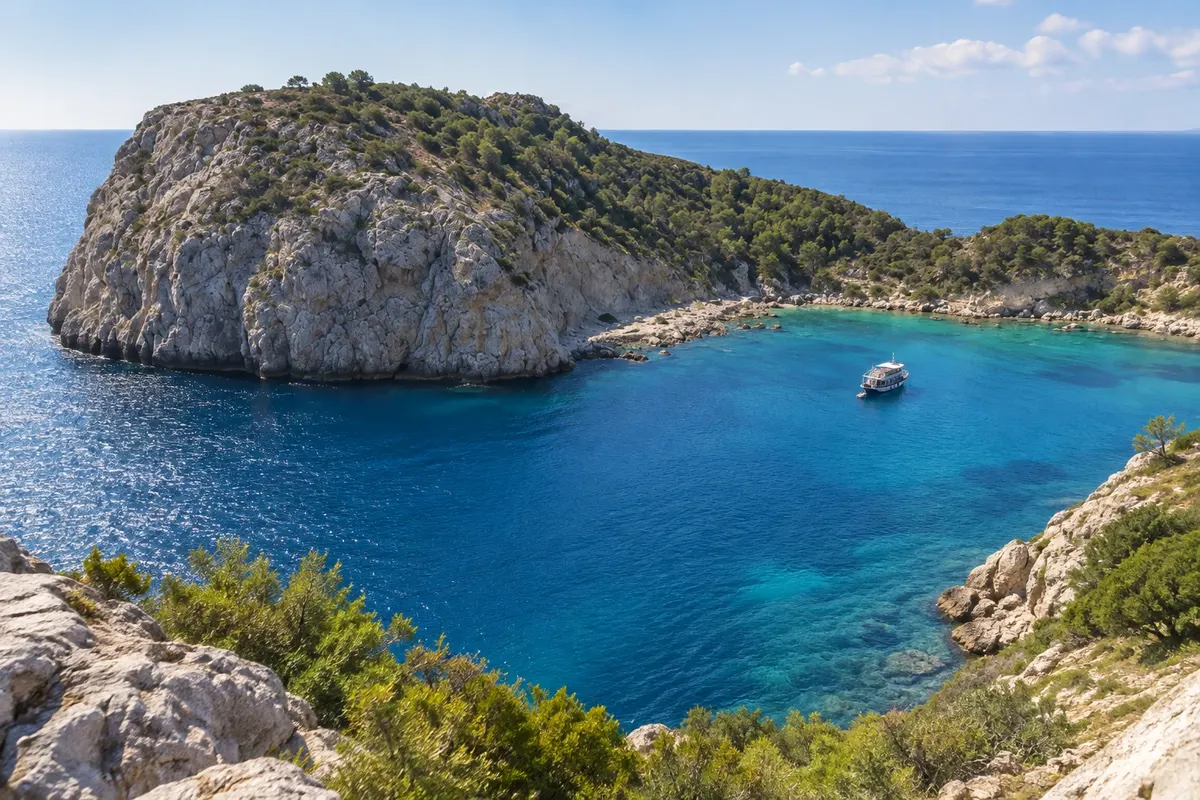
Illustrative images. The pictures in this guide are illustrations based on the real place, not photographs, and may differ from it.
Spoznajte kraj
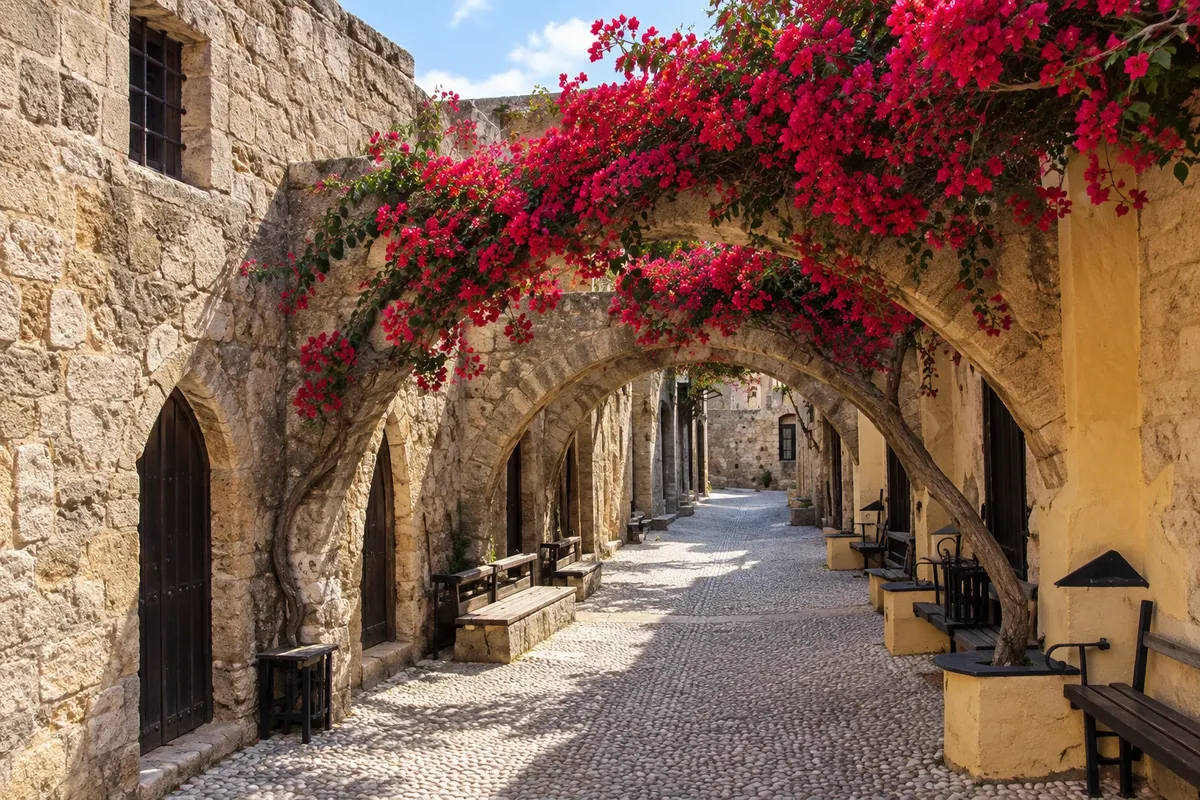
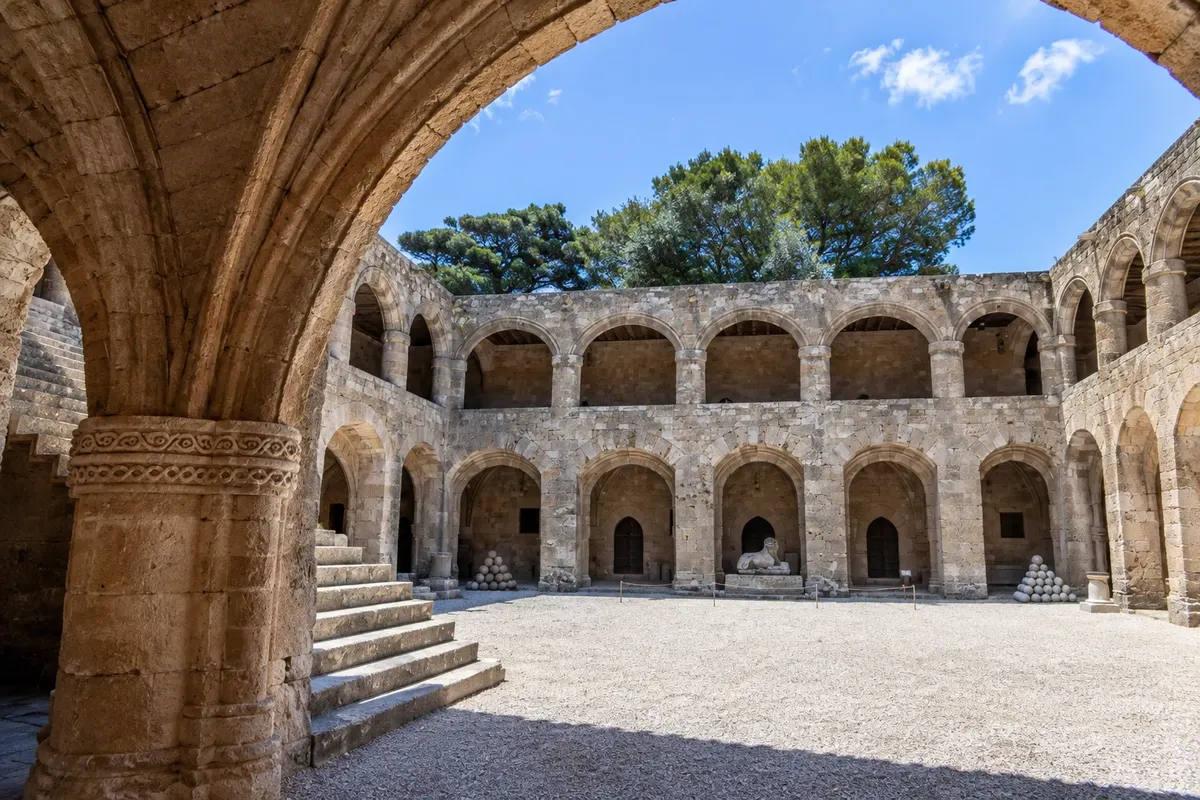
Rodes (Rodos) is the largest island of the Dodecaneso, in the southeast of the Aegean Sea, near the coast of Turkey. The city of Rodes lies at the northern tip and contains the island's most famous sights: the medieval walled city, built by the Cavaleiros de São João between 1309 and 1522 and recognized as a World Heritage Site. Inside the walls, the Palácio do Grão-Mestre, the Rua dos Cavaleiros and the old hospital, now the Museu Arqueológico, make up the knights' quarter. The rest of the old town mixes minarets, Ottoman baths and houses with enclosed wooden balconies.
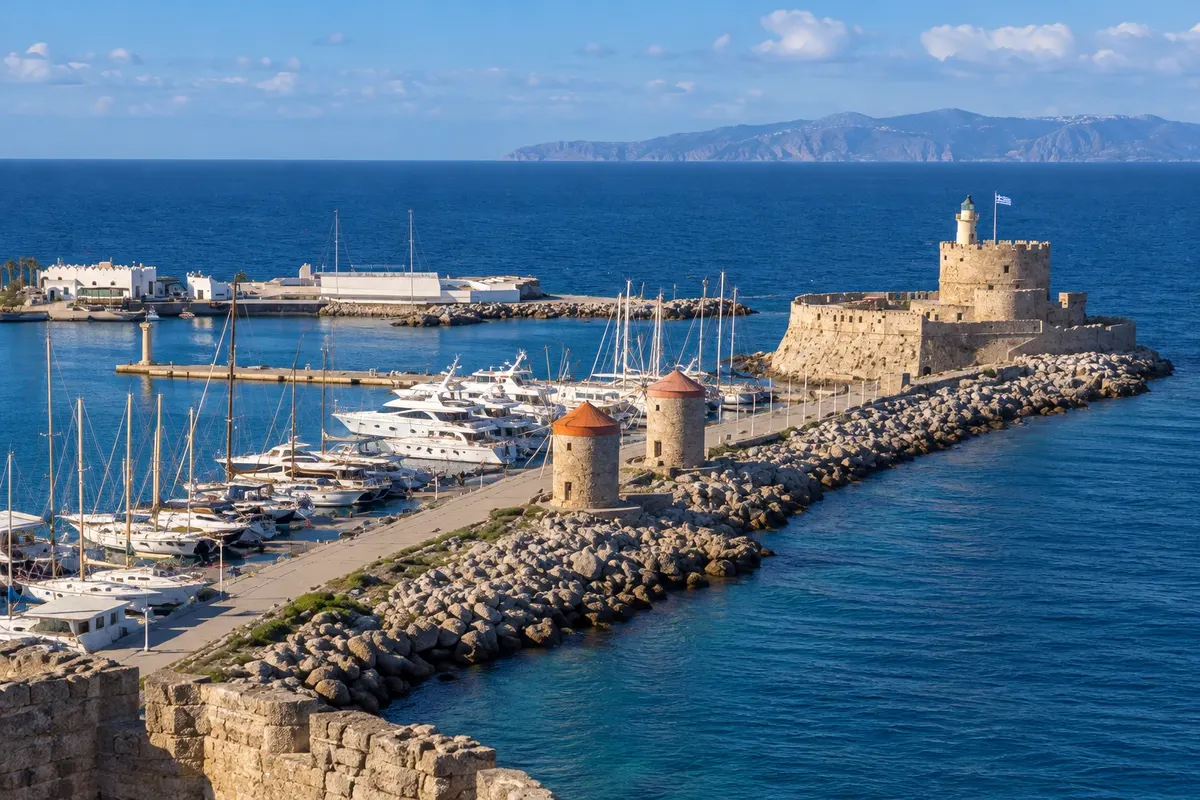
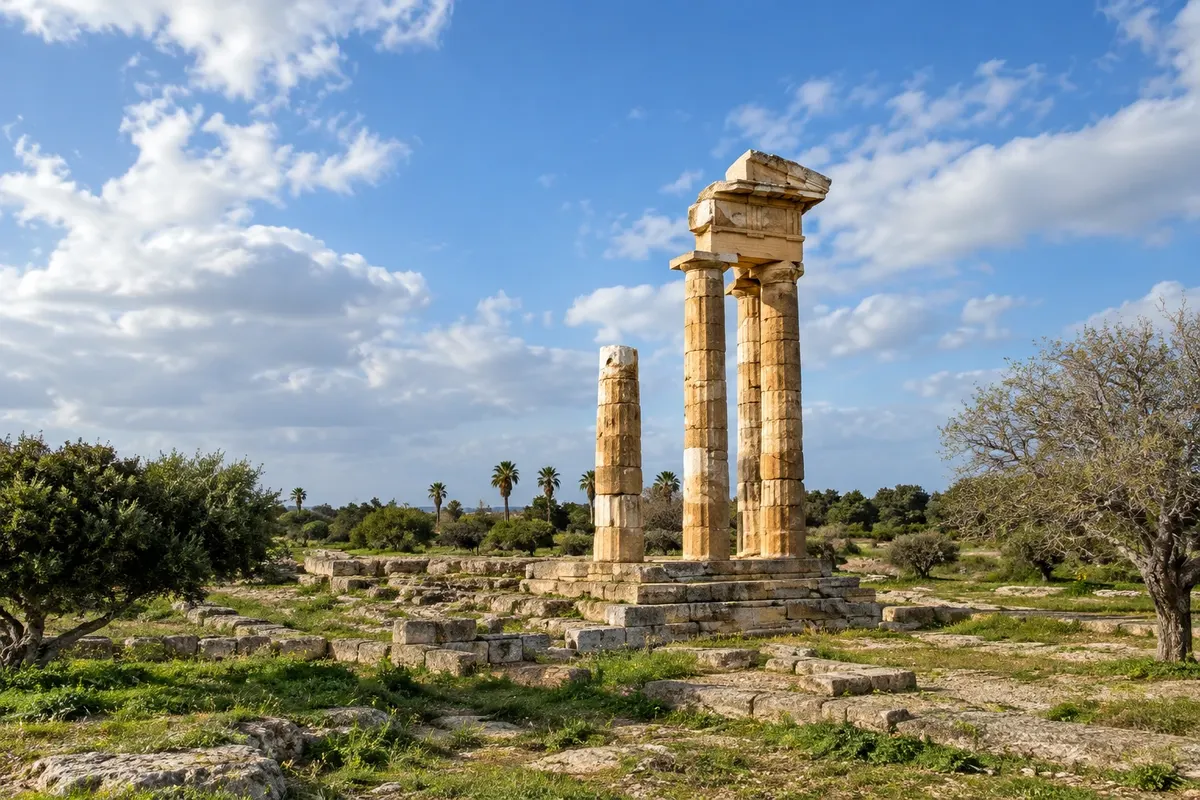
Outside the walls, the port of Mandraki, with its three windmills and the Forte de São Nicolau, is a reminder of the Colosso de Rodes, one of the seven wonders of the ancient world, which stood for just over fifty years before the earthquake of 226 BC. The new city, built by the Italians between 1912 and 1943, has light-stone buildings, the covered market and the catedral da Anunciação. On the top of monte Smith, the ancient acropolis brings together the temple of Apollo, the stadium and a small odeon.
The east coast is where the sandy beaches and resorts are: Kallithea, Faliraki, Anthony Quinn bay and Tsambika, up to Lindos, 47 km away, where a village of white houses clings to a rock crowned by the templo de Atena Lindia and a knights' castle. On the west coast, with stronger winds, are the airport, monte Filerimos, the ruins of Kamiros and the Vale das Borboletas, which usually hosts the moths from June to September.
The island is about 78 km long, and a rental car helps to reach sites and beaches in the south, such as the castle of Monolithos and the tip of Prasonisi. Those who stay only in the city and in Lindos can manage everything with regional buses that depart from the center. English is common in hotels and restaurants; in Greek, kalimera means good morning and efharisto means thank you.
European summer, from June to August, brings strong heat and sun all day; archaeological sites have little shade and lots of smooth stone, so closed shoes and a hat make a difference. In winter, from November to March, many hotels and seaside restaurants close, and sites operate on reduced hours.

V vodniku še ni nastanitev – Rhodes.
kako do tja · koliko dni · načrt poti · vprašanja
✈ Aeroporto Internacional de Rodes Diagoras (RHO), kraj: Paradisi· 14 km do cilja (Rhodes)
Confirm before buying. From Athens, the flight to Diagoras airport takes about an hour, and there are flights from Europe in season. By sea, ferries depart from Piraeus, near Athens, on a long trip with stops at other islands; boats connect Rodes with Kos, Symi and other islands of the Dodecaneso. Check the season and departure days.
Doživite kraj
Walled city built by the Knights of Saint John between 1309 and 1522, a World Heritage Site. About 4 km of walls, a dry moat, monumental gates, the knights' quarter and Ottoman streets with minarets and wooden balconies.
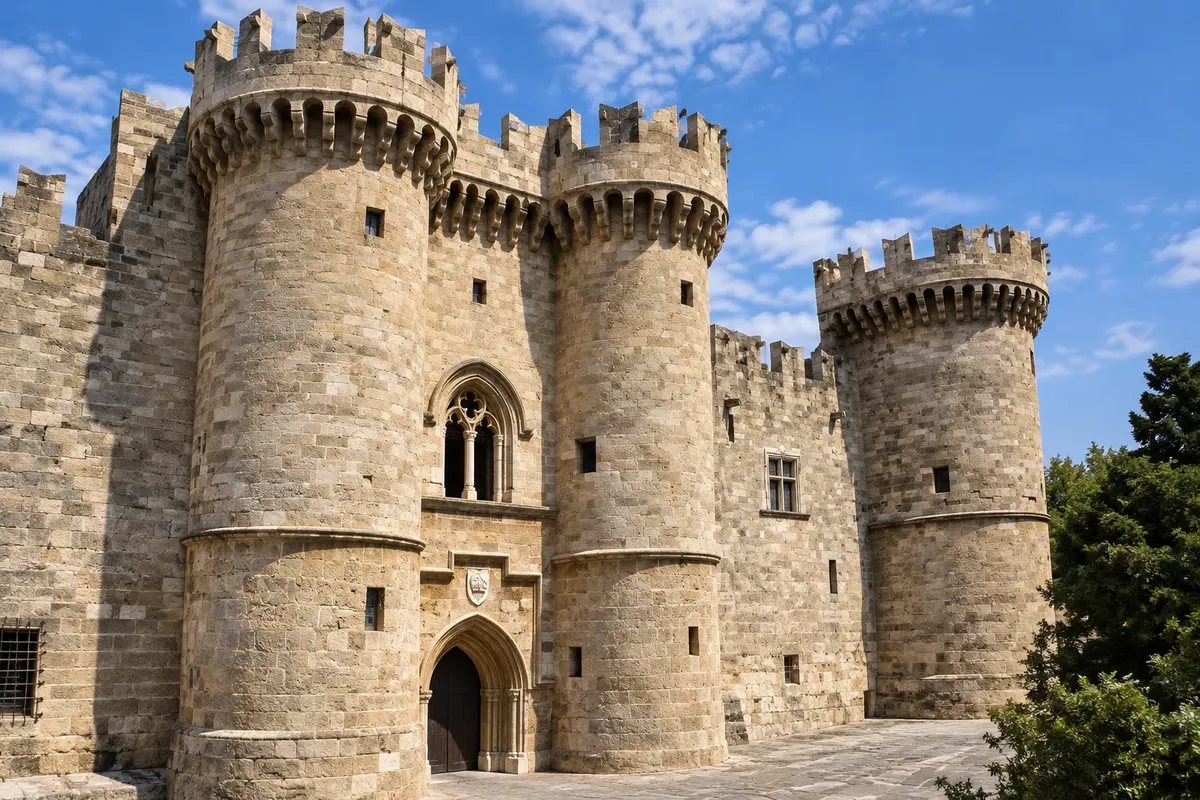
Seat of the grand masters of the Order of Saint John, rebuilt by the Italians in 1937–1940 atop the ruins of the medieval palace. Halls with Roman mosaics brought from Kos, antique furniture and exhibitions on the history of Rodes.
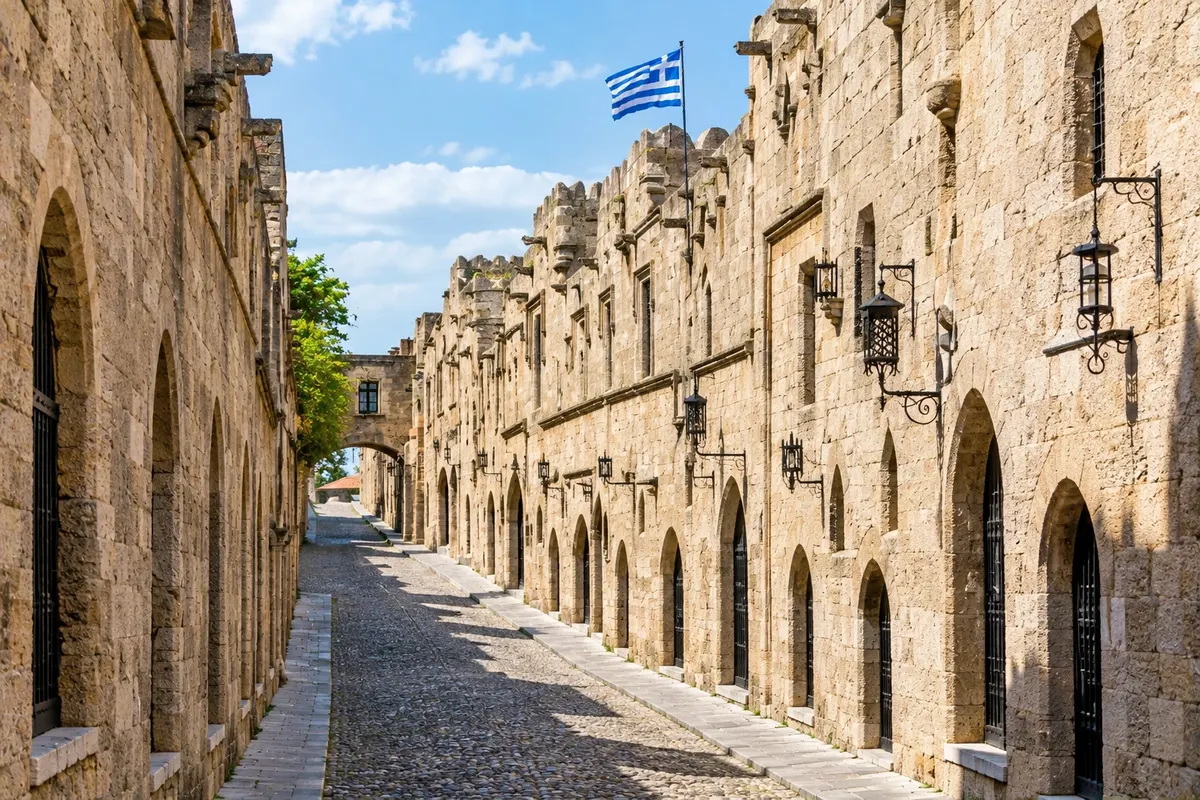
Rua dos Cavaleiros, about 600 metres long, links the old hospital to the Palácio do Grão-Mestre. On each side are the inns of the order's langues, with stone coats of arms on the Gothic façades.
Archaeological Museum in the old knights' hospital, a Gothic building begun in 1440. It houses the Crouching Aphrodite, the Aphrodite of Rhodes, Hellenistic mosaics and finds from Kamiros, Ialysos and Lindos.
The city's old port, where tradition places the Colosso de Rodes. At the entrance, the columns with the stag and the doe; on the breakwater, three medieval windmills and the Forte de São Nicolau, from the 15th century, with its lighthouse.
Acropolis of the ancient city on monte Smith, 3 km from the center: temple of Apolo Pítio partially reconstructed, a 210-metre stadium from the 3rd century BC, a marble odeon and rock-cut nymphaea.
A settlement of white houses and 17th‑century captains at the foot of a 116‑metre rock with the temple of Atena Lindia, the Hellenistic stairway and the knights' castle. Below, the bay of São Paulo.
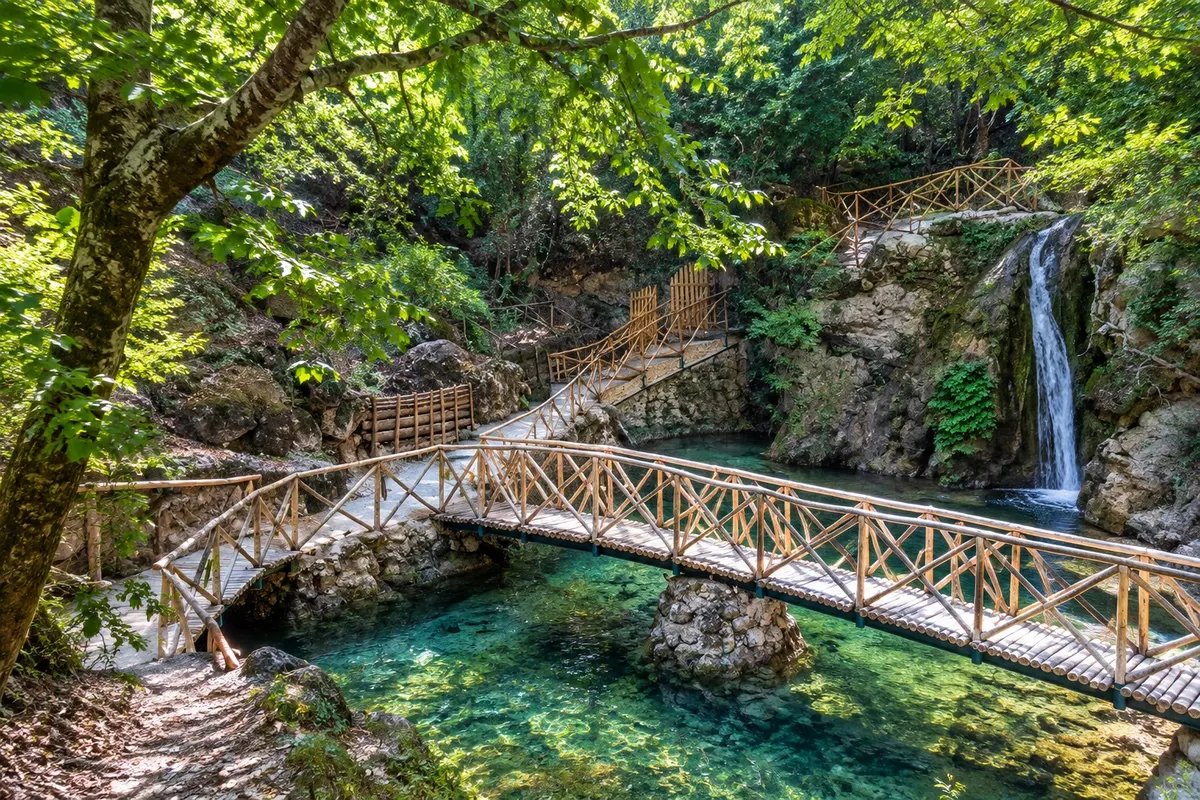
Narrow valley of streams and liquidambar trees, 25 km from the city, where thousands of Panaxia moths typically settle on the trunks from June to September. Trails with wooden bridges and stairs.
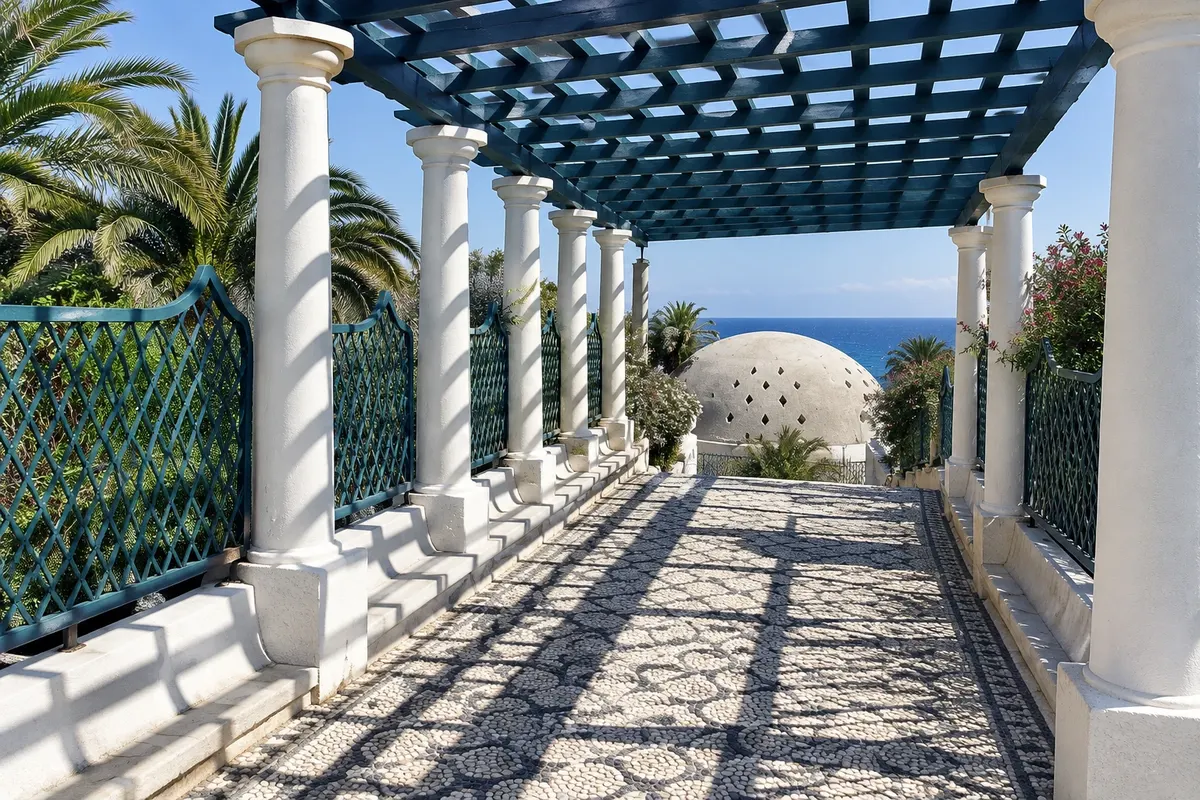
Old Italian thermal spa from 1929, with a rotunda, pergolas, pebble mosaics and gardens over a clear-water cove, 9 km from the city. Today it welcomes visitors, sea bathing, a café and exhibitions.
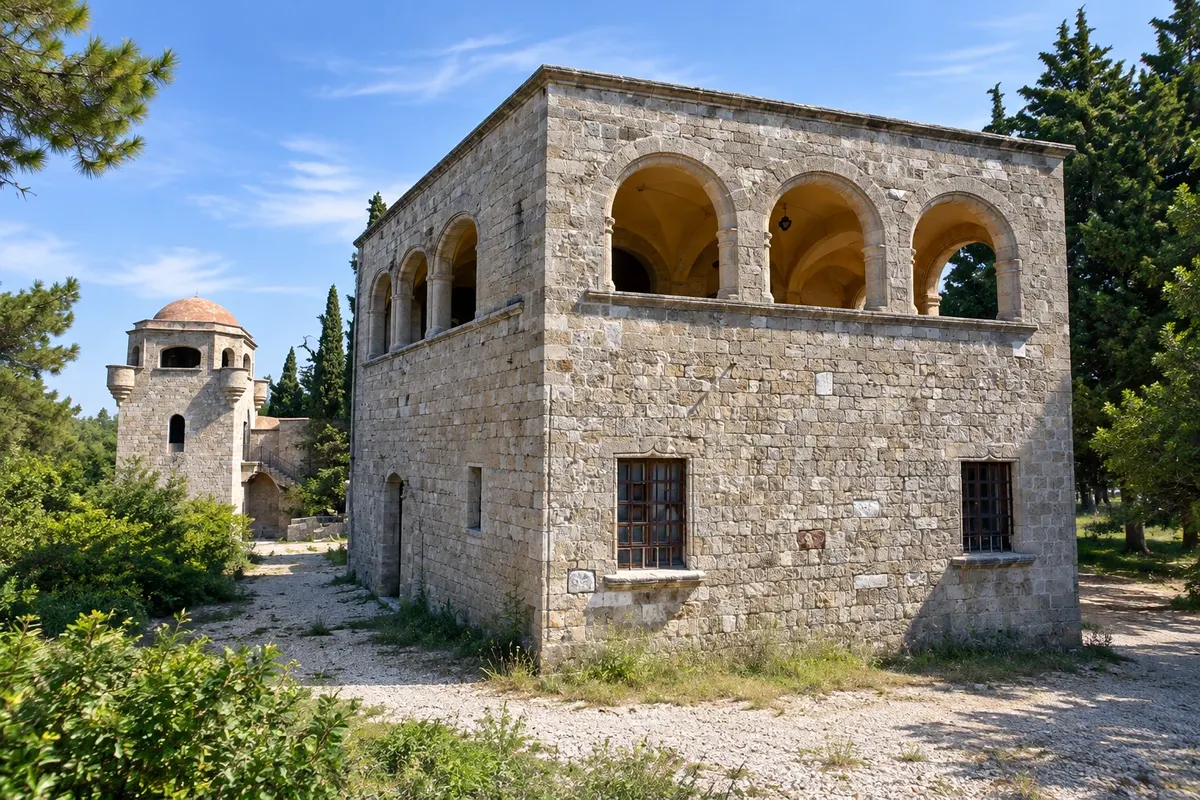
A 267-metre hill 15 km from the city, with the Gothic monastery of Panagia Filerimou, ruins of the Athena temple of ancient Ialysos, a cypress-lined via-sacra up to a large cross, and free-roaming peacocks.
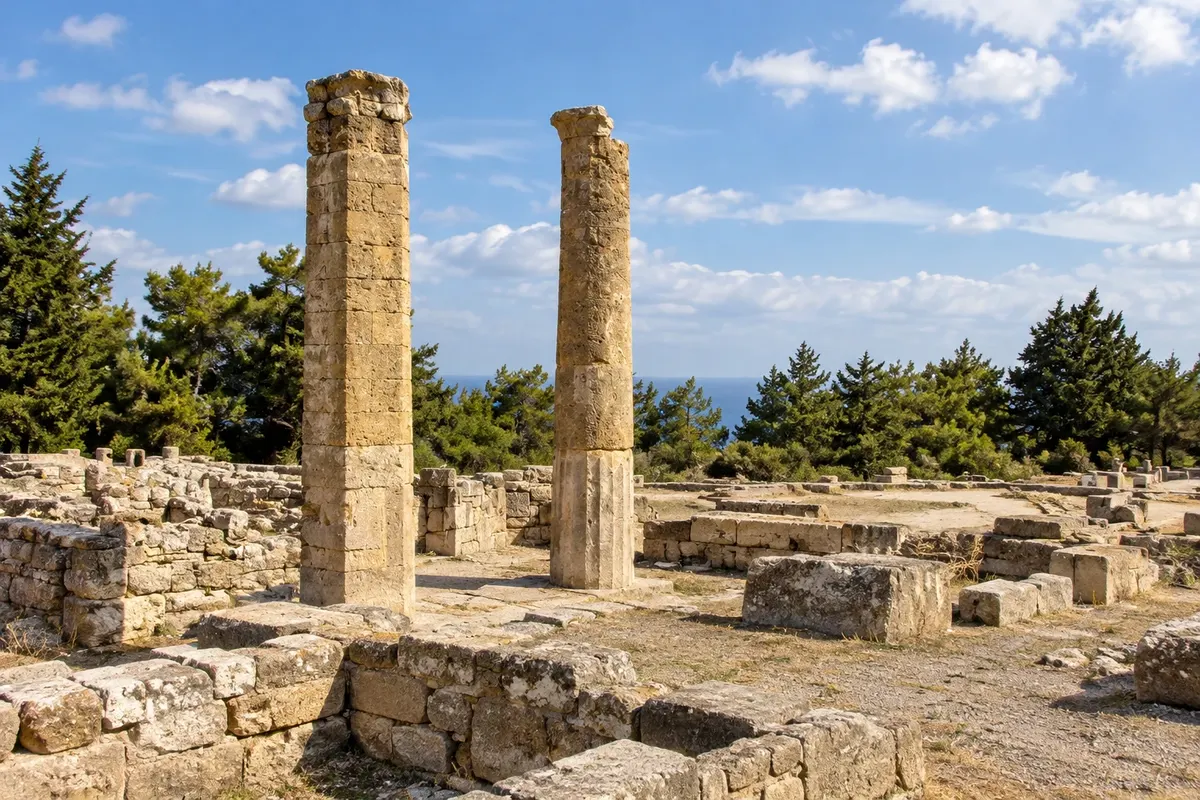
Ruins of one of the three ancient cities of Rodes, on a slope overlooking the sea 35 km from the city: an agora, a Doric temple, houses with peristyles, grid streets and the acropolis stoa above a 6th-century BC reservoir.
A wide golden-sand beach with shallow water on the east coast, 26 km from the town, below the rock of the monastery of Panagia Tsambika, which is reached by about 300 steps.
Small cove of clear water among rocks and pine trees, 15 km from the town and next to Faliraki, named after the actor who filmed there in the 1960s. Pebbly and rocky bottom, good for snorkeling.
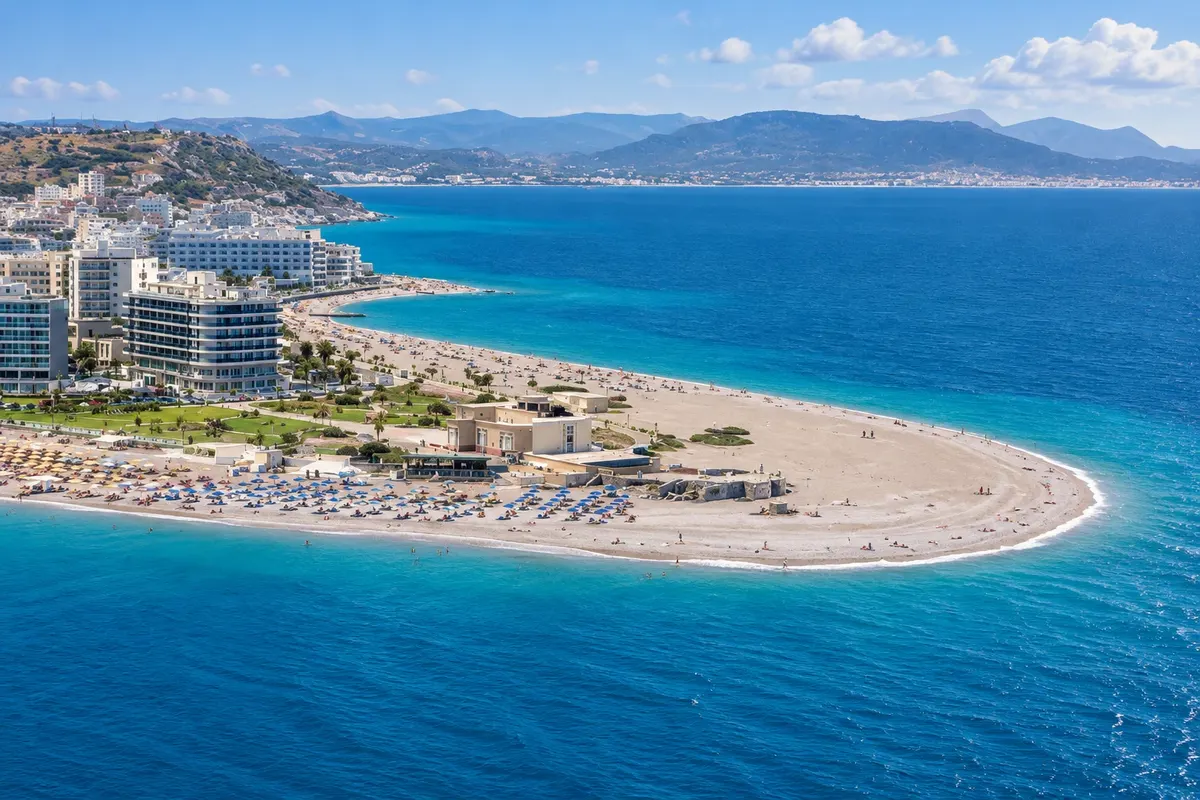
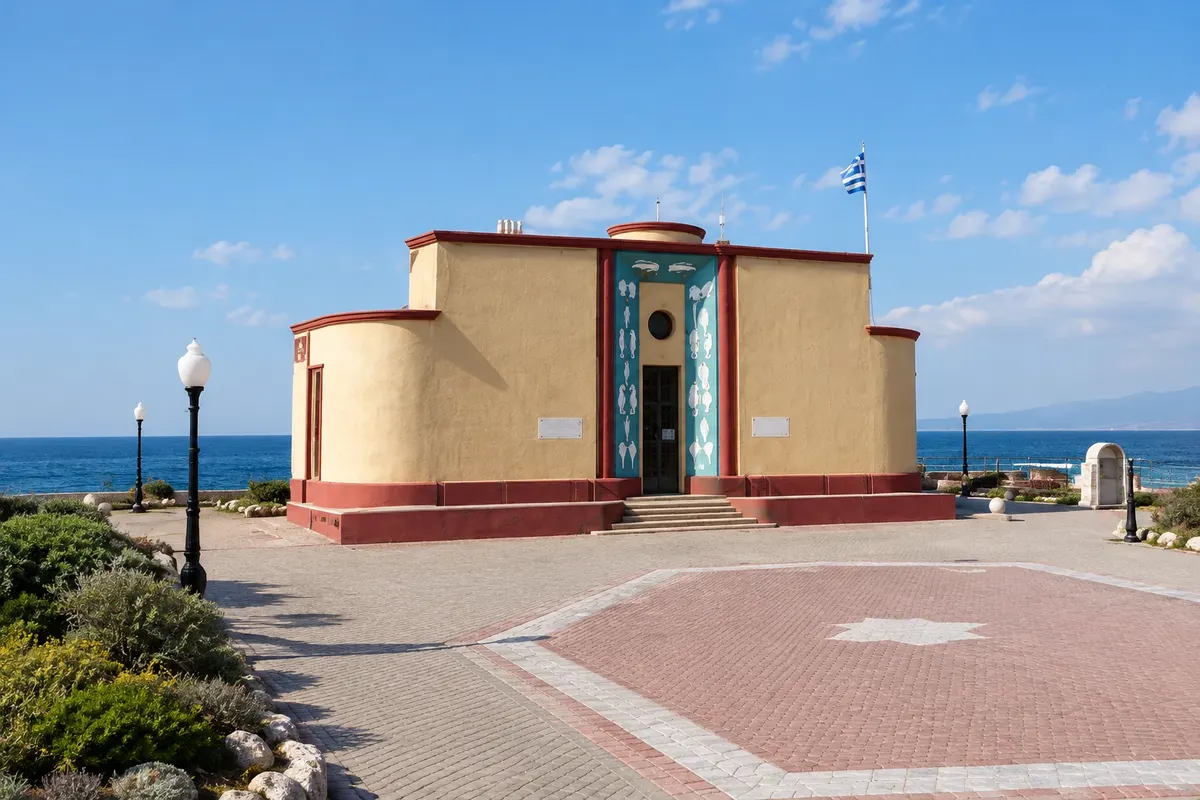
Urban pebble-and-sand beach at the northern tip of the town, a ten-minute walk from the walls, with a diving platform in the sea, changing cabins, bars and the art-deco aquarium building at the end.
Aquarium and marine museum on the northern tip of the island, in an Italian Art Deco building from 1934–1936: tanks with Aegean species in a corridor that imitates an underwater cave, and a collection of marine animals.
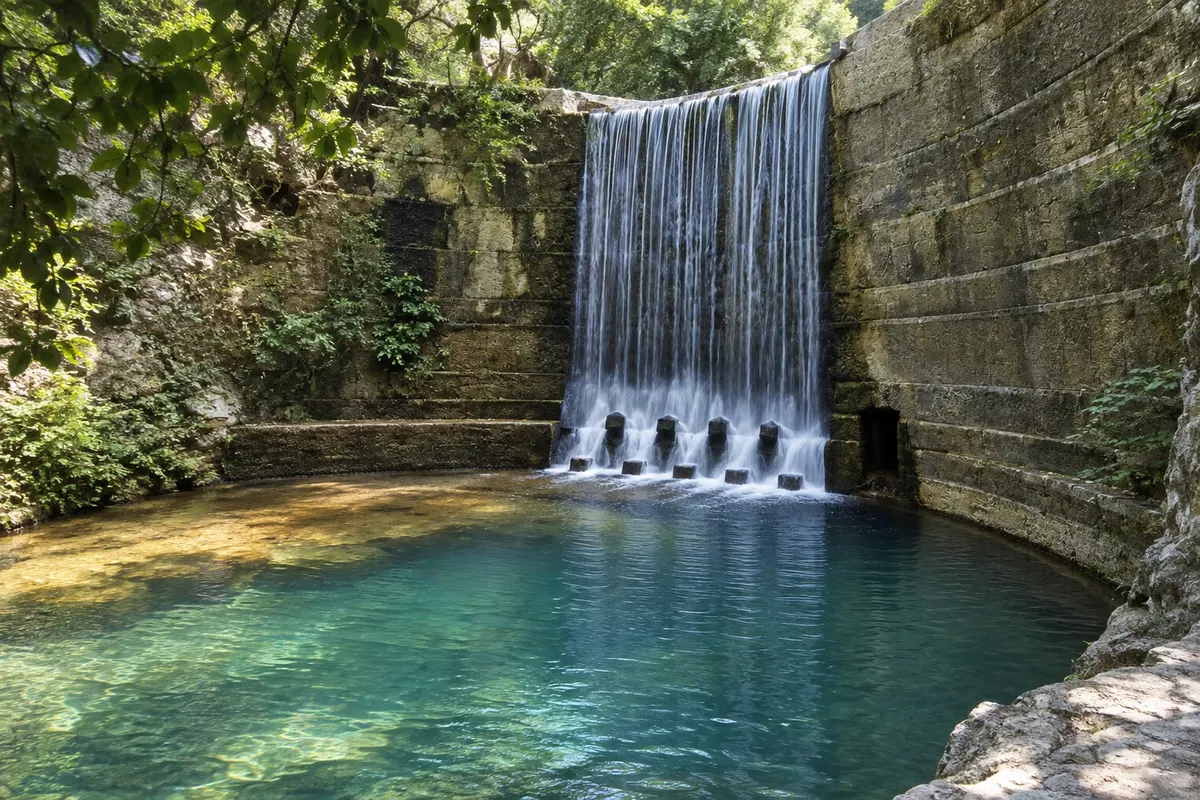
As Sete Fontes: a pine and plane-tree wood 30 km from the town, with streams, a 186-meter tunnel built by the Italians in 1931 and a small lake with a dam at the end. Shaded taverna.
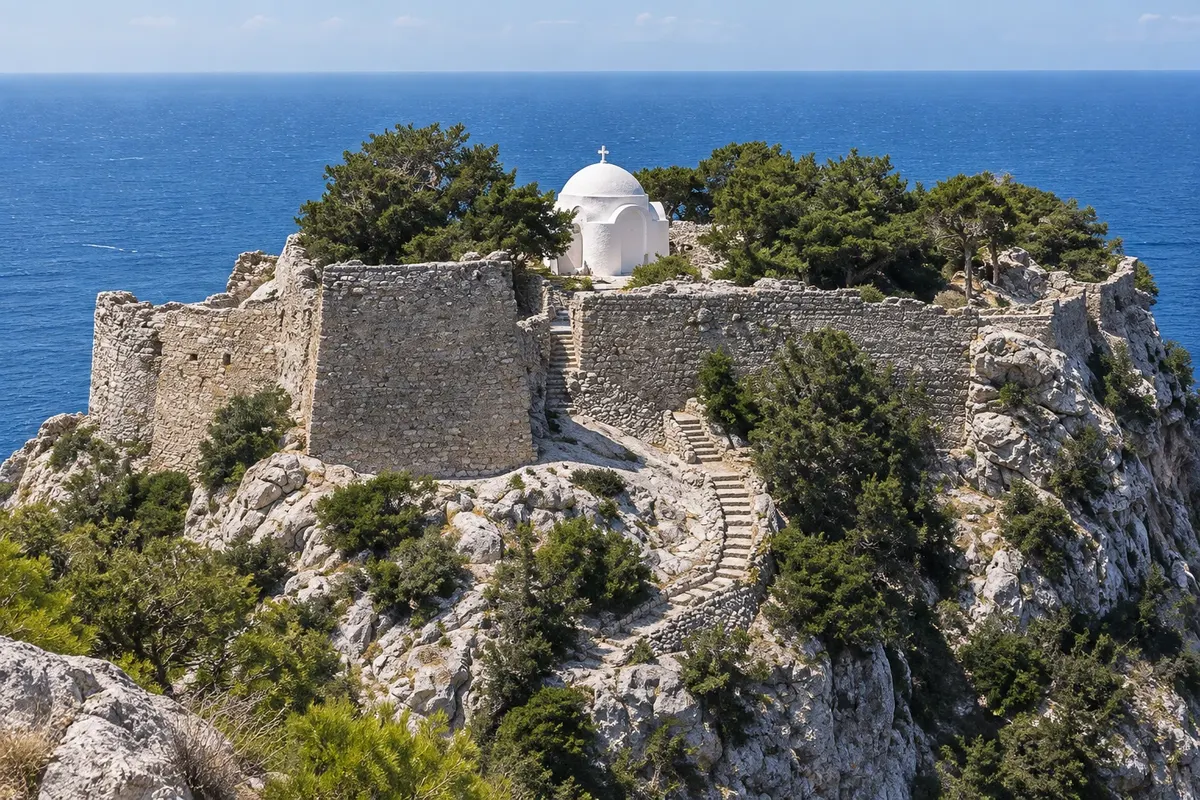
15th-century knights’ castle atop a 236-meter cliff on the southwest coast, 70 km from the town. Inside the walls, the chapel of São Pantaleão and views of the sea and the island of Halki.
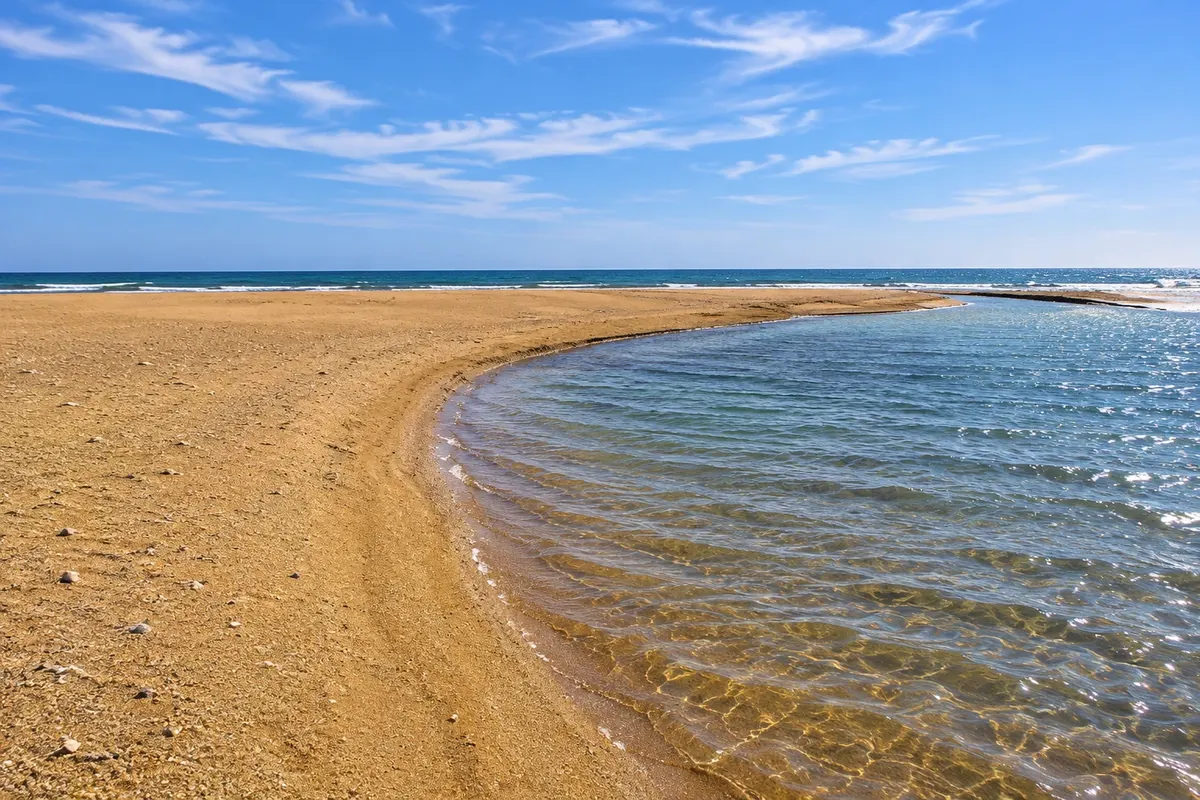
Southern tip of the island, 92 km from the city: a small islet connected to Rodes by a sandbar with open sea on one side and calm water on the other, popular with windsurfing and kitesurfing. Lighthouse at the tip.
Pred odhodom
Rhodes – South Aegean
Razdalje so približne. Pred potovanjem preverite lete in vozne rede avtobusov, vlakov ali ladij.
Check before you buy. From Athens, the flight to Diagoras Airport, 14 km from the town, takes about an hour; in season there are flights from several European cities. From the airport, regional buses and taxis reach the center in roughly half an hour. By sea, ferries from Piraeus make a long trip to the commercial port next to the medieval town; boats connect Rodes with Kos, Symi and other Dodecanese islands. Check the season.
Two days for the town: one for the medieval town, with the palace and museum, and another for Mandraki, Elli beach, the aquarium and the acropolis on Mount Smith. From there, each additional day is an excursion: Lindos, the east coast with Kallithea, Anthony Quinn and Tsambika, or the west coast with Filerimos, the Vale das Borboletas and Kamiros. With five days you can do all this; with a week you can include the south of the island and beach days.
From May to October the town and resorts operate fully, with long days and sea for swimming. July and August tend to be very hot inside the walls and crowded, with cruise ships almost every day. May, June, September and October are the easiest months. From November to March many hotels and restaurants on the coast close, the sites reduce opening hours and tour boats stop; the medieval town remains open and quiet.
The seasons shown are the most usual ones; nature doesn't always follow the calendar.
You don't need a car for the town: the medieval town is pedestrian-only, and Mandraki, Elli, the aquarium and the new town are walkable; Mount Smith is within walking distance or a city bus ride. For Lindos, Faliraki, Kallithea and Tsambika there are regional buses from the terminal behind Mercado Novo. A car makes a difference for the west coast, Kamiros, Monolithos and Prasonisi, and for linking several beaches in one day. Those staying inside the walls leave their car in the outside parking lots.
Predlog poti
Pot povezuje znamenitosti na tej strani. Za oglede boste imeli dovolj časa.
Enter through the Porta da Liberdade, opposite Mandraki, and walk up Rua dos Cavaleiros to the Palácio do Grão-Mestre, right at the entrance. See the mosaics from Kos and the ground-floor exhibitions. On the way down, visit the Museu Arqueológico in the old hospital.
Have lunch at Praça Ippokratous and walk along Sokratous to the Suleiman mosque (viewed from the outside) and the side streets of the Burg. Exit through the porta d'Amboise and walk along the dry moat, between the two lines of walls.
Go to the port of Mandraki, pass the columns of the deer and walk along the pier to the three windmills and the Forte de São Nicolau to see the walled town from the sea. Coffee at Mercado Novo.
Return to the illuminated medieval town and dine in one of the squares or on the streets of the old Jewish quarter around Praça Evreon Martyron. Greeks eat late; tables fill up after 9 pm.
Dan 1
Enter through the Porta da Liberdade, opposite Mandraki, and walk up Rua dos Cavaleiros to the Palácio do Grão-Mestre, right at the entrance. See the mosaics from Kos and the ground-floor exhibitions. On the way down, visit the Museu Arqueológico in the old hospital.
Have lunch at Praça Ippokratous and walk along Sokratous to the Suleiman mosque (viewed from the outside) and the side streets of the Burg. Exit through the porta d'Amboise and walk along the dry moat, between the two lines of walls.
Go to the port of Mandraki, pass the columns of the deer and walk along the pier to the three windmills and the Forte de São Nicolau. Have a coffee at Mercado Novo with a view of the port.
Return to the illuminated medieval town and dine in one of the squares or on the streets of the old Jewish quarter. Tables fill up after 9 pm.
Dan 2
Take an early regional bus or drive to Lindos, 47 km to the south. Climb the acropolis right at opening, see the temple of Athena Lindia, the stoa and the knights' castle, and descend through the village of white houses and pebble streets.
Have lunch in Lindos and go down to the Baía de São Paulo for a swim, in the nearly enclosed cove below the cliff. Those driving can stop at Tsambika on the way back.
Back in town, head up Mount Smith to see the temple of Apollo, the stadium and the odeon, with the sun setting over the western sea.
Dine in the new town, near Mandraki, and walk along the promenade of Elli beach, with the Italian buildings lit up.
Dan 1
Enter through the Porta da Liberdade and walk up Rua dos Cavaleiros to the Palácio do Grão-Mestre, right at the entrance. On the way down, visit the Museu Arqueológico in the old knights' hospital.
Have lunch at Praça Ippokratous, walk along Sokratous and the side streets of the Burg, exit through the porta d'Amboise and walk along the dry moat between the walls.
Walk along the Mandraki pier to the windmills and the Forte de São Nicolau to see the walled town from the sea.
Dine in the illuminated medieval town, in the squares or in the old Jewish quarter.
Dan 2
Bus or car to Lindos. Climb the acropolis at opening, see the temple of Athena Lindia, the stoa and the castle, and descend through the village.
Bath in the baía de São Paulo. On the way back by car, stop at the praia de Tsambika; those with the energy climb the steps up to the monastery on the rock.
Finish the east coast at the Termas de Kallithea, with the roundabout and the Italian pergolas, and take one last swim in the coves.
Have dinner in the cidade nova, near Mandraki, and walk along the Elli promenade.
Dan 3
By car or on a coast excursion to the west: climb Filerimos to the monastery, the ruins of Ialysos and the cross, then continue to the Vale das Borboletas, which from June to September often has moths resting on the tree trunks.
Have lunch at a taverna in Kamiros Skala and visit the ruins of Kamiros, from the agora to the stoa of the acropolis, with the sea in the background.
Back in town, climb Monte Smith to the Temple of Apollo and the stadium, with the sun setting over the sea.
Walk along the promenade of praia de Elli to the aquarium point and have dinner in the cidade nova.
Check before you go. Opening hours and days change, and places may close for renovations, holidays or events. This itinerary is a suggestion from Cidade Turismo, not a commitment: plan yours by checking directly with each place you intend to visit.
Pred odhodom
Diagoras airport is 14 km away on the west coast. The regional bus departs from in front of the terminal and reaches the center, near Mandraki, in about half an hour; taxis wait outside. Check the evening schedules.
Yes, in guesthouses in old houses. Cars do not enter the walls: luggage is carried by hand through the stone streets and the car stays in a parking area outside.
Yes. The praia de Elli, made up of pebbles and coarse sand, starts just after the port of Mandraki and runs to the aquarium, a ten-minute walk from the walls.
A bronze statue of the god Helios about 33 meters tall, completed in 280 BC and toppled by an earthquake in 226 BC. Tradition places the Colosso at the entrance to the port of Mandraki, where the columns with the deer stand today, but the exact location is debated and nothing remains of it.
Symi is the most common, with excursion boats departing from Mandraki in season. There are also connections to Kos, Halki and other islands of the Dodecanese, and crossings to Marmaris in Turkey. Check the days and the season.
Yes. The aquarium, shallow sandy beaches like Tsambika, the túnel das Sete Fontes and the walled city with its moat are all family-friendly. The stone streets of the medieval city are difficult for a stroller.
Pred odhodom
Z nekaj načrtovanja boste imeli več časa za uživanje na poti.
From May to October the season is open: boats, beaches and restaurants operate, and the days are long. July and August are usually the hottest and busiest months. May, June, September and the beginning of October combine milder heat and sea good for swimming. The butterflies of Petaloudes usually appear from June to September. From November to March many services close and sites reduce their hours.
The seasons shown are the most usual ones; nature doesn't always follow the calendar.
Two days are enough for the medieval city at a relaxed pace, the port of Mandraki, the acropolis of monte Smith and a day trip to Lindos. With three or four days you can add the beaches of the east coast, the springs of Kallithea, the Vale das Borboletas and Filerimos. A week allows renting a car, going down to Kamiros, Monolithos and Prasonisi and still having unhurried beach days.
The medieval city has guesthouses in old houses, inside the walls: you stay among the monuments, but luggage is carried on foot along stone streets and cars do not enter. The new city, between Mandraki and Elli beach, concentrates hotels of all sizes a ten-minute walk from the walls, with buses and beach at the door. Ixia and Ialyssos, on the west coast, are the strip of resorts closest to the airport, with wind. Faliraki and Kallithea, on the east coast, have the most sought-after beach hotels and nightlife. Lindos is the choice for those who want to wake up with a view of the castle and the sea, in car-free houses.
Odnesite svoje odpadke, upoštevajte oznake in podprite lokalne ponudnike. V naravi upoštevajte navodila za obiskovalce.
Odgovori na vaša vprašanja
Two days cover the medieval city, Mandraki, the acropolis of monte Smith and Lindos. With four days you can include beaches, Kallithea, the Vale das Borboletas and Filerimos. A week is the time for those who want a car, the south of the island and beach days.
Not for the city and for Lindos: the city is walked and regional buses connect the center to Lindos, Faliraki, Kallithea and Tsambika. A car makes a difference for Kamiros, Monolithos, Prasonisi and to combine several beaches in one day. Cars do not enter the medieval city.
Yes. Boats depart from the city's ports to Symi, Kos and other islands of the Dodecaneso, and there are crossings to Marmaris, Turkey, in season. For Turkey you need a passport and should check entry rules beforehand. Confirm boat days and season.
From May to October, when beaches and seasonal services operate. July and August are the hottest and busiest months; May, June and September usually have more manageable heat. To see the butterflies in Petaloudes, the season typically runs from June to September.
Yes. It's about 47 km, roughly an hour by regional bus or by car. You can climb to the acropolis, go down to the village and swim in the Baía de São Paulo the same day. In summer, go early: the climb is unshaded and the village gets crowded around midday.
Več kot vodnik