Roman Theatre of Mérida
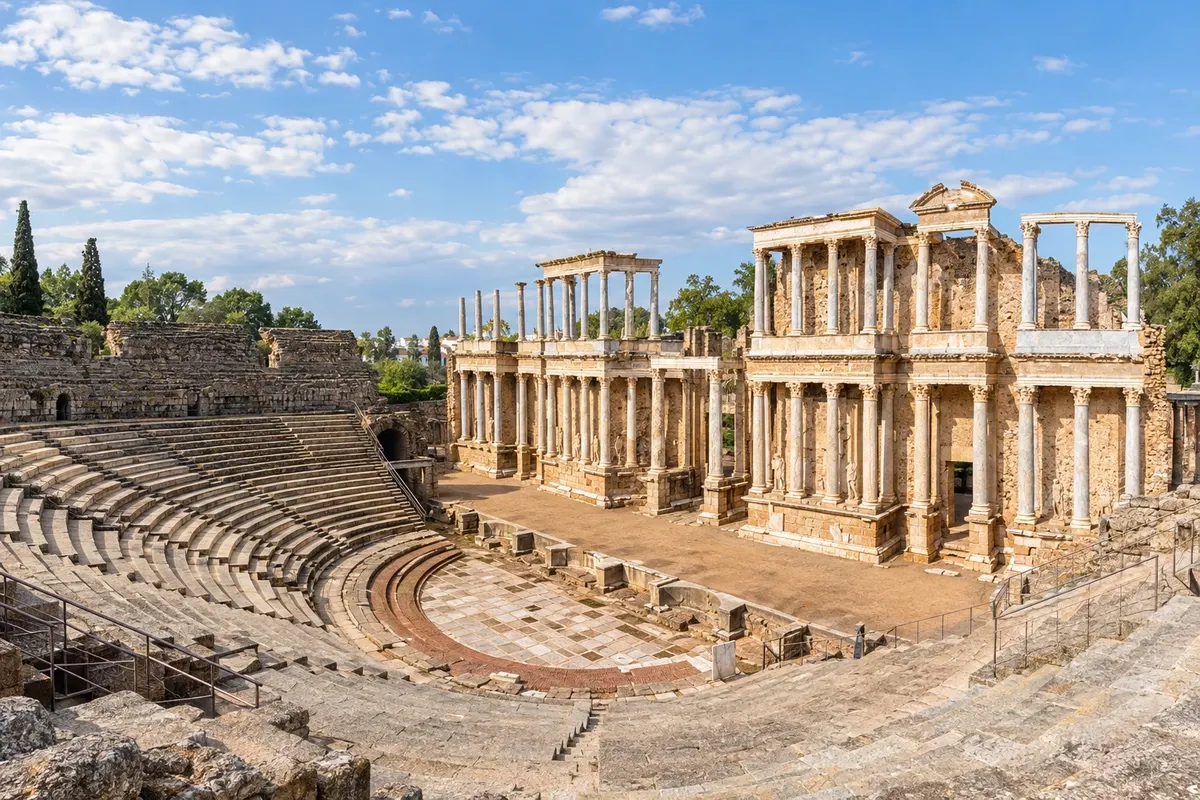
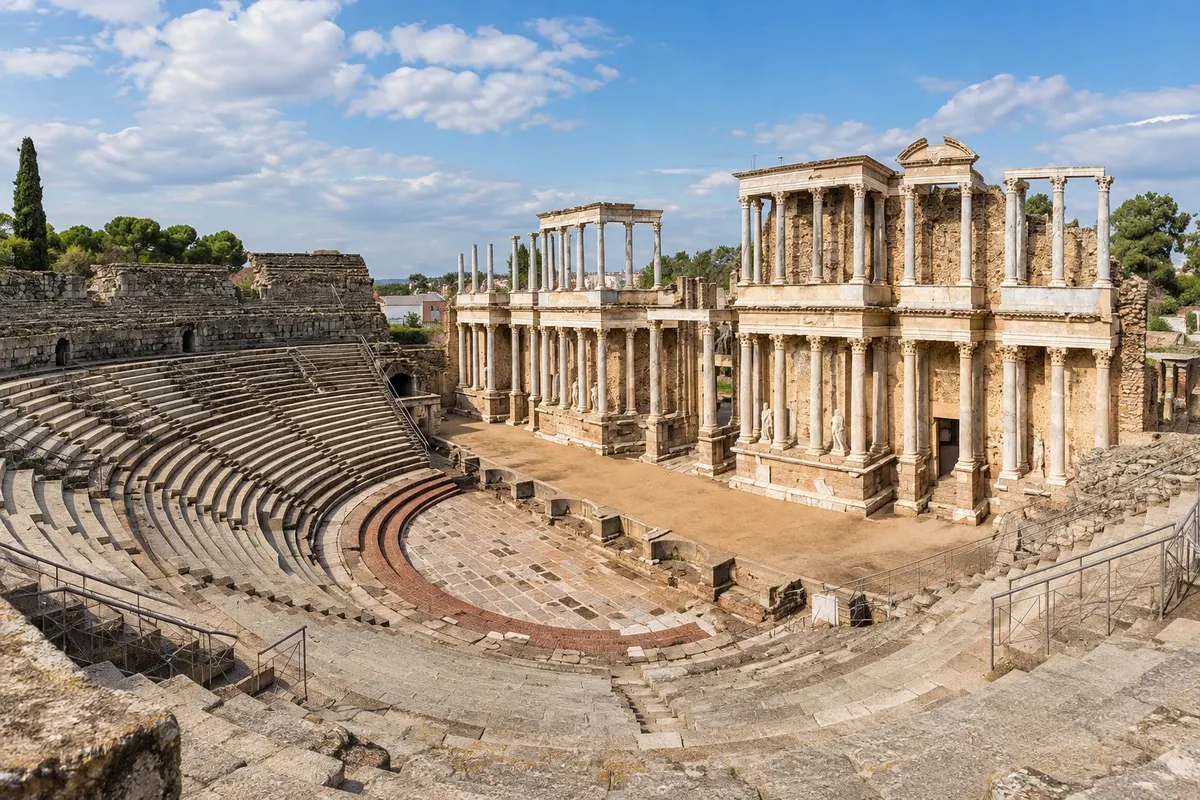
Theatre from the late 1st century BC, with a scaenae frons of two orders of marble columns reconstructed, seating for about 6,000 people and the Classical Theatre Festival in summer.
Antarktika
Estremadura · Španija Capital
Destinacija: Mérida and Cáceres.
Na fotografiji: Teatro Romano de Mérida
Illustrative images. The pictures in this guide are illustrations based on the real place, not photographs, and may differ from it.
Mesto
Mérida is the capital of Extremadura and was the Augusta Emerita of the Romans, capital of Lusitania. The modern city coexists with the ruins: the theatre and the amphitheatre, the Templo de Diana amid the streets, the roughly 800-metre bridge over the Guadiana and the Museu Nacional de Arte Romana by Rafael Moneo. The archaeological ensemble is a UNESCO World Heritage Site.
V vodniku še ni nastanitev – Mérida.
kako do tja · koliko dni · načrt poti · vprašanja
Doživite kraj
Theatre from the late 1st century BC, with a scaenae frons of two orders of marble columns reconstructed, seating for about 6,000 people and the Classical Theatre Festival in summer.
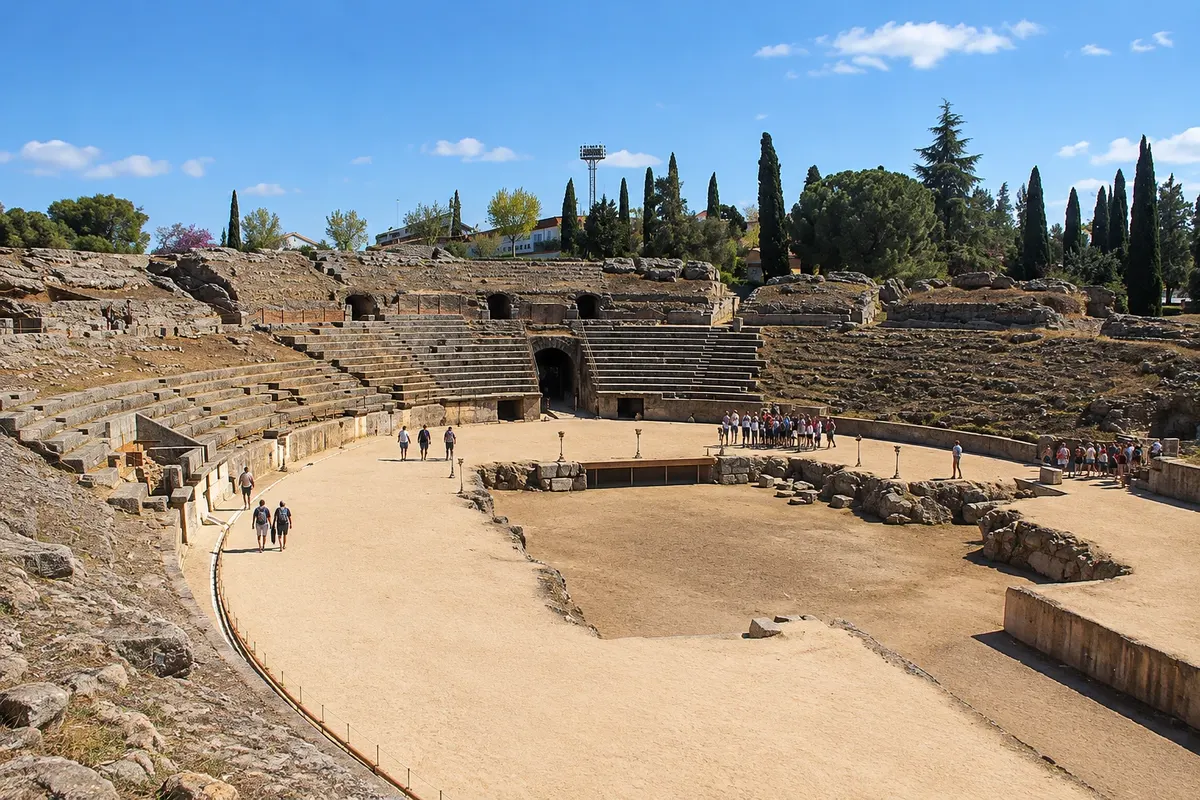
Amphitheatre from 8 BC, next to the theatre, where about 15,000 people watched gladiatorial and animal combats, with the arena and central trench exposed.
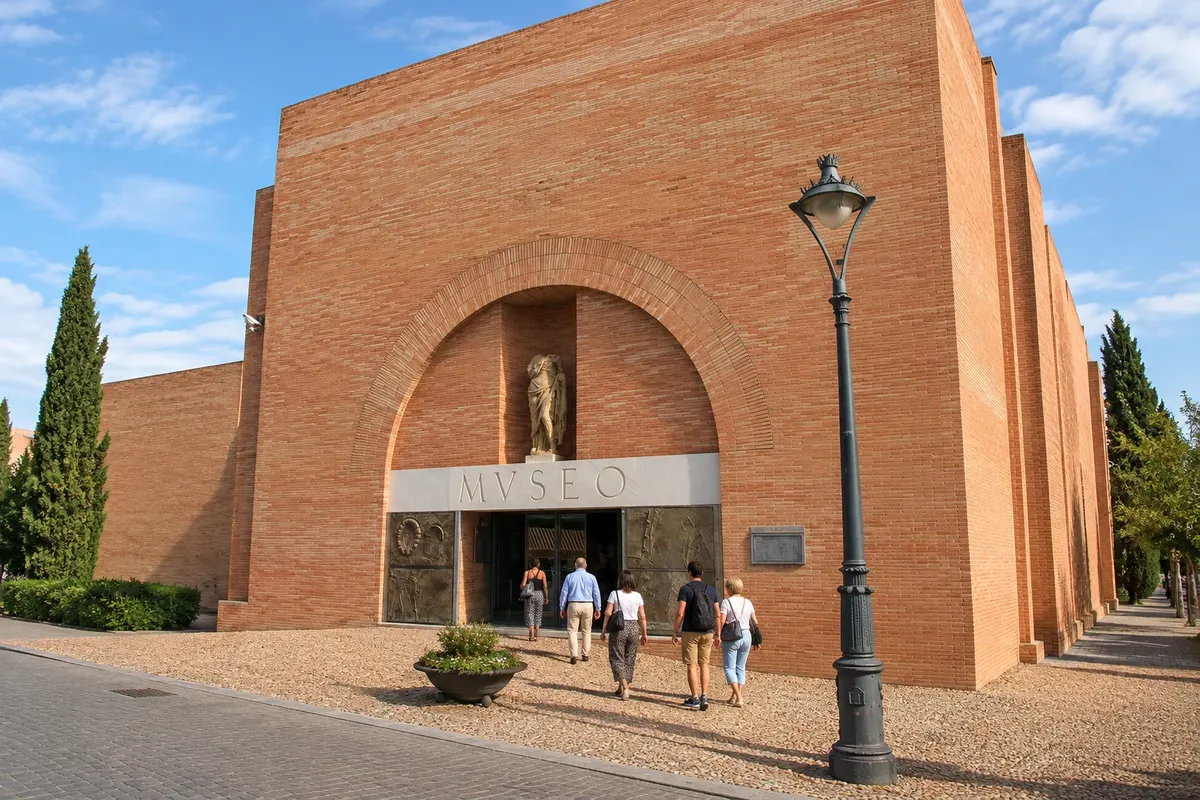
Museu de Rafael Moneo, dating from 1986, with large brick arches that recall Roman architecture, mosaics, theatre statues and everyday objects from Augusta Emerita.
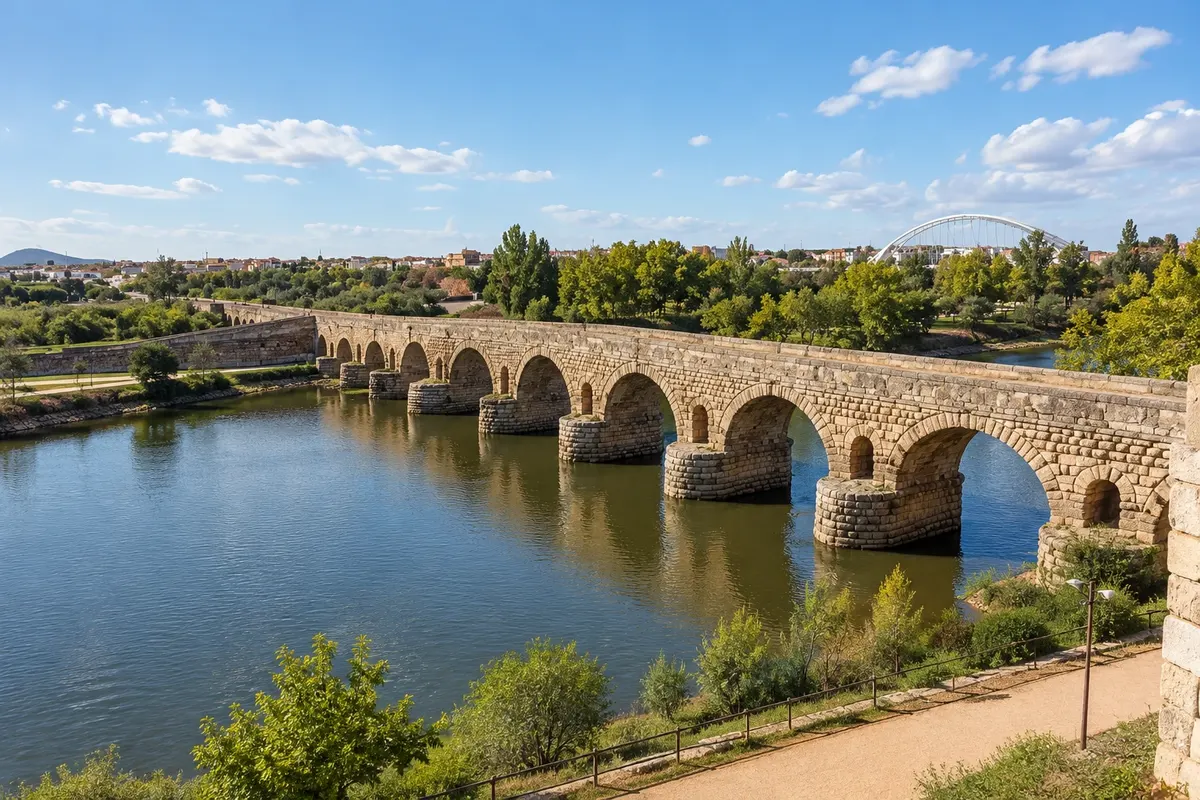
Granite bridge from the 1st century BC over the river Guadiana, about 790 metres long with 60 arches, now pedestrian-only, with views of the Alcazaba and the ponte de Calatrava.
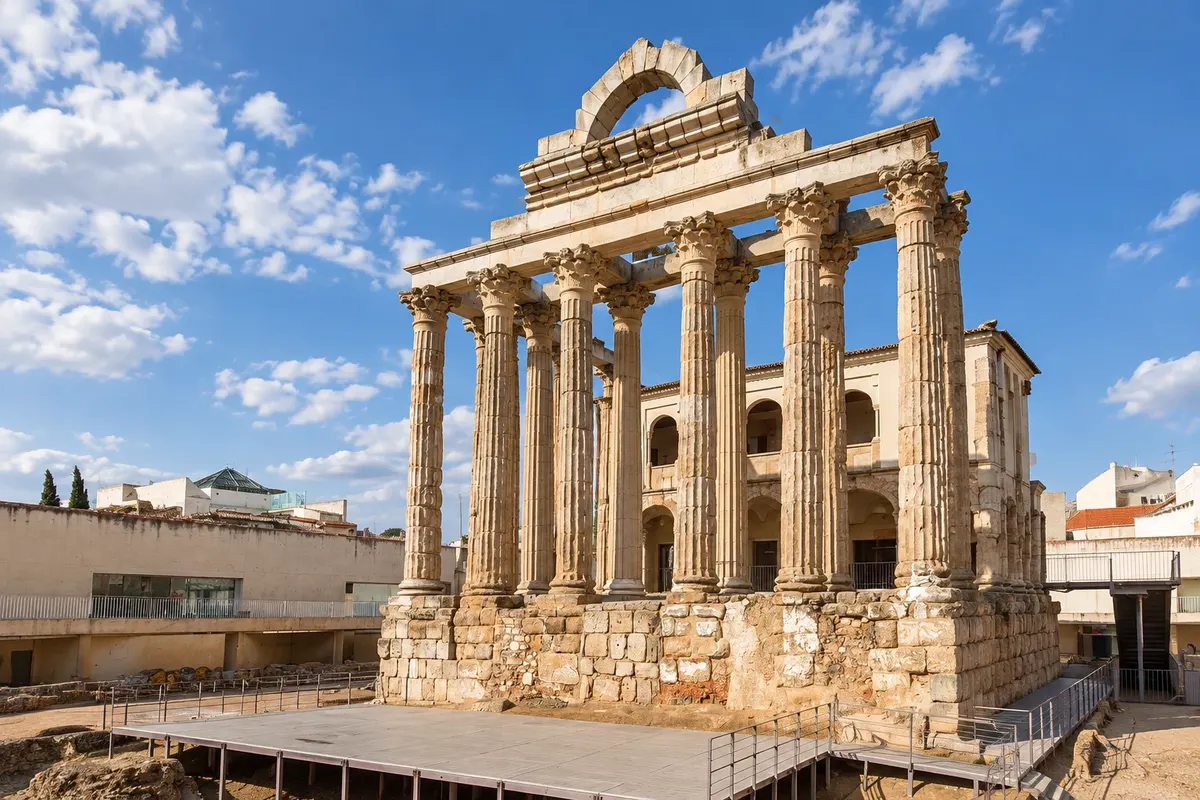
1st-century Roman temple dedicated to the imperial cult, with Corinthian granite columns still standing in the centre of Mérida and a Renaissance palace built within it.
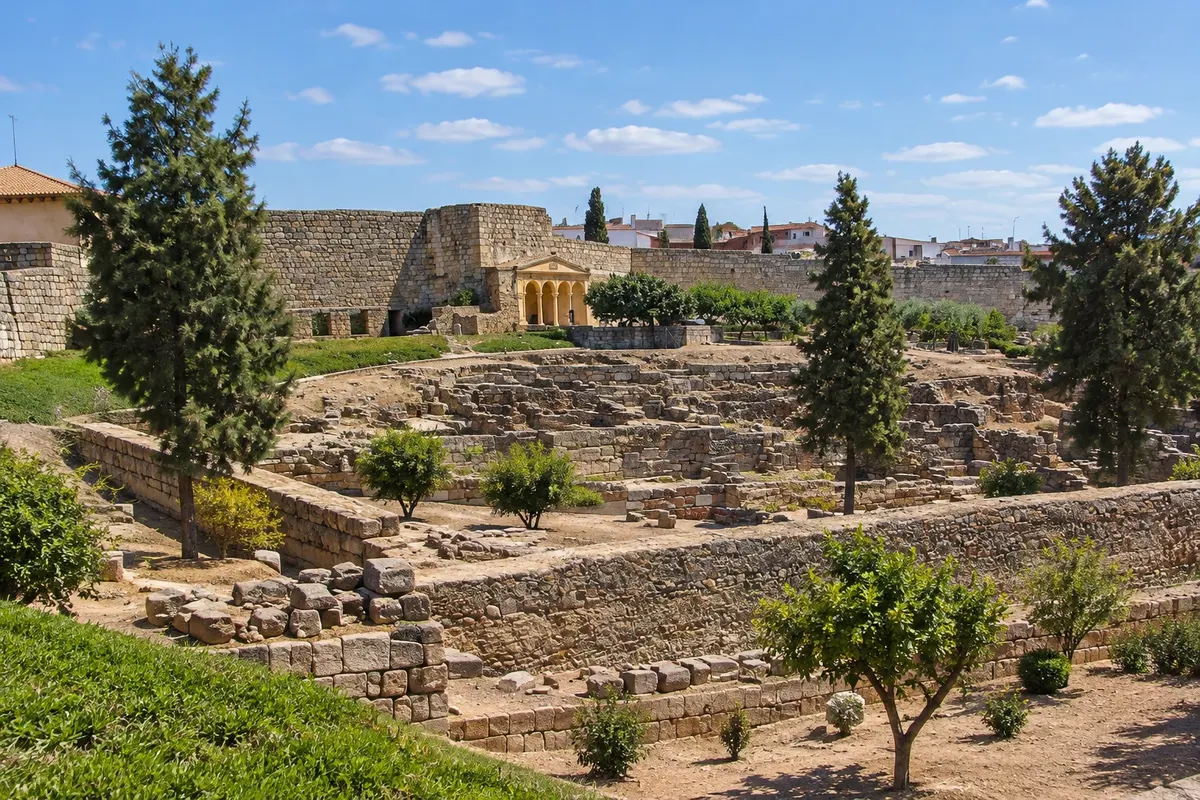
Arab fortress from 835 next to the Roman bridge, with walls made from reused Roman stones, remains of houses and an underground cistern with stairs.
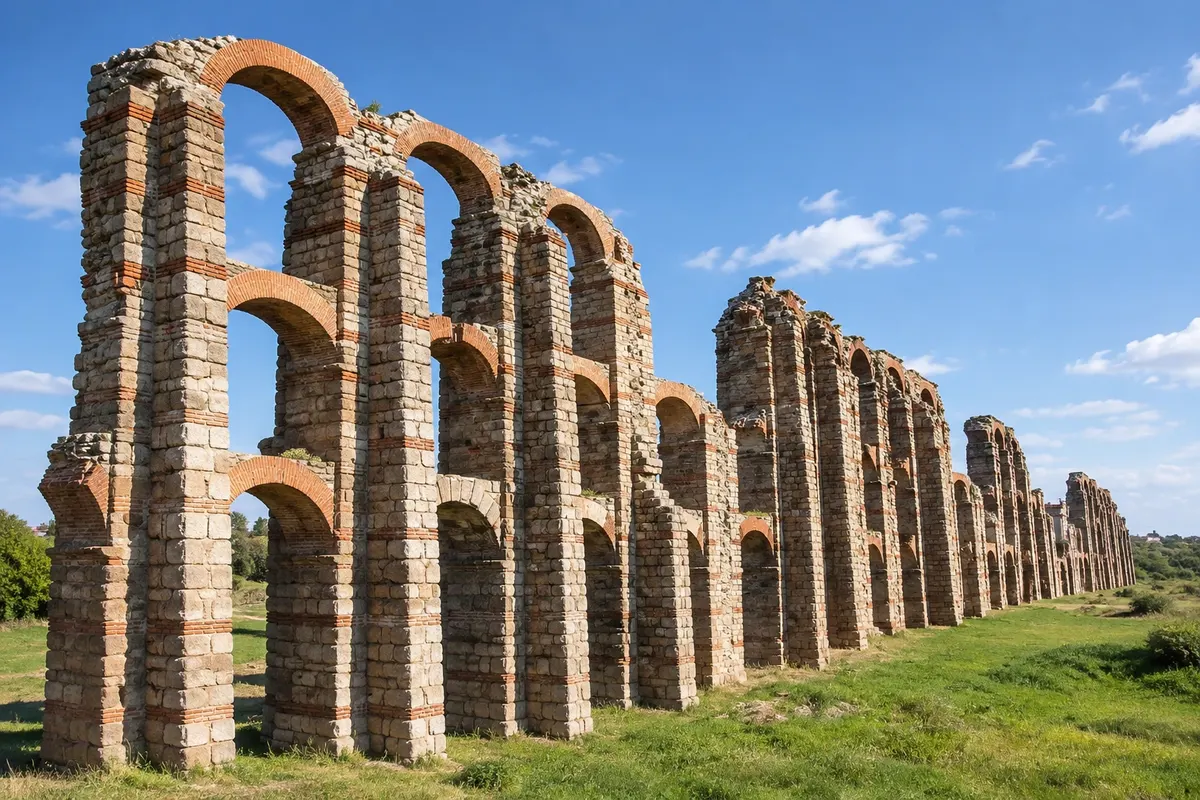
Remains of the Roman aqueduct that brought water from the Proserpina reservoir, with granite and brick arches up to 25 metres high, where storks nest.
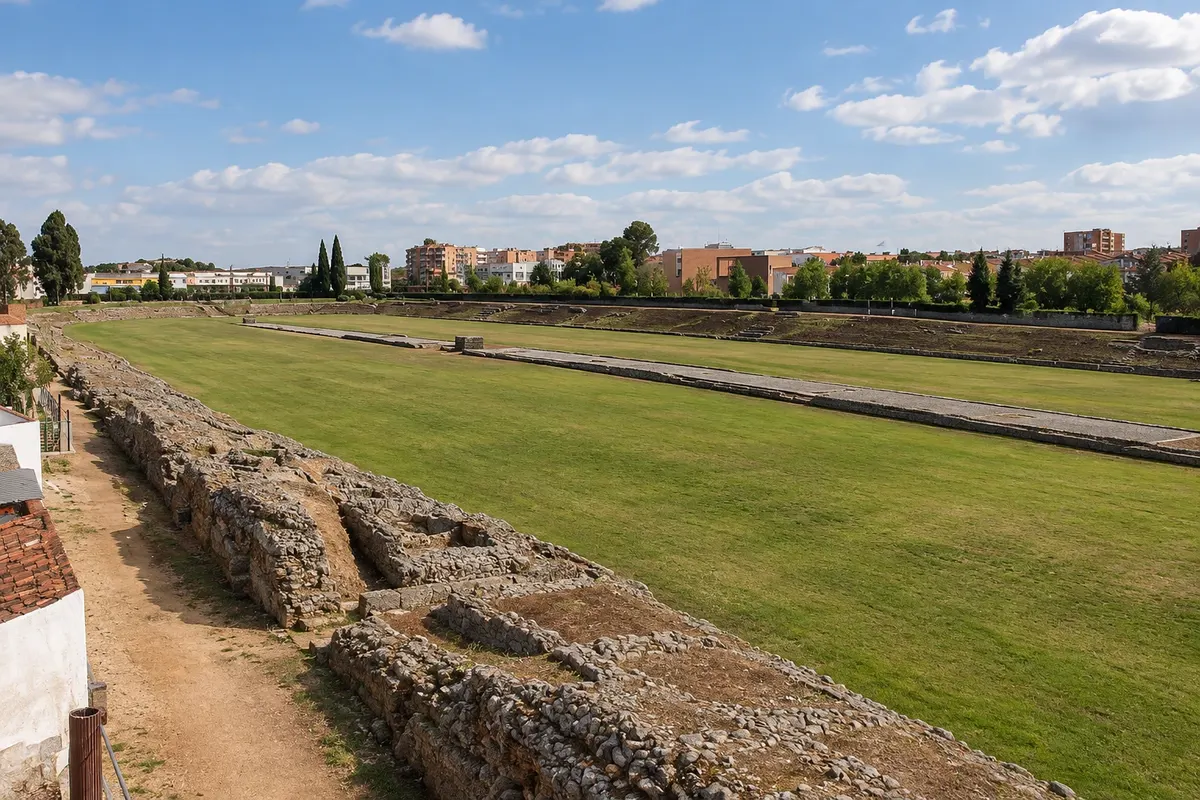
1st-century chariot racing track, about 400 metres long with a capacity for 30,000 spectators, one of the best-preserved in the ancient Roman Empire.
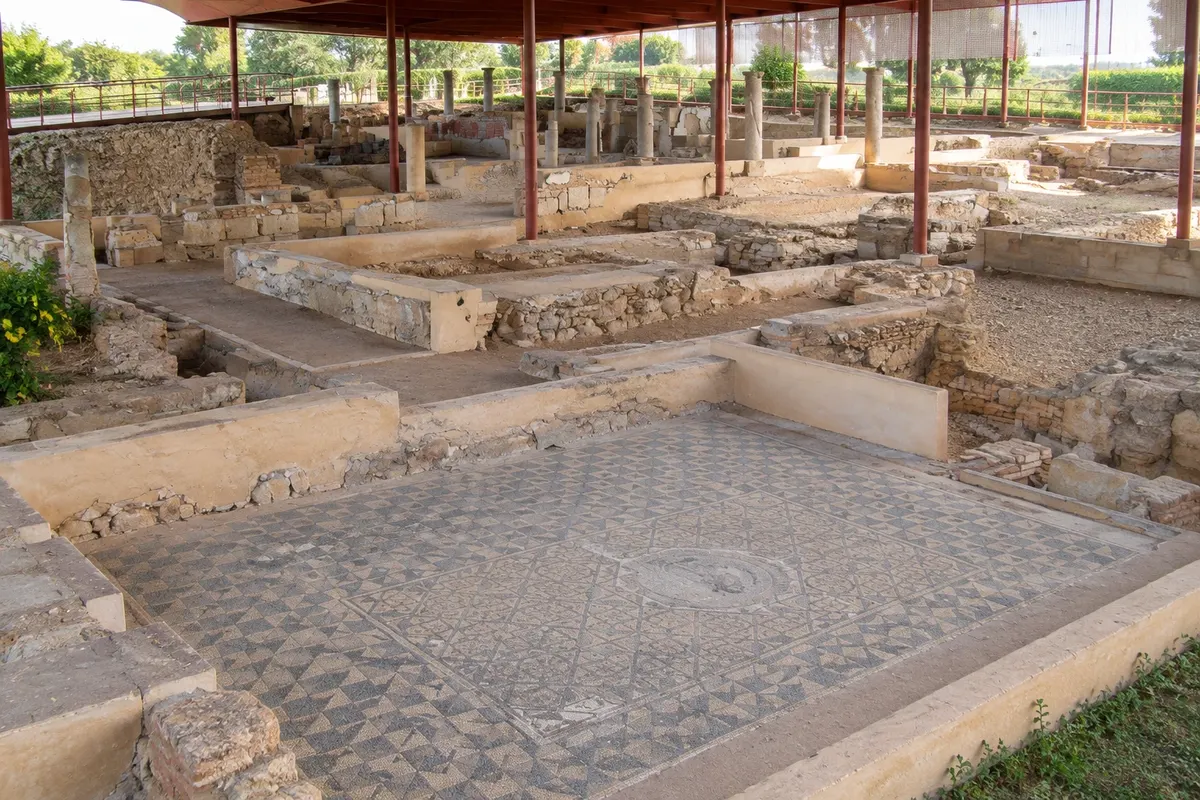
Luxury Roman house from the late 1st century, with courtyards, wall paintings and the cosmic mosaic, which represents the universe with figures of the elements, the winds and the seasons.

Pred odhodom
Mérida – Extremadura Destinacija Mérida and Cáceres Capital
Razdalje so približne. Pred potovanjem preverite lete in vozne rede avtobusov, vlakov ali ladij.
Confirm before buying. From Madrid, the train takes 3h30 to 4 hours to Mérida station, with few departures per day; not all trains stop in the city. From Cáceres, train or bus take about 1 hour. Badajoz airport is around 60 km away. From Lisbon it’s about 290 km by road via Évora and Badajoz.
A full day for the theatre, the amphitheatre, the museum, the Templo de Diana, the Roman bridge and the Alcazaba. With one night, there’s time left for the aqueduct of Los Milagros, the circus and the Casa do Mitreo, or for a play at the summer festival.
Spring and autumn, from March to May and from October to November, usually have the best weather for the open‑air ruins. From June to September it gets very hot; July and August bring the theatre festival. Winter is cool and dry.
The seasons shown are the most usual ones; nature doesn't always follow the calendar.
No. The monuments are a few minutes' walk from one another, and the train and bus stations are close to the centre. A car only helps if you continue on to Cáceres, Trujillo or Évora, though there are buses.
Predlog poti
Pot povezuje znamenitosti na tej strani. Za oglede boste imeli dovolj časa.
Start with the Roman theatre and amphitheatre at opening time, before the heat and the tour groups.
Cross the street to the Museu Nacional de Arte Romana and have lunch in the center.
See the Templo de Diana, the forum portico and the Arco de Trajano, then walk on to the Alcazaba.
Walk along the Roman bridge over the Guadiana at the end of the afternoon and dine near the Plaza de España.
Dan 1
Roman theatre and amphitheatre at opening.
Museu Nacional de Arte Romana, with the mosaics and the theatre statues.
Templo de Diana, forum portico and Arco de Trajano, on foot through the center.
Dinner and activity at the Plaza de España, Mérida's central square.
Dan 2
Arab Alcazaba, with the cistern, and the Roman bridge in the morning.
Lunch and afternoon at the Casa do Mitreo, with the cosmic mosaic.
Late afternoon at the aqueduct of Los Milagros, with storks on the arches.
Pass by the Roman circus and finish the day in the center.
Check before you go. Opening hours and days change, and places may close for renovations, holidays or events. This itinerary is a suggestion from Cidade Turismo, not a commitment: plan yours by checking directly with each place you intend to visit.
Pred odhodom
Yes. The Consórcio da Cidade Monumental usually sells a combined ticket for the theatre, the amphitheatre, the Alcazaba, the circus, the Casa do Mitreo and other sites. The national museum has a separate ticket. Check the conditions.
About 70 km. Train or bus take about 1 hour, and by car it’s roughly 50 minutes via the A-66 motorway.
Yes. In July and August, highs often exceed 35 °C. Visit the ruins early and leave midday for the museum.
Yes. Since 1983 it has been the seat of the government and parliament of the autonomous community of Extremadura.
Jamón ibérico, migas, torta del Casar, lamb and the wines of the Ribera del Guadiana, in the bars around the Plaza de España.
Rotas entre países
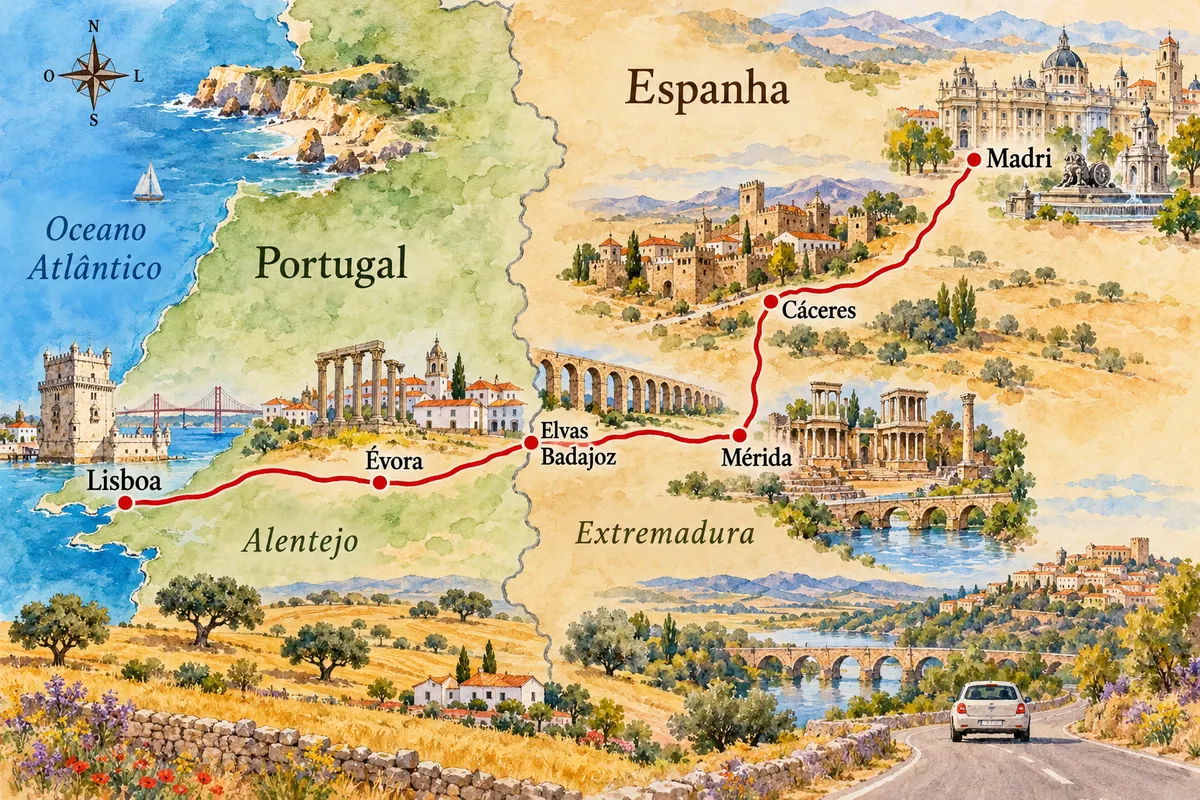
By car between the two capitals of the peninsula: the Alentejo around Évora, Roman Mérida and medieval Cáceres on the route from Lisbon to Madrid.
Poti – in Španija
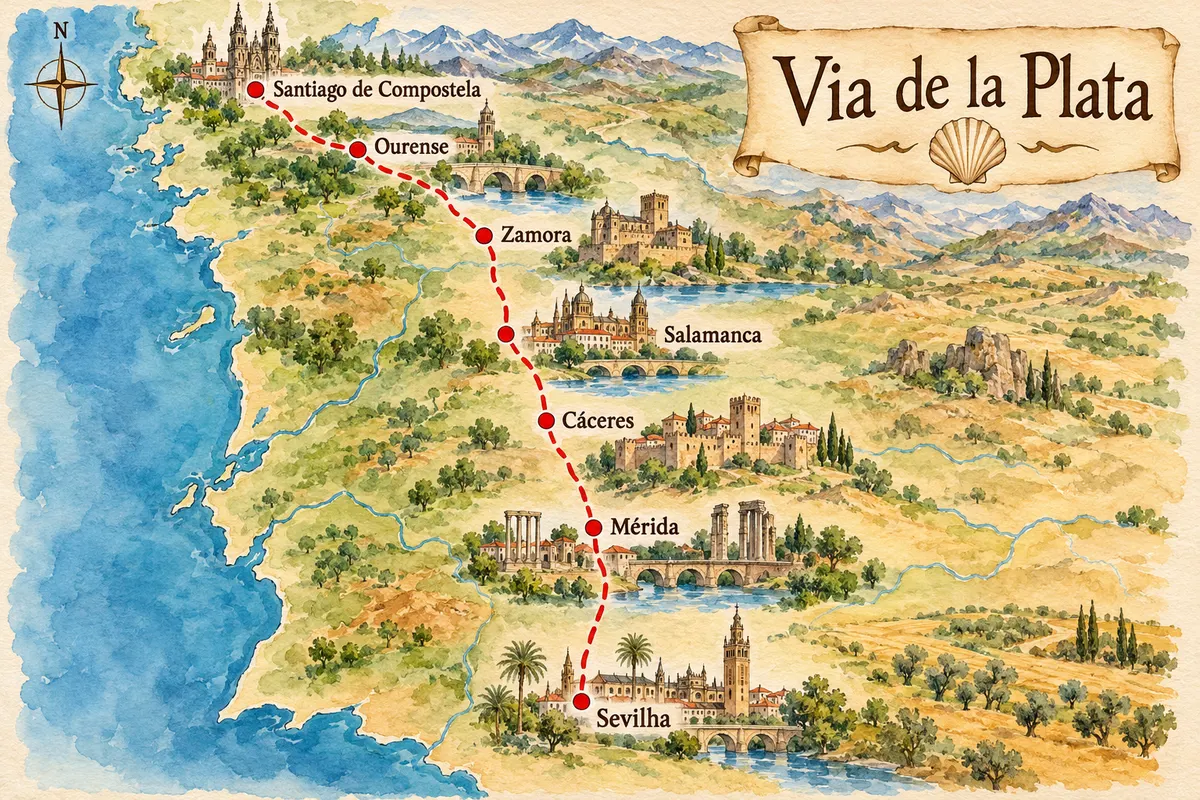
The longest Camino de Santiago in Spain: from Seville to Santiago de Compostela along the country’s west, following the old Roman road, via Mérida, Cáceres, Salamanca, Zamora and Ourense.
Več kot vodnik