Monasterio de la Cartuja
Odhod: Paseo de la Cartuja, north of the center city bus or taxi; on foot, 30 minutes from the cathedral around 1 hour and a half Dopoldne ali popoldne Lahko
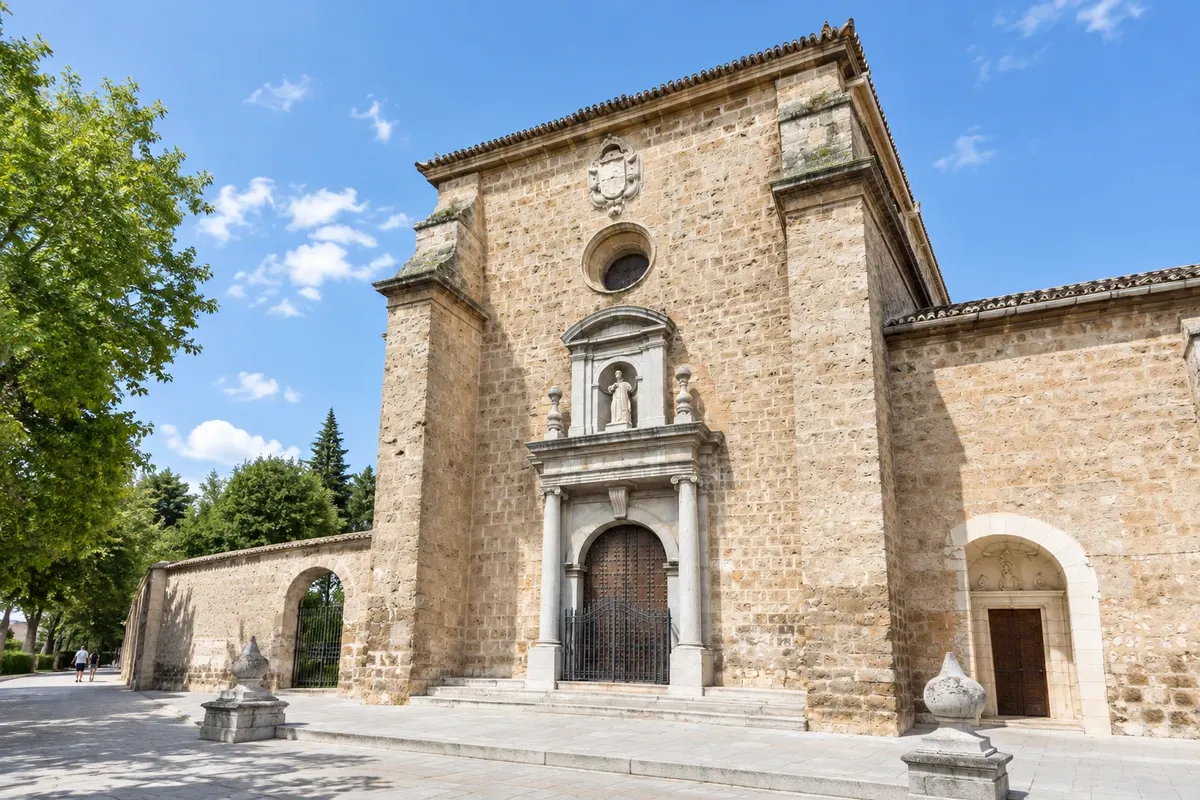
The Cartuja of Granada is a Carthusian monastery founded in the early 16th century on land donated by the Gran Capitán, Gonzalo Fernández de Córdoba, with works that stretched over almost three centuries. It sits on the high part of the city, near the university campus. The exterior is restrained; the interior is heavily baroque, with marbles and stuccoes. The church leads to the Sagrario, a chapel of colored marbles and a tabernacle by Francisco Hurtado Izquierdo, and to the Sacristy, from the 18th century, with carved white stucco walls and a painted dome, considered one of the high points of Spanish baroque. The refectory preserves paintings by Juan Sánchez Cotán, the monk painter of the house, and the 17th-century Claustrillo survived the destruction of the large cloister and the cells in the 19th century. The visit is short, but worth it for the contrast with the Nasrid art of the Alhambra.
Kraji na poti: Monasterio de la Cartuja, Sacristy, Sagrario, Refectory, Claustrillo.
Vključuje: Church, Sagrario, Sacristy, refectory and cloister, with a separate paid entrance.
Nasvet: Combine with the Monasterio de San Jerónimo and the Huerta de San Vicente on the same “Granada off-route” day. La Cartuja closes to visitors during masses; check the times before you go.
Najboljši čas za obisk: Vse leto.
Monasterio de San Jerónimo
Odhod: Calle Rector López Argüeta, 9, near Plaza de la Universidad on foot (10 minutes from the cathedral) Približno 1 uro Dopoldne ali popoldne Lahko
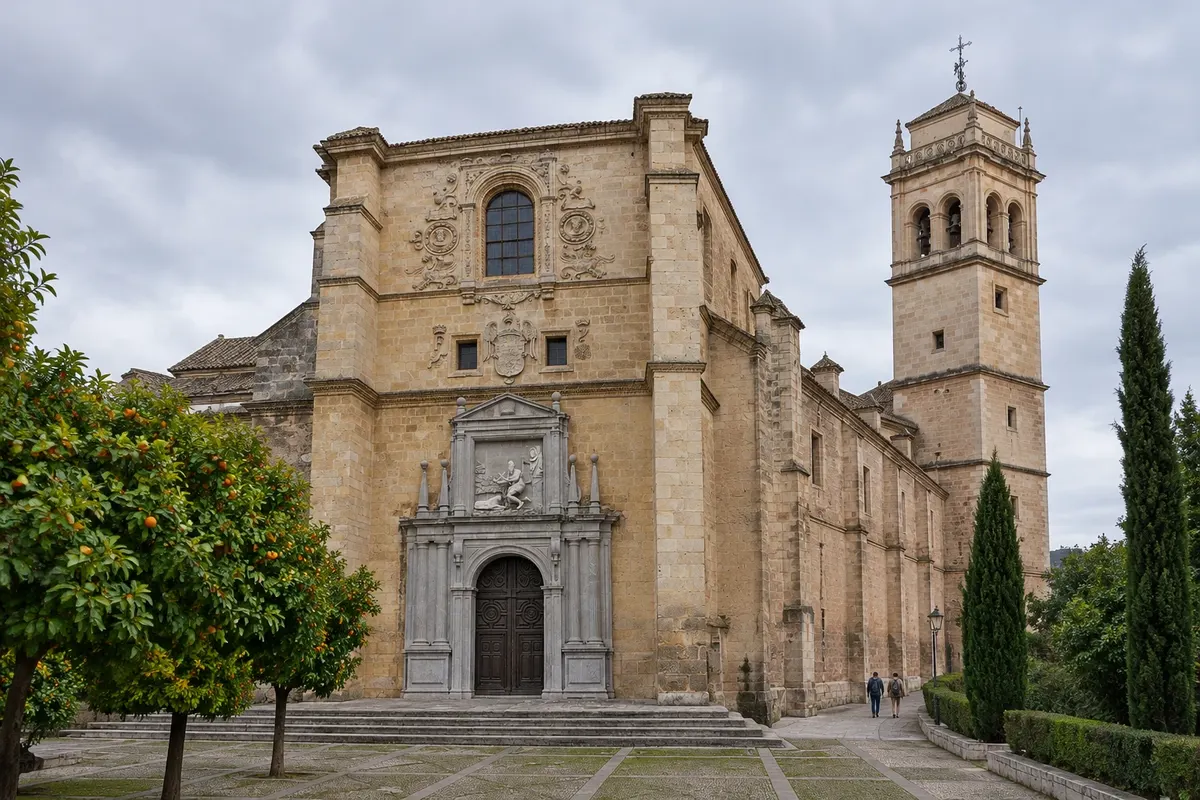
San Jerónimo was the first monastery built in Granada after the Christian conquest, with the church begun in 1519 and completed under Diego de Siloé, the same architect of the cathedral. It is a ten-minute walk from the cathedral, in a quiet block of the university area. The Renaissance cloister has two levels of arcades around an orange-tree garden; the church, with a single nave, is fully painted and ends in a mannerist altarpiece that occupies the entire wall of the Capilla Mayor. In front of it lies the Gran Capitán, Gonzalo Fernández de Córdoba, buried with his wife, María Manrique, depicted in prayer. The monastery is inhabited by cloistered nuns, so visits are limited to the cloister and the church. It is usually not very busy, which allows seeing the complex at a relaxed pace.
Kraji na poti: Monasterio de San Jerónimo, Capilla Mayor, Cloister, Tomb of the Gran Capitán.
Vključuje: Cloister and church, with a separate paid entrance.
Nasvet: The church closes to tourists during masses. Go early in the morning or mid-afternoon and combine it with La Cartuja, which is farther north.
Najboljši čas za obisk: Vse leto.
Huerta de San Vicente, the house of Federico García Lorca
Odhod: Parque Federico García Lorca, Calle Virgen Blanca on foot (20 minutes from the cathedral) or city bus Približno 1 uro Dopoldne Lahko
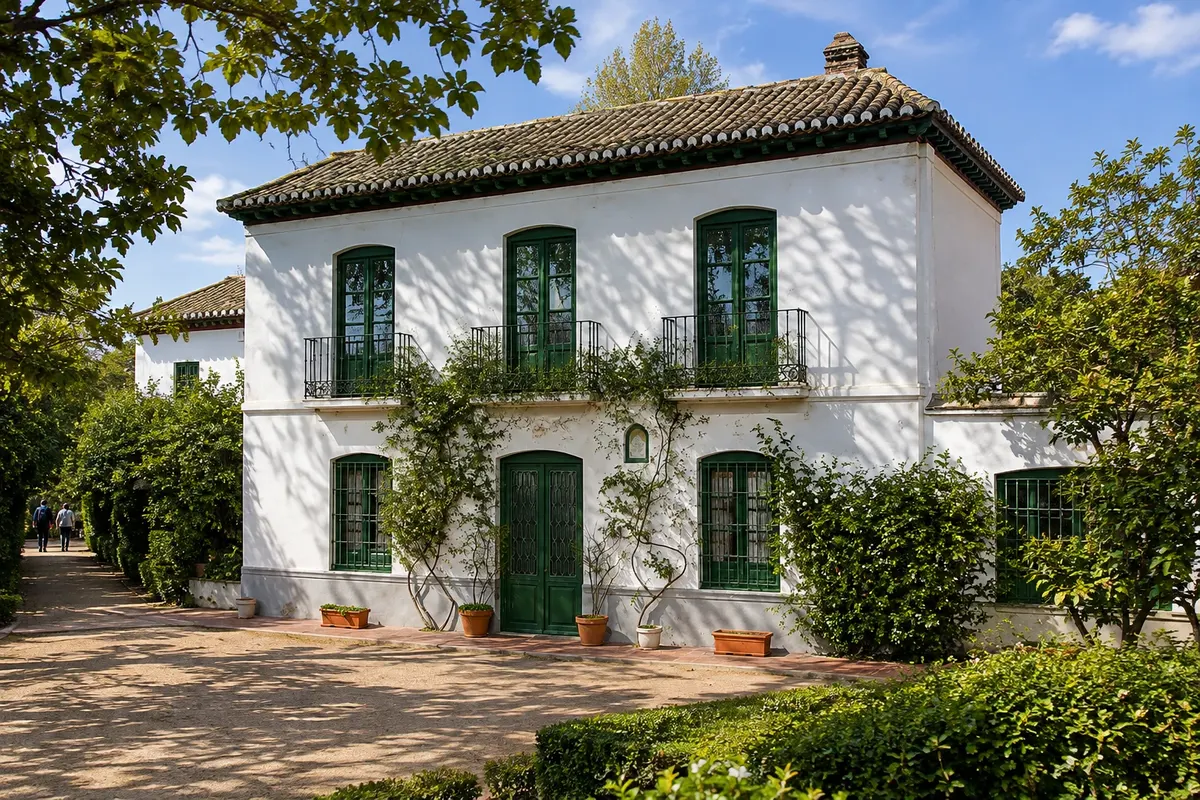
The Huerta de San Vicente was the García Lorca family's summer house, bought in 1926, at the time surrounded by vegetable gardens in the vega of Granada. Today it lies within the Parque Federico García Lorca, in the south of the city. It was here that the poet wrote parts of Bodas de sangre, Yerma and Romancero gitano, and it was from here that he left in 1936, shortly before being arrested and killed at the start of the Civil War. The house is visited only with a guide, in small groups, in slots every 45 minutes: a room with the piano, the desk and the gramophone, the poet's bedroom with the table where he wrote, the kitchen and the balcony with views of the Sierra Nevada. The furniture and drawings are original to the family. The visit is short and very focused on Lorca's domestic life; those familiar with his work get more out of it.
Kraji na poti: Huerta de San Vicente, Parque Federico García Lorca.
Vključuje: Guided tour of the house-museum. Admission fee not included.
Nasvet: The house is closed on Mondays and public holidays, and the groups are small: in high season arrive early or book. You cannot enter outside scheduled slots; anyone who arrives late waits for the next one. Combine it with a walk in the park, which has a rose garden and a lake.
Najboljši čas za obisk: All year. Spring for the park in bloom.
Parque de las Ciencias
Odhod: Avenida de la Ciencia, s/n, Zaidín neighborhood on foot (25 minutes from the cathedral), city bus or light rail (Alcázar Genil) Pol dneva Popoldne Lahko
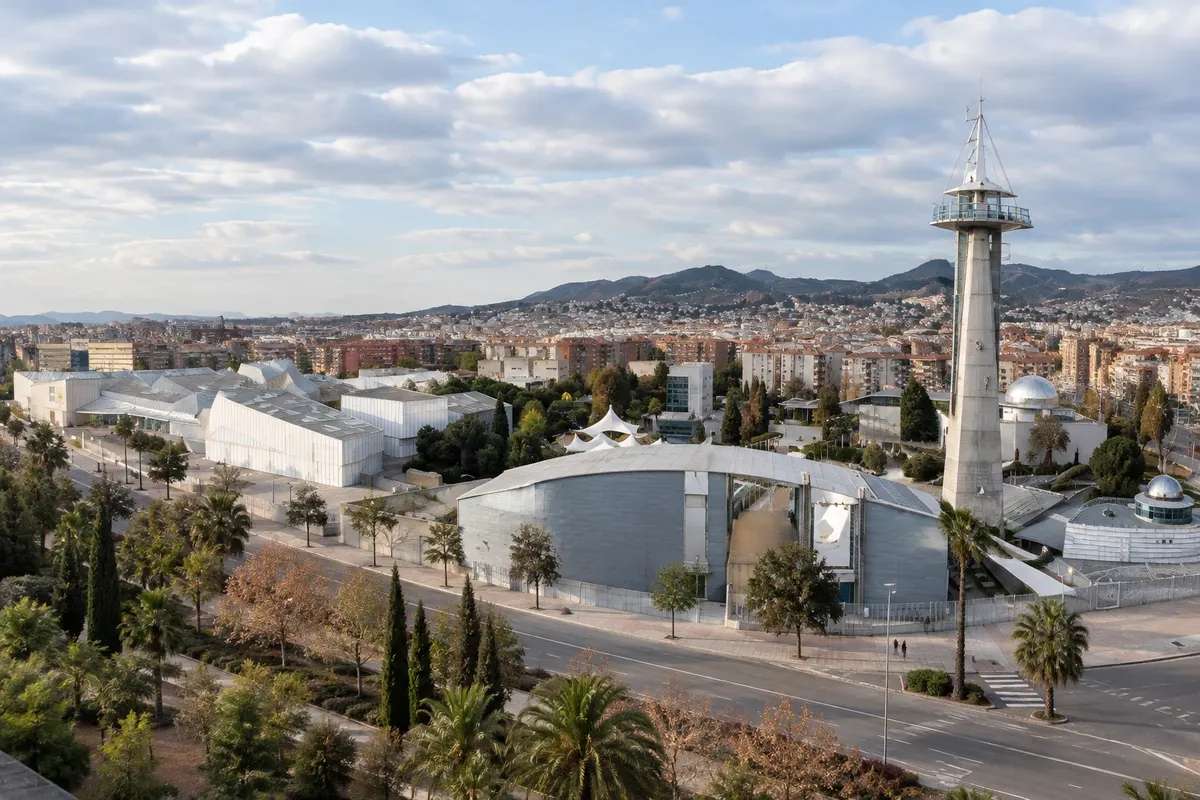
Parque de las Ciencias is Granada’s interactive science museum, with pavilions and an outdoor area on a large site in the south of the city. It is the outing for those traveling with children or who want a day without monuments. The Péndulo de Foucault Building houses the classic physics and perception rooms, with hands-on experiments; the Macroscopio hosts exhibitions on biology, the human body and technology, and temporary shows. The BioDome recreates tropical environments with living animals and plants, in three areas: Indo-Pacific, Madagascar and Amazon. The Planetarium runs sessions throughout the day, with separate admission. Outside there is a botanical garden, astronomy trails and an observation tower with views of the city and the Sierra Nevada. It is closed on Mondays, except holidays.
Kraji na poti: Parque de las Ciencias, BioDome, Planetarium, Péndulo de Foucault Building, Macroscopio Building.
Vključuje: Pavilions, BioDome and outdoor area. Planetarium with separate admission.
Nasvet: Set aside a whole afternoon: the park is large and the BioDome requires about an hour. On weekends and during Spanish school holidays it fills with families; weekdays are quieter.
Najboljši čas za obisk: All year; on rainy days or in strong heat it is the covered option.
Tapas around the center: Calle Navas, Plaza Nueva and Realejo
Odhod: Plaza del Carmen (start of Calle Navas) on foot Približno 2 uri night Lahko
In Granada, the tapa comes with the drink ordered at the bar, at no extra cost — a custom the city keeps that changes the way you dine: instead of a restaurant, the route is two or three bars, with a tapa at each. Calle Navas, pedestrian and starting from Plaza del Carmen, is the street with the most bars in a row; Calle Elvira and the side streets off Plaza Nueva attract a younger crowd; the Realejo, the old Jewish quarter at the foot of the Alhambra, with Campo del Príncipe, is favored by locals. Typical tapas include berenjenas con miel (fried eggplant with cane molasses), habas con jamón, remojón granadino (orange and cod salad), tortilla del Sacromonte and plates of Trevélez ham, cured in the Alpujarras. A soda, juice or water also entitles you to a tapa. Spaniards eat late: before 9:00 PM the bars are empty.
Kraji na poti: Calle Navas, Plaza Nueva, Calle Elvira, Realejo, Campo del Príncipe.
Vključuje: Self-guided outing; each bar is paid for on the spot.
Nasvet: Order at the bar, not at the table, so the tapa arrives on time. In some bars the tapa is fixed, in others you choose from a short menu. In the afternoon, the Campo del Príncipe in the Realejo is good for sitting outdoors.
Najboljši čas za obisk: All year; in spring and autumn the street tables are full.
Alhambra at night: night visit to the Palacios Nazaríes
Odhod: Alhambra access pavilion or Puerta de la Justicia on foot, taxi or bus C30/C32 around 1 hour and a half night Lahko
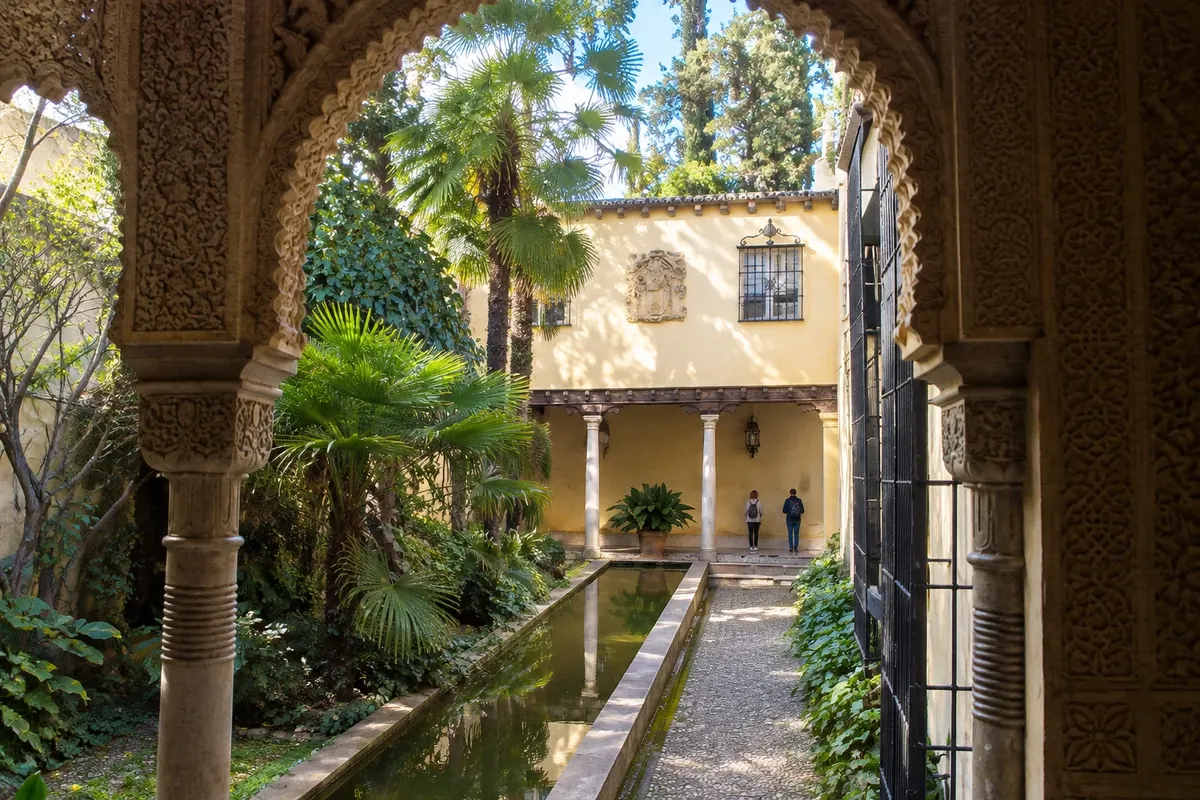
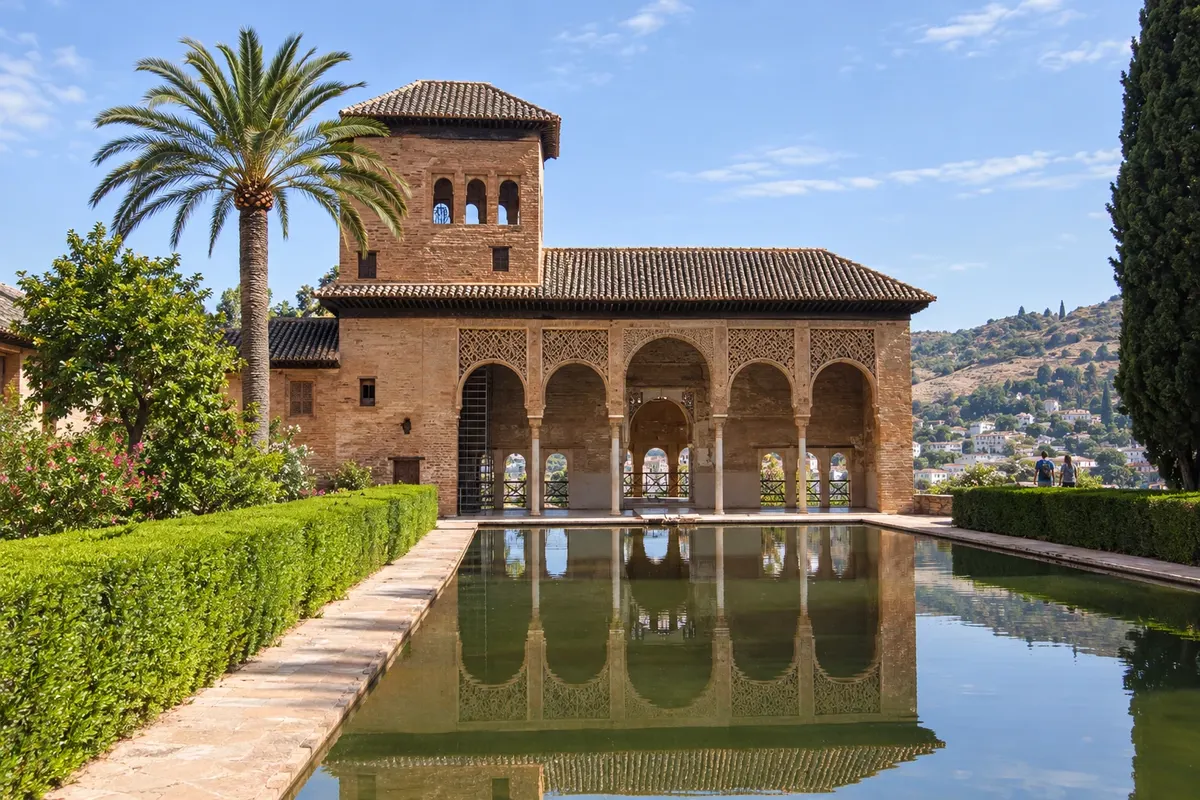
The Patronato opens the Palacios Nazaríes at night on specific days and months, with low lighting and smaller groups than in daytime. The route covers only the palaces, not the Alcazaba, with the Patio de los Arrayanes reflecting the Comares Tower and the Patio de los Leones almost silent. It is a complementary visit: it does not replace the daytime visit, because it does not include the Generalife or the views, but it shows the stuccoes and wooden ceilings in different light. For part of the year there is also a night visit only to the Generalife gardens. Dates vary by season and are published on the official website calendar, where the ticket is purchased like any other, and is also nominal.
Kraji na poti: Palacios Nazaríes, Patio de los Leones, Generalife.
Vključuje: Palacios Nazaríes at night; separate paid ticket, distinct from the daytime ticket.
Nasvet: Buy your ticket on the Patronato’s official website, as you would for a daytime ticket, and check which weekdays the night visit runs during your travel dates. Go by taxi or bus; the Cuesta de Gomérez is dark at night. Bring a jacket even in summer, because it can be windy atop the hill.
Najboljši čas za obisk: Summer and early autumn, when nights are mild; check the annual calendar.
Sierra Nevada: Pradollano, snow and high-mountain
Odhod: Granada Bus Station (Avenida de Juan Pablo II) regular bus to Pradollano (about 45 minutes) or car via the A-395 about 8 hours Ves dan moderate (altitude and cold)
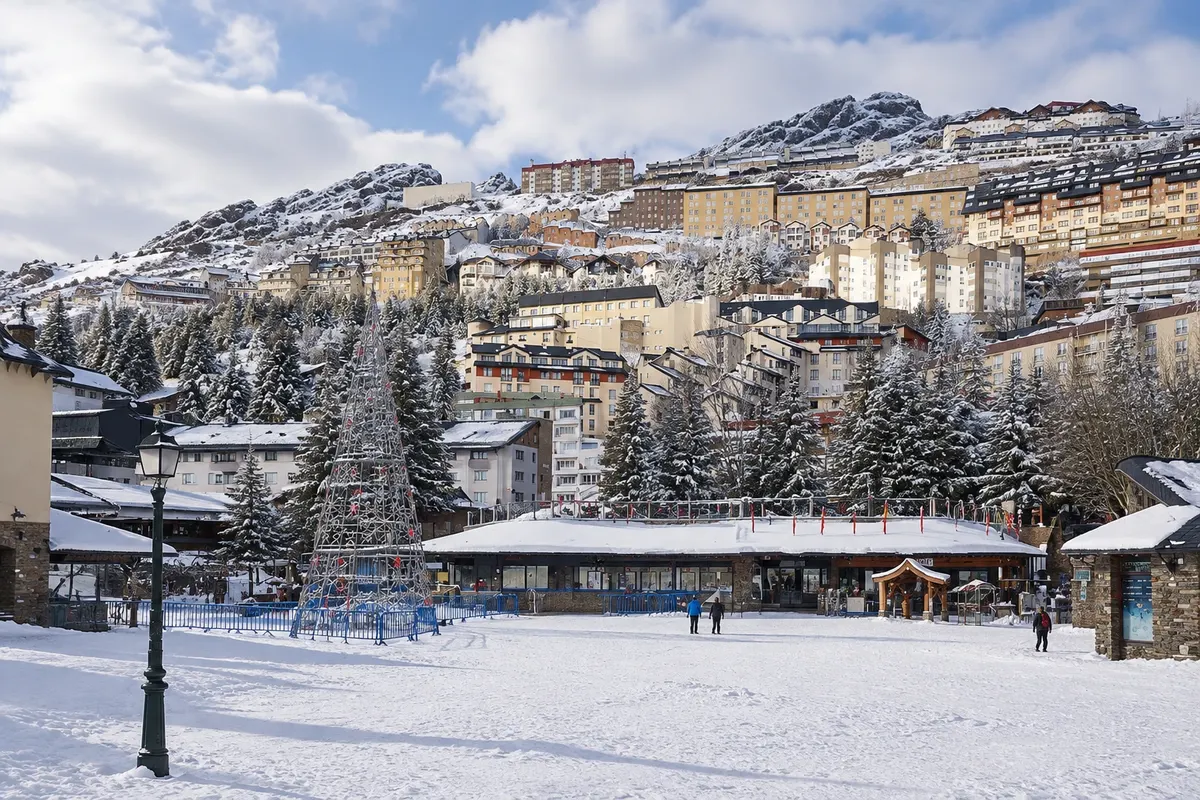
The Sierra Nevada is the range you see behind the Alhambra: it has the highest point on the Iberian Peninsula, the Mulhacén, at 3,479 m, and the Veleta, at 3,398 m. The ski resort is in Pradollano, about 30 km from Granada, with the base at 2,100 m. It is one of the southernmost ski resorts in Europe, and the snow season usually runs from December to April, varying year to year. In winter the outing is all about snow: rent equipment, take the cable car to Borreguiles at 2,675 m, and ski or just play in the snow and have lunch at altitude; non-skiers will find sledges and children’s areas. In summer, July to August, a cable car and a chairlift often operate for hiking and biking, and a park minibus runs from the Hoya de la Mora up to the Posiciones del Veleta at 3,100 m, from where you walk along the high ridge. The air is thin and the sun strong: sunscreen, sunglasses and water.
Kraji na poti: Sierra Nevada, Pradollano, Borreguiles, Veleta, Parque Nacional de Sierra Nevada, Hoya de la Mora.
Vključuje: Transport, lift pass, equipment rental and cable cars are paid separately; the range and trails are open access.
Nasvet: For skiing, book equipment rental and lift passes in advance on winter weekends. Outside the season, check the resort’s website which cable cars are operating before you go up. Even in July bring a jacket: up there the temperature drops considerably compared with Granada.
Najboljši čas za obisk: Snow generally from December to April; high-mountain hikes from June to September.
Las Alpujarras: Pampaneira, Bubión and Capileira
Odhod: Granada Bus Station or car car (A-44 and A-348/A-4132, about 1 h 30 to Pampaneira) or regular bus about 9 hours Ves dan moderate (switchbacks and uphill trails)
The Alpujarras are the southern slope of the Sierra Nevada, a region of deep valleys and white villages with flat-roofed houses covered in launa (gray clay) and round chimneys, a legacy of Berber architecture. The classic walk is the Barranco de Poqueira, with three villages stepped on the same hillside: Pampaneira, the lowest, with flowing-water streets and jarapas rug shops; Bubión in the middle; and Capileira, at 1,436 m, the highest and the starting point for Mulhacén trails. Between them are waymarked paths of one to two hours, passing gardens and chestnut trees. On the route are Lanjarón, a spa town known for its mineral water, and further on Trevélez, known for ham cured at altitude. By car you can do the three villages and Trevélez in one day; by bus, the most practical option is to stay in Poqueira. The road is winding and slow: expect travel time to be longer than the distance suggests.
Kraji na poti: The Alpujarras, Pampaneira, Bubión, Capileira, Barranco de Poqueira, Lanjarón, Trevélez.
Vključuje: Self-guided walk through the villages and paths. Transport fee not included.
Nasvet: Start at Capileira, up above, and walk down to Pampaneira along the trail, returning by bus or car; the descent is easier than the climb. In winter there may be snow on the road above Pampaneira. Bring hiking shoes and warm clothing.
Najboljši čas za obisk: Spring and autumn. In summer the villages are a refuge from Granada's heat; in winter, snow and cold at higher elevations.
Guadix and the cave-houses
Odhod: Granada station (train) or Bus Station regional train (about 1 hour), bus or car via the A-92 (about 60 km) half day to full day Ves dan Lahko
Guadix lies east of Granada, on a high plain at about 900 m, on the far side of the Sierra Nevada. It is known for its cave-house neighbourhood, the Barrio de las Cuevas (or Barrio de Santiago): thousands of homes dug into the earth, with white façades and chimneys emerging from the hills, still inhabited. The interpretation centre, itself in a cave, shows how the houses are built and why they keep a constant temperature year-round; some residents open their homes for visits. From the neighbourhood viewpoints you can see the cluster of chimneys with the Sierra Nevada in the background. Down below, the cathedral, from the 16th–18th centuries, has a baroque façade and a sacristy by Diego de Siloé, and the 11th-century Arabic alcazaba dominates the town from above. Guadix is a half-day visit; by car you can continue to Purullena, a neighbouring village also of cave-houses, and return to Granada via the A-92.
Kraji na poti: Guadix, Barrio de las Cuevas, Catedral de Guadix, Alcazaba de Guadix, Centro de Interpretación Cuevas de Guadix.
Vključuje: Self-guided visit. Interpretation centre, cathedral and alcazaba require separate tickets.
Nasvet: First go up to the viewpoint in the cave neighbourhood to grasp the landscape, then descend to the interpretation centre. Check the regional train and bus schedules for the return, as services are few per day.
Najboljši čas za obisk: All year. In summer, go in the morning; the caves are cool inside.
Costa Tropical: Almuñécar and Salobreña
Odhod: Granada Bus Station or car car via the A-44 (about 1 hour) or regular bus about 8 hours Ves dan Lahko
The Costa Tropical is the coastline of Granada province, about an hour from the city via the A-44, the highway that descends from the mountains to the sea. The name comes from the climate: cherimoyas, avocados and mangoes grow on the slopes. Almuñécar is the main town, with dark sand and shingle beaches, an old town on slopes and three historical marks: the Castillo de San Miguel, above, of Roman origin and refurbished in the 18th century; the Peñón del Santo, the rock that divides the beaches and serves as a viewpoint; and the Cueva de Siete Palacios, remains of a Roman palace that house the archaeological museum. To the west, the bay of La Herradura is the calmest beach. Salobreña, a few minutes to the east, is a white neighborhood stacked on a rock crowned by an Arabic castle, surrounded by sugarcane fields and with the beach below. The sea is usually calm from June to September, and the bathing season generally runs from May to October.
Kraji na poti: Almuñécar, Castillo de San Miguel, Peñón del Santo, Cueva de Siete Palacios, Salobreña, Castillo de Salobreña, La Herradura.
Vključuje: Self-guided outing. Castles and museum with separate admission.
Nasvet: Do Salobreña in the morning, climbing to the castle before the heat, and Almuñécar in the afternoon. Outside summer it’s a trip of viewpoints and walking; in summer, a beach outing. Buses from Granada to the coast are frequent, but check the return schedule.
Najboljši čas za obisk: May to October for the beach; the rest of the year for walking and seeing the castles.
Nerja Caves
Odhod: Granada Bus Station or car car via the A-44 and A-7 (about 1 h 30) or bus to Nerja and taxi to Maro full day, with about 1 hour inside the cave Ves dan easy (stairs inside the cave)
The Cueva de Nerja is in Maro, in the province of Málaga, just past the border with Granada, about one and a half hours by car via the A-44 and A-7. It is a cave with nearly 5 km of galleries, discovered in 1959, with rock paintings and huge stalactite chambers; the area open to the public is a portion of the galleries, visited via walkways and stairs, featuring the Sala del Cataclismo and the central column, one of the largest known. The visit takes about one hour and the internal temperature is constant. In July the cave hosts a music and dance festival, held since it opened to the public in 1960. The site includes a museum, picnic area and café, and the ticket can be combined with the Museo de Nerja in the town centre. Nerja itself is worth the stop: the Balcón de Europa is a seaside viewpoint in the centre, with small beaches on both sides. It is closed on very few dates each year.
Kraji na poti: Cueva de Nerja, Maro, Nerja, Balcón de Europa, Museo de Nerja.
Vključuje: Visit to the cave with separate paid ticket; museum available as a combined option.
Nasvet: Buy a timed ticket on the cave’s official website, especially in summer and during Holy Week. Enter with sturdy footwear and bring a light jacket: inside the temperature stays around 19 °C year-round. By car, you can combine it with Almuñécar on the return.
Najboljši čas za obisk: All year; in summer combine it with the beach in Nerja.


 Brazilija
 Antarktika
 Argentina
 Bolivija
 Čile
 Kolumbija
 Ekvator
 Gvajana
 Francoska Gvajana
 Falklandski otoki (Malvini)
 Paragvaj
 Peru
 Surinam
 Urugvaj
 Venezuela
 Nemčija
 Avstrija
 Belgija
 Hrvaška
 Danska
 Slovaška
 Slovenija
 Finska
 Francija
 Grčija
 Nizozemska
 Madžarska
 Irska
 Islandija
 Italija
 Luksemburg
 Norveška
 Poljska
 Portugalska
 Združeno kraljestvo
 Češka
 Švedska
 Švica
 Turčija
 Bermudi
 Kanada
 Združene države Amerike
 Grenlandija
 Mehika
 Sveta Peter in Mihael
 Dominikanska republika
 Japonska
 Južnoafriška republika
 Egipt
 Avstralija
 Fidži
 Nova Zelandija
 Papua Nova Gvineja


 maj/junij