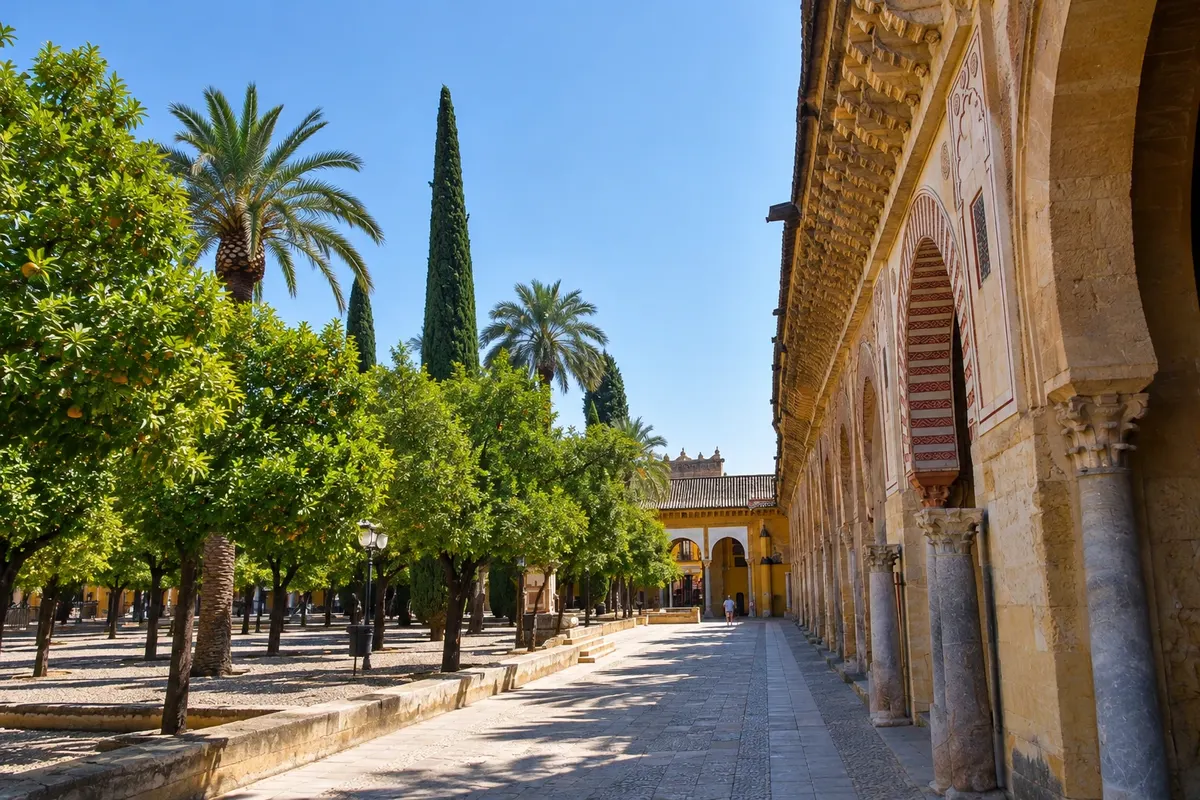
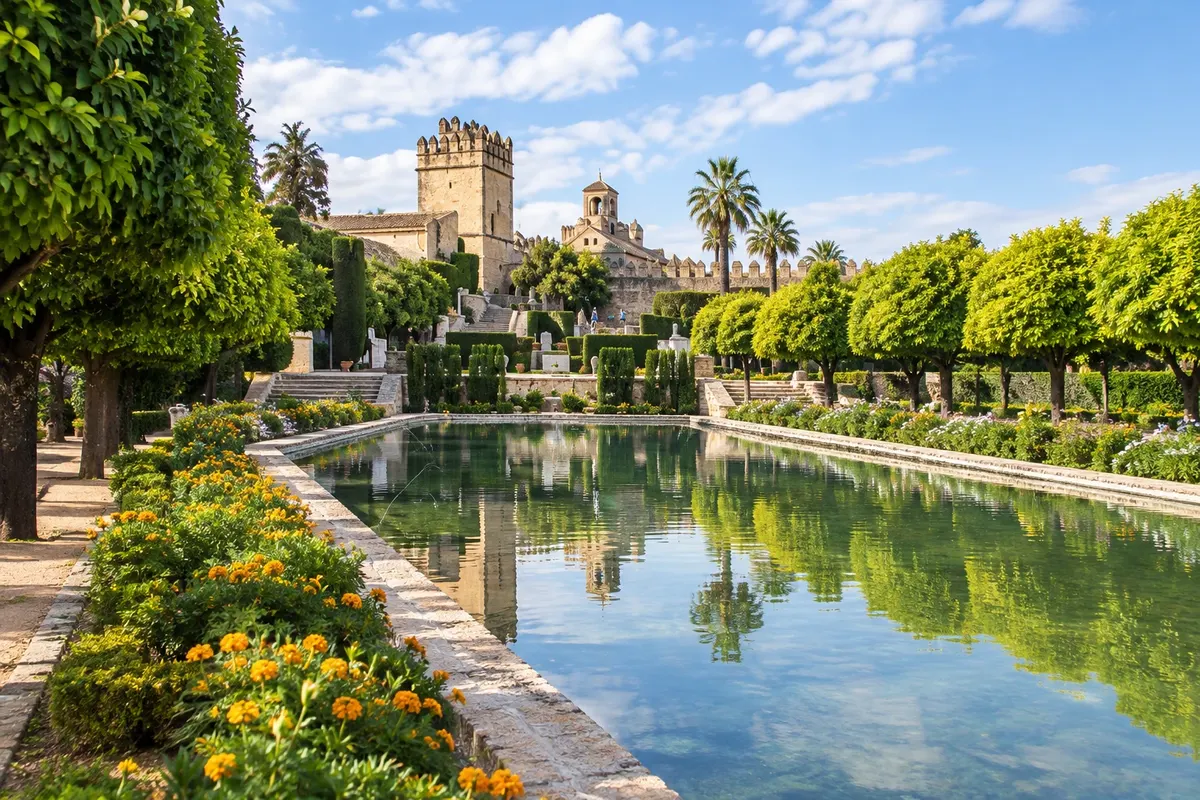
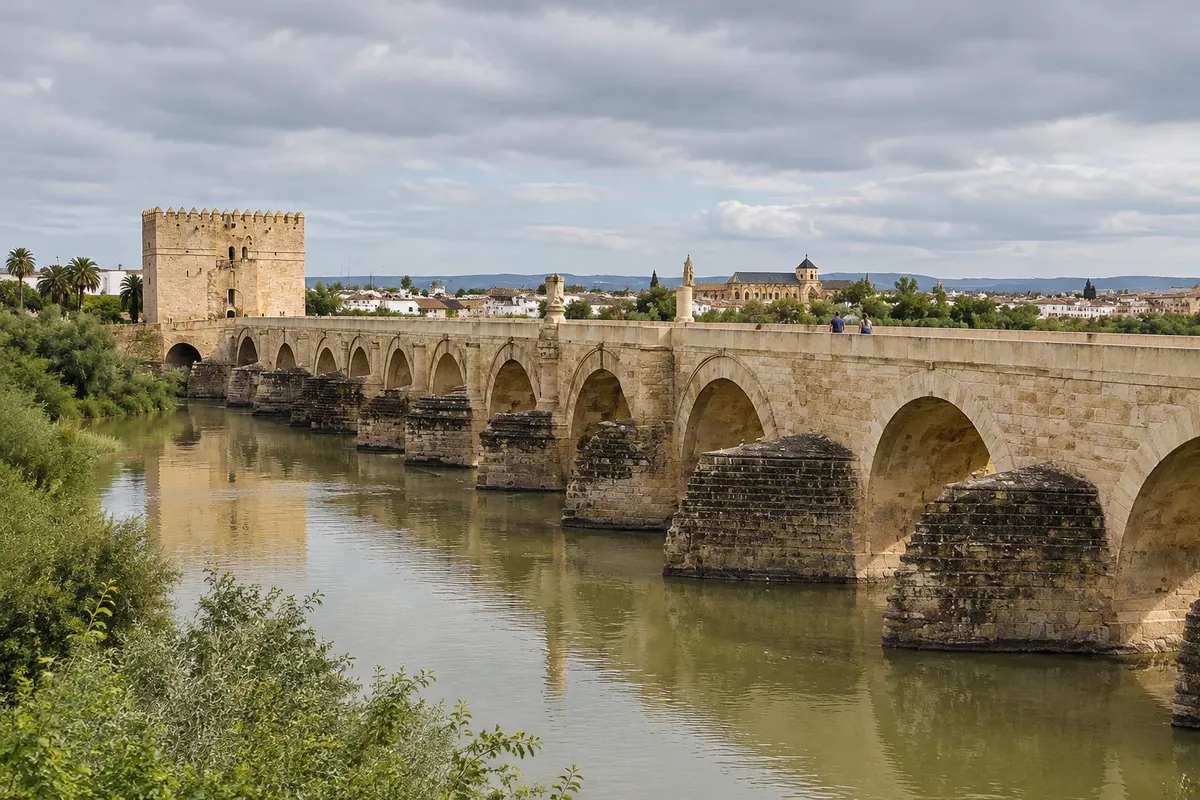
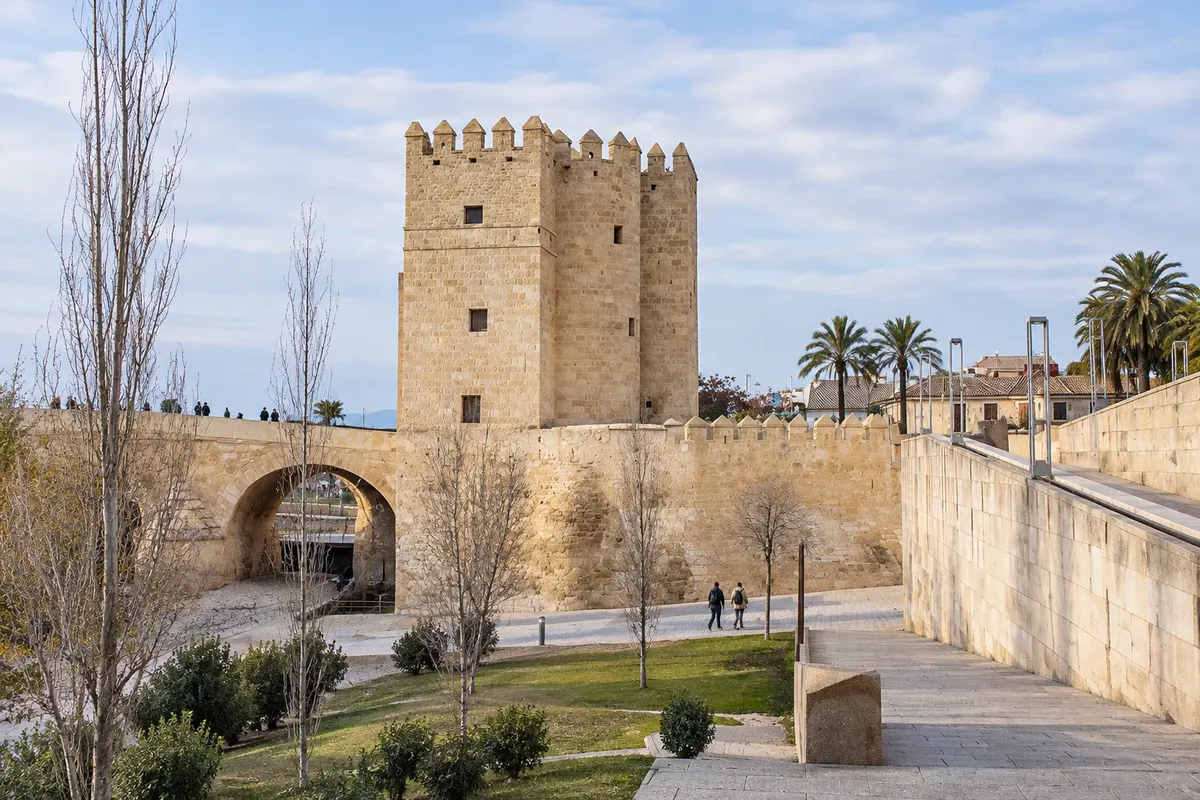
Baños del Alcázar Califal
Odhod: Plaza Campo Santo de los Mártires, in front of the Alcázar on foot Približno 45 minut Dopoldne ali popoldne Lahko
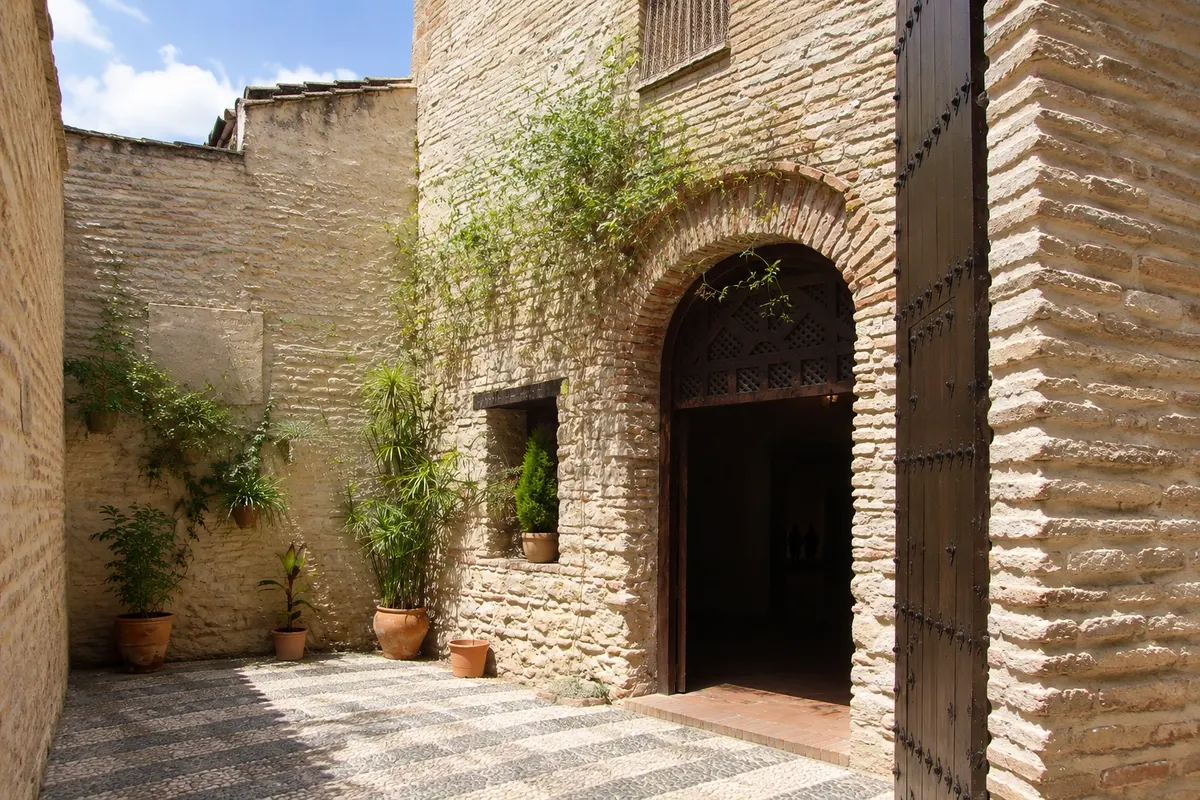
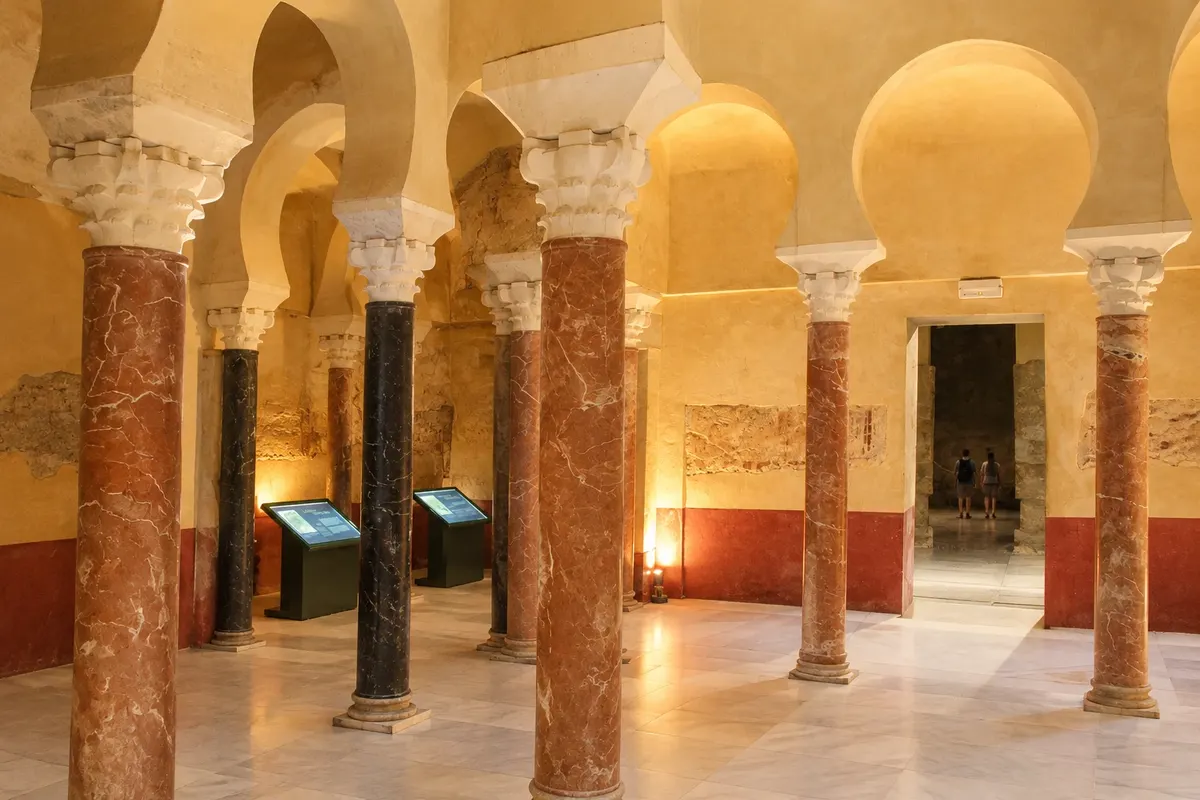
The Baños del Alcázar Califal are the Arab baths that served the palace of the Umayyad caliphs, from the 10th century, and lie beneath the plaza in front of the Alcázar de los Reyes Cristianos. They were discovered in the early 20th century and opened as a museum. The route follows the sequence of baths in the Roman tradition: entrance hall, cold room, warm room and hot room, with vaults pierced by star‑shaped skylights that let beams of light in. Panels and videos explain how the underfloor heating worked and the role of bathing in the caliphal court. It is a short, quiet and cool visit, good for midday in summer. It pairs with the Alcázar, which is a few meters away, and with the Baños Reales inside it, allowing comparison of the city’s two periods.
Kraji na poti: Baños del Alcázar Califal, Campo Santo de los Mártires.
Vključuje: Self-guided visit with explanatory panels. Paid admission extra.
Nasvet: Enter at midday in summer: the underground is cool. The visit is quick; fit it between the Alcázar and the Judería. Check the weekly closing day before you go.
Najboljši čas za obisk: Vse leto.
Courtyards of Córdoba (San Basilio)
Odhod: Calle San Basilio, 44 (Asociación de Amigos de los Patios) on foot, west of the Alcázar Približno uro in pol Dopoldne Lahko
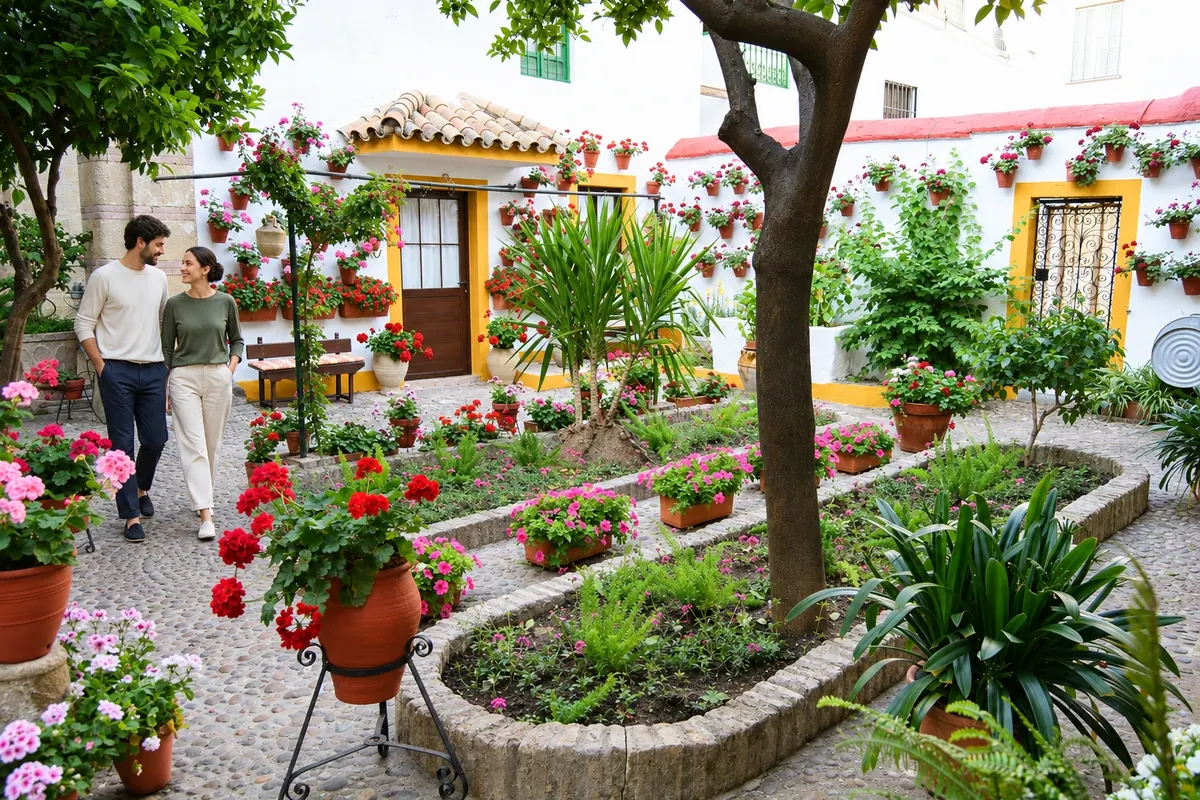
The courtyards are Córdoba’s most distinctive tradition: houses arranged around an inner courtyard with a well or fountain, whitewashed walls covered with pots of geranium, jasmine and carnations. UNESCO recognized the Fiesta de los Patios as intangible heritage. The San Basilio neighborhood, just west of the Alcázar, is where you visit year-round. The house of the Asociación de Amigos de los Patios Cordobeses, at Calle San Basilio 44, opens its courtyard to the public; the patio at Martín de Roa 7, one of the most awarded in the competition, with hundreds of pots, can be visited most of the year via a combined neighborhood ticket. In the first half of May the Festival de los Patios usually takes place, when owners open dozens of houses on routes through San Basilio, Santa Marina, San Lorenzo, San Pedro and Judería, with queues at the doors of the most famous. The Palacio de Viana, in Santa Marina, completes the theme with its twelve courtyards.
Kraji na poti: San Basilio neighborhood, Patio de San Basilio 44, Patio de Martín de Roa 7, Asociación de Amigos de los Patios Cordobeses.
Vključuje: Visit to the courtyards of San Basilio; some charge admission, others are open to the public. Guided routes are paid separately.
Nasvet: Outside of May the courtyards are quieter and you can talk with the owners. In May, go early and choose a single route; lines at the best-known courtyards take up the morning. Ask permission before photographing people inside the houses.
Najboljši čas za obisk: May for the festival, with the flowers at their peak; April and June to see the courtyards in bloom without queues.
Palacio de Viana
Odhod: Plaza de Don Gome, 2, Santa Marina neighborhood on foot, about 20 minutes from Plaza de las Tendillas Približno uro in pol Dopoldne Lahko
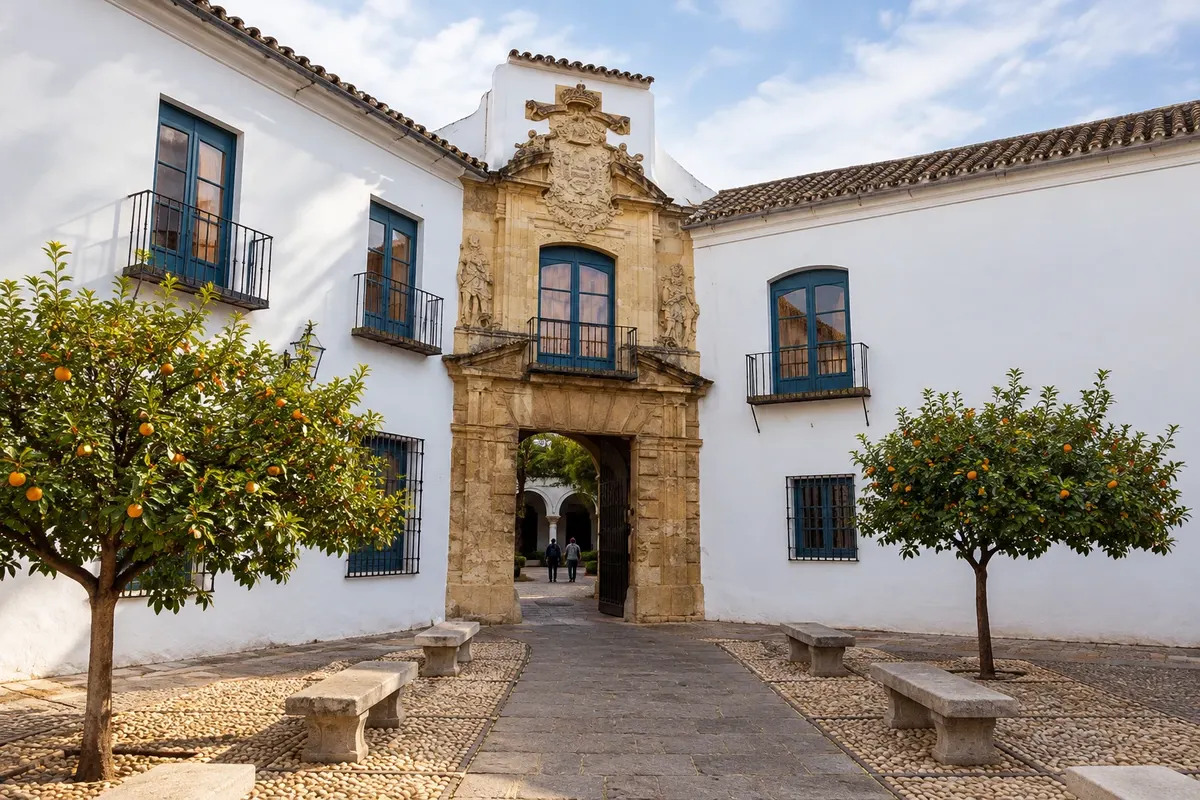
The Palacio de Viana is a manor house from the 15th century, expanded over five centuries by the marquises of Viana, and became known as the museum of courtyards. There are twelve courtyards and a garden, each with its own layout: the Patio de Recibo, the entrance courtyard, with columns and cobblestones; the Patio de los Naranjos; the Patio de las Rejas, seen from the street through the grilles; the Patio de la Alberca, with a basin; the Patio del Pozo; the Patio de la Madama, with a statue and fountain; and the boxwood garden with cypress. The visit can be courtyards only or include the house, with tapestry rooms, tiles, embossed leather collections, a baroque room and another dedicated to the painter Julio Romero de Torres. It is in the Santa Marina neighborhood, outside the Mezquita circuit, near Plaza de Capuchinos. Closed on Mondays.
Kraji na poti: Palacio de Viana, Patio de los Naranjos de Viana, Patio de las Rejas, Garden of the Palacio de Viana.
Vključuje: Self-guided visit to the courtyards and the garden; the house has a guided visit. Tickets paid separately, with options for courtyard-only or full visits.
Nasvet: Go on a weekday morning. The courtyards are visited outdoors: in summer, before 11 a.m. Combine it with the Cristo de los Faroles and the fernandine churches of the neighborhood, a few minutes on foot.
Najboljši čas za obisk: All year; spring and autumn for the courtyards in bloom.
Archaeological Museum of Córdoba
Odhod: Plaza de Jerónimo Páez, 7 on foot, east of the Mezquita Približno uro in pol Popoldne Lahko
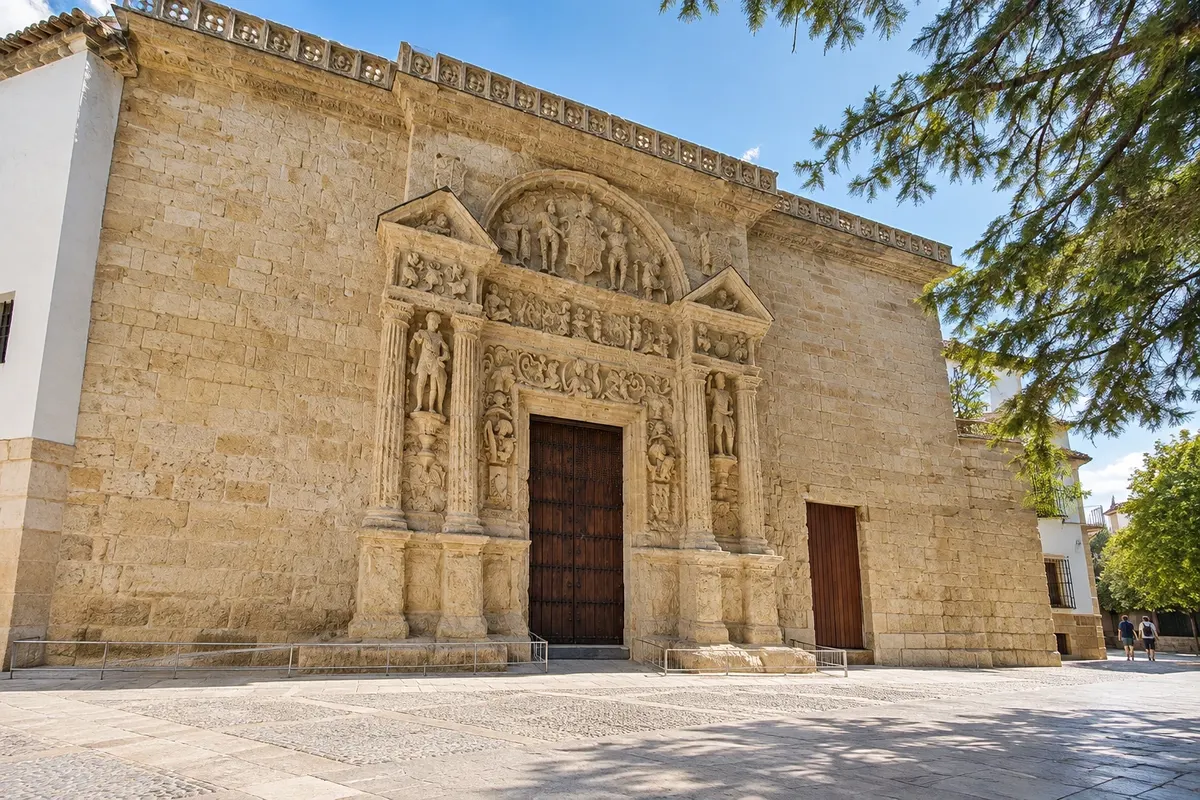
The Archaeological Museum tells the story of Córdoba from prehistory to the Middle Ages with pieces found in the city and province. The modern building was erected next to the Renaissance palace of the Páez de Castillejo family, and the expansion works uncovered, underground, the seating of the Roman theatre of Colonia Patricia, a large theatre in Hispania; the theatre is part of the route. In the rooms are the Iberian lion of Nueva Carteya, Roman sculptures such as the Mithras of Cabra, mosaics, caliphal capitals coming from Medina Azahara, pottery and Mudejar, Gothic and Renaissance pieces. It is a medium-sized museum, cool and quiet, good for a hot afternoon. It sits on a small square in the lower Judería, between the Mezquita and the Plaza del Potro.
Kraji na poti: Archaeological Museum of Córdoba, Roman Theatre of Córdoba, Palacio de los Páez de Castillejo, Lion of Nueva Carteya.
Vključuje: Permanent collection and remains of the Roman theatre. Check the admission table; there are specific conditions for visitors from outside the European Union.
Nasvet: Visit after the Mezquita to understand what preceded it and what came from Medina Azahara. It closes on Mondays, like most museums run by the Junta de Andalucía. You can go through it in about an hour if time is short.
Najboljši čas za obisk: All year; in summer it is a good afternoon refuge.
Plaza de la Corredera, Roman Temple and Tendillas
Odhod: Plaza de las Tendillas on foot Približno uro in pol late afternoon Lahko
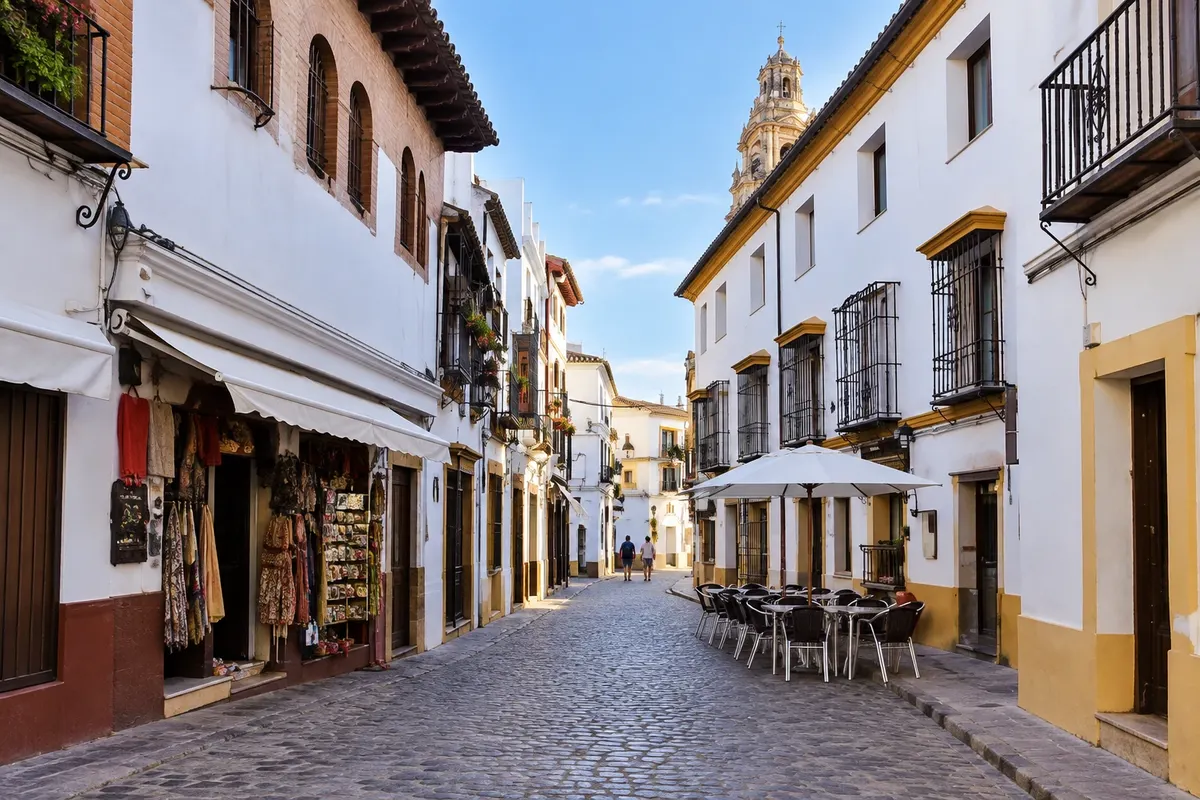
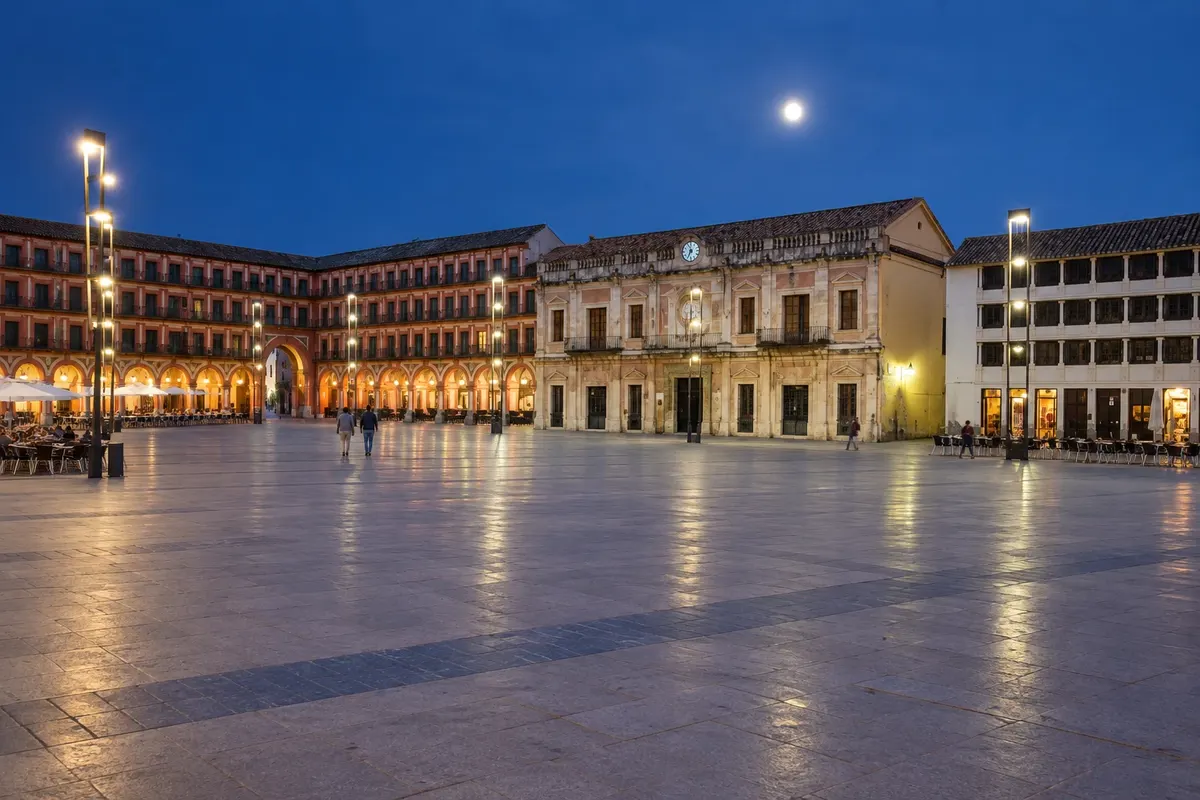
This walk starts in the Judería and shows everyday Córdoba. Plaza de las Tendillas is the modern center, with a clock that marks the hours with a flamenco guitar chime, cafés and shops around it. From there, Calle Claudio Marcelo reaches the Roman Temple beside the town hall: Corinthian columns raised on a high podium, remains of a temple begun under Claudius and completed under Domitian, visible from the street. A few blocks farther opens Plaza de la Corredera, a 17th-century rectangular square measuring 113 m by 55 m, enclosed by houses with arcades and red balconies, the only one of its kind in Andalusia; it once hosted bullfights and today houses a covered market and bars with tables under the arcades. Heading down toward the river you reach Plaza del Potro, with the potro fountain and the old inn mentioned by Cervantes in Don Quixote, now a flamenco center.
Kraji na poti: Plaza de las Tendillas, Roman Temple, Plaza de la Corredera, Corredera Market, Plaza del Potro.
Vključuje: Free walk through the streets and squares. Corredera market with stalls of local products.
Nasvet: Do it in the late afternoon, when the squares fill with locals. La Corredera is a good place to sit under the arcades. The Roman Temple can be seen from the street promenade without entering.
Najboljši čas za obisk: All year. In summer, only after 7:00 PM.
Cristo de los Faroles and Plaza de Capuchinos
Odhod: Plaza de Capuchinos on foot, near the Palacio de Viana about 30 minutes night Lahko
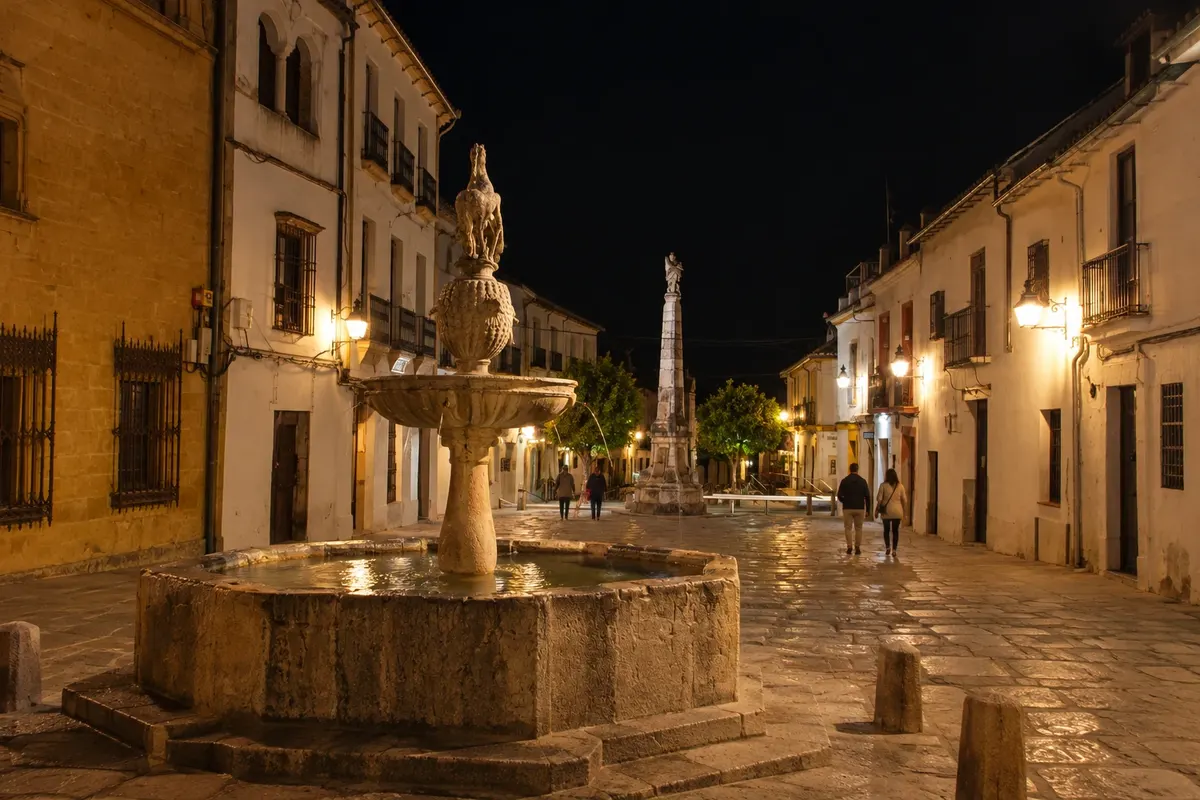
Plaza de Capuchinos is a small, entirely white square, enclosed by the Capuchin convent and the former Hospital of San Jacinto. At its center stands the Cristo de los Faroles, an 18th-century stone crucifix surrounded by eight wrought-iron lanterns. It is one of Córdoba’s classic images, especially at night, when the lanterns are lit and the square falls silent. The ensemble is part of the Santa Marina neighborhood, a few steps from the Palacio de Viana and the Iglesia de Santa Marina, one of the fernandine churches built after the Christian conquest in the 13th century, with a stone façade and a rose window. The walk is short and pairs well with a stroll through the neighborhood’s quiet streets, away from the bustle of the Mezquita, and with a calm end to the evening.
Kraji na poti: Plaza de Capuchinos, Cristo de los Faroles, Iglesia de Santa Marina.
Vključuje: Self-guided walk, outdoors.
Nasvet: Go at dusk, when the lanterns are lit; by day the square is just white. Combine it with the Palacio de Viana in the morning or with a dinner in the neighborhood at night.
Najboljši čas za obisk: All year; on summer evenings the square is a cool place to linger.
Medina Azahara (Madinat al-Zahra)
Odhod: Paseo de la Victoria (bus) or Carretera de Palma del Río, km 5.5 direct tour bus, car, or taxi; inside the site, shuttle bus about 4 hours, round trip Dopoldne Zmerno zahtevno
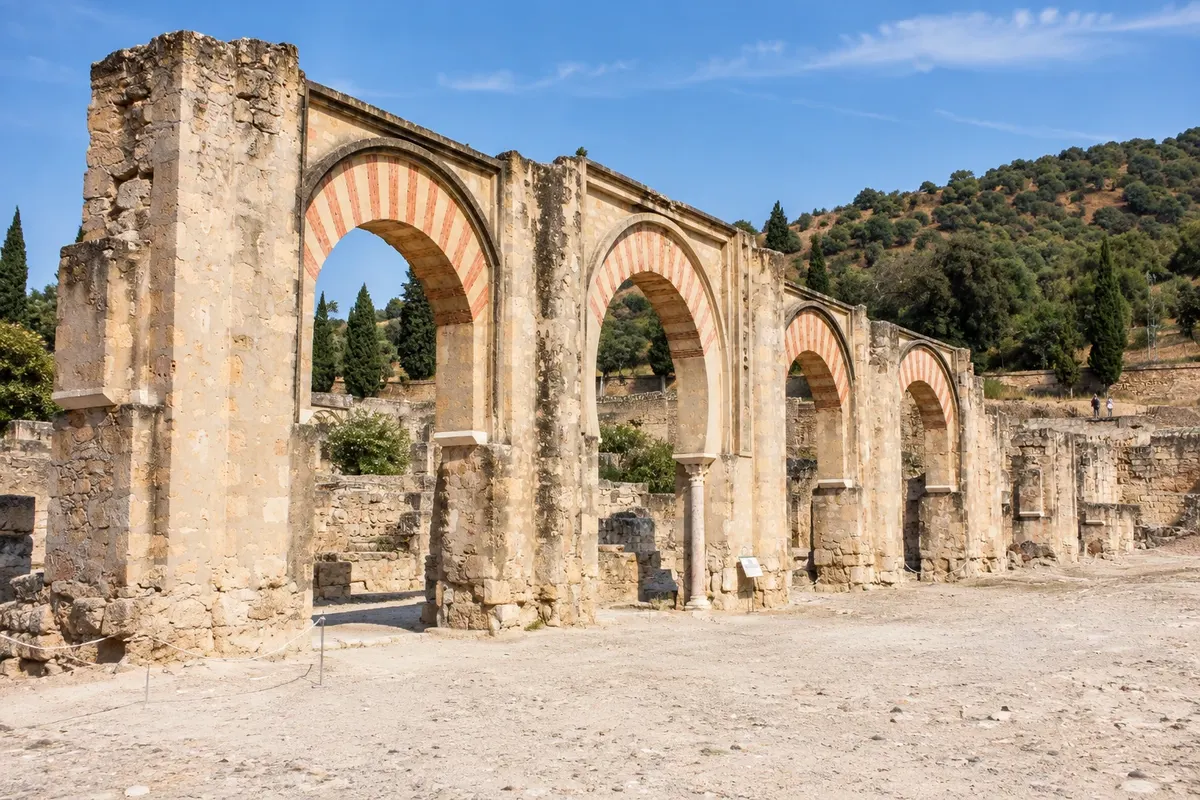
Medina Azahara is the palace city that Abd al-Rahman III ordered built in 936, about 8 km west of Córdoba, at the foot of the hills, to be the capital of the caliphate. It lasted briefly: it was sacked in the early 11th century and remained buried until 20th-century excavations. It is a World Heritage site. The visit starts at the museum and interpretation center at the foot of the site, with models, excavated pieces, and a video that recreates the city; from there a shuttle bus goes up to the ruins with frequent departures. The site is organized in three terraces within walls: above, the alcázar with residences; in the middle, the official halls; below, the city. The route goes by the Casa de Yafar, the portico of the large atrium, and the Salón Rico, the caliph’s reception hall, with marble arches and carved vegetal decoration, opening onto the Jardín Alto. There is little shade; bring water and a hat.
Kraji na poti: Medina Azahara, Museum of Medina Azahara, Salón Rico, Jardín Alto, Casa de Yafar.
Vključuje: Museum, shuttle bus to the site, and walking route through the ruins. Admission has its own fee rules: check the current schedule. Round-trip tour bus from Córdoba is paid separately.
Nasvet: Closes on Mondays. Take the first morning bus, which leaves from Paseo de la Victoria, and book in advance: it fills up on weekends. Start at the museum to understand what you will see up above. In summer there are night visits on some weeks; check the season schedule.
Najboljši čas za obisk: October to May. In summer only in the very early morning or during night visits.
El Alma de Córdoba: night visit of the Mezquita
Odhod: Patio de los Naranjos on foot Približno 1 uro night Lahko
El Alma de Córdoba is the night visit of the Mezquita-Cathedral, held in small groups after the monument closes. It begins at the Patio de los Naranjos with a short film about the building’s history and continues inside with directed lighting: lights come on by sections, showing the forest of columns, the mihrab and the Capilla Mayor separately, with narration and soundtrack. Photography and filming are not allowed. The narration is available in several languages, including Portuguese. Sessions are usually offered year-round, with times that change by season and reduced days in winter. The experience is different from the daytime visit: fewer people, silence, and seeing the monument in parts. It’s worthwhile as a second visit for those who have already toured the Mezquita in natural light.
Kraji na poti: Mezquita-Cathedral, Patio de los Naranjos.
Vključuje: Guided night visit with an introductory film and a lit route. Ticket sold separately.
Nasvet: Buy in advance on the official website: groups are small. Do the daytime visit first to have a reference. Check the schedule: sessions are often suspended on days of worship and events.
Najboljši čas za obisk: All year; in summer, when it’s hot during the day, the night session is the best time to enter the Mezquita.
Equestrian show at the Caballerizas Reales
Odhod: Calle Caballerizas Reales, 1, next to the Alcázar on foot about 1 hour 10 minutes night Lahko
The Caballerizas Reales are the stables Felipe II commissioned in 1570, attached to the Alcázar, to breed the Andalusian horse, the pure Spanish breed. The building, with vaulted naves on stone columns, houses the permanent show Pasión y Duende del Caballo Andaluz, presented by the Córdoba Ecuestre association. For about an hour, riders demonstrate classical dressage, work with the garrocha, carriage harnessing and numbers in which the horse dances with flamenco dancers to live music. The show usually runs Wednesday to Saturday in the early evening, with times that change throughout the year. It’s an evening program that doesn’t require walking and appeals to families. Outside performances, the stables open for visits to the building and the horses at certain times.
Kraji na poti: Caballerizas Reales, Córdoba Ecuestre.
Vključuje: Equestrian show with live music. Ticket sold separately; check the price list and schedule.
Nasvet: Book in advance, especially on weekends and in spring. Arrive 15 minutes early. Combine it with a late afternoon at the Alcázar, which is next door.
Najboljši čas za obisk: All year. In summer the time is later, after the heat.
Hammam Al Ándalus: Arab baths
Odhod: Calle Corregidor Luis de la Cerda, 51, near the Mezquita on foot Približno uro in pol popoldne ali zvečer Lahko
Hammam Al Ándalus recreates the Arab baths of caliphal Córdoba in a building a few steps from the Mezquita-Cathedral. The session follows the traditional ritual: cold, warm and hot pools, steam room and relaxation room with tea, in rooms with arches, vaults with star-shaped skylights and low lighting. There are options with massages of different durations, using aromatic oils. The atmosphere is quiet, no phones allowed, and bathing is done in swimwear; towels and slippers are provided. It’s a good activity after a day of walking, especially in winter, or at the start of the evening in summer. Sessions are scheduled and have limited capacity; the visit lasts about 1 hour 30 minutes, including changing.
Kraji na poti: Hammam Al Ándalus Córdoba.
Vključuje: Bath circuit with scheduled time; massages extra. Reservation paid separately.
Nasvet: Book several days in advance, especially on weekends. Bring swimwear. Arrive 15 minutes early for registration. Don’t combine it with a Mezquita visit immediately afterward: the bath requires rest.
Najboljši čas za obisk: All year; in winter the hot water feels good after the walk.
Round‑trip excursion to Almodóvar del Río (castle)
Odhod: Córdoba, via the A-431 car or bus to Almodóvar; the castle sits on top of the hill Pol dneva Dopoldne Zmerno zahtevno
Almodóvar del Río is a village on the banks of the Guadalquivir, west of Córdoba, dominated by a castle visible from the road. The fortress originated as a Muslim stronghold in the 8th century, atop a hill of about 250 m, passed to the caliphate and the taifas, was handed to Fernando III in 1226 and expanded by Pedro I, Enrique II and Alfonso XI. At the start of the 20th century the Count of Torralva fully restored it, which explains its movie‑castle appearance. The visit runs along the battlemented walls and the eight towers, including the Torre del Homenaje, the dungeons, the armory with a sword collection, the throne room and the moat garden, and ends at the viewpoint over the river and plain. The castle served as a filming location in season seven of Game of Thrones, as the Highgarden and Casterly Rock, and the route marks the filming spots. The neo‑Gothic palace is a private residence and is not open.
Kraji na poti: Castillo de Almodóvar del Río, Almodóvar del Río, Torre del Homenaje, Jardín del Foso.
Vključuje: Visit to the castle with a marked route; moat garden and viewpoint. Separate paid admission. Transport is the traveler’s responsibility.
Nasvet: The climb from the village to the castle is steep; at certain times there are shuttle minibuses from the castle, but not in August. Go in the morning and return to Córdoba for lunch. Check the daily schedules, which vary by season.
Najboljši čas za obisk: October to May; in summer the hill is hot at midday.
Day trip to Priego de Córdoba (Baroque of the Subbética)
Odhod: Córdoba, by car or bus car (about 1 h 15) or intercity bus about 9 hours, round trip Ves dan Zmerno zahtevno
Priego de Córdoba is about 110 km southeast of the capital, up against the Subbética mountains, in olive country. It’s the city of Cordoban Baroque. The Fuente del Rey, with dozens of jets and the sculpture of Neptune, and the nearby Fuente de la Salud start the walk. The Barrio de la Villa is the medieval core, laid out in an Islamic pattern, with winding white alleys and façades covered in flowers, and ends at the Balcón del Adarve, a promenade on the cliff with views of the sierra and the olive groves. Sections of wall and towers from the Arab castle remain. The churches are the highlight: Asunción, a Gothic–Mudéjar church remodeled in the 18th century, with a Baroque Sagrario of white stucco and a decorated dome; Aurora, with a Baroque altarpiece and façade, from which the brotherhood goes out singing through the streets in the early hours of Saturday; and the camarín of the Inmaculada in San Pedro. The day calls for a relaxed pace: lunch in town and return late afternoon.
Kraji na poti: Priego de Córdoba, Fuente del Rey, Barrio de la Villa, Balcón del Adarve, Iglesia de la Asunción, Iglesia de la Aurora.
Vključuje: Free stroll through the town; churches have their own visiting hours. Transport is the traveler’s responsibility. Paid guided tours extra.
Nasvet: By car is easier; by bus check outbound and return schedules for the same day. Churches open for worship and have limited visiting hours: visit them in the morning. Spring for the Villa’s flowers.
Najboljši čas za obisk: March to June and September to November. In winter the mountains are cold.


 Brazilija
 Antarktika
 Argentina
 Bolivija
 Čile
 Kolumbija
 Ekvator
 Gvajana
 Francoska Gvajana
 Falklandski otoki (Malvini)
 Paragvaj
 Peru
 Surinam
 Urugvaj
 Venezuela
 Nemčija
 Avstrija
 Belgija
 Hrvaška
 Danska
 Slovaška
 Slovenija
 Finska
 Francija
 Grčija
 Nizozemska
 Madžarska
 Irska
 Islandija
 Italija
 Luksemburg
 Norveška
 Poljska
 Portugalska
 Združeno kraljestvo
 Češka
 Švedska
 Švica
 Turčija
 Bermudi
 Kanada
 Združene države Amerike
 Grenlandija
 Mehika
 Sveta Peter in Mihael
 Dominikanska republika
 Japonska
 Južnoafriška republika
 Egipt
 Avstralija
 Fidži
 Nova Zelandija
 Papua Nova Gvineja


 maj