St. Moritz and the Engadine

Graubünden · Švica

St. Moritz and the Engadine

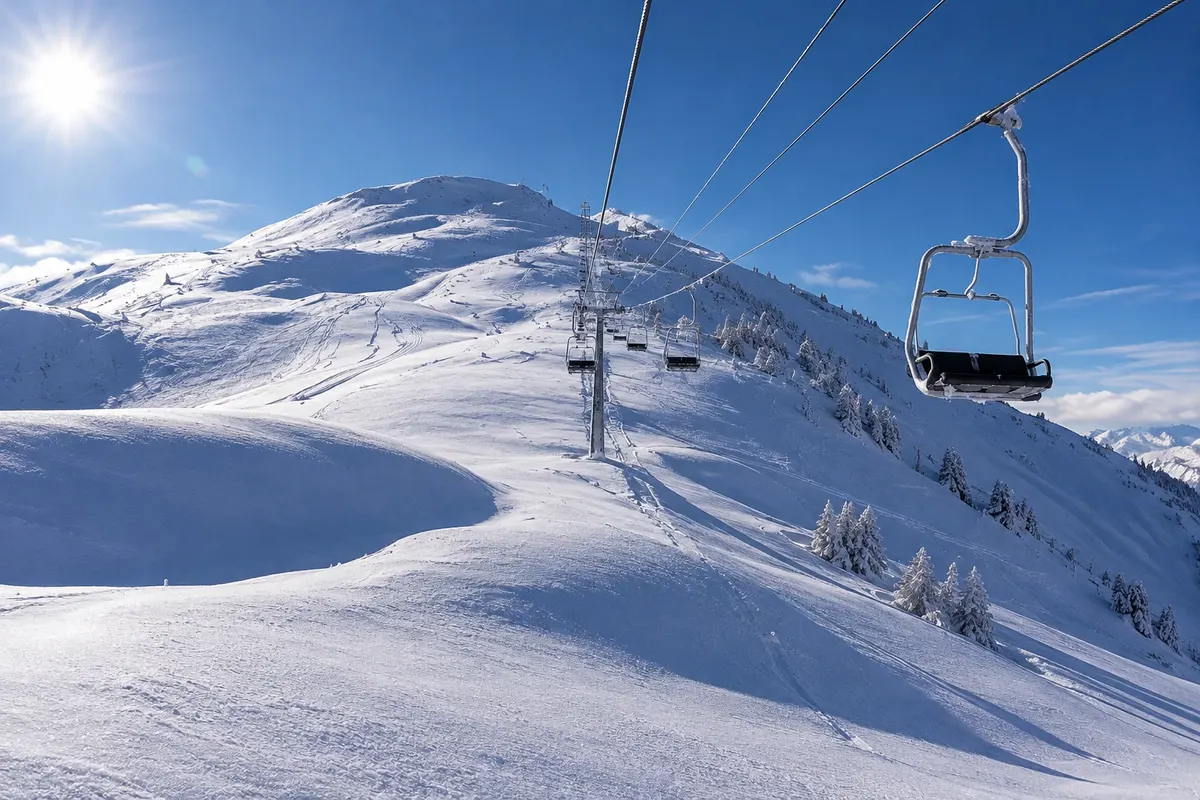
St. Moritz, at 1,822 m, the lakes of the Upper Engadine, the Bernina glaciers and the trains of the Rhätische Bahn, which climb the Albula and cross the Bernina to Tirano, in Italy.

German-speaking Switzerland

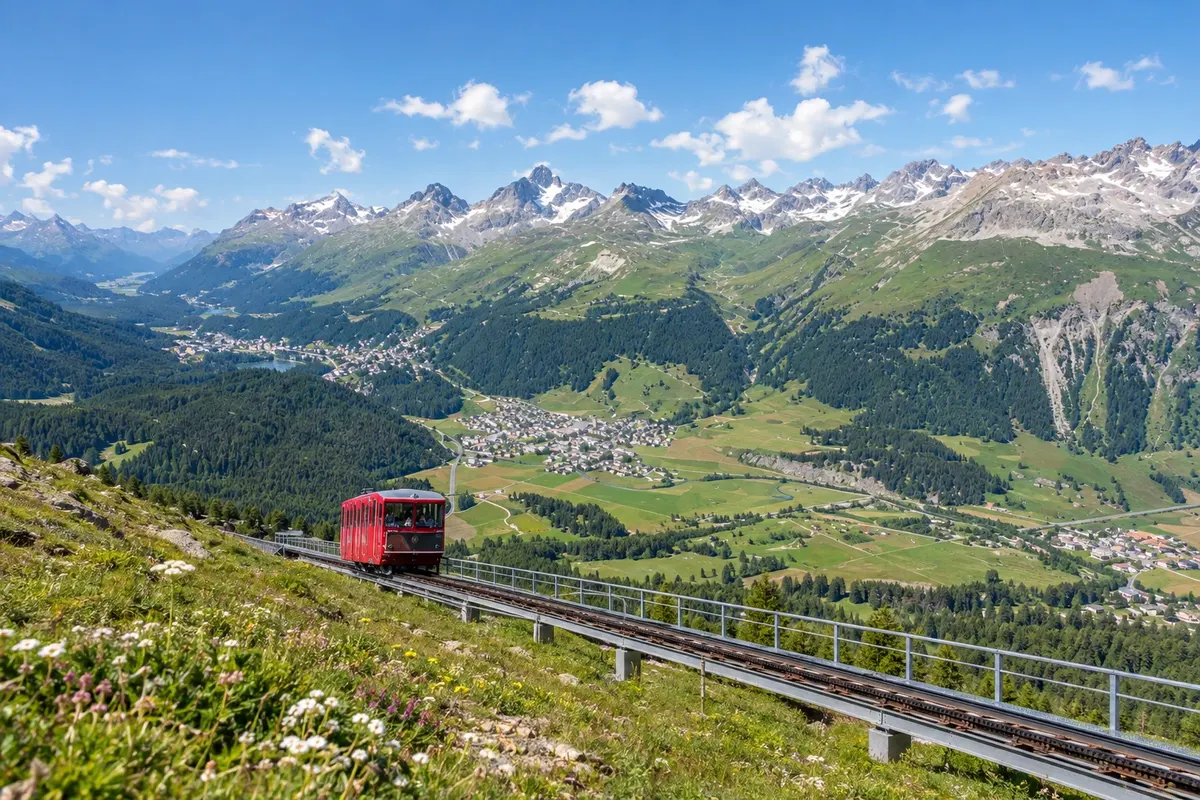
Na fotografiji: Muottas Muragl funicular, Engadina

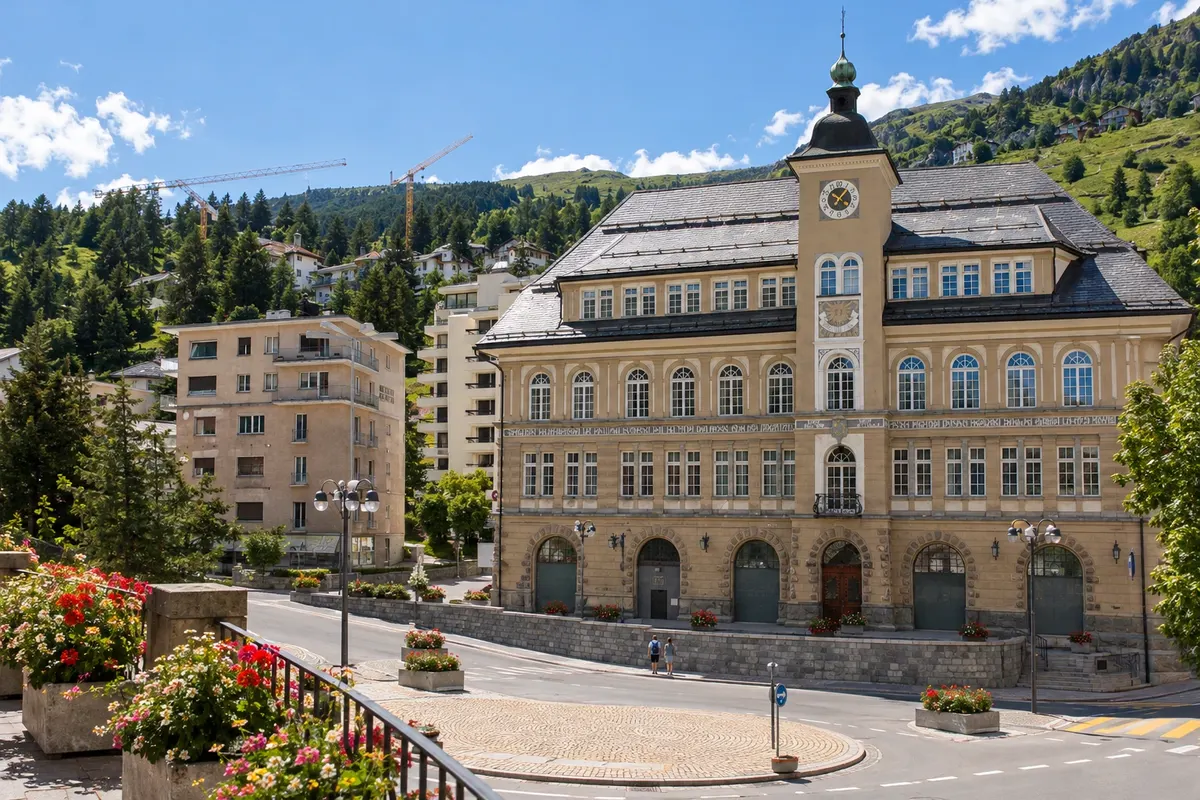
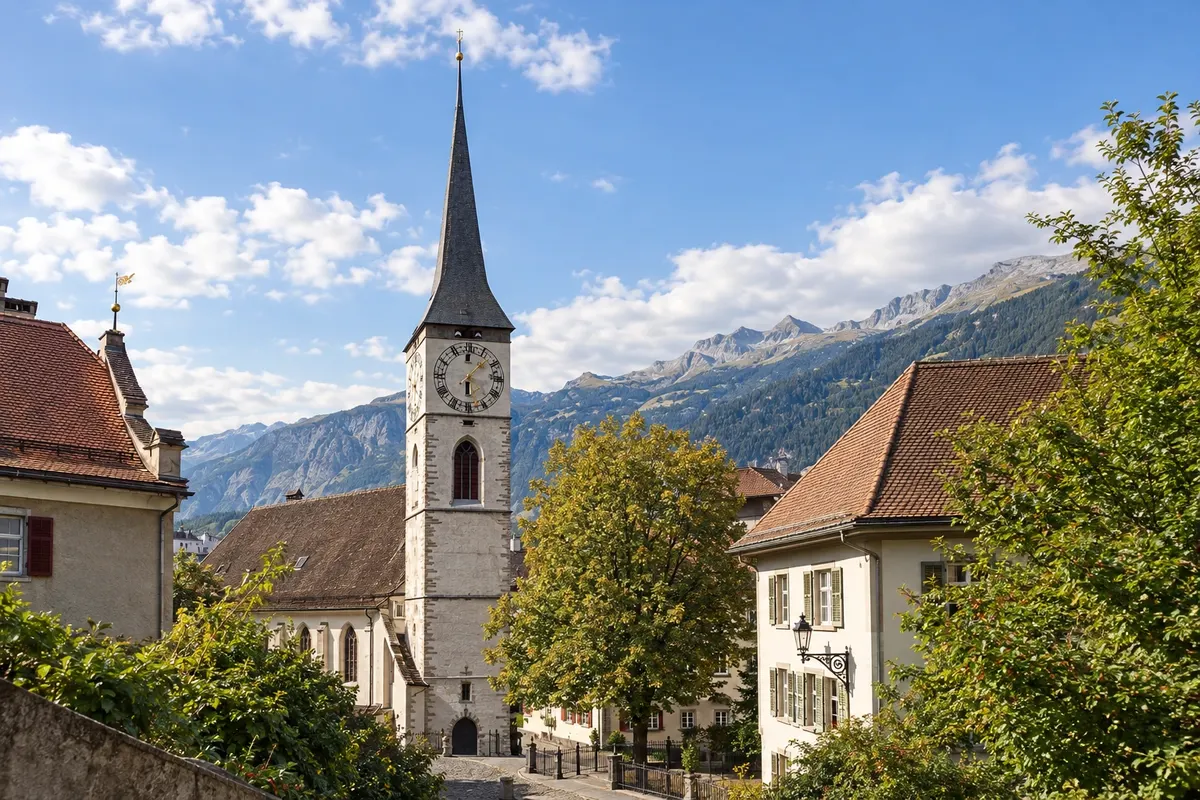
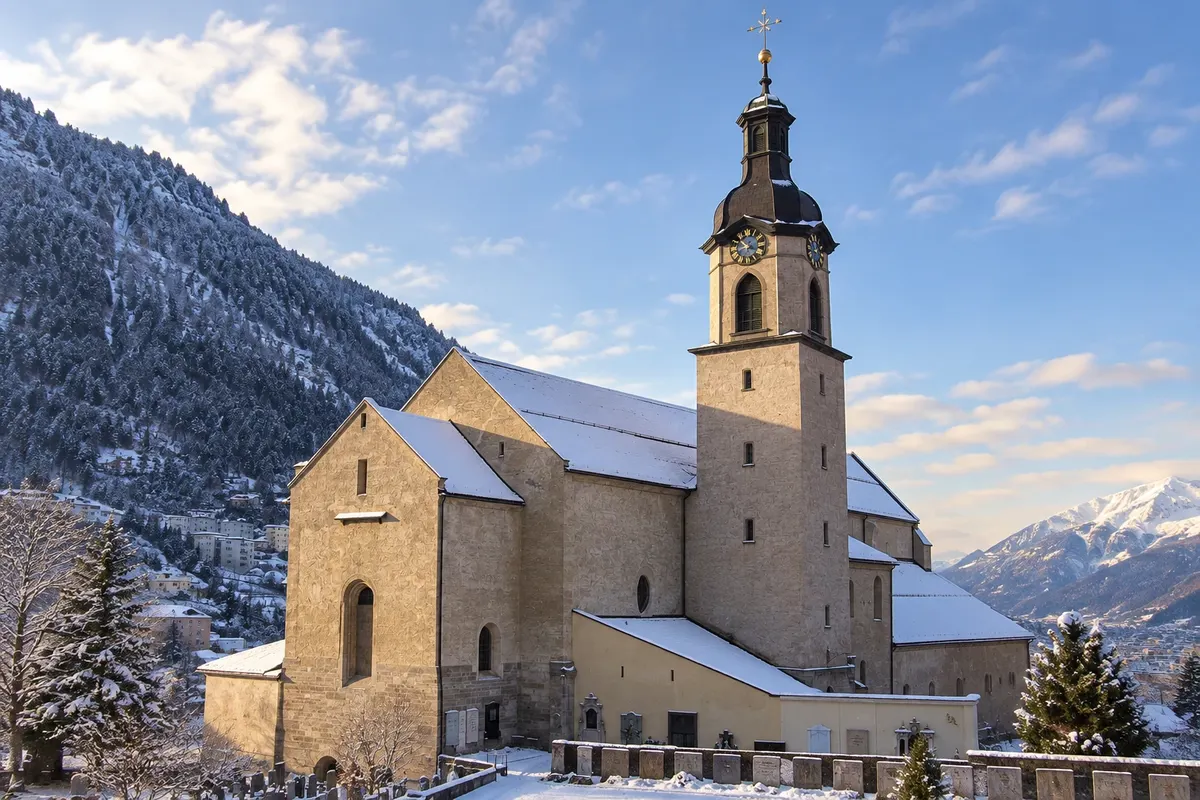
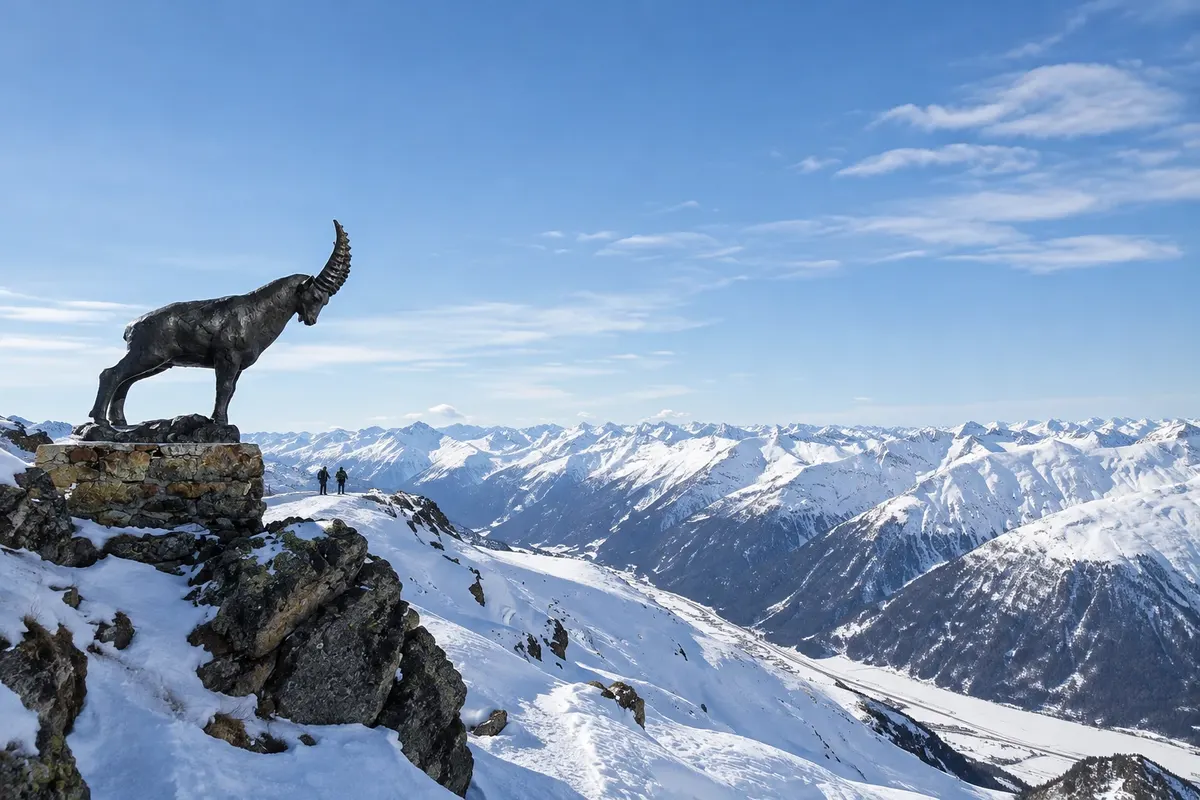
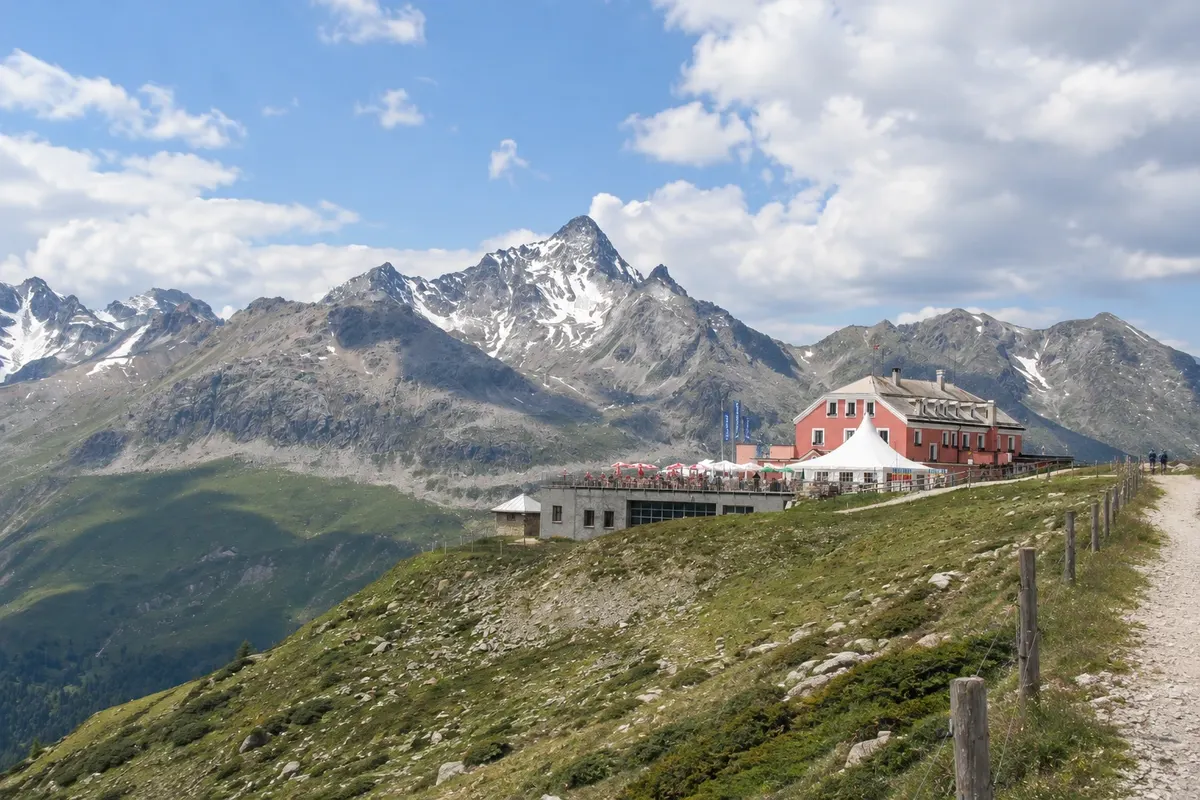
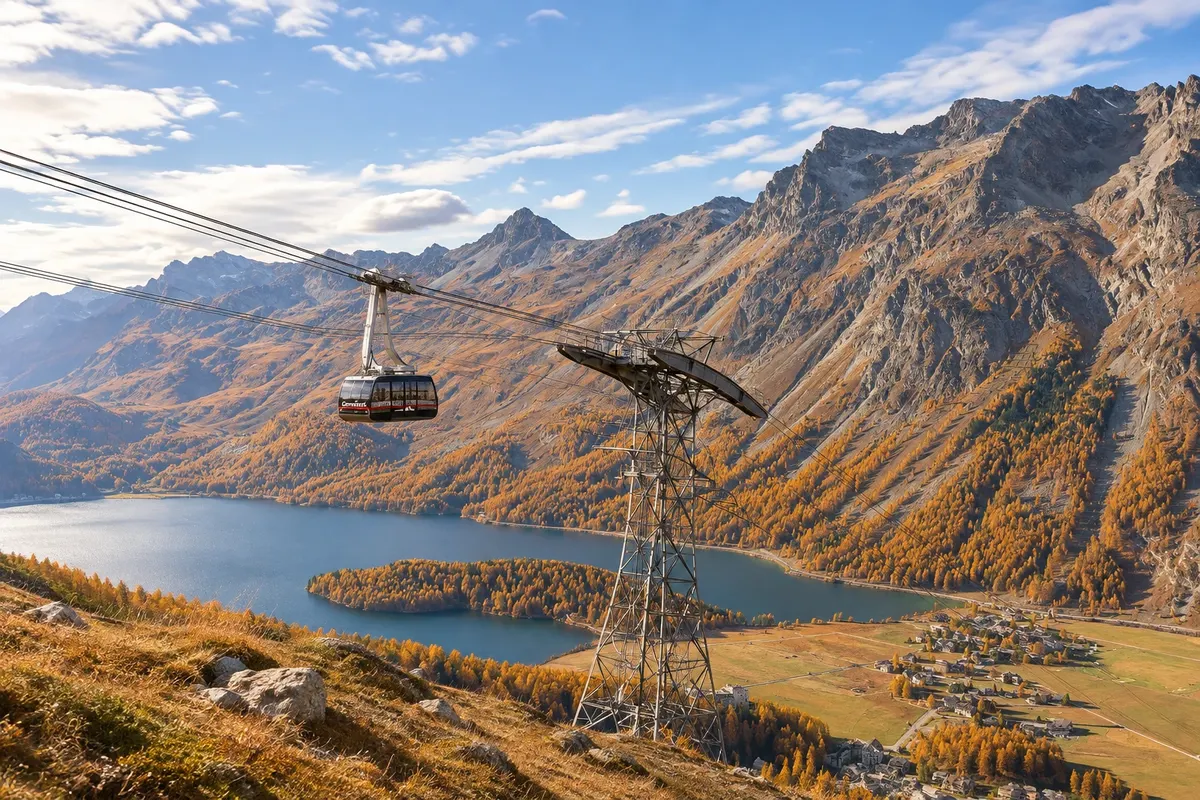
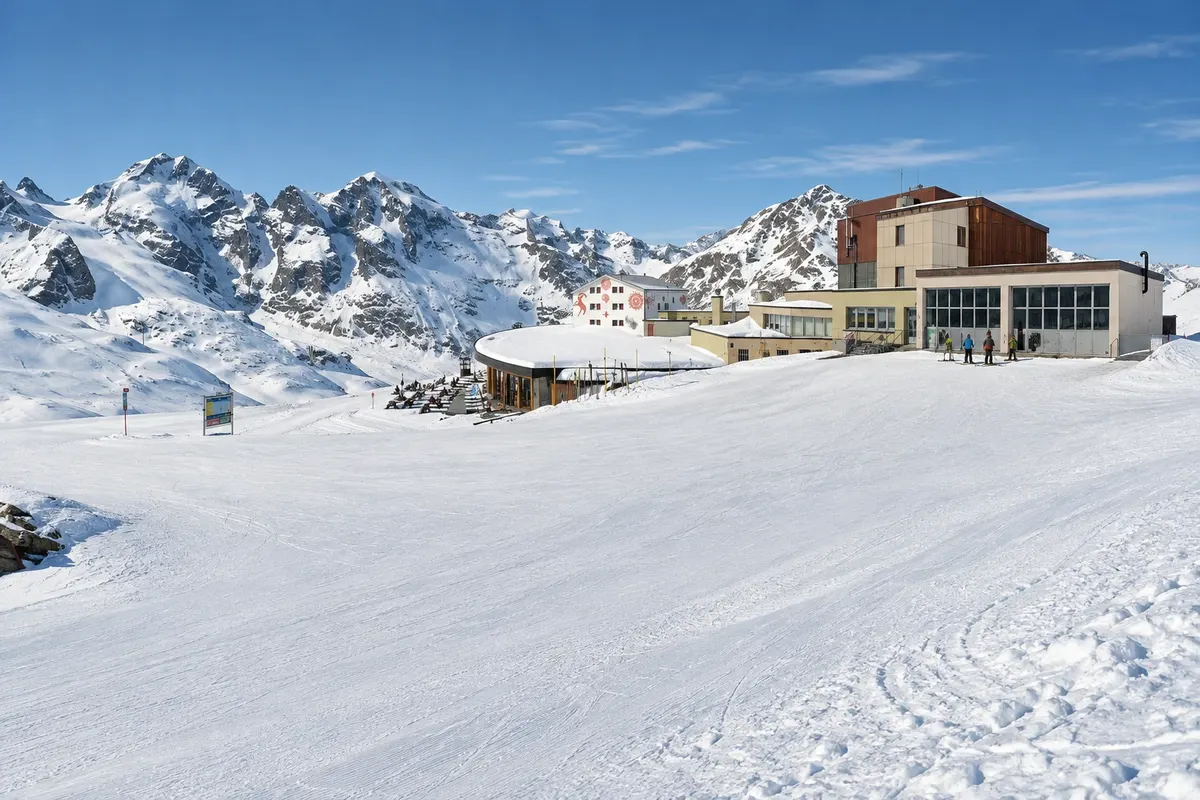
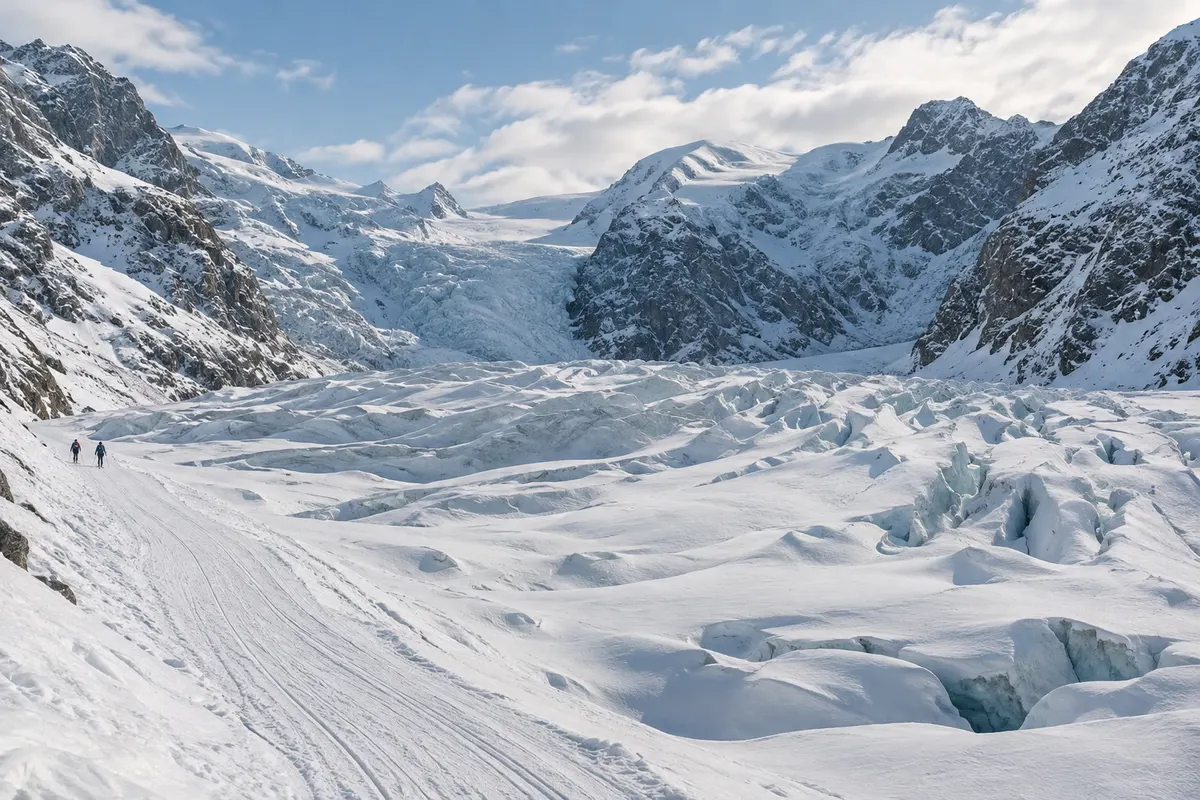
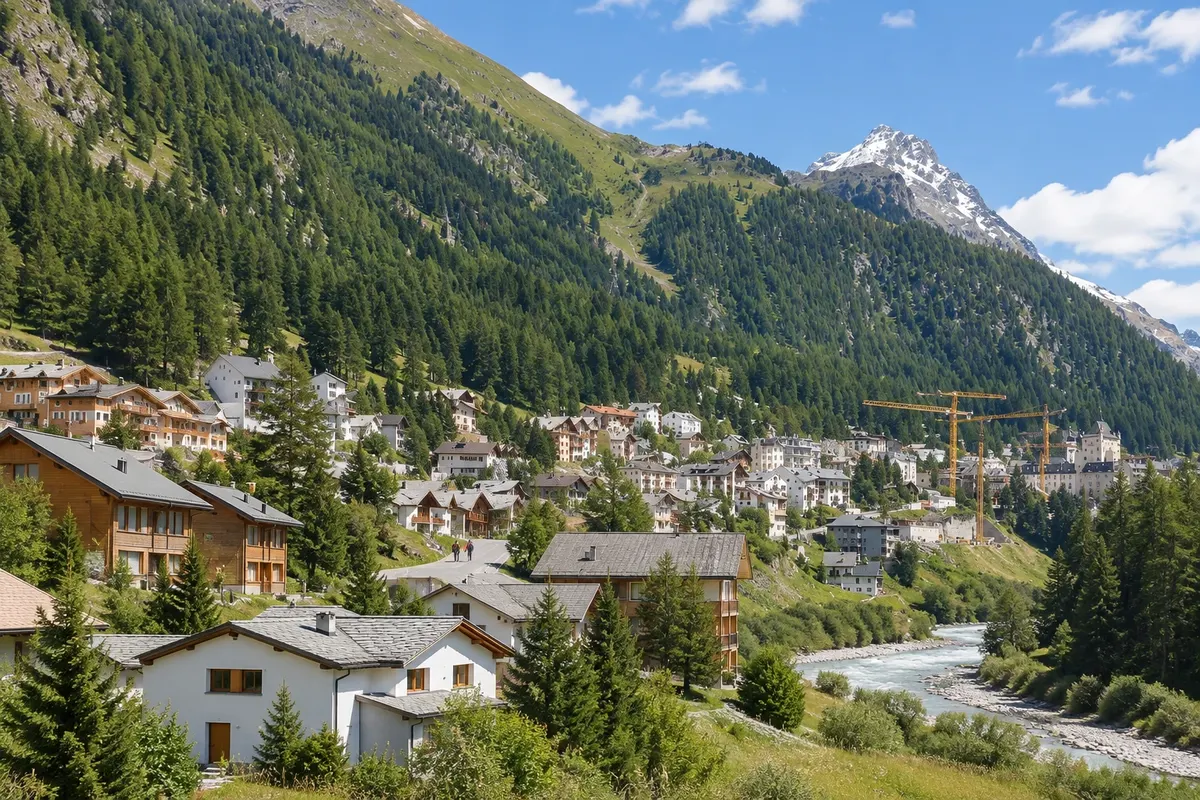
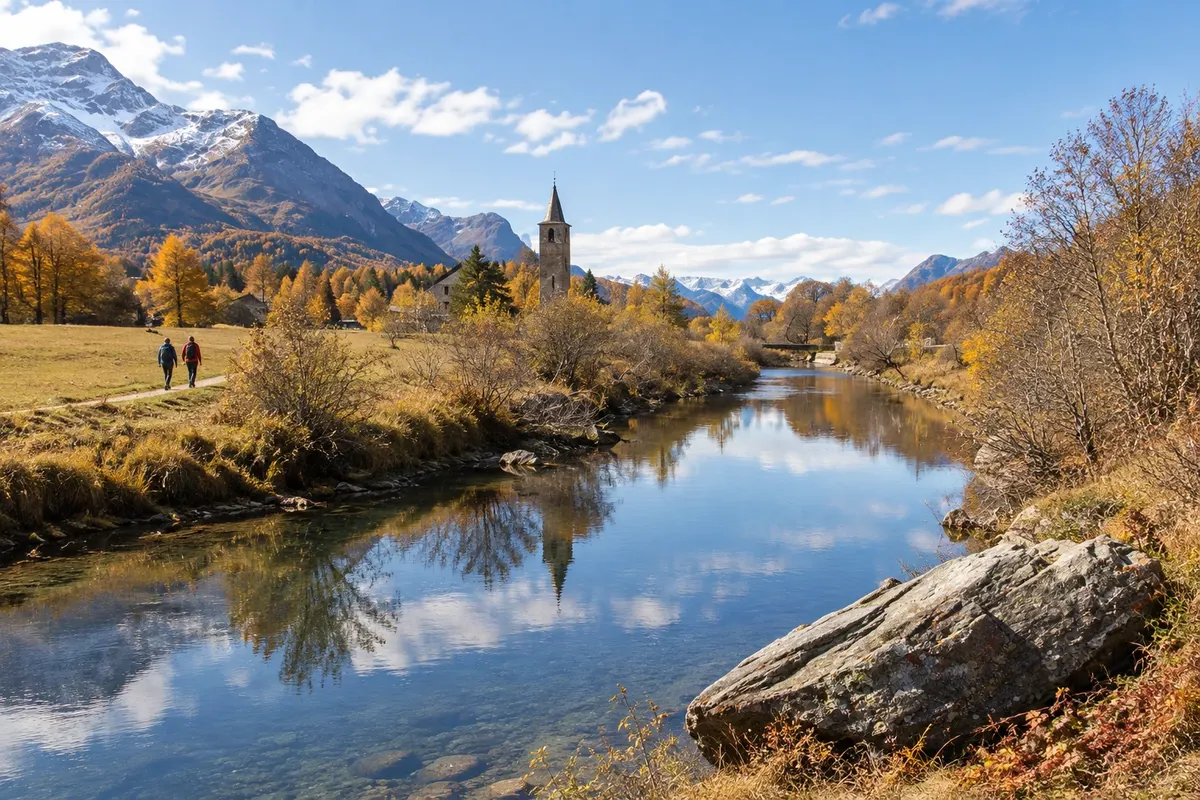
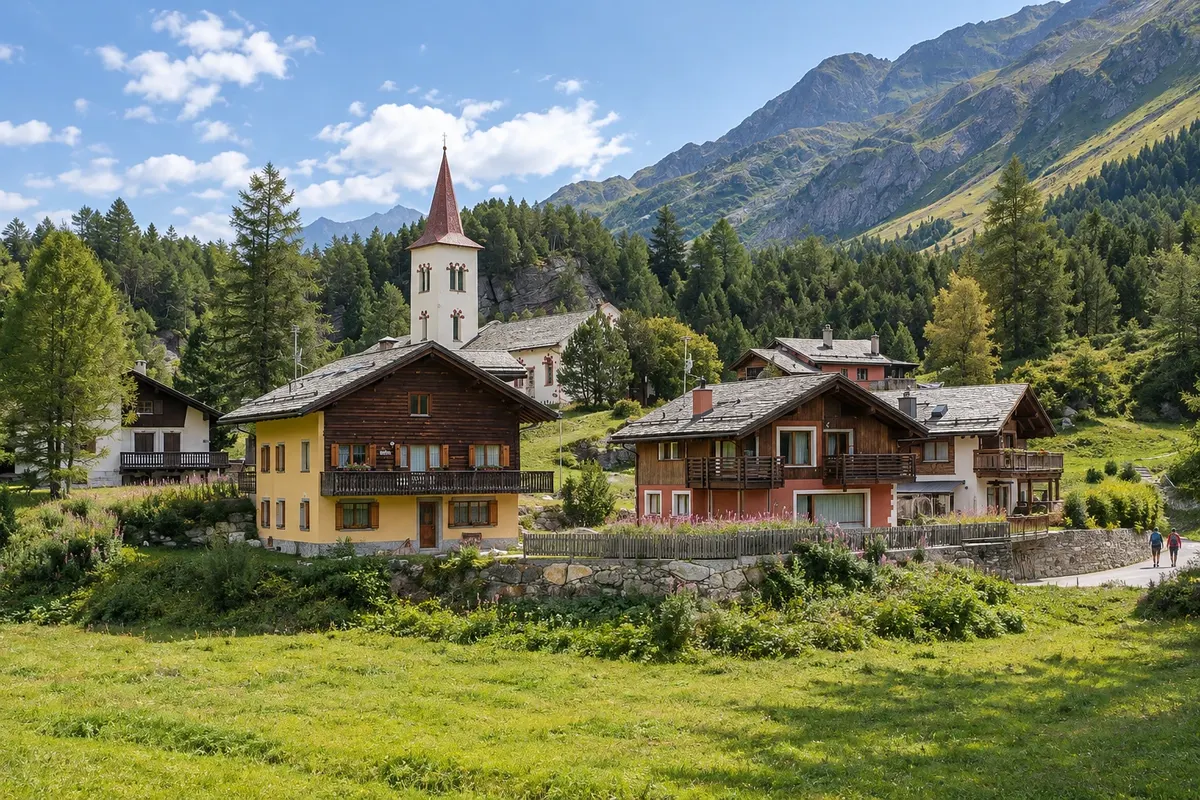
Illustrative images. The pictures in this guide are illustrations based on the real place, not photographs, and may differ from it.

Na voljo v trgovini Google Play Pošljite svoje fotografije

Spoznajte kraj

Pokrajina, ki jo doživite
v svojem ritmu.

The Engadina is the high valley of the Inn River, in southeastern Switzerland, in the canton of Grisões. In the upper part, the Upper Engadine, a chain of lakes runs from Maloja to St. Moritz, between mountains that exceed 3,000 m. To the south lies the Bernina massif, with glaciers such as Morteratsch, visible up close from Pontresina and from the summit of Diavolezza.

St. Moritz sits at 1,822 m, above the lake that bears the city's name. Its mineral springs were known already in the Bronze Age, and winter tourism grew in the 19th century. The town hosted the Winter Olympic Games in 1928 and 1948, and the natural-ice bobsled run to Celerina is rebuilt each winter. On the frozen lake, the horse races of the White Turf usually take place in February.

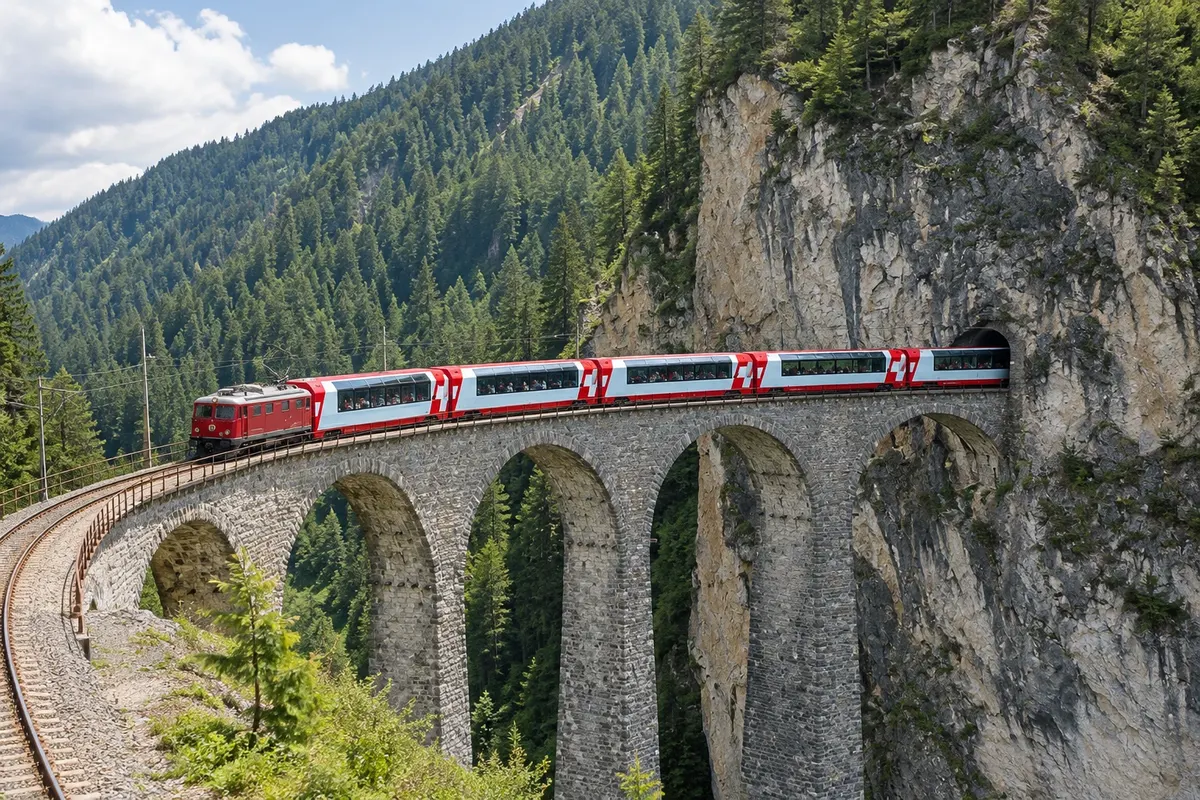
The tracks of the Rhätische Bahn are part of the journey. The Albula line climbs from Thusis through spiral tunnels and crosses the Landwasser viaduct; the Bernina line passes the Ospizio Bernina, at 2,253 m, and descends to Tirano, in Italy. Both lines and the surrounding landscape were inscribed as a UNESCO World Heritage Site in 2008. The Bernina Express and the Glacier Express run on them, linking St. Moritz to Zermatt.

In the Engadina people speak German, with the Swiss German dialect, and Romansh, the valley's language, present in place names: St. Moritz is San Murezzan, Pontresina is Puntraschigna and Sils is Segl. Grisões has three official languages, and Italian is the language of Maloja and the Val Poschiavo, through which the Bernina Express descends. English is widely used in tourism. The currency is the Swiss franc, and Switzerland does not use the euro.

This destination brings together 2 cities: St. Moritz, Chur.

Delite: WhatsApp
Delite svoja popotniška doživetja s fotografijami Pošljite fotografije vsakega kraja, ki ste ga obiskali. Največje število fotografij na kraj: 5.

Ena destinacija, več poti

Mesta na tej poti

Začnite v enem mestu ali v načrt poti vključite več mest.

St. Moritz and the Engadine – lega
ChurSt. Moritz

Obrisi: ©swisstopo. Priredba: Cidade Turismo.

Kako do tja:St. Moritz and the Engadine

✈ Aeroporto de Zurique (ZRH), kraj: Zurique· 200 km do cilja (St. Moritz)

The most used airport is Zurich (ZRH). From Zurich, the train reaches Chur in about 1 h 15 min; there you change to the Rhätische Bahn, which climbs to St. Moritz in about 2 h. Confirm before buying.

Predlagana točka prihoda:St. Moritz

Doživite kraj

Kaj početi – St. Moritz and the Engadine

Cathedral of Chur (Kathedrale St. Mariä Himmelfahrt)
Chur · Graubünden · Cerkev

Cathedral of Chur (Kathedrale St. Mariä Himmelfahrt)

The cathedral of Chur, consecrated in 1272, stands on a rocky terrace above the old town, with a large carved Gothic high altar and the bishop’s palace opposite.

St. Moritzersee (Lake St. Moritz)
St. Moritz · Graubünden · Jezero

St. Moritzersee (Lake St. Moritz)

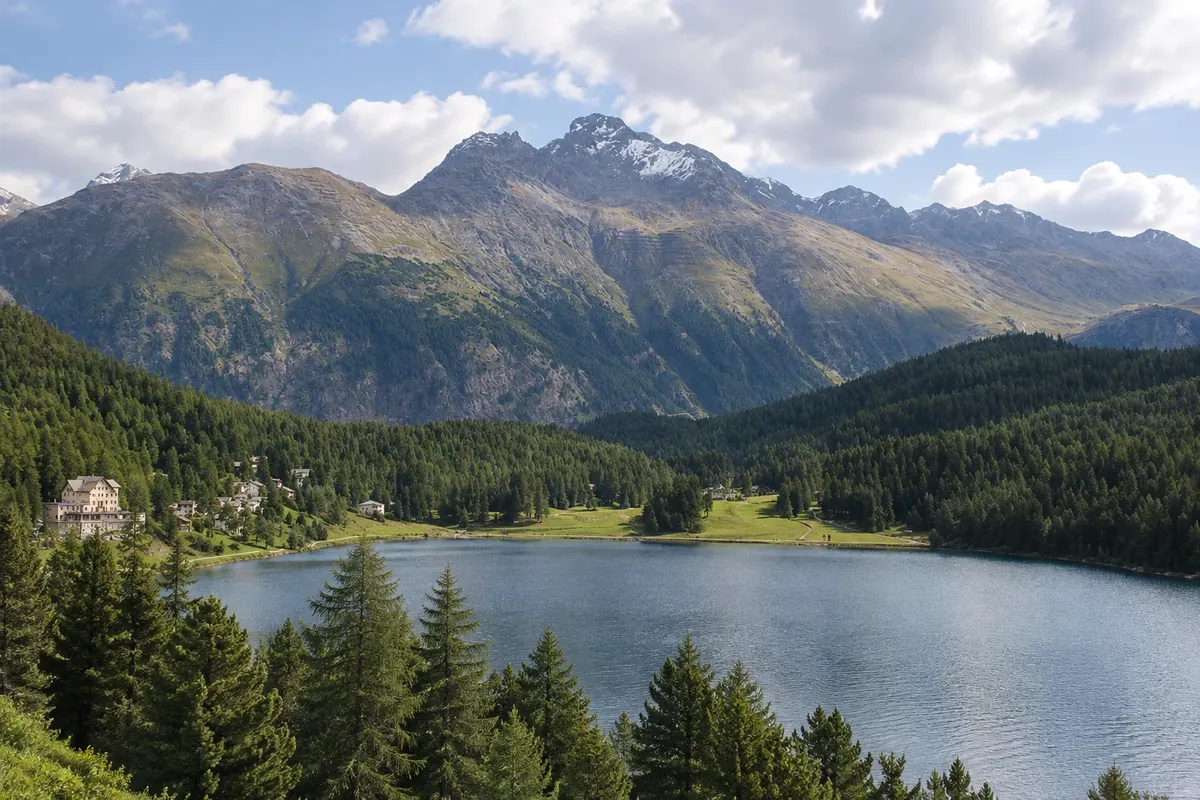
A lake about 1.6 km long, at 1,768 m, between St. Moritz Dorf and St. Moritz Bad, with a path around it. Frozen in winter, it hosts the White Turf horse races and snow polo.

Martinskirche (St. Martin Church)
Chur · Graubünden · Cerkev

Martinskirche (St. Martin Church)

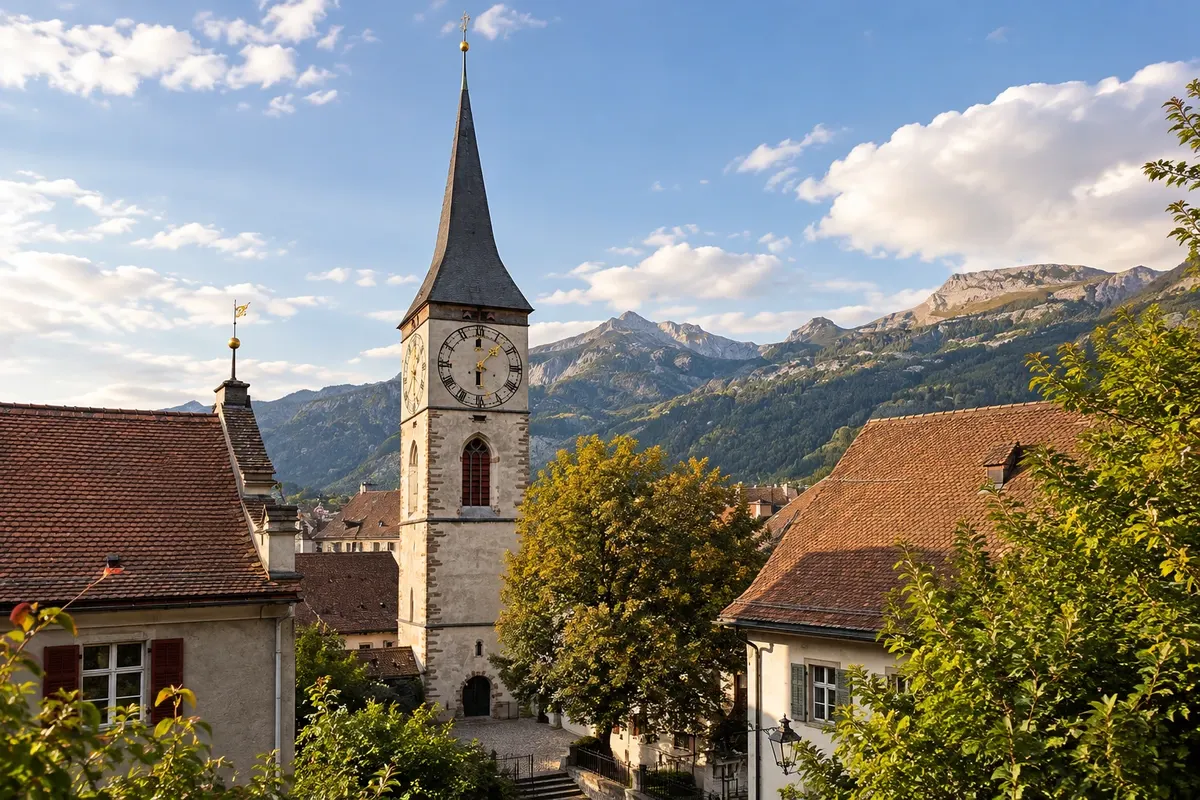
Gothic church of São Martinho, a symbol of Chur's old town, with its pointed tower and the three stained-glass windows by Augusto Giacometti in the choir.

Schiefer Turm
St. Moritz · Graubünden · Monument

Schiefer Turm

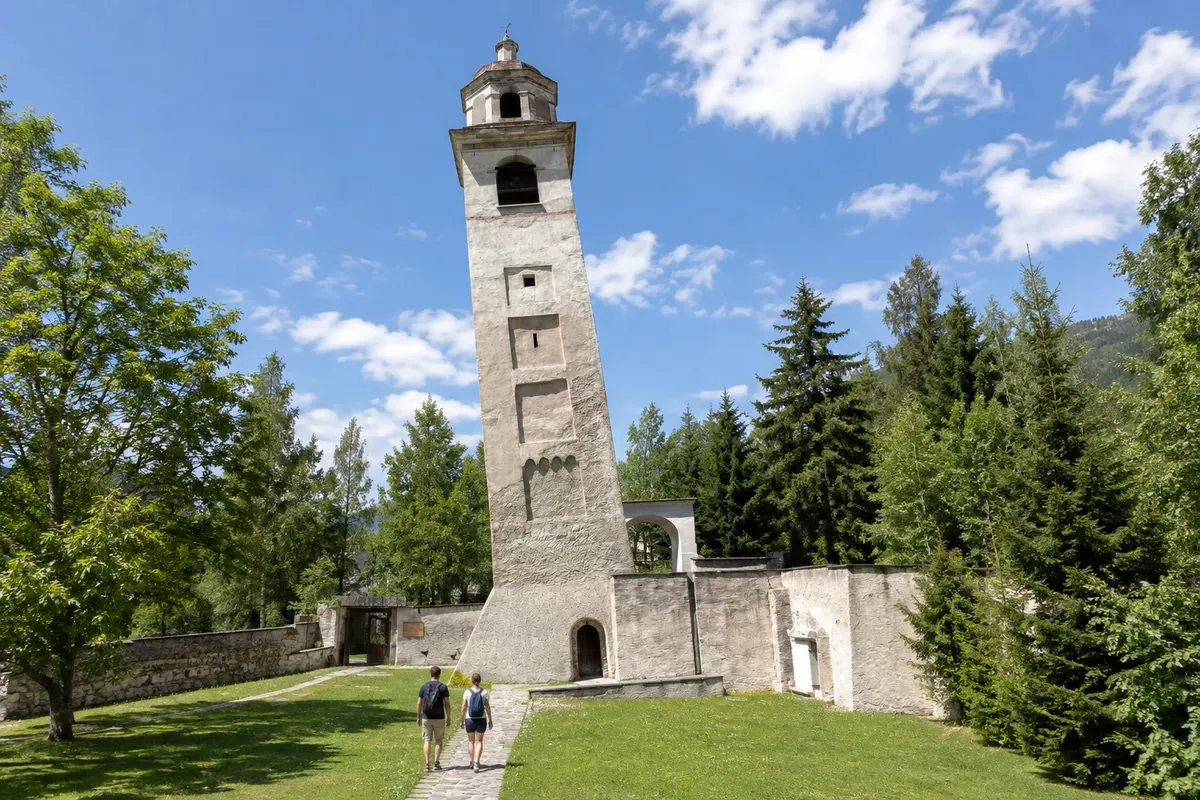
A 33 m tower, with a tilt of about 5.5 degrees, remaining from the old church of St. Maurice, atop St. Moritz Dorf.

St. Moritz and the Engadine – prikaži dodatne kraje (21)
Altstadt Chur (Old Town of Chur)
Chur · Graubünden · Staro mestno jedro

Altstadt Chur (Old Town of Chur)

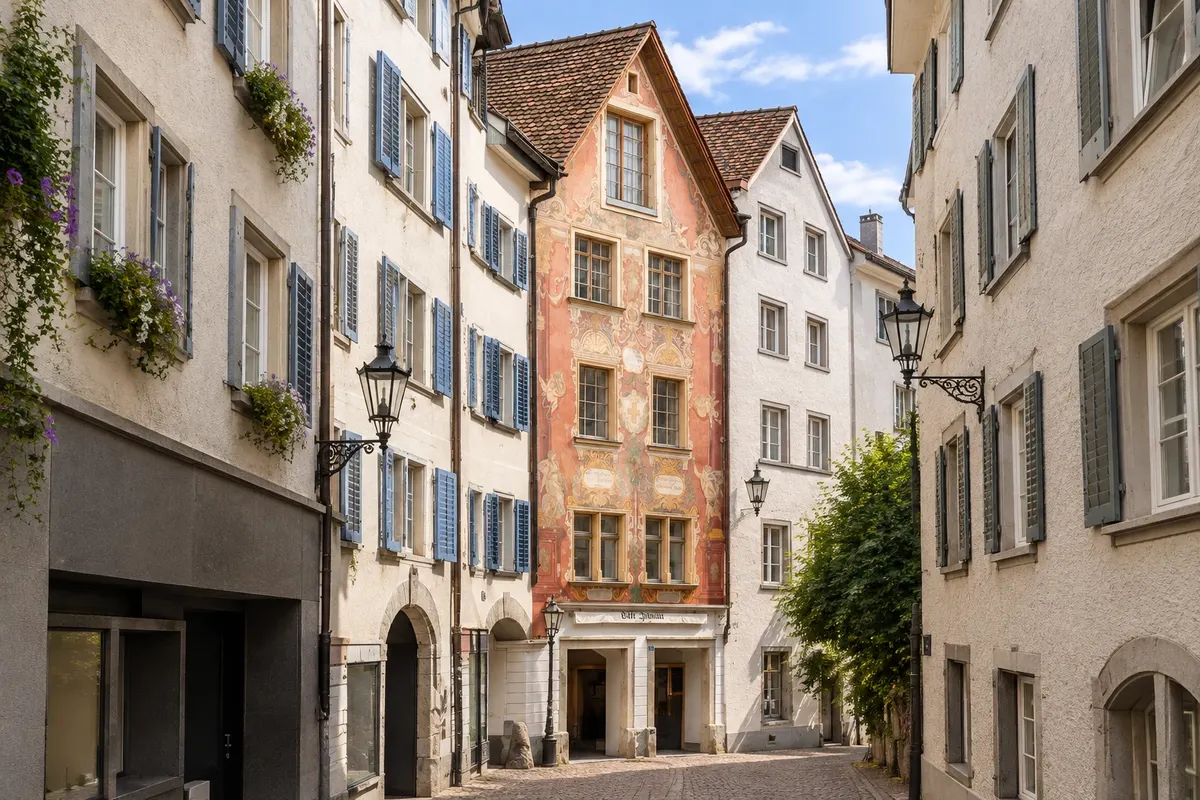
Chur's old town, almost entirely pedestrian, with the Arcas plaza, colorful houses above the Plessur river, the Obertor gate, fountains and shopping streets.

Segantini Museum
St. Moritz · Graubünden · Muzej

Segantini Museum

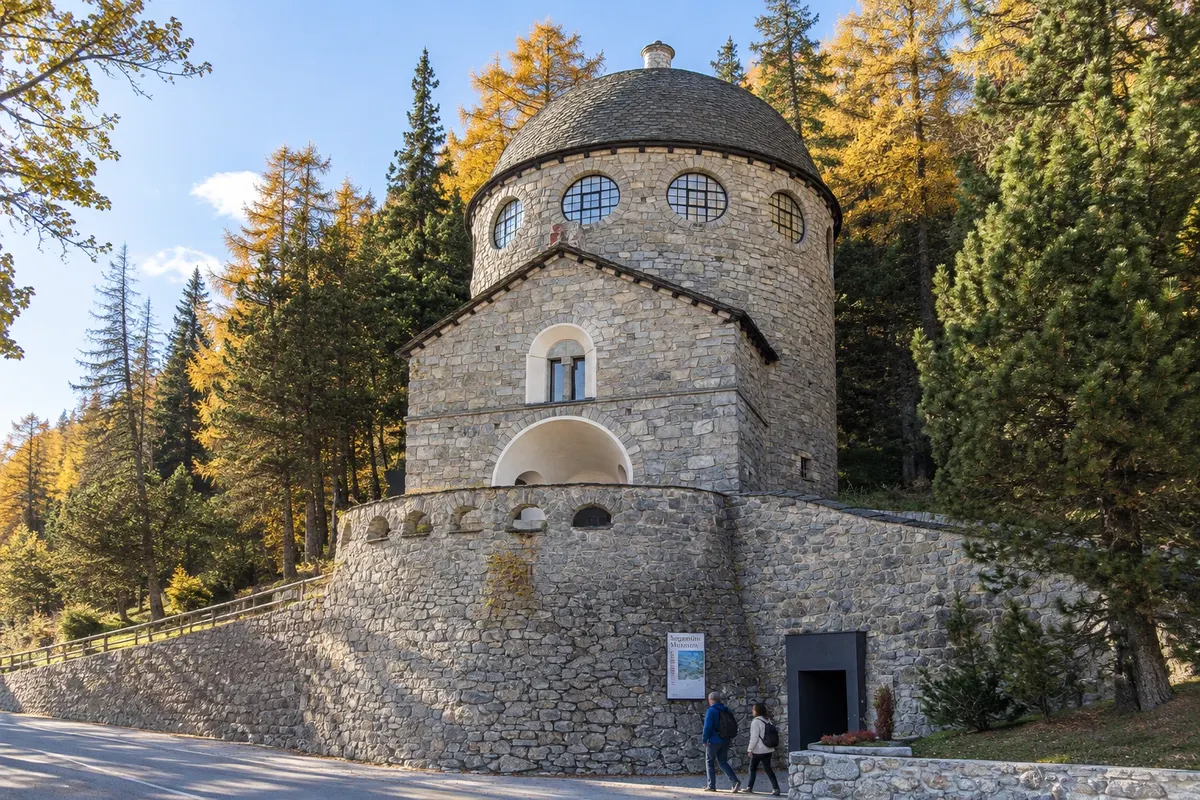
Museum opened in 1908 in memory of the painter Giovanni Segantini, in a stone building with a dome, where the triptych of the Alps, Werden – Sein – Vergehen, is displayed.

Museum Engiadinais
St. Moritz · Graubünden · Muzej

Museum Engiadinais

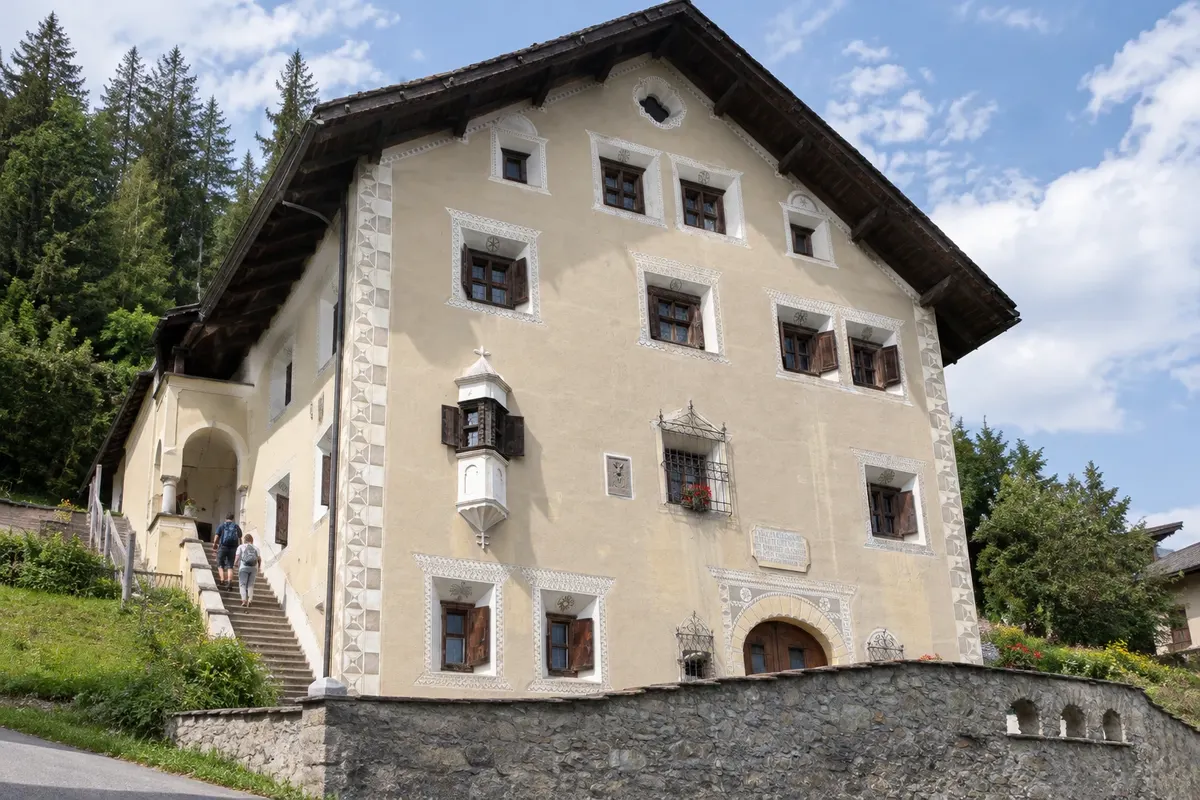
Museum of house and life in the Engadina, in a 1906 building inspired by the valley's typical house, with interiors spanning five centuries and an exhibition about Romansh.

Chur · Graubünden · Muzej

Rätisches Museum (Rhaetian Museum)

History museum of Grisões in a Baroque house from 1675, with objects from prehistory, the Romans, the Middle Ages and mountain life.

Bündner Kunstmuseum (Grisons Art Museum)
Chur · Graubünden · Muzej

Bündner Kunstmuseum (Grisons Art Museum)

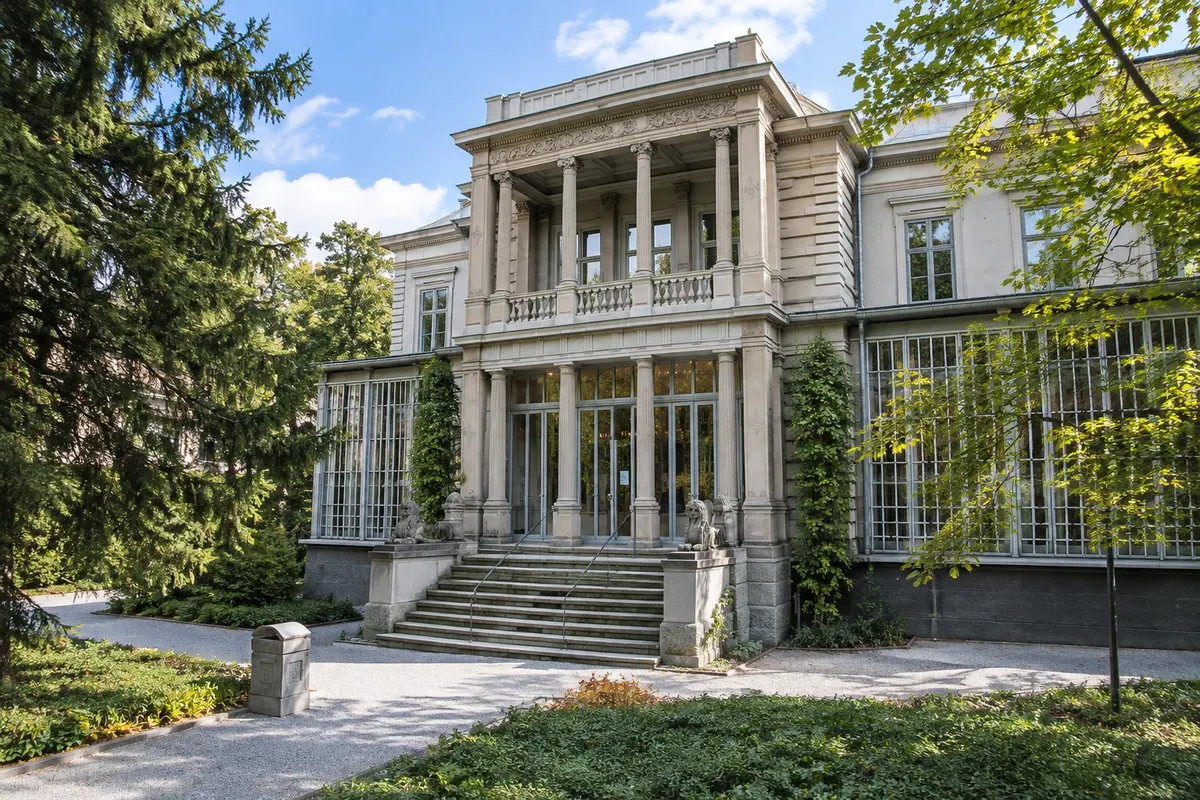
The art museum of Grisões, in the Villa Planta and in a new building from 2016, with works by Giovanni, Augusto and Alberto Giacometti, Giovanni Segantini and Angelika Kauffmann.

Mili Weber Museum
St. Moritz · Graubünden · Muzej

Mili Weber Museum

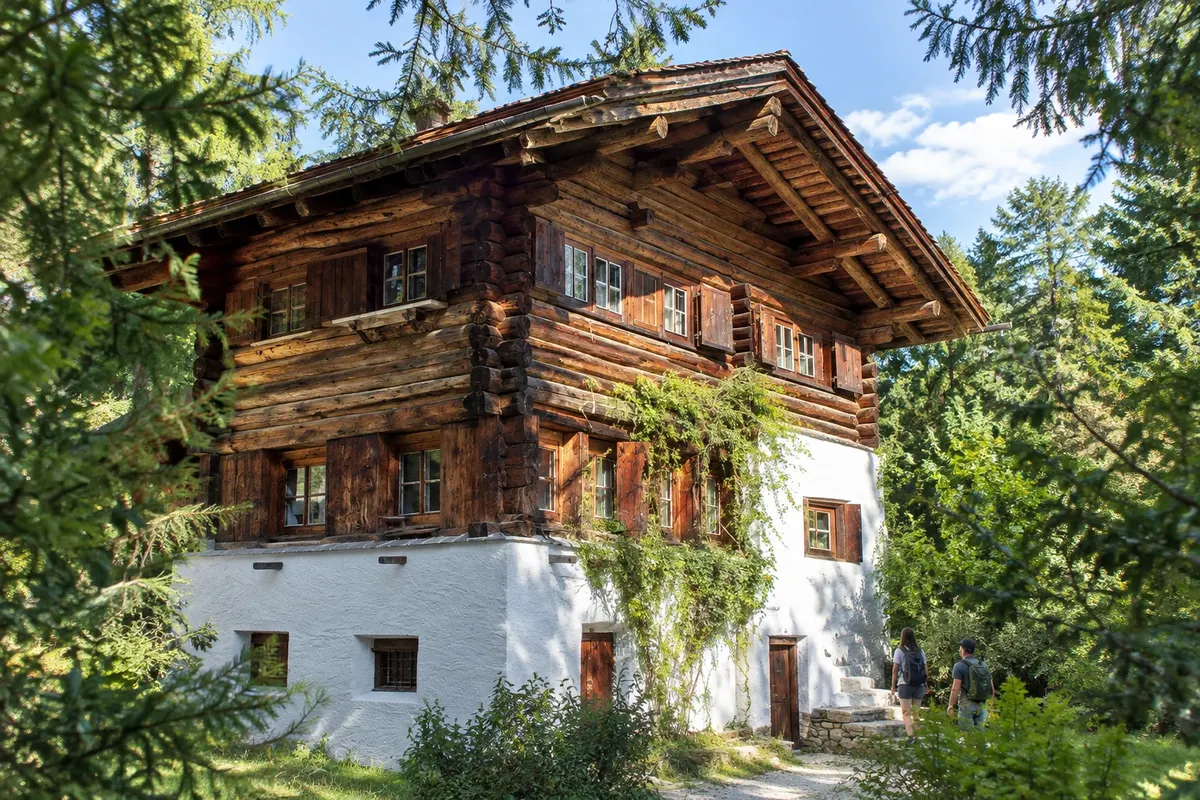
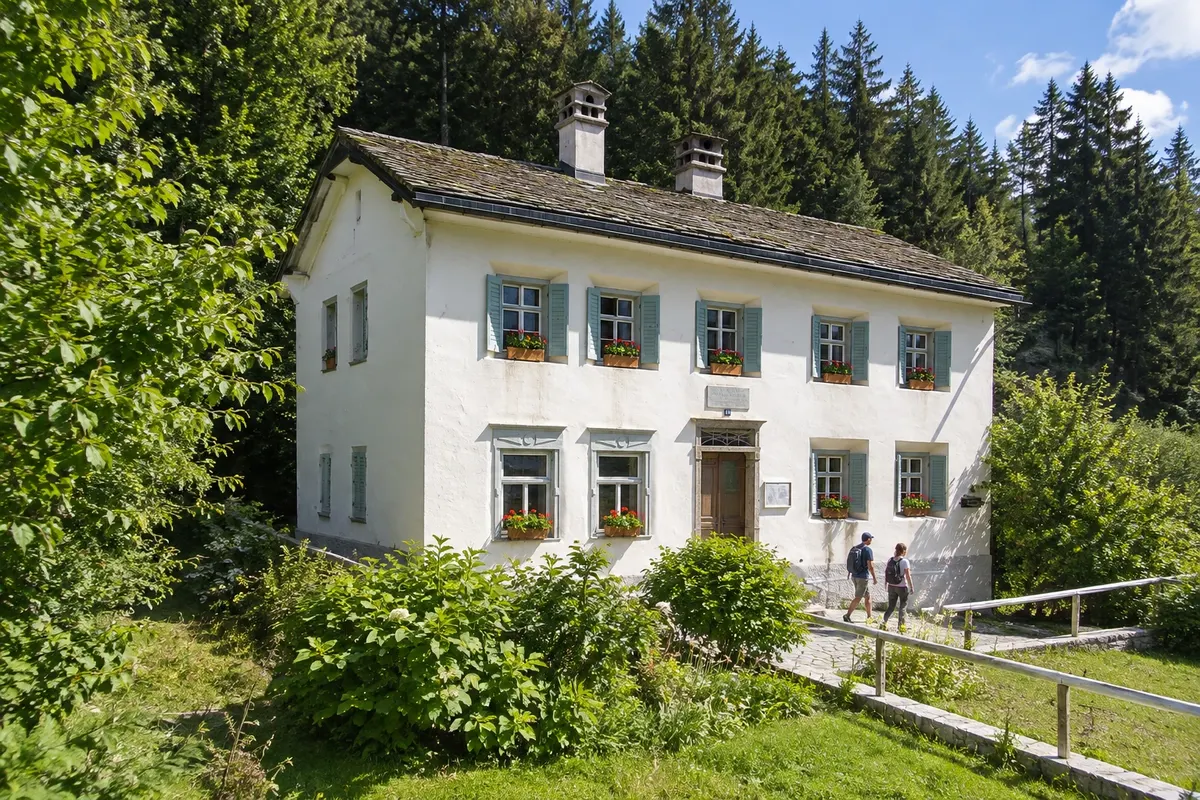
House of the painter Mili Weber (1891–1978), on the edge of the forest above St. Moritz lake, with walls, ceilings and furniture painted by her. Visits only with a guide and by appointment.

Brambrüesch
Chur · Graubünden · Gora

Brambrüesch

Hiking and skiing area on the slope of Dreibündenstein, reached by a cable car directly from central Chur, at about 1,600 meters altitude.

Olympia Bob Run St. Moritz–Celerina
St. Moritz · Graubünden · Sport

Olympia Bob Run St. Moritz–Celerina

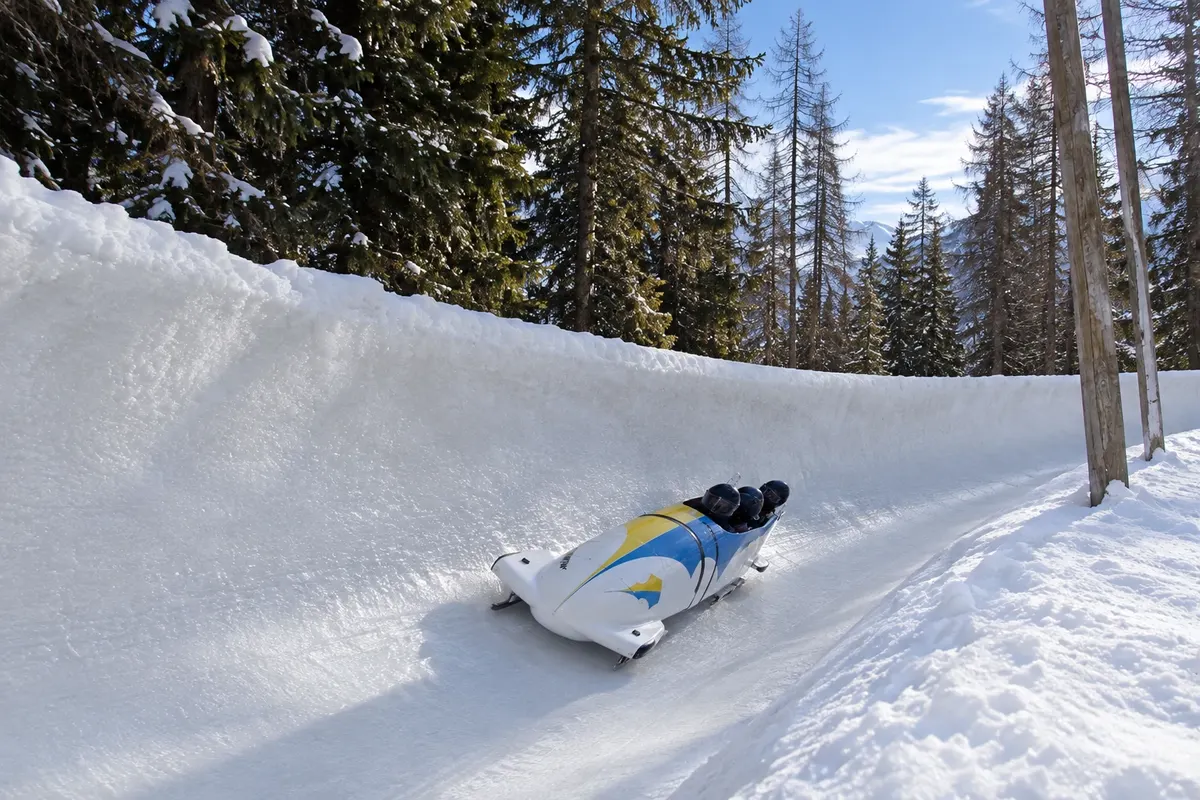
Natural-ice bobsleigh track of 1,722 m between St. Moritz and Celerina, rebuilt each winter. It hosted the Olympic events in 1928 and 1948 and offers rides with a pilot.

Piz Nair
St. Moritz · Graubünden · Gora

Piz Nair

Mountain above St. Moritz, with the top station of the cable car at 3.057 m and views over the Engadina valley. You take a funicular up to Corviglia and from there a cable car.

Ruinaulta (Rheinschlucht)
Chur · Graubünden · Narava

Ruinaulta (Rheinschlucht)

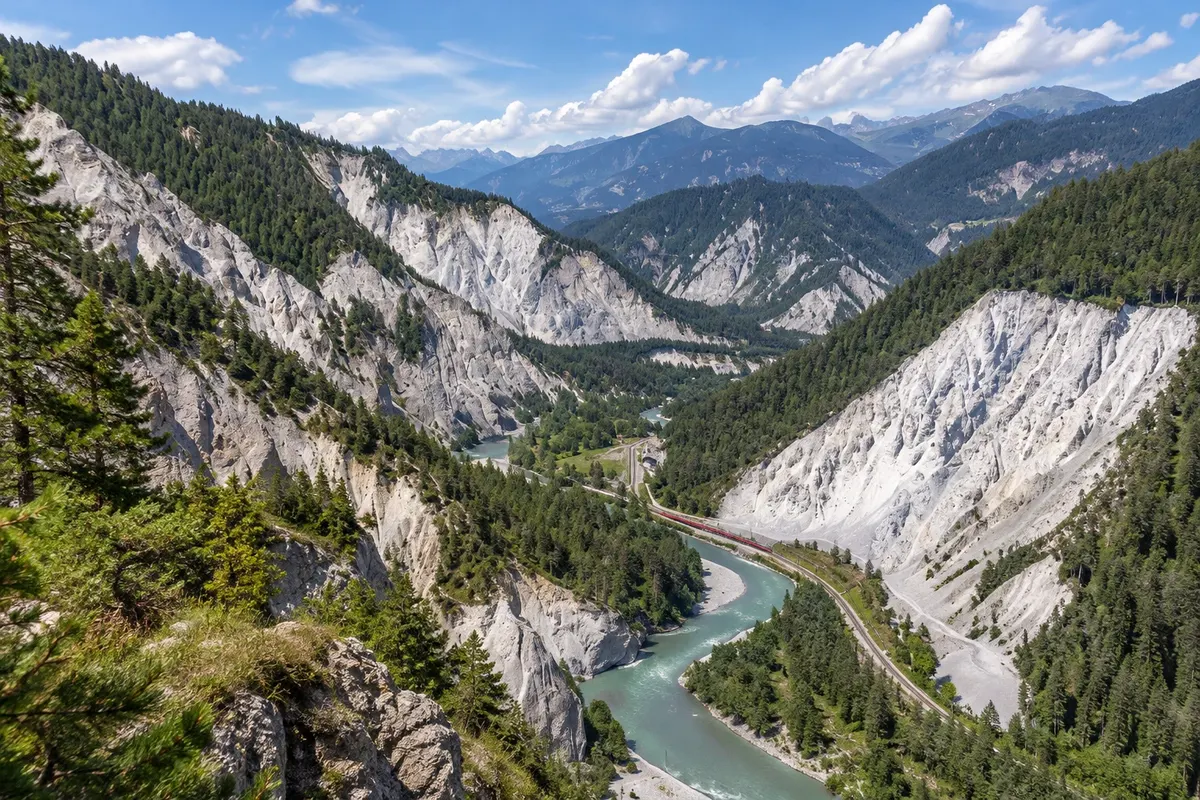
The Rhine gorge between Flims and Ilanz, with white cliffs formed by an ancient landslide, viewed from the Il Spir viewpoint and traversed by the Ferrovia Rética.

Muottas Muragl
St. Moritz · Graubünden · Razgledišče

Muottas Muragl

Lookout at 2.456 m above the Upper Engadine valley, between Samedan and Pontresina, with a funicular opened in 1907, and a hotel and restaurant at the top.

Corvatsch
St. Moritz · Graubünden · Gora

Corvatsch

Mountain above Silvaplana, with a cable car departing from Surlej and reaching 3.303 m, offering views of the Bernina massif and the lakes of the Upper Engadine.

Diavolezza
St. Moritz · Graubünden · Gora

Diavolezza

Mountain pass in the Bernina massif, with a cable car up to 2,978 m and views of Piz Bernina, Piz Palü and the Pers and Morteratsch glaciers. Open year-round.

Morteratsch Glacier
St. Moritz · Graubünden · Glacier

Morteratsch Glacier

Glacier of the Bernina massif that descends toward Pontresina, with an easy 2.9 km trail from Morteratsch station and information points explaining the retreat of the ice.

Pontresina
St. Moritz · Graubünden · Village

Pontresina

Village at 1,805 m, about 7 km from St. Moritz, at the entrance to Val Bernina, with a Bernina Express station and access to Diavolezza, Morteratsch and Val Roseg.

Sils/Segl (Sils Maria)
St. Moritz · Graubünden · Village

Sils/Segl (Sils Maria)

Village at 1,809 m between the Silsersee and Lake Silvaplana, with the Chastè peninsula, the Nietzsche-Haus and the entrance to Val Fex, a car-free valley.

Nietzsche-Haus
St. Moritz · Graubünden · Muzej

Nietzsche-Haus

House in Sils Maria where Friedrich Nietzsche spent summers from 1881 to 1888; a museum with the philosopher's room, manuscripts, letters and published works.

Maloja
St. Moritz · Graubünden · Village

Maloja

Village at the Maloja Pass, at 1,815 m, on the southwest tip of the Silsersee, Italian-speaking. The painter Giovanni Segantini lived there, and a trail leads to the Gletschermühlen.

Bernina Express
St. Moritz · Graubünden · Scenic train

Bernina Express

Panoramic train from Chur or St. Moritz to Tirano in Italy, on the Bernina line, a UNESCO World Heritage site, with 55 tunnels, 196 bridges and its highest point at the Ospizio Bernina at 2,253 m.

Glacier Express
St. Moritz · Graubünden · Scenic train

Glacier Express

Panoramic train between St. Moritz and Zermatt, in about 8 hours, over 291 bridges and 91 tunnels, passing the Landwasser viaduct, the Rhine Gorge and the Oberalp Pass at 2,033 m.

Bahnmuseum Albula
St. Moritz · Graubünden · Muzej

Bahnmuseum Albula

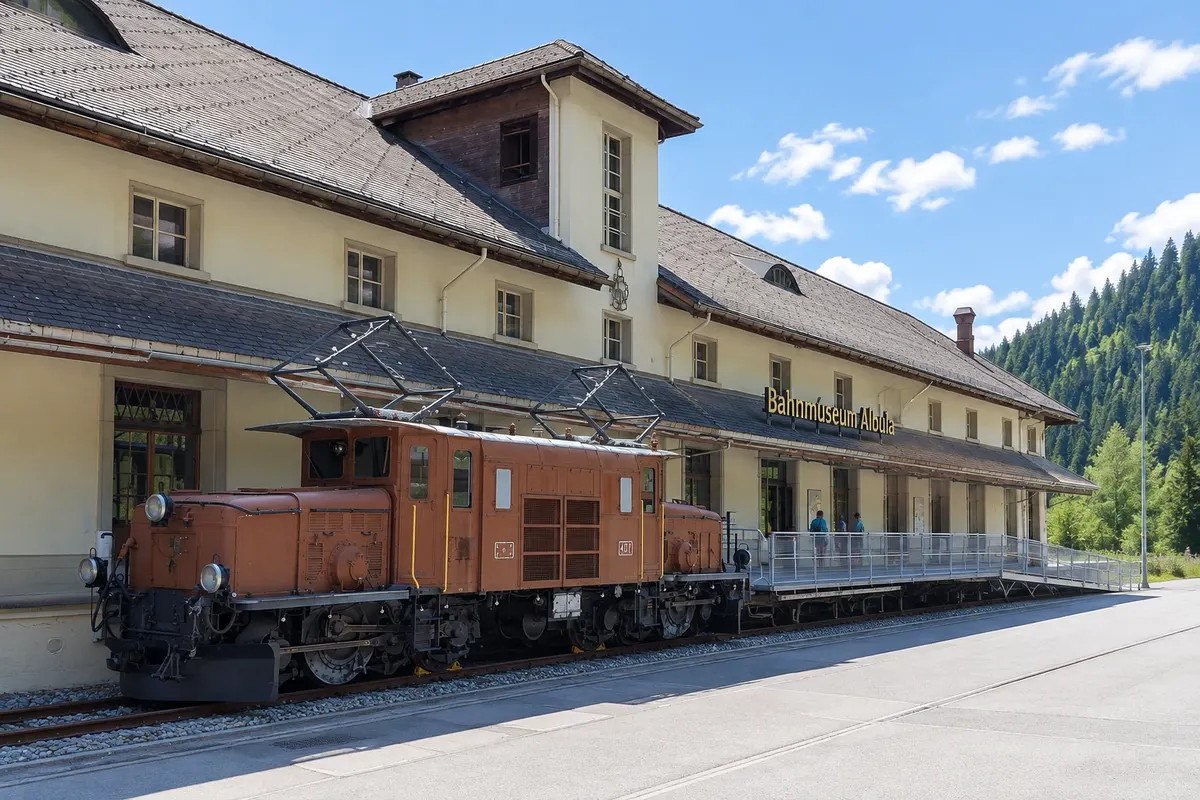
Train museum in Bergün, in front of the station, on the Albula line and the Rhätische Bahn, with a model, a virtual cab ride and a Krokodil locomotive.

Kaj izbrati pred odhodom

Izleti – St. Moritz and the Engadine

Izhodišče, trajanje, potek, vključene storitve in okvirna cena vsakega izleta.

Loop around St. Moritz lake and St. Moritz Dorf center, including the Schiefer Turm

Odhod: St. Moritz train station (Bahnhof) On foot, along the flat trail that skirts the lake about 2 to 3 hours, including the town center Dopoldne ali popoldne easy (flat trail, at 1,768 m)

St. Moritz (San Murezzan in Romansh) sits at about 1,800 m altitude in Upper Engadin, in the canton of Graubünden (Grischun). The town has two parts: St. Moritz Dorf, the upper part with shops and pedestrian streets, and St. Moritz Bad, by the lake. The St. Moritzersee (St. Moritz lake) is at 1,768 m and about 1.6 km long. The loop around the lake is 4.3 km and takes about one hour of walking: it leaves the station, passes the Meierei, the Catholic church of St. Moritz Bad and the sailing club, and returns to the station. The route is almost entirely flat, partly asphalt, partly dirt. From the lake you can walk up to St. Moritz Dorf. There is the Schiefer Turm, the leaning tower that is the town’s symbol: it is the 33 m bell tower of the old Church of St. Maurice, whose nave was demolished in 1893. The tower leans about 5.5 degrees because the slope is shifting, and it has undergone several stabilization works. If you want to extend the walk you can go from the Meierei to the Lej da Staz, a small lake in the middle of the forest, and continue to Celerina or Pontresina (4.6 km, about 1 hour 15 minutes), returning by train.

Kraji na poti: St. Moritzersee, St. Moritz Dorf, St. Moritz Bad, Schiefer Turm, Meierei, Lej da Staz.

Vključuje: Self-guided walk; the lake trail and the exterior visit to the Schiefer Turm are free. Return by train from Celerina or Pontresina is paid separately.

Nasvet: The lake has no protective railing: with children, keep a distance from the shore. In winter the lake usually freezes and the path becomes a snow trail; walk on the ice only in areas that are open and signed.

Najboljši čas za obisk: From late May to October for the dirt trail; in winter, with the lake frozen, from January to March.

Muottas Muragl: 1907 funicular, lakes viewpoint and Philosophenweg

Odhod: Punt Muragl valley station, near Samedan and Celerina Train or bus to Punt Muragl and funicular to the top about 3 to 5 hours Dopoldne ali popoldne easy (top at 2,456 m)

The Muottas Muragl funicular has been operating since 1907 and climbs in about 10 minutes from the Punt Muragl valley station to 2,456 m, with departures every half hour. From the terrace you can see the entire Upper Engadin valley, with the line of lakes (St. Moritz, Champfèr, Silvaplana and Sils) up to Maloja. At the top there are waymarked trails for all levels. The Philosophenweg (path of the philosophers) is easy: about 1 hour 30 minutes, with signs showing philosophers’ thoughts along the route. The Panoramaweg goes to Alp Languard, above Pontresina, in about 2 hours (6.8 km, more descent than ascent), with views of the Bernina massif. The trail to the Chamanna Segantini, the hut where painter Giovanni Segantini died in 1899, is of medium difficulty (about 2 hours 30 minutes). Another medium route leads to Lej Muragl, a mountain lake where marmots are often seen. In winter the highlight is the 4 km toboggan run, with 20 bends and 718 m of elevation loss down to Punt Muragl. The funicular also runs at night in season, for those who want to watch the sunset and dine at the panoramic restaurant.

Kraji na poti: Muottas Muragl, Punt Muragl, Philosophenweg, Alp Languard, Chamanna Segantini, Lej Muragl.

Vključuje: Funicular ticket, paid separately (check current rates). Restaurant and snack bar at the top, paid separately. Toboggans can be rented in winter, also paid separately.

Nasvet: Reach Punt Muragl by train or bus from St. Moritz or Samedan; there is parking at the valley station. Bring a warm layer: it is much colder at the top than in St. Moritz. For sunset, check the time of the last descent.

Najboljši čas za obisk: Summer: usually runs from early June to late October. Winter: usually from late December to early April. Confirm dates.

Bernina Express from St. Moritz to Tirano (Italy), via the Bernina pass

Odhod: St. Moritz train station Bernina Express panoramic train (RhB), reservation required about 2 hours 15 minutes per direction full day (round trip) easy (highest point at 2,253 m)

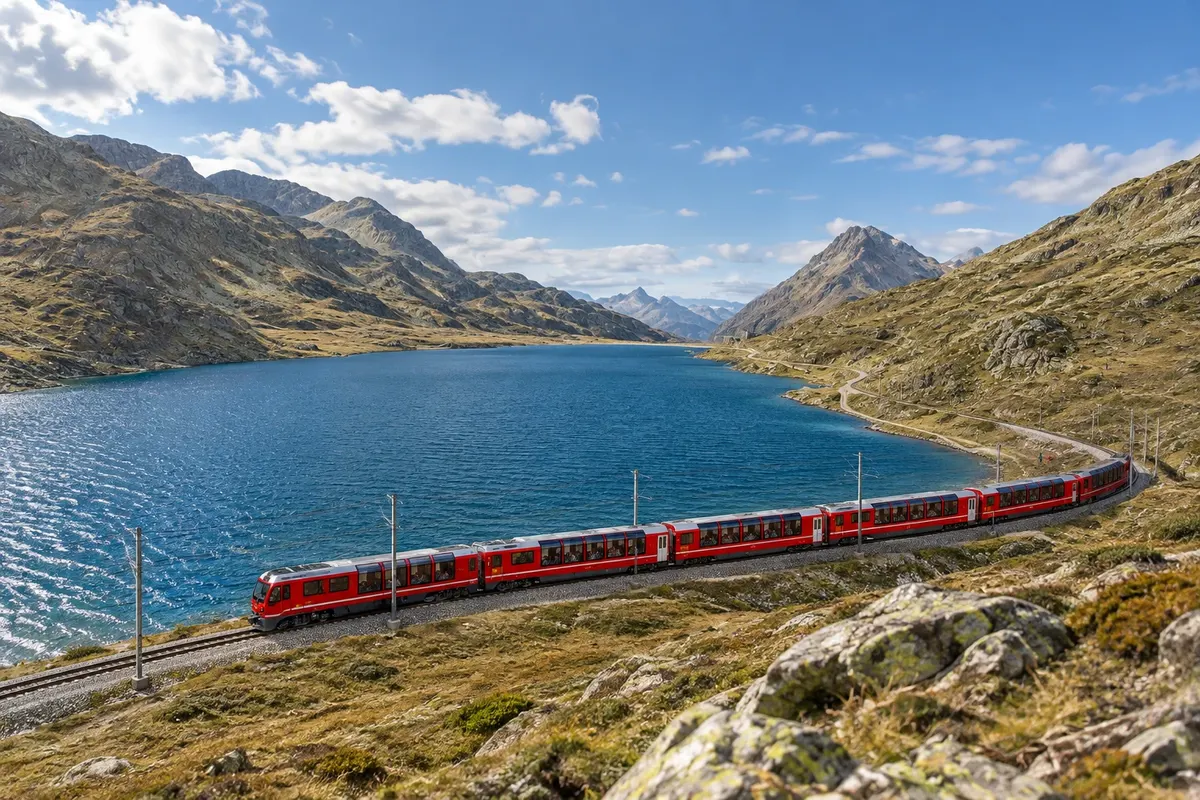
The Bernina line, operated by the Rhätische Bahn (RhB, the Rhaetian Railway), links St. Moritz with Tirano in Italy, and together with the Albula line has been a UNESCO World Heritage site since 2008. The Bernina Express covers the section in about 2 hours 15 minutes, in panoramic cars with windows reaching up to the roof. The train passes Pontresina and Bernina Diavolezza station, climbs to Ospizio Bernina at 2,253 m—the RhB’s highest point—on the shore of Lago Bianco, then begins the descent via Alp Grüm (2,091 m), with views of the Palü glacier and the Valposchiavo below. After Poschiavo and Lago di Le Prese, the train crosses the Brusio circular viaduct, a full 360-degree loop to lose altitude, and arrives in Tirano, an Italian town in the Valtellina. The line handles gradients up to 7%. Tirano is in another country, Italy, but within the Schengen area: there is no fixed border control, though carry your passport. You can return the same day on the Bernina Express or on regional trains on the same line, which run the same route in ordinary cars. There is also a Bernina Express bus between Tirano and Lugano in Ticino for onward travel.

Kraji na poti: Pontresina, Bernina Diavolezza, Ospizio Bernina, Lago Bianco, Alp Grüm, Poschiavo, Viadukt von Brusio, Tirano.

Vključuje: Train ticket and seat reservation, mandatory on the Bernina Express and charged separately. On regional trains reservation is optional but recommended. Holders of tourist transport passes only pay the reservation fee. Snacks on board are paid separately.

Nasvet: Book early for weekends and holidays. RhB notes that from Friday to Sunday mornings are usually busier northbound and afternoons busier southbound.

Najboljši čas za obisk: Year-round, with summer and winter timetables. Long summer days help for round trips; in winter the landscape is snow-covered.

Diavolezza: cable car, view of Piz Bernina and Glacier Experience Trail

Odhod: Bernina Diavolezza station (train on the Bernina line) Regional train to Bernina Diavolezza and cable car about 3 to 4 hours Dopoldne ali popoldne easy (high point at 2,978 m)

The valley station is next to Bernina Diavolezza train station (2,096 m) on the Bernina line, a few minutes from Pontresina. The cable car climbs about 880 m in roughly 7 minutes to Diavolezza at 2,978 m. From there, Piz Bernina (4,049 m), the only peak above 4,000 m in the Eastern Alps, and Piz Palü stand directly opposite, with the Pers and Morteratsch glaciers just below. The Glacier Experience Trail is a circular walk of about 2 hours with five stations that explain how glaciers are changing; the brochure is distributed at the valley station or at the start of the trail, to the left of the viewpoint. The valley station houses an interactive exhibition about glacier melt. For experienced climbers, there are two via ferratas to Piz Trovat from June to October. The Berghaus Diavolezza, on the summit, has a restaurant serving Valtellina dishes such as pizzoccheri. In winter, Diavolezza becomes a ski area; the glacier run descends 8 km to Morteratsch, for skiers only.

Kraji na poti: Diavolezza, Piz Bernina, Piz Palü, Persgletscher, Morteratschgletscher, Piz Trovat, Bernina Diavolezza.

Vključuje: Cable car ticket, paid separately (check the current fare). The trail with brochure is not charged separately. Via ferratas require personal or rented equipment.

Nasvet: It is cold and windy at the top even in summer: bring a jacket, sunglasses and sunscreen. Do not leave marked trails or step onto glacier ice without a guide.

Najboljši čas za obisk: The cable car operates almost year-round; it usually closes between mid-November and mid-December. For the trail, open from June to October.

Trail to the front of the Morteratsch glacier

Odhod: Morteratsch train station, on the Bernina line Regional train from St. Moritz to Morteratsch and hike about 2 to 3 hours, round trip Dopoldne ali popoldne Lahko

The regional train takes 25 to 30 minutes from St. Moritz to the small Morteratsch station on the Bernina line. From there a wide, easy trail leads up the valley to the tongue of the Morteratsch glacier: about 2.5 km and roughly 50 minutes of walking. Along the way, 16 informational points show how far the ice reached in past years and explain the life returning to the land left by the glacier. The difference is visible: the path crosses the area the glacier occupied about 140 years ago. At the end you can see the ice front, the meltwater stream and the moraines. Return is along the same route. The trail can also be done by bicycle and, in winter, by cross-country skiing or on foot in the snow, depending on conditions.

Kraji na poti: Morteratschgletscher, Morteratsch, Pontresina, Val Morteratsch.

Vključuje: Self-guided walk, no ticket. The train to Morteratsch is paid separately.

Nasvet: Do not approach the glacier front or enter ice caves: blocks can break away. Combine with Diavolezza on the same day: Bernina Diavolezza station is the next one on the line.

Najboljši čas za obisk: From June to October, no snow on the trail; in winter the trail is usually used as a snow path.

Corvatsch: two cableways up to 3,303 m and trails around the Fuorcla Surlej

Odhod: Surlej valley station, near Silvaplana Bus from St. Moritz to Surlej and two cableways about 3 to 4 hours round trip from St. Moritz Dopoldne ali popoldne easy (high point at 3,303 m)

From St. Moritz, the bus takes about 20–30 minutes to the Corvatsch valley station in Surlej (approx. 1,870 m), on the shore of Lake Silvaplana. Two cable cars climb: first to Murtèl (approx. 2,700 m) and then to the upper station at 3,303 m, the highest in the canton of Graubünden; the full ascent takes just over 15 minutes. From the terrace, the 360-degree view includes the Upper Engadine lakes below and the Bernina massif, with Piz Bernina (4,049 m) as the highest visible peak. In summer, hikers can descend to Murtèl and continue to the Fuorcla Surlej, a pass with views of the Bernina mountains; from there you can continue to Val Roseg and Pontresina. There is also the water trail, with six small lakes (lejins, in Romansh). In winter, Corvatsch is one of the main ski areas in the region, with the Hahnensee run down to St. Moritz and, on Fridays, Snow Night — night skiing on an illuminated slope from Murtèl to Surlej.

Kraji na poti: Corvatsch, Surlej, Murtèl, Fuorcla Surlej, Silvaplanersee, Silsersee, Val Roseg.

Vključuje: Cableway and bus tickets paid separately (check current price list). Restaurants in Murtèl and at the summit are paid separately.

Nasvet: It can be very windy at 3,303 m: bring a windproof jacket and a hat, even in July. Go up early when the sky is usually clearer. Check the webcam before buying your ticket.

Najboljši čas za obisk: Summer: typically from late June to mid-October. Winter: from late November to late April. Outside these periods it is usually closed for maintenance.

Prikaži dodatne izlete (12)

Piz Nair: Corviglia funicular and cable car up to 3,056 m

Odhod: Funicular station at St. Moritz Dorf Funicular to Corviglia and cable car to Piz Nair about 2 to 4 hours Dopoldne ali popoldne easy (high at 3,056 m)

Piz Nair is St. Moritz's mountain. The funicular departs from central St. Moritz Dorf, stops at the intermediate station Chantarella and reaches Corviglia (2,489 m) in about 7 minutes. Opened in 1928, it was the first funicular in Switzerland to go directly to a ski area. From Corviglia, a cable car climbs about 5 more minutes to the summit of Piz Nair at 3,056 m. From the top you can see the Engadine lakes and the Albula Alps. In summer, Corviglia is a starting point for hiking trails and mountain bike routes, and the Signal cable car, departing from St. Moritz Bad, is another way up the mountain. In winter, Corviglia is St. Moritz's main ski area. There is also a sunrise program on Piz Nair, with an ascent before dawn and breakfast at the summit restaurant, with limited places and advance reservation.

Kraji na poti: Piz Nair, Corviglia, Chantarella, St. Moritz Dorf, Signal.

Vključuje: Tickets for the funicular and the cable car are paid separately (check the current fares). The sunrise program is charged separately and requires a reservation.

Nasvet: To save time, combine the ascent with a visit to the Segantini Museum, which is in St. Moritz. The cable car does not operate in storms; bring warm clothing.

Najboljši čas za obisk: Summer: usually runs from June to October. Winter: ski season from late November to April. Outside these periods it is often closed for maintenance; confirm.

Segantini Museum and the Triptych of the Alps

Odhod: St. Moritz town centre On foot or bus 605 from the station (3 stops) about 1 to 2 hours Popoldne Lahko

The museum dedicated to Giovanni Segantini, an Alpine painter who spent his final years in the Engadine and died in 1899 in a hut on the Schafberg above Pontresina, is located on Via Somplaz between St. Moritz town centre and the Suvretta area. The building, opened in 1908 and designed by architect Nicolaus Hartmann, is round, built of local stone, with a large dome; it resembles the pavilion Segantini planned for the 1900 Paris Exposition. In the dome room on the upper floor is the main work: the Triptych of the Alps, with the panels Werden, Sein and Vergehen (to become, to be and to pass), depicting landscapes of Soglio, the Schafberg and Maloja. The collection also includes the artist’s oil paintings and drawings, and the museum mounts temporary exhibitions in the summer season. It’s a short visit, good for an afternoon or for a cloudy day in the mountains.

Kraji na poti: Segantini Museum, St. Moritz, Via Somplaz.

Vključuje: Separate paid admission (check current rates). Bags and backpacks are stored in lockers at the entrance; strollers are not allowed inside the galleries.

Nasvet: The museum is closed on Mondays and between seasons. Combine it with the Atelier Segantini in Maloja and the trail to Chamanna Segantini on Muottas Muragl to follow the painter’s footsteps.

Najboljši čas za obisk: Open in two seasons: typically from late May to October and from December to April. Confirm the dates.

Sils/Segl, Val Fex and Nietzsche-Haus

Odhod: St. Moritz, by bus to Sils/Segl Maria Bus and walk or horse-drawn carriage Približno 5 ur Ves dan easy to moderate

Sils (Segl, in Romansh) lies between the lakes of Silvaplana and Sils, on the way to Maloja, and is divided into Sils Maria and Sils Baselgia. In Sils Maria, on the main street, a 5-minute walk from the square, is the Nietzsche-Haus, the house where the philosopher Friedrich Nietzsche spent summers in the 1880s and wrote part of his work; the renewed exhibition shows his life and work in the Engadine. From Sils Maria the Val Fex departs, a side valley with restricted car access, between about 1,800 and 2,000 m, which ends at the Fex glacier. The most common trail climbs through a gorge to Platta and continues along the valley beside the access road to the Fex Curtins hotel and Alp Muot Selvas: it is 6.8 km, about 2 hours of walking, with 265 m of ascent. Those who do not want to walk can do the route by horse-drawn carriage (Pferdekutsche), which leaves from Sils Maria and takes about 20 minutes to Fex Platta, 30 to Fex Crasta and 50 to Fex Curtins. You can go up by carriage and return on foot, or vice versa. In winter, the valley is usually covered in snow and the trail becomes a winter route.

Kraji na poti: Sils/Segl Maria, Sils/Segl Baselgia, Silsersee, Val Fex, Fex Platta, Fex Crasta, Fex Curtins, Nietzsche-Haus.

Vključuje: Buses and carriages require separate payment (check fares). Nietzsche-Haus admission is paid separately.

Nasvet: The Nietzsche-Haus is open only in the afternoons, Tuesday through Sunday, during the summer and winter seasons; plan your visit for after the hike. Wear sturdy footwear: the initial climb through the gorge is steep.

Najboljši čas za obisk: From June to October for the hike; the Nietzsche-Haus usually open from June to October and from December to April.

Pontresina and the Val Roseg, on foot or by carriage

Odhod: Pontresina train station Train from St. Moritz to Pontresina and walk or carriage about 4 to 5 hours Ves dan Lahko

Pontresina is the village next to St. Moritz, at the entrance to the Bernina valley, a few minutes by train. From Pontresina station the trail to Val Roseg starts—a side valley that rises gently through larch and pine forests to views of the Roseg and Sella glaciers. The round trip is 13.8 km and about 3 hours 30 minutes of walking, with little elevation change (between 1,774 and 2,001 m). At the valley bottom is the Roseggletscher hotel-restaurant, known for its dessert buffet, where most people stop before returning. For those who prefer not to walk the entire route, horse-drawn carriages go up the valley from Pontresina; you can go up by carriage and return on foot. Above the village is Alp Languard, the endpoint of the Panoramaweg coming from Muottas Muragl.

Kraji na poti: Pontresina, Val Roseg, Rosegletscher, Sellagletscher, Alp Languard.

Vključuje: Self-guided walk. Train, carriage and meals are paid separately (check current fares).

Nasvet: Combine with the Morteratsch glacier trail or with Diavolezza, which are on the same rail line a few minutes after Pontresina.

Najboljši čas za obisk: From June to October; in winter, the valley trail is often used for snow hiking and cross-country skiing.

Albula line (UNESCO), Bergün and the Bahnmuseum Albula

Odhod: St. Moritz train station RhB regional train on the Albula line about 5 to 7 hours Ves dan easy (optional trail of medium difficulty)

The Albula line links the Engadine with Chur and, together with the Bernina line, has been a UNESCO World Heritage site since 2008. From St. Moritz, the regional train reaches Bergün/Bravuogn in about 40 minutes: it passes Samedan, enters the Albula tunnel and descends to Preda (1,789 m) and Bergün (1,373 m) via spiral tunnels and viaducts, turning over itself to lose altitude. Next to Bergün station is the Bahnmuseum Albula, a railway museum with more than 800 objects across four floors covering over 135 years of rail history in Graubünden: station clocks, documents and original plans from the line’s construction. The museum is also the RhB UNESCO visitor centre. For walkers, the Bahnerlebnisweg Albula has informational panels about the railway along the tracks: the Preda to Bergün stage is 7 km, taking about 2 h 15 min to 2 h 45 min, with roughly 480 m of descent and some narrow sections. A third, short stage runs from Filisur to the Landwasser Viaduct and back in about 1 h 30 min.

Kraji na poti: Albulabahn, Bergün/Bravuogn, Bahnmuseum Albula, Preda, Filisur, Landwasser Viaduct.

Vključuje: Train tickets and museum admission paid separately (check the current rates). The museum has a shop and a café.

Nasvet: Do the Preda to Bergün trail in the morning and leave the museum for the afternoon. Tourist transport passes are usually valid on RhB regional trains; check in advance.

Najboljši čas za obisk: Museum open year-round, with a break during part of November and December. Trail open from June to October, without snow.

Glacier Express from St. Moritz to Zermatt

Odhod: St. Moritz train station Glacier Express panoramic train, reservation required about 8 hours (one way) Ves dan Lahko

The Glacier Express connects St. Moritz with Zermatt, at the foot of the Matterhorn, in about 8 hours, passing 291 bridges and 91 tunnels. Departing St. Moritz, the train descends on the Albula line, reaches Chur, climbs the anterior Rhine valley (Vorderrhein), including the Rhine Gorge section, passes Disentis/Mustér, crosses the Oberalp pass to Andermatt and descends the Rhône valley to Brig before ascending the Zermatt valley. The carriages have panoramic windows and meals are prepared on board and served at your seat. This is a point-to-point journey between two destinations, not a same-day round trip: use it to travel from St. Moritz to Zermatt (or do the reverse). In Zermatt private cars do not circulate; arrival by train solves that.

Kraji na poti: St. Moritz, Samedan, Filisur, Chur, Disentis/Mustér, Andermatt, Brig, Zermatt.

Vključuje: Train ticket and seat reservation mandatory, paid separately. Meals on board are paid separately. Holders of tourist transport passes pay only the reservation.

Nasvet: Book in advance, especially in summer. Dispatch large luggage via the railways' baggage service if you do not want to carry it during transfers on the rest of the trip.

Najboljši čas za obisk: Almost year-round; it usually does not run between mid-October and early December. Check the timetable.

Maloja: Atelier Segantini, Belvedere Tower and Gletschermühlen

Odhod: St. Moritz, by bus to Maloja Posta Bus along the lake shores and walk Približno 4 ure Popoldne Lahko

Maloja sits at the end of the Engadine, at the pass that links the valley to the Bergell (Bregaglia in Italian), which descends toward Italy. The bus leaves St. Moritz and passes the lakes of Champfèr, Silvaplana and Sils. Giovanni Segantini lived in Maloja with his family from 1894 until his death. The Atelier Segantini, a small round wooden pavilion in front of the Schweizerhaus hotel, is a reduced version of the pavilion he designed for the 1900 Paris Exposition. From there a gravel path leads to the Belvedere Tower, owned by Pro Natura, hosting exhibitions and offering views over the Bergell and the Engadine. Around the tower are the Gletschermühlen, the glacial potholes: rounded hollows carved in the rock by meltwater, discovered in 1882; 36 of them are on display, some dry, others with water. The potholes trail is 3 km and about 1 h 30 min, easy. Return to St. Moritz is by bus.

Kraji na poti: Maloja, Atelier Segantini, Belvedere Tower, Gletschermühlen, Silsersee, Bergell/Bregaglia.

Vključuje: Bus paid separately. Admission to the Atelier Segantini paid separately. The glacial potholes trail is freely accessible.

Nasvet: The Atelier Segantini opens only late in the afternoon on a few days each week: check before you go. Wear sturdy trainers or hiking boots.

Najboljši čas za obisk: From June to October for the trail; the atelier also opens on winter weekends.

Museum Engiadinais: historic houses and rooms of the Engadine

Odhod: St. Moritz Bad Bus 601 or 605 from the station, or on foot Približno uro in pol Dopoldne ali popoldne Lahko

The Museum Engiadinais, on Via dal Bagn, was built in 1906 by architect Nicolaus Hartmann to house Riet Campell’s collection, who gathered historic interiors to prevent them being sold outside the region. The building reproduces the concept of the typical Engadine house, with elements of local architecture. Inside are 21 rooms, the heart of the museum, with interiors from five centuries: Stuben (wood-paneled rooms) of the Engadine and neighboring regions, a Valtellina ceremonial hall, a manor kitchen and a bedroom. There are no texts on the walls, to preserve the original atmosphere of the rooms; the history of each is told by an electronic guide that speaks seven languages. There is also a section about Romansh, Switzerland’s fourth language, still spoken in the Engadine.

Kraji na poti: Museum Engiadinais, St. Moritz Bad, Via dal Bagn.

Vključuje: Separate paid admission (check current rates), with an electronic guide in seven languages. Young people up to 16 years old are free.

Nasvet: The museum is open only Thursday to Sunday and in seasons; check the calendar before you go. It has no on-site parking.

Najboljši čas za obisk: Summer season, from June to October; confirm the winter dates.

Mili Weber Museum: the house painted by an artist

Odhod: St. Moritz Bad On foot or local bus, with guided visit booked Približno 1 uro Popoldne Lahko

Mili Weber (1891–1978) was a painter who lived and worked in St. Moritz, in a house built in 1917 by her brother, architect Emil Weber, who worked with Nicolaus Hartmann. Over her lifetime she turned the house into a complete work of art: painted walls and ceilings, oil paintings, watercolors, handmade dollhouses and the original furniture. There are also flower paintings by her half-sister, painter Anna Haller. The house, on Via Dimlej, is a cultural property of national importance and is protected as an ensemble. Visits are always guided, in small groups, and show the rooms as she left them.

Kraji na poti: Mili Weber Museum, St. Moritz, Via Dimlej.

Vključuje: Guided tour, paid separately (check current rates). Entry only with a confirmed reservation.

Nasvet: Book in advance: visits take place in the afternoon at a few times per day, and in low season on fewer days of the week. A good option for a day with poor weather.

Najboljši čas za obisk: Year-round, on visiting days; check the schedule.

Olympia Bob Run St. Moritz–Celerina: bobsled run with pilot

Odhod: Track start in St. Moritz Four-person bobsled run, with pilot and brakeman about 2 hours, including wait Dopoldne intense (nearly 5 G force on the curves)

The bobsled track from St. Moritz to Celerina has existed since 1904 and hosted the Winter Olympic events in 1928 and 1948. It is made of natural ice: every year a team rebuilds it in about three and a half weeks using only snow, water and manual labor. The official track is 1,722 m long and has 19 curves; the most famous is the Horse Shoe, where the force on the sled reaches nearly 5 G. On the public descent (Gästefahrt), an experienced pilot rides in front, a brakeman at the back and two passengers in the middle. The run lasts about 75 seconds and the speed exceeds 130 km/h on the final stretch. Each passenger receives a certificate. If you prefer to just watch, you can attend trainings and races along the track, and the track's Walk of Fame is open year-round.

Kraji na poti: Olympia Bob Run St. Moritz–Celerina, Horse Shoe, Celerina.

Vključuje: Run paid separately, with mandatory advance reservation (check current rates).

Nasvet: Book months in advance: spots fill up early. Not suitable for people with back or heart problems or who are pregnant; check the required health and age conditions.

Najboljši čas za obisk: Winter only: the season usually runs from late December to March, depending on the ice.

Winter on the frozen lake: White Turf, Snow Polo and Engadin Skimarathon

Odhod: St. Moritz Bad and lakeside On foot, in areas of the lake open to the public Približno 3 ure Popoldne easy (severe cold)

The lake at St. Moritz usually freezes from December, and the ice is only used after load tests carried out by the event organizers. When it is authorized, the lake hosts a natural ice skating rink, cross-country ski trails and pedestrian routes. Typically in late January the Snow Polo tournament is held, a polo competition on snow. In February comes the White Turf, horse races on ice held since 1907, over three consecutive Sundays, featuring gallop races, trotting and skikjöring, where a horse pulls a skier. On the second Sunday in March the Engadin Skimarathon usually takes place, a 42 km cross-country ski race from Maloja to S-chanf that crosses the frozen lakes and gathers about 14,000 skiers; it’s worth watching the start in Maloja or the passage by the lakes. On event days there are spectator areas.

Kraji na poti: St. Moritzersee, White Turf, Snow Polo, Engadin Skimarathon, Maloja, S-chanf.

Vključuje: At events there are public areas with separately paid admission; check the current price list and each year’s program.

Nasvet: Walk on the lake only in areas that are open and signposted, and never near the shores at the beginning or end of winter. Wear boots with rubber soles and thermal clothing: temperatures are often below 0 °C all day.

Najboljši čas za obisk: From January to March, depending on ice conditions and event dates.

Crossing of the glacier from Diavolezza to Morteratsch, with a mountain guide

Odhod: Diavolezza summit (Berghaus Diavolezza) Glacier hike in a group, with a mountain guide Približno 6 ur Ves dan difficult (descent of 1,100 m)

For those with good fitness, the crossing goes from Diavolezza (2,978 m) to Morteratsch station, descending on foot over two glaciers. The group departs from Berghaus Diavolezza, descends to the Pers glacier, crosses to the Morteratsch glacier and finishes via a moraine trail to Morteratsch. It is about 6 hours, with roughly 1,100 m of descent, always with a mountain guide, ropes and equipment. Along the way the guide explains crevasses, moulin features in the ice and glacier retreat. Groups of 5 to 10 people run daily in season; children from 8 years old can participate. In stormy or very bad weather the departure is cancelled.

Kraji na poti: Diavolezza, Persgletscher, Morteratschgletscher, Morteratsch.

Vključuje: On group departures, generally: mountain guide and safety equipment. Cable car and train back are usually charged separately. Check the current schedule/table.

Nasvet: Requires sure-footedness and fitness for 6 hours of walking. Bring waterproof trekking boots, layered clothing, gloves, sunglasses and a snack. Never enter the glacier without a guide.

Najboljši čas za obisk: Group departures from June to October; private departures from May to November.


Po dnevih

St. Moritz and the Engadine – načrt poti. Število dni: 3, 5in7

Predlogi za načrtovanje poti. Vrstni red dni prilagodite vremenu in razpoložljivosti izletov.

3 dni · St. Moritz in 3 days: lake, Muottas Muragl and Bernina Express

ZaFor those with little time who want to see the lakes, a mountain and the Bernina line on a first trip. · Izhodišče:St. Moritz
  1. Dan 1 · Arrival from Zurich and stroll around Lake St. Moritz

    The overnight flight from Brazil arrives in the morning in Zurich. From the airport station (Zürich Flughafen), the train takes about 3 hours 30 minutes to St. Moritz, with two changes, one in Chur; the final stretch on the Albula line is already a scenic ride. Arriving early afternoon, drop your bags and walk around Lake St. Moritz, then climb to St. Moritz Dorf to see the Schiefer Turm. Sleep early: the altitude, about 1,800 m, and the time difference tire you on the first day.

  2. Dan 2 · Bernina Express to Tirano, in Italy

    Take the Bernina Express in the morning from St. Moritz to Tirano (about 2 hours 15 minutes), passing the Ospizio Bernina, Lago Bianco, Alp Grüm and the Brusio circular viaduct. Have lunch in Tirano, already in Italy (same Schengen area; carry your passport), and return in the afternoon on the Bernina Express or on a regional train. Reserve your seat in advance.

  3. Dan 3 · Muottas Muragl and Segantini Museum

    In the morning, take the train or bus to Punt Muragl and ride the Muottas Muragl funicular. Walk the Philosophenweg or the Panoramaweg to Alp Languard, with views of the lakes and the Bernina. In the afternoon, visit the Segantini Museum in St. Moritz to see the Triptych of the Alps. In winter, swap the hike for the Muottas Muragl toboggan run.

5 dni · Engadine in 5 days: glaciers, lakes and UNESCO trains
ZaFor those who want to combine mountain, glacier, villages and the two UNESCO train lines, in summer or winter. · Izhodišče:St. Moritz or Pontresina
  1. Dan 1 · Arrival and walk around Lake St. Moritz

    Morning arrival in Zurich on the overnight flight from Brazil. Train from Zürich Flughafen to St. Moritz, about 3 hours 30 minutes with two changes, one in Chur. In the afternoon, stroll around Lake St. Moritz and through St. Moritz Dorf, with the Schiefer Turm. Free evening and early to bed.

  2. Dan 2 · Diavolezza and the Morteratsch glacier trail

    Regional train to Bernina Diavolezza and cable car up to 2,978 m, with views of Piz Bernina and Piz Palü; do the Glacier Experience Trail. On the way back, get off the train at Morteratsch and walk about 50 minutes to the glacier front along the trail with signs showing the ice retreat. In winter, swap the glacier trail for the snow path to Morteratsch, depending on conditions.

  3. Dan 3 · Bernina Express to Tirano

    Day on the Bernina line: Bernina Express from St. Moritz to Tirano, Italy, with Lago Bianco, Alp Grüm and the Brusio viaduct. Lunch in Tirano and return in the afternoon. Book your seat in advance; on regional trains reservation is optional.

  4. Dan 4 · Corvatsch, Sils and Val Fex

    In the morning, take the bus to Surlej and the cable cars to Corvatsch, at 3,303 m. Afterwards take the bus to Sils/Segl Maria, visit the Nietzsche-Haus (open in the afternoon) and enter Val Fex on foot or by horse-drawn carriage. In winter, swap the hike for the valley’s snow path and, on Fridays, for Snow Night at Corvatsch.

  5. Dan 5 · Muottas Muragl and departure

    Take the Muottas Muragl funicular early for the lake views. Return to St. Moritz for lunch and catch the train to Zürich (Zurich) or to the airport, about 3 hours 30 minutes. For a night flight there is plenty of time; for an early morning flight, spend the last night near the airport.

7 dni · One week in the Engadine, with departure on the Glacier Express to Zermatt
ZaFor those with a week, who enjoy hiking and want to continue traveling through Switzerland by panoramic train. · Izhodišče:St. Moritz
  1. Dan 1 · Arrival and Lake St. Moritz

    Overnight flight from Brazil arriving in the morning in Zurich. Train from Zürich Flughafen to St. Moritz, about 3 hours 30 minutes with two changes, one in Chur. In the afternoon, stroll around Lake St. Moritz and St. Moritz Dorf, with the Schiefer Turm.

  2. Dan 2 · Piz Nair and St. Moritz museums

    In the morning, funicular to Corviglia and cable car up to Piz Nair, at 3,056 m. In the afternoon, the Segantini Museum and Museum Engiadinais, or the guided visit to the Mili Weber Museum, booked in advance. Outside the museums' season, swap it for a hike to Lej da Staz.

  3. Dan 3 · Diavolezza and Morteratsch Glacier

    Diavolezza cable car, with the Glacier Experience Trail, and a walk to the front of the Morteratsch Glacier on the return. If you are fit, you can replace the day with a guided glacier crossing from Diavolezza to Morteratsch with a mountain guide, from June to October.

  4. Dan 4 · Bernina Express to Tirano

    Bernina Express from St. Moritz to Tirano, Italy, with the Ospizio Bernina, Alp Grüm and the circular Brusio viaduct. Lunch in Tirano and return by regional train in the afternoon, getting off at Pontresina for a walk through the village.

  5. Dan 5 · Corvatsch, Sils, Val Fex and Maloja

    Corvatsch cable cars in the morning. Then bus to Sils/Segl Maria, Val Fex by carriage or on foot and Nietzsche-Haus in the afternoon. If you have the energy, continue to Maloja for the Atelier Segantini and the glacier cauldrons around Torre Belvedere.

  6. Dan 6 · Albula Line, Bergün and Bahnmuseum Albula

    Train to Preda and the Bahnerlebnisweg trail to Bergün, beside the Albula line’s spiral tunnels. In the afternoon visit the Bahnmuseum Albula next to Bergün station and return to St. Moritz in about 40 minutes. In winter, swap the hike for a bobsled run on the Olympia Bob Run or for events on the frozen lake.

  7. Dan 7 · Glacier Express to Zermatt or return to Zurich

    To continue your journey, take the Glacier Express from St. Moritz to Zermatt, about 8 hours over the Oberalp Pass, with mandatory reservation and lunch on board. The train usually does not run between mid-October and early December. If your trip ends here, go up to Muottas Muragl early and take the train to Zürich airport.

Najboljši čas za obisk

Kdaj se odpraviti:St. Moritz and the Engadine po mesecih

In the European summer, from June to September, cable cars and trails operate and there are boats on the Silsersee. From December to March is the ski season, bobsled season and events on the frozen lake, with short, very cold days. In April, May and November, some lifts, museums and hotels close.

The seasons shown are the most usual ones; nature doesn't always follow the calendar.

januar Malo padavin

snow and skiing · Snow Polo on the lake

Coldest month: in Samedan, average −8 °C, high of −1 °C and low of −16 °C, with about 29 mm of precipitation, almost all as snow. Ski season at Corviglia, Corvatsch and Diavolezza; the Olympia Bob Run is usually open. Lake St. Moritz is typically frozen, and Snow Polo is often held at the end of the month. Short days: the sun sets early. After New Year, activity decreases until the February holidays.

februar Malo padavin

White Turf · winter holidays

In Samedan, average −7 °C, high of 1 °C and low of −16 °C, with 19 mm of precipitation: it’s the driest month of the year. White Turf, the horse races on the frozen lake, usually take place over three Sundays in the month. European winter school holidays fill the slopes, trains and cable cars. Days start getting longer. The Olympia Bob Run and skiing remain in season.

marec Malo padavin

Engadin Skimarathon · more sun

In Samedan, average −2 °C, high of 4 °C and low of −10 °C, with 24 mm of precipitation. It’s still winter in the valley and there is usually snow on the trails throughout the month. The Engadin Skimarathon, a 42 km cross-country ski race from Maloja to S-chanf, is usually held on the second Sunday in March. The Olympia Bob Run season usually ends this month. Longer days and strong sun on the snow: wear sunglasses and sunscreen.

april Zmerne padavine

end of skiing · Easter

In Samedan, average 2 °C, high of 8 °C and low of −4 °C, with 37 mm of precipitation. End of the ski season: Muottas Muragl usually closes at the start of the month and Corvatsch at the end; Diavolezza often continues until early May. Easter holidays usually bring crowds. By the end of the month many cable cars, museums and restaurants enter the off-season pause; the lake often still has ice.

maj Zmerne padavine

shoulder season · thaw

In Samedan, average 7 °C, high of 13 °C and low near 0 °C, with 67 mm of precipitation. It’s low season: most cable cars usually stop for maintenance, and many museums and restaurants close. The lake ice melts and snow retreats in the valley, but the high trails remain covered. Trains, including the Bernina Express and Glacier Express, continue to run. A good month for those who want the valley to be quiet and do not depend on the mountains.

junij Veliko padavin

summer opening · lower trails

In Samedan, average 11 °C, high of 17 °C and low of 3 °C, with 91 mm of precipitation, often in afternoon showers. Cable cars reopen: Muottas Muragl usually opens at the start of the month and Corvatsch around the 20th. Segantini Museum, Museum Engiadinais and Nietzsche-Haus open for the summer season. At the beginning of the month higher trails often still have snow. Very long days, with light late into the evening.

julij Veliko padavin

high season · trails open

Warmest month: in Samedan, average 12 °C, high of 19 °C and low of 5 °C, with 87 mm of precipitation. Even in summer nights are cold and it can snow on the high peaks. Trails, cable cars and glaciers are in season, and guided glacier crossings depart daily. European school holidays: panoramic trains and cable cars get busy; book the Bernina Express and Glacier Express in advance. The last weekend usually features the Tavolata, a long table in the pedestrian zone.

avgust Veliko padavin

August 1 · thunderstorms

In Samedan, average 12 °C, high of 19 °C and low of 5 °C, with 100 mm of precipitation: it’s the rainiest month, with afternoon thunderstorms. Go up the mountains early and descend before the clouds arrive. August 1 is the Swiss National Day, with bonfires and fireworks in villages. European school holidays continue, with busy trains and cable cars. Full season for trails, glaciers and museums.

september Zmerne padavine

easy trails · early autumn

In Samedan, average 8 °C, high 15 °C and low 1 °C, with 73 mm of precipitation. End of school holidays: fewer people on trains and cable cars, while everything is still on the summer schedule. Cold mornings, close to 0 °C. Good month for hiking in Val Fex, Val Roseg and Muottas Muragl.

oktober Veliko padavin

golden larches · end of summer

In Samedan, average 4 °C, high 11 °C and low -3 °C, with 77 mm of precipitation. The larch slopes turn golden, the so-called Indian summer of the Engadine. It is the end of the summer season: Corvatsch usually closes mid-month, Muottas Muragl and Piz Nair later, and the Museum Engiadinais also closes. The Glacier Express often reduces service from mid-month. Early snowfalls are common at higher elevations.

november Zmerne padavine

Zunaj sezone · prvi sneg

In Samedan, average −2 °C, high of 4 °C and low of −8 °C, with 70 mm of precipitation, increasingly as snow. Pause month: many cable cars, museums and restaurants are closed. Diavolezza often has autumn skiing and Corvatsch often opens the ski season at the end of the month. The Bernina Express runs on its winter timetable. Short, cold days.

december Malo padavin

start of winter · Christmas and New Year

In Samedan, average −7 °C, high of −1 °C and low of −13 °C, with 37 mm of precipitation. Winter season opens: Muottas Muragl and the museums usually reopen mid-month, and the Glacier Express returns at the start of the month. The Olympia Bob Run often opens near Christmas. The lake begins to freeze, but most on-ice events are usually scheduled for January. Christmas and New Year are the busiest time of the winter; book trains in advance.

Načrtujte pot

Kako do tja:St. Moritz and the Engadine

By train from Zurich and Geneva

The train (SBB/CFF/FFS) is the main way to arrive and get around. From Zürich HB, Zurich’s main station, the train takes about 3 hours to St. Moritz, with a change in Chur: the first leg is on the SBB network and the second on the Rhätische Bahn (RhB), the Grisons railway, via the Albula line, a UNESCO World Heritage route with spiral tunnels and viaducts. From Zurich Airport it is about 3 hours 30 minutes with two changes. From Genève (Geneva), about 6 hours 30 minutes, with changes in Zürich or another station and in Chur. There are tourist transport passes valid on the SBB network, on the RhB and on many buses; check in advance which sections and panoramic trains they cover.

Panoramic trains: Bernina Express and Glacier Express

St. Moritz is the terminus for two panoramic trains. The Bernina Express links Chur and St. Moritz to Tirano in Italy via the Bernina Pass; from St. Moritz the journey takes about 2 hours 15 minutes. Seat reservation is mandatory and charged separately, in addition to the ticket; on regional trains on the same line reservation is optional and recommended. The Glacier Express connects St. Moritz to Zermatt in about 8 hours, also with mandatory reservation; it usually does not operate between mid-October and early December. Both trains often sell out in summer and on holidays: book in advance.

Z avtom

From Zürich (Zurich), follow highway A3 to the Sargans area and A13 to Chur and Thusis; from there the road goes through Tiefencastel and Bivio and crosses the Julier Pass (2,284 m), which is usually open year-round, to Silvaplana and St. Moritz. In winter, winter equipment is mandatory and chains may be required. The Albula Pass typically closes in winter. Another option is the RhB car train through the Vereina tunnel, from Klosters to Sagliains in the Lower Engadine: 19 km of tunnel in 18 minutes, year-round. The motorway vignette is mandatory on Swiss highways. In the region, a car is of limited use: trains and buses reach almost all sights.

Getting around the Engadine

In the Upper Engadine, regional trains and buses cover almost everything. The RhB train links St. Moritz with Celerina, Samedan and Punt Muragl (funicular to Muottas Muragl) and, via the Bernina line, with Pontresina, Morteratsch and Bernina Diavolezza. Buses depart from St. Moritz station to St. Moritz Bad, the Segantini Museum, Surlej (Corvatsch cable car), Silvaplana, Sils/Segl and Maloja. In St. Moritz, the funicular runs from St. Moritz Dorf to Corviglia and the Signal cable car departs from St. Moritz Bad. In summer there is a 2- to 7-day pass that is valid on all Upper Engadine cable cars. Between villages there are flat trails along the lakes and the Inn River (En).

Reservations for trains, bobsled and visits

Some activities require booking. On the Bernina Express and the Glacier Express seat reservation is mandatory and charged separately. The bobsled descent on the Olympia Bob Run is only done with advance booking, and slots often fill quickly. The Mili Weber Museum only accepts guided visits with a confirmed reservation. The glacier crossing from Diavolezza to Morteratsch is done with a mountain guide and prior registration. Cable cars do not require reservations, but they often stop for maintenance in spring and autumn: confirm dates before you go.

Pred odhodom

Praktične informacije

Z nekaj načrtovanja boste imeli več časa za uživanje na poti.

Kdaj se odpraviti

In the European summer, from June to September, cable cars and trails operate and there are boats on the Silsersee. From December to March is the ski season, bobsled season and events on the frozen lake, with short, very cold days. In April, May and November, some lifts, museums and hotels close.

The seasons shown are the most usual ones; nature doesn't always follow the calendar.

Koliko dni ostati

Three days allow for one major ascent (Diavolezza, Piz Nair or Corvatsch), one day on the Bernina Express to Tirano and back, and one day between St. Moritz, Sils and Maloja. With five days you can add Muottas Muragl, the Morteratsch trail, the museums and the Albula. A spare day helps choose the clearest day to go up.

V katerem mestu prenočiti

St. Moritz Dorf, on the slope above the lake, gathers hotels, shops, restaurants and the funicular to Corviglia, near the station. St. Moritz Bad, by the lake, is more residential and has the base of the Signal cable car. Pontresina, a few minutes by train, is quieter and close to Diavolezza and Morteratsch. Celerina and Samedan, on the valley floor, have train stations. Sils and Maloja, to the south, serve those who prefer lakes and trails away from the bustle.

Spoštujte kraj

Odnesite svoje odpadke, upoštevajte oznake in podprite lokalne ponudnike. V naravi upoštevajte navodila za obiskovalce.

Odgovori na vaša vprašanja

Pogosta vprašanja – St. Moritz and the Engadine

How many days to reserve for St. Moritz and the Engadina?

At least three days: one for a cable car ascent, one for the Bernina Express and one for the lakes. With five days there's time for Muottas Muragl, Morteratsch, the museums and a trip on the Albula, and to change plans if the weather closes in at altitude.

Do you need a car in the Engadina?

No. Rhätische Bahn trains and buses link St. Moritz with Pontresina, Sils, Maloja and the cable car bases. Tourist train passes are valid on Rhätische Bahn trains; for cable cars, check each company's conditions.

What's the best time to go to the Engadina?

It depends on your plans. For hikes, lakes and trains with green scenery: June to September. For snow, skiing and events on the frozen lake: December to March. In spring and late autumn there are fewer people, but many cable cars stop for maintenance.

Can you do St. Moritz as a day trip from Zurich?

You can, but it's tiring: it's over three hours by train each way. It's better to stay at least two nights in the Engadina. If you only have one day, enjoy the journey itself on the Albula line between Chur and St. Moritz.

Rotas entre países

St. Moritz and the Engadine – na poti z imenom Bernina Express: Chur–St. Moritz–Tirano

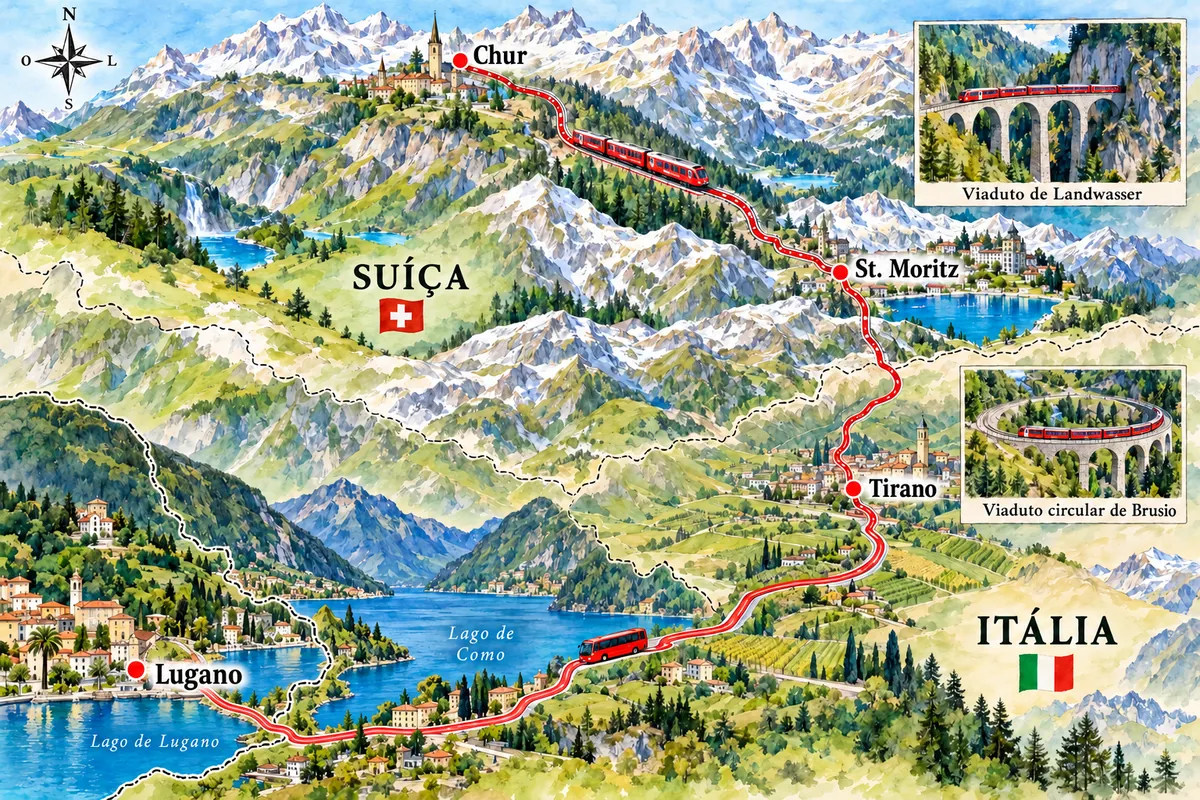
The red train that crosses the Alps from Switzerland to Italy: viaducts, spiral tunnels, glaciers and Lake Bianco, from Chur to Tirano in about four hours, with a bus onward to Lugano.

Zemljevid je ilustrativen in ni v merilu. Dotaknite se mesta, da odprete njegovo stran.
Bernina Express: Chur–St. Moritz–Tirano – ilustrirani zemljevid
Več o poti – Bernina Express: Chur–St. Moritz–Tirano
Odkrijte druge destinacije Iskanje po zvezni državi in mestu

Več kot vodnik