Germanisches Nationalmuseum: German cultural history, from Dürer to the first globe
Odhod: Kartäusergasse 1 (U1/U2/U3 Hauptbahnhof or Opernhaus) Museum visit Približno 3 ure Popoldne easy (large museum, lots of walking)
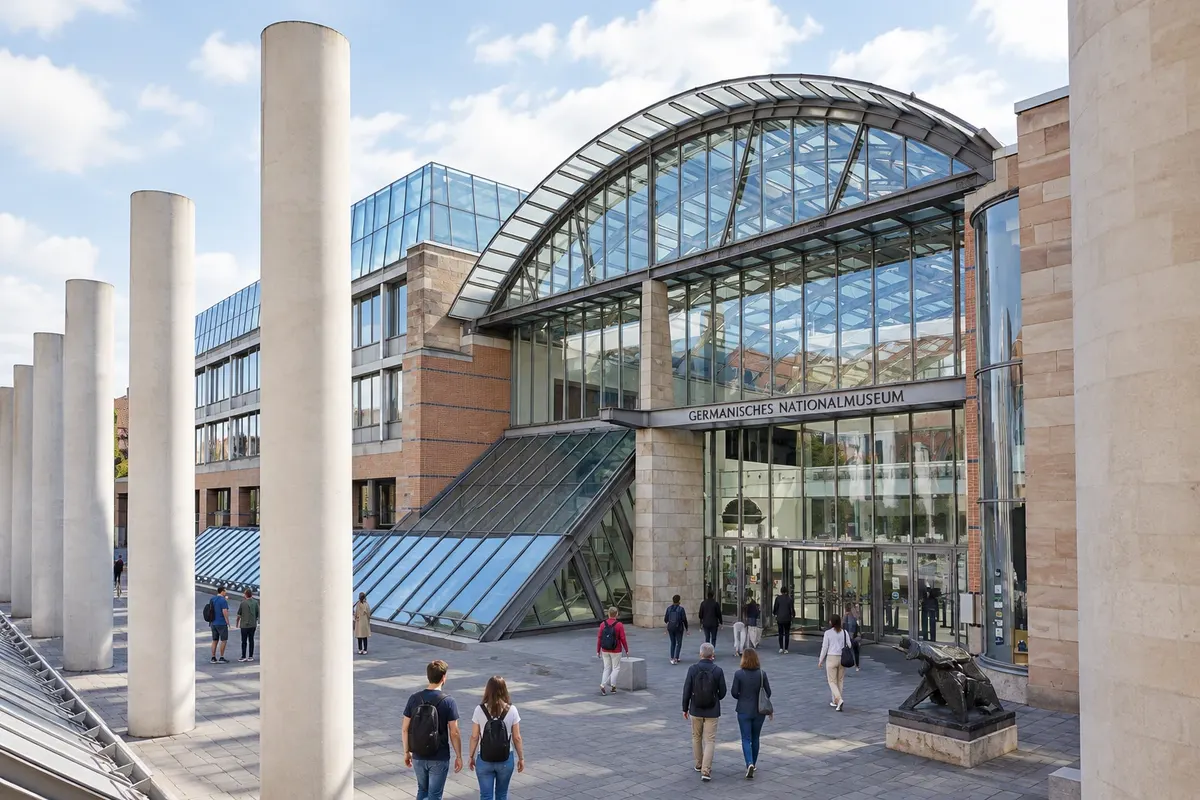
The Germanisches Nationalmuseum, founded in 1852, is one of the largest museums of cultural history in the German-speaking world, with about 1.3 million objects, a portion of which are on display. The building includes the former Carthusian monastery of Nürnberg (Nuremberg), a 14th‑century monastery whose cloister and church are part of the route. Among the most sought-after pieces are the Erdapfel, Martin Behaim’s terrestrial globe from 1492–1494, the oldest known globe made before Columbus’s arrival in the Americas and therefore without the continent; paintings by Albrecht Dürer, Rembrandt and Lucas Cranach; sculptures by Veit Stoß and Tilman Riemenschneider; the first pocket watch by Peter Henlein; and the largest collection of historical musical instruments in Europe. There are also weapons and armour, dollhouses, toys, clothing and furniture from various periods, and a print collection with 350,000 sheets. The entrance is on Kartäusergasse, crossed by the Straße der Menschenrechte, Dani Karavan’s columns each bearing an article of the Universal Declaration of Human Rights in a different language. The museum is closed on Mondays and stays open later on Wednesdays, when late-afternoon entry is free.
Kraji na poti: Germanisches Nationalmuseum.
Vključuje: Separate paid admission, with reduced price for students and families; on Wednesdays, from late afternoon, admission is free except for temporary exhibitions. Cloakroom, café and shop on site. Audioguides and guided tours require separate payment; check the current schedule.
Nasvet: Decide in advance what to see: the museum is too large for a complete visit. The Behaim globe, the Dürer room and the musical instruments can fill an afternoon. If you are in the city on a Wednesday, take advantage of the late opening hours when there are fewer people.
Najboljši čas za obisk: All year; it’s the right plan for rainy or cold days, from November to March. Closed on Mondays.
Dokumentationszentrum Reichsparteitagsgelände: the site of the Nazi party rallies
Odhod: Doku-Zentrum stop (tram 6 or 8) or S2 Dutzendteich Visit to the documentation center and walk around the site about 3 to 4 hours Dopoldne ali popoldne easy (long walk outdoors)
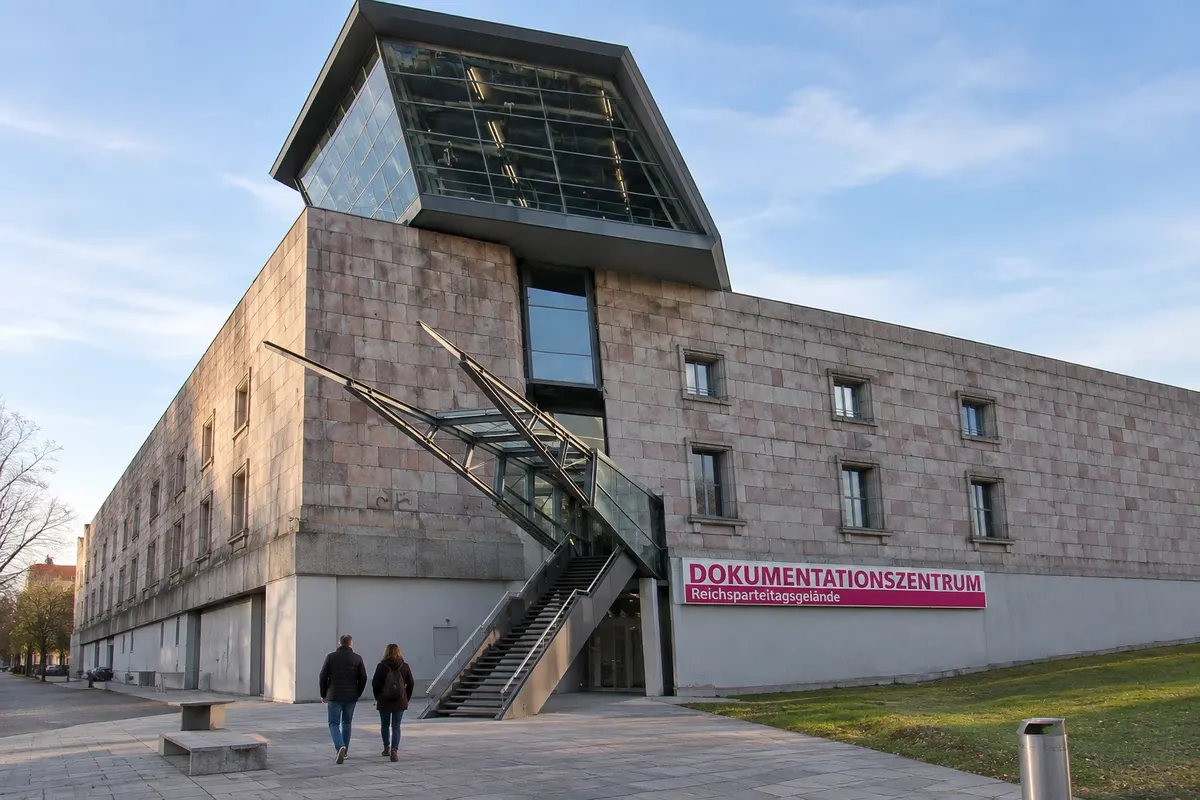
Between 1933 and 1938, the Nazi party held its annual rallies in Nürnberg (Nuremberg) on a site of about 11 km² south of the city, around Lake Dutzendteich. The Dokumentationszentrum (documentation center) is located in the north wing of the Kongresshalle, the never-completed congress hall, described by the city as the largest preserved ensemble of state and party architecture from the Nazi era. The center’s building, by Austrian architect Günther Domenig, cuts through the old structure with a diagonal glass-and-steel walkway deliberately designed not to respect the original symmetry. The permanent exhibition, Nürnberg und die Reichsparteitage, covers about 1,600 m², in German and English, with 120 objects, films, biographies of victims and perpetrators, and interactive stations: it shows how the rallies were staged, the use of the site for forced labour, prisoners of war and deportations from 1939 onward, and what the city did with the place after 1945. Outside, a walk leads to the Große Straße, a 2 km granite avenue, and to the Zeppelintribüne, the Zeppelinfeld grandstand where Hitler spoke, now being conserved as a place of learning; part of it may be cordoned off by safety works. The tone of the site is informational; it is a space of memory, not of curiosity.
Kraji na poti: Dokumentationszentrum Reichsparteitagsgelände.
Vključuje: Separate paid admission; the outdoor grounds, the Große Straße and the area around the Zeppelinfeld are open and do not charge entry. Guided tours in English for groups are available by reservation. During major events on the grounds (races, music festivals), parts of the area may be closed; the center also closes on some days of the year: check before you go.
Nasvet: Allow a full morning: the exhibition takes about 2 hours and the walk to the Zeppelintribüne, round trip, adds roughly 1 hour. Take tram 6 or 8 to the Doku-Zentrum stop, at the entrance. Not suitable for very young children; for teenagers it works as a history lesson.
Najboljši čas za obisk: All year; from April to October the walk across the grounds is more pleasant. Avoid the days of the Norisring race (usually in summer) and the Rock im Park festival (usually in June).
Memorium Nürnberger Prozesse: Hall 600, where the Nazi leaders were tried
Odhod: U1 Bärenschanze (Bärenschanzstraße 72) Visit to the memorial in the Palace of Justice Približno 2 uri Dopoldne ali popoldne easy (there is an elevator)
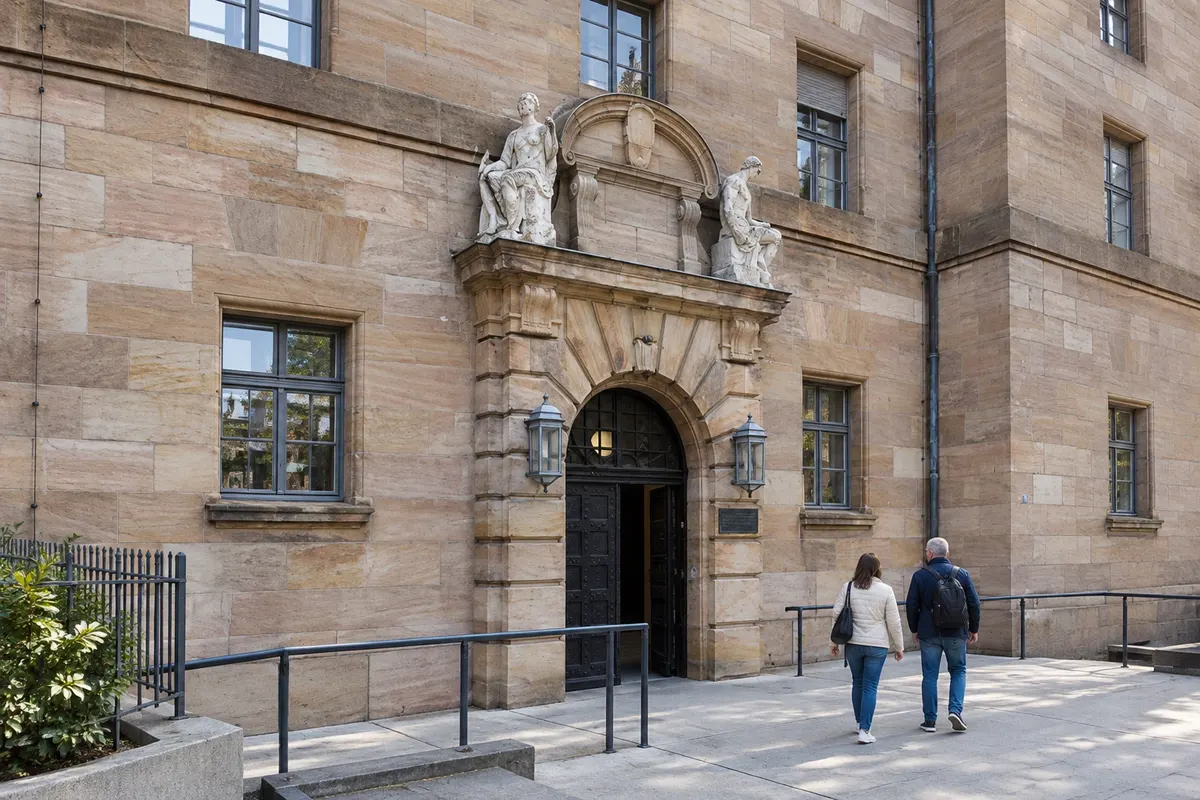
In the Justizpalast (Palace of Justice) in Nuremberg, west of the center, is Saal 600, the courtroom where, from November 20, 1945 to October 1, 1946, the International Military Tribunal of the four Allied powers tried 21 leaders of the Nazi regime on charges of crimes of aggression, violations of the laws of war, and crimes against humanity. It was the first time that heads of state were held personally accountable before an international tribunal, and the principles established there led to the International Criminal Court in The Hague. The Memorium, opened in 2010 on the upper floor of the tribunal wing, presents in German and English who the defendants were and what they were charged with, how the trial was organized, with simultaneous translation improvised for the occasion, the twelve subsequent trials from 1946 to 1949 against doctors, judges, industrialists and military figures, and what remained of that in international law. Saal 600 continued to be used by the German judiciary for decades and today is part of the memorial; a media installation reconstructs the original arrangement of the benches and the voices from the trial. The hall may be closed on event days, and the installation is not on display all the time. There are original objects and documents from the trial, and the audio guide is available in several languages.
Kraji na poti: Memorium Nürnberger Prozesse.
Vključuje: Separate admission fee; audio guide included in several languages. Closed on Tuesdays and on December 24 and 25; opening hours change on public holidays. Hall 600 may be closed on event days: confirm before you go.
Nasvet: Combine it with the Dokumentationszentrum on the same day, one in the morning and the other in the afternoon: they complement each other. Take the U1 to Bärenschanze, a 3-minute walk. There is a combined ticket with the documentation center; check in advance.
Najboljši čas za obisk: All year. Closed on Tuesdays; from April to October it opens earlier on weekdays.
Nuremberg with kids: Spielzeugmuseum and DB Museum
Odhod: Karlstraße 13 (Spielzeugmuseum) and Lessingstraße 6 (DB Museum) Visit to two museums, reached on foot or by U-Bahn full day (about 2 hours at each) morning and afternoon easy (both have an elevator)
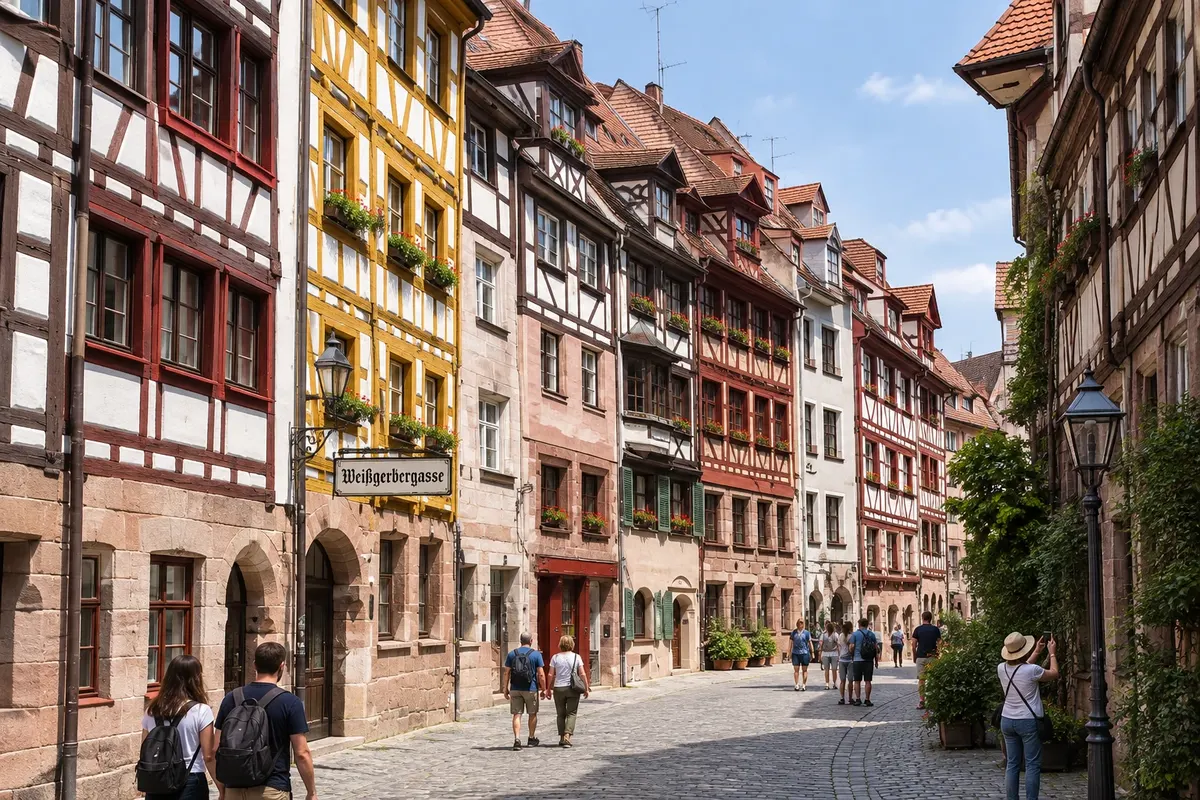
Nuremberg (Nuremberg) has been making toys for more than 600 years and hosts the international trade fair for the industry. The Spielzeugmuseum (toy museum) is on Karlstraße, in a house from 1517 a short walk from the Weißgerbergasse, and opened in 1971 with Lydia and Paul Bayer’s collection of about 12,000 items; today the holdings total 87,000 objects, with part displayed in 1,400 m². The floors follow history: wooden toys on the first, dolls, dollhouses and Nürnberg kitchens on the second, the Welt der Technik (world of technology) on the third, with a large model railway, tinplate trains and steam engines, and on the top floor toys since 1945, including Lego, Barbie and Playmobil, plus an indoor play area. In summer there is a playground in the courtyard. The DB Museum, an 8-minute walk from the Hauptbahnhof (central station), originated as the Royal Bavarian Railway Museum of 1899 and is Germany’s oldest railway museum. Under 6,800 m² of roof are a working replica of the Adler, the locomotive of Germany’s first railway between Nürnberg and Fürth from 1835; carriages from King Ludwig II of Bavaria’s train; and an ICE. The model layout covers 80 m², with about 30 trains on 500 m of track. Kibala, the children’s railway country, has 1,000 m² with a driving simulator and a small train. The outdoor yard, 15,000 m², contains a historic platform, signal boxes and vehicles.
Kraji na poti: Weißgerbergasse, Handwerkerhof.
Vključuje: Separate paid admission at each museum, with family discounts. Both are closed on Mondays, except during the Spielzeugmuseum's Christmas market period, and on December 24 and 25. Left-luggage and a café are available at the DB Museum. Check the current timetable.
Nasvet: Do the Spielzeugmuseum in the morning, when children have more energy, and save the DB Museum for the afternoon, near the station. At the DB Museum ask about the summer schedules for trips with the Adler, which usually run on certain days of the year. Both museums accept baby carriers and have a changing table.
Najboljši čas za obisk: All year round; they’re the option for rainy days. From June to September the playground at the Spielzeugmuseum and the courtyard at the DB Museum remain open; in December opening hours are extended.
Christkindlesmarkt: Nürnberg’s Christmas market at the Hauptmarkt
Odhod: Hauptmarkt Walk through the market and neighboring squares Približno 2 uri late afternoon and early evening easy (very crowded and cold)
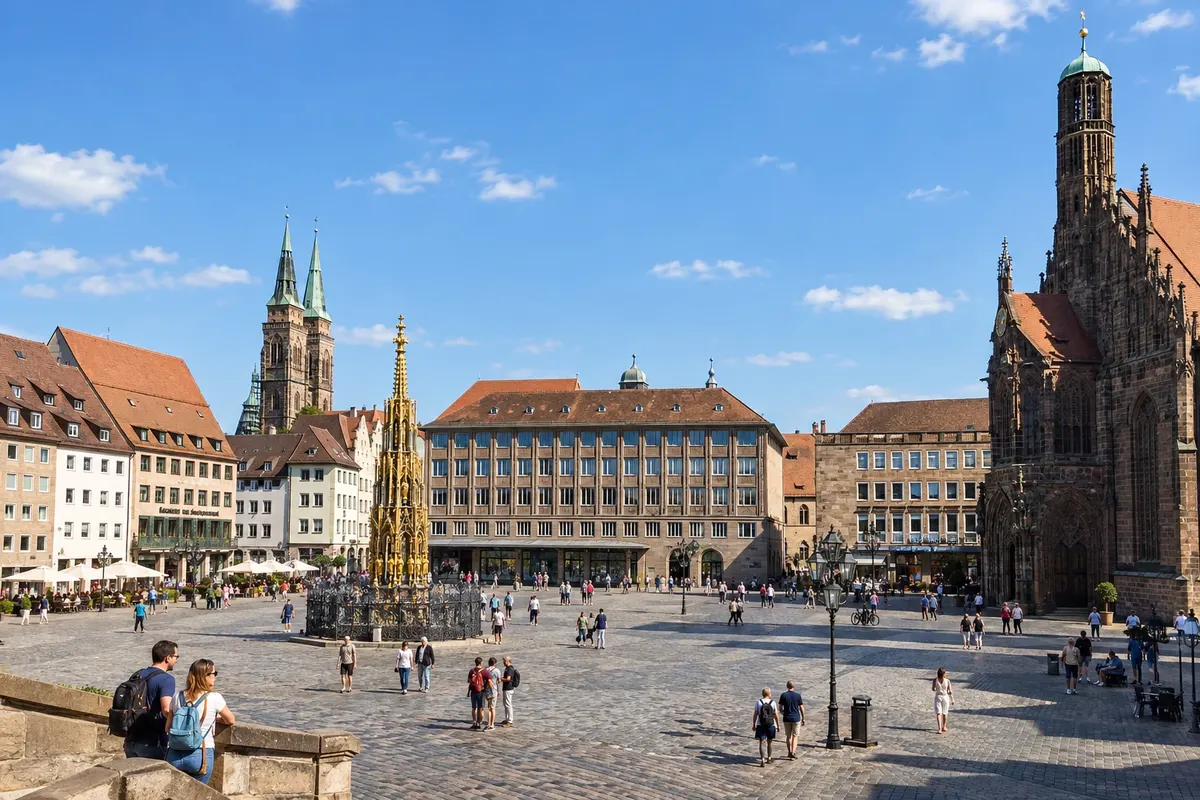
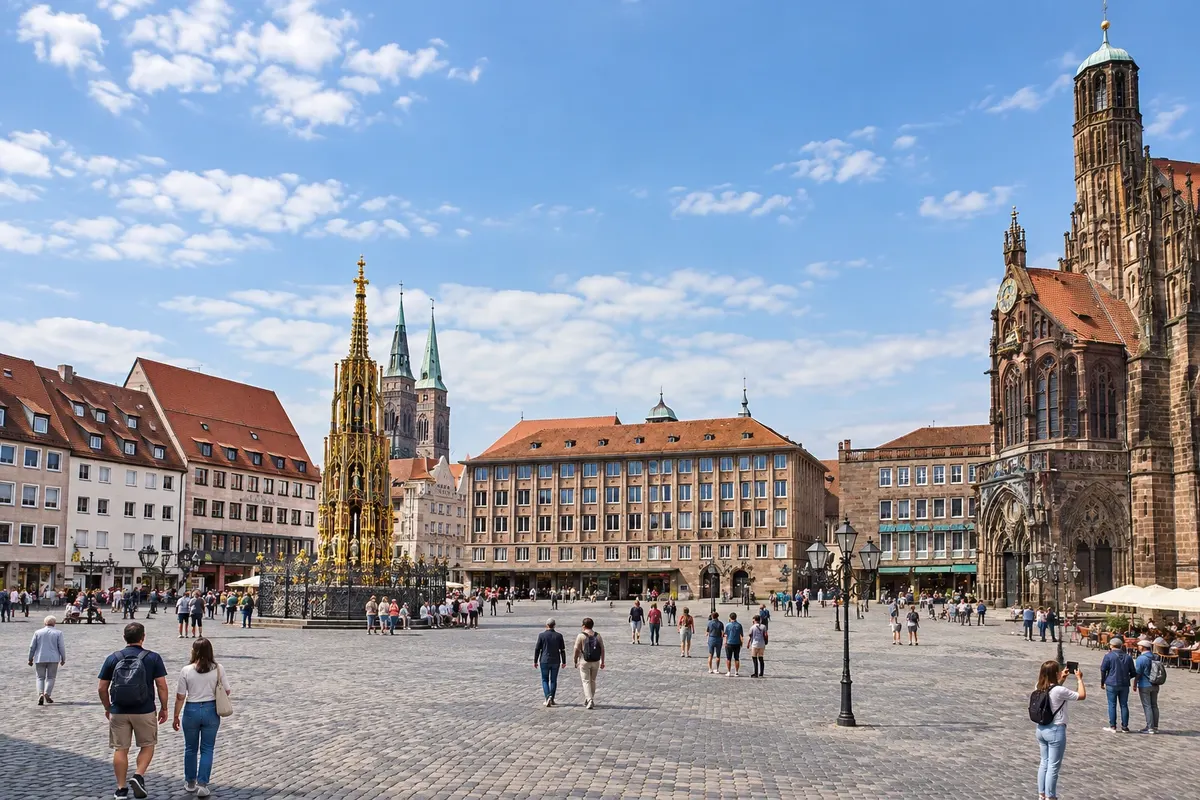
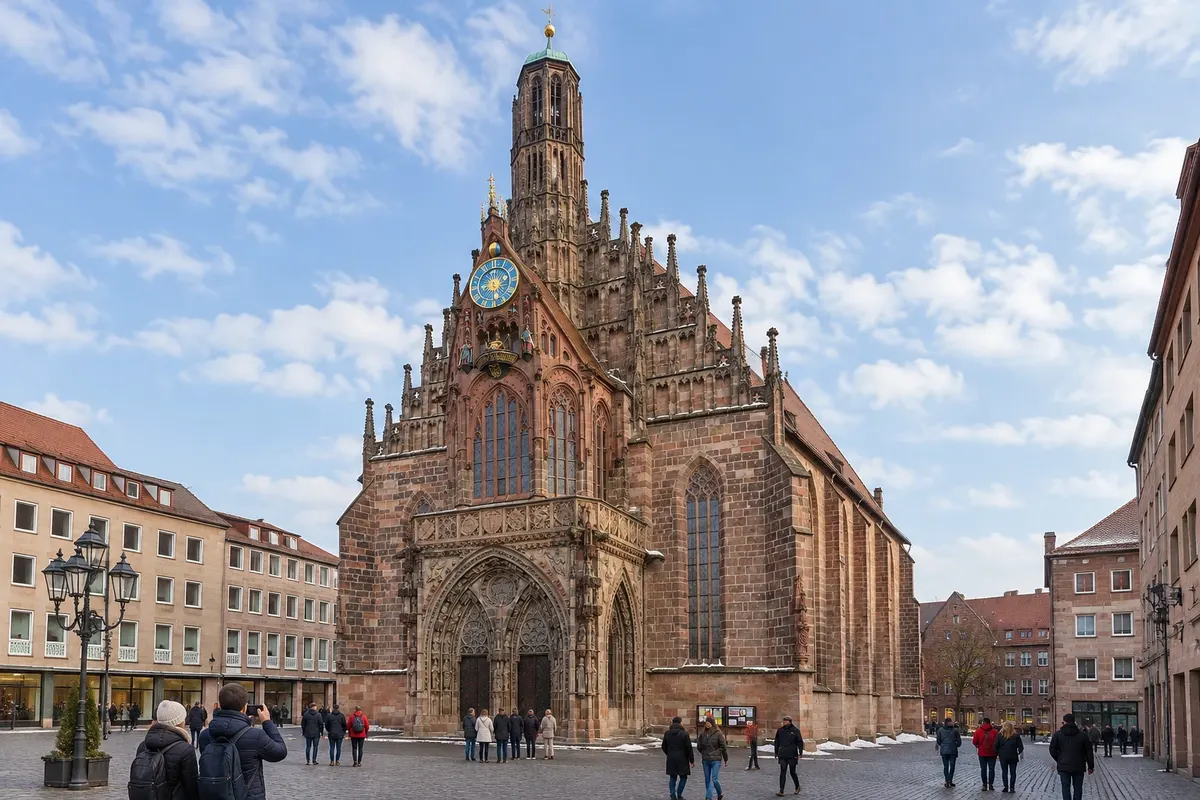
The Christkindlesmarkt is Germany’s best-known Christmas market and fills Nürnberg’s Hauptmarkt from late November to December 24; the season usually begins on the Friday before the first Sunday of Advent, when the Christkind, a young woman from the city chosen every two years, reads the prologue from the balcony of the Frauenkirche at dusk. The wooden stalls with red-and-white striped awnings sell Lebkuchen (Nürnberg gingerbread, protected by designation of origin), Rostbratwürste (small grilled sausages, served three in a roll), Glühwein (mulled wine) in ceramic mugs, glass and wooden ornaments, and Zwetschgenmännle, little figures made from dried plums. The market only sells traditional goods; there is no funfair. Nearby, the Kinderweihnacht (children’s Christmas) at Hans-Sachs-Platz has a carousel and workshops, and the Markt der Partnerstädte (market of twin towns) at Rathausplatz sells products from places Nürnberg has ties with, including towns in Italy, Scotland and China. The city center streets are lit up and the churches hold Advent concerts. The market runs every day from morning until early evening, and closes on Christmas Eve.
Kraji na poti: Hauptmarkt, Frauenkirche.
Vključuje: Free entry; food, drink and purchases are paid separately. Glühwein mugs require a deposit, returned at the stall. There are paid guided tours of the market in several languages, departing from the tourist information at the Hauptmarkt.
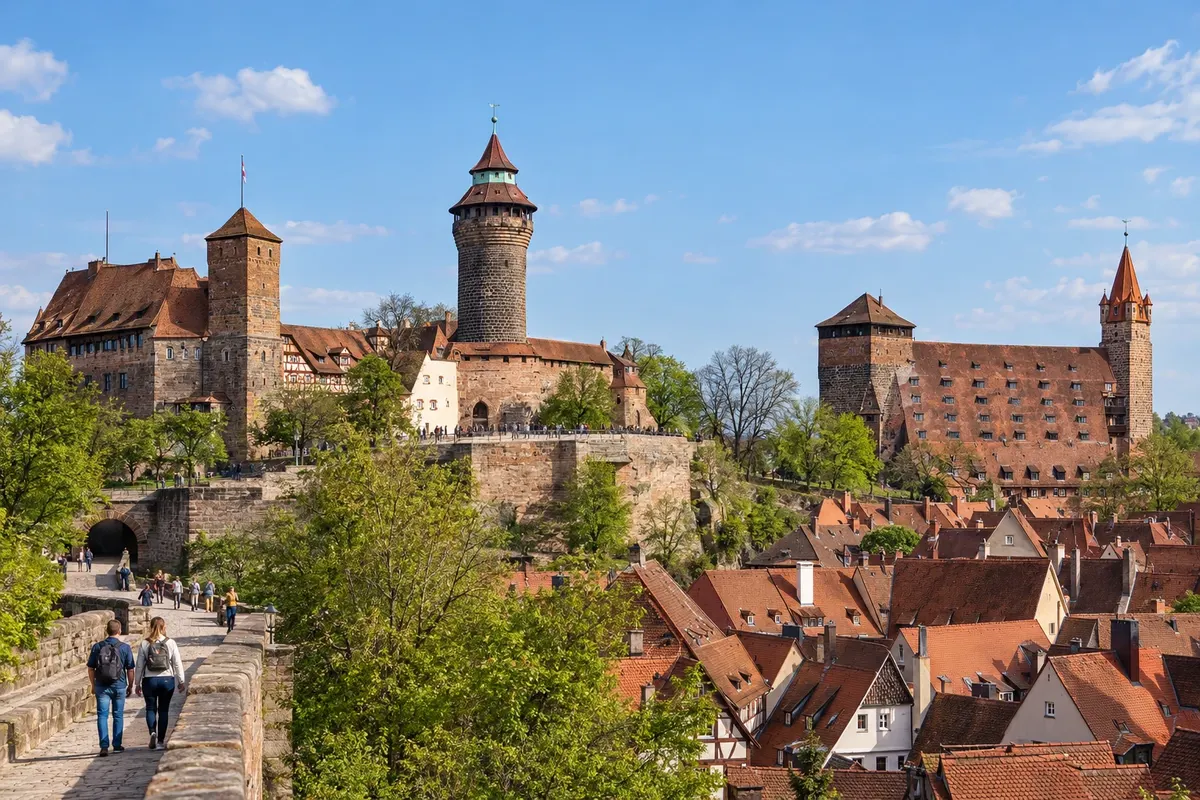
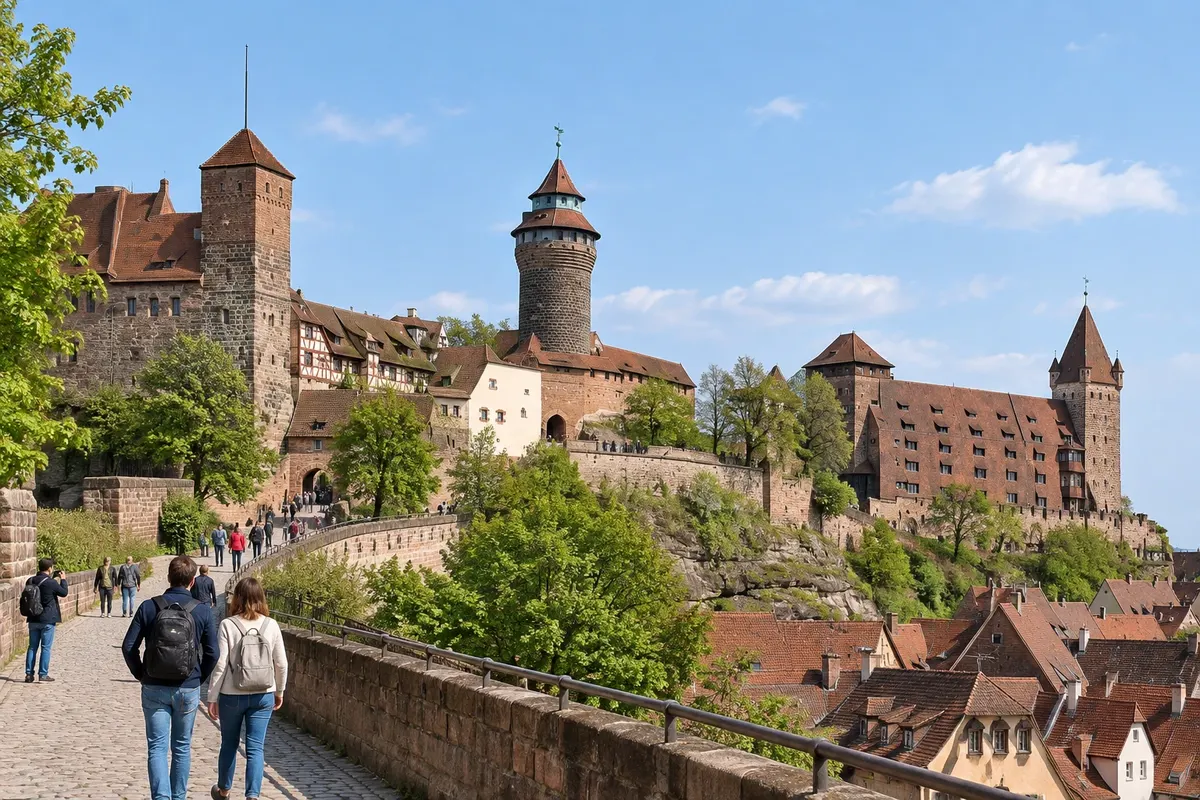
Nasvet: Go in the afternoon on weekdays: on December weekends the square becomes crowded. Dress for temperatures near 0 °C, with waterproof shoes, and book everything months in advance because the town fills up. The Kaiserburg viewpoint and the walkway of the Altes Rathaus give an elevated view of the market.
Najboljši čas za obisk: From late November to December 24; confirm the dates for the year. The first two weeks usually have fewer visitors than the days immediately before Christmas.
Bamberger Dom and Domplatz: the Bamberg Knight and the emperor’s tomb
Odhod: Bamberg Bahnhof (station), 25 min on foot or bus 910 to Domplatz Walk and visit the cathedral Približno 2 uri in pol Dopoldne easy (hill up to Domplatz)
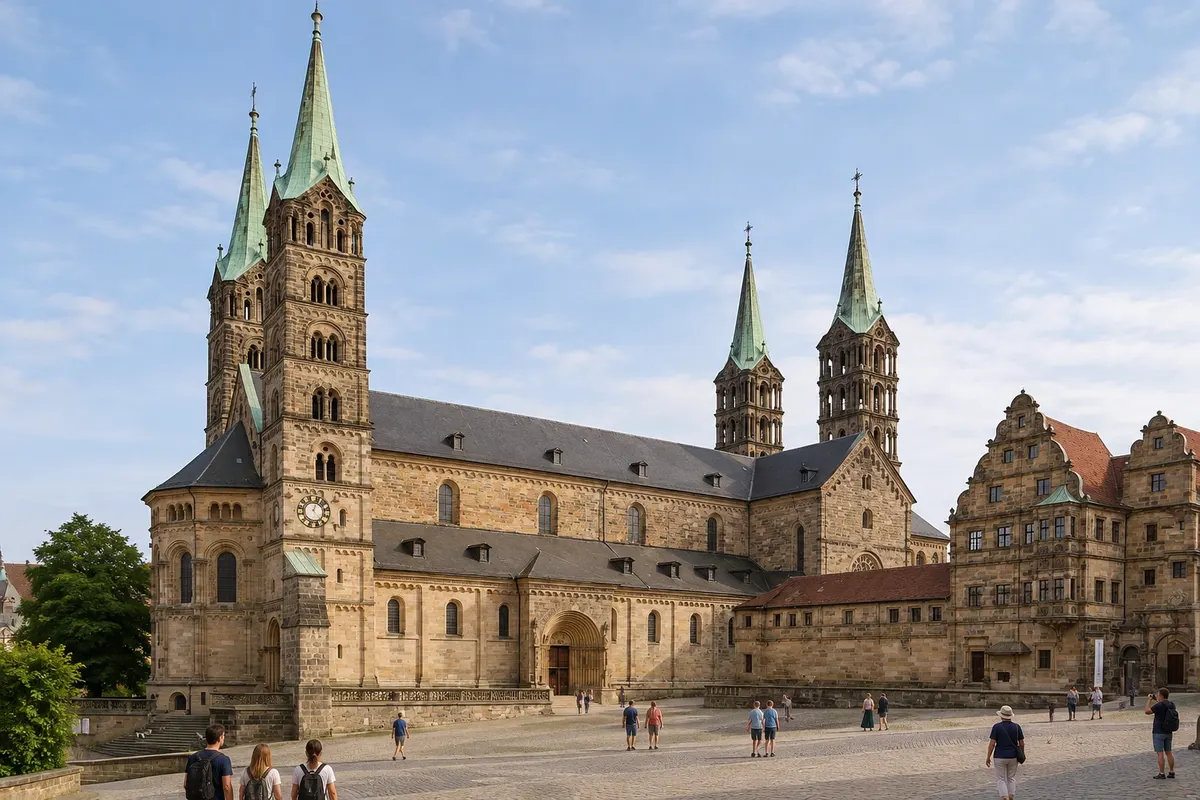
Bamberg, about 60 km north of Nürnberg (Nuremberg), has an old town inscribed on the UNESCO World Heritage List since 1993, spread over seven hills and along the arms of the Regnitz River. The main hill is the Domberg, with the cathedral of four towers. Emperor Heinrich II founded the bishopric in 1007 and the first cathedral was consecrated in 1012; after two fires, the present building, late Romanesque with Gothic parts, was consecrated in 1237. On the column beside the east choir stands the Bamberger Reiter (Bamberg Knight), a stone statue from around 1235, the first life-size equestrian figure of the European Middle Ages, whose model has never been identified. In the center of the nave is the tomb of Heinrich II and Empress Kunigunde, carved in marble by Tilman Riemenschneider between 1499 and 1513, with scenes from the couple’s life in the side reliefs. In the west choir is the tomb of Pope Clement II, who died in 1047, the only papal tomb north of the Alps. There is also the Marienaltar by Veit Stoß, from 1520 to 1523, with the Nativity at its center. On the Domplatz are the Alte Hofhaltung, the former palace with a 15th-century half-timbered courtyard, and the Neue Residenz. The Diözesanmuseum beside the cathedral houses the imperial mantles and the cathedral treasury; it is closed on Wednesdays.
Kraji na poti: Bamberger Dom.
Vključuje: Entry to the cathedral is free; the Diözesanmuseum has separate paid admission. Guided tours in German several times a day depart from the cathedral; groups in other languages only with accredited guides, by reservation. The cathedral closes to visitors during masses and on liturgical dates: confirm before you go.
Nasvet: Arrive before 10:00, when groups have not yet climbed the Domberg. On Saturdays at noon, from May to October, there is usually an organ concert. Continue this walk to the Neue Residenz and the Rosengarten on the same square, and descend via Karolinenstraße to the Altes Rathaus.
Najboljši čas za obisk: All year. From May to October there are organ concerts on Saturdays; in December the square usually hosts part of the Christmas market.
Altes Rathaus and the Regnitz bridges: the town hall in the middle of the river
Odhod: Obere Brücke, central Bamberg Walk across the bridges and around the Inselstadt Približno 1 uro Dopoldne ali popoldne easy (flat terrain)
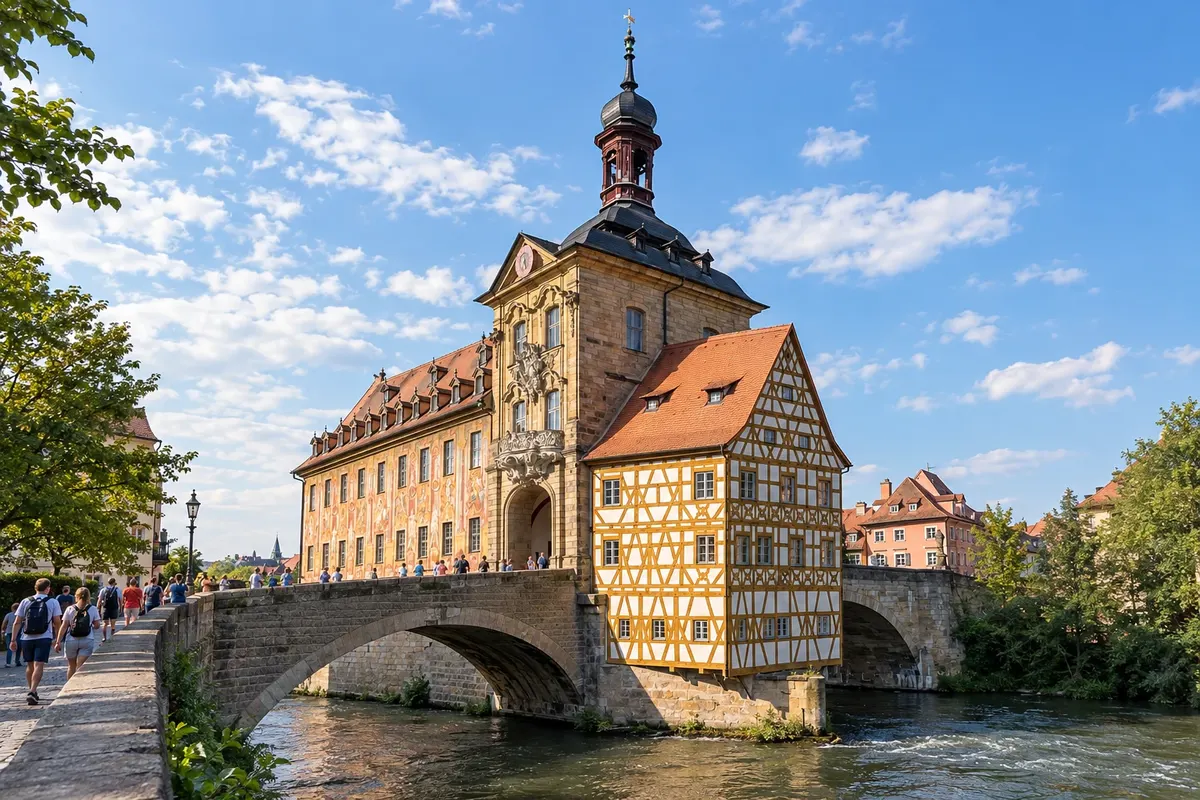
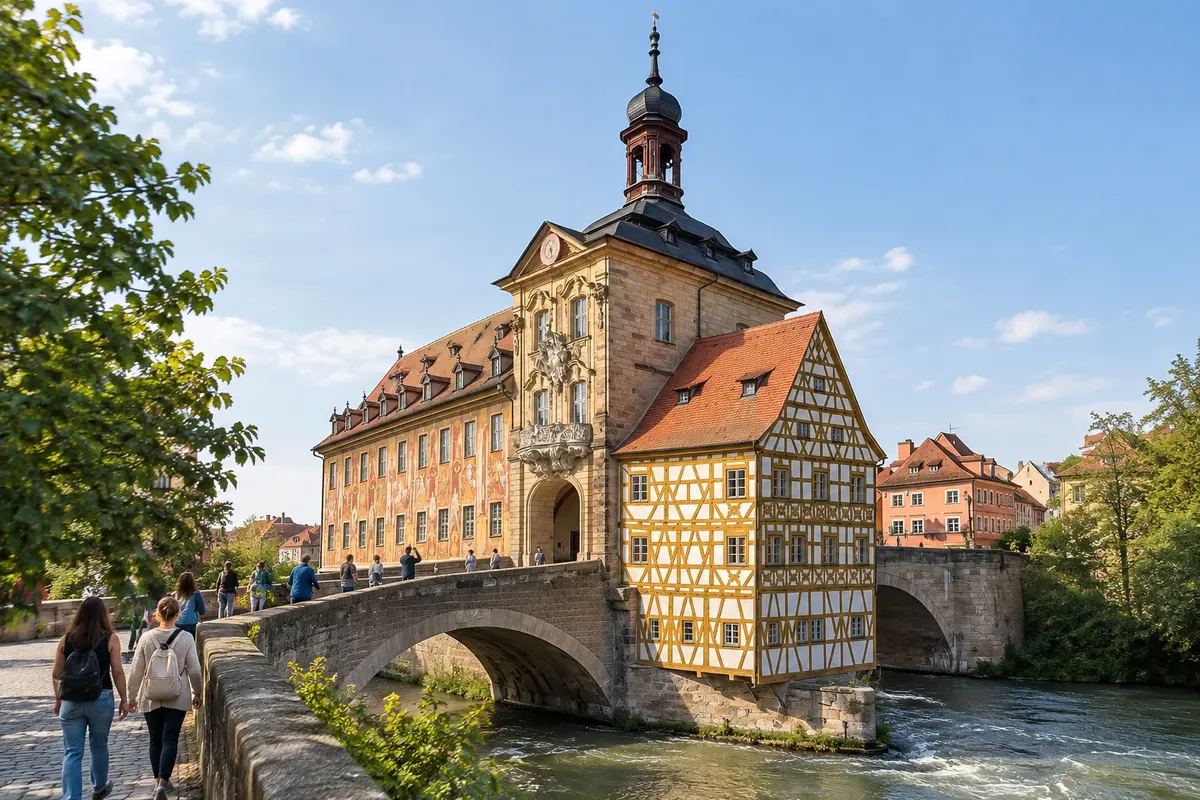
The Altes Rathaus (old town hall) of Bamberg stands on an artificial island in the middle of the left arm of the Regnitz River, wedged between two bridges: the Obere Brücke (upper bridge), opened between 1453 and 1456, and the Untere Brücke (lower bridge). Legend has it that the bishop refused to cede land to the townspeople for a town hall, so they drove piles into the river and made the island themselves; the city historian regards the story as unlikely, but more than 1,000 oak piles were found in recent works, and the technique was authentic for the period. The Gothic core dates to 1463 and, in the mid-18th century, the building received the Baroque façade with a mansard roof, the lantern and Rococo balconies. The façade paintings, done by Johann Anwander in 1755, simulate architecture in perspective; from one of them protrudes the leg of an angel, sculpted in three dimensions. At the tip of the island is the Rottmeisterhäuschen, a half-timbered little house hanging over the water. Inside are the Rokokosaal and the Sammlung Ludwig, a collection of Meissen porcelain and Strasbourg faience, which is not open to visitors during the building’s renovation: confirm before you go. The Obere Brücke is the passage between the Bergstadt (hill town, of the bishops) and the Inselstadt (island town, of the citizens), with a statue of Saint John of Nepomuk; from the Untere Brücke, beside the statue of Empress Kunigunde, you get the view of the painted façade and the river.
Kraji na poti: Altes Rathaus.
Vključuje: Free walk; the bridges and the view are open. The interior (Rokokosaal and Sammlung Ludwig) requires a paid ticket when open. Scaffolding may be present on the bridges or façade at times of the year; check before you go.
Nasvet: Do it twice: in the morning with the sun on the painted façade on the Obere Brücke side, and in the afternoon from the Untere Brücke side. The Untere Brücke is the spot for the photo with the little Rottmeisterhäuschen. From the bridge a 5‑minute walk downstream leads to Klein‑Venedig.
Najboljši čas za obisk: Year‑round. From May to September the river has boats and the banks have outdoor tables; in December the Inselstadt usually hosts the Christmas market on Maxplatz.
Klein‑Venedig and a boat trip on the Regnitz
Odhod: Untere Brücke or Am Kranen, Bamberg centre Walk along the riverbank and boat or gondola ride about 1 h 30 (boat: 30 min to 1 hour) Popoldne easy (flat terrain)
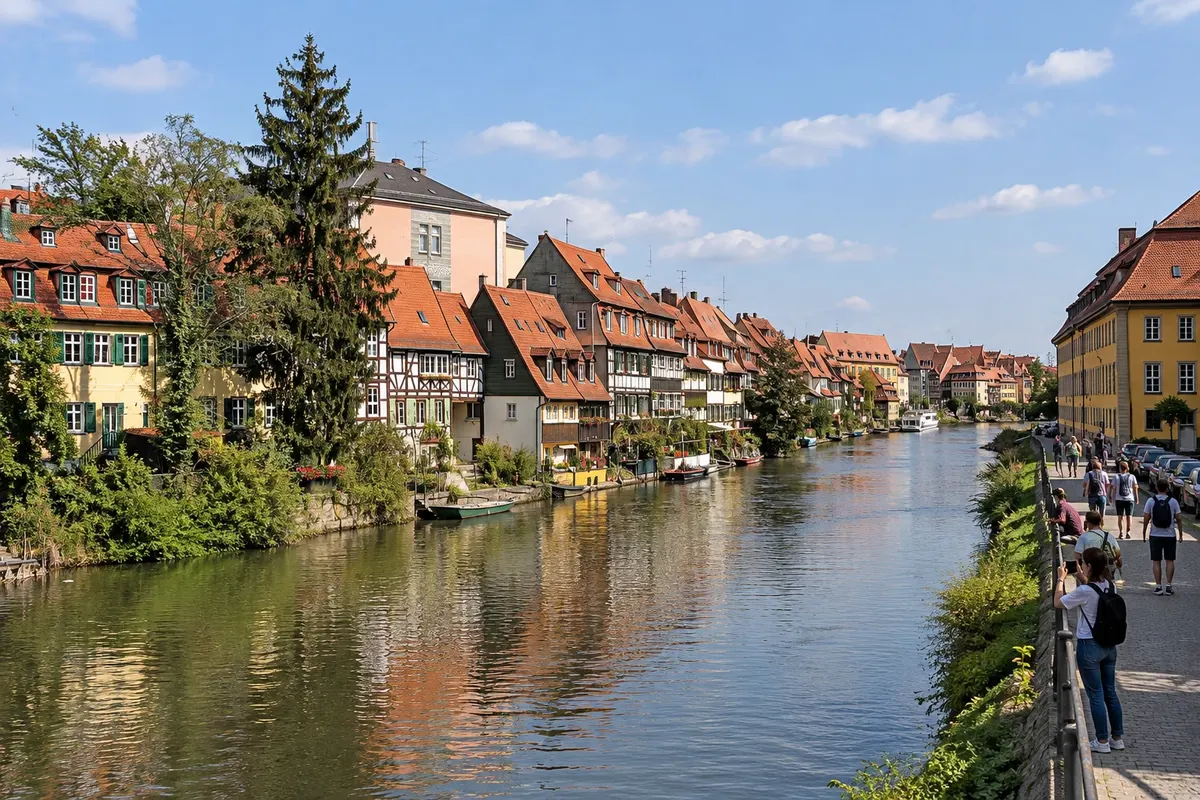
Klein-Venedig (Little Venice) is the row of old fishermen’s houses on the left-hand arm of the Regnitz River in Bamberg, between the Untere Brücke and the Markusbrücke. The half-timbered houses, narrow and built close together, have wooden balconies where nets used to be hung to dry and small gardens that slope down to the water, with geraniums in summer. The comparison with Venice is long-standing, made by travelers for centuries, and the name was adopted by the tourism association in the 1920s; in the Franconian dialect it’s Klaa-Fnedich. The guild of boatmen and fishermen from the lower town still has its headquarters in one of the houses and organizes, on the Sunday of the Sandkerwa, the August street festival called Fischerstechen, a tournament in which fishermen try to knock each other off the boats with poles. The most open view is from the opposite bank, the Am Leinritt path that follows the river from the Untere Brücke, and from the bridges. From the quay Am Kranen, the city’s old port with the 1766 crane, sightseeing boats run the Regnitz in season, generally from April to October, with commentary on board. There are also gondolas with two licensed gondoliers, leaving the old canal beneath the Obere Brücke, on half-hour to one-hour rides to lock 100 of the old Ludwig Canal between the Main and the Danube.
Kraji na poti: Klein-Venedig.
Vključuje: Free walk along the riverbank; boats and gondolas are paid separately, per person or per vessel (the gondola holds up to six people and requires booking). Trips depend on river level and wind and do not run in winter: check before you go.
Nasvet: Do the walk at late afternoon, when the sun hits the facades, and the boat trip earlier in the afternoon. For the classic photo, stop in the middle of the Untere Brücke and at Am Leinritt. During Sandkerwa in August the area gets crowded: book ahead or go another week.
Najboljši čas za obisk: April to October for boats and gondolas; June to September the balconies are in bloom. In winter the walk is still worthwhile.
Neue Residenz and Rosengarten: the prince-bishops' palace and the garden with a view
Odhod: Domplatz, Bamberg Visit to the palace and garden Približno 1 uro in 30 minut Dopoldne ali popoldne easy (stairs in the palace)
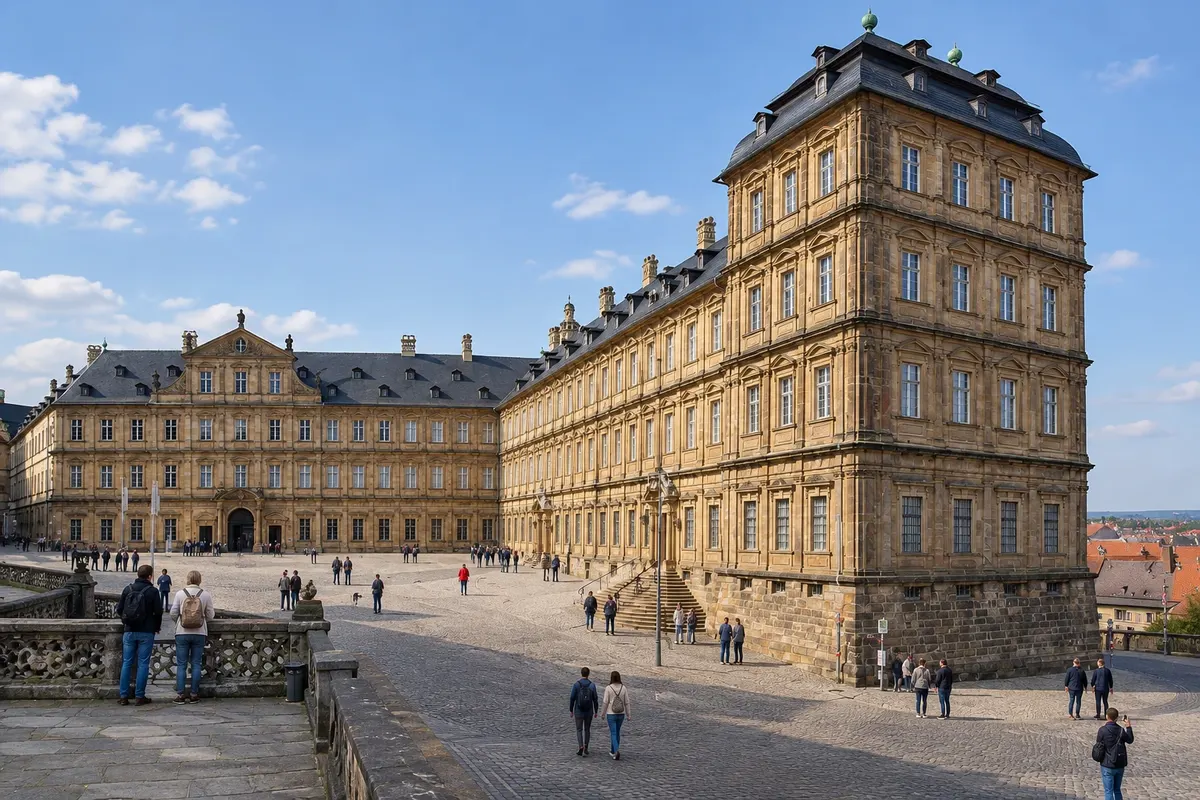
The Neue Residenz (new residence) closes off the north side of Bamberg's Domplatz. The two Baroque wings were built between 1697 and 1703 by architect Leonhard Dientzenhofer for Prince-Bishop Lothar Franz von Schönborn, who also commissioned palaces in Pommersfelden and Vienna; it was the first large Franconian palace of the absolutist era and served as the prince-bishops' seat until 1802. The rear wings, in Renaissance style with arcades facing the courtyard, date from 1604 to 1612. The visit passes through more than 40 state rooms with furniture, tapestries and stucco ceilings, and the Kaisersaal (imperial hall) on the second floor, painted between 1707 and 1709 by Melchior Steidl with 16 larger-than-life portraits of emperors and allegories of the empires of the world. The prince-bishop's apartments are seen on a guided tour in German every half hour; the rest is self-guided. In the same building is the Staatsgalerie, with early and Baroque German painting from the Bavarian State Collection; some of those rooms may be closed, so check before you go. The inner courtyard is the Rosengarten (rose garden), a Baroque garden with about 4,500 rose bushes in more than 70 beds, statues and a pavilion that is now a café; from the balustrade you can see the old town center, the roofs of the Inselstadt and the Michaelsberg monastery on the hill opposite.
Kraji na poti: Neue Residenz.
Vključuje: Separate paid ticket required for the palace, with a combined ticket available with Seehof Palace in the outskirts; under-18s are free. The visit to the state rooms is a guided tour in German and is included with the ticket. The Rosengarten is outdoors and has no entry fee. It is closed on January 1, Carnival Tuesday, and December 24, 25 and 31.
Nasvet: You can enter the Rosengarten even if you don't visit the palace: the view from Michaelsberg and of the rooftops is free. The roses bloom from June to September. The palace is open every day, including Mondays, with shorter hours from October to March.
Najboljši čas za obisk: June to September for the roses; the palace is worth visiting year-round, and from April to September it has longer opening hours.
Michaelsberg: the former Benedictine monastery, the church with the rooftop garden and the terrace
Odhod: Domplatz (15 min on foot) or bus 910 to Michelsberg Uphill walk and visit to the church and terrace Približno 1 uro in 30 minut Popoldne moderate (about a 15-minute climb)
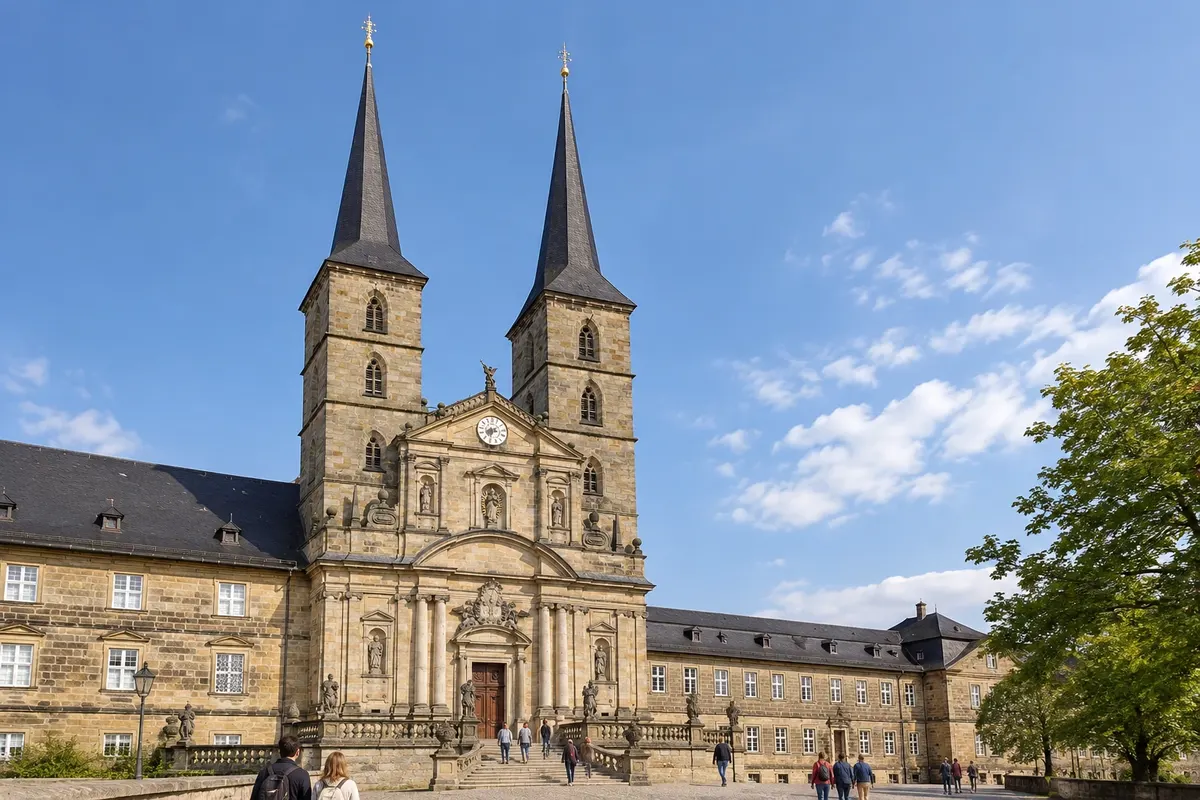
The Michaelsberg is one of Bamberg’s seven hills, opposite the Domberg across the valley. At the top stands the former Benedictine monastery of St. Michael, founded in 1015 at the initiative of Emperor Heinrich II. The church was destroyed by an earthquake in 1117 and rebuilt over the centuries; the Baroque façade with its two towers dates from the turn of the 17th to the 18th century, by the same Leonhard Dientzenhofer of the Neue Residenz, and the monastery buildings, now owned by a city foundation, long served as an almshouse. The interior preserves two rare features: the vaulted ceiling painted with a herbarium of about 600 identifiable plants, flowers and herbs, painted around 1617 as an image of paradise, and, beneath the choir, the tomb of Saint Otto, bishop of Bamberg in the 12th century, through which pilgrims pass crouched, in a low passage, asking for health. The church was closed for many years due to risk of collapse and underwent a complete restoration; it opens to visitors on certain days of the week, generally Friday to Sunday and on public holidays, and admission is free: check before you go. Outside, the monastery terrace looks out over the Cathedral, the Neue Residenz and the roofs of the old town, and the terraced gardens descend the hill to the city. In the former monastery brewery building, dating from about 1122, is the Fränkisches Brauereimuseum.
Kraji na poti: Michaelsberg.
Vključuje: Terrace and gardens open, free of charge; entry to the church is free, but opening hours are limited to certain days of the week. Guided visits and groups by reservation through Bamberg’s tourist service. The Brauereimuseum has a separate admission fee.
Nasvet: Walk up on foot along Michaelsberger Straße from the Domplatz, between walls and gardens, and return via the garden staircase to the Inselstadt. Schedule Michaelsberg for a Friday, Saturday or Sunday, days when the church is usually open. The terrace at late afternoon has the light over the cathedral.
Najboljši čas za obisk: From April to October, when the gardens are in bloom and the Brauereimuseum is open; the church is open Friday to Sunday year-round. Confirm the days before you go.
Bamberg and beer: the Brauereimuseum, Schlenkerla and the historic breweries
Odhod: Michaelsberg (museum) and Dominikanerstraße (Schlenkerla) Visit the museum and walk among the historic breweries Približno 3 ure Popoldne easy (ascent to Michaelsberg)
Bamberg is known in Germany as a beer city: it has more than ten breweries in operation within the town, and in the 19th century it had more than 60; the surrounding district adds dozens more. The local speciality is Rauchbier (smoked beer), made with malt dried over beech wood fire, a technique common before modern kilns and now surviving in few places. The starting point is the Fränkisches Brauereimuseum (Franconian Brewery Museum), in the vaults of the former brewery of the Michaelsberg monastery, from around 1122: in roughly 1,000 m² and more than 1,850 items, it displays the brewing room, the malt house, the fermentation and storage cellars, the ice cellar, the cooperage and the filling of barrels and bottles, with explanations about the role of monasteries and cellars carved into the rock. The museum is open April to October, Wednesday to Sunday. Descending into the town, on Dominikanerstraße just below the cathedral, is the Schlenkerla, a house mentioned in 1405 as the Blue Lion house, with the tavern in a former Dominican chapel with a wooden ceiling; the Trum family has run it for six generations, and there beer still comes from wooden casks. The Spezial brewery, on Obere Königstraße across the river, also smokes its malt in its own kiln for over 475 years. In summer, the Bierkeller (beer cellars) on the hills operate like outdoor gardens under chestnut trees. The point is the history and the craft; drinking is optional, and the places serve Franconian food and soft drinks.
Kraji na poti: Michaelsberg, Altes Rathaus.
Vključuje: Museum with separate paid admission, open from April to October, with guided tours for groups by reservation. The historic taverns are restaurants: food and drink paid separately, no reservation during quieter hours. There are paid guided brewery tours leaving from the tourist office.
Nasvet: Go to the taverns in the mid-afternoon, between lunch and dinner, when tables are available; in the evening and on weekends they fill up. Also order Bratwurst and dishes of Franconian cuisine. Non-drinkers equally enjoy the architecture and the history. Combine the museum with the Michaelsberg terrace.
Najboljši čas za obisk: From April to October, when the museum is open and the Bierkeller operate outdoors (generally May to September). The taverns are open year-round.


 Brazilija
 Antarktika
 Argentina
 Bolivija
 Čile
 Kolumbija
 Ekvator
 Gvajana
 Francoska Gvajana
 Falklandski otoki (Malvini)
 Paragvaj
 Peru
 Surinam
 Urugvaj
 Venezuela
 Avstrija
 Belgija
 Hrvaška
 Danska
 Slovaška
 Slovenija
 Španija
 Finska
 Francija
 Grčija
 Nizozemska
 Madžarska
 Irska
 Islandija
 Italija
 Luksemburg
 Norveška
 Poljska
 Portugalska
 Združeno kraljestvo
 Češka
 Švedska
 Švica
 Turčija
 Bermudi
 Kanada
 Združene države Amerike
 Grenlandija
 Mehika
 Sveta Peter in Mihael
 Dominikanska republika
 Japonska
 Južnoafriška republika
 Egipt
 Avstralija
 Fidži
 Nova Zelandija
 Papua Nova Gvineja