Castel Sant'Elmo and Certosa di San Martino: Vomero
Odhod: Funicular Centrale (from Via Toledo) or Montesanto, up to Vomero Castle-viewpoint and monastery-museum Približno 3 ure Popoldne easy (funicular; ramps)
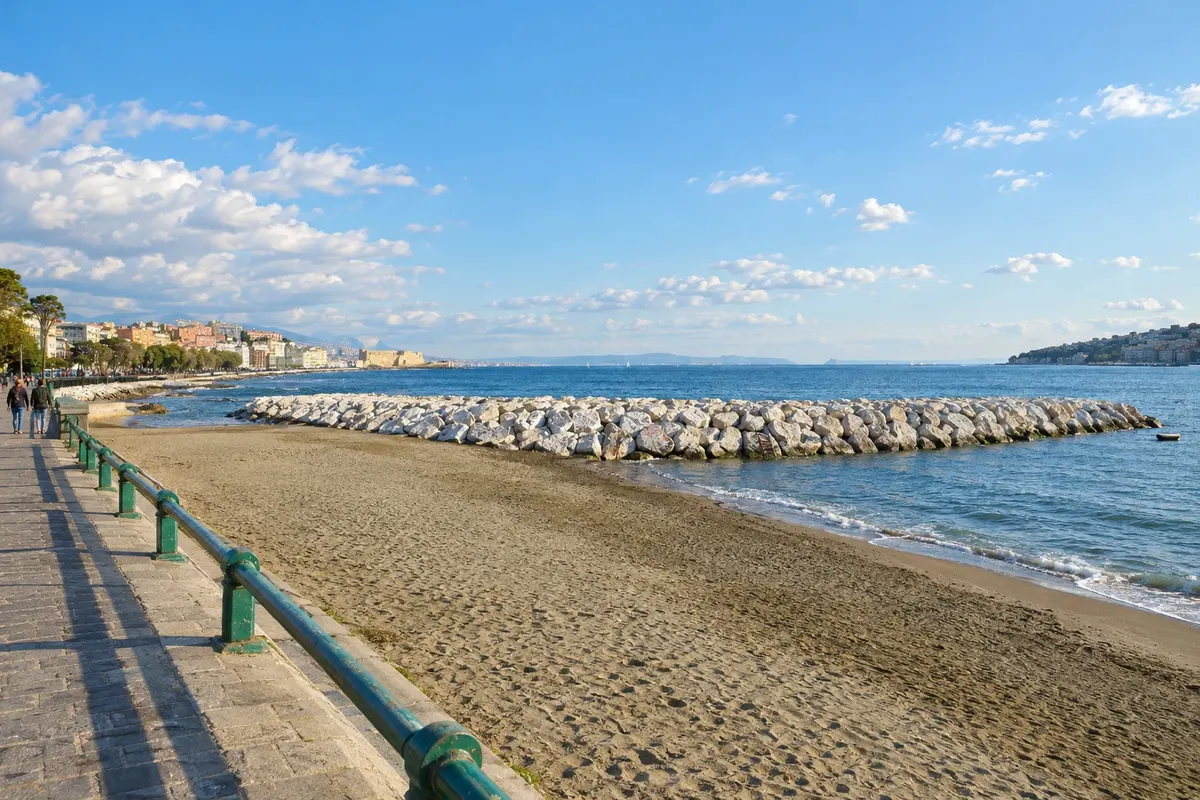
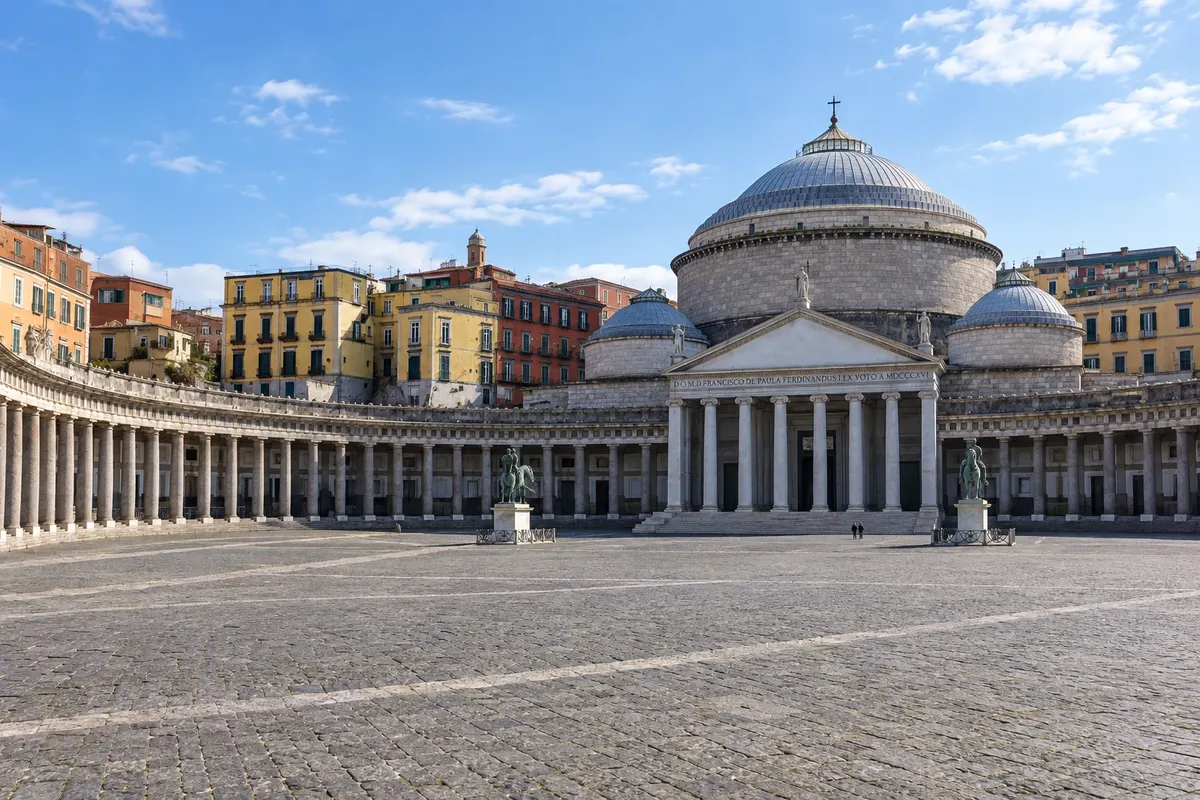
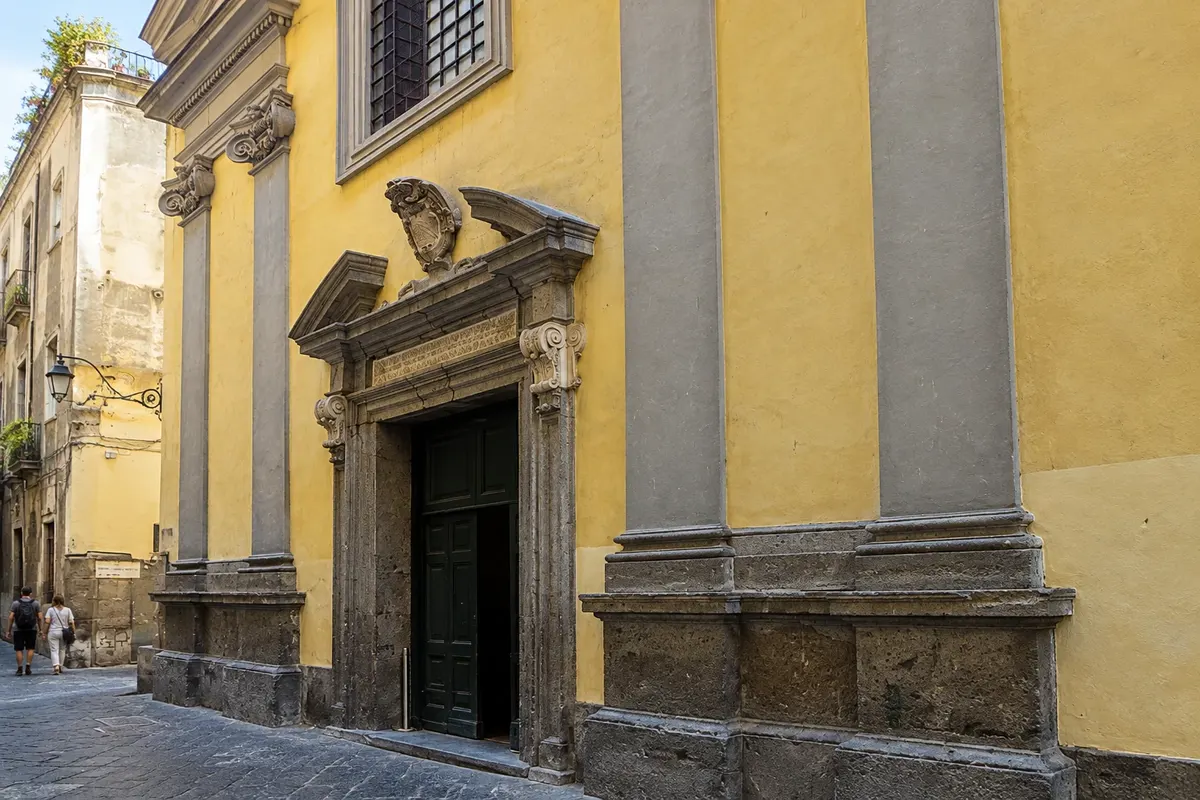
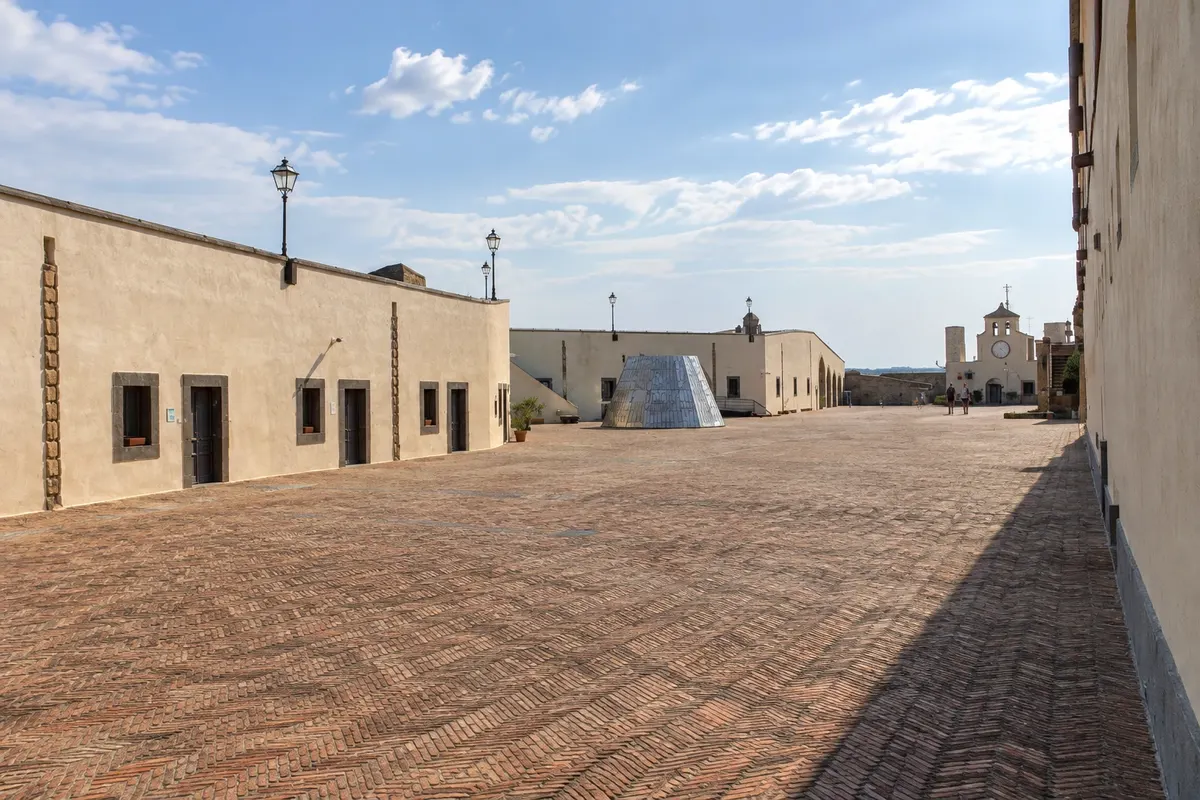
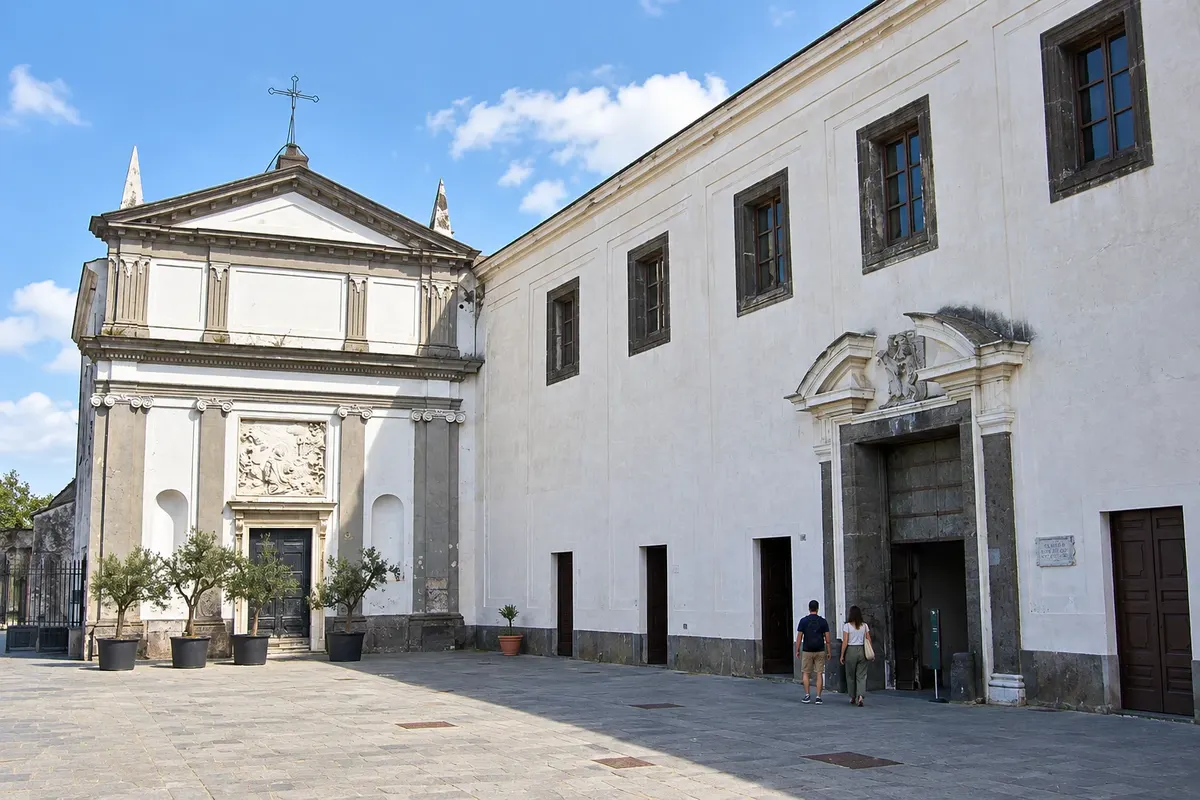
Vomero is the hill that overlooks Naples, reached in 5 minutes by the funiculars. Castel Sant'Elmo, the six-pointed star fortress built by the Spaniards in 1537 on the tuff, has from its terrace the widest view of the city: the entire gulf, Vesuvius, Capri, Ischia and the historic center below, and houses the Novecento a Napoli museum of 20th-century art. Next to it is the Certosa and Museo di San Martino, the Carthusian monastery from the 14th century remade in Baroque style by Cosimo Fanzago, with a church covered in marbles, the large cloister with the monks' cemetery surrounded by skulls, terraced gardens over the city and the museum, featuring the Cuciniello nativity scene, the largest Neapolitan nativity of the 18th century, the royal barges and the city's history section. The surrounding neighborhood is residential, with Via Scarlatti's shops and the Villa Floridiana.
Kraji na poti: Castel Sant'Elmo, Certosa and Museo di San Martino.
Vključuje: Castel Sant'Elmo and the Certosa have separate paid admission (the Certosa is closed on Wednesdays; the castle on Tuesdays). Funicular requires a separate paid ticket (urban ticket).
Nasvet: Take the funicular in the mid-afternoon, visit the Certosa first (it closes earlier) and finish on the castle terrace at sunset. Walk down the Pedamentina stairway (414 steps) to the center if there is still daylight.
Najboljši čas za obisk: Vse leto.
Capodimonte: the Bourbon palace and the art gallery
Odhod: Bus (R4, 168, C63) or Capodimonte Shuttle from the station Museum and park Približno 3 ure Dopoldne Lahko
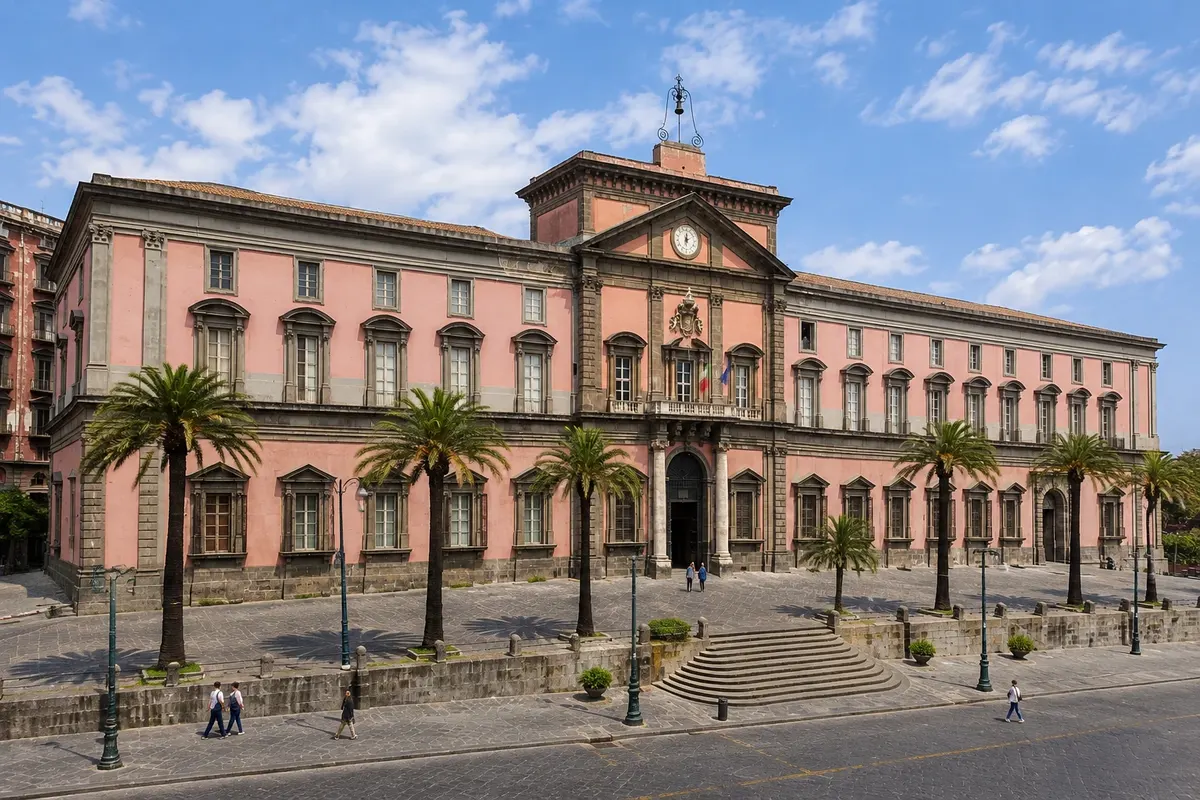
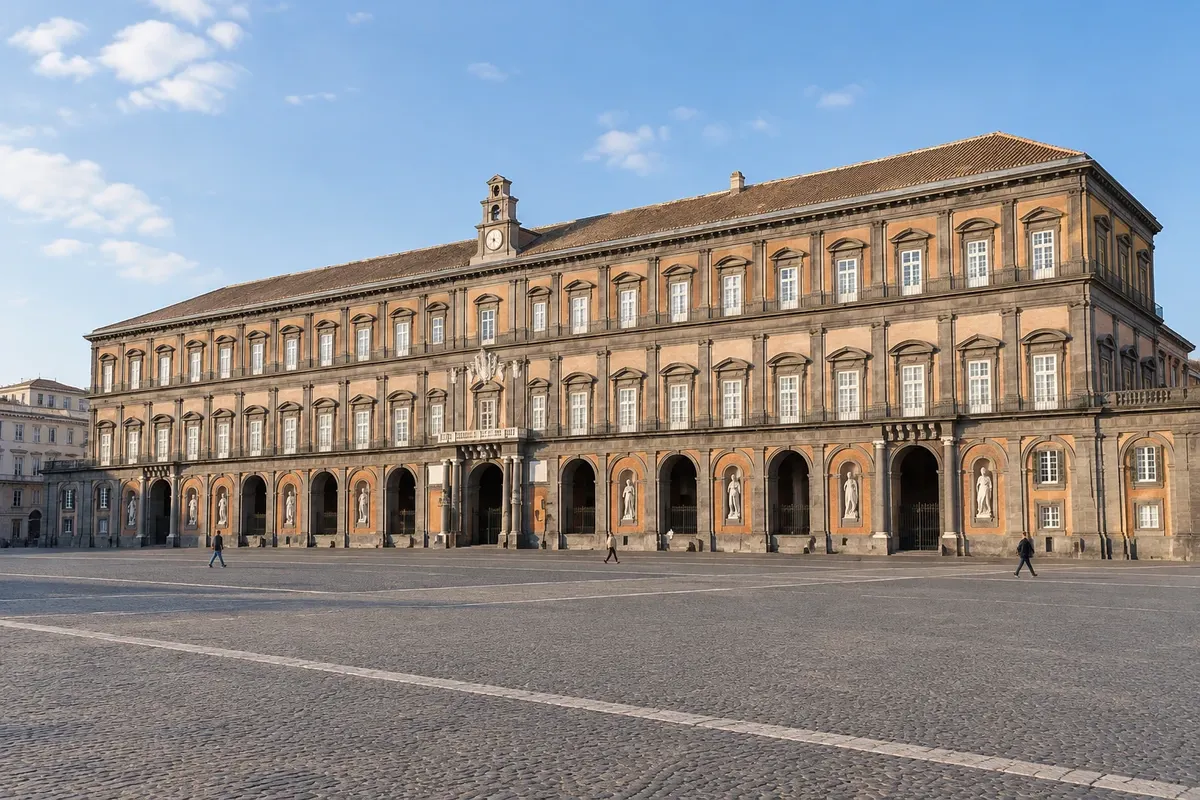
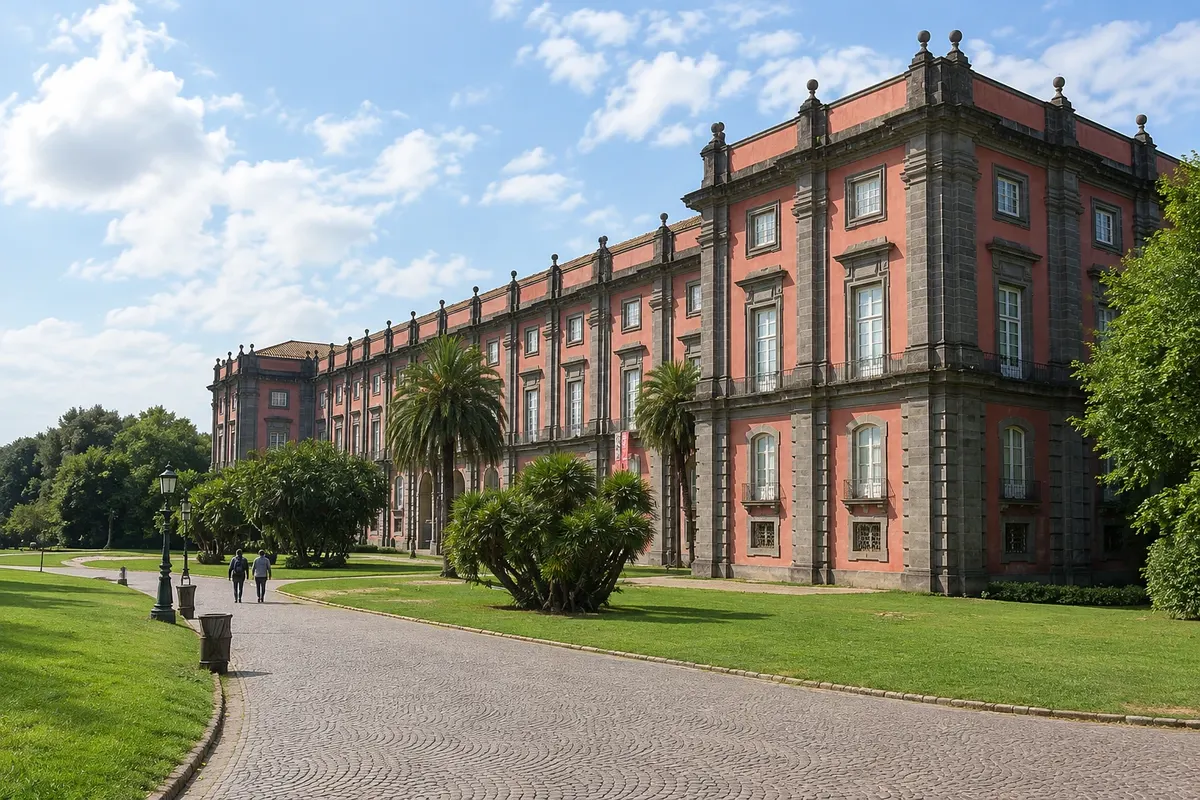
The Museo e Real Bosco di Capodimonte occupies the palace that Charles of Bourbon began in 1738, high in the city, to house the Farnese collection he inherited from his mother: Titian (Danaë, the portrait of Paul III with his nephews), Masaccio, Botticelli, Bellini, Parmigianino (Antea), Bruegel (The Parable of the Blind), Caravaggio (The Flagellation of Christ) and drawings by Raphael and Michelangelo; on the second floor, 17th-century Neapolitan painting (Ribera, Luca Giordano, Artemisia Gentileschi), the queen Maria Amalia’s porcelain room and the royal apartments. The Real Bosco, the 134-hectare park, is the city’s largest green space, with the Capodimonte porcelain factory from 1743 and views over the gulf. The museum is far from the center and therefore peaceful.
Kraji na poti: Museo e Real Bosco di Capodimonte.
Vključuje: Separate paid admission (closed on Wednesdays); free on the first Sunday of the month. The park has no charge.
Nasvet: The Capodimonte Shuttle bus departs from Piazza Garibaldi and the Museo Archeologico; check the schedule. Reserve the entire morning, with lunch in the park.
Najboljši čas za obisk: Year-round; the park is a refuge in summer.
Quartieri Spagnoli: the narrow streets, the Maradona mural and street food
Odhod: Via Toledo (Toledo metro) Neighborhood walk Približno 2 uri Popoldne moderate (hills)
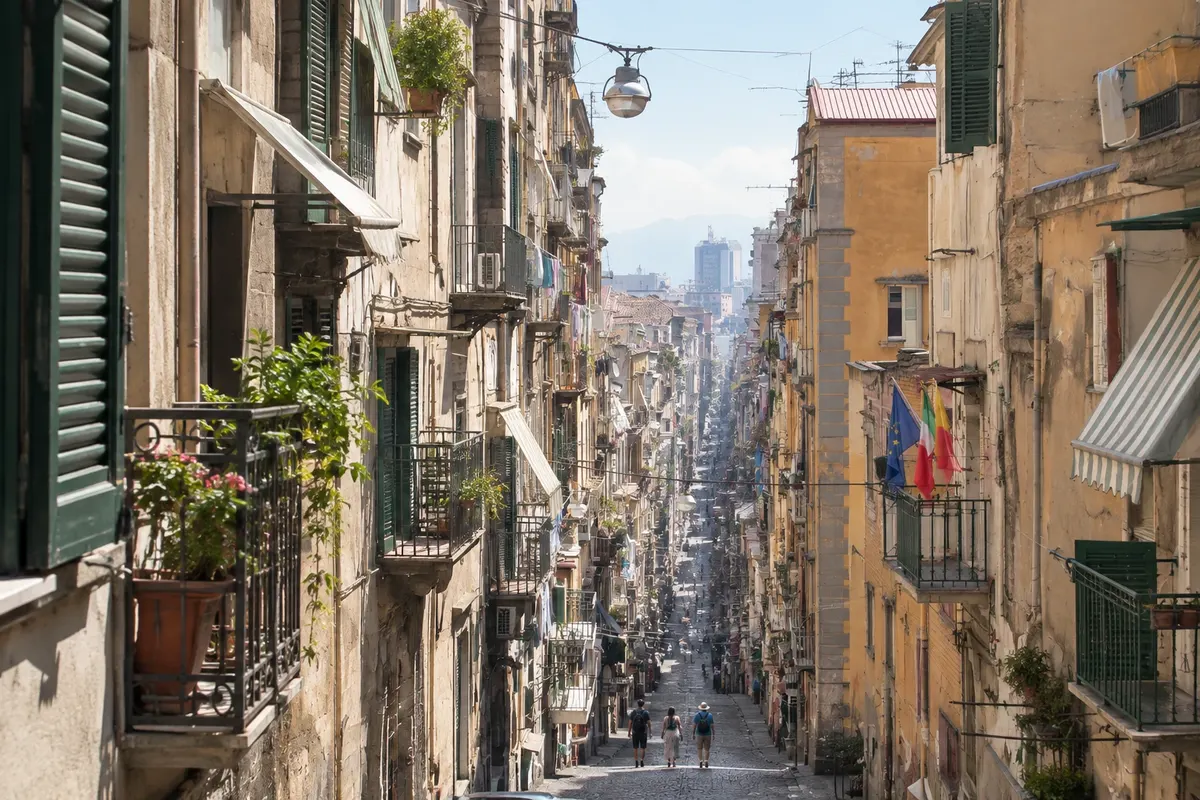
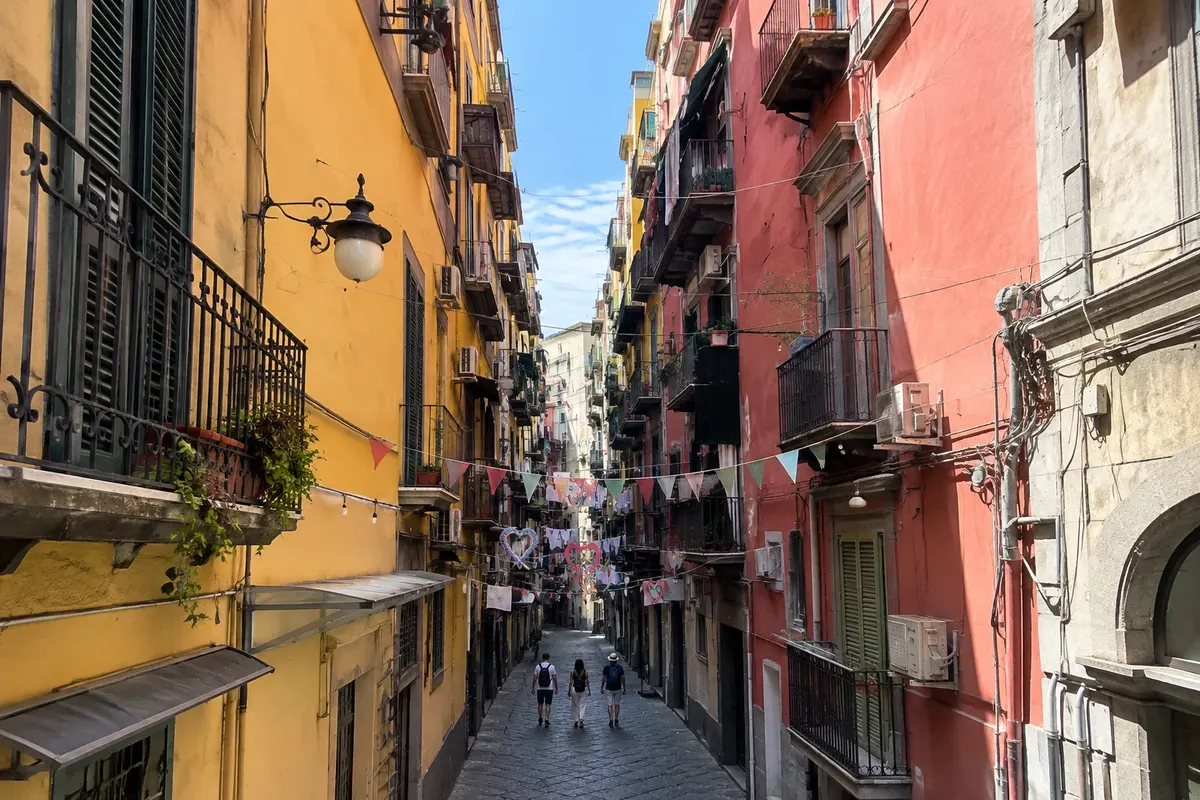
The Quartieri Spagnoli are a grid of narrow, steep streets opened in the 16th century to house Spanish troops, above Via Toledo: laundry hung between buildings, Vespas, roadside altars, grocers and neighborhood trattorie serving ragù and pasta e patate. On Via Emanuele De Deo, the Diego Maradona mural painted in 1990, after the second title, became an open-air shrine after the player's death, with photos, shirts and souvenir sellers around it; 'Largo Maradona' has queues all day. The neighborhood, which guidebooks warned against twenty years ago, is now one of the city's most visited, with guided tours and open kitchens; the Pignasecca, the street market on the edge of the neighborhood, is one of the oldest in the city.
Kraji na poti: Quartieri Spagnoli.
Vključuje: Free walk, no admission. Street food paid separately.
Nasvet: Go in the late afternoon, when the streets fill with locals; from Via Toledo, climb any side street. Eat the frittatina di pasta and the cuoppo of fried snacks from the stalls. As in any busy neighborhood, watch your bags.
Najboljši čas za obisk: Vse leto.
Pompeii: the Roman city under the ash
Odhod: Circumvesuviana, Pompei Scavi station - Villa dei Misteri (35 min from Naples) Archaeological site Približno 5 ur Ves dan moderate (uneven paving)
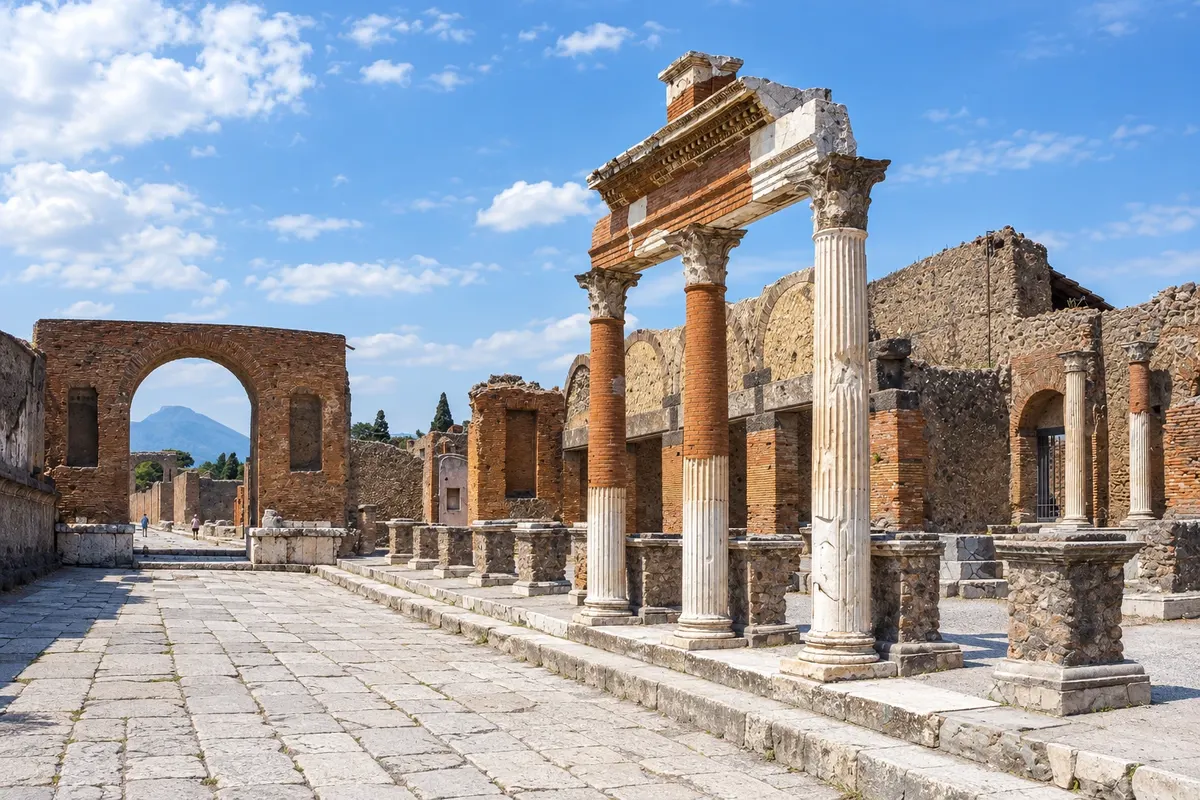
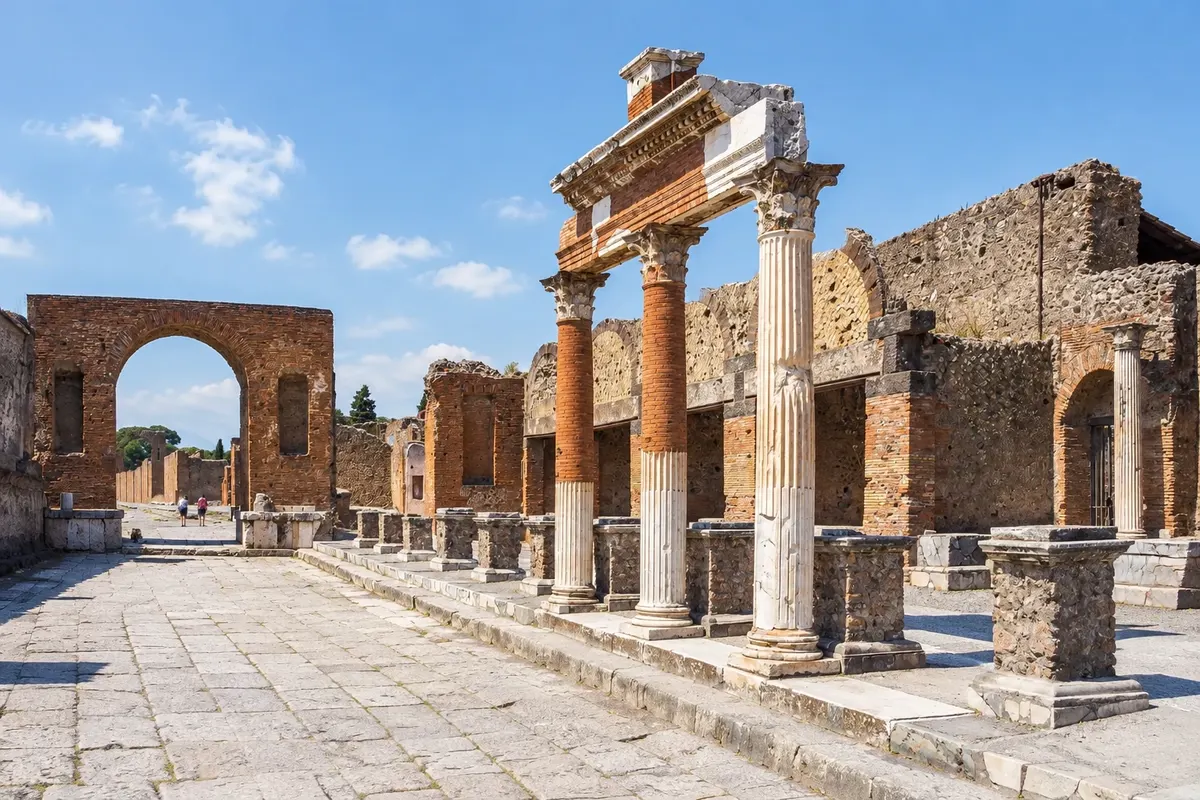
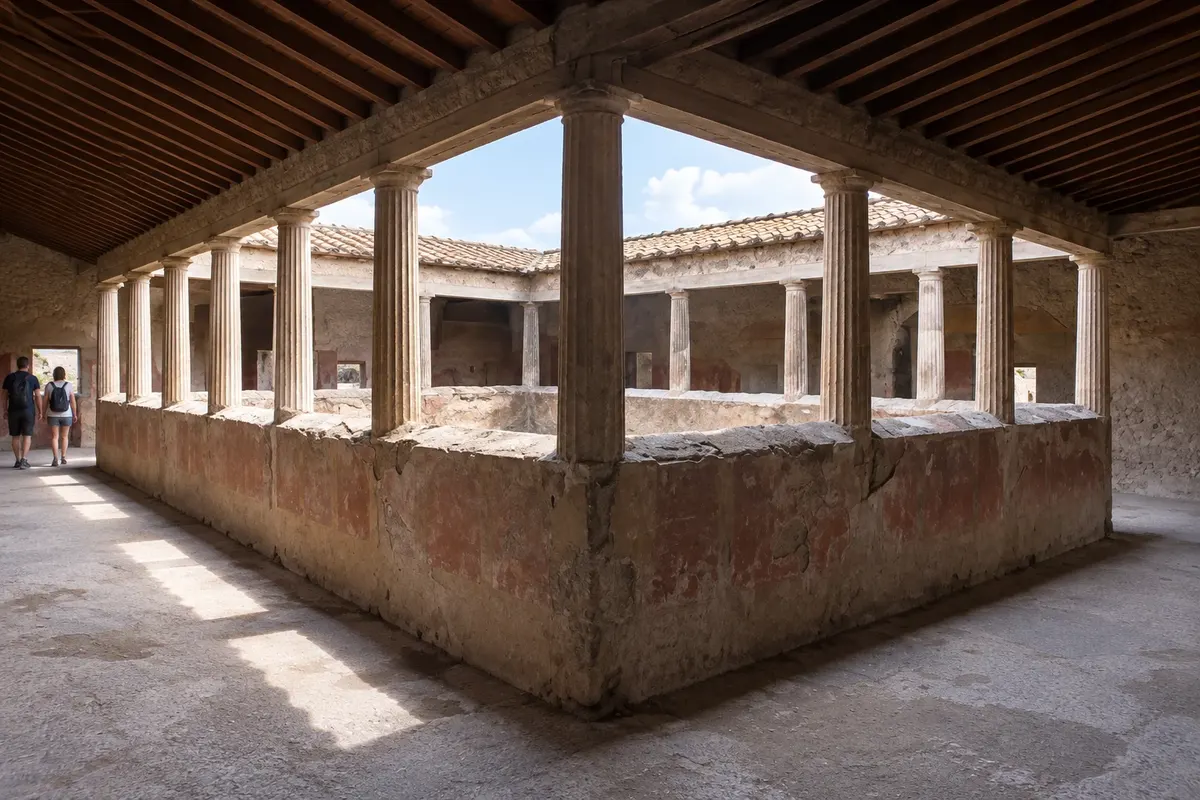
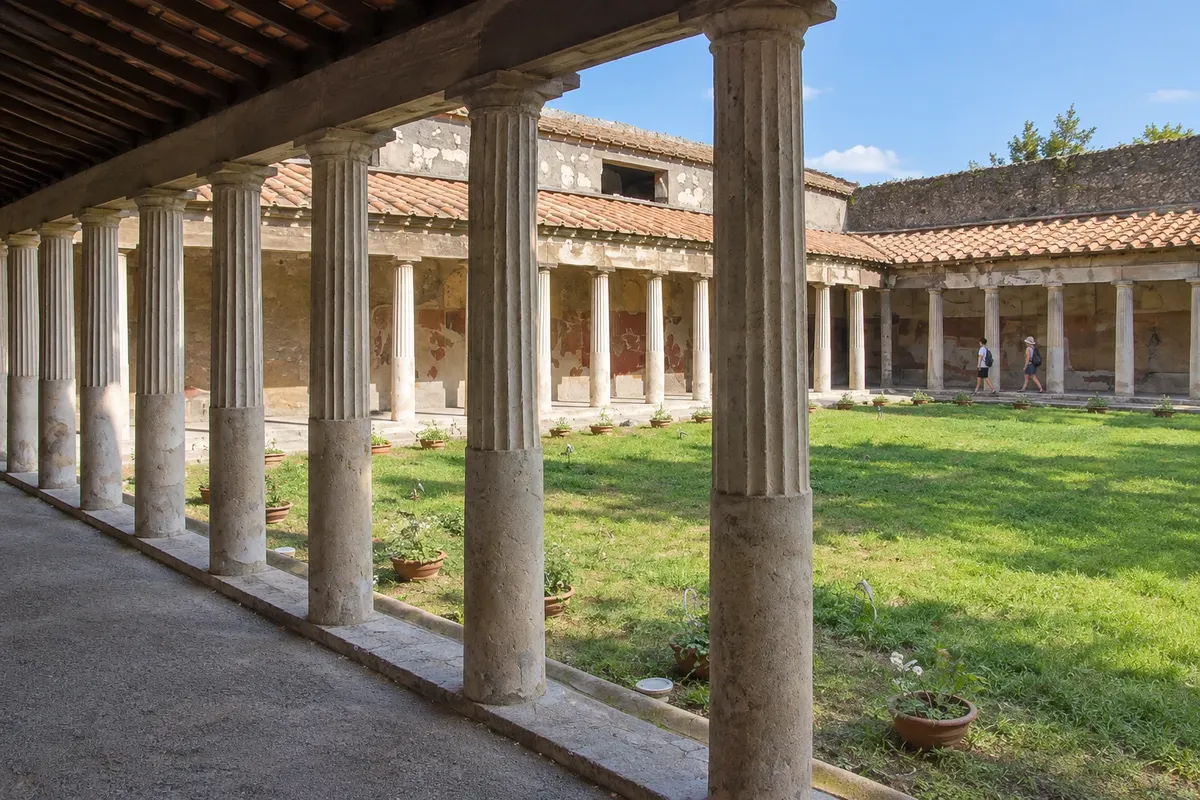
The Parco Archeologico di Pompei (Pompeii) is the town of about 12,000 inhabitants buried by the eruption of Vesuvius on August 24 (or October) in 79, discovered in 1748 and excavated since then over two thirds of the site: streets with cart ruts and stepping stones, the Forum with Vesuvius in the background, the Stabian baths, the Lupanar, the theatres, the amphitheatre for 20,000, bakeries with mills, thermopolia (food counters) and houses with frescoes and mosaics, such as the House of the Faun, the House of the Vettii and the House of the Tragic Poet, with the 'Cave Canem'. In the Garden of the Fugitives and in the Antiquarium are the plaster casts of bodies, made by filling the voids left in the ash. The Villa dei Misteri, on the outskirts, a 10-minute walk from the Porta Marina entrance, has the cycle of red frescoes depicting a Dionysian rite, the best preserved from Antiquity. Houses open on a rotation: not all are visitable on the same day.
Kraji na poti: Parco Archeologico di Pompei, Villa dei Misteri.
Vključuje: Paid admission separately, with timed entry on busy days, sold on the official website (Pompei or Pompei+ ticket, including the suburban villas); free on the first Sunday of the month. Audioguides and guided tours cost extra. Admission is nominal.
Nasvet: Enter through Porta Marina at 9:00 with water, a hat and sneakers; pick up the paper map at the entrance and choose a route of 3 to 4 hours (the website suggests itineraries). There are drinking fountains and a snack bar in the Forum. The park limits the number of visitors per day: buy in advance.
Najboljši čas za obisk: All year; from April to June and September to October the heat is bearable; in July and August go early and leave in the afternoon. In summer there are some nighttime openings on select days.
Herculaneum: the town buried by volcanic mud and ash
Odhod: Circumvesuviana, Ercolano Scavi station (20 min from Naples) Archaeological site Približno 2 uri in pol Dopoldne easy (compact site)
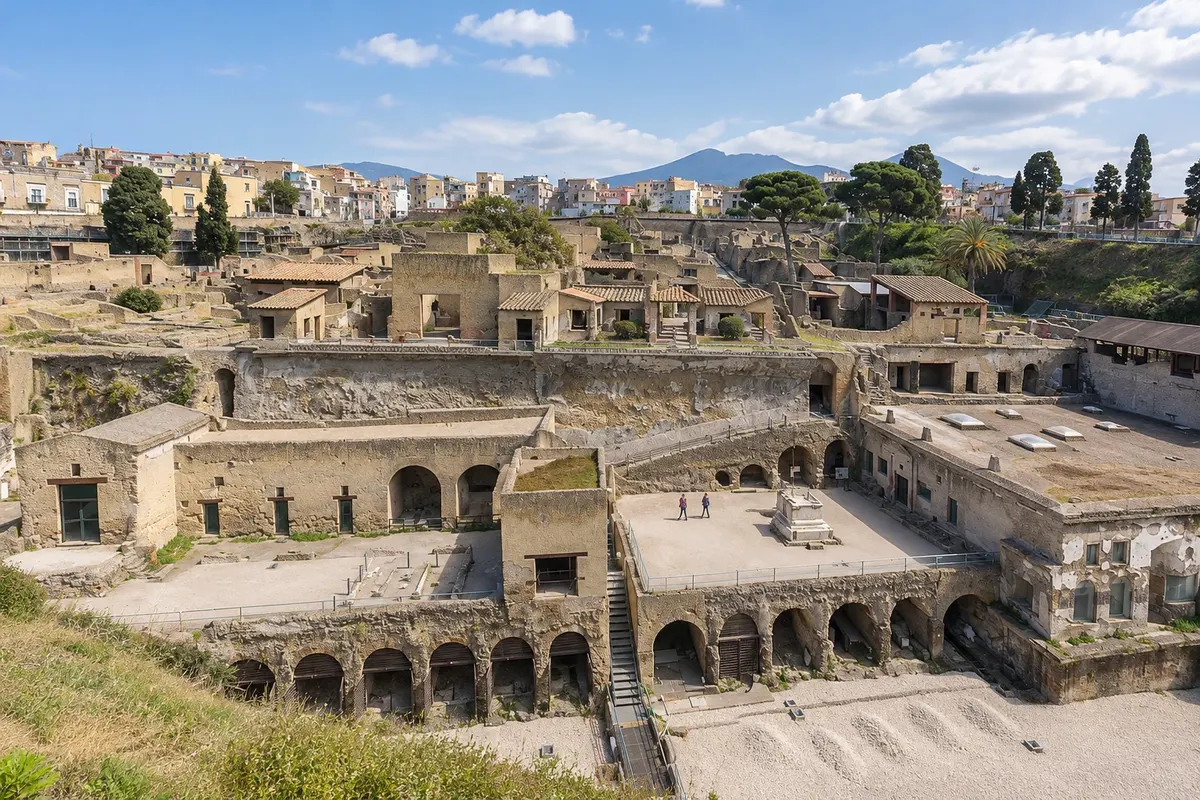
The Parco Archeologico di Ercolano (Herculaneum) is the seaside town of 4,000 residents buried under mud and volcanic ash flows at 400 °C, which carbonized and preserved wood, textiles, food and the upper floors of houses—something Pompeii lacks: wooden doors, beams, beds and shelves; the House of the Relief of Telephus; the House of Neptune and Amphitrite, with its blue mosaic; the baths; and the College of the Augustales. In the arches by the old shoreline are the skeletons of about 300 people who waited for rescue by sea. The site has 4.5 hectares excavated (the rest lies under the modern town of Ercolano), is compact and can be seen in two to three hours, with shade in several houses, and is usually quieter than Pompeii. From the station, the entrance is a 10-minute downhill walk along Via IV Novembre.
Kraji na poti: Parco Archeologico di Ercolano.
Vključuje: Separate paid admission (ticket office on site or online); free on the first Sunday of the month. Audio guide available for an extra fee.
Nasvet: Do Herculaneum in the morning and Vesuvius in the afternoon, by the bus that departs from Ercolano Scavi station: they are on the same line. The MAV, the virtual museum next door, reconstructs the towns in 3D.
Najboljši čas za obisk: Vse leto.
Vesuvius: the ascent to the Gran Cono
Odhod: Ercolano Scavi (Vesuvio Express bus) or Pompei (EAV bus) Bus and walk to the crater Približno 4 ure Dopoldne moderate (30 min ascent on gravel)
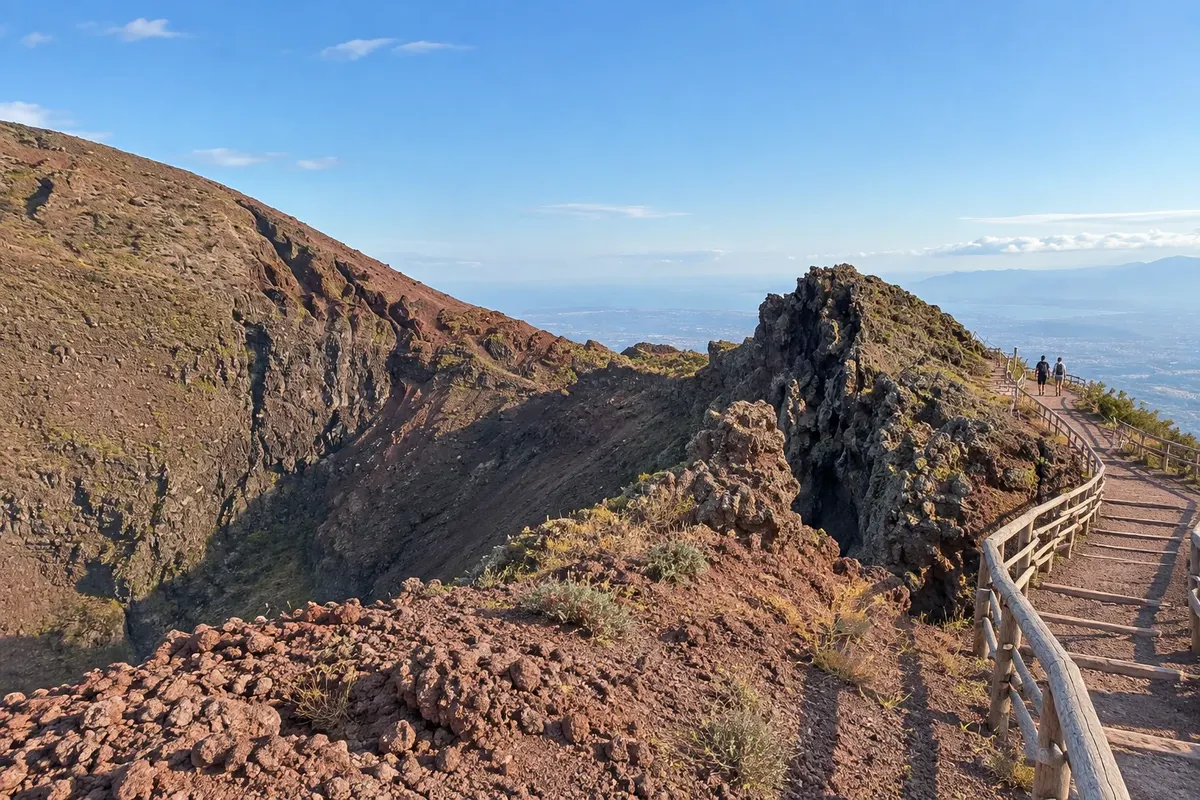
Vesuvius, at 1,281 m, is the active volcano that destroyed Pompeii and Herculaneum in AD 79, had its last eruption in 1944, and is monitored by the Vesuvius Observatory; the National Park protects the cone. Buses climb to the parking area at 1,000 m, and from there the gravel trail of about 800 m rises in 25–30 minutes to the rim of Vesuvius — the Gran Cono (Great Cone), a crater 500 m in diameter and 230 m deep, with fumaroles — and the walk along the rim looks out over the Gulf of Naples, the towns below, Capri and the Sorrento peninsula. Volcanologist guides accompany groups at the top. Access is by timed reservation and limited numbers; with strong wind, rain or fog the park closes the trail, and in winter visibility often fails.
Kraji na poti: Vesuvius – Gran Cono.
Vključuje: Park entrance paid separately, with a timed reservation, only on the official website (vesuviopark.vivaticket.it); buses are paid separately (Vesuvio Express from Ercolano, EAV from Pompei).
Nasvet: Buy the park ticket before taking the bus; without it you cannot enter. Bring a jacket even in summer (it’s windy at the top), closed sneakers, and water. Go in the morning, before the afternoon clouds; on cloudy days the hike is not worthwhile.
Najboljši čas za obisk: From April to October there are more clear days; in winter, only with a forecast for clear skies.
Sanctuary of Pompeii and the modern town
Odhod: Pompei (Circumvesuviana or Trenitalia station) Visit to the shrine Približno 1 uro Popoldne Lahko
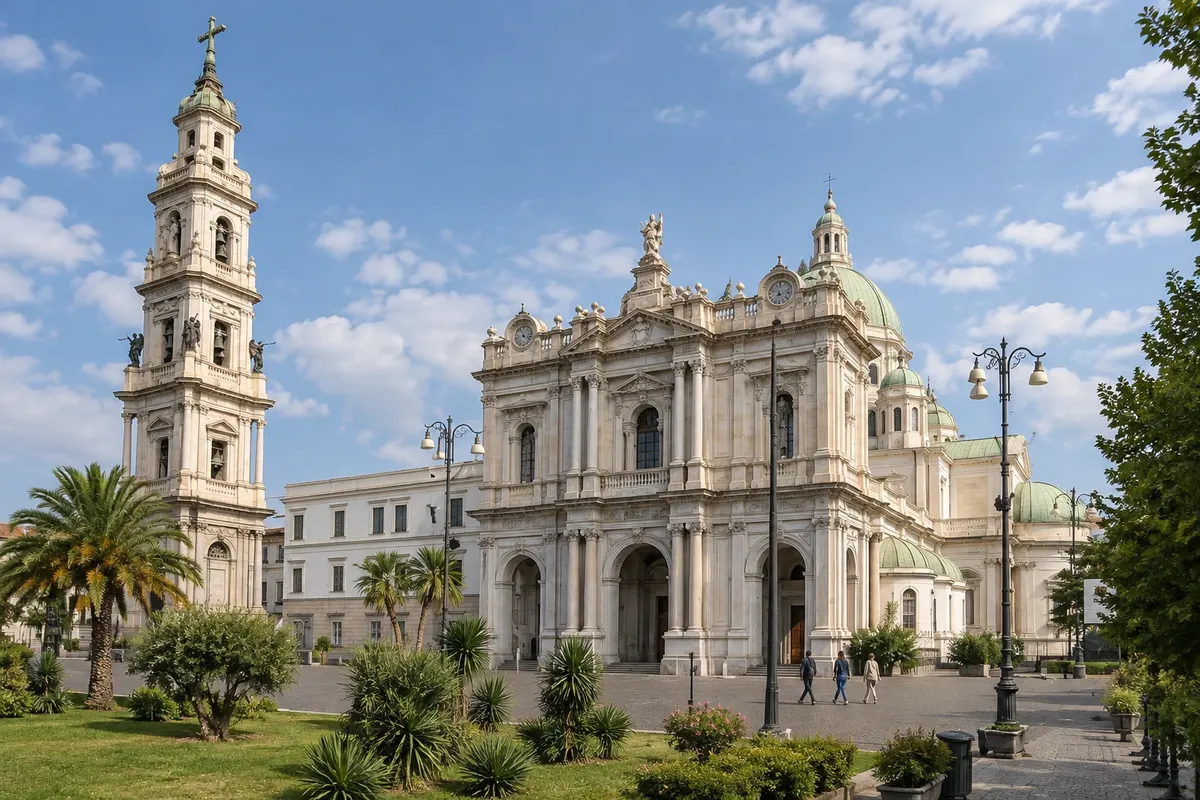
The eclectic-style basilica, with a 1901 façade and an 80 m bell tower (with elevator and views over the excavations and Vesuvius), houses the painting of the Virgin of the Rosary in a gold-and-stone frame; the Supplication to the Virgin of Pompeii is recited on May 8 and on the first Sunday of October, when the square fills. The modern town has a square with cafés and souvenir shops; the excavations are a 15-minute walk away.
Kraji na poti: Santuario della Beata Vergine del Rosario di Pompei.
Vključuje: Basilica free of charge; climb to the bell tower paid separately. Free walk.
Nasvet: Combine with the day at the excavations: the basilica is a 15-minute walk from the exit at Piazza Anfiteatro. On the days of the Supplication (May 8 and the first Sunday of October) traffic and trains become very crowded.
Najboljši čas za obisk: Vse leto.
Capri: Piazzetta, Giardini di Augusto and the Faraglioni
Odhod: Marina Grande (ferry or hydrofoil from Naples or Sorrento) Round-trip boat trip and walk on the island about 7 hours Ves dan moderate (stairs and hills)
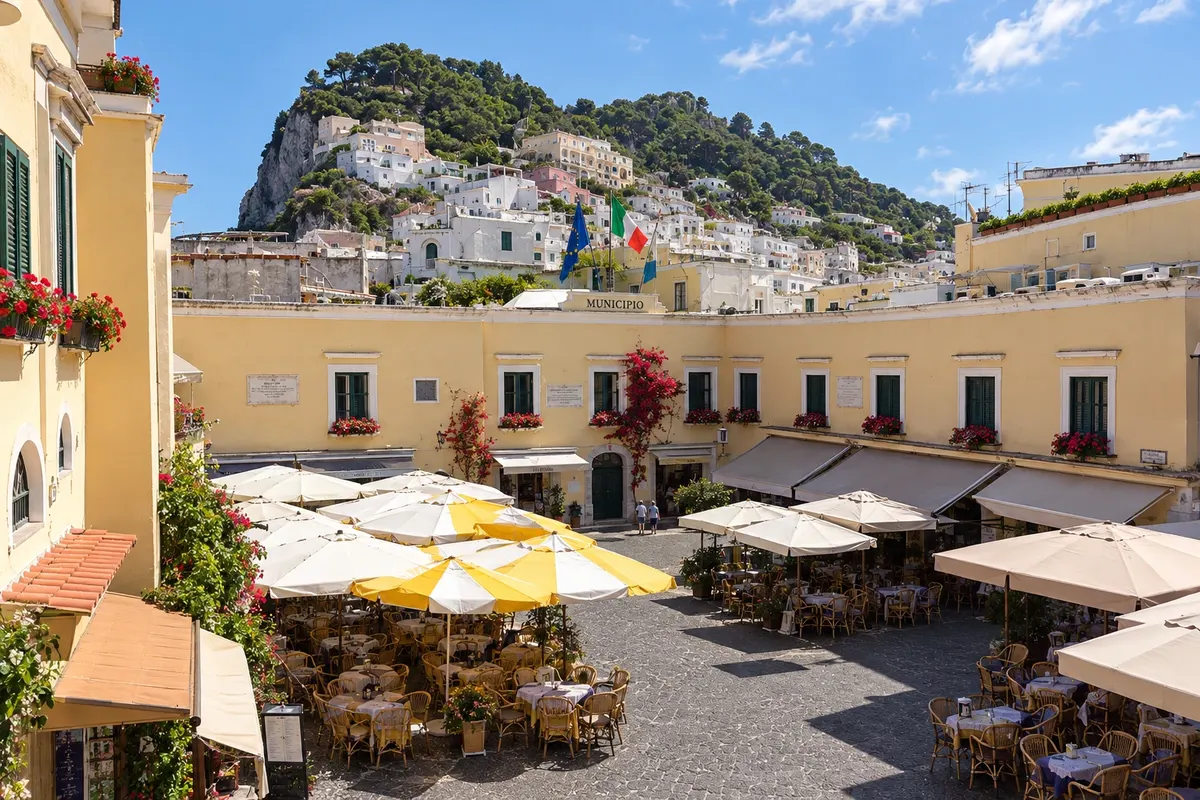
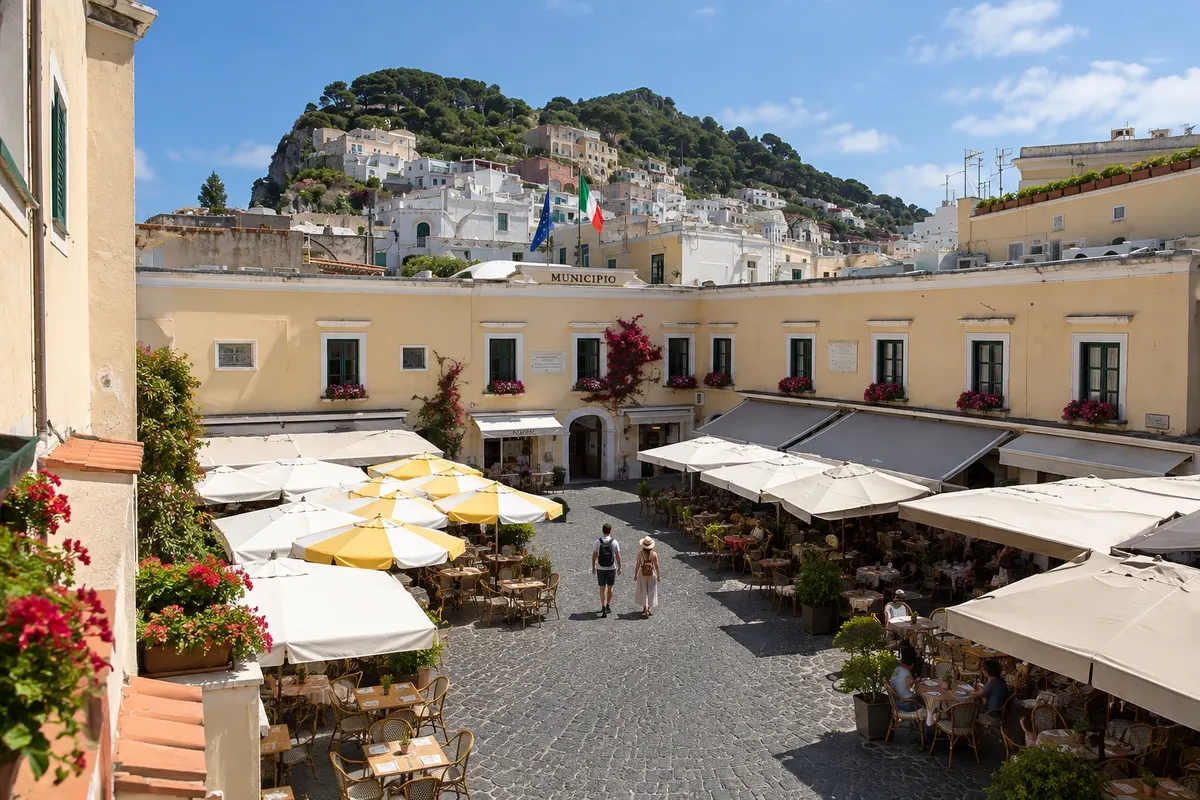
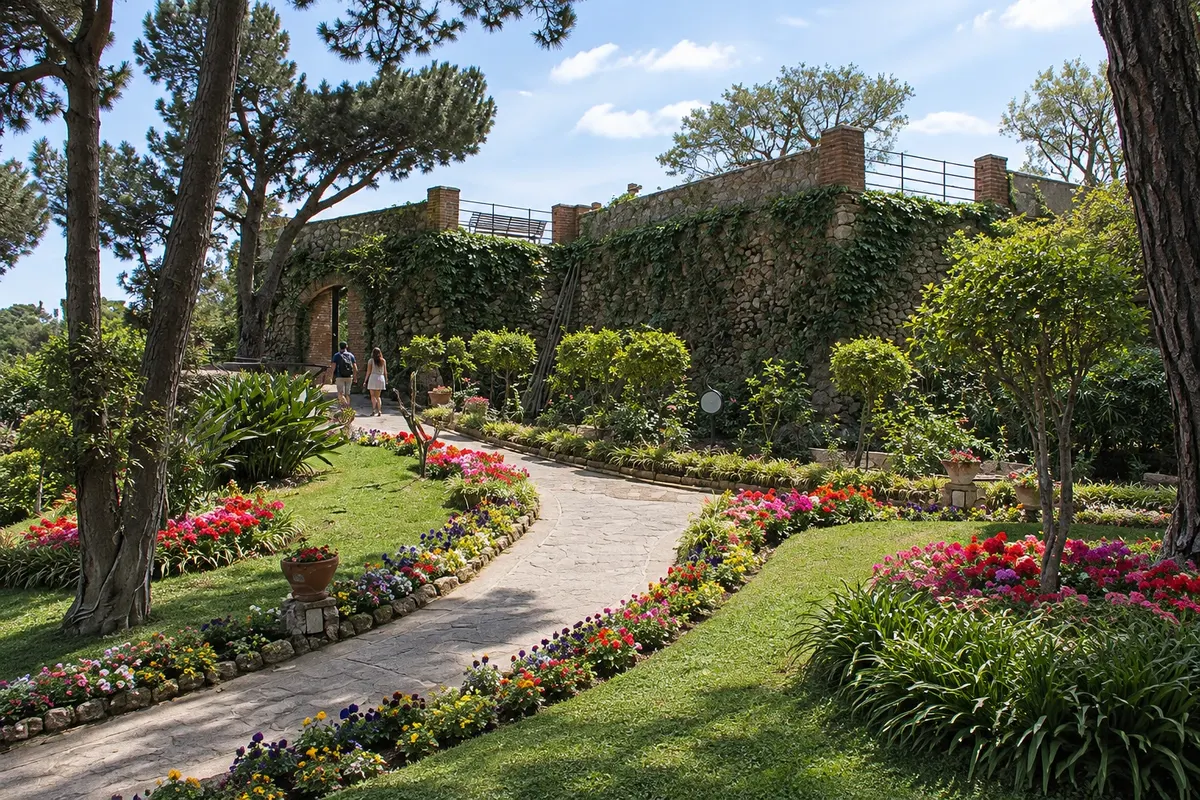
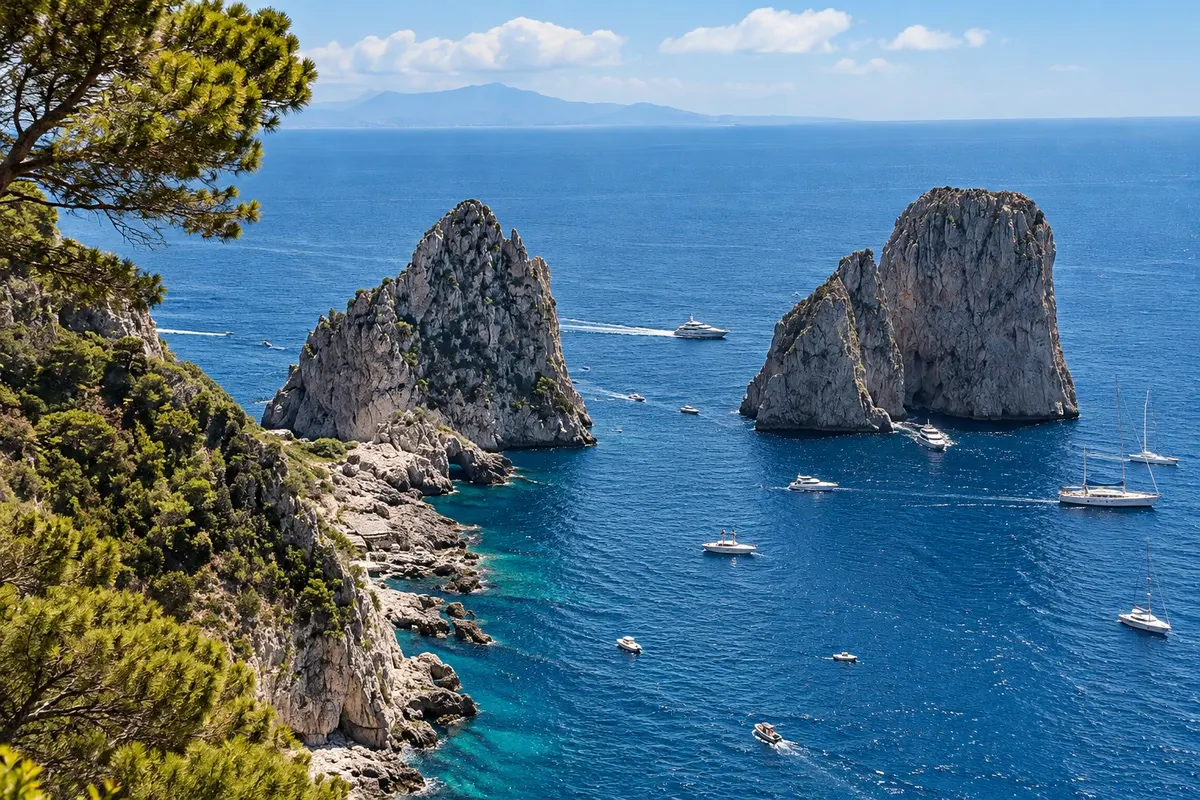
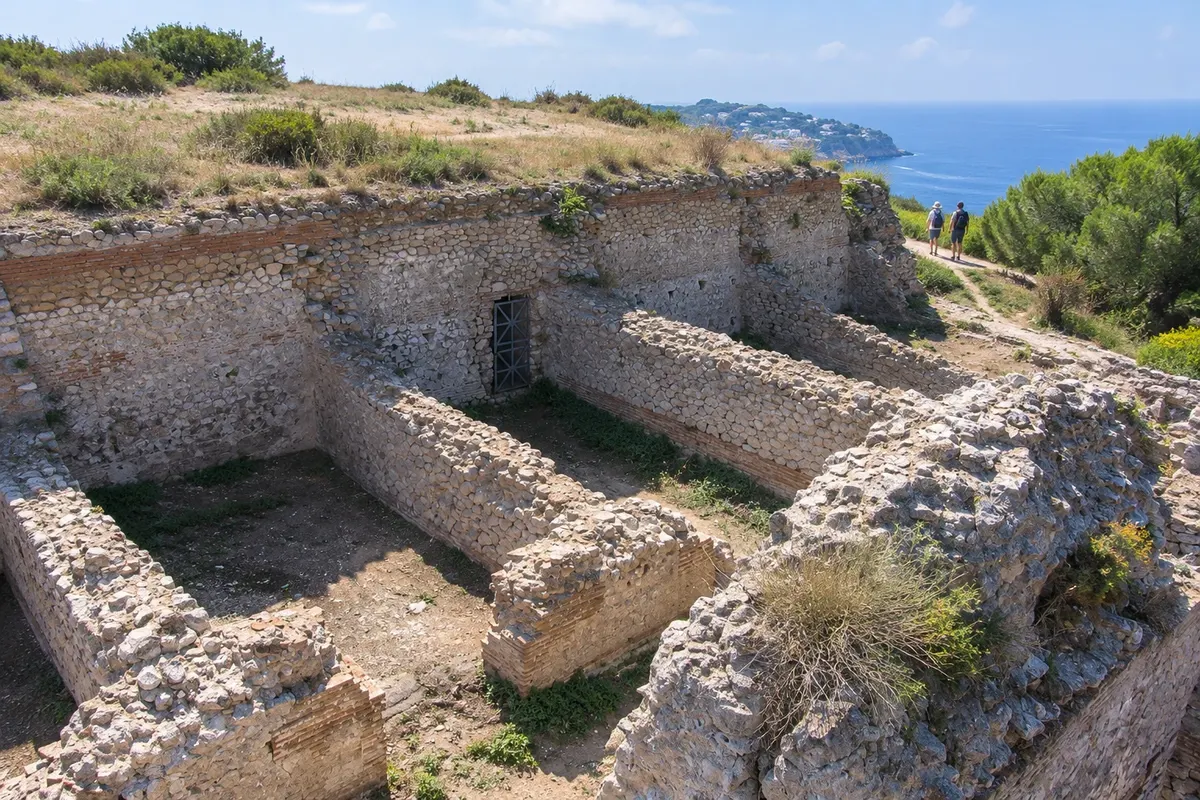
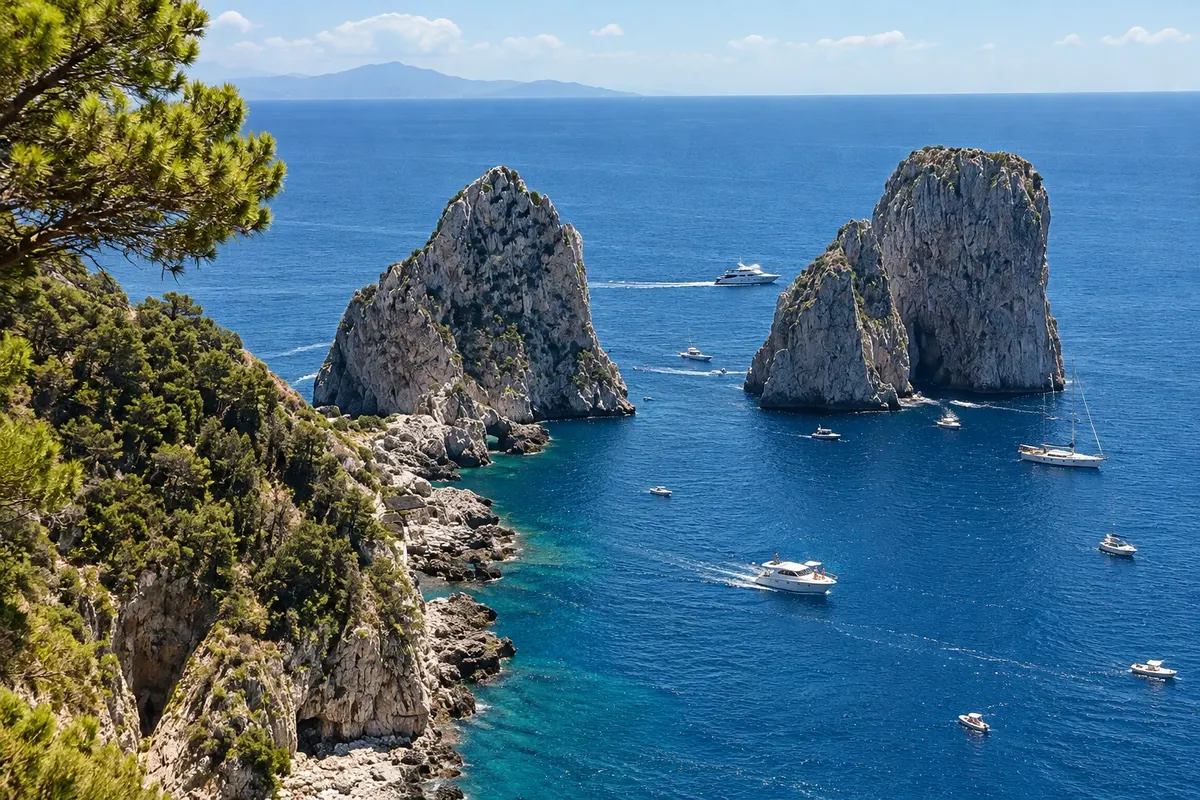
Capri, the 10 km² island opposite Sorrento, is reached in 50 minutes by hydrofoil from Naples or 25 minutes from Sorrento, arriving at Marina Grande, from where the funicular climbs in 4 minutes to the Piazzetta di Capri (Piazza Umberto I), with its cafés, the clock tower and the view over the gulf. Via Camerelle, lined with designer shops, leads to the Giardini di Augusto, the terraced 1918 gardens with the island's most photographed view: the Faraglioni di Capri, the three sea stacks up to 109 m high, and Via Krupp, the switchback road that descends to Marina Piccola. Via Tragara is the panoramic walk to the viewpoint over the Faraglioni. At the eastern tip is Villa Jovis, the residence of Emperor Tiberius, who ruled Rome from Capri between 27 and 37, a 45-minute uphill walk, with the Salto di Tiberio, the 300 m cliff. The island fills with day visitors between 10:00 and 17:00; those who stay overnight see a different Capri.
Kraji na poti: Piazzetta di Capri, Giardini di Augusto, Faraglioni di Capri, Villa Jovis.
Vključuje: Ferry or hydrofoil paid separately (reservation recommended in high season); funicular and bus paid separately. Giardini di Augusto and Villa Jovis have small entry fees.
Nasvet: Take the first hydrofoil of the morning and the last one of the afternoon; on rough seas boats are delayed or canceled. Use buses and the funicular (tickets at Marina Grande) and avoid taxis, which are expensive. Via Krupp is often closed because of rockfall: the view from the gardens is what’s worth it.
Najboljši čas za obisk: From April to October; in July and August the island is crowded; from November to March many hotels and restaurants close and boat services are reduced.
Anacapri, Villa San Michele and Monte Solaro by chairlift
Odhod: Capri (bus from the Piazzetta or from Marina Grande to Anacapri) Upper village, house-museum and chairlift Približno 4 ure Dopoldne easy (chairlift)
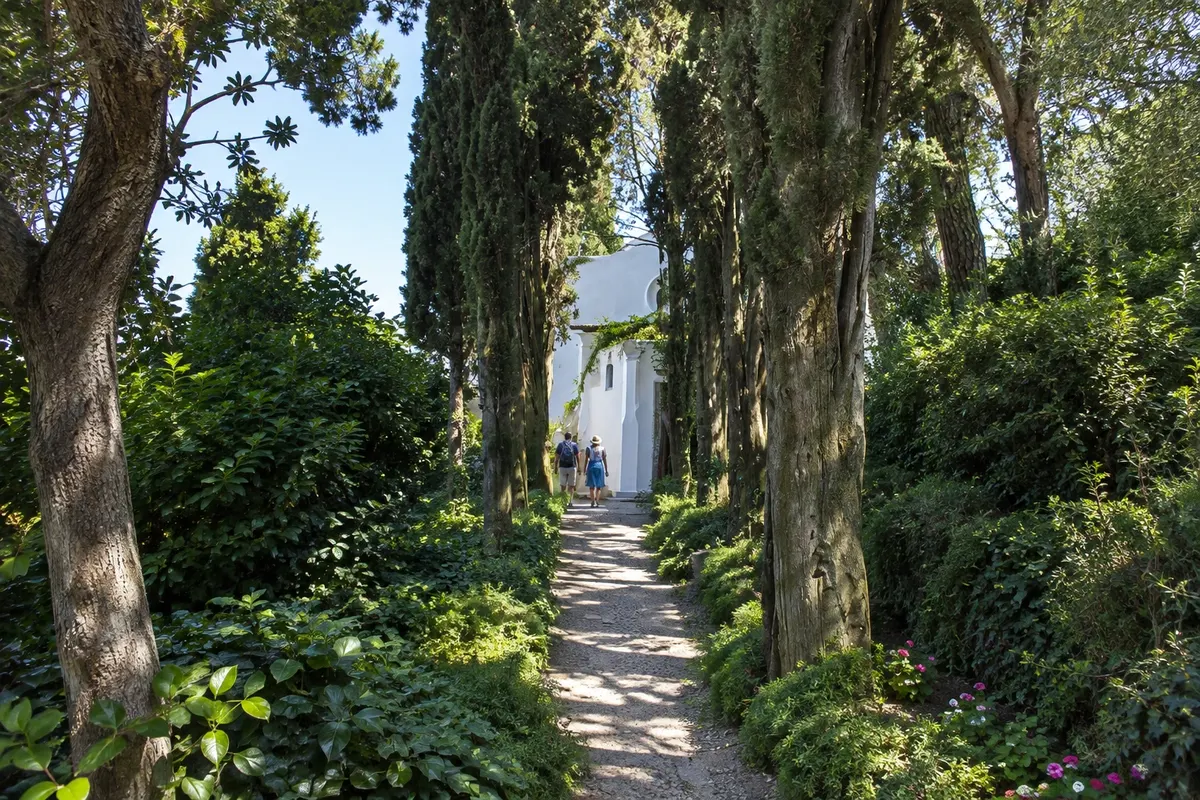
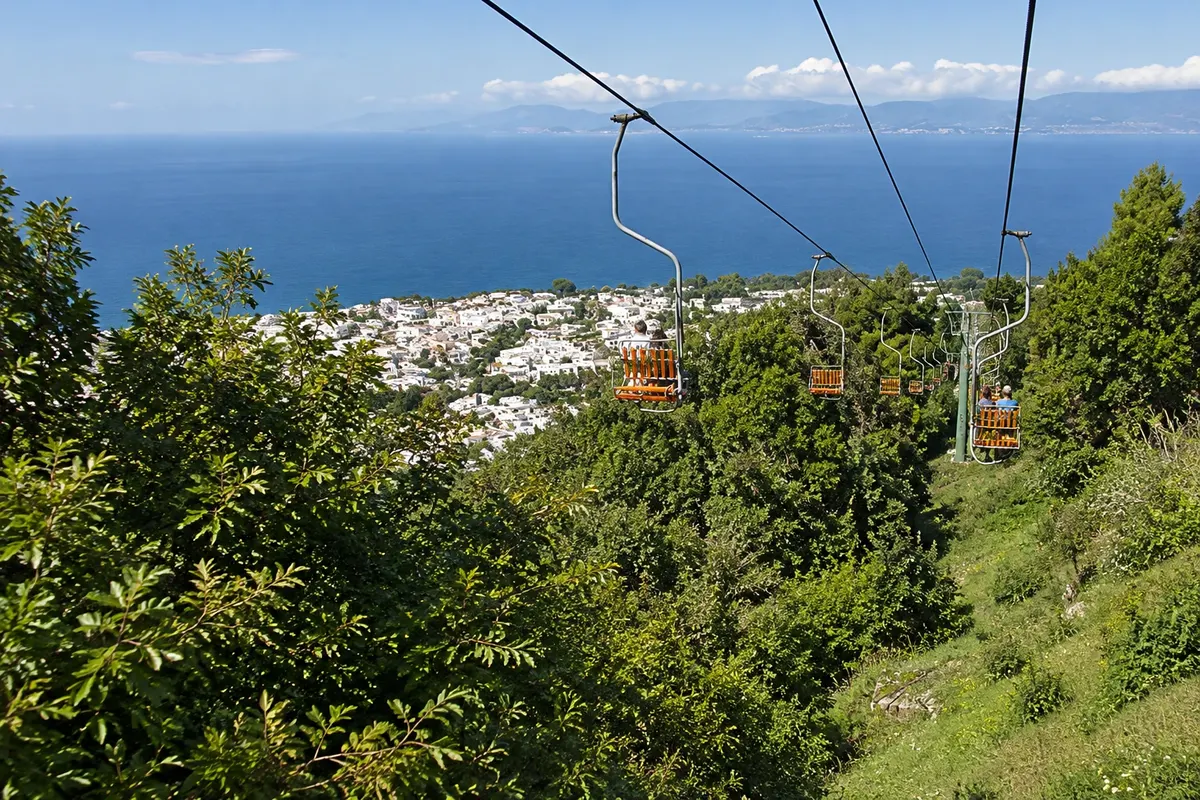
Anacapri, the upper village of the island, at 275 m, is quieter than Capri and is reached by the bus that climbs the winding coastal road. Villa San Michele, the house the Swedish physician Axel Munthe built between 1896 and 1910 atop a Roman villa, with its chapel, pergola, the Egyptian granite sphinx facing the gulf and the garden, is a museum and houses the Swedish foundation; Munthe’s book, A história de San Michele, was a worldwide bestseller. Piazza Vittoria has the single-seat chairlift that rises in 13 minutes to Monte Solaro, the island’s highest point, at 589 m, with 360-degree views of the Faraglioni, the gulfs of Naples and Salerno and, on a clear day, Calabria; the descent on the trail takes 1 hour, passing the hermitage of Santa Maria a Cetrella. The church of San Michele, in Anacapri, has a 1761 majolica floor with the Earthly Paradise, seen from above from a choir.
Kraji na poti: Villa San Michele, Monte Solaro.
Vključuje: Villa San Michele, the chairlift (return or one-way) and the church of San Michele have separate entrance fees. Bus costs extra.
Nasvet: Go to Anacapri in the morning, before the tour groups, ride up Monte Solaro with a clear sky and walk down. The Capri–Anacapri bus fills up: board at Marina Grande direct to Anacapri if you arrive by sea.
Najboljši čas za obisk: From April to October; the chairlift operates year-round, with reduced hours in winter and closed in strong winds.
Grotta Azzurra and the island tour by boat
Odhod: Marina Grande, Capri Boat trip with entry to the grotto Približno 2 uri in pol morning (best light until early afternoon) Lahko
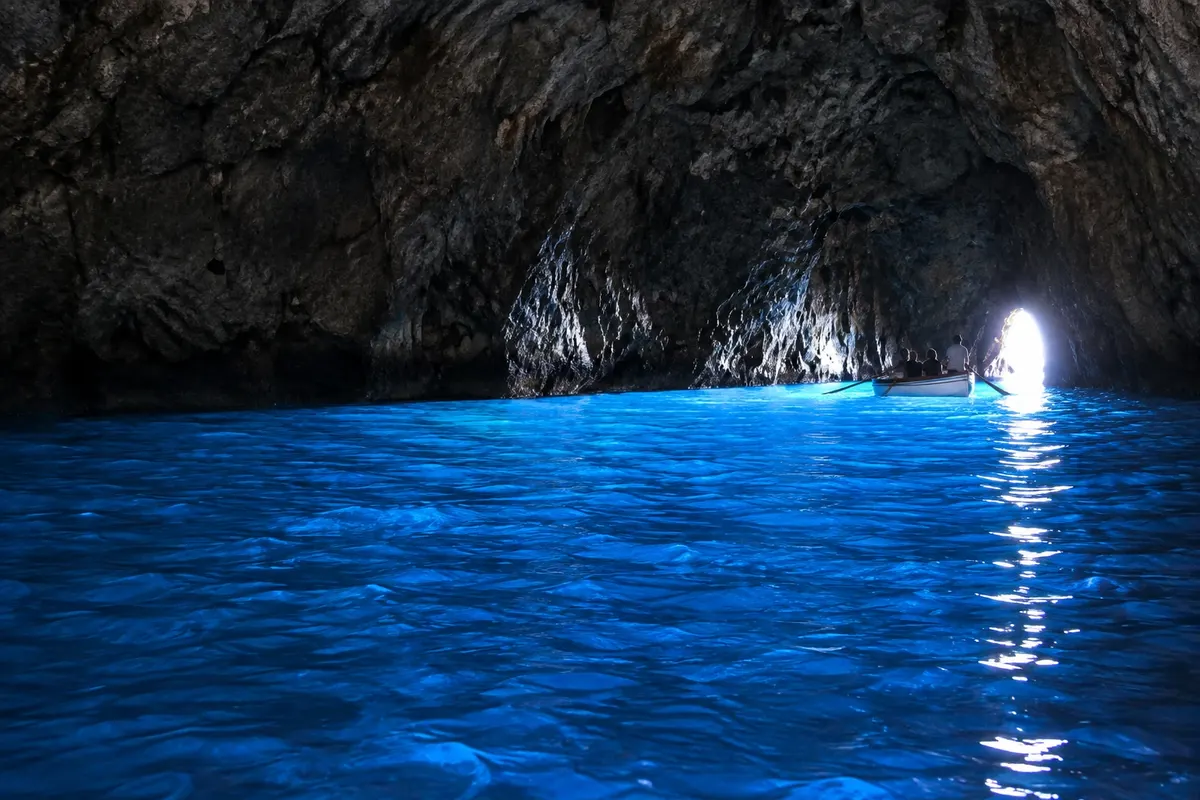
The Grotta Azzurra (Blue Grotto) is the sea cave with an entrance about 1 m above the water through which rowboats enter by leaning back passengers: inside, sunlight enters through a submerged opening and lights the water an electric blue, over 54 m long and 15 m high; the Romans used it as Tiberius’s nymphaeum, with statues on the floor. Access is only with authorized boatmen, from launches or from the point on the Anacapri road, and depends on the sea: with waves or high tide the grotto closes, which is common. The Giro dell'isola in barca (island boat tour) of 2 hours, leaving from Marina Grande, passes the Grotta Bianca, Grotta Verde and Grotta del Corallo, the natural arch, Villa Malaparte on Punta Massullo and under the arch of the Faraglioni, and can include the stop at the Grotta Azzurra, with a switch to the rowboat.
Kraji na poti: Grotta Azzurra, Giro dell'isola in barca, Faraglioni di Capri.
Vključuje: Boat tour paid separately, per person (group) or per boat (private); entry to the Grotta Azzurra paid separately on site (archaeological site ticket plus the rowboat). Closes in rough seas.
Nasvet: Do the tour in the morning, when the grotto is more often open and the light is better; the line of boats at the grotto entrance can take an hour in July and August. Check at Marina Grande on the day whether the grotto is open before buying a tour that includes a stop there.
Najboljši čas za obisk: From April to October; the grotto closes in rough seas in any month.


 Brazilija
 Antarktika
 Argentina
 Bolivija
 Čile
 Kolumbija
 Ekvator
 Gvajana
 Francoska Gvajana
 Falklandski otoki (Malvini)
 Paragvaj
 Peru
 Surinam
 Urugvaj
 Venezuela
 Nemčija
 Avstrija
 Belgija
 Hrvaška
 Danska
 Slovaška
 Slovenija
 Španija
 Finska
 Francija
 Grčija
 Nizozemska
 Madžarska
 Irska
 Islandija
 Luksemburg
 Norveška
 Poljska
 Portugalska
 Združeno kraljestvo
 Češka
 Švedska
 Švica
 Turčija
 Bermudi
 Kanada
 Združene države Amerike
 Grenlandija
 Mehika
 Sveta Peter in Mihael
 Dominikanska republika
 Japonska
 Južnoafriška republika
 Egipt
 Avstralija
 Fidži
 Nova Zelandija
 Papua Nova Gvineja