Lisbon

Lisbon · Portugalska

Lisbon

The Portuguese capital on the banks of the Tejo: hills with yellow trams, the Manueline monuments of Belém, the Castelo de São Jorge and Alfama's fado houses.

Lisbon and the South

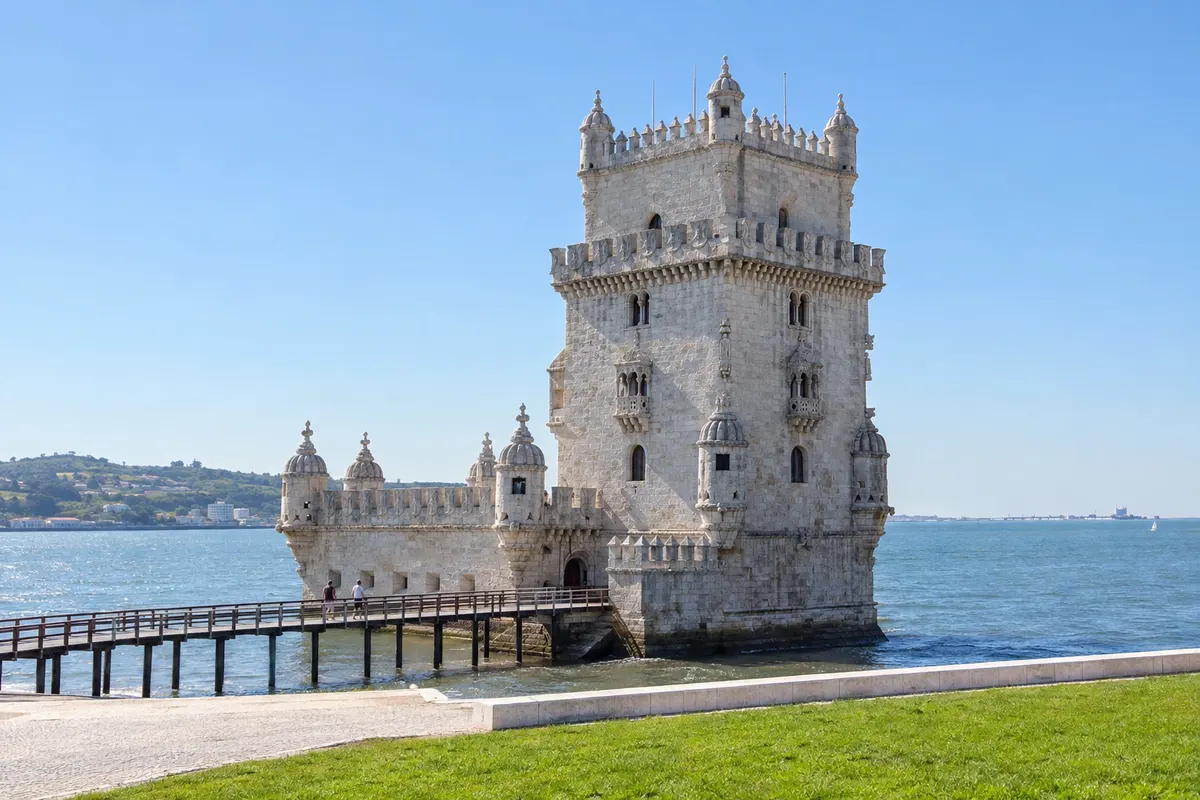
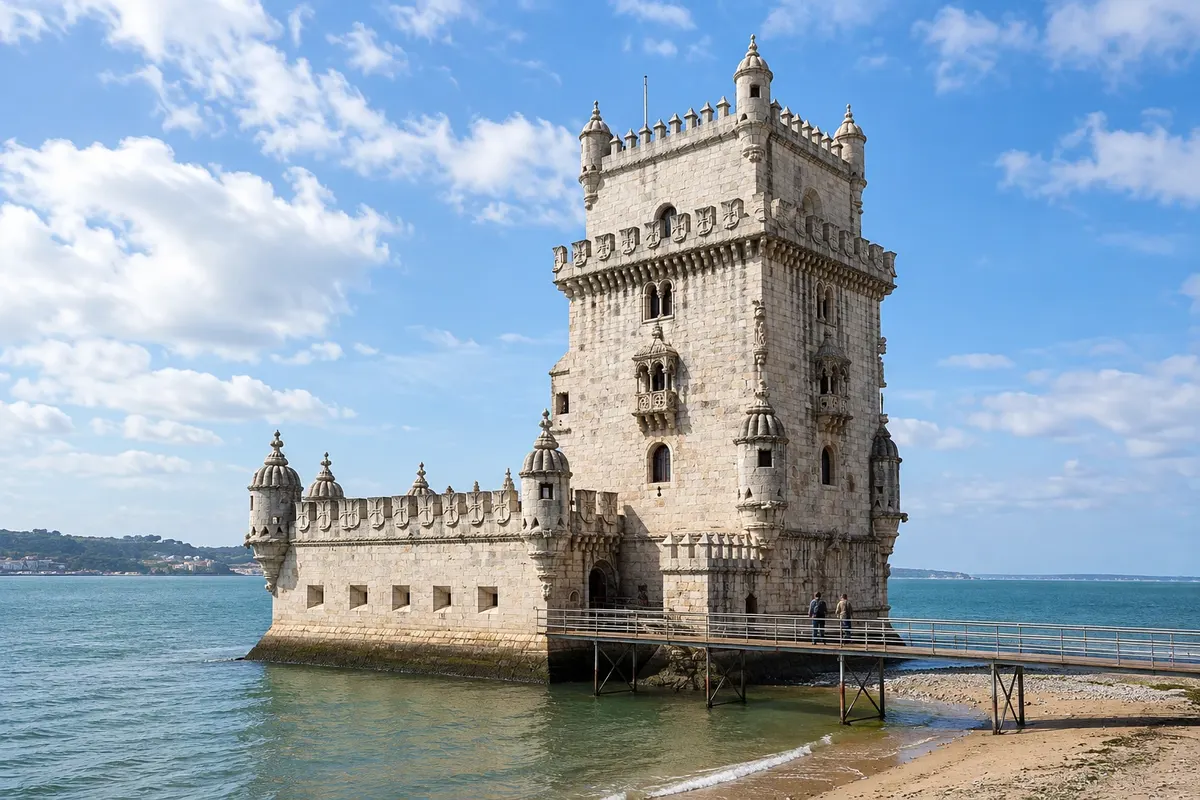
Na fotografiji: Torre de Belém in Lisboa

Illustrative images. The pictures in this guide are illustrations based on the real place, not photographs, and may differ from it.

Na voljo v trgovini Google Play Pošljite svoje fotografije

Spoznajte kraj

Pokrajina, ki jo doživite
v svojem ritmu.

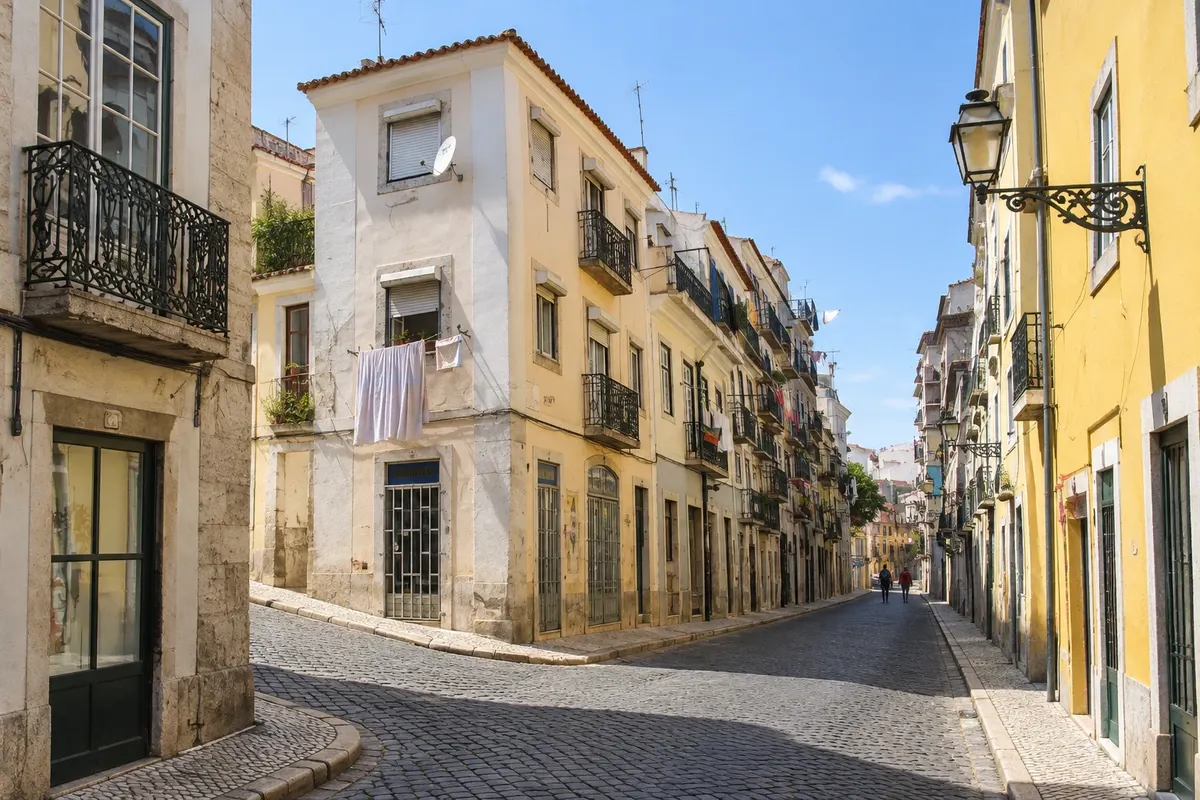
Lisboa is the capital of Portugal and spreads over hills on the north bank of the Tejo estuary, near its mouth on the Atlantic. The center was rebuilt after the 1755 earthquake, and the Baixa Pombalina, with straight streets between the Rossio and Praça do Comércio, is the result of that plan. Around it, the old neighborhoods climb the slopes: Alfama and the Castelo on one side, Chiado and Bairro Alto on the other.

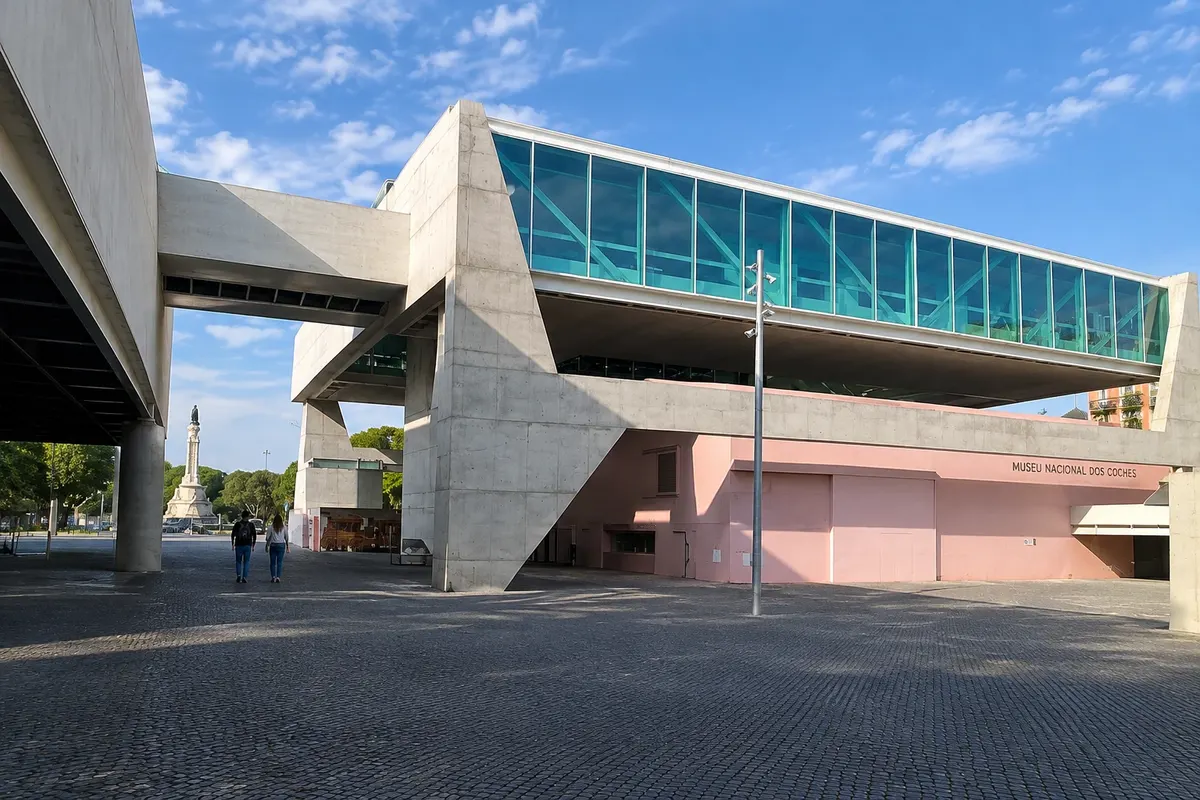
To the west, Belém preserves the memory of the Discoveries. There stand the Torre de Belém and the Mosteiro dos Jerónimos, a World Heritage Site since 1983, the Padrão dos Descobrimentos, the Museu Nacional dos Coches and the MAAT, by the river. On the hilltop, the Palácio Nacional da Ajuda displays the jewels of the Portuguese Crown.

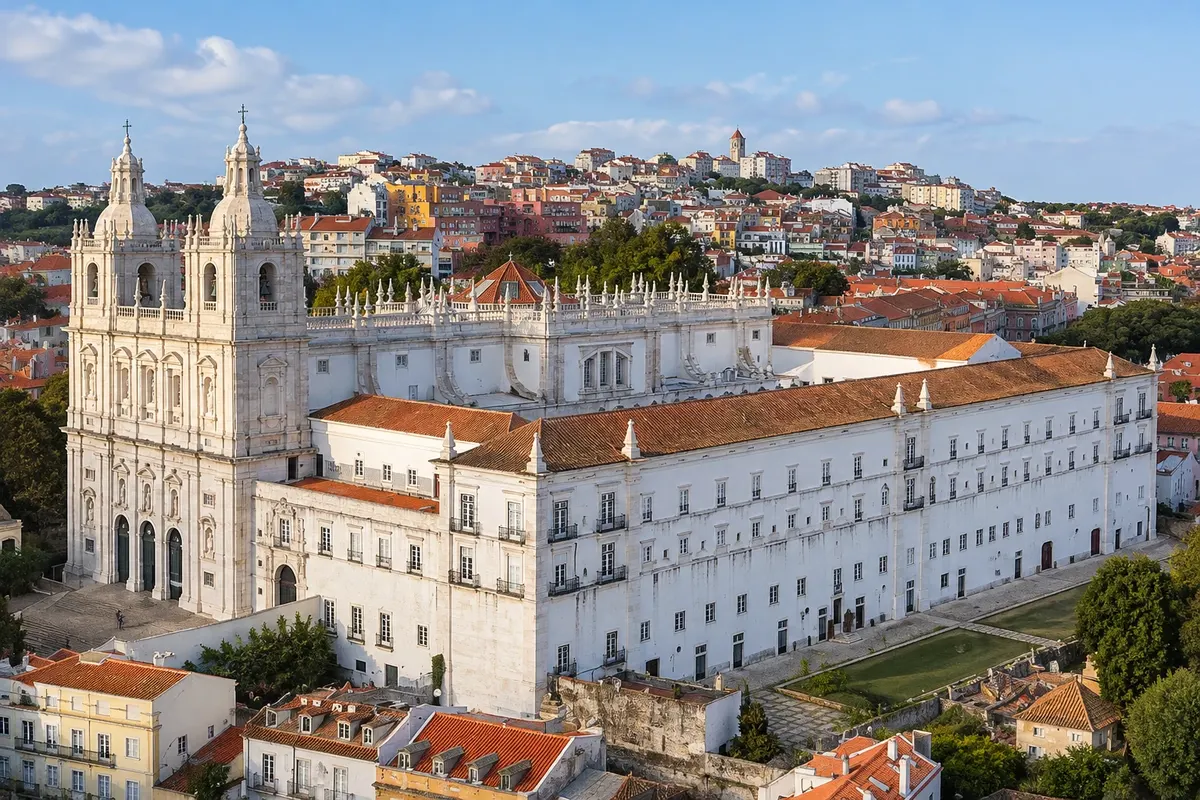
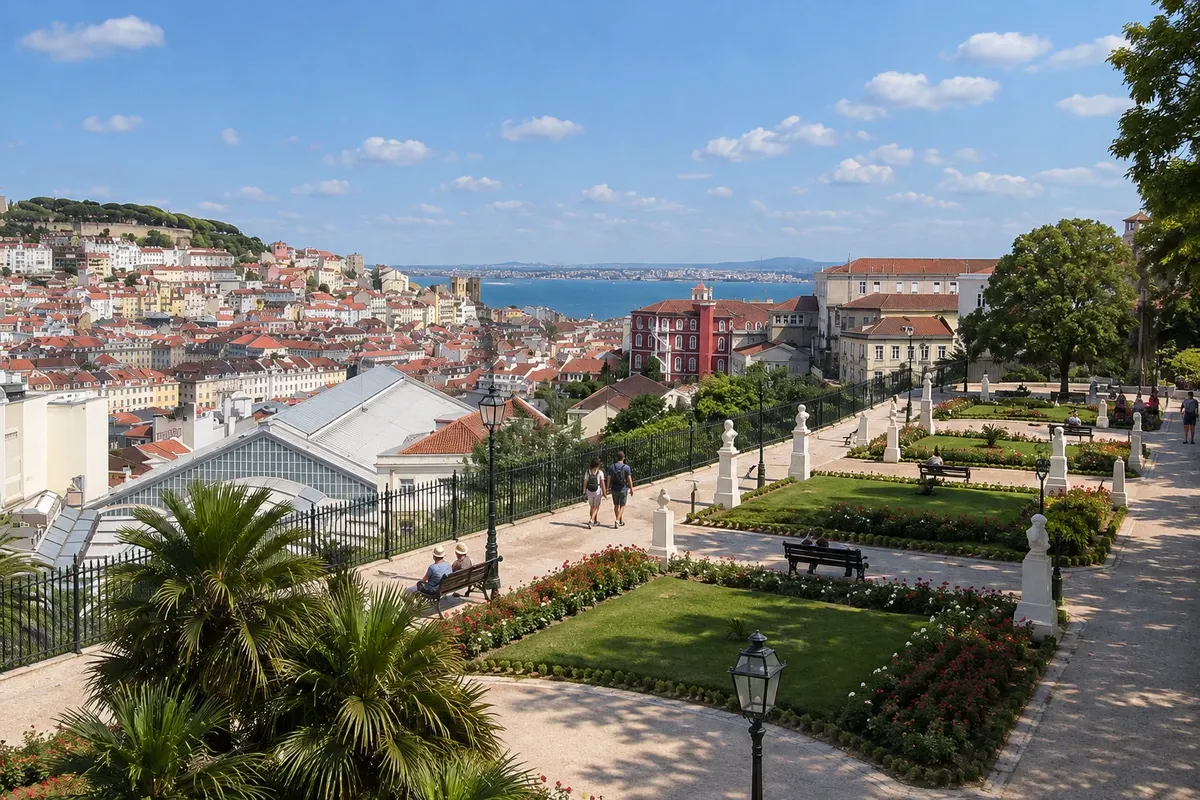
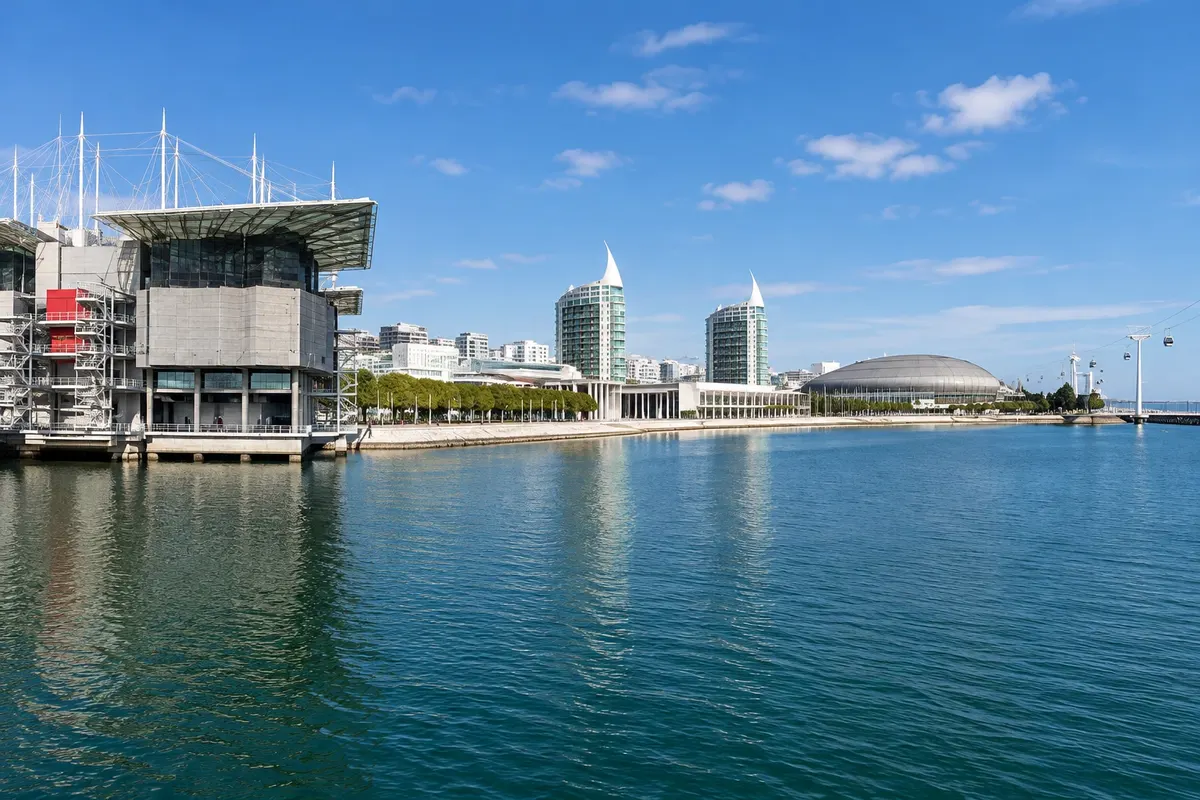
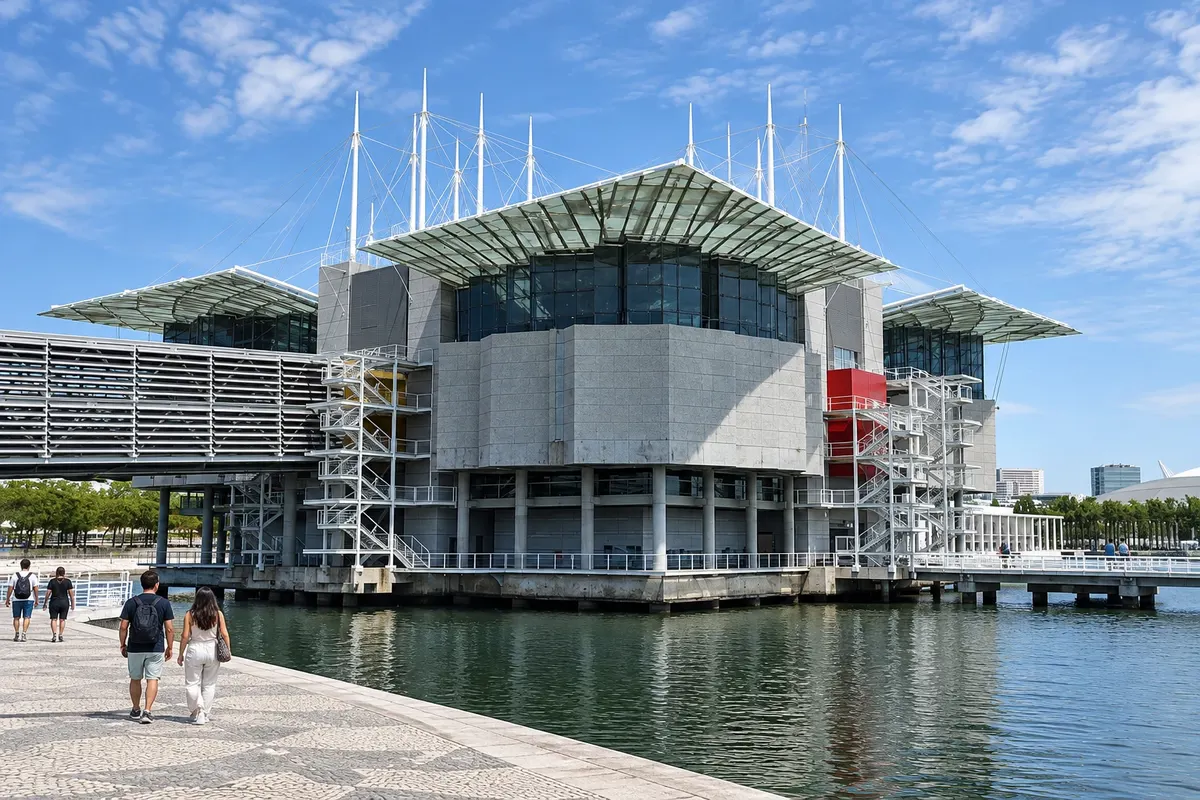
On the east side, Alfama preserves a network of alleys of medieval origin, the Sé, the Panteão Nacional, the Mosteiro de São Vicente de Fora and the Museu do Fado. The miradouros, such as Santa Luzia, Senhora do Monte and São Pedro de Alcântara, open views over the rooftops and the river. Further north, the Museu Calouste Gulbenkian houses one of Europe’s best-known private art collections, and the Parque das Nações, the Expo 98 area, has the Oceanário.

Portuguese is spoken, but with a different accent and vocabulary: the 'bonde' is called elétrico, the 'ônibus' is autocarro and 'trem' is comboio. The city has a metro, and the calçada portuguesa, made of white and black stones, calls for shoes with sturdy soles on the hills.

This destination brings together 2 cities: Lisbon, Oeiras.

Delite: WhatsApp
Delite svoja popotniška doživetja s fotografijami Pošljite fotografije vsakega kraja, ki ste ga obiskali. Največje število fotografij na kraj: 5.

Ena destinacija, več poti

Mesta na tej poti

Začnite v enem mestu ali v načrt poti vključite več mest.

Lisbon – lega
LisboaOeiras

Obrisi: Direção-Geral do Território, CAOP 2025, CC BY 4.0. Priredba: Cidade Turismo.

Kako do tja:Lisbon

✈ Aeroporto Humberto Delgado (LIS)· 9 km do cilja (Lisbon)

Aeroporto Humberto Delgado (LIS) is about 7 km from the city center, linked by metro. Check before booking. From Porto, the comboio takes about three hours; from the Algarve, roughly three and a half hours from Faro.

Predlagana točka prihoda:Lisbon

Praznovanja in dogodki

Praznovanja – vLisbon

Datumi se vsako leto spreminjajo. Pred potovanjem preverite letošnji datum.

Doživite kraj

Kaj početi – Lisbon

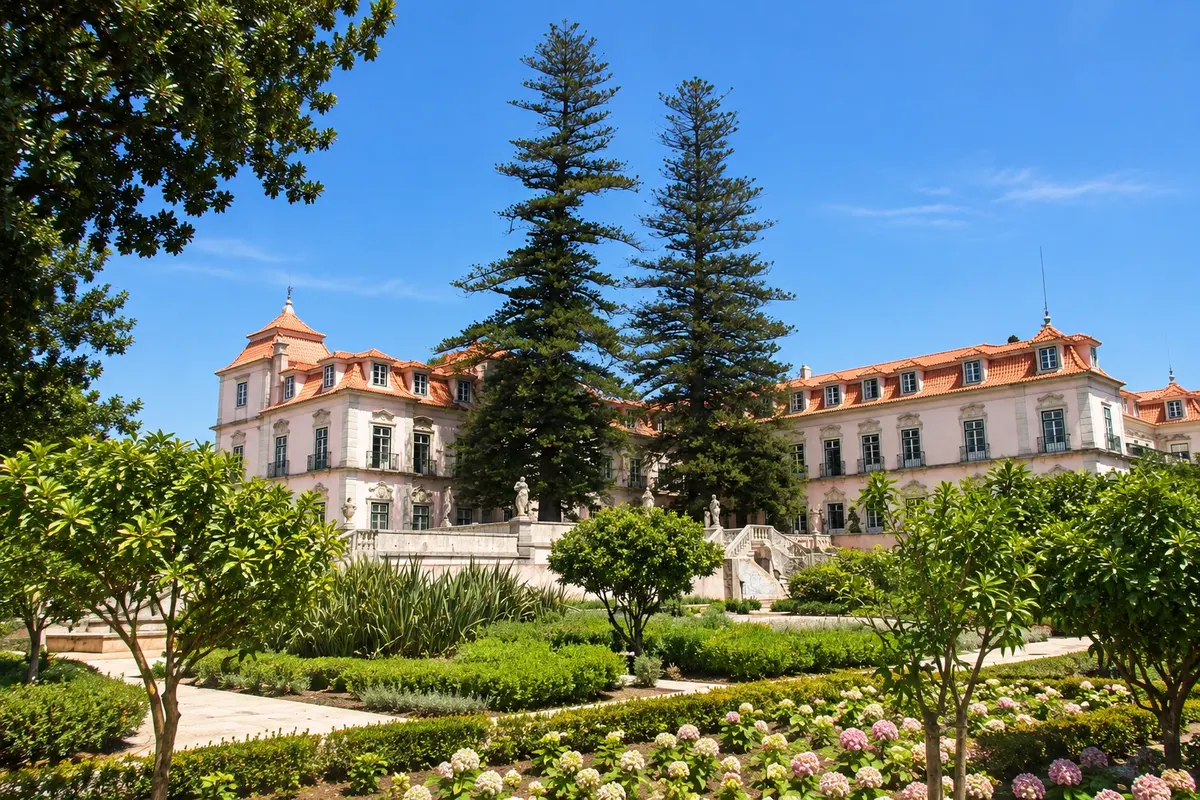
Palace of the Marquis of Pombal
Oeiras · Lisbon · Palace

Palace of the Marquis of Pombal

18th‑century palace in Oeiras’s historic center, the country residence of Sebastião José de Carvalho e Melo, the Marquis of Pombal. The French‑influenced gardens include the Cascade of the Poets, the Casa da Pesca and tile‑clad terraces. Classified as a National Monument since 1940.

Belém Tower
Lisbon · Lisbon · Monument

Belém Tower

Defensive tower from the early 16th century on the banks of the Tejo, a masterpiece of the Manueline style and a UNESCO World Heritage site since 1983 along with the Mosteiro dos Jerónimos. It has four visitable floors and a terrace at the top.

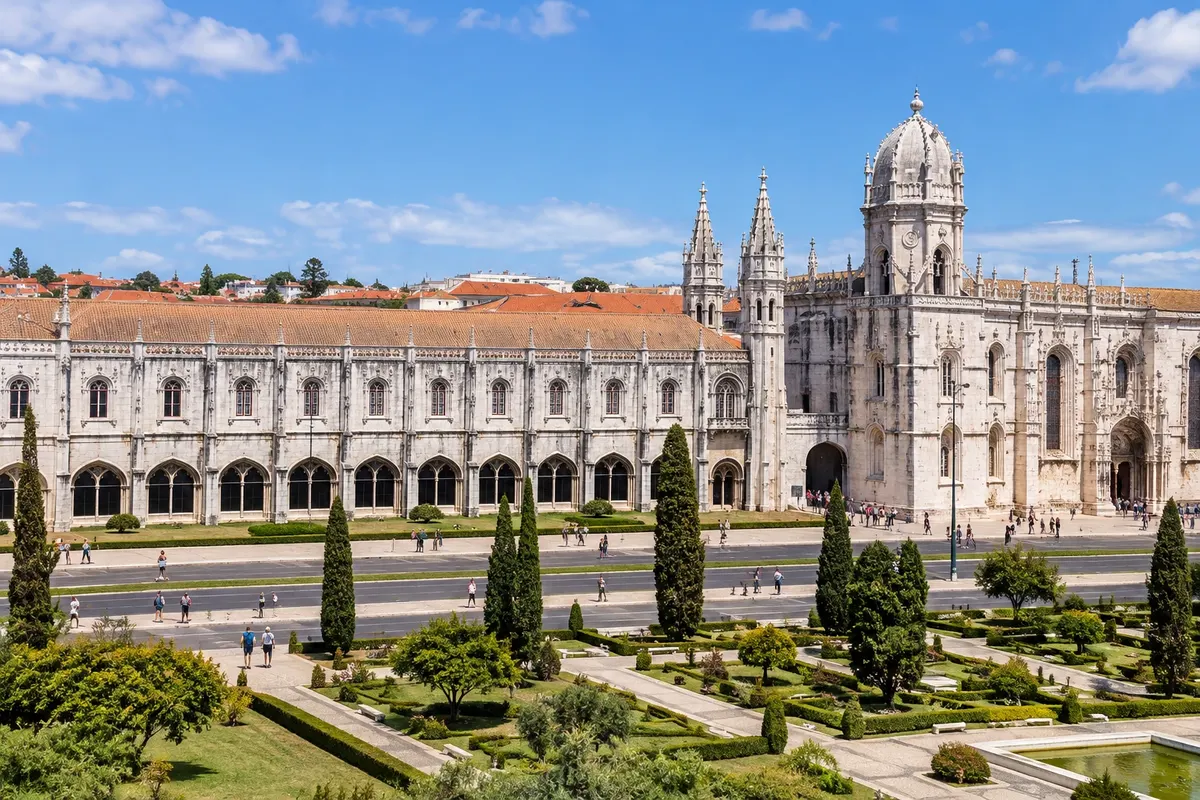
Jerónimos Monastery
Lisbon · Lisbon · Samostan

Jerónimos Monastery

Manueline monastery commissioned by D. Manuel I from 1501, featuring the church of Santa Maria de Belém and the intricately carved cloister. It houses the tombs of Vasco da Gama and Luís de Camões and has been a World Heritage site since 1983.

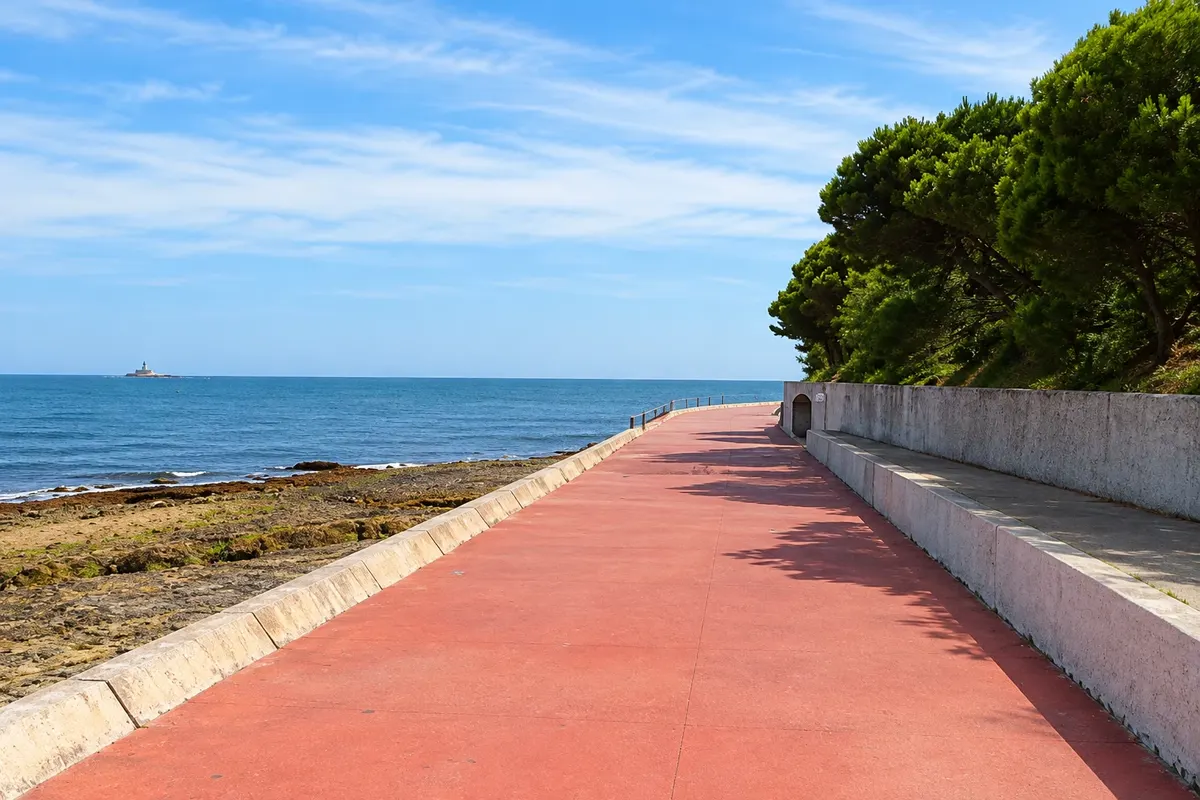
Oeiras Waterfront Promenade
Oeiras · Lisbon · Waterfront

Oeiras Waterfront Promenade

Seaside promenade between Praia da Torre and Paço de Arcos, called the paredão by locals. It passes the marina, the ocean pool, the beaches of Santo Amaro and da Laje and old forts, with Forte de São Julião da Barra at one end.

Lisbon – prikaži dodatne kraje (33)
Vasco da Gama Aquarium
Oeiras · Lisbon · Aquarium

Vasco da Gama Aquarium

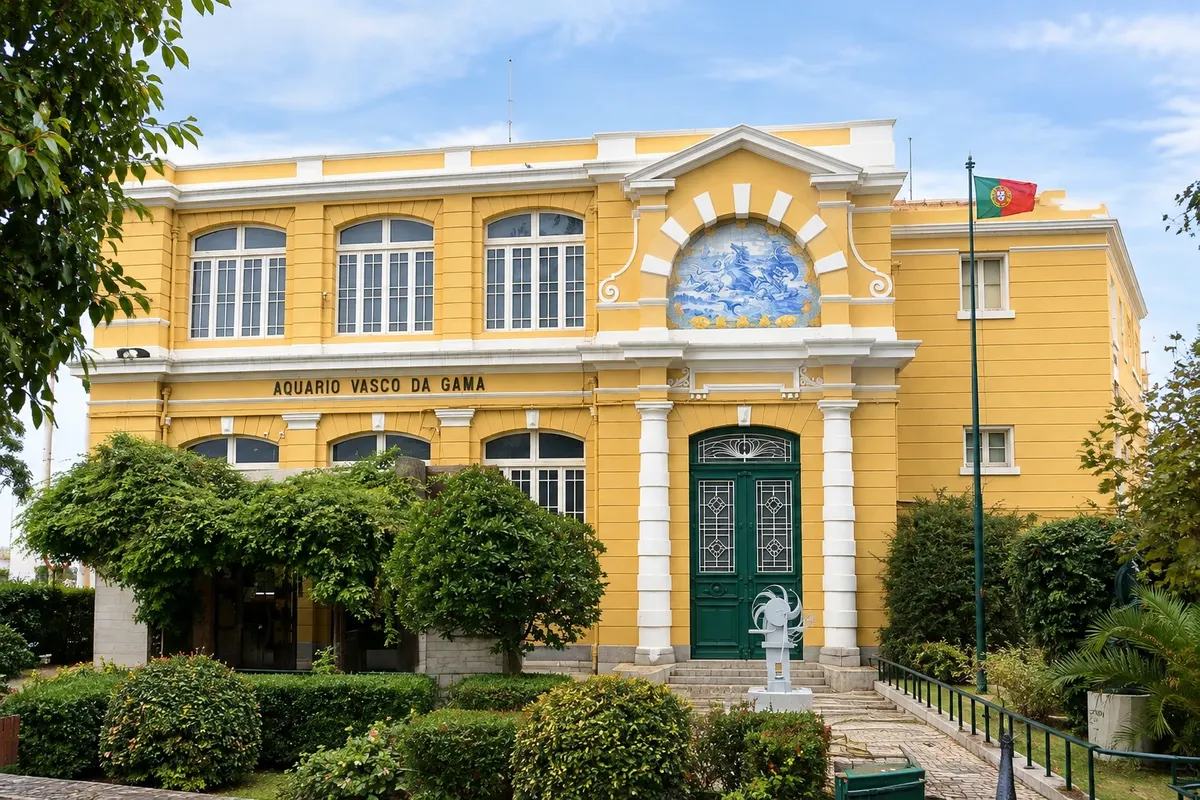
Aquarium and museum opened in 1898 in Dafundo, Algés — one of the oldest functioning aquariums in the world. It belongs to the Portuguese Navy and houses live aquatic fauna and King D. Carlos I’s oceanographic collection.

Monument to the Discoveries
Lisbon · Lisbon · Monument

Monument to the Discoveries

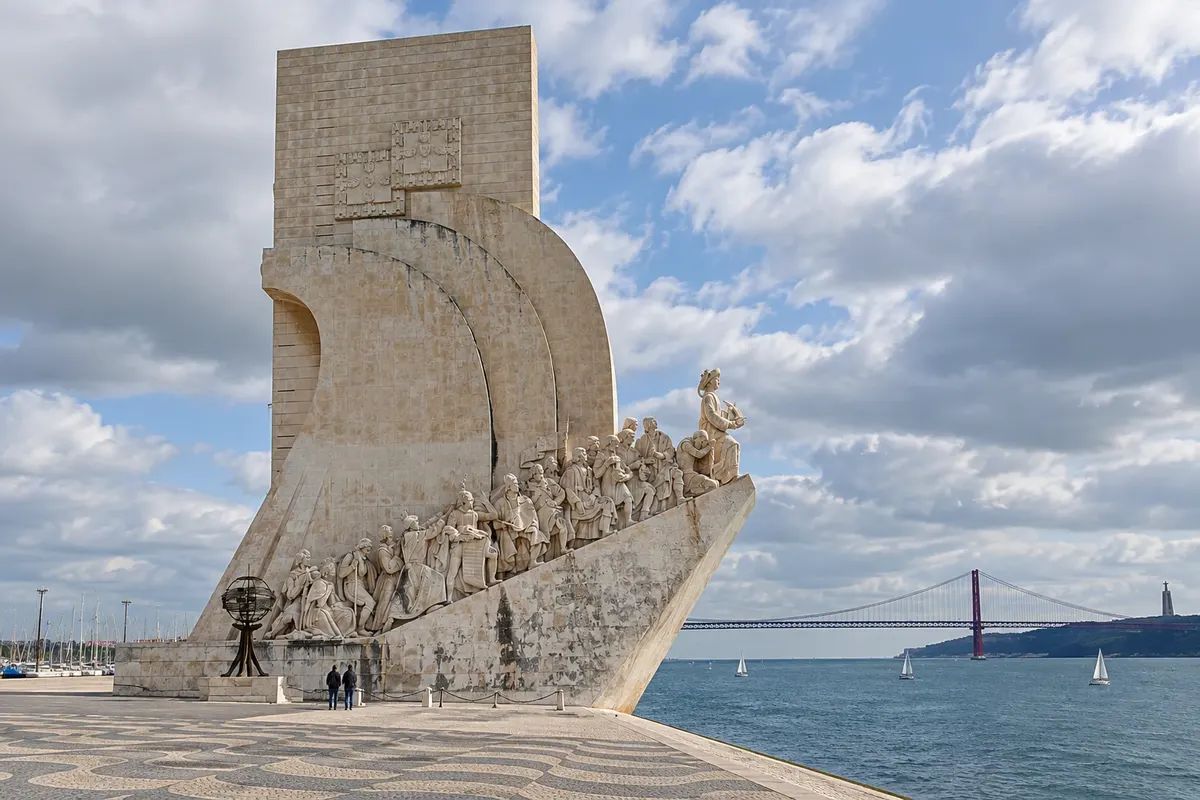
Monument shaped like the bow of a caravel on the banks of the Tagus, with Infante D. Henrique at the front of figures from the Age of Discoveries. It has an observation deck at the top and, on the ground in front, a large compass rose with a world map.

Barcarena Gunpowder Factory
Oeiras · Lisbon · Muzej

Barcarena Gunpowder Factory

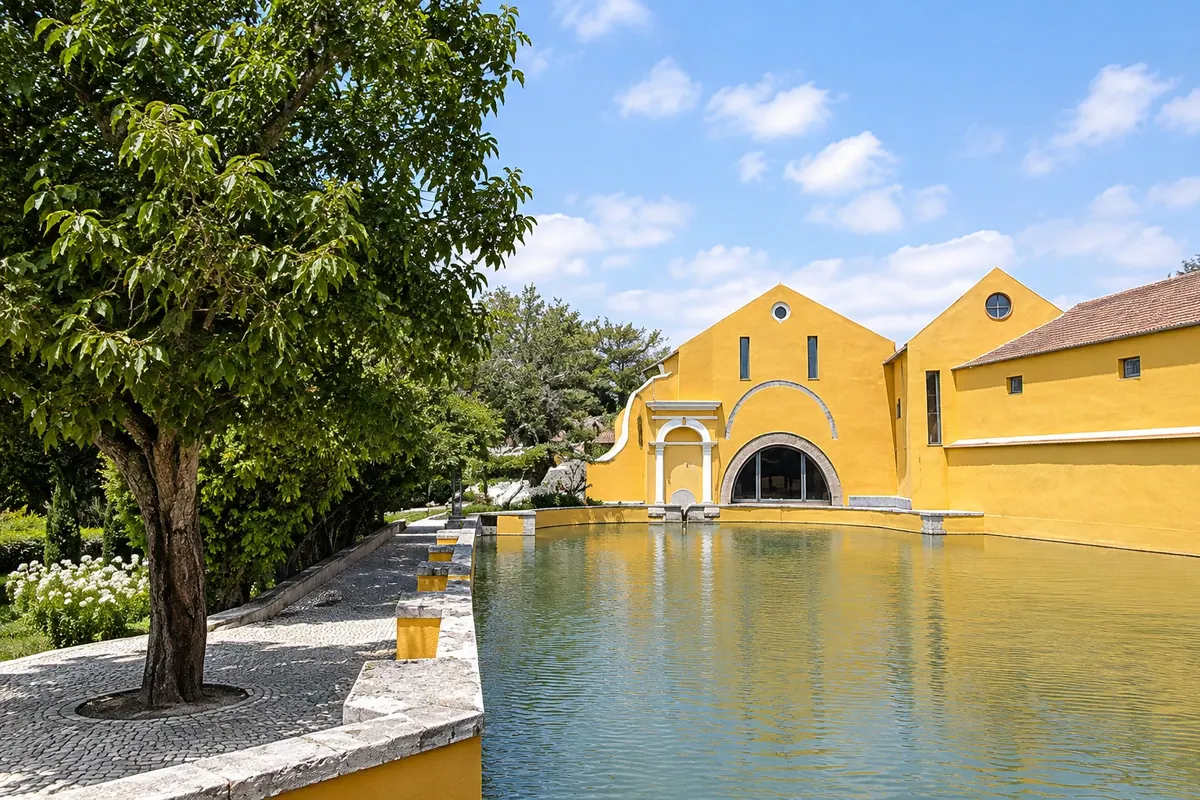
Former gunpowder factory in the valley of the Barcarena stream, active for more than four centuries and now the municipality’s cultural center. It has gardens, workshops and old warehouses and houses the Black Gunpowder Museum.

MAAT – Museum of Art, Architecture and Technology
Lisbon · Lisbon · Muzej

MAAT – Museum of Art, Architecture and Technology

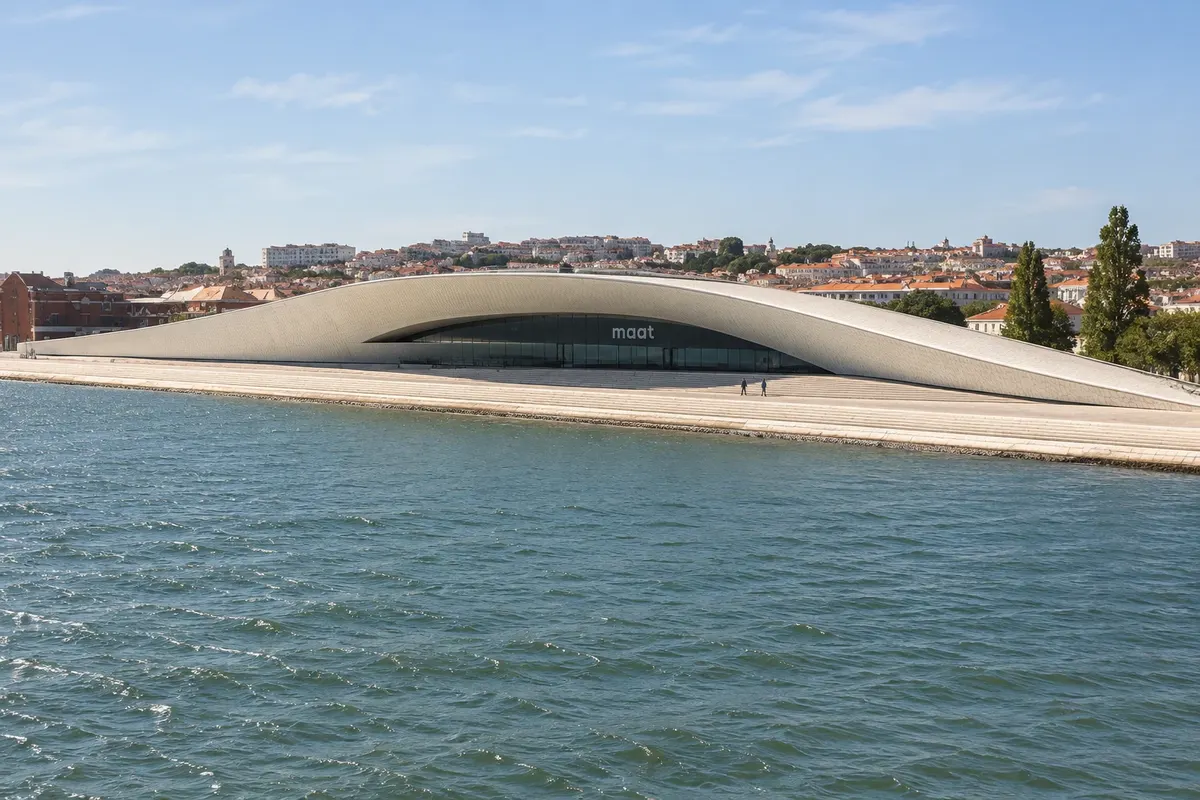
Museu da Fundação EDP on the banks of the Tagus in Belém, composed of the former Central Tejo—a brick power plant—and a curved 2016 building whose roof can be walked.

National Coach Museum
Lisbon · Lisbon · Muzej

National Coach Museum

Museum created in 1905 with coaches and carriages from the Portuguese Royal Household, from the 16th to the 19th centuries.

Ajuda National Palace
Lisbon · Lisbon · Palace

Ajuda National Palace

Neoclassical palace atop Ajuda, residence of King D. Luís I in the 19th century, with furnished state rooms and the Tesouro Real, where the Portuguese Crown jewels are displayed.

Belém Cultural Center (CCB)
Lisbon · Lisbon · Cultural center

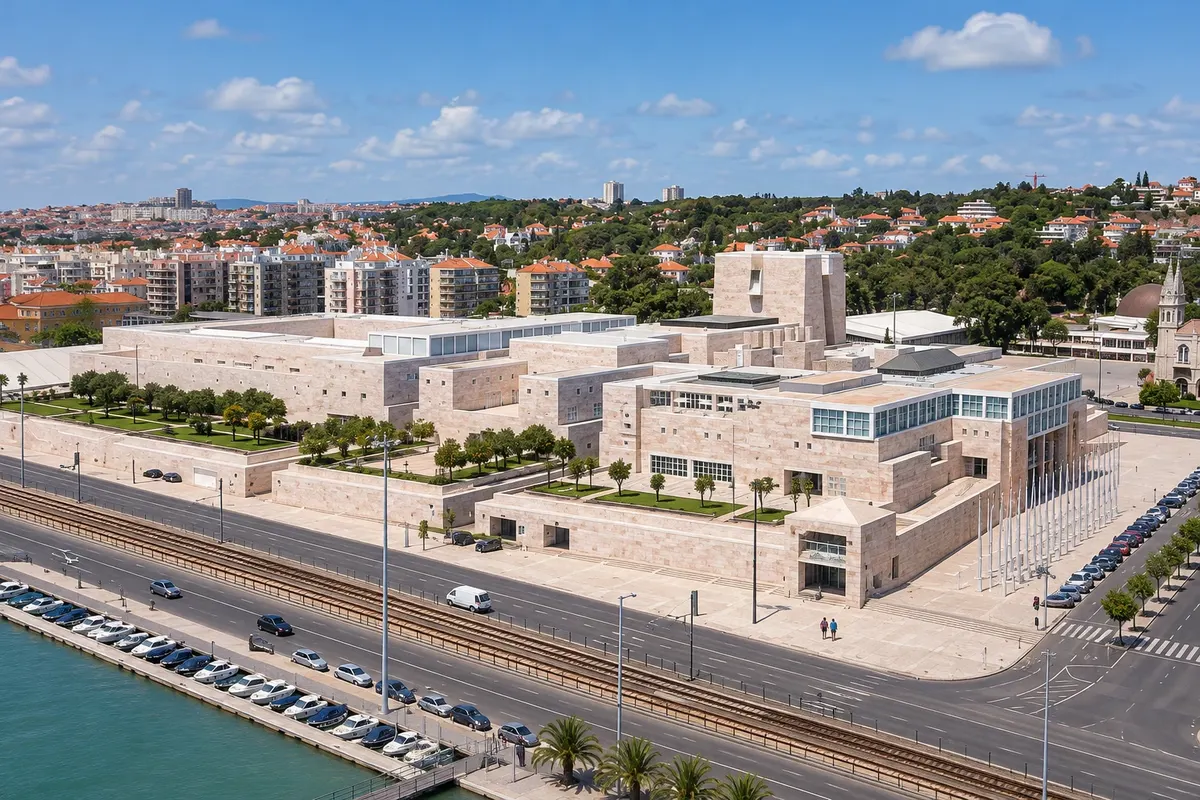
Belém Cultural Center (CCB)

Large light-stone cultural center opposite the Jerónimos, with a theatre, concert halls and the MAC/CCB, a museum of modern and contemporary art. The terraces and gardens have views over the river.

São Jorge Castle
Lisbon · Lisbon · Grad

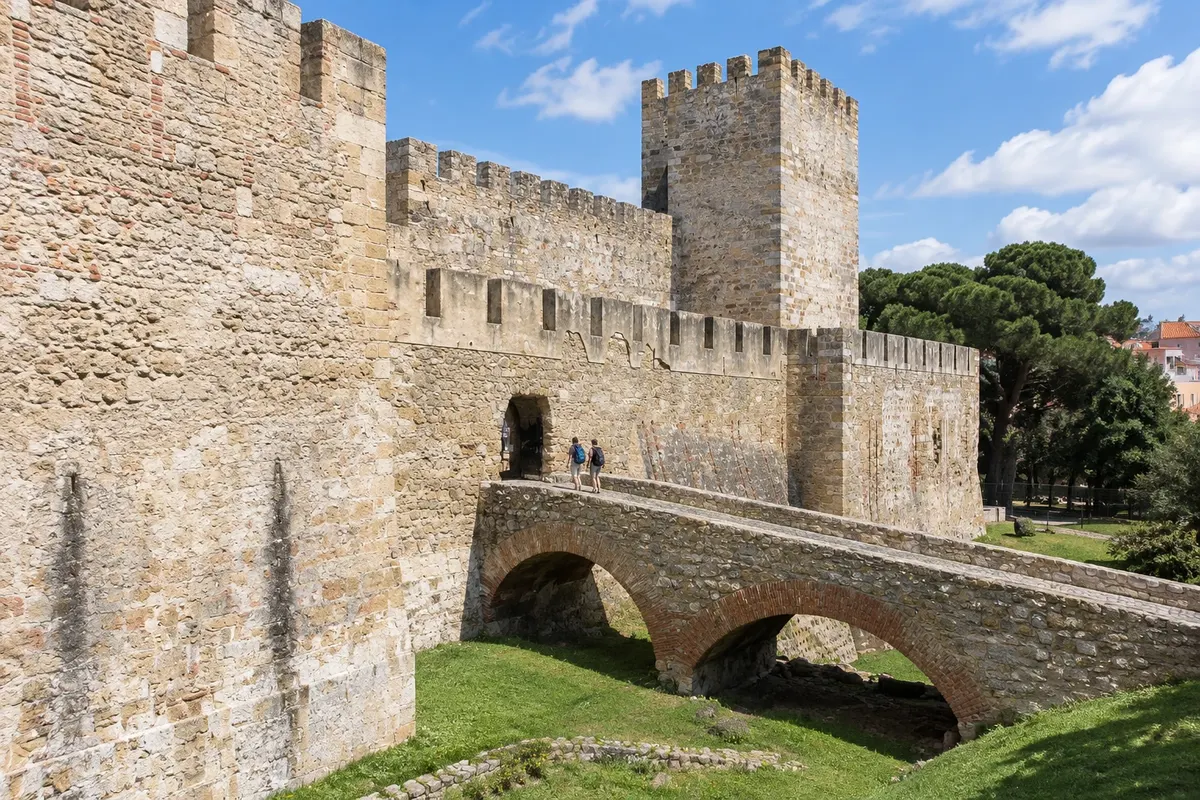
São Jorge Castle

Castle atop the highest hill in Lisbon's city centre, with walls, towers and gardens offering views of the city and the Tejo. It was a royal residence until the 16th century and has been a National Monument since 1910.

Alfama
Lisbon · Lisbon · Zgodovinska mestna četrt

Alfama

Lisbon's oldest neighborhood, of alleys, stairways and lanes between the Castelo and the Tejo. It's the fado neighborhood, with fado houses, laundry in the windows and, in June, the festas de Santo Antônio.

Lisbon Cathedral (Sé)
Lisbon · Lisbon · Stolnica

Lisbon Cathedral (Sé)

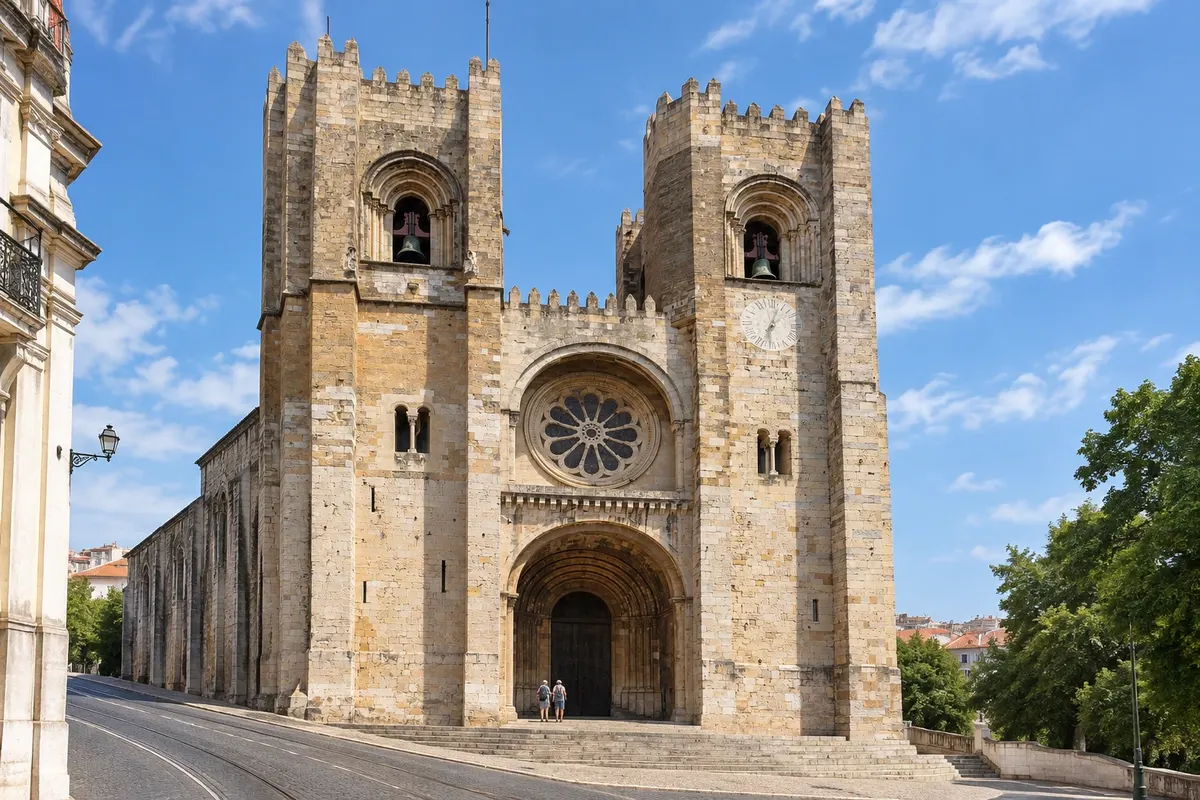
Romanesque cathedral from the 12th century, with a two-tower façade that resembles a fortress. It is the city's oldest church and has a Gothic cloister with archaeological excavations from several periods.

Santa Luzia Viewpoint
Lisbon · Lisbon · Razgledišče

Santa Luzia Viewpoint

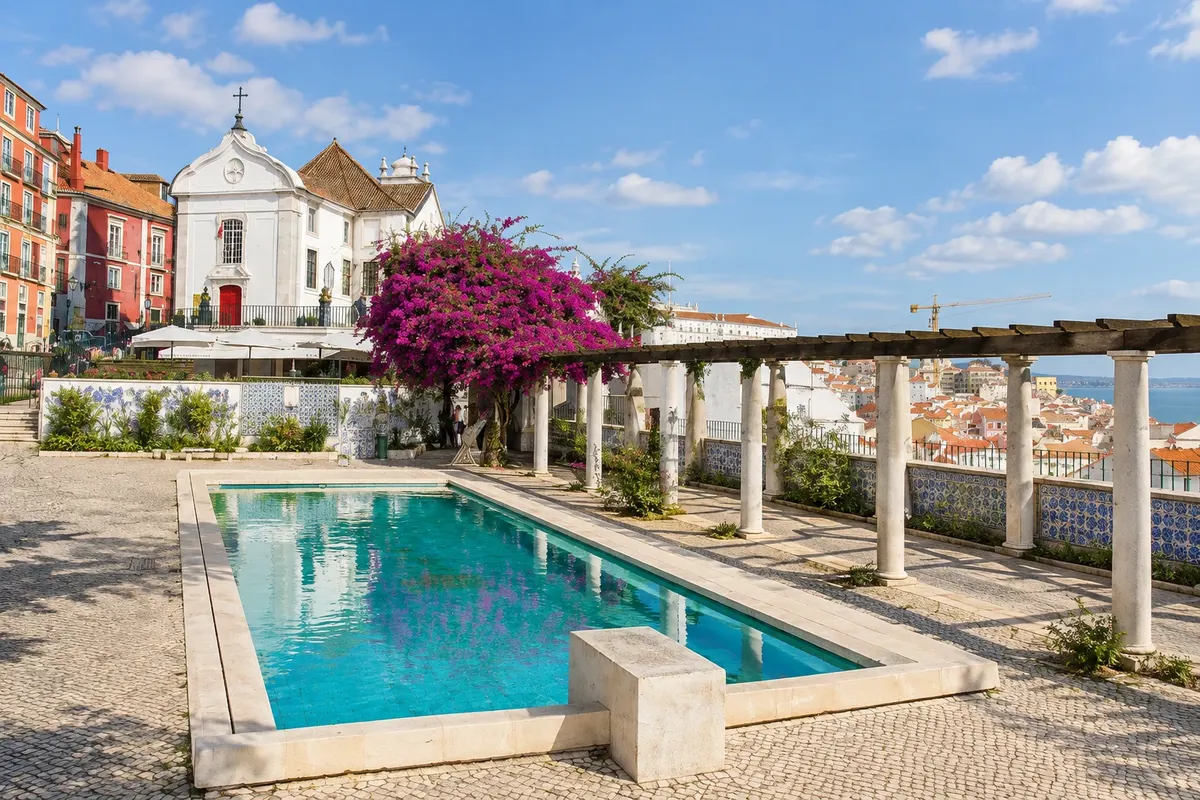
Lookout with a pergola, bougainvillea and azulejo panels on the path to the Castelo, overlooking the roofs of Alfama and the Tejo. Next to it, the Largo das Portas do Sol opens up an even wider view.

Senhora do Monte Viewpoint
Lisbon · Lisbon · Razgledišče

Senhora do Monte Viewpoint

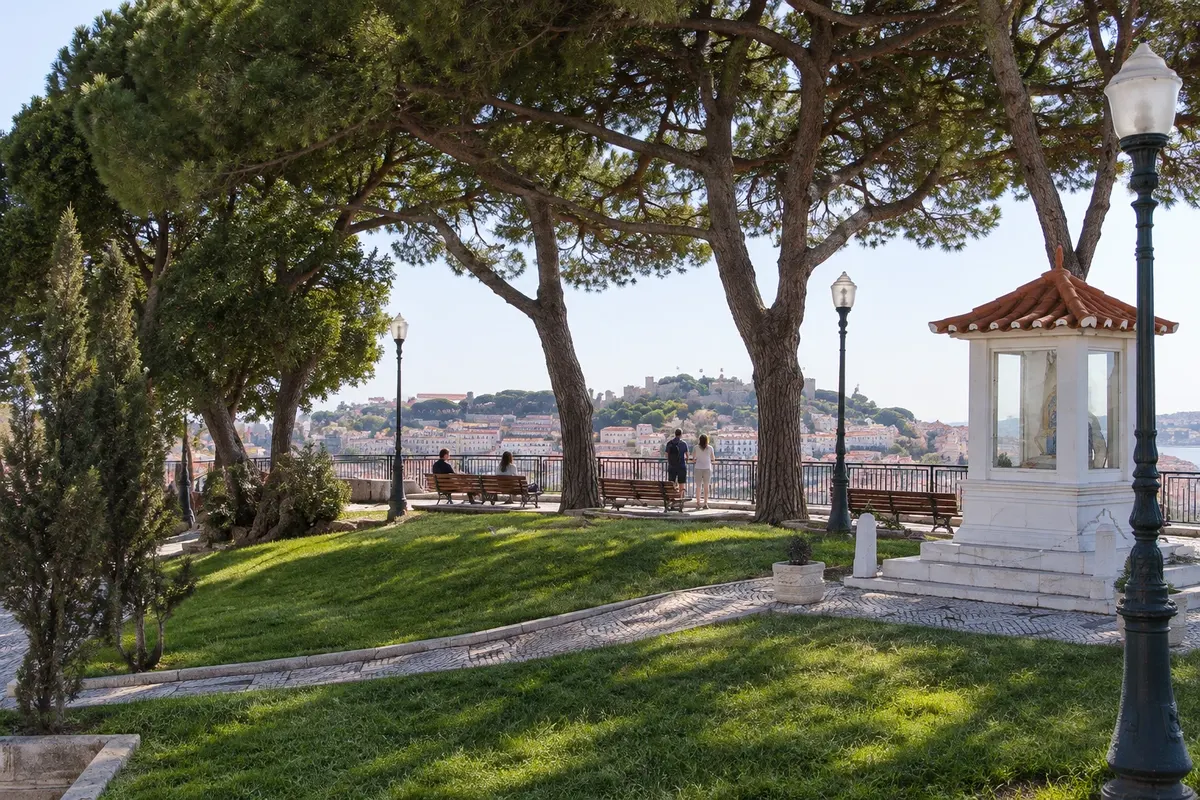
One of the highest miradouros in Lisboa, in the Graça neighborhood, with views of the Castelo, the Baixa, the Tejo and the Ponte 25 de Abril. Nearby, the Miradouro da Graça has a café terrace shaded by pine trees.

National Pantheon (Church of Santa Engrácia)
Lisbon · Lisbon · Monument

National Pantheon (Church of Santa Engrácia)

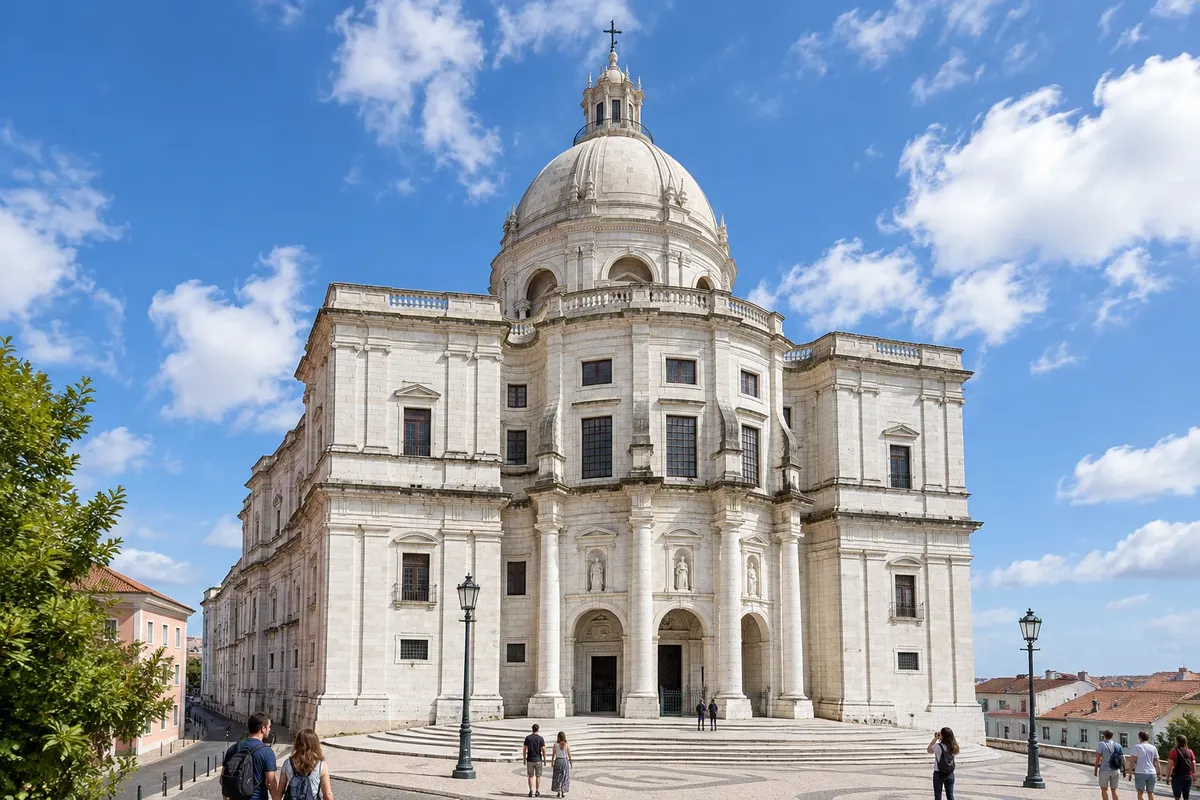
Former Igreja de Santa Engrácia, with a white dome, whose construction took almost three centuries. It houses tombs and tributes to figures such as Amália Rodrigues and Eusébio, and has a terrace with views over the Tejo.

Church of São Vicente de Fora
Lisbon · Lisbon · Samostan

Church of São Vicente de Fora

Late 16th-century monastery on the heights of São Vicente, with cloisters covered in azulejos, the Bragança dynasty pantheon and a terrace overlooking Alfama and the river.

Tram 28
Lisbon · Lisbon · Ride

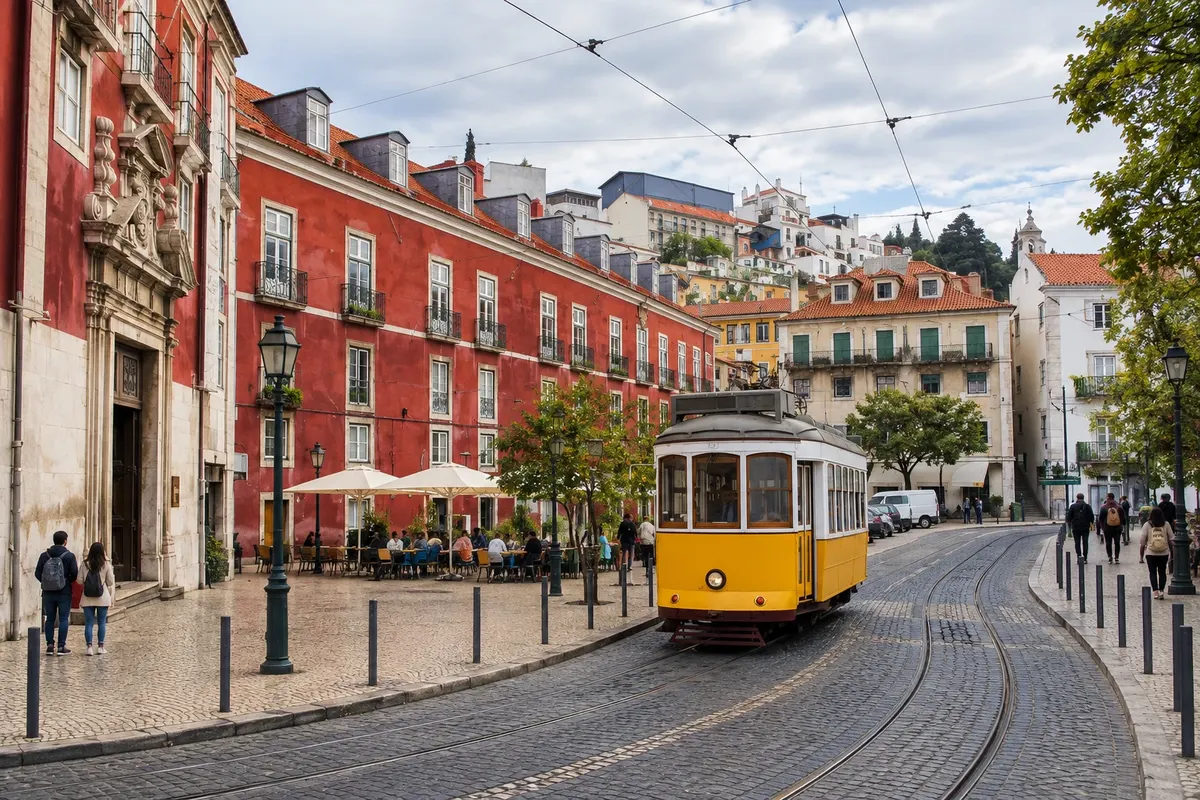
Tram 28

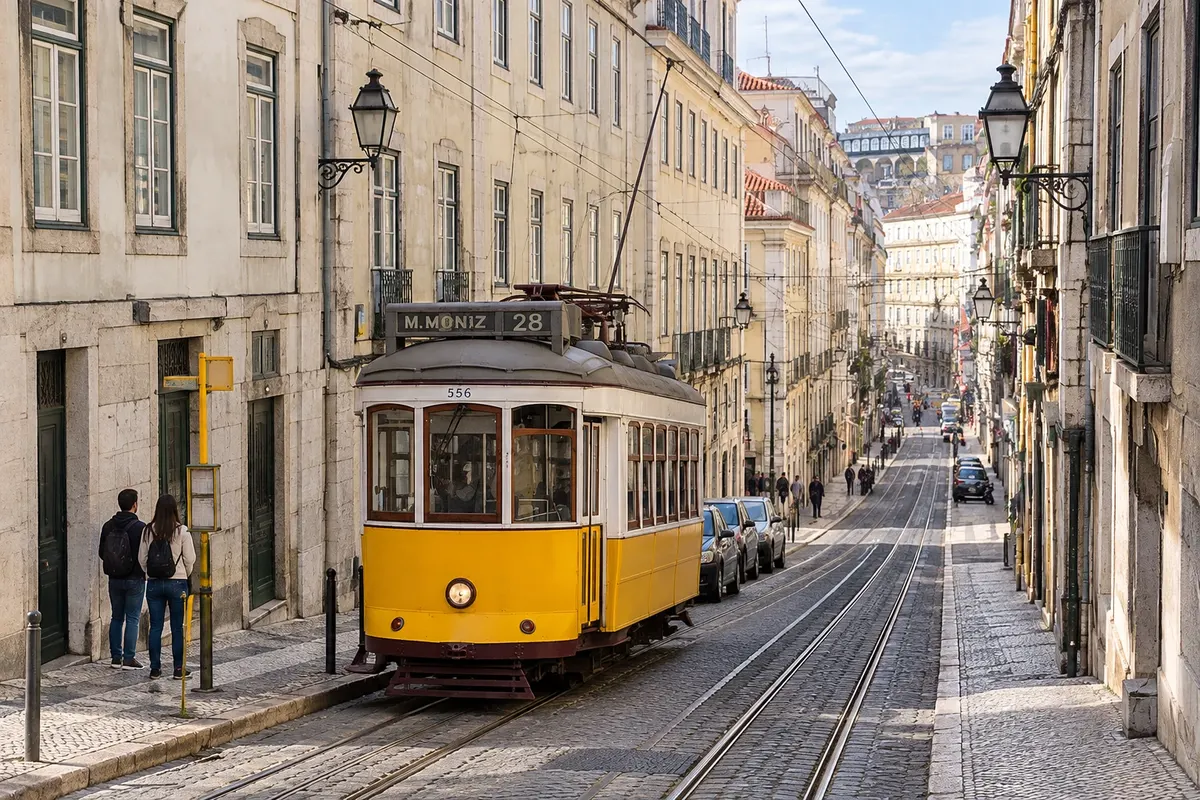
Lisbon’s best-known tram line, with the old yellow cars that climb and descend the hills between Martim Moniz and Campo de Ourique, passing through Graça, Alfama, Baixa, Chiado and Estrela.

Christ the King Sanctuary
Lisbon · Lisbon · Monument

Christ the King Sanctuary

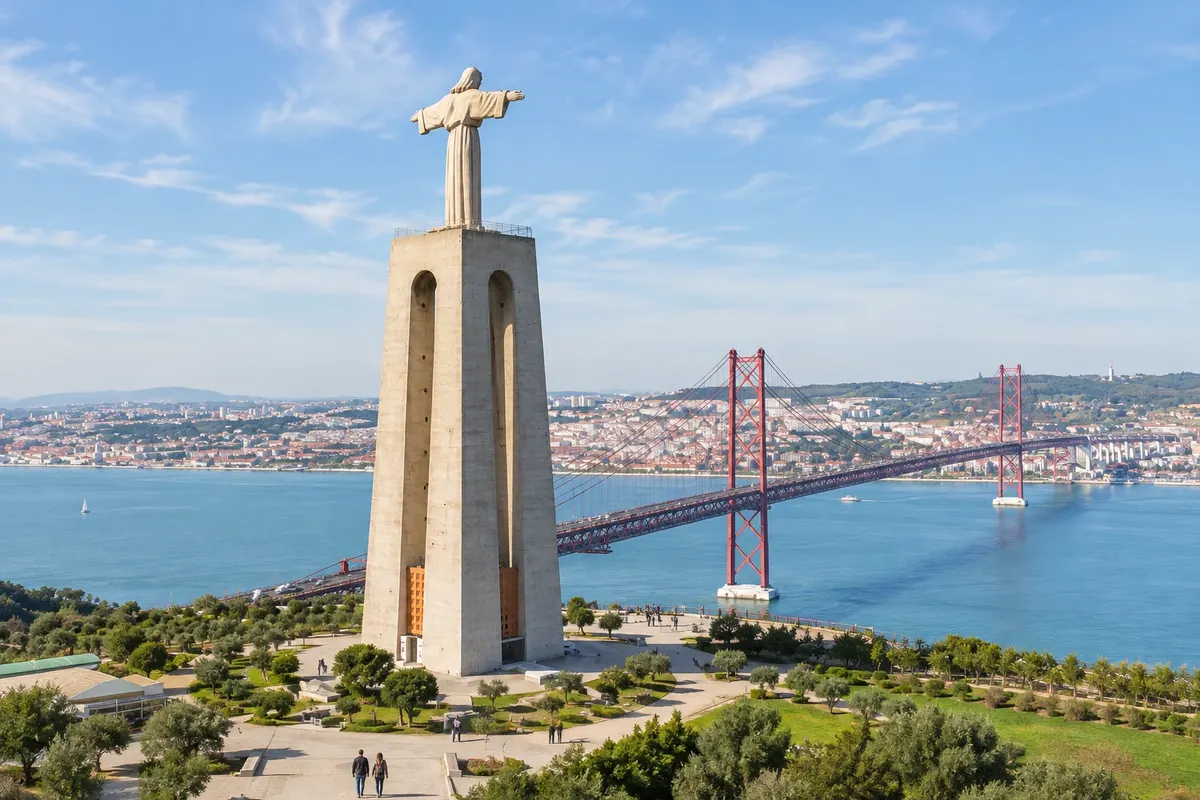
Statue of Christ with outstretched arms atop an 82-metre pedestal in Almada, on the south bank of the Tejo, inaugurated in 1959. An elevator takes you up to the viewpoint, with views over Lisbon and the Ponte 25 de Abril.

LX Factory
Lisbon · Lisbon · Cultural center

LX Factory

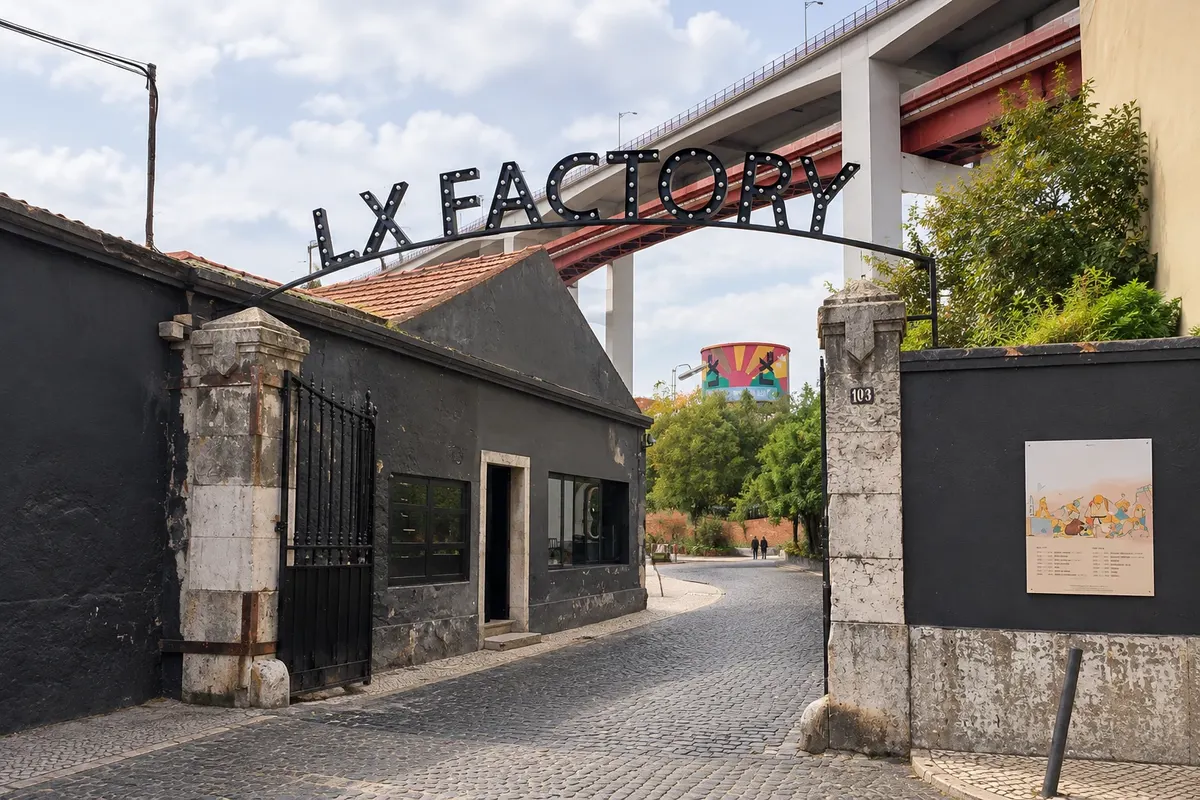
Former factory complex from 1846 in Alcântara, under the Ponte 25 de Abril, converted into a space of shops, restaurants, studios and the Ler Devagar bookstore, set among old machines.

Praça do Comércio (Commerce Square)
Lisbon · Lisbon · Trg

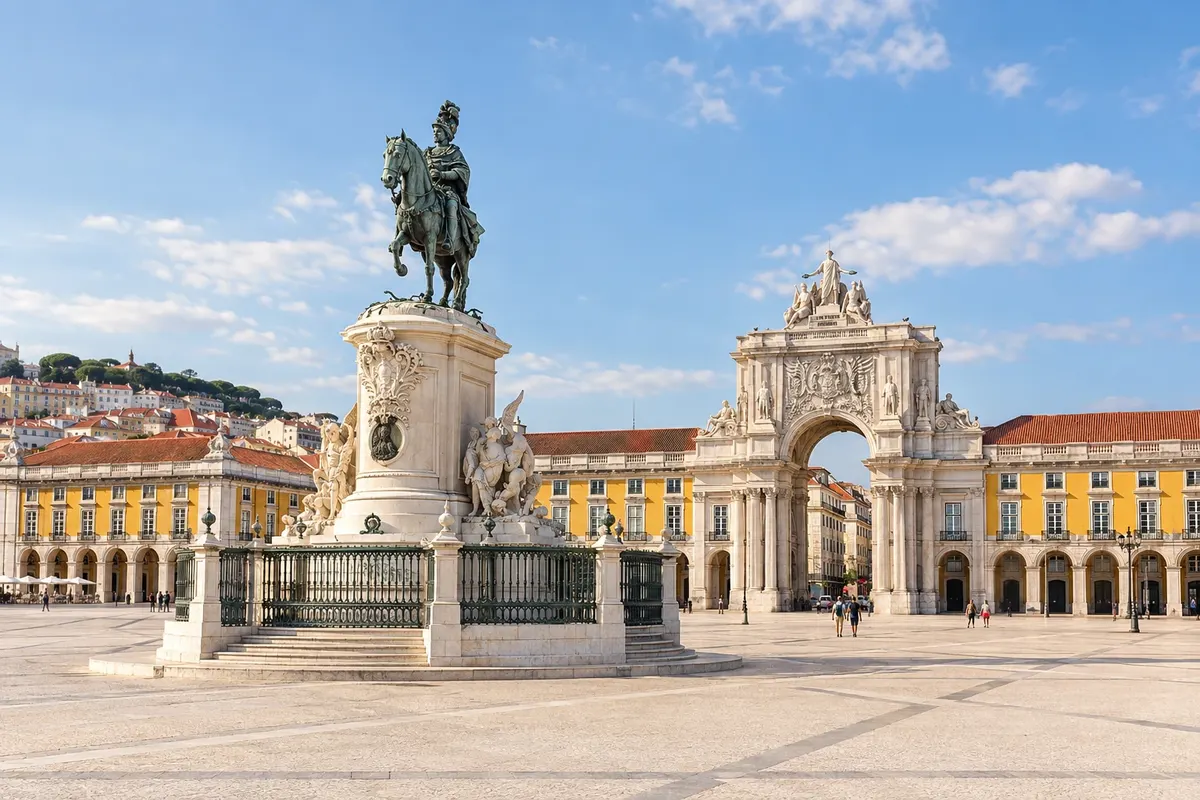
Praça do Comércio (Commerce Square)

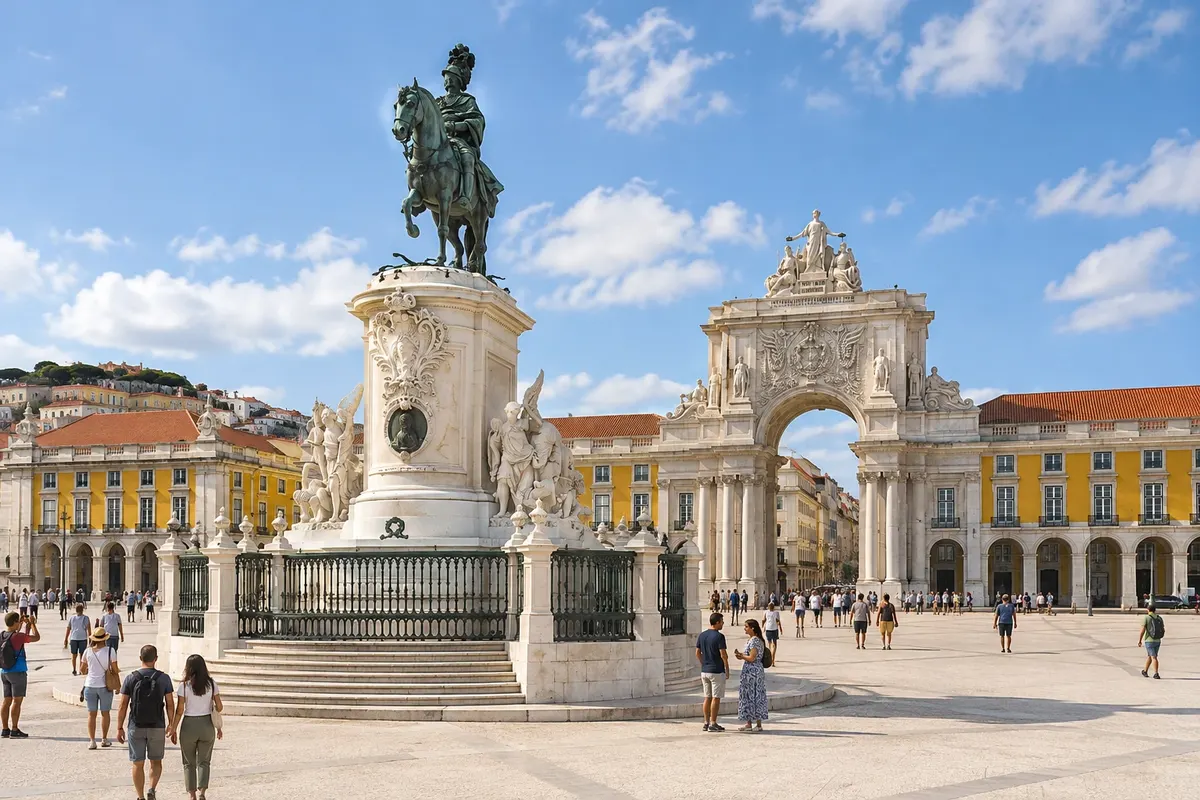
The large square of the Baixa opening onto the Tejo, the former Terreiro do Paço, with the equestrian statue of D. José I, the Arco da Rua Augusta and the Cais das Colunas. The top of the arch has a viewpoint.

Baixa Pombalina
Lisbon · Lisbon · Zgodovinska mestna četrt

Baixa Pombalina

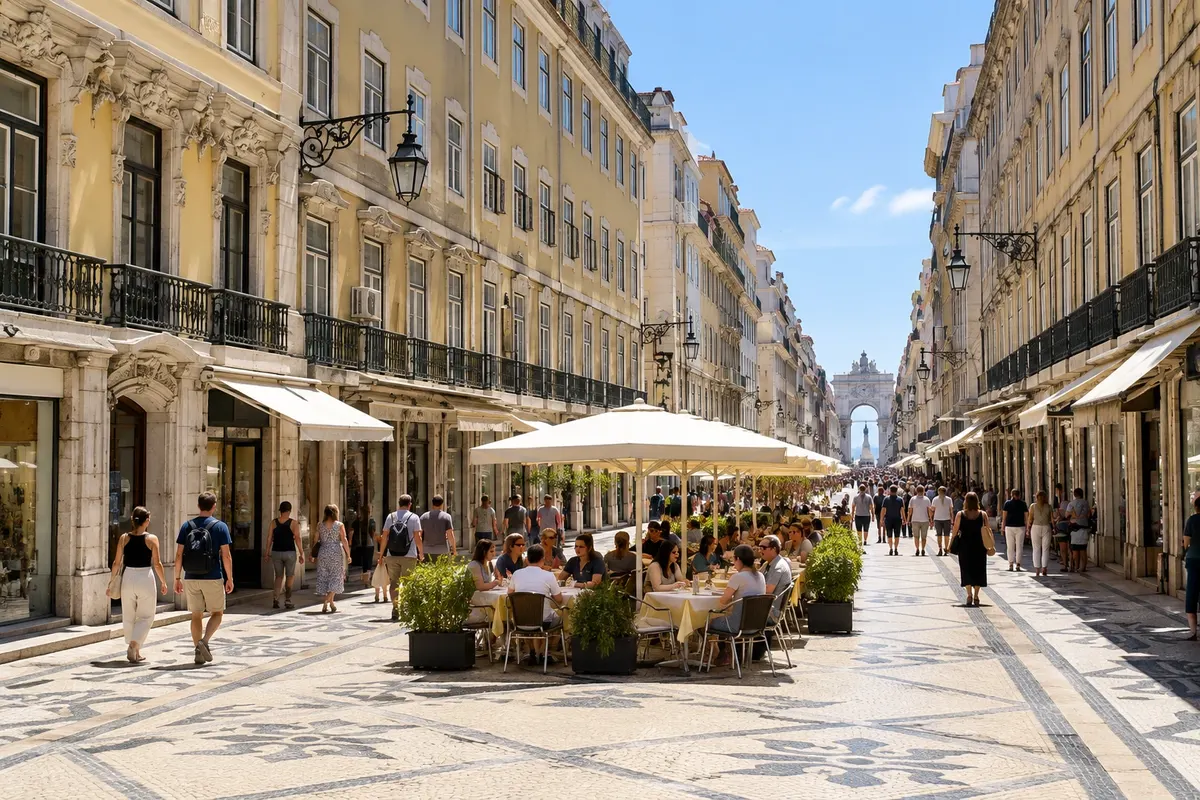
The center of Lisbon rebuilt after the 1755 earthquake, with straight streets between the Rossio and Praça do Comércio. Rua Augusta, a pedestrian street, is the neighborhood's main axis.

Rossio
Lisbon · Lisbon · Trg

Rossio

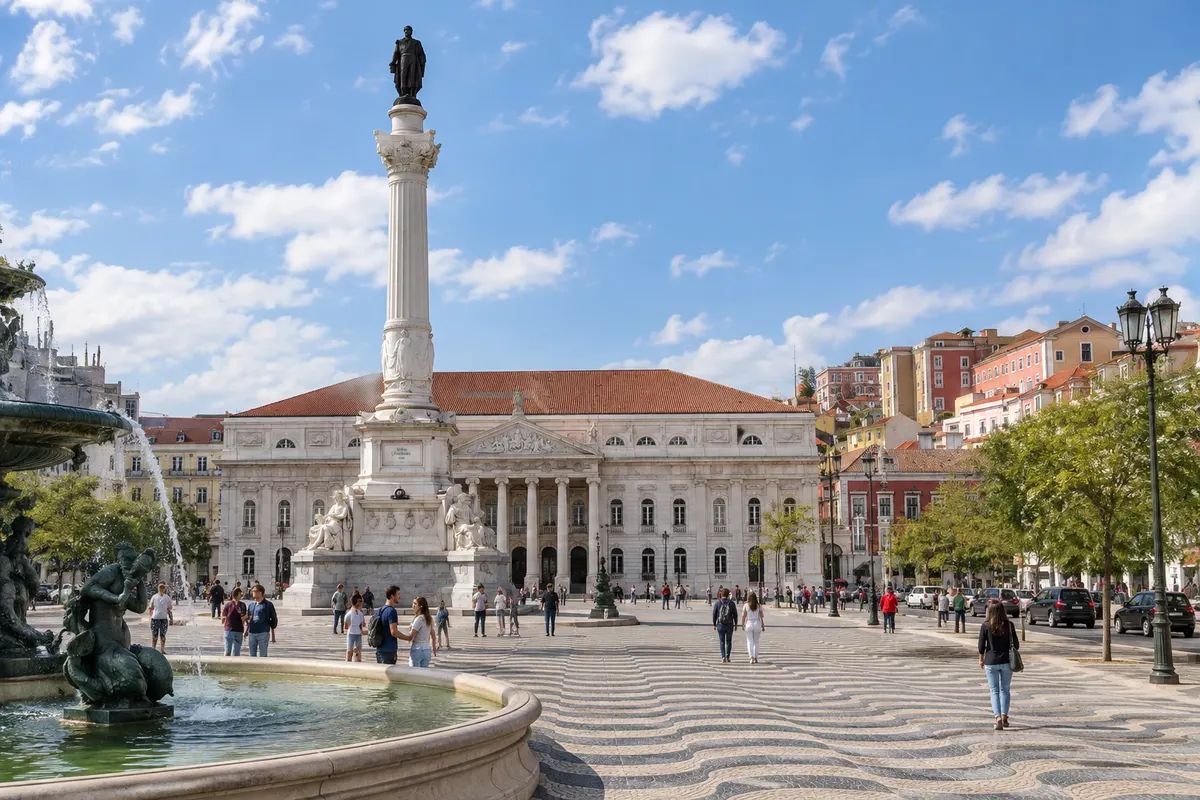
Lisbon's central square since the Middle Ages, officially Praça de D. Pedro IV, with a wavy pavement, two fountains, the Teatro Nacional D. Maria II and the neomanueline Rossio station beside it.

Chiado
Lisbon · Lisbon · Neighborhood

Chiado

Bairro Alto
Lisbon · Lisbon · Neighborhood

Bairro Alto

16th-century neighborhood on the top of the western hill, with narrow grid-like streets, residential by day and filling with bars, restaurants and fado houses at night.

São Pedro de Alcântara Viewpoint
Lisbon · Lisbon · Razgledišče

São Pedro de Alcântara Viewpoint

Two-level garden at the top of Bairro Alto, with the best-known view of Castelo de São Jorge, the Baixa and Graça on the other side of the valley.

Church of São Roque
Lisbon · Lisbon · Cerkev

Church of São Roque

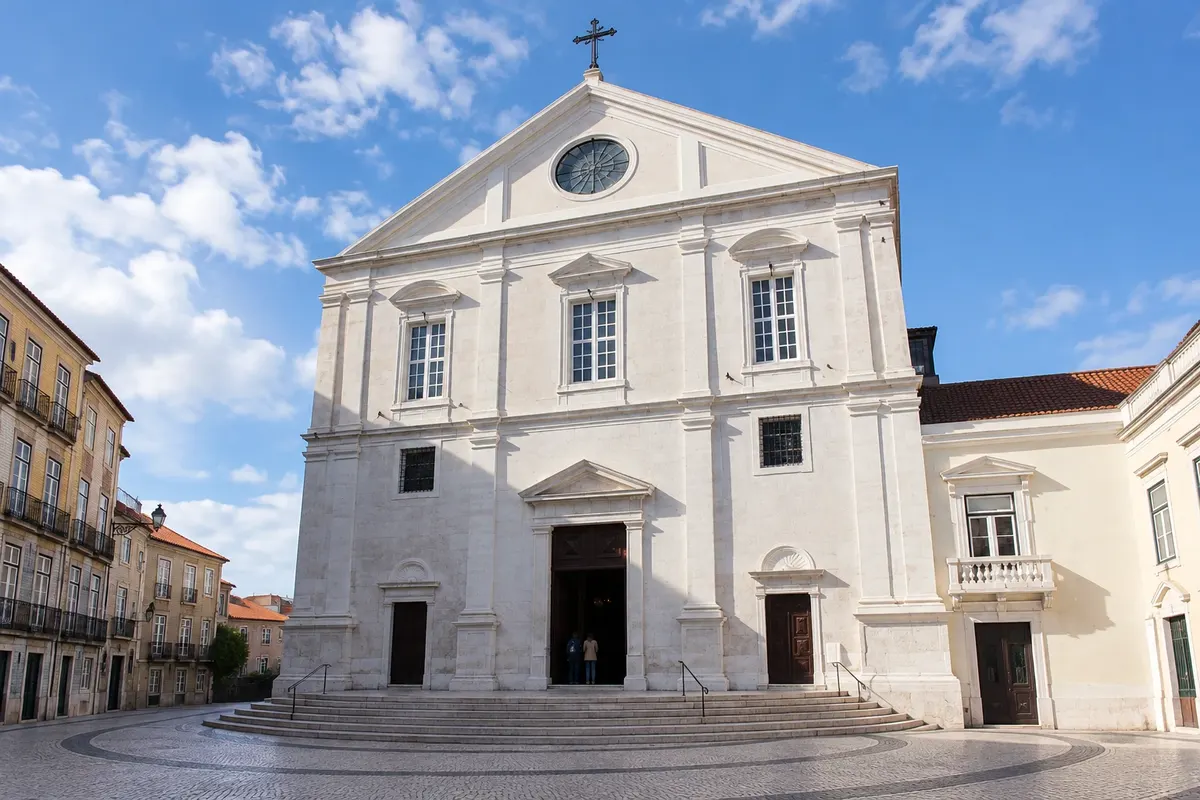
16th-century Jesuit church in Bairro Alto, with a simple façade and a gilded carved interior. It houses the Capela de São João Batista, made in Rome with precious stones and mosaics and assembled in Lisbon.

Carmo Convent
Lisbon · Lisbon · Monument

Carmo Convent

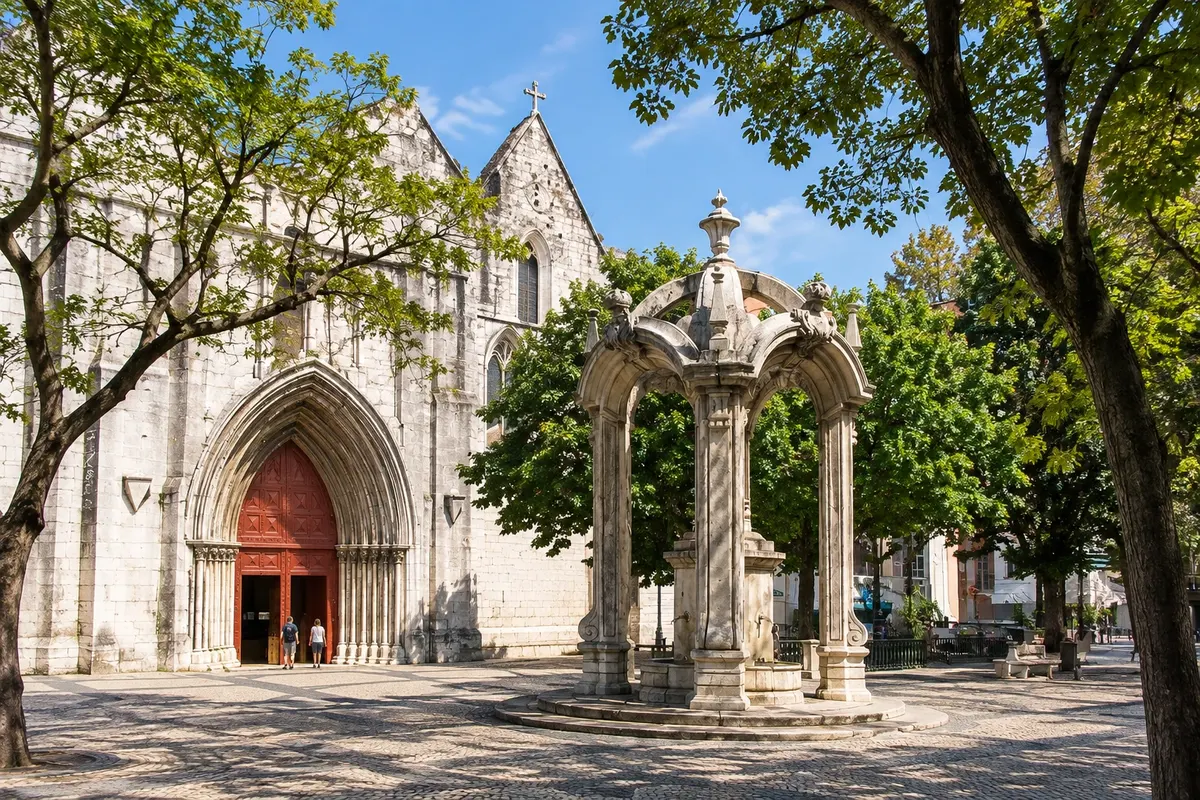
Ruins of the Gothic church of the Convento do Carmo, founded in 1389, which lost its roof in the 1755 earthquake. The arches open to the sky house the Museu Arqueológico do Carmo.

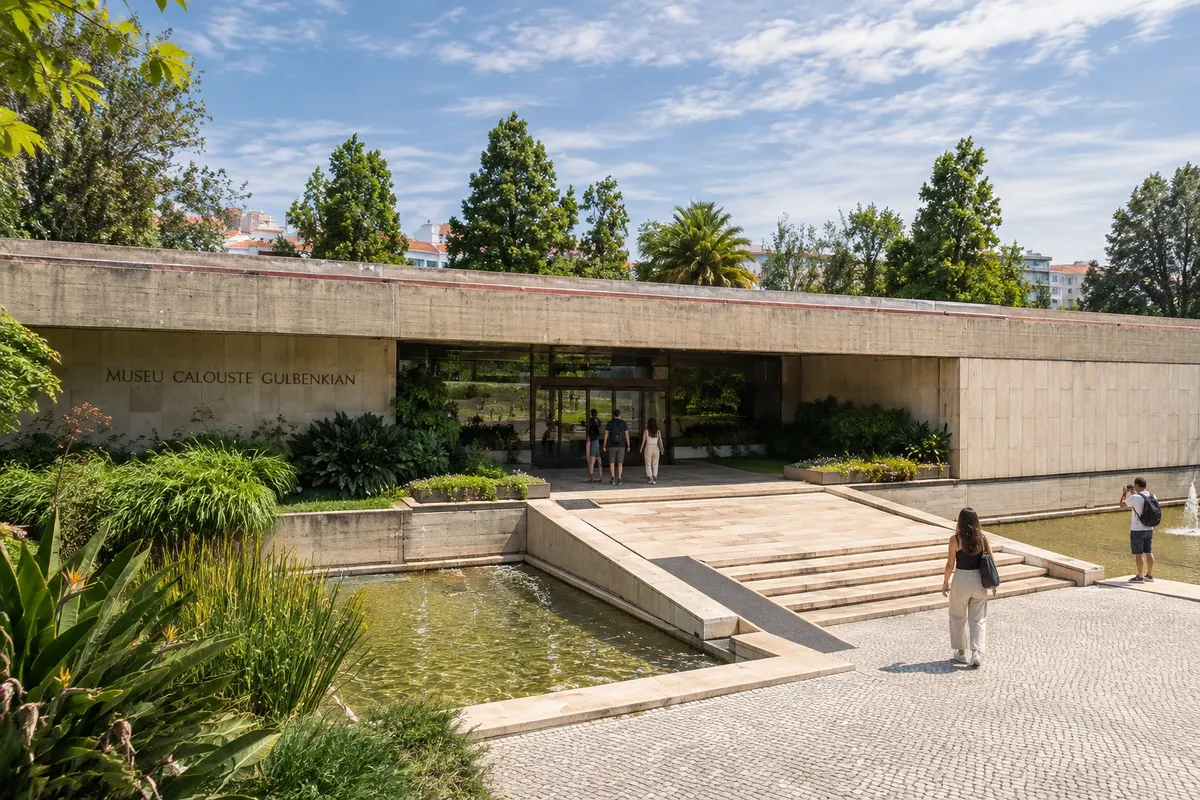
Calouste Gulbenkian Museum
Lisbon · Lisbon · Muzej

Calouste Gulbenkian Museum

Museum of the foundation created by the collector Calouste Gulbenkian, with art from Ancient Egypt to 20th‑century Europe, René Lalique jewelry and a modernist garden. Next door is the Centro de Arte Moderna.

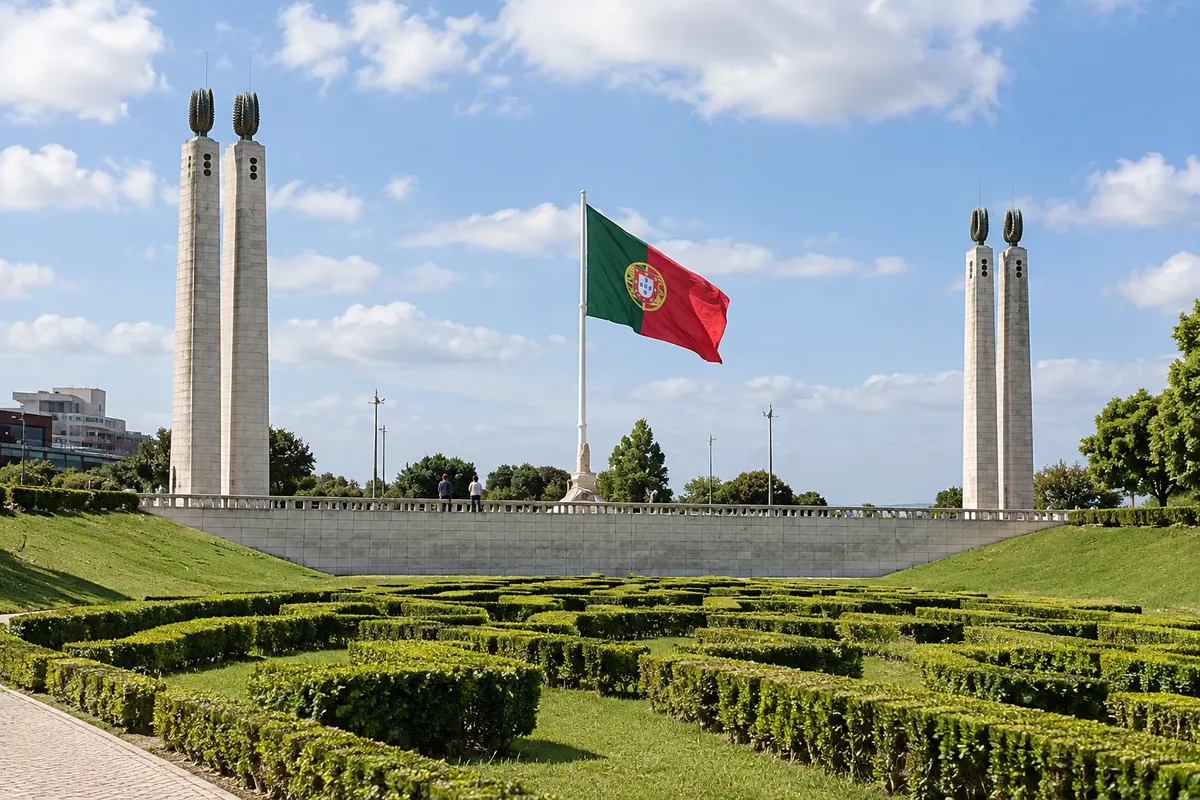
Eduardo VII Park
Lisbon · Lisbon · Park

Eduardo VII Park

The largest park in central Lisbon, with sloping lawns and trimmed hedges that descend to Praça Marquês de Pombal and Avenida da Liberdade, with views over the Tejo.

Parque das Nações
Lisbon · Lisbon · Neighborhood

Parque das Nações

Modern neighborhood on the banks of the Tejo built for Expo 98, with Gare do Oriente, the Oceanário, the Pavilhão de Portugal, the Torre Vasco da Gama and a long riverside promenade.

Lisbon Oceanarium
Lisbon · Lisbon · Aquarium

Lisbon Oceanarium

One of the largest aquariums in Europe, built for Expo 98, with a central tank that recreates the open ocean and four areas showcasing the ecosystems of the Atlantic, Pacific, Indian and Antarctic oceans.

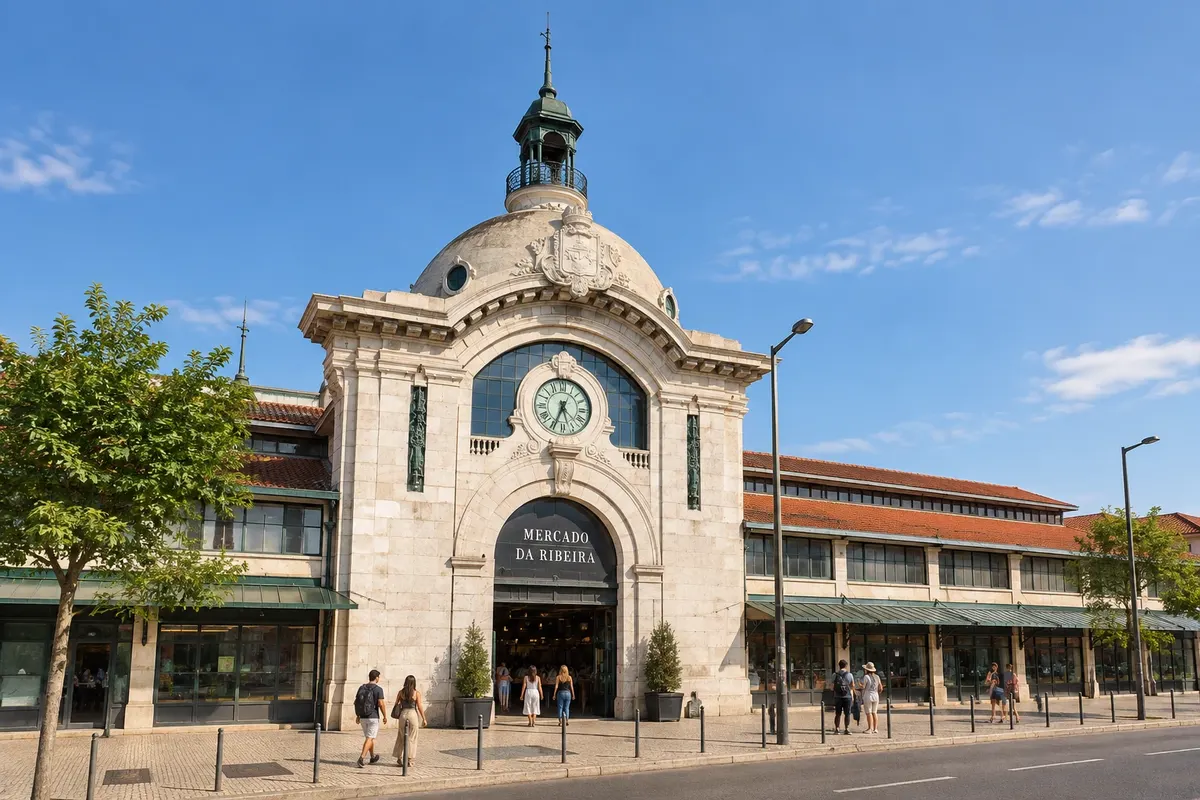
Time Out Market Lisboa
Lisbon · Lisbon · Tržnica

Time Out Market Lisboa

Food court inside Mercado da Ribeira, in Cais do Sodré, with stalls by chefs and well-known Lisbon restaurants. Next door, the traditional market still sells fish, fruit and flowers in the morning.

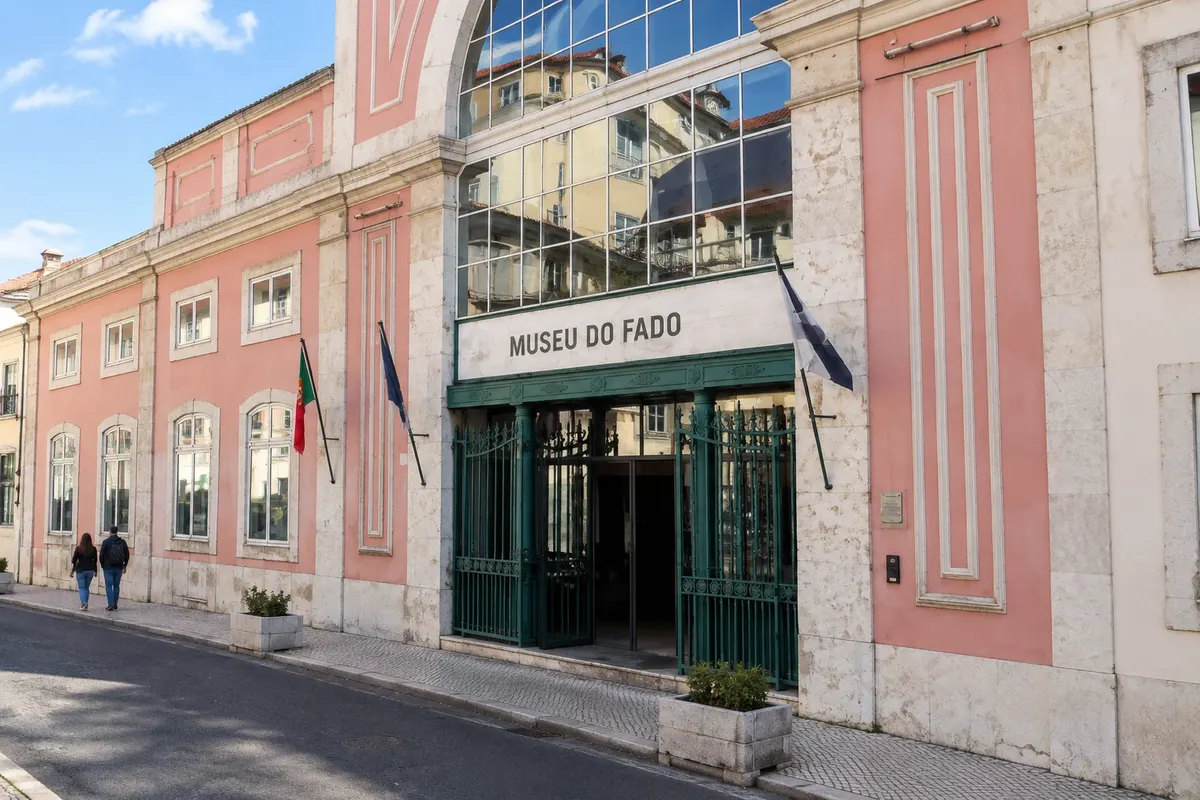
Fado Museum
Lisbon · Lisbon · Muzej

Fado Museum

Museum in Alfama dedicated to fado, Lisbon's song genre recognized by UNESCO as intangible cultural heritage in 2011, with Portuguese guitars, posters, costumes and recordings to listen to.

Águas Livres Aqueduct
Lisbon · Lisbon · Monument

Águas Livres Aqueduct

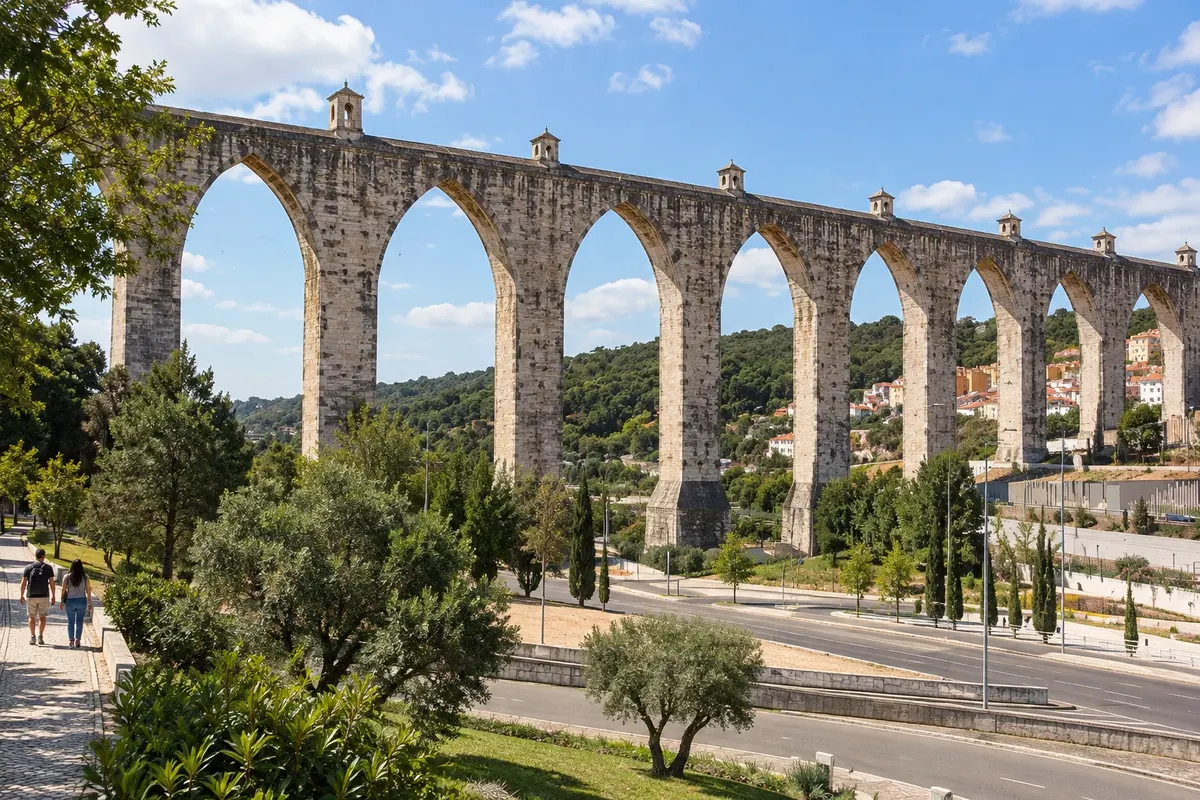
18th-century aqueduct that brought water to Lisbon, with 35 arches over the Alcântara valley; the largest is about 65 meters high. It survived the 1755 earthquake and can be walked over on top.

Basilica da Estrela
Lisbon · Lisbon · Cerkev

Basilica da Estrela

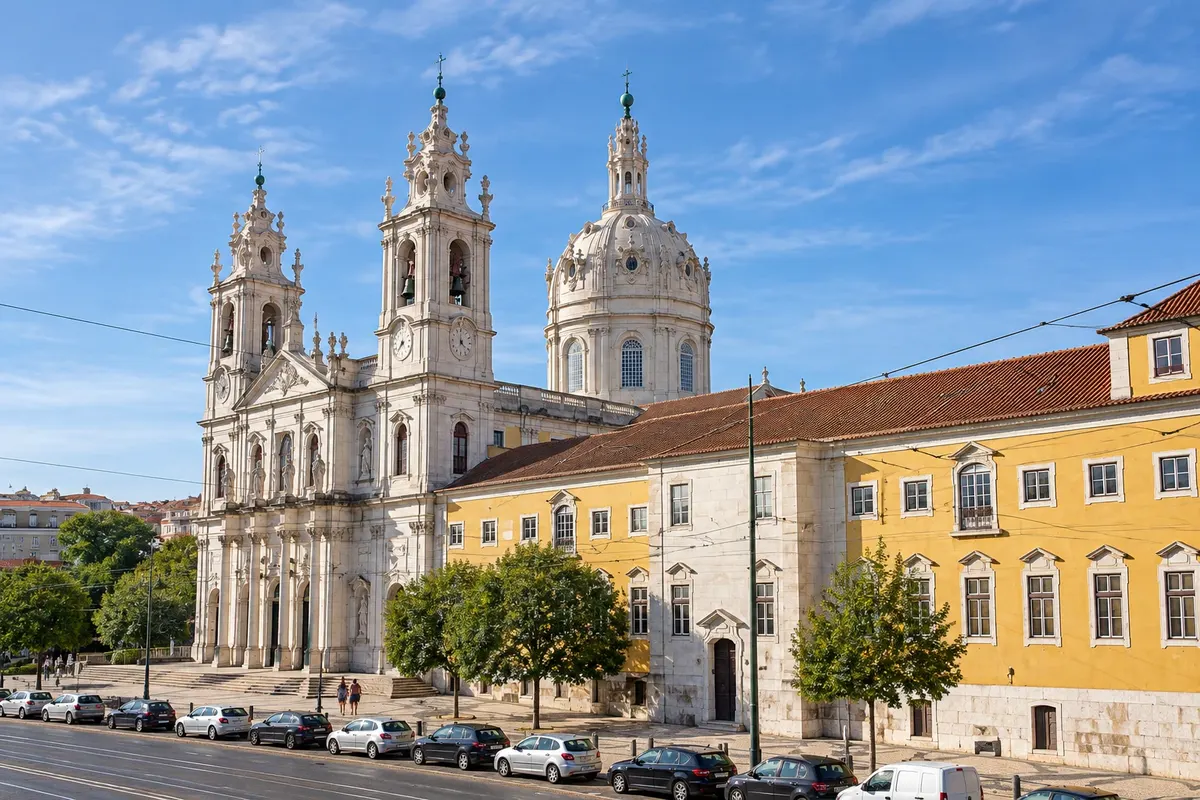
Baroque and neoclassical basilica from the late 18th century, with a large white dome visible from afar, commissioned by Queen D. Maria I. In front is the Jardim da Estrela.

Kaj izbrati pred odhodom

Izleti – Lisbon

Izhodišče, trajanje, potek, vključene storitve in okvirna cena vsakega izleta.

Belém: Mosteiro dos Jerónimos, Torre de Belém and Padrão dos Descobrimentos

Odhod: Lisbon center (Praça da Figueira or Cais do Sodré) Tram (eléctrico) 15E, train (comboio) or bus (autocarro) Približno 5 ur Dopoldne Lahko

Belém sits on the banks of the Tagus River, west of the city center, and brings together the monuments associated with the Age of Discoveries. The Mosteiro dos Jerónimos was founded by D. Manuel I in 1496 and given to the monks of the Order of Saint Jerome. The church holds the tombs of Vasco da Gama and Luís de Camões, and the two‑story cloister contains much of the visit. Together with the Torre de Belém, the monastery was designated a UNESCO World Heritage site in 1983. The Torre de Belém was built between 1514 and 1521, designed by Francisco de Arruda, to defend the river entrance. The facade features ropes carved in stone, shields and the figure of a rhinoceros. Between the two stands the Padrão dos Descobrimentos, a prow‑shaped monument with figures of Infante D. Henrique and other navigators. An elevator takes you to the terrace, over 50 meters high, with views of the river and Belém. On the pavement in front, the Rosa dos Ventos shows a world map with the Portuguese routes. A few steps from the monastery, the Pastéis de Belém bakery has produced since 1837 the pastry made with the recipe that came from the convent.

Kraji na poti: Mosteiro dos Jerónimos, Torre de Belém, Padrão dos Descobrimentos, Pastéis de Belém, Jardim da Praça do Império, Tagus River.

Vključuje: Walk between the three monuments along the riverside and through the Jardim da Praça do Império. Separate paid entrances apply at the monastery, the tower and the Padrão terrace; check the current fee schedule.

Nasvet: The Mosteiro dos Jerónimos and the Torre de Belém usually close on Mondays. Buy your ticket in advance and arrive early: the monastery’s line grows through the morning. The line at Pastéis de Belém moves quickly; there are also indoor dining rooms to sit in.

Najboljši čas za obisk: All year; from March to June and in September and October the weather is mild and lines are smaller than in July and August.

Alfama and São Jorge Castle

Odhod: Baixa de Lisboa On foot, by tram (electric) 28 or 12 to go up Približno 4 ure Dopoldne moderate (hills and stairways)

Alfama is Lisbon’s old quarter that descends from the castle to the river, with narrow streets, alleys and stairways. At the top of the hill, São Jorge Castle has walls and towers you can walk along, gardens with city views and a small museum with finds from the site, from the 7th century BC to the 18th century. Admission includes the Camera Obscura, a periscope in the Tower of Ulysses that projects 360-degree images of Lisbon, and the archaeological section, visited with a guide. On the way down, Lisbon Cathedral (Sé) has a Romanesque façade, and beside it is the Church of Saint Anthony, built where, according to tradition, the saint was born. The viewpoints of Santa Luzia and Portas do Sol overlook Alfama’s roofs and the Tagus River. Further on are the Monastery of São Vicente de Fora and the National Pantheon, and at Campo de Santa Clara takes place the Feira da Ladra, a secondhand market operating on Tuesdays and Saturdays. Near the river, the Fado Museum tells the history of Lisbon’s music.

Kraji na poti: São Jorge Castle, Alfama, Lisbon Cathedral (Sé), Church of Saint Anthony, Miradouro de Santa Luzia, Miradouro das Portas do Sol, Monastery of São Vicente de Fora, National Pantheon, Feira da Ladra, Fado Museum.

Vključuje: Visit to the castle (separate paid admission; check the current fee table) and a walk through Alfama’s streets, with stops at viewpoints and churches.

Nasvet: Take the tram (electric) or a taxi up to the castle and walk down: the route is almost all downhill. Wear sneakers with a firm sole, because the calçada portuguesa can be slippery. For the Camera Obscura and the archaeological section, ask at the entrance about the guided visits scheduled for the day.

Najboljši čas za obisk: All year; in June Alfama hosts the street festivities of the Festas de Lisboa and becomes crowded at night.

Baixa, Praça do Comércio and Rossio

Odhod: Baixa de Lisboa Peš Približno 3 ure Popoldne Lahko

Baixa is the flat center of Lisbon, rebuilt after the 1755 earthquake with straight, grid-like streets in the plan known as Baixa Pombalina. Praça do Comércio, also called Terreiro do Paço, opens onto the Tagus River, with the equestrian statue of D. José I in the center and the Cais das Colunas at the water’s edge. The Arco da Rua Augusta links the square to the pedestrian street; the top of the arch is open to visitors and offers a 360-degree view over the Baixa and the river. The arch’s statues depict, among others, the Marquis of Pombal and Vasco da Gama. Rua Augusta leads to Rossio, the square with a wavy pavement in Portuguese calçada and a train station with a neo-Manueline facade. Beside it are Praça da Figueira and, a few blocks away, the Elevador de Santa Justa, from 1902, by Raoul Mesnier de Ponsard, which rises from the Baixa to Largo do Carmo and serves as a viewpoint over the center.

Kraji na poti: Praça do Comércio, Arco da Rua Augusta, Rua Augusta, Rossio, Praça da Figueira, Rossio Station, Elevador de Santa Justa, Cais das Colunas.

Vključuje: Walk through the squares and streets of the Baixa. The top of the Rua Augusta Arch and the Santa Justa Lift are paid separately; check the current fee table.

Nasvet: The line for the Santa Justa Lift is often long. If you only want the view you can reach the terrace via Largo do Carmo in Chiado.

Najboljši čas za obisk: All year; in December the Baixa is decorated with Christmas lighting.

Chiado, Bairro Alto and Príncipe Real

Odhod: Baixa de Lisboa On foot, by metro to Baixa-Chiado Približno 4 ure Popoldne moderate (uphills)

Chiado is the area of shops, bookstores, cafés and theaters between the Baixa and Bairro Alto. In Largo do Carmo are the ruins of the Convento do Carmo, a Gothic church begun in 1389 and destroyed by the 1755 earthquake: the arches remain roofless and the space houses the Museu Arqueológico do Carmo. Climbing via Largo de Camões, Bairro Alto has narrow grid-like streets with restaurants and bars that fill at night. The Igreja de São Roque, plain on the outside, has chapels decorated with gilded woodwork and marbles. The Miradouro de São Pedro de Alcântara is a two-level garden with views of the castle and the Baixa. Heading north you reach Príncipe Real, a neighborhood of design shops and a garden with a broad-crowned cedar.

Kraji na poti: Chiado, Café A Brasileira, Largo do Carmo, Convento do Carmo, Igreja de São Roque, Bairro Alto, Miradouro de São Pedro de Alcântara, Príncipe Real, Largo de Camões.

Vključuje: Walk through the three neighborhoods. The Museu Arqueológico do Carmo and the Igreja de São Roque have separate paid entry for exhibition areas; check the current rate table.

Nasvet: Do the ride late afternoon and finish at the Miradouro de São Pedro de Alcântara at sunset. The Museu Arqueológico do Carmo is closed on Sundays.

Najboljši čas za obisk: All year; from May to September nights in Bairro Alto are busier.

Tram (electric) 28

Odhod: Martim Moniz Tram (eléctrico) 28E of Carris about 1 hour (one way only) Dopoldne Lahko

The tram (electric) 28 is the line that crosses Lisbon’s historic neighborhoods. The old yellow wooden cars climb and descend the hills between Martim Moniz and Campo de Ourique, on streets that run close to the building facades. Along the way the tram passes through Graça, goes by the Church of São Vicente de Fora, the Largo das Portas do Sol, a few steps from the castle, and descends through Alfama to the Sé de Lisboa and the Church of Santo António. In the Baixa it continues along Rua da Conceição, climbs to Chiado and Largo de Camões and continues to the Parliament, the Basílica da Estrela and the Jardim da Estrela before reaching Campo de Ourique. At the end of the line the tram turns around, and you can return the same way. It is regular public transport, also used by residents, so it gets crowded at peak times.

Kraji na poti: Martim Moniz, Graça, Church of São Vicente de Fora, Largo das Portas do Sol, Sé de Lisboa, Rua da Conceição, Chiado, Largo de Camões, Basílica da Estrela, Jardim da Estrela, Campo de Ourique.

Vključuje: Ride on tram 28E with a separately paid ticket (a loaded transport card is valid); check the current fare table.

Nasvet: Board at the starting point, in Martim Moniz, early so you can get a seat. Get off at Portas do Sol to visit the castle or at Estrela to see the basilica and the garden. Keep your backpack in front of your body inside a crowded tram.

Najboljši čas za obisk: All year; from October to April lines at the starting point are usually shorter.

Lisbon viewpoints

Odhod: Graça On foot, by tram (electric) 28 or 12 Približno 3 ure Popoldne moderate (hills)

Lisbon spreads over hills, and its viewpoints are the squares and terraces from which you see the city from above. The Miradouro da Senhora do Monte, at Graça’s highest point, shows the castle, the Baixa and the River Tagus straight ahead. Just below, the Miradouro Sophia de Mello Breyner Andresen, known as Miradouro da Graça, has pine trees, a kiosk and a view of the castle. Heading down to Alfama, the Miradouro de Santa Luzia has azulejo panels and a pergola with bougainvillea, and the Miradouro das Portas do Sol opens onto the neighborhood roofs and the river. On the other side of the Baixa, the Miradouro de São Pedro de Alcântara faces the castle, and the Miradouro de Santa Catarina, in Santa Catarina, shows the Ponte 25 de Abril and the port. Many viewpoints have kiosks with outdoor tables, and at late afternoon they gather locals and visitors to watch the sunset.

Kraji na poti: Miradouro da Senhora do Monte, Miradouro Sophia de Mello Breyner Andresen (Graça), Miradouro de Santa Luzia, Miradouro das Portas do Sol, Miradouro de São Pedro de Alcântara, Miradouro de Santa Catarina.

Vključuje: Walk between the viewpoints, with short tram (electric) sections. Access to the viewpoints is open to the public.

Nasvet: Start at Graça, the highest point, and go downwards. Leave Santa Catarina or São Pedro de Alcântara for sunset. Bring a jacket from October to April: it is windy at the high viewpoints.

Najboljši čas za obisk: All year; from May to September sunset is later and the viewpoints get crowded at the end of the day.

Prikaži dodatne izlete (12)

Fado night

Odhod: Alfama, Mouraria or Bairro Alto On foot or by taxi Približno 3 ure night Lahko

Fado is Lisbon’s urban song, recognized by UNESCO as Intangible Cultural Heritage of Humanity in 2011. A singer performs accompanied by the Portuguese guitar, with twelve metal strings and a pear-shaped body, and by the viola, as the Portuguese call the acoustic guitar. Fado houses are located in Alfama, Mouraria and Bairro Alto. Typically the performance takes place during dinner: musicians play in short sets, and between sets the kitchen service continues. During the songs the lights are dimmed and silence is requested in the room. There are also neighborhood taverns where fado is sung by amateurs, known as fado vadio, in a simpler setting. To learn the history beforehand, the Fado Museum in Alfama brings together instruments, recordings and portraits of fadistas.

Kraji na poti: Alfama, Mouraria, Bairro Alto, Fado Museum.

Vključuje: Dinner or fado live performance, paid separately; many venues charge a minimum amount per person. Check the current rates.

Nasvet: Book in advance, especially Friday through Sunday. Ask whether the price includes dinner or only the minimum consumption. Visit the Fado Museum in the afternoon and have dinner with fado the same night in Alfama.

Najboljši čas za obisk: All year; the venues operate in every season.

Parque das Nações and Oceanário de Lisboa

Odhod: Oriente Station Metro (red line) to Oriente Približno 5 ur Ves dan Lahko

Parque das Nações is the neighborhood built in eastern Lisbon for Expo 98, on the banks of the Tagus River, featuring contemporary architecture and a long waterfront promenade. Oriente Station, by Santiago Calatrava, has a steel-and-glass canopy that resembles a forest of trees. The Oceanário de Lisboa, at Doca dos Olivais, displays more than 500 species around a large central aquarium, seen from multiple levels, with sharks, rays, sunfish and schools of fish. Around it are tanks of coastal habitats with otters, penguins and seabirds, plus temporary exhibitions. On the promenade you’ll find the Pavilhão de Portugal, by Álvaro Siza Vieira, with a thin curved concrete canopy, the Pavilhão do Conhecimento science museum, and the 140-meter Vasco da Gama Tower. The Telecabine Lisboa runs along the river, with views of the Vasco da Gama Bridge.

Kraji na poti: Oceanário de Lisboa, Oriente Station, Pavilhão de Portugal, Pavilhão do Conhecimento, Telecabine Lisboa, Vasco da Gama Tower, Vasco da Gama Bridge, Garcia de Orta Gardens.

Vključuje: Oceanário ticket and Telecabine ride paid separately; check the current price list. Walk along the promenade and the Garcia de Orta Gardens.

Nasvet: Allow two to three hours for the Oceanário and buy your ticket in advance. Weekends and Portuguese school holidays are busier. The red line metro that serves the airport stops at Oriente station.

Najboljši čas za obisk: All year; on rainy days, from October to March, the Oceanário is a good indoor option.

LX Factory and Ponte 25 de Abril

Odhod: Alcântara Tram (eléctrico) 15E or train (comboio) on the Cascais line Približno 3 ure Popoldne Lahko

LX Factory occupies the former complex of the Companhia de Fiação e Tecidos Lisbonense, a factory founded in 1846 in Alcântara beneath the Ponte 25 de Abril. The warehouses, covering 23,000 square meters, were turned into design shops, studios, restaurants, cafés and offices, with graffiti-covered walls and an industrial vibe. The Livraria Ler Devagar occupies a former printing press, with shelves to the ceiling, a suspended bicycle and a reading mezzanine. On Sundays, a market fills the main street with crafts, clothing and food. Next to it is the Ponte 25 de Abril, a suspension bridge opened in 1966, about 2.3 km long, linking Lisbon to Almada and with separate decks for cars and trains. At the base of one of the pillars, the Experiência Pilar 7 tells the story of the bridge’s construction through interactive exhibits and has an elevator up to a viewpoint with views of the river and the city, from where you can see cars passing overhead.

Kraji na poti: LX Factory, Ler Devagar Bookshop, 25 de Abril Bridge, Pilar 7 Experience, Alcântara.

Vključuje: Visit to LX Factory (complex open to the public) and the Experiência Pilar 7, with separate paid admission; check the current price list.

Nasvet: Go on Sunday to see the market, but arrive before lunch, when it gets busier. Combine it with Belém or the MAAT on the same day: tram (eléctrico) 15E links all three. Check beforehand if the elevator at the Experiência Pilar 7 is operating.

Najboljši čas za obisk: Vse leto.

Time Out Market and Cais do Sodré

Odhod: Cais do Sodré Metro (green line) or train (comboio) to Cais do Sodré Približno 2 uri night Lahko

The Time Out Market Lisboa operates inside Mercado da Ribeira in Cais do Sodré, in a hall with stalls from restaurants, bakeries and city chefs arranged around communal tables. Each person chooses what they want at different stalls and sits where there is space, which makes it easy for groups and families with varied tastes. The menu ranges from Portuguese snacks and seafood to burgers and sweets, including the pastel de nata. Cais do Sodré is a transport hub: the metro, the Cascais line train and ferries to the other side of the Tagus all arrive there. A few steps away is Rua Nova do Carvalho, the street with the pink-painted pavement, with bars that enliven the neighborhood’s night. Along the river, the Ribeira das Naus promenade continues to Praça do Comércio.

Kraji na poti: Mercado da Ribeira, Time Out Market Lisboa, Cais do Sodré, Rua Nova do Carvalho, Praça Dom Luís I, Ribeira das Naus.

Vključuje: Meals paid separately at each stall; check prices on site.

Nasvet: At lunch and dinner on weekends tables are in demand; go outside those times or take food to the Ribeira das Naus riverside promenade. Walk back along the riverfront to Praça do Comércio.

Najboljši čas za obisk: Vse leto.

Calouste Gulbenkian Museum

Odhod: Avenidas Novas Metro to São Sebastião or Praça de Espanha Približno 3 ure Dopoldne Lahko

The Calouste Gulbenkian Museum houses the collection of businessman Calouste Gulbenkian, who established the foundation in his will. The Founder’s Collection spans millennia of art in rooms organized by region and period: Ancient Egypt, Greco-Roman art, Mesopotamia, the Islamic world with carpets and ceramics, China and Japan, and European art from the 12th to the 18th centuries, featuring painting, sculpture, furniture and a room dedicated to René Lalique’s jewelry. The Modern Art Centre, on the other side of the grounds, holds a large collection of 20th-century Portuguese art and hosts temporary exhibitions. The buildings sit within the Jardim Gulbenkian, with ponds, paths, an open-air amphitheater and plenty of shade. It’s a peaceful stroll away from the bustle of the historic center.

Kraji na poti: Calouste Gulbenkian Museum, Founder’s Collection, Gulbenkian Modern Art Centre, Jardim Gulbenkian.

Vključuje: Visit to the museum and the Modern Art Centre, with separate admission fees; check the current price list. The garden is open to the public.

Nasvet: The museum is usually closed on Tuesdays. Allow at least two hours for the Founder’s Collection. The garden is good for resting between visits.

Najboljši čas za obisk: All year; from April to June the garden is greener and more in bloom.

National Tile Museum

Odhod: Santa Apolónia Bus or taxi from the Baixa Približno 2 uri Dopoldne Lahko

Tiles appear on Lisbon’s façades, churches and stations, and the National Tile Museum tells that story from the 15th century to today. The museum occupies the Convent of Madre de Deus, founded in 1509 by Queen D. Leonor, in the eastern part of the city. The collection shows panels from several periods, including 17th-century hunting scenes, early 18th-century panels and 20th-century works by artists such as Maria Keil, Júlio Pomar and Querubim Lapa. Among the highlighted pieces is a long panel with a panoramic view of Lisbon before the 1755 earthquake. The visit includes the mannerist cloister, the church and the Chapel of Santo António, with Baroque gilt carving and 18th-century tiles.

Kraji na poti: National Tile Museum, Convent of Madre de Deus, Church of Madre de Deus, Chapel of Santo António.

Vključuje: Visit to the museum and the convent church, with separate admission fees; check the current price list.

Nasvet: The museum is outside the historic center; combine it with Alfama or Santa Apolónia.

Najboljši čas za obisk: All year; it’s a covered option for rainy days, from October to March.

Cristo Rei and Almada

Odhod: Cais do Sodré Boat to Cacilhas and bus (autocar) to the sanctuary Približno 4 ure Popoldne Lahko

On the opposite bank of the Tagus River, in Almada, the Sanctuary of Cristo Rei has a statue of Christ with open arms facing Lisbon. The monument was inaugurated in 1959, after a vow made by Portuguese bishops during World War II, and the design was inspired by Rio de Janeiro’s Christ the Redeemer. The statue is 28 meters tall and stands on an 82-meter pedestal. An elevator takes you to the terrace atop the pedestal, offering 360-degree views of the Ponte 25 de Abril, the river and Lisbon. The trip itself is a short excursion: the boat departs Cais do Sodré and crosses the river to Cacilhas in about 10 minutes. In Cacilhas there are fish restaurants by the quay, and the Cais do Ginjal, a riverside walk among old warehouses, looks out toward Lisbon.

Kraji na poti: Cais do Sodré, Cacilhas, Sanctuary of Cristo Rei, Cais do Ginjal, Almada, Tagus River, Ponte 25 de Abril.

Vključuje: Boat and bus paid separately (use the loaded transport card). Sanctuary elevator paid separately; check the current rate. The terrace and chapel are open to the public.

Nasvet: Check at the Cacilhas stop which bus line goes to the sanctuary. Go on a clear day, when the view reaches farther. On the return, take the boat in the late afternoon to see Lisbon lit by the low sun.

Najboljši čas za obisk: Year-round; on foggy days, more common from November to February, the view is reduced.

Boat trip on the Tagus

Odhod: Doca do Bom Sucesso or Doca de Santo Amaro Sailing boat or catamaran from a local operator Približno 2 uri Popoldne Lahko

From the river you can see how Lisbon was born facing the water. Local operators run sailing boat or catamaran tours that depart from the docks of Belém and Alcântara and sail the Tagus estuary, usually for about two hours. From the boat you’ll see the Belém Tower, the Padrão dos Descobrimentos, the MAAT, passage under the 25 de Abril Bridge, Cristo Rei on the south bank and, depending on the route, Praça do Comércio and Alfama. Many departures are at sunset to watch the river sunset. For a short crossing, the regular ferries between Cais do Sodré and Cacilhas take about 10 minutes and show the city’s waterfront.

Kraji na poti: Tagus River, Belém Tower, Padrão dos Descobrimentos, 25 de Abril Bridge, Sanctuary of Cristo Rei, Praça do Comércio.

Vključuje: Boat tour with an operator, paid separately; some include a drink or snack. Check the current price list.

Nasvet: Book in advance for summer. Bring a jacket: it’s windier on the river and temperatures drop late in the day. Departure depends on wind and tide, and the operator may reschedule.

Najboljši čas za obisk: The busiest season runs from April to October; there are fewer departures in winter.

MAAT and Belém riverside

Odhod: Belém Tram (electric) 15E or train (comboio) to Belém Približno 2 uri Popoldne Lahko

The MAAT, Museum of Art, Architecture and Technology, is run by Fundação EDP and occupies two buildings on the banks of the Tagus River, between Belém and Alcântara. Central Tejo is a former brick thermoelectric power plant that houses the boilers and machines and hosts exhibitions. Next to it, the contemporary building, with curved lines and clad in white ceramic tiles, has a rooftop walkway with views of the river and the 25 de Abril Bridge. The temporary exhibitions cover contemporary art, architecture and technology. From the MAAT a riverside promenade runs on foot to the Padrão dos Descobrimentos and the Belém Tower.

Kraji na poti: MAAT, Central Tejo, Tagus River, Belém.

Vključuje: Visit to the exhibitions, with admission paid separately; check the current price list. Walk along the riverside promenade.

Nasvet: The museum is closed on Tuesdays. Combine it with the Belém walk in the afternoon, after visiting the monuments. Go up to the rooftop at the end of the day, facing the sunset.

Najboljši čas za obisk: All year; from May to September the riverside promenade is more enjoyable in the late afternoon.

Costa da Caparica

Odhod: Lisbon Bus (autocarro) direct or ferry to Cacilhas and bus Približno 6 ur Ves dan Lahko

Costa da Caparica is the stretch of open-ocean beaches closest to Lisbon, on the south bank of the Tagus River, in the municipality of Almada. It’s about 15 km of continuous sand, from the center of Costa da Caparica to Fonte da Telha. The beaches near the center have a promenade, surf schools, restaurants and beach bars; farther south, the sand lies at the foot of the Arriba Fóssil, a cliff protected as a natural landscape. The sea is the Atlantic: the waves favor surfing and the water is usually cold, even in summer. Lisbon residents visit the Costa on summer weekends, and traffic on the Ponte 25 de Abril increases on those days.

Kraji na poti: Costa da Caparica, Fonte da Telha, Protected Landscape of the Arriba Fóssil of Costa da Caparica, Almada.

Vključuje: Transport paid separately (bus and boat use the loaded transport card). Chair and umbrella rental and surf lessons are paid separately.

Nasvet: Go on a weekday to avoid bridge traffic. Bring sunscreen and a light jacket: the sea breeze usually blows in the afternoon. Respect the lifeguards' flags.

Najboljši čas za obisk: The beach season runs from June to September; surfing takes place year-round.

Setúbal and Serra da Arrábida (round trip)

Odhod: Lisbon (Roma-Areeiro or Entrecampos station) Fertagus train and bus, or car about 9 hours Ves dan Lahko

About 50 km south of Lisbon, Setúbal lies between the estuary of the Sado River and the Serra da Arrábida. The hills, within the Parque Natural da Arrábida, slope down in forested flanks to clear-water sea, with beaches in small coves: Figueirinha, Creiro, Galapos and Portinho da Arrábida. The road across the hills has viewpoints over the sea and the Tróia peninsula. A group of dolphins (common dolphins/roazes) lives in the Sado estuary, and operators from Setúbal run boat trips to watch them. In Setúbal, Mercado do Livramento sells fish and seafood, and choco frito is the town's typical dish. On the way back, the village of Azeitão is known for its cheese and for its tortas.

Kraji na poti: Setúbal, Parque Natural da Arrábida, Serra da Arrábida, Portinho da Arrábida, Praia da Figueirinha, Praia do Creiro, Estuário do Sado, Azeitão.

Vključuje: Transport paid separately; boat trip on the Sado and meals paid separately. Check the current table.

Nasvet: From June to September, car access to the Arrábida beaches is restricted during the day, and buses run from Setúbal to the beaches. Outside summer the road is open. The Fertagus train crosses the 25 de Abril Bridge and takes about one hour to reach Setúbal.

Najboljši čas za obisk: The beach season runs from June to September; for hiking in the hills, from March to June and in September and October.

Fátima, Batalha, Nazaré and Óbidos (round trip)

Odhod: Lisbon Organized tour, car or regular bus (autocar) about 9 hours Ves dan Lahko

North of Lisbon, four stops are commonly made in the same day on agency tours or by car. The Sanctuary of Fátima, about 130 km from Lisbon, includes the Chapel of the Apparitions, at the site where it is said that Our Lady appeared to three shepherd children in 1917, the Basilica of Our Lady of the Rosary, with the tombs of Francisco, Jacinta and Lúcia, and the modern Basilica of the Holy Trinity. The Monastery of Batalha, of Santa Maria da Vitória, is a Gothic work and a UNESCO World Heritage Site. In Nazaré, the Sítio viewpoint looks over the beach and the fishing village; in winter, Praia do Norte receives the big waves that attract surfers. Óbidos is a walled town with streets of white houses and the castle on the hill.

Kraji na poti: Sanctuary of Fátima, Capelinha das Aparições, Basilica of Our Lady of the Rosary, Basilica of the Holy Trinity, Monastery of Batalha, Nazaré, Sítio da Nazaré, Óbidos.

Vključuje: Excursion with transport and guide, paid separately; admissions and meals are extra. Check the current price list.

Nasvet: If you go only to Fátima you can take the regular bus that departs from Sete Rios or Oriente, with about a 1 hour 30 minute journey. On May 12 and 13 and in October the sanctuary receives the large pilgrimages and becomes very crowded. Óbidos also has a direct bus from Lisbon, with about a one-hour trip.

Najboljši čas za obisk: Year round; for Nazaré’s waves, from October to March.

Po dnevih

Lisbon – načrt poti. Število dni: 3, 5in7

Predlogi za načrtovanje poti. Vrstni red dni prilagodite vremenu in razpoložljivosti izletov.

3 dni · Lisbon in 3 days: the essentials for a first trip

ZaFor first-time visitors with only a few days, or for those visiting Lisbon as part of a trip through Portugal. · Izhodišče:Baixa or Chiado, near the metro
  1. Dan 1 · Arrival from Brazil, Baixa and Chiado

    The overnight flight from Brazil usually arrives in the morning. From the airport, the metro (red line) or a taxi will take you to the center. Drop your bags and keep the day light: walk through Baixa, Praça do Comércio and Rossio — flat and close to everything — including the Arco da Rua Augusta. In the afternoon, go up to Chiado and finish at the Miradouro de São Pedro de Alcântara. Have an early dinner and rest to adjust to the time difference.

  2. Dan 2 · Belém and the riverside

    In the morning, the Belém route: Mosteiro dos Jerónimos, Torre de Belém and Padrão dos Descubrimentos, with a stop at the Pastéis de Belém. In the afternoon, MAAT and the Belém riverside and, on the way back, LX Factory. End the day with dinner at the Time Out Market and Cais do Sodré.

  3. Dan 3 · Alfama, castle and fado

    Early, tram (eléctrico) 28 from Martim Moniz to Portas do Sol. Continue to Alfama and São Jorge Castle, walking down by the Sé and the viewpoints of Santa Luzia and Portas do Sol. In the afternoon, the Fado Museum. In the evening, a fado night at a casa de fado in Alfama, with a reservation made beforehand.

5 dni · Lisbon in 5 days: city, river and a day trip
ZaFor those who want to see Lisbon at a relaxed pace, include museums and the river, and do a day trip. · Izhodišče:Baixa, Chiado or Avenida da Liberdade
  1. Dan 1 · Arrival from Brazil and Baixa

    Arrival in the morning on the overnight flight from Brazil. After dropping your bags, take the Baixa, Praça do Comércio and Rossio walk at a relaxed pace. Late afternoon, walk along the Ribeira das Naus to Cais do Sodré and have dinner at the Time Out Market.

  2. Dan 2 · Belém, MAAT and LX Factory

    Morning in Belém: Mosteiro dos Jerónimos, Torre de Belém and Padrão dos Descobrimentos. In the afternoon, MAAT and the riverside promenade and then LX Factory, with the Pilar 7 Experience at the Ponte 25 de Abril. If weather permits, take the sunset boat cruise on the Tagus, departing from the docks of Belém or Alcântara.

  3. Dan 3 · Alfama, castle and fado night

    Tram (eléctrico) 28 first thing. Alfama and São Jorge Castle in the morning, including the Sé and the viewpoints. In the afternoon, the viewpoints of Graça and Senhora do Monte. In the evening, a fado night in Alfama or in Mouraria.

  4. Dan 4 · Day trip to Sintra and Cascais

    Full day outside Lisbon. The train (comboio) to Sintra departs from Rossio station, and the one to Cascais departs from Cais do Sodré. For the palaces, the beaches and the route between them, see the Sintra and Cascais section in this guide. Return to Lisbon in the evening.

  5. Dan 5 · Gulbenkian, Parque das Nações and Chiado

    Morning at the Calouste Gulbenkian Museum and its garden. After lunch, metro to Oriente for the Parque das Nações and the Lisbon Oceanarium, with the Telecabine along the river. At the end of the day, return to Chiado and Bairro Alto for the last night.

7 dni · Lisbon in 7 days: the whole city and the surroundings
ZaFor those with a week who want to see Lisbon without rushing and take day trips to the beach, the hills and the interior. · Izhodišče:Baixa, Chiado or Avenida da Liberdade
  1. Dan 1 · Arrival from Brazil, Baixa and Rossio

    The flight from Brazil arrives in the morning. Walk through Baixa, Praça do Comércio and Rossio, go up to the top of the Arco da Rua Augusta and finish the day in Chiado. Sleep early to adjust to the time difference.

  2. Dan 2 · Belém and the riverside

    The full Belém route in the morning, with the Jerónimos, Torre de Belém and Padrão dos Descubrimentos. In the afternoon, MAAT and the Belém riverside and LX Factory. Dinner at the Time Out Market and Cais do Sodré.

  3. Dan 3 · Alfama, castle and fado

    Tram (eléctrico) 28 from Martim Moniz. Alfama and São Jorge Castle, with the Feira da Ladra if it’s Tuesday or Saturday. In the afternoon, the National Tile Museum (Museu Nacional do Azulejo), east of Alfama. In the evening, a fado night.

  4. Dan 4 · Day trip to Sintra and Cascais

    Train (comboio) from Rossio to Sintra and, if time allows, from Cascais back to Cais do Sodré. The palaces, the hills and the coast are covered in the Sintra and Cascais section of this guide.

  5. Dan 5 · Museums, Parque das Nações and viewpoints

    Morning at the Calouste Gulbenkian Museum. In the afternoon, Parque das Nações and the Lisbon Oceanarium. On the way back to the center, the Lisbon viewpoints route, with sunset at Santa Catarina or São Pedro de Alcântara.

  6. Dan 6 · Setúbal and Serra da Arrábida

    Full day in Setúbal and the Serra da Arrábida, by Fertagus train (comboio) or by car. Beach in the Arrábida bays in summer or a boat trip to see dolphins in the Sado. Outside summer, swap for Costa da Caparica or for Cristo Rei and Almada, which are closer.

  7. Dan 7 · Fátima, Batalha, Nazaré and Óbidos

    Full-day excursion to the north: Sanctuary of Fátima, Batalha Monastery, Nazaré and Óbidos. Those who prefer to stay in Lisbon can swap for Cristo Rei and Almada in the morning and a boat trip on the Tagus in the afternoon, finishing the week with a dinner in Bairro Alto.

Najboljši čas za obisk

Kdaj se odpraviti:Lisbon po mesecih

Spring (March to May) and autumn (September and October) usually have mild days for walking the hills. Summer, from June to August, is hot and dry, with more visitors; in June the city celebrates Santo Antônio. Winter, from December to February, is wetter and cooler, but it rarely freezes.

The seasons shown are the most usual ones; nature doesn't always follow the calendar.

januar Veliko padavin

Winter · Short days

Coldest month of the year in Lisbon, with average highs around 14 °C and lows near 8 °C. It rains on about ten days of the month, interspersed with cold sunny days. Museums such as the Gulbenkian and the Oceanário are good options on rainy days. Shorter lines at the Belém monuments and on tram 28.

februar Zmerne padavine

Winter · Low crowds

Still winter, with average highs around 16 °C and less frequent rain than in January. Days are slightly longer. A good month for monuments and museums with no queues. Carnival, when it falls in February, features small celebrations in the city.

marec Zmerne padavine

Spring · Mild weather

Start of spring, with average highs near 18 °C. Trees and gardens begin to bloom. A good month for walking through neighborhoods and viewpoints.

april Zmerne padavine

Spring · Easter

Average highs around 20 °C, with showers on some days. Holy Week and Easter increase tourist traffic. April 25 is a national holiday. Boat tours on the Tagus resume more frequent departures.

maj Zmerne padavine

Spring · Long days

Average highs around 23 °C and less rain. Long days for walking and watching the sunset from viewpoints. On the 12th and 13th, Fátima hosts the large May pilgrimage. A good month for Arrábida and the Costa da Caparica before the summer.

junij Malo padavin

Summer · Lisbon festivals

Start of summer, with average highs near 26 °C and little rain. The whole month features the Festas de Lisboa, with street parties in Alfama, Mouraria, and Graça and grilled sardines; on the night of the 12th to 13th, the eve of Saint Anthony, the popular marches descend Avenida da Liberdade and the neighborhoods are packed.

julij Malo padavin

Summer · High season

Dry month, with average highs around 28 °C and days hotter than that. High season: long lines at Belém, the castle, and tram 28. Beach season on the Costa da Caparica and in Arrábida, with car access restricted to the beaches in the hills. Plan walks early in the morning or late in the afternoon.

avgust Malo padavin

Summer · Heat

Warmest month, with average highs near 29 °C and almost no rain. Vacation time for the Portuguese and other Europeans: city and beaches crowded. Buy tickets in advance and use museums during the hottest hours. The sea water remains cold.

september Malo padavin

End of summer · Sea still good

Average highs around 27 °C and the first rains at the end of the month. Crowds drop after the first half of the month. It’s still beach season on Costa da Caparica and Arrábida, and the evenings are pleasant for fado and the viewpoints.

oktober Veliko padavin

Autumn · Return of the rain

Average highs around 23 °C and rain returns on about eight days of the month. On the 13th, Fátima hosts the October pilgrimage. The big-wave season begins in Nazaré.

november Veliko padavin

Autumn · Rainiest month

Rainiest month of the year, with average highs near 18 °C. Bring an umbrella and closed shoes: the calçada portuguesa becomes slippery. Low crowds at monuments. A good month for museums, fado houses, and the Oceanário.

december Veliko padavin

Winter · Christmas

Average highs around 15 °C and frequent rain. Baixa and Chiado receive Christmas lights, and there is a New Year’s party at Praça do Comércio. Between Christmas and New Year crowds increase. Days are the shortest of the year: plan outdoor activities for the morning.

Načrtujte pot

Kako do tja:Lisbon

From the airport to the center

The Aeroporto metro station, on the red line, is at Terminal 1. With one or two changes you can reach Baixa, Chiado or Cais do Sodré in about half an hour. Those arriving at Terminal 2 use the shuttle bus between terminals. Taxis and ride-hailing cars leave the airport and take about 20 minutes to the center, depending on traffic. For the metro, buy the rechargeable card at the station machines.

By train or bus from Porto and other cities

CP long-distance trains arrive in Lisbon at Santa Apolónia station, near Alfama, and Oriente, in Parque das Nações; from Porto the trip takes about 3 hours on the fast train. Trains from the Algarve arrive at Oriente. Long-distance buses arrive at the Sete Rios Bus Terminal or Gare do Oriente. Urban trains to Sintra depart from Rossio, those to Cascais leave from Cais do Sodré, and Fertagus trains to Setúbal depart from Roma-Areeiro and Entrecampos and cross the Ponte 25 de Abril.

Z avtom

From Porto to Lisbon is about 300 km via the A1 motorway, which goes inland passing near Fátima. From the Algarve you reach it via the A2, which enters Lisbon over the Ponte 25 de Abril. The A5 connects Lisbon to Cascais, and the A8 goes north toward Óbidos. Motorways have tolls; rental cars usually come with an automatic toll device. Within Lisbon a car is not helpful: historic center streets are narrow and steep, and parking is difficult and paid. Leave the car for short trips out of town.

Getting around Lisbon

The metro has four lines, identified by the colors blue, yellow, green and red. Carris operates the buses, the trams (eléctricos), such as the 28E and 15E to Belém, and the elevators and lifts in the center. A rechargeable card works for metro, Carris, CP urban trains and ferries; load it with single trips or a one-day pass. The Lisboa Card, for 24, 48 or 72 hours, includes public transport and entry to several museums. Transtejo ferries link Cais do Sodré to Cacilhas. The center is good for walking, but it has hills and Portuguese pavement, which becomes slippery when wet: wear comfortable shoes with a firm sole.

Tickets and tourist tax

The main monuments have separate admission fees, including the Jerónimos Monastery, Belém Tower, São Jorge Castle and the Lisbon Oceanarium; check the current schedule and, in high season, buy in advance on each attraction’s website. Churches, viewpoints, squares and gardens are open to the public. Lisbon charges a municipal tourist tax per guest per night, payable at your accommodation; check the current rules and amount.

Izhodišče za raziskovanje

Kje prenočiti in kje jesti

Pred odhodom

Praktične informacije

Z nekaj načrtovanja boste imeli več časa za uživanje na poti.
Kdaj se odpraviti

Spring (March to May) and autumn (September and October) usually have mild days for walking the hills. Summer, from June to August, is hot and dry, with more visitors; in June the city celebrates Santo Antônio. Winter, from December to February, is wetter and cooler, but it rarely freezes.

The seasons shown are the most usual ones; nature doesn't always follow the calendar.

Koliko dni ostati

Three days cover the Baixa, Alfama and the Castelo, Belém and the Chiado with Bairro Alto. With four or five days you can add the Gulbenkian, the Parque das Nações and a day trip to Sintra and Cascais, which are less than an hour away by comboio.

V katerem mestu prenočiti

From the Baixa and Chiado you can walk to the Rossio, Praça do Comércio, Alfama and Bairro Alto, and there's metro nearby. Alfama and Graça have narrow streets and steep slopes, with a neighborhood feel. Bairro Alto and Cais do Sodré concentrate bars and are lively at night. Avenida da Liberdade and Marquês de Pombal have larger hotels and good metro links. Parque das Nações, more modern, is close to the airport and Estação do Oriente. Belém is quieter but farther from the center.

Spoštujte kraj

Odnesite svoje odpadke, upoštevajte oznake in podprite lokalne ponudnike. V naravi upoštevajte navodila za obiskovalce.

Odgovori na vaša vprašanja

Pogosta vprašanja – Lisbon

How many days to stay in Lisboa?

Three days allow you to see the Baixa, Alfama and Castelo de São Jorge, Belém and the Chiado with Bairro Alto. With four or five, you can include the Gulbenkian, Parque das Nações and a day in Sintra or Cascais.

Do you need a car in Lisboa?

No. The center is compact, and metro, elétricos, buses, comboios and ferries to the other side of the Tejo cover the city. Traffic and parking downtown are difficult. For Sintra and Cascais, the comboio also serves.

Can you do day trips from Lisboa?

Yes. Sintra is about 40 minutes by comboio from Rossio, and Cascais about 40 minutes from Cais do Sodré. Porto, about three hours by comboio, requires at least one overnight stay.

Rotas entre países

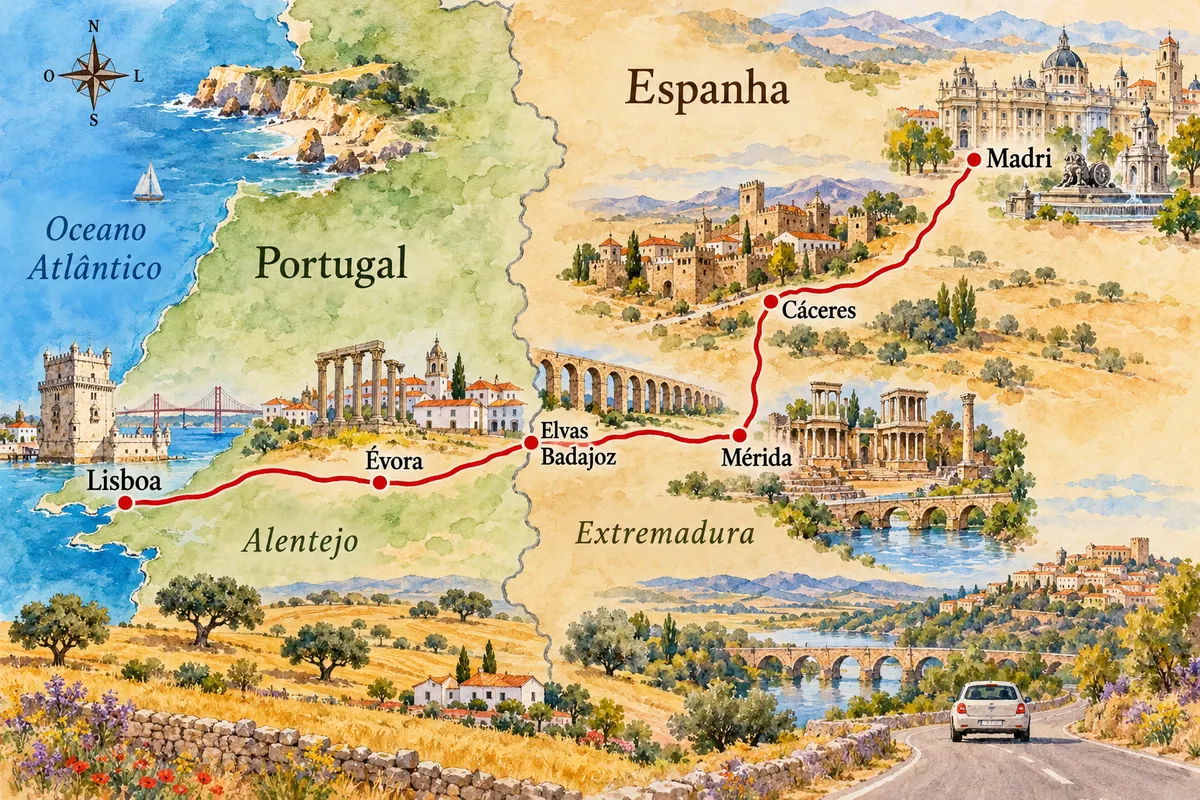
Lisbon – na poti z imenom Lisbon–Évora–Mérida–Cáceres–Madrid by car

By car between the two capitals of the peninsula: the Alentejo around Évora, Roman Mérida and medieval Cáceres on the route from Lisbon to Madrid.

Zemljevid je ilustrativen in ni v merilu. Dotaknite se mesta, da odprete njegovo stran.
Lisbon–Évora–Mérida–Cáceres–Madrid by car – ilustrirani zemljevid
Več o poti – Lisbon–Évora–Mérida–Cáceres–Madrid by car

Rotas entre países

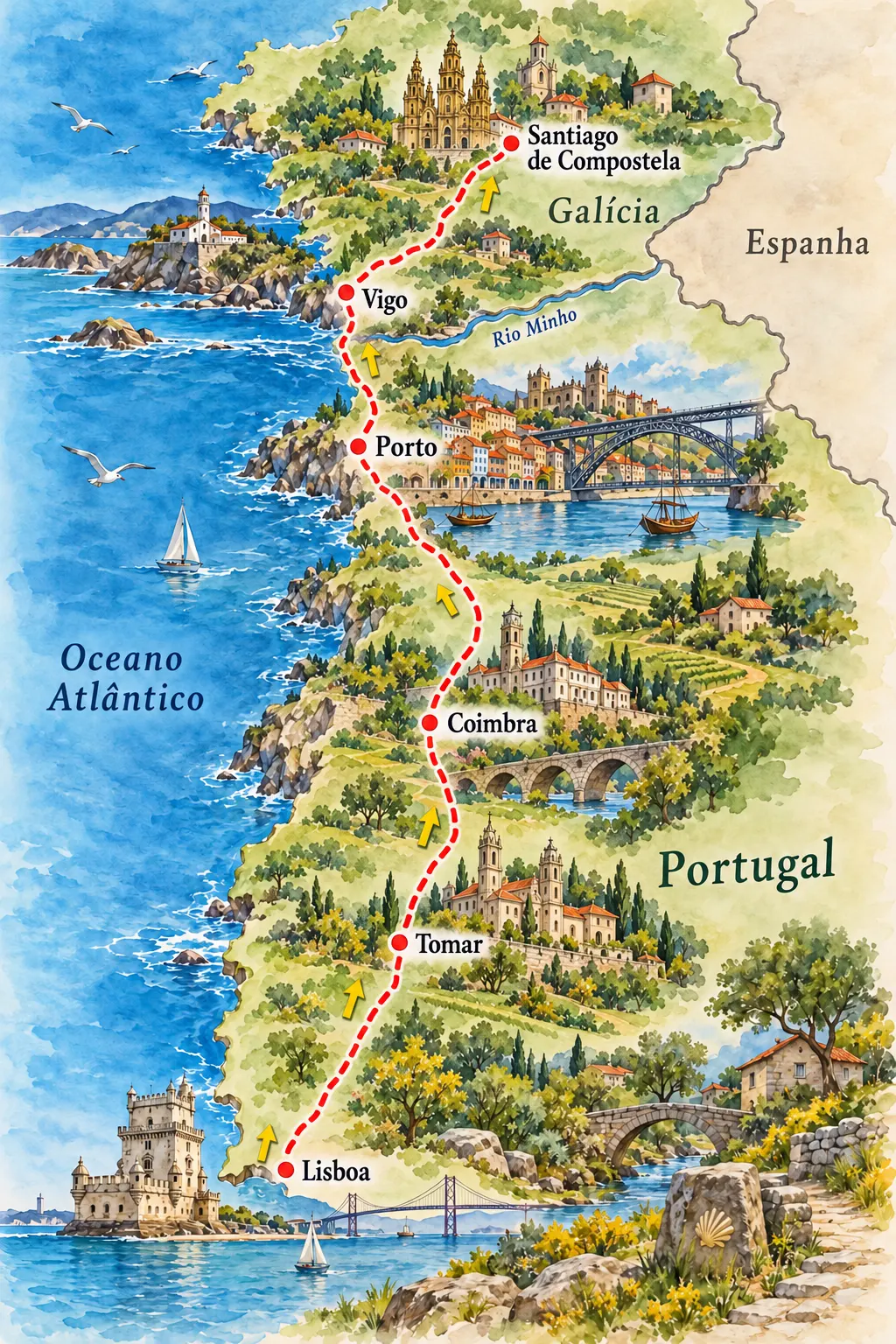
Lisbon – na poti z imenom Portuguese Way to Santiago on foot

On foot from Portugal to Santiago de Compostela: the pilgrimage route that starts in Lisbon or Porto, follows yellow arrows and ends at Obradoiro Square.

Zemljevid je ilustrativen in ni v merilu. Dotaknite se mesta, da odprete njegovo stran.
Portuguese Way to Santiago on foot – ilustrirani zemljevid
Več o poti – Portuguese Way to Santiago on foot
Odkrijte druge destinacije Iskanje po zvezni državi in mestu

Več kot vodnik