Monaco: Rocher, Palais Princier and Monte-Carlo (day trip to another country)
Odhod: Nice TER train to Monaco-Monte-Carlo or regional bus 602 about 6 to 8 hours Ves dan easy (hills and public elevators)
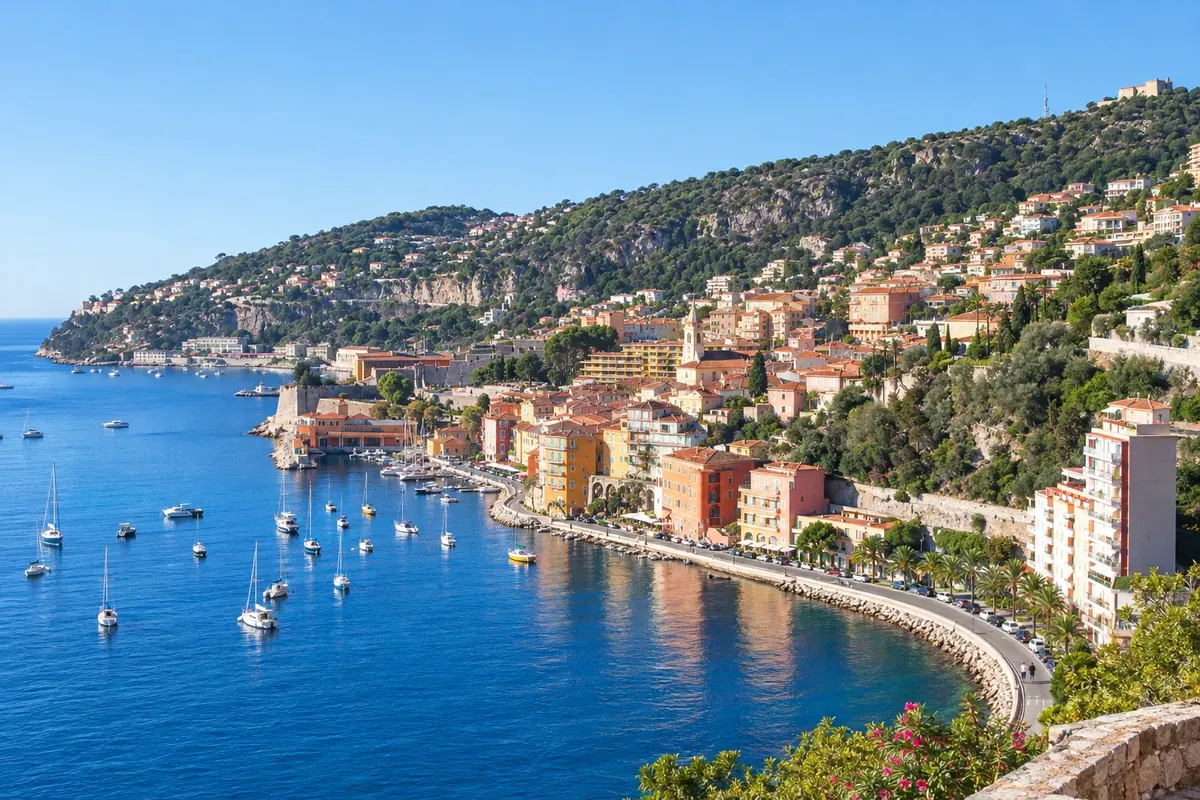
Monaco is not France: it is a separate country, the Principality of Monaco, set on the coast a few kilometers from Nice, and it works as a day trip. The coastal train reaches Monaco-Monte-Carlo station in a few minutes. The classic route starts at the Rocher (the Rock), the old town atop the promontory: there are the Palais Princier, residence of the Grimaldi family, with the changing of the guard in the palace square every day shortly before noon; the Cathédrale Notre-Dame-Immaculée, in Romanesque-Byzantine style, with the princes’ tombs; the Jardins Saint-Martin; and the Musée Océanographique, attached to the cliff over the sea, with aquariums and a viewing terrace. You then descend to Port Hercule, which the Formula 1 Grand Prix circuit passes through, and beside it is the prince’s car collection. On the other side of the harbor, in Monte-Carlo, are the Belle Époque Casino de Monte-Carlo and the Café de Paris. Above them, the Jardin Exotique de Monaco overlooks the Rocher.
Kraji na poti: Principauté de Monaco, Le Rocher, Palais Princier de Monaco, Musée Océanographique, Cathédrale Notre-Dame-Immaculée, Casino de Monte-Carlo, Jardin Exotique de Monaco, Port Hercule.
Vključuje: Train or bus fare not included. Palais Princier, Musée Océanographique, Jardin Exotique and the car collection have separate tickets; entry to the casino has rules and a minimum age. The changing of the guard and the cathedral are free to enter. Check current pricing.
Nasvet: There is no routine border control between France and Monaco, but bring your passport. The town is built on a slope: use the public elevators and moving walkways. Arrive at the Rocher before noon to see the changing of the guard.
Najboljši čas za obisk: All year; in late May or June, during the Grand Prix, the city becomes very busy and traffic patterns change.
Menton: old town, Basilique Saint-Michel and the seafront
Odhod: Nice TER train along the coast (toward Ventimiglia) about 5 to 6 hours Ves dan easy to moderate (stairs)
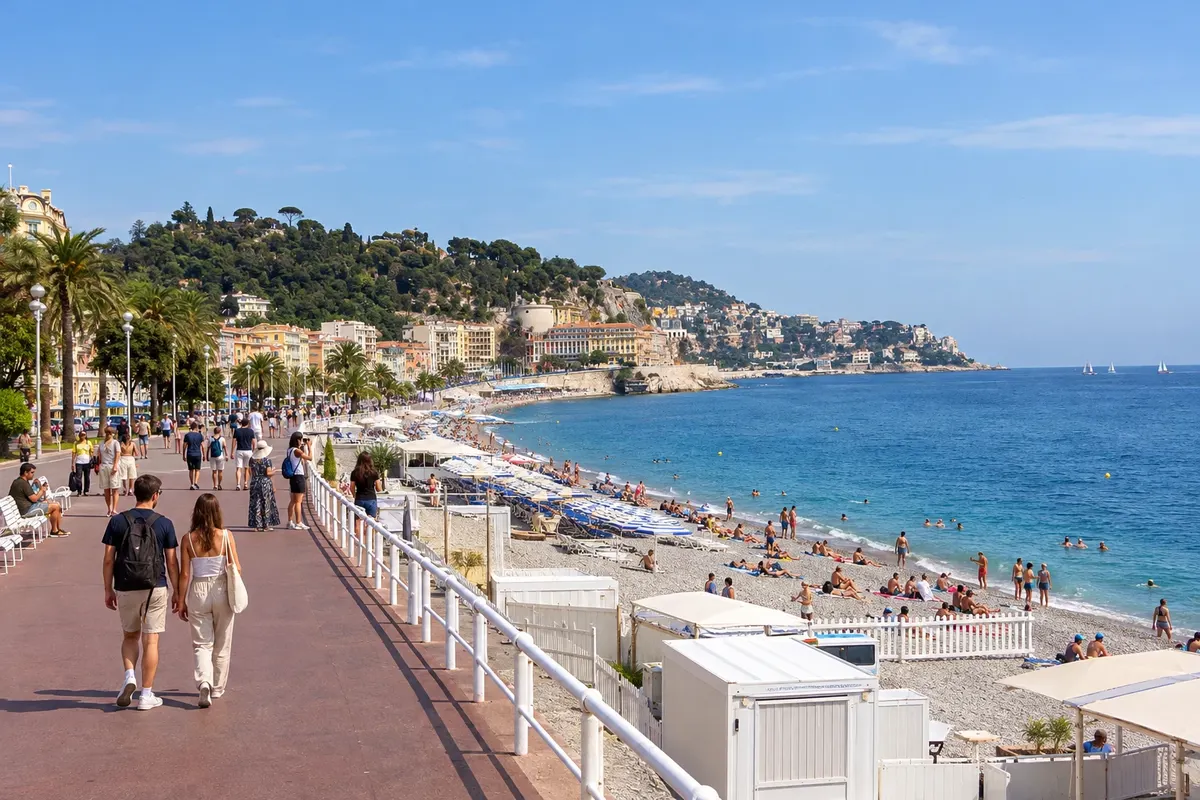
Menton is the last French town before the Italian border, and you can feel it in the ochre facades and the flavors. The old town rises from the seafront through narrow lanes, stairways and small squares up to the Parvis Saint-Michel, a pebble courtyard with the Grimaldi coat of arms, where the Basilique Saint-Michel-Archange stands — a Baroque church from 1639 with a 53 m bell tower and a trompe-l'œil painted vault — and the chapel of the Penitents Blancs. From the courtyard, the view drops down over the bay and the Plage des Sablettes. In summer the courtyard hosts the Menton Music Festival. Below, the Marché des Halles sells local produce, including the Menton lemon, a symbol of the town. Menton is also known for its gardens, such as the Val Rahmeh botanical garden, and for the Fête du Citron, a festival with floats made of oranges and lemons in the second half of February.
Kraji na poti: Menton, Basilique Saint-Michel-Archange, Parvis Saint-Michel, Vieille ville de Menton, Marché des Halles.
Vključuje: Self-guided walk through the old town; entry to the basilica is free. Train, gardens and Fête du Citron tickets are paid separately. Check the current price list.
Nasvet: Get off the train at Menton-Garavan station to be closer to the old town. Combine it with Monaco on the same day if you’re short on time, since both are on the same train line.
Najboljši čas za obisk: All year; in February, during the Fête du Citron, the town becomes very busy.
Saint-Paul-de-Vence and Fondation Maeght
Odhod: Nice Car, or train to Cagnes-sur-Mer and bus 655 Približno 5 ur Dopoldne ali popoldne easy to moderate (hills)
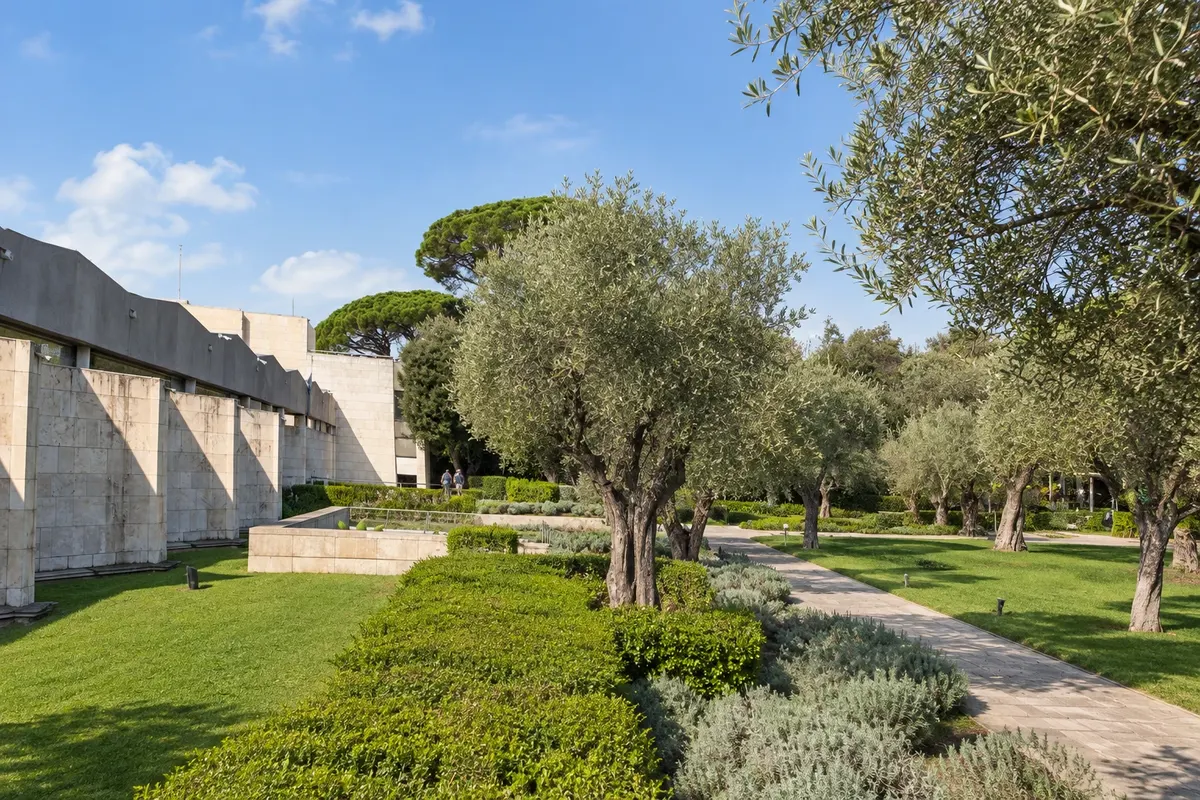
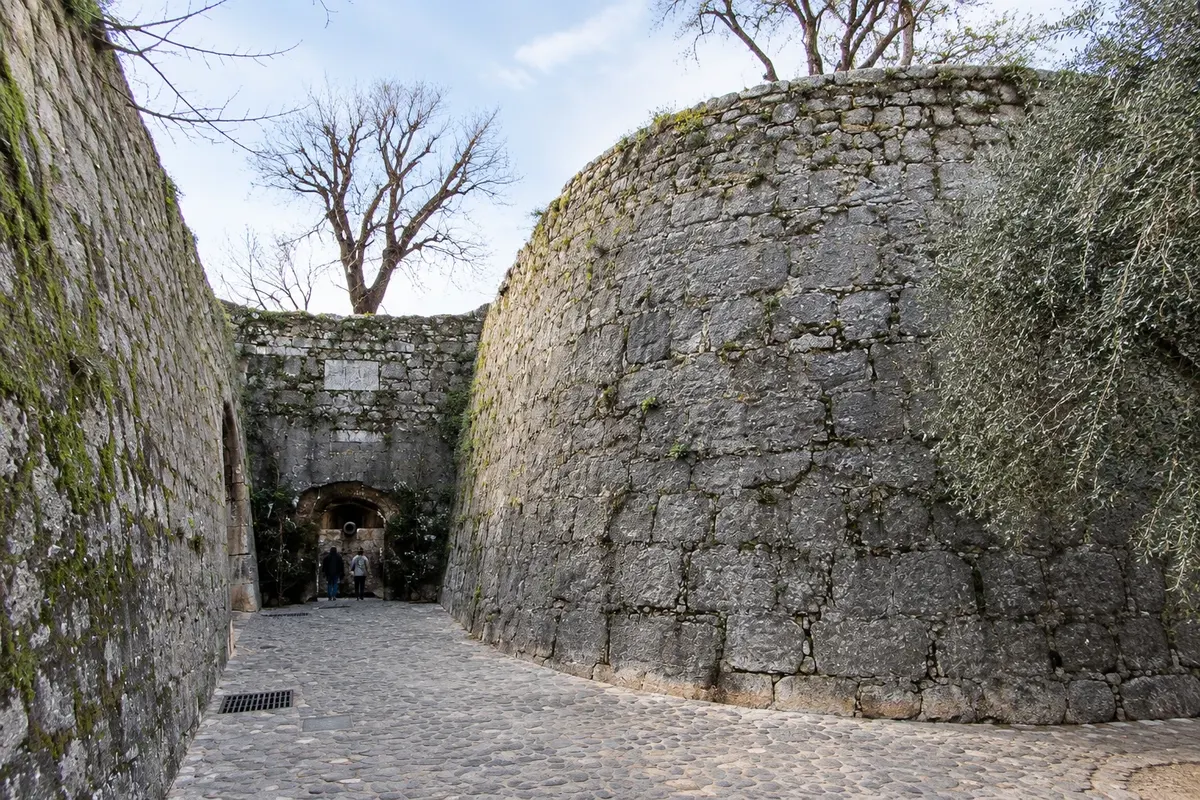
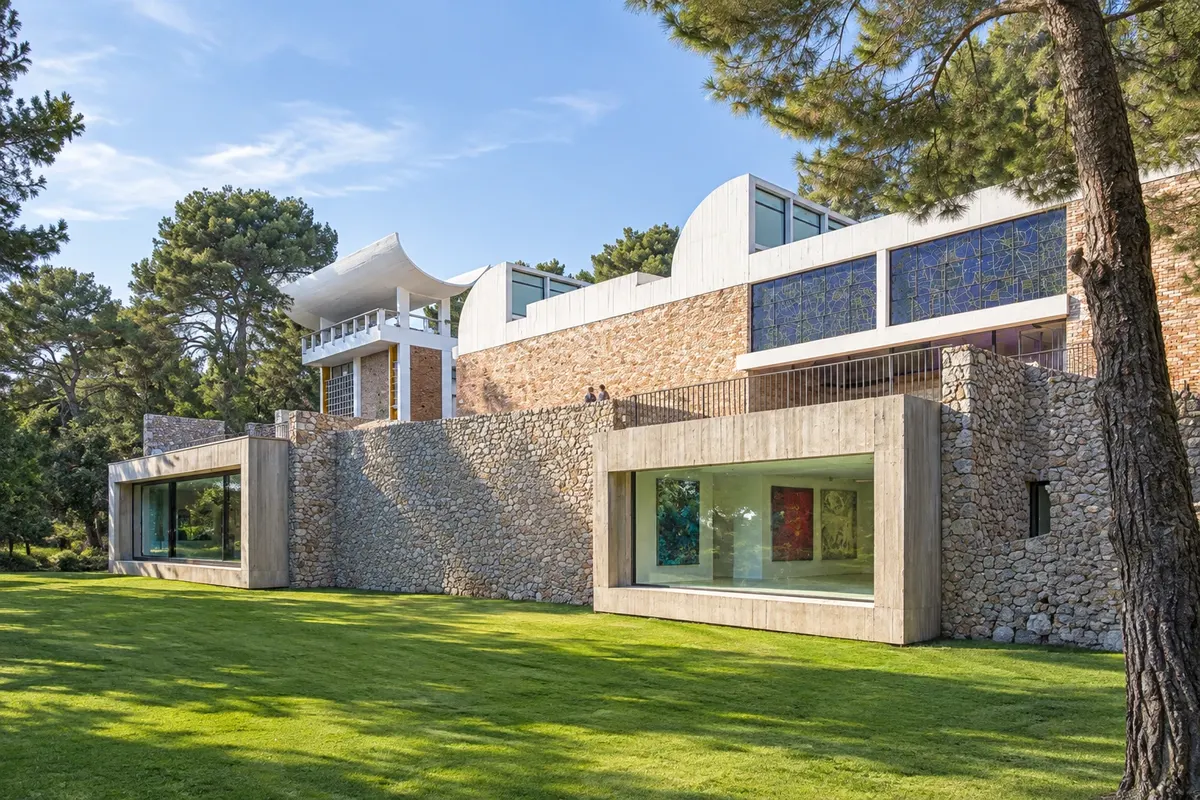
Saint-Paul-de-Vence is a walled medieval village inland, between Nice and Antibes, about 7 km from the sea. The center is entirely pedestrian: the Rue Grande runs through the village paved with pebbles set on edge, in the Provençal style, amid ateliers, galleries and the Grande Fontaine. From the walls you get views over hills, cypresses and, in the distance, the sea. The village attracted artists and celebrities in the 20th century; Marc Chagall lived there and is buried in the local cemetery. Outside the walls, the Fondation Maeght, founded in 1964 and designed by Catalan architect Josep Lluís Sert, was conceived in collaboration with artists: Joan Miró, Alberto Giacometti, Georges Braque, Alexander Calder, Fernand Léger and Chagall have works in the galleries and gardens, with outdoor sculptures among the pine trees. The collection exceeds 13,000 works and is shown in temporary exhibitions and curated displays from the collection. From the village to the foundation you can walk along the Chemin Sainte-Claire, an old path with chapels and views over the hamlet.
Kraji na poti: Saint-Paul-de-Vence, Fondation Maeght, Chemin Sainte-Claire, Grande Fontaine.
Vključuje: Self-guided walk around the village. Fondation Maeght requires an admission ticket, sold online; guided tours cost extra. Check the current schedule/pricing.
Nasvet: At the Fondation Maeght, allow about 1½ hours for a visit. In summer, a tourist bus line links the foundation, the village, Vence and the Chapelle du Rosaire by Matisse. By car, the village parking lots are paid and fill up early.
Najboljši čas za obisk: From spring to autumn; in summer go early to avoid heat and crowds.
Cannes: La Croisette, Palais des Festivals, Marché Forville and Le Suquet
Odhod: Nice or Antibes TER train along the coast to Cannes station about 5 to 6 hours Ves dan easy (short climb to Le Suquet)
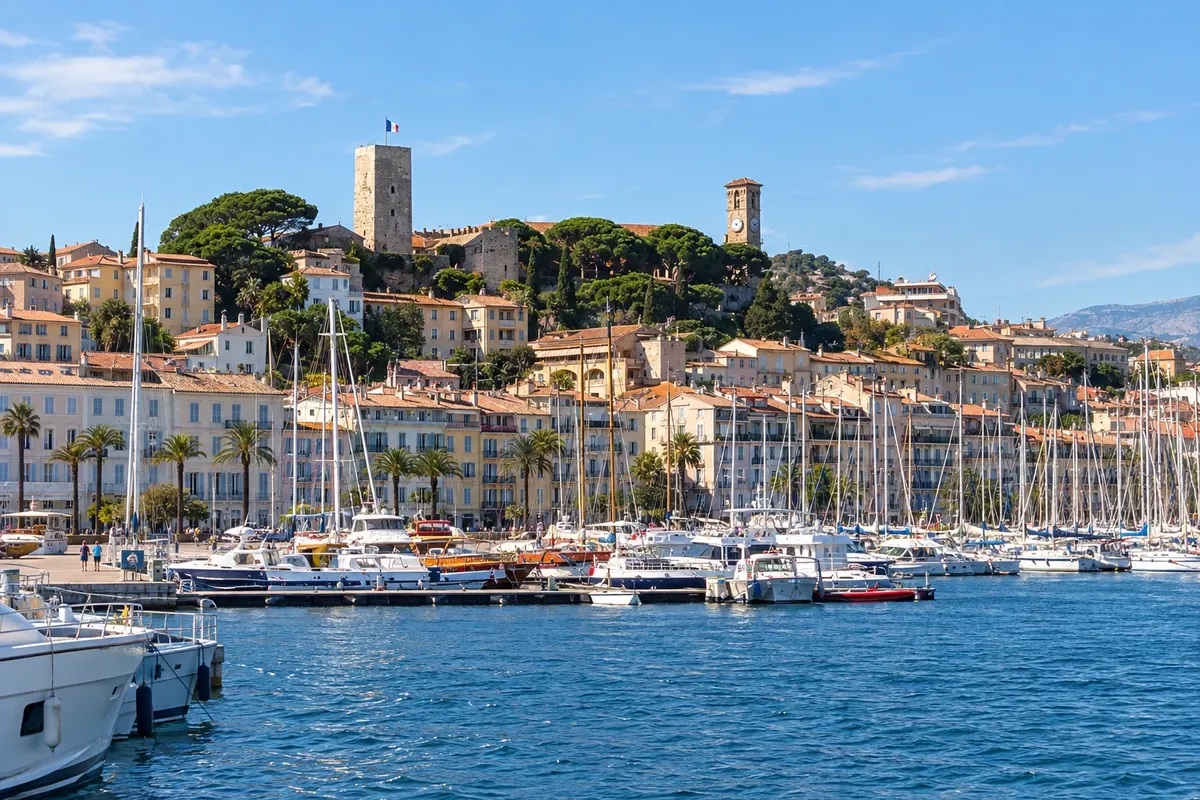
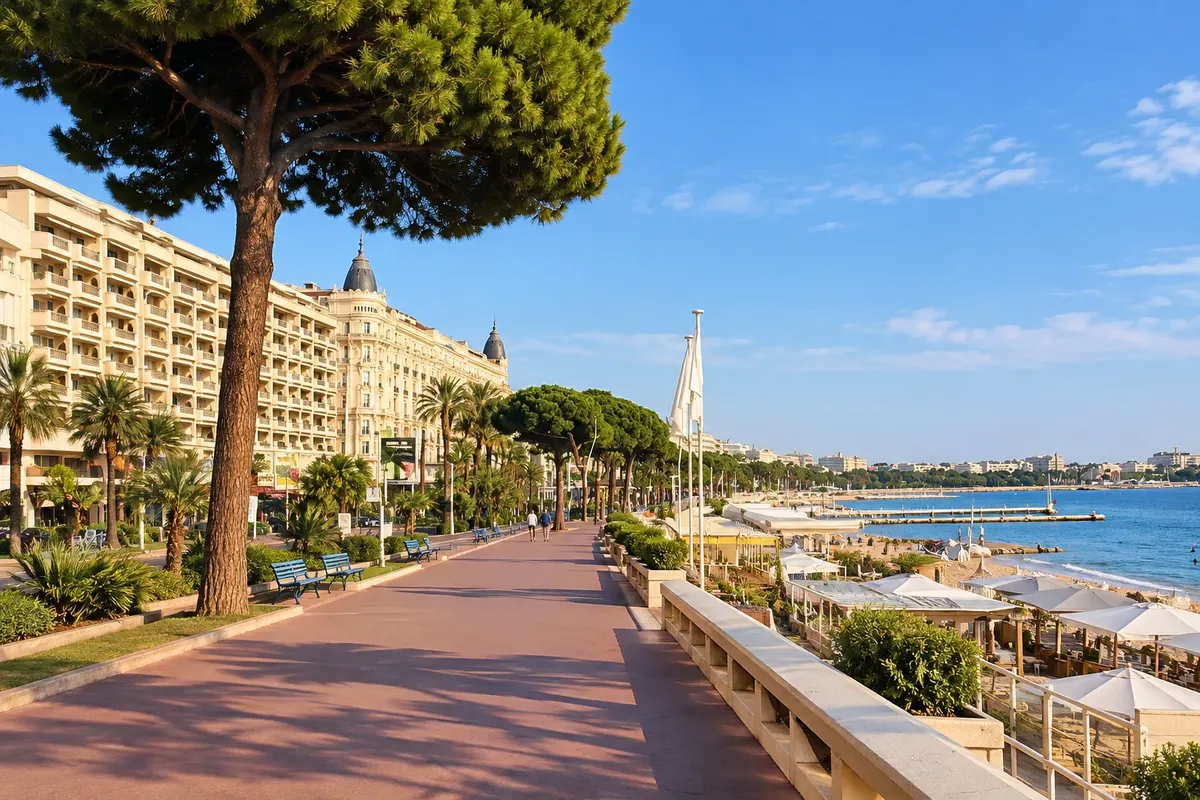
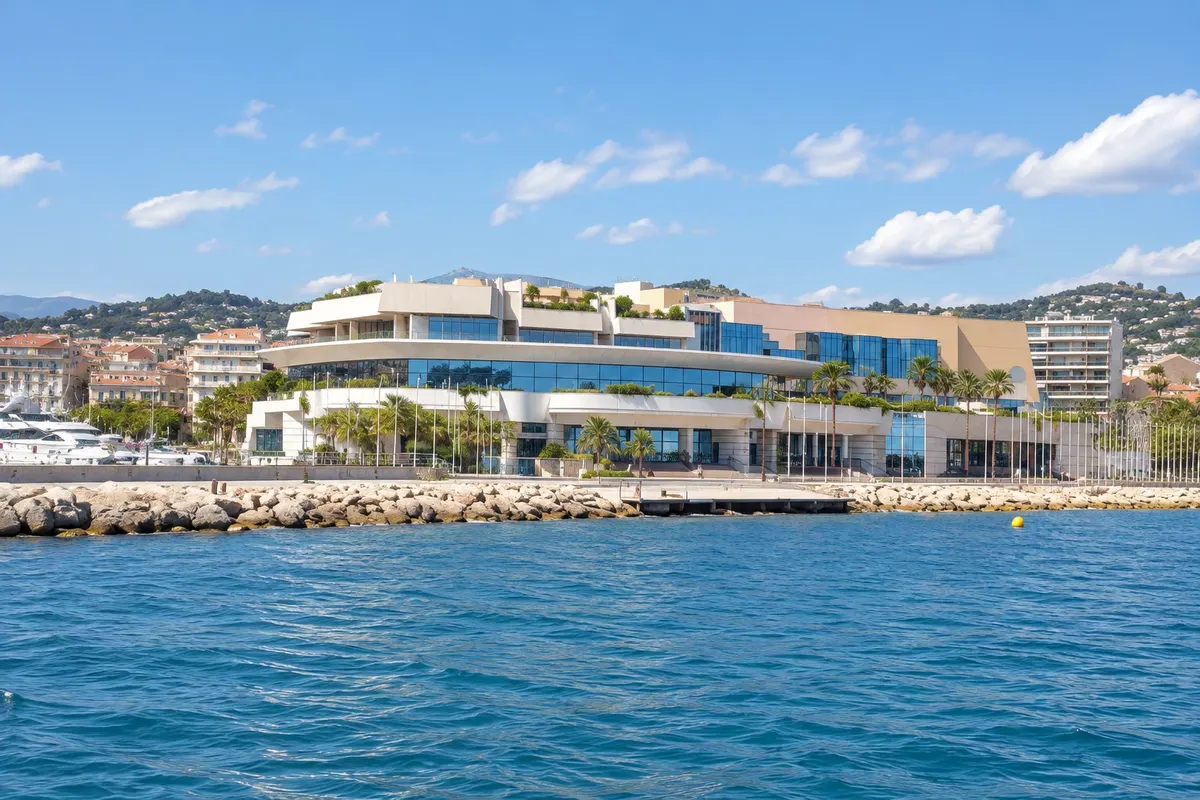
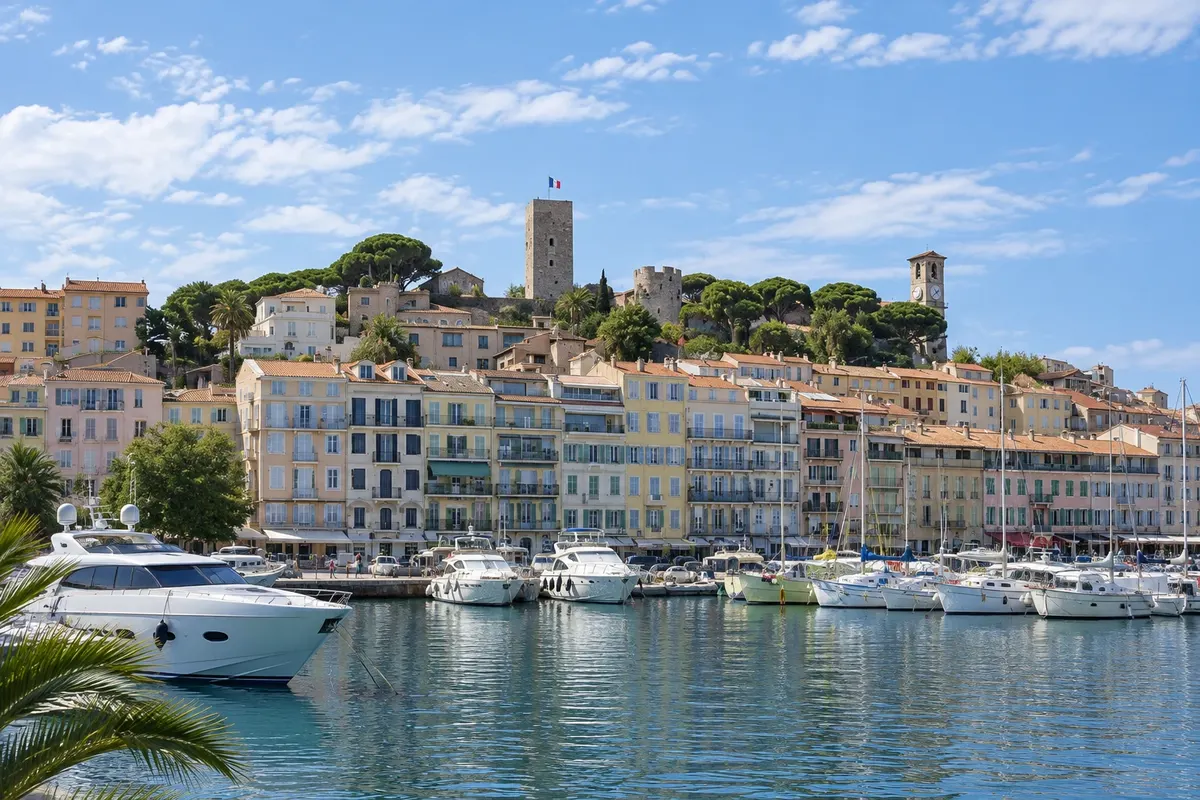
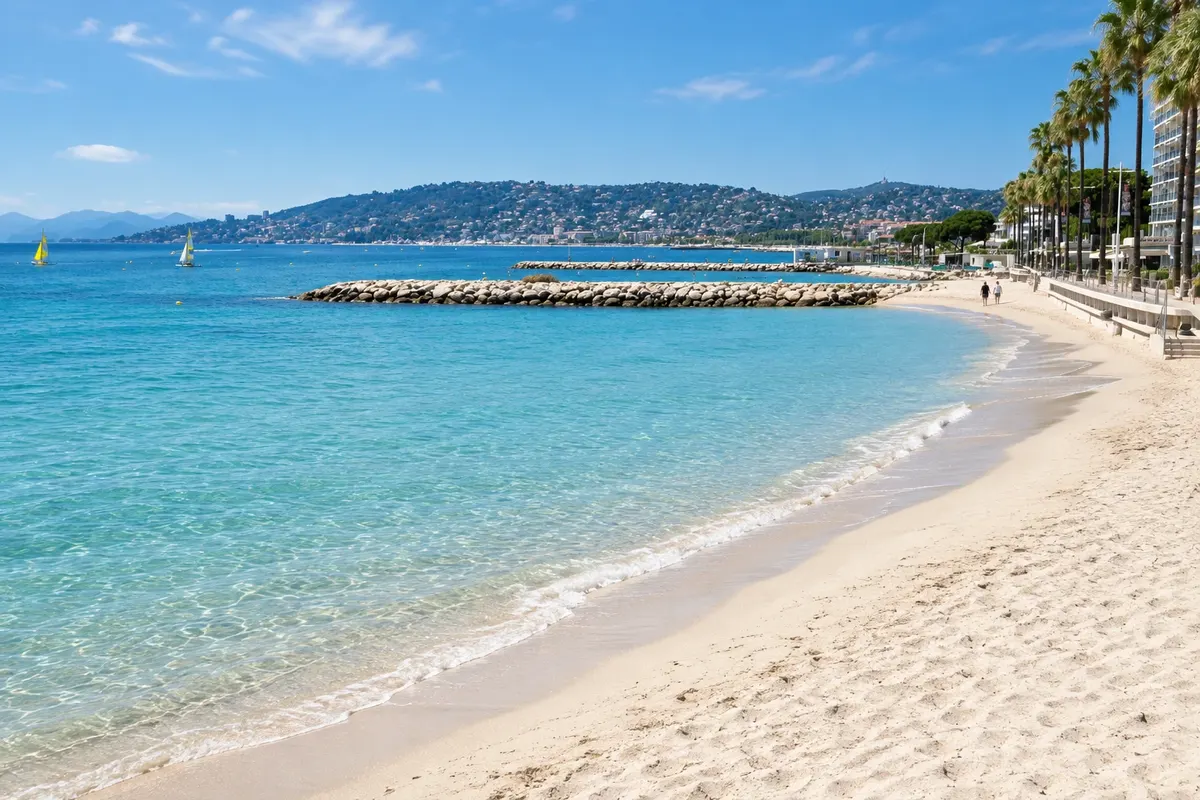
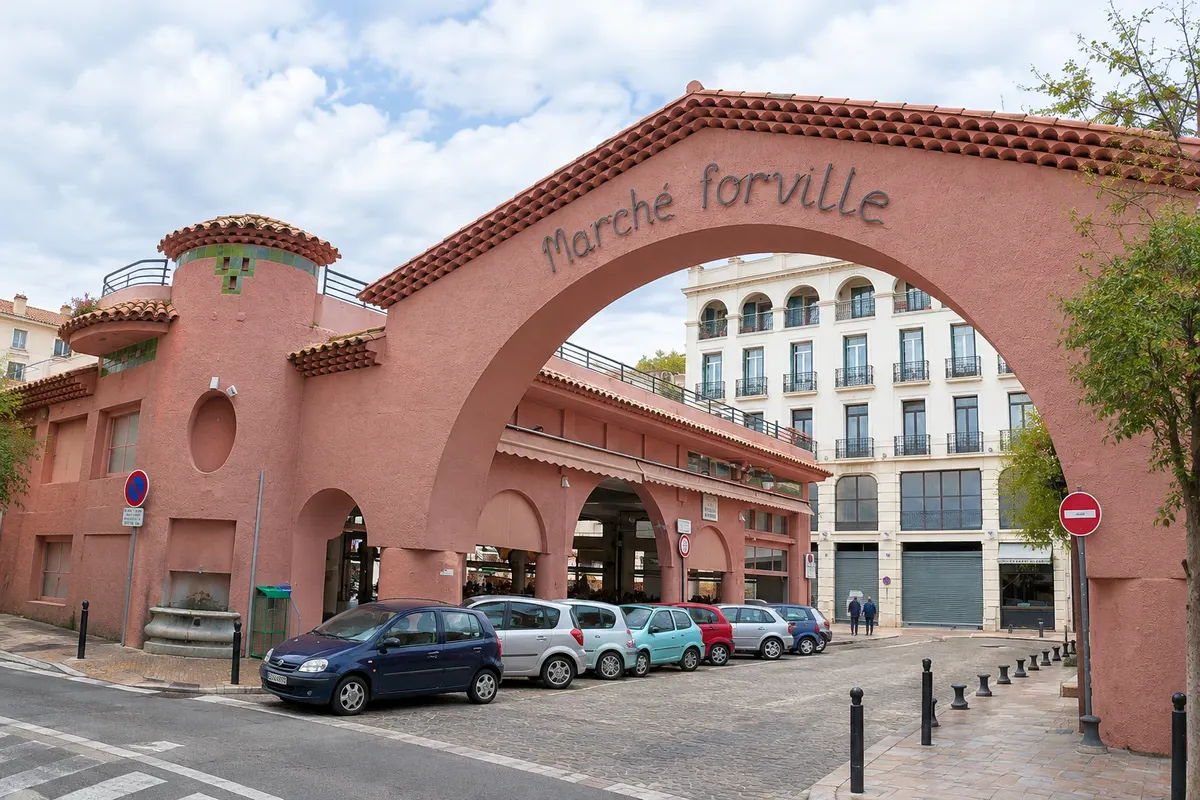
Cannes can be explored on foot from the station. The Boulevard de la Croisette follows the bay, with sandy beaches, palm trees and the façades of the large hotels and shops. At the tip, between the Croisette and the Vieux Port, stands the Palais des Festivals et des Congrès, home of the Cannes Film Festival: the famous 24 steps host the red carpet in May and, for the rest of the year, are open for photos. Around it, the Chemin des Étoiles displays handprints of film artists. From the harbor, Rue Meynadier, with its fine grocers and patisseries, leads to the Marché Forville, a covered market of stallholders, fishmongers and florists, a good place to try socca. From there the climb to Le Suquet begins, the oldest quarter of the town, with stone streets and flowered façades, where Cannes was once a fishing village. At the top, near the church and the old castle tower, which houses the Musée des Explorations du Monde, the view covers the bay, the port and the Îles de Lérins.
Kraji na poti: Boulevard de la Croisette, Palais des Festivals et des Congrès, Marché Forville, Le Suquet, Rue Meynadier, Vieux Port de Cannes.
Vključuje: Self-guided walk; access to La Croisette, the Palais steps and the market is free. Museum, private beaches and train fares extra. Check the current price table.
Nasvet: The Cannes Festival in May is a trade event: screenings at the Palais are only for accredited guests and invitees, and the city becomes very crowded. To see the market at its liveliest, go in the morning.
Najboljši čas za obisk: All year; for the beach, from June to September.
Îles de Lérins: Sainte-Marguerite and Saint-Honorat, by boat from Cannes
Odhod: Port of Cannes Regular boat from Cannes harbor (about 15 minutes) about 4 to 6 hours Ves dan easy (flat trails in the woods)
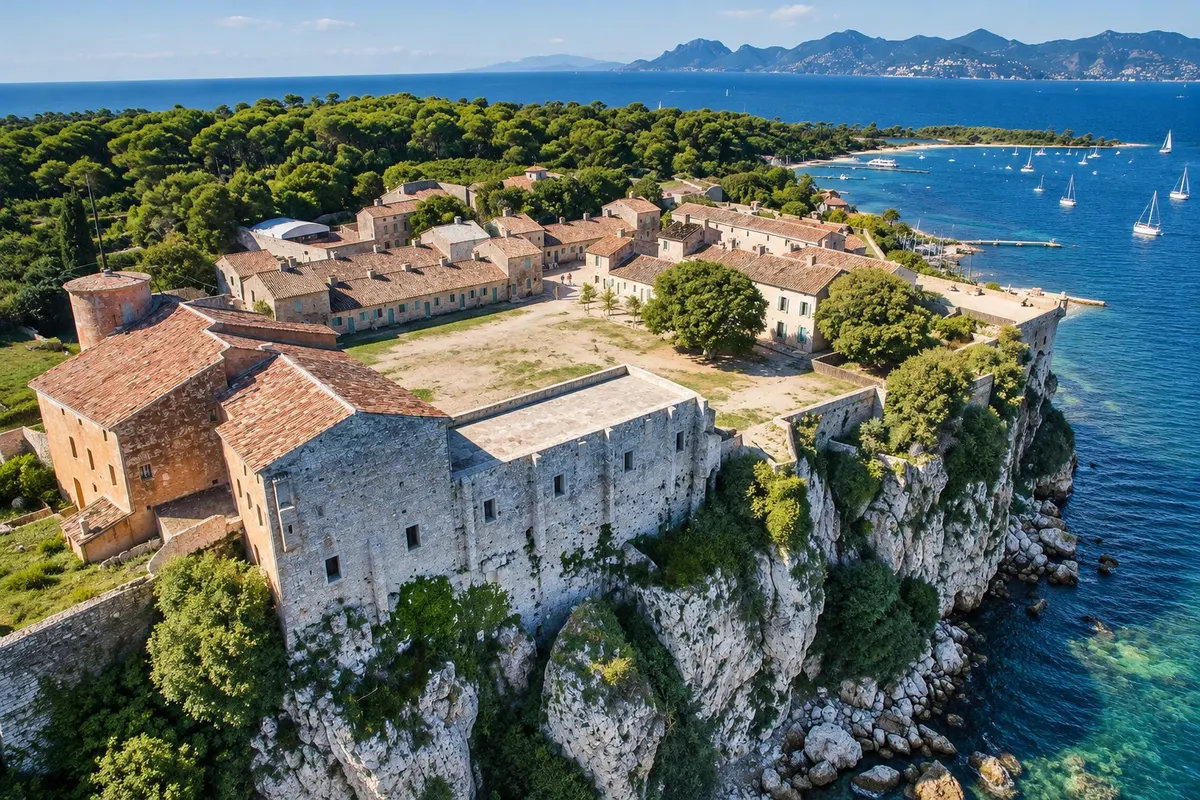
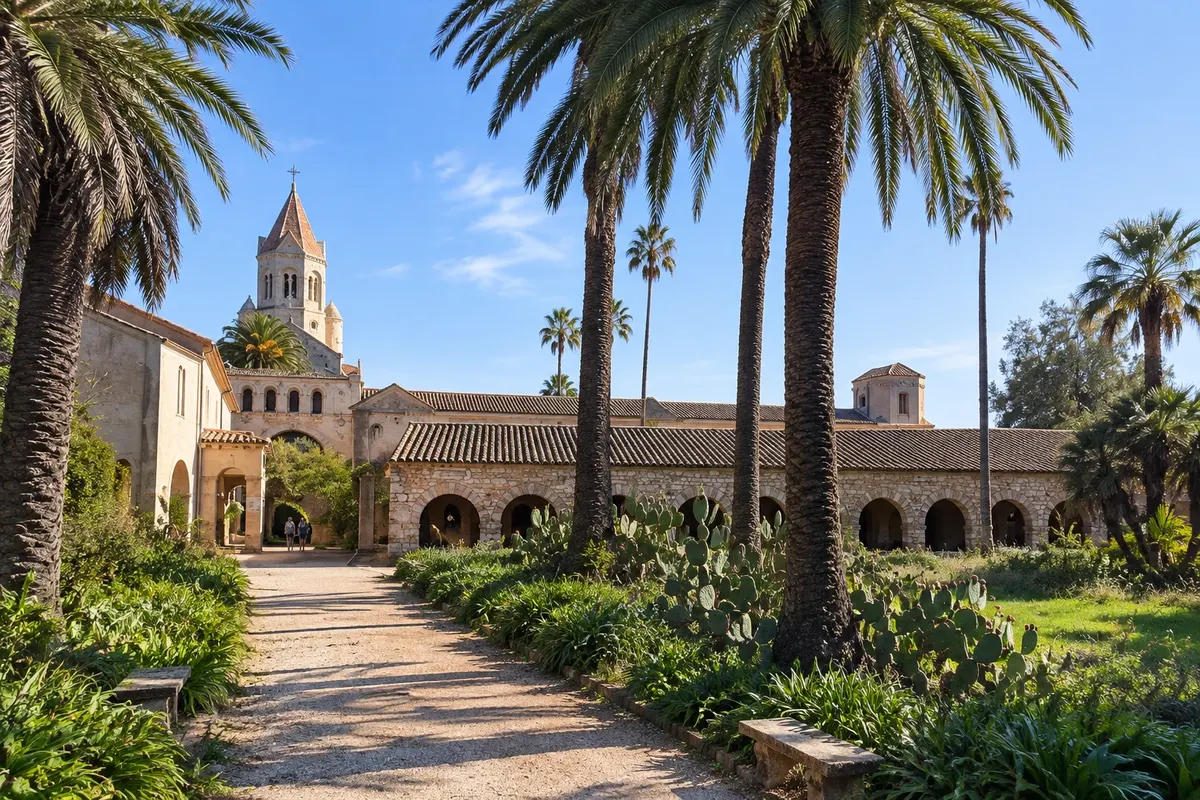
The Îles de Lérins lie off Cannes, about a 15-minute boat ride away. Île Sainte-Marguerite, the larger island, covers 210 hectares, mostly pine and eucalyptus forest, with shaded trails, a botanical path and the Étang du Batéguier, a lagoon with a birdwatching hide. Above it stands Fort Royal, where the Man in the Iron Mask was imprisoned for eleven years. In the water, about one hundred meters from the shore, there are submerged sculptures by Jason deCaires Taylor that you can see while swimming with a mask and snorkel. Île Saint-Honorat, smaller at 40 hectares, belongs to the Cistercian monks of the Abbaye de Lérins, who have been present on the island for over sixteen centuries: the visit includes the church, the fortified seaside monastery and the vineyards tended by the monks, whose wine is available for tours and tasting on the island itself. Bring a snack or have lunch at the few restaurants on the island.
Kraji na poti: Île Sainte-Marguerite, Fort Royal, Île Saint-Honorat, Abbaye de Lérins, Étang du Batéguier.
Vključuje: The boat crossing is paid separately; each island generally has its own boat company, departing from the same port. Visiting the fortified monastery of Saint-Honorat is free; Fort Royal has an admission fee. Check the current price list.
Nasvet: Saint-Honorat is a place of religious life: dress appropriately and keep quiet near the church. In low season there are fewer boats: check return schedules. Bring water, a hat and hiking footwear.
Najboljši čas za obisk: From April to October; for swimming, July to September.
Antibes: Vieil Antibes, Musée Picasso and Port Vauban
Odhod: Nice or Cannes TER train along the coast to Antibes station about 4 to 5 hours Dopoldne ali popoldne Lahko
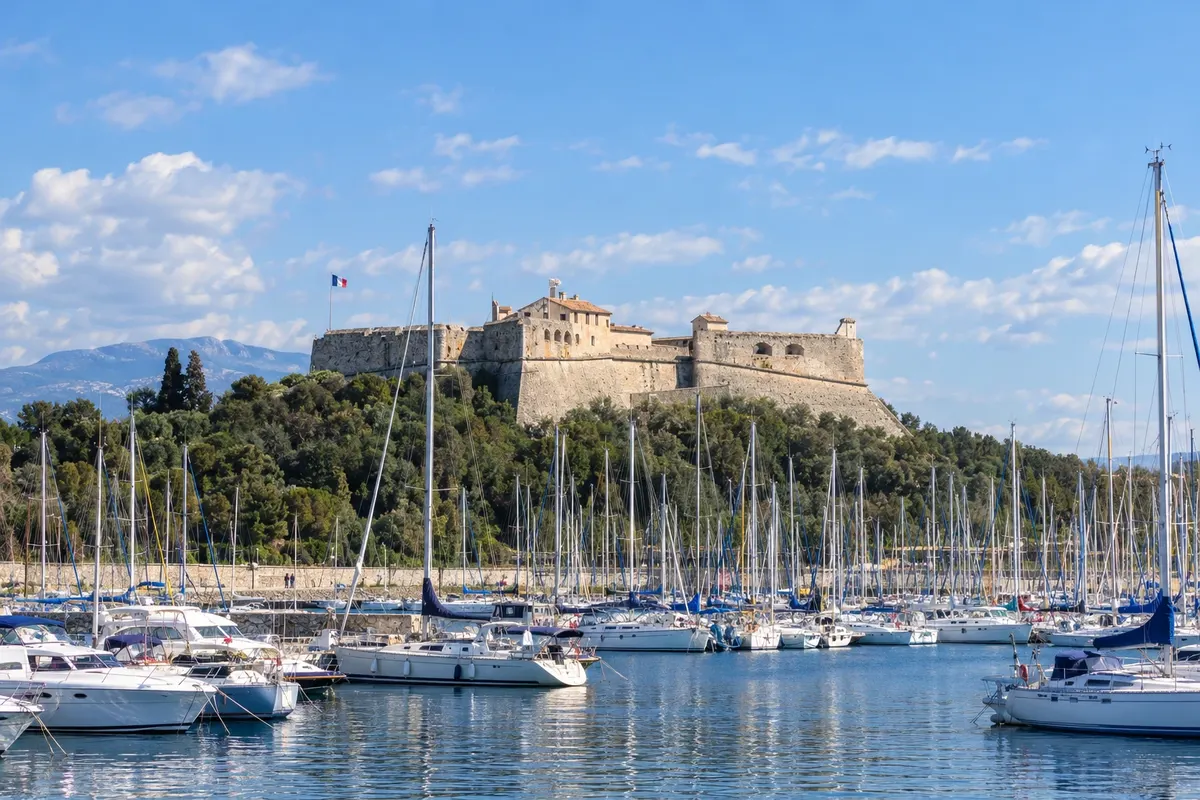
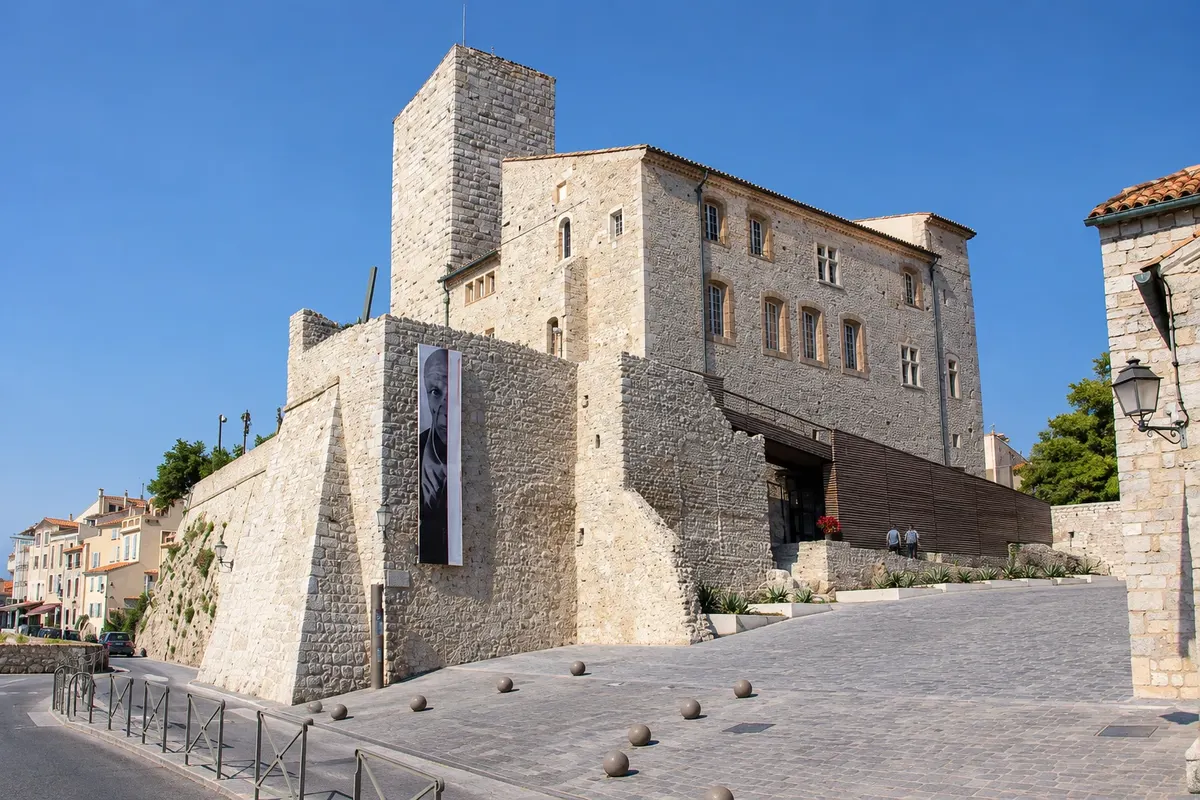
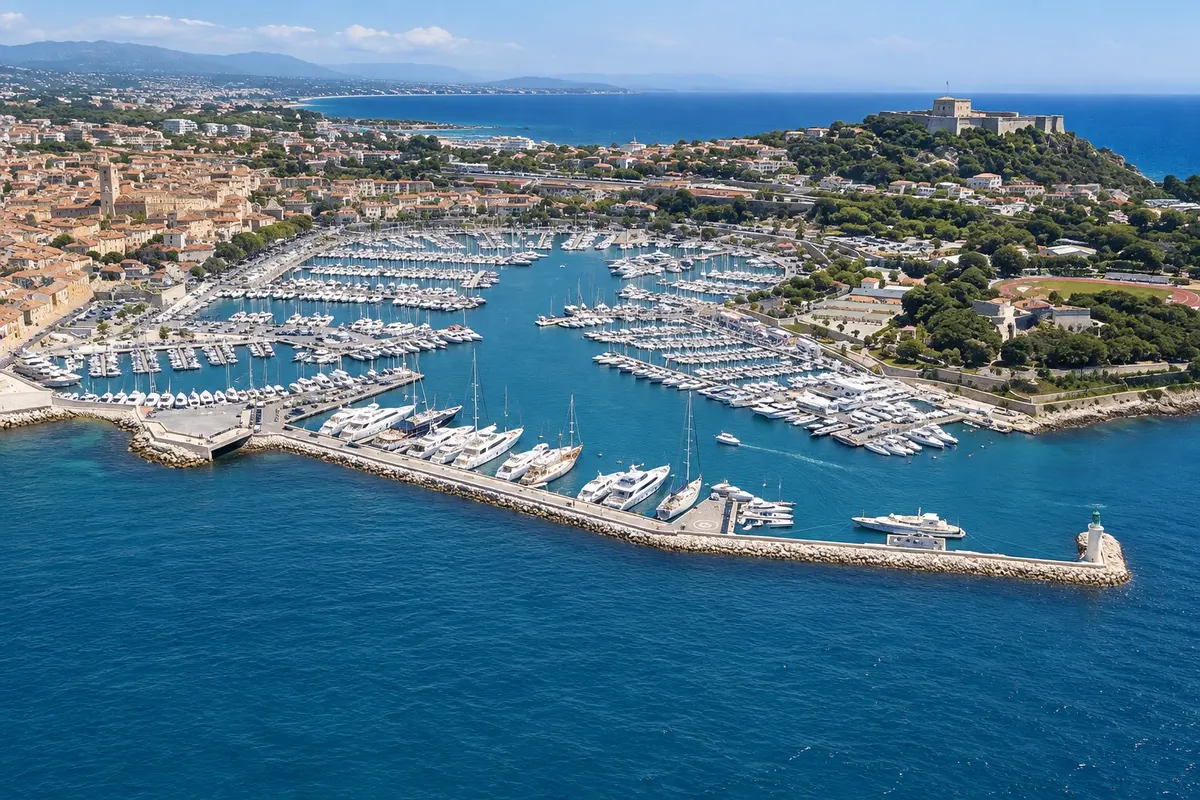
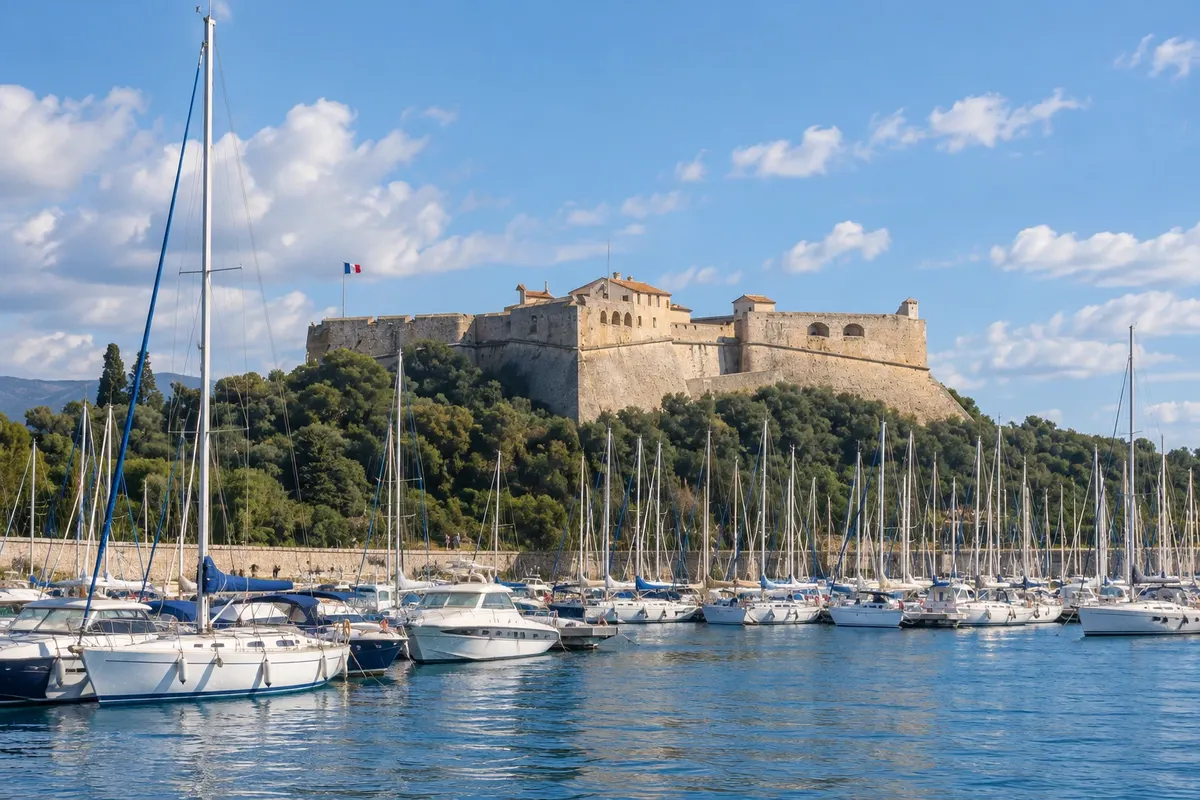
Antibes’ old town lies within the ramparts, on the seafront, between Port Vauban and the beaches. Through the Porte Marine you enter a network of narrow streets that leads to the cathedral and Château Grimaldi, which houses the Musée Picasso. In 1946 Pablo Picasso used part of the castle as a studio for two months and left the town 23 paintings and 44 drawings, including La Joie de vivre; he later donated 78 ceramics. In 1966 the castle officially became the Musée Picasso, the first museum dedicated to the artist. The museum also displays works by Nicolas de Staël, who painted in Antibes, and by Hans Hartung and Anna‑Eva Bergman, and the terrace features sculptures facing the sea. Nearby are the covered Marché Provençal and the Safranier quarter, with artists’ studios. At the end of the ramparts is the sculpture Nomade by Jaume Plensa, and on the other side of Port Vauban, full of yachts, stands Fort Carré, a star‑shaped fortress.
Kraji na poti: Vieil Antibes, Musée Picasso, Château Grimaldi, Port Vauban, Fort Carré, Marché Provençal.
Vključuje: Self-guided walk through the old town. The Musée Picasso has an admission fee. Train fare extra. Check the current price table.
Nasvet: Check the Musée Picasso opening days before you go. Visit the Marché Provençal in the morning. Combine it with Cap d'Antibes or Juan-les-Pins on the same day.
Najboljši čas za obisk: All year; beach season from June to September.
Cap d'Antibes via the Sentier de Tire-Poil and the beaches of Juan-les-Pins
Odhod: Antibes City bus or car to the parking lot on avenue André Sella about 2 hours of trail, plus the beach Dopoldne ali popoldne easy to moderate (rocks and steps)
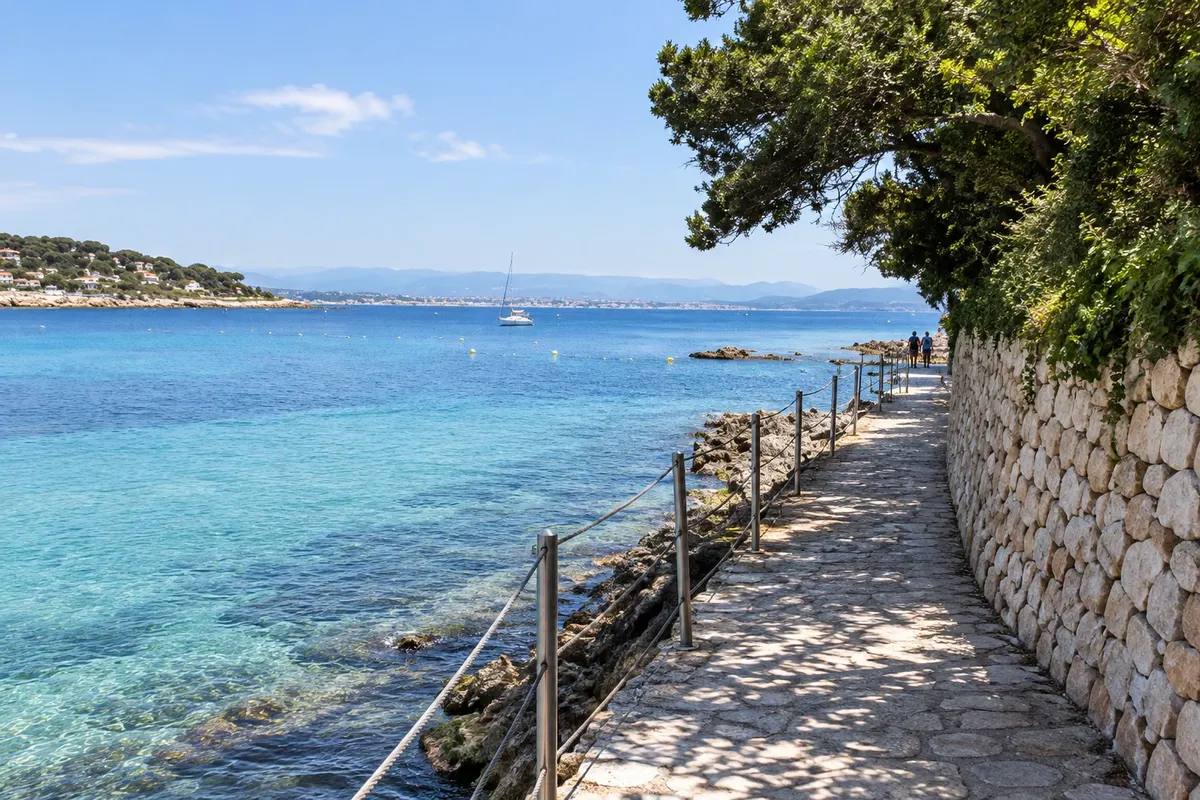
The Sentier de Tire-Poil, the coastal trail of Cap d'Antibes, skirts the southern tip of the cape for about 5 km, in roughly 2 hours. It starts 200 meters from the parking lot on avenue André Sella, facing the Baie des Anges and Nice. The path runs over rocks, with steps and paved sections, among coastal plants that withstand the wind, and changes color near the viewpoint, where the rock looks almost lunar. It passes the walls of the Château de la Garoupe and, near the end, the Villa Eilenroc, whose rose garden is open for visits on some days of the week. The return follows the cape's inner avenues. On the other side of the cape is Juan-les-Pins, a district of Antibes with sandy beaches, pine groves and the Jazz à Juan festival in July; it is a good place to end the day by the sea.
Kraji na poti: Cap d'Antibes, Sentier de Tire-Poil, Villa Eilenroc, Juan-les-Pins.
Vključuje: Trail is free; there is no entrance fee. Visit to Villa Eilenroc, buses and private beaches are paid separately. Check the current price list.
Nasvet: Wear shoes with firm soles: there are slippery rocks. Bring water and a hat, as there is no shade. Sections of the trail may be closed for maintenance; check with Antibes tourist office before you go. On very windy days, avoid the trail.
Najboljši čas za obisk: From spring to autumn; in summer, early in the morning.
Grasse: perfumeries and Musée International de la Parfumerie
Odhod: Nice or Cannes TER train (Nice, Cannes) or regional bus 650 Približno 5 ur Dopoldne ali popoldne easy (hills in the old town)
Grasse, on the hills above Cannes, is the birthplace of French perfumery, and the region’s perfume savoir-faire is listed as UNESCO intangible cultural heritage. The Musée International de la Parfumerie in the town center presents over 4,000 years of aroma history: raw materials, production, bottles, art objects and cosmetics, with displays that use the sense of smell. The historic perfumeries Fragonard, Molinard and Galimard open their factories for visits that show distillation, essence extraction and the perfumer’s work; some offer workshops to create your own perfume, by reservation. The region’s flower fields—such as rosa centifolia, jasmine and tuberose—bloom according to the season, and the gardens of the Musée International de la Parfumerie in Mouans-Sartoux display the plants used in perfumery. The old town, on a slope, has narrow streets and stairways for a walk after the visits.
Kraji na poti: Grasse, Musée International de la Parfumerie, Parfumerie Fragonard, Parfumerie Molinard, Parfumerie Galimard.
Vključuje: Factory visits are usually free; perfume-creation workshops and the museum charge admission. Train or bus fares are paid separately. Check the current price list.
Nasvet: Book perfume workshops in advance. From Nice airport, regional bus 650 departs from the Grand Arénas stop and goes to Grasse. The train station is below the town center: walk up or take a bus.
Najboljši čas za obisk: All year; from May until the end of summer there are more flowers in the fields.
Gorges du Verdon by car: Route des Crêtes and Point Sublime
Odhod: Nice or Cannes Rental car (mountain roads) about 11 to 12 hours round trip Ves dan moderate (winding road)
The Gorges du Verdon form a limestone canyon carved by the Verdon River for about 25 km, between the Alps and Provence, with cliffs hundreds of meters high and green-turquoise water. It is far from the coast: from Nice or Cannes it is several hours of mountain driving each way, and the trip only makes sense by car, on a long day, for those with extra time in the region. Two roads follow the canyon rims, one on each bank, with viewpoints such as Point Sublime and the Corniche Sublime; driving the gorges from east to west takes about 1.5 hours without stops. The Route des Crêtes, 24 km long, starts at La Palud-sur-Verdon and passes about fifteen viewpoints with small parking areas; the central section is one-way and should be done clockwise. Along the way is the Chalet de la Maline, the starting point of the Sentier Blanc-Martel trail, which descends to the canyon floor. Three species of vultures live on the cliffs.
Kraji na poti: Gorges du Verdon, Route des Crêtes, Point Sublime, La Palud-sur-Verdon, Sentier Blanc-Martel.
Vključuje: Road and viewpoints with no entrance fee. Car rental, fuel, tolls and parking are paid separately. Organized tours from the coast, when available, have their own price. Check the current price list.
Nasvet: Leave early and return before dark: the roads are narrow and winding. The Route des Crêtes is open from late March to late November. The Blanc-Martel trail is long and requires preparation; it is not suitable for a same-day coastal day trip.
Najboljši čas za obisk: From April to October; the Route des Crêtes is open from the end of March until the end of November.


 Brazilija
 Antarktika
 Argentina
 Bolivija
 Čile
 Kolumbija
 Ekvator
 Gvajana
 Francoska Gvajana
 Falklandski otoki (Malvini)
 Paragvaj
 Peru
 Surinam
 Urugvaj
 Venezuela
 Nemčija
 Avstrija
 Belgija
 Hrvaška
 Danska
 Slovaška
 Slovenija
 Španija
 Finska
 Grčija
 Nizozemska
 Madžarska
 Irska
 Islandija
 Italija
 Luksemburg
 Norveška
 Poljska
 Portugalska
 Združeno kraljestvo
 Češka
 Švedska
 Švica
 Turčija
 Bermudi
 Kanada
 Združene države Amerike
 Grenlandija
 Mehika
 Sveta Peter in Mihael
 Dominikanska republika
 Japonska
 Južnoafriška republika
 Egipt
 Avstralija
 Fidži
 Nova Zelandija
 Papua Nova Gvineja