Bavarian Alps

Bavaria · Nemčija

Bavarian Alps

Zugspitze, Partnachklamm, Linderhof, Königssee and Obersalzberg: the alpine side of Germany, between Garmisch-Partenkirchen and Berchtesgaden.

South

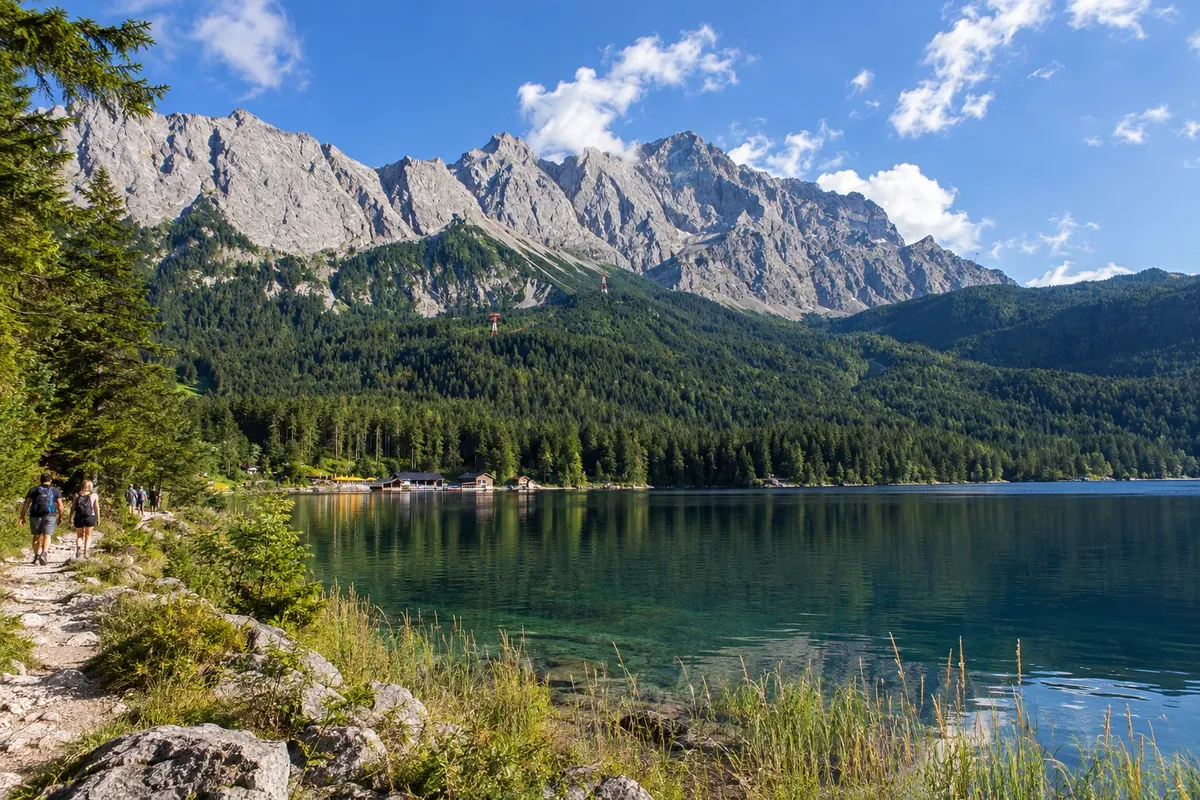
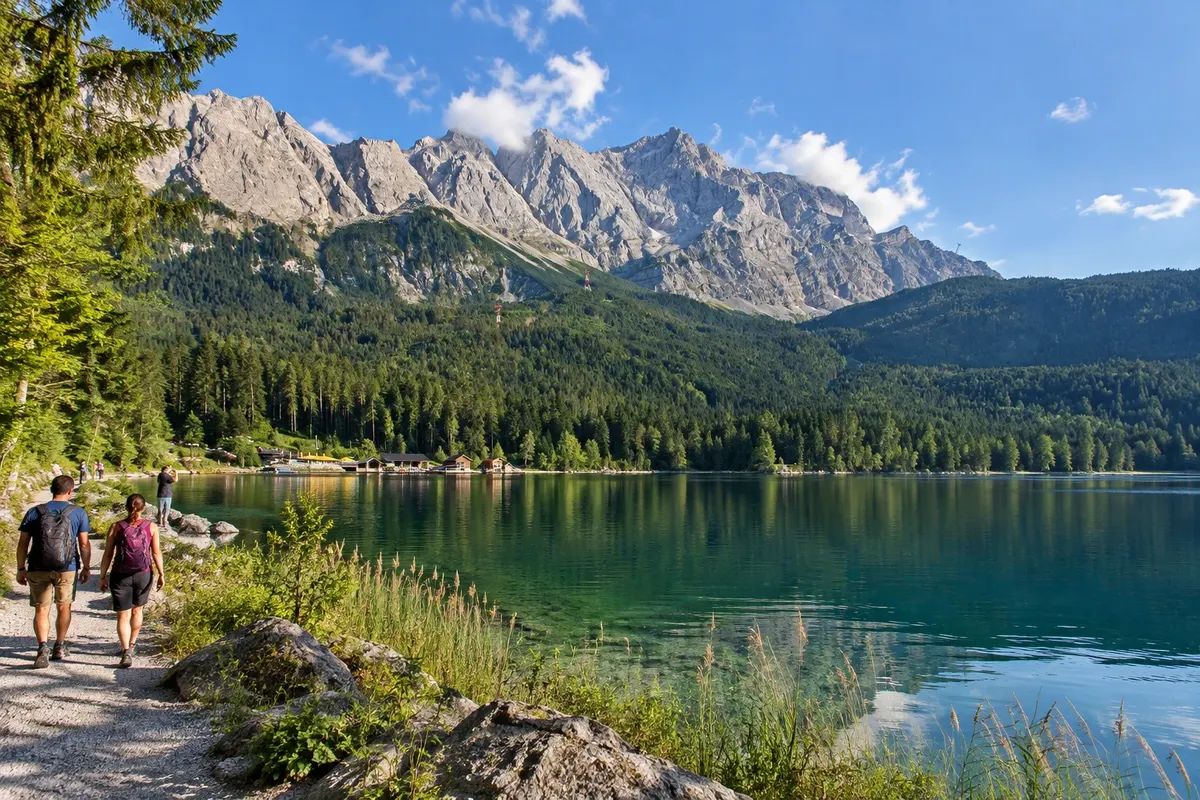
Na fotografiji: Eibsee with the Zugspitze in the background

Illustrative images. The pictures in this guide are illustrations based on the real place, not photographs, and may differ from it.

Na voljo v trgovini Google Play Pošljite svoje fotografije

Spoznajte kraj

Pokrajina, ki jo doživite
v svojem ritmu.

The Alpes da Baviera occupy the southern strip of the state, next to the border with Austria. This is where the Zugspitze is, at 2,962 meters, the highest point in Germany. Two bases concentrate the trip: Garmisch-Partenkirchen, southwest of Munique, and Berchtesgaden, at the far southeast end, a few kilometers from Salzburgo.

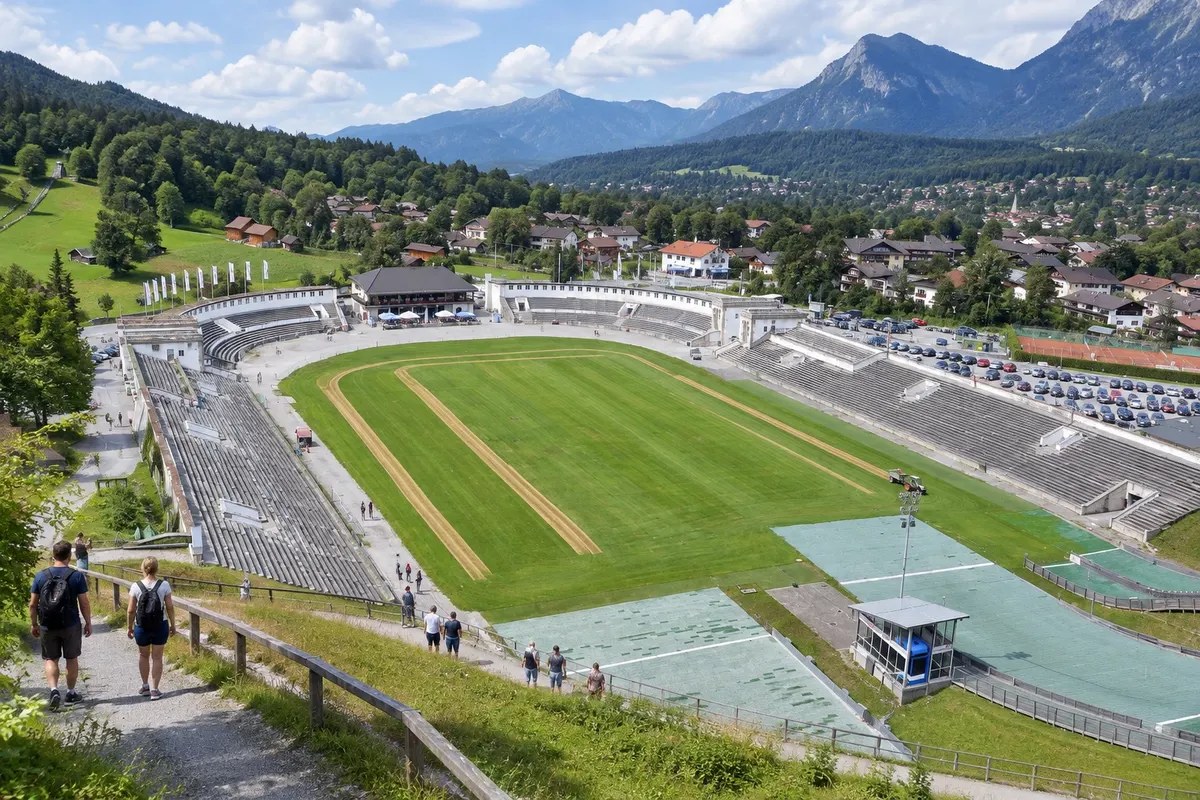
In Garmisch-Partenkirchen the day revolves around the mountain. A rack railway and a cable car go up the Zugspitze; below are the Eibsee lake, the Partnachklamm gorge and the ski stadium from the 1936 Winter Games. Less than half an hour by car are Schloss Linderhof, the palace of King Ludwig II, the Ettal monastery and the village of Oberammergau, famous for its painted façades.

Berchtesgaden sits in a valley surrounded by mountains and is the gateway to Nationalpark Berchtesgaden, the only German national park in the Alps. The classic outing is the electric boat on the Königssee to the church of St. Bartholomä. The town also still has a salt mine operating since 1517.

The region also has a difficult history. On the Obersalzberg, above Berchtesgaden, the Nazi regime set up a restricted area around Hitler’s residence. Today the Dokumentation Obersalzberg is a place of remembrance about that period, and the Kehlsteinhaus, on the mountaintop, operates as a restaurant with a historical exhibition.

Cable cars, boats and the road to the Kehlsteinhaus follow seasons and shut for maintenance in spring and autumn. In winter snow usually appears but varies year to year; in summer mountain rain is common. It’s worth planning the trip with flexibility to swap days depending on weather.

This destination brings together 2 cities: Garmisch-Partenkirchen, Berchtesgaden.

Delite: WhatsApp
Delite svoja popotniška doživetja s fotografijami Pošljite fotografije vsakega kraja, ki ste ga obiskali. Največje število fotografij na kraj: 5.

Ena destinacija, več poti

Mesta na tej poti

Začnite v enem mestu ali v načrt poti vključite več mest.

Bavarian Alps – lega
Garmisch-PartenkirchenBerchtesgaden

Obrisi: © BKG (2026), dl-de/by-2-0. Priredba: Cidade Turismo.

Kako do tja:Bavarian Alps

✈ Flughafen München Franz Josef Strauß (MUC), kraj: Munique· 125 km do cilja (Garmisch-Partenkirchen)

Confirm before booking. The entry point is Munique. From there, regional trains go to Garmisch-Partenkirchen in about 1h30 (1 hour 30 minutes). To reach Berchtesgaden, the train takes roughly 3 hours with a change in Freilassing. Salzburgo, in Austria, is about 25 km from Berchtesgaden.

Predlagana točka prihoda:Garmisch-Partenkirchen

Doživite kraj

Kaj početi – Bavarian Alps

Königssee
Berchtesgaden · Bavaria · Jezero

Königssee

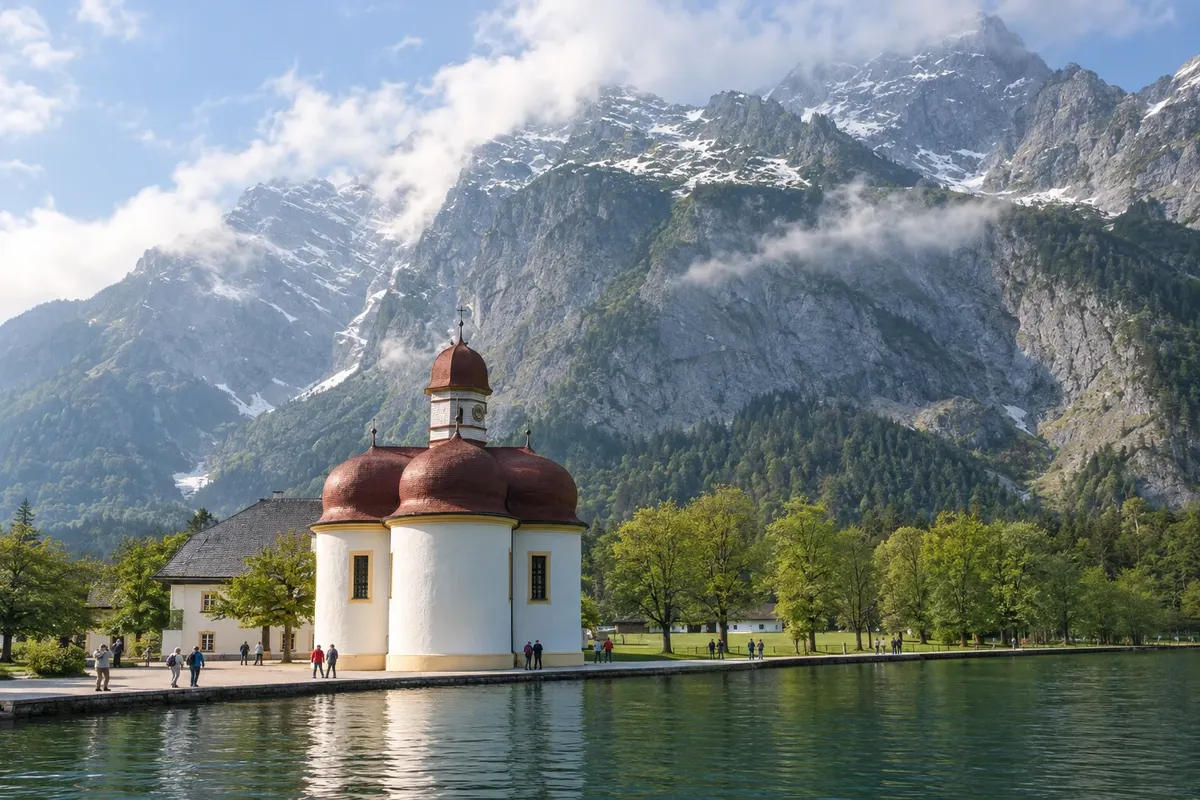
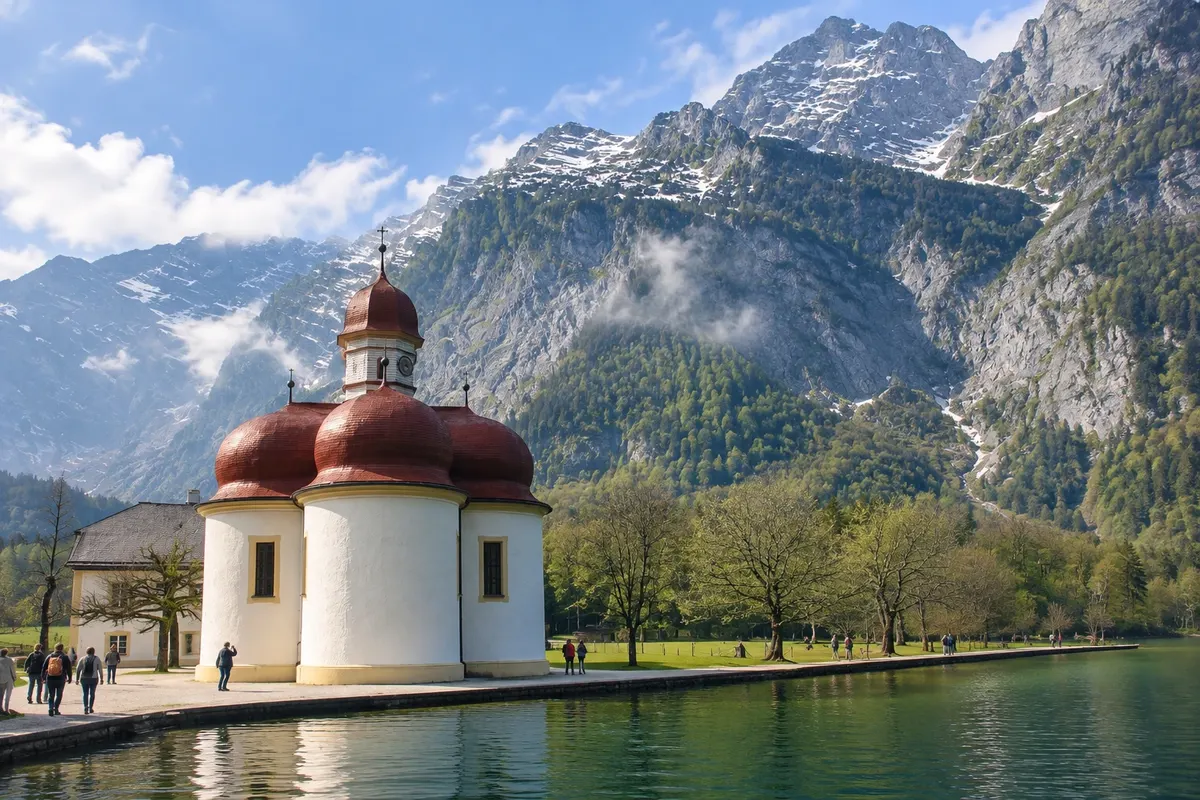
A narrow lake between steep mountain walls, inside the Nationalpark Berchtesgaden. Electric boats take about 35 minutes to the church of St. Bartholomä, with a stop for the echo played by the boatman. In season they continue to Salet.

Zugspitze
Garmisch-Partenkirchen · Bavaria · Gora

Zugspitze

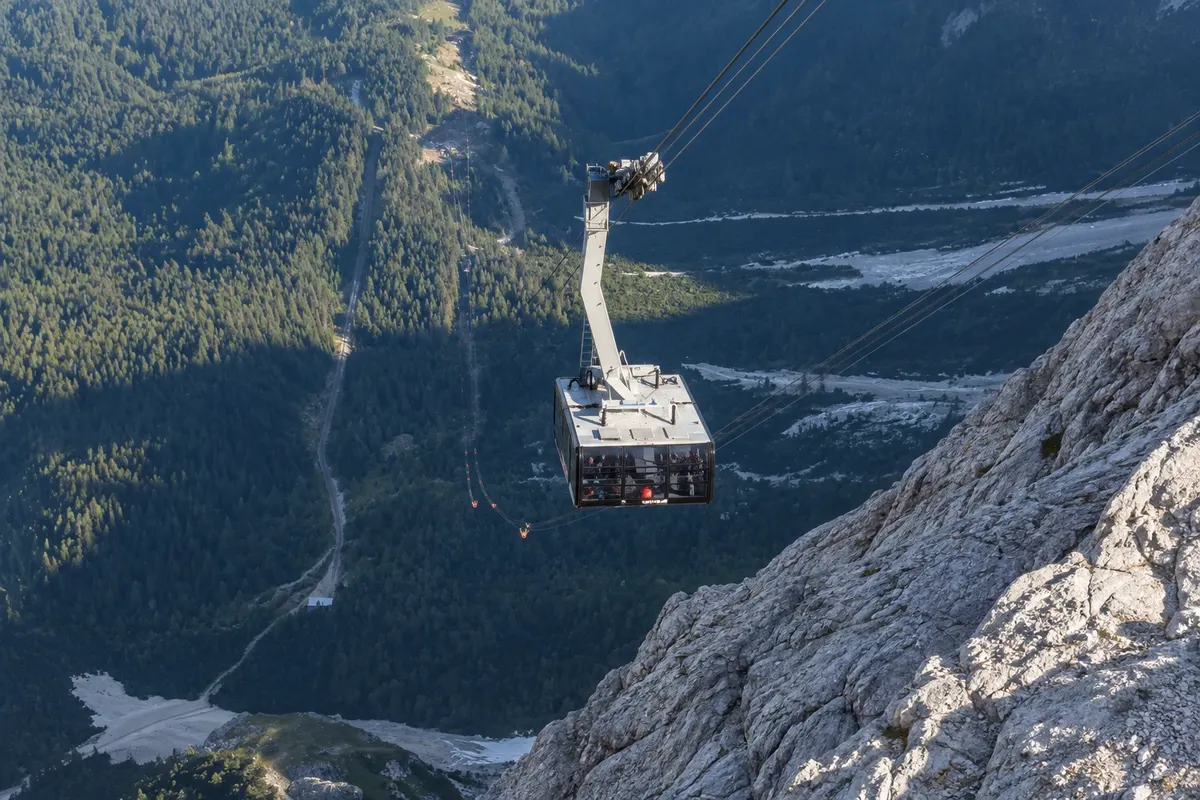
The highest mountain in Germany, at 2,962 metres, on the border with Austria. It is reached by rack railway from Garmisch-Partenkirchen or by cable car from the Eibsee, up to a terrace with views over the Alps.

Eagle's Nest (Kehlsteinhaus)
Berchtesgaden · Bavaria · Historic site

Eagle's Nest (Kehlsteinhaus)

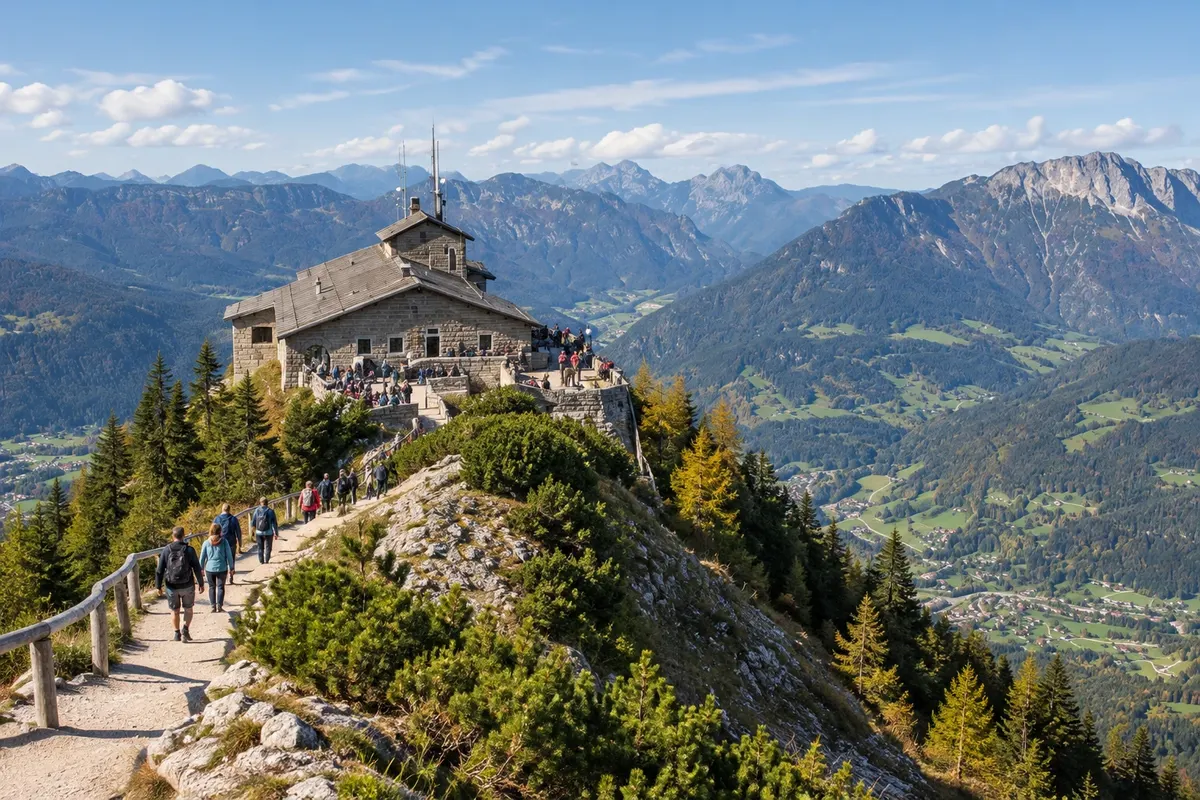
Built by the Nazi Party in 1937 and 1938, at 1,834 meters above Berchtesgaden. Today it is a restaurant with an exhibition about its history. It can only be reached by a special bus and an elevator during the summer season.

Partnachklamm
Garmisch-Partenkirchen · Bavaria · Gorge

Partnachklamm

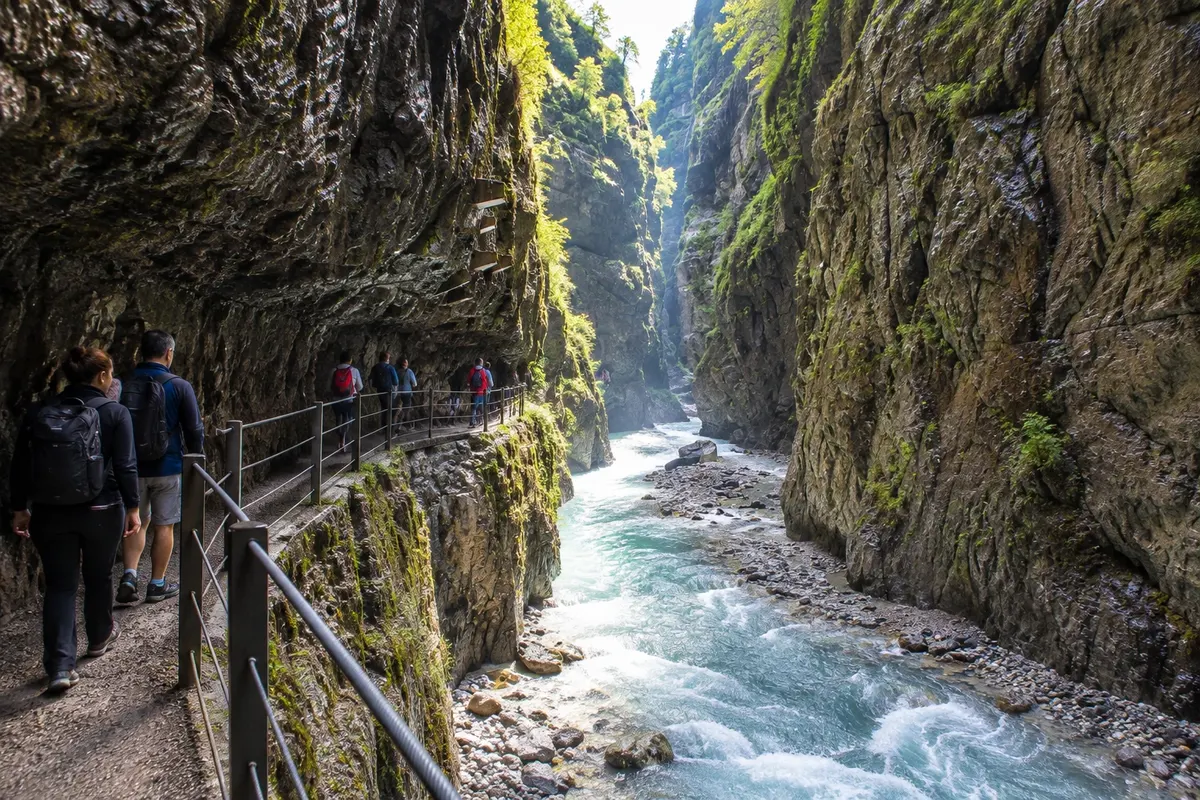
A roughly 700‑metre gorge carved by the Partnach River, with walls over 80 metres high. A path with galleries cut into the rock runs alongside the water. It is open year‑round during daylight hours, with an entrance fee.

Bavarian Alps – prikaži dodatne kraje (9)
Dokumentation Obersalzberg
Berchtesgaden · Bavaria · Spominsko obeležje

Dokumentation Obersalzberg

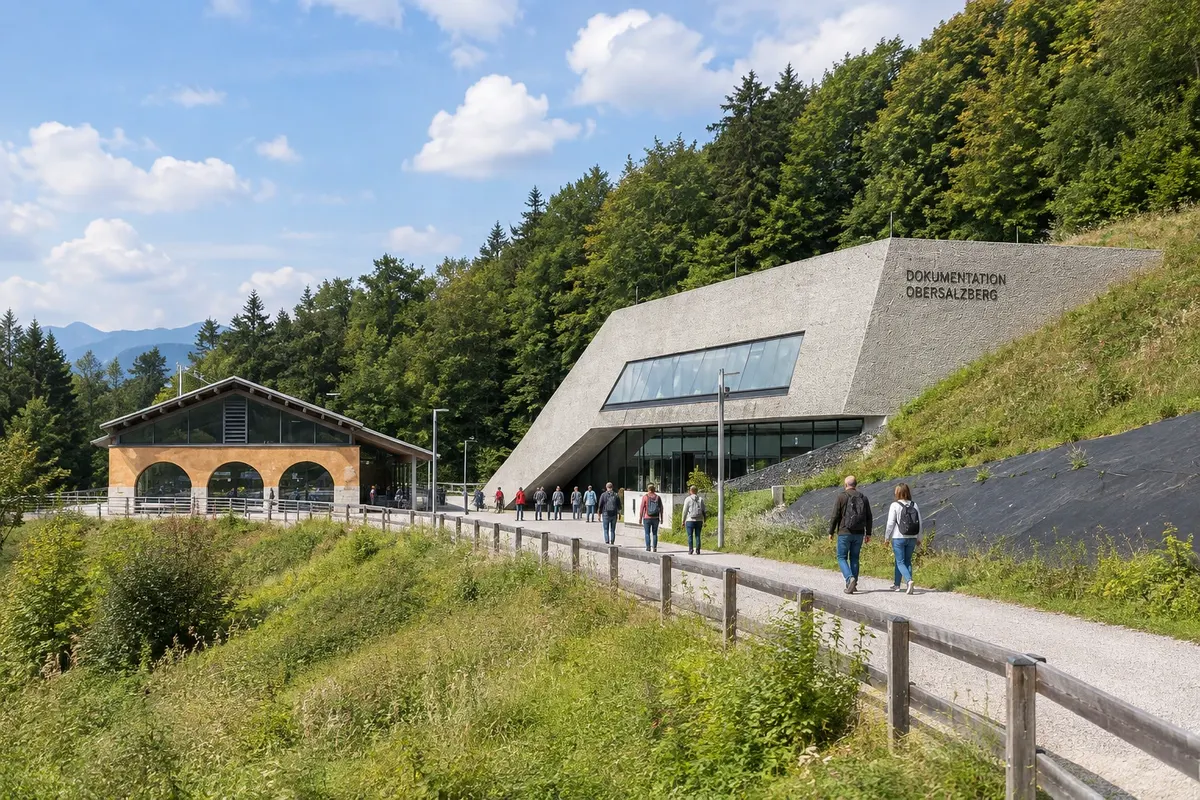
Documentation center about the Obersalzberg and the Nazi dictatorship, built in the former restricted area of the regime above Berchtesgaden. The exhibition includes part of the bunker system.

Eibsee
Garmisch-Partenkirchen · Bavaria · Jezero

Eibsee

A green‑water lake at the foot of the north face of the Zugspitze, in Grainau, 9 km from Garmisch. It has a path circling the shore and the departure station for the Zugspitze cable car.

Ludwigstraße
Garmisch-Partenkirchen · Bavaria · Street

Ludwigstraße

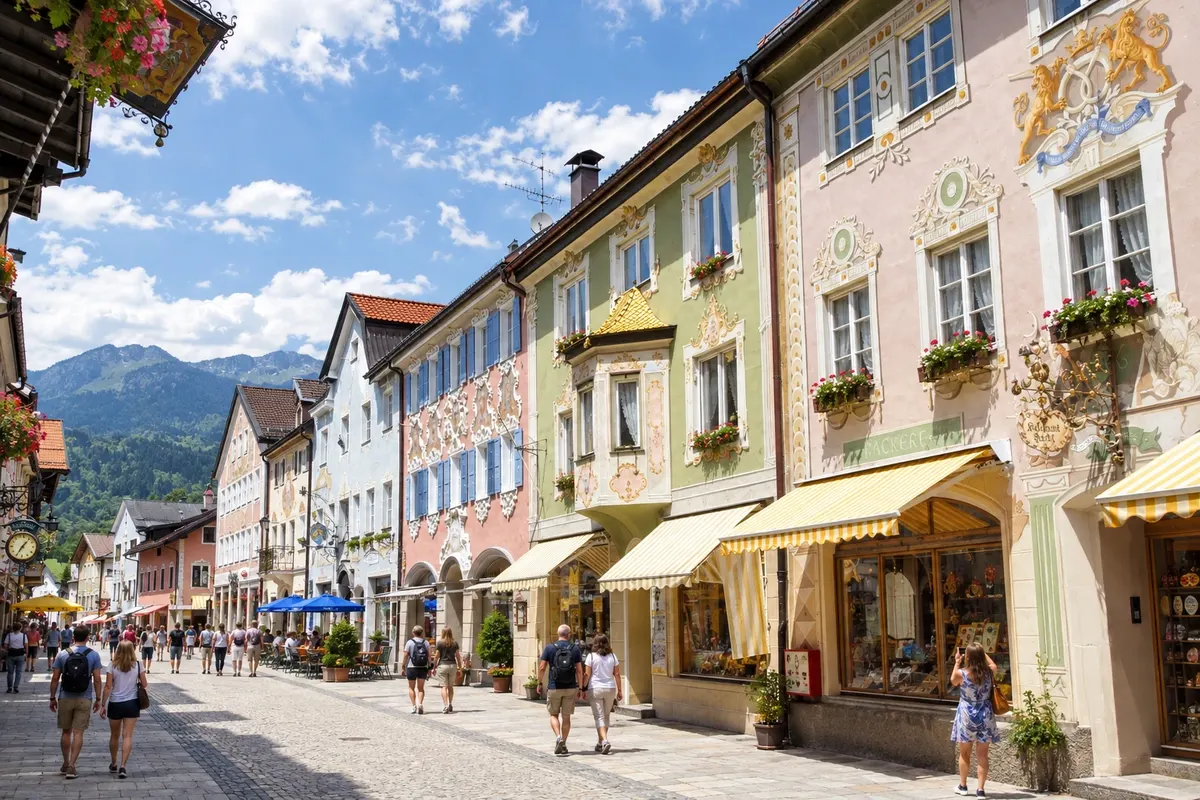
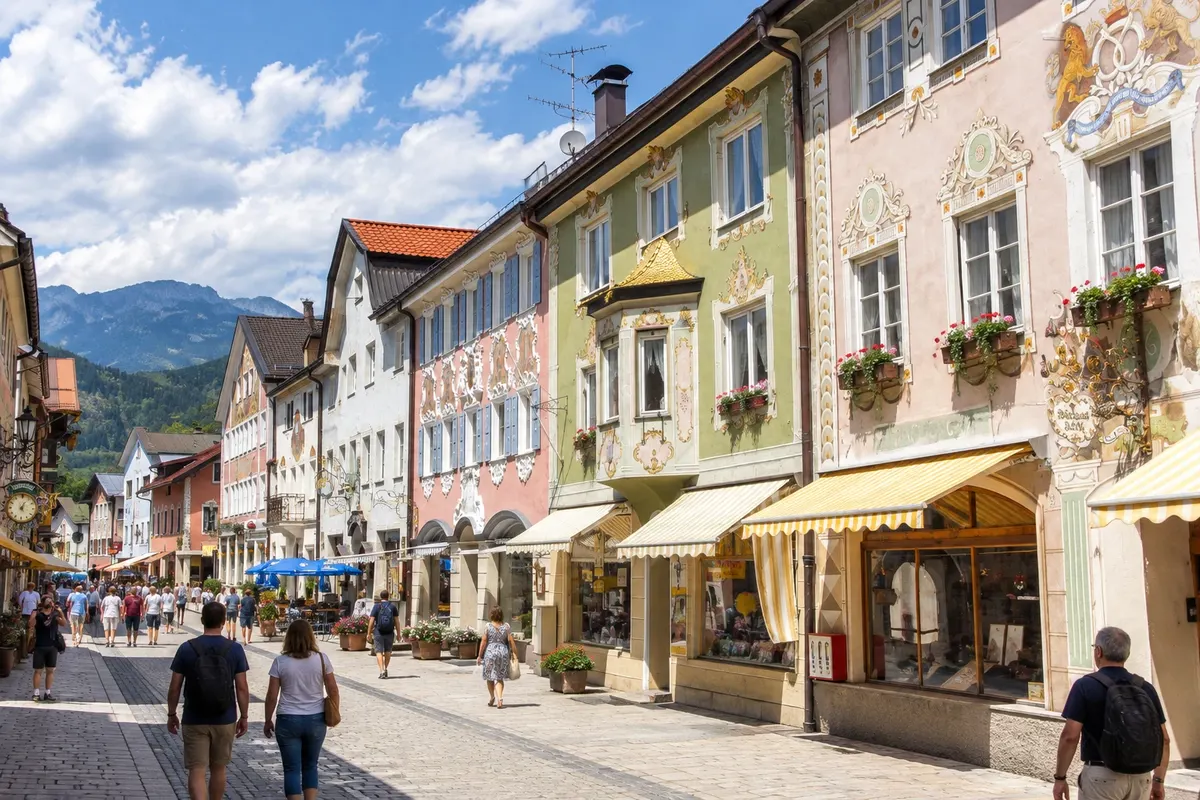
The old market street of Partenkirchen, on the line of the Roman road between the Brenner and Augsburg. It features painted façades, wrought‑iron shop signs and the neo‑Gothic church of Mariä Himmelfahrt.

Berchtesgaden Salt Mine
Berchtesgaden · Bavaria · Rudnik

Berchtesgaden Salt Mine

The oldest active salt mine in Germany, in operation since 1517. The guided tour goes down by a small train into the mountain, uses wooden slides and crosses an underground lake by boat.

Berchtesgaden National Park
Berchtesgaden · Bavaria · National park

Berchtesgaden National Park

The only German national park in the Alps, established in 1978, featuring the Watzmann, the Königssee and valleys such as the Wimbachtal. The visitor center Haus der Berge, at the entrance to Berchtesgaden, has an exhibition about the park.

Olympia-Skistadion
Garmisch-Partenkirchen · Bavaria · Stadium

Olympia-Skistadion

Stadium built for the 1936 Winter Olympics, at the foot of the large ski-jump ramp. It's on the way to the Partnachklamm and hosts the New Year's round of the Four Hills Tournament.

Linderhof Palace
Garmisch-Partenkirchen · Bavaria · Palace

Linderhof Palace

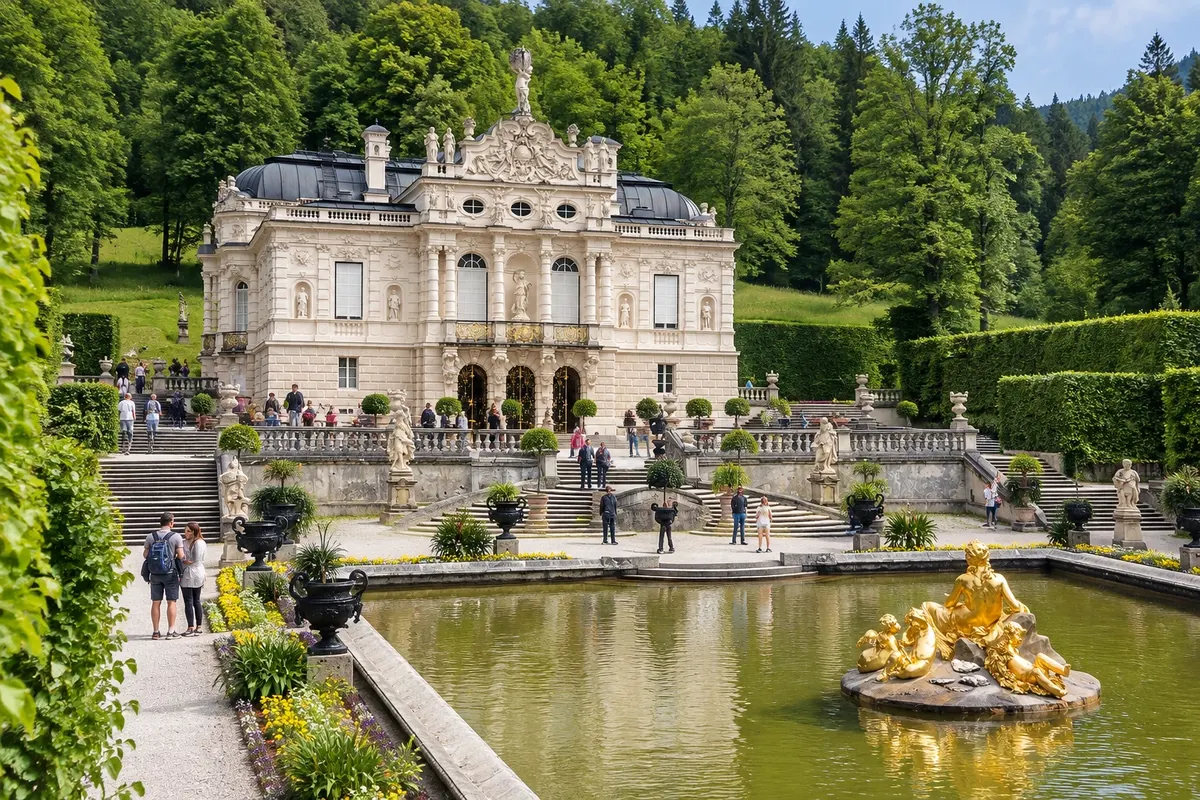
The smallest of King Ludwig II's palaces and the only one he saw completed, in a neorococo style, in an isolated valley about 25 km from Garmisch. Visits are by guided tour only. It is a UNESCO World Heritage Site.

Ettal Abbey
Garmisch-Partenkirchen · Bavaria · Samostan

Ettal Abbey

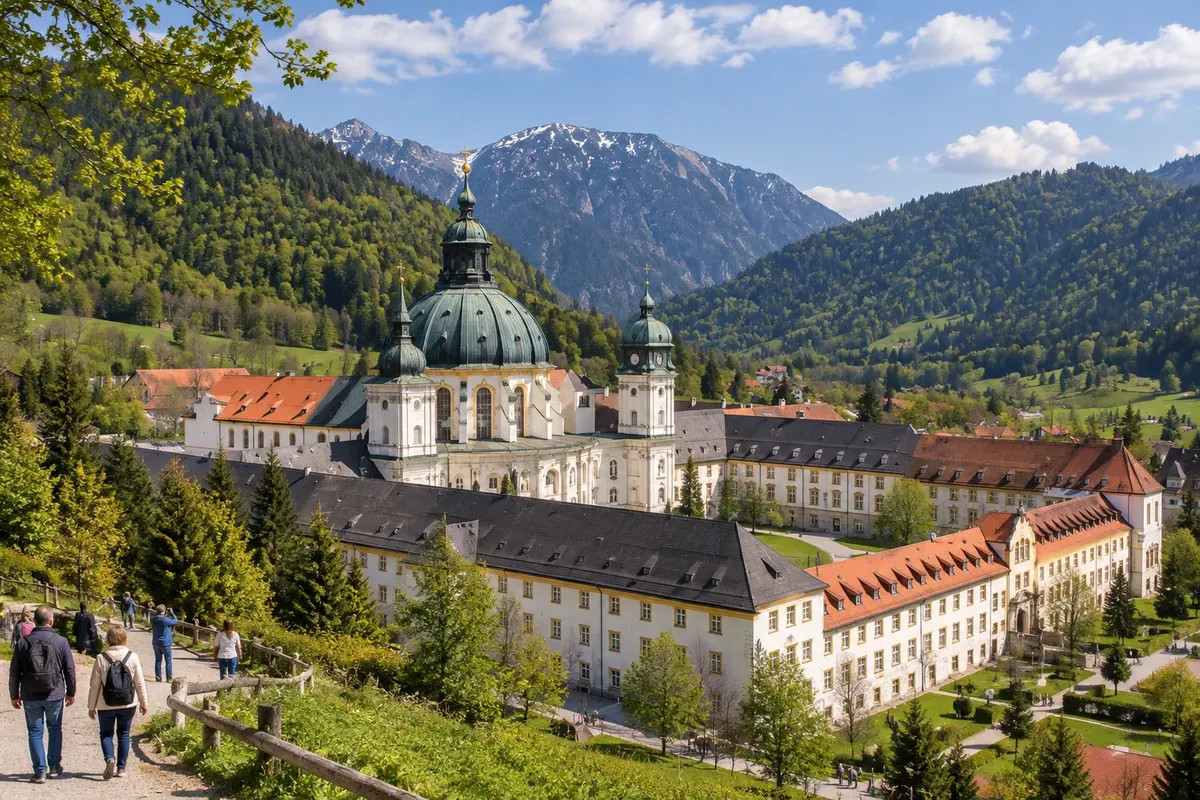
Benedictine abbey founded in 1330 by Emperor Ludwig the Bavarian, about 10 km from Garmisch. The Baroque basilica has a dome over a twelve-sided plan. The monastery maintains a brewery and a liqueur distillery.

Oberammergau
Garmisch-Partenkirchen · Bavaria · Village

Oberammergau

Village in the Ammer valley known for the Passion of Christ performed every ten years, for its painted façades and for wood sculptors. It is about 20 km from Garmisch-Partenkirchen.

Kaj izbrati pred odhodom

Izleti – Bavarian Alps

Izhodišče, trajanje, potek, vključene storitve in okvirna cena vsakega izleta.

Zugspitze: rack‑rail ascent and cable‑car descent to Germany’s rooftop

Odhod: Garmisch-Partenkirchen, Zugspitzbahn station (next to the DB station) Rack railway, glacier cable car and Eibsee cable car full day (about 5 to 6 hours including stops) early morning to afternoon easy (altitude 2962 m)

The Zugspitze is the highest mountain in Germany, at 2962 m, on the border with Austria. There are two ways to reach the summit from Garmisch-Partenkirchen, and a round-trip ticket allows combining both. The first is the Bayerische Zugspitzbahn, a rack railway operating since 1930: it departs from the station next to the DB station, stops at Grainau and Eibsee, and climbs through a tunnel in the rock to the Zugspitzplatt, a plateau at about 2600 m, in roughly 75 minutes. On the Zugspitzplatt are the Sonnalpin restaurant and what remains of the Nördlicher Schneeferner glacier; from there the Gletscherbahn, a 1992 cable car, overcomes 360 m of elevation to the summit in about 4 minutes. The second is the Seilbahn Zugspitze, a cable car that departs from Eibsee (998 m) and reaches the summit in about 9 minutes: 1945 m of elevation in a single span, with cabins for 120 people and a 127 m tower. On top there are terraces on the German and Austrian sides, the summit's golden cross, the Münchner Haus (a refuge from 1897) and a meteorological station operating since 1900. On a clear day the view reaches hundreds of peaks in four countries. The usual route is to go up by rack railway, have lunch on the plateau, take the Gletscherbahn to the summit and descend by cable car to Eibsee, then return by train to Garmisch.

Kraji na poti: Zugspitze, Eibsee.

Vključuje: The return ticket covers the rack railway, the Gletscherbahn and the Eibsee cable car in any combination; check the current timetable. The DB train journey between München and Garmisch is separate, but combined tickets are available from Munich. Restaurants and the mountain hut are paid separately.

Nasvet: Check the summit webcam before you go: with low cloud you won’t see anything up there. In July and August arrive for the first ascent, as queues grow from mid‑morning. Even in summer (June to August) temperatures at the summit often sit near 0 °C: bring a coat, sunglasses and sunscreen. The cable car and rack railway close for maintenance for a few days each year, usually in autumn and spring: check before you go.

Najboljši čas za obisk: From June to September, with longer days and the plateau trails open. In winter (December to March) the summit becomes a ski area. It operates year‑round except for maintenance closures.

Partnachklamm: the gorge of the Partnach River from the Olympia-Skistadion

Odhod: Garmisch-Partenkirchen, Olympia-Skistadion Walk along boardwalks and rock galleries about 2 to 3 hours, round trip Dopoldne ali popoldne easy (wet, dark footing)

The Partnachklamm is a 702 m long gorge the Partnach River carved into the rock, with walls exceeding 80 m in height in places. It has been a natural monument since 1912, and the path was cut into the rock in the early 20th century for people who floated logs down the river. The walk starts at the Olympia‑Skistadion in Partenkirchen: from the stadium you follow the road upstream about 20 to 25 minutes to the ticket office. Inside, the boardwalk runs alongside the water through galleries hewn into the stone, with openings toward the river, drops falling from the ceiling, and stretches where daylight barely reaches; in 1992 a 108 m gallery was opened to bypass a collapse. At the end of the gorge the valley opens up: you can return the same way or climb the trail to Graseck and descend via the high bridge, making a loop of roughly 6 km. In winter (December to February) the water freezes on the walls and forms curtains of ice; it is one of the few gorges in the region that is open year‑round.

Kraji na poti: Partnachklamm, Olympia-Skistadion.

Vključuje: Separate paid ticket, with turnstile and QR code: buy online beforehand, because there is no cell signal inside the valley. There is no ticket office at the stadium. Free walking outside the paid section; the return via Graseck has no extra cost.

Nasvet: Bring a raincoat or waterproof jacket and shoes with firm soles: the walkways are wet year‑round. Strollers and wheelchairs do not pass. Combine the visit with the Olympia-Skistadion, which is at the entrance to the path. Outside ticket office hours the gorge is open at the visitor’s own risk.

Najboljši čas za obisk: Open year‑round. From May to September the river is full from the thaw; in January and February ice formations appear. Confirm before you go: sections may close after heavy rain or for maintenance.

Eibsee: walk around the lake at the foot of the Zugspitze

Odhod: Garmisch-Partenkirchen, station (bus or Zugspitzbahn train to Eibsee) Bus or cog railway to the lake and walk along the shore about 3 hours for the full loop Dopoldne ali popoldne easy (flat trail of about 8 km)

The Eibsee is a mountain lake at about 1000 m elevation, in the municipality of Grainau, just below the north face of the Zugspitze. It covers 177 hectares, reaches up to 35 m deep and has eight to nine islets on the north shore, remnants of an ancient rock slide; the water is so clear it shifts from green to blue depending on the light. The lake is privately owned, but the shoreline trail is open: the full loop is about 8 km in circumference, on a flat path among pines, with wooden bridges over the narrows and small shingle beaches. The lower station of the Seilbahn Zugspitze sits by the lake, and the Bayerische Zugspitzbahn rack railway stops at Eibsee, which makes it possible to combine both activities: ride up the Zugspitze in the morning and walk around the lake in the afternoon, or vice versa. Visitors from Garmisch-Partenkirchen can come by bus from the station or on the rack railway itself. In summer season (May to September) there are rowboats and pedal boats for rent on the shore near the hotel.

Kraji na poti: Eibsee, Zugspitze.

Vključuje: The trail is open and there is no entrance fee. Bus or cog railway to the lake, boat rental and parking are paid separately; the cog railway is included in the Zugspitze ticket.

Nasvet: Do the loop counterclockwise to face the Zugspitze across the islets. Early in the morning the lake is usually still and mirrors the mountain. On weekends in July and August the parking fills up: arrive by bus or train. Bring snacks and water, because there is only a restaurant near the cable car station.

Najboljši čas za obisk: From May to October for the full walk; in autumn (October) the woods change color. In winter (December to February) the trail can have ice.

Olympia-Skistadion and the 1936 Games ski jump

Odhod: Garmisch-Partenkirchen, Partenkirchen centre Walk or city bus to the stadium Približno 1 uro Dopoldne ali popoldne Lahko

The Olympia-Skistadion is located at the exit of Partenkirchen toward the Partnach valley and was the venue for the opening and closing ceremonies of the 1936 Winter Olympic Games, the first to include alpine skiing. The stadium is the landing area for the Große Olympiaschanze, the large ski jump: the first ramp on the site was built in 1921, the Olympic ramp opened in 1934 and the current concrete-and-steel structure was unveiled on New Year’s Day 2008 to meet international federation standards. The hill has a K-point of 125 m and hill size of 142 m; the record exceeds 145 m. Every January 1 the stadium hosts the Garmisch-Partenkirchen stage of the Four Hills Tournament (Vierschanzentournee), which usually fills the stands and is broadcast on European television. Outside competition days, visitors can walk around the stadium area, see the ramp from below and the stone stands from the 1930s. The ramp tower serves as a viewpoint over the valley; check locally whether the climb is open. The path to the Partnachklamm starts there.

Kraji na poti: Olympia-Skistadion.

Vključuje: Walking around the stadium is free for most of the year. Competition and training days require separate admission; the climb up the tower, when open, may be charged. Check the current price table.

Nasvet: Come as the first stop of the day for the Partnachklamm: it’s a 20–25 minute walk from the stadium to the gorge. If you are in the area at New Year, the January 1 ski jump requires advance tickets. In winter (December to February) there are competitions and the area is partially closed.

Najboljši čas za obisk: All year; January 1 for the Four Hills Tournament jump. From May to October the visit pairs well with the gorge walk.

Ludwigstraße: Partenkirchen’s historic street and the Museum Werdenfels

Odhod: Garmisch-Partenkirchen, station (about a 15-minute walk) Walk through Partenkirchen town center about 2 hours, including the museum late afternoon Lahko

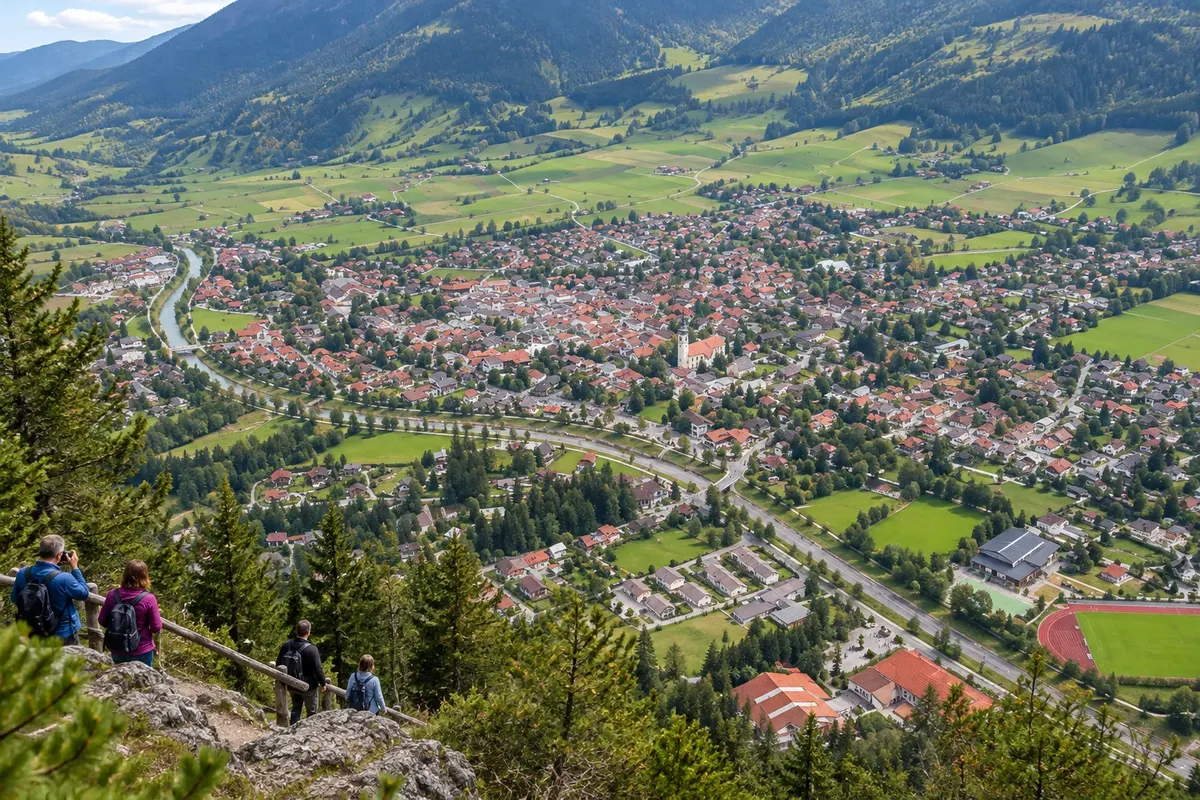
Garmisch-Partenkirchen are actually two villages, merged by decree on January 1, 1935 to host the Winter Games the following year. Garmisch, on the west side of the station, has the shops and the pedestrian area; Partenkirchen, on the east side, preserves the old layout. Ludwigstraße follows the route of the Roman road that linked Venice to Augsburg: the post of Partanum is mentioned in the year 15 CE, and for centuries the street was the passage for merchants crossing the Alps. Today it is a narrow street of houses with wide eaves and painted façades, the Lüftlmalerei typical of southern Bavaria, with religious scenes, coats of arms and trompe-l'oeil frames around the windows. On the street itself is the Museum Werdenfels, a regional museum housed in an old house, with rooms about peasant life, carnival masks, sacral art and the history of the county of Werdenfels. At the end of the street is the parish church of Partenkirchen and, on the hill beside it, the pilgrimage church of St. Anton, from where the Philosophenweg starts, a path with views over the valley and the Zugspitze. Garmisch-Partenkirchen sits at 708 m elevation and was connected by rail to Munich in 1889.

Kraji na poti: Ludwigstraße.

Vključuje: Free walk; the street and the churches are open. The Museum Werdenfels has a separate paid admission and is closed some days of the week: check beforehand. There are guided tours for an additional fee offered by the tourist office.

Nasvet: Leave it for late afternoon, when the sun hits the painted facades and the craft shops are still open. Walk up to St. Anton and take a section of the Philosophenweg to see the valley in the low light. On Sundays shops close, but the street restaurants remain open.

Najboljši čas za obisk: Year-round. In December there are decorations and a Christmas market, which usually takes place in Garmisch and in Partenkirchen; from May to September there are sidewalk tables.

Schloss Linderhof: Ludwig II’s palace in the Graswang valley

Odhod: Oberammergau station (regional bus) or Garmisch‑Partenkirchen Regional bus to the palace and guided tour about 3 to 4 hours, including the park Dopoldne ali popoldne easy (slopes in the park)

Schloss Linderhof (Linderhof Palace) stands isolated in the Graswang valley, about 10 km west of Ettal. It is the smallest of King Ludwig II of Bavaria’s three palaces and the only one he saw completed: the king inherited his father’s hunting lodge in 1864, began expanding it in 1869 and, in 1874, built the current structure inspired by the Petit Trianon at Versailles and the rococo style of Louis XV. From 1876 he spent most of his time there. Interior visits are by guide only and last about half an hour: a staircase copied from Versailles, a bedroom refurbished in 1884, a table that rises from the floor below already set so the king could eat without seeing servants, and a hall with mirrors facing each other that repeat the room to infinity. The park mixes a French garden with mountain slopes: a thirty‑step marble cascade, a fountain whose jet reaches nearly 25 m, and scattered through the wood the Moorish Kiosk bought at the 1867 Paris Exhibition, the Moroccan House of 1873, Hunding’s Hut inspired by Wagner, and the Grotto of Venus, an artificial cave with a lake and electric lighting from 1878, located 50 m above the palace via steep paths. The kiosk is under restoration and cannot be seen inside: check before you go.

Kraji na poti: Schloss Linderhof.

Vključuje: Timed ticket required for the guided tour of the palace; the park is open. The park buildings and the Grotto of Venus are only open in the summer season, generally from April to mid‑October, with a separate ticket. Photos are not allowed inside the palace or in the grotto. Bus is paid separately.

Nasvet: Buy the timed ticket online: in July and August afternoon tours sell out. Arrive with a half hour margin for the walk from the parking to the palace. In winter (mid‑October to March) the park’s fountains and some buildings are closed, but the palace is open. Combine the visit the same day with Kloster Ettal and Oberammergau, along the bus route.

Najboljši čas za obisk: From May to September, with the fountains running and the park fully open. In June the garden is in bloom; in October the slopes change color.

Prikaži dodatne izlete (7)

Kloster Ettal: the Benedictine monastery and its Baroque basilica

Odhod: Garmisch-Partenkirchen or Oberammergau (regional bus) Regional bus and self-guided visit to the basilica around 1 hour and a half Dopoldne Lahko

The Kloster Ettal (monastery of Ettal) lies on the road between Garmisch-Partenkirchen and Oberammergau, in a valley enclosed by mountains. It was founded on April 28, 1330 by Emperor Ludwig the Bavarian, in fulfillment of a vow made after his coronation in Rome, and it is still inhabited by a Benedictine community of about 55 monks, counting those of Ettal and Wechselburg. The original Gothic church had a twelve-sided plan; after a fire in 1744 it was rebuilt in Rococo style by Joseph Schmuzer, following a design by Enrico Zuccalli, and gained the large dome visible from afar, with frescoes by Johann Jakob Zeiller. In 1920 it received the title of basilica. Inside, the altar houses the Madonna of Ettal, a marble image brought from Pisa and an object of pilgrimage since the foundation. The basilica is open to visitors during the day, outside mass times. The monastery has run a brewery since 1609, an herbal liqueur distillery that grew out of the old pharmacy, a gym founded in 1905, and a shop selling house products. The brewery can only be seen on a guided tour; the focus is the history of the place, not the drink.

Kraji na poti: Kloster Ettal.

Vključuje: Entry to the basilica is free; respect mass times, when visits are suspended. Guided tours of the monastery and the brewery are paid separately and run on set days: check in advance. The shop is open every day, with reduced hours on Sundays.

Nasvet: Arrive in the morning, before the tour buses that stop en route to Linderhof. Sit for ten minutes on the back pew to see the dome in daylight. The bus stop is opposite the monastery, which makes it easy to continue to Linderhof or Oberammergau the same day.

Najboljši čas za obisk: Year round. On religious feasts (Easter, Christmas, August 15) the basilica usually holds solemn masses and is crowded. In December, the valley is often snow-covered.

Oberammergau: painted facades, wood carving and the Passion theatre

Odhod: Garmisch-Partenkirchen (regional bus or train via Murnau) Regional bus or train and walk through the village Približno 3 ure Popoldne Lahko

Oberammergau is a village at 837 m altitude, at the foot of the Kofel, the pointed peak that marks the place. It became known for three traditions. The first is Lüftlmalerei, the painting of facades: whole houses covered with scenes from fairy tales, biblical passages and trompe-l’œil architecture, a technique whose best-known name is Franz Seraph Zwinck (1748–1792); the most cited example is the Pilatushaus, now used for craft workshops. The second is wood carving: the village hosts the state school for carvers and dozens of studios and shops selling nativity scenes, saints and figures. The third is the Passionsspiele, the staging of the Passion of Christ. In 1633, during the plague, the residents vowed to perform the Passion every ten years if the disease stopped; the first production was in 1634 and the vow continues. The next season is scheduled for 2030, from May to October, with more than 2,000 participants, all village residents, in a theatre for over 4,700 people. In non-performance years the Passionstheater opens for guided visits. The village is a starting point for Linderhof and Ettal, and has a train station on the regional line from Murnau.

Kraji na poti: Oberammergau.

Vključuje: Self-guided walk through the village. Visit to the Passionstheater, museum and studios with separate admission. In Passion years (the next is 2030), tickets for the performance are sold well in advance, usually in packages with accommodation: check the current price table.

Nasvet: Do the village in the afternoon, after Ettal and Linderhof, and finish along the main street, where the studios are. Look for the Pilatushaus and the houses with scenes of Hansel and Gretel and Little Red Riding Hood. If you travel in 2030, plan a year ahead; outside that year the village is quiet.

Najboljši čas za obisk: From May to October. In 2030, the Passion season runs from May to October, with the village very busy. In December there is a Christmas market and nativity scenes in shop windows.

Königssee: electric boat to St. Bartholomä and the Obersee

Odhod: Berchtesgaden, station (bus to Schönau am Königssee) Bus to the pier and electric boat on the lake full day (about 5 to 6 hours to Salet) early morning to afternoon easy (short walk to the Obersee)

The Königssee is a lake 7.7 km long, 1.7 km wide and up to 190 m deep, at 603 m elevation, nestled between rock walls inside the Nationalpark Berchtesgaden. Since 1909 only electric boats, rowboats and pedal boats may navigate it, and the passenger boats, all identical, depart from the Schönau am Königssee pier every half hour in season. Halfway the boat stops in front of a stone cliff and the boatman plays a trumpet: the echo returns several times. After about 35 minutes you reach St. Bartholomä, a peninsula with the pilgrimage church with red domes, rebuilt in 1697 over a chapel from 1134, and the former hunting lodge of the Bavarian kings, now a restaurant. Behind it rises the east face of the Watzmann (2713 m); a trail of about 2.5 hours round trip reaches the base of that wall. The boat continues another 20 minutes to Salet, the final stop, open only in the summer season, which usually runs from Easter to mid-October: from there, a 15-minute walk leads to the Obersee, a smaller still lake, and another 30 to 45 minutes along the shore brings you to the viewpoint of the Röthbachfall, a 470 m waterfall noted as the highest in Germany. The return repeats the route; the last departure from Salet is in the late afternoon.

Kraji na poti: Königssee, Nationalpark Berchtesgaden.

Vključuje: Boat ticket paid separately: buy online only for the outbound trip from the pier; the return from St. Bartholomä or Salet is bought at the pier. There is a combined boat plus Jenner cable car ticket. The St. Bartholomä church does not charge an entrance fee. Bus from Berchtesgaden and parking are paid separately.

Nasvet: Catch one of the first boats in the morning and go straight to Salet to visit the Obersee before the tours arrive; stop at St. Bartholomä on the return. From July to mid-September the wait to board can exceed an hour in the afternoon. In January and February the lake may freeze and boat service can stop: check before you go.

Najboljši čas za obisk: From May to October, with boats to Salet and the Obersee open. In June the Watzmann still has snow high up; in October the shoreline woods turn yellow. In winter the boat usually goes only as far as St. Bartholomä.

Kehlsteinhaus: the mountain bus and the brass elevator at 1834 m

Odhod: Berchtesgaden, station (bus to Obersalzberg) or Dokumentation Obersalzberg Local bus to Obersalzberg, special bus and elevator about 2 to 3 hours Dopoldne easy (altitude 1834 m)

The Kehlsteinhaus is a stone house built between 1937 and 1938, in thirteen months, on the summit of Kehlstein at 1834 m, by order of Martin Bormann for use by the Nazi regime; Hitler inaugurated it on April 20, 1939, but used it only rarely. The house survived the war intact, returned to the State of Bavaria in 1960 and since then has operated as a mountain restaurant run by a charitable foundation. What impresses is the access engineering: the Kehlsteinstraße, a 6.5 km road that climbs 700 m with five tunnels, closed to private cars since 1952 when the special bus service began. The ascent is made on those buses, which depart from the terminal next to the Dokumentation Obersalzberg every 25 minutes; at the final stop a 124 m tunnel bored into the rock leads to the original elevator, lined with polished brass, which rises another 124 m inside the mountain to the house. From the terrace you can see the Königssee, the Watzmann, the Berchtesgaden valley and Salzburg in the distance. Inside, the room with the red marble fireplace, a gift from Mussolini, and rooms used by the restaurant. There is a trail for those who want to descend on foot. The season usually runs from mid-May to mid or late October, depending on snow; the visit has a historical tone, and the exhibition at the Dokumentation at the base provides context.

Kraji na poti: Kehlsteinhaus, Dokumentation Obersalzberg.

Vključuje: Ticket paid separately, covering the special shuttle bus round trip and the elevator; entry to the house is free. Purchase online or at the terminal ticket office, with a departure time reserved. Restaurant costs are extra. The regular bus from Berchtesgaden to Obersalzberg is separate.

Nasvet: Go up in the morning, before the afternoon cloud, and book the return when you buy the ticket. With strong wind, snow or rockfall the road can close without notice: check the daily bulletin. Bring a jacket even in August. Reserve the afternoon for the Dokumentation Obersalzberg at the same terminal.

Najboljši čas za obisk: Only in season, which typically runs from mid-May to October; June and September have shorter lines than July and August. Outside that period the road is usually closed by snow.

Dokumentation Obersalzberg: the place’s history and the bunker

Odhod: Berchtesgaden, station (regular bus to Obersalzberg) Local bus and exhibition visit Približno 2 uri Popoldne easy (stairs in the bunker)

Obersalzberg, the slope above Berchtesgaden, was Hitler’s holiday place from 1923 and, from 1928, his residence, the Berghof. After 1933 residents were expelled, the area became a restricted zone and houses for the regime’s leadership, barracks, a hotel and a network of bunkers were established there. The 1945 bombings and postwar demolitions erased almost everything; from 1953 to 1996 the grounds served as a recreational area for American forces. The Dokumentation Obersalzberg, opened in 1999 on the foundations of a former regime hotel and expanded with a new building and a renovated permanent exhibition, is a documentation and memory center run by the Institut für Zeitgeschichte in Munich and Berlin. The exhibition links the site’s history with that of National Socialism: the cult of the leader, propaganda using the Alpine landscape, the war and the Holocaust, with documents, photos and testimonies. The route ends in the original bunker, with corridors and rooms carved into the rock. There are texts in German and English and an audio guide. It is a serious visit that explains why the beautiful surrounding landscape hides a heavy history; many visitors combine it with the ascent to the Kehlsteinhaus, which departs from the same bus terminal.

Kraji na poti: Dokumentation Obersalzberg, Kehlsteinhaus.

Vključuje: Separate paid admission; check the current price list and closing days, which change in winter. Audio guide and guided tours are on fixed days and cost extra. The regular bus from Berchtesgaden station is paid separately; it is included with some regional guest cards.

Nasvet: Allow at least two hours and come after the Kehlsteinhaus, with your mind more open to the context. The bunker has stairs and is cold: bring a coat. The last entry is one hour before closing. This visit is not suitable for small children.

Najboljši čas za obisk: Year-round. From November to April, when the Kehlsteinhaus is closed, this is Obersalzberg’s main program; on rainy summer days (June to August) it tends to be crowded.

Salzbergwerk Berchtesgaden: the salt mine in operation since 1517

Odhod: Berchtesgaden, station (about 20 minutes on foot or by bus) Guided tour with mine train, slides and boat about 1 hour 30 minutes, including changing clothes Dopoldne ali popoldne easy (12 °C inside)

The Salzbergwerk Berchtesgaden is a salt mine in continuous operation since 1517, when the first gallery, the Petersberg-Stollen, was opened. It is the oldest active salt mine in Germany: about 100 people still work there today, producing brine that is pumped through an 18 km pipeline to Bad Reichenhall, where the salt is crystallized. Visitors have entered the mine since the time of the ecclesiastical principality of Berchtesgaden, and the visitor area was refurbished in 2006 and 2007. The guided tour lasts about one hour. Everyone wears a miner’s coverall over their clothes and boards the mine train, which runs 650 m through the gallery into the mountain. Inside, visitors go down two wooden slides up to 40 m long (there is a staircase for those who prefer), see how water dissolves the salt in the rock, cross on a boat over an illuminated underground saline lake, and watch projections about the history of the mine and of salt, which made the region wealthy. The temperature is 12 °C year‑round, regardless of conditions outside, making the visit a good option for a rainy or hot day.

Kraji na poti: Salzbergwerk Berchtesgaden.

Vključuje: Separate paid ticket with timed entry; buy online to secure a place on the train. Coveralls are provided on site, including for children. The tour is guided in German, with an audio guide in other languages: check available options when booking.

Nasvet: Wear pants and closed shoes: the coverall goes on over them and the floor is damp. Book a morning slot on rainy days, when lines grow. The mine is on the road out of Berchtesgaden toward the Obersalzberg, and can be combined with the Kehlsteinhaus on the same day if the weather clears.

Najboljši čas za obisk: Open year‑round, every day. It's the right option in the area for rainy days, common from May to August, and for winter (December to February).

Nationalpark Berchtesgaden: Haus der Berge and the Jenner cable car

Odhod: Berchtesgaden, station (Haus der Berge) and Schönau am Königssee (Jenner) Visit to the park centre and cable car ascent about 4 to 5 hours, including the Jenner Dopoldne ali popoldne easy to moderate (trails at the top)

Nationalpark Berchtesgaden was established on August 1, 1978 and is Germany’s only alpine national park: 210 km² of mountains, valleys and lakes, with the Watzmann (2713 m) at its centre, the Königssee to the south and about 260 km of hiking and mountain trails. It has been a UNESCO biosphere reserve since 1990. Two facilities serve as gateways. The first is the Haus der Berge, the park visitor centre on Hanielstraße in Berchtesgaden, open every day: the exhibition Vertikale Wildnis (vertical wilderness) takes you through the landscape from the lake bottom to the peaks, and there is a cinema, library and ranger programmes; it’s the place to understand what you will see on other walks. The second is the Jennerbahn, a gondola cable car that departs from Schönau am Königssee beside the pier and rises 1170 m in about 20 minutes, with an intermediate station at 1200 m, to just below the Jenner summit (1874 m). The cable car was rebuilt between 2017 and 2019. At the top there is a viewpoint over the Königssee, seen from above like a fjord, and short marked trails; skiing on the Jenner has been discontinued, and the mountain is now for summer use and hiking only. Park information points list rules of conduct: stay on the trails and do not take anything from nature.

Kraji na poti: Nationalpark Berchtesgaden, Königssee.

Vključuje: Park entry is free. Haus der Berge: paid admission for the exhibition; cinema, temporary exhibitions and library are free. Jennerbahn: separate paid ticket for ascent and descent, with a combined-ticket option with the Königssee boat. Check the current schedule/pricing.

Nasvet: Do the Haus der Berge on arrival day to plan the rest of the route using the park map. For the Jenner, check the webcam at the top: with a low cloud layer the ascent is not worth it. Temperature drops significantly at the summit; bring a jacket. The cable car is closed for maintenance several days a year, usually in November and in spring: confirm before you go.

Najboljši čas za obisk: June to October for the Jenner and the trails, when paths are free of snow. Haus der Berge operates year-round and is an option for a rainy day.


Po dnevih

Bavarian Alps – načrt poti. Število dni: 3, 5in7

Predlogi za načrtovanje poti. Vrstni red dni prilagodite vremenu in razpoložljivosti izletov.

3 dni · Garmisch-Partenkirchen in 3 days: Zugspitze, Partnachklamm and Ludwig's palaces

ZaFirst trip, arriving from Brazil on the direct flight to Munich, with little time and wanting to see Germany’s highest mountain and a palace of King Ludwig II. · Izhodišče:Garmisch-Partenkirchen, near the station
  1. Dan 1 · Arrival via Munich, train to Garmisch and the historic street of Partenkirchen

    The overnight flight from São Paulo arrives in Munich in the morning. From the airport, the S-Bahn (S1 or S8) takes about 40 minutes to München Hauptbahnhof (central station); from there, the direct regional train reaches Garmisch-Partenkirchen in roughly 1 h 20 to 1 h 30. Drop your bags and plan a light day to cope with jet lag: lunch in Garmisch, a walk along Partenkirchen’s Ludwigstraße with the Museum Werdenfels and, if your legs allow, the short climb to St. Anton to view the valley. Go to bed early: the next day the Zugspitze requires a clear morning.

  2. Dan 2 · Zugspitze by cogwheel train and Eibsee on the descent

    Take one of the first departures of the Bayerische Zugspitzbahn, next to the station: about 75 minutes to the Zugspitzplatt, Gletscherbahn to the summit and time on the terraces on both sides of the border. Have lunch on the plateau or at the top. Descend by the Seilbahn Zugspitze to Eibsee, in about 9 minutes, and walk along the lakeshore, at least to the islets, with the mountain ahead of you. Return to Garmisch by train or bus in the late afternoon.

  3. Dan 3 · Partnachklamm in the morning, Ettal and Linderhof in the afternoon

    In the morning, walk or take the bus to the Olympia-Skistadion, see the ski-jump hill and follow the river upstream to the Partnachklamm, returning the same way in about 2 hours. Have lunch in Partenkirchen. In the afternoon, take the regional bus to Kloster Ettal, spend half an hour in the basilica, then another bus to Schloss Linderhof, with the guided tour scheduled for mid-afternoon and the park open until closing. Return to Garmisch early in the evening; the next day, train to Munich and your flight home.

5 dni · Bavarian Alps in 5 days: Garmisch-Partenkirchen and Berchtesgaden
ZaFor those who want both sides of the Bavarian Alps, Zugspitze and Königssee, on a first trip, accepting one day of train transfer between the two bases. · Izhodišče:Garmisch-Partenkirchen (2 nights) and Berchtesgaden or Schönau am Königssee (3 nights)
  1. Dan 1 · Arrival via Munich and Garmisch-Partenkirchen

    Morning arrival at Munich airport, S-Bahn to the central station and direct regional train to Garmisch-Partenkirchen, about 1 h 20 to 1 h 30. Easy afternoon: Partenkirchen’s Ludwigstraße, the Museum Werdenfels and a café in Garmisch’s pedestrian area. Check the forecast and the Zugspitze webcam to choose which of the next two days will be the mountain day.

  2. Dan 2 · Zugspitze and Eibsee

    Cogwheel train early to the Zugspitzplatt, Gletscherbahn to the summit, lunch at the top and descent by cable car to the Eibsee. Walk along the lakeshore to the islets or do the full circuit if you have time and energy, then return to Garmisch by train. If the morning is cloudy, swap this with day 3: Partnachklamm and Linderhof work well in overcast conditions.

  3. Dan 3 · Partnachklamm, Ettal and Linderhof

    Morning at the Olympia-Skistadion and the Partnachklamm, round trip through the gorge. Lunch in Partenkirchen and regional bus to Kloster Ettal and Schloss Linderhof, with the guided tour scheduled for the afternoon. If time allows, stop in Oberammergau on the way back to see the painted facades. Last night in Garmisch.

  4. Dan 4 · Train to Berchtesgaden and the salt mine

    Travel day: regional train from Garmisch to Munich (about 1 h 20 to 1 h 30) and, from München Hauptbahnhof, train to Berchtesgaden with a change at Freilassing, around 2 h 30 to 3 h. Arriving early afternoon, drop your bags and visit the Salzbergwerk Berchtesgaden, which is near the station and operates with timed entry, or the Haus der Berge to learn about the national park. Dinner in Berchtesgaden.

  5. Dan 5 · Königssee to Salet and the Obersee

    Early bus to Schönau am Königssee and one of the first electric boats, direct to Salet (in season, typically from Easter to mid-October). Walk to the Obersee and, if you wish, to the viewpoint for the Röthbachfall. On the way back, stop at St. Bartholomä to see the church and have lunch. If the afternoon is free, take the Jenner cable car next to the jetty. The next day, train to Munich or bus to Salzburg and your return flight.

7 dni · Bavarian Alps in 7 days: from the Zugspitze to the Königssee with the Kehlsteinhaus and Salzburg
ZaFor those who have a week and want to do both sides at a relaxed pace, including the Obersalzberg, the salt mine, the national park and a day in Salzburg. · Izhodišče:Garmisch-Partenkirchen (3 nights) and Berchtesgaden or Schönau am Königssee (4 nights)
  1. Dan 1 · Arrival via Munich and afternoon in Garmisch-Partenkirchen

    The overnight flight arrives in Munich in the morning. S-Bahn to the central station (about 40 minutes) and direct regional train to Garmisch-Partenkirchen, around 1 h 20 to 1 h 30. Easy afternoon along Ludwigstraße and the Museum Werdenfels, with the short climb to St. Anton to view the valley. Check the forecast to decide the Zugspitze day.

  2. Dan 2 · Zugspitze and Eibsee

    Cogwheel train early to the Zugspitzplatt, Gletscherbahn to the summit and terraces on both sides of the border. Descend by cable car to the Eibsee and do the full loop around the lake, about 8 km on flat terrain, with the mountain facing the islets. Return to Garmisch by train late afternoon.

  3. Dan 3 · Olympia-Skistadion, Partnachklamm and the return via Graseck

    Morning at the Olympia-Skistadion and the Partnachklamm, returning via the Graseck trail and the high bridge, about 6 km. Lunch in Partenkirchen. Free afternoon: Garmisch pedestrian area, or one of the local cable cars to view the valley from above, if weather permits. Last night in Garmisch.

  4. Dan 4 · Ettal, Linderhof and Oberammergau

    Regional bus in the morning to Kloster Ettal, basilica and the monastery shop. Bus to Schloss Linderhof, guided tour scheduled and the park with the Venus Grotto in season. In the afternoon, bus to Oberammergau: painted facades, woodcarving studios and the Passionstheater. Return to Garmisch by bus or train via Murnau, with your luggage ready for the next day.

  5. Dan 5 · Train to Berchtesgaden, Salzbergwerk and Haus der Berge

    Train from Garmisch to Munich and, from München Hauptbahnhof, train to Berchtesgaden with a change at Freilassing, around 2 h 30 to 3 h. In the afternoon, visit the Salzbergwerk Berchtesgaden with timed entry and, if time allows, the Haus der Berge, the Berchtesgaden National Park center, to get oriented for the coming days.

  6. Dan 6 · Kehlsteinhaus and Dokumentation Obersalzberg

    Bus from the station to Obersalzberg and one of the first special buses to the Kehlsteinhaus, in the season that usually runs from mid‑May to October; tunnel, brass elevator and a terrace with the Königssee below. Lunch at the top or back at the terminal. In the afternoon, visit the Dokumentation Obersalzberg, including the bunker. Out of season, swap the morning for Jenner or one of the park trails.

  7. Dan 7 · Königssee to Salet, Obersee and the Jenner

    Early electric boat to Salet, walk to the Obersee and the Röthbachfall viewpoint, stop at St. Bartholomä on the return. In the afternoon, take the Jenner cable car next to the pier to see the lake from above. If you have an extra day you can do a day trip to Salzburg; otherwise the next day take the train to Munich (about 2 h 30 to 3 h) or a bus to Salzburg Airport and fly home, with a connection in another European city.

Najboljši čas za obisk

Kdaj se odpraviti:Bavarian Alps po mesecih

From June to September all the excursions usually operate: boats on the Königssee, buses to the Kehlsteinhaus and the buildings in the Linderhof park. May and October are quieter, with some attractions already out of season. From December to March is ski season on the Zugspitze, if there is snow; the Kehlsteinhaus closes in winter.

The seasons shown are the most usual ones; nature doesn't always follow the calendar.

januar Zmerne padavine

winter · New Year jump

In Garmisch-Partenkirchen (719 m) the average is -2 °C, with about 77 mm of precipitation, much of it snow; on the Zugspitze (2956 m) the average is -10 °C with 177 mm; in Berchtesgaden (550 m), -1 °C and 95 mm. On the 1st the Olympia-Skistadion hosts the Four Hills Tournament ski jump, and the town is full. Zugspitze and Garmisch-Classic are in ski season. The Königssee can freeze and the boat may stop; the Kehlsteinhaus remains closed; Partnachklamm shows ice curtains. Linderhof opens palace only. Bring snow clothing.

februar Zmerne padavine

winter · Fasching

Still winter and the month with the least precipitation of the year at the three stations: about 66 mm in Garmisch-Partenkirchen (719 m), with an average of -1 °C; 157 mm and -11 °C on the Zugspitze (2956 m), the coldest month up high; 80 mm and 1 °C in Berchtesgaden (550 m). Clear, cold days are common—good conditions on the Zugspitze for snow. Winter school holidays in parts of Germany and Fasching (carnival), which usually falls in February or early March, bring village parades. Königssee only as far as St. Bartholomä if it is not frozen; Kehlsteinhaus closed.

marec Zmerne padavine

end of winter · snow up high

Average 4 °C in Garmisch-Partenkirchen (719 m) with about 90 mm; -9 °C and 208 mm on the Zugspitze (2956 m), the month with the most snow at the summit; 4 °C and 116 mm in Berchtesgaden (550 m). Snow melts and rain occurs in the valley while the ski season continues up high. Partnachklamm and the salt mine are reliable activities. Low crowds except around Easter, which sometimes falls in March.

april Zmerne padavine

spring · Easter

Spring. In Garmisch-Partenkirchen (719 m) the average rises to 8 °C, with about 87 mm; on the Zugspitze (2956 m), -6 °C and 172 mm, still full winter; in Berchtesgaden (550 m), 9 °C and 91 mm. Meadows turn green, but trails above 1500 m remain snowy. At Easter the Königssee boat usually resumes service to Salet, and Linderhof Park typically opens the buildings and the Venus Grotto in mid-month: check before you go. Kehlsteinhaus still closed. Cable cars and the rack railway may have weeks of maintenance.

maj Veliko padavin

spring · Kehlsteinhaus opening

Late spring, with increasing rainfall: about 143 mm in Garmisch-Partenkirchen (719 m), with an average of 12 °C; 193 mm and -2 °C on the Zugspitze (2956 m); 151 mm and 13 °C in Berchtesgaden (550 m). Expect afternoon showers with generally clear mornings. The Kehlsteinhaus usually opens mid-month, depending on snow on the road. German holidays (May 1, Ascension, sometimes Pentecost) bring weekend crowds. Rivers are full from snowmelt and the Partnachklamm is roaring. High trails still have snow.

junij Veliko padavin

early summer · long days

Average 16 °C in Garmisch-Partenkirchen (719 m), with about 180 mm, the rainiest month in the valley; on the Zugspitze (2956 m), 1 °C and 181 mm; in Berchtesgaden (550 m), 17 °C and 177 mm. Days are the longest of the year, with light until after 9 p.m. Mid-altitude trails open, the Jenner and Obersee become accessible, and Linderhof has its fountains running. Afternoon showers call for mountain activities in the morning. High traffic from the second half of the month.

julij Veliko padavin

summer · school holidays

Summer. Average 17 °C in Garmisch-Partenkirchen (719 m), with about 173 mm; 3 °C and 185 mm on the Zugspitze (2956 m), where it can snow even in July; 18 °C and 189 mm in Berchtesgaden (550 m). Hot days in the valley and late-afternoon storms. School holidays in several German states: queues for the rack railway, the cable car and the Königssee boat, which can have waits of over an hour in the afternoon. Buy tickets online and leave early. Summer festival in Salzburg from the end of the month.

avgust Veliko padavin

summer · rainiest month in Berchtesgaden

Summer, with Berchtesgaden’s rainiest month (550 m): about 189 mm, average 18 °C; in Garmisch-Partenkirchen (719 m), 192 mm and 17 °C, also their wettest month; on the Zugspitze (2956 m), 4 °C and 185 mm. Rain falls in heavy, short showers; between them the weather is fine. Bavarian school holidays: full hotels and high prices. August 15 (Assumption) is a public holiday in Bavaria, with processions. In St. Bartholomä there is a pilgrimage on the Saturday after August 24. The salt mine and the Dokumentation are good refuges on rainy days.

september Veliko padavin

late summer · cattle descent

Rain falls to about 115 mm in Garmisch-Partenkirchen (719 m), average 13 °C; 150 mm and 0 °C on the Zugspitze (2956 m); 135 mm and 14 °C in Berchtesgaden (550 m). Clean air and long views: it’s a favorite month for many to visit the Zugspitze and the Jenner. Villages hold the Almabtrieb, the decorated cattle descent from the pastures, typically in late September or early October. School holidays end in the first half of the month and visitor levels drop. First frosts in the valley.

oktober Zmerne padavine

autumn · end of seasons

Autumn. Average 8 °C in Garmisch-Partenkirchen (719 m), with about 91 mm—this is the driest month of summer and autumn there; -2 °C and 128 mm on the Zugspitze (2956 m), the least rainy month of the year at the summit; 9 °C and 95 mm in Berchtesgaden (550 m). The forests turn yellow and red and the high elevations already have snow. Several seasonal services end this month: the Kehlsteinhaus, the boat to Salet, and Linderhof Park; check the dates. Day 3 is a national holiday. Cable cars may stop for maintenance.

november Zmerne padavine

between seasons · first snows

Late autumn. Average 3 °C in Garmisch-Partenkirchen (719 m), with about 81 mm; -6 °C and 157 mm on the Zugspitze (2956 m); 4 °C and 91 mm in Berchtesgaden (550 m). This is the between-seasons month: Kehlsteinhaus closed, boat only to St. Bartholomä, Jenner and other cable cars with weeks of maintenance, mountain hotels and restaurants on pause. On the plus side there is low traffic and lower prices. Partnachklamm, the salt mine, Dokumentation and Linderhof (palace only) operate. Short, gray days; snow in the valley from the end of the month.

december Zmerne padavine

winter · Christmas markets

Average -1 °C in Garmisch-Partenkirchen (719 m), with about 78 mm, much of it as snow; -9 °C and 183 mm on the Zugspitze (2956 m); 0 °C and 96 mm in Berchtesgaden (550 m). Christmas markets usually open at the end of November and run until around the 24th, in Garmisch, Partenkirchen, Berchtesgaden and Salzburg. The Zugspitze ski season typically starts this month. Between Christmas and New Year the villages fill up and hotels require minimum stays. Days have about 8 hours of light; sun on clear mornings over the snow. Bring snow clothing and shoes with traction soles.

Načrtujte pot

Kako do tja:Bavarian Alps

By train (Deutsche Bahn) from Munich to Garmisch-Partenkirchen and Berchtesgaden

The train is the main way to reach both bases. From München Hauptbahnhof (Munich central station) regional trains run directly to Garmisch-Partenkirchen every hour, more at peak times, in about 1 h 20 to 1 h 30; the line has existed since 1889 and continues to Mittenwald and Innsbruck. There is no direct train to Berchtesgaden: take the Munich-bound train toward Salzburg to Freilassing at the border, and there change to the regional that climbs the valley to Berchtesgaden Hauptbahnhof, about 2 h 30 to 3 h in total. Between the two bases the train route goes via Munich and takes about 4 h 30. From Frankfurt, ICE to Munich in about 3 h 30 and then the regional. From Berlin, ICE to Munich in about 4 h. Within Bavaria, the Bayern-Ticket (state ticket) is valid for a full day on regional trains and most buses for up to five people, from 9 a.m. on weekdays and all day on weekends, including some Austrian sections like Salzburg; the Deutschlandticket, a monthly pass, covers regional trains and local buses but not ICE, IC or EC. Compare before buying.

From Salzburg: train and bus to Berchtesgaden

Berchtesgaden sits in a Bavarian pocket surrounded by Austria, and Salzburg is the nearest large city, about 30 km away. If you arrive at Salzburg airport, or combine the Alps with Austria, you enter there. From Salzburg Hauptbahnhof a regional train with a change in Freilassing reaches Berchtesgaden in about an hour, and a regional bus goes directly to Berchtesgaden station in around 50 minutes, passing through Bad Reichenhall or via the border road. Because both countries are in Schengen there is no passport control at the crossing, but carry your document. The airport bus from Salzburg to the central station takes about 20 minutes. Check timetables, which change on Sundays and holidays and are less frequent at night, and confirm whether your German ticket is valid on the Austrian section.

By car: motorways, distances and the Deutsche Alpenstraße

From Munich to Garmisch-Partenkirchen is about 90 km via the A 95, which ends near Eschenlohe and continues as a federal road into the valley; roughly 1 h 30. From Munich to Berchtesgaden take the A 8 toward Salzburg, exit at Bad Reichenhall and follow the federal road uphill, just over 150 km and about 2 hours. Between Garmisch and Berchtesgaden the scenic route is the Deutsche Alpenstraße, a panoramic road that follows the Alps past lakes and villages, about 200 km and half a day with stops; by motorway you return to Munich and continue on the A 8. A car helps link Ettal, Linderhof and Oberammergau in one day, but it does not solve the main points: only the special bus goes up to the Kehlsteinhaus, only the boat goes on the Königssee, and only the train or cable car reaches the Zugspitze. Parking at Eibsee, Königssee and Obersalzberg is paid and fills up in July and August. Munich has an environmental zone (Umweltzone) that requires a sticker on the windshield; rental cars in Germany already come with it. On mountain roads, winter tires are mandatory when there is snow or ice, from October to April.

How to get around: regional buses, rack railway, boat and guest cards

Neither base requires a car. In Garmisch-Partenkirchen, the DB station and the Bayerische Zugspitzbahn station are side by side, and from there the rack railway to Eibsee and the Zugspitze departs, as well as the bus to Eibsee and regional buses to Ettal, Linderhof and Oberammergau, which also has a train station on the Murnau line. The Olympia-Skistadion and Ludwigstraße are within walking distance or by city bus. In Berchtesgaden the station is the starting point for everything: buses to Schönau am Königssee (boat pier and Jenner cable car), buses to Obersalzberg (Dokumentation and Kehlsteinhaus terminal) and a short walk to the Salzbergwerk and Haus der Berge. Guests receive a guest card from their hotel: in Garmisch-Partenkirchen it commonly includes city buses, and in Berchtesgaden it offers discounts; check what applies to yours. The Deutschlandticket covers regional buses and local trains in both areas, but not the Zugspitze rack railway, the boat or the Kehlsteinhaus bus, which are tourist services with their own tickets.

Timed tickets and seasons that control the itinerary

In the Bavarian Alps the schedule is defined by weather and seasons, not museum lines. The Kehlsteinhaus only operates from mid-May to October, and the special bus ticket is sold with a scheduled ascent time. The Königssee boat to Salet and the Obersee runs only in the summer season, from Easter to mid-October; in winter the line ends at St. Bartholomä and can be suspended if the lake is frozen. Linderhof park opens its buildings and the Venus Grotto from April to mid-October, and the palace requires a guided visit with a reserved time slot that sells out in July and August. The Zugspitze operates year-round, but the rack railway and cable cars stop for maintenance some days, usually in autumn and spring, and the cable car does not run in strong winds. The Partnachklamm and the Salzbergwerk are open year-round; the mine sells timed entries. The Oberammergau Passion Plays occur only every ten years, next in 2030. Buy timed tickets online, check webcams in the morning and leave a free day in your itinerary to swap mountain plans for a museum if it rains. Check each attraction’s current schedule; nothing here is a fixed value.

Pred odhodom

Praktične informacije

Z nekaj načrtovanja boste imeli več časa za uživanje na poti.

Kdaj se odpraviti

From June to September all the excursions usually operate: boats on the Königssee, buses to the Kehlsteinhaus and the buildings in the Linderhof park. May and October are quieter, with some attractions already out of season. From December to March is ski season on the Zugspitze, if there is snow; the Kehlsteinhaus closes in winter.

The seasons shown are the most usual ones; nature doesn't always follow the calendar.

Koliko dni ostati

Allow 2 days for Garmisch-Partenkirchen: one for the Zugspitze and the Eibsee, another for the Partnachklamm and for Linderhof, Ettal and Oberammergau. Berchtesgaden requires another 2 days: one for the Königssee and the salt mine, another for the Obersalzberg. The two towns are about 3 hours apart by car or by train via Munique.

V katerem mestu prenočiti

In Garmisch-Partenkirchen, the Garmisch side is close to the station and the train to the Zugspitze; Partenkirchen, around Ludwigstraße, is more traditional and close to the ski stadium and the Partnachklamm. Grainau, next to the Eibsee, is quieter. In the Berchtesgaden area, the town center is the most practical base for train and bus; Schönau am Königssee puts the lake within walking distance; Ramsau is more remote and good for those traveling by car.

Spoštujte kraj

Odnesite svoje odpadke, upoštevajte oznake in podprite lokalne ponudnike. V naravi upoštevajte navodila za obiskovalce.

Odgovori na vaša vprašanja

Pogosta vprašanja – Bavarian Alps

What is the best base in the Alpes da Baviera for someone arriving via Munique?

Garmisch-Partenkirchen is the easiest: regional trains depart Munich central station and take about 1h30. Berchtesgaden is farther, about 3 hours by train with a change in Freilassing, but it’s worth it for those who want the Königssee and the Obersalzberg. Check schedules on the Deutsche Bahn website.

Can you do a day trip from Munique?

For Garmisch-Partenkirchen, yes: you can go up the Zugspitze and return the same day if you leave early. For Berchtesgaden, a day trip is tiring, with about 6 hours on trains in total; ideally spend at least one night in the area.

Do you need a car?

Not for the basics. Train, rack railway, cable cars and local buses serve the Zugspitze, the Partnachklamm, the Königssee and the Obersalzberg. A car helps for visiting Linderhof, Ettal and Oberammergau in the same day and for traveling from Garmisch to Berchtesgaden without passing through Munique. The road to the Kehlsteinhaus is closed to private cars.

Do the cable cars run year-round?

Most operate almost all year, but each one shuts for a few days or weeks for technical maintenance, usually in spring and autumn, and can close due to bad weather. Before planning a day, check the maintenance calendar on each company’s website.

What to wear in the mountains?

Even in summer, bring a jacket, closed shoes and a raincoat. On the summit of the Zugspitze, at nearly 3,000 meters, temperatures are usually much lower than in the valley. The Partnachklamm and the Berchtesgaden salt mine are humid and cool inside.

Odkrijte druge destinacije Iskanje po zvezni državi in mestu

Več kot vodnik