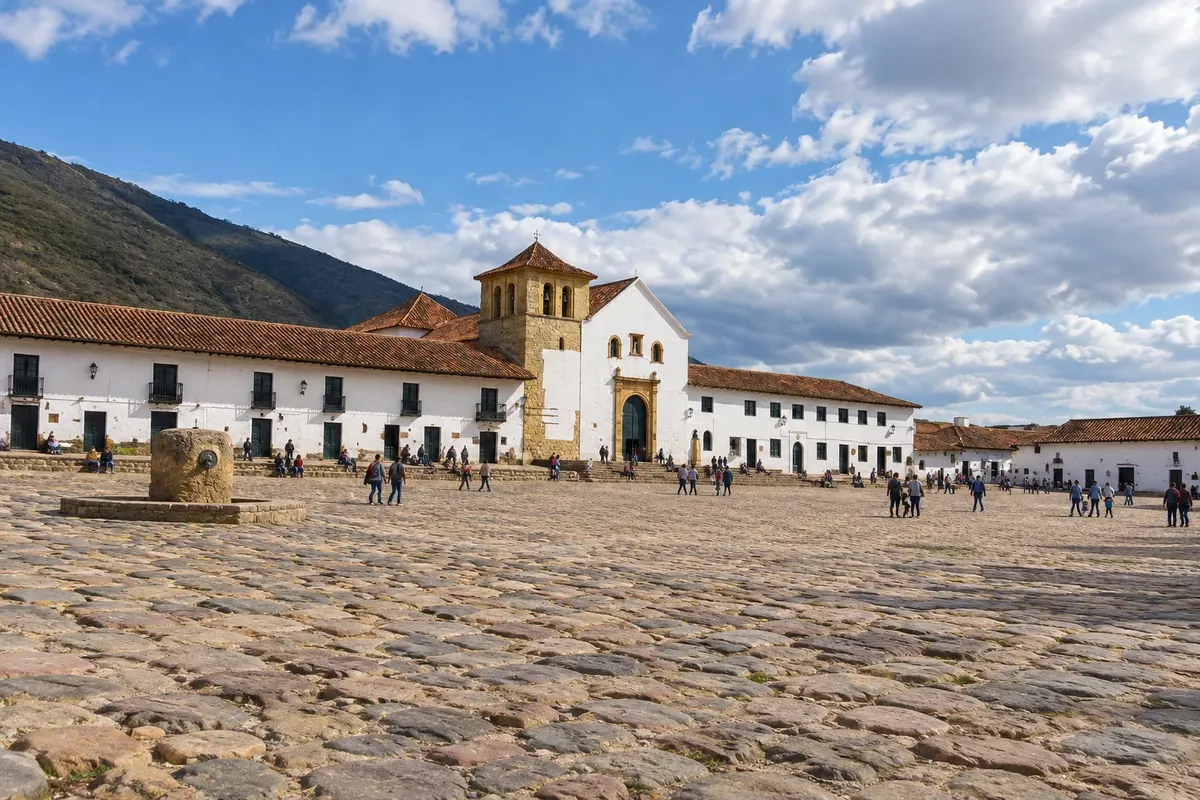
Plaza Mayor of Villa de Leyva
The stone square of about 14,000 square meters, one of the largest colonial squares in the Americas, surrounded by white houses, by the igreja do Rosário and with a mudéjar fountain in the center.
Antarktika
Boyacá · Kolumbija
Colonial town of Boyacá: one of the largest colonial squares in the Americas, cobblestone streets, white houses, marine fossils, the muisca observatory El Infiernito and the ceramics of Ráquira.
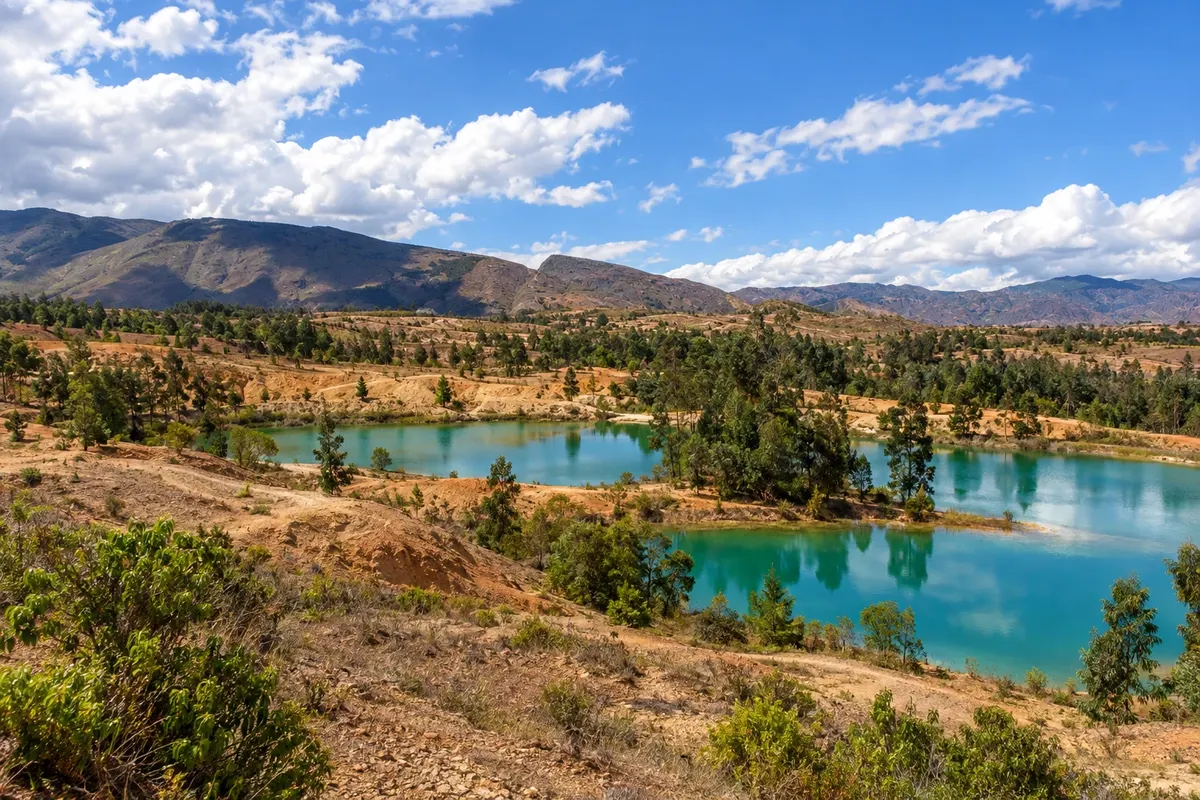
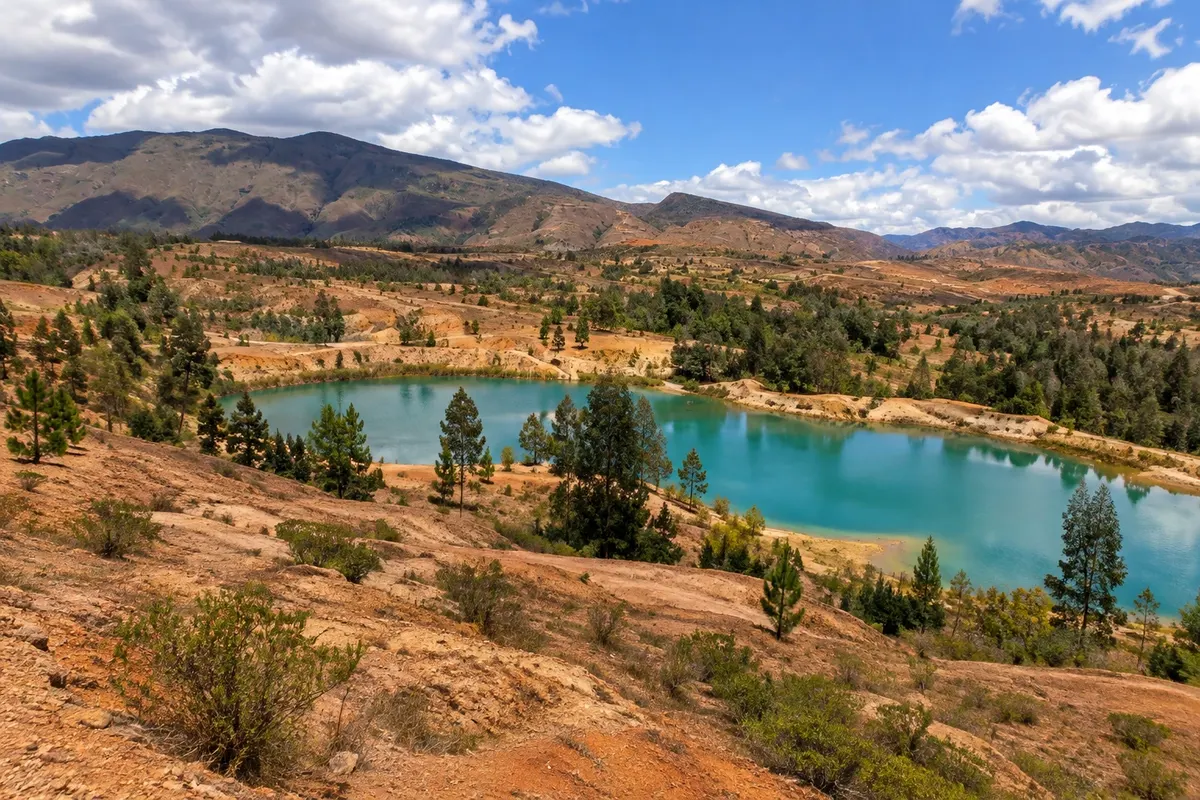
Na fotografiji: Pozos Azules
Illustrative images. The pictures in this guide are illustrations based on the real place, not photographs, and may differ from it.
Spoznajte kraj
Villa de Leyva is in the department of Boyacá, in the Colombian Andes, about 165 km from Bogotá and 40 km from Tunja, the department capital. It was founded in 1572 and has preserved the colonial layout almost intact: cobblestone streets, whitewashed houses with wooden doors and windows and clay roofs, around a Plaza Mayor of about 14,000 square meters, one of the largest colonial squares in the Americas. The town has been a national monument since 1954.
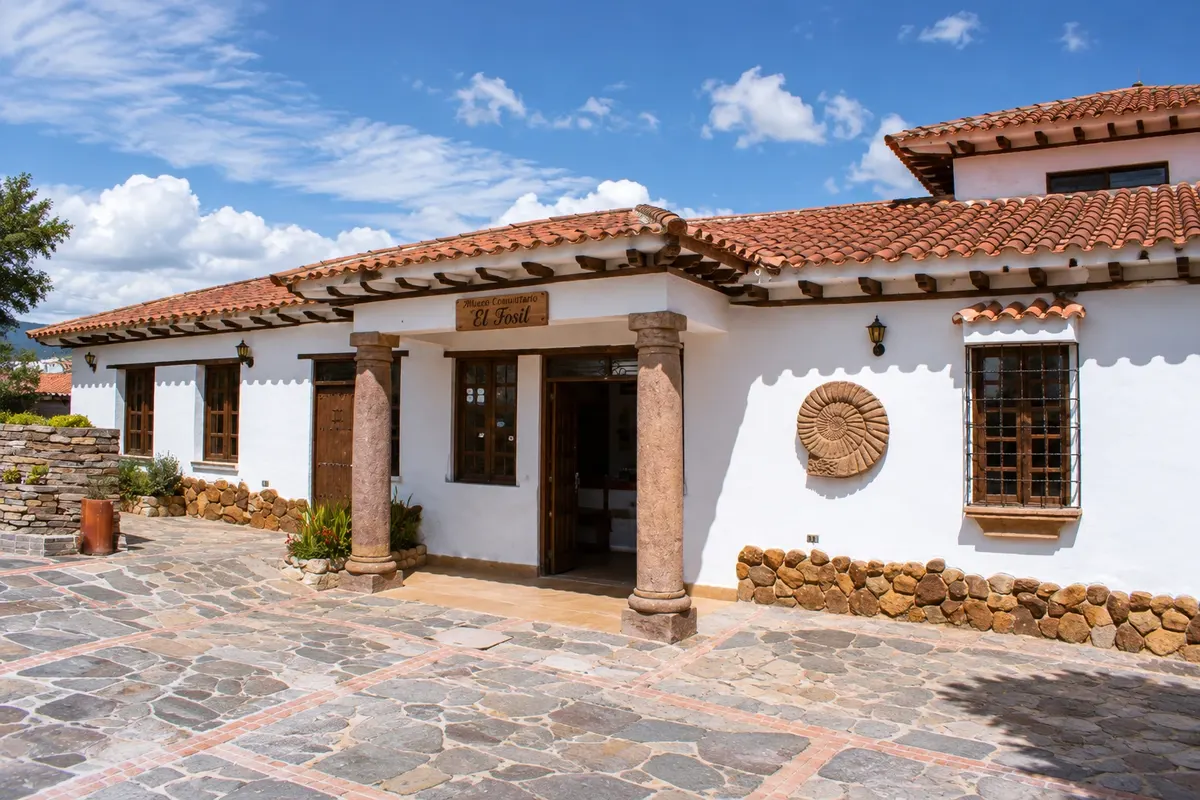
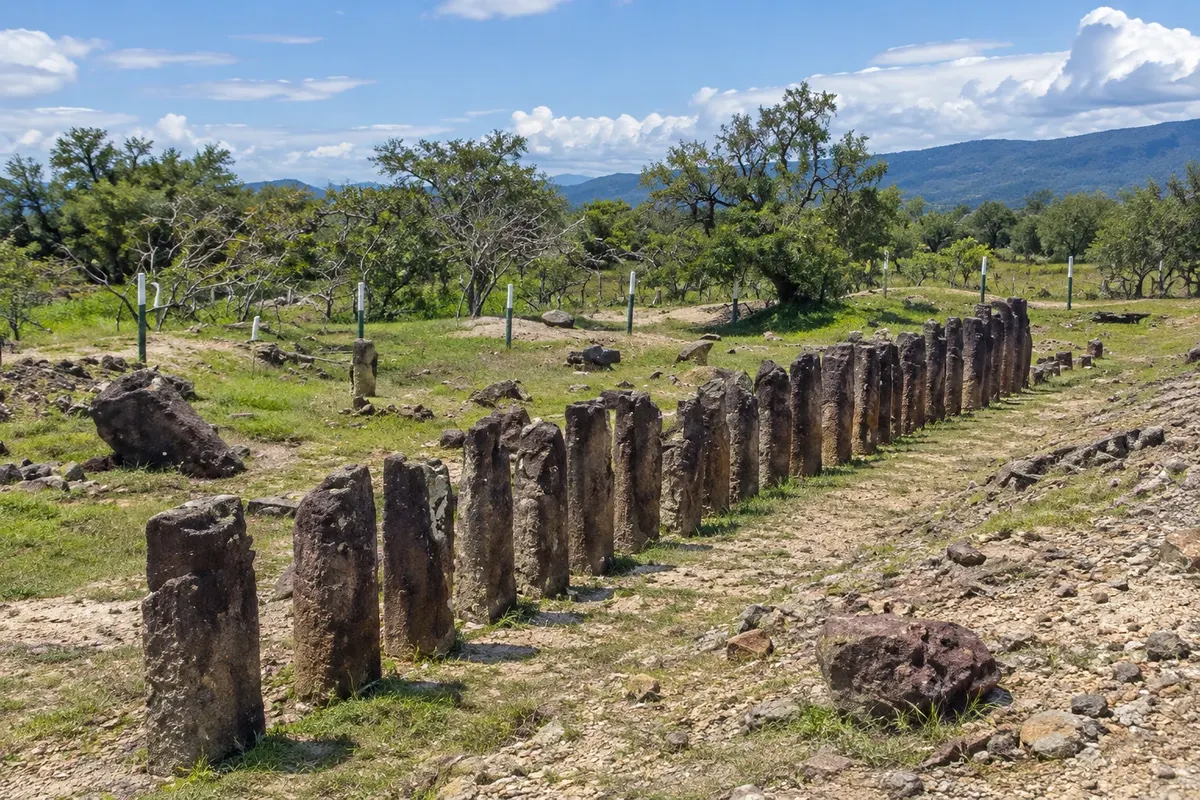
The surrounding region is dry, with reddish soil, and millions of years ago it was covered by the sea. That's why fossils appear everywhere: ammonites in the stones of buildings, paleontology museums and, a few kilometers away, the skeleton of a large marine reptile displayed at the site where it was found, in the El Fósil museum. Nearby, the archaeological park of Monquirá, known as El Infiernito, preserves stone columns erected by the muiscas.
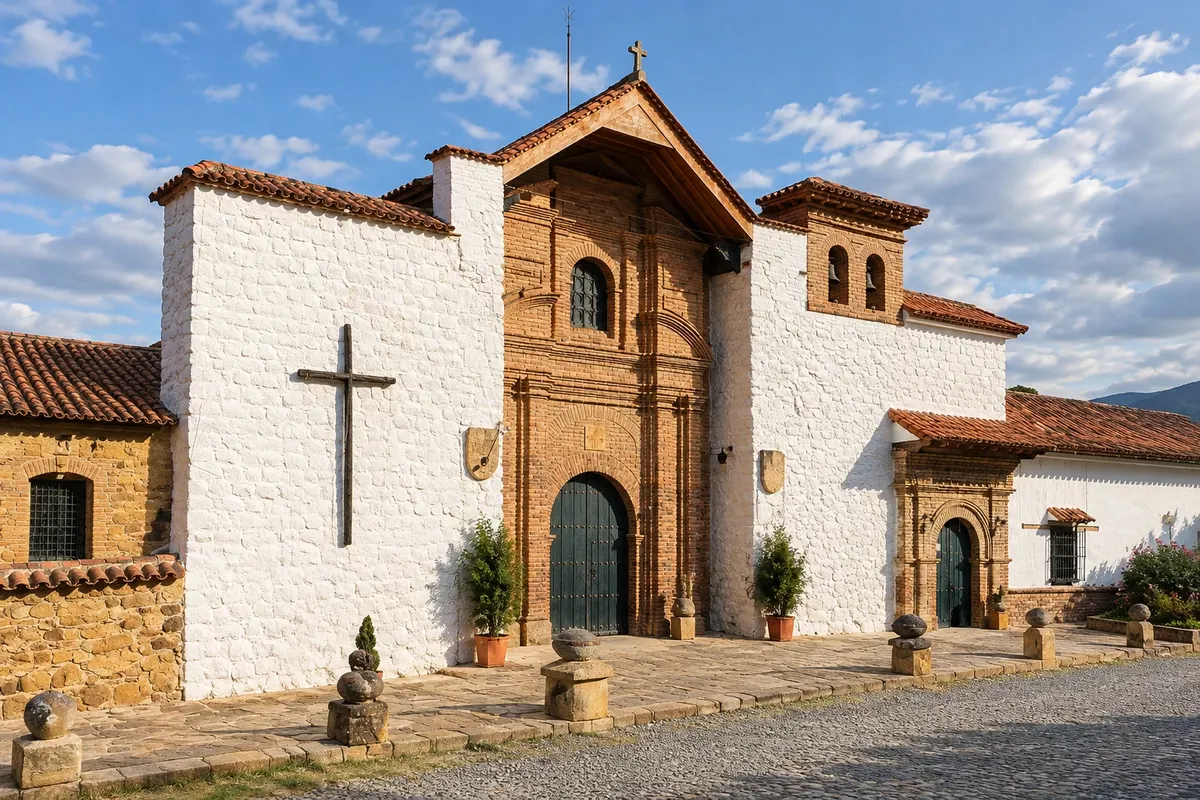
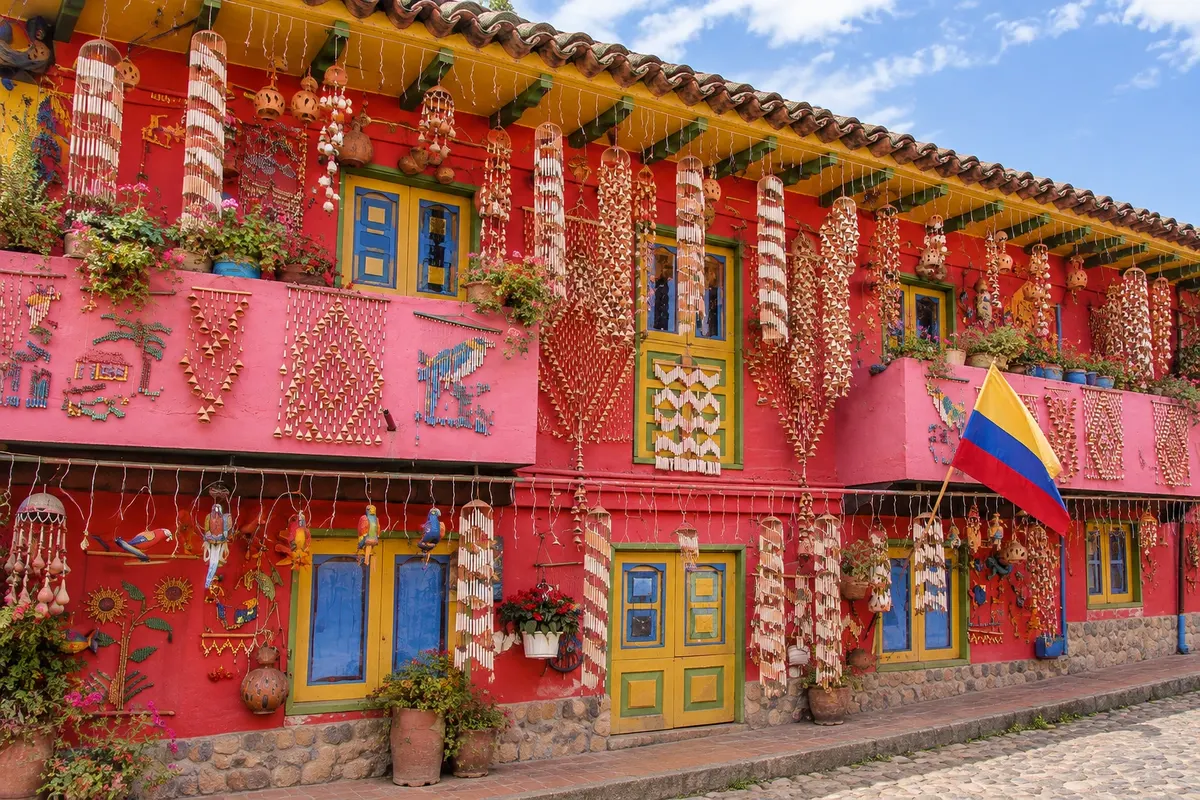
In the surroundings are also the Pozos Azules, lagoons of blue-green color, the Dominican convent of Santo Ecce Homo from the 17th century, and Ráquira, the pottery village, with colorful houses and clay workshops. Throughout the year the town hosts festivals, such as the kite festival in August and the lights festival in December.
There is no airport: arrival is by road, from Bogotá or Tunja.

V vodniku še ni nastanitev – Villa de Leyva.
kako do tja · koliko dni · načrt poti · vprašanja
✈ Aeropuerto Internacional El Dorado (BOG), kraj: Bogotá· 180 km do cilja (Villa de Leyva)
Confirm before purchasing. The gateway is Bogotá. From there, there are direct buses to Villa de Leyva, with a journey of about four hours, or buses to Tunja and another to Villa de Leyva. By car, the trip takes three to four hours, depending on the traffic leaving Bogotá.
Doživite kraj
The stone square of about 14,000 square meters, one of the largest colonial squares in the Americas, surrounded by white houses, by the igreja do Rosário and with a mudéjar fountain in the center.
The museum of religious art of the Carmelite convent, in the praça do Carmen, with paintings, sculptures and devotional objects from the colonial period.
The museum built around the skeleton of a large marine reptile, about 7 meters long, found by farmers in 1977 and displayed at the site where it was discovered.
Artificial lagoons of bluish-green color, about 2 km from Villa de Leyva, set in a dry landscape with an easy trail around them.
The muisca site known as El Infiernito, with about 30 large stone columns and more than a hundred smaller columns in rows, at least 2,200 years old.
Dominican convent founded in 1620, in a valley about 8 km from Villa de Leyva, with a stone cloister, colonial church and marine fossils visible in the floor slabs.
The town of Boyacá known as the craft capital of Colombia, with houses painted in bright colors and ceramic and clay workshops and shops, about 25 km from Villa de Leyva.
Pred odhodom
Villa de Leyva – Boyacá
Razdalje so približne. Pred potovanjem preverite lete in vozne rede avtobusov, vlakov ali ladij.
Confirm before buying. The gateway is Bogotá, about 165 km away. There are direct buses from Bogotá, with a journey of about four hours, and frequent buses from Tunja, 40 km away. The bus terminal is a few minutes' walk from the Plaza Mayor.
Two days: the first for the Plaza Mayor, the central streets and the Museo del Carmen; the second for El Fósil, El Infiernito and the Pozos Azules. With a third day, go to the convent of Ecce Homo and Ráquira.
From December to February and from June to August it usually rains less. The kite festival takes place in August, and the lights festival in December. Weekends and Colombian public holidays fill the town; during the week it is calmer. Nights are cold all year round.
The seasons shown are the most usual ones; nature doesn't always follow the calendar.
Not for the center, which is small and can be walked, with irregular cobblestone streets. For the surroundings, there are taxis and tours that combine El Fósil, El Infiernito, the Pozos Azules and Ecce Homo; bicycles are also rented for the closest stretches.
Predlog poti
Pot povezuje znamenitosti na tej strani. Za oglede boste imeli dovolj časa.
Start at the Plaza Mayor, with the church of Nossa Senhora do Rosário and the fountain in the center, and walk the cobblestone streets around it, with white houses and wooden balconies.
Head to the praça do Carmen and visit the Museo del Carmen, if it's open. Then look for ammonite fossils in the stones of the sidewalks and houses.
Return to Plaza Mayor in the late afternoon, when the low light illuminates the facades and the surrounding mountains.
Dine in one of the colonial houses in the center and try Boyacá cuisine, with soups, corn and trout. Bring a jacket: it gets cold at night.
Dan 1
Plaza Mayor, igreja do Rosário and the center's cobbled streets.
Praça do Carmen, Museo del Carmen and houses of the center.
Walk through Plaza Mayor in the low light.
Dinner in the historic center.
Dan 2
By taxi or bicycle, head west: the El Fósil museum, with the large marine reptile displayed where it was found, and the El Infiernito archaeological park nearby.
On the return, stop at the Pozos Azules, about 2 km from town, and do the trail around the blue-green lagoons.
By car or taxi, go to the convent of Santo Ecce Homo, about 8 km away, and see the cloister in the late-day light; check opening hours.
Return to the center and dine near Plaza Mayor.
Check before you go. Opening hours and days change, and places may close for renovations, holidays or events. This itinerary is a suggestion from Cidade Turismo, not a commitment: plan yours by checking directly with each place you intend to visit.
Pred odhodom
By direct bus, about four hours, or by bus to Tunja and another to Villa de Leyva. By car, the trip takes three to four hours, depending on traffic leaving Bogotá.
About 14,000 square meters, entirely paved with stones. It's one of the largest colonial squares in the Americas.
Over 100 million years ago the region was a seabed. That's why ammonites and other marine fossils appear in the stones and fields around, and there are paleontology museums in the town and nearby.
The most popular outings are the El Fósil museum, the El Infiernito archaeological park, the Pozos Azules, the convent of Santo Ecce Homo and Ráquira, the pottery village.
About 2,100 meters. Days tend to be sunny and nights cold.
Pred odhodom
Z nekaj načrtovanja boste imeli več časa za uživanje na poti.
From December to February and from June to August it usually rains less. In August the winds bring the kite festival; in December the lights festival fills the town. Weekends, Colombian public holidays and Holy Week are the busiest times; during the week the town is quieter. Bring a jacket for the nights at any time of year.
The seasons shown are the most usual ones; nature doesn't always follow the calendar.
Two days: one for the town, the Plaza Mayor and the museums, and another for El Fósil, El Infiernito, the Pozos Azules and the convent of Ecce Homo. With three days, include Ráquira and a hike in the surroundings. As a day trip from Bogotá, the day becomes long because of the road.
The historic center, around the Plaza Mayor and the Plaza del Carmen, leaves everything within walking distance and has inns in colonial houses. In the outskirts, on the roads leaving the town, there are larger accommodations with gardens and valley views, quieter, but they require a car or taxi to get to the center.
Odnesite svoje odpadke, upoštevajte oznake in podprite lokalne ponudnike. V naravi upoštevajte navodila za obiskovalce.
Odgovori na vaša vprašanja
Two days allow you to see the town and the surroundings, such as El Fósil, El Infiernito and the Pozos Azules. With three, you can include Ráquira and the convent of Ecce Homo at a relaxed pace.
It is possible, but the road takes six to eight hours round trip. Ideally you should spend at least one night in town.
The town is at about 2,100 meters altitude. Days are usually sunny and nights cold; the average is around 18 degrees. Bring a jacket and sunscreen.
Not for the center, which can be walked. For El Fósil, El Infiernito, the Pozos Azules, Ecce Homo and Ráquira, use taxi, car, bicycle or the tours sold in town.
Več kot vodnik