Cartagena Historic Center
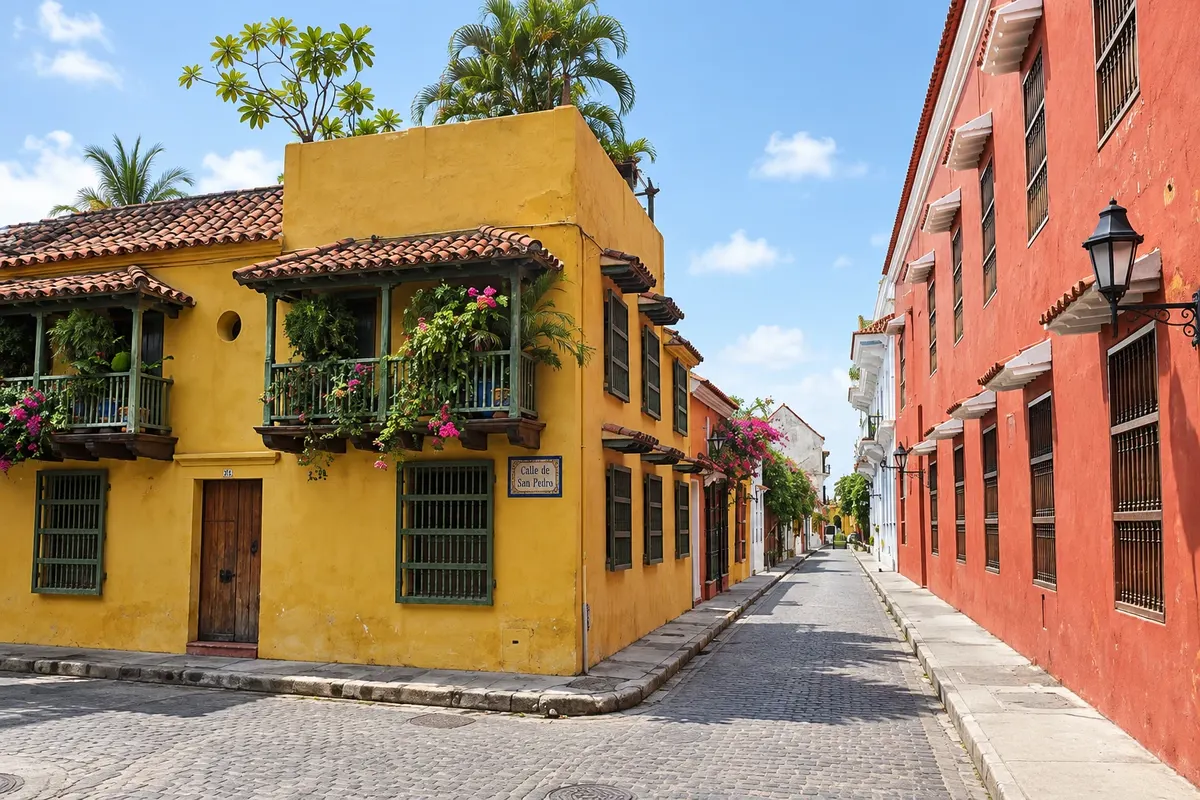
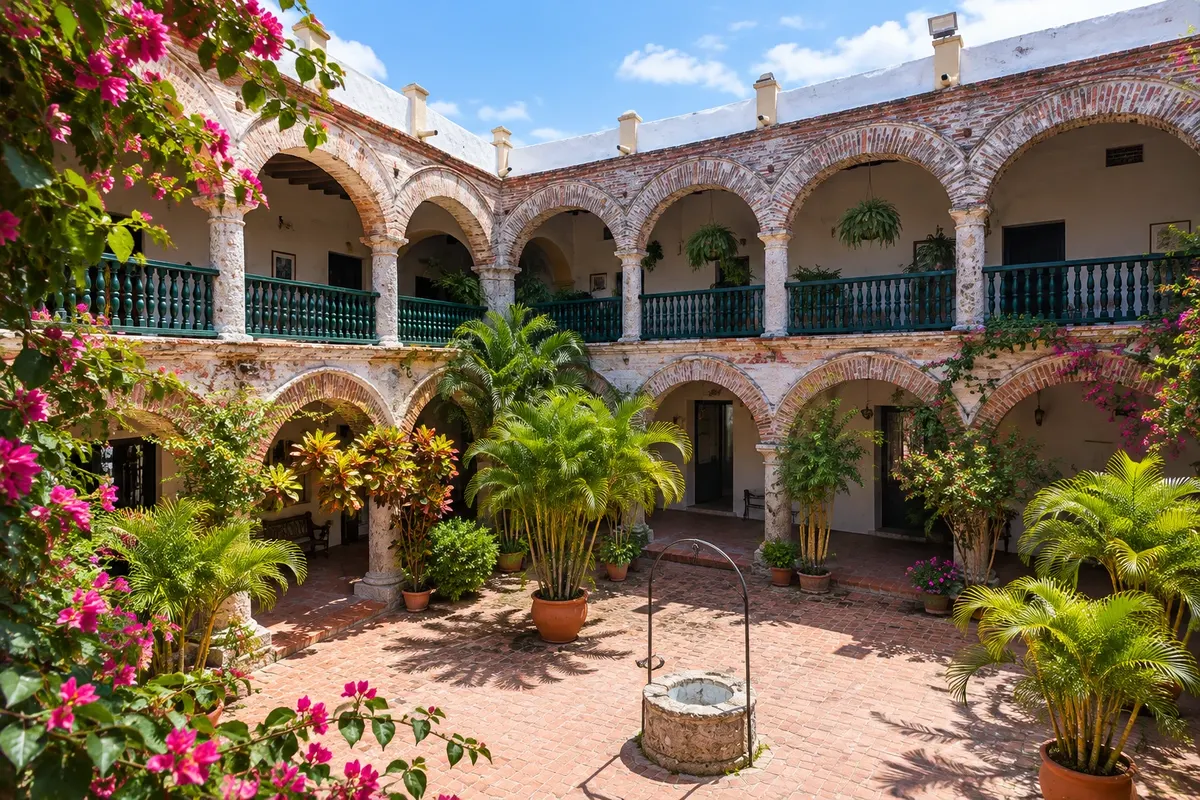
The city within the walls: squares, churches, convents and colorful colonial mansions with wooden balconies and flowers, in an area you explore on foot. UNESCO World Heritage Site.
Antarktika
Bolívar · Kolumbija
The walled city of the Colombian Caribbean: streets of colorful colonial houses and flowered balconies, bastions over the sea, the Castillo San Felipe, the Getsemaní neighborhood and the islands of Rosário an hour by boat.
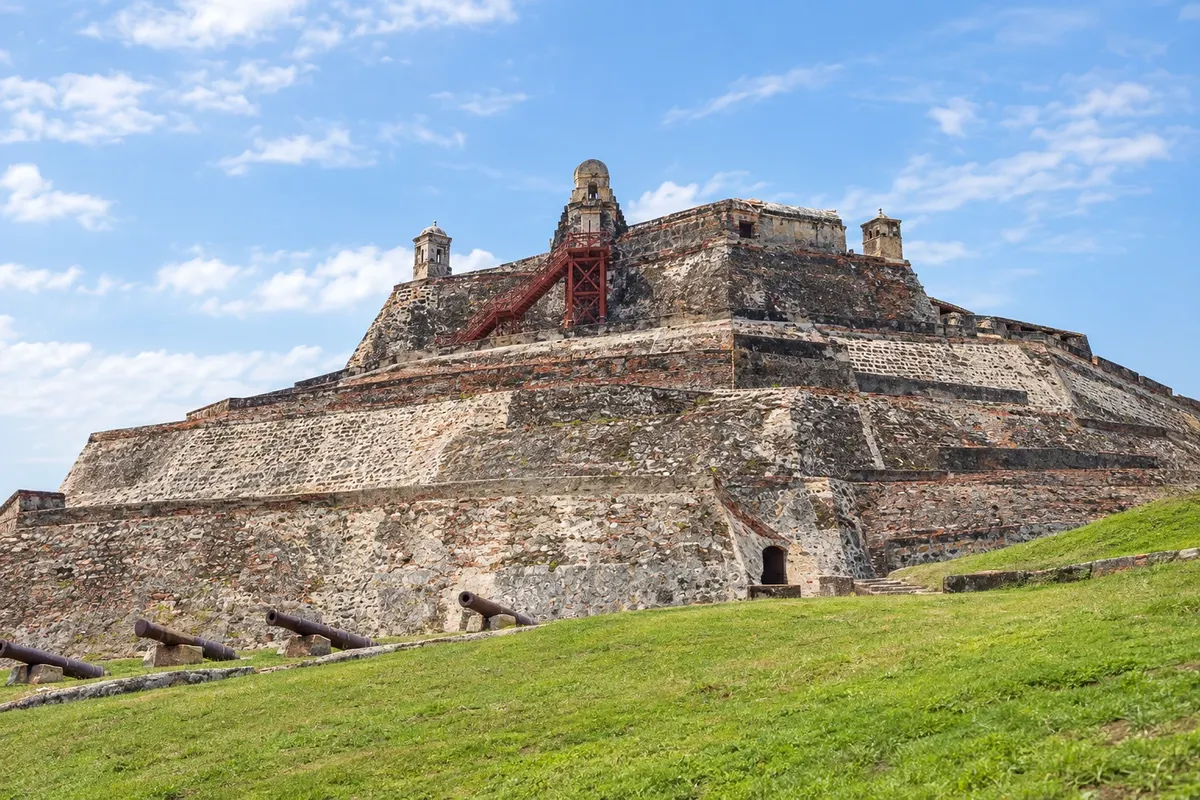
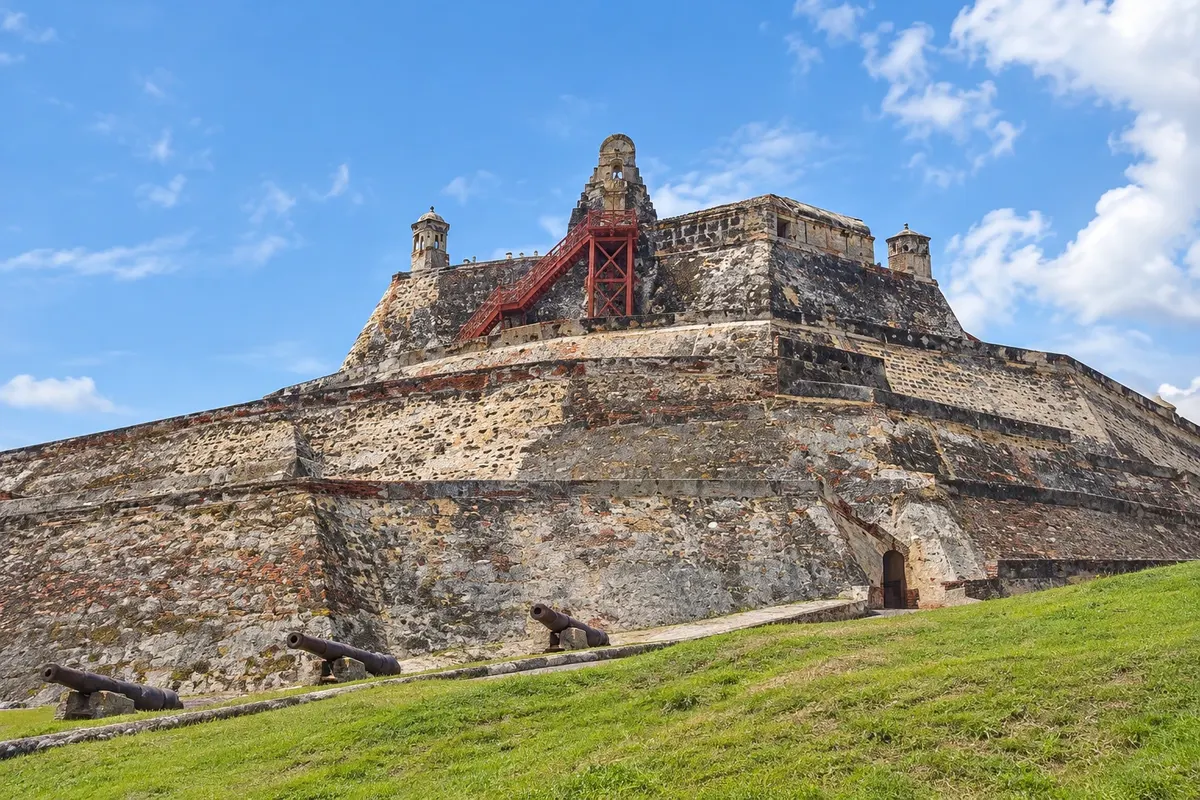
Na fotografiji: Castillo San Felipe de Barajas
Illustrative images. The pictures in this guide are illustrations based on the real place, not photographs, and may differ from it.
Spoznajte kraj
Cartagena de Indias lies on the coast of the Colombian Caribbean, in a bay protected by islands and peninsulas. Founded in 1533, it was one of the main ports of the Spanish empire in the Americas: silver and gold from the continent left through it, and goods and enslaved people brought from Africa arrived. To defend against pirates and enemy fleets, the city was surrounded by walls and forts over two centuries. The port, the fortifications and the colonial ensemble are a UNESCO World Heritage Site since 1984.
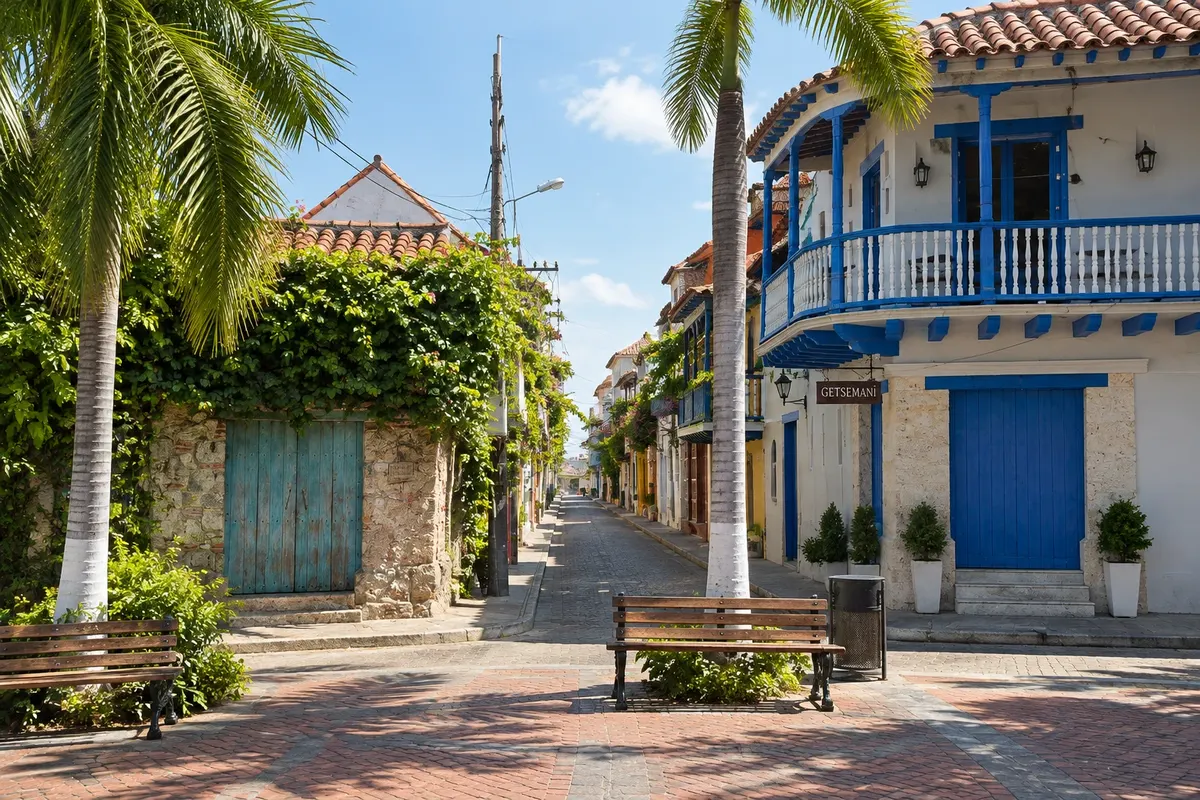
The historic center, inside the walls, is the part you visit on foot: squares such as Santo Domingo, Bolívar and San Diego, churches and convents, two‑story manor houses painted yellow, orange and blue, with wooden balconies covered in bougainvillea. The main entrance is the Torre del Reloj. Outside the walls, Getsemaní, a former artisans' neighborhood, has murals, small plazas and nightlife; and on the San Lázaro hill stands the Castillo San Felipe de Barajas, the fortress that defended the city by land.
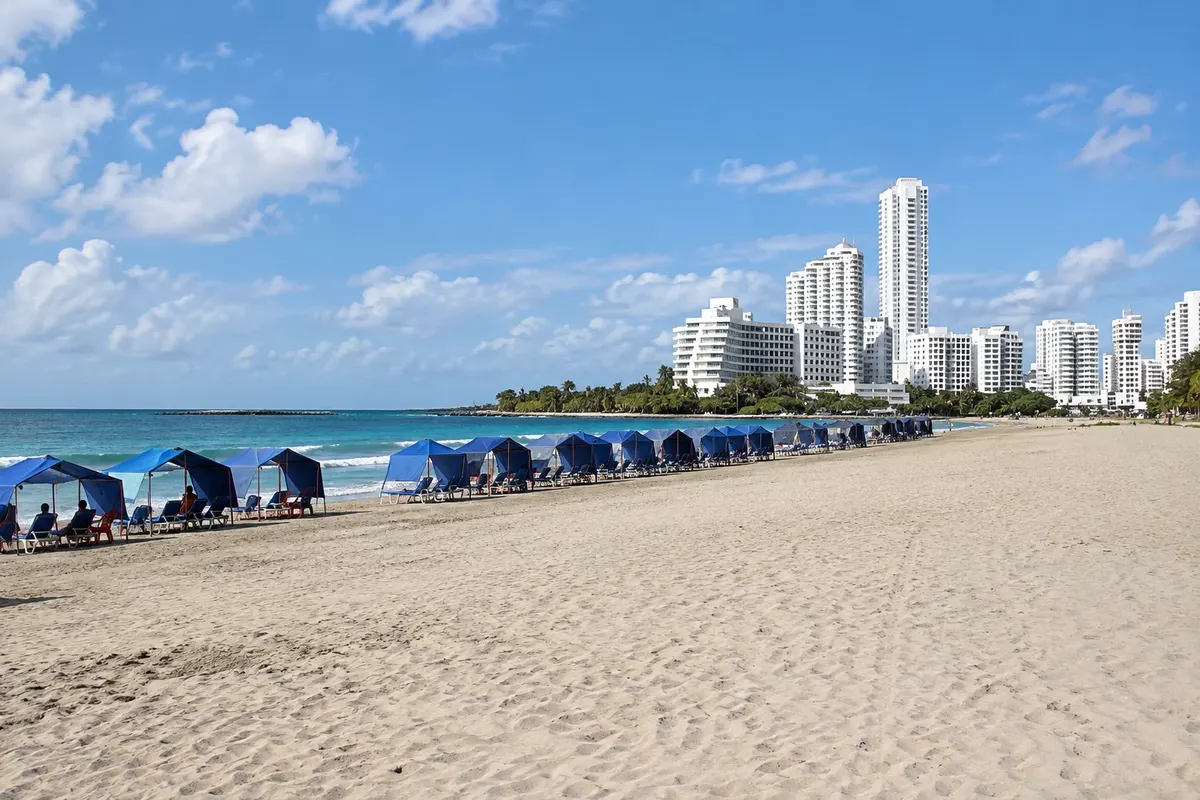
The modern city grows to the south, along the Bocagrande peninsula, with tall buildings and urban beaches. For clear water, head out by boat to the archipelago of Islas del Rosario, a national park area with coral reefs, or go by road to Playa Blanca on the island of Barú. From the top of the Cerro de la Popa, the 17th‑century convent overlooks the whole bay.
The climate is warm and humid year‑round, with a sea breeze in the late afternoon.

V vodniku še ni nastanitev – Cartagena.
kako do tja · koliko dni · načrt poti · vprašanja
✈ Aeropuerto Internacional Rafael Núñez (CTG), kraj: Crespo· 3 km do cilja (Cartagena)
Check before buying. The Aeropuerto Internacional Rafael Núñez is about 3 km from the historic center, in the Crespo neighborhood; by taxi the trip takes 10 to 20 minutes. Flights from Bogotá and Medellín are short. Santa Marta is about 230 km by road via Barranquilla, with buses and vans.
Doživite kraj
The city within the walls: squares, churches, convents and colorful colonial mansions with wooden balconies and flowers, in an area you explore on foot. UNESCO World Heritage Site.
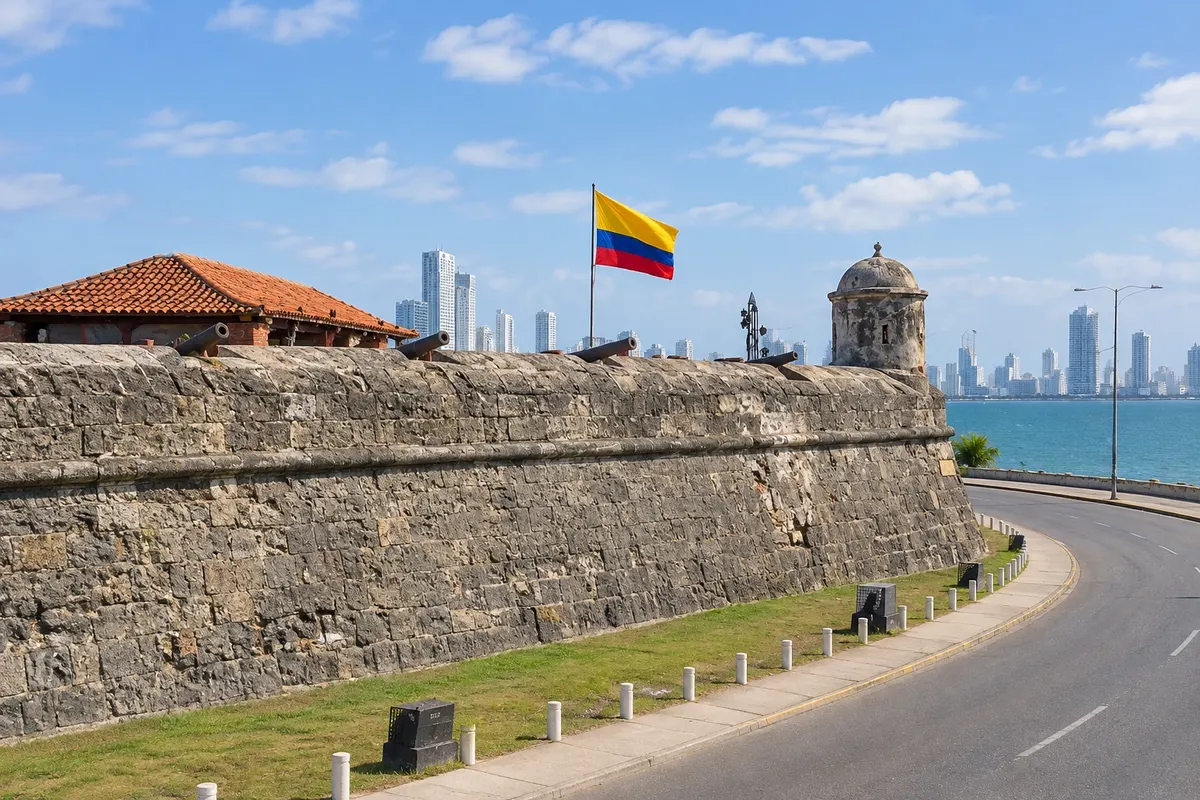
About 11 km of coral stone walls with bastions, built between the 16th and 18th centuries to protect the port. You can walk on top of them, with views of the sea and the city center.
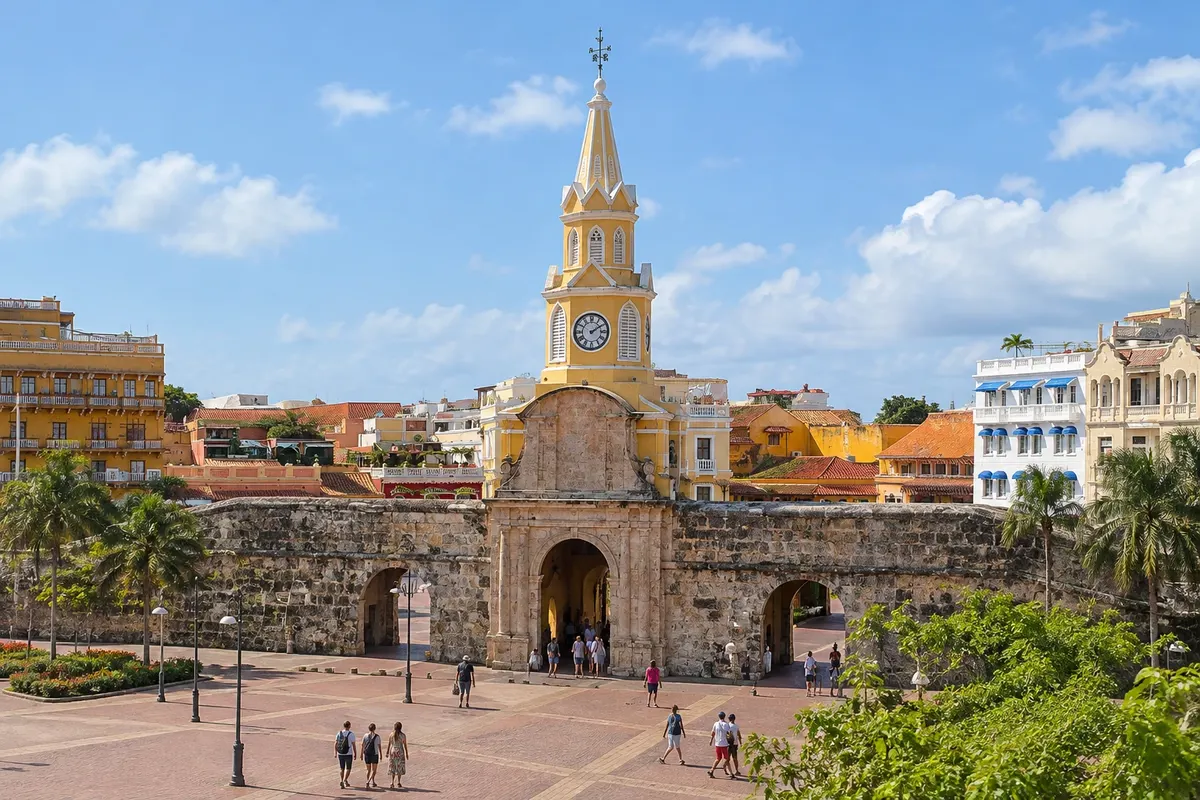
The main entrance to the walled city: a three-arched gateway in the wall, with the clock tower added at the end of the 19th century. On one side is the Plaza de los Coches; on the other, the route to Getsemaní.
The large Spanish fortress on the hill of San Lázaro, with ramps, bastions and tunnels, built from 1639 to protect Cartagena by land. Views of the city and the bay.
The old neighborhood of artisans and workers outside the walls, today featuring murals, little flags in the streets, the Plaza de la Trinidad and the music from the bars at night.
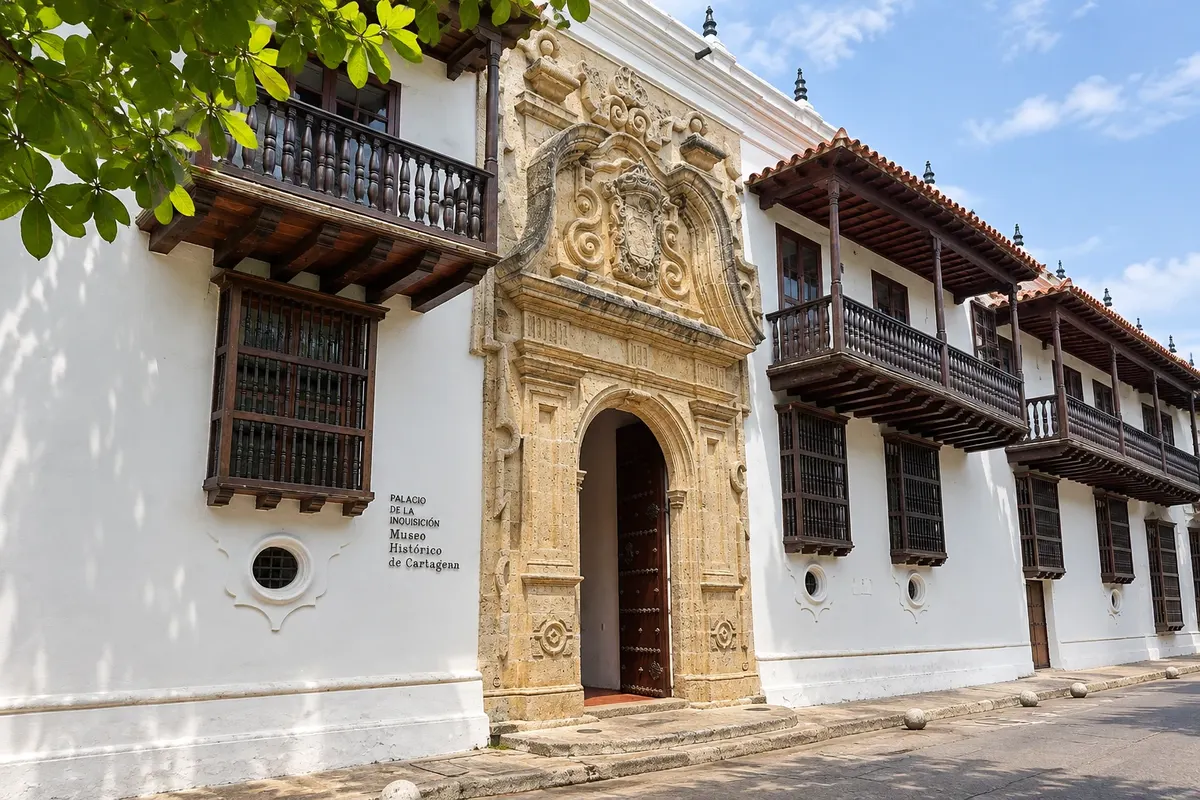
The baroque palace of the Tribunal of the Inquisition on Plaza de Bolívar, completed in 1770, is today home to the Museo Histórico de Cartagena, presenting the city's history and the Inquisition in the colonies.
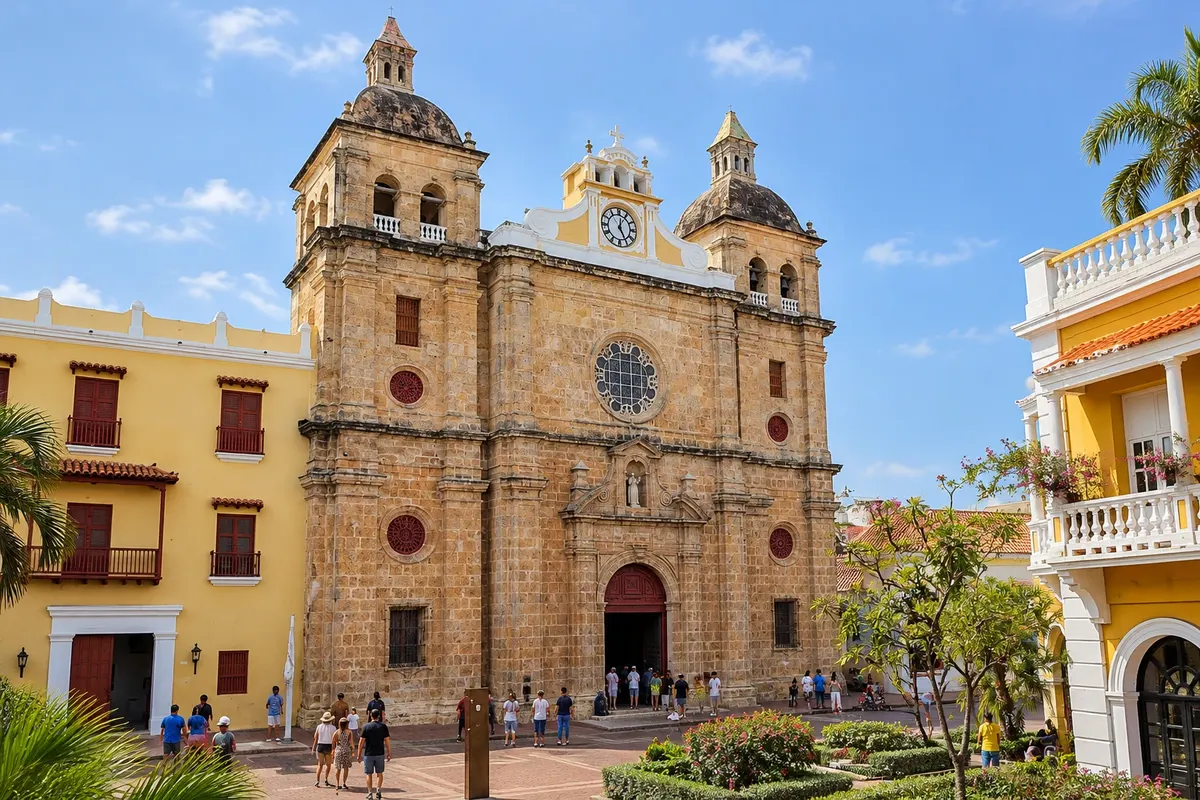
Jesuit church and convent from the 17th and 18th centuries beside the wall, dedicated to Pedro Claver, the priest who ministered to the enslaved Africans arriving at the port. His remains lie beneath the altar.
The 17th‑century Augustinian convent on the summit of Cerro de la Popa, about 150 meters high, with a flowered cloister, the chapel of the Virgen de la Candelaria and panoramic views over all of Cartagena and the bay.
Cartagena’s modern peninsula, with high‑rise buildings, hotels, restaurants and urban beaches facing the Caribbean, just minutes from the historic center.
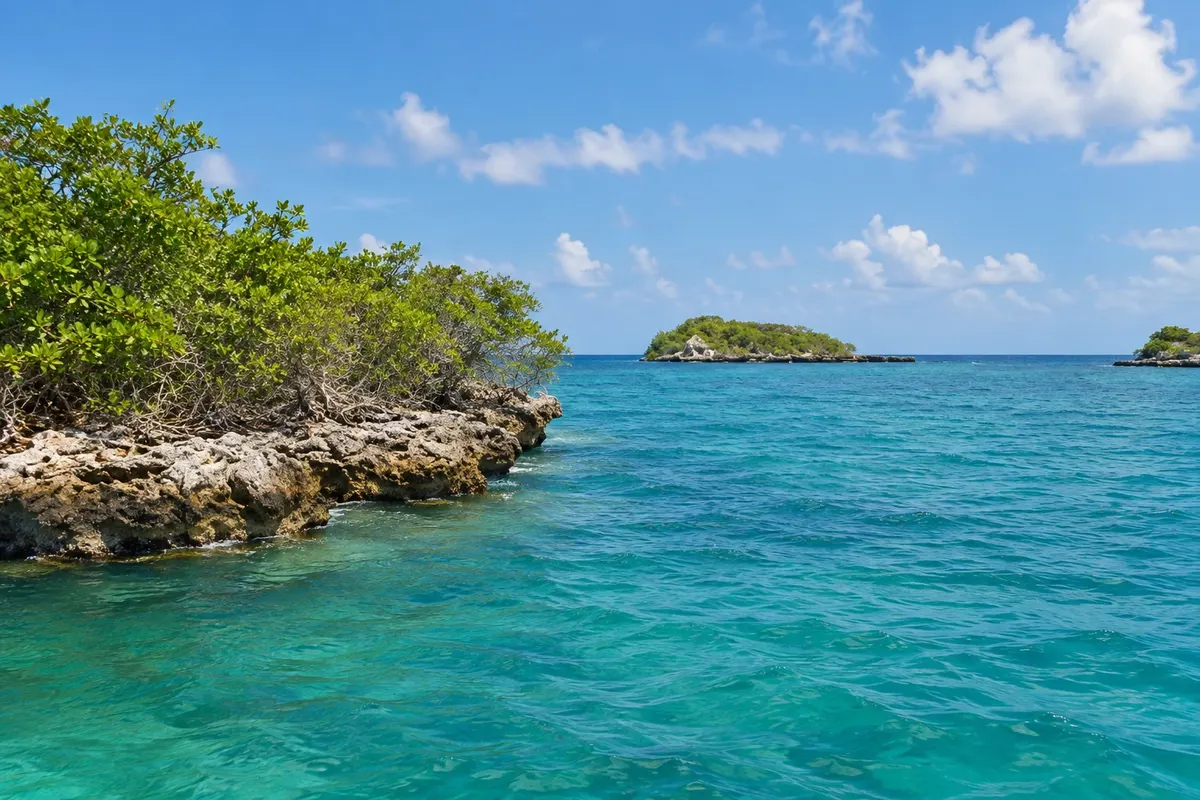
Archipelago of low islands and coral reefs about an hour by boat from Cartagena, inside the Parque Nacional Corales del Rosario y San Bernardo, with clear water for swimming and snorkeling.
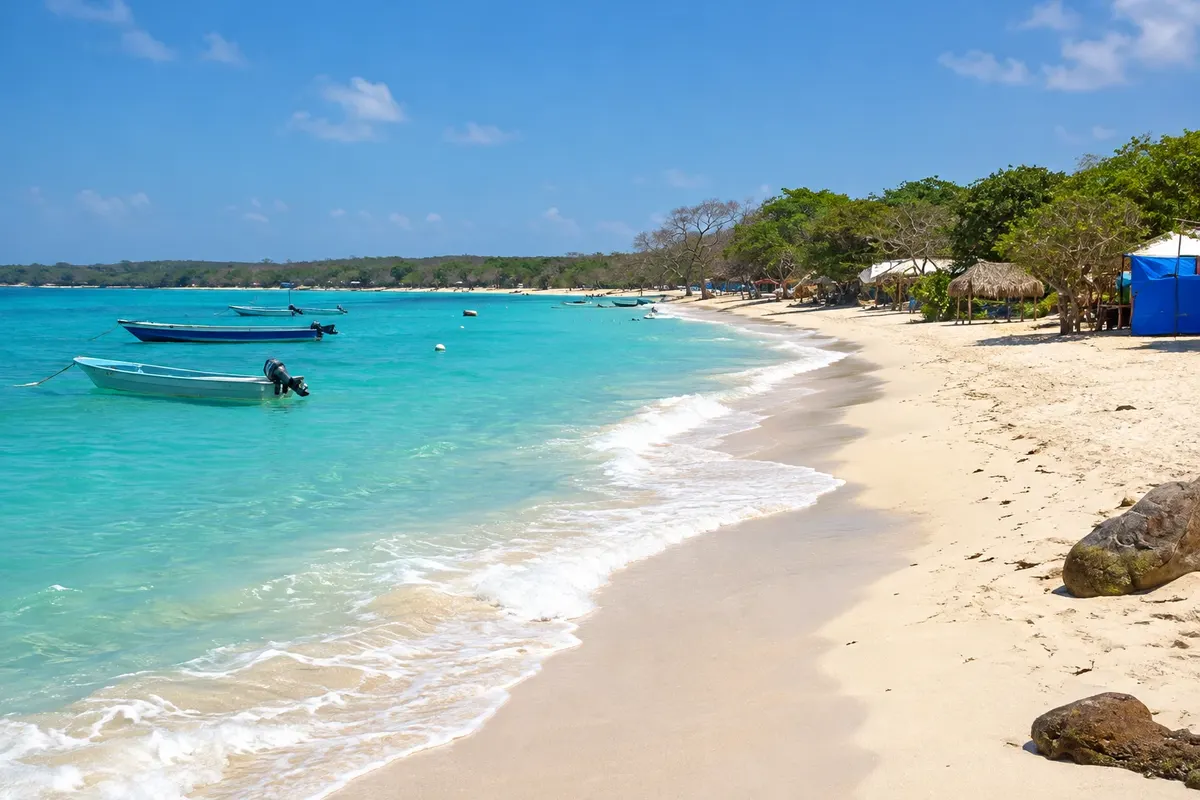
White-sand beach with light-blue water on the island of Barú, about an hour from Cartagena by boat or road. Busy with stalls and activity during the day, calm after the boats leave.
Pred odhodom
Cartagena – Bolívar Capital
Razdalje so približne. Pred potovanjem preverite lete in vozne rede avtobusov, vlakov ali ladij.
Check before booking. The Aeropuerto Internacional Rafael Núñez is about 3 km from the historic center; a taxi takes 10 to 20 minutes. From Bogotá and Medellín the flight takes between one hour and one and a half hours. Santa Marta is about 230 km by road via Barranquilla, with buses and shared vans.
Three days cover the historic center, Getsemaní, the Castillo San Felipe and a day by boat to the islands. With four or five days you can include the Cerro de la Popa, an afternoon in Bocagrande and more beach days.
The heat is constant, around 30 °C. From December to April it usually rains less and it is windier, with rougher seas on the trip to the islands; this is the busiest season. From May to November there are more showers, stronger from September to November, and the sea is usually calmer.
The seasons shown are the most usual ones; nature doesn't always follow the calendar.
No. The historic center and Getsemaní are walkable; taxis cover the Castillo San Felipe, La Popa, Bocagrande and the airport. The islands are visited by boat, and Playa Blanca by boat, van or taxi. Driving in the center is difficult, with narrow streets and little parking.
Predlog poti
Pot povezuje znamenitosti na tej strani. Za oglede boste imeli dovolj časa.
Enter through the Torre del Reloj and walk through the plazas of la Aduana, San Pedro Claver, Bolívar and Santo Domingo, stopping at the Palacio de la Inquisición.
After lunch and a break from the heat, take a taxi to Castillo San Felipe near closing time, when the sun is lower.
Return to the center and go up to the Baluarte de Santo Domingo to watch the sun set over the Caribbean.
Have dinner in the center or in Getsemaní and finish at Plaza de la Trinidad, with street food and music.
Dan 1
Torre del Reloj, Portal de los Dulces, Iglesia de San Pedro Claver and the central squares.
Palacio de la Inquisición and Museo del Oro Zenú during the heat of the day; later, Plaza de San Diego and Las Bóvedas.
Walk along the wall from the Baluarte de Santo Domingo to San Francisco Javier in the late afternoon.
Plaza de la Trinidad and salsa and champeta bars.
Dan 2
Depart from Muelle de La Bodeguita for the boat trip to the islands, with swimming and snorkeling.
Lunch of fried fish and coconut rice and an afternoon at Playa Blanca, in Barú, if it's on your itinerary.
Return by boat to the pier and rest at the hotel.
Outdoor dinner at Plaza de Santo Domingo, with the church lit up.
Check before you go. Opening hours and days change, and places may close for renovations, holidays or events. This itinerary is a suggestion from Cidade Turismo, not a commitment: plan yours by checking directly with each place you intend to visit.
Pred odhodom
By taxi, from the rank at the terminal exit. It's about 3 km and 10 to 20 minutes.
Arepa de huevo, carimañolas, fried fish with coconut rice and patacones, posta negra cartagenera, shrimp ceviche, coconut lemonade and the sweets from Portal de los Dulces.
From December to April it rains less, but it's high season and the sea is rougher on the route to the islands. From May to November there are more showers and fewer crowds.
In the historic center, to be within walking distance; in Getsemaní, for bars and guesthouses; in Bocagrande, for a beach hotel, a few minutes from the center.
Yes, to get the clear-water sea that the city doesn't have. It's a full day by boat, with stops for swimming and snorkeling.
Pred odhodom
Z nekaj načrtovanja boste imeli več časa za uživanje na poti.
It's hot year‑round, around 30 °C during the day. From December to April it usually rains less and the trade winds cool the afternoons; this is also the busiest period, with year‑end holidays and Holy Week. From May to November there are more downpours, typically stronger from September to November. In November the city celebrates independence with parades and street festivities.
The seasons shown are the most usual ones; nature doesn't always follow the calendar.
Three days are enough for the historic center, Getsemaní, the Castillo San Felipe and a day trip by boat to Islas del Rosario or Playa Blanca. With four or five days you can include the Cerro de la Popa, an afternoon in Bocagrande and relaxed beach days. Those continuing to Santa Marta can go by road.
The historic center, inside the walls, has hotels in colonial houses and is within walking distance of everything. Getsemaní, just outside the walls, has guesthouses and hostels and is the neighborhood for bars and music. Bocagrande and El Laguito, on the southern peninsula, concentrate large seafront hotels, with a few minutes by taxi to the center. For quieter beaches there are hotels on the islands and on Barú.
Odnesite svoje odpadke, upoštevajte oznake in podprite lokalne ponudnike. V naravi upoštevajte navodila za obiskovalce.
Odgovori na vaša vprašanja
Three days cover the historic center, Getsemaní, the Castillo San Felipe and a boat trip to the islands. With four or five days there's time left for the Cerro de la Popa and beach days.
Bocagrande's beaches are urban, with dark sand and rougher seas in some months. For clear water, go to Islas del Rosario or to Playa Blanca on Barú.
Yes, around 30 °C year‑round, with high humidity. Plan walks for early morning and late afternoon, use sunscreen and drink water.
Yes. It's about 230 km, four to five hours, passing through Barranquilla. There are buses and shared vans that depart from hotels and the terminal.
No. The center and Getsemaní are walkable, and taxis cover the Castillo San Felipe, La Popa and Bocagrande. The islands are visited by boat, and Playa Blanca by boat, bus or taxi.
Več kot vodnik