Plaza de Armas
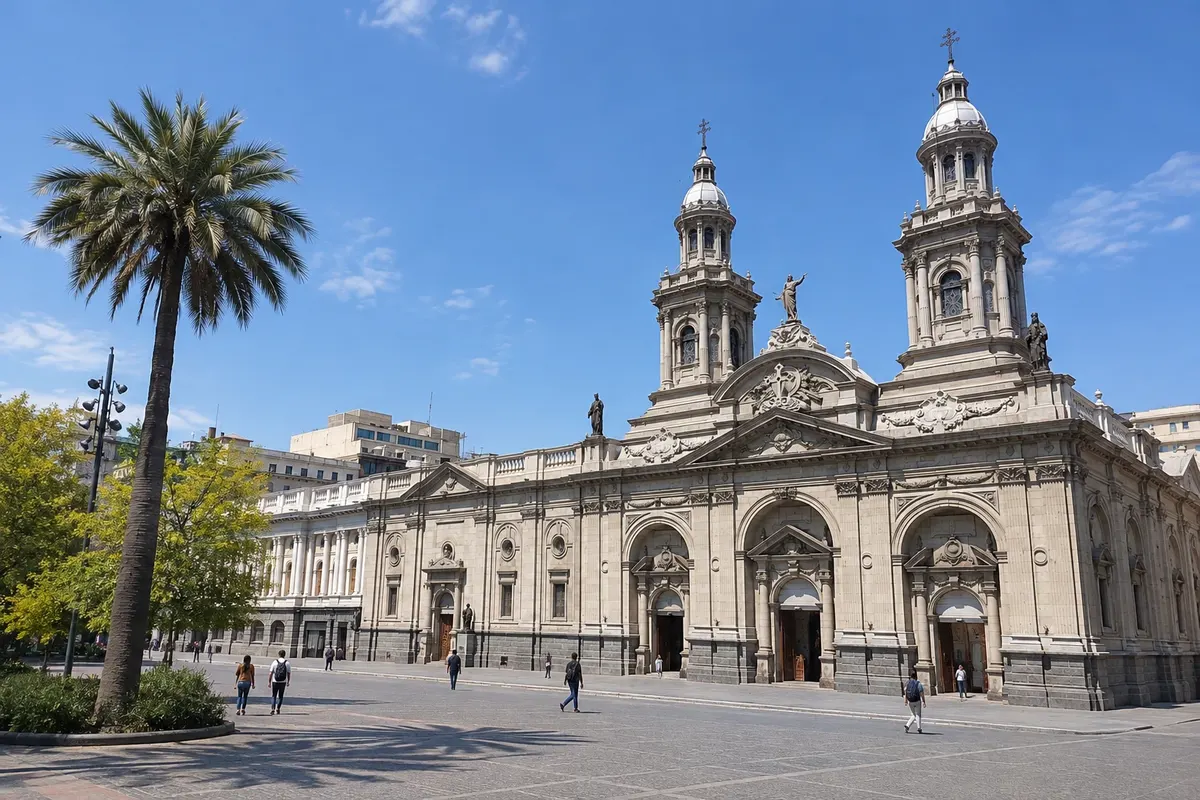
Santiago's zero point, laid out in 1541. Around it are the Catedral Metropolitana, the Correo Central and the municipal headquarters; in the middle, palm trees, benches, street painters and chess players.
Antarktika
Metropolitana de Santiago · Čile
The capital of Chile between the mountain range and the Maipo valley: historic center, hills with viewpoints, bohemian neighborhoods, wineries and snow less than two hours away.
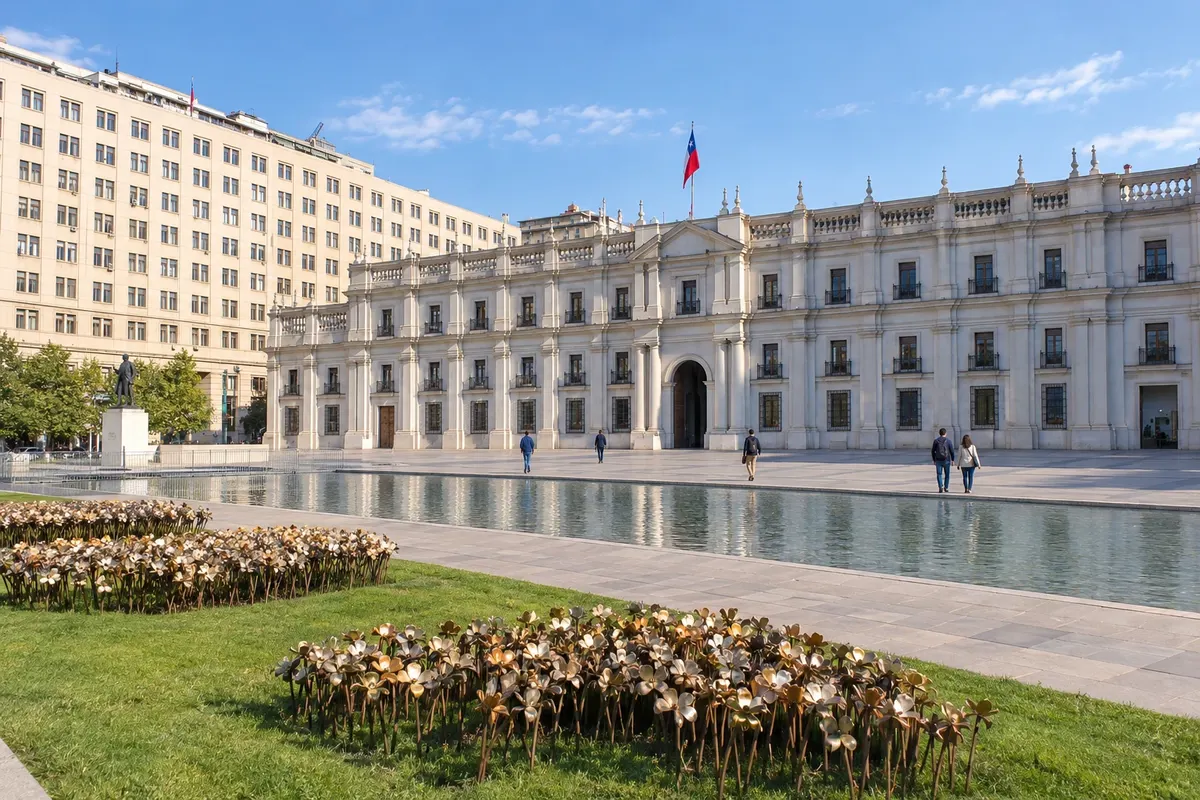
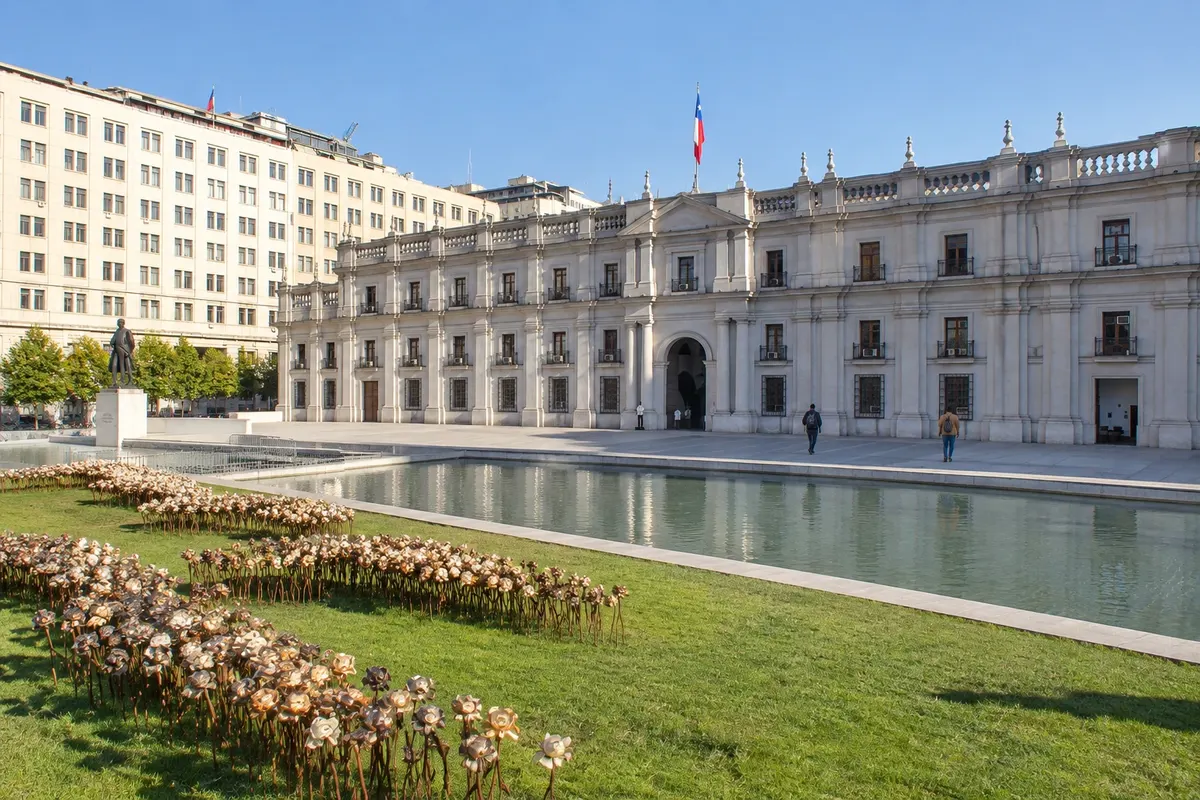
Na fotografiji: Palacio de La Moneda, Santiago
Illustrative images. The pictures in this guide are illustrations based on the real place, not photographs, and may differ from it.
Spoznajte kraj
Santiago sits in a flat valley in central Chile, with the Andes on one side and the Coastal Range on the other. The city has more than six million inhabitants, an extensive metro system and neighborhoods with very different personalities.
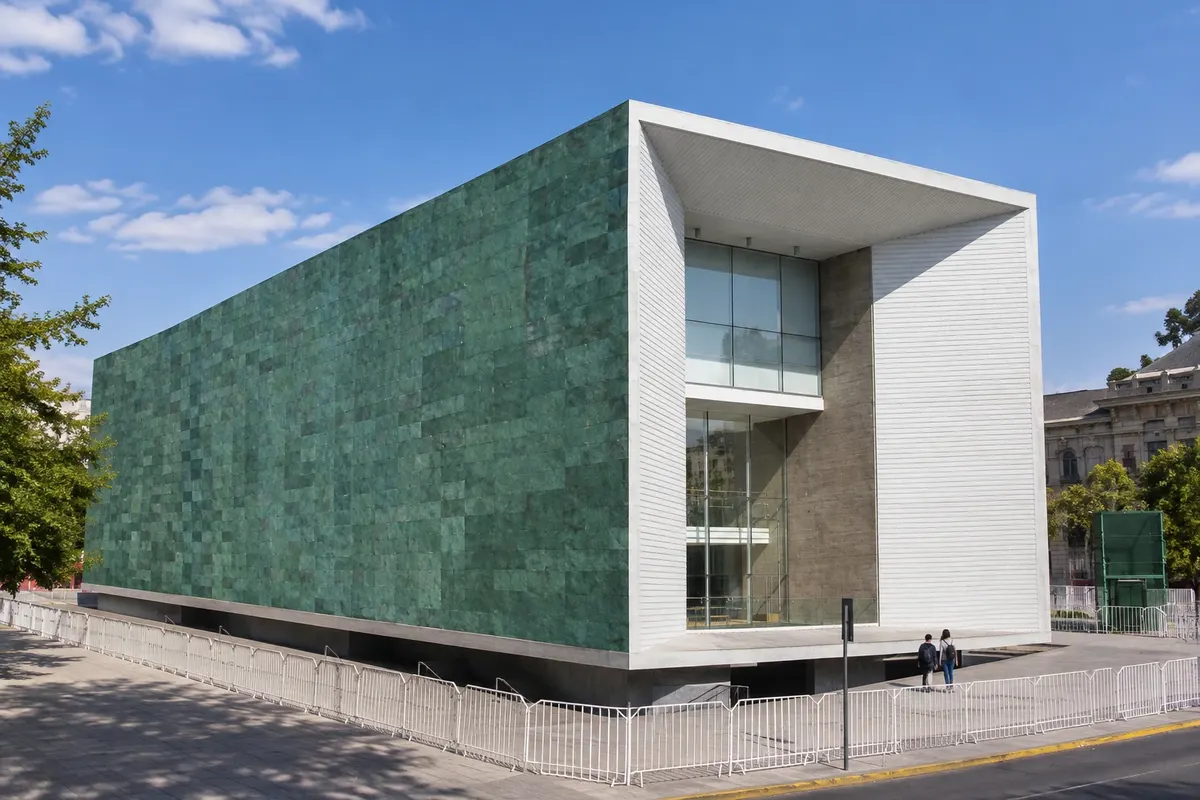
The historic center revolves around the Plaza de Armas, with the Catedral Metropolitana, and the Palacio de La Moneda, the seat of government. A few blocks away are the Mercado Central, with its seafood restaurants, and La Vega Central, the large fruit and vegetable market. The main museums are the Museo Chileno de Arte Precolombino, the Museo Nacional de Bellas Artes in Parque Forestal, and the Museo de la Memoria y los Derechos Humanos, about the years of the dictatorship.
Two hills serve as viewpoints: Cerro Santa Lucía, in the heart of the center, and Cerro San Cristóbal in Parque Metropolitano, with a funicular and cable cars. At its foot, Barrio Bellavista houses La Chascona, Pablo Neruda’s home. Lastarria and Barrio Italia bring together cafés, bookstores and design shops. Cementerio General tells the country’s history in mausoleums, and the Sky Costanera observation deck shows everything from above.
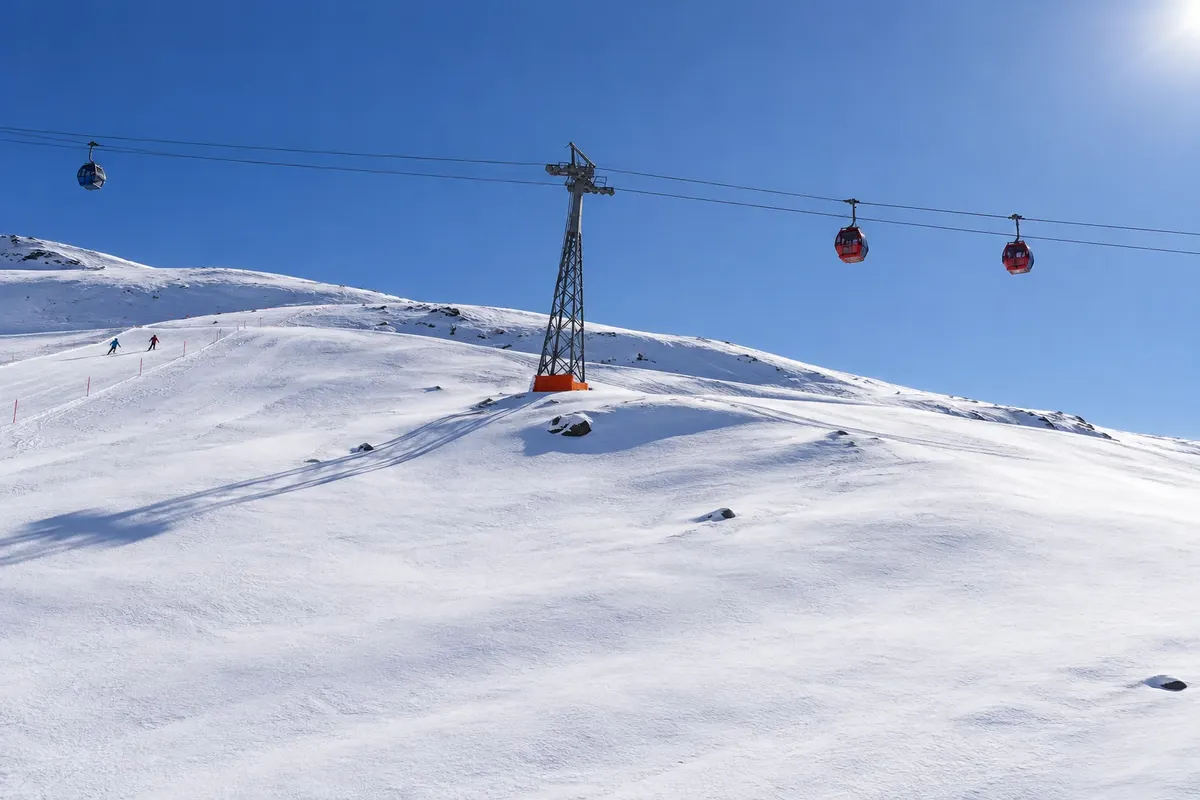
Outside the urban area, the metropolitan region offers wineries in the Maipo valley, such as Concha y Toro and Cousiño Macul, the Cajón del Maipo and the Embalse El Yeso high in the mountains. In winter, Farellones and Valle Nevado receive skiers less than two hours from the center.
V vodniku še ni nastanitev – Santiago.
kako do tja · koliko dni · načrt poti · vprašanja
✈ Aeropuerto Internacional Arturo Merino Benítez (SCL), kraj: Pudahuel· 17 km do cilja (Santiago)
Requirements can change: confirm before traveling. Arrival is via Santiago international airport, in Pudahuel. long‑distance buses from all over the country arrive at the Alameda terminals.
Doživite kraj
Santiago's zero point, laid out in 1541. Around it are the Catedral Metropolitana, the Correo Central and the municipal headquarters; in the middle, palm trees, benches, street painters and chess players.
Seat of the Presidency of Chile, in neoclassical style, designed by Joaquín Toesca to serve as the colonial mint. Under the southern plaza is the Centro Cultural La Moneda, with art and history exhibitions.
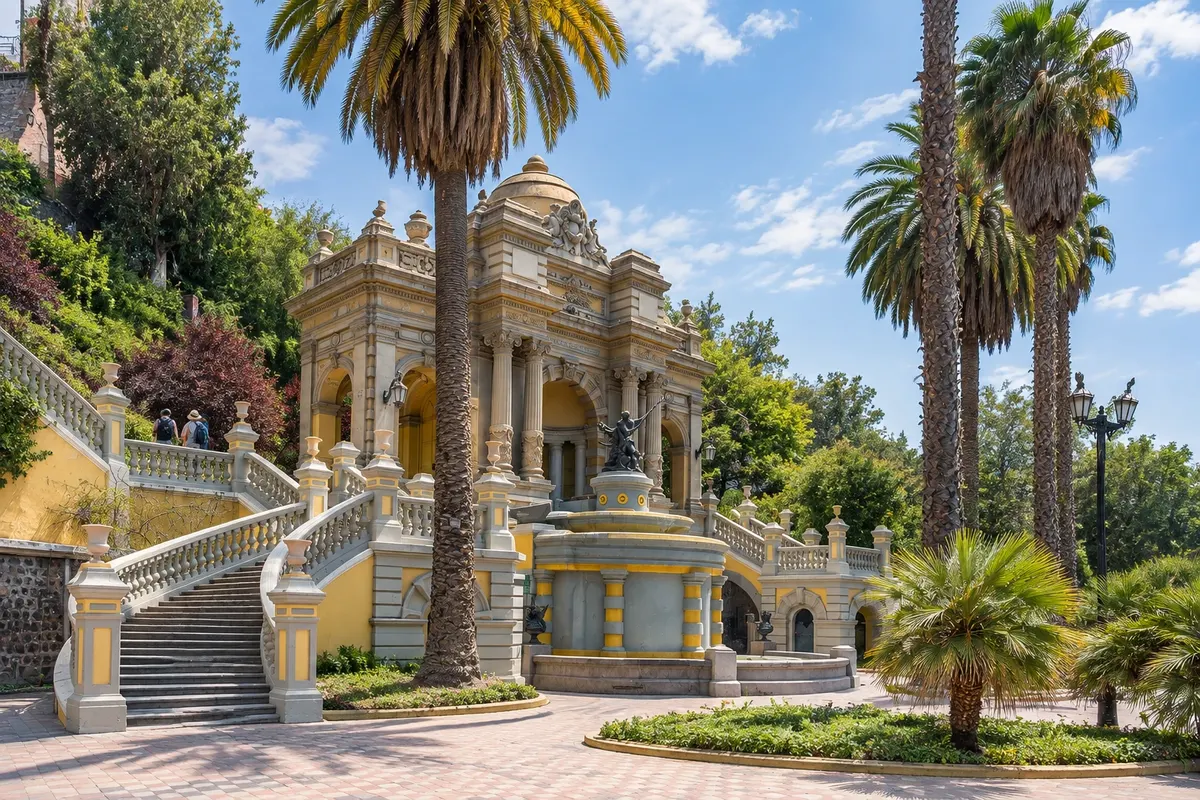
Hill in the middle of the city center, where Santiago was founded. Stairways, fountains, terraces and the Castillo Hidalgo lead up to the summit viewpoint, with views over the city and the mountain range.
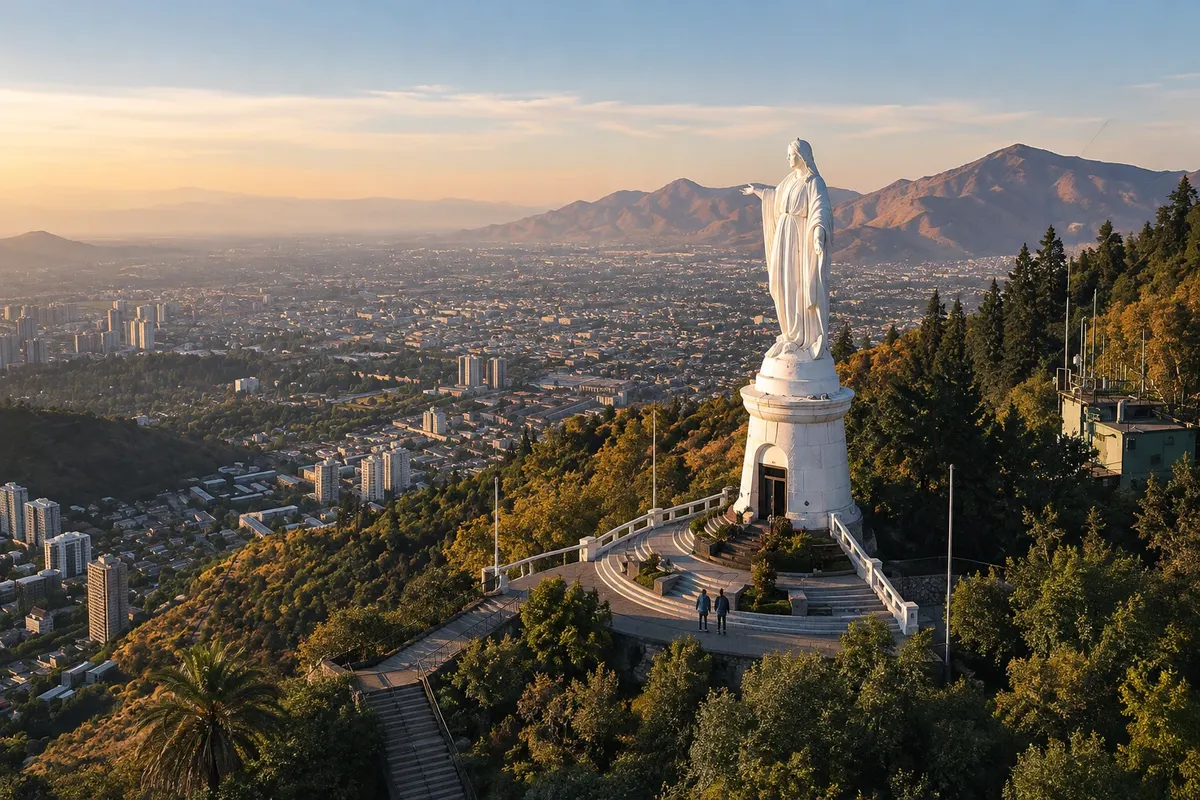
The large green hill of Santiago, the heart of the Parque Metropolitano. A funicular and cable cars climb to the sanctuary of the Virgin, with wide views of the city and the mountain range; along the way are swimming pools, gardens and trails.
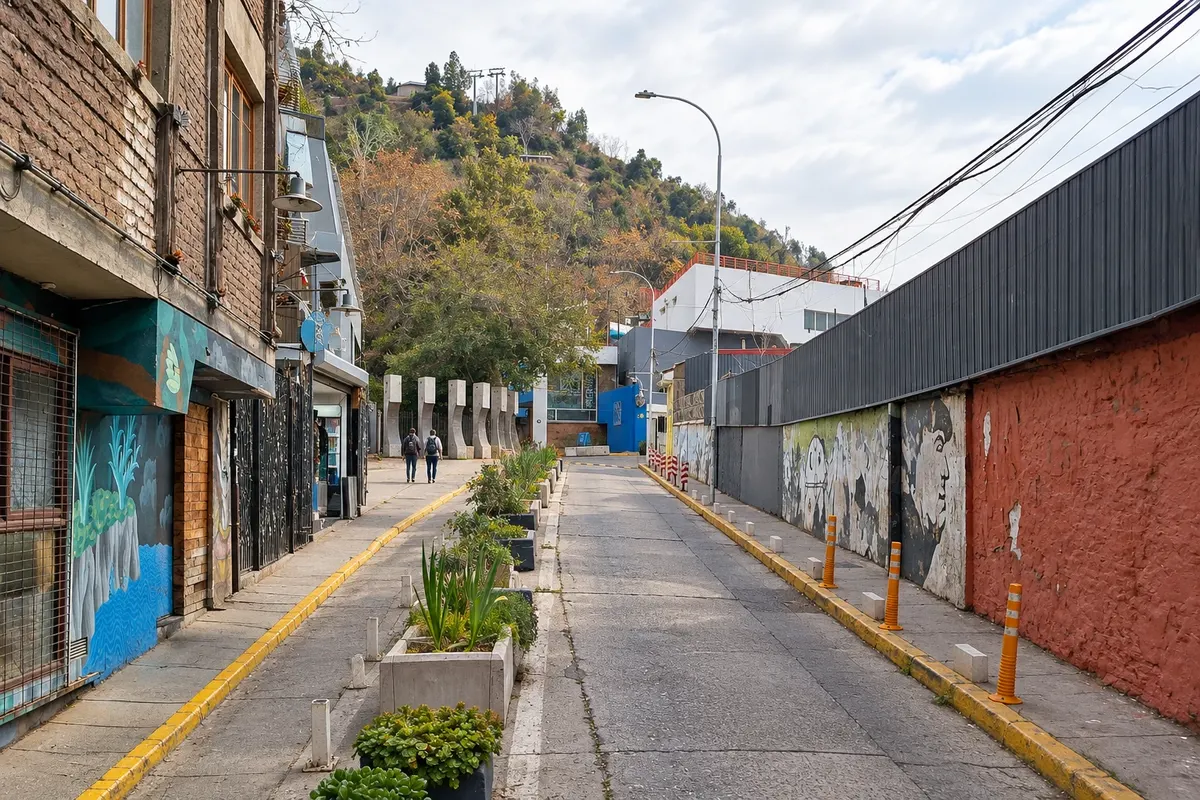
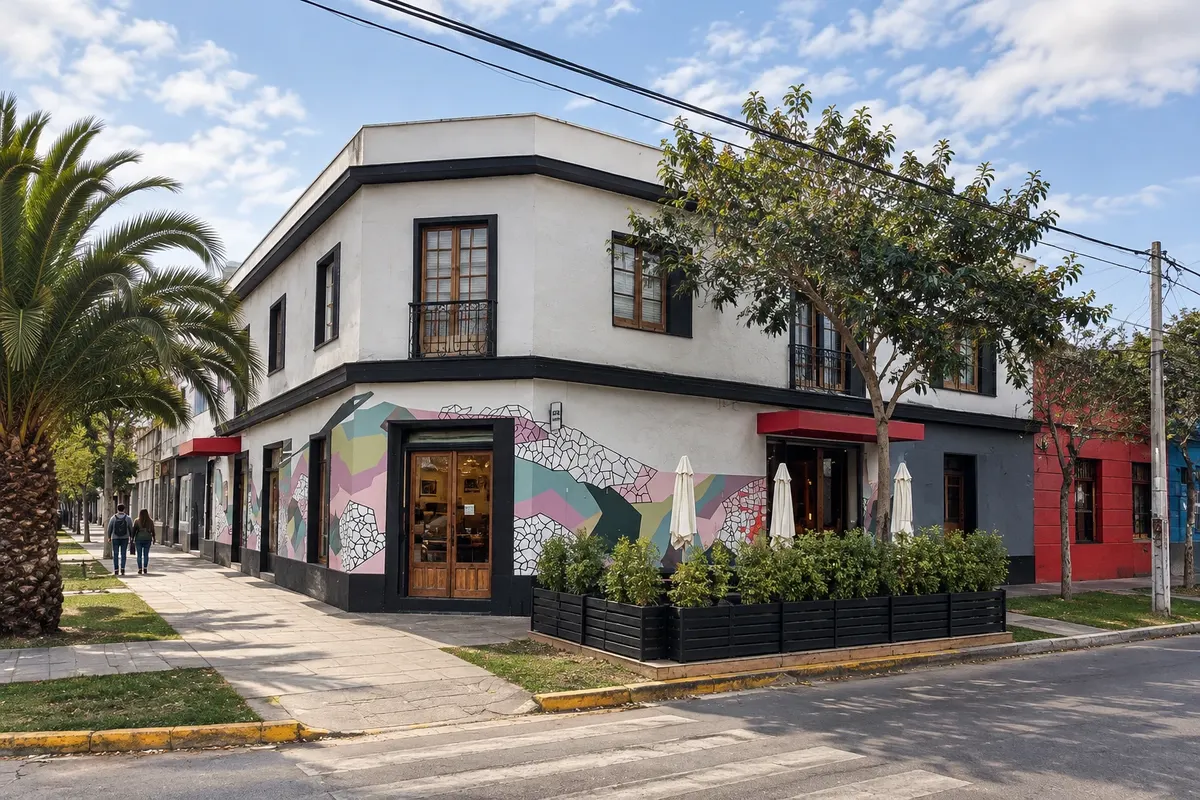
Neighborhood of colorful houses between the Mapocho River and Cerro San Cristóbal, with graffiti-covered walls, studios, theaters, bars and restaurants. It is the starting point of the funicular and the location of La Chascona.
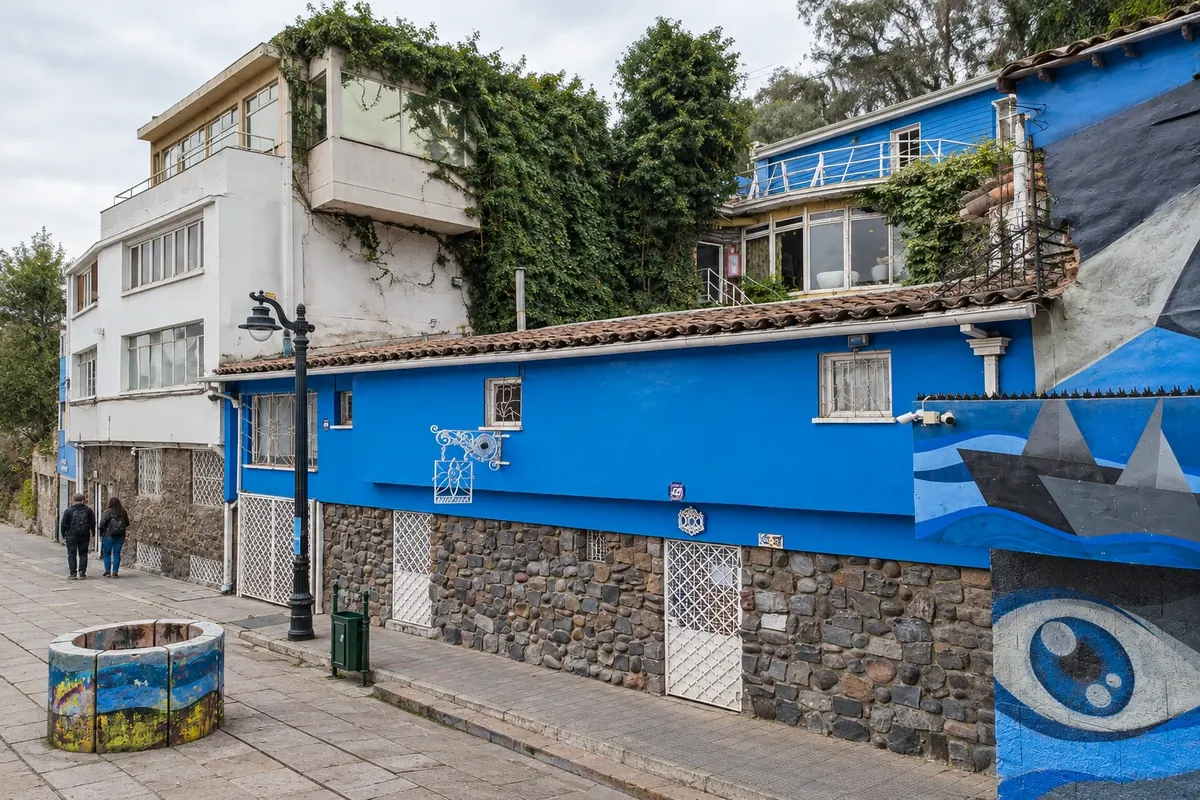
Pablo Neruda's house in Bellavista, built in terraces on the slope of Cerro San Cristóbal. It preserves the poet's collections, furniture and objects related to the sea, as well as a portrait of Matilde Urrutia painted by Diego Rivera.
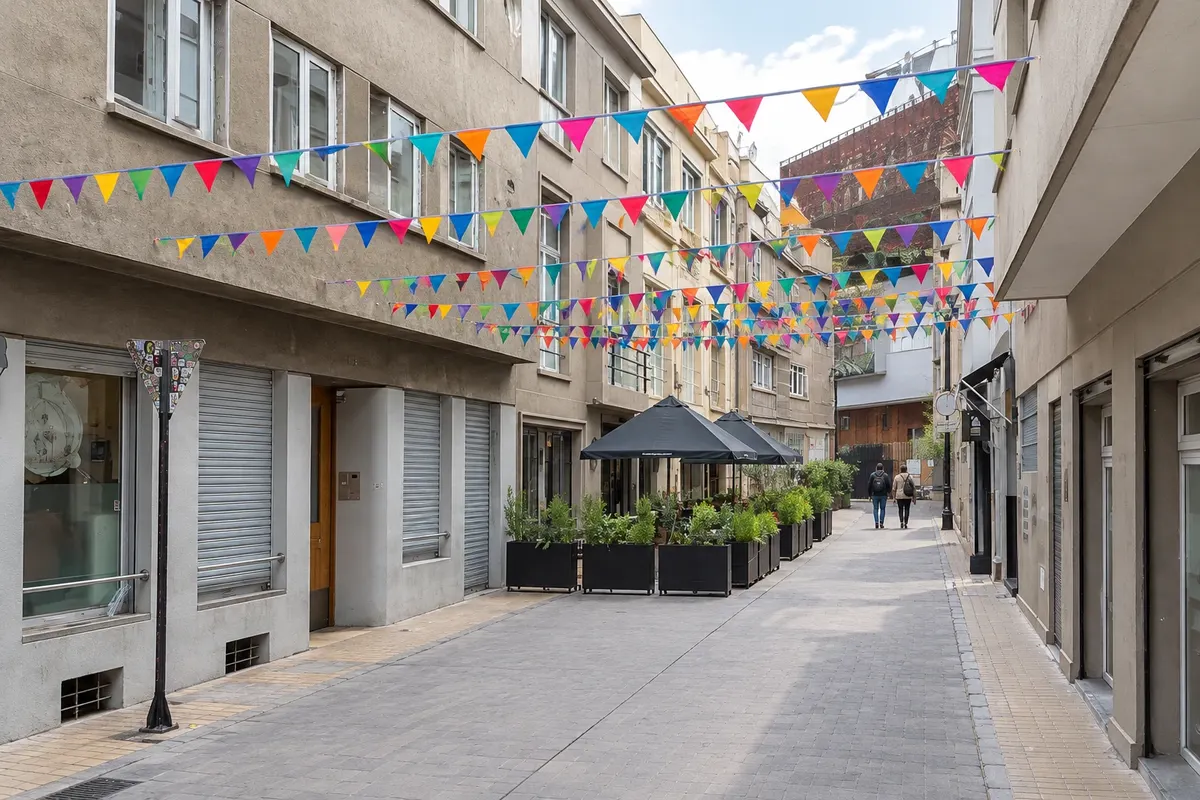
Blocks of old houses and cobblestone streets between Cerro Santa Lucía and Parque Forestal, with bookstores, cafés, cinemas, galleries and the Centro Cultural Gabriela Mistral.
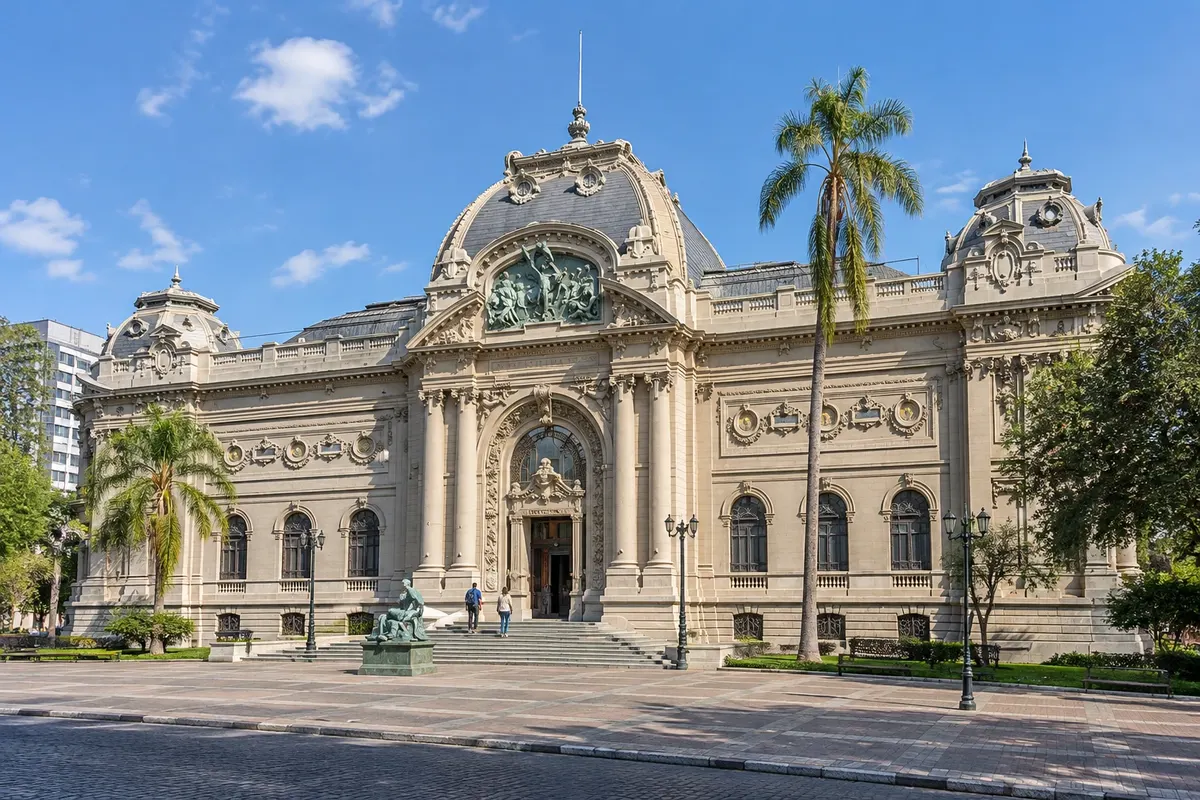
The first art museum in South America, founded in 1880, housed in a 1910 palace with a glass dome, inside Parque Forestal. It brings together Chilean painting and sculpture from the colonial period to the 20th century.
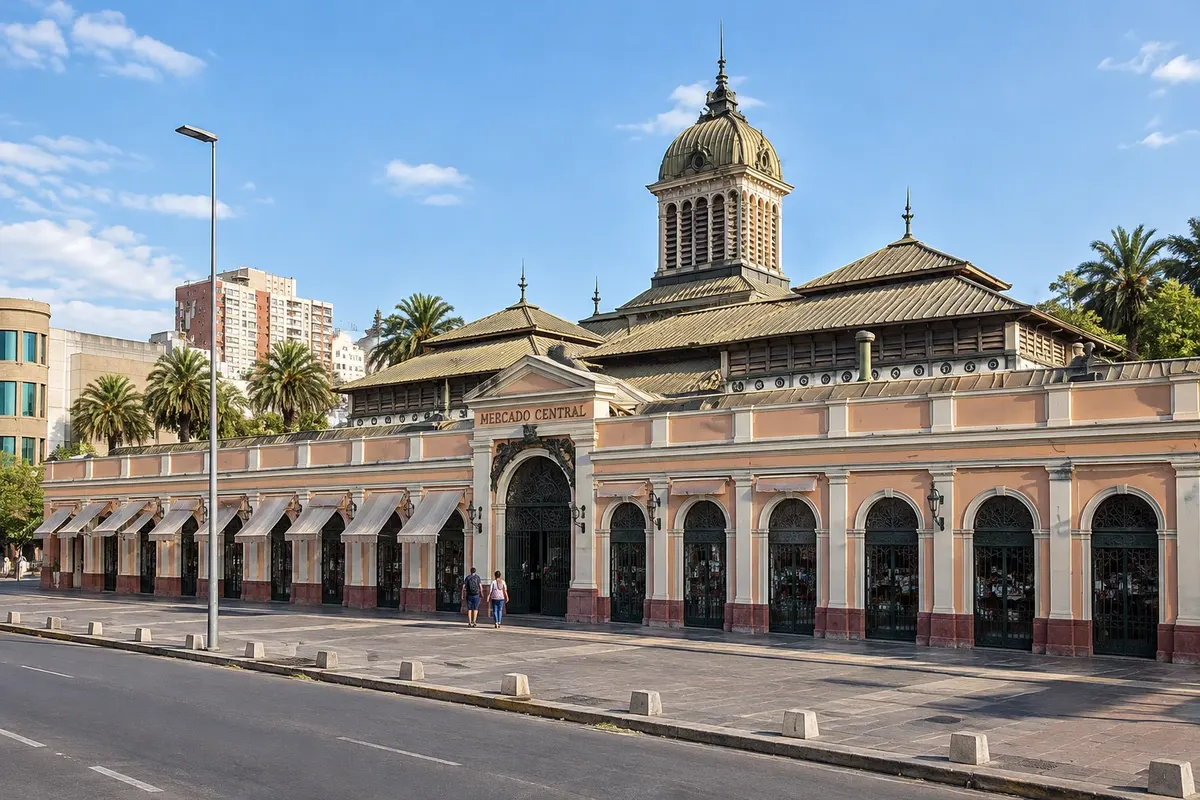
Market from 1872 with a cast-iron structure brought from Scotland. Fish and seafood stalls share the space with restaurants that serve caldillo de congrio, paila marina and machas a la parmesana.
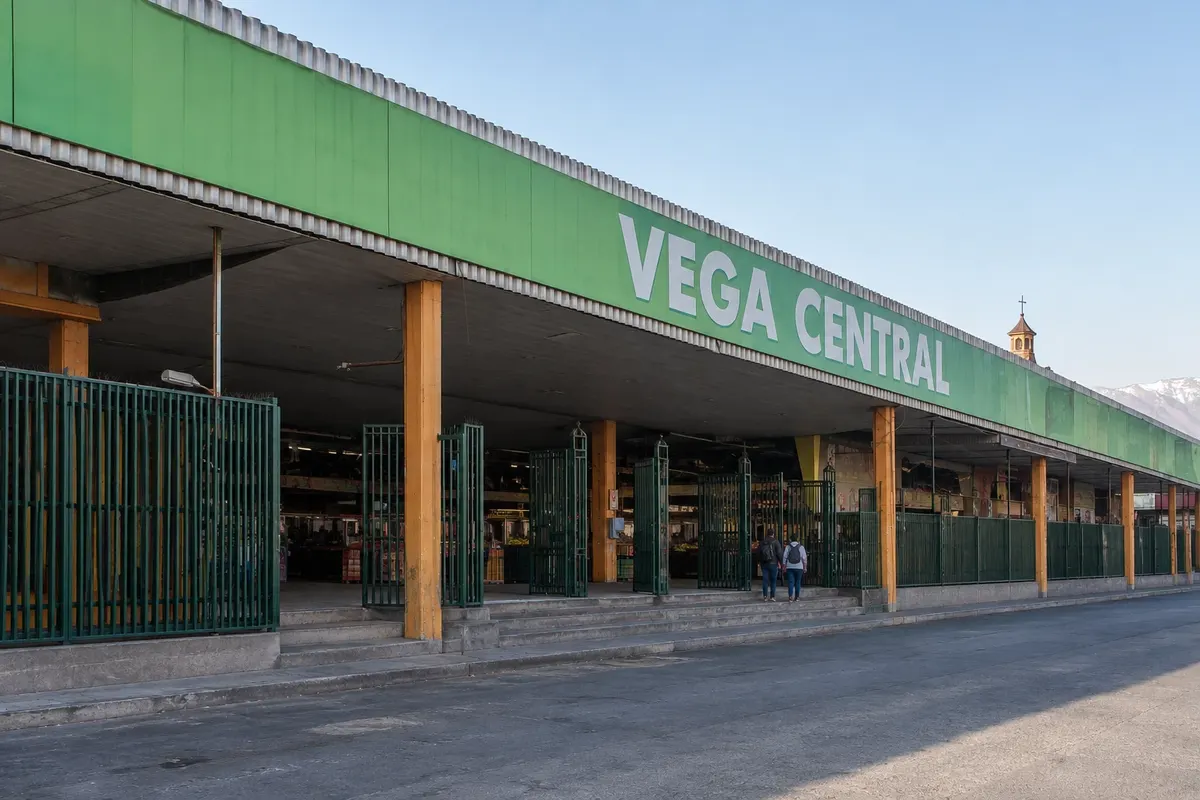
Large popular market on the north bank of the Mapocho, in Recoleta. Fruits, vegetables, grains, spices and cocinerías serving home-style food show the city's daily supply.
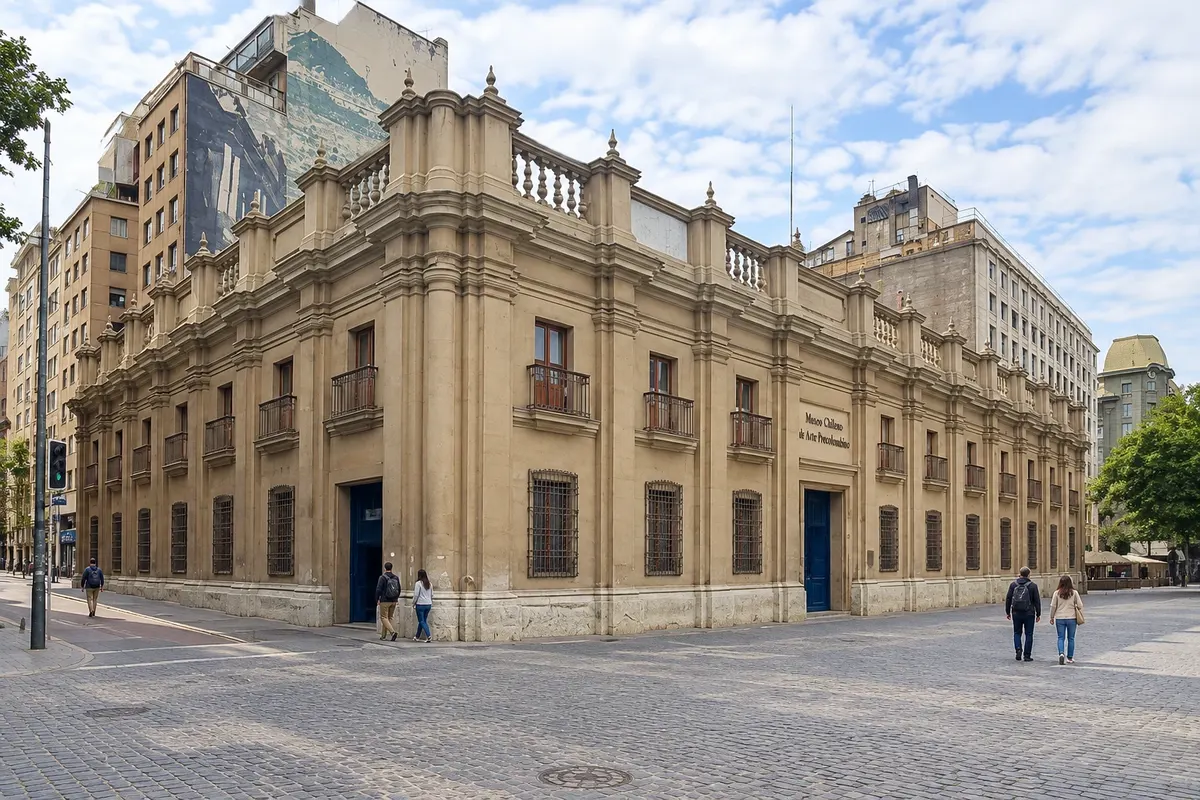
Collection of art from the Indigenous peoples of the Americas in the former Palacio de la Real Aduana, one block from the Plaza de Armas. The Chile antes de Chile room, in the basement, explores the cultures of the Chilean territory.
Museum dedicated to the human rights violations committed by the Chilean State between 1973 and 1990. Documents, letters, objects and testimonies tell the story of Augusto Pinochet's dictatorship.
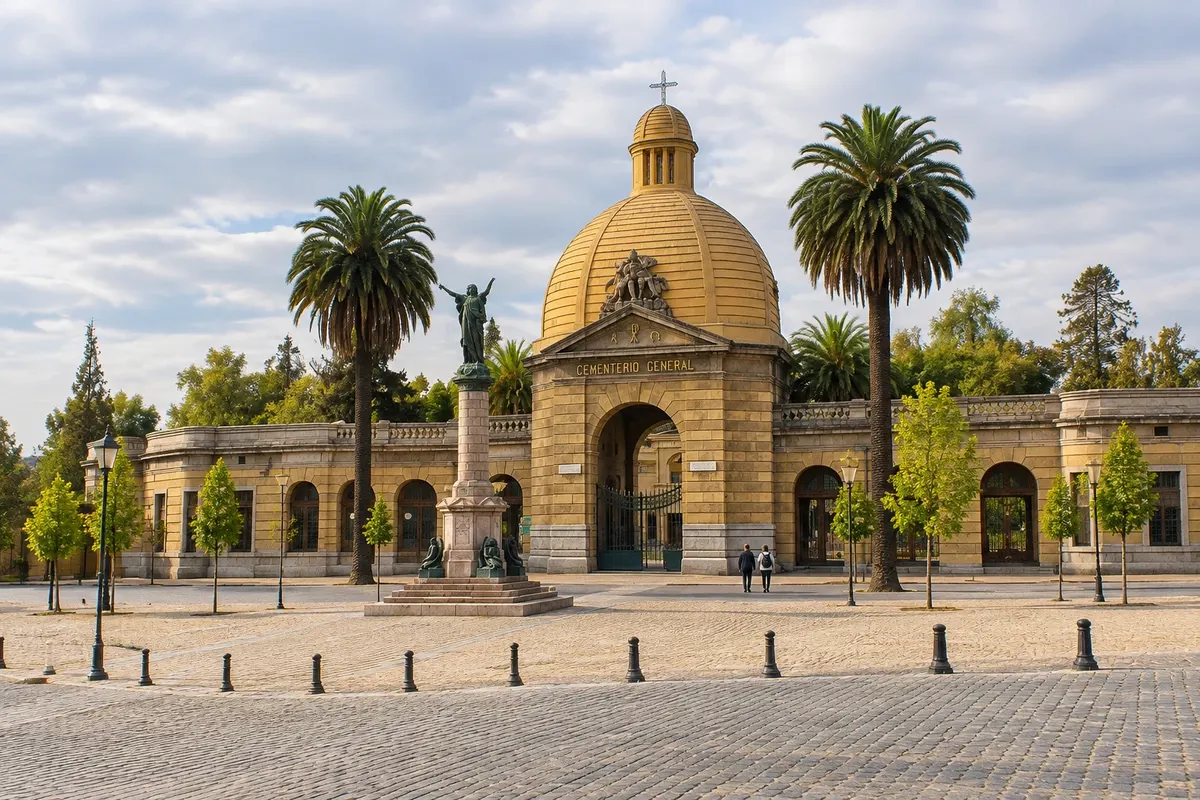
A cemetery from 1821 in Recoleta, with 85 hectares of mausoleums, sculptures and tree-lined avenues. It is the resting place of presidents, poets and artists, such as Salvador Allende, Violeta Parra and Víctor Jara, and includes a memorial to the disappeared.
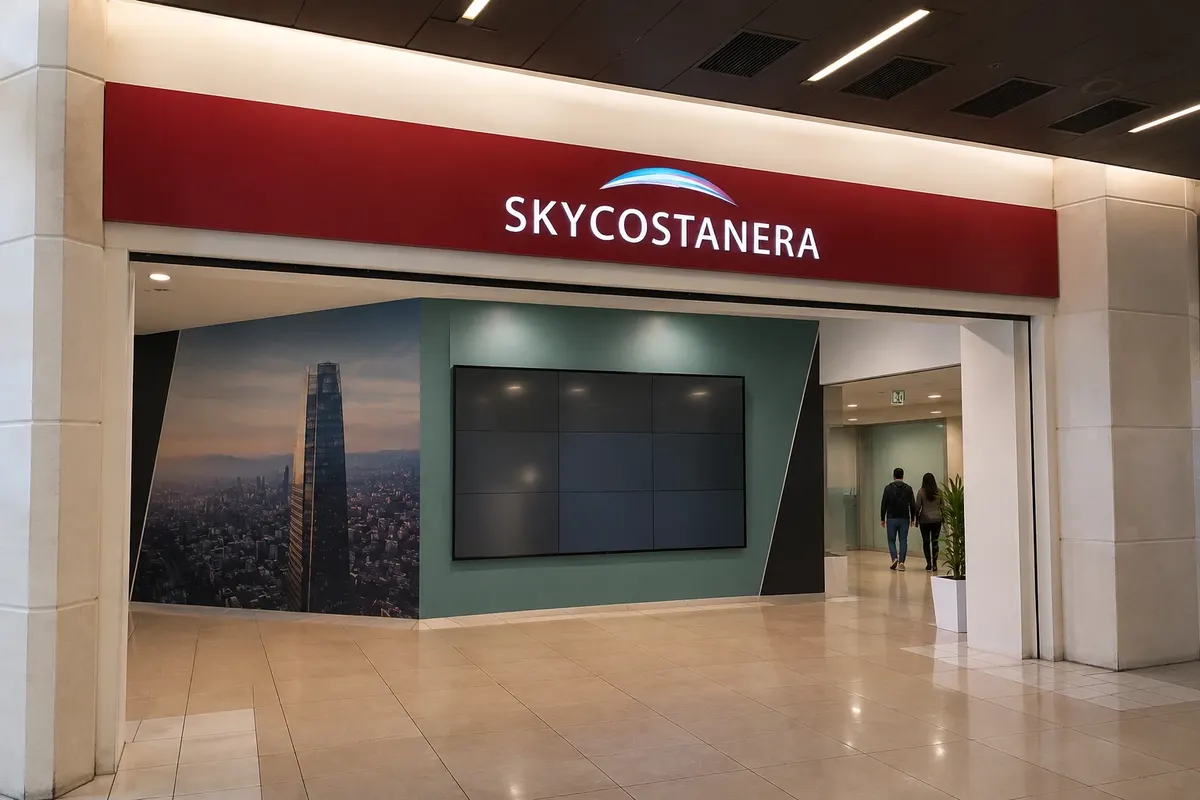
Observation deck on floors 61 and 62 of the Gran Torre Santiago, 300 meters high, in the Costanera Center complex in Providencia. The 360-degree view covers the entire city and the Andes mountain range.
Neighborhood of low houses in Providencia and Ñuñoa along Avenida Italia, with antique shops, design stores, galleries in old mansions, cafés and restaurants offering a variety of cuisines.
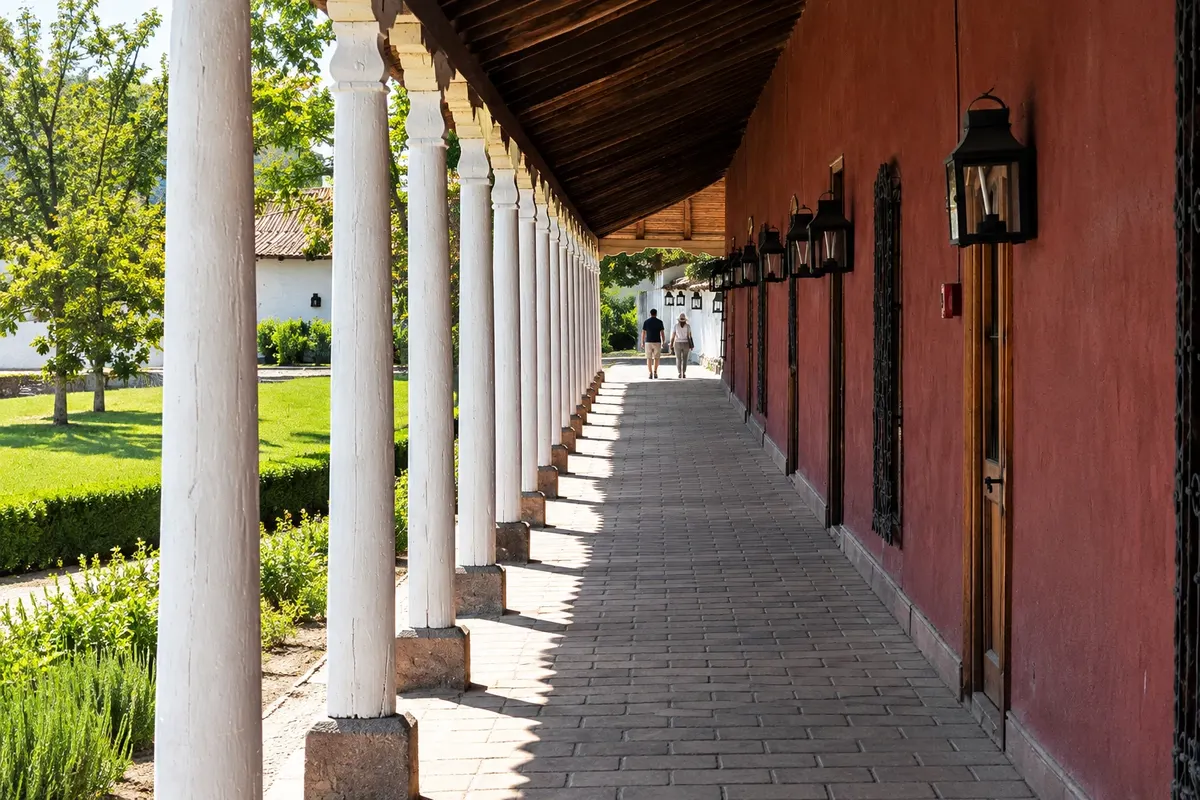
Winery founded in 1883 in Pirque, south of Santiago in the Maipo Valley. The visit goes through the park of the founder's house, the vineyards and the Casillero del Diablo cellar, with a tasting.
Winery from 1856 within the urban area of Santiago, in Peñalolén, still in the hands of the founding family. The visit shows the 19th-century cellar, the vineyards at the foothills of the mountains and ends with a tasting.
Valley of the Maipo River that cuts into the Andes southeast of Santiago. The village of San José de Maipo is the gateway to waterfalls, hot springs, rafting, horseback riding and the road up to Embalse El Yeso.
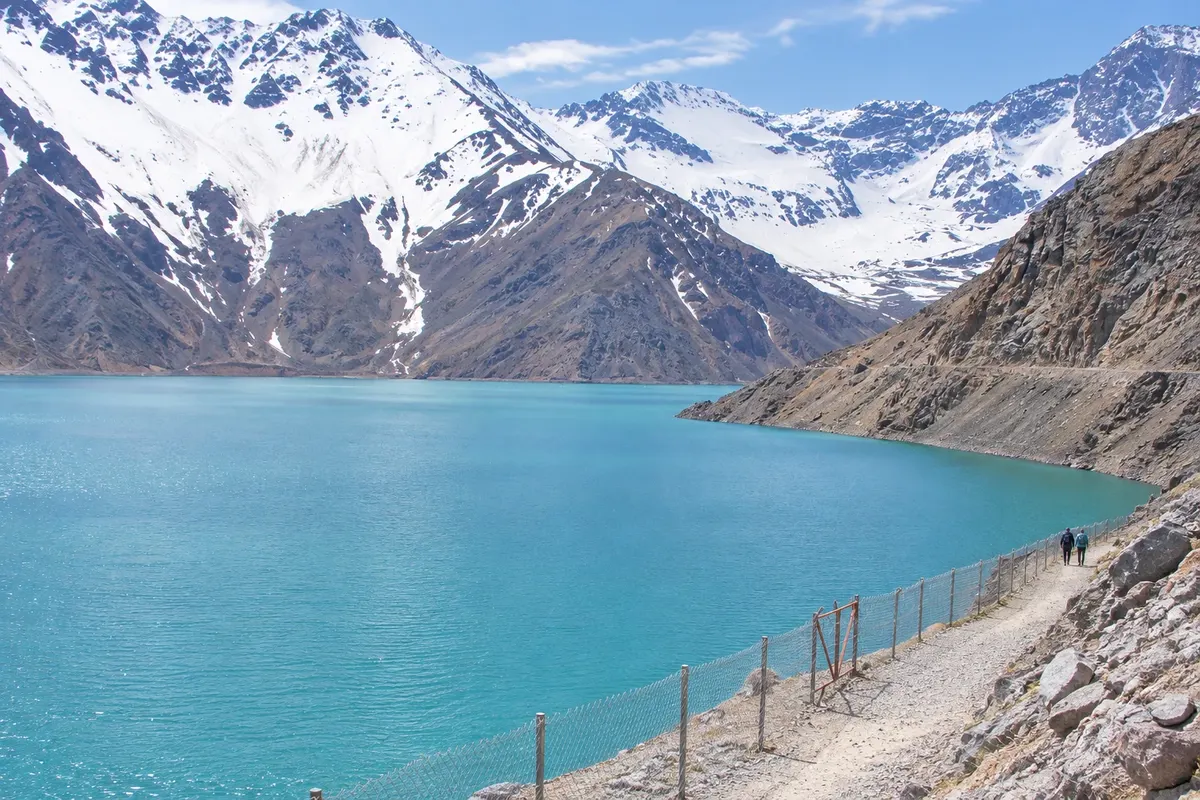
Green-turquoise water reservoir at about 2,500 meters altitude, high in the Cajón del Maipo, surrounded by mountains that often have snow much of the year. It supplies Santiago with drinking water.
Ski resort at about 3,000 meters altitude, roughly 46 km from Santiago, in the commune of Lo Barnechea. It has slopes for all levels, a ski school and a village with lodging and restaurants.
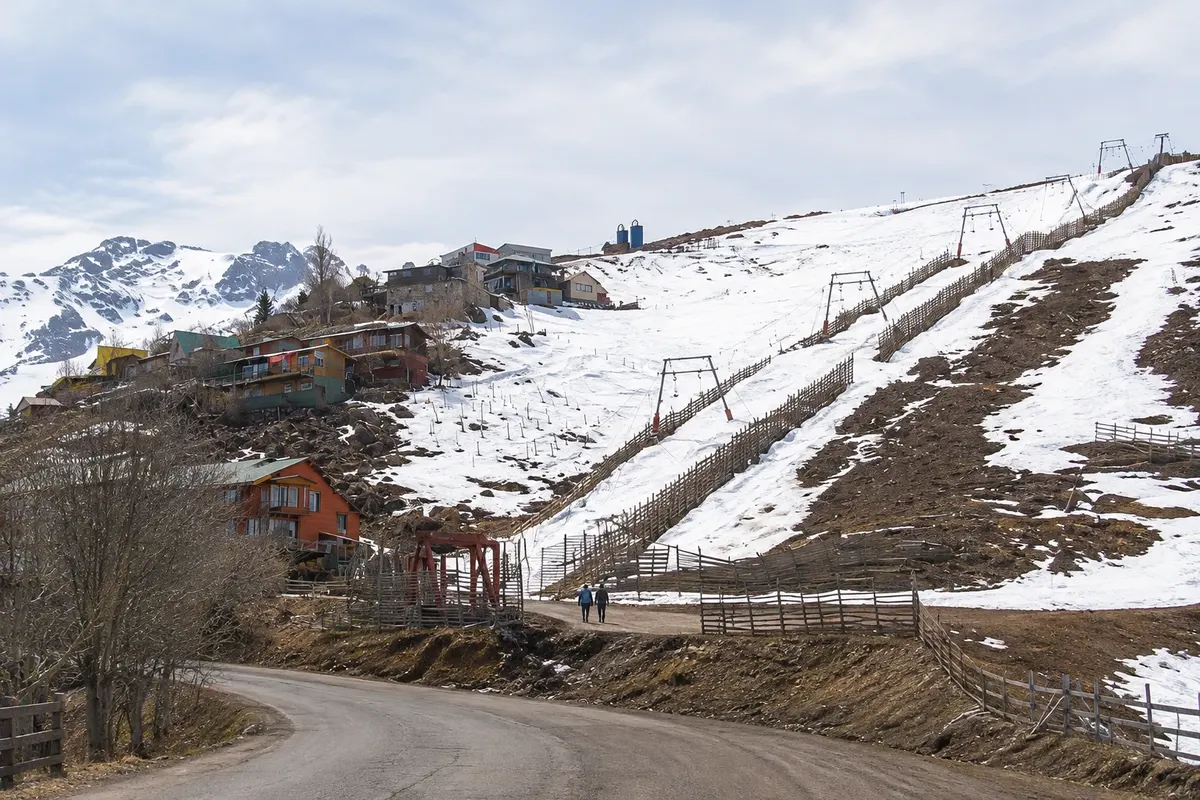
Mountain village at about 2,400 meters, 36 km from Santiago, and the starting point for the El Colorado and La Parva resorts. In winter it has slopes and snow activities; in summer, trails.
Winery dating from 1880 in Alto Jahuel, Buin, about 40 km from Santiago. It has cellars tied to the independence period, a century-old park with a neo-Gothic chapel, listed as a Historical Monument, and the Museo Andino, with pre-Columbian art.
Kaj izbrati pred odhodom
Izhodišče, trajanje, potek, vključene storitve in okvirna cena vsakega izleta.
This walk introduces the city. Plaza de Armas is Santiago’s kilometer zero, founded by Pedro de Valdivia in 1541, with palm trees, benches, street painters and the founder’s equestrian statue. On one side stands the Metropolitan Cathedral, started in 1748 and consecrated in 1906; the Italian Joaquín Toesca revised the plans and gave the building its neoclassical façade. From the square, Paseo Ahumada, a pedestrian street with shops and cafés, leads in a few blocks to the Palacio de La Moneda, the government seat and another work by Toesca. The changing of the guard, with cavalry and the Carabineros band, takes place on alternate days at Plaza de la Constitución, north of the palace, and lasts about 40 minutes. The inner courtyards can be visited on guided tours with prior registration. Under Plaza de la Ciudadanía, to the south, is the Centro Cultural La Moneda, with temporary exhibitions, cafés and a crafts shop.
Kraji na poti: Plaza de Armas, Metropolitan Cathedral, Paseo Ahumada, Palacio de La Moneda, Plaza de la Constitución, Centro Cultural La Moneda.
Vključuje: The guided tour of La Moneda is free, but requires advance registration on the government website, and spaces fill up quickly. At the Centro Cultural La Moneda, some exhibitions require a paid ticket. Check the current schedule.
Nasvet: Check the schedule for the changing of the guard before you go and arrive early to get a front spot. Combine this walk with the Museo Chileno de Arte Precolombino, one block from the Plaza de Armas, and the Mercado Central, a few minutes’ walk away. On Sundays much of the city center’s commerce is closed.
Najboljši čas za obisk: Year-round. In summer, from December to February, walk in the morning before the afternoon heat.
Cerro San Cristóbal reaches 880 m in altitude, about 300 m above the city, and is part of the Parque Metropolitano (Parquemet). The main entrance is at the end of Pío Nono street in Bellavista, within walking distance of Baquedano metro station. From there the historic funicular climbs in about 10 minutes, and the Pío Nono cable car departs next to the National Zoo and reaches Plaza México, near the summit, in about 7 minutes. At the top is the Santuario de la Inmaculada Concepción, with the large white statue of the Virgin and terraces overlooking the city and, on clear days, the Andes. To descend the other side, the Pedro de Valdivia cable car links Cumbre station with Tupahue and Oasis stations; near Oasis is the Jardín Japonés. The park also includes the Jardín Botánico Mapulemu, the Tupahue and Antilén pools, open in summer, and paths used by those who hike or cycle up. The park’s panoramic bus runs between Pío Nono, Tupahue, Cumbre and Pedro de Valdivia.
Kraji na poti: Cerro San Cristóbal, Parque Metropolitano, Funicular, Pío Nono Cable Car, Pedro de Valdivia Cable Car, Santuario de la Inmaculada Concepción, Jardín Japonés, Jardín Botánico Mapulemu.
Vključuje: The funicular, the cable cars and the panoramic bus require tickets, with combined fares available. Walking up is free. Check the current schedule.
Nasvet: The cable cars do not operate on Mondays, and the funicular is closed on the first Monday of the month. Buy tickets in advance to avoid queues on weekends. Bring water, sunscreen and a jacket: it can be windy at the top. In summer, try the mote con huesillo sold at the summit.
Najboljši čas za obisk: Year-round. The view of the Andes is often clearer after rainy days, typically between May and September.
The Mercado Central was inaugurated in 1872 in a pavilion whose roof and cast-iron structure were manufactured in Scotland, in Glasgow. Inside, fish and seafood stalls share space with restaurants serving Chilean seafood dishes such as caldillo de congrio, paila marina, and machas. Crossing the Río Mapocho by the bridge brings you to La Vega Central, the city’s large popular market, with aisles of fruit, vegetables, spices, dried grains, and small home-style eateries. It’s the place to discover seasonal fruits like chirimoya and lúcuma and to watch santiaguinos doing their daily shopping.
Kraji na poti: Mercado Central, La Vega Central, Río Mapocho.
Vključuje: Entrance to the markets is free. Meals and purchases are paid separately.
Nasvet: Go in the morning, when the stalls are full and the activity is for shopping. At the Mercado Central, the restaurants in the middle of the pavilion often have servers calling at the door; check the menu before you sit. Plan your trip ahead and carry only what you need.
Najboljši čas za obisk: All year. In summer, from December to March, there is a greater variety of fruits.
Bellavista lies between the Río Mapocho and Cerro San Cristóbal. From Baquedano station you only need to cross the river to reach Pío Nono Street, with bars, restaurants, and a street market on Sundays. The side streets have colorful houses, murals, galleries, and craft shops; Patio Bellavista gathers restaurants and shops around a courtyard. On a narrow street at the foot of the hill is La Chascona, the house Pablo Neruda, Nobel Prize in Literature in 1971, began building in 1953 for Matilde Urrutia; the name comes from her red, rebellious hair. The house spreads over several levels connected by stairs and walkways, with paintings and objects the poet collected; Neruda took part in the project and had trunks brought from the south for the living room. After the 1973 coup it was damaged; restored, it opened as a museum.
Kraji na poti: Bellavista neighborhood, La Chascona, Pío Nono Street, Patio Bellavista, Río Mapocho.
Vključuje: La Chascona requires an admission ticket. Check the current rates and the visit format.
Nasvet: La Chascona is closed on Mondays and on certain holidays, such as January 1, May 1, September 18 and 19, and December 25. The house has many steps and is not wheelchair accessible. Combine this visit with the climb up Cerro San Cristóbal, which starts at the end of Pío Nono.
Najboljši čas za obisk: Vse leto.
Cerro Santa Lucía is a hill with an altitude of 629 m that rises about 70 m above the city center. Indigenous peoples called it Huelén; Pedro de Valdivia took it in 1540 and renamed it. In 1872, mayor Benjamín Vicuña Mackenna transformed it into a park with gardens, terraces, and staircases. The monumental entrance from the Alameda leads to Terraza Neptuno, with a large fountain and the statue of Neptune. Paths and stairs climb past Castillo Hidalgo, an old battery from the Reconquest era, and Terraza Caupolicán, with the bronze statue by Nicanor Plaza. At the top, the Torre Mirador, reached by narrow steps, gives a 360-degree view over the center and, on clear days, of the Andes Mountain Range. By tradition, a cannon at the top signals noon.
Kraji na poti: Cerro Santa Lucía, Terraza Neptuno, Castillo Hidalgo, Terraza Caupolicán, Torre Mirador.
Vključuje: Entrance is free.
Nasvet: Wear sneakers: the stairs at the summit are narrow and stone. The hill is next to Barrio Lastarria, a good area to continue your walk. Late afternoon light on the mountain range is often best for photos.
Najboljši čas za obisk: All year. In winter, from June to August, the mountain range often appears snow-covered after storm fronts.
The Lastarria neighborhood lies between the Alameda, Cerro Santa Lucía, and Parque Forestal. Approaching from the Alameda you first see the Centro Cultural Gabriela Mistral, the GAM, with theatre, exhibitions, and cafés. José Victorino Lastarria Street hosts cafés, bookstores, cinemas, and restaurants; the neighborhood grew around the Iglesia de la Veracruz, a neoclassical church from 1857. The small Plaza Mulato Gil de Castro is surrounded by museums and galleries, and Merced and Monjitas streets have theatres and cultural centers. a few blocks away in Parque Forestal is the Museo Nacional de Bellas Artes, founded in 1880 and housed since 1910 in the Palacio de Bellas Artes, a project by Emile Jéquier for the centenary of independence. The collection ranges from colonial art to contemporary Chilean art, with temporary exhibitions. Behind it, in the same complex, is the Museo de Arte Contemporáneo.
Kraji na poti: Lastarria neighborhood, Centro Cultural Gabriela Mistral, Iglesia de la Veracruz, Plaza Mulato Gil de Castro, Parque Forestal, Museo Nacional de Bellas Artes.
Vključuje: Entrance to the Museo Nacional de Bellas Artes is free. Cafés and restaurants are paid separately.
Nasvet: Museums close on Mondays. The neighborhood is lively at night, with bars and restaurants, and pairs well with sunset at Cerro Santa Lucía next door.
Najboljši čas za obisk: All year round. In spring, from September to November, the trees in Parque Forestal are in bloom.
The museum occupies the former Palacio de la Real Aduana, one block west of the Plaza de Armas. It opened in 1981 with the collection of architect Sergio Larraín García-Moreno and was expanded in 2014. There are over 3,000 pieces from about 100 peoples, covering roughly 10,000 years of history of the Americas, from Mesoamerica to the Andes. Highlights include a painted textile from the Chavín culture of nearly 3,000 years, an Inca quipu (the knotted-cord system used for records), a statue of Xipe Totec, ceramics from the Valdivia culture, Aguada urns and the small snuff trays of San Pedro de Atacama.
Kraji na poti: Museo Chileno de Arte Precolombino, Palacio de la Real Aduana, Plaza de Armas.
Vključuje: There is an admission fee. Check the current schedule and the days with free entry.
Nasvet: Closes on Mondays. It’s a good stop during the hottest hours of the day in summer, between the Plaza de Armas and La Moneda.
Najboljši čas za obisk: Vse leto.
Opened in 2010, the Museo de la Memoria y los Derechos Humanos deals with human rights violations during the Chilean military dictatorship from 1973 to 1990. The modern building stands on Matucana Street, opposite Parque Quinta Normal. The exhibition covers the coup of September 11, 1973, the repression, exile, resistance and the return of democracy, with photographs, newspaper clippings, prisoners’ letters, objects, videos and survivors’ testimonies. Across the street, Parque Quinta Normal has a lake, green areas and museums such as the Museo Nacional de Historia Natural.
Kraji na poti: Museo de la Memoria y los Derechos Humanos, Parque Quinta Normal, Museo Nacional de Historia Natural.
Vključuje: Admission is free. Check the schedule for guided tours.
Nasvet: Closes on Mondays. Allow unhurried time: many rooms have long videos. For those wanting to understand Chile today, pair it with a visit to the Palacio de La Moneda and the Cementerio General.
Najboljši čas za obisk: Vse leto.
The Sky Costanera occupies floors 61 and 62 of the Gran Torre Santiago, a building of about 300 m that is part of the Costanera Center complex in Providencia. Access is through the mall, from where an elevator goes up to the observation deck. Up there, the glass windows provide 360-degree views: the Andes Mountain Range to the east, Cerro San Cristóbal to the north, the historic downtown to the west, and the neighborhoods of Providencia and Las Condes, with their office buildings, just below. There is a café at the observation deck. From Tobalaba station, the walk to the Costanera Center takes about 10 minutes.
Kraji na poti: Sky Costanera, Gran Torre Santiago, Costanera Center, Providencia.
Vključuje: There is an entrance fee. Check the current price table.
Nasvet: Go up at late afternoon to see the city in daylight, the sunset and the night lights. On clear days after rain, the mountain range appears more sharply.
Najboljši čas za obisk: All year. In winter, from June to August, the peaks are usually snow-capped.
Barrio Italia, on the border between Providencia and Ñuñoa, grew up around Avenida Italia as a commercial area for immigrants and furniture restoration workshops. Low houses with old façades hide, behind narrow doors, galleries with antique shops, restored furniture, home décor items, Chilean design, clothes from local designers and bookstores. At the intersection with Caupolicán street you can still see old furniture on the sidewalks and restorers at work. Between galleries there are cafés, bakeries and restaurants serving Chilean and international cuisine. It is also a good place to try the once, the Chilean afternoon tea. From the city center you can reach it on foot via Parque Bustamante from Baquedano station.
Kraji na poti: Barrio Italia, Avenida Italia, Parque Bustamante.
Vključuje: Walking tour, no ticket required. Shopping and meals are paid separately.
Nasvet: Go on a Saturday morning or afternoon, when the galleries are all open. On Sundays and Mondays, some shops close.
Najboljši čas za obisk: Vse leto.
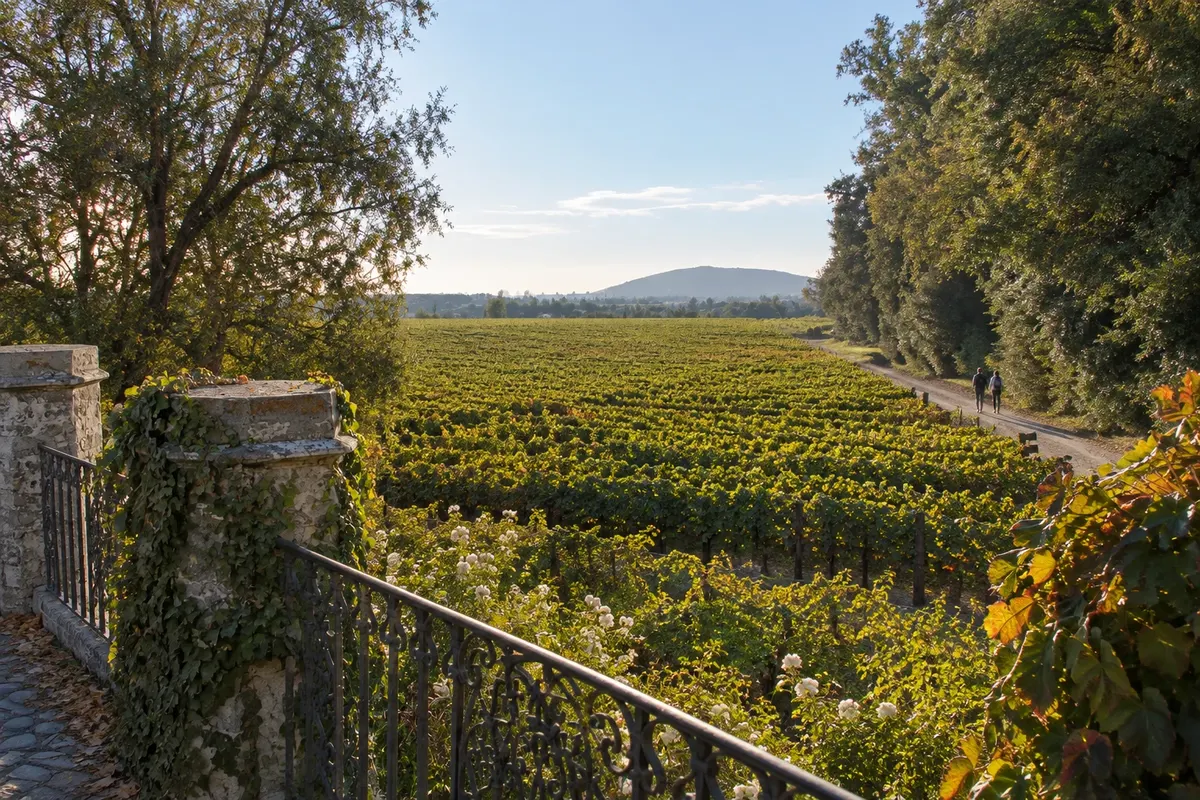
The winery is in Pirque, in the Maipo Valley, south of Santiago. It was founded in 1883 by Don Melchor de Concha y Toro, and the visit begins in the gardens of the family's old house, a yellow manor surrounded by century-old trees and a lake. The guide tells the history of the winery and the landscape project, shows a demonstration vineyard with the main grape varieties planted in Chile, and explains the production stages. The visit descends to the underground cellar, where a video tells the legend of Casillero del Diablo, the name of one of the house’s best-known labels. The traditional tour includes a guided tasting; there are longer options with a sommelier. The interior of the manor opens only on a specific tour.
Kraji na poti: Viña Concha y Toro, Pirque, Casa de Don Melchor, Casillero del Diablo.
Vključuje: Guided tour with tasting; there are Portuguese-language groups. Advance booking on the winery website. Transport is separate, or included in excursions. Check the current schedule.
Nasvet: Book in advance, especially from December to March and in July. On your own: metro to Tobalaba, change to line 4 to Las Mercedes and a taxi of about 10 minutes, or bus. If you don’t drink alcohol you can visit normally; confirm options for minors when booking.
Najboljši čas za obisk: Year-round. At harvest time, from March to April, the vines are laden; in winter they are leafless.
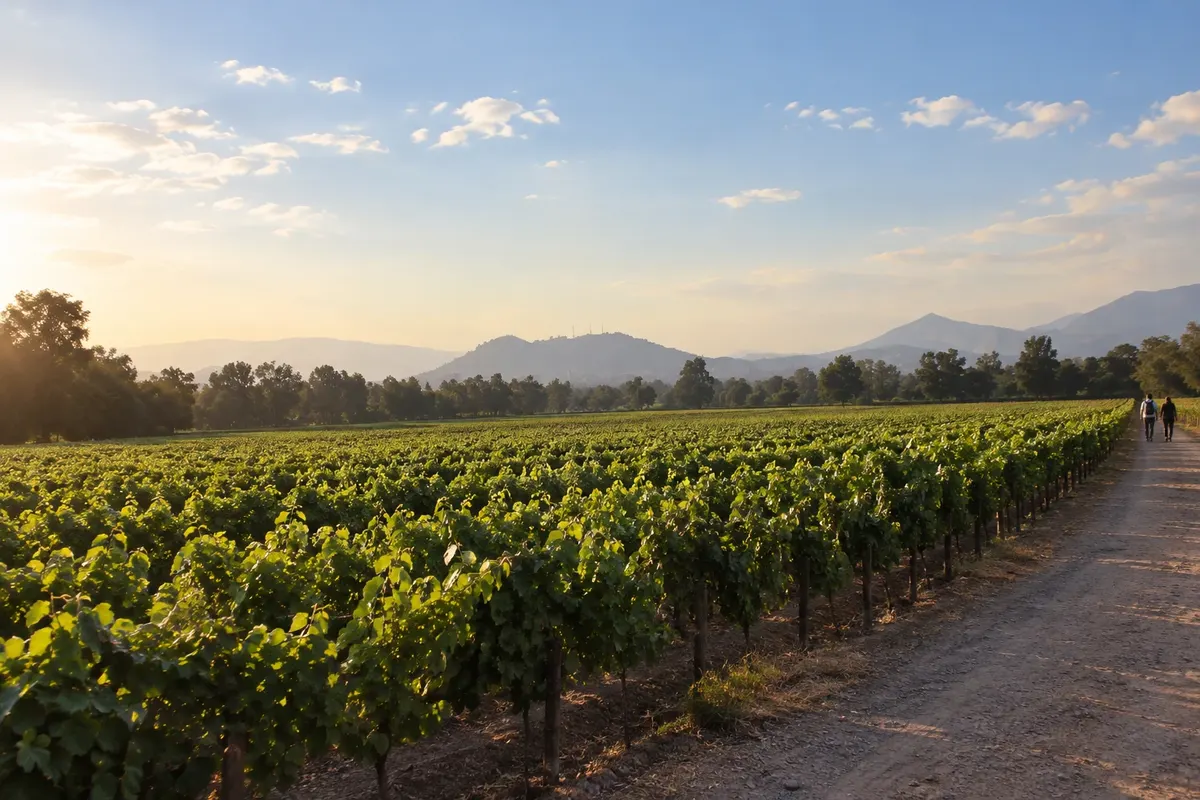
Cousiño Macul is in Peñalolén, east of Santiago, at the foot of the pre-Andes, and is the easiest winery to reach from the Providencia and Las Condes neighborhoods. Founded in 1856, it remains in the same family, now in the sixth generation. The visit starts in the vineyard; some tours are by bicycle with explanations about the grapes grown there and bunch selection. In the bodega the guide shows the old 30,000-liter Chilean oak casks, now museum pieces, and the storage room built in the 19th century, which preserves the original structure and holds bottles from old vintages. At the end there is a guided tasting.
Kraji na poti: Viña Cousiño Macul, Peñalolén, Valle del Maipo.
Vključuje: Guided tour with tasting, with advance booking. Transport separate. Check the current schedule.
Nasvet: Closed on Mondays. From downtown: metro line 1 to Tobalaba, change to line 4 to Quilín and a short taxi to the winery. Pairs well with a free morning before an afternoon city stroll.
Najboljši čas za obisk: All year. March to April is the harvest season.
Santa Rita is in Alto Jahuel, in the commune of Buin, about 45 km south of downtown Santiago, in the Valle del Maipo. It was founded in 1880 by Domingo Fernández Concha on an old estate declared a National Monument. The most told story is that of Paula Jaraquemada, who hid 120 patriot soldiers there during the War of Independence; that is the origin of the name of one of the winery’s lines. The visit includes the historic manor house and its centuries-old gardens, the estate’s Gothic-style church, the vineyards and the barrel room, with explanations about production and a guided tasting at the end. On the same grounds is the Museo Andino, with archaeological and ethnographic pieces from Chilean peoples such as the Mapuche, Atacameño and Rapa Nui.
Kraji na poti: Viña Santa Rita, Alto Jahuel, Buin, Museo Andino, Valle del Maipo.
Vključuje: The winery visit requires a ticket and advance reservation; the winery does not accept walk-in visitors. Entry to the Museo Andino is free. Transport and meals are extra. Check the current price list.
Nasvet: Guided tours in Portuguese are limited and sell out in high season: book early. By car, take Autopista Central or Acceso Sur toward Buin and Alto Jahuel. The museum is closed on Mondays.
Najboljši čas za obisk: All year. March to April is the harvest season.
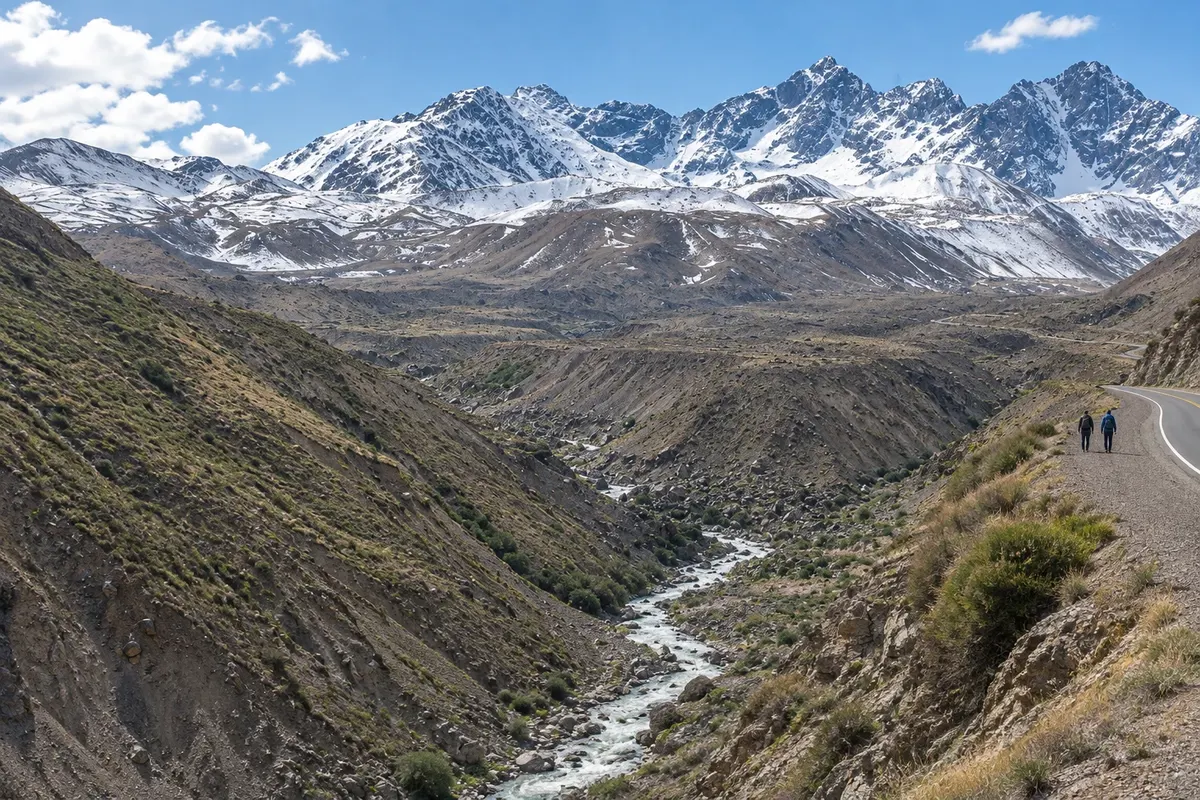
The Cajón del Maipo is the valley of the Río Maipo, which enters the Andes mountain range southeast of Santiago. The G-25 road, the Camino al Volcán, passes through San José de Maipo, with its historic Plaza de Armas, and the San Alfonso area, between sheer mountain walls. After that, a dirt and gravel turnoff climbs the Río Yeso valley up to Embalse El Yeso, a reservoir at 2,568 m altitude, built in 1964 to supply water to Santiago. The lake, with green-blue water, is surrounded by peaks that remain snow-covered much of the year. It’s about 100 km from Santiago, roughly 2 to 3 hours of travel each way. Tours stop at viewpoints and often serve an outdoor snack by the lake. The valley also offers rafting on the Río Maipo, horseback riding, trails such as the Cascada de las Ánimas, and hot springs like those in Valle de Colina higher in the valley.
Kraji na poti: Cajón del Maipo, Río Maipo, San José de Maipo, San Alfonso, Embalse El Yeso.
Vključuje: On excursions, typically: hotel pickup, transport, guide, and a snack. Activities such as rafting and hot springs are paid separately. Check the current rates.
Nasvet: Bring a jacket, beanie, sunglasses, and sunscreen: it is windy and cold even in summer. The final stretch is gravel; by car, only high-clearance vehicles or 4x4s are suitable. The descent to the lakeshore may be restricted, and views are often from the road. In winter the road can close due to snow; check in advance.
Najboljši čas za obisk: From October to April, with the road to El Yeso open. From June to September, snow often closes access to the lake and tours change their route.
The ski resorts lie northeast of Santiago in the Andes and are reached by a single road, the G-21, which leaves Las Condes and climbs through more than 40 hairpin turns. Farellones, the nearest village, is about 36 km from the city at 2,340 m altitude; it’s chosen by families and those who just want to play in the snow, with sledding areas. Just above are El Colorado and La Parva, with runs for skiers and snowboarders. Day-snow tours leave in the morning, stop on the way to rent clothing and boots, and spend the day in Farellones or Valle Nevado. Those who want to ski buy lift passes and rent equipment at the resort.
Kraji na poti: Farellones, El Colorado, La Parva, Valle Nevado, Route G-21.
Vključuje: On excursions, generally: round-trip transport and a guide. Rental of clothing and equipment, ski lessons, lift passes and meals are usually paid separately. Check the current price table.
Nasvet: With snow, the road requires chains, and on peak days the ascent is allowed only in the morning and the descent in the afternoon. For those without experience, a tour or transfer avoids driving the curves. Wear sunglasses and sunscreen: sun on the snow burns. Altitude can cause fatigue; ascend slowly.
Najboljši čas za obisk: The ski season usually runs from mid-June to September, sometimes until October depending on snow. July and August typically have more snow and more visitors.
Created at the initiative of Bernardo O'Higgins in the early 1820s, the Cementerio General in Recoleta, north of the city center, covers about 85 hectares and functions as an open-air museum. The tree-lined avenues contain mausoleums of traditional families and galleries of niches. Almost all Chilean presidents are buried there, including Salvador Allende, as well as cultural figures such as singer Víctor Jara and composer Violeta Parra. A large memorial, with a wall of names, commemorates the detained-disappeared and the political executions of the dictatorship. The visit reveals, in a few hours, the layers of Chilean history from the 19th century to the present day.
Kraji na poti: Cementerio General, Recoleta, Memorial del Detenido Desaparecido y del Ejecutado Político.
Vključuje: Entrance is free. There are guided visits, including night tours, that require a ticket and registration. Check the schedule.
Nasvet: Decide beforehand which graves you want to see: distances inside are large. Wear light clothing and a hat in summer. Combine this with the Museo de la Memoria if you want to understand the country's recent history.
Najboljši čas za obisk: Vse leto.

Po dnevih
Predlogi za načrtovanje poti. Vrstni red dni prilagodite vremenu in razpoložljivosti izletov.
Flight from Brazil to Santiago airport (SCL). Daytime flights arrive in the early afternoon; from the airport to the hotel, take the Centropuerto or Turbus bus, a transfer or an official taxi. Late in the afternoon, go up Cerro Santa Lucía to see the city and the mountain range and have dinner in the Barrio Lastarria, right beside it. Those arriving on a night flight, in the early hours, rest in the morning and follow the same program.
In the morning, take the historic center tour: Plaza de Armas, the Cathedral and the Palacio de La Moneda (check if it’s a changing of the guard day). Visit the Museo Chileno de Arte Precolombino, one block from the square, and have lunch at the Mercado Central, with a stroll through La Vega Central. In the afternoon, cross the Mapocho River to Bellavista, visit La Chascona and go up Cerro San Cristóbal by funicular or cable car to watch the end of the day from above.
In the morning, visit Viña Concha y Toro in Pirque, or the closer Viña Cousiño Macul, with a reservation made in advance. In the afternoon, stroll through Barrio Italia or Providencia and go up Sky Costanera in the late afternoon if the return flight is at night. For earlier return flights, swap the winery for Barrio Italia and Sky Costanera for the morning.
Flight from Brazil to Santiago (SCL), on a daytime flight arriving in the afternoon or a night flight arriving in the early hours. Transfer to the hotel by bus, transfer or official taxi. Late in the afternoon, Cerro Santa Lucía and dinner in Barrio Lastarria.
Morning in the historic center: Plaza de Armas, the Cathedral, Paseo Ahumada and the Palacio de La Moneda, with the changing of the guard if applicable. Visit to the Museo Chileno de Arte Precolombino. Lunch at the Mercado Central and a walk through La Vega Central. In the afternoon, the Museo Nacional de Bellas Artes and Parque Forestal.
Full day outside the city. From October to April, take the excursion to Cajón del Maipo and Embalse El Yeso, at 2,568 m. From mid-June to September, swap it for a snow day in Farellones or Valle Nevado if the resorts are open. Excursions leave early and return in the early evening.
In the morning, visit a winery near the city, such as Viña Cousiño Macul or Viña Concha y Toro, with a reservation. In the afternoon, walk around Bellavista, visit La Chascona and ascend Cerro San Cristóbal by funicular, descending by cable car on the Providencia side. At night, Sky Costanera.
If your return flight is at night, do a round trip to Valparaíso, about 120 km, by bus from Terminal Alameda or on an excursion, visiting the Concepción and Alegre hills (Valparaíso and Viña del Mar have their own pages). With an earlier flight, stay in Santiago and stroll through Barrio Italia before heading to the airport.
Flight from Brazil to Santiago (SCL). With a daytime flight, arrival is in the afternoon; with a night flight, in the early hours, and the morning is for resting. Transfer to the hotel by Centropuerto or Turbus bus, transfer or official taxi. Late in the afternoon, Cerro Santa Lucía and dinner in Barrio Lastarria.
Plaza de Armas, the Cathedral, Paseo Ahumada and the Palacio de La Moneda in the morning, with the changing of the guard if applicable. Museo Chileno de Arte Precolombino. Lunch at the Mercado Central and a walk through La Vega Central. In the afternoon, the Museo Nacional de Bellas Artes, Parque Forestal and Lastarria.
Morning in Bellavista and visit to La Chascona. Ascend Cerro San Cristóbal by funicular or via the Pío Nono cable car, go up to the Virgin at the summit and descend by cable car to the Oasis station, near the Japanese Garden. In the late afternoon, Sky Costanera.
From October to April, full-day excursion to Cajón del Maipo and Embalse El Yeso. From mid-June to September, a snow day in Farellones, El Colorado, La Parva or Valle Nevado, depending on the season. Bring warm clothing in both cases.
Day dedicated to wineries, with reservations made in advance. In the morning, Viña Santa Rita in Alto Jahuel, with the Museo Andino; in the afternoon, Viña Concha y Toro in Pirque, which is on the way back. Without a car, prefer an excursion that combines both visits.
Bus from Terminal Alameda to Valparaíso, about 120 km via Ruta 68, or an excursion that includes Viña del Mar. Day on the Concepción and Alegre hills, with their ascensores and murals, and return to Santiago at night. Valparaíso and Viña del Mar have their own pages with detailed tours.
In the morning, Museo de la Memoria y los Derechos Humanos, facing Parque Quinta Normal, or the Cementerio General. Lunch and shopping in Barrio Italia. Head to the airport with plenty of time: late-afternoon traffic can be heavy. Museums close on Mondays; if your last day falls on a Monday, swap the visit for Cerro Santa Lucía or a walking tour of Providencia.
Najboljši čas za obisk
September to November and March to May have pleasant temperatures and good visibility of the mountain range. Summer is hot and dry, good for visiting the Cajón del Maipo. From June to September there is usually snow in the Andes and the ski season, with cold nights in the city.
The seasons shown are the most usual ones; nature doesn't always follow the calendar.
hot, dry summer · holidays in Chile and Brazil
Warmest month, with average highs near 30 °C and lows of 13 °C; almost no rain and strong sun. Nights are cool. It’s the season for Cajón del Maipo and Embalse El Yeso, with the road open, and for the pools at Cerro San Cristóbal. Book wineries and tours in advance.
dry heat · quieter city
Average highs around 30 °C and lows of 13 °C, with no rain. Many locals are on holiday outside the city, and traffic lessens. Good month for Cajón del Maipo, El Yeso and walking tours in the morning and late afternoon.
end of summer · grape harvest at wineries
Average highs of 27 °C and lows of 11 °C, with dry weather. The grape harvest begins: at wineries in the Valle del Maipo, such as Concha y Toro, Santa Rita and Cousiño Macul, the vines are heavy with fruit and there are harvest events. School resumes in Chile and the city returns to its normal pace.
mild autumn · golden vineyards
Average highs of 23 °C and lows of 9 °C; the first rains of the year may appear late in the month. The leaves of the vines and the trees in Parque Forestal turn yellow and red. Good month for walking the city and for winery visits. Demand for tours increases around Easter week.
cool autumn · start of the rains
Average highs of 19 °C and lows of 6 °C. This is when rain fronts begin, on isolated days. After the rain, the air clears and the mountain range appears with its first snows. The road to Embalse El Yeso may have restrictions due to snow late in the month. A low-tourism month.
winter · ski season opening
Rainiest month, with average highs of 16 °C and lows of 5 °C; rains arrive in fronts lasting several days, and the rest of the month is dry and cold. The ski season in Farellones, El Colorado, La Parva and Valle Nevado usually opens in mid‑June, depending on snow. Access to Embalse El Yeso often closes due to snow.
snow in the mountain range · winter holidays
Coldest month, with average highs of 15 °C and lows of 4 °C; some mornings are near zero degrees. It rains on some days. Book in advance and bring warm clothing.
winter · high ski season
Average highs of 17 °C and lows of 5 °C, with more spaced-out rain. The ski season usually continues with snow and solid demand, especially on weekends. On clear days after rain, the view of the snow‑capped Andes from Cerro San Cristóbal and Sky Costanera becomes sharper.
Fiestas Patrias · end of winter
Average highs of 20 °C and lows of 7 °C, with little rain. On September 18 and 19 the Fiestas Patrias are celebrated: there are fondas with typical food and cueca, and many museums, shops and services close on those days. The ski season usually runs until the end of the month, sometimes into October. Trees begin to bloom.
spring · blooming city
Average highs around 23 °C and lows of 9 °C, with dry weather. Spring with flowering parks. Some ski resorts may still be open at the start of the month, depending on snow. The road to Embalse El Yeso usually reopens as the snow melts. Good month for walking around the city.
warm spring · fewer crowds
Average highs around 26 °C and lows of 10 °C, with almost no rain. Good month for outdoor activities, Cajón del Maipo, El Yeso and the wineries, before summer holidays. Days are long and tourist activity is moderate.
early summer · year-end festivities
Average highs around 29 °C and lows of 12 °C, with no rain. Summer begins, with long days and strong sun. Book ahead.
Načrtujte pot
Buses: Centropuerto runs from the airport to Los Héroes metro station, stopping at stations such as Pajaritos, Las Rejas, Universidad de Santiago and Estación Central, all on line 1; Turbus goes to Terminal Alameda, next to Universidad de Santiago station, also with stops along the way. Both depart from the first level of the international and domestic terminals, running frequently during the day. From the final stop, take the metro or a taxi to your hotel. Official taxi: hire only at the counters in the arrivals area, with fares by destination zone; refuse offers from drivers who approach passengers outside. Transfers: there are shared vans, such as Transvip and Delfos, bookable at the counter or online, which drop each passenger at their hotel, and private transfers available by advance reservation.
Santiago has several bus terminals side by side on the Alameda, in Estación Central: the Terminal Alameda, used by Turbus and Pullman, next to the Universidad de Santiago metro station, and the Terminal de Buses Santiago, the Terminal Sur, right beside it. Buses to all parts of the country depart from these terminals. To Valparaíso and Viña del Mar, Turbus and Pullman run very frequent services, and the trip takes 1 hour 15 minutes to 2 hours depending on traffic. On weekends from December through March, buy your ticket in advance.
For outings outside the city, a rental car gives you freedom. Santiago’s urban highways charge electronic tolls (TAG): check with the rental company whether the vehicle has the device active. For the ski resorts, the road is the G-21 from Las Condes, with more than 40 tight curves; when there is snow, chains are mandatory, and on peak days the uphill lane is allowed only in the morning and the downhill only in the afternoon. For Cajón del Maipo, the road is the G-25 via San José de Maipo; the final stretch to Embalse El Yeso is gravel and requires a high‑clearance vehicle or a 4x4. For Viña Santa Rita, follow the Autopista Central or Acceso Sur toward Buin. For Valparaíso and Viña del Mar, take Ruta 68, about 120 km.
Santiago’s metro has several lines and connects downtown, Providencia, Las Condes, Bellavista (Baquedano station) and the shopping districts; it’s the most practical way to get around. To pay, use the Bip! card, sold and recharged at stations and also valid on the RED urban buses; on the metro you can also pay with a bank card or by contactless mobile payment. The metro does not run overnight and gets crowded at rush hours. Taxis and ride‑hail cars fill in the gaps. For Cajón del Maipo, ski resorts and more distant wineries, the easiest option is a tour with hotel pickup.
In Santiago, several public museums do not charge admission, such as the Museo Nacional de Bellas Artes and the Museo de la Memoria y los Derechos Humanos; almost all close on Mondays. Admission is charged at the Museo Chileno de Arte Precolombino, La Chascona, Sky Costanera, the funicular and the Cerro San Cristóbal cable cars. The guided visit to the Palacio de La Moneda requires prior registration. Wineries, such as Concha y Toro, Cousiño Macul and Santa Rita, charge for tours and require reservations. At ski resorts, cable car passes and equipment rentals are paid separately. Check the current price list before you go.
Pred odhodom
Z nekaj načrtovanja boste imeli več časa za uživanje na poti.
September to November and March to May have pleasant temperatures and good visibility of the mountain range. Summer is hot and dry, good for visiting the Cajón del Maipo. From June to September there is usually snow in the Andes and the ski season, with cold nights in the city.
The seasons shown are the most usual ones; nature doesn't always follow the calendar.
Allow three days for the city and one or two more for the surroundings: a winery, the Cajón del Maipo or the snow at Farellones and Valle Nevado. Santiago is also a base for visiting Valparaíso and the central coast.
Providencia is the most common choice: it sits between the center and the modern neighborhoods, has metro access, restaurants and tree‑lined streets, near Avenida Providencia and the Costanera Center. Lastarria and the Parque Forestal area put the historic center within walking distance and have cultural life at night. Bellavista suits those who want nightlife and tolerates more noise. Las Condes, farther east, is residential and business‑oriented, with easy access to the road to the snow. For the Cajón del Maipo there are inns and cabins in San José de Maipo and San Alfonso.
Odnesite svoje odpadke, upoštevajte oznake in podprite lokalne ponudnike. V naravi upoštevajte navodila za obiskovalce.
Odgovori na vaša vprašanja
Three days for the city and one or two more for day trips. Those who go in winter and want to ski should add at least one mountain day.
Spring, from September to November, and autumn, from March to May, have mild weather. Summer, from December to March, is hot and dry. For snow and skiing, the season usually runs from June to September.
Not for the city, which has a metro and buses. A car helps for trips to the mountains and the Cajón del Maipo, but agencies run those tours, and the drive up to the snow may require chains.
Within the metropolitan region: wineries in the Maipo valley, such as Concha y Toro and Cousiño Macul; the Cajón del Maipo and Embalse El Yeso; and, in winter, the ski resorts of Farellones, El Colorado, La Parva and Valle Nevado. Beyond the region, Valparaíso and Viña del Mar are about an hour and a half away.
Več kot vodnik