Easter Island

Valparaíso · Čile

Easter Island

Moai, volcanoes and the living culture of the Rapa Nui people on an island of Polynesia that belongs to Chile, in the middle of the Pacific, about a five-hour flight from Santiago.

Central

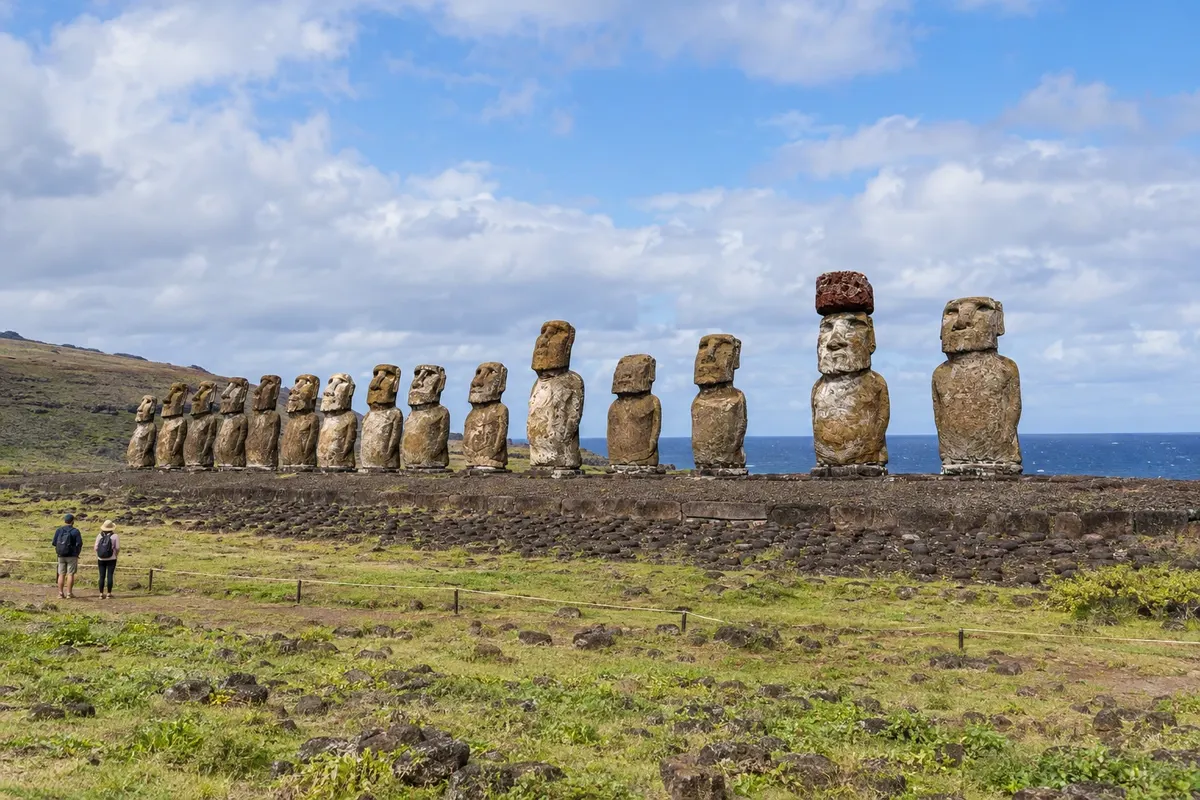
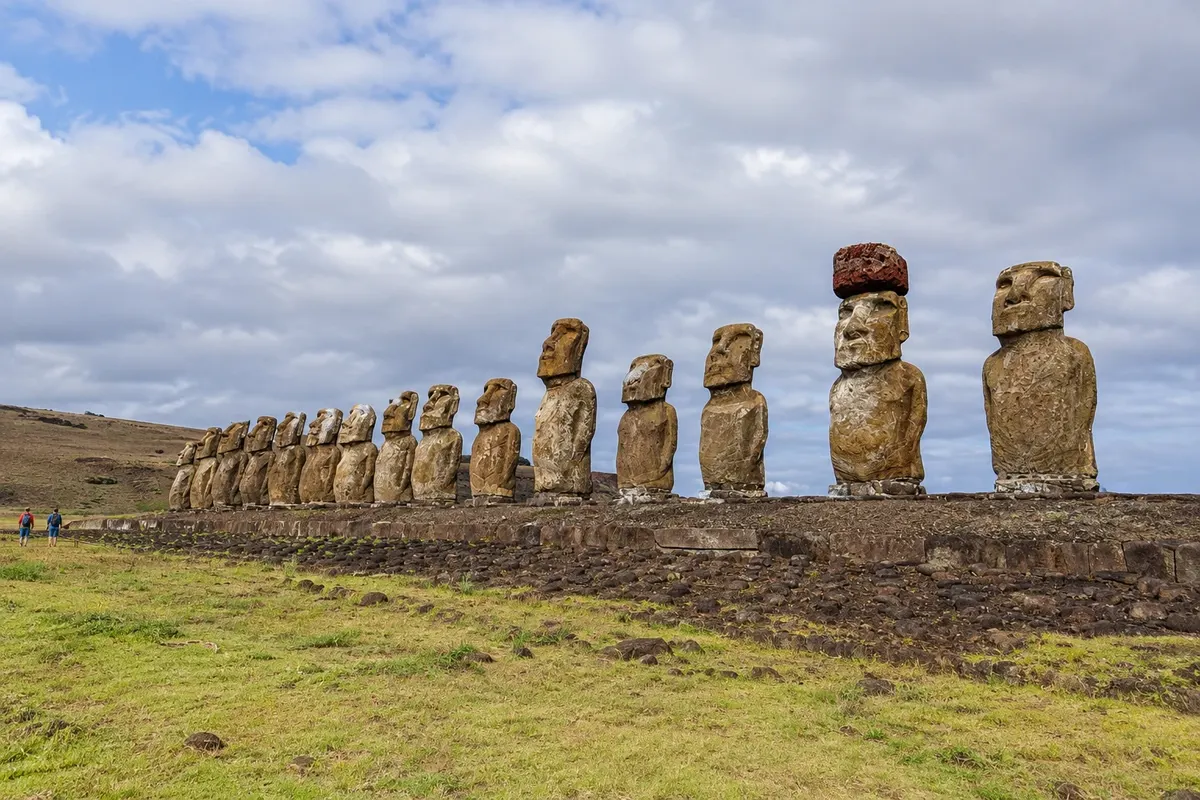
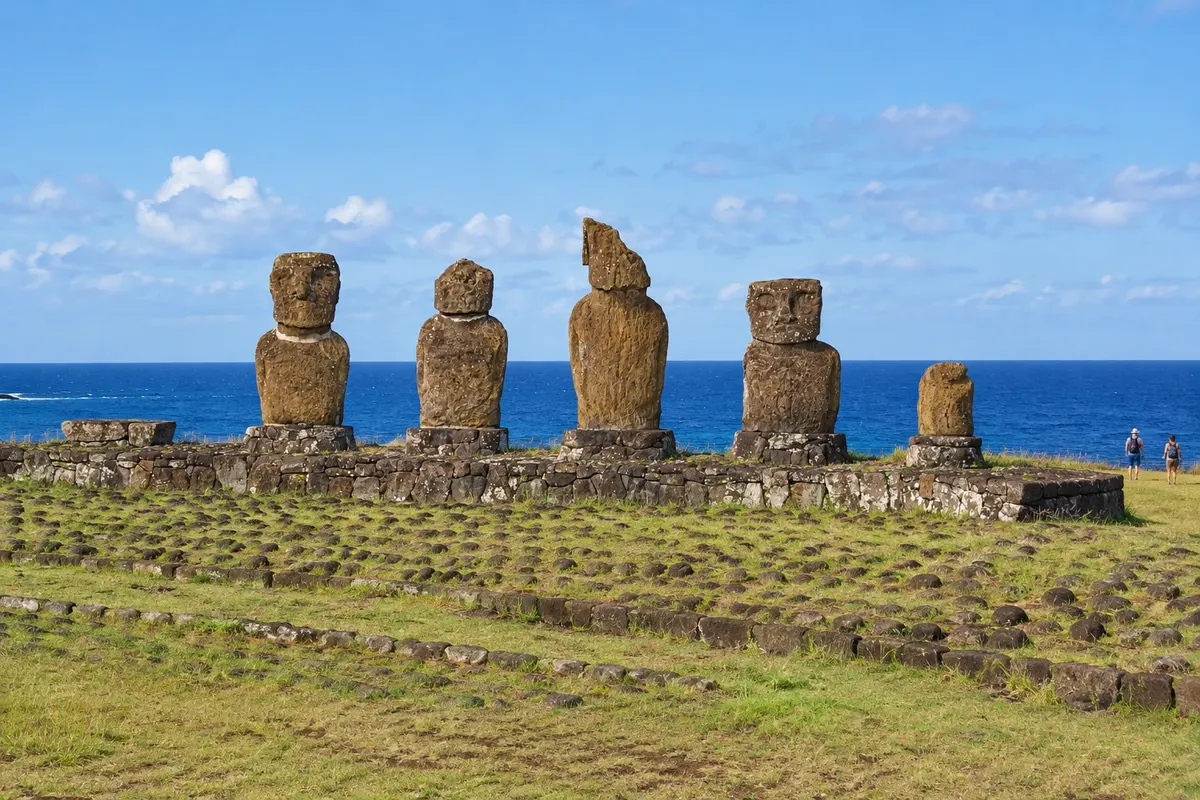
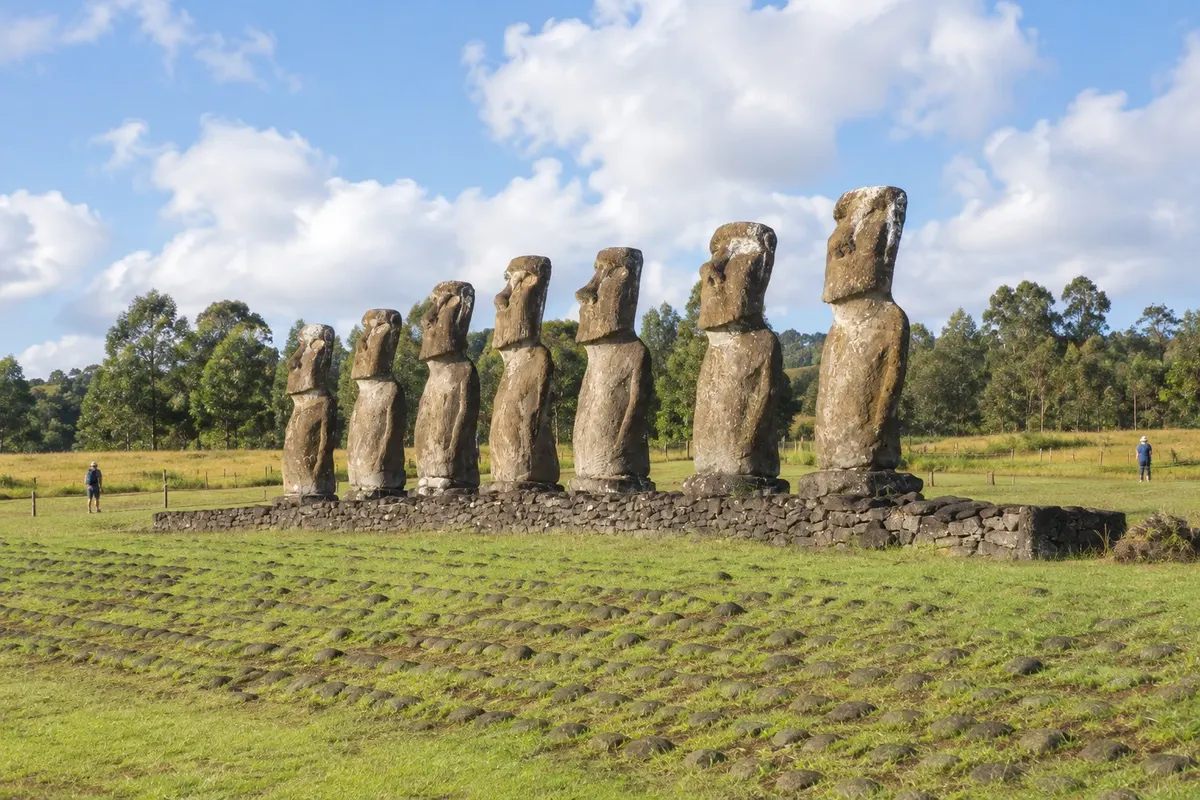
Na fotografiji: Ahu Tongariki, Rapa Nui

Illustrative images. The pictures in this guide are illustrations based on the real place, not photographs, and may differ from it.

Na voljo v trgovini Google Play Pošljite svoje fotografije

Spoznajte kraj

Pokrajina, ki jo doživite
v svojem ritmu.

Ilha de Páscoa is in the South Pacific, more than 3,500 km from the Chilean coast, and belongs to the Valparaíso Region. Locals call it Rapa Nui, the same name as the Polynesian people who live there and the language they speak. The island is triangular, about 164 km², with a volcano at each corner. Almost the entire population lives in Hanga Roa, the village on the west coast where the airport, the port and the lodgings are located.

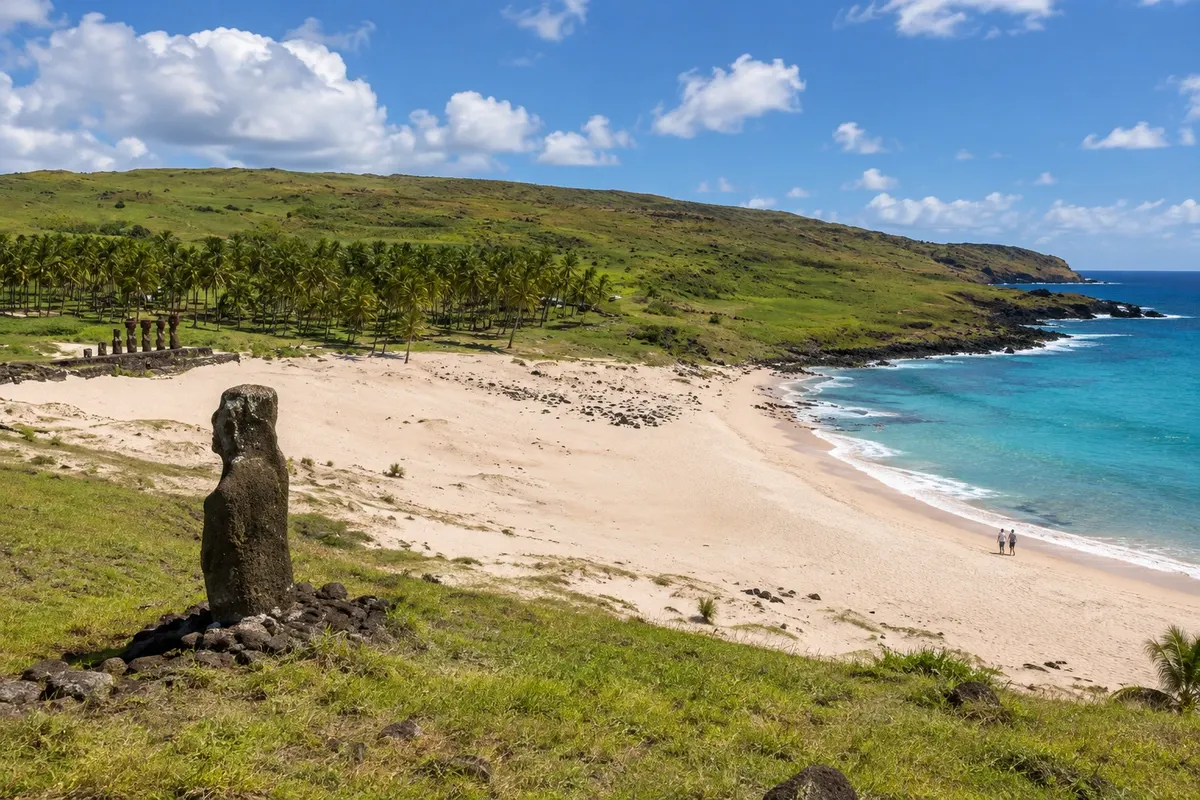
Much of the island is Parque Nacional Rapa Nui, a UNESCO World Heritage site, managed by the indigenous community Ma'u Henua. The park contains the moai, the stone statues representing ancestors, and the ahu, the ceremonial platforms where they were erected. On the southeast coast, the fifteen moai of Ahu Tongariki stand at the foot of Rano Raraku, the quarry where almost all the statues were carved. In the north, Anakena beach offers light sand, coconut trees and the moai of Ahu Nau Nau; nearby, Te Pito Kura holds the largest moai ever raised on an ahu.

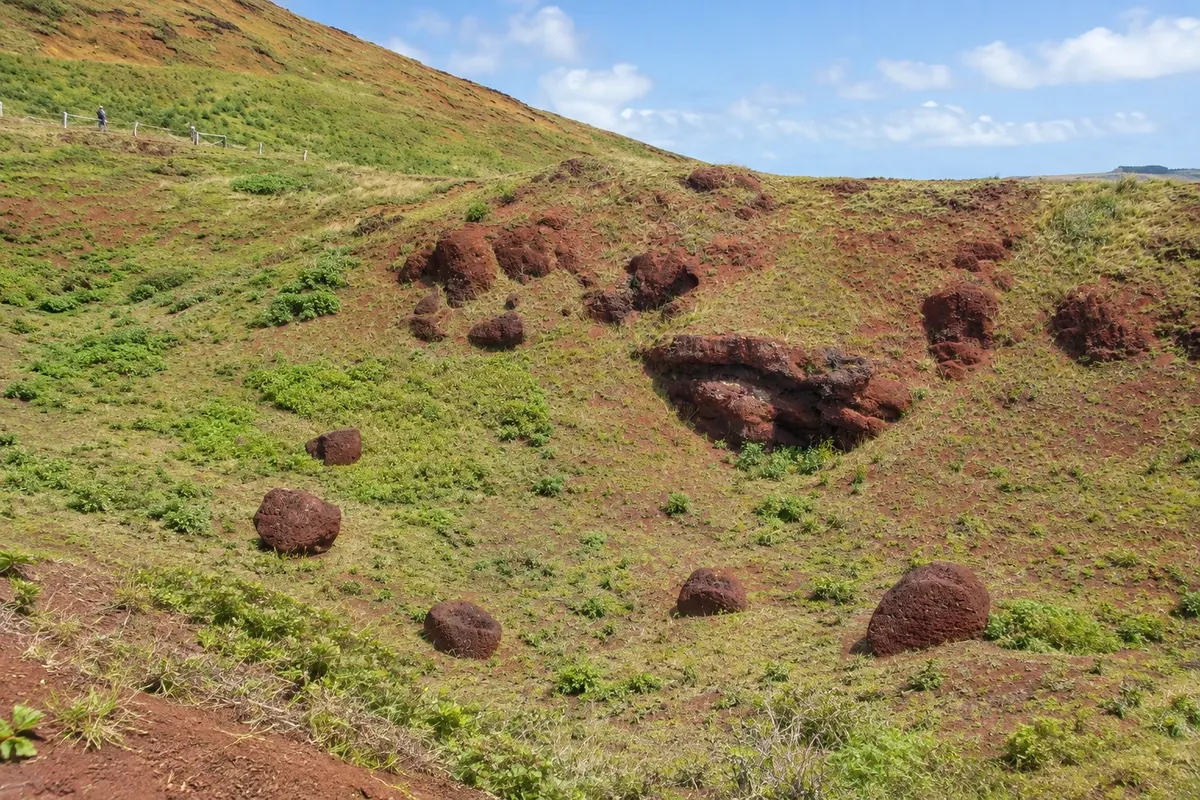
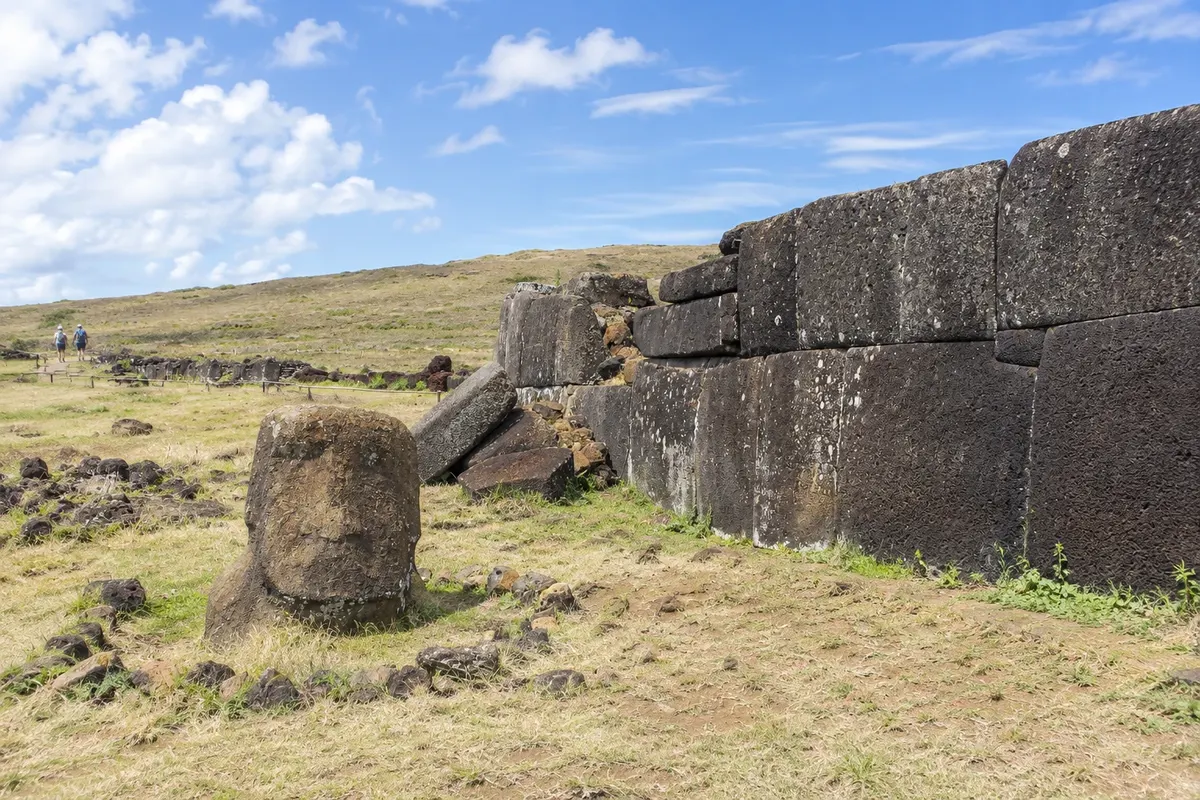
In the southwest, the crater of Rano Kau holds a lagoon, and on its rim is Orongo, the ceremonial village of the bird-man cult. Inland, the seven moai of Ahu Akivi face the sea, and the Puna Pau crater shows the red stone of the pukao, the headdresses of the statues. Closer to the village, Ahu Vinapu has walls of precisely fitted blocks.

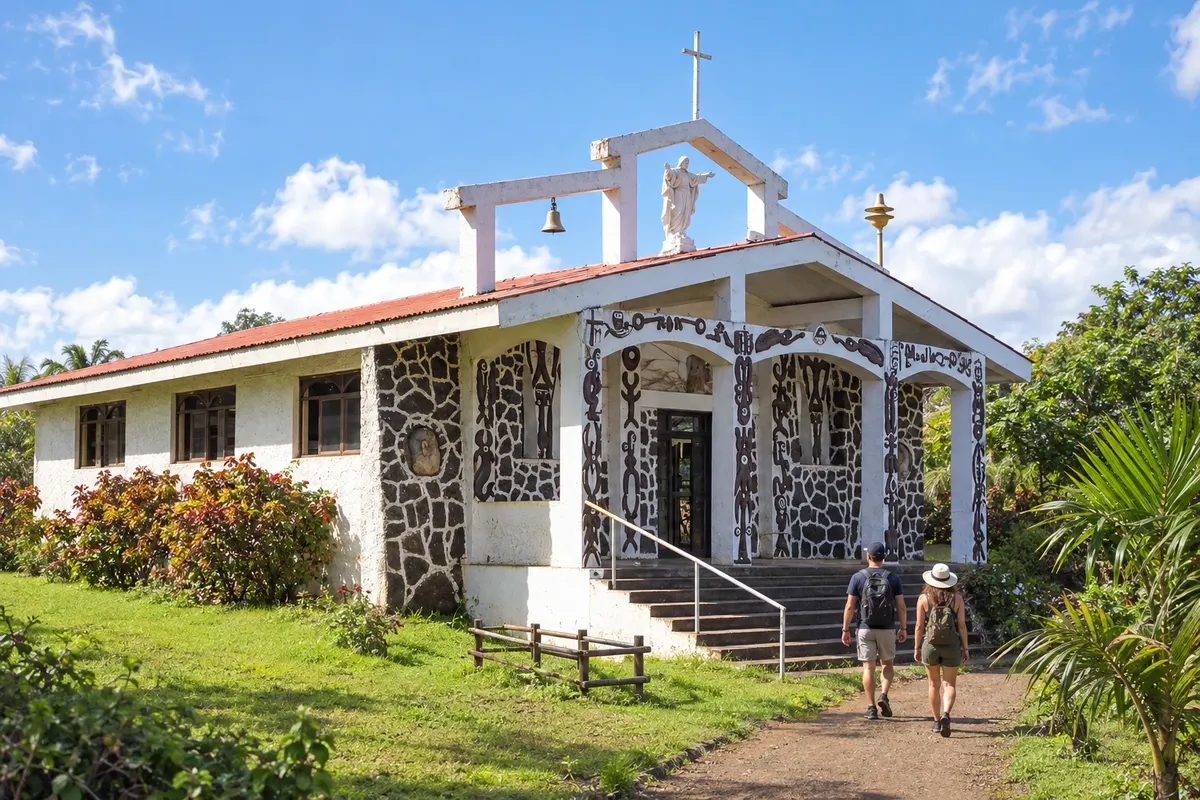
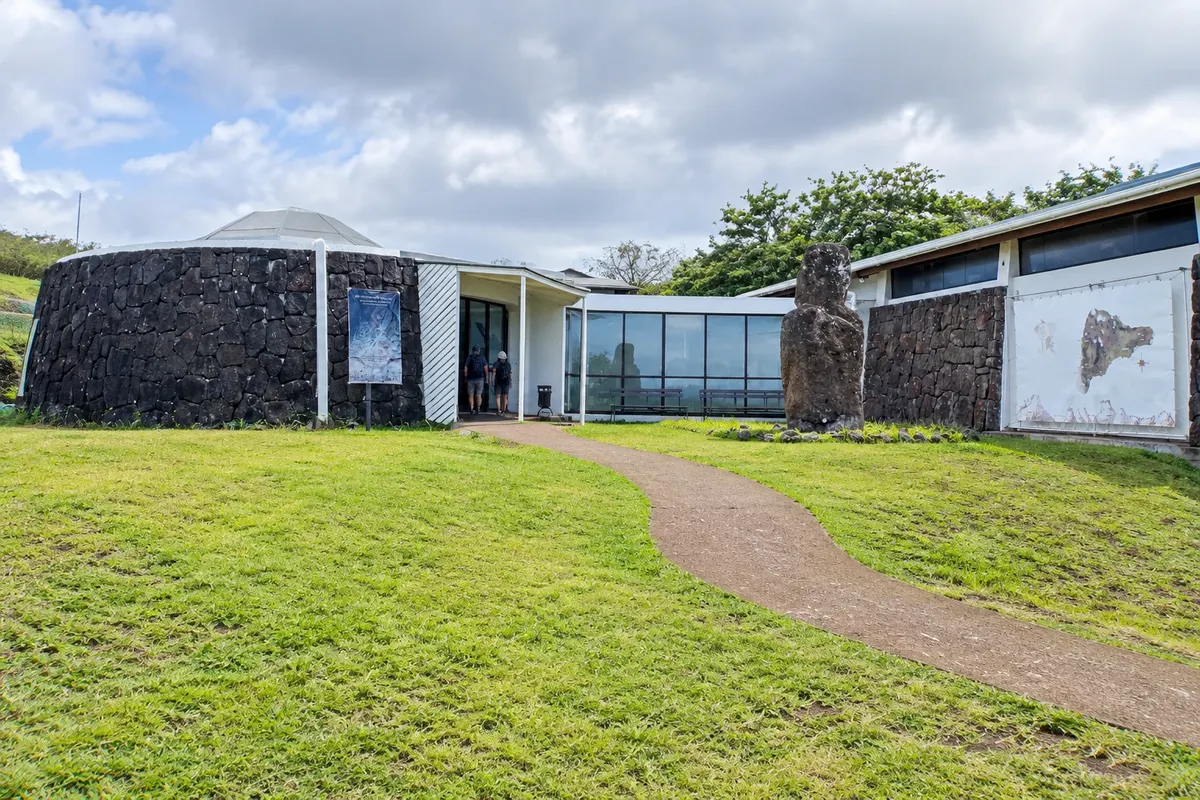
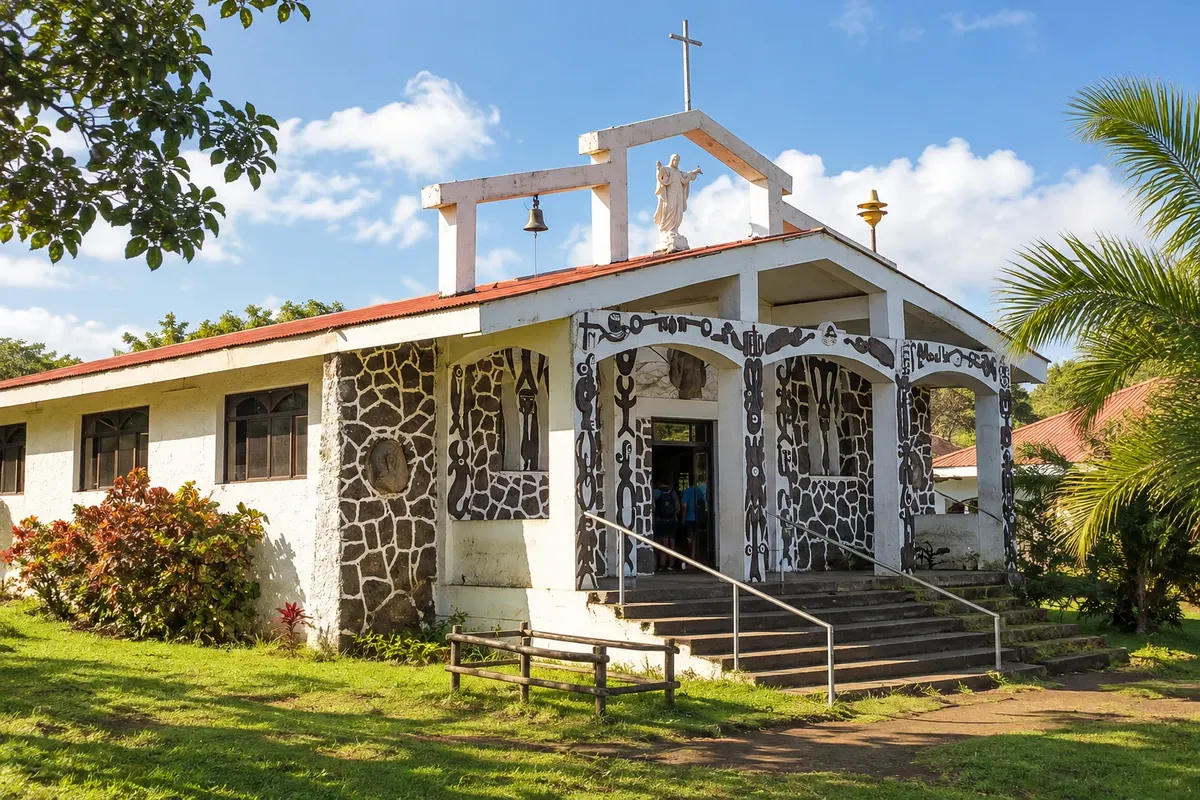
In Hanga Roa, the Tahai complex attracts visitors at sunset, the Museo Antropológico Padre Sebastián Englert tells the island’s history, and the Iglesia de la Santa Cruz displays saints carved in the Rapa Nui style. The moai and the ahu are sacred to the Rapa Nui people: they must not be touched or climbed on. To enter the park sites you must buy the ticket in advance and, at most sites, be accompanied by an accredited guide.

This destination brings together 1 city: Hanga Roa.

Delite: WhatsApp
Delite svoja popotniška doživetja s fotografijami Pošljite fotografije vsakega kraja, ki ste ga obiskali. Največje število fotografij na kraj: 5.

Ena destinacija, več poti

Mesta na tej poti

Začnite v enem mestu ali v načrt poti vključite več mest.

Easter Island – lega
Hanga Roa

Obrisi: Natural Earth (javna domena). Priredba: Cidade Turismo.

Kako do tja:Easter Island

✈ Aeropuerto Internacional Mataveri (IPC)· 1 km do cilja (Hanga Roa)

Arrival is by plane, at Aeropuerto Mataveri, in Hanga Roa. Regular flights depart from Santiago and take about five hours. Confirm before booking. There is no road to the mainland.

Doživite kraj

Kaj početi – Easter Island

Ahu Tongariki
Hanga Roa · Valparaíso · Arheološko najdišče

Ahu Tongariki

Largest ahu on Easter Island, with fifteen moai lined up with their backs to the sea, at the foot of the volcano Rano Raraku. It is the classic spot to watch the sunrise on the island.

Rano Raraku
Hanga Roa · Valparaíso · Arheološko najdišče

Rano Raraku

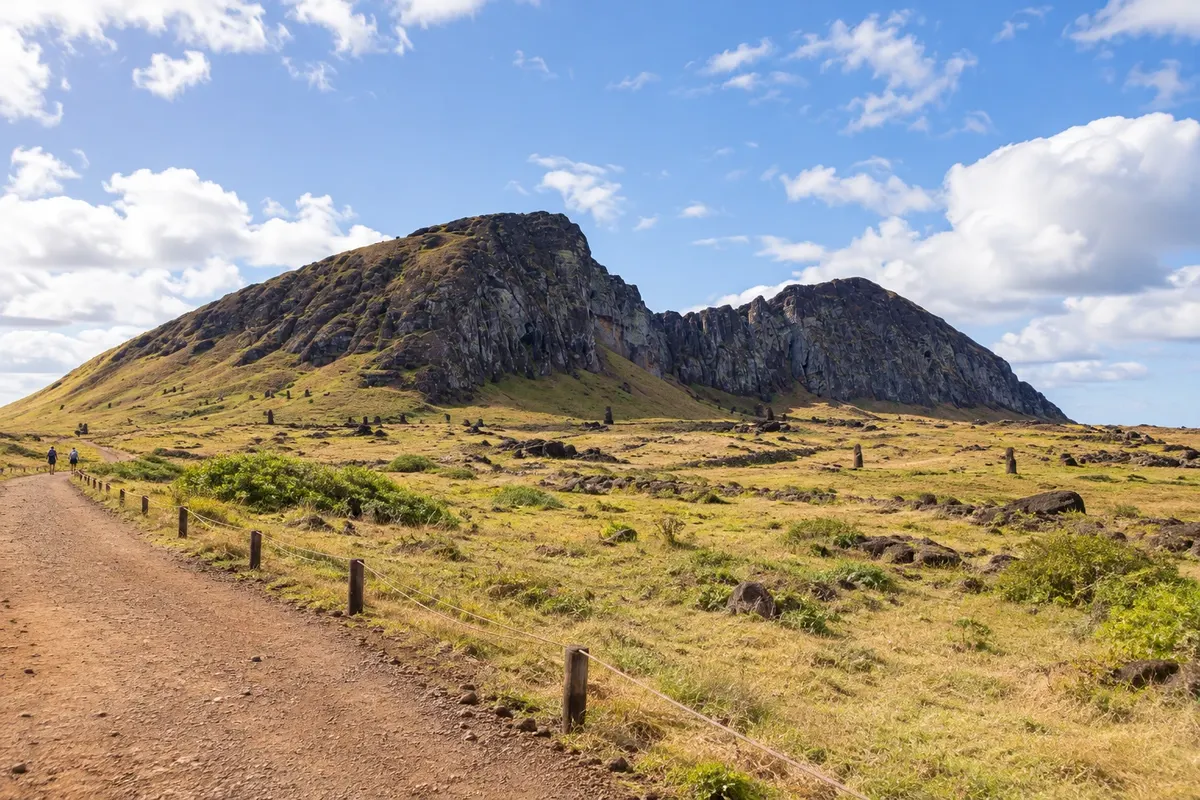
Volcanic crater that served as the quarry for almost all of the island's moai. On the slope, dozens of unfinished or partially buried statues; inside, a freshwater pond.

Anakena
Hanga Roa · Valparaíso · Beach and archaeological site

Anakena

White coral-sand beach on the north coast, with coconut trees and the moai of Ahu Nau Nau. According to tradition, it was here that Hotu Matu'a, the island's first king, landed.

Orongo
Hanga Roa · Valparaíso · Arheološko najdišče

Orongo

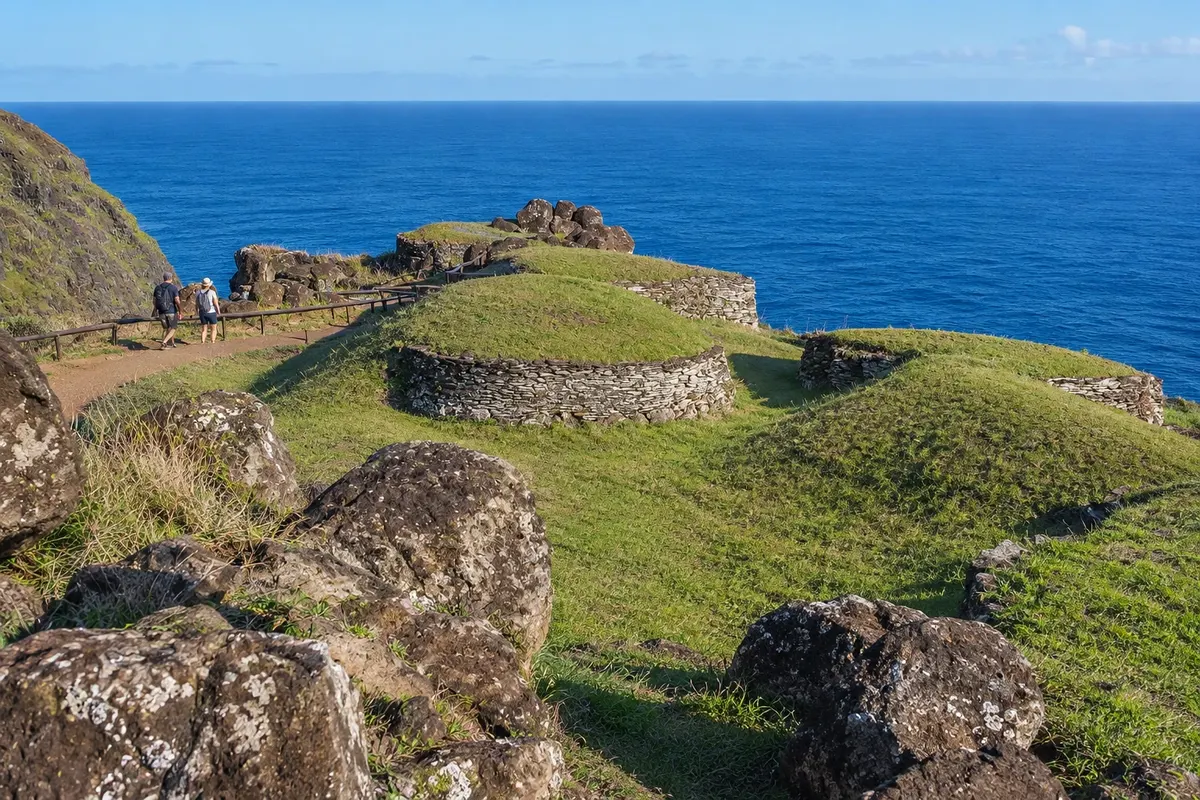
Ceremonial village of stone houses on the rim of the Rano Kau volcano, linked to the Birdman cult, with petroglyphs and views of the islets Motu Nui, Motu Iti and Motu Kao Kao.

Easter Island – prikaži dodatne kraje (8)
Rano Kau
Hanga Roa · Valparaíso · Volcano and viewpoint

Rano Kau

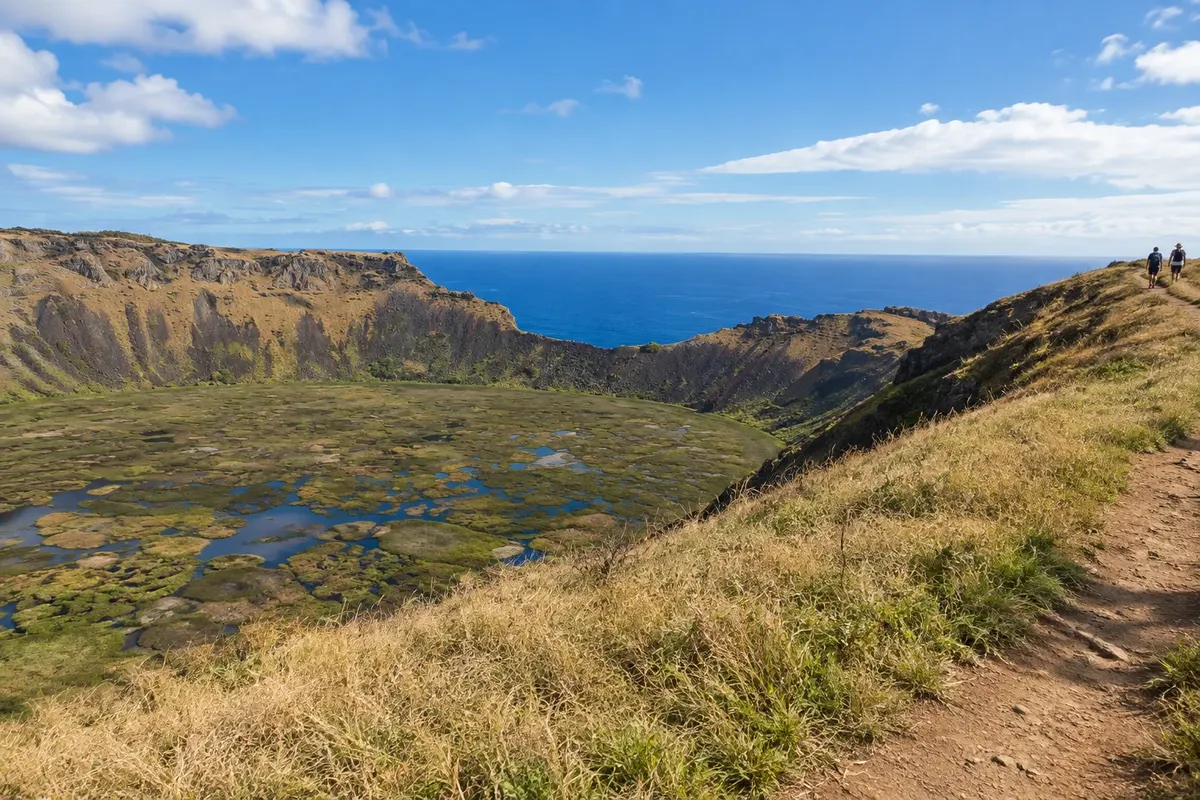
Extinct volcano at the southwest tip of the island, with a crater more than 1 km wide and a lagoon at the bottom. From the lookout on the rim you can see the crater and, on the other side, the Pacific.

Tahai
Hanga Roa · Valparaíso · Arheološko najdišče

Tahai

Seaside ceremonial complex north of downtown Hanga Roa, with three restored ahu and Ko Te Riku, the moai with coral eyes. The island's most popular spot to watch the sunset.

Ahu Akivi
Hanga Roa · Valparaíso · Arheološko najdišče

Ahu Akivi

Inland platform with seven identical moai facing the ocean, unlike most. It is aligned with the equinox sunset.

Father Sebastián Englert Anthropological Museum
Hanga Roa · Valparaíso · Muzej

Father Sebastián Englert Anthropological Museum

Anthropology museum in the Tahai area of Hanga Roa, with archaeological items and wood carvings that tell the story of the rapa nui people, the moai, and the bird-man cult.

Puna Pau
Hanga Roa · Valparaíso · Arheološko najdišče

Puna Pau

Small crater on the outskirts of Hanga Roa, from which the red scoria used for the pukao, the stone headdresses placed on the heads of some moai, was quarried.

Te Pito Kura
Hanga Roa · Valparaíso · Arheološko najdišče

Te Pito Kura

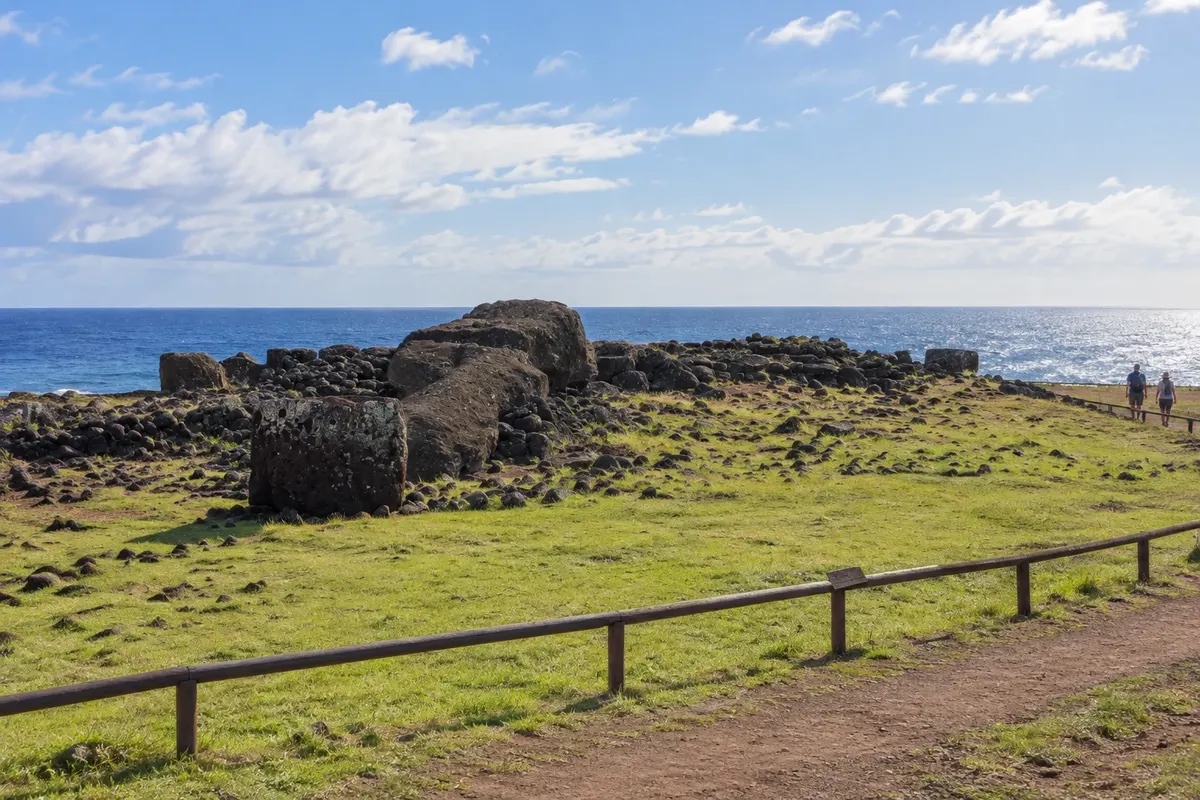
Site on the north coast with the moai Paro, the largest ever erected on an ahu, now fallen, and a round stone that tradition links to Hotu Matu'a.

Ahu Vinapu
Hanga Roa · Valparaíso · Arheološko najdišče

Ahu Vinapu

Ceremonial complex on the south coast, near the airport, known for its wall of large basalt blocks fitted with precision, compared to Inca constructions.

Church of the Holy Cross (Iglesia de la Santa Cruz)
Hanga Roa · Valparaíso · Cerkev

Church of the Holy Cross (Iglesia de la Santa Cruz)

Catholic church of Hanga Roa, on rua Te Pito o te Henua, decorated with wooden saints carved in the Rapa Nui style. It is a few blocks from the cove and the village square.

Kaj izbrati pred odhodom

Izleti – Easter Island

Izhodišče, trajanje, potek, vključene storitve in okvirna cena vsakega izleta.

East side in one day: Ahu Tongariki, Rano Raraku, Te Pito Kura and Anakena

Odhod: Hanga Roa Van excursion with accredited local guide one day, returning in the late afternoon Ves dan easy (short walks)

This is the tour that brings together Rapa Nui’s best-known sites. The van departs Hanga Roa along the paved coastal road on the south side. The first major stop is Rano Raraku, the crater about 18 km from Hanga Roa where almost all the island’s moai were carved. On the slope there are nearly 400 statues at different stages, many still attached to the rock or buried up to the neck. About 1 km from there is Ahu Tongariki, the island’s largest ceremonial platform, with 15 moai in a row, facing away from the sea. After that the road turns toward the north coast. At Te Pito Kura is the Paro moai, about 10 meters tall, the largest that was ever erected on an ahu, now fallen face down. Beside it is a rounded stone surrounded by a circle of stones, called Te Pito o te Henua (navel of the world). The day ends at Anakena, the white coral-sand beach with coconut palms, where Ahu Nau Nau, with seven moai, and Ahu Ature Huki, with a single moai, are located. There is time for a swim before returning to Hanga Roa via the paved road that crosses the center of the island.

Kraji na poti: Ahu Tongariki, Rano Raraku, Te Pito Kura, Anakena, Ahu Nau Nau, Ahu Ature Huki.

Vključuje: On excursions, generally: transport, a licensed local guide and stops at the sites. The Rapa Nui National Park ticket is paid separately and must be purchased beforehand; the guide checks it at the start. Lunch is usually paid separately, at the stalls in Anakena. Check the current rate table.

Nasvet: The park ticket grants only one entry to Rano Raraku: if you want to return there at sunrise in Tongariki, plan the order of your days. Bring a swimsuit, sunscreen, hat and water. The moai and ahu are sacred: do not touch the statues or climb onto the platforms.

Najboljši čas za obisk: All year. From December to March the sea at Anakena is warmer; from April to July there is more rain, in showers.

Rano Raraku, the moai quarry

Odhod: Hanga Roa Tour or private car, with a locally accredited guide half day, combined with Ahu Tongariki Dopoldne ali popoldne easy to moderate (short climbs)

Rano Raraku is the crater of an extinct volcano, formed by hardened volcanic ash (tuff), about 18 km from Hanga Roa, roughly a 25-minute drive. For around 500 years it was the quarry that produced the majority of the island’s moai. Today there are nearly 400 statues at the site, in all stages: some still lying and attached to the bedrock, others standing on the slope, buried up to the chest or neck. The largest unfinished figure exceeds 20 meters, nearly twice the height of any completed moai. The trail climbs the outer slope among the heads and reaches a viewpoint over Ahu Tongariki and the ocean. Another path leads into the crater, where there is a freshwater lagoon surrounded by totora. There is also the Tukuturi, a kneeling, bearded moai that differs from the others. The route is followed on the marked paths and with a guide.

Kraji na poti: Rano Raraku, Ahu Tongariki.

Vključuje: The Rapa Nui National Park ticket is mandatory and paid separately; it allows a single entry to Rano Raraku. A locally accredited guide is paid separately if not included in your tour. Check the current fee schedule.

Nasvet: Since there is a single entrance, arrange with your guide for the quietest time and allow enough time for the site. Wear closed footwear and bring a hat: there is little shade. Do not touch the moai or leave the marked trails.

Najboljši čas za obisk: Year-round. Late afternoon light is best for photos on the slope.

Sunrise at Ahu Tongariki

Odhod: Hanga Roa Tour by van or private car, with a guide Približno 2 uri pre-dawn and morning Lahko

Ahu Tongariki is on the southeast coast, near Rano Raraku and the Poike peninsula. It is Rapa Nui’s largest ceremonial platform, with 15 moai side by side; one of them is the heaviest ever raised on the island. In 1960, a tsunami caused by the Chilean earthquake dragged the platform and statues inland. The restoration was carried out in the 1990s under an agreement between the Chilean government, the Universidad de Chile and the Japanese crane maker Tadano. Because the moai face away from the sea, the sun rises behind them, and many people leave Hanga Roa while it is still dark to see the silhouette of the 15 figures against the sky. The color of the sunrise depends on the clouds: there is no way to guarantee clear skies. Near the parking area there is an isolated moai known as the traveling moai.

Kraji na poti: Ahu Tongariki.

Vključuje: On a tour, generally: round-trip transport and a guide. The Rapa Nui National Park entrance fee is mandatory and paid separately. Check the current rate table.

Nasvet: Bring a jacket: the predawn wind is cold even in summer. Combine the sunrise with a visit to Rano Raraku on the same day, noting that the park ticket allows only one entry to the quarry. Ahu Tongariki is also typically included in east-side tours.

Najboljši čas za obisk: All year round. In winter (June to August) the sun rises later and departures are not as early.

Orongo and the Rano Kau crater

Odhod: Hanga Roa Van tour or walk, with an accredited local guide Približno 3 ure Dopoldne ali popoldne Z avtom lahka; peš srednje zahtevna

Rano Kau is the extinct volcano that forms the southwest tip of the island, rising 324 meters, just above Hanga Roa. The crater is nearly 1.6 km in diameter and holds a freshwater lagoon covered in totora; sheltered from the wind, it has its own microclimate, with fig trees and other plants. From the lookout, the view drops onto the lagoon and, on the other side, out to the ocean. On the rim, where the roughly 300-meter cliff meets the crater wall, is Orongo, the ceremonial village of the Tangata manu (bird-man) cult. There are 53 low stone houses, restored in the 1970s, and many bird-man petroglyphs. There, between the 18th and 19th centuries, the annual contest to bring back the first manutara egg from the islet Motu Nui—visible offshore—was held. Some tours join Orongo and Ahu Vinapu in the same outing. There is also a guided hike that climbs on foot from Hanga Roa to the volcano rim.

Kraji na poti: Rano Kau, Orongo, Motu Nui, Ahu Vinapu.

Vključuje: On tours, generally: transport and an accredited local guide. The Rapa Nui National Park entrance fee is paid separately and grants a single entry to Orongo. Check the current fee table.

Nasvet: Bring a jacket and windbreaker: the volcano rim is exposed. Do not step on house walls or on stones with petroglyphs.

Najboljši čas za obisk: All year. On rainy or foggy days, the crater may be obscured.

Anakena: beach, Ahu Nau Nau and Ahu Ature Huki

Odhod: Hanga Roa Car, taxi, bicycle or transfer half a day or more Ves dan Lahko

Anakena is on the north coast, 18 km from Hanga Roa, via the paved road that crosses the center of the island. It is one of the two small sandy beaches on a coast that is almost entirely rock: white coral sand, clear water and a stand of coconut trees brought from Tahiti. According to oral tradition, this is where Hotu Matu'a landed, the chief who led the arrival of the first settlers. Behind the sand is Ahu Nau Nau, with seven moai, some with red pukao. Because they were buried for centuries, the carvings are well preserved. During restoration carried out between 1978 and 1980, the first coral eye of a moai was found. On a small hill beside it is Ahu Ature Huki, with a single moai, re-erected in 1956 by Thor Heyerdahl’s expedition with help from the islanders. There is parking, restrooms and food and craft stalls.

Kraji na poti: Anakena, Ahu Nau Nau, Ahu Ature Huki.

Vključuje: The beach does not require a guide; the Ahu Nau Nau area is part of Rapa Nui National Park, and an entry permit may be requested: always carry it. Restrooms and food are paid separately.

Nasvet: Respect the ahu area: do not climb on the platforms or touch the moai. Bring a sunshade or seek the shade of the coconut trees, because the sun is strong.

Najboljši čas za obisk: From December to March, for swimming; during the rest of the year visits continue, with colder water and more showers.

Sunset at Tahai

Odhod: Hanga Roa town center Peš around 1 hour and a half Popoldne Lahko

Tahai is a ceremonial complex by the sea, a short walk from downtown Hanga Roa along the coast. There are three platforms side by side: Ahu Vai Ure, with five moai; Ahu Tahai, with one; and Ahu Ko Te Riku, whose moai has restored eyes and a red pukao on its head. The group was restored in 1974 by archaeologist William Mulloy, who is buried there with his wife. In the late afternoon, residents and visitors sit on the grass to watch the sun set over the ocean behind the moai. The color of the sky depends on the clouds: a clear sunset cannot be guaranteed. During the day the place is calm and you can walk there from the caleta.

Kraji na poti: Tahai, Ahu Vai Ure, Ahu Tahai, Ahu Ko Te Riku.

Vključuje: Tahai is outside the Rapa Nui National Park guide requirement. Check the rules when purchasing the entrance ticket.

Nasvet: Arrive before sunset to find a spot on the grass. Bring a flashlight for the walk back and a light jacket. Do not climb onto the platforms.

Najboljši čas za obisk: All year. From December to March the sun sets later and there are more people.

Prikaži dodatne izlete (9)

Ahu Akivi and Puna Pau

Odhod: Hanga Roa Tour or private car, with a locally accredited guide Približno 3 ure Dopoldne ali popoldne Lahko

This excursion crosses the island’s interior. Puna Pau is a small quarry on the outskirts of Hanga Roa, where the red scoria used for the pukao — the cylindrical topknots placed on some moai — was extracted. It was the only source of that material on the island; there are still abandoned pukao at the site. Ahu Akivi lies about 10 km north of Hanga Roa, 2.3 km from the coast, on the southern slope of Terevaka. It has seven identical moai, about 4.9 m tall, that face the ocean, unlike most, which face inland. By tradition they represent the seven explorers sent before Hotu Matu'a. The statues were re-erected in 1960 by William Mulloy and Gonzalo Figueroa. At the equinoxes they align with the sun. Some tours add the Ana Te Pahu cave, near Ahu Akivi.

Kraji na poti: Ahu Akivi, Puna Pau, Ana Te Pahu.

Vključuje: On tours, generally: transportation and a locally accredited guide. The Rapa Nui National Park entrance fee is paid separately. Check the current schedule.

Nasvet: It’s close to Hanga Roa and fits into a free morning or afternoon. The trail to Maunga Terevaka starts near Ahu Akivi: you can combine the two.

Najboljši čas za obisk: Year-round. After rain, the island’s interior dirt roads become muddy.

Ahu Vinapu

Odhod: Hanga Roa Tour or private car, with a locally accredited guide short visit, combined with another outing Dopoldne ali popoldne Lahko

Ahu Vinapu is on the south coast, a few kilometers from Hanga Roa. It is a complex of three platforms: Vinapu I, II and III. What stands out is the wall of Vinapu I: large basalt slabs cut and fitted carefully, without mortar, in a technique often compared to Inca constructions in Cusco. That comparison in the 20th century fueled hypotheses of contact between South America and Polynesia, such as Thor Heyerdahl’s Kon-Tiki expedition. The visit is short. Many tours include Vinapu on the same outing as Orongo and Rano Kau, or at the start of the drive along the south coast.

Kraji na poti: Ahu Vinapu.

Vključuje: On tours, generally: transportation and a locally accredited guide. The Rapa Nui National Park entrance fee is paid separately. Check the current schedule.

Nasvet: Notice the joints between the platform stones, but do not climb onto it or lean on the wall.

Najboljši čas za obisk: Vse leto.

Walk in Hanga Roa: cove, Iglesia de la Santa Cruz and Pea

Odhod: Hanga Roa town center Peš Približno 3 ure Dopoldne ali popoldne Lahko

Hanga Roa is the only town on Rapa Nui, and almost everything there is done on foot. A route of about 4 km starts at Tahai and follows the coast to Caleta Hanga Roa O Tai, the fishermen’s cove, where the boats arrive and dive trips depart. Next to it is Playa Pea, a surf spot where sea turtles sometimes come near the shallow rocks (this cannot be guaranteed). From the sea the walk climbs up to the Iglesia de la Santa Cruz, whose carvings mix Catholic iconography with Rapa Nui motifs: bird-men, fish and the manutara on the façade, and a Virgin wearing a shell crown in the moai style. Along the way there is a craft market and the island products fair. The route ends at Hanga Piko, a bay for artisanal fishing and Polynesian canoes.

Kraji na poti: Hanga Roa, Iglesia de la Santa Cruz, Caleta Hanga Roa O Tai, Playa Pea, Hanga Piko, Tahai.

Vključuje: Self-guided visit; entry to the church is free. Crafts and food are paid separately.

Nasvet: Start early in the morning or late in the afternoon when the sun is weaker, and finish at Tahai for sunset. In the church, enter quietly and wearing appropriate clothing.

Najboljši čas za obisk: Vse leto.

Mass with rapa nui chants at the Iglesia de la Santa Cruz

Odhod: Hanga Roa town center Peš about 1 hour of Mass Dopoldne Lahko

The Iglesia de la Santa Cruz is Hanga Roa’s Catholic church. The parish was created in 1937, and the first priest was Sebastián Englert, a missionary who studied the island’s language and history. At Masses, celebrated in Spanish, the hymns are sung in rapa nui, and Sunday morning gathers many residents, some wearing flower crowns and colorful clothes. Inside, the church has a volcanic stone cross on the altar, an image of Nuestra Señora de Rapa Nui from 1970 with a shell crown and shell-and-obsidian eyes, and a baptismal font decorated with rongorongo signs. Visitors attend as guests of a community religious service: arrive early, sit in the back pews and follow silently. After Mass, it’s worth taking time to look at the carved façade and the Sacred Heart, whose face resembles a moai kavakava.

Kraji na poti: Iglesia de la Santa Cruz, Hanga Roa.

Vključuje: Entrance is free.

Nasvet: Check the mass schedule at the parish when you arrive on the island. Wear modest clothing, do not photograph during the service and leave the front pews for local residents.

Najboljši čas za obisk: All year round, on Sundays.

Diving and snorkeling in Rapa Nui

Odhod: Hanga Roa cove Boat departure with dive center Približno 2 uri Dopoldne ali popoldne Lahka do srednje zahtevna pot

The water around the island has little suspended matter, and visibility exceeds 50 meters on calm days. Dive centers are in Hanga Roa and depart by boat from the cove. In the bay there are sites with coral, underwater caves and walls, chosen according to the weather and each diver’s level. One of them is a submerged moai at about 20 meters: it is not ancient, it was made for a TV program in the 1990s and later sunk. Offshore from Rano Kau, the islet Motu Nui, the same one from the bird-man competition, is a dive site with abundant marine life. The submerged moai and Motu Nui require diving certification; for those who have never dived there are introductory dives with an instructor. The boat trip with snorkeling takes place when the sea allows. A full-length neoprene suit is the rule all year.

Kraji na poti: Caleta Hanga Roa O Tai, Motu Nui, Rano Kau.

Vključuje: At dive centers, generally: boat, equipment and instructor or guide. Check the current rate table and what is included in each departure.

Nasvet: Keep dates flexible: swell can cancel the more distant departures. Do not dive within 24 hours before your return flight. Bring your diving certification, if you have one.

Najboljši čas za obisk: All year, depending on swell. From December to March demand is higher: book in advance.

Ana Kakenga and Ana Te Pahu caves

Odhod: Hanga Roa Trail with accredited local guide between 2½ and 4 hours Dopoldne ali popoldne moderate (uneven terrain)

Rapa Nui’s west coast and interior are crossed by lava tubes, caves formed by flows from ancient volcanoes. Ana Te Pahu is a wide lava tube, with native plants protected at the entrance, near Ahu Akivi. Ana Kakenga, known as the cave of the two windows, sits on the northwest coast: a dark corridor leads to two openings in the cliff facing the Pacific. The shortest trail totals about 5 km between the two caves. The roughly 4-hour version adds Ana Te Pora cave and the Ahu Te Peu site on the coast. The path is narrow and rocky and becomes slippery in rain; inside the caves you need to stoop in some sections. Operators pick up at accommodations in Hanga Roa and return the group by van.

Kraji na poti: Ana Te Pahu, Ana Kakenga, Ana Te Pora, Ahu Te Peu.

Vključuje: On guided trails, generally: transport and accredited local guide. The Rapa Nui National Park ticket is paid separately and must be purchased in advance. Check the current fee table.

Nasvet: Wear trail shoes and bring a headlamp, water and a rain poncho. Not recommended for people with claustrophobia.

Najboljši čas za obisk: Year round. From April to July it rains more and the rocks become slippery.

Trail to Maunga Terevaka, the highest point on the island

Odhod: Ahu Akivi Guided hike or horseback ride Približno 3 ure Dopoldne ali popoldne moderate (ascent of about 390 m)

Maunga Terevaka, at 507 meters, is the highest point of Rapa Nui and the largest of the volcanoes that form the island. The most used trail starts next to Ahu Akivi, at about 130 meters elevation, and climbs an open grassy slope, without technical sections, with loose horses along the way. The ascent takes roughly 1½ hours, and the descent is a bit faster. From the summit you can see the ocean in all directions, with no other land in sight, and the whole island below: Rano Kau, Hanga Roa, Rano Raraku and the Poike peninsula. There are also horseback rides that go up Terevaka starting from the north coast and from Ahu Akivi.

Kraji na poti: Maunga Terevaka, Ahu Akivi.

Vključuje: On guided trails and rides, typically: transport to the trailhead and a guide. The Rapa Nui National Park entry fee is paid separately. Check the current schedule.

Nasvet: There is almost no shade: bring a hat, sunscreen, a windbreaker and plenty of water. On days with low cloud, the summit may be obscured.

Najboljši čas za obisk: All year; from April to July, downpours leave the path muddy.

Rapa Nui by bicycle or on horseback

Odhod: Hanga Roa Rented bicycle or horseback ride with a guide 3 hours to a full day Dopoldne ali popoldne Lahka do srednje zahtevna pot

The island is about 164 km², and much of it can be explored by bicycle or on horseback. Bicycles are rented at shops on Hanga Roa’s main street. The roads from Hanga Roa to Anakena and the south coast are paved; the others are dirt, passable with care, especially after rain. There are also guided mountain-bike outings inland and along the coast. On horseback, rides follow paths where there are no roads. A local riding school offers, for example, the circuit through the caves Ana Kakenga, Ana Te Pora and Ana Te Pahu to Ahu Akivi (4–5 hours), the ascent to Terevaka from the north coast (5–6 hours) and the north coast with Rano Raraku and Ahu Tongariki. At park sites, entry and guide rules apply.

Kraji na poti: Hanga Roa, Ahu Akivi, Maunga Terevaka, Ana Kakenga, Rano Raraku, Ahu Tongariki.

Vključuje: Bicycle rental and horseback rides are paid separately. The Rapa Nui National Park entry is also charged. Check the current fee schedule.

Nasvet: If cycling, check that the kit includes materials for fixing flat tires: cell signal is weak outside Hanga Roa. On a horseback ride, bring long pants, water, a snack, and sunscreen.

Najboljši čas za obisk: From October to March, with less rain; wind and sun favor departures early in the morning or late in the afternoon.

Tapati Rapa Nui, the island festival

Odhod: Hanga Roa On foot and by car, around the competition sites about two weeks of festival all day and night Lahko

Tapati Rapa Nui is the island’s main cultural festival. It takes place in summer, usually in the first two weeks of February, and the dates are announced each year. It is nearly two weeks of competitions among families vying for the festival queen title, with more than 40 activities. In the Haka Pei, competitors go down a steep slope lying on banana trunks. The Tau'a Rapa Nui is a traditional triathlon, with canoe and banana-carrying. There are canoe races, body painting with natural pigments (takona), dances, songs and parades. At night the main stage is at Hanga Vare Vare, with performances and a food and craft fair. Most activities are open to the public, but it is a community celebration, not a show for tourists: the visitor attends as a guest.

Kraji na poti: Hanga Roa, Hanga Vare Vare.

Vključuje: Most activities are open to the public. Food and crafts are paid for separately.

Nasvet: Check the dates for the year before buying your ticket and book well in advance: flights and accommodation fill up. Ask permission before photographing people up close.

Najboljši čas za obisk: Early February (dates change each year; confirm).

Po dnevih

Easter Island – načrt poti. Število dni: 3, 4in6

Predlogi za načrtovanje poti. Vrstni red dni prilagodite vremenu in razpoložljivosti izletov.

3 dni · Rapa Nui in 3 days: the essentials of the moai

ZaFor those with limited time who want to see the main sites: Rano Raraku, Ahu Tongariki, Anakena, Orongo and Tahai. · Izhodišče:Hanga Roa
  1. Dan 1 · Arrival at Mataveri, Hanga Roa and sunset at Tahai

    From Brazil, the flight arrives in Santiago. The flight to the island departs only from Santiago and lasts about 5 hours: if your flight from Brazil arrives in time, you can continue the same day; if you arrive late in the day, stay overnight in Santiago and fly the next day. Check schedules before buying both legs. Mataveri airport is on the edge of Hanga Roa. Remember the island is two hours behind the mainland. In the afternoon, walk around Hanga Roa, from the cove to the Iglesia de la Santa Cruz, and finish with the sunset at Tahai.

  2. Dan 2 · East side: Ahu Tongariki, Rano Raraku, Te Pito Kura and Anakena

    Full day on the east-side tour with a licensed local guide. If you want, start with sunrise at Ahu Tongariki. Then visit Rano Raraku (one entry only during the ticket period), Te Pito Kura, and the afternoon at Anakena beach, including Ahu Nau Nau.

  3. Dan 3 · Orongo, Rano Kau and Ahu Akivi

    In the morning, Orongo and the Rano Kau crater, with Ahu Vinapu if the guide includes it. If the return flight is in the afternoon, fit in Ahu Akivi and Puna Pau beforehand; if it’s early, leave Ahu Akivi for another trip and proceed to Mataveri. In Santiago, connect to Brazil or spend a night in the city.

4 dni · Rapa Nui in 4 days: sites, beach and the island interior
ZaFor those who want to see the main sites at a relaxed pace and have a free afternoon at Anakena beach. · Izhodišče:Hanga Roa
  1. Dan 1 · Arrival and Tahai

    From Brazil, the flight arrives in Santiago. The flight to the island departs only from Santiago and lasts about 5 hours: if your flight from Brazil arrives in time, you can continue the same day; if you arrive late in the day, stay overnight in Santiago and fly the next day. Check schedules before buying both legs. In Hanga Roa, set your clock: two hours behind the mainland. Easy walk around the cove and the Iglesia de la Santa Cruz and sunset at Tahai.

  2. Dan 2 · Sunrise at Ahu Tongariki and east side

    Early departure for sunrise at Ahu Tongariki. Next, Rano Raraku, the moai quarry, with time for the slope trail and the crater lagoon. In the afternoon, Te Pito Kura and Anakena, with a swim in the sea and Ahu Nau Nau.

  3. Dan 3 · Orongo, Rano Kau and Ahu Vinapu

    In the morning, Orongo and the Rano Kau crater, with a view of Motu Nui, and Ahu Vinapu on the return. In the afternoon, diving or snorkeling departing from the cove if the sea allows, or a free afternoon in Hanga Roa.

  4. Dan 4 · Ahu Akivi, Puna Pau and return

    In the morning, Ahu Akivi and Puna Pau, inland on the island. If the flight schedule allows, include the Ana Te Pahu cave. Afterwards, Mataveri and the flight to Santiago, connecting to Brazil or spending a night in the city.

6 dni · Rapa Nui in 6 days: moai, trails, caves and sea
ZaFor those who want to get to know the island unhurriedly, with hikes, a horseback ride, diving and the Sunday mass. · Izhodišče:Hanga Roa
  1. Dan 1 · Arrival and sunset at Tahai

    From Brazil, the flight arrives in Santiago. The flight to the island departs only from Santiago and lasts about 5 hours: if your flight from Brazil arrives in time, you can continue the same day; if you arrive late in the day, stay overnight in Santiago and fly the next day. Check schedules before buying both legs. In Hanga Roa, two hours behind the mainland, rest from the trip and walk to see the sunset at Tahai.

  2. Dan 2 · East side in one day

    Full day with a licensed local guide: Ahu Tongariki, Rano Raraku (one entry only during the ticket period), Te Pito Kura and Anakena, with a sea swim at late afternoon.

  3. Dan 3 · Orongo, Rano Kau and Ahu Vinapu

    In the morning, Orongo and the Rano Kau crater, on foot or by van, and Ahu Vinapu. In the afternoon, the walk around Hanga Roa: the cove, Playa Pea, the craft market and the Iglesia de la Santa Cruz.

  4. Dan 4 · Ahu Akivi, Puna Pau and Maunga Terevaka

    In the morning, Puna Pau and Ahu Akivi. From Ahu Akivi, the trail (or horseback ride) to the summit of Maunga Terevaka, the island’s highest point, with the ocean all around. Return to Hanga Roa late afternoon.

  5. Dan 5 · Caves and diving

    In the morning, the cave hike to Ana Te Pahu and Ana Kakenga with a guide. In the afternoon, diving or a boat trip with snorkeling departing from the cove if the sea allows. If it falls on a Sunday, swap the morning for the Mass with rapa nui chants at the Iglesia de la Santa Cruz.

  6. Dan 6 · Sunrise at Ahu Tongariki and return

    If you haven’t seen it yet, leave early for sunrise at Ahu Tongariki (the ticket is valid for 10 days from first entry; Rano Raraku does not allow re-entry). Then, a final morning at Anakena or in Hanga Roa and the flight to Santiago, connecting to Brazil or spending a night in the city.

Najboljši čas za obisk

Kdaj se odpraviti:Easter Island po mesecih

The climate is subtropical, with scattered rain throughout the year. From December to March days are usually warm, with highs near 27 °C, and the sea is more pleasant. From June to September highs are around 21 °C and there is more rain. The Tapati Rapa Nui festival usually takes place in early February, and the island becomes busier.

The seasons shown are the most usual ones; nature doesn't always follow the calendar.

januar Malo padavin

summer and holidays · warmer water

At Mataveri, average highs around 27 °C and lows around 20 °C. Humid heat, strong sun and brief heavy showers. Warmer sea for swimming at Anakena. At the end of the month, the island prepares for Tapati Rapa Nui.

februar Malo padavin

Tapati Rapa Nui · high season

Average highs around 27.5 °C and lows around 21 °C, the warmest month. Little rain. Tapati Rapa Nui usually takes place in the first two weeks of the month, with competitions and performances open to the public. It is the busiest time of year: flights and accommodation fill up early.

marec Zmerne padavine

end of summer · fewer people

Average highs around 27 °C and lows around 20 °C. Showers increase toward the end of the month. After the holidays, the island becomes quieter, with the sea still warm for swimming and diving.

april Veliko padavin

rainy autumn · mild temperature

Average highs around 25.5 °C and lows around 19 °C. The rainiest period begins, with showers that come and go within the same day. Dirt trails and caves become slippery. Less activity than in summer.

maj Veliko padavin

showery rain · low season

Average highs around 23 °C and lows around 18 °C. One of the wettest months. Tours continue, but it’s wise to leave flexibility in your itinerary to swap hiking days. The island receives fewer visitors.

junij Veliko padavin

mild winter · quiet island

Average highs around 22 °C and lows around 17 °C. Frequent rain and stronger winds. The sun rises later, which makes the sunrise at Ahu Tongariki easier. Low season, with less crowded excursions.

julij Veliko padavin

winter holidays · colder sea

Average highs around 21 °C and lows around 16 °C in the cooler months. It still rains a lot. Sea bathing is colder; diving with a full-length neoprene suit.

avgust Zmerne padavine

cool winter · wind

Average highs near 21 °C and lows near 16 °C. Rain begins to decrease. Good month for hikes such as Maunga Terevaka, with mild temperatures. Light traffic.

september Zmerne padavine

spring · Fiestas Patrias

Average highs around 21.5 °C and lows around 16 °C. Mild days and moderate rain. The Fiestas Patrias, in mid-month, increase demand for flights from Santiago: book in advance.

oktober Zmerne padavine

mild spring · trails

Average highs around 22.5 °C and lows around 16 °C. Less rain and longer days. A quiet month for hiking, horseback riding and cycling.

november Malo padavin

little rain · before summer

Average highs around 24 °C and lows around 17.5 °C. One of the driest months. The sea begins to warm. Moderate activity before high season.

december Malo padavin

start of summer · year end

Average highs around 25.5 °C and lows around 19 °C. Little rain and strong sun. Year‑end celebrations and the start of holidays fill flights and tours in the second half of the month.

Načrtujte pot

Kako do tja:Easter Island

By plane from Santiago to Mataveri (IPC)

Easter Island (Isla de Pascua), which residents call Rapa Nui, lies about 3,500 km from the Chilean mainland, in the middle of the Pacific. Regular flights depart from Santiago, operated by LATAM, and the flight takes about 5 hours. Mataveri Airport (IPC) is on the edge of Hanga Roa, a few minutes from downtown. On arrival, set your clock: the island is two hours behind mainland Chile. In high season (January, February and the Tapati period), buy in advance.

Requirements to enter the island

In addition to the documents required for Chile, Easter Island has its own entry rules. Before boarding in Santiago, each traveler completes the Single Entry Form (FUI) online and presents it to the Policía de Investigaciones (PDI) at the airport: without it you cannot board. The form asks for the identity document or passport, a lodging reservation at a Sernatur-authorized service with address (or an invitation letter from a resident processed by the Provincial Delegation), and the return ticket. Maximum stay is 30 days. Rules may change: confirm on the government’s official website before traveling.

Rapa Nui National Park ticket

The archaeological sites are part of Rapa Nui National Park, a UNESCO World Heritage site, administered by the indigenous community Ma'u Henua. To visit them you must buy the park ticket, individual, in advance on the park’s official website. It is valid for 10 days from first entry and permits a single entry to Rano Raraku and one to Orongo. Visits to the sites are conducted with a licensed local guide; Tahai and Anakena beach are usually exempt from this requirement, except for the Ahu Nau Nau sector. The moai and the ahu are sacred: do not touch the statues, do not climb the platforms, do not remove any stone, and walk only on marked trails. There is a ticket: check the current table.

How to get around the island

There are no regular buses. Hanga Roa is explored on foot. For the sites, the most common option is a tour with a licensed local guide, which handles transport. You can also rent a car, jeep, motorcycle, ATV, or bicycle in Hanga Roa, and arrange taxi trips. The roads from Hanga Roa to Anakena and the south coast are paved; the others are dirt, becoming muddy after rain. Outside Hanga Roa mobile signal is weak: arrange the taxi return time in advance. Even with a rental car, entry to the sites requires the guide.

Pred odhodom

Praktične informacije

Z nekaj načrtovanja boste imeli več časa za uživanje na poti.

Kdaj se odpraviti

The climate is subtropical, with scattered rain throughout the year. From December to March days are usually warm, with highs near 27 °C, and the sea is more pleasant. From June to September highs are around 21 °C and there is more rain. The Tapati Rapa Nui festival usually takes place in early February, and the island becomes busier.

The seasons shown are the most usual ones; nature doesn't always follow the calendar.

Koliko dni ostati

Allow three to five days on the island. Three days are enough for the southeast coast with Rano Raraku and Tongariki, the north with Anakena and Te Pito Kura, and the southwest with Rano Kau, Orongo and Vinapu. With four or five days you’ll have time for the beach, the museum, sunsets at Tahai and to revisit a site in different light.

V katerem mestu prenočiti

Accommodation is in Hanga Roa. The center, around Avenida Policarpo Toro and the small cove, concentrates restaurants, shops and the craft market, and everything is within walking distance. To the north, the Tahai area is quieter, close to the museum and the sea for sunsets. To the south, the Hanga Piko and Mataveri sectors are near the airport, with guesthouses and cabins spread along low-rise streets. One of the entry rules requires a reservation in accommodation registered with Sernatur: confirm before traveling.

Spoštujte kraj

Odnesite svoje odpadke, upoštevajte oznake in podprite lokalne ponudnike. V naravi upoštevajte navodila za obiskovalce.

Odgovori na vaša vprašanja

Pogosta vprašanja – Easter Island

How many days to stay on Ilha de Páscoa?

A reasonable minimum is three full days, not counting travel days. With four or five days you can see the main sites without rush, return to Anakena beach and see more than one sunset at Tahai.

When to go to Ilha de Páscoa?

You can go year‑round. Summer, from December to March, usually brings warmer days and calmer seas for swimming at Anakena. Winter, from June to September, is cooler and rainier, with fewer visitors. Those who want to see the Tapati Rapa Nui festival should target early February and book well in advance.

What are the rules for visiting the island?

The island has its own rules. You must fill out an entry form before boarding in Santiago, have a reservation at accommodation that is officially registered, respect a maximum permitted length of stay, and purchase the Parque Nacional Rapa Nui ticket before visiting. At most sites, visits are conducted with an accredited guide. Rules may change: confirm before traveling.

Do you need a car on Ilha de Páscoa?

It’s not mandatory. Guided tours already include transport, and Hanga Roa’s center is walkable. There are car and bicycle rentals in the village, useful for getting to Tahai, the beach or the market, but a guide is still required at most park sites.

Can you do a return day trip from Santiago?

No. The flight takes about five hours each way and the island requires at least three days to visit the main sites. The usual approach is to stay overnight in Hanga Roa and base your excursions from there.

Odkrijte druge destinacije Iskanje po zvezni državi in mestu

Več kot vodnik