Heidelberg and the Black Forest

Baden-Württemberg · Nemčija

Heidelberg and the Black Forest

Ruined castle above the Neckar, centuries-old spas in Baden-Baden and Freiburg at the gateway to the Floresta Negra in southwestern Germany.

South

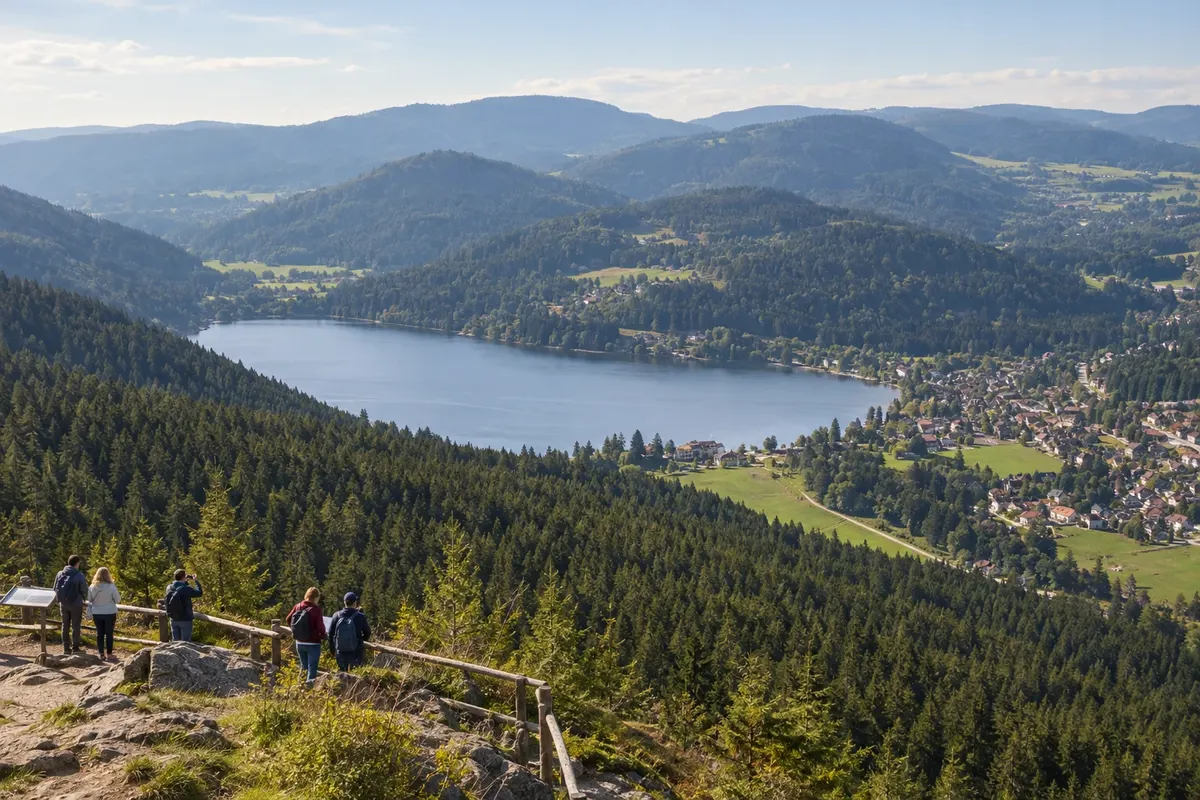
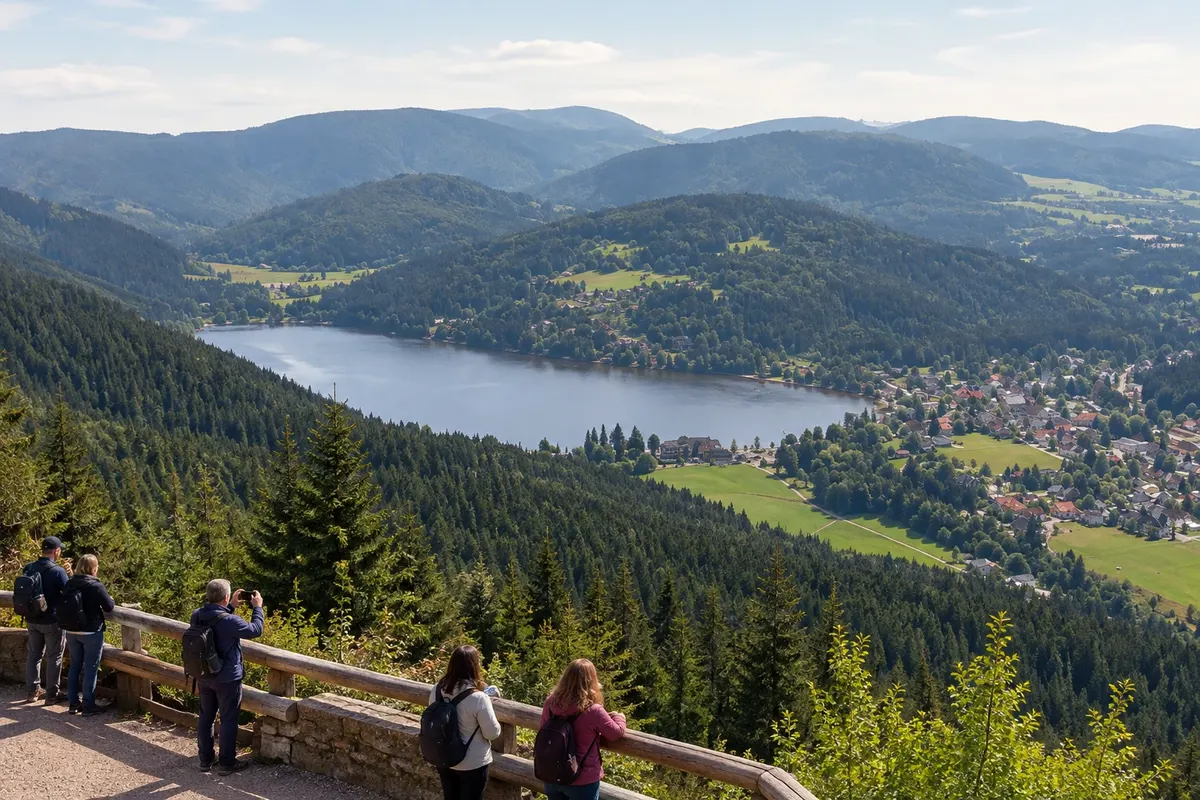
Na fotografiji: Titisee seen from the Hochfirst, Floresta Negra

Illustrative images. The pictures in this guide are illustrations based on the real place, not photographs, and may differ from it.

Na voljo v trgovini Google Play Pošljite svoje fotografije

Spoznajte kraj

Pokrajina, ki jo doživite
v svojem ritmu.

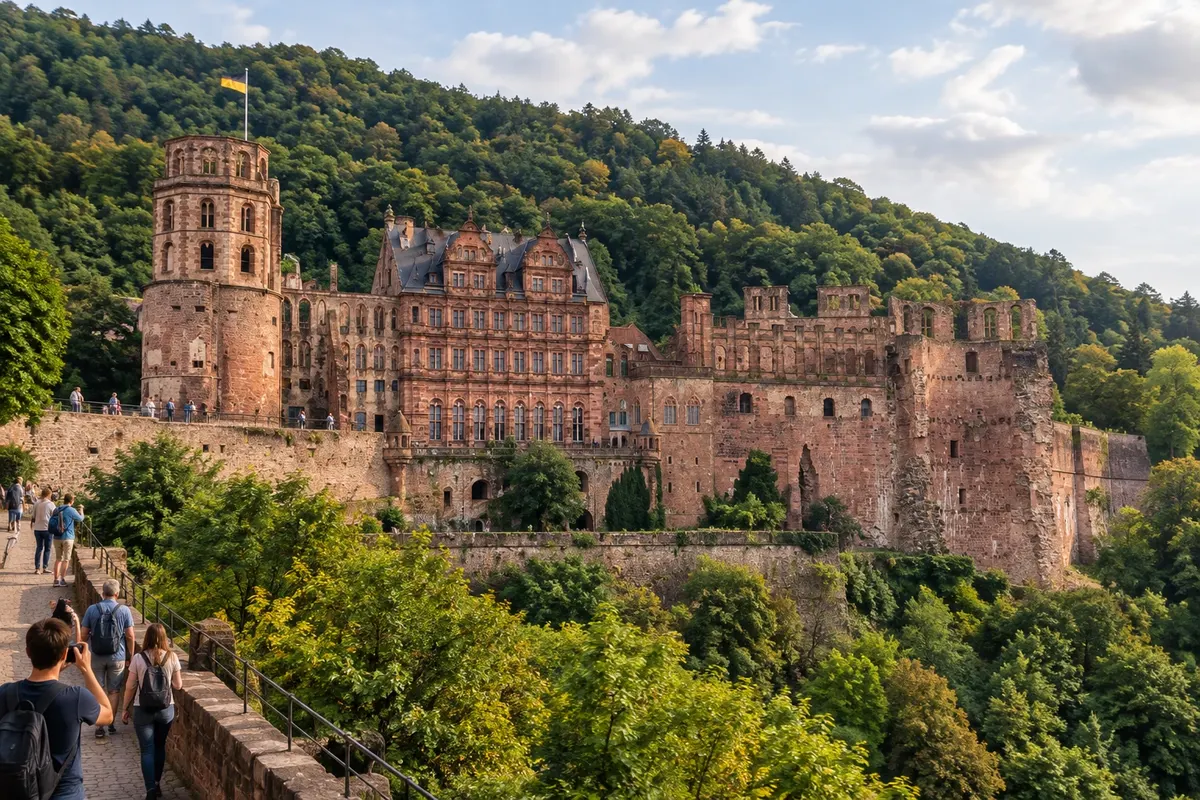
Southwestern Germany, in the state of Baden-Württemberg, brings together three quite different cities linked by train along the Rhine valley. Heidelberg sits on the banks of the Neckar, with the old center (Altstadt) squeezed between the water and the hill and the ruined castle looking down on the town. It is home to the oldest university in the modern country, founded in 1386, and it emerged from World War II almost undamaged.

Further south begins the Floresta Negra (Schwarzwald). It is not a park nor a single forest: it is a region of low mountains, about 160 km from north to south, covered with dark pines and firs (hence the name), cut by valleys, lakes, waterfalls and villages with timber houses. The highest point is the Feldberg, at about 1,490 meters. The region gave the world the cuckoo clock and the cake Floresta Negra (Schwarzwälder Kirschtorte).

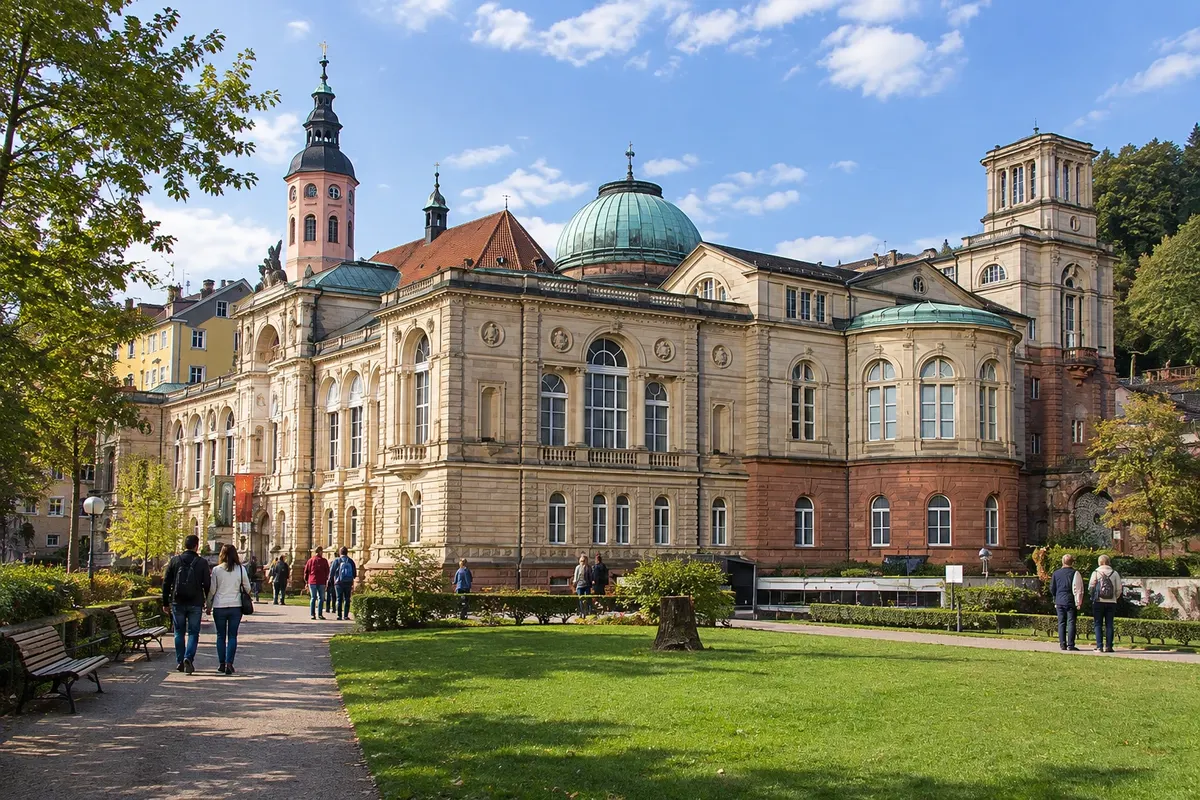
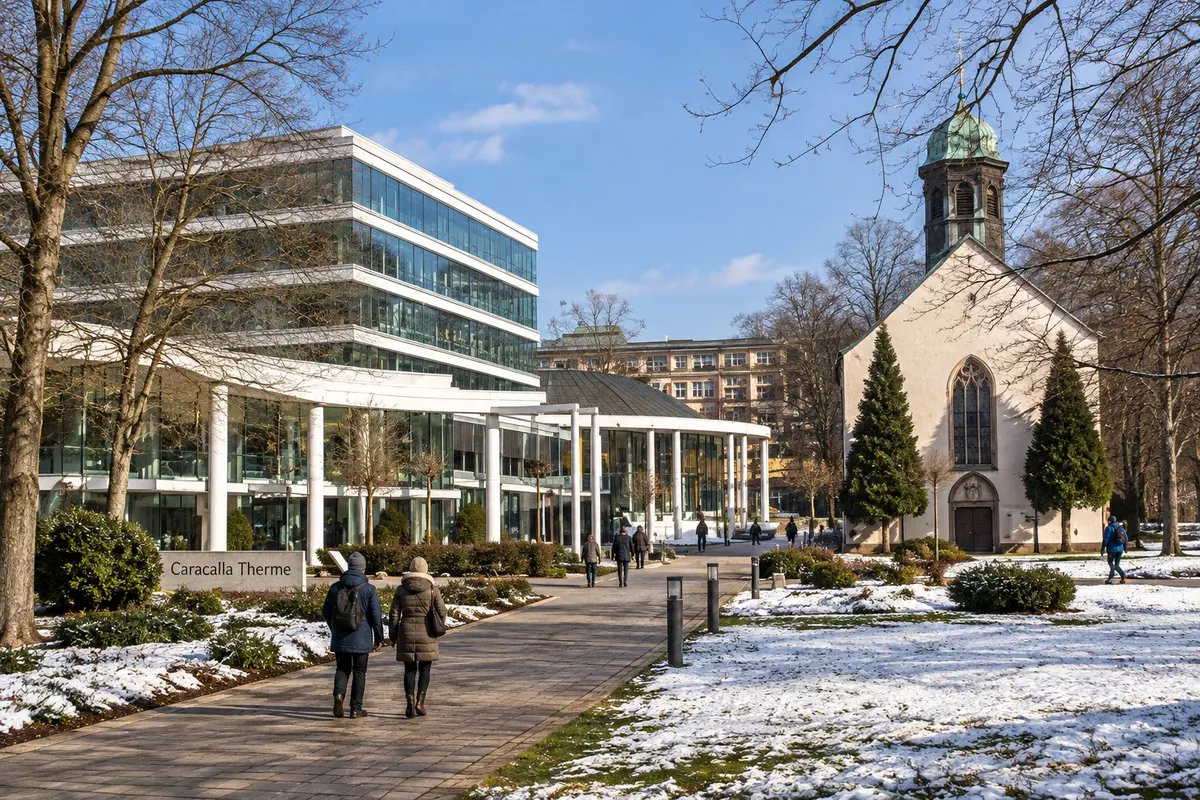
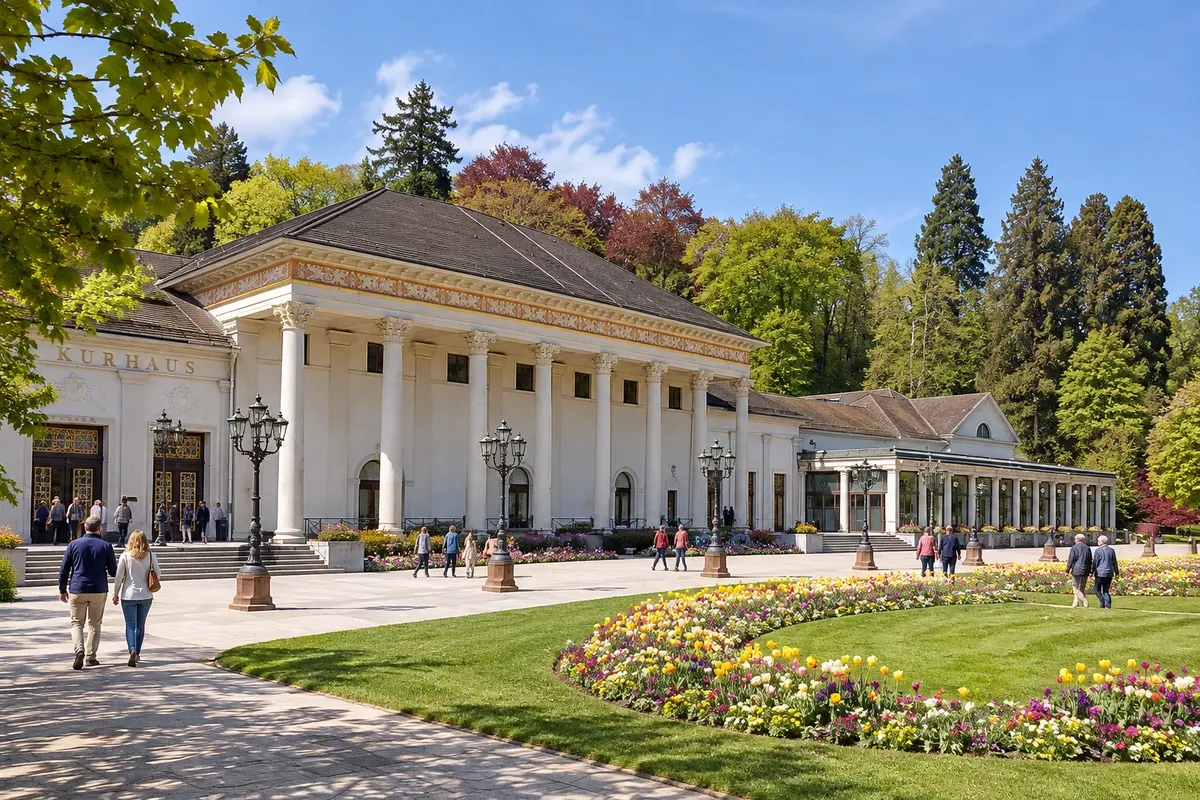
Baden-Baden lies on the northern edge of the Floresta Negra and has relied on hot springs since Roman times. It has the Friedrichsbad, a 19th-century bathhouse, the Caracalla Therme, the Kurhaus with its casino and the Lichtentaler Allee, a park along the Oos stream.

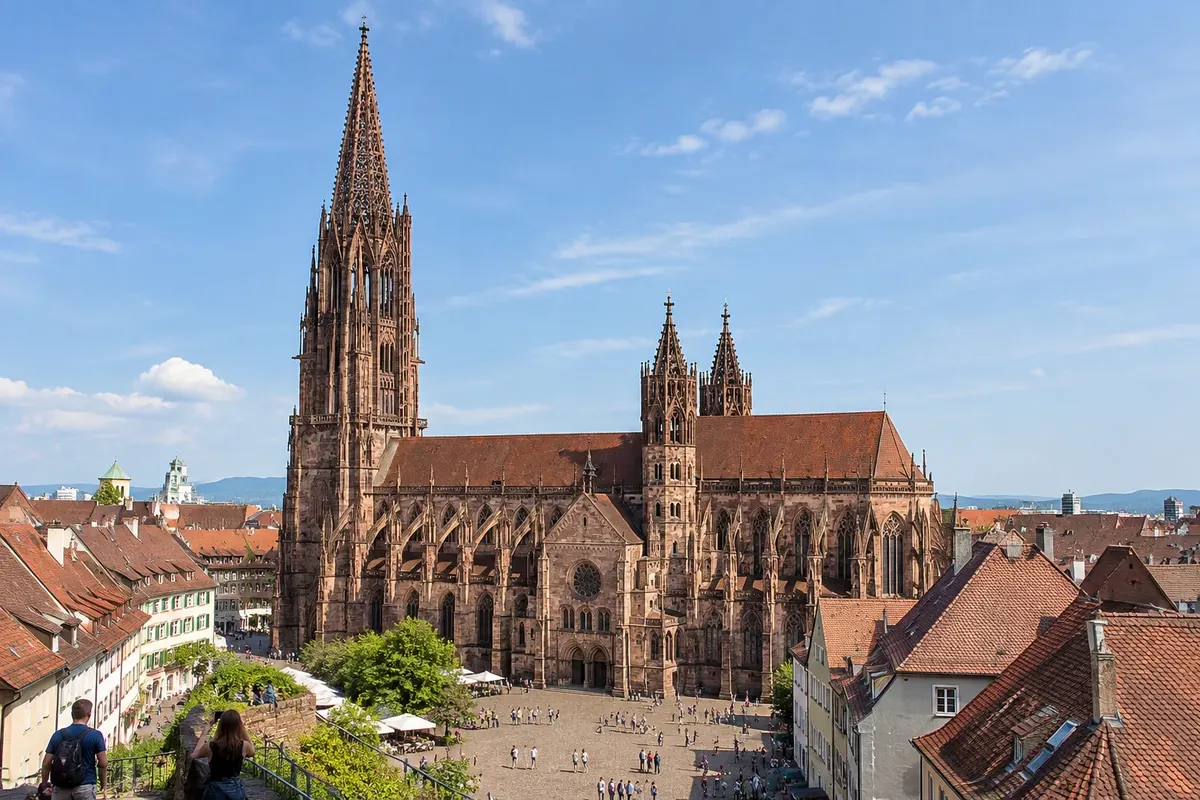
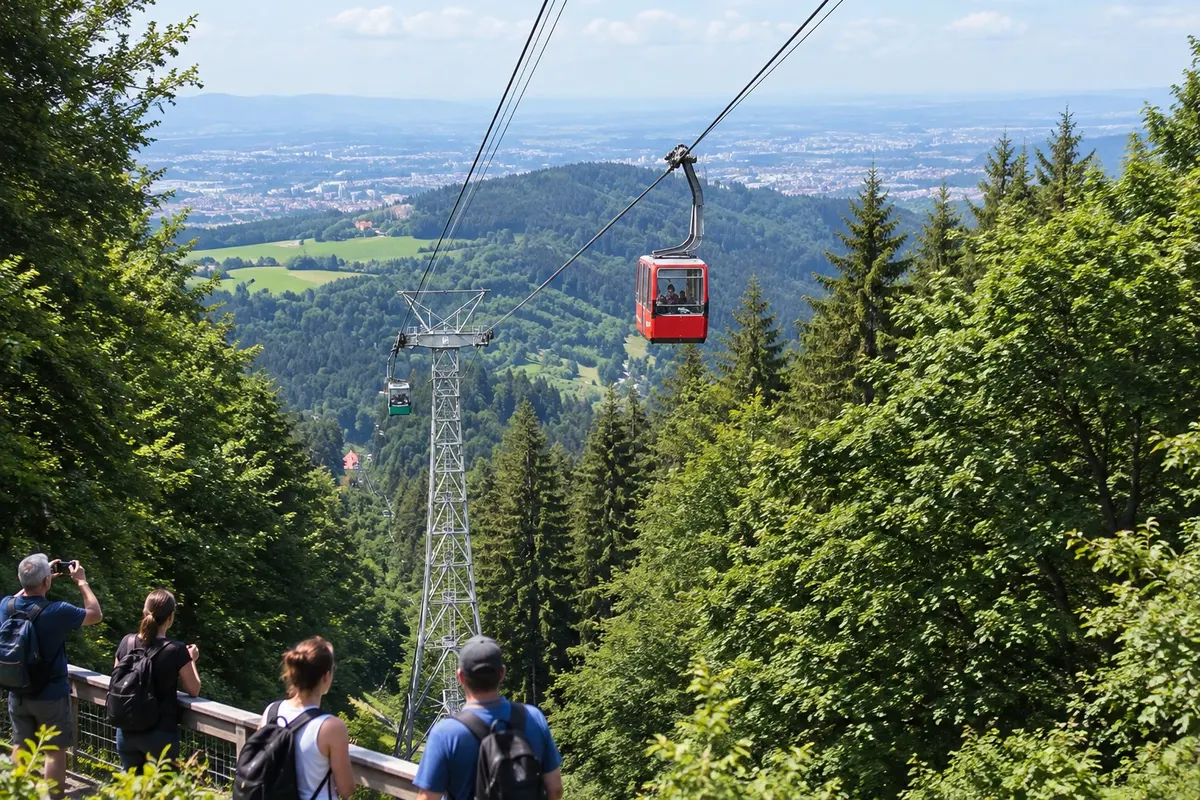
Freiburg im Breisgau, at the southern tip, is a university city with a Gothic cathedral with an openwork tower, a daily market on the square and small water channels running through the streets (the Bächle). From there you can take the cable car up to Schauinsland and reach Titisee by regional train. The Triberg waterfalls, homeland of the cuckoo clocks, are just over an hour away.

This destination brings together 3 cities: Heidelberg, Baden-Baden, Freiburg im Breisgau.

Delite: WhatsApp
Delite svoja popotniška doživetja s fotografijami Pošljite fotografije vsakega kraja, ki ste ga obiskali. Največje število fotografij na kraj: 5.

Ena destinacija, več poti

Mesta na tej poti

Začnite v enem mestu ali v načrt poti vključite več mest.

Heidelberg and the Black Forest – lega
Freiburg im BreisgauHeidelbergBaden-Baden

Obrisi: © BKG (2026), dl-de/by-2-0. Priredba: Cidade Turismo.

Kako do tja:Heidelberg and the Black Forest

✈ Flughafen Frankfurt am Main (FRA), kraj: Frankfurt am Main· 87 km do cilja (Heidelberg)

Verify before booking. The most commonly used gateway is Frankfurt Airport (FRA). From Frankfurt, trains run to Heidelberg, Baden-Baden and Freiburg via the Rhine valley line. Those coming from Switzerland or France can use Basel-Mulhouse Airport, near Freiburg.

Predlagana točka prihoda:Heidelberg

Heidelberg
Baden-Württemberg · Heidelberg and the Black Forest Predlagana točka prihoda

Heidelberg

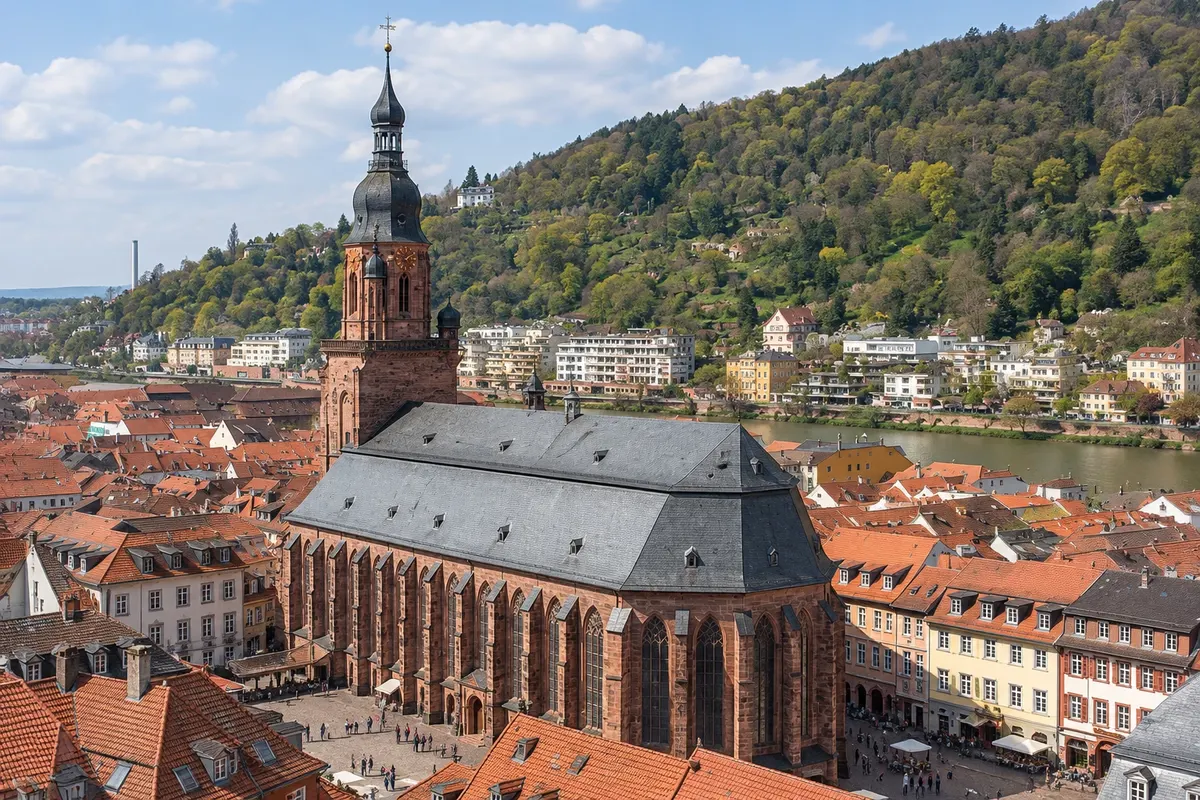
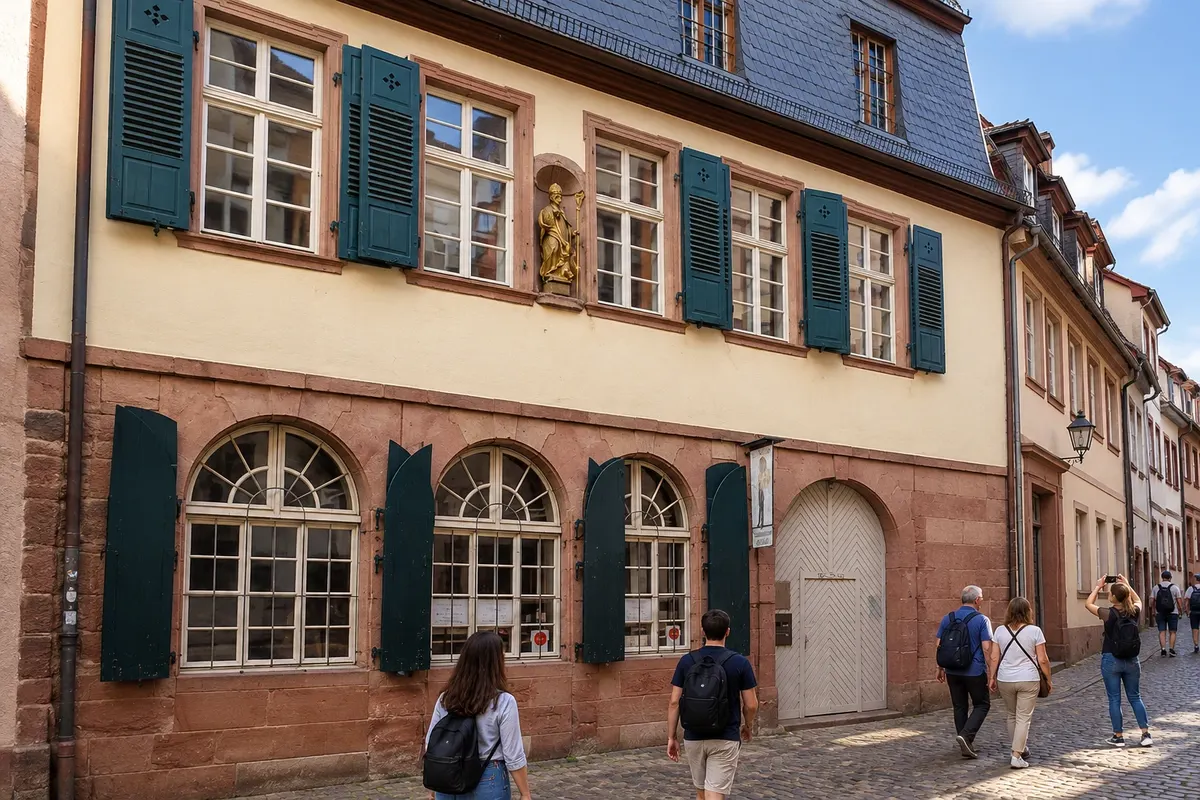
University city on the banks of the Neckar, about an hour by train from Frankfurt. The ruined castle (Heidelberger Schloss) dominates the hillside, and the Bergbahn funicular climbs to it and to the Königstuhl. Below lie the Altstadt, with the Hauptstraße and the Heiliggeistkirche, the Alte Brücke over the river, the Alte Universität with its museum and the Studentenkarzer, and on the other side of the Neckar the Philosophenweg, with the classic view of the town.

Freiburg im Breisgau
Baden-Württemberg · Heidelberg and the Black Forest

Freiburg im Breisgau

University city in the southwest of the Black Forest, near France and Switzerland. The center revolves around the Freiburger Münster, a Gothic cathedral with an openwork tower, and the Münsterplatz, which has a market Monday through Saturday. Narrow water channels called Bächle run along the streets. The Martinstor and Schwabentor gates, the Augustinermuseum and the Schlossberg hill complete the town. Nearby are Lake Titisee, the Schauinsland cable car and the Triberg waterfalls.

Doživite kraj

Kaj početi – Heidelberg and the Black Forest

Freiburg Minster (Freiburger Münster / Münster Unserer Lieben Frau)
Freiburg im Breisgau · Baden-Württemberg · Stolnica

Freiburg Minster (Freiburger Münster / Münster Unserer Lieben Frau)

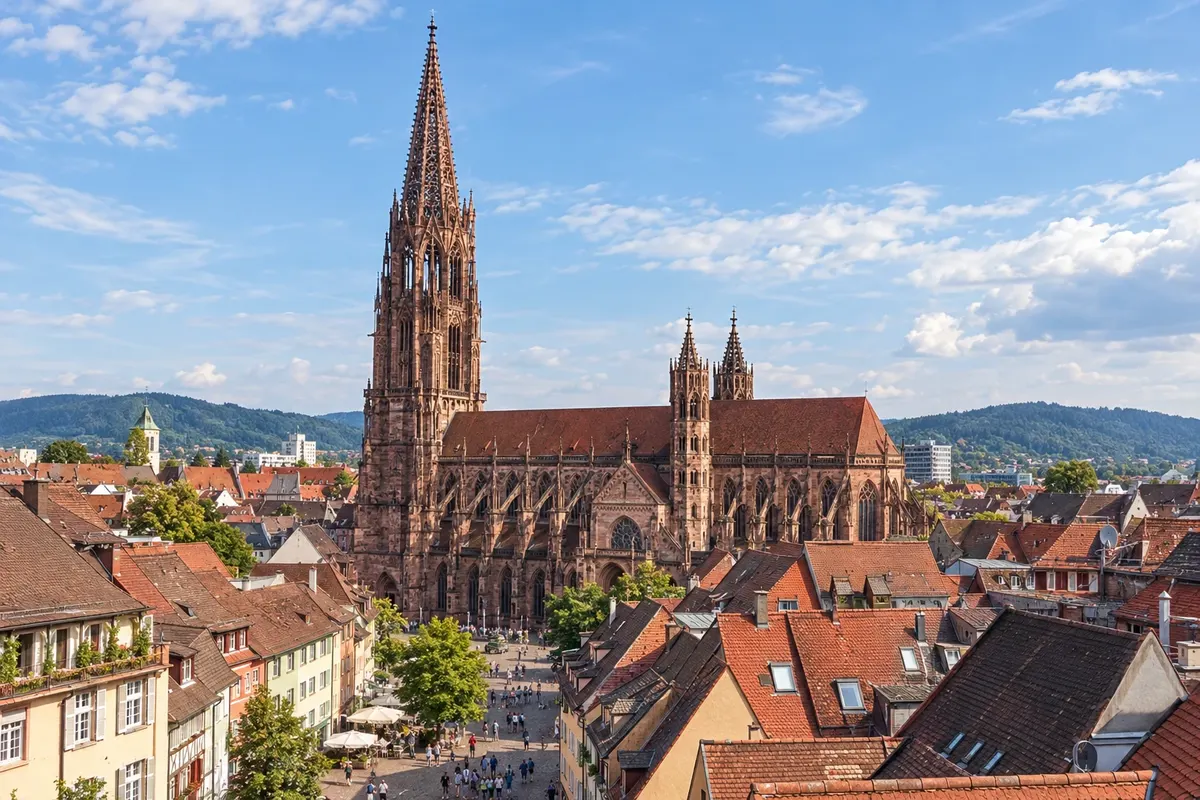
Gothic cathedral in the center of the Altstadt, begun around 1200, with the 116‑metre tower completed in 1330 and the spire pierced like lace in stone. It survived the bombings of 1944.

Friedrichsbad
Baden-Baden · Baden-Württemberg · Zdravilišče

Friedrichsbad

Bathhouse opened in 1877 in the old center, over the ruins of Roman baths. The Roman-Irish bath is a circuit of stations with hot air, steam and thermal pools, and it is traditionally done without clothing and in a mixed environment.

Heidelberg Castle (Heidelberger Schloss)
Heidelberg · Baden-Württemberg · Grad

Heidelberg Castle (Heidelberger Schloss)

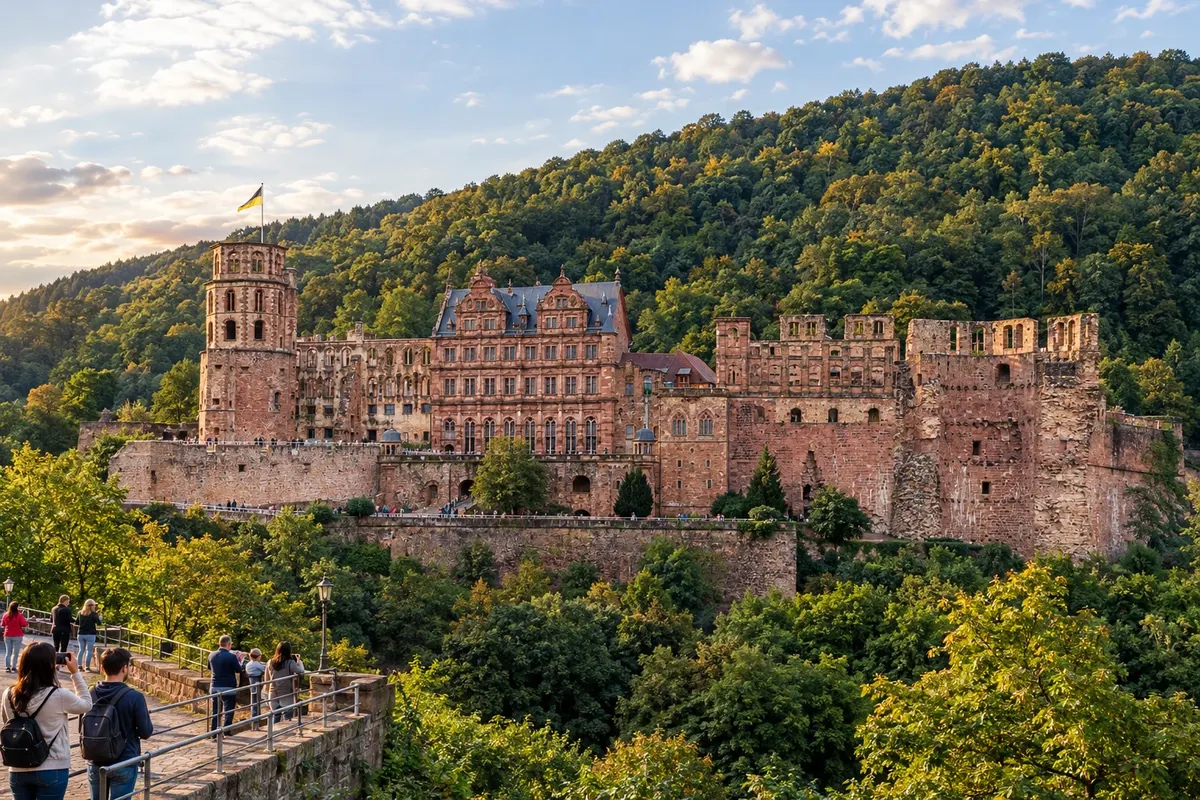
A red sandstone ruin on the slope of the Königsstuhl above the Altstadt. It contains Gothic and Renaissance palaces, the giant wine barrel (Großes Fass), the Deutsches Apotheken-Museum and a terrace with views over the Neckar.

Caracalla Spa (Caracalla Therme)
Baden-Baden · Baden-Württemberg · Zdravilišče

Caracalla Spa (Caracalla Therme)

A complex of thermal-water pools next to the Friedrichsbad, with indoor and outdoor areas, hot and cold baths and a separate sauna area. Swimwear is required in the pools; in the saunas it is not.

Heidelberg and the Black Forest – prikaži dodatne kraje (20)
Heidelberg Mountain Railway (Heidelberger Bergbahn / Molkenkurbahn)
Heidelberg · Baden-Württemberg · Funicular

Heidelberg Mountain Railway (Heidelberger Bergbahn / Molkenkurbahn)

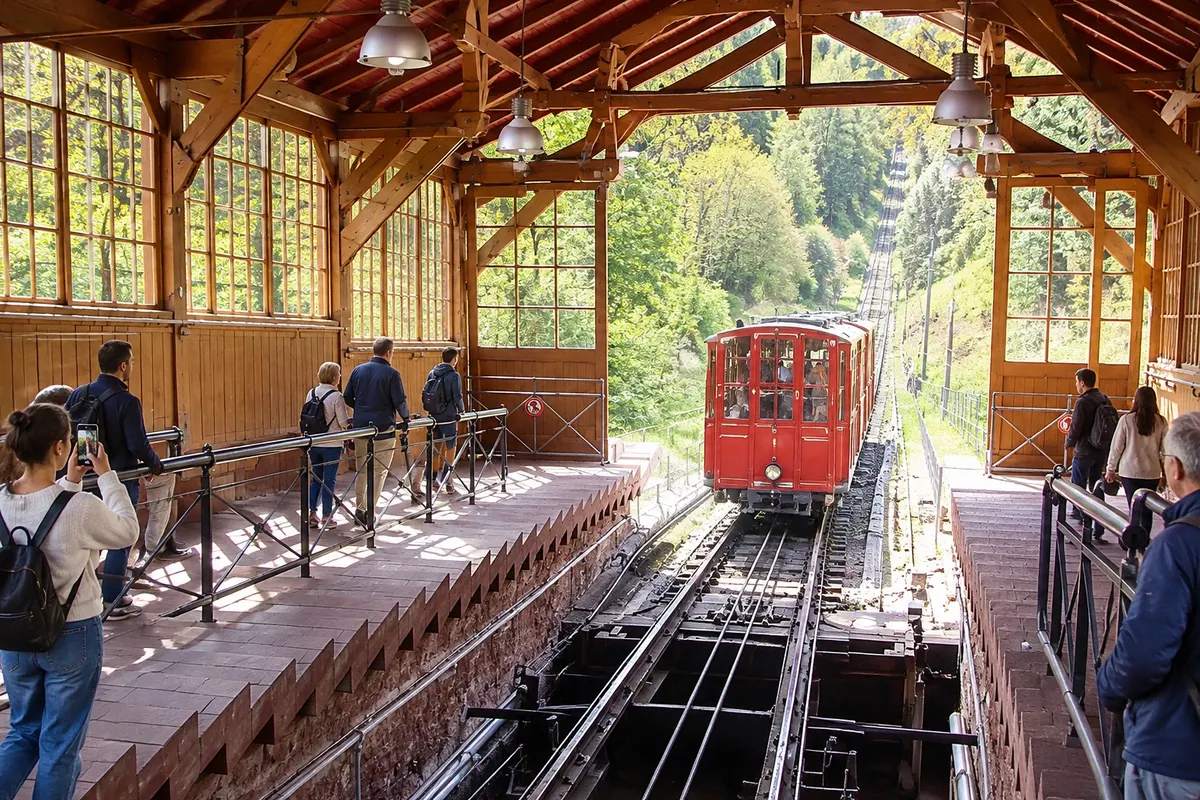
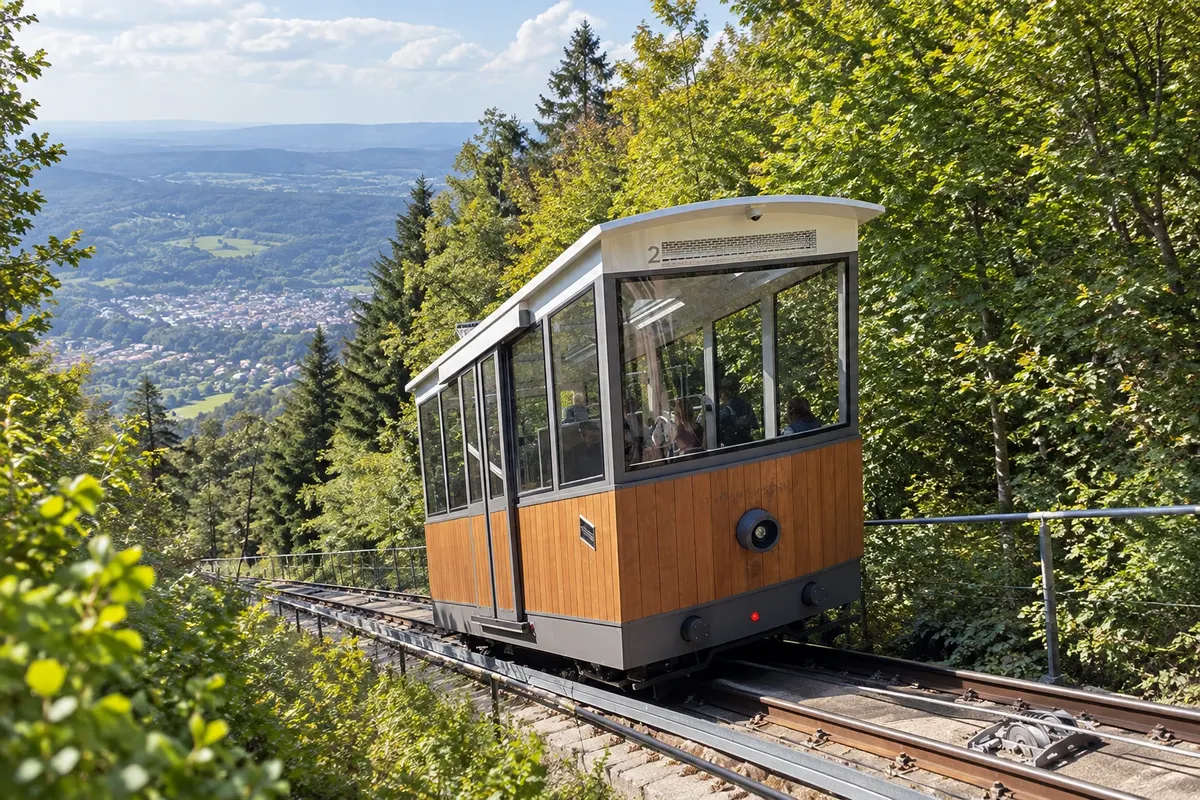
Funicular that departs from Kornmarkt in the Altstadt, stops at the castle and continues to the Molkenkur. There you change to the upper section, with old-style wooden carriages, which climbs to the Königstuhl hill at 568 meters.

Cathedral Square (Münsterplatz)
Freiburg im Breisgau · Baden-Württemberg · Trg

Cathedral Square (Münsterplatz)

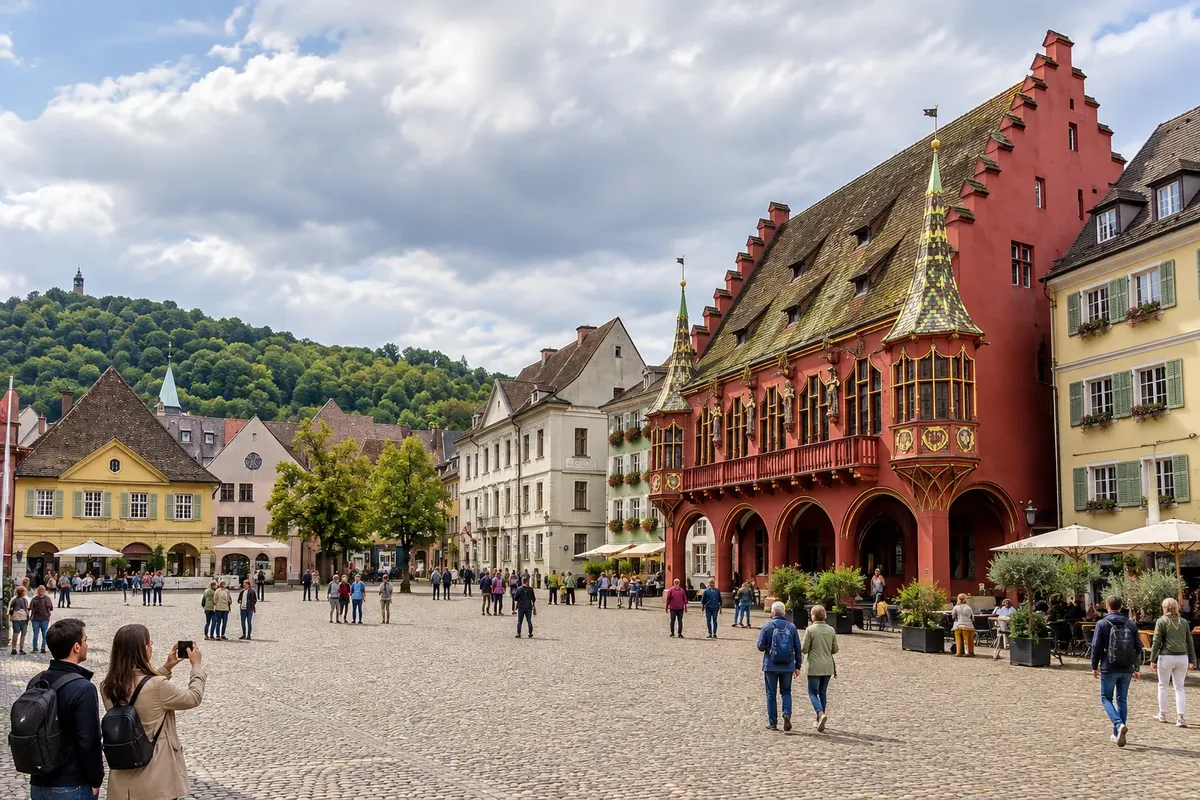
Square around the cathedral, with a daily market (Münstermarkt) from Monday to Saturday: producers from the Floresta Negra and the Kaiserstuhl, flowers, crafts and sausage stalls. On the south side sits the Historisches Kaufhaus, a red 16th-century building.

Old Bridge (Alte Brücke / Karl-Theodor-Brücke)
Heidelberg · Baden-Württemberg · Most

Old Bridge (Alte Brücke / Karl-Theodor-Brücke)

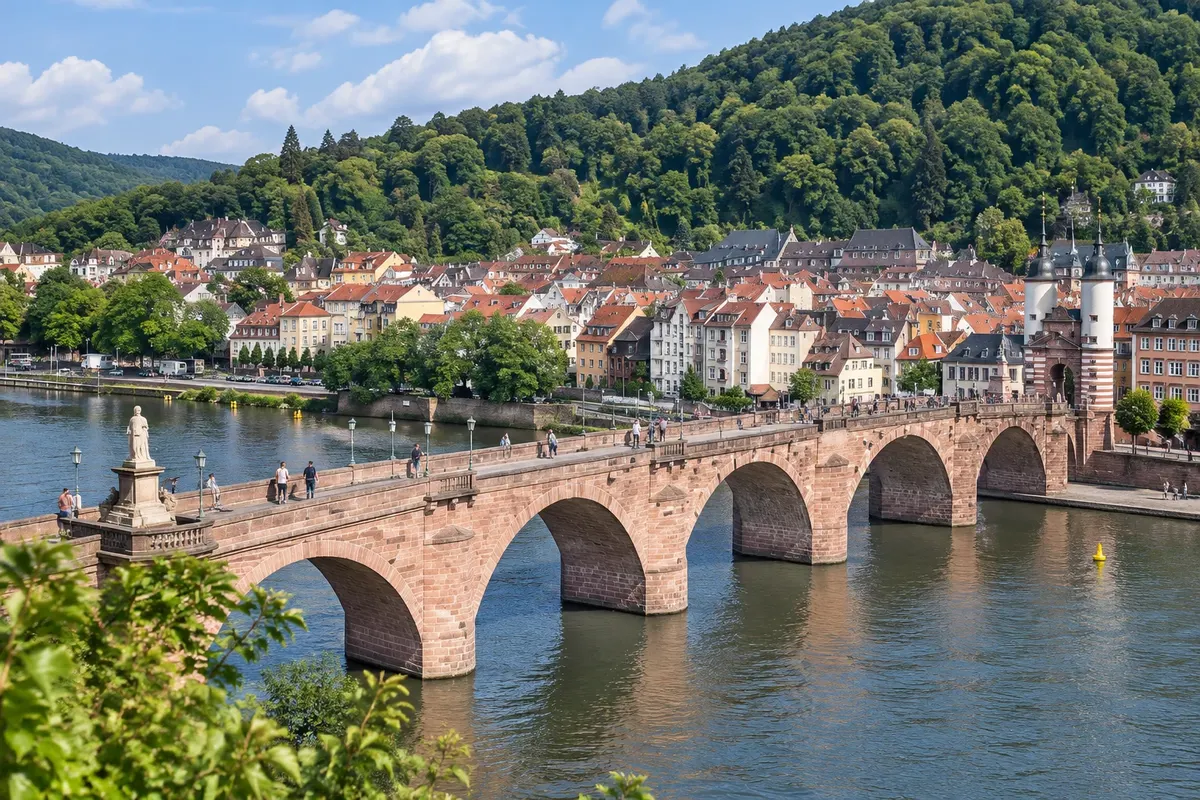
Stone bridge over the Neckar, from 1788, with a medieval two-towered gate at the Altstadt end and the bronze statue of the monkey (Brückenaffe). From the middle of the bridge you can see the castle above the town's roofs.

Freiburg Bächle (Freiburger Bächle)
Freiburg im Breisgau · Baden-Württemberg · Street

Freiburg Bächle (Freiburger Bächle)

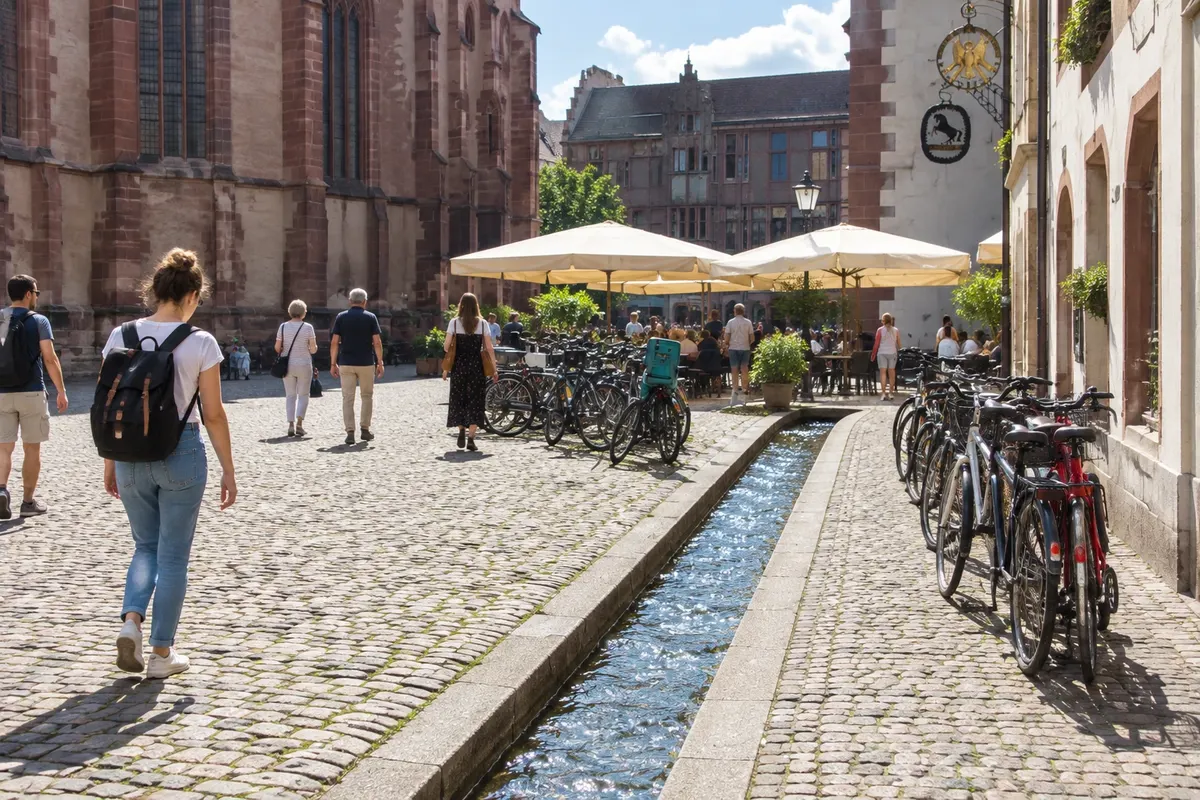
Narrow water channels that run along the streets of the Altstadt since the Middle Ages. They were used to supply the city and fight fires; today they cool the center in summer.

Kurhaus Baden-Baden (Kurhaus Baden-Baden)
Baden-Baden · Baden-Württemberg · Architecture

Kurhaus Baden-Baden (Kurhaus Baden-Baden)

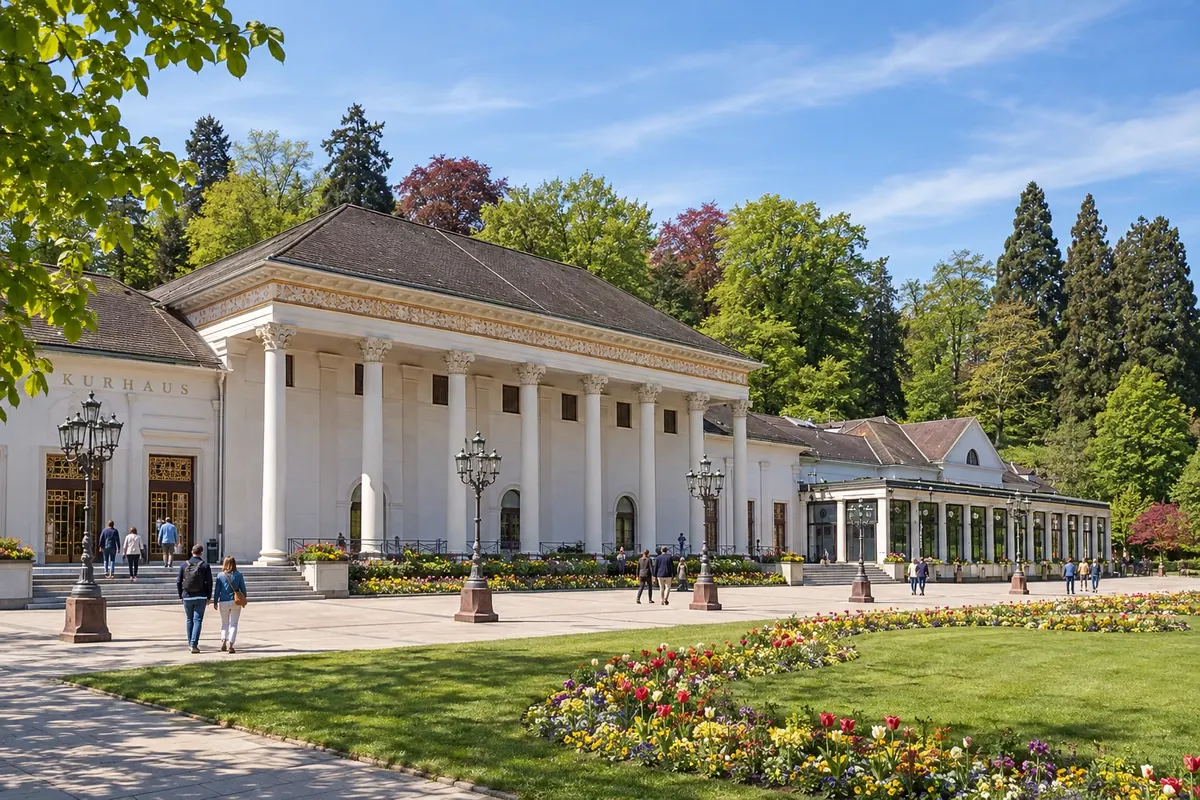
A white-columned building from 1824, the center of the resort's social life, featuring the casino that became famous in the 19th century. Next to it are the Kurpark and the Trinkhalle, a colonnaded gallery with frescoes depicting regional legends.

Old Town and Hauptstraße (Altstadt und Hauptstraße)
Heidelberg · Baden-Württemberg · Zgodovinska mestna četrt

Old Town and Hauptstraße (Altstadt und Hauptstraße)

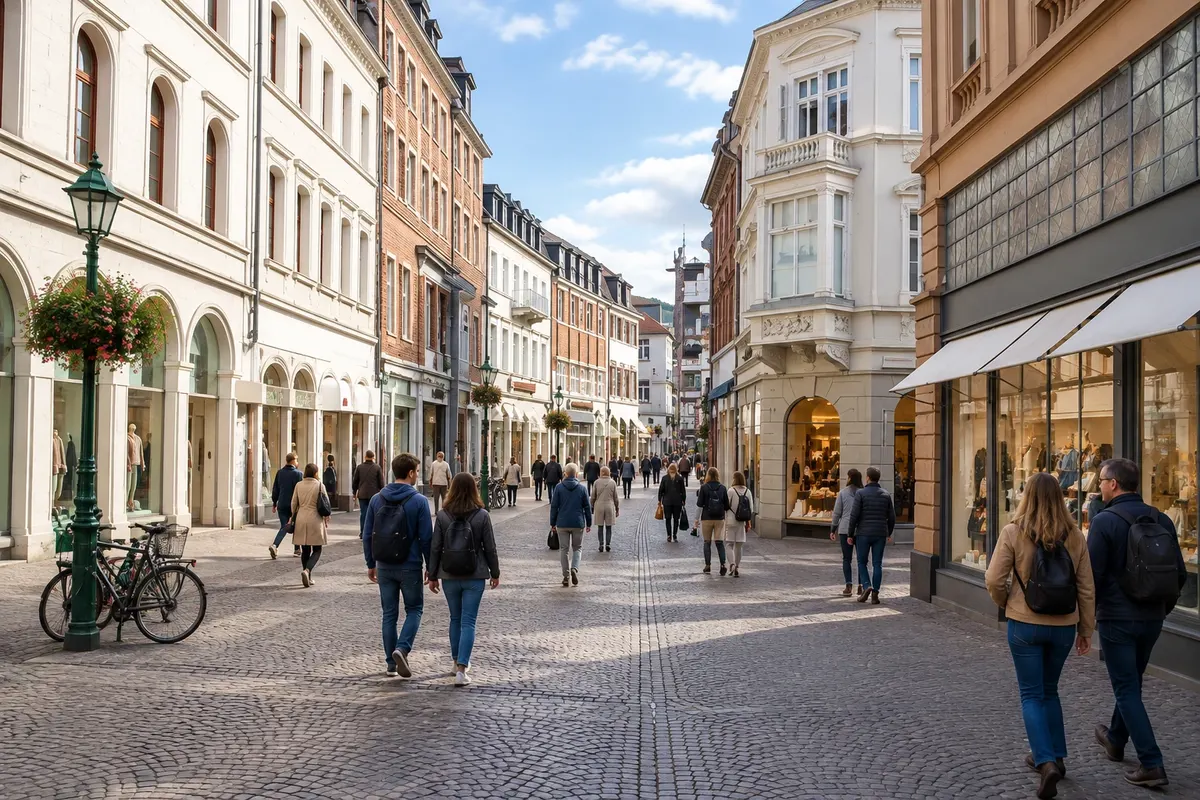
Heidelberg's old town, between the Neckar and the hill, with the Hauptstraße, a 1.6 km pedestrian street between Bismarckplatz and Karlstor, and the squares Marktplatz, Kornmarkt and Universitätsplatz.

Lichtentaler Allee
Baden-Baden · Baden-Württemberg · Park

Lichtentaler Allee

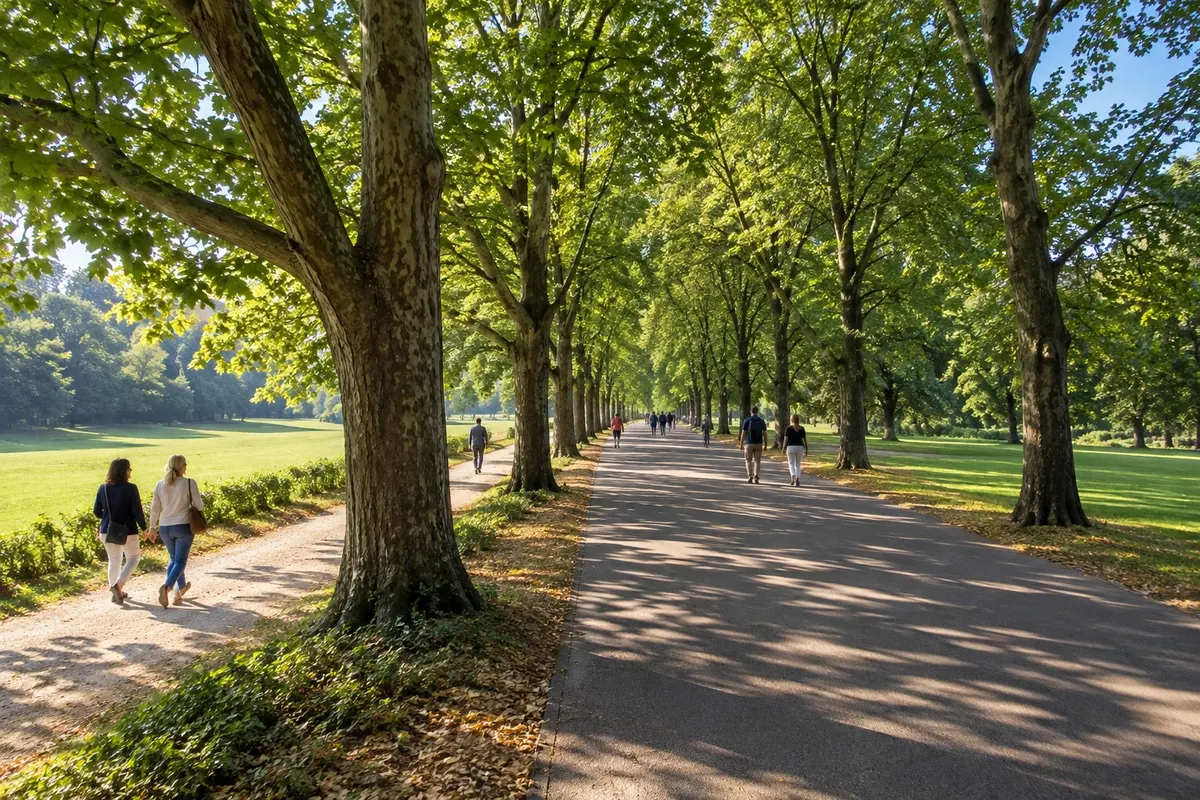
A 2.3 km tree-lined park along the Oos stream, from the Kurhaus to the Lichtenthal monastery, with about 300 species of trees and shrubs, lawns, bridges and flower gardens.

Schlossberg
Freiburg im Breisgau · Baden-Württemberg · Razgledišče

Schlossberg

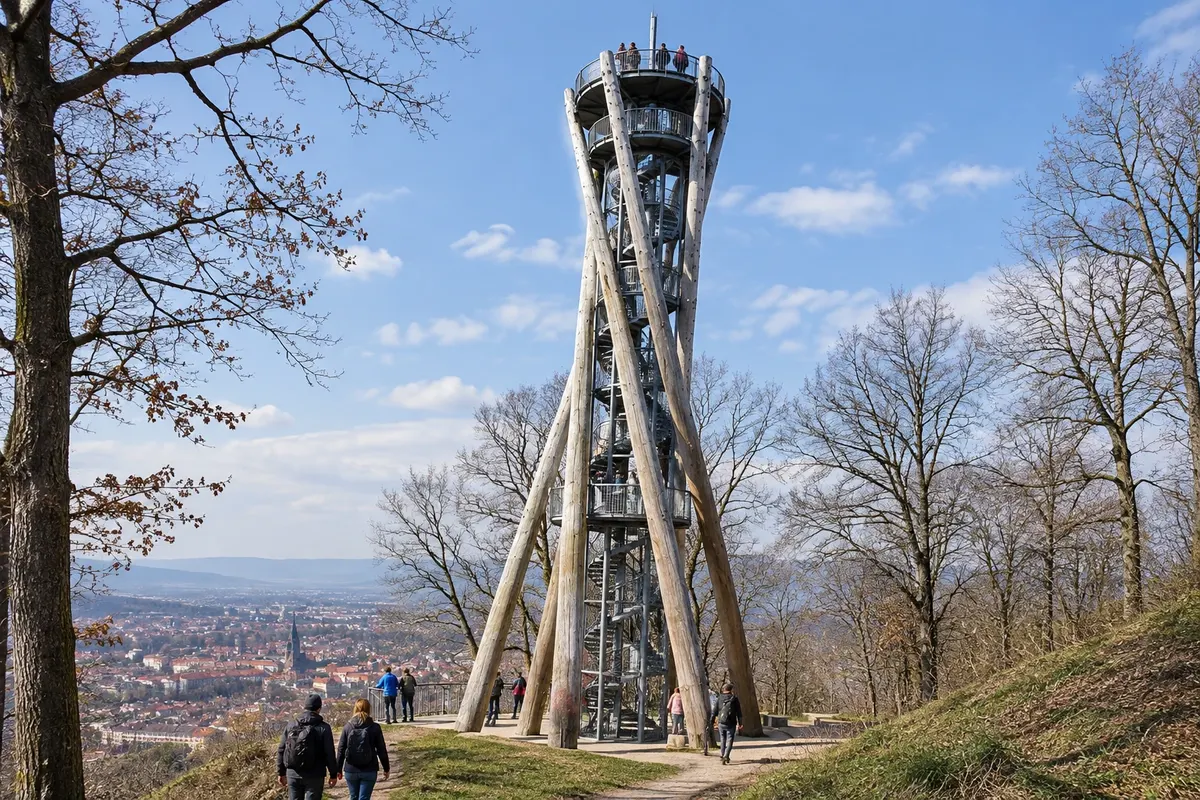
Hill of 456 meters next to the Altstadt, already part of the Floresta Negra, where the city’s castle and fortifications once stood. It has trails, remains of walls, the Schlossbergturm observation tower and a funicular from the Stadtgarten.

Church of the Holy Spirit (Heiliggeistkirche)
Heidelberg · Baden-Württemberg · Cerkev

Church of the Holy Spirit (Heiliggeistkirche)

Gothic church in the Marktplatz, begun in 1398, which housed the Bibliotheca Palatina and contains the tomb of King Ruprecht. For over two centuries it had a wall dividing Catholics and Protestants. The tower has a viewing platform.

Martinstor
Freiburg im Breisgau · Baden-Württemberg · Monument

Martinstor

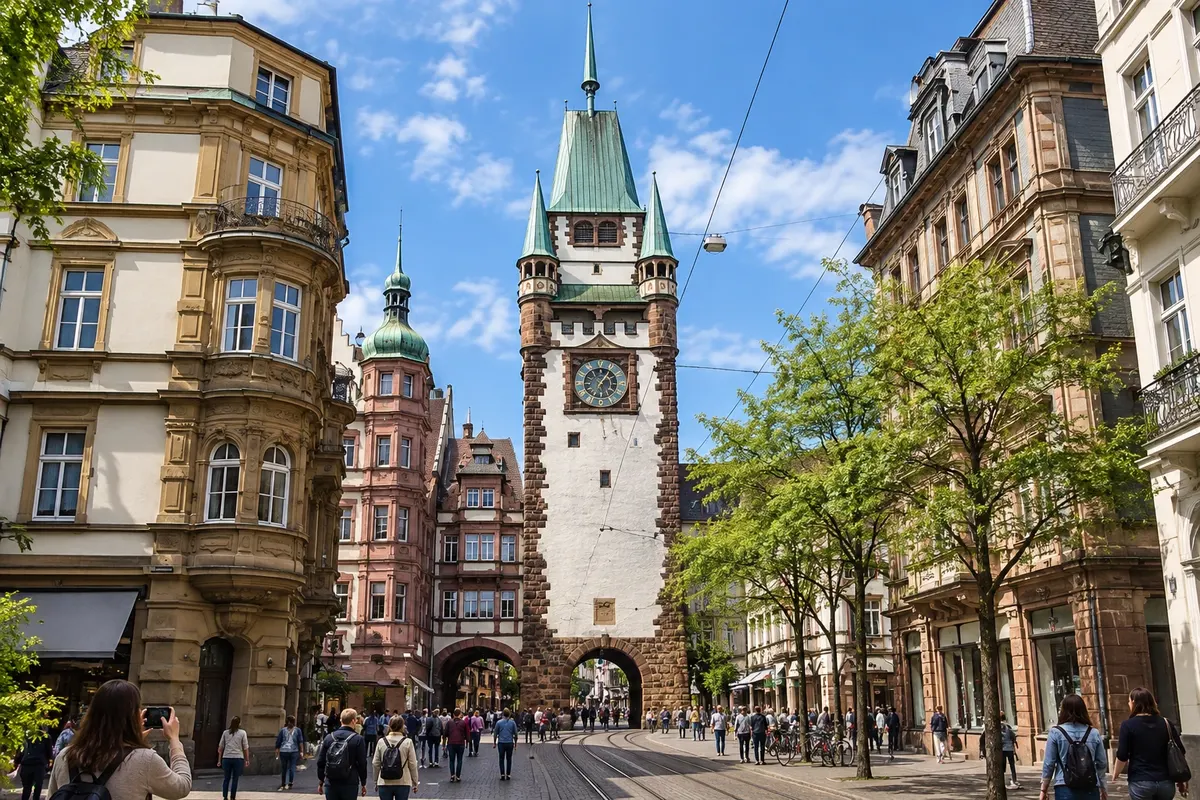
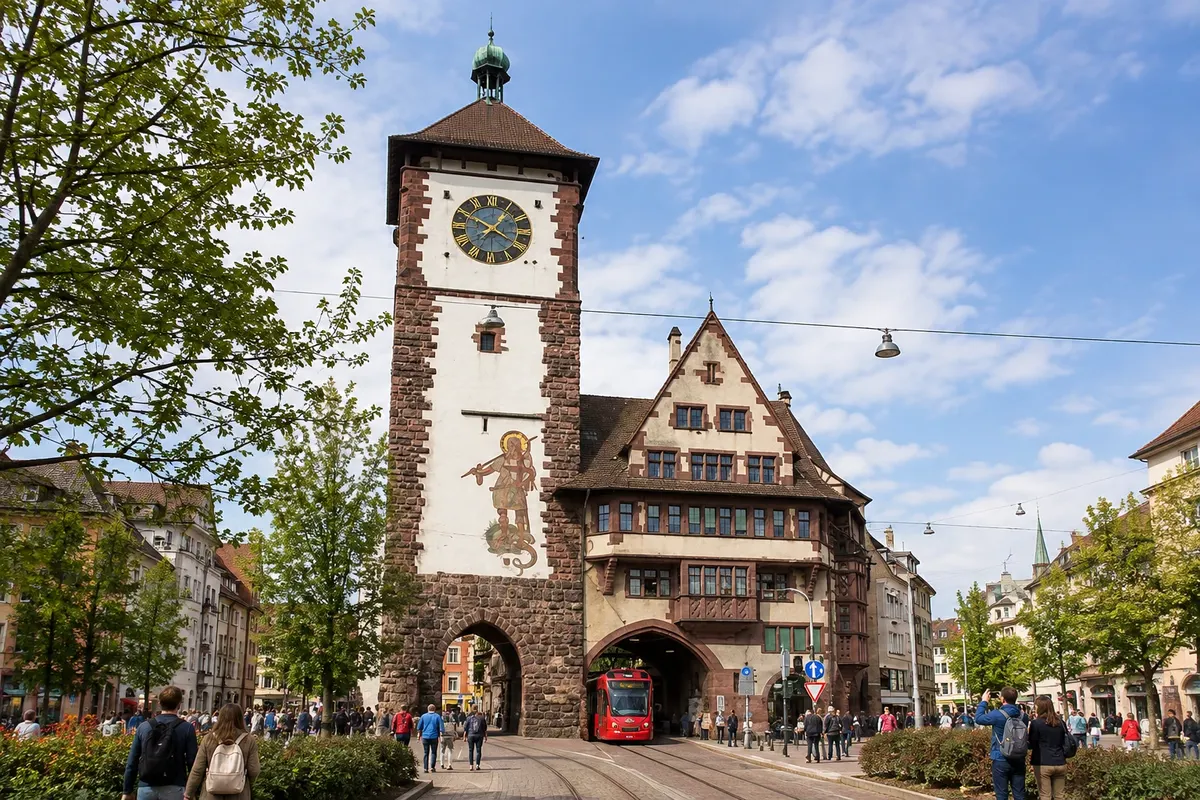
The older of the two gates remaining from Freiburg's medieval wall, dated 1202, on Kaiser-Joseph-Straße. The tower was raised in 1901, and trams pass under the arch.

Frieder Burda Museum (Museum Frieder Burda)
Baden-Baden · Baden-Württemberg · Muzej

Frieder Burda Museum (Museum Frieder Burda)

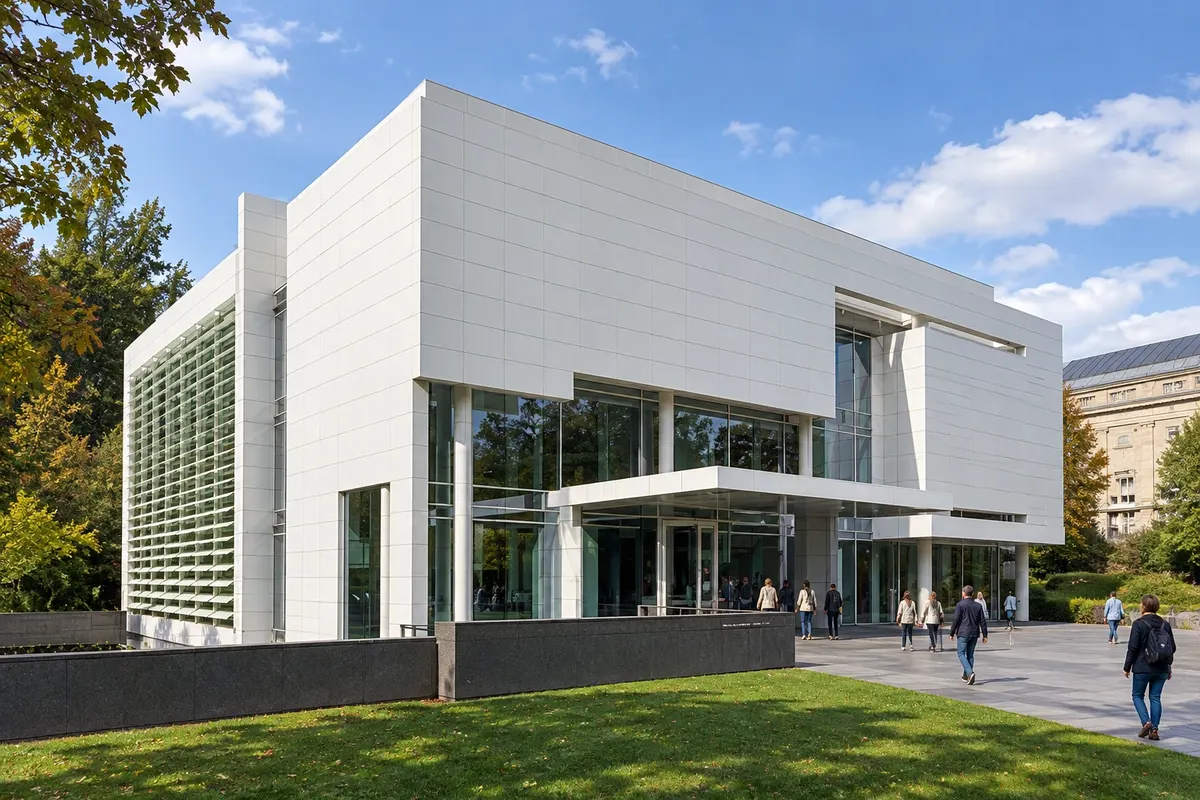
Museum of modern and contemporary art on the Lichtentaler Allee, housed in a white building by architect Richard Meier, with the collection of collector Frieder Burda and temporary exhibitions.

Merkurbergbahn (Merkur funicular)
Baden-Baden · Baden-Württemberg · Funicular

Merkurbergbahn (Merkur funicular)

Funicular from 1913 that climbs the Merkur hill, 669 metres high, on slopes of up to 54%. At the top there is an observation point over Baden-Baden, the Rhine valley and the northern Black Forest, as well as forest trails.

Philosopher's Walk (Philosophenweg)
Heidelberg · Baden-Württemberg · Razgledišče

Philosopher's Walk (Philosophenweg)

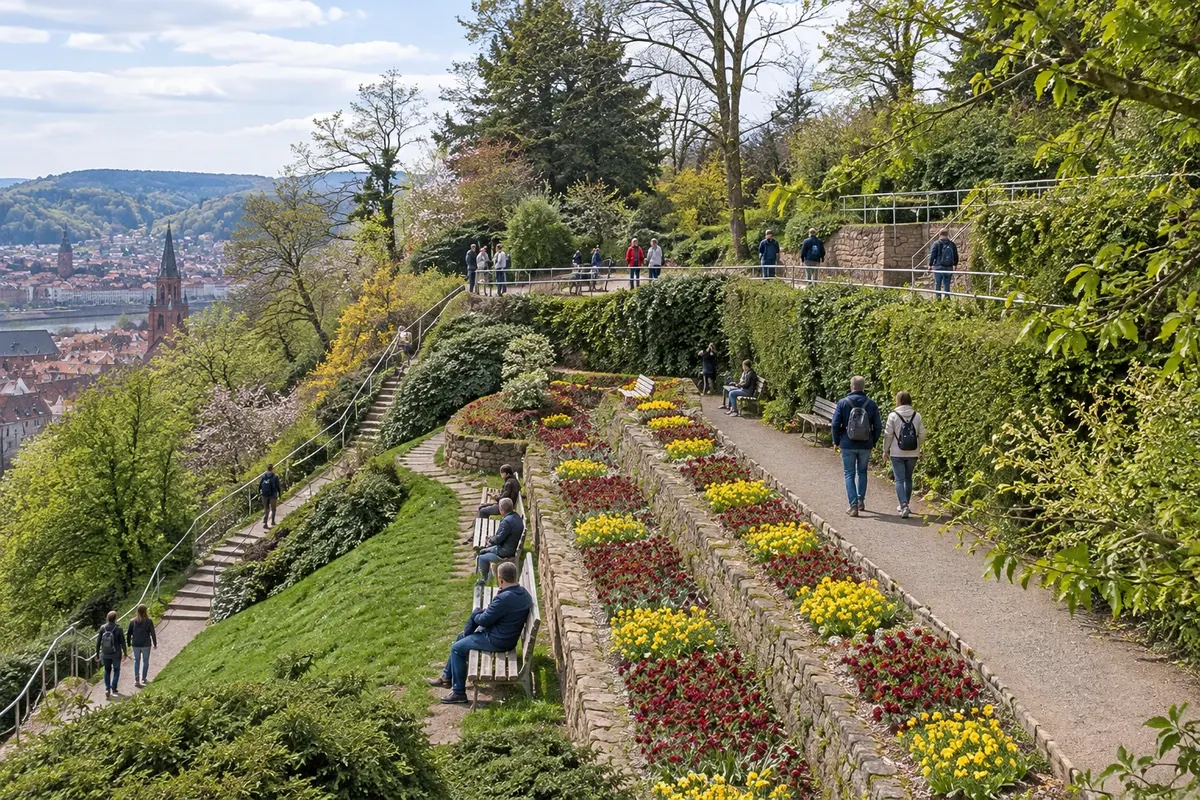
Path along the slope on the north bank of the Neckar, facing the Altstadt and the castle. You climb via the Schlangenweg, a stairway trail between stone walls that starts at the Alte Brücke.

Schwabentor
Freiburg im Breisgau · Baden-Württemberg · Monument

Schwabentor

Medieval gate from around 1250, on the east side of the Altstadt, at the entrance to the old district of Oberlinden. It has paintings on the façade and stands at the foot of the Schlossberg, where the ascent trails begin.

Augustinermuseum
Freiburg im Breisgau · Baden-Württemberg · Muzej

Augustinermuseum

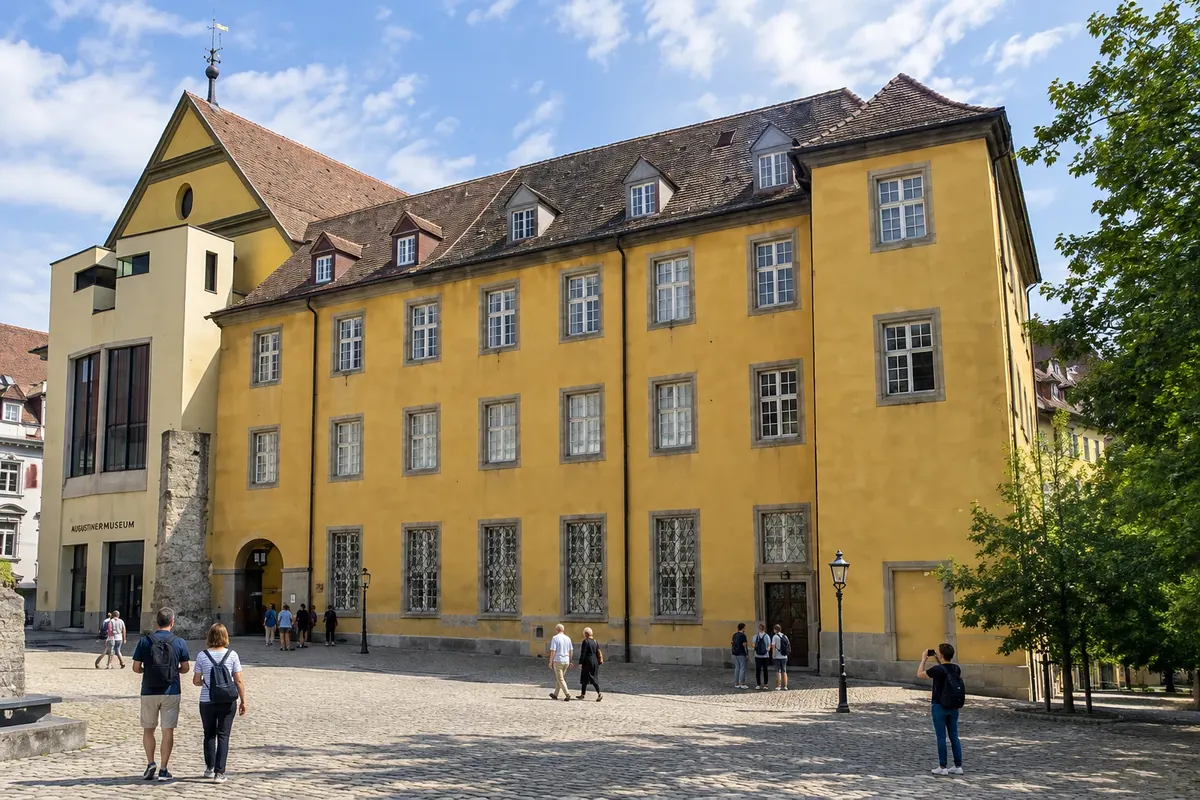
Art museum in a former Augustinian convent, with original sculptures from the Münster, paintings by Grünewald, Hans Baldung Grien and Lucas Cranach, medieval goldsmithing and a baroque organ.

University Museum (Universitätsmuseum)
Heidelberg · Baden-Württemberg · Muzej

University Museum (Universitätsmuseum)

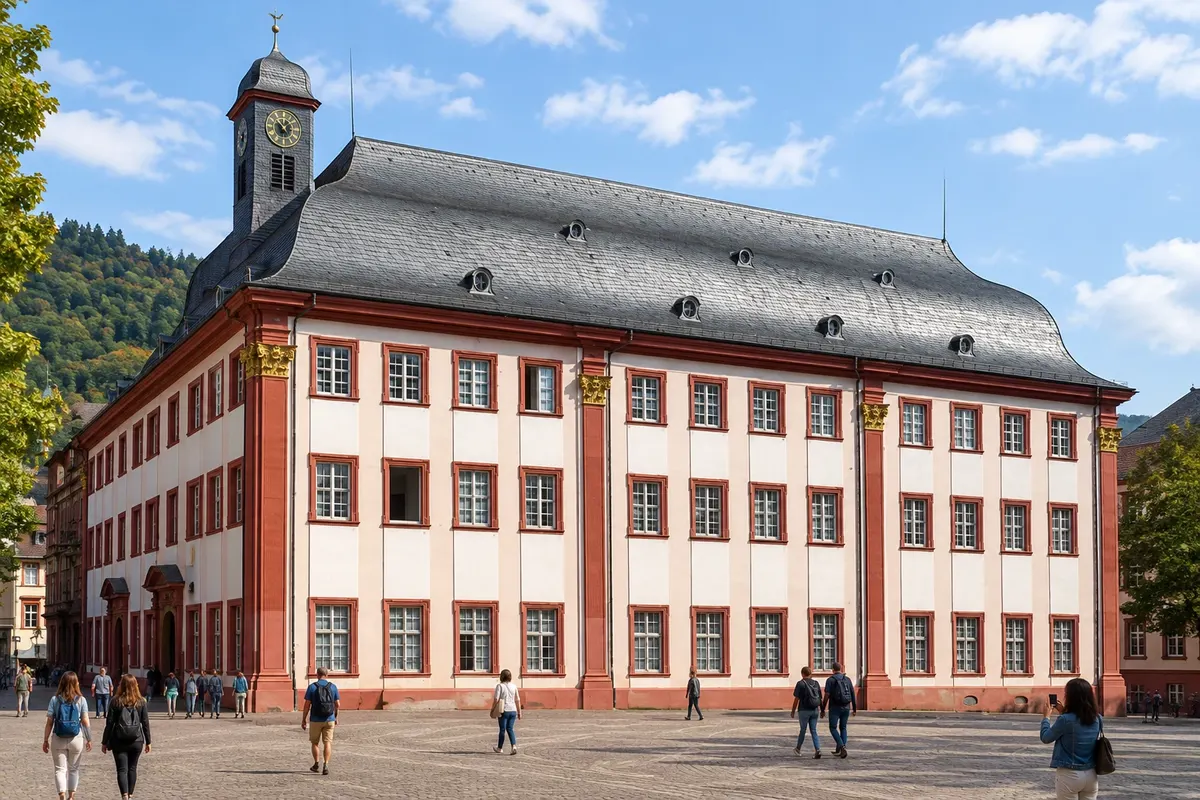
Museum of the University of Heidelberg, the oldest in present-day Germany, founded in 1386. It is housed in the Alte Universität, a Baroque building on Universitätsplatz, and includes the Aula, the university's ceremonial hall.

Schauinslandbahn
Freiburg im Breisgau · Baden-Württemberg · Cable car

Schauinslandbahn

A cabin cable car about 3.6 km long, opened in 1930, that rises from the outskirts of Freiburg to the Schauinsland, a 1,284-metre mountain. At the top there are trails, an observation tower and views of the Black Forest and, on clear days, the Alps.

Student Prison (Studentenkarzer)
Heidelberg · Baden-Württemberg · Historic site

Student Prison (Studentenkarzer)

The old prison of the Universität de Heidelberg, where students served sentences for rowdiness, duels or disrespect. The five cells, from 1823, have walls and ceilings covered with drawings, names and verses by the inmates.

Titisee
Freiburg im Breisgau · Baden-Württemberg · Jezero

Titisee

Glacial-origin lake high in the Black Forest, at about 850 metres altitude, with a promenade, excursion boats in season and a trail around. It's about 40 minutes by train from Freiburg through the Höllental valley.

Triberg Waterfalls
Freiburg im Breisgau · Baden-Württemberg · Slap

Triberg Waterfalls

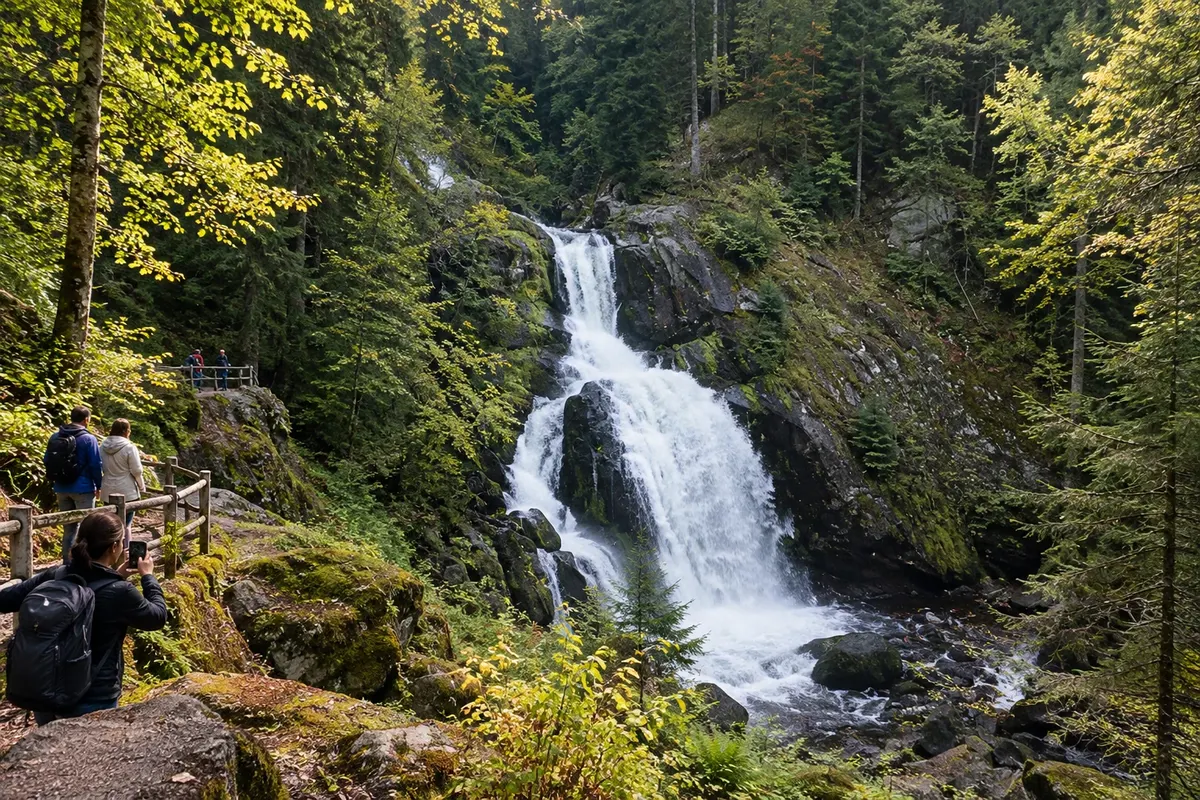
Waterfalls on the Gutach river, which drop about 163 metres in seven falls, in the forest above the town of Triberg, home of cuckoo clocks. There are trails and bridges along the falls.

Kaj izbrati pred odhodom

Izleti – Heidelberg and the Black Forest

Izhodišče, trajanje, potek, vključene storitve in okvirna cena vsakega izleta.

Heidelberger Schloss: Bergbahn ascent, courtyard, Großes Fass and Deutsches Apotheken-Museum

Odhod: Kornmarkt, lower station of the Bergbahn (Heidelberg) Funicular to the castle and walking visit Približno 3 ure Dopoldne ali popoldne easy (courtyard with ramps and stairs)

Heidelberger Schloss (Heidelberg Castle) sits on the slope of the Königstuhl, about 80 meters above the old town. It was the residence of the Electors Palatine and became a ruin after the wars at the end of the 17th century: French troops burned and blew up towers and walls in 1689 and 1693, and in 1764 a lightning strike hit what had been rebuilt. In the early 19th century the ruins became a symbol of German Romanticism; the French count Charles de Graimberg spent decades drawing and protecting the complex, which today receives about one million visitors a year. The visit starts at the Kornmarkt, from where the Bergbahn (funicular) climbs in about 5 minutes to the castle station. In the courtyard are the Friedrichsbau, built between 1601 and 1607 and the best-preserved part, with statues of the electors on the façade, and the Ottheinrichsbau, with a Renaissance façade. In the cellar is the Großes Fass, the great wine cask made from the wood of roughly 130 oaks, with a capacity of about 221,000 liters. The Deutsches Apotheken-Museum, in the Apothekerturm and adjacent rooms, displays historic pharmacies and instruments. The terrace (Altan) and the garden provide the classic view over the roofs of the Altstadt (old town), the Alte Brücke and the Neckar River. The interiors of the Friedrichsbau are only seen on guided tours.

Kraji na poti: Heidelberger Schloss, Heidelberger Bergbahn.

Vključuje: The castle ticket includes the Bergbahn ride up and down to the Schloss station, the courtyard, the Großes Fass and the Deutsches Apotheken-Museum. Guided interior tours and the audio guide are paid separately; the garden is open during the day and admission is free. The upper section of the funicular to the Königstuhl requires a separate ticket.

Nasvet: Go up early, before tour groups arrive, and save the garden for the end, when the late light falls on the city. There are guided tours in English throughout the day; German tours run more frequently. On some summer evenings there is the Schlossbeleuchtung, with the castle lit in red and fireworks from the Alte Brücke—confirm dates before you go. Walking down to the Kornmarkt via the Burgweg takes about 15 minutes.

Najboljši čas za obisk: Year-round; from April to October there are more guided tours and the garden is green. In winter there is less activity and the courtyard is empty in the early hours.

Heidelberg Altstadt on foot: Hauptstraße, Marktplatz and the Heiliggeistkirche tower

Odhod: Bismarckplatz (Heidelberg) Peš po starem mestnem jedru Približno 3 ure Dopoldne ali popoldne easy (flat terrain)

Heidelberg’s Altstadt (old town) is a long, narrow strip between the Neckar River and the castle slope. Its backbone is the Hauptstraße, a pedestrian street about 1.6 km long running from Bismarckplatz to the Karlstor, one of the longest pedestrian streets in Europe, lined with shops, cafés, bookstores and Baroque façades because the city was rebuilt after its destruction in 1693. Midway is Marktplatz, with the Hercules fountain and the Heiliggeistkirche (Church of the Holy Spirit), a Gothic church begun in 1398; the nave was completed in 1441 and the tower in 1544. The Bibliotheca Palatina was once housed in its galleries—taken to Rome in 1623 and now part of the Vatican Library. From 1706 to 1936 a wall divided the church between Catholics and Protestants. Only the tomb of elector Ruprecht III, the founder, survived the wars. The tower has a viewing platform at 38 meters, reached by a staircase of 208 steps, with views of the castle and the river. Around the apse there are stalls and cafés. From Marktplatz, walk to Kornmarkt, a square with a Madonna statue and the castle in the background, then continue along Hauptstraße to Karlsplatz and the Karlstor, a gate from 1781.

Kraji na poti: Altstadt und Hauptstraße, Heiliggeistkirche.

Vključuje: Independent walk: the streets and squares are open and entry to the church is free outside services. The tower climb requires a separate paid ticket. Guided city tours depart from the tourist office and are paid separately.

Nasvet: Walk the stretch from Bismarckplatz to Marktplatz in the morning when the shops open, and climb the tower if the sky is clear. Combine this walk with the Alte Brücke, two minutes from Marktplatz, and the Studentenkarzer on Augustinergasse. On Saturdays Marktplatz usually hosts a market.

Najboljši čas za obisk: Year-round. From May to September there are outdoor tables on the sidewalks; in December the squares usually host Christmas markets, check the dates.

Freiburger Münster and the Münstermarkt: the 116-meter tower and the square market

Odhod: Freiburg Hauptbahnhof (central station) Tram or 15 minutes on foot to Münsterplatz about 2 to 3 hours Dopoldne easy (tower with a long staircase)

The Freiburger Münster (Freiburg Cathedral) is the main church of Freiburg im Breisgau, in the southern Schwarzwald (Black Forest). Construction began around 1200 in a Romanesque style and continued in Gothic; the tower, 116 meters high, was completed in 1330 and is the only Gothic church tower in Germany finished during the Middle Ages. Swiss historian Jacob Burckhardt called it the most beautiful tower in Christendom. The church was consecrated in 1513 and became a cathedral in 1827. It survived the November 1944 bombing that destroyed the surrounding houses. Inside are the high altar by Hans Baldung Grien, an altar by Hans Holbein the Younger in a side chapel, and medieval stained glass; there are 19 bells, and the Hosanna bell dates from 1258. On the outside, notice the gargoyles. The climb to the tower platform is 335 steps, with no elevator, and gives views over the red roofs, the Schlossberg and the Black Forest hills. On the Münsterplatz, Monday to Saturday in the morning, the Münstermarkt takes place—a market with fruit, flowers, cheeses and stalls selling Freiburg’s long sausage in bread. Around the square are the Historisches Kaufhaus, a merchant’s house from 1532 with a red façade, the Alte Wache and the Wentzingerhaus.

Kraji na poti: Freiburger Münster, Münsterplatz.

Vključuje: Entrance to the cathedral is free outside of Masses; the climb to the tower requires a separate paid ticket, with its own time slots. The market is open-air. Guided tours of the cathedral and the city are paid separately.

Nasvet: Arrive before 11:00 to see the market at its busiest and the square still in sun; after lunch the stalls are taken down. Climb the tower in dry weather: the staircase is narrow and spiral. Save the visit to the Augustinermuseum to see the cathedral’s stained glass and original sculptures up close.

Najboljši čas za obisk: Year-round; the market operates Monday through Saturday. From December to early January the square usually has decorations and a Christmas market—confirm the dates.

Baden‑Baden: Kurhaus, Casino and Trinkhalle, the heart of the spa town

Odhod: Leopoldsplatz (Baden‑Baden) Walk through the center and guided tour of the Casino Približno 2 uri Dopoldne easy (flat terrain)

Baden‑Baden grew around the hot springs already used by the Romans, and in the 19th century became the spa resort of European aristocracy. The center of this is the Kurhaus, a neoclassical building completed in 1824 by architect Friedrich Weinbrenner, with a row of sandstone columns on the facade and the Weinbrennersaal behind them. The Casino operates inside: the gaming rooms were part of the original plan and gained fame from 1838 when the Frenchman Jacques Bénazet leased the house and decorated it in the style of French palaces. Dostoyevsky gambled here and wrote The Gambler from that experience; Marlene Dietrich praised the rooms. In the morning, before gambling begins, the Casino opens for guided tours of the salons; at night formal dress, a passport and minimum age are required. Next to the Kurhaus is the Trinkhalle, a gallery built between 1839 and 1842 by architect Heinrich Hübsch, featuring a 90‑meter covered corridor, 16 Corinthian columns and 14 mural paintings by Jakob Götzenberger depicting regional legends. In front of both buildings are the Kurgarten gardens, with the bandstand and the start of the Lichtentaler Allee. Nearby are the Stiftskirche, the Florentinerberg gardens and the ruins of the Roman baths beneath Römerplatz.

Kraji na poti: Kurhaus Baden‑Baden.

Vključuje: The gardens, the Trinkhalle and the exterior of the Kurhaus are open and free to enter. The guided tour of the Casino and entry to the gaming rooms at night are paid separately; the guided tour does not require formal attire, but gambling does, and you will also need a photo ID.

Nasvet: Take the guided tour of the Casino on the morning of the day you arrive and return at night just to see the illuminated facade. At the Trinkhalle, read the captions of the murals—they point out regional places worth visiting. Check the guided‑tour times before you go: they change with the season.

Najboljši čas za obisk: Year‑round. From May to September there are concerts at the Kurgarten bandstand; in late November and December the area in front of the Kurhaus usually hosts the Christmas market—confirm the dates.

Baden-Baden thermal baths: Friedrichsbad, the Roman-Irish bath, and Caracalla Therme

Odhod: Römerplatz (Baden-Baden) On foot; the two spas are a few meters apart about 3 hours at each popoldne ali zvečer Lahko

The thermal water of Baden-Baden emerges from twelve springs on the Florentinerberg, comes from about 2,000 meters deep, is between 56 and 68.8 °C, and yields about 800,000 liters per day. Two spas in the town center use this water. The Friedrichsbad, opened in December 1877 in a Renaissance style by architect Karl Dernfeld, is the Roman-Irish bath: a fixed 17-step circuit alternating hot air, steam, showers, pools at different temperatures and a soap brush treatment, all under domes and marble columns. The bath is done without clothing, as tradition requires; on two days of the week there is an option with swimwear, and on other days the men’s and women’s sections meet in the central pools. During excavations for the building, remains of the Roman baths were uncovered and are visible in an exhibition room. The neighboring Caracalla Therme is the modern side, enlarged in 1984 and 1985: about 4,000 m² of bathing area with indoor and outdoor thermal pools, grottoes, jets and currents, where swimwear is used; upstairs is a Roman-inspired sauna area with a garden, where the rule is no clothing. Mark Twain wrote that at the Friedrichsbad in ten minutes you forget time and in twenty you forget the world.

Kraji na poti: Friedrichsbad, Caracalla Therme.

Vključuje: Ticket paid separately at each spa, based on time of stay; check the current price table. At the Friedrichsbad towel and robe are included in the circuit; at the Caracalla bring swimwear, towel and flip-flops, or rent them on site. Massages and treatments are charged separately. The Friedrichsbad has a minimum age; the Caracalla accepts children when accompanied.

Nasvet: If you’ve never done a European thermal bath, start with the Caracalla, where swimwear is worn, and leave the Friedrichsbad for those comfortable being nude; check which days allow swimwear before you go. Go in the late afternoon, after sightseeing, and don’t eat dinner before the circuit. Leave jewelry and your phone in the locker: photos are not allowed inside.

Najboljši čas za obisk: All year; in winter, from December to February, the outdoor pool with steam rising over cold water is the highlight. Weekends and holidays get busy — prefer weekdays.

Titisee and Feldberg: the glacial lake and the highest point of the Black Forest

Odhod: Freiburg Hauptbahnhof (central station) Regional train of the Höllentalbahn (about 40 min) and bus to Feldberg about 8 to 9 hours Ves dan easy to moderate (trails)

Titisee is the largest natural lake in the Black Forest: it lies at 845 meters elevation, is about 1.3 km² in area and up to 39 meters deep, and was carved by the Feldberg glacier in the last Ice Age. Trains depart from Freiburg Hbf and climb the Höllental valley (Hell’s Valley), passing under the Ravenna Bridge, a stone viaduct rebuilt after the war, to Titisee station, a few minutes’ walk from the shore. On Seestraße there are cuckoo-clock shops and cafés; boats and pedal boats depart from the shore, generally from April to October. The Seerundweg, a flat path of about 6 km, circles the lake in under 2 hours, with stretches of fir forest. From there, regular buses and the Dreiseenbahn to Feldberg-Bärental take you to Feldberg, the highest mountain of the Black Forest and of Germany outside the Alps, at 1,493 meters. In Feldberg-Ort, the Feldbergbahn, an 8-person cabin cable car, rises to Seebuck at 1,448 meters, where the Feldbergturm stands—an old TV tower with a panorama platform on the 11th floor and a Black Forest ham museum on the first floor. From the top, on clear autumn and winter days, you can see the Vosges in France and the Alps, from the Zugspitze to Mont Blanc. Feldberg is a nature reserve, one of the oldest and largest in Baden-Württemberg, with peat bogs and alpine plants; the Haus der Natur at the base explains the area. In winter it becomes the largest skiing area in Germany outside the Alps.

Kraji na poti: Titisee.

Vključuje: Train and bus require their own ticket; the Deutschlandticket and the Baden-Württemberg-Ticket are valid on regional trains and regular buses. The path around the lake is open. Boat rides, paddle boats, the Feldbergbahn and the tower are paid separately; check the current price list.

Nasvet: Leave early and sit on the left side of the train on the ascent to see the valley. If the day is overcast, stay at Titisee and save Feldberg for another day: the view is the reason to climb. Bring a jacket even in summer; it’s several degrees cooler at the top than in Freiburg. Check the Feldbergbahn season before you go; it typically operates from May to October and during the snow season.

Najboljši čas za obisk: From May to October for the lake, boats and trails; from December to March Feldberg often has snow and the lake sometimes freezes—confirm before you go.

Prikaži dodatne izlete (10)

Triberg via the Schwarzwaldbahn: the 163-meter waterfalls and the land of cuckoo clocks

Odhod: Freiburg Hauptbahnhof (central station) Train with change in Offenburg and Schwarzwaldbahn (1 h 30 to 2 h total) about 8 hours Ves dan moderate (steps beside the water)

Triberg is at 616 meters elevation, in the middle of the Black Forest, and the journey there is part of the experience. The Schwarzwaldbahn (Black Forest Railway) links Offenburg to Singen and Konstanz over about 149 km, built between 1863 and 1873 by engineer Robert Gerwig, with 39 tunnels and looped curves between Hornberg and Triberg to gain altitude; the highest point is the Sommerau tunnel, at 832 meters. Regional trains run hourly. From Triberg station, a walk of about 25 minutes brings you to the main entrance of the Triberger Wasserfälle (Triberg Waterfalls): the Gutach River drops 163 meters in seven granite steps, one of the highest falls in Germany. Three waymarked paths traverse the slope: the Kaskadenweg, about 45 minutes, to the main steps viewpoint; the Kulturweg, about 1 hour; and the Naturweg, about 90 minutes, to the upper section. In winter only the section to the main falls is open, and at night the waterfall is often illuminated. On Triberg’s Hauptstraße are the cuckoo clock shops, a regional tradition since the 18th century, and the Schwarzwaldmuseum, with reconstructed workshops, costumes, carnival masks and racing sleds. Nearby there are house-sized cuckoo clocks with mechanisms you can visit. If you drive, you can stop in Schonach and Furtwangen, home to the German Clock Museum.

Kraji na poti: Triberger Wasserfälle.

Vključuje: Train requires its own ticket; regional trains accept the Deutschlandticket and the Baden-Württemberg-Ticket. Entrance to the waterfall park is paid separately, with tickets also sold online; the Schwarzwaldmuseum has its own admission. Trails and viewpoints are inside the park.

Nasvet: Take the morning train and sit on the right between Hausach and Triberg to see the railway loops. Wear shoes with firm soles: the paths beside the water are wet and have steps. Buy a cuckoo clock with a Black Forest manufacture certificate if you want to take one home. Return via Offenburg in the mid-afternoon to arrive in Freiburg before dinner.

Najboljši čas za obisk: From April to October, with strong water flow in spring after the thaw; from November to March only the lower section is open and the paths can be icy, check before you go.

Schauinsland by cable car: Freiburg’s mountain at 1,284 meters

Odhod: Freiburg Hauptbahnhof (central station) Tram line 2 to Günterstal and bus 21 to the cable car station Približno pol dneva Dopoldne ali popoldne easy (optional trails on the summit)

The Schauinsland, whose name means something like look toward the countryside, is Freiburg’s mountain, at 1,284 m, about 10 km from the center. The Schauinslandbahn, opened in July 1930, was the world’s first continuous-circulation cable car with large cabins; today it uses small cabins that depart without stopping from the Horben station, at 473 m, and climb 746 m of elevation over 3.6 km in about 20 minutes — the longest route of this type in Germany. The valley station is in Horben: from Freiburg city center take the tram to Günterstal and from there the bus. At the top there is a panoramic terrace, a café and a roughly 20-minute path to the Eugen-Keidel-Turm, an observation tower with views over the Rhine valley, the Vosges in France and, on clear days, the Swiss Alps. The mountain had silver, lead and zinc mines for more than 700 years, until 1954; the old mine is now an underground museum, the Museums-Bergwerk, with guided tours in season. There are trails of all lengths through pastures and fir forest, passing farms and mountain restaurants, and a solar observatory that runs science outreach.

Kraji na poti: Schauinslandbahn.

Vključuje: Cable car ticket paid separately, round‑trip or up only for those who walk down. Tram and bus to the valley station are covered by Freiburg public transport tickets. The tower and trails are open; the mine museum has its own entrance fee and opening hours.

Nasvet: Go in the morning on clear days; in autumn the valley is often fogged while the summit is sunny. Those who enjoy walking can descend on marked trails to Horben or Günterstal in about 2 hours. The cable car closes a few days a year for maintenance, so check before you go.

Najboljši čas za obisk: All year; trails and the mine are best from May to October, and there may be snow on the summit from December to February. The clearest views are often in autumn.

Alte Brücke and Philosophenweg: the old bridge and the philosophers’ path with castle views

Odhod: Marktplatz (Heidelberg) Hike with ascent via the Schlangenweg about 2 to 3 hours late afternoon moderate (steep 15-minute climb)

The Alte Brücke (old bridge), officially the Karl-Theodor-Brücke, crosses the Neckar between the Altstadt and the Neuenheim district. It is the ninth bridge in the same place: it was built from Neckar sandstone between 1786 and 1788 by order of Elector Karl Theodor, is about 200 meters long and is closed by the Brückentor, a medieval gate with two towers that received baroque helmets in 1788. On the piers are statues of the elector and the goddess Minerva. In March 1945, German troops blew up three arches to delay the Allied advance, and the bridge was rebuilt after the war. At the city-side entrance stands the Brückenaffe, a bronze monkey by Gernot Rumpf from 1979, recalling a 15th-century figure: visitors touch its mirror and fingers. On the other side of the river, to the left, the Schlangenweg begins, a zigzag path between walls of old vineyards that climbs in about 15 minutes to the Philosophenweg (philosophers’ path), on the south slope of the Heiligenberg, which is 445 meters high. Professors and poets from the university used to walk there, and the name comes from that. The main stretch is flat, with benches, and gives the full view of the castle, Altstadt, the bridge and the river; the slope is so sheltered that Mediterranean plants grow there, gathered in the Philosophengärtchen. Those who wish can continue up to the ruins of St. Michael’s monastery and the Thingstätte, an open-air amphitheater from the 1930s, on the top of the Heiligenberg.

Kraji na poti: Alte Brücke, Philosophenweg.

Vključuje: Self-guided walk: the bridge, path and garden are open and there is no entrance fee. There is no transport to the Philosophenweg from the Schlangenweg; the tram to Neuenheim shortens the climb from the other side.

Nasvet: Go in the late afternoon: the low sun lights the castle from the front and the city lights come on as you descend. Ascend via the Schlangenweg and descend along the Bergstraße to Neuenheim so you don’t repeat the route. On Schlossbeleuchtung nights, the Philosophenweg and the Neckar bank fill up hours before the fireworks.

Najboljši čas za obisk: All year; from April to October the almond trees, fig trees and vines on the slope are green. On rainy days the Schlangenweg becomes slippery.

Lichtentaler Allee and Museum Frieder Burda: Baden-Baden’s tree-lined walk

Odhod: Kurhaus / Goetheplatz (Baden-Baden) Walk along the Oos River and museum visit about 3 to 4 hours Dopoldne ali popoldne easy (flat terrain)

The Lichtentaler Allee is the 2.3 km avenue that follows the Oos River from the Kurgarten, opposite the Kurhaus, to the Lichtenthal monastery, a Cistercian abbey founded in the 13th century and still active. It began in 1655 as an oak-lined path between the market and the convent and was turned into a park between 1850 and 1870 at the request of the Bénazet casino, featuring about 300 species of trees and shrubs: magnolias, ginkgos, chestnuts, azaleas, plane trees. Along it are the theater, the Staatliche Kunsthalle, 19th-century villas and, further on, the Gönneranlage rose garden with hundreds of varieties, and the Dahliengarten, a dahlia garden with busts of Clara Schumann, Johannes Brahms and Robert Stolz, who lived in the town. Midway along the avenue is the Museum Frieder Burda, a white building by American architect Richard Meier, opened in 2004 and linked to the neighboring Kunsthalle by a walkway. Publisher Frieder Burda’s collection brings together modern and contemporary art, with works by Picasso, Gerhard Richter, Sigmar Polke and Georg Baselitz, shown in temporary exhibitions that change during the year, with loans from outside museums. The museum is closed on Mondays.

Kraji na poti: Lichtentaler Allee, Museum Frieder Burda.

Vključuje: The avenue, the gardens and the Lichtenthal monastery (church) are open and free to enter. The Museum Frieder Burda and the Kunsthalle require paid admission; there is a combined ticket for both—check the current pricing. Guided tours of the exhibitions are paid separately.

Nasvet: Walk the full avenue in the morning to the monastery, then return by bus or along the other side of the river; visit the museum on the way back when your legs need a rest. In October the leaves change color and the avenue looks especially pretty. Check the museum schedule beforehand—the current exhibition will shape the visit.

Najboljši čas za obisk: All year; May to June for the roses, August to October for the dahlias and autumn foliage. The museum is closed on Mondays.

Merkur: the steep funicular and the panoramic tower above Baden‑Baden

Odhod: Leopoldsplatz (Baden‑Baden), bus 204 or 205 to the valley station Bus and Merkurbergbahn funicular Približno pol dneva Popoldne easy (optional trails on the summit)

The Merkur is Baden‑Baden’s mountain, at 668 meters, east of the center; the name comes from a Roman altar to the god Mercury found at the top. The Merkurbergbahn, a funicular opened in 1913, stopped in 1967 and resumed service in 1979, fully automatic: passengers press the start button themselves. It runs 1,192 meters of track, one of the longest routes of this type in Germany, with gradients reaching over 50 percent, from the valley station at 287 meters to the upper station at 657 meters. The valley station is about 2 km from the center; buses 204 and 205 stop at the door and there is a combined bus+funicular ticket. At the top there is an elevator inside the Merkurturm to the platform at 23 meters, offering a circular view over Baden‑Baden, the Murg valley, the northern Black Forest, the Rhine plain and, on clear days, the Vosges. The summit is also a paragliding take‑off point, with a restaurant, lawn and barbecue areas. Waymarked paths descend through the forest to the town, passing viewpoints, an enclosure with regional animals and a Kneipp cold‑water installation; the second stage of the Panoramaweg, the walking circuit around the town, begins at the valley station.

Kraji na poti: Merkurbergbahn.

Vključuje: Funicular with round‑trip or one‑way (up only) ticket, paid separately; combined bus+funicular sold by the driver. The tower, trails and animal enclosure are open. Restaurant at the top requires separate payment.

Nasvet: Go up in the late afternoon and stay to watch the city lights come on: the funicular runs until night. If you have the time and energy, walk down from Merkur to Lichtental in about 1 h 30 and finish at Lichtentaler Allee. Bring a jacket: it’s windy on the summit.

Najboljši čas za obisk: All year; preferably on clear days. The funicular runs daily but closes for maintenance at certain periods, so check before you go.

Königstuhl: the historic section of the funicular and the viewpoint at 568 meters

Odhod: Kornmarkt (Heidelberg), with a change at Molkenkur station Funicular in two sections; descent optional on foot about 2 to 3 hours Dopoldne ali popoldne easy (optional trails on the descent)

The Königstuhl (king's chair) is the 568-meter hill rising behind Heidelberg Castle in the Odenwald. The Heidelberger Bergbahn reaches it in two sections. The lower section, from Kornmarkt to the castle and Molkenkur, opened in 1890, was water-ballasted, and received modern glass cars between 2003 and 2005; it is 471 meters long and takes about 5 minutes. At Molkenkur you change to the upper section, opened in 1907 and still using the original wooden cars: it is 1,020 meters long, with 260 meters of elevation gain and about a 9-minute slow ascent through the forest, one of the oldest electric funiculars still operating in Germany. On top there is a viewpoint over the city, the Neckar and, on clear days, the Rhine plain to the Pfälzerwald (Palatinate Forest), 40 to 50 km away. Near the station are a fairytale playground, a falconry with seasonal shows and the Landessternwarte, an observatory founded in 1898 next to the Max Planck Institute for Astronomy; the TV tower is a bit further on. Waymarked trails descend through the forest to the castle or to the Handschuhsheim neighborhood.

Kraji na poti: Heidelberger Bergbahn.

Vključuje: The lower section of the funicular is included with the castle ticket; the upper section requires its own ticket or a separate round-trip combined ticket to the Königstuhl. Lookout and trails are open. The falconry and playground require separate admission.

Nasvet: Buy the combined ticket to the top at the Kornmarkt, visit the castle on your return and avoid ascending on foggy days. The walk down to the castle takes about 1 hour via a forest path. In summer, falconry demonstrations are usually in the afternoon—check times.

Najboljši čas za obisk: From April to October, on clear days; in winter the summit can have snow and fog. The upper section closes a few days a year for maintenance—check before you go.

Freiburg Altstadt on foot: Bächle, Martinstor, Schwabentor and the medieval alleyways

Odhod: Bertoldsbrunnen (Freiburg) Peš po starem mestnem jedru about 2 to 3 hours Dopoldne ali popoldne easy (flat terrain)

The hallmark of Freiburg’s old town are the Bächle, the narrow running-water channels that line the streets. First mentioned in 1220, they are fed by the Dreisam River, diverted near the Schwabentor, and total about 15.9 km, some of it underground. They were used for irrigation, watering animals and fighting fires; today they cool the streets in summer and children play with small wooden boats. Tradition says that anyone who accidentally steps into a Bächle will marry someone from Freiburg. Of the city’s five medieval gates, two remain, saved from demolition at the end of the 19th century by mayor Otto Winterer. The Martinstor, on Kaiser-Joseph-Straße, contains wood dated to 1202 and appears in documents from 1238; in 1901 it was raised from 22 to 60 meters to allow trams to pass, which still run beneath it. The Schwabentor, from around 1250, at the Oberlinden exit, was also raised in 1901; on the inside face is a painting of a merchant with a cart tied to the legend of the Swabian who tried to buy the city with barrels of gold that contained sand, and on the outside a Saint George from 1903. Since 1969 a small pewter-figure museum has operated inside it. Between the two gates are the Rathausplatz, with the old and new town halls, the Franciscan church and the Konviktstraße, an alley of wisteria and Rhine pebble paving, with mosaics indicating the trade of each house.

Kraji na poti: Freiburger Bächle, Martinstor, Schwabentor.

Vključuje: Self-guided walk: streets, channels and gates are open and there is no entrance fee. The tin-figure museum in the Schwabentor has its own ticket and limited opening hours. Guided city tours depart from the tourist office and cost extra.

Nasvet: Watch the ground: the pebble mosaics in front of shops show what each one sells. Do the walk after the Münsterplatz market and finish at the Schwabentor, where the stairs to the Schlossberg start. Be careful with the channels when looking up: falling into them is common.

Najboljši čas za obisk: All year; from May to September the channels are full and tables occupy the streets. In the cold months the Bächle water is sometimes diverted for cleaning.

Schlossberg: the hill of central Freiburg, by funicular or via the stairs

Odhod: Stadtgarten or Schwabentor (Freiburg) Funicular Schlossbergbahn or walk up Približno 2 uri late afternoon easy to moderate (ascent to the tower)

The Schlossberg is the 456-meter wooded hill adjoining Freiburg’s old town, the first step of the Black Forest. From the 11th century there were fortifications at the top; after 1679 Louis XIV commissioned engineer Vauban to build a fortress, which the French demolished in 1744 before leaving the city, and the ruins, walls and ditches remained in the wood. The easiest ascent is by the Schlossbergbahn, a funicular that departs from the Stadtgarten beside the Karlssteg and reaches, in about 3 minutes, a restaurant with a terrace and an outdoor brewery under chestnut trees. From there a roughly 15-minute path leads to the summit and the Schlossbergturm, a 2002 observation tower with views over the cathedral, the roofs, the Rhine plain, the Kaiserstuhl and the Vosges. Those who prefer to walk climb the stairs behind the Schwabentor up to the Kanonenplatz, a viewpoint a few minutes from the city and the classic spot to photograph the cathedral tower. The paths are signed and there are benches and panels about the fortress’s history.

Kraji na poti: Schlossberg.

Vključuje: Lookouts, trails, ruins and the tower are open and free to enter. The funicular has its own ticket, paid separately. Restaurant and brewery at the top are paid separately.

Nasvet: Climb the Schwabentor stairs up to the Kanonenplatz in the late afternoon and descend by funicular once it’s dark, or do the reverse to vary the route. On foggy valley days, the summit is sometimes in sunshine. Combine the climb with the walk through the Altstadt, which ends at the Schwabentor.

Najboljši čas za obisk: All year; from April to October the outdoor brewery is open and the leaves are green. In winter paths can have wet leaves or ice.

University of Heidelberg: Studentenkarzer, Universitätsmuseum and Alte Aula

Odhod: Universitätsplatz (Heidelberg) Walk-through visit to the buildings of the Alte Universität Približno 1 uro in 30 minut Dopoldne ali popoldne easy (stairs in the building)

The University of Heidelberg, Ruperto Carola, was founded in 1386 and is the oldest university on German territory. The main buildings are on Universitätsplatz: the Alte Universität, from 1712, and the Neue Universität, from the 1930s, facing each other. On the ground floor of the Alte Universität the Universitätsmuseum has operated since 1996, in three rooms: the red one, with documents from the founding in 1386 until 1802; the green one, covering the 19th century, Heidelberg Romanticism and the revolution of 1848; and the blue one, with the Weimar Republic, the Nazi dictatorship and the postwar period. On the first floor is the Alte Aula, the ceremonial hall with dark wood and paintings, used for concerts and graduations, which can only be seen when there is no event. At the rear, at Augustinergasse 2, is the Studentenkarzer, the students’ prison. Until 1914 the university had its own jurisdiction over students and locked up there, for a few days or weeks, those who made noise at night, dueled, broke street lamps or bathed naked in the Marktplatz fountain; the inmates continued to attend classes. The cells you visit date from 1823, and the walls and ceilings are covered with drawings, silhouettes, verses and fraternity names made by the detainees themselves, with candle soot and ink; at the end of the 19th century passing through the Karzer became a point of pride among students.

Kraji na poti: Studentenkarzer, Universitätsmuseum.

Vključuje: Combined ticket paid separately for the museum, the temporary exhibition and the Studentenkarzer; on days when the museum is closed there is a ticket only for the Karzer. Bags and coats are kept in lockers. Guided tours for groups by reservation.

Nasvet: Go in the morning, before the tour groups arrive: the cells are small. Hours change between summer and winter and the Karzer closes at noon for half an hour; check before you go. From Universitätsplatz, walk to the Universitätsbibliothek on the Plöck, a 1905 building with a decorated façade, to see the manuscript exhibition room.

Najboljši čas za obisk: Open year‑round; from June to mid‑September it is open every day, the rest of the year it is closed on Sundays. In winter visitor numbers are low.

Augustinermuseum: medieval art of the Upper Rhine and the originals from Freiburg Cathedral

Odhod: Augustinerplatz (Freiburg) Walking visit, three minutes from Münsterplatz Približno 2 uri Popoldne easy (museum with elevator)

The Augustinermuseum occupies the former Augustinian convent on Augustinerplatz; the building served as a theater and a barracks before becoming a museum, opened in 1923. The collection began in the 1880s and the renovation by architect Christoph Mäckler, with the first phase completed in 2010, turned the old convent church into a high‑ceilinged sculpture hall. There are the originals from Freiburg Cathedral: four‑meter stone prophets, gargoyles and the medieval stained glass windows removed from the Münster for protection, displayed at eye level with light behind them—something you do not see in the cathedral. The holdings are among the foremost medieval art collections of the Upper Rhine, with paintings by Matthias Grünewald, Lucas Cranach the Elder and Hans Baldung Grien; a 15th‑century Dominican altar; Baroque sculptures and altars in the former chancel; and 19th‑century paintings by Anselm Feuerbach, Hans Thoma and Franz Xaver Winterhalter, a court painter born in the Black Forest. The Gothic cloister is part of the visit. The museum also has an organ case from Gengenbach Abbey (1732) and a Welte organ from 1935, played in regular concerts, and a print cabinet with more than 70,000 pieces. Closed on Mondays.

Kraji na poti: Augustinermuseum.

Vključuje: Separate paid admission; there is a ticket valid for Freiburg’s municipal museums—check the current table. Audio guides and guided tours are paid separately. Temporary exhibitions sometimes have their own admission fees.

Nasvet: Visit it after the cathedral on the same day to compare the copies on the cathedral façade with the originals here. Ask at the entrance for organ concert times, which are typically on Fridays and Saturdays. On rainy days in the Black Forest, this is the Freiburg program to follow.

Najboljši čas za obisk: Year-round; closed on Mondays. A good option for rainy days, which in Freiburg are more common from May to August.


Po dnevih

Heidelberg and the Black Forest – načrt poti. Število dni: 3, 5in7

Predlogi za načrtovanje poti. Vrstni red dni prilagodite vremenu in razpoložljivosti izletov.

3 dni · Heidelberg and Baden‑Baden in 3 days: castle, old town and spas

ZaFirst trip, arriving from Brazil on the direct flight to Frankfurt, with little time and wanting to see the university town and try the spas. · Izhodišče:Heidelberg, near the Altstadt or Bismarckplatz
  1. Dan 1 · Arrival in Frankfurt, train to Heidelberg and Altstadt

    The overnight flight from São Paulo or Rio arrives in Frankfurt in the morning. From the long-distance station at the airport (Frankfurt Flughafen Fernbahnhof), the ICE takes about 1 hour to Heidelberg Hbf, direct or with a change in Mannheim. Drop your bags and take a light day to cope with jet lag: walk through the Altstadt and the Hauptstraße, with the Marktplatz and the Heiliggeistkirche, and in the late afternoon the Alte Brücke, with the bronze monkey and the castle in the background. Have an early dinner in one of the alleys behind the Marktplatz and sleep.

  2. Dan 2 · Castle, Königstuhl and Philosophenweg

    In the morning, take the Bergbahn from Kornmarkt up to the Heidelberger Schloss: courtyard, Großes Fass, Pharmacy Museum and the terrace with the view. Continue on the historic funicular to the Königstuhl for views over the Rhine plain and return to have lunch in the Altstadt. In the afternoon, visit the Studentenkarzer and the Universitätsmuseum at Universitätsplatz. At the end of the day, cross the Alte Brücke and climb the Schlangenweg up to the Philosophenweg to see the castle lit by the low sun.

  3. Dan 3 · Day trip to Baden-Baden: Kurhaus, Lichtentaler Allee and spas

    Leave early from Heidelberg Hbf: the train to Baden-Baden takes about 1 hour, with a change in Karlsruhe. From the station, the bus takes about 15 minutes to the center. Do the guided tour of the Casino at the Kurhaus in the morning, see the Trinkhalle and walk the Lichtentaler Allee to the Museum Frieder Burda. In the afternoon, choose a spa: Caracalla, with swimwear, or Friedrichsbad, the Roman-Irish circuit. Return to Heidelberg in the evening, or go straight to Frankfurt, about 1 h 30 by train.

5 dni · Heidelberg, Baden-Baden and Freiburg in 5 days: from the Neckar to the Black Forest
ZaFor someone who wants the three cities unhurried and a day in the mountains, traveling by train between them. · Izhodišče:Two nights in Heidelberg, one in Baden-Baden and two in Freiburg
  1. Dan 1 · Arrival and Heidelberg Altstadt

    Arrival in Frankfurt in the morning and a train of about 1 hour to Heidelberg Hbf. Easy day: Hauptstraße, Marktplatz, the Heiliggeistkirche tower if your legs allow, and the Alte Brücke at dusk. Have an early dinner and rest for the next day.

  2. Dan 2 · Castle, Königstuhl, university and Philosophenweg

    Castle in the morning by Bergbahn, continue to the Königstuhl and descend for lunch. In the afternoon, Studentenkarzer and Universitätsmuseum. At the end of the day, Schlangenweg and Philosophenweg, with views of the castle and the bridge. If there is a Schlossbeleuchtung on the date, stay on the Neckar bank for the fireworks.

  3. Dan 3 · Baden-Baden: Casino, promenade and thermal baths

    Train of about 1 hour to Baden-Baden, with a change in Karlsruhe, and a bus to the center. Guided visit to the Casino in the Kurhaus, the Trinkhalle and a walk along Lichtentaler Allee to the Museum Frieder Burda. In the late afternoon, take the funicular up Merkur to see the town from above, or visit the Caracalla thermal baths. Overnight in Baden-Baden.

  4. Dan 4 · Friedrichsbad in the morning and train to Freiburg

    Start the day at the Friedrichsbad, the 17-step bathing circuit, or swap it for a walk on the Florentinerberg and the Roman ruins. Take the direct ICE to Freiburg, about 45 minutes. In the afternoon, Münsterplatz, the cathedral and its 116 m tower, and the old town streets with the Bächle, Martinstor and Schwabentor. Climb the Schlossberg via the stairs at the end of the day to see the rooftops.

  5. Dan 5 · Titisee or Schauinsland and return to Frankfurt

    With a full day, take the Höllentalbahn train to Titisee, walk around the lake and, if time allows, go up Feldberg. With half a day, prefer the Schauinsland by cable car, 40 minutes from the center. Return to Freiburg and take the ICE to Frankfurt, about 2 h 10, to sleep near the airport, or overnight in Freiburg and depart early the next day.

7 dni · A week between Heidelberg and the Black Forest: towns, spas, lake and waterfalls
ZaFor someone who has a week, likes trains and walking, and wants to combine the cities with the interior of the Black Forest. · Izhodišče:Two nights in Heidelberg, two in Baden-Baden and three in Freiburg
  1. Dan 1 · Arrival in Frankfurt and afternoon in Heidelberg

    Arrival in the morning in Frankfurt, a train of about 1 hour to Heidelberg Hbf and an easy day: Hauptstraße, Marktplatz and Heiliggeistkirche, Alte Brücke at dusk. Have an early dinner to overcome jet lag.

  2. Dan 2 · Castle, Königstuhl and Philosophenweg

    In the morning, the Heidelberger Schloss by Bergbahn and continuation to the Königstuhl. Lunch in the Altstadt and visit the Studentenkarzer and the Universitätsmuseum. At the end of the day, the Philosophenweg via the Schlangenweg, with the full view of the castle and the bridge.

  3. Dan 3 · Train to Baden-Baden: Kurhaus, Trinkhalle and Lichtentaler Allee

    Train of about 1 hour with a change in Karlsruhe. Drop your bags and go to the Kurhaus for the guided tour of the Casino, then the Trinkhalle and a walk along Lichtentaler Allee to Lichtenthal Abbey, stopping at the Museum Frieder Burda. In the evening, pass by the illuminated Casino.

  4. Dan 4 · Merkur in the morning, thermal baths in the afternoon

    Bus to the valley station and ride the funicular up Merkur: tower, trails and views as far as the Vosges; walk down to Lichtental if the weather allows. In the afternoon, the Friedrichsbad, the 17-step Roman-Irish bath, or the Caracalla baths (swimwear required). Quiet night in Baden-Baden.

  5. Dan 5 · Train to Freiburg: cathedral, Bächle and Schlossberg

    Direct ICE of about 45 minutes to Freiburg Hbf. Münsterplatz with the morning market, the cathedral and its tower, lunch with the long sausage on the square. In the afternoon, the old town streets with the Bächle, Martinstor and Schwabentor, and the Augustinermuseum to see the cathedral originals. At the end of the day, the Schlossberg by stairs or funicular.

  6. Dan 6 · Titisee and Feldberg

    Höllentalbahn train to Titisee, about 40 minutes, return around the lake via the Seerundweg or by boat in season, and bus to Feldberg to go up by cable car to Seebuck and the panoramic tower, with the Alps on the horizon on clear days. Return to Freiburg late afternoon.

  7. Dan 7 · Triberg via the Schwarzwaldbahn or Schauinsland, and return to Frankfurt

    With a night flight or the next-day flight, do the round trip to Triberg on the Schwarzwaldbahn, with the 163 m waterfalls and cuckoo clocks, and return via Offenburg; with less time, take the Schauinsland cable car in the morning. From Freiburg the ICE to Frankfurt takes about 2 h 10, with a stop at the airport station; from Offenburg there is also a connection. Allow plenty of time for arrival at the airport.

Najboljši čas za obisk

Kdaj se odpraviti:Heidelberg and the Black Forest po mesecih

From May to September the days are long and it's a good time for hikes, lakes and viewpoints. October brings autumn colors in the forests. In winter, from December to February, it's cold and the higher parts of the Floresta Negra usually have snow; Christmas markets typically run from the end of November until close to Christmas. The Baden-Baden spas operate year-round.

The seasons shown are the most usual ones; nature doesn't always follow the calendar.

januar Malo padavin

winter · snow on the Feldberg

At the DWD station in Heidelberg (110 m) the average is 2.8 °C and about 48 mm of precipitation; in Freiburg (237 m), 2.5 °C and 49 mm; Baden‑Baden‑Geroldsau (240 m) is wetter, with 107 mm. On the Feldberg (1,486 m) the average is -2.4 °C, with 119 mm, much of it snow: it is ski season. Short days, towns quiet after New Year’s, museums and spas as the main activities. Mountain cable cars may close for maintenance: check before you go.

februar Malo padavin

winter · Fasnacht

Winter. Heidelberg (110 m) has an average of 3.8 °C and 45 mm; Freiburg (237 m), 3.5 °C and 49 mm; Baden‑Baden‑Geroldsau (240 m), 3 °C and 99 mm. On the Feldberg (1,486 m), -2.8 °C, the coldest month of the year at altitude, with 89 mm. In February or early March Fasnacht, the German carnival, usually takes place, with wooden‑mask parades in Freiburg and towns of the Black Forest; check the dates. Winter holidays in parts of Europe fill the Feldberg on weekends.

marec Zmerne padavine

konec zime · prvi cvetovi

End of winter and start of spring. Heidelberg (110 m): average 7.4 °C and 49 mm; Freiburg (237 m): 7 °C and 54 mm; Baden‑Baden‑Geroldsau (240 m): 6.3 °C and 106 mm. On the Feldberg (1,486 m) the average is still -0.4 °C, with 102 mm, and snow usually lasts until April. Almond trees bloom on the slope of the Philosophenweg; Heidelberg Castle increases guided tours at the end of the month.

april Zmerne padavine

spring · boats return

Spring. Heidelberg (110 m): average 11.6 °C and 43 mm, the driest month of the year there; Freiburg (237 m): 10.8 °C and 64 mm; Baden‑Baden‑Geroldsau (240 m): 10.1 °C and 79 mm. On the Feldberg (1,486 m), 2.8 °C and 102 mm, with lingering snow. This is generally when boats return on the Titisee and the trails to the Triberg waterfalls fully reopen; Easter, in March or April, brings holidays and crowds. Bring a coat: mornings are still chilly and the weather can change within the same day.

maj Veliko padavin

spring · all green

full spring, with the days already long. Heidelberg (110 m): average 15.6 °C and 70 mm; Freiburg (237 m): 14.9 °C and 103 mm, the rainiest month of the year there, with afternoon showers; Baden‑Baden‑Geroldsau (240 m): 14.2 °C and 119 mm. On the Feldberg (1,486 m), 6.7 °C and 165 mm. The Feldbergbahn usually opens the summer season in May. Roses in the Gönneranlage of Baden‑Baden. Holidays on May 1, Ascension and Pentecost, in May or June, fill trains and trails on long weekends.

junij Veliko padavin

summer · longer days

start of summer, with the longest days of the year and light until after 9 p.m. Heidelberg (110 m): average 18.8 °C and 65 mm; Freiburg (237 m): 18.3 °C and 90 mm; Baden‑Baden‑Geroldsau (240 m): 17.7 °C and 104 mm. On the Feldberg (1,486 m), 10.2 °C and 150 mm. Late‑afternoon thunderstorms are common. Outdoor tables in the squares, concerts in Baden‑Baden’s Kurgarten and, in Heidelberg, there is often a theater festival at the castle. Good month for the Philosophenweg and the Feldberg, with flowers on the pastures.

julij Veliko padavin

summer · high season

summer and high season, with school holidays across Germany from the end of the month. Heidelberg (110 m) averages 20.8 °C and 73 mm, with afternoons exceeding 30 °C; Freiburg (237 m), 20.1 °C and 92 mm, one of the warmest cities in the country; Baden‑Baden‑Geroldsau (240 m), 19.4 °C and 117 mm. On the Feldberg (1,486 m), 12.2 °C and 155 mm: the heights are a refuge from the heat. There is often a Schlossbeleuchtung in Heidelberg, with fireworks over the Neckar; check the date. Book trains and cable cars in advance.

avgust Veliko padavin

summer · lake full

summer, with heat and holidays. Heidelberg (110 m): average 20.4 °C and 64 mm; Freiburg (237 m): 19.7 °C and 83 mm; Baden‑Baden‑Geroldsau (240 m): 19 °C and 102 mm. On the Feldberg (1,486 m), 12.3 °C, the warmest month on the heights, with 142 mm. Titisee and Freiburg’s Bächle are family favourites; spas and museums fill up on rainy days. Warm nights on Heidelberg’s terraces. Bring sunscreen and a light rain shell for late‑afternoon showers.

september Zmerne padavine

late summer · harvest

end of summer and start of autumn, one of the best months for the region. Heidelberg (110 m): average 16 °C and 56 mm; Freiburg (237 m): 15.4 °C and 77 mm; Baden‑Baden‑Geroldsau (240 m): 14.7 °C and 91 mm. On the Feldberg (1,486 m), 8.5 °C and 131 mm. Clear days and cool nights, grape harvest on the slopes of the Kaiserstuhl and Baden‑Baden, village wine festivals. Heidelberg often has another Schlossbeleuchtung and, at the end of the month, the Altstadt autumn fair; check the dates. School holidays end and crowds decrease.

oktober Zmerne padavine

autumn · colored leaves

Autumn. Heidelberg (110 m): average 11.3 °C and 60 mm; Freiburg (237 m): 10.9 °C and 79 mm; Baden-Baden-Geroldsau (240 m): 10.4 °C and 109 mm. On Feldberg (1,486 m), 5.4 °C and 154 mm, with the first snows possible at the end of the month. The trees along Lichtentaler Allee and Philosophenweg change color; morning fog in the valleys and sun on the mountains, the clearest views of the year on Schauinsland and Feldberg. Boat season and the Feldbergbahn usually close.

november Zmerne padavine

late autumn · Christmas markets

Late autumn, gray and wet. Heidelberg (110 m): average 6.6 °C and 61 mm; Freiburg (237 m): 6.1 °C and 66 mm; Baden-Baden-Geroldsau (240 m): 5.7 °C and 113 mm. On Feldberg (1,486 m), 1.1 °C and 134 mm, with snow on some days. Short days and quiet towns until the end of the month, when Christmas markets usually open in Heidelberg, Baden-Baden and Freiburg, with stalls in the squares. Mountain cable cars usually close for maintenance in November: check before you go. Thermal baths and museums are the program.

december Zmerne padavine

winter · Christmas

Winter, with the shortest days of the year. Heidelberg (110 m): average 3.6 °C and 63 mm; Freiburg (237 m): 3.4 °C and 67 mm; Baden-Baden-Geroldsau (240 m): 3.1 °C and 122 mm, the rainiest month there. On the Feldberg (1,486 m), -1.6 °C and 150 mm, and the ski season usually begins. Christmas markets on the squares until the 23rd, an ice rink at Heidelberg’s Karlsplatz; the castle and museums close on the 25th and have reduced hours on the eve. High traffic between Christmas and New Year’s; bring a heavy coat, hat and gloves.

Načrtujte pot

Kako do tja:Heidelberg and the Black Forest

By train (Deutsche Bahn) from Frankfurt and Munich

The Deutsche Bahn train is the main transport. From Frankfurt Hbf (Hauptbahnhof, the central station) or the airport station to Heidelberg Hbf, the ICE takes about 1 hour, direct or with a change in Mannheim; there are also regional trains of about 1 h 30. Frankfurt to Baden-Baden: ICE direct in about 1 h 30. Frankfurt to Freiburg (Breisgau) Hbf: ICE or ECE direct in about 2 h 10 to 2 h 30, via the Rhine valley line, stopping at Mannheim, Karlsruhe, Baden-Baden and Offenburg. From Munich Hbf: to Heidelberg in about 3 hours, with some direct services daily; to Freiburg in about 4 hours, with one change. Between the destination cities: Heidelberg to Baden-Baden about 1 hour, changing in Karlsruhe; Baden-Baden to Freiburg, ICE direct in about 45 minutes; Heidelberg to Freiburg about 1 h 30 to 1 h 50. Buy ICE tickets in advance on the DB website or app, with seat reservation at peak times; regional trains have fixed fares. Baden-Baden station is in the Oos district about 4 km from the centre, with buses to Leopoldsplatz; Heidelberg station is about 2 km west of the Altstadt, with buses and trams; Freiburg station is a 15-minute walk from the cathedral.

Regional trains to the Black Forest: Titisee, Feldberg and Triberg

Regional trains from Freiburg Hbf run on the Breisgau-S-Bahn via the Höllentalbahn, the 'Hell Valley' line opened in 1887, to Titisee in about 40 minutes, every half hour; some continue on the Dreiseenbahn to Feldberg-Bärental and Schluchsee, from where regional buses climb to the Feldberg. To reach Triberg the route goes via Offenburg on the Rhine line, with a change to the Schwarzwaldbahn, which climbs the loops to Triberg: about 1 h 30 to 2 hours in total, with regional trains hourly. From Baden-Baden there are scheduled buses to the Schwarzwaldhochstraße and the Mummelsee in season. For these journeys the Deutschlandticket, a monthly pass valid on all regional and urban transport across the country, and the Baden-Württemberg-Ticket, a one-day ticket for up to five people on the state's regional trains, are often good value; neither is valid on ICE trains. Guests staying in the Black Forest receive the KONUS card from their accommodation, which provides regional transport at no extra cost in the area: ask when booking.

By car: A 5, Schwarzwaldhochstraße and environmental zones

The A 5 motorway links Frankfurt with Heidelberg (via the A 656), Karlsruhe, Baden-Baden, Offenburg, Freiburg and Basel, following the Rhine valley: Frankfurt to Heidelberg is about 90 km; to Baden-Baden about 180 km; to Freiburg about 270 km. There is no toll for private cars on German motorways. A car is worthwhile in the Black Forest for mountain roads: the Schwarzwaldhochstraße, B 500, starts in Baden-Baden and climbs to the Bühlerhöhe, with views over the Rhine plain and the Vosges, and runs at 800 to 1,000 meters altitude for more than 60 km to Freudenstadt, passing the Mummelsee, a glacial lake below the Hornisgrinde (1,164 m), and the Black Forest National Park; in winter sections can close because of snow. From Freiburg, the B 31 climbs the Höllental to Titisee and the B 317 leads to the Feldberg pass, with parking by the Feldbergbahn. Heidelberg and Freiburg have Umweltzone (environmental zones): only cars with the green sticker may enter, which rental cars already carry. In old town centres vehicle access is restricted and parking is on the edges: in Heidelberg use the Altstadt car parks and walk in; in Baden-Baden use the garages near the Kurhaus and the Festspielhaus.

Getting around Heidelberg, Baden-Baden and Freiburg

In Heidelberg, the Altstadt is pedestrian-only: from Hauptbahnhof, buses 33 and 20 go to the Rathaus-Bergbahn stop beside the Kornmarkt in about 15 minutes, and trams run to Bismarckplatz at the start of the Hauptstraße; the Heidelberg-Altstadt S-Bahn station is a 10-minute walk from Marktplatz. The Philosophenweg is reached on foot via the Alte Brücke. In Baden-Baden, from the station at Oos buses 201 and others take about 15 minutes to Leopoldsplatz in the centre; from there everything is walkable except the Merkur, served by buses 204 and 205 to the funicular. In Freiburg, trams cross the centre, including under the Martinstor; line 2 goes to Günterstal, from where bus 21 continues to the Schauinslandbahn, and the Schlossbergbahn departs from the Stadtgarten. In all three cities tickets are issued by the regional networks (VRN in Heidelberg, KVV in Baden-Baden, RVF in Freiburg) and the Deutschlandticket is valid everywhere. Heidelberg and Freiburg sell tourist cards that include transport and discounts on attractions; compare before buying. Pleasure boats on the Neckar run from Heidelberg in season, generally April to October.

Tickets, opening times and what to book in advance

Heidelberg Castle: the ticket includes the Bergbahn up to the castle, the courtyard, the Großes Fass and the Pharmacy Museum; interiors are only visited on guided tours, paid separately, with timed slots. Studentenkarzer and Universitätsmuseum: combined ticket, with different schedules in summer and winter. Baden-Baden Casino: guided tour in the morning, before gaming; in the evening ID, minimum age and formal dress are required. Friedrichsbad and Caracalla: entry is by length of stay, usually without reservation, though there are days and areas where swimwear is not used. Freiburg cathedral tower, Schauinslandbahn, Feldbergbahn, Merkurbergbahn and Schlossbergbahn: tickets bought on the spot, paid separately; cable cars and funiculars close some days a year for maintenance, generally in late autumn. Triberg Waterfalls: paid entry separately, also sold online, and includes access to the Schwarzwaldmuseum. Museums (Augustinermuseum, Frieder Burda) are closed on Mondays. At all sites, check the current timetable before you go.

Pred odhodom

Praktične informacije

Z nekaj načrtovanja boste imeli več časa za uživanje na poti.

Kdaj se odpraviti

From May to September the days are long and it's a good time for hikes, lakes and viewpoints. October brings autumn colors in the forests. In winter, from December to February, it's cold and the higher parts of the Floresta Negra usually have snow; Christmas markets typically run from the end of November until close to Christmas. The Baden-Baden spas operate year-round.

The seasons shown are the most usual ones; nature doesn't always follow the calendar.

Koliko dni ostati

With 5 to 7 days you can see the region well: 2 days in Heidelberg, 1 or 2 in Baden-Baden and 2 or 3 in Freiburg, with a day for Titisee and Triberg. With less time, Heidelberg can be done as a day trip from Frankfurt and Baden-Baden as a one-day stop on the way south.

V katerem mestu prenočiti

In Heidelberg, the Altstadt makes everything walkable; the area around the main station and Bergheim is more practical for those arriving and departing by train. In Baden-Baden, the center between the Kurhaus and the spas is the most convenient, and the Lichtentaler Allee is calmer. In Freiburg, the Altstadt and the streets near the station (Hauptbahnhof) concentrate the options. For nature, there are villages such as Titisee-Neustadt, Hinterzarten and Triberg.

Spoštujte kraj

Odnesite svoje odpadke, upoštevajte oznake in podprite lokalne ponudnike. V naravi upoštevajte navodila za obiskovalce.

Odgovori na vaša vprašanja

Pogosta vprašanja – Heidelberg and the Black Forest

Is the Floresta Negra a park? Where exactly is it located?

No. The Floresta Negra (Schwarzwald) is a mountainous region in southwestern Germany, between the Rhine valley and Lake Constance, with towns, villages, roads and trails. Baden-Baden sits at the northern tip, Freiburg at the southwestern tip. Titisee, Triberg, the Feldberg and Schauinsland are within the region. Parts of it are protected as a national park and nature parks, but most of it is inhabited landscape.

How many days to allocate for the region?

Between 5 and 7 days is ideal to see Heidelberg, Baden-Baden, Freiburg and some of the Floresta Negra landscape (Titisee, Triberg, Schauinsland). With 3 days, choose Heidelberg and Freiburg and make Baden-Baden a few-hour stop on the train route.

Do I need to rent a car?

Not necessary for the three cities: trains connect them all and each city center is done on foot or by tram and bus. A car helps to get around villages and the scenic roads of the Floresta Negra, such as the Schwarzwaldhochstraße. Freiburg, Heidelberg and other towns in the region have an environmental zone (Umweltzone), which requires a sticker on the car; rental cars in Germany usually come with it, but confirm at pickup.

Is a day trip possible from Frankfurt?

For Heidelberg, yes: the train takes about an hour, with a change in Mannheim on most services. Baden-Baden also works, with the ICE taking around an hour and a half. Freiburg is about two hours by ICE, which makes a day trip tiring; it's worth staying at least one night.

Rotas entre países

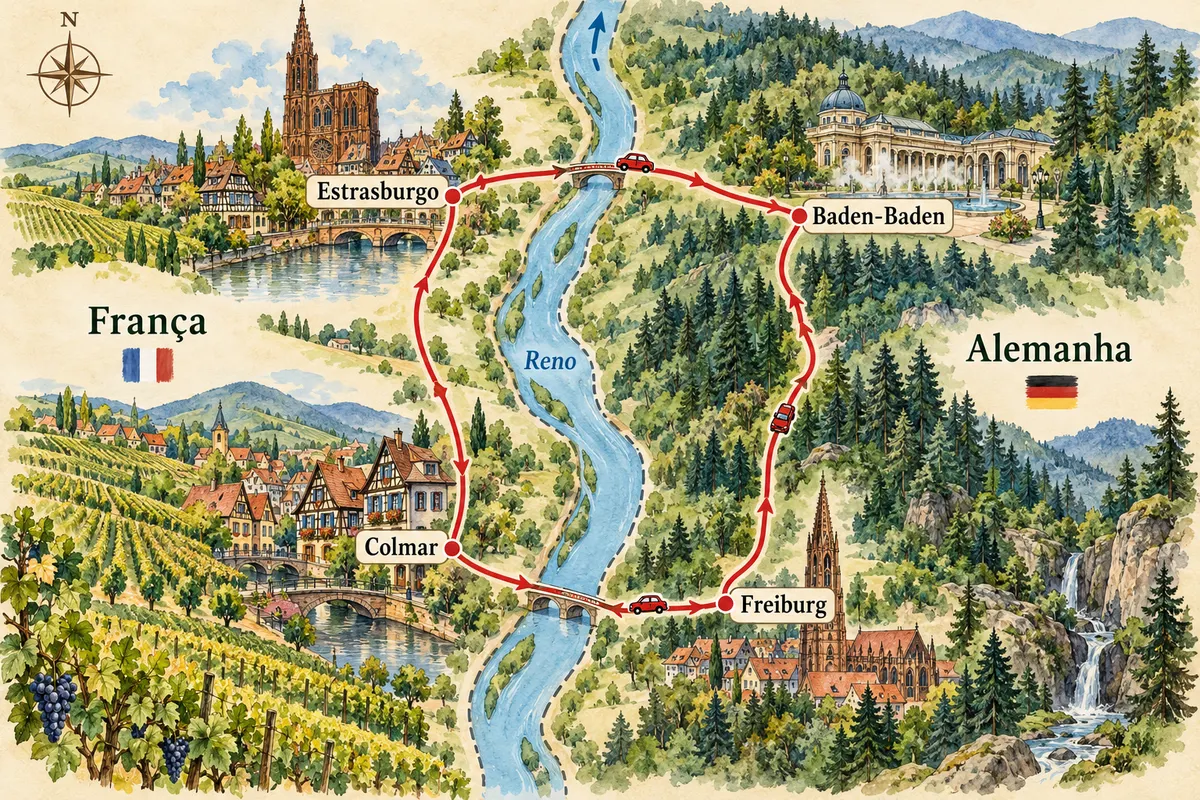
Heidelberg and the Black Forest – na poti z imenom Alsace and the Black Forest

By car on both sides of the Rhine: the Alsace Wine Route, with half-timbered villages among vineyards, and the mountain roads of the Black Forest, between Strasbourg, Colmar, Freiburg and Baden-Baden.

Zemljevid je ilustrativen in ni v merilu. Dotaknite se mesta, da odprete njegovo stran.
Alsace and the Black Forest – ilustrirani zemljevid
Več o poti – Alsace and the Black Forest
Odkrijte druge destinacije Iskanje po zvezni državi in mestu

Več kot vodnik