

Hamburg · Hamburg · Zgodovinska mestna četrt
Speicherstadt
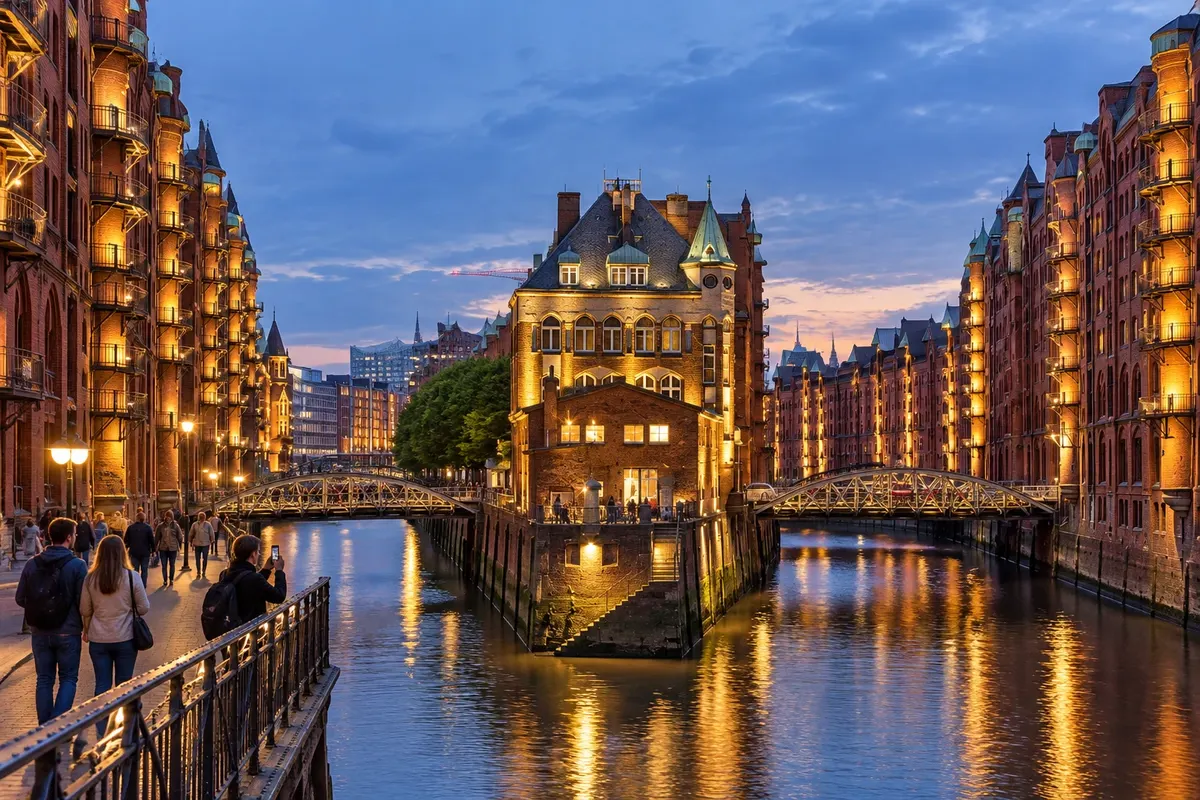
The largest ensemble of historic warehouses in the world, in neo-Gothic red brick over canals, listed by UNESCO along with the Kontorhausviertel.

 Išči
 Brazilija
 Antarktika
 Argentina
 Bolivija
 Čile
 Kolumbija
 Ekvator
 Gvajana
 Francoska Gvajana
 Falklandski otoki (Malvini)
 Paragvaj
 Peru
 Surinam
 Urugvaj
 VenezuelaNemčija
 Avstrija
 Belgija
 Hrvaška
 Danska
 Slovaška
 Slovenija
 Španija
 Finska
 Francija
 Grčija
 Nizozemska
 Madžarska
 Irska
 Islandija
 Italija
 Luksemburg
 Norveška
 Poljska
 Portugalska
 Združeno kraljestvo
 Češka
 Švedska
 Švica
 Turčija
 Bermudi
 Kanada
 Združene države Amerike
 Grenlandija
 Mehika
 Sveta Peter in Mihael
 Dominikanska republika
 JaponskaTurčija
 Južnoafriška republika
 Egipt
 Avstralija
 Fidži
 Nova Zelandija
 Papua Nova Gvineja
Hamburg · Nemčija
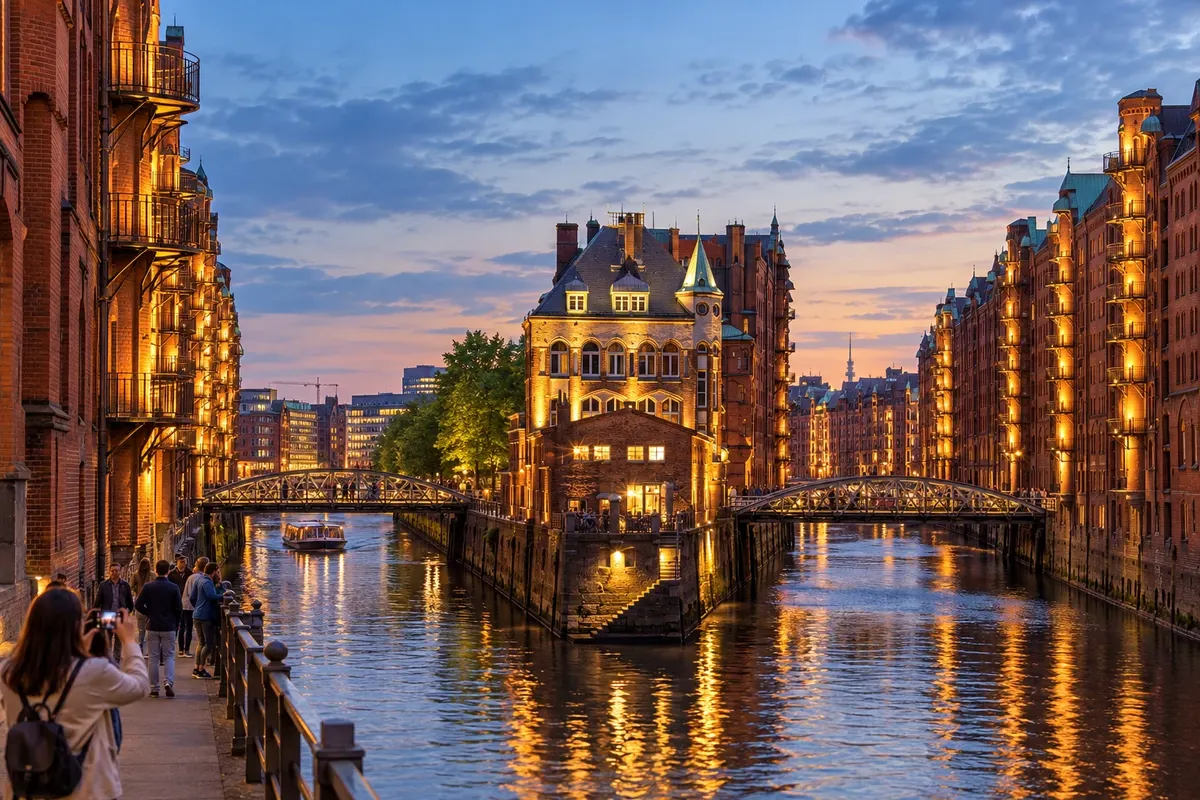
Port city on the Elba river, with the brick warehouses of the Speicherstadt, the Elbphilharmonie, the Alster lakes and boat trips around the harbor.
Na fotografiji: Speicherstadt, Hamburgo
Illustrative images. The pictures in this guide are illustrations based on the real place, not photographs, and may differ from it.
Spoznajte kraj
Hamburgo is the second-largest city in the Alemanha and a city-state, with its own government, like Berlim and Bremen. It lies in the north of the country, on the banks of the river Elba, about 100 km from the North Sea, and faces one of the largest ports in Europe. A former member of the Hanseatic League, it still styles itself as Freie und Hansestadt Hamburg (Cidade Livre e Hanseática de Hamburgo).
The port shapes the itinerary. The red-brick warehouses of the Speicherstadt, built over canals, together with the Kontorhausviertel and the Chilehaus form a UNESCO-listed ensemble. Next to them, the HafenCity is the new neighborhood erected on former port areas, with the Elbphilharmonie at the tip, and from the Landungsbrücken the boats depart that tour docks and shipyards.
In the center, the neo-Renaissance city hall (Rathaus) is a few steps from the Binnenalster, the urban lake surrounded by white façades. Further north, the Außenalster is the place for rowing, sailing and walking. Church towers mark the skyline: the Michel, with an observation deck, and the tower of the former church of St. Nikolai, today a memorial to the victims of the World War II bombings.
Hamburgo also has heavyweight museums, such as the Kunsthalle and the Museu Marítimo Internacional, the world's largest model railway at the Miniatur Wunderland, and neighborhoods with their own character like the Schanzenviertel and Blankenese, the former fishing village with stairways on the banks of the Elba. On early Sunday mornings, the Fischmarkt in Altona keeps a tradition of more than 300 years.
V vodniku še ni nastanitev – Hamburg.
kako do tja · koliko dni · načrt poti · vprašanja
✈ Hamburg Airport Helmut Schmidt (HAM)· 10 km do cilja (Hamburg)
Check before buying. Hamburg airport (HAM) is about 10 km from the center, linked to the main station by the S-Bahn S1. By train, there are direct ICE services from Berlim, Frankfurt and Munique, and frequent trains from Bremen and Lübeck.
Doživite kraj
The largest ensemble of historic warehouses in the world, in neo-Gothic red brick over canals, listed by UNESCO along with the Kontorhausviertel.
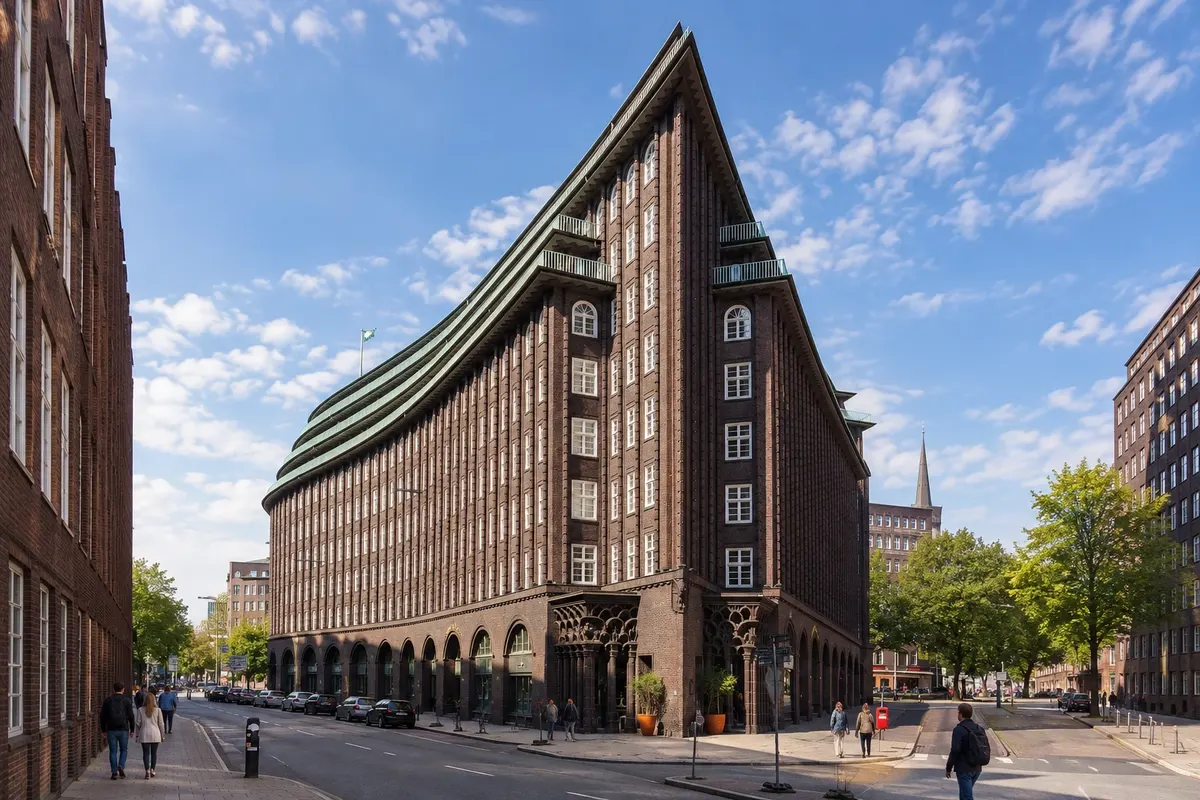
Office-building district from the 1920s in dark brick, featuring the ship-bow–shaped Chilehaus; part of the UNESCO World Heritage Site.
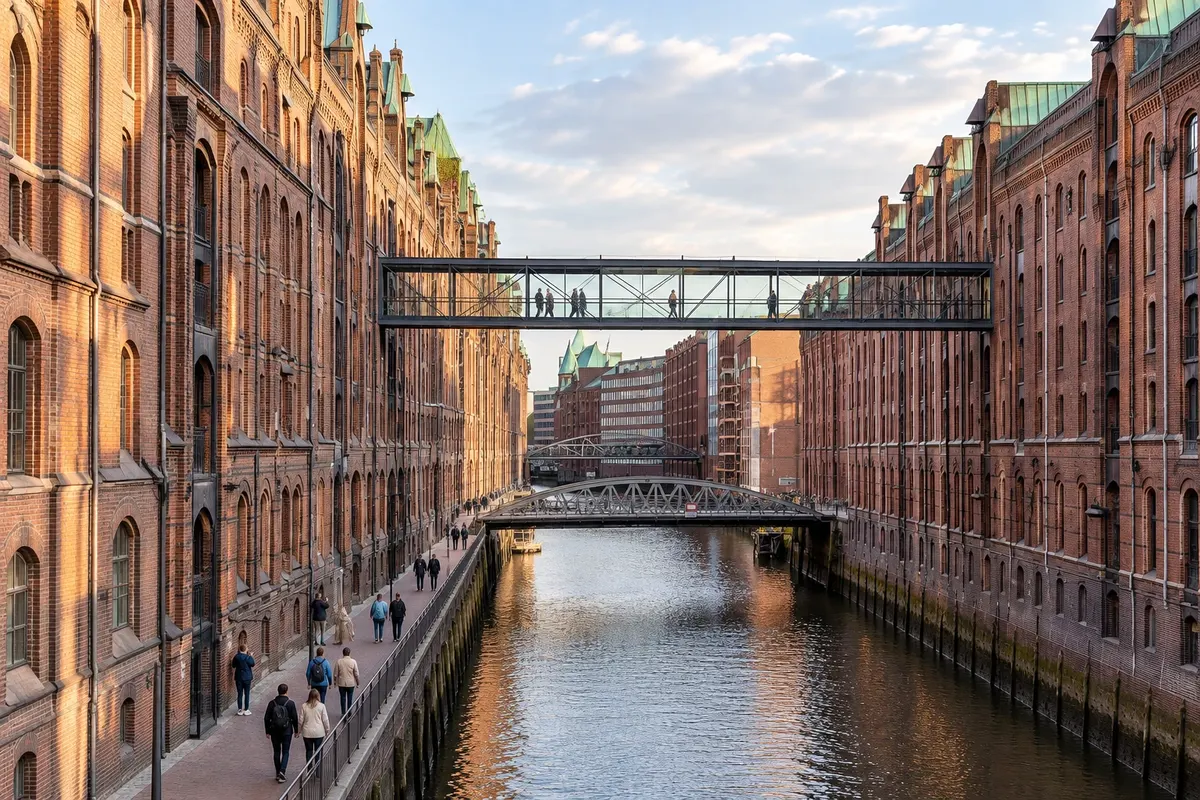
The world’s largest model railway, in a Speicherstadt warehouse, with trains, an airport, cities and miniature landscapes and a day–night cycle.
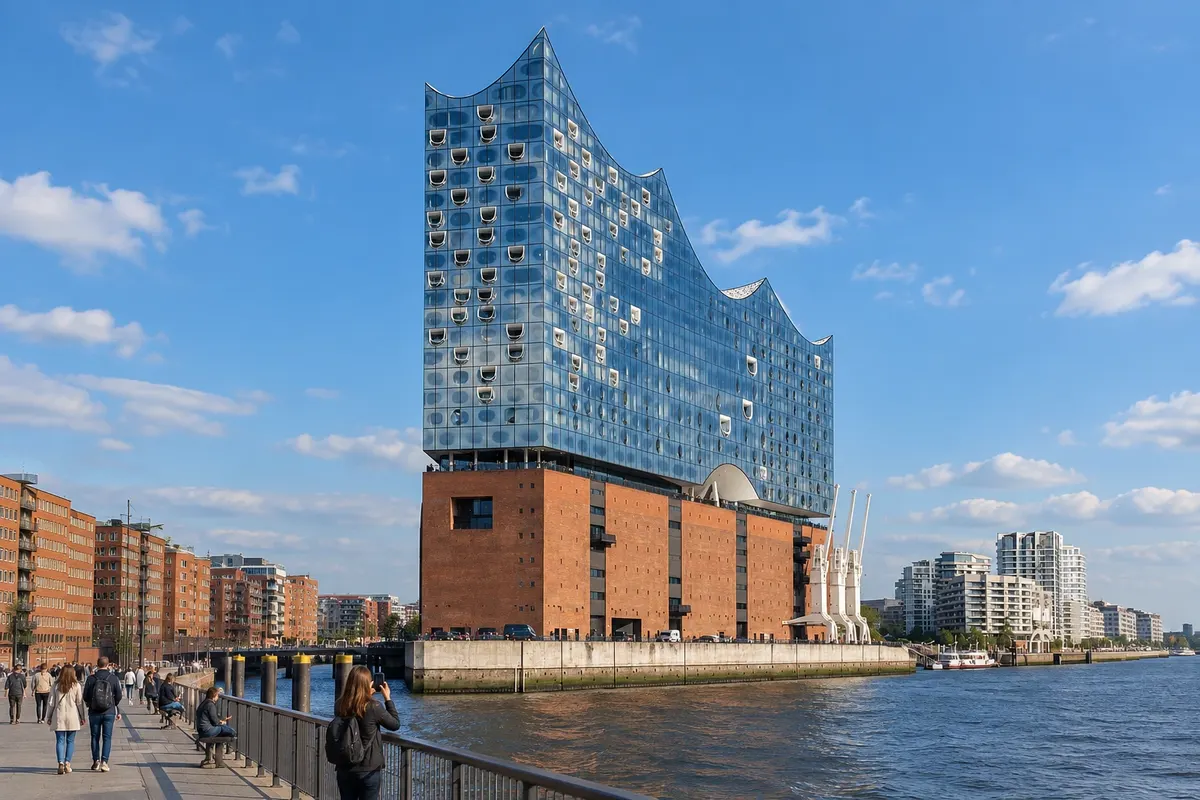
Concert hall with a rippling glass façade atop a former brick warehouse at the tip of HafenCity; the Plaza, 37 metres up, offers a 360-degree view.
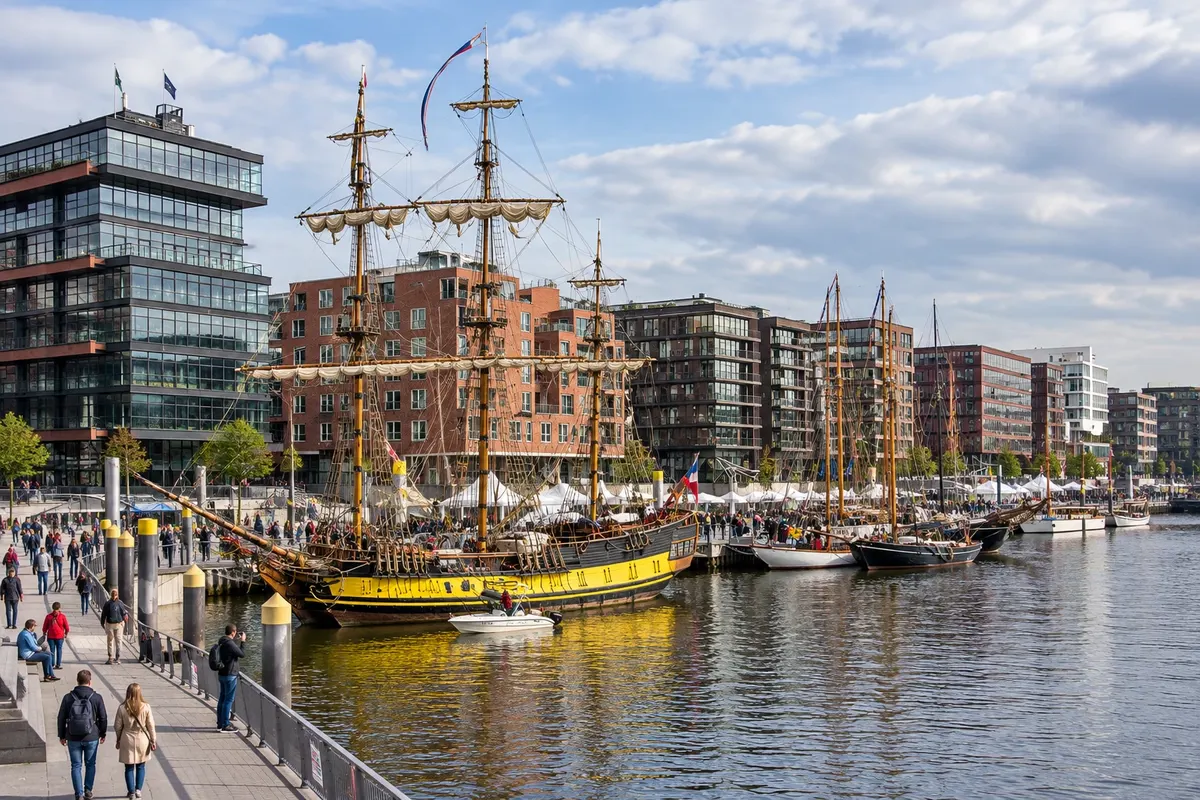
New neighborhood built on former port areas, with contemporary buildings, docks, waterfront squares and promenades that lead to the Elbphilharmonie.
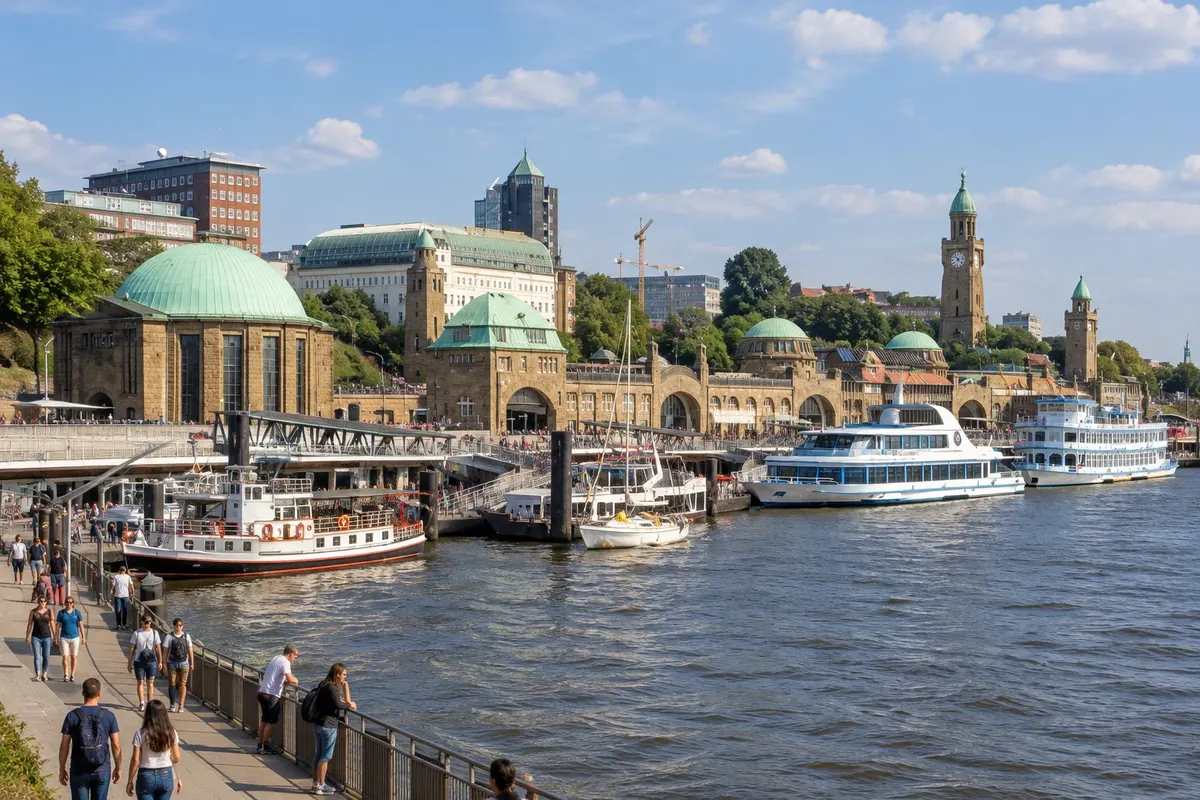
Floating pontoon pier where the harbor tour boats and urban ferries depart, with the towered, domed building from the early 20th century.
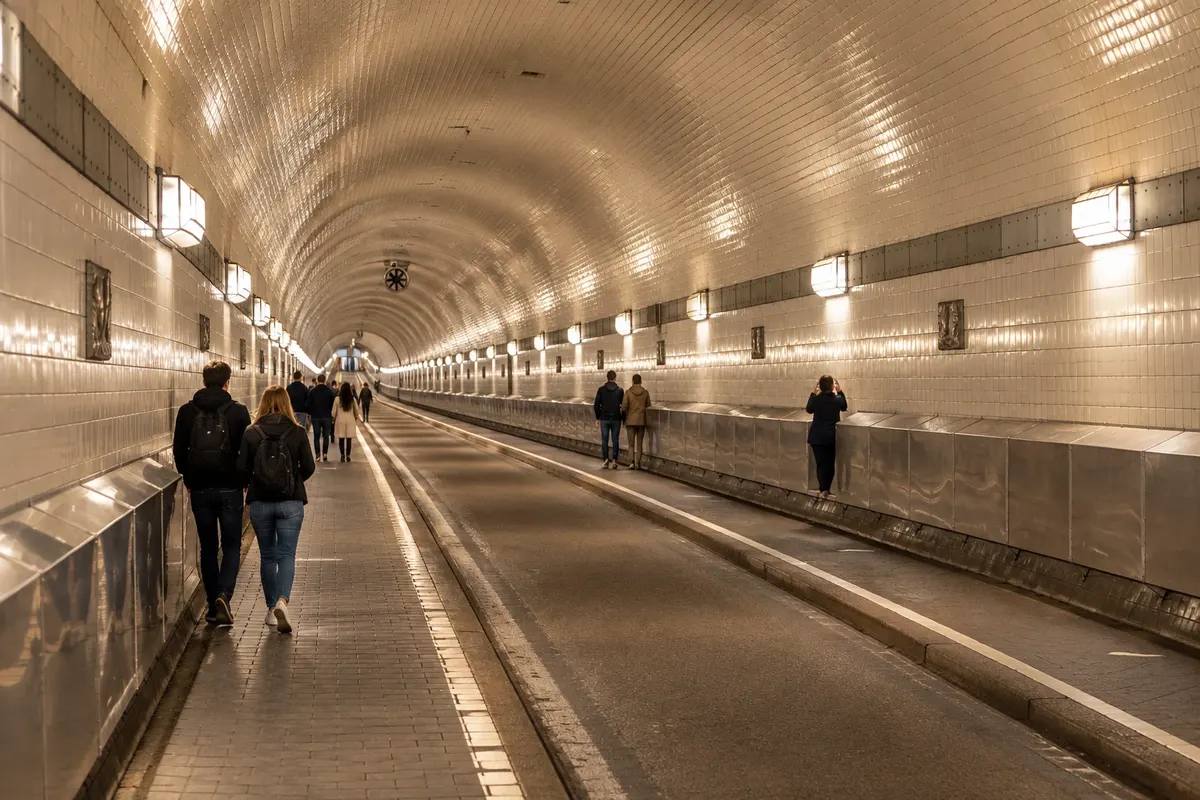
1911 tunnel that runs under the River Elbe, with lifts and decorated tiles; pedestrians and cyclists cross to the south bank, from where you can see the port.
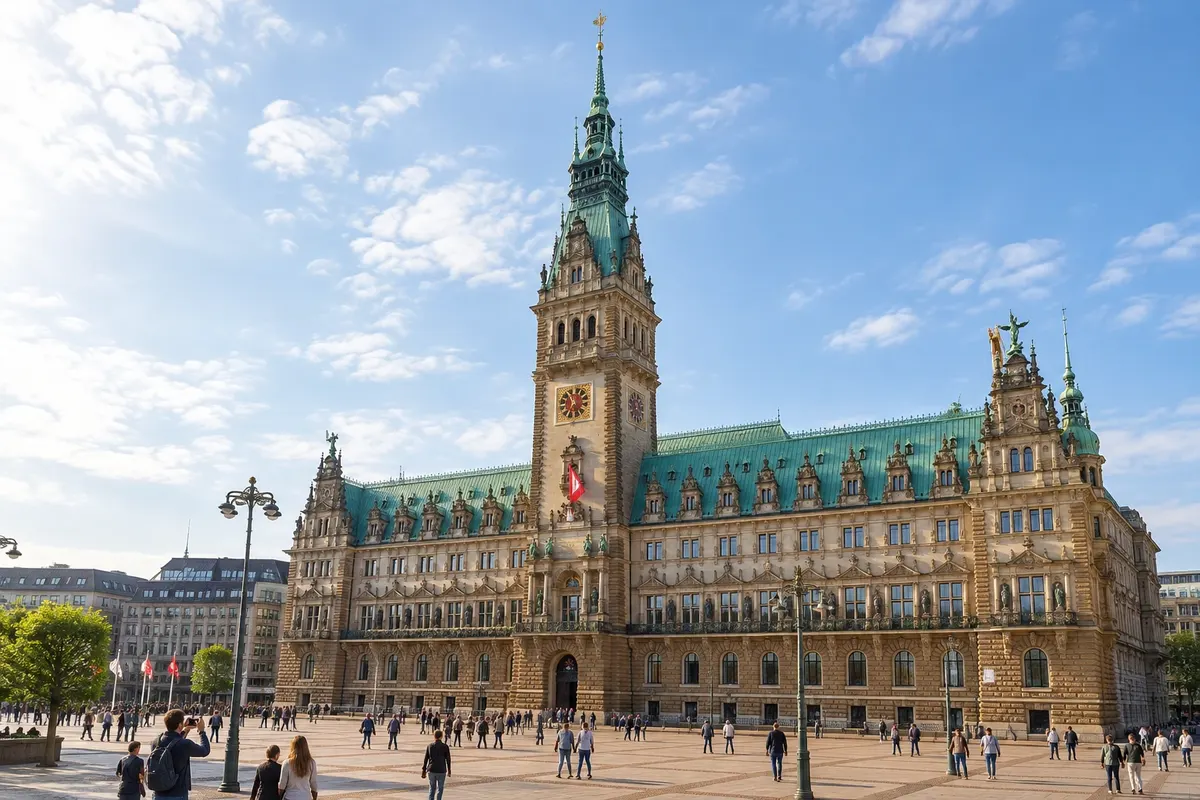
Neorenaissance city hall from 1897, seat of the parliament and the government of the city-state, with a 112-metre tower, courtyard with a fountain and guided tours.
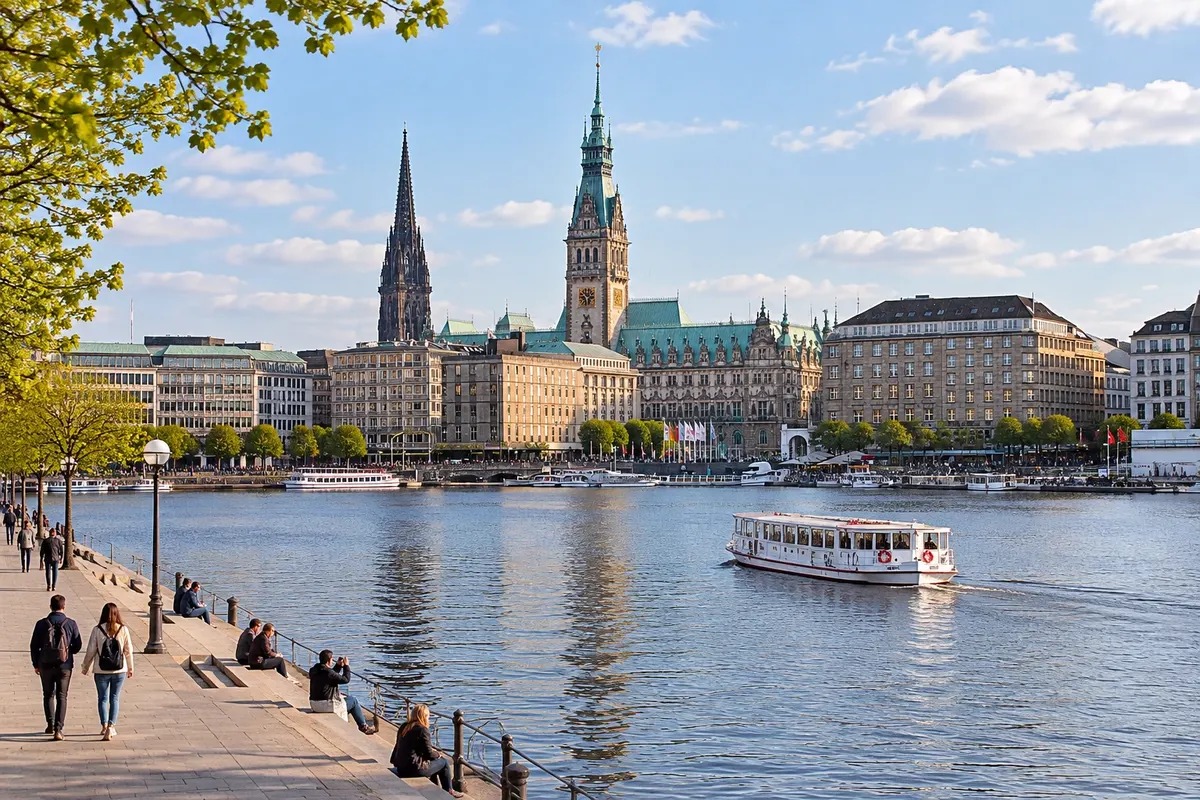
Lake in the city centre, surrounded by white-fronted buildings with copper roofs, featuring the Jungfernstieg promenade, the fountain and the Alster boats.
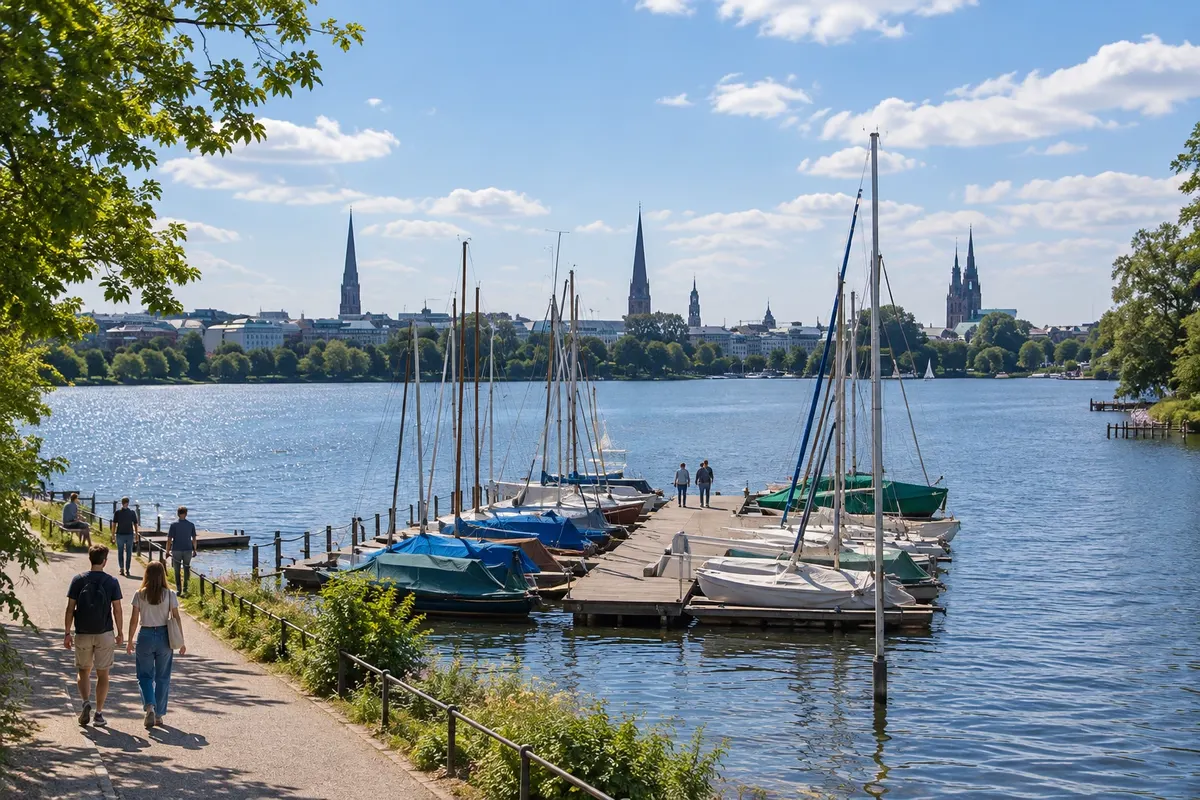
The city's large lake, with 7 km of shoreline between parks and mansions, full of sailboats, kayaks and rowboats; return on foot or by bicycle.
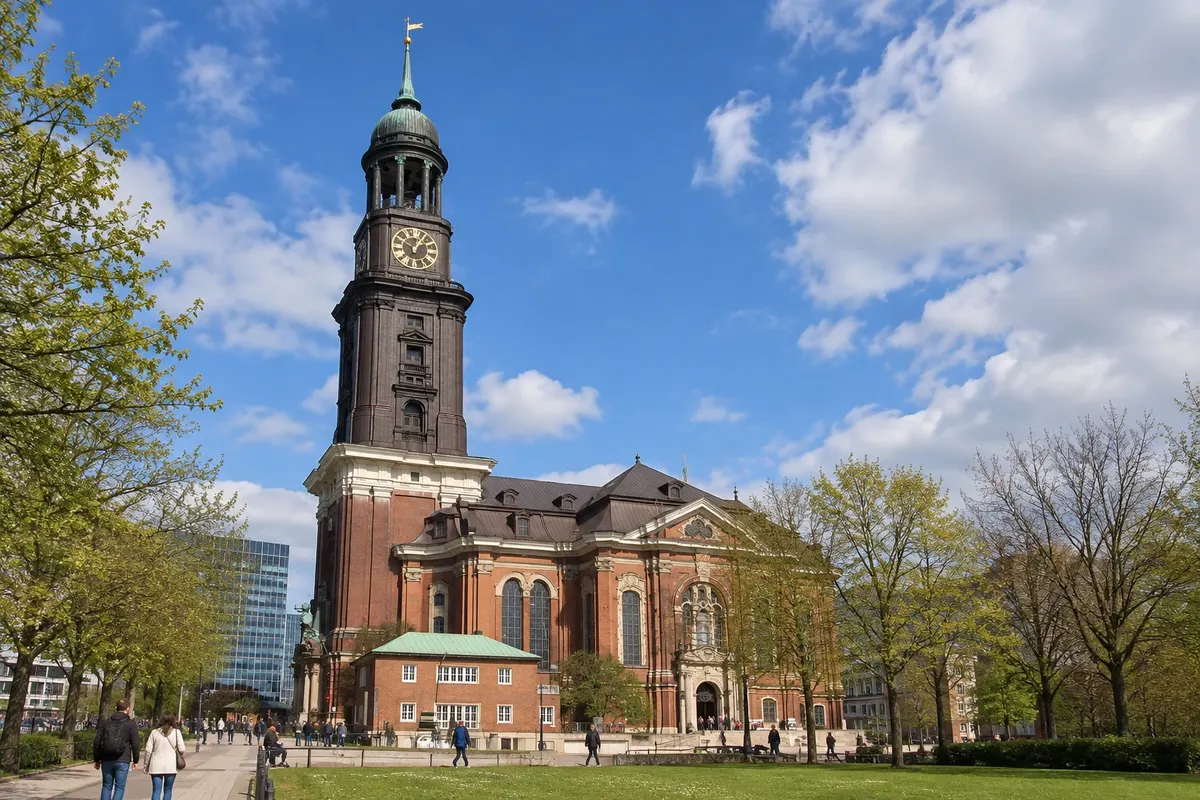
Hamburg's best known Baroque church, the Michel, with a 132-metre tower, an observation platform at 106 metres, a crypt and the largest tower clock in Germany.
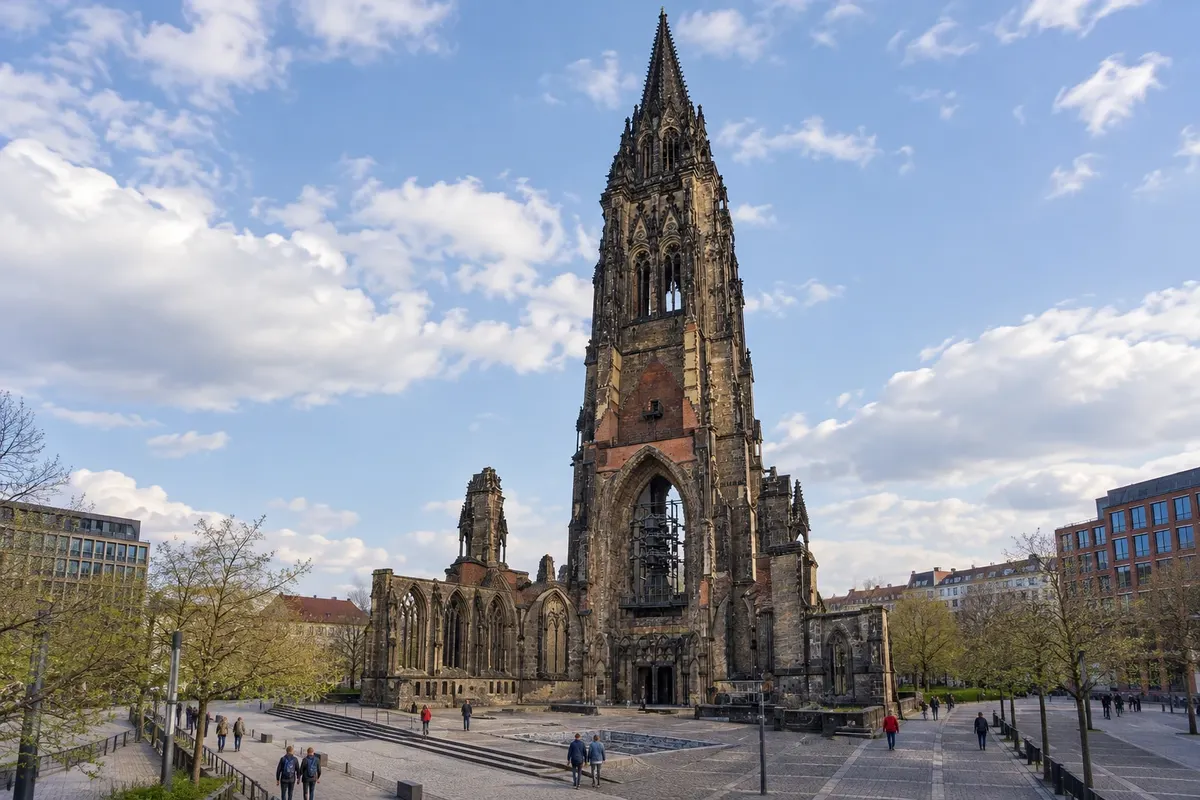
Ruins of the former St. Nikolai church, destroyed in the 1943 bombings, now a memorial to the victims of war, with a museum and a panoramic lift up to 76 metres.
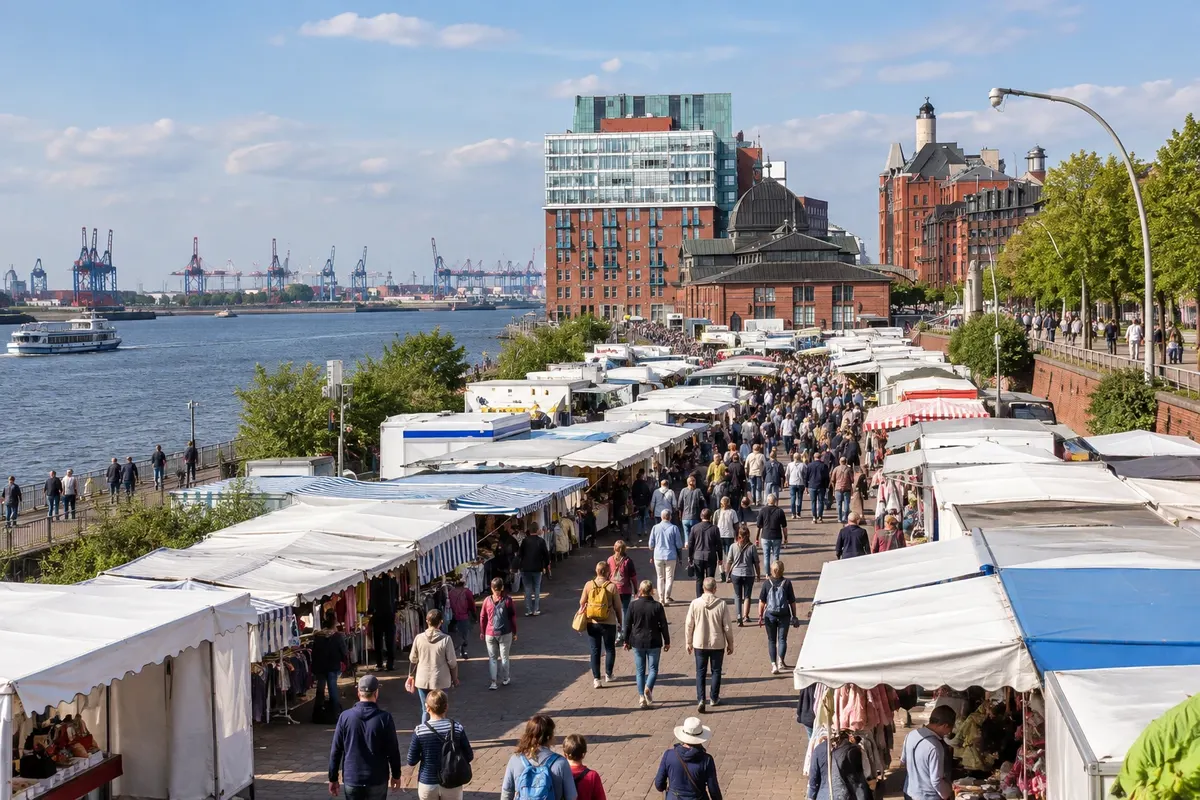
Open-air Sunday morning market early in the morning on the banks of the Elbe, with fish, fruit and plants, hawker-style sellers and the historic Fischauktionshalle.
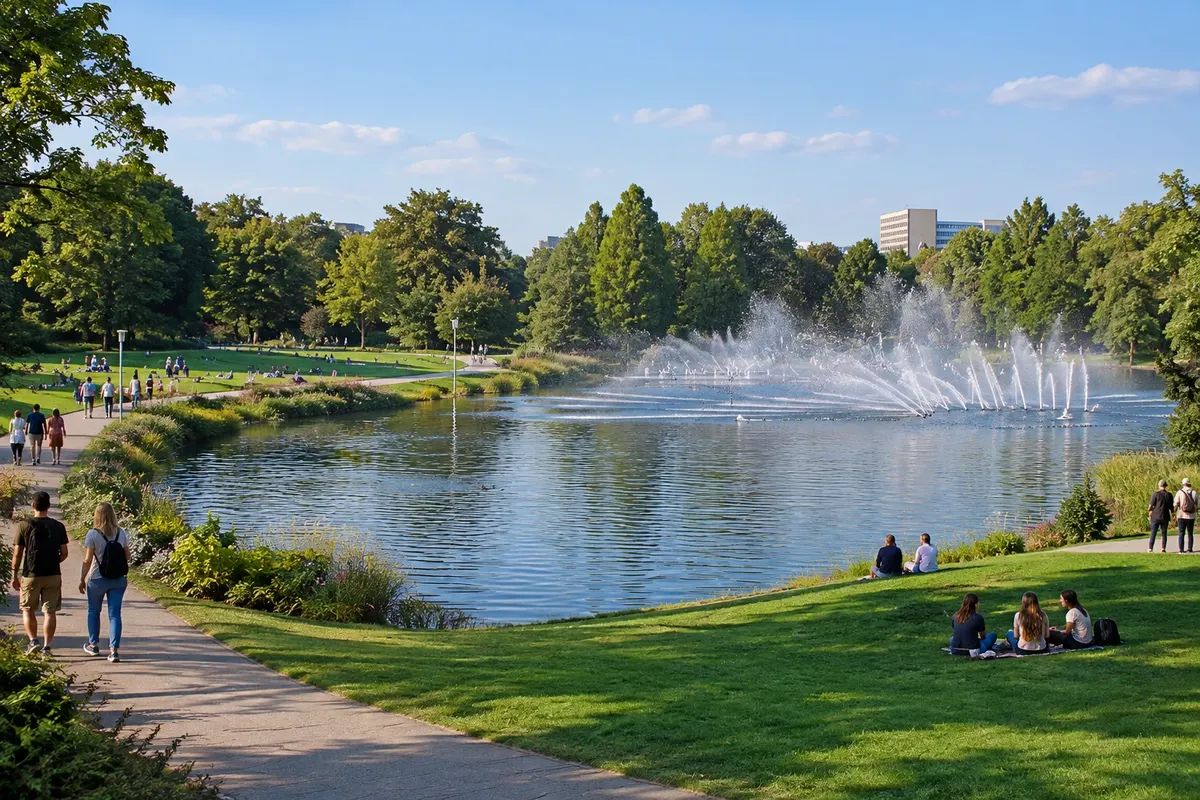
A 47-hectare park in the city centre, with a Japanese garden, rose garden, tropical greenhouses and water-and-light shows on summer evenings.
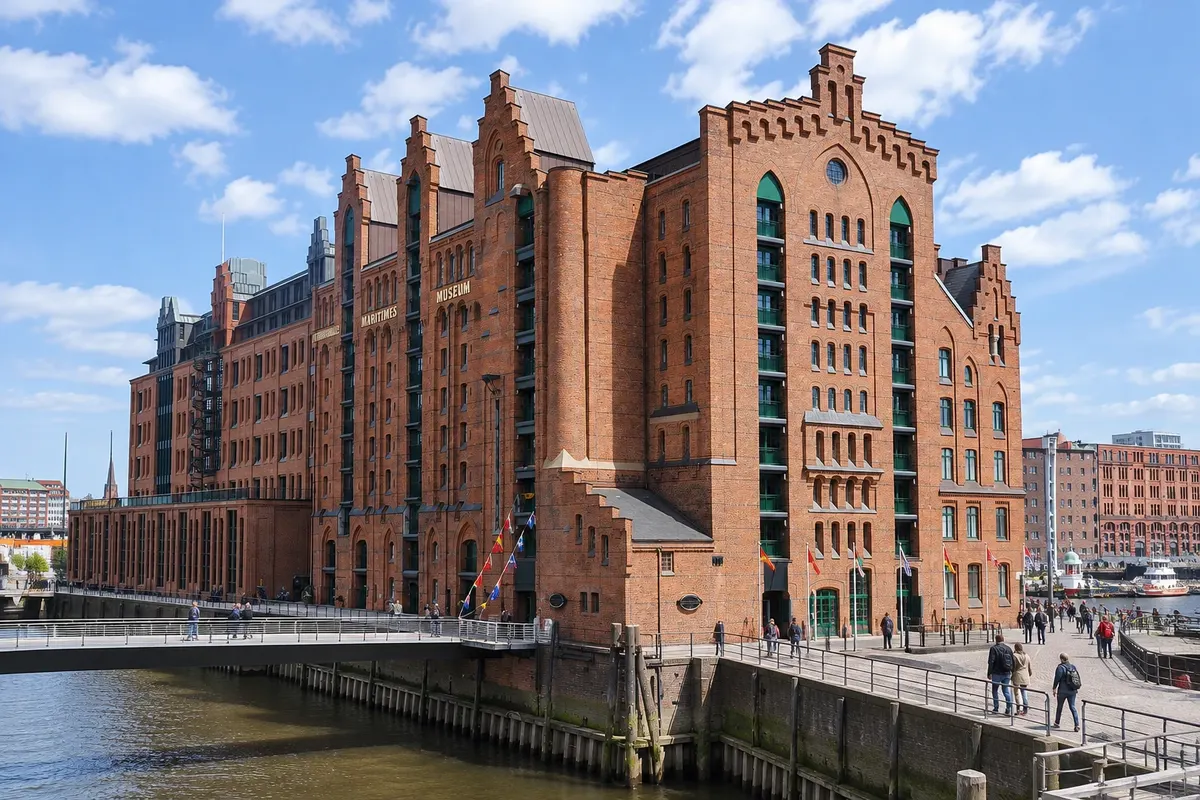
Maritime museum in a 1878 warehouse in the HafenCity, with tens of thousands of ship models, navigation instruments and uniforms, spread over nine floors.
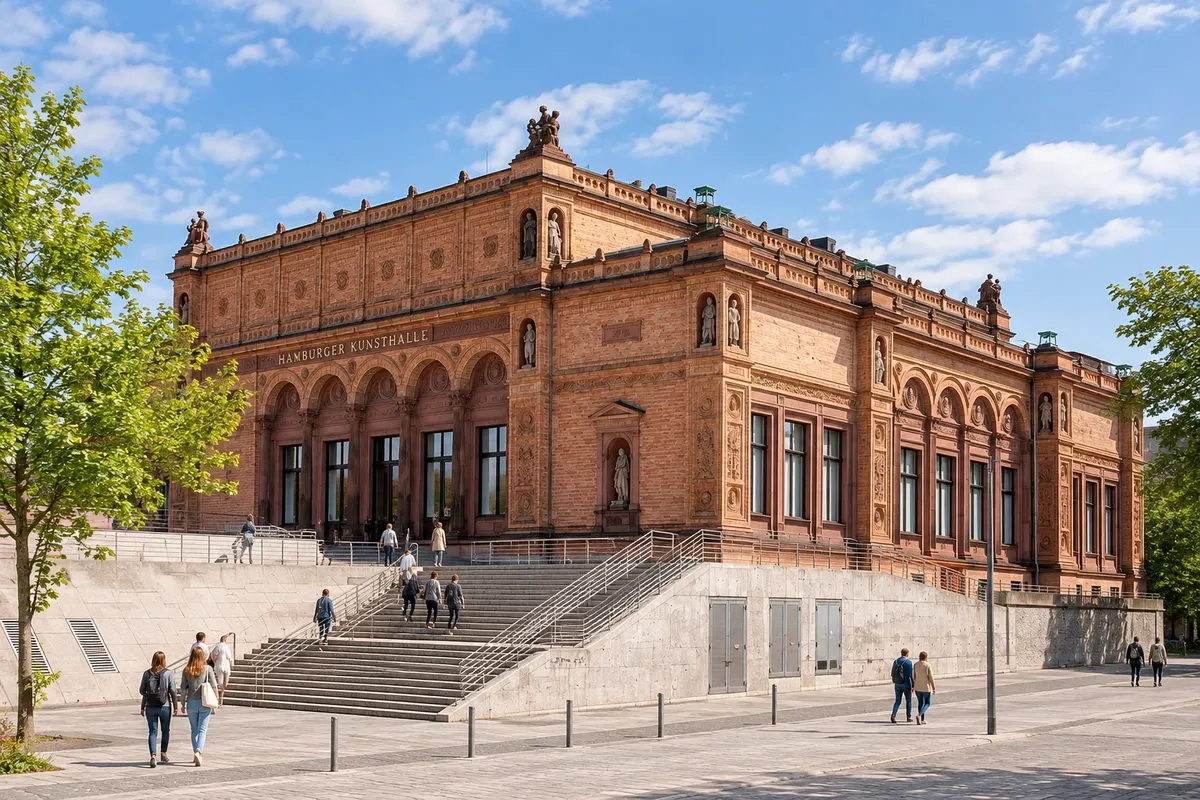
One of Germany's major art museums, next to the central station, with works from the 13th century to the present day and paintings by Caspar David Friedrich.
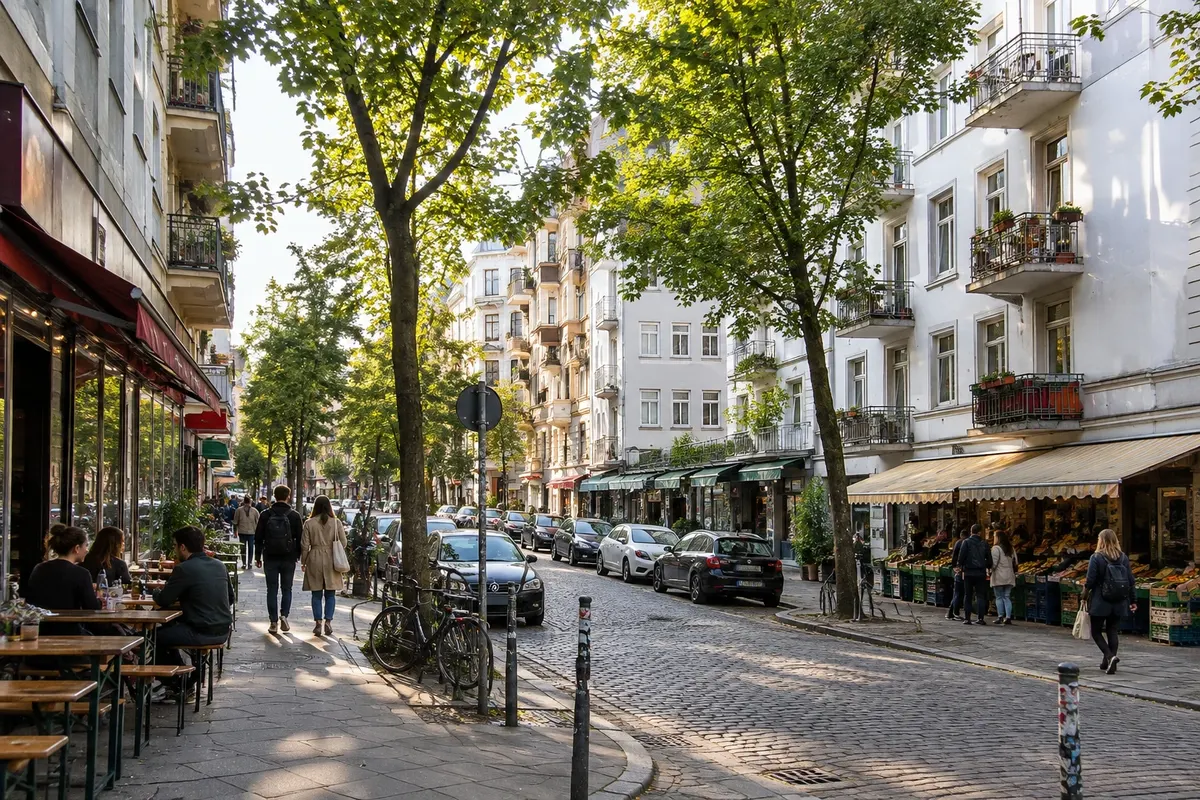
Neighborhood of old buildings with cafés, independent shops, street art and sidewalk tables, next to Sternschanzenpark and its old water tower.
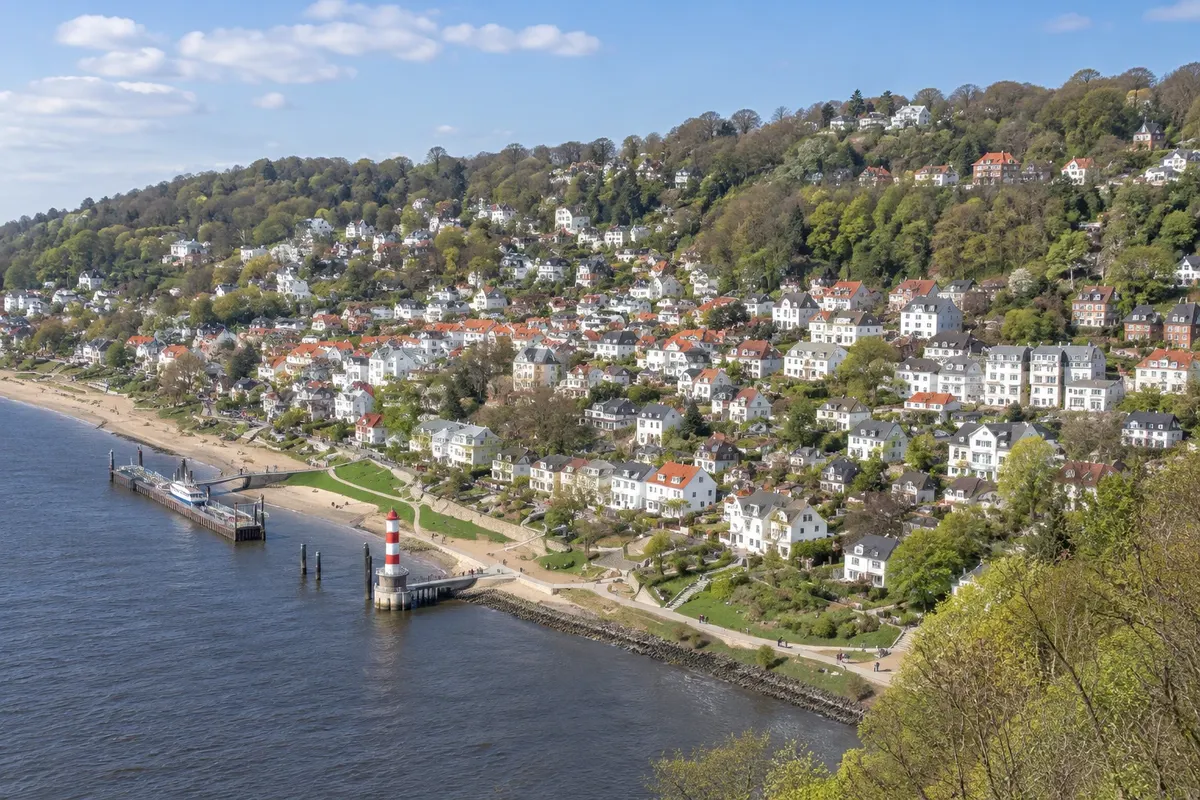
Former fishing village on the Elbe slope, west of the city, with the Treppenviertel of stairways, small houses and a riverside beach with ship views.
Kaj izbrati pred odhodom
Izhodišče, trajanje, potek, vključene storitve in okvirna cena vsakega izleta.
The Speicherstadt (warehouse district) was built between 1885 and 1927 on narrow islands of the Elbe River, supported on about 3.5 million oak piles. It comprises 15 blocks of red-brick warehouses, about 1.5 km long, cut by canals (Fleete) and connected by bridges. The blocks have one face to the street and the other to the water: goods such as coffee, tea, spices and rugs were hoisted by cranes straight from the barges. Since 2015 the ensemble is a UNESCO World Heritage Site together with the Kontorhausviertel, the neighboring office district across the street Bei den Mühren. There stands the Chilehaus (1922–1924), by Fritz Höger, with a bow-shaped prow, and the Sprinkenhof, by the same architect. Start at Brooksbrücke, follow Am Sandtorkai and the Brook to the Wasserschloss at the eastern tip, and return via the Poggenmühlenbrücke, which offers the classic view of the warehouses reflected in the canal. Along the way are the Speicherstadtmuseum (block L, an 1888 warehouse with tools and sacks from the coffee and tea trade), the customs museum (Deutsches Zollmuseum) and the Dialog im Dunkeln exhibition. At dusk the warehouses and bridges are illuminated.
Kraji na poti: Speicherstadt, Kontorhausviertel.
Vključuje: Self-guided walk: the streets, bridges and canals are open and there is no entrance fee. The Speicherstadtmuseum, the Zollmuseum and Dialog im Dunkeln have separate paid admission; check the current price list. Paid guided tours are available, on foot or by barge through the canals.
Nasvet: Go in the late afternoon and stay until the lights come on: the photo from Poggenmühlenbrücke, with the Wasserschloss in the background, looks best with the warehouses reflected in the water. The canals rise and fall with the tide; at low tide the water sits far below the walls. Combine this walk with the Miniatur Wunderland, which is located inside the Speicherstadt.
Najboljši čas za obisk: All year. From May to September the long days let you see the warehouses both in daylight and illuminated on the same walk; in December there are Christmas decorations on the bridges.
The Elbphilharmonie is Hamburg’s concert hall, opened in January 2017 at the western tip of HafenCity. The Herzog & de Meuron design placed a wave-like glass volume, with about a thousand curved panels, atop the Kaispeicher A, an old brick warehouse from the 1960s; the whole reaches roughly 108 meters. The Grand Hall seats 2,100 and the recital hall seats 550. What any visitor can do is go up to the Plaza, the public viewing platform 37 meters high on the 8th floor, between the brick and the glass. The ascent is via an 82-meter curved escalator that crosses the old warehouse in about 2½ minutes, then a shorter second escalator. The Plaza circles the building outdoors, with views of the harbor, the Speicherstadt, church towers and the Elbe River. From the Plaza, go down and walk through HafenCity, the new 157-hectare neighborhood built over former port areas: Sandtorhafen, with its traditional ship moorings, the Magellan Terraces and the Marco Polo Terraces—broad steps facing the water—and the Überseequartier, with shops and the cruise terminal. If you like, end the walk at the Elbbrücken on the east edge, where HafenCity meets the Elbe bridges.
Kraji na poti: Elbphilharmonie, HafenCity.
Vključuje: The Plaza uses timed-entry tickets; it is free if taken at the box office on the day, subject to capacity; advance online reservations carry an extra fee and guarantee entry at the chosen time. Concert ticket holders may access the Plaza without a separate Plaza ticket. Guided tours of the building and concerts are charged separately; check the current price list.
Nasvet: Book the Plaza with a date and time before your trip, preferably for late in the day when the port lights up. In winter opening hours extend into the evening: you can see sunset and the port lights on the same ticket. Bring a coat: the Plaza is open and windy.
Najboljši čas za obisk: Year-round. From May to August the sun sets late and the Plaza fills in the evening; from November to February the illuminated port appears already in the mid-afternoon.
Miniatur Wunderland occupies floors of a warehouse in the Speicherstadt, at Kehrwieder 2–4, and is an H0-scale model railway that has been expanding since 2001. The museum’s own numbers show the scale: about 1,490 m² of model, more than 15 km of track, 1,040 trains, 260,000 figures, 4,110 buildings, 130,000 trees and 385,000 LED lights. The model is divided into worlds: Central Germany, Knuffingen (an invented town with cars that move on their own), Austria, Hamburg (with the Elbphilharmonie, stadium and port), the United States, Scandinavia (with real water and ships that sail), Switzerland (on two floors), Italy and Venice, Monaco with Provence, Patagonia and Rio de Janeiro, featuring Pan de Azúcar, Maracanã and the miniature favela. Knuffingen Airport has planes that taxi, take off and land. Every 15 minutes the room’s lighting changes and night falls over the model, with the cities lit up. New sections are under construction, such as the tropical forest and the Atacama Desert. A visit usually takes 2 to 4 hours; there are control panels where visitors activate scenes.
Kraji na poti: Miniatur Wunderland, Speicherstadt.
Vključuje: Separate paid ticket with a timed entry, purchased online; check the current pricing. Tickets can be rescheduled before they expire. There are lockers, a café and paid backstage tours. Small children have specific entry conditions.
Nasvet: Buy a timed ticket as soon as you finalize your travel dates: the museum is busy on most days and on weekends the line without a reservation can be long. Early morning and late evening are the quietest times; on very busy days the museum often stays open later. See Hamburg’s world before strolling the real city.
Najboljši čas za obisk: Open year-round, with heating; it’s the right activity for a rainy day. December, the German school holidays (July and August) and long holiday weekends are the busiest periods.
The Port of Hamburg lies about 100 km from the sea, on the Elbe River, and is Germany’s largest port. The classic way to see it is the Hafenrundfahrt, the boat circuit that departs from the Landungsbrücken piers. There are two types of vessels: large launches with an open upper deck, and low barges (Barkassen) that enter the narrow Speicherstadt canals when the tide allows. The roughly 1-hour circuit passes HafenCity and the Elbphilharmonie as seen from the water, the Blohm+Voss docks where ships and platforms are under repair, the museum ships Rickmer Rickmers and Cap San Diego, and crosses the river to the container terminals where cranes work over vessels longer than 300 meters. On longer versions the boat continues to the Köhlbrandbrücke, a 1974 bridge with a high span for ship passage. Several operators run the route, with departures throughout the day and commentary in German; some offer English narration or app audio. The river traffic — ferries, tugboats and cruise ships — is part of the experience.
Kraji na poti: St. Pauli–Landungsbrücken, Speicherstadt, HafenCity, Elbphilharmonie.
Vključuje: Separate paid ticket, varying by operator and duration; check the current fare. Passage through the Speicherstadt canals depends on the tide and may be substituted by a different section. Some boats have a bar on board. The Hamburg CARD gives discounts with some operators.
Nasvet: To see the Speicherstadt from the water choose a low barge, not the large launch, and ask at the ticket desk if the tide at that time allows entering the canals. Sit on the right side of the boat when departing: that’s the side of HafenCity and the wharves. If you want to spend less, take the HVV ferry line 62, which covers part of the same route.
Najboljši čas za obisk: All year round, with enclosed boats in winter. From April to October there are more departures and open decks; in May, during the port’s anniversary (Hafengeburtstag), the river is often full of vessels.
HADAG ferries are part of Hamburg’s public transport (HVV): the regular metro and bus ticket is valid on board, so they work as low-cost boat trips. Line 62 departs from pier 3 of the Landungsbrücken and stops at Altona’s Fischmarkt, Dockland (an office building shaped like a ship with a public staircase on the roof), Neumühlen/Övelgönne, Bubendey-Ufer and Finkenwerder on the south bank. The boat has an enclosed area, open deck and a snack bar. Get off at Neumühlen/Övelgönne: there is the Museumshafen Oevelgönne, an open-air museum harbour with steam tugs, sailing ships and old working boats, and the Elbstrand begins there — the river’s sandy strip with the former captains’ and pilots’ houses along the path. From the beach you can see the container terminal on the opposite bank. You can walk along the river to Teufelsbrück (about 4 km) and take the ferry back there, or continue to Blankenese (about 8 km). In Finkenwerder, where the line ends, is the Airbus factory; Beluga cargo planes land and take off there several times a day.
Kraji na poti: St. Pauli-Landungsbrücken, Altonaer Fischmarkt, Blankenese.
Vključuje: The HVV day ticket or single ticket for zones AB, the Deutschlandticket and the Hamburg CARD are valid; there is no onboard ticket sales at Landungsbrücken, buy beforehand at a machine or via the app. The Museumshafen and the beach have free access. Snacks on board are paid separately.
Nasvet: Take the ferry early or after 3:00 PM: on sunny weekends it leaves Landungsbrücken packed. Stay on the open deck on the city side on the outbound trip (right-hand side) to see the Fischmarkt and Dockland. With a day ticket you can get off, walk and catch the next ferry without paying again.
Najboljši čas za obisk: April to October, when Elbstrand invites strolling and the ferry lines run more frequently; in winter the trip is short and sheltered and the beach is empty.
Hamburg’s Rathaus (city hall) was built between 1884 and 1897 in a Neo-Renaissance style, after the great fire of 1842 destroyed the previous building. It has 647 rooms, a 111-meter façade and a central tower of 112 meters, and houses both the city-state parliament (Bürgerschaft, in the left wing) and the government (Senat, in the right wing). The ground-floor lobby, with columns, is open to the public; the inner courtyard features the fountain of Hygieia, goddess of health, a reminder of the 1892 cholera epidemic. The upper rooms, such as the Great Festival Hall, 45 meters long, and the mayors’ hall, are only seen on guided tours in German, English or French, except on days when parliament is in session. In front, the Rathausmarkt is the city’s event square. From there, cross the Alsterarkaden, a white arcade gallery over the Alsterfleet canal, to the Jungfernstieg, the promenade with a stone stairway on the edge of the Binnenalster, the smaller Alster lake, with a fountain that jets up to 60 meters in season. On the other side of the square Mönckebergstraße begins, a shopping street that leads to the central station, and nearby is the church of St. Petri, one of the city’s five main churches.
Kraji na poti: Hamburger Rathaus, Binnenalster.
Vključuje: The Rathaus lobby and courtyard are free to enter; the guided tour of the rooms is paid separately, with tickets sold on site in the lobby and times that depend on the parliament’s schedule. The Rathausmarkt, the Alsterarkaden and the Jungfernstieg are open.
Nasvet: Ask at the lobby desk for the next tour time in English and use the wait to stroll around the Alsterarkaden. Early in the morning the Jungfernstieg is empty and you can photograph the Binnenalster with the Rathaus in the background. On days when parliament is in session there is no tour.
Najboljši čas za obisk: All year. From May to September the Binnenalster fountain usually runs and there are pavement tables; from late November through December the Rathausmarkt typically hosts the city’s main Christmas market.
The Alster is a dammed river in central Hamburg since the 13th century, when a miller blocked the water to power a mill. The result is two lakes: the Binnenalster, about 18 hectares, flanked by Jungfernstieg and downtown buildings, and the Außenalster, 164 hectares, surrounded by parks and the houses of Harvestehude, Uhlenhorst and Winterhude. The Lombardsbrücke and Kennedybrücke bridges separate the two. From Jungfernstieg the white Alster boats depart, making the loop of both lakes in about 1 hour with commentary, and in season continue through the residential canals to Stadtpark. In the late afternoon there is a sunset departure. Walkers can do the Außenalster circuit, roughly 7 km of flat path, with lawns, willows, rowing clubs and the view of the five downtown towers reflected in the lake. On the shores you can rent pedal boats, canoes and small sailboats without a license; the wind shifting between buildings makes the lake a well-known training ground for sailors. In very cold winters, when the ice thickens, the Alstereisvergnügen — a celebration on the frozen lake — can happen, but this is rare.
Kraji na poti: Binnenalster, Außenalster.
Vključuje: Boat rides are paid separately per trip (Alster loop, canals, sunset); check current fares. The walk and parks are open access. Pedal boat, canoe and small sailboat rentals are charged per hour.
Nasvet: Walk the eastern side at late afternoon when the sun sets behind the city center. For the boat, sit outside on the stern and bring a jacket: it can be windy on the lake even in summer. Canal boats only operate in the warmer season; check before you go.
Najboljši čas za obisk: April to October for the boat and lake activities; Alster loop boats usually run year-round in good weather. In December there are boats decorated for the Christmas season.
The Michel, as Hamburgers call the church of St. Michaelis, is the city's symbol and the largest of its five main churches, with 2,500 seats. The current Baroque church opened in 1762 after a lightning strike destroyed the previous one in 1750; the tower was completed in 1786. In 1906 a fire during welding works brought down the tower, and the church was rebuilt in the same form with steel and concrete, reopening in 1912. During the 1944–1945 bombings the roof was pierced and the interior burned; repairs finished in 1952. The tower is 132 meters high and has 8‑meter‑diameter clocks on each face; the platform, 106 meters above the Elbe, is reached by elevator or stairs and looks out over the port, the Speicherstadt and the Alster. Inside, the bright nave, white and gold, houses five organs, including the large Steinmeyer organ with 6,674 pipes. The crypt under the nave was used for more than 2,000 burials; the composer Carl Philipp Emanuel Bach is buried there. There is a tradition of about 300 years: the watchman plays a trumpet chorale from the tower windows to the four cardinal points on weekday mornings and evenings and on Sundays at noon.
Kraji na poti: Hauptkirche St. Michaelis.
Vključuje: The nave is open outside services, with a suggested donation. Tower and crypt require a separate paid ticket, with a combined ticket available; check the current pricing. Organ concerts and musical services are posted on the door.
Nasvet: Go up in the morning, with the sun behind you to photograph the port, and schedule the visit for the trumpet times. On days of strong wind or fog the viewing platform may close. The church is a 10-minute walk from the Landungsbrücken: combine both in the same visit.
Najboljši čas za obisk: All year. From May to September the viewing platform stays open later and the skies are often clearer; in December there are Advent concerts and the Christmas services fill the church.
St. Nikolai Church was rebuilt in a neo-Gothic style after the 1842 fire, designed by the English architect George Gilbert Scott, and completed in 1874; its 147-meter tower was the tallest building in the world for two years and is still the tallest church tower in Hamburg. In July 1943, during Operation Gomorrah, Allied bombings destroyed the nave: the tower, the choir and sections of the walls remained. The city decided not to rebuild, and in 1977 the ruin became a memorial to the victims of war and persecution. A glass elevator, installed in 2005, rises to a platform at 76 meters, from where you can see the city center, the Speicherstadt and the port; large 1943 photos show the city devastated from the same angle. In the crypt, the Gomorra 1943 exhibition tells the story of the Hamburg bombing, the construction of air-raid shelters, the start of the aerial war over Warsaw, Rotterdam and Coventry, and the use of destruction in propaganda. In the nave area there are sculptures, such as a woman by Edith Breckwoldt, and a carillon that is played live on a regular basis. It is a short, quiet visit, two blocks from the Rathaus.
Kraji na poti: Mahnmal St. Nikolai.
Vključuje: Paid admission for the elevator and the crypt exhibition, with combined ticket; check the current price list. The exterior area of the ruin is open and there is no charge to enter.
Nasvet: Combine with the Michel tower only if you have time: the two views are similar, and this one is closer to the center and the Speicherstadt. Allow half an hour for the crypt exhibition, which has texts in English. The carillon plays at times announced at the entrance.
Najboljši čas za obisk: All year. With clear skies, from April to September the view reaches the port terminals; at the end of July there are commemorative events for Operation Gomorrah.
The St. Pauli-Landungsbrücken are the 688-meter floating piers from which ferries, sightseeing boats and, formerly, liners depart. The stone riverside building, from 1907–1909, is 205 meters long and, at the eastern end, has the tide-level tower (Pegelturm) with a clock and water-height indicator. Moored there are two museum ships: the sailing ship Rickmer Rickmers, from 1896, and the freighter Cap San Diego, from 1961, both open to visitors. At the western end sits the green dome of the Alter Elbtunnel (old Elbe tunnel), opened in 1911: two tubes of 426 meters, 24 meters deep, that link St. Pauli to the port island of Steinwerder. Pedestrians and cyclists descend by stairs or by large lifts built for cars, and cross under the river amid tiles with fish, crabs and rats in relief. On the other side, a platform gives the classic view of Hamburg: the piers, the Michel tower and the Elbphilharmonie in a row on the north bank. The tunnel is open to pedestrians and bicycles at all hours; cars no longer pass. Return on foot or by ferry 73, which departs from Steinwerder.
Kraji na poti: St. Pauli-Landungsbrücken, St. Pauli Elbtunnel.
Vključuje: Piers and tunnel open, no admission charge. The museum ships Rickmer Rickmers and Cap San Diego have separate paid admission; check the current price list. Ferries are valid with the HVV ticket.
Nasvet: Cross the tunnel at late afternoon and wait on the Steinwerder platform for the port to light up; return via the tunnel, which is illuminated. On weekends the piers fill with vendors selling boat tickets: compare durations before you buy. The Landungsbrücken subway station (U3) is elevated and already gives you a view of the harbor as you arrive.
Najboljši čas za obisk: All year. From April to October the piers are busy all day; in May the port’s anniversary usually fills the area for three days, with a parade of ships.
The museum occupies the Kaispeicher B, a brick warehouse built in 1878–1879 at the entrance to HafenCity, an old storehouse that endured in the port area. Since 2008 it has housed the collection of Peter Tamm, a former newspaper editor who spent his life assembling maritime objects: ship models, some in gold and silver, nautical charts, uniforms, paintings and navigational instruments. The exhibition spreads over nine “decks,” as the museum calls its floors, and covers three thousand years of history: sailing and the age of discovery, shipbuilding, the merchant navy, ocean liners, navies and ocean research. There is a bridge with a simulator, a room with thousands of small-scale models behind glass and a model of the ocean liner Queen Mary 2 built from Lego. The building itself, with wooden beams and windows onto the canal, is worth the climb. Texts are in German and English; the audio guide is via your phone on the museum’s wireless network. It’s the recommended visit for ship enthusiasts and for rainy days in HafenCity.
Kraji na poti: Internationales Maritimes Museum Hamburg, HafenCity.
Vključuje: Separate paid admission, with a discount for Hamburg CARD holders and reduced tickets late in the day; check the current pricing. Audio guide is provided via your own phone. Themed guided tours on certain weekdays and the simulator on fixed days require additional payment.
Nasvet: Start at the top deck and work your way down; three hours go by quickly. The navigation simulator operates only on specific days, so check before you go. The museum sits between the Speicherstadt and the Elbphilharmonie — fit it in after your walk through the warehouses.
Najboljši čas za obisk: All year, open daily except December 24 and 31. It’s the covered option for rainy months, in June–August and in December.
The Reeperbahn is a 930-meter street in the St. Pauli district, between the port and the Schanzenviertel. The name comes from the ropeworks (Reep is rope in Low German) that once operated there in the 17th and 18th centuries, outside the city walls. Today it is the street of musical theaters, such as the Operettenhaus, the Schmidt Theater and the St. Pauli Theater, of music clubs and bars, with the Davidwache, a police station from 1914 that has become a neighborhood symbol, and the Spielbudenplatz event square. At the corner with Große Freiheit is Beatles-Platz, a round square with steel silhouettes of the musicians: in the early 1960s the band played for months in the Indra, Kaiserkeller and Star-Club clubs. Nearby are the Millerntor stadium, home of FC St. Pauli, and Hafenstraße, with houses painted facing the river. Heading north brings you to the Schanzenviertel, a neighborhood of cafés, thrift shops and bars on Schulterblatt and Susannenstraße, around the Rote Flora, an old theater occupied since 1989 that became an autonomous cultural center. Next to it, Sternschanzenpark has the old water tower converted into a hotel. In September the Reeperbahn Festival typically fills the neighborhood's clubs with shows over several days.
Kraji na poti: Schanzenviertel.
Vključuje: Self-guided walk; there is no charge to enter the streets. Theaters, musicals and shows require paid tickets. There are paid guided tours of the neighborhood, including ones about the Beatles and the history of St. Pauli.
Nasvet: Go around sunset: the Reeperbahn lights up at about 8:00 p.m., and the Schanzenviertel is more interesting in the late afternoon, with sidewalk tables on Schulterblatt. By day, on Saturdays there is a flea market (Flohschanze) near Feldstraße station. For dinner, Schanzenviertel has more options than the Reeperbahn.
Najboljši čas za obisk: All year; from May to September the sidewalks fill up and in September the Reeperbahn Festival takes place. In December there is a dedicated Christmas market on Spielbudenplatz.
The Altona Fischmarkt has taken place since 1703, every Sunday morning, on the Elbe shore between St. Pauli and Altona. From April to October it usually opens at 5:00 and closes at 9:30; from November to March, from 7:00 to 9:30. Fresh and smoked fish are sold, but also tropical fruits in baskets, flowers, cheeses, clothing, souvenirs and antiques, and the show is the sellers shouting their offers, like Aale‑Dieter, who has sold eels for decades. Next door, the Fischauktionshalle, the 1896 iron-and-brick fish auction hall, hosts live jazz and rock bands from dawn, with breakfast and beer served at long tables. The crowd mixes families doing shopping with people coming straight from the night on the Reeperbahn, a 10‑minute walk away. Ferries of line 62 stop at the water’s edge (stop Altona/Fischmarkt), and from the pier you can watch the port waking up. When the tide rises high, the square sometimes floods; vendors pull in the stalls closest to the water.
Kraji na poti: Altonaer Fischmarkt.
Vključuje: Open market, no entrance fee; purchases, breakfast and music in the hall are paid separately. Ferry requires an HVV ticket.
Nasvet: Arrive before 8:00 to see the hawkers in action and get a seat in the hall; after 9:00 the stalls start to close. Bring cash for the small stalls. From there take ferry 62 to Övelgönne and continue the walk along the Elbstrand.
Najboljši čas za obisk: From April to October, when the market opens earlier and daylight comes sooner; in winter it starts at 7:00 and is shorter. Check the times before you go, because it may not take place on public holidays.
The Kunsthalle is Hamburg’s art museum and is located next to the central station, between the tracks and the Alster. It comprises three connected buildings: the 1869 brick building, the 1921 building with the Kuppelsaal (dome hall) designed by Fritz Schumacher, and the Galerie der Gegenwart, a 1997 white-cube by Oswald Mathias Ungers with 5,600 m² for art after 1960. The collection spans seven centuries. From the old masters come the medieval altarpieces by Meister Bertram and Meister Francke, painted in Hamburg in the 14th and 15th centuries. The 19th-century wing includes Caspar David Friedrich, with The Sea of Ice and The Wanderer above the Sea of Fog, as well as Max Liebermann. In modernism are Munch, with the Madonna, Max Beckmann, Picasso and the German expressionists. The Galerie der Gegenwart displays installations, photography and video. The museum is closed on Mondays and opens late on Thursdays; temporary exhibitions may require separate admission. With the station next door, it fits well on an arrival or departure day.
Kraji na poti: Hamburger Kunsthalle.
Vključuje: Separate paid admission, with discounts for Hamburg CARD holders; temporary exhibitions sometimes require a separate ticket; check the current prices. Audioguide and guided tours are paid separately. Lockers at the entrance.
Nasvet: Go on Thursday evening, when the museum stays open later and is usually less crowded. If time is limited, focus on the historic building (Friedrich, Munch, the medieval masters) and leave the Galerie der Gegenwart for another visit. Works may be on loan; check the website to confirm that the painting you want to see is on display.
Najboljši čas za obisk: Open year-round; it’s a programme for rainy or cold days, from November to March. Closed on Mondays and on December 24.
Planten un Blomen (plants and flowers, in Low German) is Hamburg’s central park, a green strip that stretches from Dammtor station to the Millerntor in St. Pauli, built on the old city walls (Wallanlagen). It was shaped by the horticultural exhibitions of 1953, 1963 and 1973. The best-known section is the Japanese garden, with a pond, stones and a wooden teahouse with a terrace over the water, where tea ceremonies are held in season. Nearby are the greenhouses of the old botanical garden, with the tropical house, the rose garden and the Apothekergarten, with medicinal plants arranged in seven courtyards. On the Parksee, the large lake, the water organ operates: from May to September there are usually water displays in the afternoons and, at night, the Wasserlichtkonzerte, about half an hour of illuminated jets set to music, with the main jet reaching 36 meters. The park has large playgrounds, lawns for lying down and an open-air stage with music in summer; in winter an ice-skating rink is usually set up in the Wallanlagen area. It’s a good place to rest between the city center and St. Pauli.
Kraji na poti: Planten un Blomen.
Vključuje: Park is open with no admission charge; the water-and-light concerts are also free. Tea ceremony, ice skating and skate rental are paid extras; check the season program.
Nasvet: Arrive at the Parksee half an hour before the water-and-light concert to get a spot on the grass grandstand, and bring a jacket: nights can get cool even in July. Times change throughout the season; check before you go. Combine it with the Kunsthalle or St. Pauli, which sit at the two ends of the park.
Najboljši čas za obisk: From May to September, for the flowers, the Japanese garden and the nightly water-and-light concerts. From November to January, for the ice rink, which usually operates in that period.
Blankenese was a former fishermen’s and river pilots’ village and is now an expensive residential neighbourhood at Hamburg’s far west, about 25 minutes by S-Bahn (S1) from the city centre. What makes it special is the Treppenviertel, the quarter of stairways: small white houses with thatched roofs and tiny gardens hanging on a steep slope, connected by roughly 5,000 steps and narrow car-free alleys. At the top is the Süllberg, a hill with a restaurant and an open view of the river, the sand islands and the Airbus factory in Finkenwerder on the opposite bank. Below, the Strandweg runs along the Elbstrand, the river’s sandy beach, with Blankenese’s little lighthouse, fishing boats and container ships passing close to the shore on their way to the sea. A small bus, nicknamed Bergziege (mountain goat), runs up and down the slopes from the station. For walkers, the riverside path (Elbwanderweg) continues west to Falkensteiner Ufer, with the Römischer Garten, a terraced garden, and east to Teufelsbrück and Övelgönne, where ferry 62 returns to the Landungsbrücken. The Hirschpark, with penned deer and a linden-lined avenue, lies between the station and the river.
Kraji na poti: Blankenese.
Vključuje: Self-guided walk; the HVV ticket for zones AB covers the S-Bahn, bus and ferry. The Süllberg has a restaurant and café with separate charges. Beach and parks have no entrance fee.
Nasvet: Exit the station directly to the river via Blankeneser Hauptstraße and climb the stairs back up: it’s easier to photograph and less tiring that way. Go on a sunny weekday afternoon; on weekends the Strandweg gets crowded. Bring snacks: the beach has few kiosks. Plan to return on ferry 62 from Teufelsbrück.
Najboljši čas za obisk: From May to September, when the Elbstrand is in use and the gardens are in bloom; in autumn, in October, the lindens in Hirschpark turn yellow. In winter it’s mainly for the view, with cold wind on the bank.
Po dnevih
Predlogi za načrtovanje poti. Vrstni red dni prilagodite vremenu in razpoložljivosti izletov.
The overnight flight from Brazil arrives in the morning to Frankfurt or Munich; from Frankfurt the ICE departs from the airport’s own station and takes about 4 hours to Hamburg Hauptbahnhof. Arriving in the early afternoon, drop your bags and take the subway to Baumwall to walk through the Speicherstadt and the Kontorhausviertel, including the Chilehaus. Walk to the Elbphilharmonie and go up to the Plaza at your reserved time, preferably at sunset, to see the port lights come on. Dine in HafenCity and get to bed early: the time difference is 4 or 5 hours.
In the morning, take the 1-hour Hafenrundfahrt from the Landungsbrücken, or, to spend less, the ferry 62 to Övelgönne and back. Cross the Alter Elbtunnel to the Steinwerder platform and return. Climb the Michel tower before lunch. In the afternoon, walk to the Mahnmal St. Nikolai and the Rathaus, with a guided visit if there’s availability, and finish at Jungfernstieg on the Binnenalster. If time allows and it’s a weekday, Miniatur Wunderland with a timed ticket admits you late in the afternoon.
The overnight flight arrives in the morning to Frankfurt; from the airport station (Frankfurt Flughafen Fernbahnhof) the ICE takes about 4 hours to Hamburg Hauptbahnhof. Those coming from Munich take the S-Bahn to the central station and an ICE of about 5 h 45. In the afternoon, walk through the Speicherstadt and the Kontorhausviertel and go up to the Elbphilharmonie Plaza at your reserved time, near sunset. Have a light dinner in HafenCity and turn in early.
In the morning, a 1-hour Hafenrundfahrt around the docks and terminals departing from the Landungsbrücken. Cross the Alter Elbtunnel to Steinwerder for the city view and return. Climb the Michel tower and have lunch nearby. In the afternoon, visit the Internationales Maritimes Museum in HafenCity, or Miniatur Wunderland with a timed ticket. Late afternoon, take the S-Bahn to Reeperbahn station: Beatles-Platz, Davidwache and the Schanzenviertel for dinner.
In the morning, the Rathaus (guided tour) and the Mahnmal St. Nikolai, two blocks away. From Jungfernstieg, take the 1-hour boat across the two Alster lakes or walk around a section of the Außenalster. In the afternoon, visit the Kunsthalle next to the station if the weather is poor, or Planten un Blomen with its Japanese garden if it’s sunny. From May to September, end the evening at Parksee with the water-and-light concert. If it’s Sunday, swap the morning for Altona Fischmarkt early in the morning.
The overnight flight arrives in the morning to Frankfurt or Munich. Direct ICE from the Frankfurt airport station to Hamburg Hauptbahnhof in about 4 hours; from Munich, S-Bahn to the central station and an ICE of about 5 h 45. If you arrive via a connection in another European city you’ll land at Hamburg Airport and take the S1 to the central station in about 25 minutes. In the afternoon, a short walk through the Speicherstadt and the Kontorhausviertel, with the warehouses lit up at dusk. Early dinner.
In the morning, walk HafenCity from Sandtorhafen to the terrassen, and visit the Internationales Maritimes Museum in Kaispeicher B. After lunch, go to the Elbphilharmonie Plaza at your reserved time. At dusk, Miniatur Wunderland with a timed ticket, which is quieter in winter evenings. It’s a full day in the same block, good for anyone still feeling jet lag.
One-hour morning harbor cruise departing from the Landungsbrücken, and crossing the Alter Elbtunnel to Steinwerder. Climb the Michel tower. In the afternoon, visit the Mahnmal St. Nikolai and the Rathaus with a guided tour, and stroll the Jungfernstieg on the Binnenalster. In the evening, take the S-Bahn to the Reeperbahn: Beatles-Platz, Große Freiheit, and dinner in the Schanzenviertel.
With a HVV day ticket, take ferry 62 from the Landungsbrücken to Neumühlen/Övelgönne, see the Museumshafen and walk along the Elbstrand to Teufelsbrück (about 4 km). From there, continue along the shore on foot (about 4 km more) or by bus to Blankenese: climb the Treppenviertel to the Süllberg and descend to the Strandweg. Return on the S1 to the center in about 25 minutes. If it’s Sunday, start the day at Altona Fischmarkt, which is on the ferry route. In the evenings from May to September there is a water-and-light concert in Planten un Blomen.
From the Hauptbahnhof, the regional train takes about 46 minutes to Lübeck Hauptbahnhof. Lübeck was the capital of the Hanseatic League and has its old town on an island, a World Heritage Site since 1987: the Holstentor gate (1478), the brick-gothic Marienkirche, the Rathaus and Niederegger marzipan; from there a short regional train goes to the beach at Travemünde on the Ostsee (Baltic Sea). Return in the late afternoon. Those who prefer to stay in Hamburg can take an Alster boat, walk around the Außenalster and visit the Kunsthalle next to the station before their train or flight the next day.
Najboljši čas za obisk
From May to September the days are long and temperatures are mild, good for boat trips and strolls on the Alster. It rains in all seasons and it's windy near the water: bring a waterproof jacket. Winter, from December to February, is cold with short days; Christmas markets usually run from the end of November until near Christmas.
The seasons shown are the most usual ones; nature doesn't always follow the calendar.
winter · short days
At the DWD station in Hamburg-Fuhlsbüttel (11 m), average 2 °C and about 67 mm of rain for the month, often as fine rain with wind; snow occurs a few days and does not last. The sun rises after 08:00 and sets before 17:00. Museums, Miniatur Wunderland and the Elbphilharmonie are the main activities; ferries and harbor boats operate with enclosed cabins. Low crowds after New Year’s. Bring a waterproof coat, hat and gloves.
winter · driest month
Winter. At Hamburg-Fuhlsbüttel (11 m), average 2 °C, with about 55 mm of rain, one of the driest months of the year, but with cold wind from the North Sea. Short days and gray skies most of the time. Good time for museums and for the Elbphilharmonie Plaza without queues; the Alstereisvergnügen, the frozen-lake festival, only happens in very severe winters. Hotels are quieter except during trade fairs.
late winter · first DOM of the year
Average 5 °C at Hamburg-Fuhlsbüttel (11 m) and about 57 mm of rain. The Hamburger DOM, an amusement fair on the Heiligengeistfeld, usually holds its first of three annual seasons between March and April. Wind and light rain are still common; bring a coat.
spring · driest month
Spring. At Hamburg-Fuhlsbüttel (11 m), average 9 °C and about 39 mm of rain, the driest month of the year. The trees around the Alster and Planten un Blomen bloom, outdoor seating returns to sidewalks and the Fischmarkt starts opening at 05:00. Alster boats through the canals and open-deck ferries are enjoyable again. Easter often falls in April and increases crowds for a few days. Still-cool days: light coat and something for the wind.
port anniversary · spring
Full spring. Average 13 °C at Hamburg‑Fuhlsbüttel (11 m), about 58 mm of rain and long days, with sun until after 9 p.m. It’s the month of the Hafengeburtstag, the port’s birthday, which usually occupies the Landungsbrücken for three days with ship parades, dancing tugs and fireworks; hotels and boats get busy that week, book in advance. The water-and-light concerts at Planten un Blomen generally start in May. The May 1st and Ascension holidays bring long weekends.
start of summer · longer days
At Hamburg‑Fuhlsbüttel (11 m), average 16 °C and about 74 mm of rain, in quick showers. Days are the longest of the year: it only gets dark after 10 p.m., which delays the lighting of the warehouses and the water concerts. Elbstrand, the Außenalster and the ferries are afternoon activities. High demand; book the Elbphilharmonie Plaza and Miniatur Wunderland in advance.
summer · school holidays
Summer. Average 18 °C at Hamburg‑Fuhlsbüttel (11 m), with highs generally below 25 °C and about 82 mm of rain, the wettest month of the year, in late‑afternoon downpours. Hamburg’s and other states’ school holidays fall in July and August: Miniatur Wunderland and harbor boats get crowded. The Hamburger DOM usually runs its summer season in July–August. At the end of the month there are commemorations for the 1943 bombings at the Mahnmal St. Nikolai. Bring a light jacket for evenings and a raincoat.
summer · lake in use
Summer. At Hamburg‑Fuhlsbüttel (11 m), average 18 °C and about 78 mm of rain. Days are still long and the water at Elbstrand and the Alster is in use, with sailboats, pedal boats and boards on the lake. High activity all month, with cruise ships docking at the Überseequartier. Book the Elbphilharmonie Plaza and timed‑entry museums in advance.
end of summer · Reeperbahn Festival
Average 14 °C at Hamburg‑Fuhlsbüttel (11 m) and about 65 mm of rain. Clear, pleasant days for walks on the Alster and in Blankenese; water‑and‑light concerts usually end in September. The Reeperbahn Festival typically occupies St. Pauli clubs for several days in September; hotels are busy on those dates. Confirm the dates before you go.
autumn · yellow leaves
Autumn. At Hamburg-Fuhlsbüttel (11 m), average 10 °C and about 63 mm of rain, with morning fog and increasing wind. The lindens and oaks around the Außenalster, Hirschpark and Planten un Blomen turn yellow. Autumn school holidays in parts of Germany, with moderate crowds. A proper coat recommended from mid-month.
late autumn · Christmas markets
Late autumn, short gray days. Average 6 °C at Hamburg-Fuhlsbüttel (11 m) and about 61 mm of rain, usually fine with wind. Museums and the Miniatur Wunderland are the main attractions; the Elbphilharmonie Plaza shows the lit-up harbor already in the mid-afternoon. Christmas markets usually open at the end of the month at Rathausmarkt, Jungfernstieg and St. Pauli, and the Hamburger DOM typically has its winter season between November and December. Low crowds until the markets open.
winter · Christmas at the Rathausmarkt
At Hamburg-Fuhlsbüttel (11 m), average 3 °C and about 73 mm of rain; snow is rare and melts quickly. The sun sets at around 16:00. Christmas markets usually run until December 23, with the Rathausmarkt market as the main one and Santa Pauli on the Reeperbahn as the alternative; there are Christmas boats on the Alster. On December 24 almost everything closes, including the Elbphilharmonie Plaza and museums; on New Year’s Eve there are fireworks over the harbor and the Landungsbrücken are crowded. Book hotels in advance for the week between Christmas and New Year’s.
Načrtujte pot
Hamburg Airport (Fuhlsbüttel) is north of the city and has an S‑Bahn station underground, between the terminals. The S1 line goes directly to Hamburg Hauptbahnhof (central station) in about 25 minutes, via Ohlsdorf, and continues through the center to Jungfernstieg, Landungsbrücken, Reeperbahn and Altona, reaching Blankenese. Trains run every 10 minutes for most of the day and every 20 minutes in early morning and at night; note: some S1 trains split at Ohlsdorf, with one portion continuing to the airport and the other to Poppenbüttel, check the carriage display. The airport is inside HVV zones AB: single tickets, day tickets, the Deutschlandticket and the Hamburg CARD cover the journey. Buy at the station machine or via the hvv switch app before boarding. Between 1:00 and 4:30 a.m., when the S‑Bahn does not run, there are night buses to the central station. Taxis and ride‑hail apps operate at the terminal exits.
Hamburg Hauptbahnhof (central station) is in the center, next to the Kunsthalle and a 10‑minute walk from the Rathaus; it’s the arrival point for ICE trains. Approximate Deutsche Bahn times: from Frankfurt (Main) Hauptbahnhof about 3 h 35 to 4 h, with up to 22 direct trains per day; from Frankfurt Airport long‑distance station (Frankfurt Flughafen Fernbahnhof) about 4 h, with up to 14 direct trains per day; from München (Munich) Hauptbahnhof about 5 h 45 to 6 h, with up to 19 direct trains per day; from Berlin Hauptbahnhof about 1 h 50, with trains hourly or more frequently. Buy in advance on the DB website or app: promotional fares (Sparpreis) are cheaper and tied to the chosen train, and seat reservations are sold separately. Some ICE services also stop at Hamburg‑Altona or Hamburg Dammtor; check which station is closer to your hotel. The Deutschlandticket, a monthly pass, is valid only on regional trains and urban transport, not on ICE. To Lübeck, regional trains depart from the Hauptbahnhof and take about 46 minutes, with departures throughout the day.
Hamburg has a metro (U‑Bahn, lines U1 to U4), urban trains (S‑Bahn), buses and the harbor ferries (HADAG), all on the same HVV ticket. The city, the airport and neighboring towns form zones AB; the walks in this guide are all within them. There is a single‑ride ticket, a day ticket (one adult and up to three children) and a day ticket for a group of up to five people, purchasable at machines, via the hvv switch app (with discount) or on buses; Hamburg’s machines do not accept cash. The day ticket is valid until 6 a.m. the next day and includes the ferries, making it the simplest way to explore the river. The Hamburg CARD combines transport in zones AB for 1–5 days with discounts on museums, boats and attractions, available as individual or group versions. The Deutschlandticket, a monthly pass for all regional and urban transport in Germany, is valid in Hamburg and on the ferries. The elevated U3 between Baumwall and Landungsbrücken serves as a port viewpoint. The center is flat and compact: Rathaus, Speicherstadt, HafenCity and Landungsbrücken are walkable, and there are city rental bikes (StadtRAD) at stations across the city. Taxis and ride‑hail apps operate normally.
A car is unnecessary in Hamburg: public transport reaches all the walks in this guide, and parking in the center is difficult and expensive. Drivers use the A 7, which runs north–south through the city and crosses the Elbe via the highway tunnel (the highway Elbtunnel, not the old pedestrian tunnel), the A 1 from Bremen continuing toward Lübeck, and the A 24 linking to Berlin. Distances are long: from Berlin about 290 km; from Frankfurt about 490 km; from Munich about 780 km; from Bremen about 120 km; from Lübeck about 65 km. Traffic on the approaches and in the A 7 tunnel is often slow at peak times. If renting a car, consider picking it up only on the day you leave the city, for example for the North Sea coast, the Ostsee (Baltic Sea) or the Altes Land orchard region on the southern bank. Check driving rules and areas with diesel‑car restrictions before entering with a private or rental vehicle.
Hamburg does not charge entrance for parks or outdoor sites: the Speicherstadt, HafenCity, Elbstrand, Planten un Blomen and the Alter Elbtunnel are open. What requires planning are three timed-entry places. The Elbphilharmonie Plaza has a timed ticket: without a reservation you collect it at the building’s ticket office, subject to that day’s capacity; with an online reservation there is a separate fee and entry at the chosen time is guaranteed. Miniatur Wunderland sells timed tickets online and is usually busy every day; tickets can be rescheduled before they expire. The guided tour of the Rathaus depends on the parliament’s schedule and is purchased on the spot in the lobby. Harbor boat tours run all day without reservation, but on barge-style canal versions it’s worth asking about the tide. For other museums, such as the Kunsthalle, the maritime museum and the towers of the Michel and St. Nikolai, tickets are bought at the door; check the current prices and closing days (the Kunsthalle is closed on Mondays).
Pred odhodom
Z nekaj načrtovanja boste imeli več časa za uživanje na poti.
From May to September the days are long and temperatures are mild, good for boat trips and strolls on the Alster. It rains in all seasons and it's windy near the water: bring a waterproof jacket. Winter, from December to February, is cold with short days; Christmas markets usually run from the end of November until near Christmas.
The seasons shown are the most usual ones; nature doesn't always follow the calendar.
Two days cover the essentials: Speicherstadt, HafenCity, Elbphilharmonie, a boat in the harbor, Rathaus, Alster and the Michel viewpoint. With three or four days you can include museums at a relaxed pace, the Miniatur Wunderland without hurry, the Sunday Fischmarkt and an afternoon in Blankenese.
The Altstadt and the Neustadt, between the Rathaus, the Binnenalster and the Michel, leave almost everything within walking distance. St. Georg, next to the main station (Hauptbahnhof), is practical for those arriving and departing by train. HafenCity is adjacent to the Speicherstadt and the Elbphilharmonie. For a more residential feel, there are Rotherbaum and Harvestehude, near the Außenalster, and Altona and Ottensen to the west, with their own long-distance train station.
Odnesite svoje odpadke, upoštevajte oznake in podprite lokalne ponudnike. V naravi upoštevajte navodila za obiskovalce.
Odgovori na vaša vprašanja
Two days cover the center, the harbor and the Alster. With three or four you can fit museums at a relaxed pace, the Miniatur Wunderland, the Sunday Fischmarkt very early in the morning, and Blankenese on the Elba's edge.
No. U-Bahn, S-Bahn, buses and the harbor ferries are part of the same transport system (HVV), with an integrated ticket. The center can be explored on foot and Blankenese is served by the S-Bahn. Parking in the center is expensive and difficult.
You can, but it's rushed. The ICE between Berlim and Hamburgo takes about two hours each way; check the timetable before going. On a day trip, focus on the Speicherstadt, the Elbphilharmonie, the Landungsbrücken and the Rathaus. To also see the Alster and the Michel at a relaxed pace, it's worth spending at least one night.
Most shops are closed on Sundays. Museums, the Elbphilharmonie Plaza, harbor boats and many cafés operate, and it is precisely on Sunday early morning that the Fischmarkt in Altona takes place. Station and airport shops usually open.
Več kot vodnik


