Kloster Ettal: the Benedictine monastery and its Baroque basilica
Odhod: Garmisch-Partenkirchen or Oberammergau (regional bus) Regional bus and self-guided visit to the basilica around 1 hour and a half Dopoldne Lahko
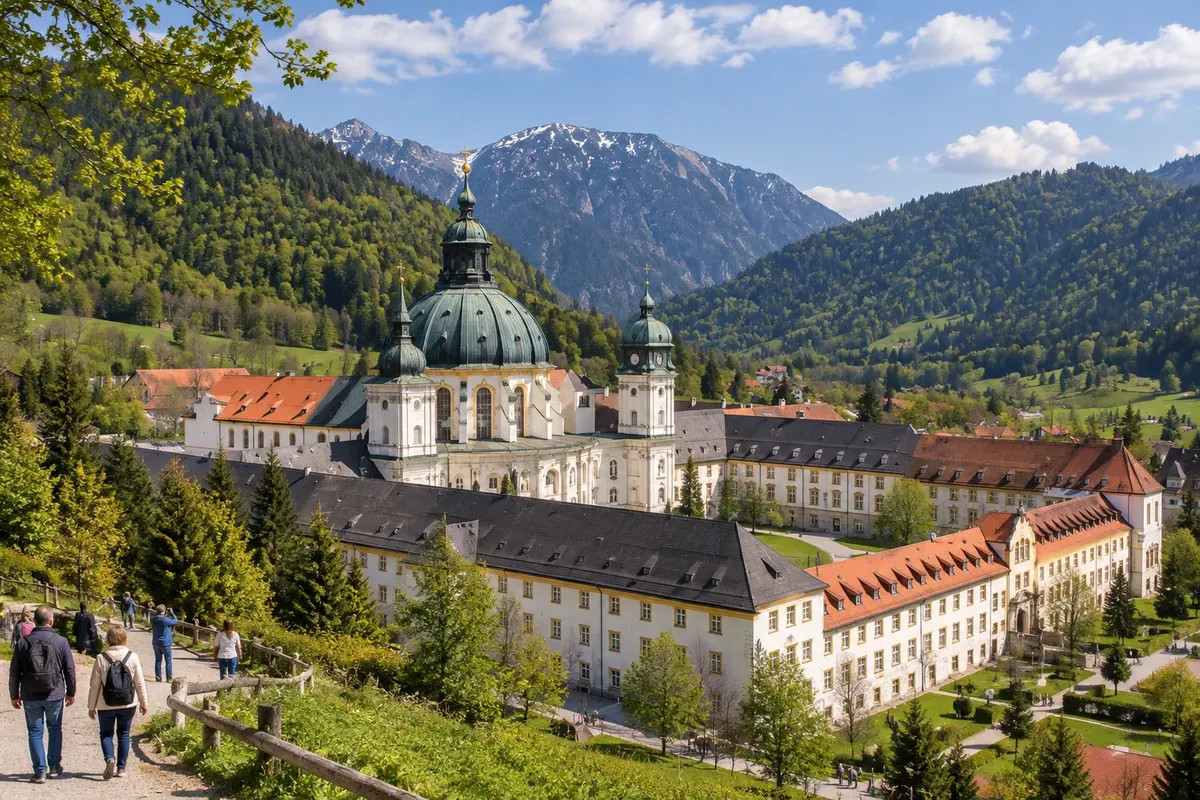
The Kloster Ettal (monastery of Ettal) lies on the road between Garmisch-Partenkirchen and Oberammergau, in a valley enclosed by mountains. It was founded on April 28, 1330 by Emperor Ludwig the Bavarian, in fulfillment of a vow made after his coronation in Rome, and it is still inhabited by a Benedictine community of about 55 monks, counting those of Ettal and Wechselburg. The original Gothic church had a twelve-sided plan; after a fire in 1744 it was rebuilt in Rococo style by Joseph Schmuzer, following a design by Enrico Zuccalli, and gained the large dome visible from afar, with frescoes by Johann Jakob Zeiller. In 1920 it received the title of basilica. Inside, the altar houses the Madonna of Ettal, a marble image brought from Pisa and an object of pilgrimage since the foundation. The basilica is open to visitors during the day, outside mass times. The monastery has run a brewery since 1609, an herbal liqueur distillery that grew out of the old pharmacy, a gym founded in 1905, and a shop selling house products. The brewery can only be seen on a guided tour; the focus is the history of the place, not the drink.
Kraji na poti: Kloster Ettal.
Vključuje: Entry to the basilica is free; respect mass times, when visits are suspended. Guided tours of the monastery and the brewery are paid separately and run on set days: check in advance. The shop is open every day, with reduced hours on Sundays.
Nasvet: Arrive in the morning, before the tour buses that stop en route to Linderhof. Sit for ten minutes on the back pew to see the dome in daylight. The bus stop is opposite the monastery, which makes it easy to continue to Linderhof or Oberammergau the same day.
Najboljši čas za obisk: Year round. On religious feasts (Easter, Christmas, August 15) the basilica usually holds solemn masses and is crowded. In December, the valley is often snow-covered.
Oberammergau: painted facades, wood carving and the Passion theatre
Odhod: Garmisch-Partenkirchen (regional bus or train via Murnau) Regional bus or train and walk through the village Približno 3 ure Popoldne Lahko
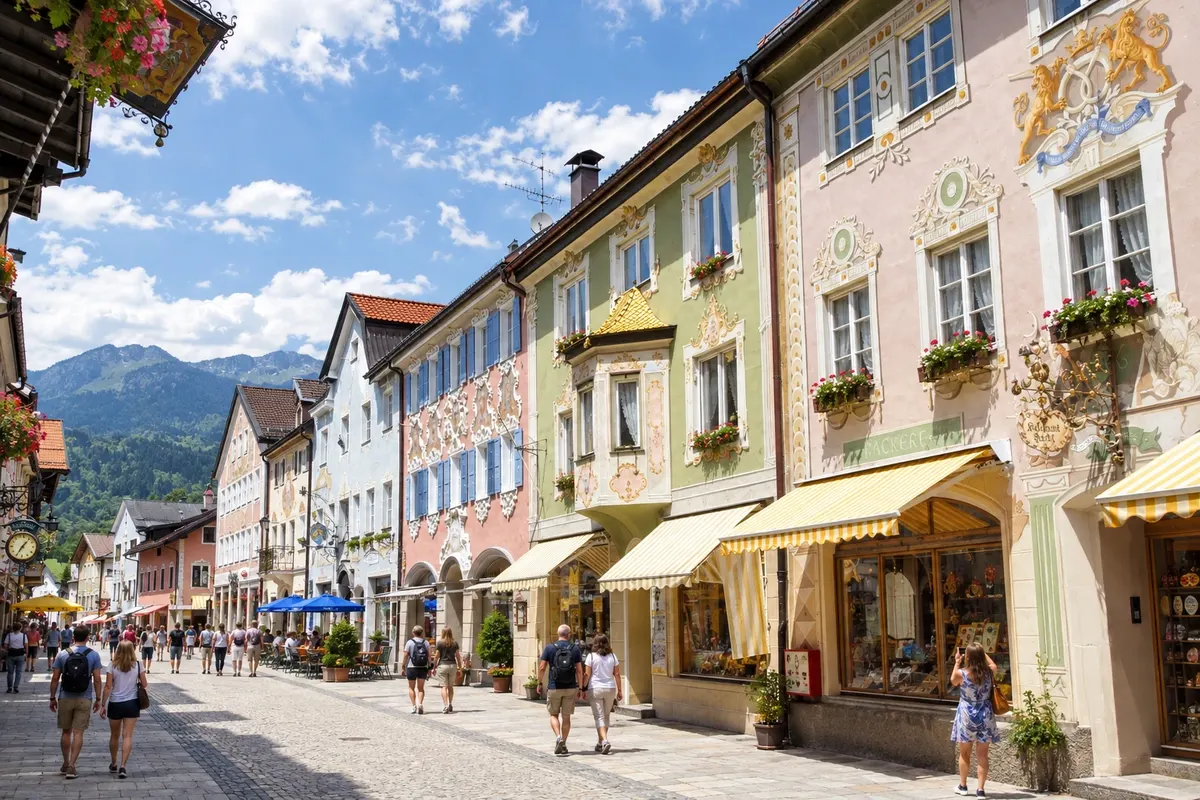
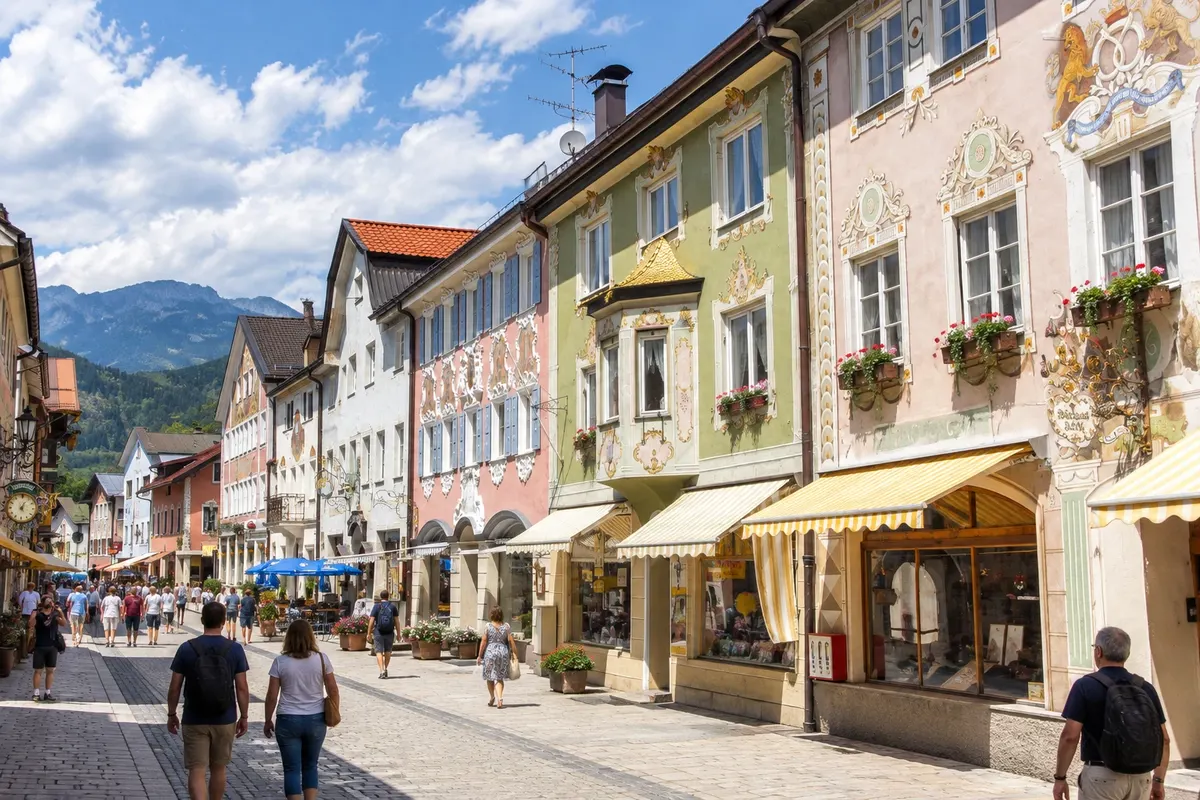
Oberammergau is a village at 837 m altitude, at the foot of the Kofel, the pointed peak that marks the place. It became known for three traditions. The first is Lüftlmalerei, the painting of facades: whole houses covered with scenes from fairy tales, biblical passages and trompe-l’œil architecture, a technique whose best-known name is Franz Seraph Zwinck (1748–1792); the most cited example is the Pilatushaus, now used for craft workshops. The second is wood carving: the village hosts the state school for carvers and dozens of studios and shops selling nativity scenes, saints and figures. The third is the Passionsspiele, the staging of the Passion of Christ. In 1633, during the plague, the residents vowed to perform the Passion every ten years if the disease stopped; the first production was in 1634 and the vow continues. The next season is scheduled for 2030, from May to October, with more than 2,000 participants, all village residents, in a theatre for over 4,700 people. In non-performance years the Passionstheater opens for guided visits. The village is a starting point for Linderhof and Ettal, and has a train station on the regional line from Murnau.
Kraji na poti: Oberammergau.
Vključuje: Self-guided walk through the village. Visit to the Passionstheater, museum and studios with separate admission. In Passion years (the next is 2030), tickets for the performance are sold well in advance, usually in packages with accommodation: check the current price table.
Nasvet: Do the village in the afternoon, after Ettal and Linderhof, and finish along the main street, where the studios are. Look for the Pilatushaus and the houses with scenes of Hansel and Gretel and Little Red Riding Hood. If you travel in 2030, plan a year ahead; outside that year the village is quiet.
Najboljši čas za obisk: From May to October. In 2030, the Passion season runs from May to October, with the village very busy. In December there is a Christmas market and nativity scenes in shop windows.
Königssee: electric boat to St. Bartholomä and the Obersee
Odhod: Berchtesgaden, station (bus to Schönau am Königssee) Bus to the pier and electric boat on the lake full day (about 5 to 6 hours to Salet) early morning to afternoon easy (short walk to the Obersee)
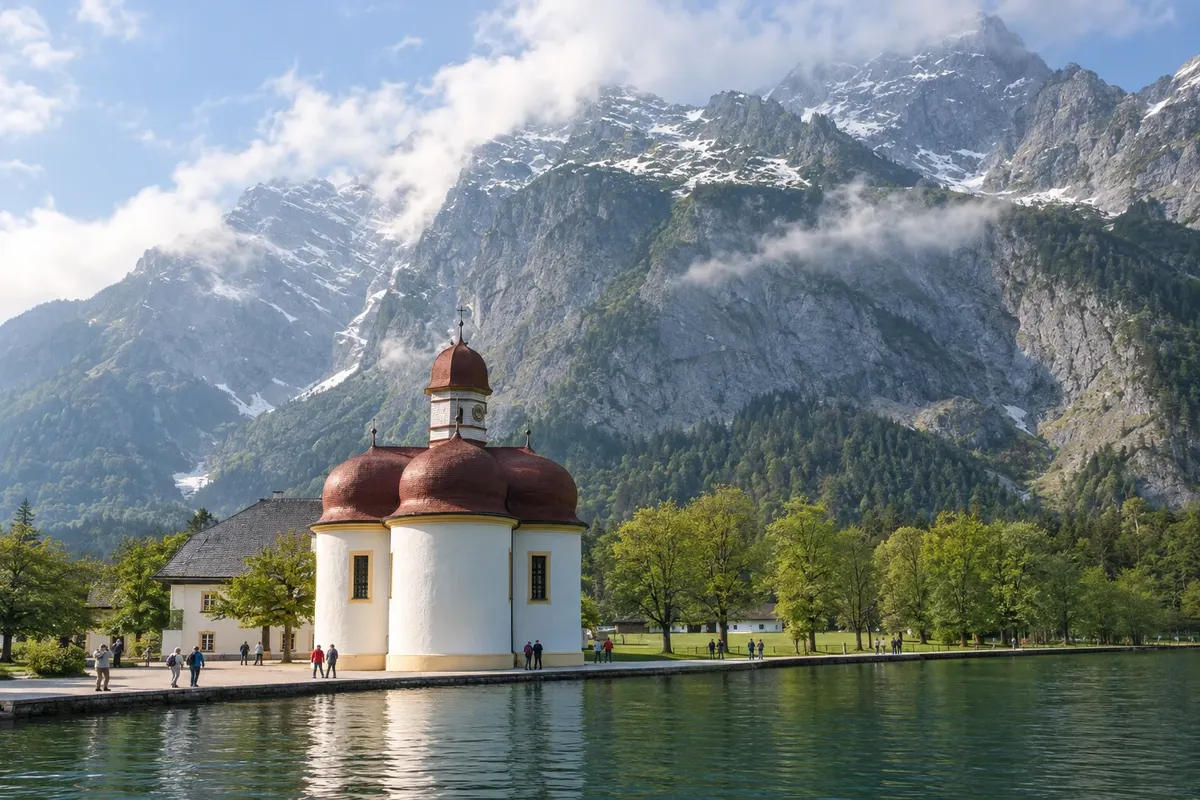
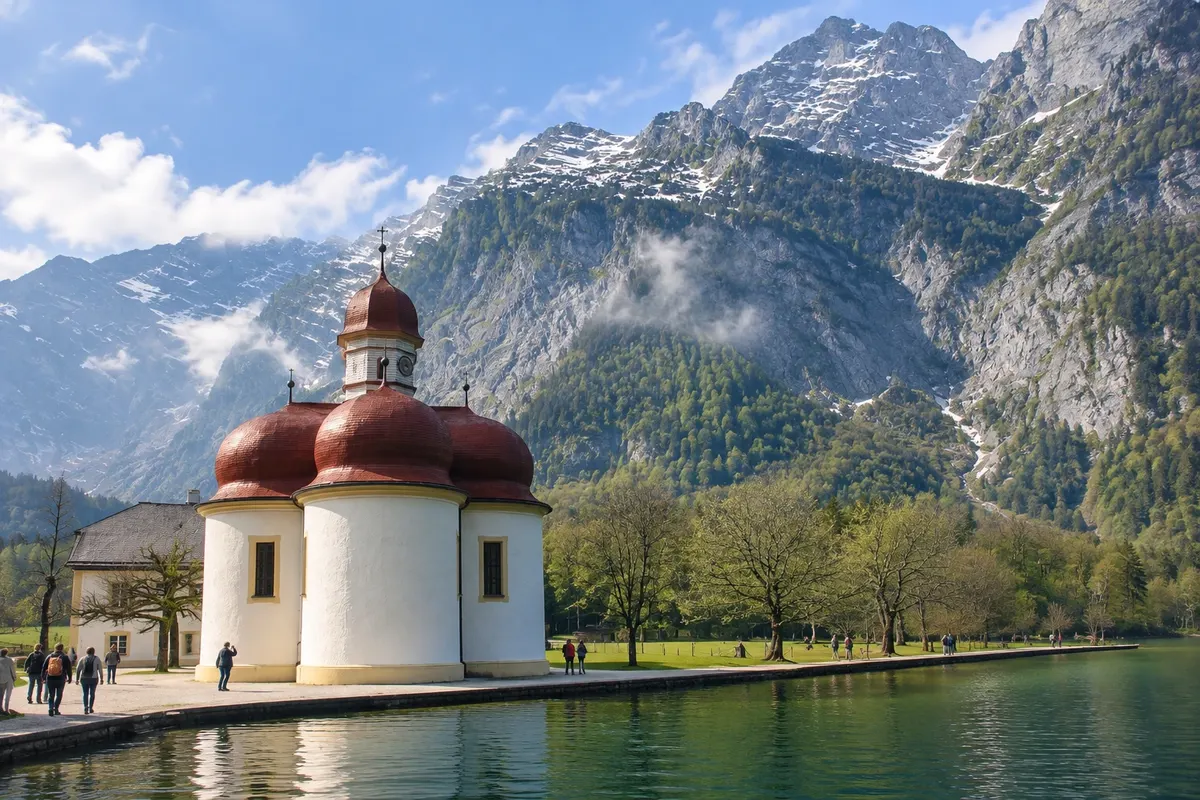
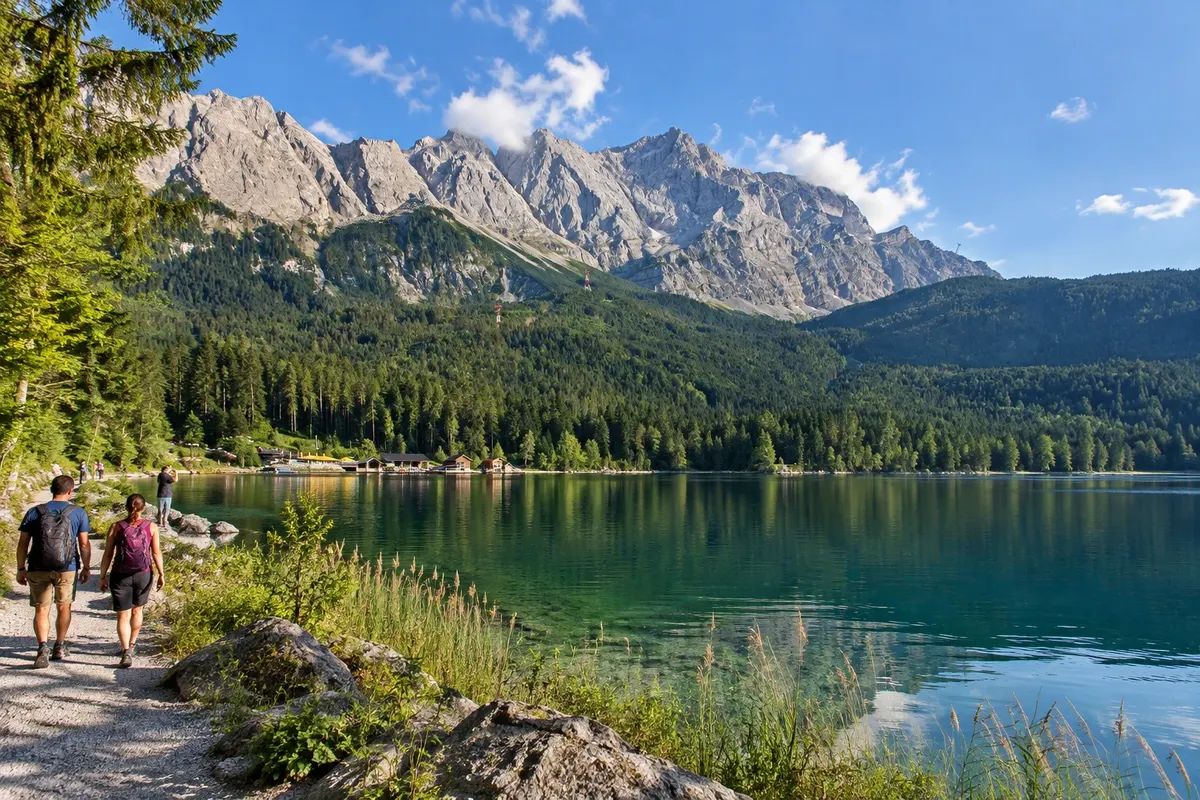
The Königssee is a lake 7.7 km long, 1.7 km wide and up to 190 m deep, at 603 m elevation, nestled between rock walls inside the Nationalpark Berchtesgaden. Since 1909 only electric boats, rowboats and pedal boats may navigate it, and the passenger boats, all identical, depart from the Schönau am Königssee pier every half hour in season. Halfway the boat stops in front of a stone cliff and the boatman plays a trumpet: the echo returns several times. After about 35 minutes you reach St. Bartholomä, a peninsula with the pilgrimage church with red domes, rebuilt in 1697 over a chapel from 1134, and the former hunting lodge of the Bavarian kings, now a restaurant. Behind it rises the east face of the Watzmann (2713 m); a trail of about 2.5 hours round trip reaches the base of that wall. The boat continues another 20 minutes to Salet, the final stop, open only in the summer season, which usually runs from Easter to mid-October: from there, a 15-minute walk leads to the Obersee, a smaller still lake, and another 30 to 45 minutes along the shore brings you to the viewpoint of the Röthbachfall, a 470 m waterfall noted as the highest in Germany. The return repeats the route; the last departure from Salet is in the late afternoon.
Kraji na poti: Königssee, Nationalpark Berchtesgaden.
Vključuje: Boat ticket paid separately: buy online only for the outbound trip from the pier; the return from St. Bartholomä or Salet is bought at the pier. There is a combined boat plus Jenner cable car ticket. The St. Bartholomä church does not charge an entrance fee. Bus from Berchtesgaden and parking are paid separately.
Nasvet: Catch one of the first boats in the morning and go straight to Salet to visit the Obersee before the tours arrive; stop at St. Bartholomä on the return. From July to mid-September the wait to board can exceed an hour in the afternoon. In January and February the lake may freeze and boat service can stop: check before you go.
Najboljši čas za obisk: From May to October, with boats to Salet and the Obersee open. In June the Watzmann still has snow high up; in October the shoreline woods turn yellow. In winter the boat usually goes only as far as St. Bartholomä.
Kehlsteinhaus: the mountain bus and the brass elevator at 1834 m
Odhod: Berchtesgaden, station (bus to Obersalzberg) or Dokumentation Obersalzberg Local bus to Obersalzberg, special bus and elevator about 2 to 3 hours Dopoldne easy (altitude 1834 m)
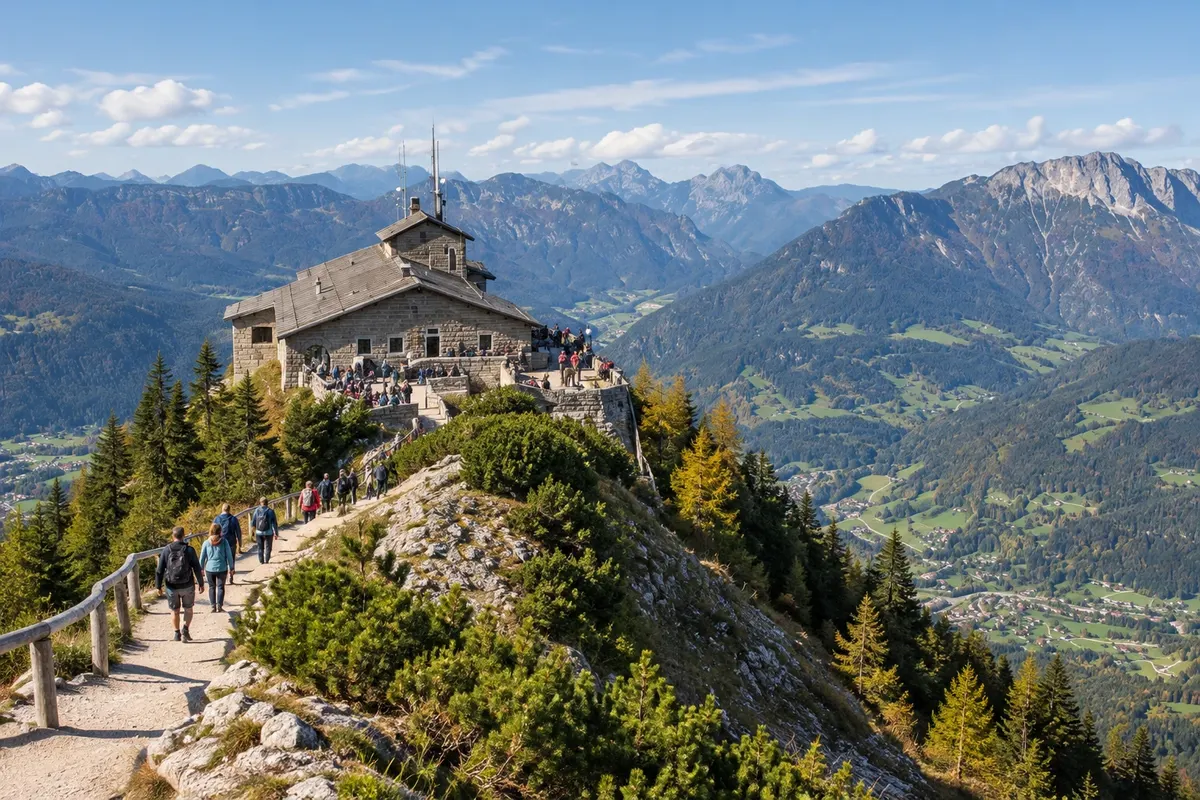
The Kehlsteinhaus is a stone house built between 1937 and 1938, in thirteen months, on the summit of Kehlstein at 1834 m, by order of Martin Bormann for use by the Nazi regime; Hitler inaugurated it on April 20, 1939, but used it only rarely. The house survived the war intact, returned to the State of Bavaria in 1960 and since then has operated as a mountain restaurant run by a charitable foundation. What impresses is the access engineering: the Kehlsteinstraße, a 6.5 km road that climbs 700 m with five tunnels, closed to private cars since 1952 when the special bus service began. The ascent is made on those buses, which depart from the terminal next to the Dokumentation Obersalzberg every 25 minutes; at the final stop a 124 m tunnel bored into the rock leads to the original elevator, lined with polished brass, which rises another 124 m inside the mountain to the house. From the terrace you can see the Königssee, the Watzmann, the Berchtesgaden valley and Salzburg in the distance. Inside, the room with the red marble fireplace, a gift from Mussolini, and rooms used by the restaurant. There is a trail for those who want to descend on foot. The season usually runs from mid-May to mid or late October, depending on snow; the visit has a historical tone, and the exhibition at the Dokumentation at the base provides context.
Kraji na poti: Kehlsteinhaus, Dokumentation Obersalzberg.
Vključuje: Ticket paid separately, covering the special shuttle bus round trip and the elevator; entry to the house is free. Purchase online or at the terminal ticket office, with a departure time reserved. Restaurant costs are extra. The regular bus from Berchtesgaden to Obersalzberg is separate.
Nasvet: Go up in the morning, before the afternoon cloud, and book the return when you buy the ticket. With strong wind, snow or rockfall the road can close without notice: check the daily bulletin. Bring a jacket even in August. Reserve the afternoon for the Dokumentation Obersalzberg at the same terminal.
Najboljši čas za obisk: Only in season, which typically runs from mid-May to October; June and September have shorter lines than July and August. Outside that period the road is usually closed by snow.
Dokumentation Obersalzberg: the place’s history and the bunker
Odhod: Berchtesgaden, station (regular bus to Obersalzberg) Local bus and exhibition visit Približno 2 uri Popoldne easy (stairs in the bunker)
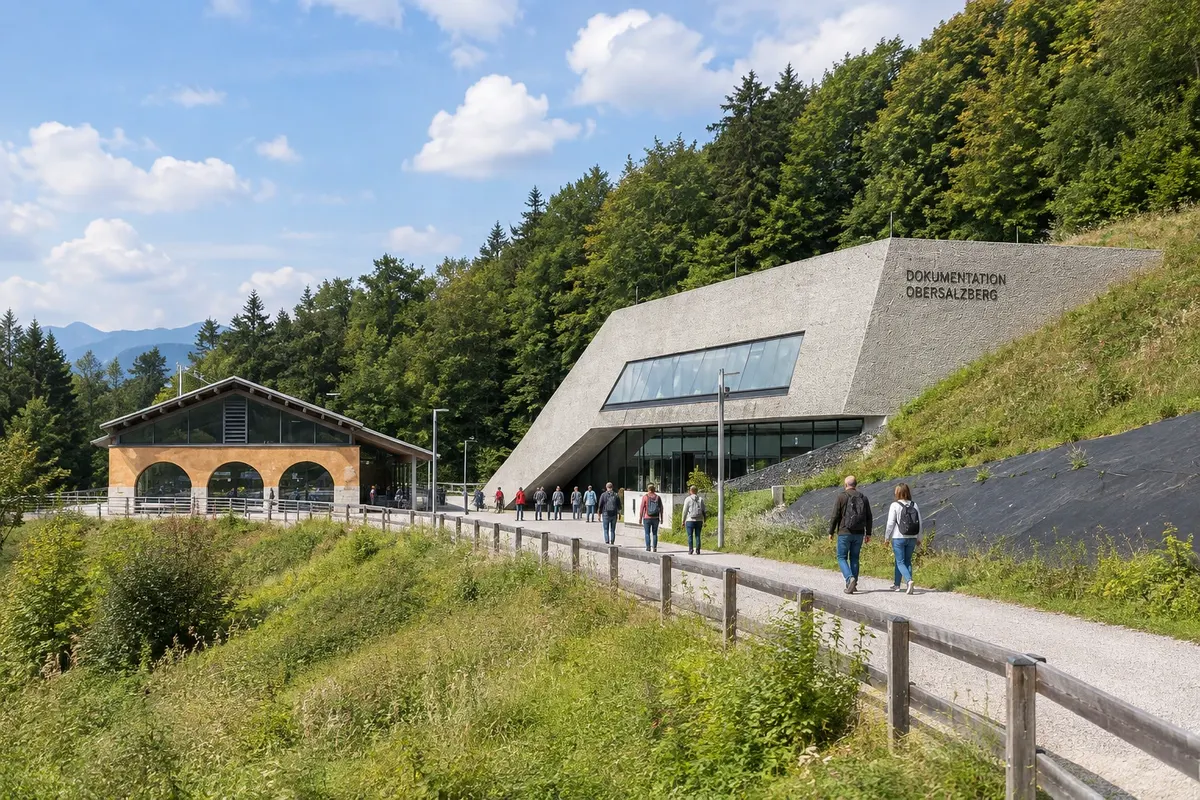
Obersalzberg, the slope above Berchtesgaden, was Hitler’s holiday place from 1923 and, from 1928, his residence, the Berghof. After 1933 residents were expelled, the area became a restricted zone and houses for the regime’s leadership, barracks, a hotel and a network of bunkers were established there. The 1945 bombings and postwar demolitions erased almost everything; from 1953 to 1996 the grounds served as a recreational area for American forces. The Dokumentation Obersalzberg, opened in 1999 on the foundations of a former regime hotel and expanded with a new building and a renovated permanent exhibition, is a documentation and memory center run by the Institut für Zeitgeschichte in Munich and Berlin. The exhibition links the site’s history with that of National Socialism: the cult of the leader, propaganda using the Alpine landscape, the war and the Holocaust, with documents, photos and testimonies. The route ends in the original bunker, with corridors and rooms carved into the rock. There are texts in German and English and an audio guide. It is a serious visit that explains why the beautiful surrounding landscape hides a heavy history; many visitors combine it with the ascent to the Kehlsteinhaus, which departs from the same bus terminal.
Kraji na poti: Dokumentation Obersalzberg, Kehlsteinhaus.
Vključuje: Separate paid admission; check the current price list and closing days, which change in winter. Audio guide and guided tours are on fixed days and cost extra. The regular bus from Berchtesgaden station is paid separately; it is included with some regional guest cards.
Nasvet: Allow at least two hours and come after the Kehlsteinhaus, with your mind more open to the context. The bunker has stairs and is cold: bring a coat. The last entry is one hour before closing. This visit is not suitable for small children.
Najboljši čas za obisk: Year-round. From November to April, when the Kehlsteinhaus is closed, this is Obersalzberg’s main program; on rainy summer days (June to August) it tends to be crowded.
Salzbergwerk Berchtesgaden: the salt mine in operation since 1517
Odhod: Berchtesgaden, station (about 20 minutes on foot or by bus) Guided tour with mine train, slides and boat about 1 hour 30 minutes, including changing clothes Dopoldne ali popoldne easy (12 °C inside)
The Salzbergwerk Berchtesgaden is a salt mine in continuous operation since 1517, when the first gallery, the Petersberg-Stollen, was opened. It is the oldest active salt mine in Germany: about 100 people still work there today, producing brine that is pumped through an 18 km pipeline to Bad Reichenhall, where the salt is crystallized. Visitors have entered the mine since the time of the ecclesiastical principality of Berchtesgaden, and the visitor area was refurbished in 2006 and 2007. The guided tour lasts about one hour. Everyone wears a miner’s coverall over their clothes and boards the mine train, which runs 650 m through the gallery into the mountain. Inside, visitors go down two wooden slides up to 40 m long (there is a staircase for those who prefer), see how water dissolves the salt in the rock, cross on a boat over an illuminated underground saline lake, and watch projections about the history of the mine and of salt, which made the region wealthy. The temperature is 12 °C year‑round, regardless of conditions outside, making the visit a good option for a rainy or hot day.
Kraji na poti: Salzbergwerk Berchtesgaden.
Vključuje: Separate paid ticket with timed entry; buy online to secure a place on the train. Coveralls are provided on site, including for children. The tour is guided in German, with an audio guide in other languages: check available options when booking.
Nasvet: Wear pants and closed shoes: the coverall goes on over them and the floor is damp. Book a morning slot on rainy days, when lines grow. The mine is on the road out of Berchtesgaden toward the Obersalzberg, and can be combined with the Kehlsteinhaus on the same day if the weather clears.
Najboljši čas za obisk: Open year‑round, every day. It's the right option in the area for rainy days, common from May to August, and for winter (December to February).
Nationalpark Berchtesgaden: Haus der Berge and the Jenner cable car
Odhod: Berchtesgaden, station (Haus der Berge) and Schönau am Königssee (Jenner) Visit to the park centre and cable car ascent about 4 to 5 hours, including the Jenner Dopoldne ali popoldne easy to moderate (trails at the top)
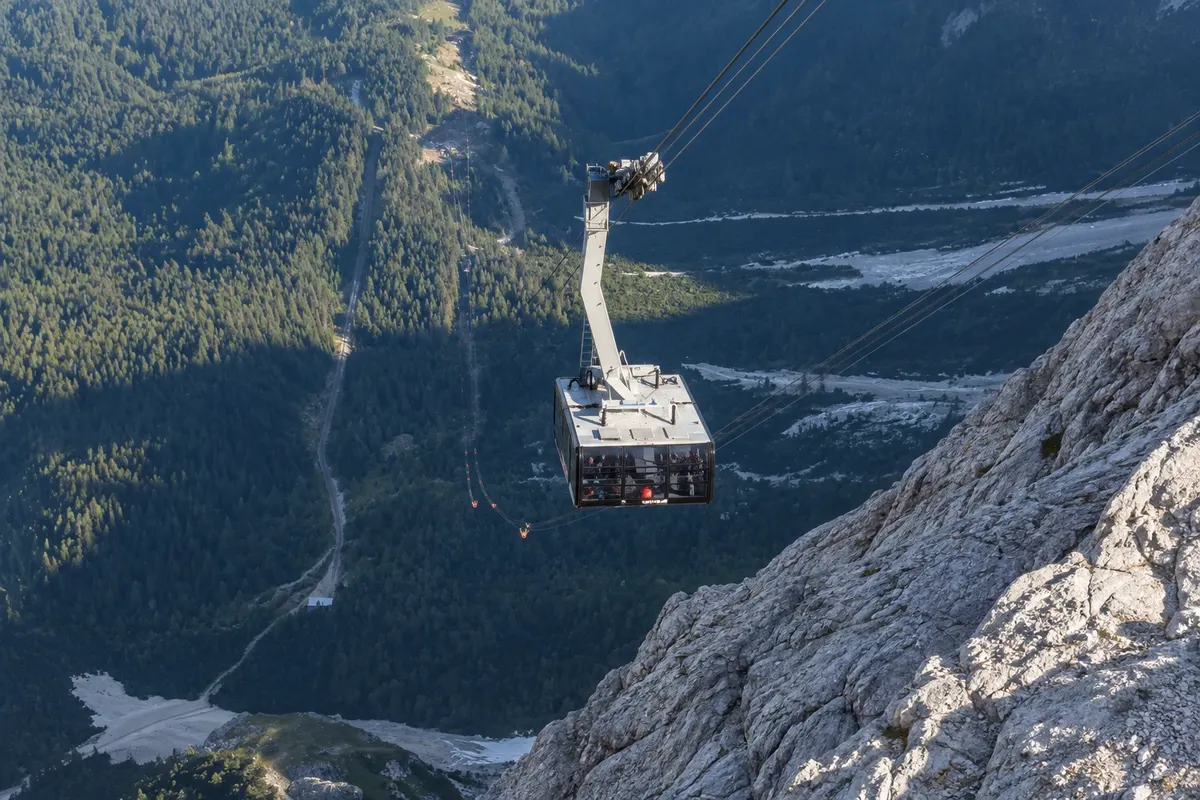
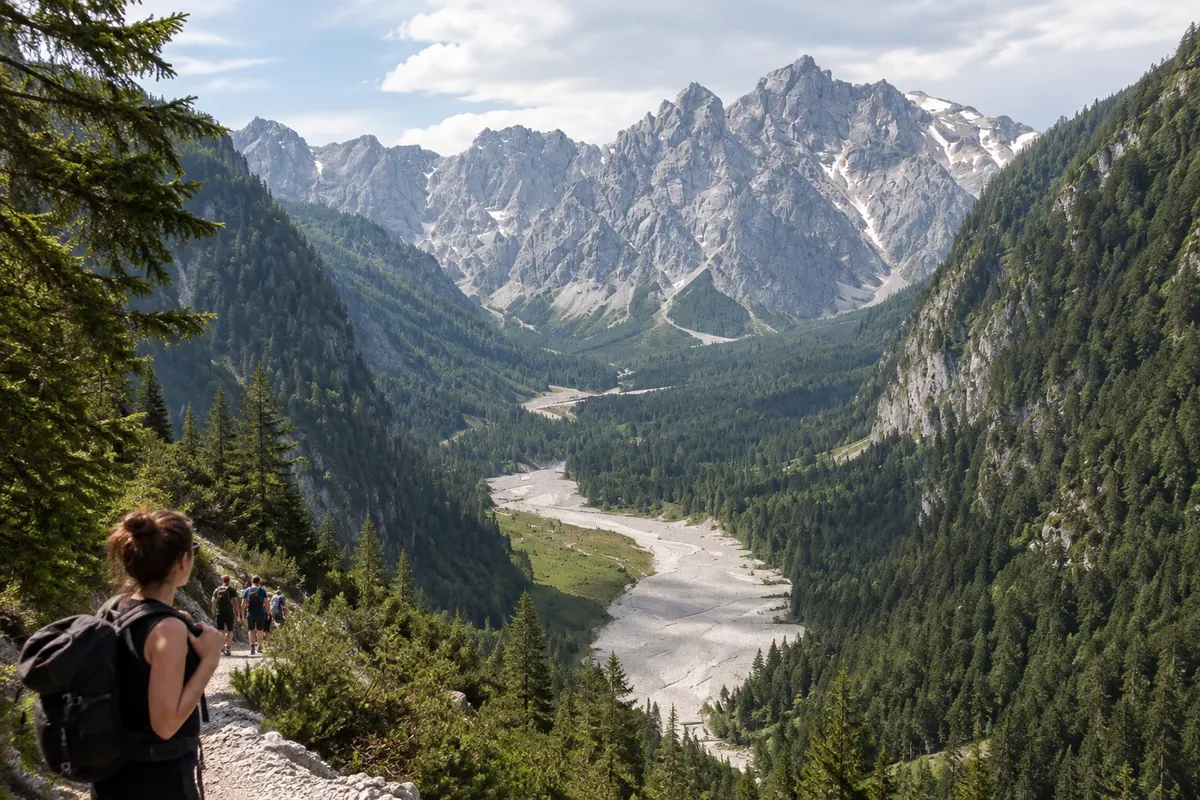
Nationalpark Berchtesgaden was established on August 1, 1978 and is Germany’s only alpine national park: 210 km² of mountains, valleys and lakes, with the Watzmann (2713 m) at its centre, the Königssee to the south and about 260 km of hiking and mountain trails. It has been a UNESCO biosphere reserve since 1990. Two facilities serve as gateways. The first is the Haus der Berge, the park visitor centre on Hanielstraße in Berchtesgaden, open every day: the exhibition Vertikale Wildnis (vertical wilderness) takes you through the landscape from the lake bottom to the peaks, and there is a cinema, library and ranger programmes; it’s the place to understand what you will see on other walks. The second is the Jennerbahn, a gondola cable car that departs from Schönau am Königssee beside the pier and rises 1170 m in about 20 minutes, with an intermediate station at 1200 m, to just below the Jenner summit (1874 m). The cable car was rebuilt between 2017 and 2019. At the top there is a viewpoint over the Königssee, seen from above like a fjord, and short marked trails; skiing on the Jenner has been discontinued, and the mountain is now for summer use and hiking only. Park information points list rules of conduct: stay on the trails and do not take anything from nature.
Kraji na poti: Nationalpark Berchtesgaden, Königssee.
Vključuje: Park entry is free. Haus der Berge: paid admission for the exhibition; cinema, temporary exhibitions and library are free. Jennerbahn: separate paid ticket for ascent and descent, with a combined-ticket option with the Königssee boat. Check the current schedule/pricing.
Nasvet: Do the Haus der Berge on arrival day to plan the rest of the route using the park map. For the Jenner, check the webcam at the top: with a low cloud layer the ascent is not worth it. Temperature drops significantly at the summit; bring a jacket. The cable car is closed for maintenance several days a year, usually in November and in spring: confirm before you go.
Najboljši čas za obisk: June to October for the Jenner and the trails, when paths are free of snow. Haus der Berge operates year-round and is an option for a rainy day.


 Brazilija
 Antarktika
 Argentina
 Bolivija
 Čile
 Kolumbija
 Ekvator
 Gvajana
 Francoska Gvajana
 Falklandski otoki (Malvini)
 Paragvaj
 Peru
 Surinam
 Urugvaj
 Venezuela
 Avstrija
 Belgija
 Hrvaška
 Danska
 Slovaška
 Slovenija
 Španija
 Finska
 Francija
 Grčija
 Nizozemska
 Madžarska
 Irska
 Islandija
 Italija
 Luksemburg
 Norveška
 Poljska
 Portugalska
 Združeno kraljestvo
 Češka
 Švedska
 Švica
 Turčija
 Bermudi
 Kanada
 Združene države Amerike
 Grenlandija
 Mehika
 Sveta Peter in Mihael
 Dominikanska republika
 Japonska
 Južnoafriška republika
 Egipt
 Avstralija
 Fidži
 Nova Zelandija
 Papua Nova Gvineja