Litoral do Paraná

PR · Brazil

Litoral do Paraná

Seven municipalities among historic centers, islands, beaches and the Atlantic Forest of the Serra do Mar.

South

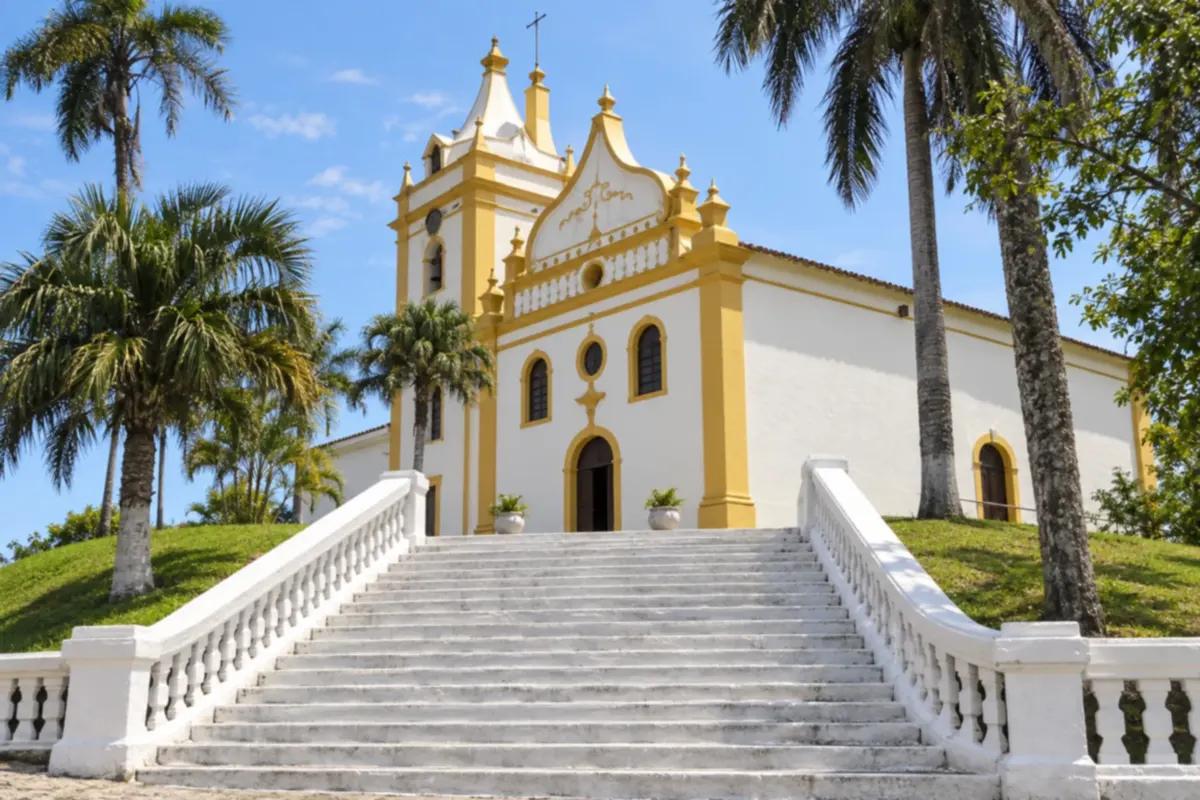
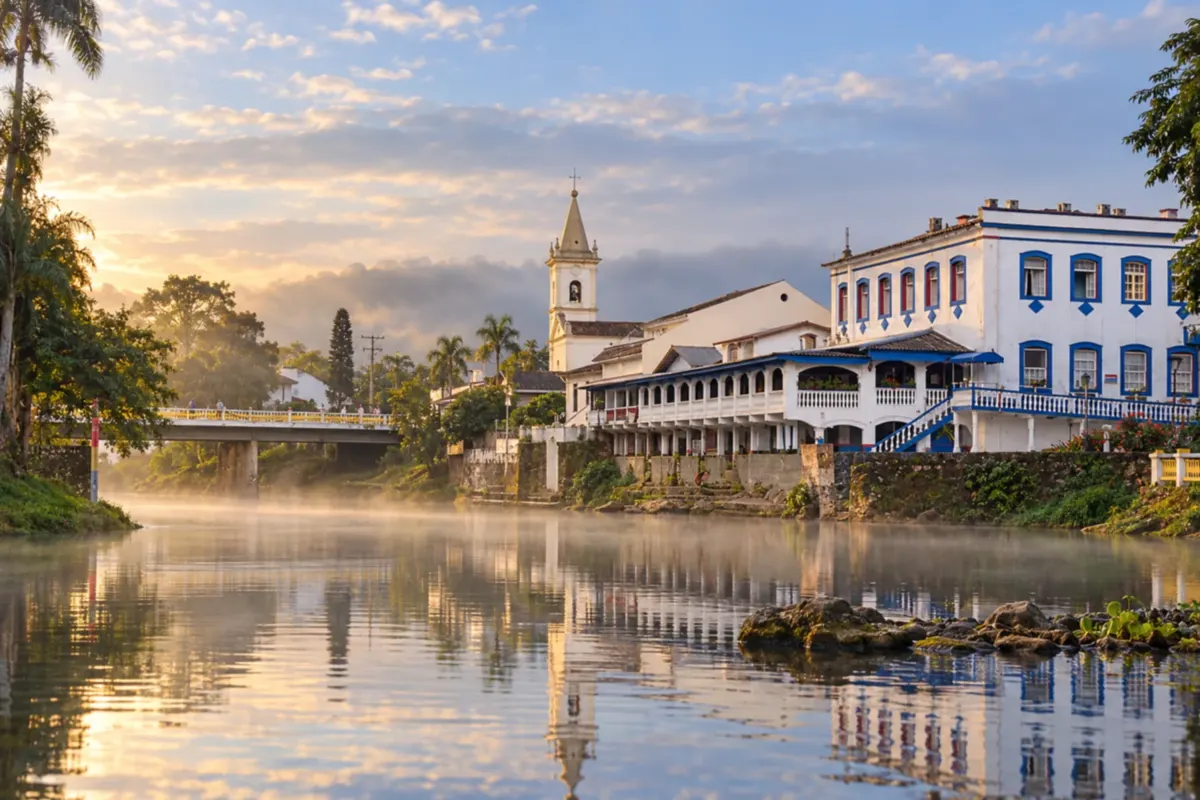
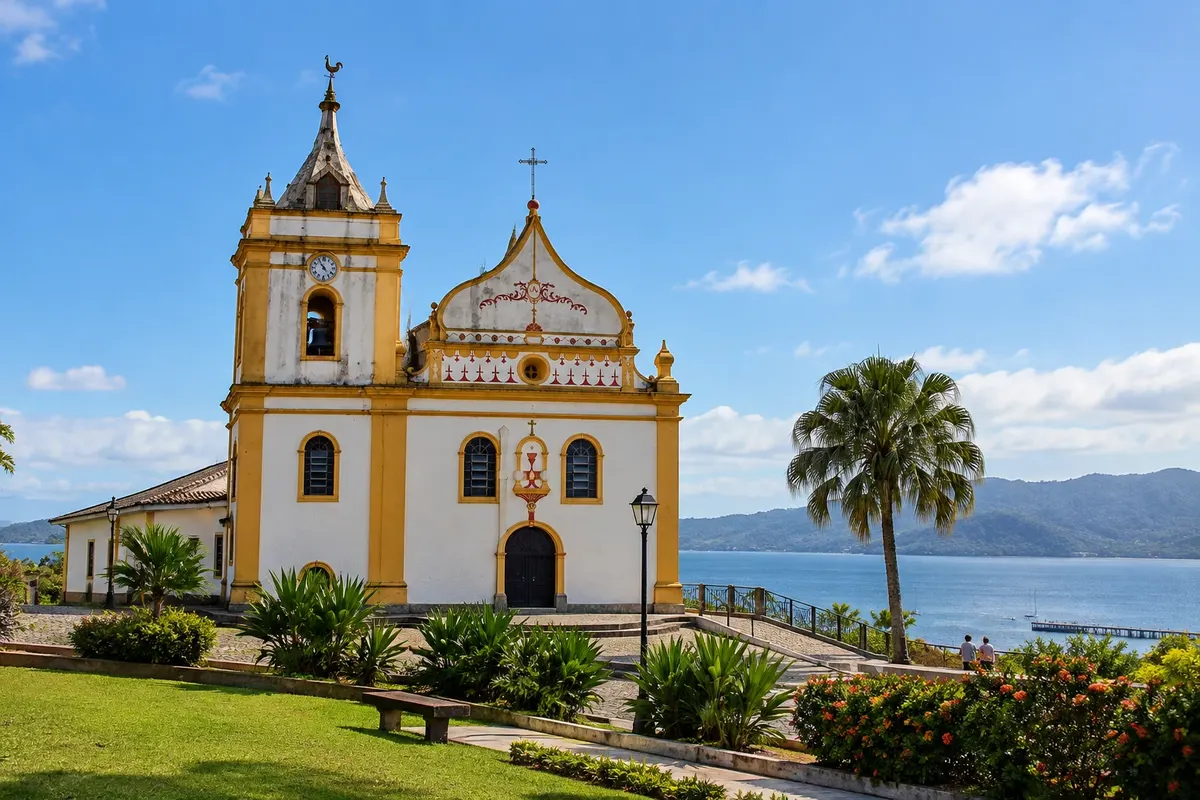
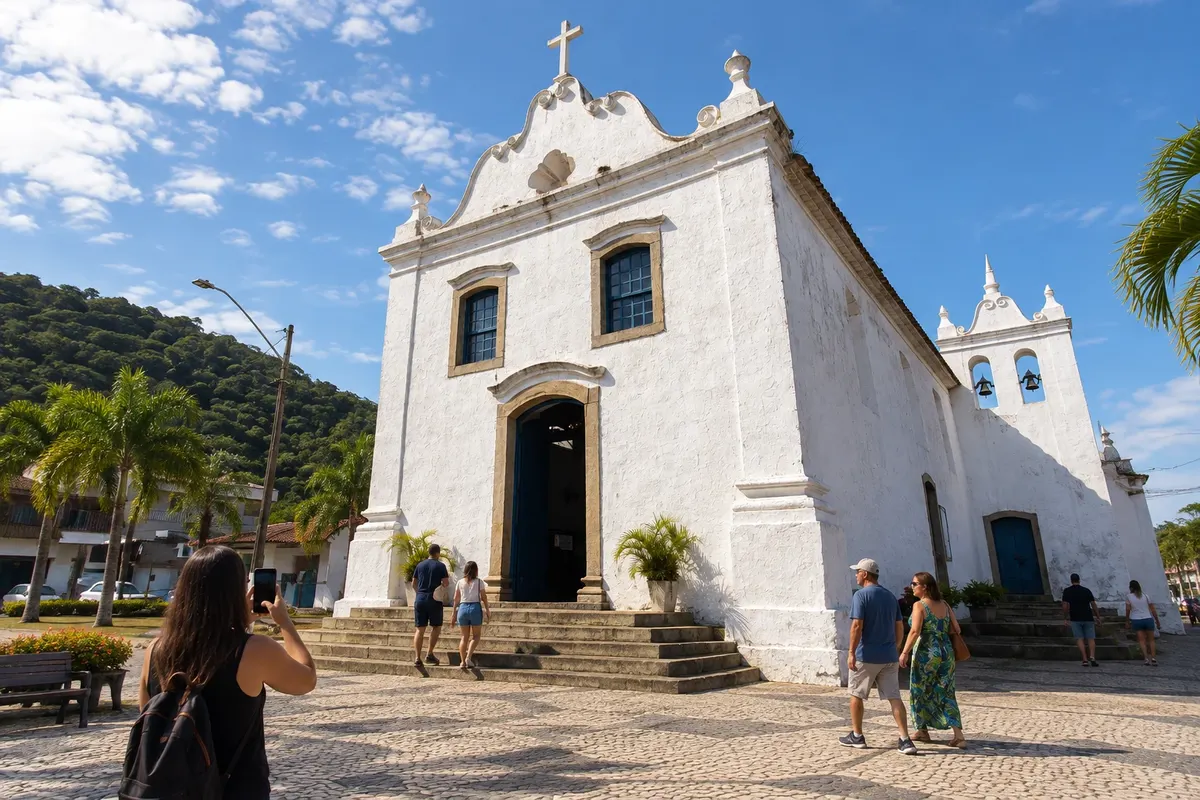
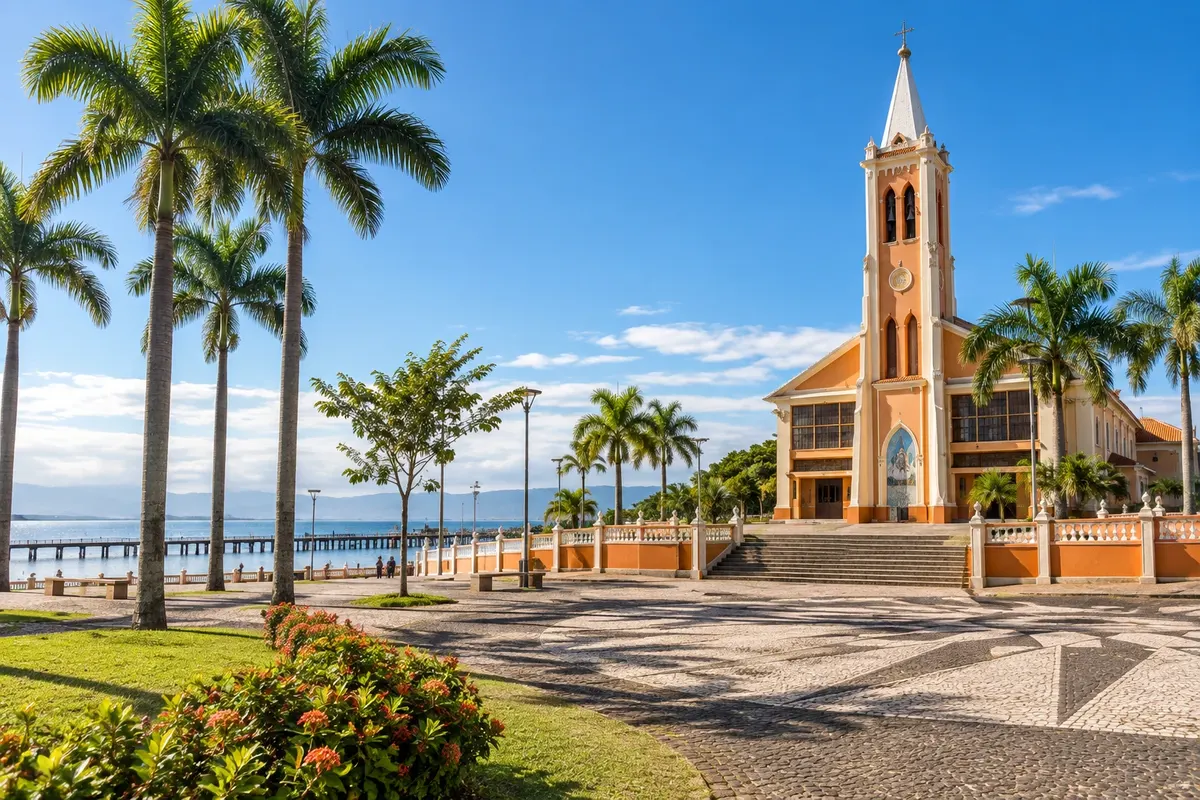
In the photo: Igreja de Nossa Senhora do Pilar, historic center of Antonina (PR).

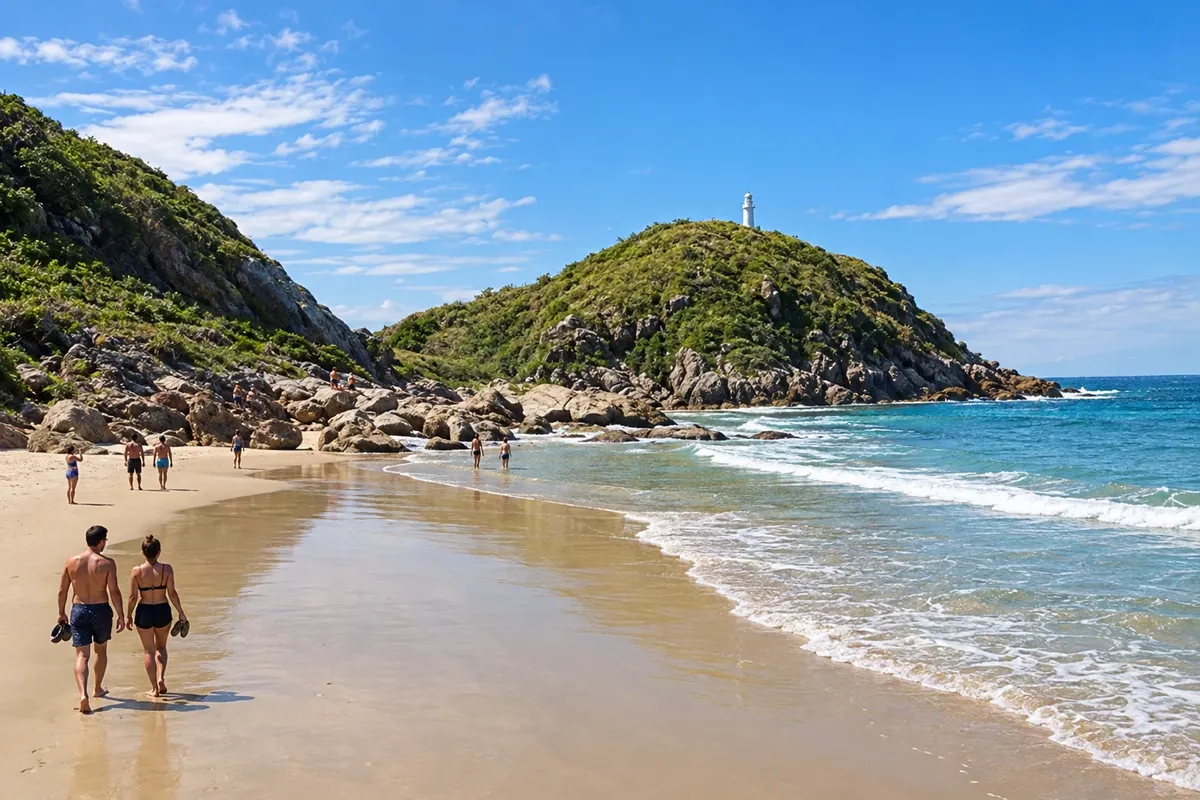
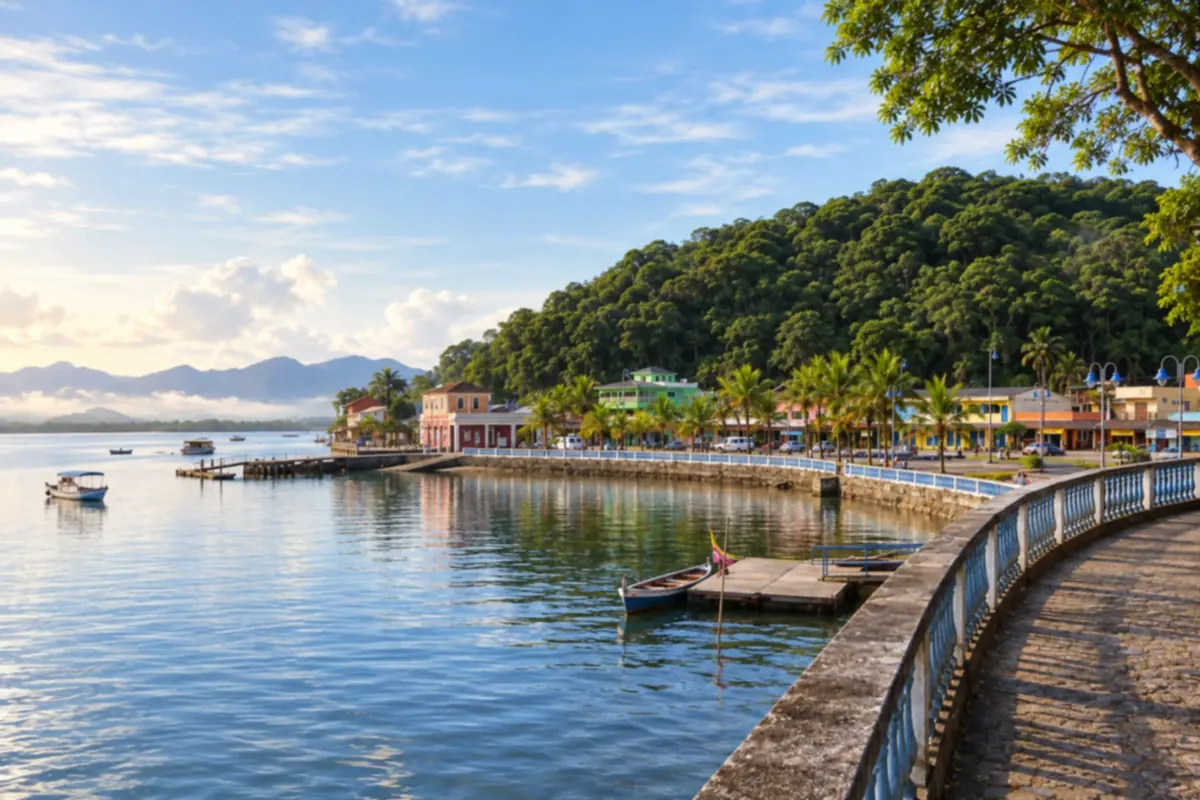
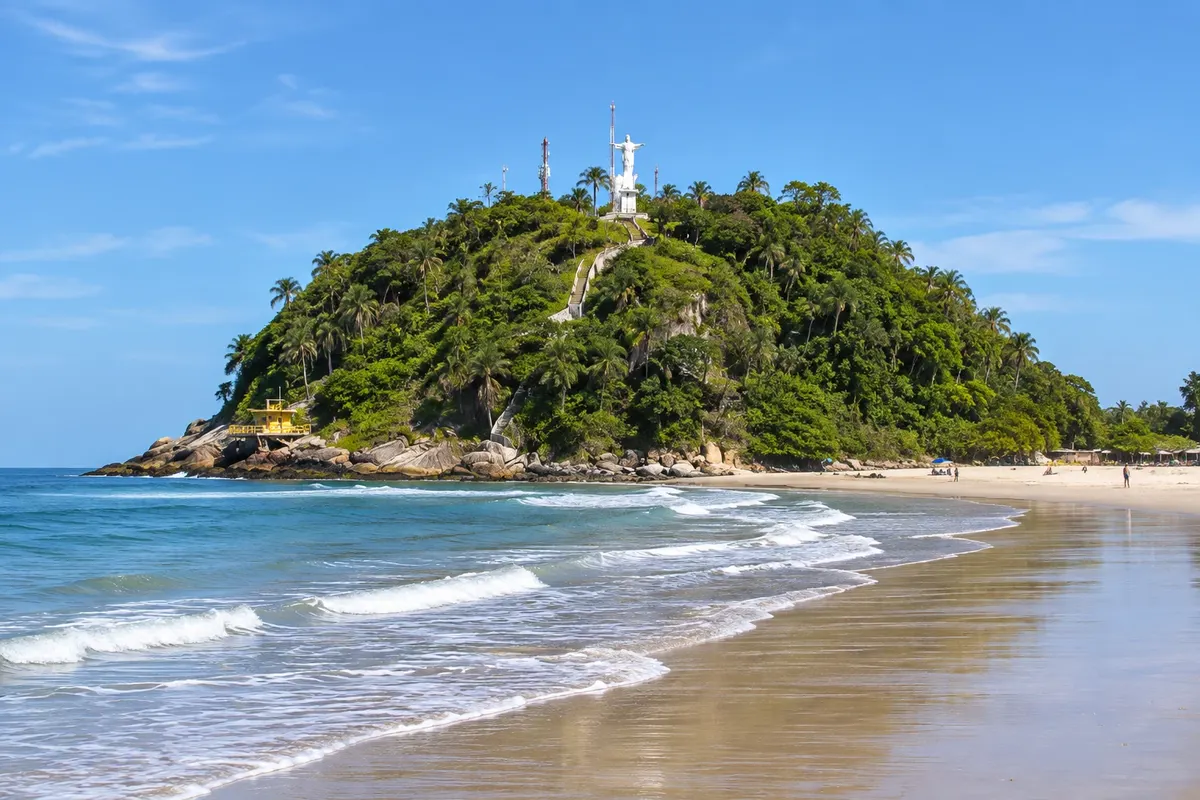
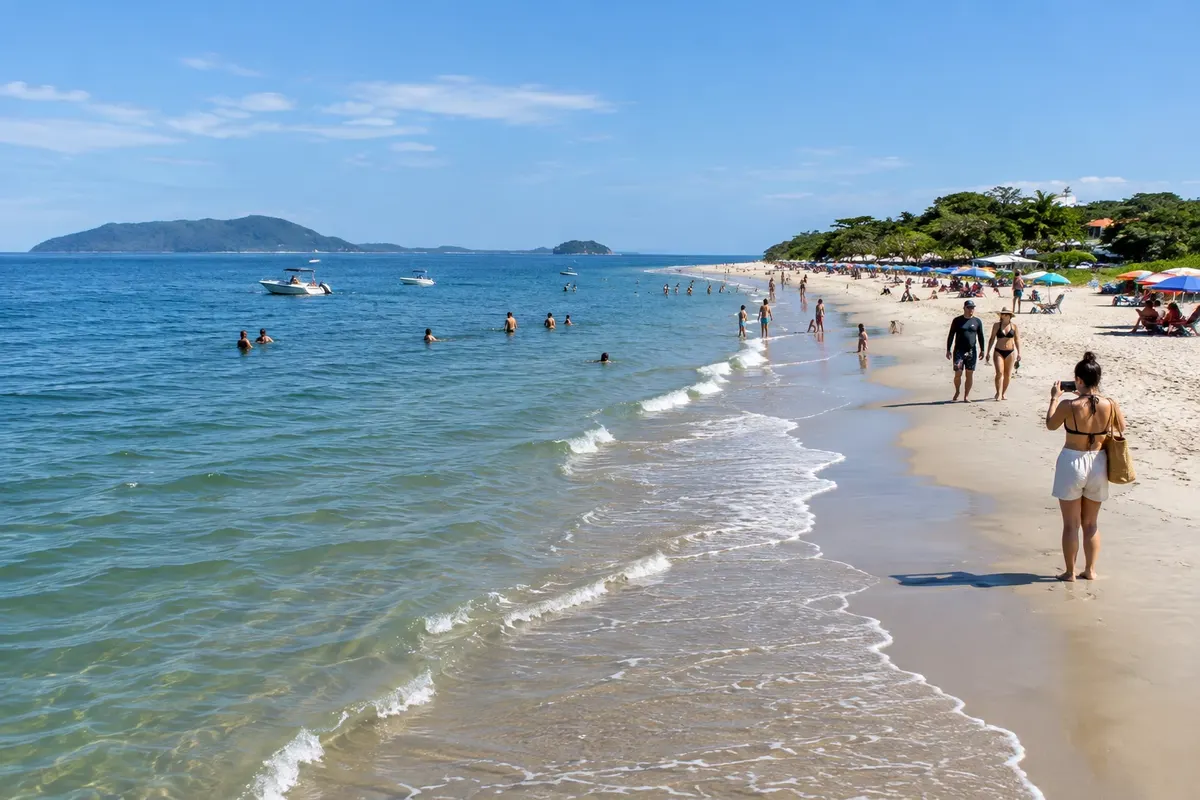
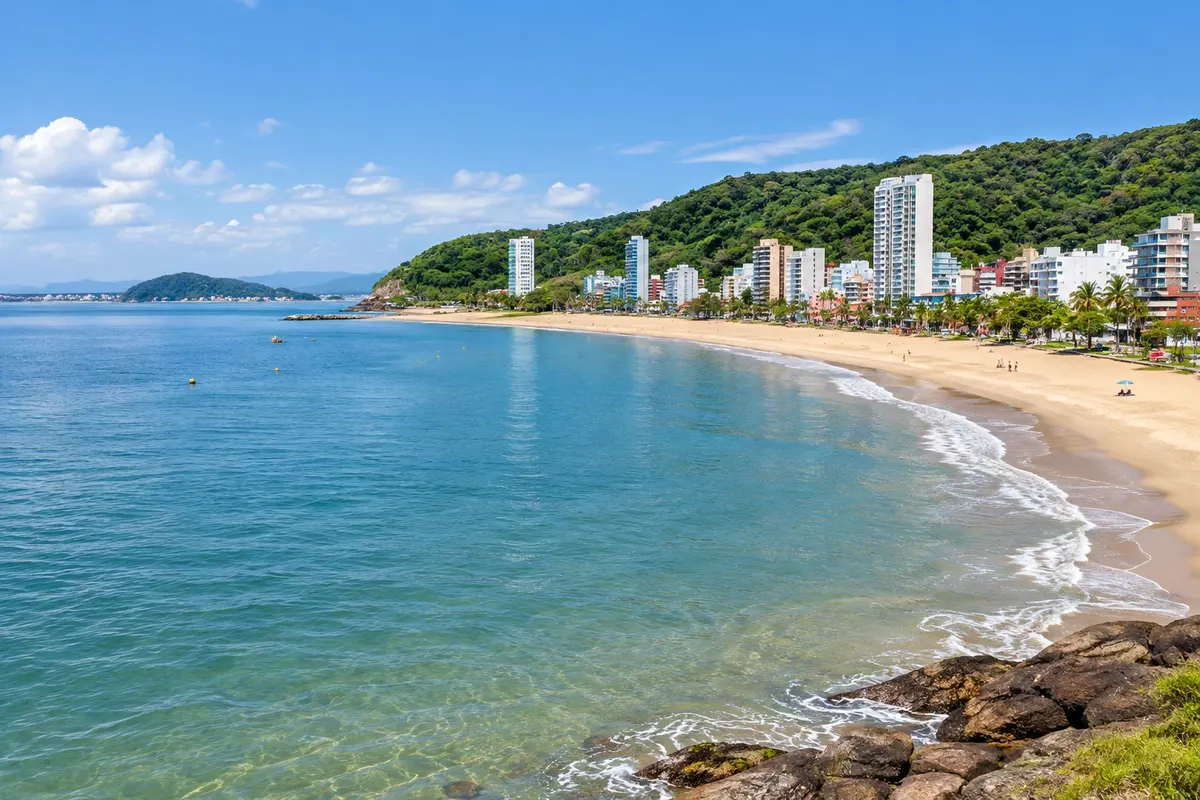
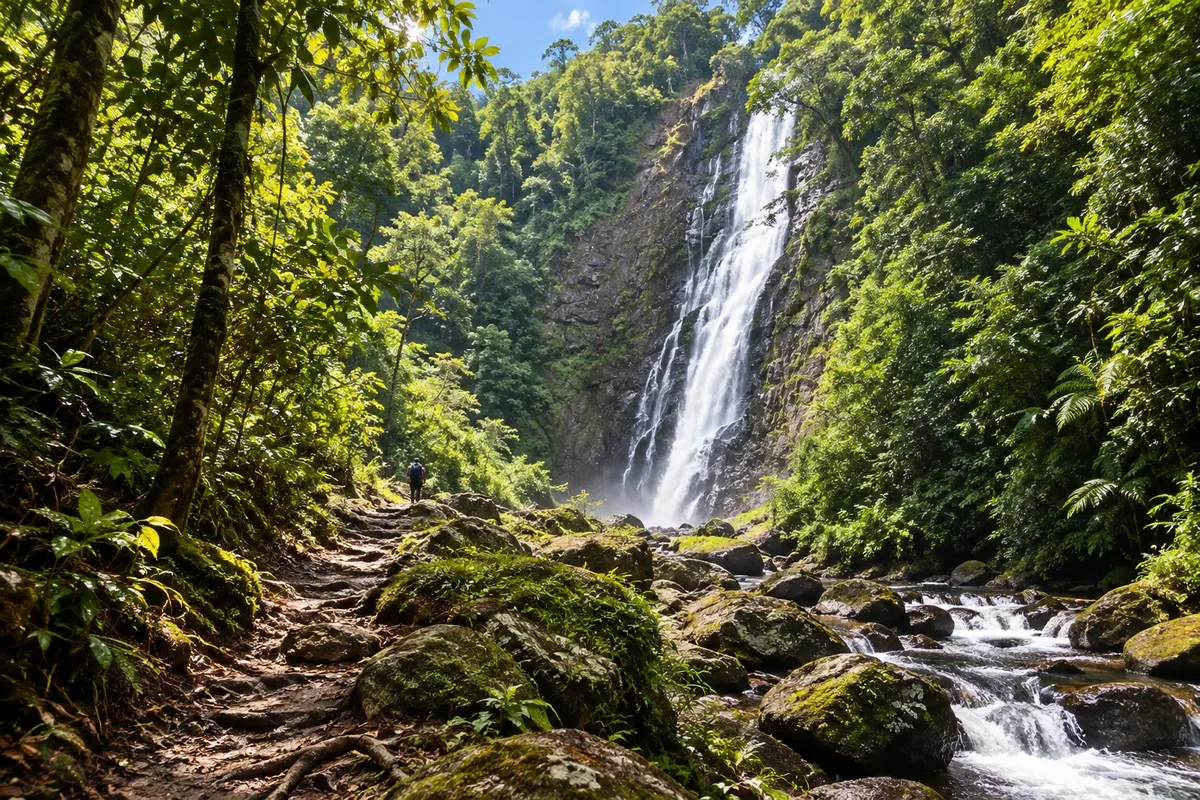
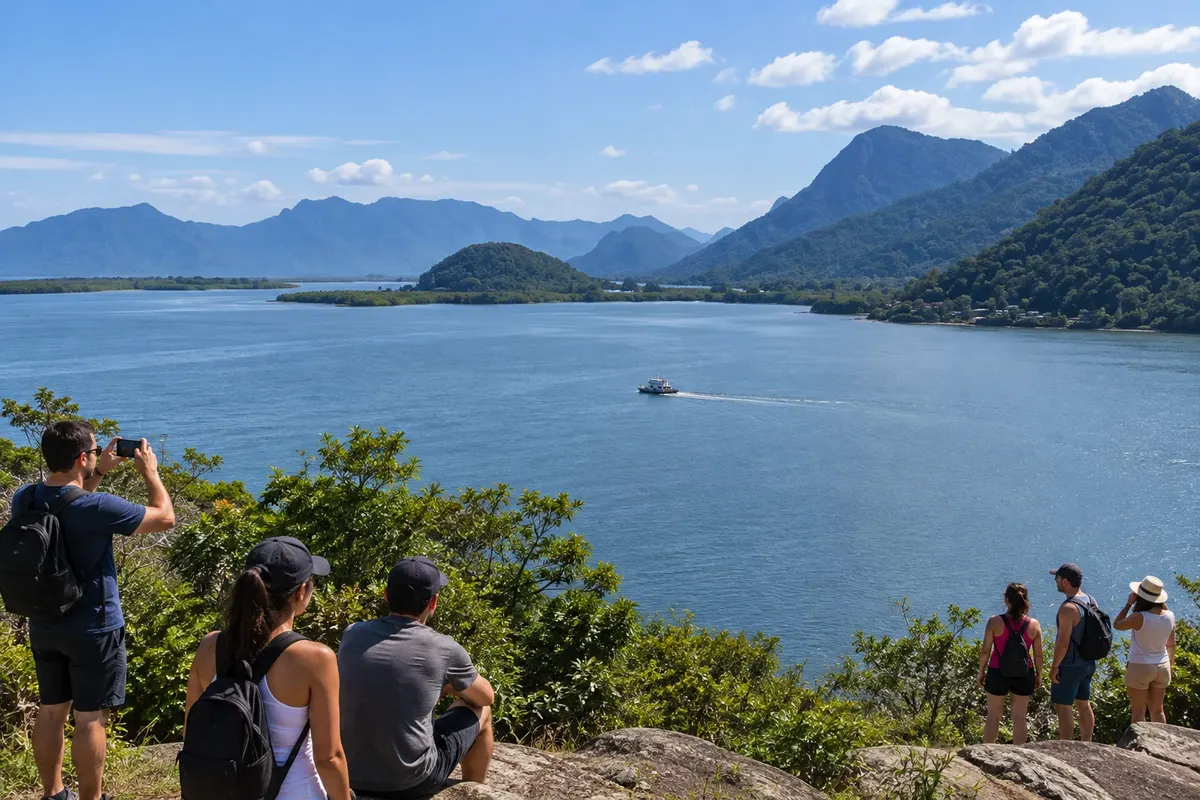
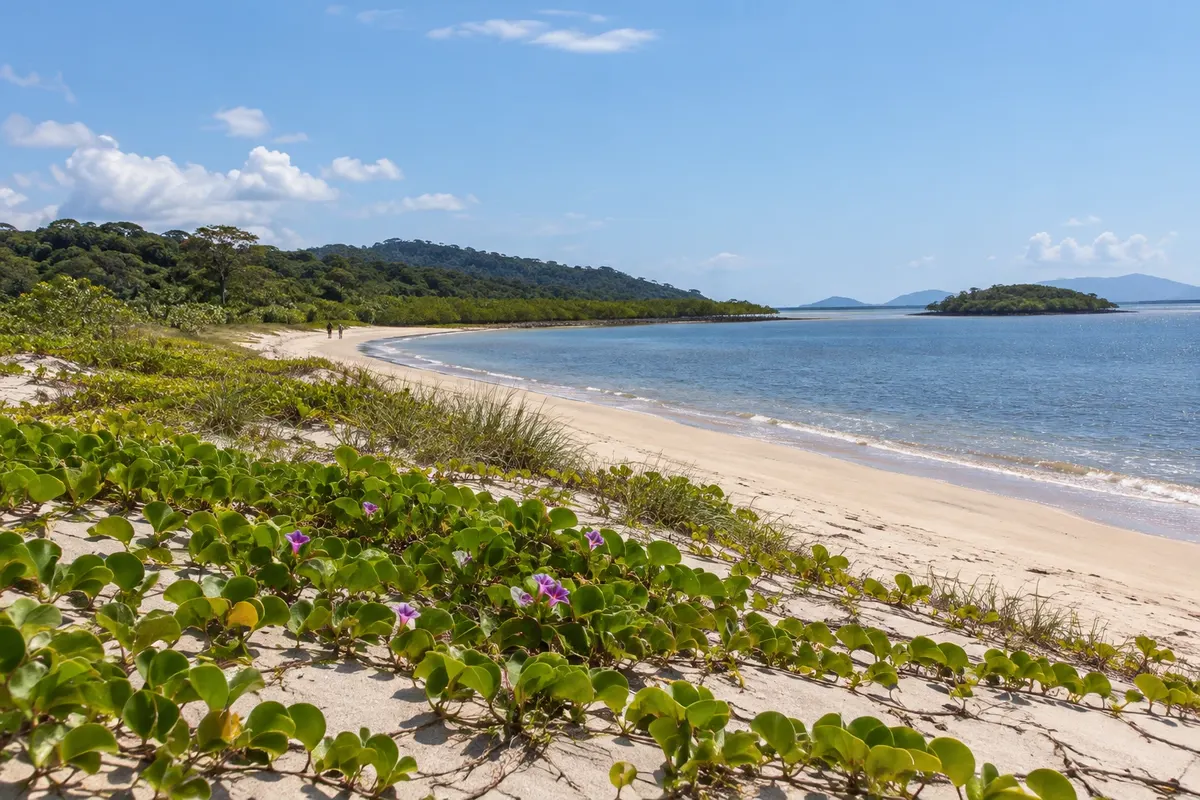
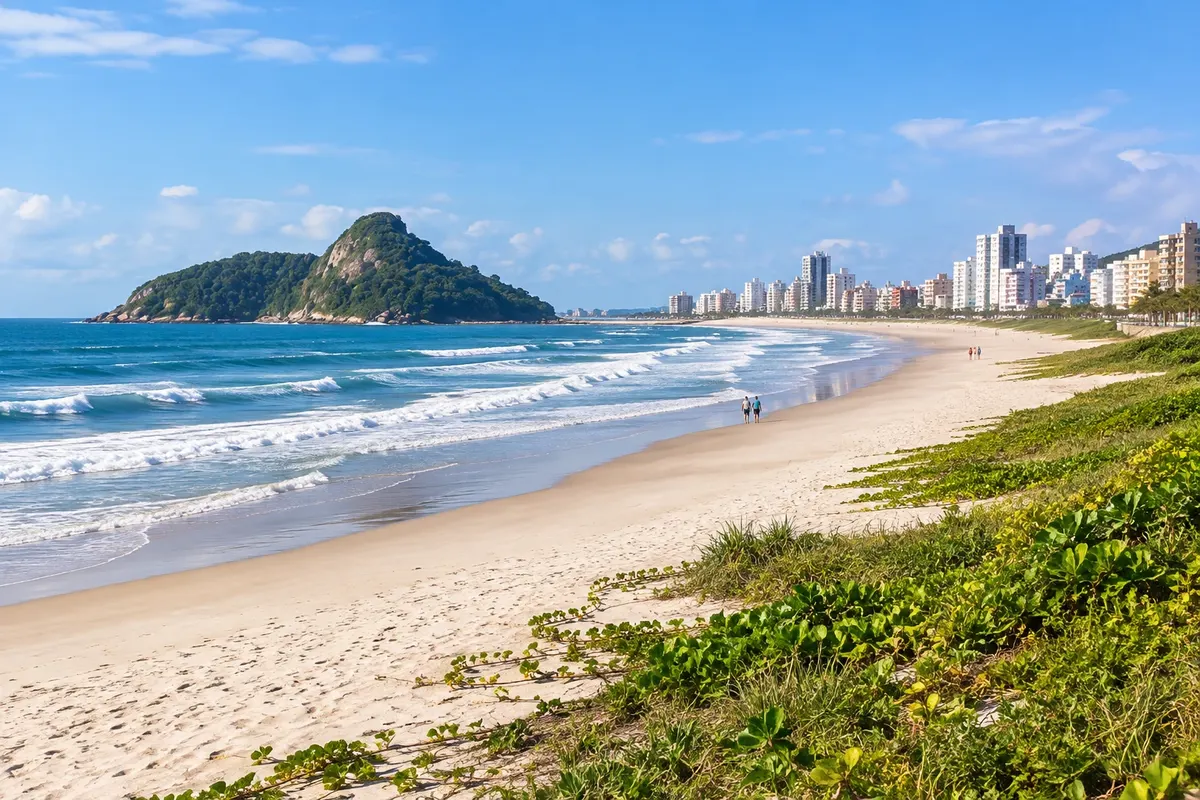
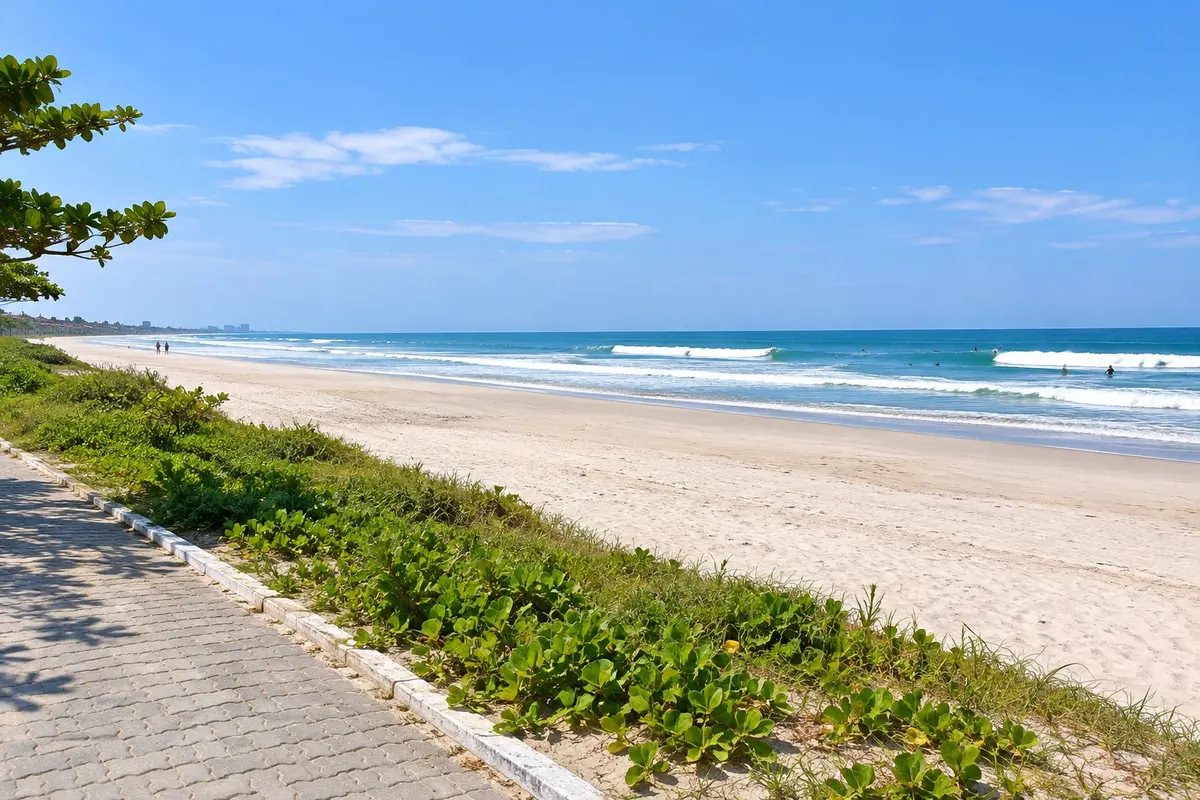
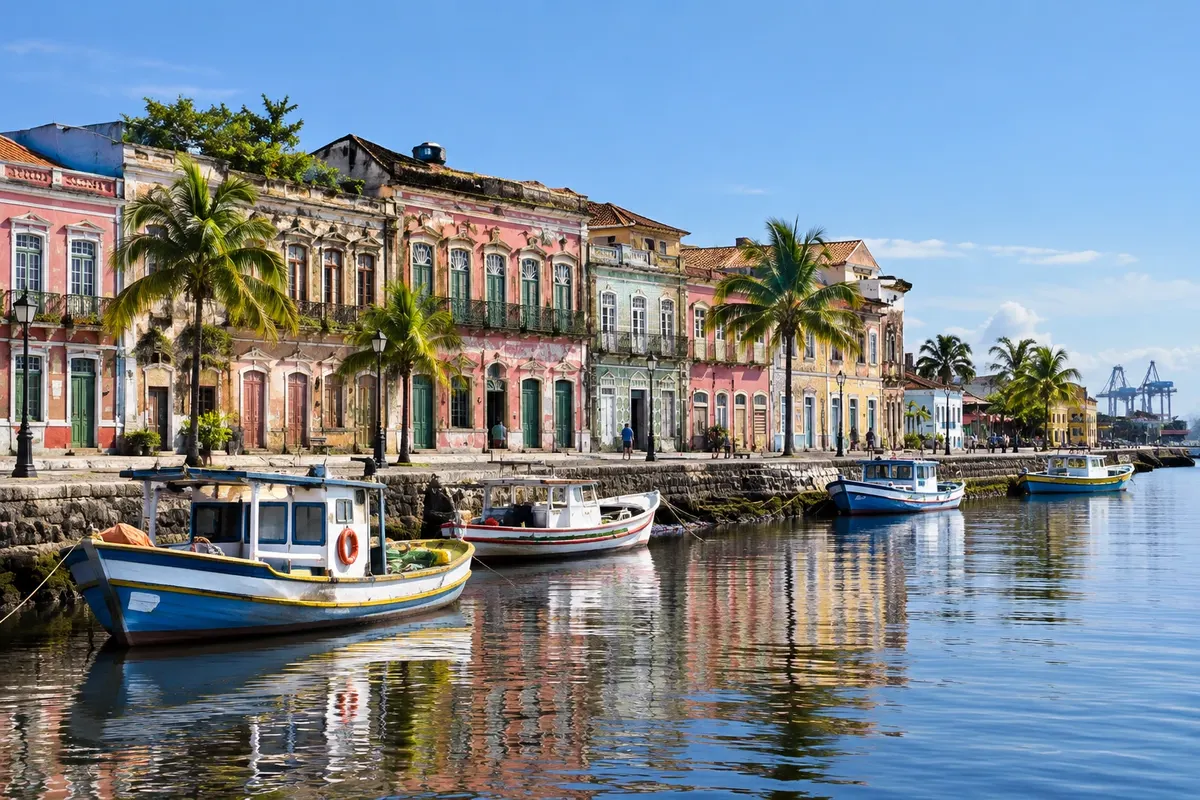
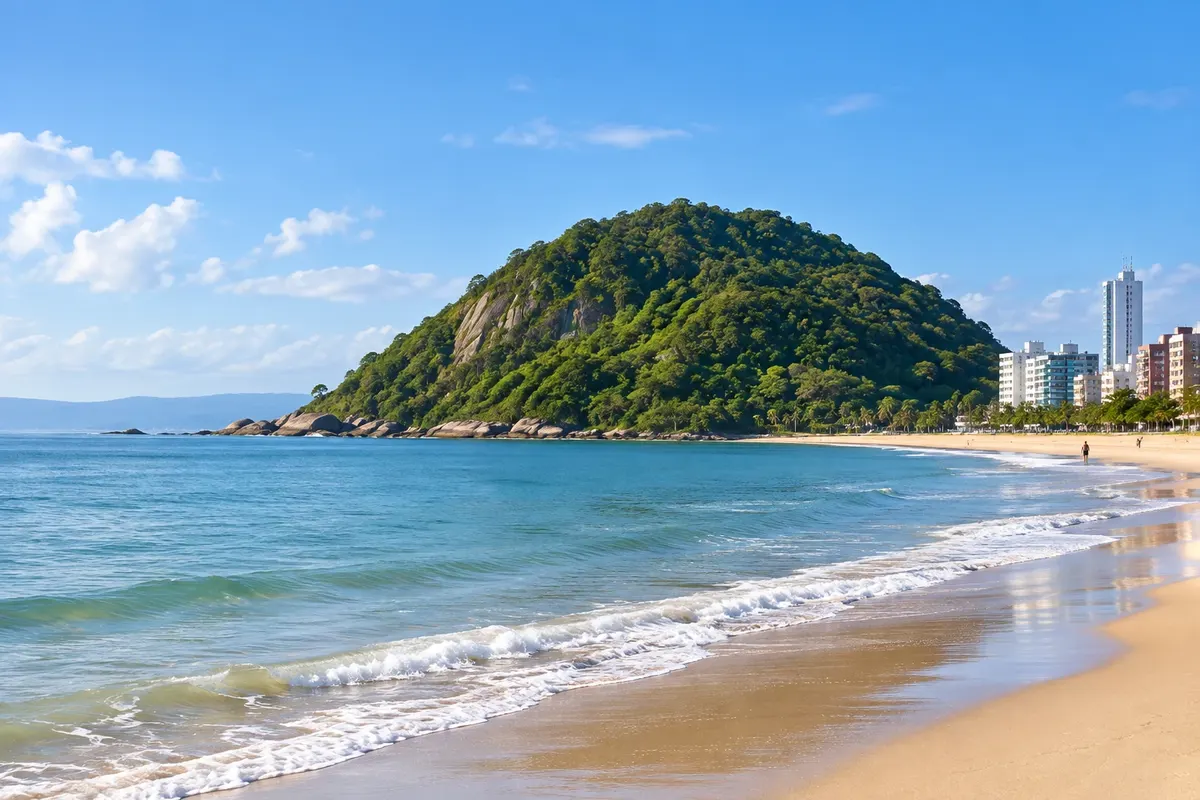
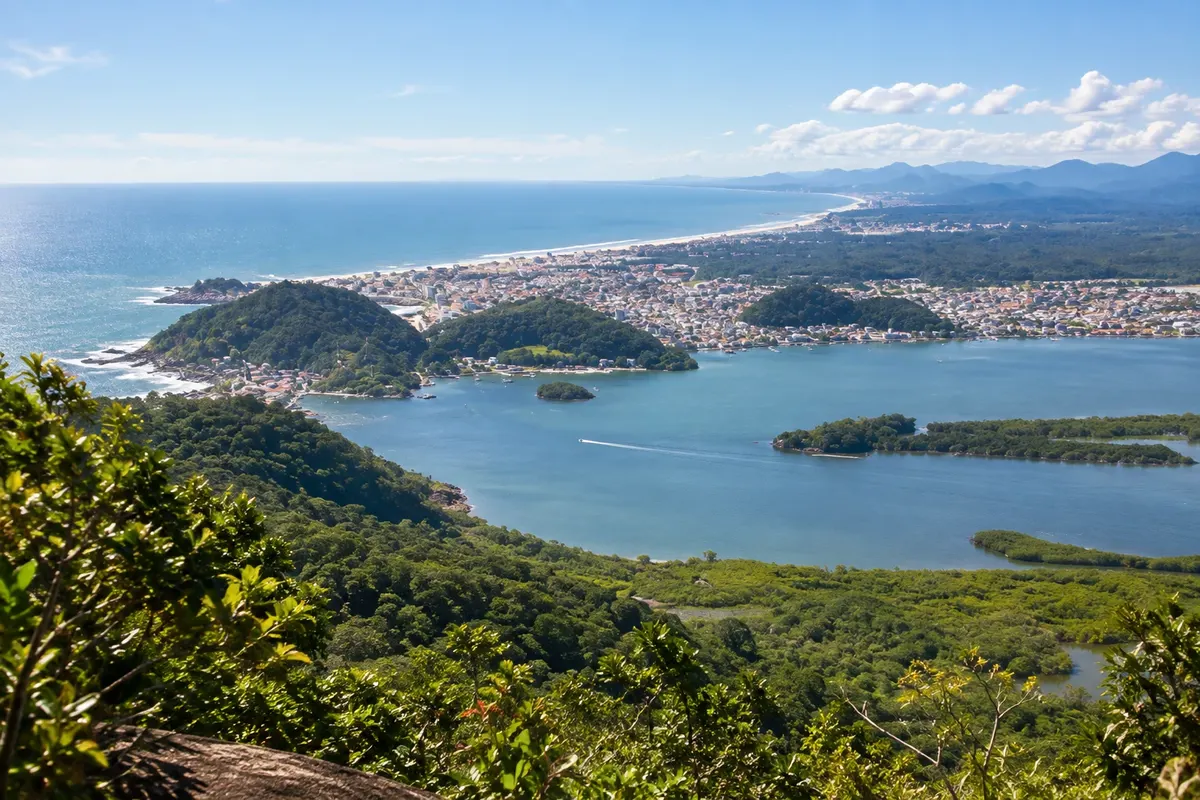
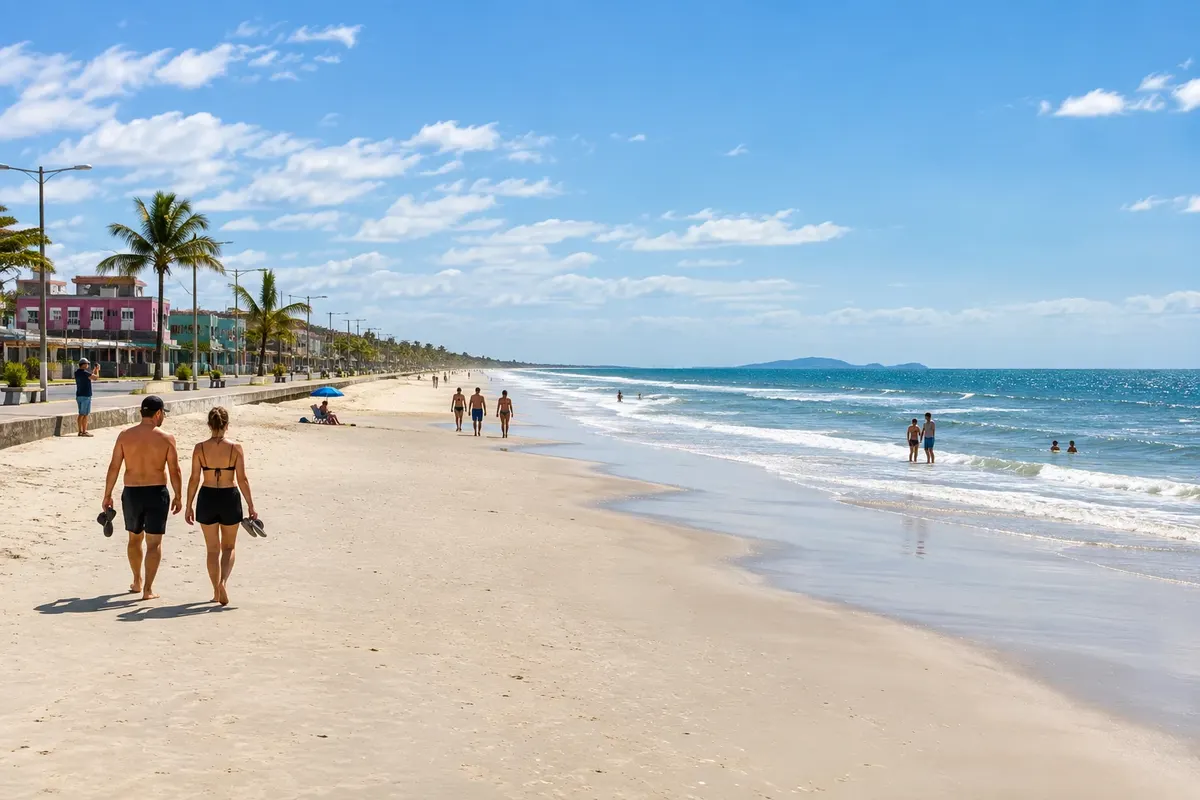
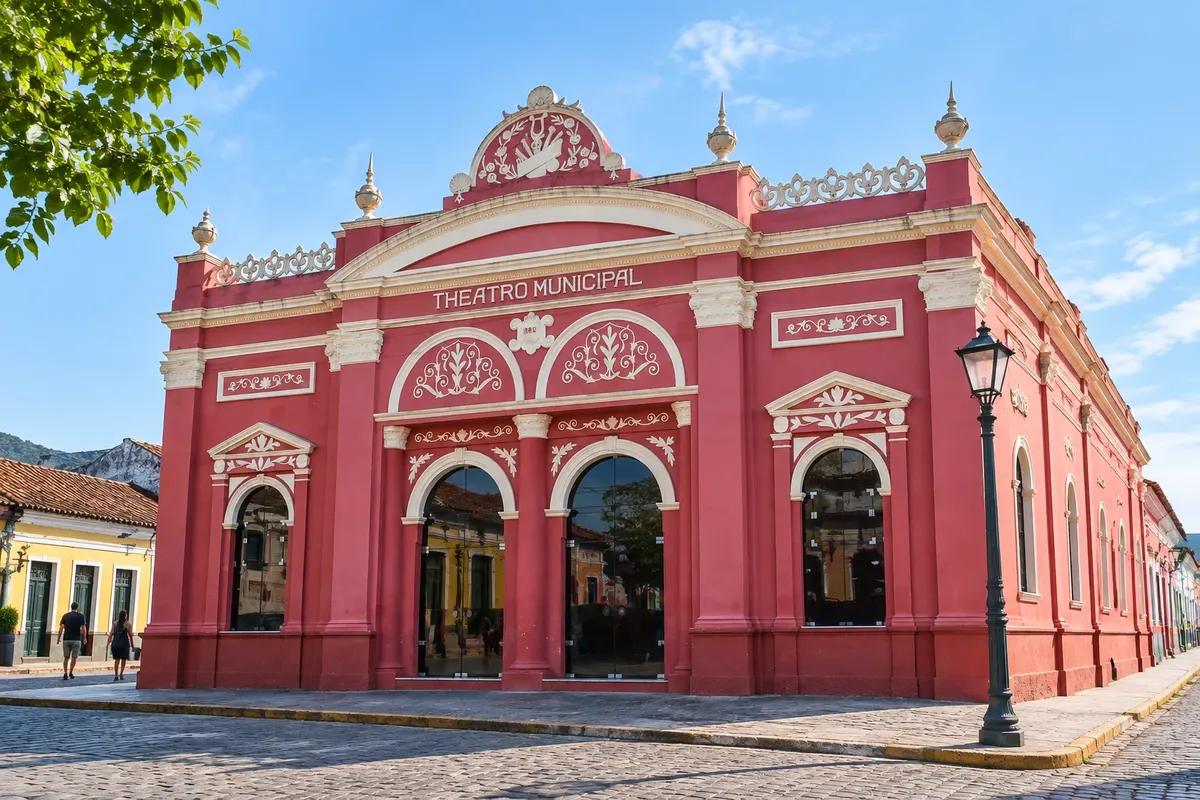
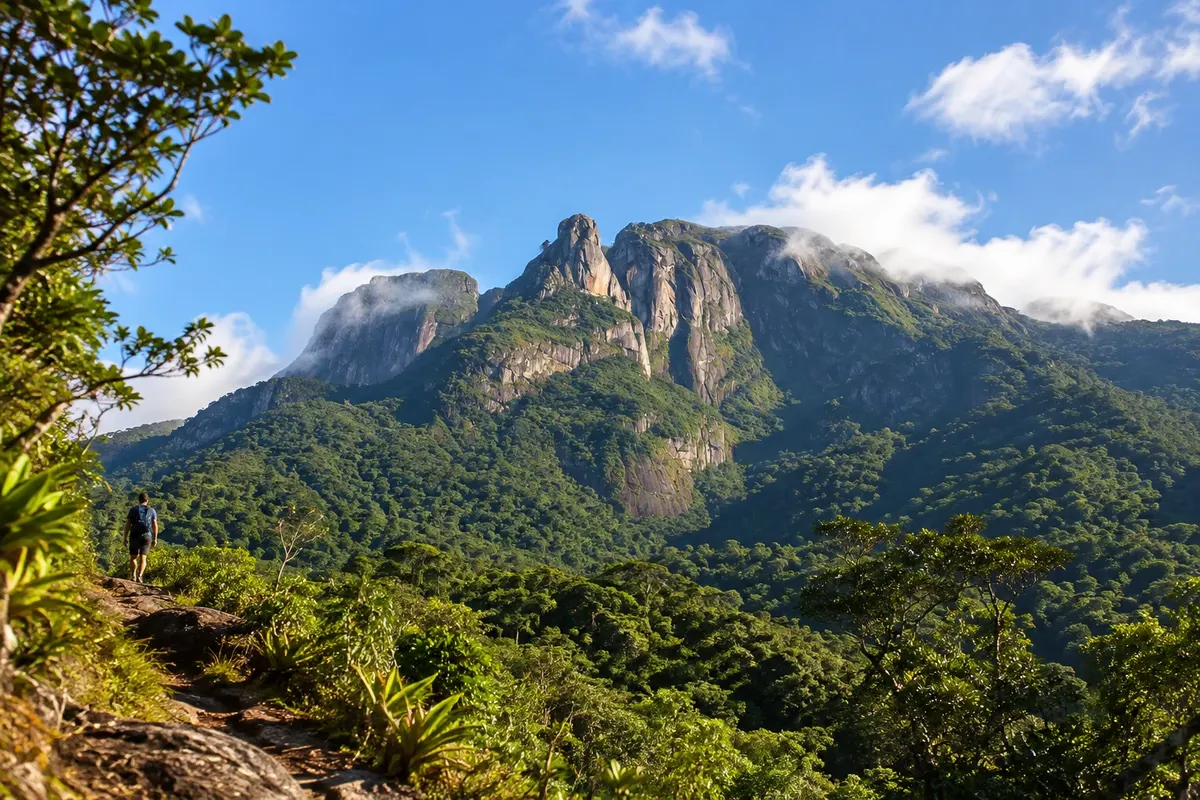
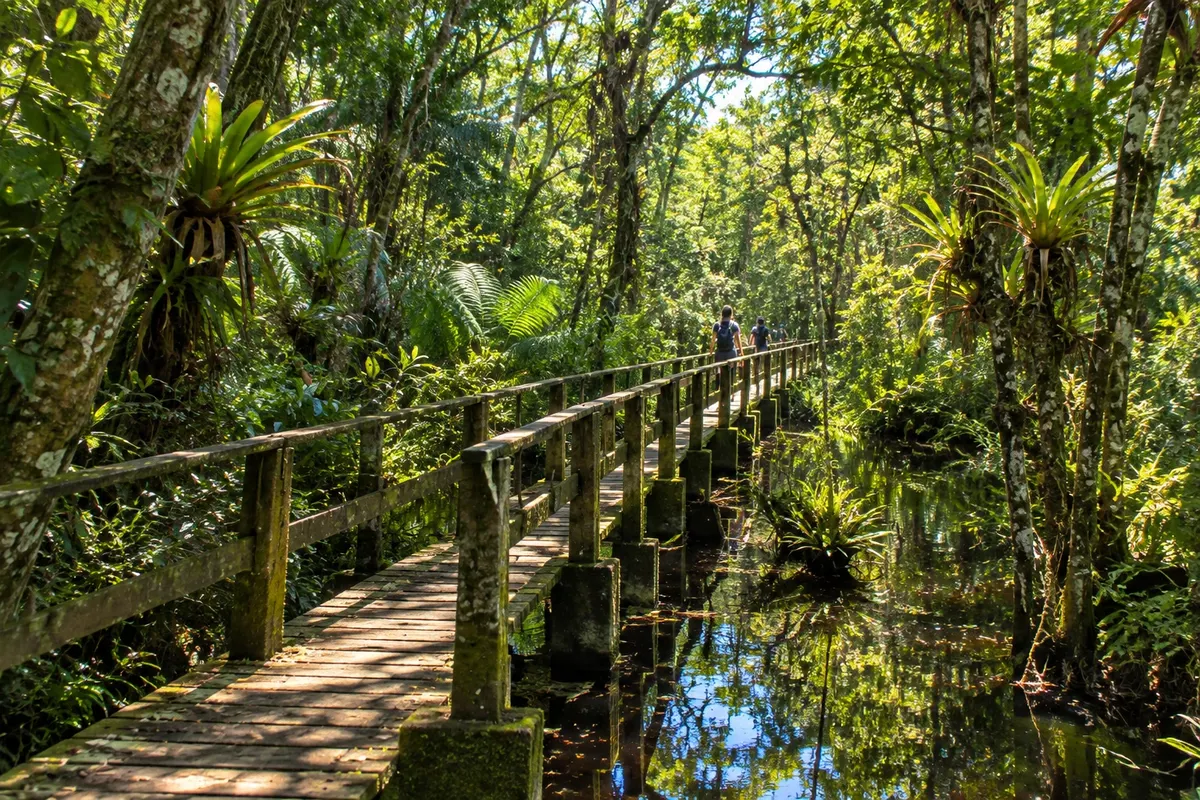
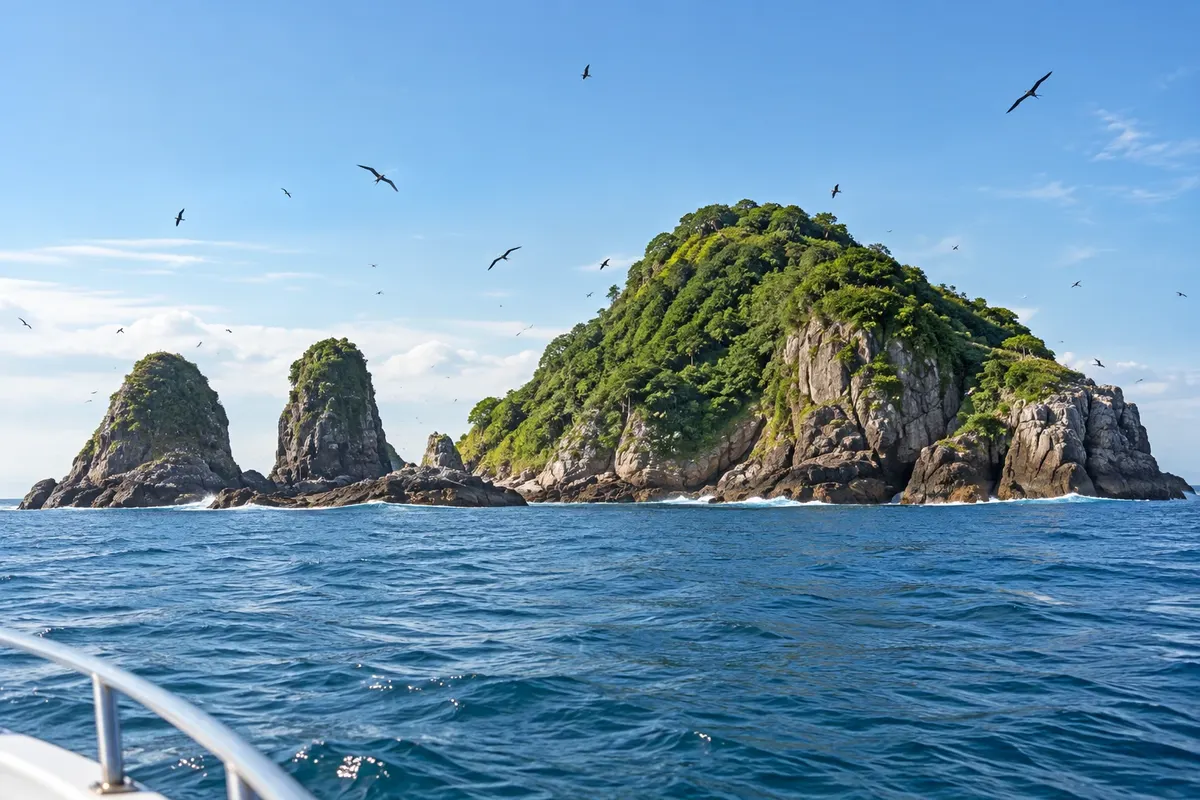
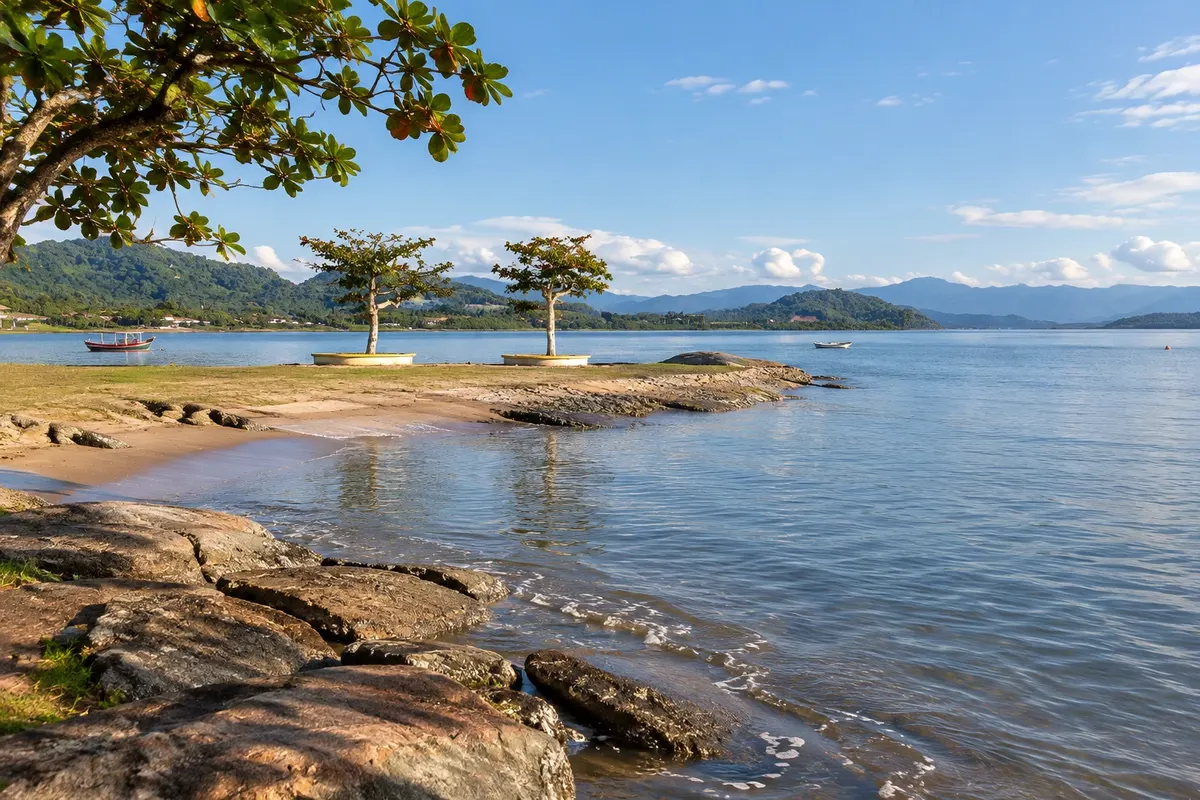
Illustrative images. The pictures in this guide are illustrations based on the real place, not photographs, and may differ from it.

Get it on Google Play Send your photos

Get to know the place

A region to enjoy
at your own pace.

The Litoral do Paraná includes Antonina, Guaraqueçaba, Guaratuba, Matinhos, Morretes, Paranaguá and Pontal do Paraná. The region combines historic settlement along the bays with beaches, islands and areas of Atlantic Forest. Each part calls for a different travel pace.

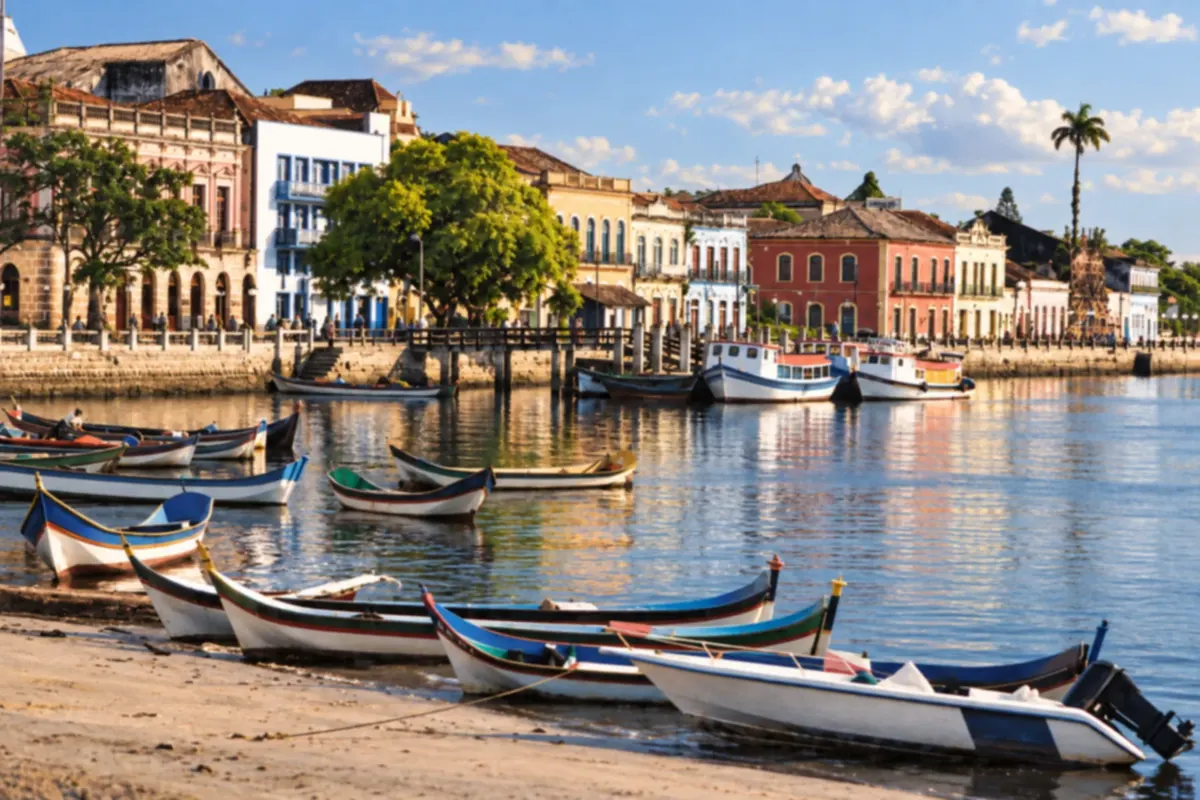
Morretes links a stroll through the historic center to the Nhundiaquara River and the barreado. Antonina adds historic houses, a bay and the Igreja de Nossa Senhora do Pilar. In Paranaguá, the urban heritage can be combined with a crossing to Ilha do Mel, which belongs to the municipality.

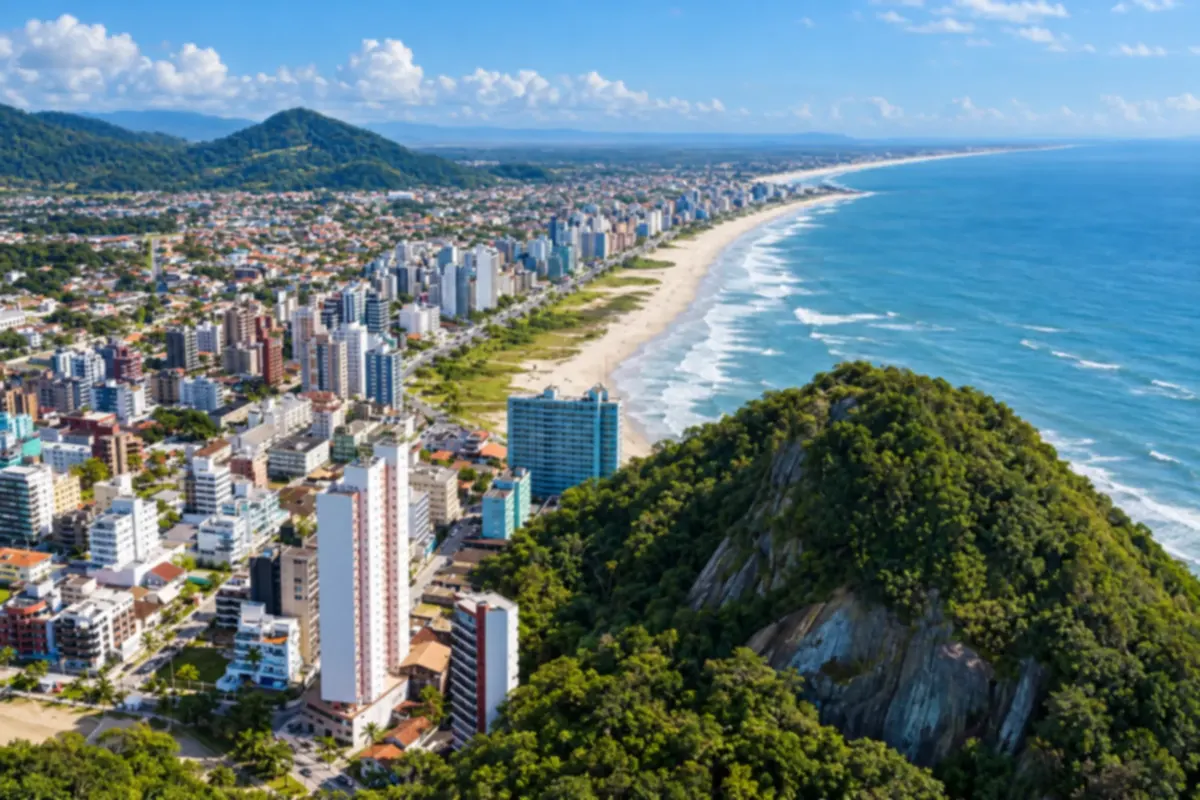
Matinhos, Pontal do Paraná and Guaratuba concentrate stretches of beach and seaside resorts. In Guaraqueçaba, the itinerary moves closer to communities, islands and nature conservation; Superagui is one of the references in that area.

Food also distinguishes the stops. Besides Morretes' barreado, there are banana sweets in Antonina, Cabaraquara oysters in Guaratuba and fish and seafood preparations. To gather these experiences, it's worth alternating bases instead of trying to visit all seven towns from a single beach.

This destination brings together 7 cities: Antonina, Guaraqueçaba, Guaratuba, Matinhos, Morretes, Paranaguá, Pontal do Paraná.

Share: WhatsApp

Travelers' photos

Litoral do Paraná through the eyes of those who went

Litoral do Paraná
Illustrative image
Litoral do Paraná
Illustrative image
Traveler, share your experiences through photos Up to 5 photos of each place you visited.

One destination, many paths

The cities on this trip

Start with one city or combine several in your itinerary.

Where Litoral do Paraná is The star marks the nearest capital, Curitiba.
CuritibaAntoninaGuaraqueçabaGuaratubaMatinhosMorretesParanaguáPontal do Paraná

Mapa: @svg-maps/brazil, CC BY 4.0

How to get there: Litoral do Paraná

Curitiba is a point of arrival for descending the Serra do Mar via BR-277 or the Estrada da Graciosa. BR-376 also connects access to the coast. The train between Curitiba and Morretes is another way to arrive; visits to the islands require a boat crossing.

The local experience

Things to do in Litoral do Paraná

Antonina · PR · historic center

Centro Histórico de Antonina

Listed as national heritage by Iphan in 2012, it gathers mansions and warehouses from the days when the port shipped out erva-mate (yerba mate), such as the Armazém Macedo. The ensemble also includes the Fonte da Carioca (fountain), the 1916 railway station and the Theatro Municipal.

Discover Centro Histórico de Antonina

Guaratuba · PR · viewpoint

Morro do Cristo

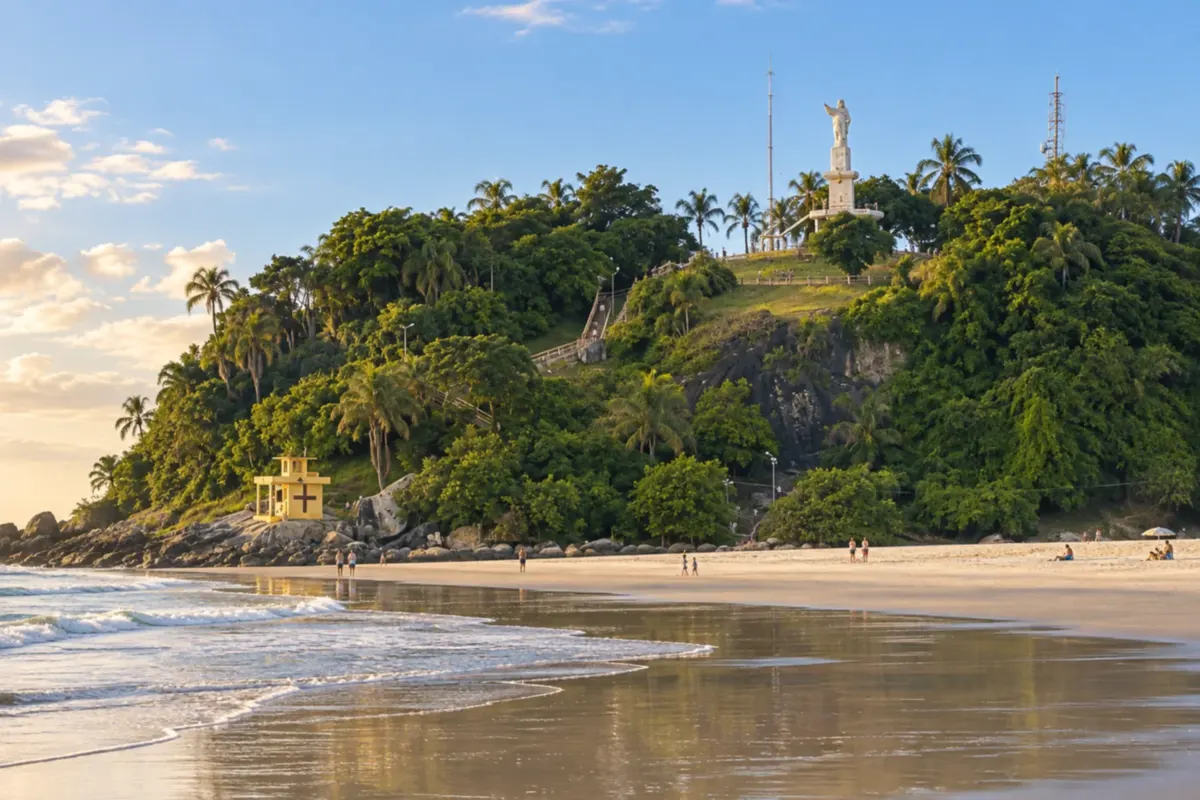
A hill at the southern end of the central waterfront, next to Praia de Brejatuba (beach), topped by a statue of Christ the Redeemer that has become a symbol of the town. A stairway of 197 steps leads to the top, a natural viewpoint overlooking the beaches.

Discover Morro do Cristo

Pontal do Paraná · PR · beach

Pontal do Sul

A beach town facing the Baía de Paranaguá, with calmer water than the town's open-sea beaches. It is where boats leave for Ilha do Mel, and pods of dolphins are often seen in the area.

Discover Pontal do Sul

See 24 more places in Litoral do Paraná
Guaraqueçaba · PR · nature reserve

Reserva Natural Salto Morato

A private Atlantic Forest reserve of about 2,250 hectares, run by the Fundação Grupo Boticário and open to visitors since 1996. Trails lead to the Salto Morato, a waterfall about 100 meters high, and to a fig tree whose roots span the Rio do Engenho.

Discover Reserva Natural Salto Morato

Guaratuba · PR · bay

Baía de Guaratuba

The second-largest bay in Paraná, about 48 square kilometers, it receives 16 rivers and is dotted with islands and mangroves in an environmental protection area. The ferry crossing to Caiobá offers a wide view of the water and the mountains.

Discover Baía de Guaratuba

Guaraqueçaba · PR · park

Parque Nacional do Superagui

Created in 1989 and managed by ICMBio, it protects islands, bays, mangroves and coastal scrub and is part of the World Natural Heritage site recognized by UNESCO in 1999. It is home to the black-faced lion tamarin, and its Praia Deserta (beach) stretches for about 38 kilometers of sand.

Discover Parque Nacional do Superagui

Pontal do Paraná · PR · beach

Praia de Shangri-lá

An open-sea beach area on the ocean front, one of the most popular stretches for surfers on the Paraná coast. It is part of the town's roughly 23 kilometers of coastline, divided into dozens of beach areas.

Discover Praia de Shangri-lá

Matinhos · PR · viewpoint

Morro do Boi

About 160 meters high, it separates Caiobá's Mansa and Brava beaches. The trail starts at the end of Praia Mansa, passes the small Praia dos Amores (beach) and leads to a summit with a panoramic view of the coast.

Discover Morro do Boi

Guaratuba · PR · hill

Morro do Cabaraquara

About 455 meters high, on the shore of the bay, it has trails with views of the Atlantic Ocean. The Cabaraquara area, at the foot of the hill, is known for tastings of oysters farmed in the bay.

Discover Morro do Cabaraquara

Pontal do Paraná · PR · beach

Praia de Leste

The town's most built-up beach area, with a seafront promenade and shops clustered near the beach. It draws big crowds of vacationers in season, from December to March.

Discover Praia de Leste

Antonina · PR · theater

Theatro Municipal de Antonina

Founded in 1875 by a local theater society and later acquired by the town, it has a richly ornamented eclectic facade that reflects the town's economic heyday. In 1933 it hosted a performance by Carmen Miranda and Ary Barroso, who came ashore from a ship calling at the port.

Discover Theatro Municipal de Antonina

Matinhos · PR · park

Parque Estadual Rio da Onça

A protected area that preserves one of the last refuges of Atlantic Forest on the coast, rich in bromeliads and orchids. Five flat, interconnected trails form a 1.5-kilometer loop, with suspension bridges over wetlands and the Mirante das Bromélias.

Discover Parque Estadual Rio da Onça

Antonina · PR · point

Ponta da Pita

A rock formation jutting into the bay, where the waters of the Atlantic meet the slopes of the Serra do Mar, popular for fishing and taking in the view. The name comes from a plant fishermen used to make net floats, and there are remains of a sambaqui (shell mound) on site.

Discover Ponta da Pita

Paranaguá · PR · cave

Gruta das Encantadas

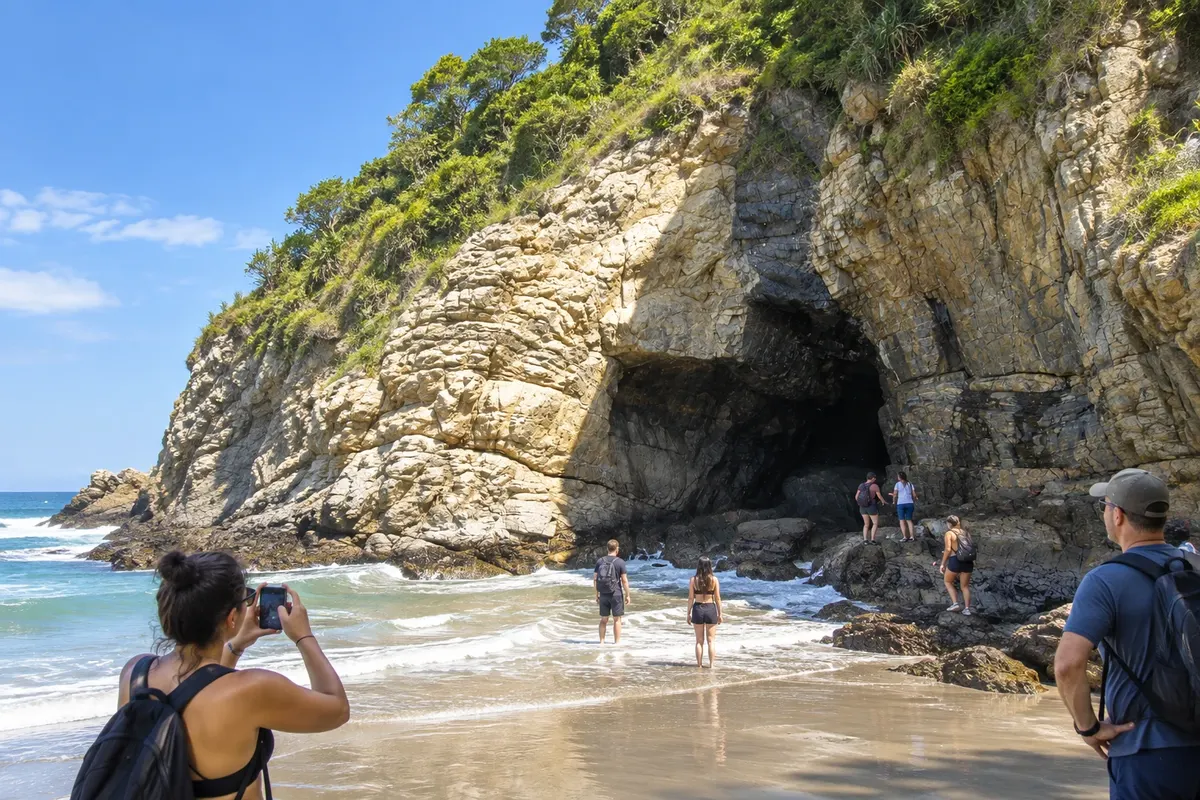
A cavity carved by sea erosion in a vein of diabase, a dark rock less resistant than the surrounding migmatite, in Morro da Gruta, in the south of Ilha do Mel. A wooden boardwalk leads to the entrance, and the name comes from the legend of mermaids said to live there.

Discover Gruta das Encantadas

Morretes · PR · scenic route

Estrada da Graciosa

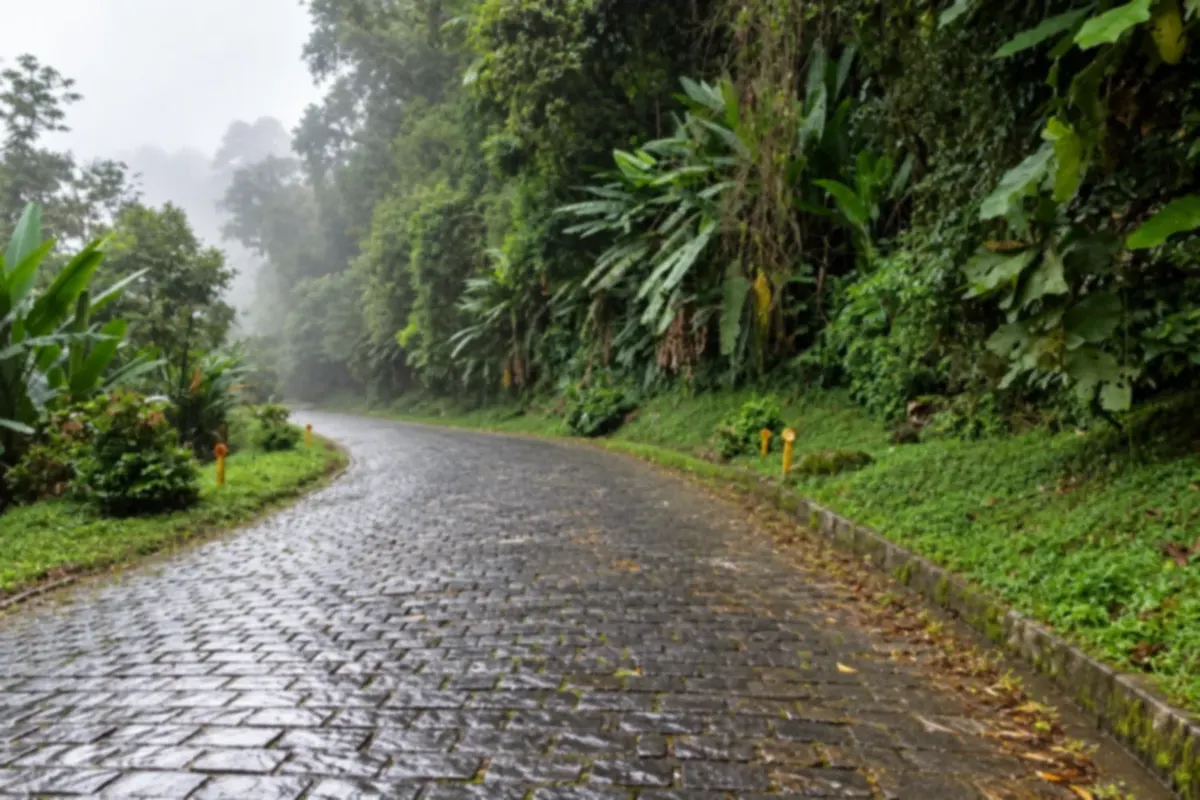
An old road, partly paved with stones, that crosses the Serra do Mar between Curitiba and the coast, with rest areas and viewpoints along the way. It is the scenic alternative to the fast highway.

Discover Estrada da Graciosa

Paranaguá · PR · lighthouse

Farol das Conchas

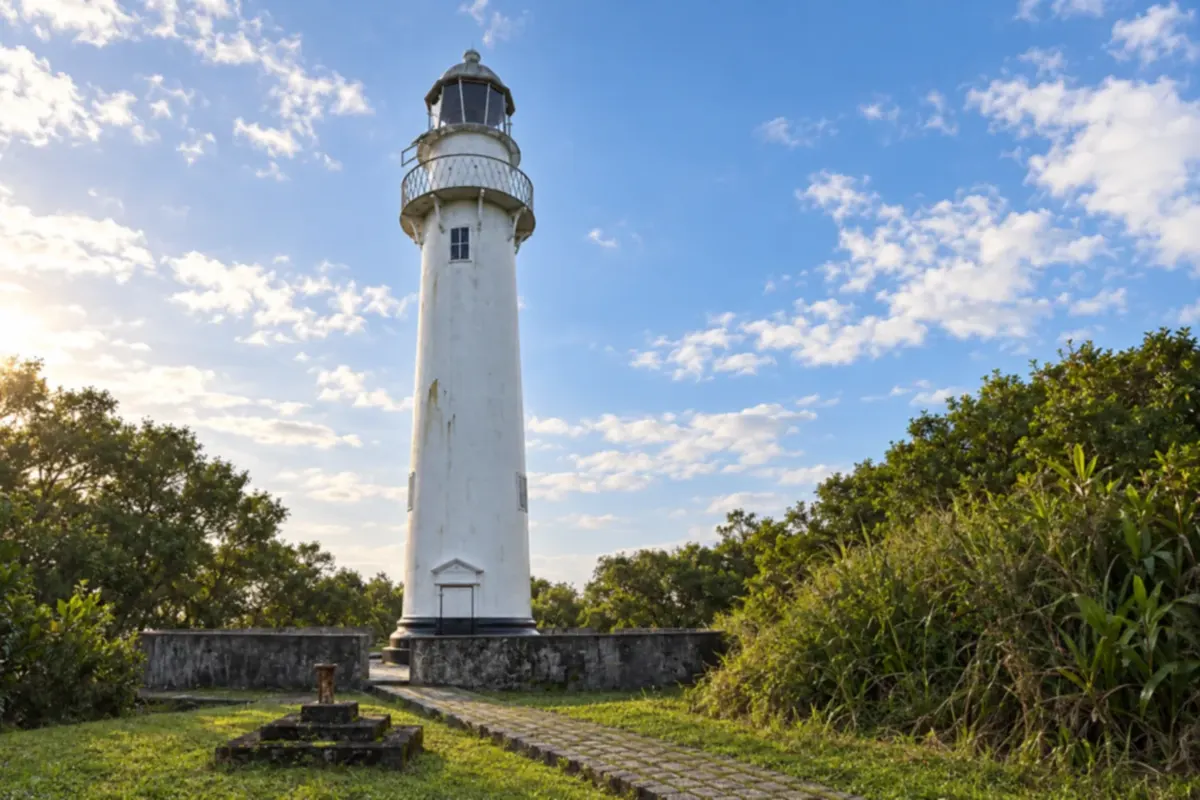
A historic lighthouse on Ilha do Mel, reached by a trail and a stairway up to its base, with free admission. From the top you get the best view of the island and the bay.

Discover Farol das Conchas

To choose before you go

Tours in Litoral do Paraná

Where each tour starts, how long it takes, how it is done, what is included and the price range.

Train ride from Curitiba to Morretes along the Serra do Mar

From Rodoferroviária de Curitiba (or Estação de Morretes, in the opposite direction) tourist train; return by van or bus (optional) about 4 hours for the train only; full package around 10 hours morning (full day on packages) easy

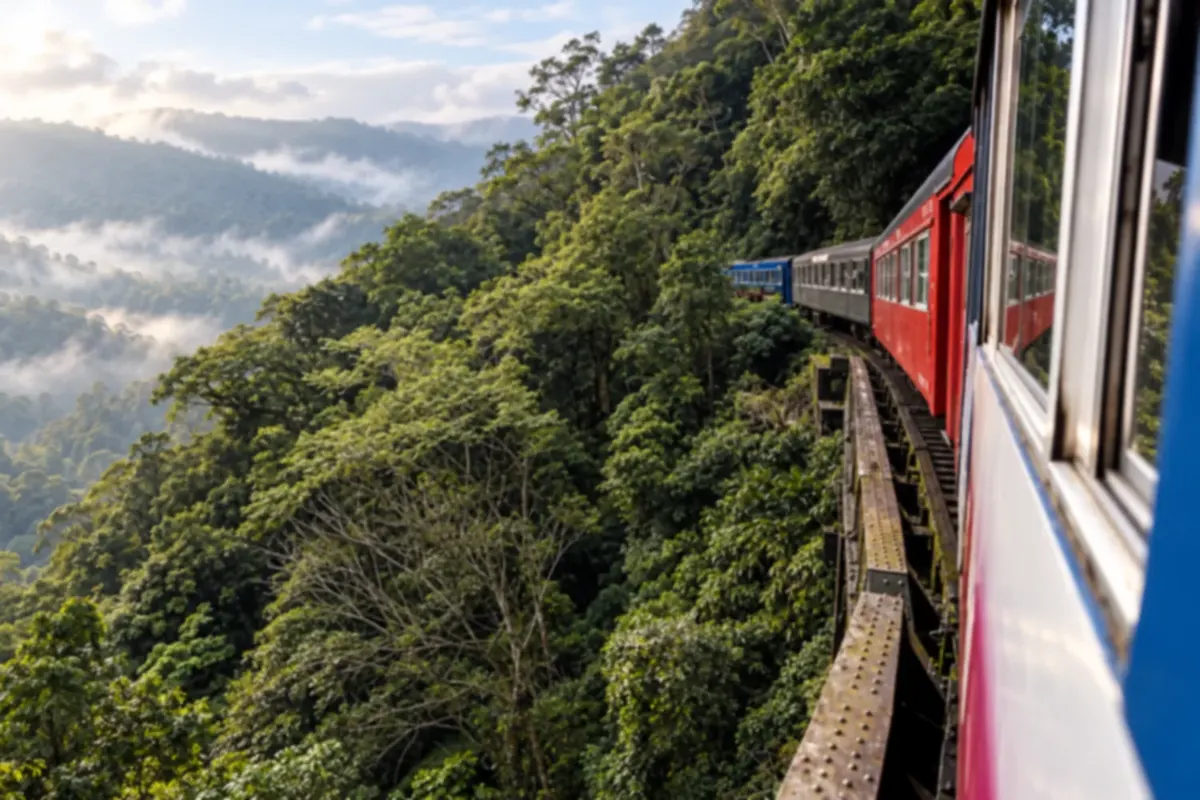
The train departs from Curitiba in the morning and descends the Serra do Mar along the ferrovia Curitiba–Paranaguá, taking about four hours to Morretes. The route passes through tunnels, bridges and Atlantic Forest, with views of rock walls, reservoirs and waterfalls. The Cachoeira Véu de Noiva on the Rio Ipiranga can be seen from the railway line. The train also serves Estação Marumbi, the gateway to Parque Estadual Pico do Marumbi. In Morretes the disembarkation is near the historic center, where most visitors have barreado for lunch and walk among the old houses and along the banks of the Rio Nhundiaquara. There are train-only tickets and packages that combine a city tour in Morretes and Antonina, lunch and return by van via the Estrada da Graciosa or the BR-277. It's also possible to do the reverse, from Morretes to Curitiba at the end of the day.

Stops: Rodoferroviária de Curitiba, Serra do Mar, Estação Marumbi, Cachoeira Véu de Noiva, Estação de Morretes, Centro Histórico de Morretes.

Includes: The train ticket covers the route and a light snack with a drink. There are classes with different service (tourist, boutique and litorina), each with different prices. Operator packages usually include hotel transfer, barreado lunch, guide and city tour. On a basic ticket, lunch and other extras are paid separately. Check the current price list.

Tip: Buy in advance for holidays and weekends. To save time, do only one leg by train and the other by intercity bus, which is faster. On foggy days the mountain views are reduced; check the forecast. Buses do not run along Estrada da Graciosa: the return via that road is by van or car.

Best time: All year round. Clear-sky days favor the mountain views; holidays and weekends are busier.

Agencies that run it: Rota do Sol Turismo, Tours Curitiba, Calango Expedições, Paranagua Tours.

R$ 206 · per person, one way, tourist class (published starting price) · official price

Ilha do Mel in one day: Gruta das Encantadas and Farol das Conchas

From Pontal do Sul (Pontal do Paraná) or Paranaguá scheduled boat or water taxi and walking trails full day (crossing of about 30 min via Pontal do Sul) all day easy to moderate

The crossing departs from the terminal at Pontal do Sul, in Pontal do Paraná, and takes about 30 minutes; departing from Paranaguá, the trip is about 1h30. The island belongs to Paranaguá and has no cars. There are two landings: Encantadas on the south side, and Nova Brasília further north. From Encantadas, a trail of about 600 meters leads to the Gruta das Encantadas, a rocky formation by the sea. From Nova Brasília, the trail of about 1.6 km reaches the Farol das Conchas, from 1872, atop Morro das Conchas, after a staircase of 150 steps, with panoramic views of the island. Those who want to see both sides can walk between the villages, about 5 km across sand, forest and rocky headlands, or pay for a boat transfer between Encantadas and Brasília. The rest of the day is usually spent on the beaches.

Stops: Terminal de Pontal do Sul, Vila de Encantadas, Gruta das Encantadas, Nova Brasília, Farol das Conchas, Praia Grande, Praia de Fora.

Includes: Round-trip crossing, boat transfers between the villages and meals are paid separately. The island has visitor access control and may require a separate entrance fee: check the current rule with the managing authority. Agency packages departing from Curitiba usually include transport, boat, guide and lunch; check the current price table.

Tip: Confirm the time of the last return boat before moving away from the pier. Bring closed-toe shoes, sunscreen and water. Check the tide table for the cave visit. From Curitiba, access to Pontal do Sul is by car via BR-277; on holidays, leave early to catch the crossing.

Best time: All year. Summer has more boats and more people; outside the high season the island is quieter. Avoid days of heavy rain.

Agencies that run it: Rota do Sol Turismo, Paranagua Tours.

Boat tour of Baía de Paranaguá and Baía dos Golfinhos

From Pier next to Aquário Municipal, Paranaguá tour boat from about 1h20 to around 2 hours, depending on the itinerary morning or afternoon easy

Boarding is at the pier behind Aquário Municipal, next to Ponte do Valadares, in downtown Paranaguá. The boat goes down the Rio Itiberê, passes in front of Ilha da Cotinga, where there is a fishing community, and proceeds to the port terminals, from which ships can be seen up close. In the longer version, about two hours, the route crosses Baía de Paranaguá, passes Ilha das Cobras and Ilha da Cotinga and includes Baía dos Golfinhos, where there is a chance of seeing dolphins near the vessel. Departures are daily throughout the day, and the boats are inspected by the Capitania dos Portos. Local agencies also sell private boats with stops at Ilha do Mel, at the Fortaleza de Nossa Senhora dos Prazeres and at Ilha das Peças.

Stops: Rio Itiberê, Ilha da Cotinga, Ilha das Cobras, Porto de Paranaguá, Baía dos Golfinhos.

Includes: The tour ticket covers the boat route. Small children usually have special conditions. Food and drinks are paid separately. Private boats are priced per group; check the current price list of each operator.

Tip: Buy the ticket at the kiosk next to the pier or from agencies in the historic center. Bring sunscreen and a light jacket for the bay breeze. Combine the trip with a visit to the museum and to the Mercado do Artesanato, a few minutes on foot.

Best time: All year round, including on cloudy days. Spotting dolphins depends on luck and the day's conditions.

Agencies that run it: Paranagua Tours.

Ilha de Superagui and Praia Deserta, day trip from Paranaguá

From Rua da Praia, Paranaguá fast boat (voadeira) or scheduled boat about 8 hours of activities all day easy to moderate

The motorboat departs from Rua da Praia, in Paranaguá, skirts Ilha da Cotinga and heads to Baía de Guaraqueçaba. The trip to Vila de Superagui takes about 50 minutes, depending on tide and weather. Superagui is part of Parque Nacional do Superagui, in the municipality of Guaraqueçaba. In the village, a sandy trail crosses the island to Praia Deserta, a long stretch of undeveloped beach. Lunch is usually in the village. The return goes inside the bay and takes about 1h30. If you have more time you can add the community of Barbados, about 20 minutes by boat, with artisanal fishing and oyster and crab farming. Larger scheduled boats also make the crossing, more slowly.

Stops: Rio Itiberê, Ilha da Cotinga, Baía de Guaraqueçaba, Vila de Superagui, Praia Deserta, Parque Nacional do Superagui, Barbados.

Includes: On agency tours, the boat and the pilot are usually included, and the price depends on the number of people. Lunch, drinks and insurance are usually paid separately. Tours require prior booking and depart for closed groups. Check the current price list of each operator.

Tip: Book in advance and confirm departure according to the tide and wind forecast. Bring insect repellent, sunscreen, water and closed shoes for the sand trail. Arrange the return time with the operator, as it depends on the tide.

Best time: All year, with calm seas. Summer has higher demand; check the forecast and navigation conditions.

Agencies that run it: Paranagua Tours.

Reserva Natural Salto Morato, in Guaraqueçaba

From Guaraqueçaba (access via road PR-405) car to the reserve and walking trails half a day to a full day morning and afternoon easy to moderate

The reserve, maintained by Fundação Grupo Boticário, is located in the locality of Morato, in Guaraqueçaba, about 172 km from Curitiba. The standard visit is the Trilha do Salto, self-guided, which follows the Mata Atlântica to Salto Morato, a waterfall over 100 meters high, passing points such as the Figueira Ancestral and the Aquário natural, a river pool used for bathing. There is also the Trilha do Rio Bracinho, about 7.4 km round trip, taking 6 to 8 hours, of moderate difficulty, which ends at Cachoeira do Rio Bracinho; it requires prior booking and signing a liability waiver. The Visitor Center provides information about the region. The reserve is open Tuesday through Sunday, including holidays, with limited spots, and may close in case of heavy rain.

Stops: Reserva Natural Salto Morato, Trilha do Salto, Salto Morato, Figueira Ancestral, Aquário natural, Trilha do Rio Bracinho, Cachoeira do Rio Bracinho.

Includes: The ticket entitles you to a self-guided visit; there is a half-price ticket for students and other categories. Guided experiences and the Trilha do Rio Bracinho are scheduled separately. Transport and meals are the visitor's responsibility. Check the current price list.

Tip: Buy the ticket through the reserve's platform before you go. Closed shoes are mandatory; alcoholic beverages and pets are not allowed. Access includes a stretch of dirt road; without a car, arrange a taxi in Guaraqueçaba, about 20 km away. Bring swimwear, insect repellent and snacks.

Best time: Year-round; days without heavy rain are better, as the reserve can close in bad weather.

Agencies that run it: Viva a Vida Viagens.

R$ 40 · per person, full-price ticket (self-guided visit) · official price

Estrada da Graciosa by car, with stops at the recantos

From Quatro Barras (Portal da Graciosa), with arrival in Morretes car, van, motorcycle or bicycle 2 hours or more, depending on stops morning or afternoon easy

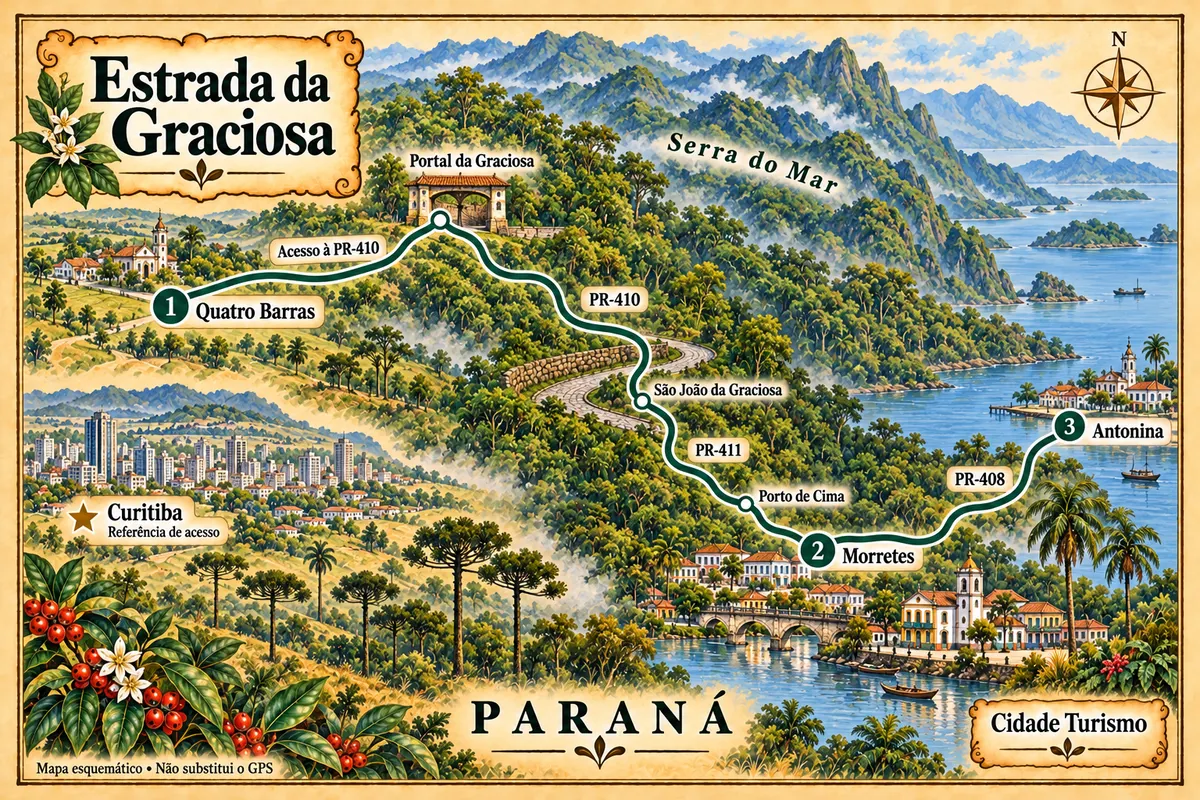
The Estrada da Graciosa (PR-410) links Quatro Barras to Morretes and starts at the Portal da Graciosa. The descent of the mountain has paved sections and sharp curves, through the Atlantic Forest. Along the route there are recantos with parking, barbecue areas, restrooms, kiosks selling typical products and viewpoints. The Recanto Engenheiro Lacerda has a lookout with views as far as the sea. At the Recanto Mãe Catira, an iron bridge crosses the river of the same name. In São João da Graciosa there are craft stalls and access to other trails. Near the Curva da Preguiça is the trail to Salto Tombo d'Água, a waterfall of about 15 meters, on a route of around 45 minutes. Further down, a fork marks the end of the trip: Morretes or Antonina.

Stops: Portal da Graciosa, Recanto Engenheiro Lacerda, Recanto Mãe Catira, Ponte de ferro sobre o Rio Mãe Catira, São João da Graciosa, Salto Tombo d'Água, Morretes.

Includes: There is no fixed package: the road is traveled independently or as the van return of train tour packages. Parking, kiosks and purchases at the stops are paid separately. Check current prices with each operator.

Tip: Buses do not run along the Graciosa. In heavy rain or fog, the return is usually made via BR-277. Most of the road has no shoulder: stop only at pullouts. Combine the descent with lunch in Morretes.

Best time: All year. On foggy days views from the lookout points are impaired; choose clear-sky days.

See 13 more tours

Historic center of Morretes and boat trip on the Rio Nhundiaquara

From Historic center of Morretes, on the riverbank on foot and gondola-style boat half day (boat, about 20 minutes) morning or afternoon easy

The tour combines a walk through the historic center with a boat ride on the Rio Nhundiaquara. The center is small and has colonial houses, craft shops and riverside restaurants, where the typical dish is barreado. The walk passes by the Igreja Matriz de Nossa Senhora do Porto. The boat departs from the center, on the riverbank, in small vessels similar to gondolas, operated by local boatmen. The ride lasts about 20 minutes on average and shows the town from the river side, with bridges and large colonial houses. Tours run mainly on weekends. The river is also a starting point for other activities, such as tubing.

Stops: Centro Histórico de Morretes, Rio Nhundiaquara, Igreja Matriz de Nossa Senhora do Porto, Estação de Morretes.

Includes: The boat is paid per person, separately, directly to the boatman; check the current rates. Lunch and crafts are the visitor's responsibility.

Tip: Go on the weekend, when the boat usually runs. Arrive before lunch: riverside restaurants fill up on holidays. Arrange it with Antonina, about 15 km away.

Best time: All year round; on weekends and holidays there are more boats.

Historic center of Antonina and Igreja de Nossa Senhora do Pilar

From Praça Coronel Macedo, Antonina on foot 2 to 4 hours morning or afternoon easy

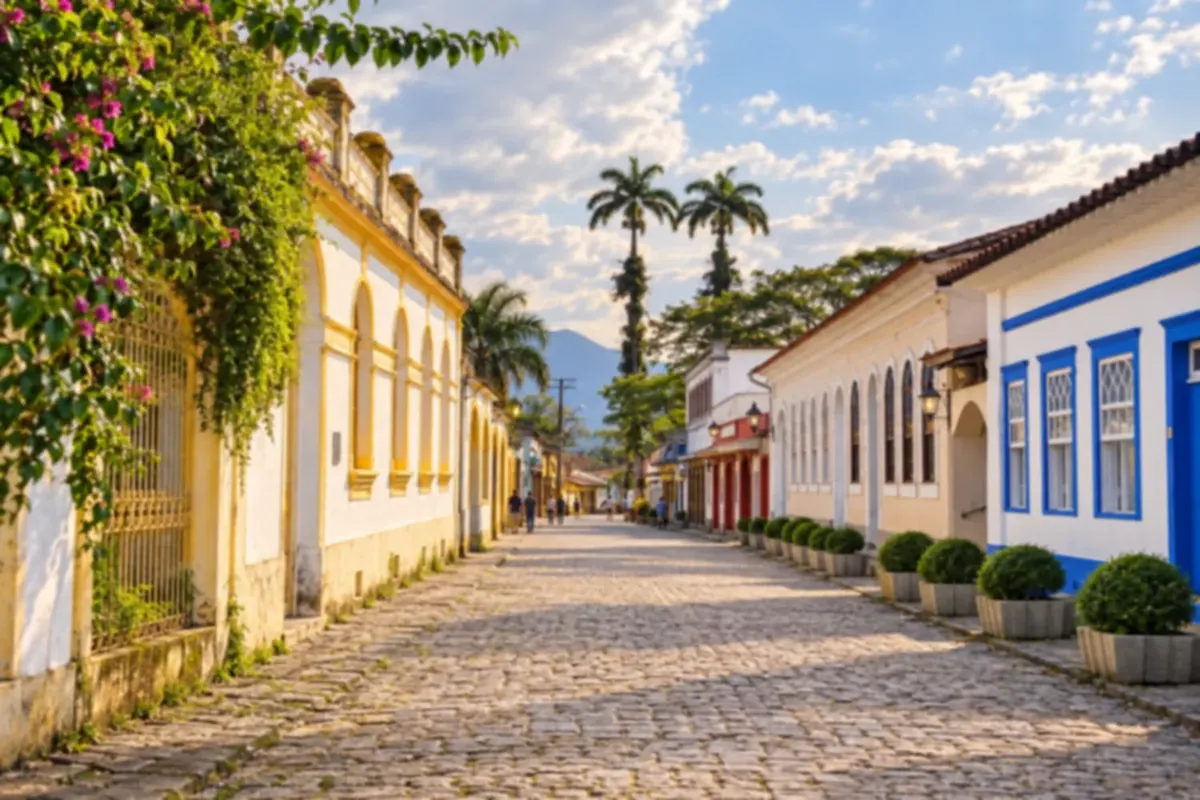
The walking route usually starts at the Igreja Matriz de Nossa Senhora do Pilar, on a hill next to Praça Coronel Macedo, with a view over the bay. From there the path follows the stone streets, among manor houses and ruins of the old erva-mate port, passing Teatro Municipal, Fonte da Carioca and the railway station. In the lower part are Mercado Municipal and Trapiche Municipal, in front of Baía de Antonina, surrounded by Serra do Mar. The walk can end at Ponta da Pita. Lunch is usually barreado, fish or seafood, and bala de banana is the town's typical sweet. The historic center is listed as national heritage.

Stops: Santuário Nossa Senhora do Pilar, Praça Coronel Macedo, Teatro Municipal, Fonte da Carioca, Mirante do Valente, Mercado Municipal, Trapiche Municipal, Ponta da Pita.

Includes: There is no ticket to walk through the center. Lunch, sweets and any guided visits are paid separately; check the current list of fees from providers who charge.

Tip: Wear comfortable footwear for the stone streets and bring sunscreen. Confirm the restaurants' opening status in advance. Combine the visit with Morretes, about 15 km away.

Best time: All year round; Carnival and the Festa de Nossa Senhora do Pilar, in August, change the city's activity.

Historic center of Paranaguá and Museu de Arqueologia e Etnologia

From Rua XV de Novembro, Centro Histórico de Paranaguá on foot half day morning or afternoon easy

Paranaguá is the oldest city in Paraná, and the historic center is explored on foot. A good starting point is the Museu de Arqueologia e Etnologia da UFPR, on Rua XV de Novembro, housed in a mid-18th-century building on the banks of the Rio Itiberê. The collection includes archaeological pieces, indigenous ethnology and popular culture. Nearby are Praça 29 de Julho and the Mercado do Artesanato, the former fish market, now home to shops and small restaurants. Cobblestone streets and old mansions lead to the Catedral de Nossa Senhora do Rosário. The new Mercado do Peixe sells fish and seafood. The Aquário Marinho is near the pier from which the boats depart.

Stops: Museu de Arqueologia e Etnologia da UFPR, Praça 29 de Julho, Mercado do Artesanato, Mercado do Peixe, Rio Itiberê, Catedral de Nossa Senhora do Rosário, Aquário Marinho.

Includes: The museum is open Tuesday through Sunday with extended hours; check whether there is an admission fee. The aquarium, meals and purchases are charged separately; check the current rates.

Tip: The museum is closed on Mondays, so plan your visit from Tuesday to Sunday. Save the end of the tour for a seafood lunch near the market and, if time allows, a boat trip around the bay.

Best time: All year round; a good option for cloudy days or when the sea is rough.

Bóia cross on the rivers Ipiranga and Nhundiaquara

From Centro histórico de Morretes river tubing (descent in an inner tube), with transport to the starting point about 2 h 30 morning or afternoon moderate

The activity goes down the rivers Ipiranga and Nhundiaquara, in Morretes, in individual inner tubes, passing through gentle rapids and pools. The meeting point for one of the operators is its headquarters in the historic center, where helmets, life jackets and other safety equipment are issued and adjusted. Then a 4x4 transport drives up a rural road, upriver, to the starting point, and the group descends accompanied by guides. The route takes about two and a half hours, with stops. There are also places that rent tubes with transport to the start of the descent and guides.

Stops: Rio Nhundiaquara, Rio Ipiranga, Centro Histórico de Morretes.

Includes: Safety equipment, transport to the departure point and guides are usually included. Photos, lunch and other extras are paid separately. There are age and minimum height limits; check the current table and the rules of each operator.

Tip: Bring swimwear, closed or securely fastened footwear and a change of clothes. On heavy rain days the activity may be canceled due to the river level. Book in advance on holidays.

Best time: Warm, from spring to summer. Check the river level and the forecast.

Agencies that run it: Calango Expedições.

Ilha do Mel: trail to the Fortaleza de Nossa Senhora dos Prazeres

From Trapiche de Nova Brasília, Ilha do Mel walking trail along the beach about 1 hour one way; half a day including return morning or afternoon easy to moderate

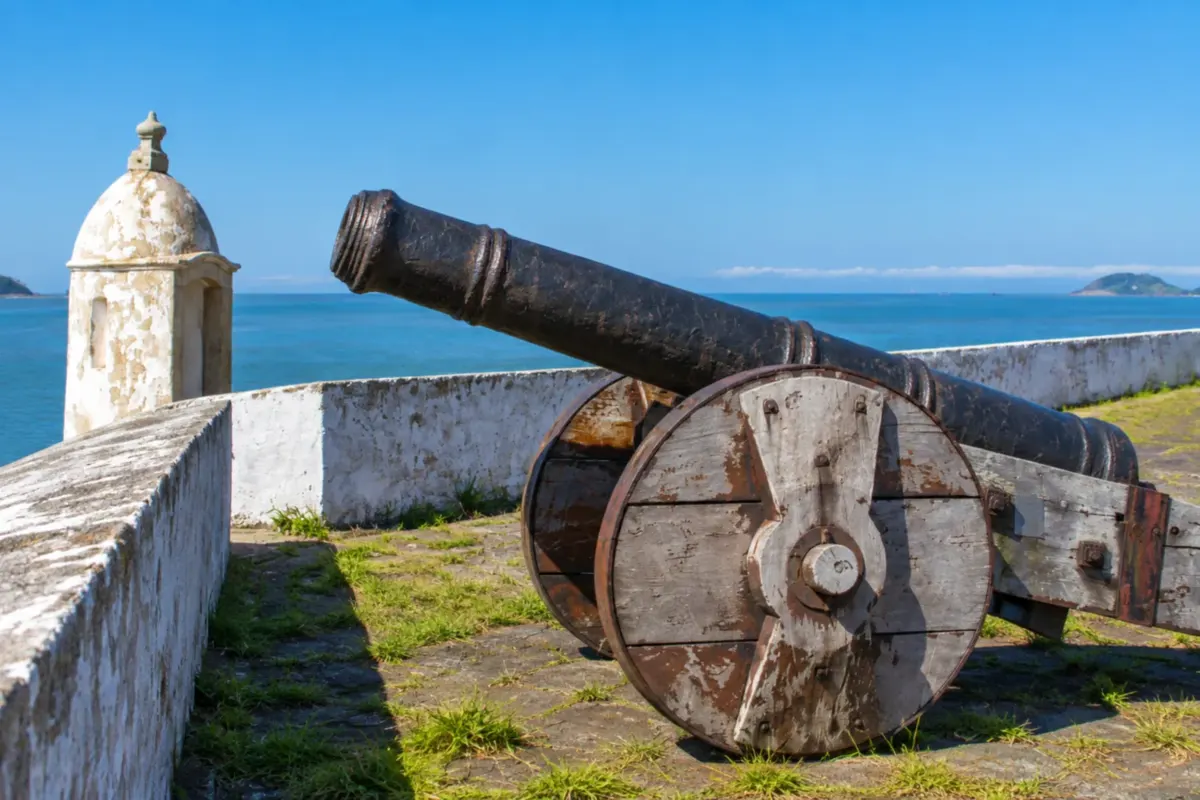
The starting point is the Trapiche de Nova Brasília, on the north side of Ilha do Mel. The trail, about 4 km, is mostly flat along the seafront and Praia da Fortaleza, alternating sand and stretches of forest. At the end is the Fortaleza de Nossa Senhora dos Prazeres, a colonial seaside fort with preserved cannons and views over Baía de Paranaguá. The walk there takes about an hour. Those who wish can add a roughly 30-minute climb to Farol das Conchas from Brasília. The return is on foot along the same route.

Stops: Nova Brasília, Praia da Fortaleza, Fortaleza de Nossa Senhora dos Prazeres, Farol das Conchas.

Includes: The trail is done independently. The boat crossing to the island, food and drinks are paid separately. The island has access control and may require an entrance fee: check the current rules.

Tip: Check the tide table before walking along the beach. Bring water, sunscreen, insect repellent and closed-toe shoes. Leave early to return to the pier before the last boat.

Best time: All year round; avoid heavy rain and rough seas.

Agencies that run it: Paranagua Tours.

Caminho das Ostras, no Cabaraquara (Guaratuba)

From Praia das Caieiras, Guaratuba (boat) or ferry-boat (car) boat across the bay and a short trail, or car about 1 hour by boat; half a day with lunch morning or afternoon easy

Cabaraquara is in Guaratuba, on the bay shore opposite Caiobá. By car, the road starts next to the ferry-boat entrance and climbs through the Mata Atlântica; along about 700 meters are restaurants specialized in oysters, facing the bay, with walkways and decks over the cultivation. By boat, the tour departs from Praia das Caieiras, crosses the Baía de Guaratuba, passes through the manguezal and includes a short trail, with the guide accompanying the group. The tour lasts about an hour. The oysters produced there are the main dish, alongside fish and seafood. Some spots offer stand up paddle and kayak.

Stops: Praia das Caieiras, Baía de Guaratuba, Manguezal, Estrada do Cabaraquara, Caminho das Ostras.

Includes: The boat tour includes boat transport and the guide. Oysters, lunch, drinks and activities such as kayaking and stand up paddle are paid separately. Longer tours require booking with the community tourism agency. Check the current table.

Tip: The Estrada do Cabaraquara is narrow and mostly unpaved; in summer, go early. Check in advance whether the restaurants are operating. To arrive by boat, book in advance.

Best time: All year round. According to local producers, the oysters are meatier in winter.

Boat tour of Baía de Guaratuba

From Praça dos Namorados, Guaratuba tour boat around 1h30 morning or afternoon easy

Local association boats depart from Praça dos Namorados for a trip of about one and a half hours around Baía de Guaratuba, the second largest in Paraná, featuring islands and mangroves. With prior arrangement there are variations: a tour with a trail on Ilha da Pescaria, including visits to sambaquis and lithic workshops and ending at an oyster farm in Cabaraquara; and birdwatching trips to see guarás and other seabirds. There are also departures from the Terminal Turístico Pesqueiro. Private speedboats and fishing trips are hired separately.

Stops: Baía de Guaratuba, Ilha da Pescaria, Cabaraquara, Praça dos Namorados.

Includes: The ticket covers the boat trip. Variations that include a trail, birdwatching and lunch require booking and may have their own cost. Check the current price list with the associations and agencies.

Tip: In summer schedules fill up: buy early. Bring sunscreen, a cap, and water. Combine the trip with the Caminho das Ostras.

Best time: All year round; there are more departures in summer. For birdwatching, check the season with the agency.

Morro do Cristo, viewpoint in Guaratuba

From Praia do Cristo, end of Avenida Atlântica, Guaratuba on foot, via stairs 30 minutes to 1 hour morning or afternoon easy

Morro do Cristo is located at the end of Praia Central, at Praia do Cristo, between the beaches of Canoas and Brejatuba. The ascent is via a staircase of 199 steps to a natural viewpoint about 38 meters up. At the top is the image of Cristo Redentor, 8.3 meters tall. From there you can see Praia Central, part of the town and the ocean; on the other side of the hill are Baía de Guaratuba and Praia Brava. Access is open during the day. The visit fits into a break between the beach and lunch.

Stops: Morro do Cristo, Praia do Cristo, Praia Central, Praia Brava.

Includes: There is no admission fee for the climb. Food and parking are paid separately when applicable; check the current fee table of the party that charges.

Tip: Wear closed shoes, especially if the ground is wet. Prefer late afternoon for better light and less heat. The trail on the right side of the hill is often slippery after rain.

Best time: All year round; clear-sky days give a better view.

Rafting on the Rio Cachoeira, in Antonina

From Bairro Alto, Antonina (rafting base) inflatable raft on a river with rapids around 1h30 for the descent morning or afternoon moderate

The descent is made on the Rio Cachoeira, in Bairro Alto, Antonina, along a route of about 3 km in an inflatable raft, with class II and III rapids that in some stretches can reach class IV. The group meets at one of the bases, changes clothes, receives equipment and safety training, proceeds to the river and descends accompanied by an instructor. There are stops in natural pools, with views of the Serra do Mar mountains, including Pico Paraná. Minimum age is 6 years. Two bases operate, with different days and departures, and the river level determines whether the activity takes place. Access is via Antonina, along PR-340, to the Usina Parigot de Souza.

Stops: Rio Cachoeira, Bairro Alto, Usina Parigot de Souza, Pico Paraná (view).

Includes: Life jacket, helmet, paddle and instructor are usually included. Transport from Curitiba, snacks and photos vary by operator. There is a reduced rate for children. Check the current price list.

Tip: Confirm the date with the operator: the activity depends on the river level and schedules differ between weekdays and weekends. Bring closed shoes that can get wet, swimwear, a towel and a change of clothes.

Best time: Check with the operator; the activity depends on river volume and suitable conditions.

Agencies that run it: Calango Expedições.

Boat tour of Baía de Antonina

From Trapiche Municipal, Antonina tour boat 30 to 50 minutes morning or afternoon easy

The boat departs from the Trapiche de Antonina and sails across the bay, surrounded by the Serra do Mar. The basic route passes by the old houses and continues toward the mangrove, in a trip of roughly thirty to fifty minutes. The vessel holds up to 20 people, and departures run with a minimum of four passengers, so it's worth calling ahead. Some agencies in Curitiba combine this trip with the train and the historic centers of Morretes and Antonina.

Stops: Trapiche Municipal de Antonina, Baía de Antonina, Historic houses, Mangrove.

Includes: The price covers the boat tour; food and drinks are paid separately. In agency packages, the train and guide may be included. Check the current price list with the boatman or the agency.

Tip: Arrange the time in advance and arrive at the pier with time to spare, especially on slow days when they wait to assemble the minimum group. Bring sunscreen.

Best time: All year round; choose clear-sky days.

Trilha do Rochedinho, in Parque Estadual Pico do Marumbi

From Estação Marumbi / Porto de Cima, Morretes hiking trail; access by train or 4x4 about 2 hours round trip morning moderate

Parque Estadual Pico do Marumbi is located in Morretes, Piraquara and Quatro Barras. The main access is the train from Curitiba to Estação Marumbi, or via Porto de Cima, where the IAT post is located. The trilha do Morro do Rochedinho, at 625 m altitude, starts near the station and has shaded stretches in Mata Atlântica, with no ropes or ladders. From the top you can see the serra, the station and the tracks that skirt the Serra do Mar. It is the park's shortest option; Pico Marumbi and other trilhas are longer and require preparation. Before entering it is mandatory to register and sign the risk-awareness form at the park entrance.

Stops: Parque Estadual Pico do Marumbi, Estação Marumbi, Morro do Rochedinho, Porto de Cima, Conjunto Marumbi.

Includes: There is no organized tour structure: the trail is self-guided, with registration and signing of the form at the park entrance. Local operators sell the trail with transport and a guide; snack and transport to the park are paid separately. Check the rules and the current rates.

Tip: Arrive early and register your entry and exit at the IAT post. There is a cutoff entry time for the longer trails; confirm with the managing agency. Bring water, a snack and hiking footwear; the final stretch of road access may require 4x4 traction or walking.

Best time: All year round, on dry days; avoid heavy rain.

Agencies that run it: Calango Expedições.

Caminho do Itupava: historic crossing from Quatro Barras to Morretes

From Borda do Campo, Quatro Barras (arrival at Porto de Cima, Morretes) walking trail, with transport to the gate around 6 to 10 hours all day difficult

The Caminho do Itupava connects the plateau in Quatro Barras to the coast in Morretes via a historic trail opened in the 17th century and later paved with stones. The section is about 20 to 25 km long, with a descent of more than 900 meters, and crosses Parque Estadual Serra da Baitaca and Parque Estadual Pico do Marumbi. The most common direction is from Quatro Barras to Morretes, downhill. It passes through river valleys, paved stretches, Casa do Ipiranga and Santuário de Nossa Senhora do Cadeado, with views of the Conjunto Marumbi. It is long, wet and demands physical fitness; entry is only permitted through the park's official gate, with a signed risk acknowledgment form.

Stops: Borda do Campo (Quatro Barras), Parque Estadual Serra da Baitaca, Casa do Ipiranga, Santuário de Nossa Senhora do Cadeado, Porto de Cima (Morretes).

Includes: Operators from Curitiba offer the crossing with transport between the points, a mountain guide and insurance; food is usually at the visitor's expense. Check the current pricing table.

Tip: Check with the managing authority whether the trail is open before you go, as it can be closed in bad weather. Start early, bring water, a snack, a raincoat and hiking shoes, and consider going with a guide. Enter only through the official gate.

Best time: Drier months; avoid rainy days, when the terrain becomes slippery.

Agencies that run it: Calango Expedições.

Trilha do Morro do Boi, em Caiobá (Matinhos)

From Praia Mansa de Caiobá, Matinhos short walking trail 30 minutes to 1 hour morning or late afternoon moderate

The trail starts at Praia Mansa de Caiobá, in Matinhos, and ascends Morro do Boi, about 160 meters high, declared a protected site in 1989. The climb is short, around 15 to 20 minutes, through the forest, with steep rocky sections; on the final rock face a rope is used for support. From the top the view reaches Praia Mansa, Praia Brava, Praia dos Amores, the Matinhos waterfront and Baía de Guaratuba. Another trail through the forest leads to Praia dos Amores. Rappelling and climbing at the site are done with instructors.

Stops: Morro do Boi, Praia Mansa, Praia dos Amores, Praia Brava, Praia do Belo.

Includes: The trail is self-guided and has no entrance fee. Rappelling, climbing and guides, when hired, are paid separately; check the current rates with the instructors.

Tip: Wear shoes with good traction and avoid going on wet rock. Bring water and insect repellent. The hill is not constantly maintained: go carefully and, if you prefer, with a local guide.

Best time: All year; prefer dry days.

Day by day

3, 5 and 7-day itinerary in Litoral do Paraná

Suggestions to plan the trip. Change the order of the days according to the weather and tour availability.

3 days · 3 days: train, Morretes, Antonina, Paranaguá and Ilha do Mel

For First-time trip, with little time and no car. Combines train, two historic centers and an island, using Morretes and Paranaguá as base points. · Based in Morretes (1 night) and Paranaguá (1 night)
  1. Day 1 · Train along the Serra do Mar and Morretes

    Leave Curitiba early. The train ride from Curitiba to Morretes along the Serra do Mar departs the Rodoferroviária in the morning and takes a few hours, with bridges and tunnels on the descent. The train does not run every day and seats are limited: check the schedule and book in advance. In Morretes, visit the Centro histórico de Morretes and take a boat trip on the Rio Nhundiaquara, and have barreado for lunch, a typical local dish. Stay overnight in Morretes.

  2. Day 2 · Antonina in the morning, Paranaguá in the afternoon

    In the morning, go from Morretes to Antonina. If you don't have a car, check bus times or book a transfer in advance. Visit the historic center of Antonina and the Igreja de Nossa Senhora do Pilar, with its houses facing the bay, and try the bala de banana, the town's typical sweet. In the afternoon, go to Paranaguá and visit the historic center of Paranaguá and the Museu de Arqueologia e Etnologia. Stay overnight in Paranaguá.

  3. Day 3 · Ilha do Mel in one day

    Leave early from the Paranaguá terminal for Ilha do Mel. The crossing from Paranaguá is longer than from Pontal do Sul; the state's official page states about 1h30. On the island, the Ilha do Mel in one day itinerary—Gruta das Encantadas and Farol das Conchas—is done on foot, since there are no vehicles. Crossings can be changed due to bad weather, so allow extra time before the bus back to Curitiba.

5 days · 5 days: Graciosa, Morretes, Antonina, Salto Morato, Paranaguá and Ilha do Mel
For For those going by car who want to combine mountain road, river, forest and island without rushing. Request an adjustment if Salto Morato's Tuesday–Sunday schedule doesn't fit. · Based in Morretes (1 night), Antonina (2 nights) and Paranaguá (1 night)
  1. Day 1 · Estrada da Graciosa and Morretes

    Drive down from Curitiba along the Estrada da Graciosa, with stops at scenic spots and viewpoints. Reserve the morning for those stops and arrive in Morretes at lunchtime to try the barreado. In the afternoon, visit the Centro histórico de Morretes and take a boat ride on the Rio Nhundiaquara. Stay overnight in Morretes.

  2. Day 2 · Rivers of Morretes and Antonina

    In the morning, go tubing (bóia cross) on the Ipiranga and Nhundiaquara rivers in Morretes. Book with an operator, as the route depends on river levels. In the afternoon, drive to Antonina and visit the historic center of Antonina and the Igreja de Nossa Senhora do Pilar. Try the bala de banana and see the bay at the end of the day. Stay overnight in Antonina.

  3. Day 3 · Reserva Natural Salto Morato, in Guaraqueçaba

    Drive from Antonina to the community of Morato in Guaraqueçaba and arrive in the morning. The Reserva Natural Salto Morato is open Tuesday to Sunday, offers self-guided visits, has a paid ticket with reduced fare and requires closed footwear. Heavy rain can close visits, so confirm beforehand. Return to Antonina in the late afternoon.

  4. Day 4 · Paranaguá and Baía dos Golfinhos

    Drive to Paranaguá. In the morning, visit the historic center of Paranaguá and the Museu de Arqueologia e Etnologia. In the afternoon, take a boat trip through the Baía de Paranaguá and Baía dos Golfinhos, which departs from the city's port. Book in advance and check the weather forecast. Stay overnight in Paranaguá.

  5. Day 5 · Ilha do Mel in one day

    Leave early from the Paranaguá terminal for Ilha do Mel. Follow the Ilha do Mel in one day itinerary: Gruta das Encantadas and Farol das Conchas. Hikers can swap it for Ilha do Mel: the trail to the Fortaleza de Nossa Senhora dos Prazeres. Cars are not allowed on the island. Return to Paranaguá with time to spare and continue to Curitiba via BR-277.

7 days · 7 days: from the mountains to the islands and the beaches of Guaratuba and Matinhos
For For those with a week who want to see the entire coast: historic towns, forest, island and beach. Requires changing bases and much of the itinerary by car. · Based in Morretes (1 night), Antonina (2 nights), Paranaguá (2 nights) and Guaratuba (1 night)
  1. Day 1 · Train and Morretes

    Take the train ride from Curitiba to Morretes along the Serra do Mar, which departs from the Rodoferroviária in the morning. The train does not operate every day: check the schedule and book. In Morretes, visit the historic center of Morretes and take a boat trip on the Rio Nhundiaquara and have barreado for lunch. Those who prefer hiking can leave the Trilha do Rochedinho at Parque Estadual Pico do Marumbi for another day, confirming the access rules beforehand. Stay overnight in Morretes.

  2. Day 2 · Antonina: river and historic center

    Go from Morretes to Antonina. In the morning, go rafting on the Rio Cachoeira in Antonina, with an operator booked in advance. In the afternoon, visit the historic center of Antonina and the Igreja de Nossa Senhora do Pilar and try the bala de banana. Those who don't want to raft can substitute a boat trip around the Baía de Antonina. Stay overnight in Antonina.

  3. Day 3 · Salto Morato, in Guaraqueçaba

    Arrive in the morning at Reserva Natural Salto Morato, in the community of Morato, Guaraqueçaba, departing from Antonina by road. The reserve is open Tuesday to Sunday, visits are self-guided and the entrance fee is charged, with a reduced fare. Wear closed footwear and bring water. Return to Antonina in the late afternoon. If that day falls on a Monday, swap the order of the itinerary.

  4. Day 4 · Paranaguá: center and bay

    Go from Antonina to Paranaguá. In the morning, visit the historic center of Paranaguá and the Museu de Arqueologia e Etnologia. In the afternoon, take a boat trip through the Baía de Paranaguá and Baía dos Golfinhos. Stay overnight in Paranaguá.

  5. Day 5 · Ilha do Mel or Superagui

    Full day on an island, departing from Paranaguá terminal. Option 1: Ilha do Mel in one day: Gruta das Encantadas and Farol das Conchas, or the trail to Fortaleza de Nossa Senhora dos Prazeres. Option 2: Ilha de Superagui and Praia Deserta, a round-trip from Paranaguá with a trail to the beach. Choose just one and book in advance. The sea may affect schedules. Stay overnight in Paranaguá.

  6. Day 6 · Guaratuba: oysters, bay and viewpoint

    Reserve the morning for the transfer from Paranaguá to Guaratuba by car or bus. In the afternoon, do the Caminho das Ostras in Cabaraquara (Guaratuba), or take a boat tour of the Baía de Guaratuba; check with the operator what each tour includes. At the end of the day, climb Morro do Cristo, Guaratuba's viewpoint. Stay overnight in Guaratuba.

  7. Day 7 · Matinhos and return to Curitiba

    In the morning, travel by road to Caiobá in Matinhos and do the Trilha do Morro do Boi in Caiobá (Matinhos). Reserve the rest of the morning for the beach. After lunch, return to Curitiba via the BR-376. If it's summer, allow extra time because of road congestion.

Best time to go

When to go: Litoral do Paraná month by month

Summer favors a trip focused on beaches and seaside resorts. For historic centers and meals in Morretes and Antonina, outings can be spread throughout the year. For visits to islands and natural areas, check the forecast, navigation conditions and access guidelines.

January High rain

Busy summer · Rain showers

Month of heat and humidity: average temperatures in Paranaguá are around 23 °C low and 28 °C high, with about 300 mm of rain. Showers are frequent. Beaches and resorts see the year's highest crowds, and the Curitiba–Morretes train may run more departures in the season. Book trains, crossings and tours in advance and bring a rain jacket for trails and river trips.

February High rain

Heat and rain · Carnival on the beaches

It remains hot and humid, with about 285 mm of rain on average and temperatures between 23 °C and 28 °C in Paranaguá. Beaches and resorts are crowded, especially if Carnival falls in this month. On islands and in bays, check the forecast and navigation conditions. In Morretes and Antonina, the rain can affect rivers and trails.

March High rain

End of summer · Birds in Superagui

Rainfall is still high, averaging around 246 mm, and temperatures range between 23 °C and 27 °C. Beach crowds decrease after the holidays. According to a local operator, March and April are recommended for birdwatching in Superagui. Check the train schedule, which may operate on fewer days.
April Some rain

More settled weather · Easter holidays

Rainfall falls to about 153 mm and temperatures are between 21 °C and 25 °C in Paranaguá. It's a transitional period, with sunny days and some rain fronts. Good for historic centers, the train and boat trips. Holidays in the month, like Easter and Tiradentes, increase crowds in Morretes, Antonina and Ilha do Mel.

May Some rain

Mildly cool days · Few people

It gets cooler: lows around 18 °C and highs of 23 °C in Paranaguá, with average rainfall around 140 mm. The beaches are better for walking than for swimming. There is less activity, which helps when visiting Morretes, Antonina and Paranaguá. For trails and islands, check the forecast and bring a light jacket.

June Low rain

Mildly cool · Clear days

Start of winter, with temperatures between 16 °C and 21 °C in Paranaguá and average rainfall of about 107 mm. Cold fronts bring windy days and the sea can become rough. It's a time for cultural outings and barreado in Morretes and Antonina. On islands and in bays, crossing times can change; check beforehand and bring warm clothing.

July Low rain

School holidays · Winter Festival

A cold month for the coast, with averages between 15 °C and 20 °C in Paranaguá and about 104 mm of rain. With school holidays, the train runs more services and Morretes and Antonina receive more visitors. The UFPR Winter Festival in Antonina draws a crowd in winter; check dates and programming. Beaches are for walking, not swimming.

August Low rain

Lowest rainfall of the year · Wind and cold fronts

In Paranaguá it's the month with the lowest rainfall in the series, averaging around 92 mm, with temperatures between 16 °C and 21 °C. Skies are often clear between cold fronts. Good for hikes, Salto Morato, Ilha do Mel and boat trips, but wind can affect navigation. Traffic is moderate, outside holiday periods.

September Some rain

Spring · Rain returns

Spring warms the coast, with temperatures between 17 °C and 22 °C in Paranaguá, and rainfall rising to about 158 mm. Open days alternate with rain fronts. It's a good time to combine historic centers, rivers and islands with little crowding. For trails and river trips, check conditions and the forecast before you go.

October Some rain

Variable weather · Moderate crowds

Average rainfall is about 178 mm, with temperatures between 19 °C and 23 °C in Paranaguá. The weather changes quickly, with sun in the morning and showers in the afternoon. Holidays and weekends draw crowds to Morretes, Antonina and Ilha do Mel. Schedule boat and river trips for the morning and check the forecast and navigation conditions.

November Some rain

Festa do Rocio · Heat building

Average rainfall around 177 mm and temperatures between 20 °C and 24 °C in Paranaguá. In November the Festa de Nossa Senhora do Rocio takes place, with processions and heavy crowds in Paranaguá, especially around the 15th. Visitors at that time should book crossings and transfers in advance. Beaches begin to fill toward the end of the month.

December High rain

Start of summer · Rain showers

Temperatures rise, between 22 °C and 27 °C in Paranaguá, and average rainfall exceeds 220 mm, mostly in showers. Crowds increase at the beaches of Matinhos, Pontal do Paraná and Guaratuba, and the islands fill up near the year-end holidays. Book the train, crossings and tours in advance, and bring a rain jacket for trails and rivers.
Plan the journey

How to get there: Litoral do Paraná

By plane: Aeroporto Afonso Pena, in Curitiba

<cite index="2-4">Aeroporto Internacional Afonso Pena (CWB) is located in São José dos Pinhais, about 18 km from Curitiba.</cite> It is the most commonly used air hub for the Litoral do Paraná. From there you continue by road via BR-277 or the Estrada da Graciosa.

Approximate road distances from the airport: - Paranaguá: <cite index="3-3">about 75 km.</cite> - Antonina: <cite index="3-3">about 78 km.</cite> - Matinhos: <cite index="42-6">about 103 km.</cite> - Guaratuba: <cite index="5-4">about 120 km.</cite>

For those heading to the southern part (Guaratuba and Matinhos), Joinville (SC) airport is an alternative: <cite index="42-6">it is 84 km from Matinhos.</cite>

Check airlines to see which cities have flights. Book transfers or a rental car before arrival so you don't depend on same-day availability. For the return flight, allow some buffer time between leaving the coast and the flight time.

By bus, van or train: from Curitiba

<cite index="40-2">Viação Graciosa links Curitiba with Morretes, Antonina, Guaratuba, Matinhos, Pontal do Paraná and Guaraqueçaba.</cite> <cite index="26-9">Departures are from Curitiba's intermodal bus-and-train station.</cite> The company also lists a service from Curitiba to the Ilha do Mel boarding point.

Travel times reported when checking tickets: - Curitiba to Praia de Leste (Pontal do Paraná): <cite index="21-6">about 1h30.</cite> - Curitiba to Matinhos: <cite index="21-6">about 2h10.</cite> - Curitiba to Antonina: <cite index="19-3">about 1h40 in normal conditions.</cite> - Matinhos to Guaratuba: <cite index="27-2">about 35 minutes.</cite>

Among the coastal towns, the company operates <cite index="12-1">the Paranaguá, Morretes and Antonina line,</cite> as well as connections from Paranaguá to Guaratuba and Pontal do Sul. There is also a line between Guaraqueçaba and Antonina on some days of the week. Check current days and times.

The train between Curitiba and Morretes is another way to get there. <cite index="16-6">Morretes can be reached by road or by the Serra Verde Express train from Curitiba.</cite> Check the current fare table of the ticketing company.

Vans and private transfers also serve the route. See the section on packages with transfers.

R$ 10.65 · per person, section of the Paranaguá–Morretes–Antonina metropolitan line · official price

By car: BR-277, Estrada da Graciosa and BR-376

<cite index="40-5,40-6">From Curitiba, take BR-277 towards Paranaguá, about 90 km from the capital.</cite> For Matinhos, <cite index="42-3">it's about 110 km from Curitiba.</cite> The route is <cite index="42-5">via BR-277 and then PR-508.</cite>

Estrada da Graciosa is the alternative route to Morretes. <cite index="40-10,40-11">It is accessed from BR-116; in Morretes PR-422 leads to BR-277.</cite>

Coming from Santa Catarina or Rio Grande do Sul: <cite index="40-7">via BR-376 at Garuva (SC), follow PR-412 to Guaratuba.</cite> <cite index="40-9">PR-412 continues to Praia de Leste, in Pontal do Paraná.</cite> The distance from Curitiba airport to Florianópolis is about 314 km, and to São Paulo about 408 km.

The link between Guaratuba and Matinhos is made via the Ponte de Guaratuba, <cite index="62-9">which reduces the crossing to about two minutes.</cite> <cite index="60-3">The state government decided not to charge a toll and restricted heavy vehicle passage.</cite> Older guides still mention a ferry for this crossing.

There is no road access to the islands. Ilha do Mel and Superagui require a boat.

Getting around the coast: do you need a car?

Renting a car is not mandatory, but the choice depends on your itinerary.

Without a car, it's practical to base yourself in one place and make day trips. Intercity buses connect Paranaguá with Morretes and Antonina. They also link Paranaguá with Guaratuba and Pontal do Sul. <cite index="12-5">Timetables are estimates and may be subject to delays.</cite> Within each historic center, Morretes, Antonina and Paranaguá are best explored on foot.

With a car, it's easier to combine Morretes, Antonina and Paranaguá in the same day or alternate beach towns. In Guaratuba, the City Hall regulates the circulation of tourist buses and vans in the center and along the waterfront. See the section about fees.

Ilha do Mel and Superagui have no road access. <cite index="46-3">For Ilha do Mel, boats depart from Pontal do Paraná or Paranaguá.</cite> <cite index="46-11">For Superagui, the vessel departs from the same pier used by boats to Ilha do Mel, in Paranaguá.</cite> Check schedules, navigation conditions and boarding rules before you go. Boarding is usually done at terminals, so leave your car in a nearby parking lot. Book the trip and the return in advance during busy periods.

Package with transfer or on your own

Both approaches work, and the choice depends on how much you want to organize.

On your own: buy the bus ticket, rent a car or take the train to Morretes. This gives more freedom to alternate bases between towns. It requires checking bus, boat and tour schedules.

Booked package or transfer: operators and transport companies offer transfers with pickup at the airport, hotels or businesses. One Curitiba company indicates the <cite index="7-2">route to Paranaguá, about 83 km, in roughly 1h30.</cite> Viação Graciosa also operates tourism and charter services. This is useful for groups and for those who want fixed schedules before arrival.

For any option, compare what is included: train, bus, meals, boat and separately charged fees. On boat trips, ask the boarding point and crossing time. Prices vary by operator, so check each operator's current rate table.

Tourism and access fees

Guaratuba: <cite index="67-8,67-9">the Prefeitura charges a tourism fee for certain vehicles, to reduce traffic impact in the center and on the waterfront.</cite> The charge is aimed at vehicles that transport tourists. <cite index="67-11">Buses, minibuses and vans pay.</cite> Private cars are not the target of this fee. Those traveling in an excursion or tourist van should ask the company whether the fee is included. The amount, exemptions and payment method vary. Check the current table at the Prefeitura de Guaratuba, which was not located for this guide.

Ilha do Mel (Paranaguá): <cite index="34-5">the state law provides for an entrance fee, with exemptions, including registered residents.</cite> It is not a municipal fee. <cite index="36-8">The state government decided that the charge will only start after sanitation works.</cite> Before traveling, check with the Instituto Água e Terra (IAT) or the Prefeitura de Paranaguá whether there is a charge and how to pay. Payment is expected to be by app.

In the other cities in the guide, no municipal tourism fee for visitors was found. Check before you go.

Who takes you

Tour agencies in Litoral do Paraná

Only agencies with an active registration in Cadastur, the official registry of Brazil's Ministry of Tourism, are listed. The order is not a ranking: compare the tours and book directly with the agency.

Packages from Curitiba (with transfer)

Rota do Sol Turismo

Curitiba
Active Cadastur

Operator from Curitiba, on Rua Marechal Rondon. Sells the Curitiba–Morretes train tour in packages with hotel transfer, train ticket, optional lunch and return by van via the Estrada da Graciosa. Also sells the day trip to Ilha do Mel, departing from Curitiba with crossing via Pontal do Sul. Provides transfers only in the central area of Curitiba.

Tours: Train ride from Curitiba to Morretes along the Serra do Mar, Ilha do Mel in one day: Gruta das Encantadas and Farol das Conchas.

Cadastur checked in 10/2026

Tours Curitiba

Curitiba
Active Cadastur

Agency from Curitiba that presents itself as a partner of the train concessionaire and sells the Curitiba–Morretes tour in different categories. There is an option to go by train and return by van or minibus. Transportation to the station serves central neighborhoods of Curitiba. Passengers have free time in Morretes.

Tours: Train ride from Curitiba to Morretes along the Serra do Mar.

Cadastur checked in 10/2026

Viva a Vida Viagens

Curitiba
Active Cadastur

Travel agency from Curitiba. Sells the package to Guaraqueçaba including Ilha das Peças and Reserva Natural Salto Morato, with Curitiba–Paranaguá minibus, boat crossing and accompanying guide. The package is operated by a partner agency and includes entrance to Salto Morato.

Tours: Reserva Natural Salto Morato, in Guaraqueçaba.

Cadastur checked in 10/2026

Agencies in Morretes and Paranaguá

Calango Expedições

Morretes
Active Cadastur

Nature tour operator based in Morretes, active since 2004. Sells bóia cross, rafting, canoeing, bike touring, city tours, 4x4 rides, trails and mountaineering in the Serra do Mar and in the Lagamar. Tours depart from the headquarters in downtown Morretes. Also puts together two-day packages that include the Curitiba–Morretes train descent.

Tours: Train ride from Curitiba to Morretes along the Serra do Mar, Bóia cross on the rivers Ipiranga and Nhundiaquara, Rafting on the Rio Cachoeira, in Antonina, Trilha do Rochedinho, in Parque Estadual Pico do Marumbi, Caminho do Itupava: historic crossing from Quatro Barras to Morretes.

Cadastur checked in 10/2026

Paranagua Tours

Paranaguá
Active Cadastur

Tour operator from Paranaguá, with an office on Rua da Praia. Organizes boat trips for closed groups, departing from Paranaguá: Ilha do Mel (Fortaleza, Farol das Conchas or Encantadas), Superagui and Praia Deserta, communities and islands in the Baía de Paranaguá. Also offers transfers and tours in Morretes, including the Serra do Mar train. Tours require prior booking.

Tours: Train ride from Curitiba to Morretes along the Serra do Mar, Ilha do Mel in one day: Gruta das Encantadas and Farol das Conchas, Boat tour of Baía de Paranaguá and Baía dos Golfinhos, Ilha de Superagui and Praia Deserta, day trip from Paranaguá, Ilha do Mel: trail to the Fortaleza de Nossa Senhora dos Prazeres.

Cadastur checked in 10/2026

Your base to explore

Where to stay and where to eat

Before you go

Practical information

A little planning leaves more time to enjoy the journey.

When to go

Summer favors a trip focused on beaches and seaside resorts. For historic centers and meals in Morretes and Antonina, outings can be spread throughout the year. For visits to islands and natural areas, check the forecast, navigation conditions and access guidelines.

How many days to stay

In five days, combine Morretes and Antonina, Paranaguá's center and Ilha do Mel, plus two days of beach in Matinhos, Pontal do Paraná or Guaratuba. To include Guaraqueçaba and Superagui, add at least three days and organize the crossings as a separate stage.

Which city to stay in

Morretes is a base for the historic houses, the river and the barreado, with Antonina in the same historic sector. For beaches, choose Matinhos, Pontal do Paraná or Guaratuba depending on the stretch you want to visit. Staying overnight on Ilha do Mel makes it possible to split your walks over two days. Guaraqueçaba deserves its own base when communities and islands are the priority.
Respect the place

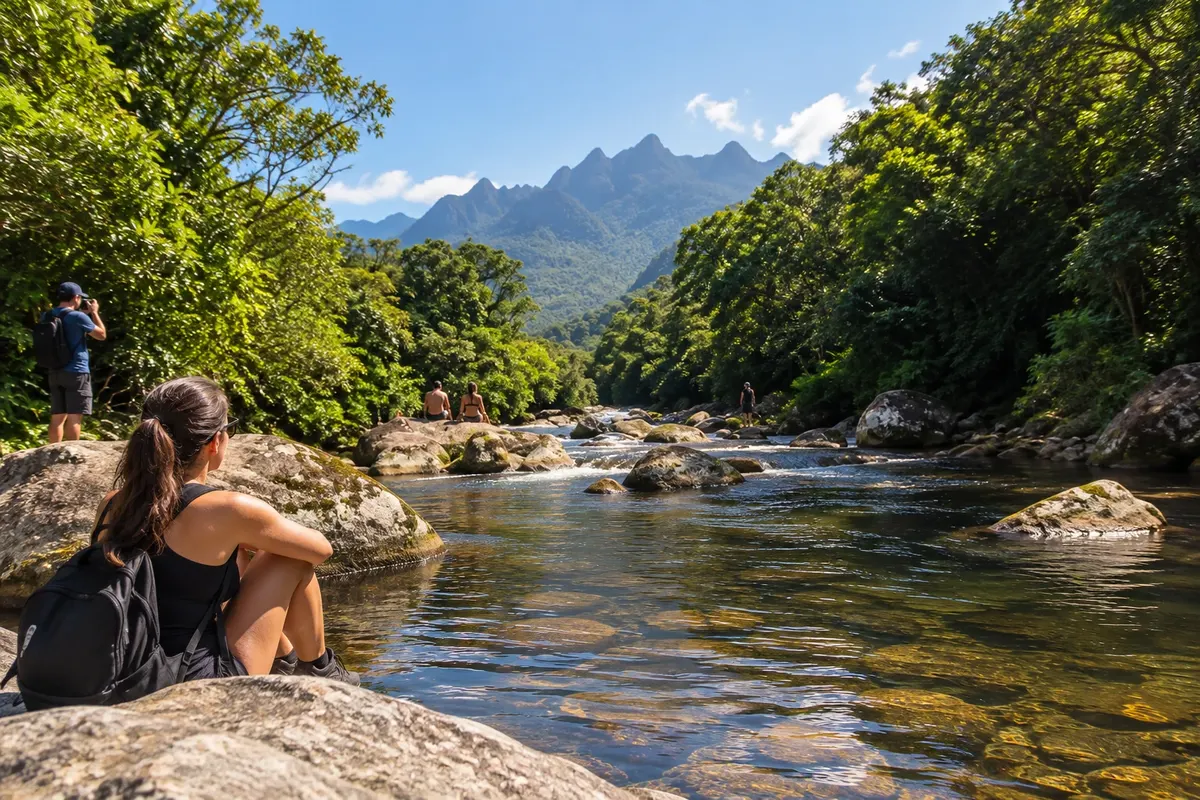
Take your trash with you, follow the signs and support local businesses. In natural areas, follow the visiting guidelines.

Get your questions answered

Frequently asked questions about Litoral do Paraná

Which cities are part of the Litoral do Paraná?

They are Antonina, Guaraqueçaba, Guaratuba, Matinhos, Morretes, Paranaguá and Pontal do Paraná. The group allows alternating historic heritage, beaches and visits to nature.

Ilha do Mel belongs to which municipality?

Ilha do Mel is part of Paranaguá. The visit involves a boat crossing and walks on the island, so it's advisable to separate that stage from a visit to the city's historic center.

Where to try barreado on the itinerary?

Morretes is one of the references for barreado. Combine the meal with the historic center and a stroll along the Nhundiaquara River.

Can you visit all seven towns in a weekend?

Two days require a selection. Choose Morretes and Antonina for history and gastronomy, or focus the stay in one of the beach municipalities. Guaraqueçaba and the islands deserve more time due to travel and crossings.

Where to fit Superagui?

Superagui is located in Guaraqueçaba. Treat the visit as a stage linked to nature and the communities of that municipality, with time set aside for navigation and to stay on site.

Is there a fee to enter Ilha do Mel?

Sources consulted report that there is no entrance fee to the island. The fixed expense is the round-trip boat fare, paid separately. The price changes depending on the embarkation point and the company, so check the current rate table. The island is a Conservation Unit: about 93% of the area lies within an Ecological Station and a State Park. Visits to the Ecological Station are only permitted with authorization from the state environmental agency and for educational purposes. Therefore, stay on the trails and in areas open to the public.

Ilha do Mel: is it better to depart from Pontal do Sul or from Paranaguá?

The departure from Pontal do Sul, in Pontal do Paraná, takes about a 30-minute crossing. The departure from Paranaguá takes about 1 hour and 30 minutes. In both cases transport is provided by scheduled boats or authorized water taxis. Tickets can be purchased online or at the terminals, which have parking. On long holiday weekends, book the boat in advance. No cars circulate on the island: travel is on foot or by bicycle. Bring light luggage and leave your car in the terminal parking lot.

On which days does the Curitiba–Morretes train operate and how long does it take?

In high season (December, January, February and the second half of July), the Trem da Serra do Mar Paranaense departs every day. In other months departures are on Fridays, Saturdays, Sundays and holidays. The journey lasts about 4 h 30. The train leaves Curitiba in the morning and the return from Morretes is in the afternoon. Tickets can be round-trip or one-way. Purchases can be made on the operator's website, at the ticket office of the Rodoferroviária de Curitiba, or at Morretes station. Buying at the counter carries the risk of sold-out tickets, so buy in advance for holidays and school vacations. Check the current price table.
Can children take the train trip? What documents should they bring?

Yes. Minors under 16 must present an original photo ID at boarding, such as RG, passport, or CNH. For children up to 12 years old, the original birth certificate is also acceptable. Without the legal documentation, boarding of children and adolescents is not permitted. Those up to 16 years must be accompanied by their parents or by a guardian expressly authorized. Children aged 0 to 5 do not occupy a seat on the train. If the return is by van or bus, a seat is charged separately. Anyone who wants a seat on the train for that age group should contact the operator. Adults should carry photo ID and the card used for the purchase, which may be requested.

How long does the Estrada da Graciosa take to drive and what are the road rules?

The Estrada da Graciosa (PR-410) is about 40 km long and connects Quatro Barras to Morretes and Antonina. By car, without stopping at viewpoints, the drive takes around one and a half hours. It is a winding road, with no shoulder in several stretches, and low speed limits (40 or 60 km/h in some sections). Trucks and heavy vehicles are not allowed. As it is an environmental protection area, camping and overnight stays are prohibited. Loud music and campfires are also forbidden. On rainy days or during events, traffic may be blocked, and fog occurs at times. Check road conditions before you leave and plan the stretch for daytime with extra margin.

Do I need to book a visit to Reserva Natural Salto Morato?

The reserve recommends booking in advance via its website because spaces are limited. Entrance fees can be paid at the gate. There is a half-price option, and the current price table is on the official page. The reserve is open from Tuesday to Sunday, with entry allowed between the morning and mid-afternoon. Guided experiences, such as the water trail, are paid separately and also require prior booking. From Guaraqueçaba it's about 17 km of unpaved road to the reserve. Those going by car or chartered transport use the PR-405. Visitors arriving by boat in Guaraqueçaba need land transport to reach it. Bring water, insect repellent and closed shoes.

Do I need a guide or authorization to do the Caminho do Itupava?

The park requires an entry registration and a signed Risk Awareness Form. The form must be brought printed, and entry is only through the official gate of the state's environmental agency. Registration is done at the start and at the end of the trail, at the park bases. The crossing has an elevation change of nearly 1,000 m, descending from Quatro Barras to Morretes, and takes more than six hours. The ground is often wet and it is easy to get lost in some sections. Agencies offer transport to the starting point and pickup at the end. Start early, check the trail conditions beforehand and do not walk along the railway line.

Can you camp in Parque Estadual Pico do Marumbi?

Yes, but with advance reservation. Under the state environmental agency's rules, reservations are made via WhatsApp at least seven days in advance. Provide entry and exit dates and send a copy of the ID of the person who will camp. Payment is made only after the agency confirms the spot, and seniors are entitled to half-price. The park has mandatory visitor registration and a Risk Awareness Form. Access is by rail, on foot via the Caminho do Itupava, or by the road from Porto de Cima to Estação Engenheiro Lange. Rules may change, so confirm current information with the park before traveling.

Can you visit the Litoral do Paraná without a car?

Yes, for the main sections. The train links Curitiba to Morretes, and from Morretes there are buses to Paranaguá. From Paranaguá boats depart to Ilha do Mel. For Pontal do Sul there are buses from Curitiba that drop passengers near the boarding terminal. Between Paranaguá and Guaraqueçaba there are scheduled boats and water taxis, with schedules that vary by vessel. Book the crossing before arriving and confirm return times. Salto Morato and the islands require combined transport: from Guaraqueçaba access to the reserve is via an unpaved road. For itineraries with several stops in one day, a car or hired transport gives more flexibility.

Brazilian routes

Litoral do Paraná is on the Estrada da Graciosa

Quatro Barras, Morretes and Antonina on a trip through the Serra do Mar, with historic paving, rivers and coastal heritage.

Illustrative map, not to scale. Tap a city to open its page.
Illustrated map of Estrada da Graciosa
Explore the Estrada da Graciosa
Explore other destinations Search by state and city
Back