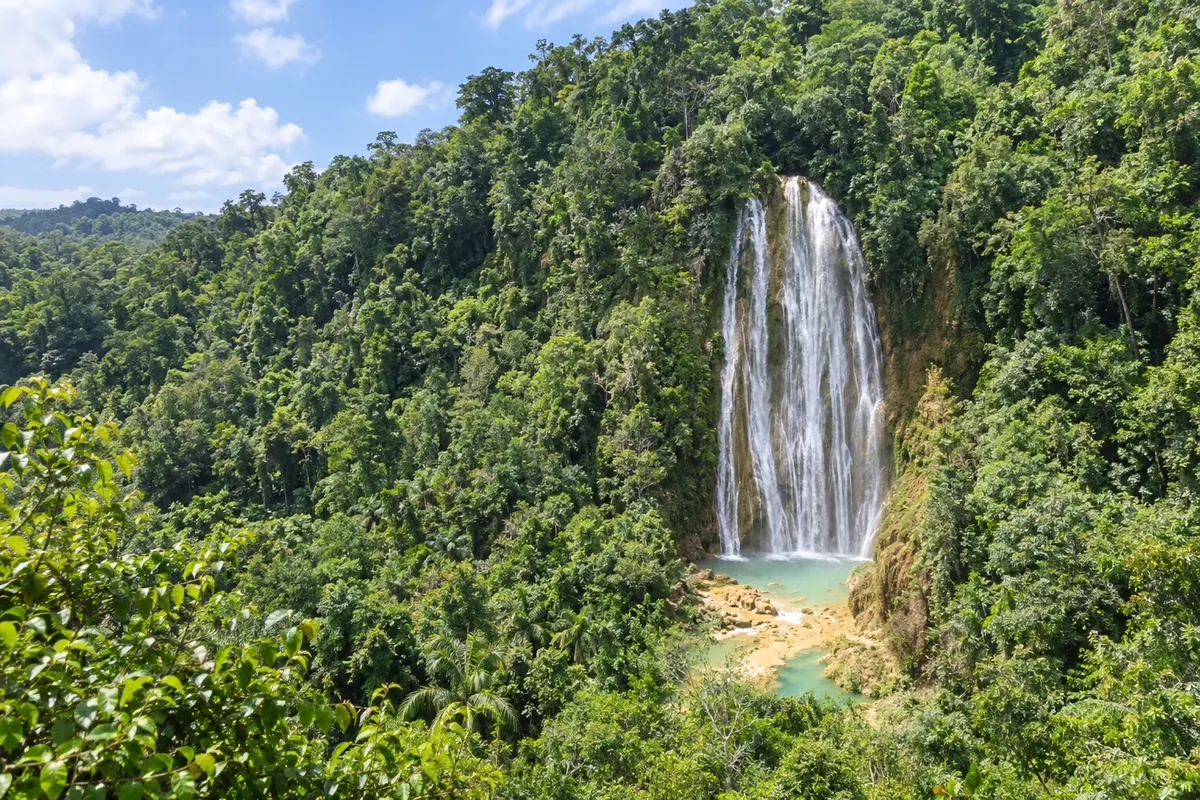
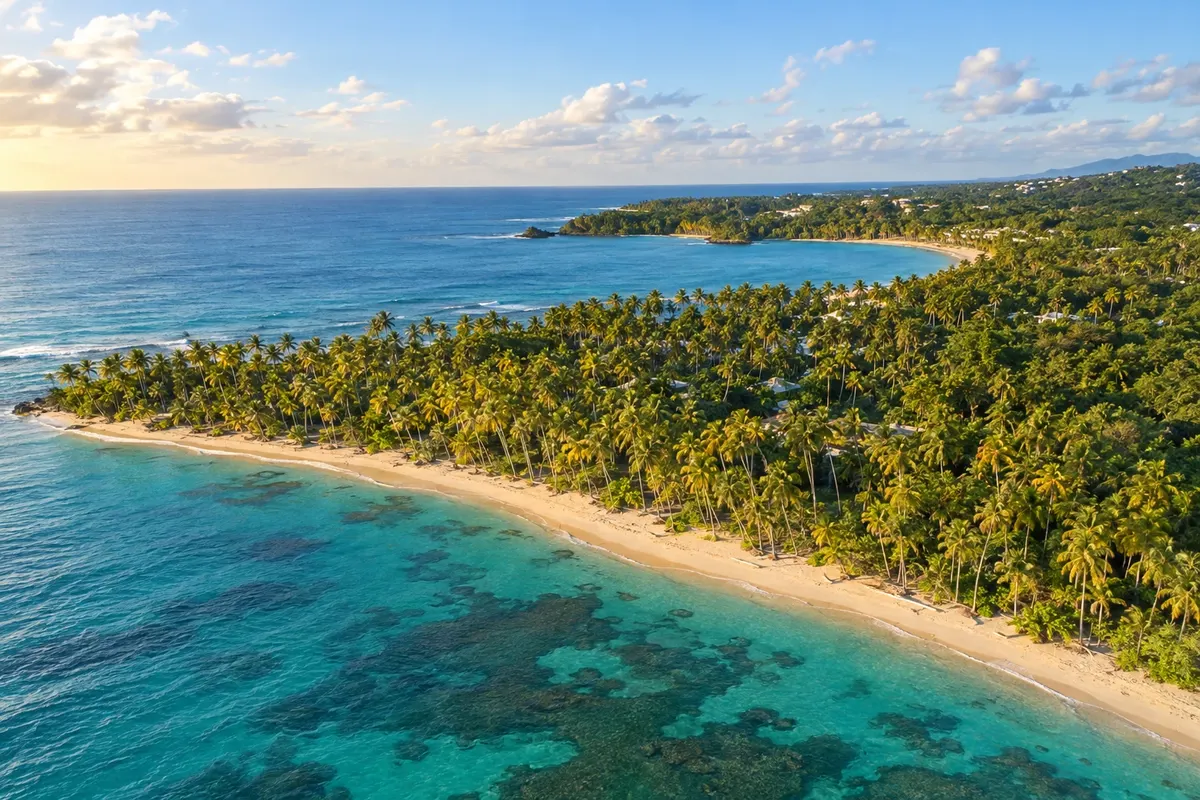
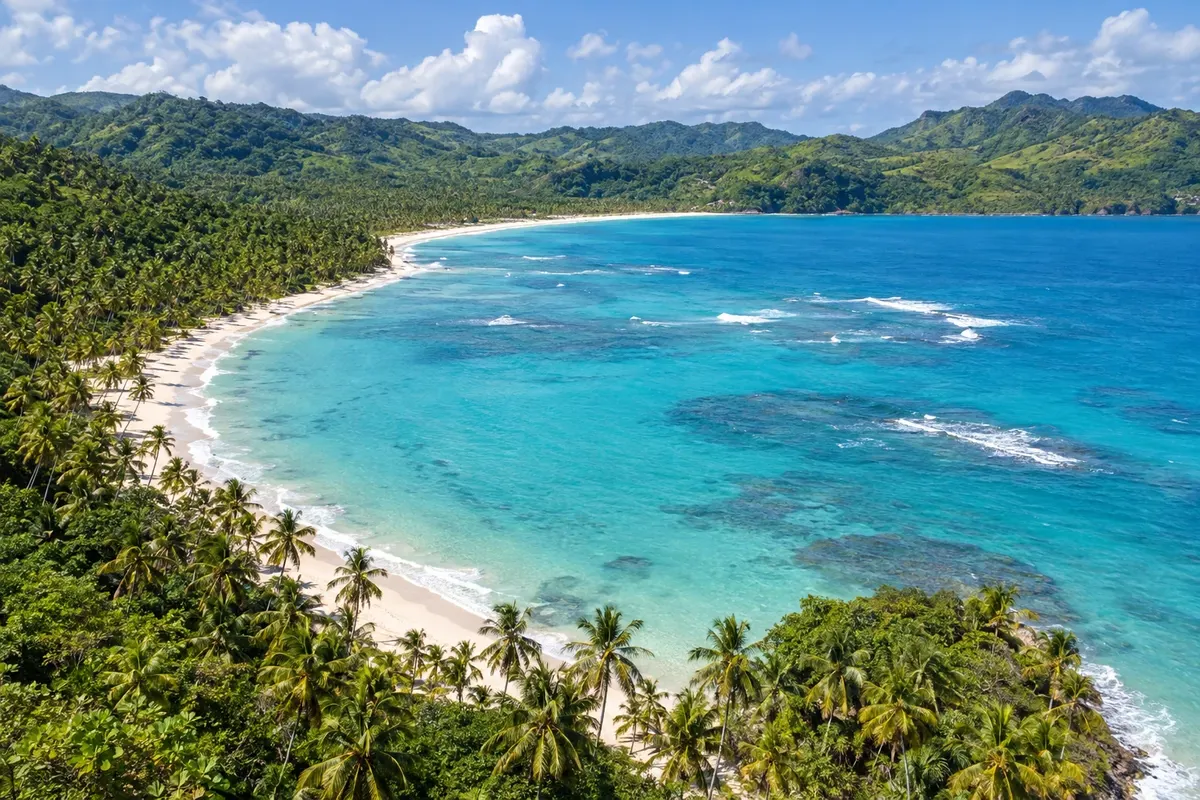
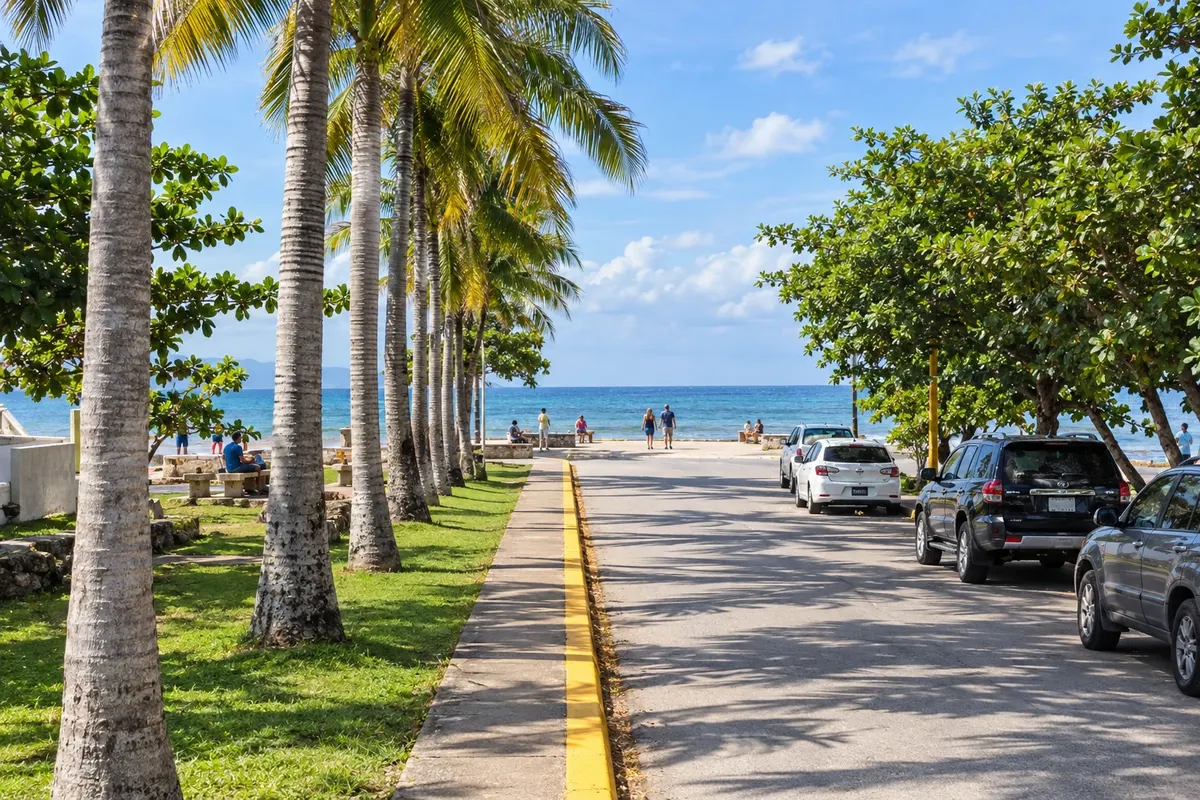
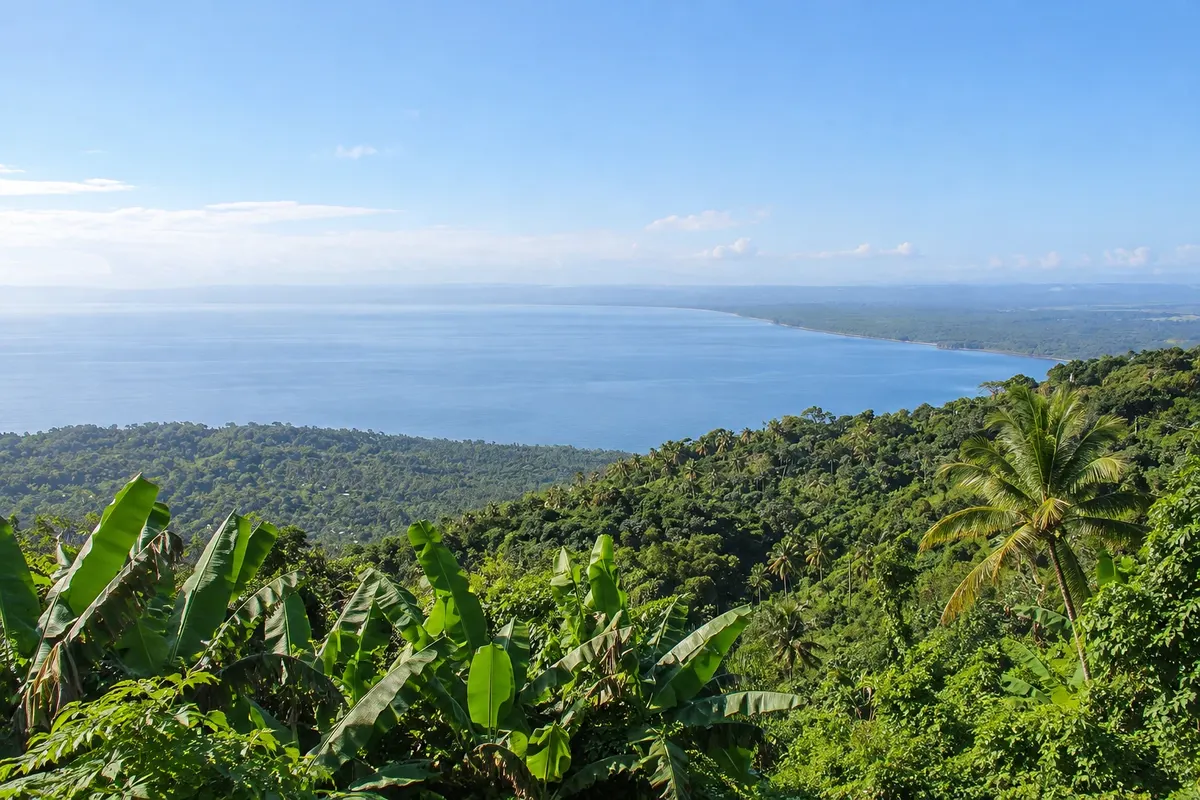
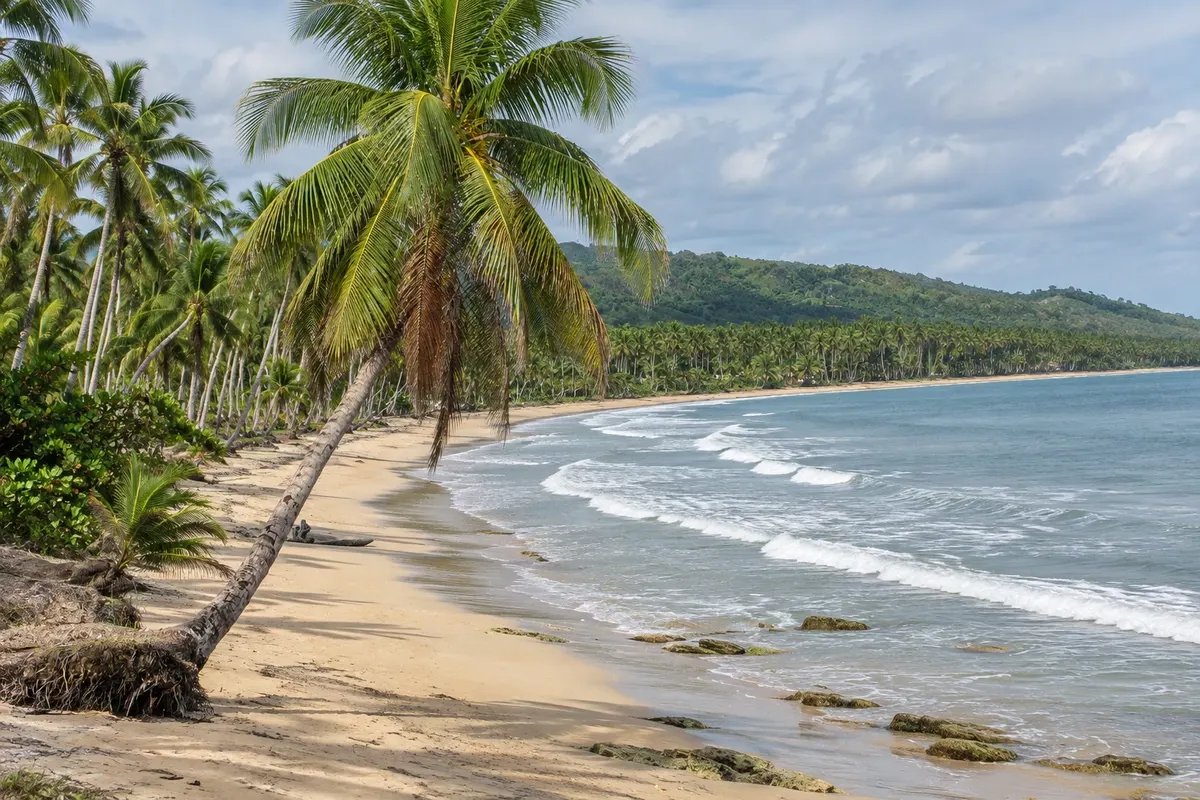
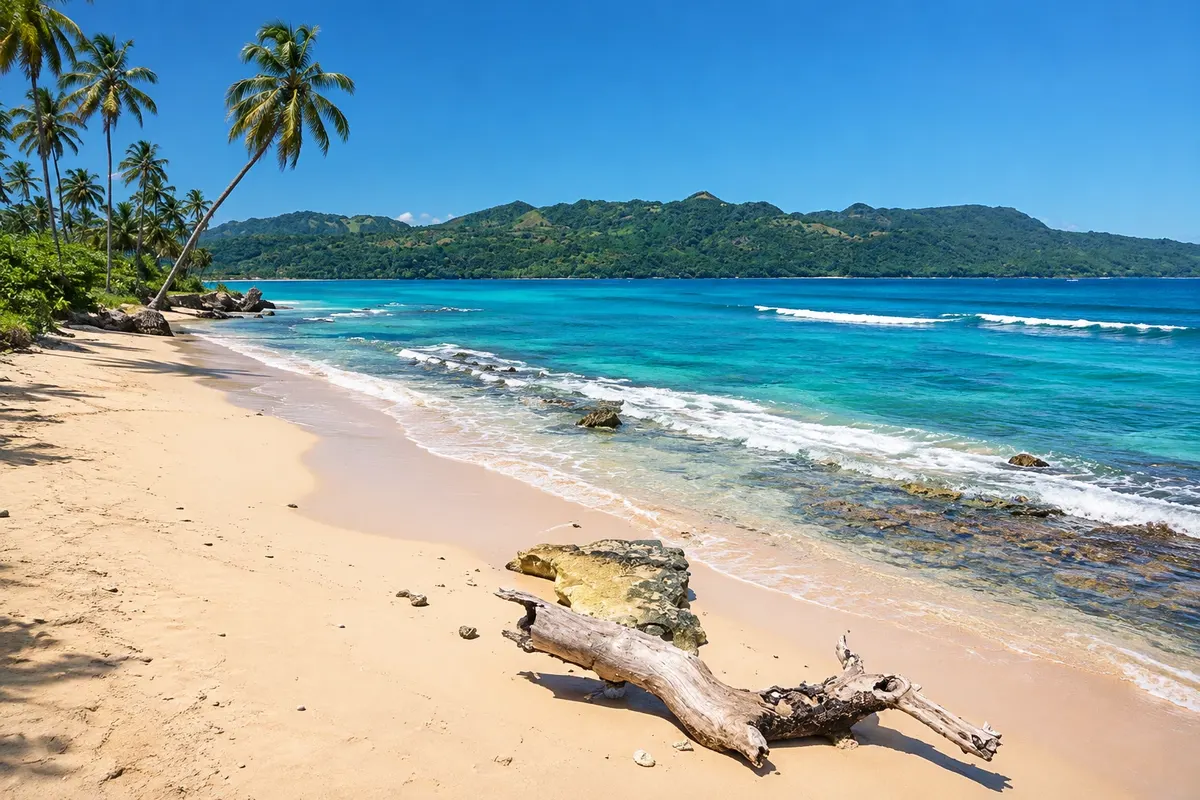
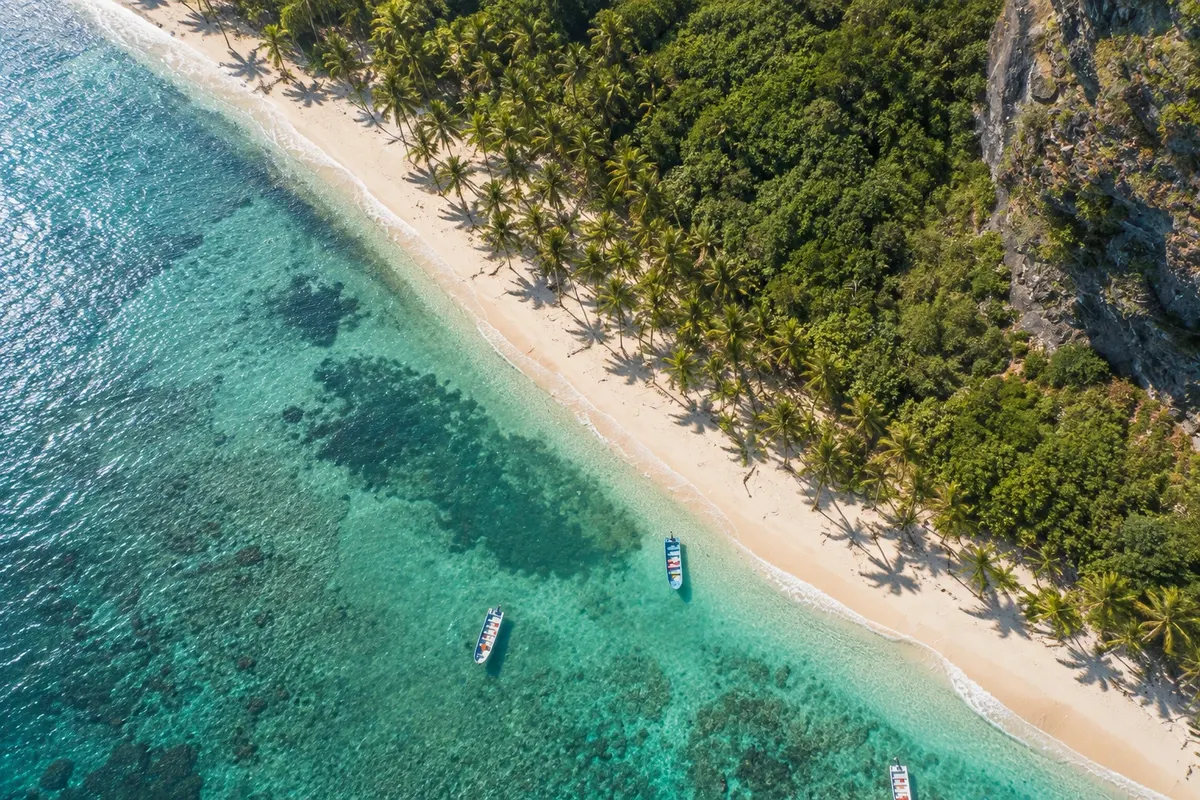
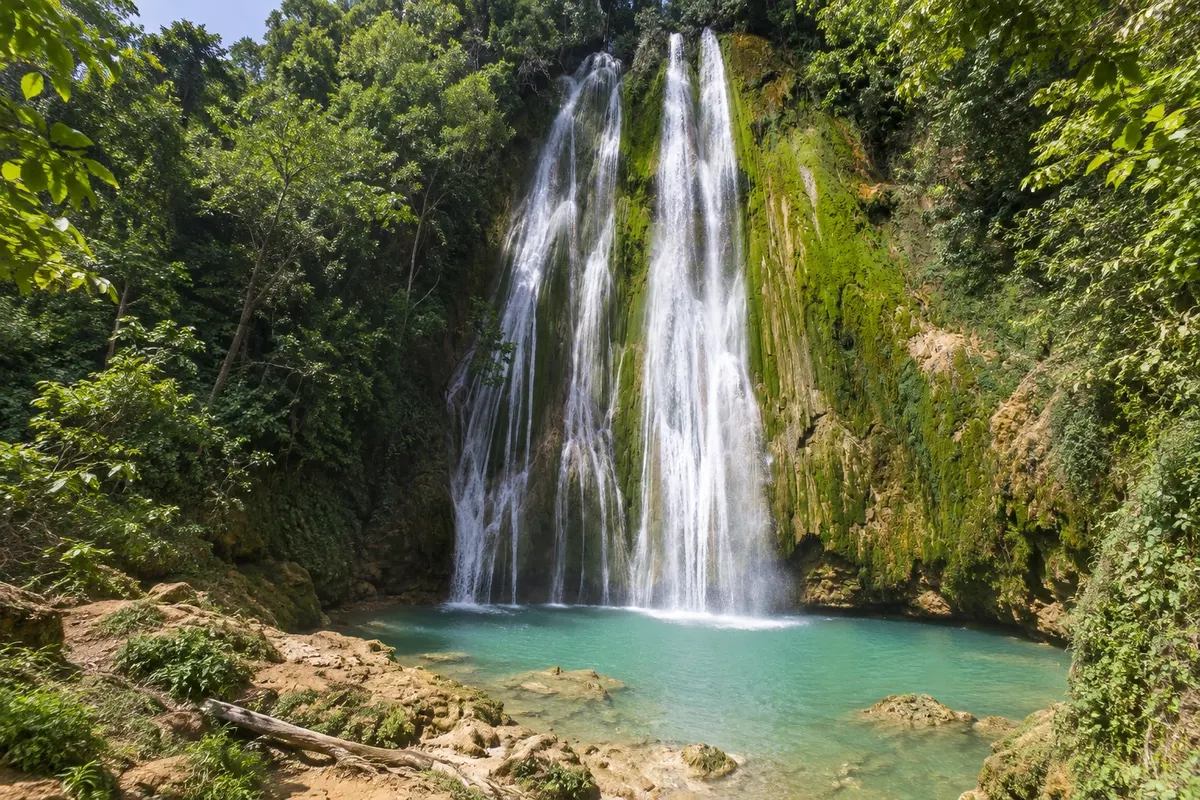
The Samaná Peninsula is a green, mountainous arm of land in the northeast of the Dominican Republic, between the Atlantic and Samaná Bay. Coconut groves cover the slopes down to the sea, rivers drop in waterfalls, and the coast alternates long beaches, hidden coves and cliffs. The region has its own history: in the 19th century it received Afro‑American immigrants from the United States, whose descendants still maintain churches and English surnames.
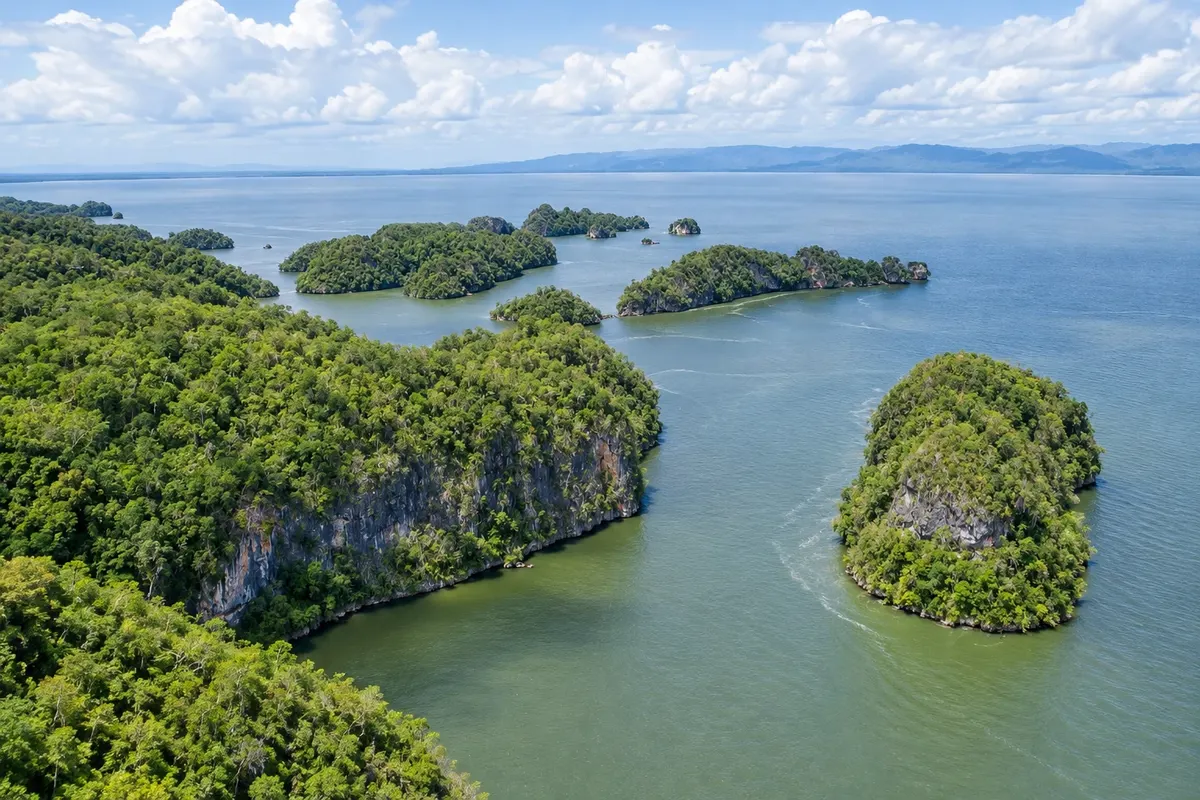
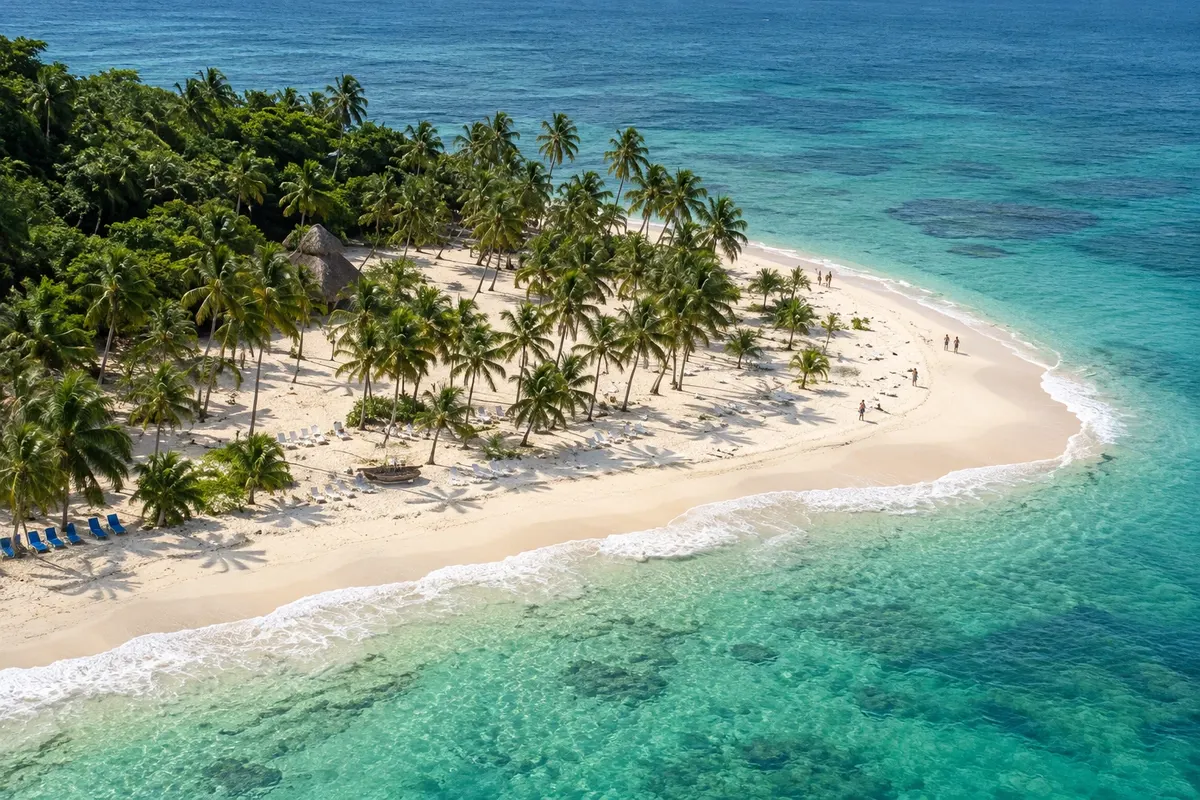
The region's main spectacle takes place in winter. From January to March, thousands of humpback whales come from the North Atlantic to mate and give birth in the warm waters of the bay, and boats depart from Santa Bárbara de Samaná to see them breach. During the rest of the year, the bay is the route to Cayo Levantado, a small white‑sand island, and to Los Haitises National Park on the other side, with limestone hills, mangroves and caves with Taíno paintings.
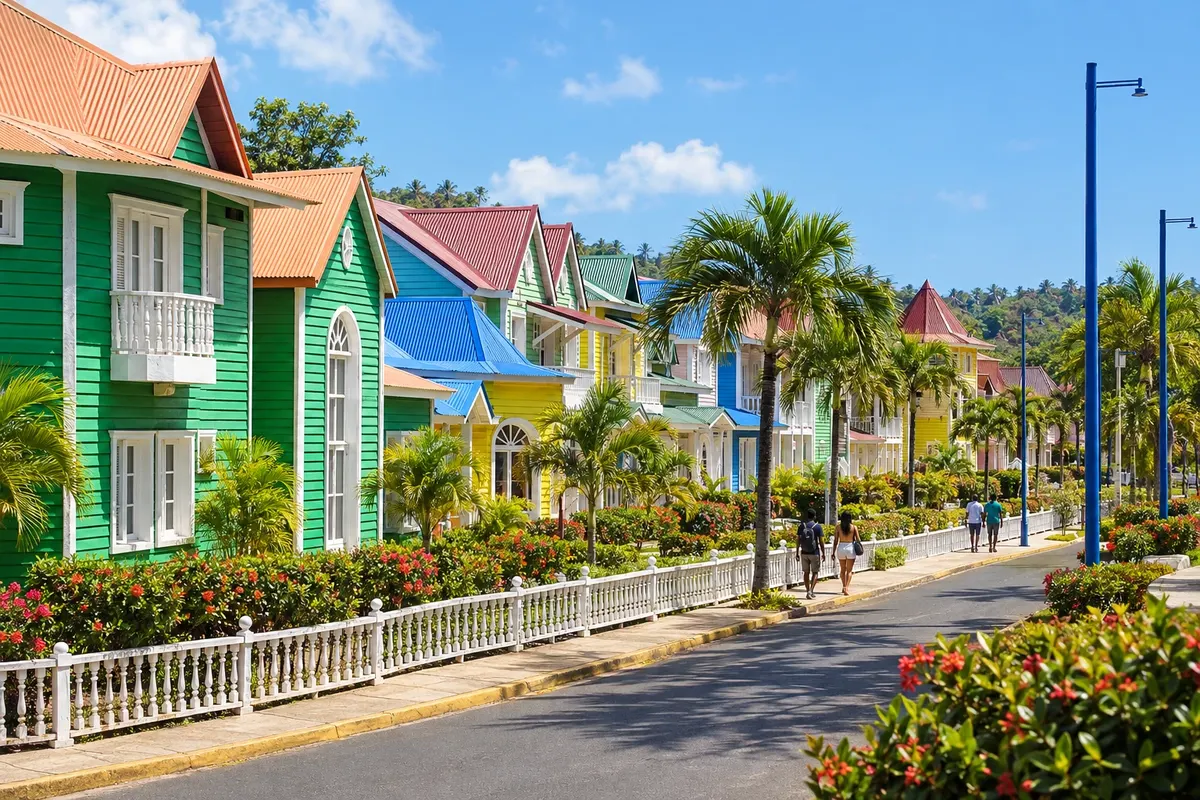
Every corner of the peninsula has its own profile. Santa Bárbara de Samaná, the capital, has a port, a malecón and tour boats. Las Terrenas, on the north coast, is a lively village with a strong European presence, restaurants, beaches like Cosón and Bonita and the El Limón waterfall nearby. Las Galeras, at the eastern tip, is quiet and provides access to secluded beaches like Rincón and Frontón. Sabana de la Mar, on the other side of the bay, is the gateway to Los Haitises.
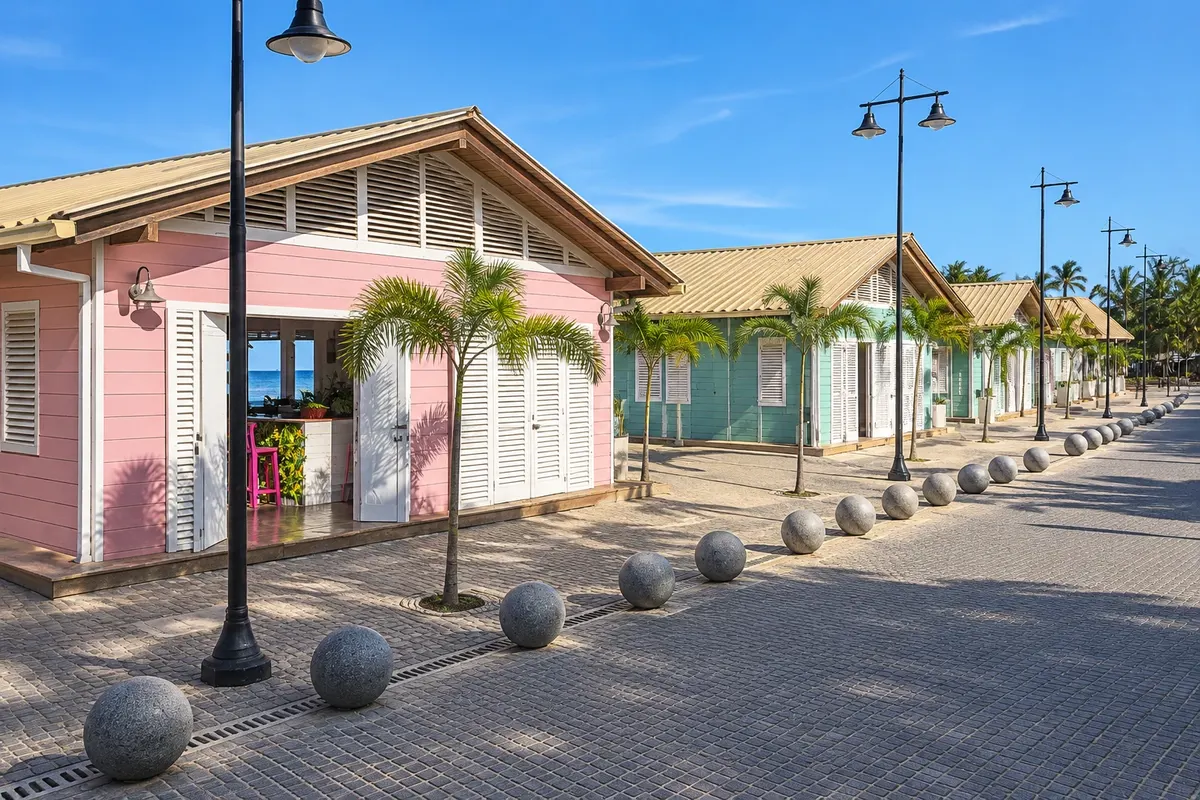
It is the destination for those seeking nature, wild beaches and a pace less standardized than Punta Cana, with varied accommodation ranging from guesthouses to beach hotels.
This destination brings together 4 cities: Samaná, Las Terrenas, Las Galeras, Sabana de la Mar.


 Brazilija
 Antarktika
 Argentina
 Bolivija
 Čile
 Kolumbija
 Ekvator
 Gvajana
 Francoska Gvajana
 Falklandski otoki (Malvini)
 Paragvaj
 Peru
 Surinam
 Urugvaj
 Venezuela
 Nemčija
 Avstrija
 Belgija
 Hrvaška
 Danska
 Slovaška
 Slovenija
 Španija
 Finska
 Francija
 Grčija
 Nizozemska
 Madžarska
 Irska
 Islandija
 Italija
 Luksemburg
 Norveška
 Poljska
 Portugalska
 Združeno kraljestvo
 Češka
 Švedska
 Švica
 Turčija
 Bermudi
 Kanada
 Združene države Amerike
 Grenlandija
 Mehika
 Sveta Peter in Mihael
 Japonska
 Južnoafriška republika
 Egipt
 Avstralija
 Fidži
 Nova Zelandija
 Papua Nova Gvineja