Historic center of Faro
Odhod: Manuel Bívar Garden (Faro) on foot Približno 4 ure Dopoldne Lahko
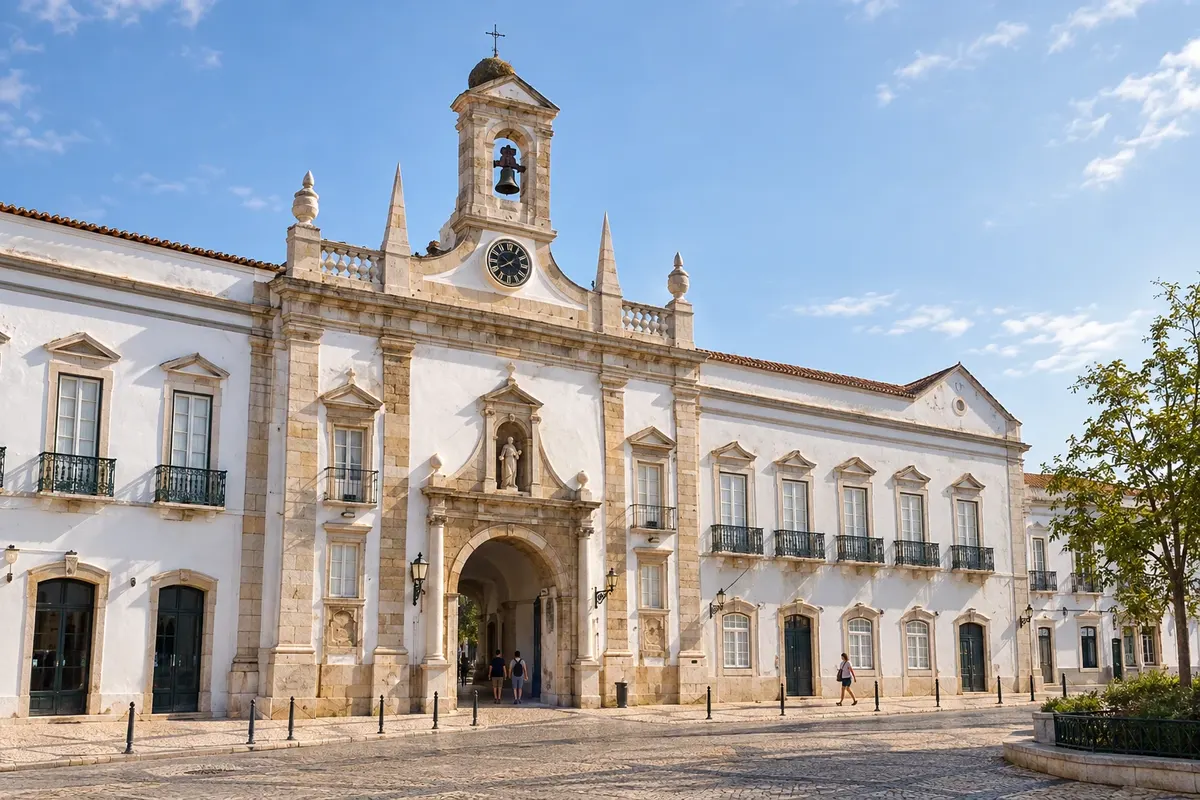
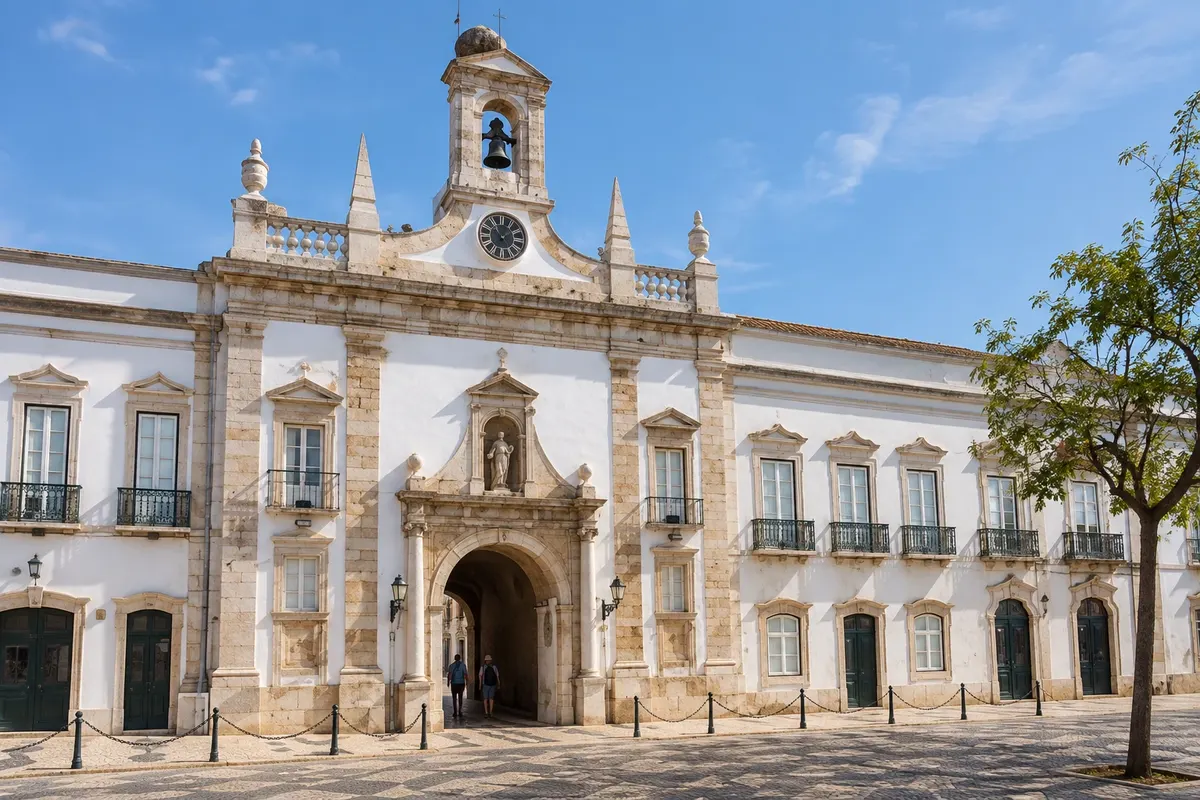
Faro, capital of the Algarve, has an old core surrounded by walls, the Old Town (vila-adentro). You enter through the Arco da Vila, beside Manuel Bívar Garden, facing the dock and the ria.
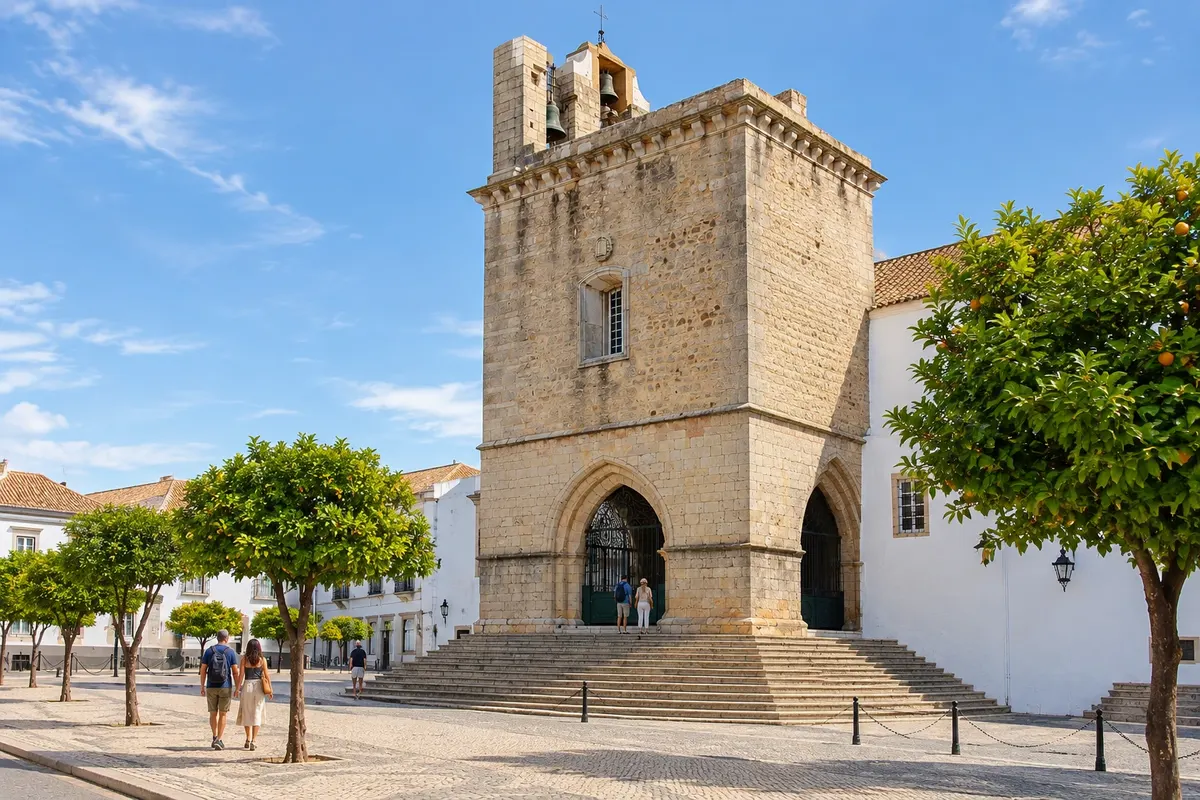
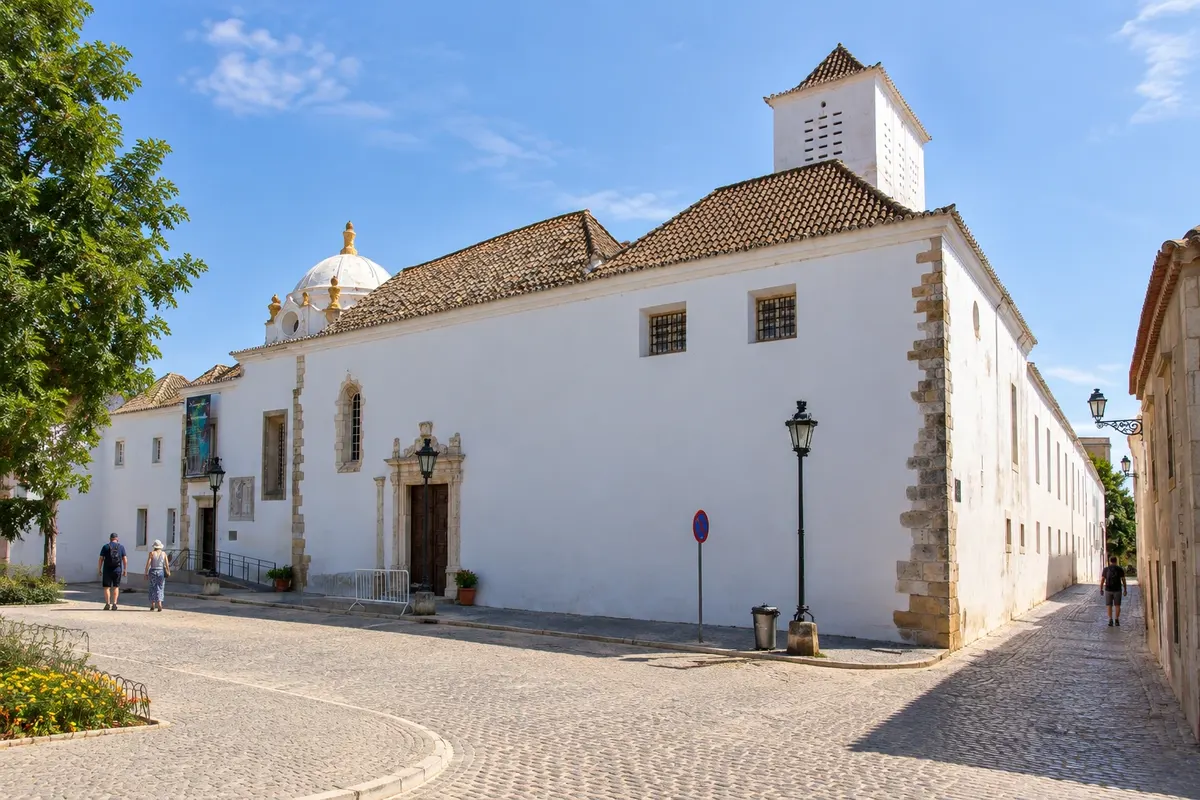
In Largo da Sé stands Faro Cathedral, built from 1251 on the site of an old mosque; the bell tower is reached by stairs and offers views over the city and the Ria Formosa. The Municipal Museum occupies the Convent of Nossa Senhora da Assunção, from the 16th century, with archaeological pieces. Leaving via the Arco do Repouso leads to the city rebuilt after the 1755 earthquake.
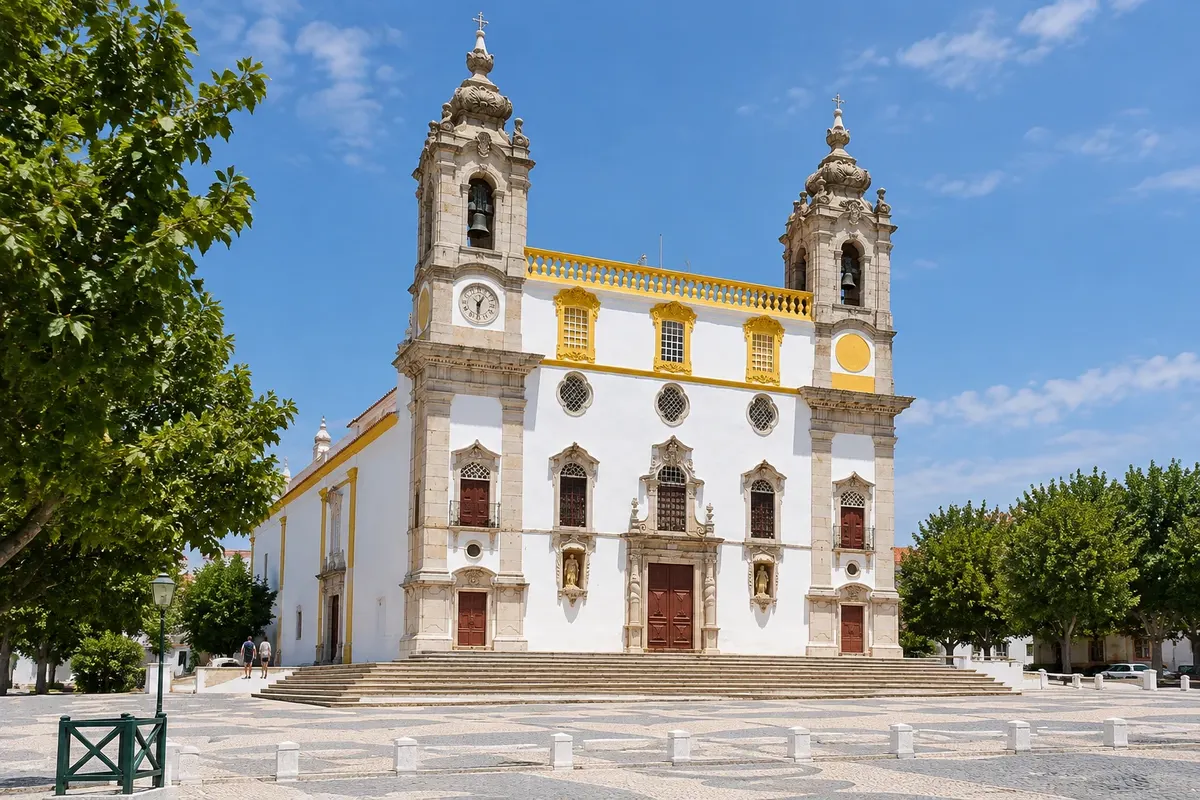
Outside the walls, the Igreja do Carmo houses at the back the Chapel of Bones, dated 1816, with walls covered by more than a thousand skulls and bones of Carmelite friars. Rua de Santo António, a pedestrian street, concentrates shops and cafés.
Kraji na poti: Manuel Bívar Garden, Arco da Vila, Old Town, Faro Cathedral, Faro Municipal Museum, Igreja de São Francisco, Igreja do Carmo, Chapel of Bones, Rua de Santo António.
Vključuje: Walk through the Old Town, the Cathedral (Sé) and the Igreja do Carmo. Faro Cathedral, the museum and the Chapel of Bones charge admission; check the current rates.
Nasvet: Faro is a good base if you don't have a car: the train station and bus terminal are close to the center, and the airport is a few kilometers away.
Najboljši čas za obisk: year-round; in summer, visit the Sé and the churches in the morning and leave the afternoon for the ria
Tavira and Tavira Island
Odhod: Tavira center on foot and by boat; Praia do Barril on foot or by little tourist train about 1 day Ves dan Lahko
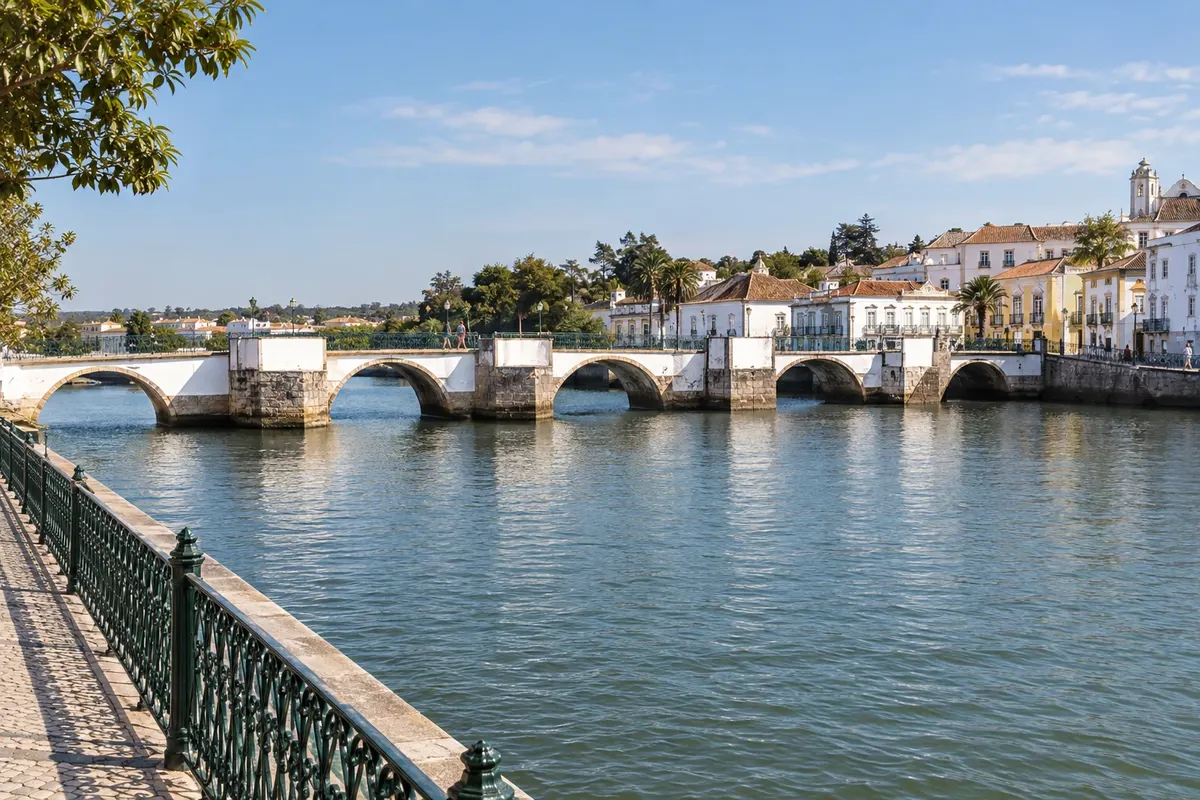
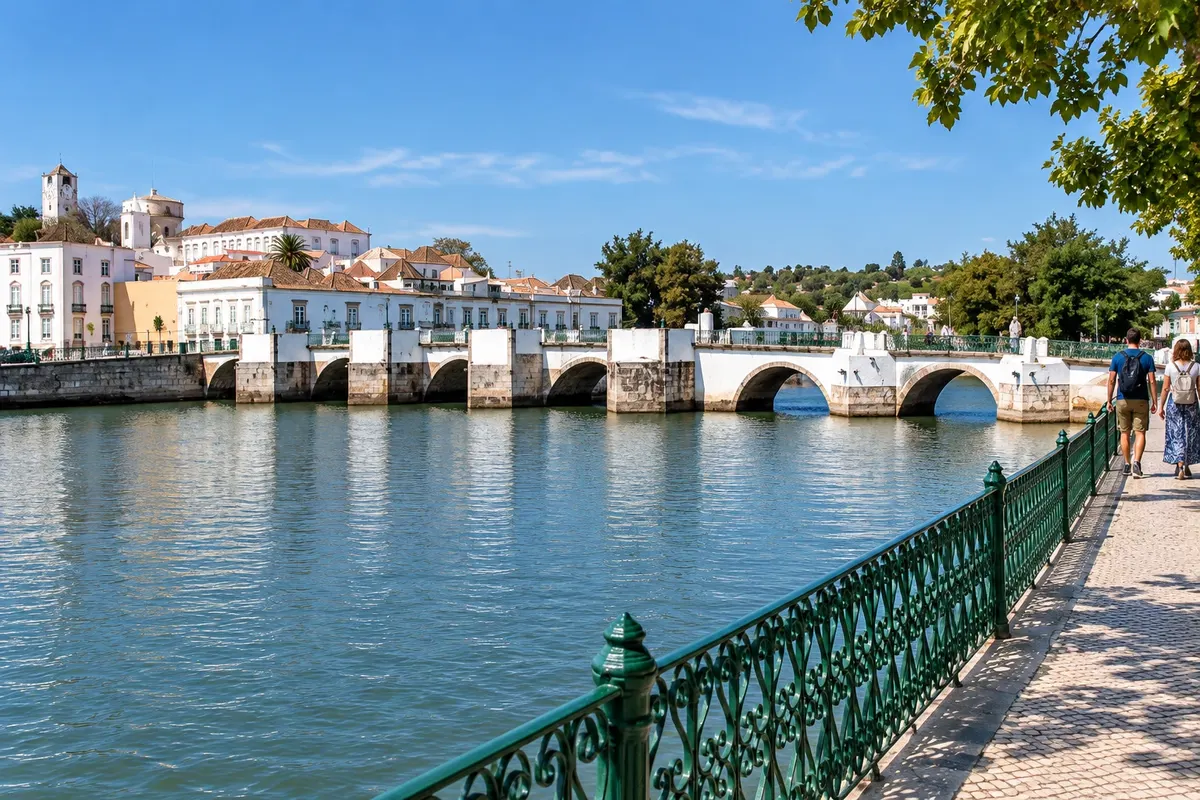
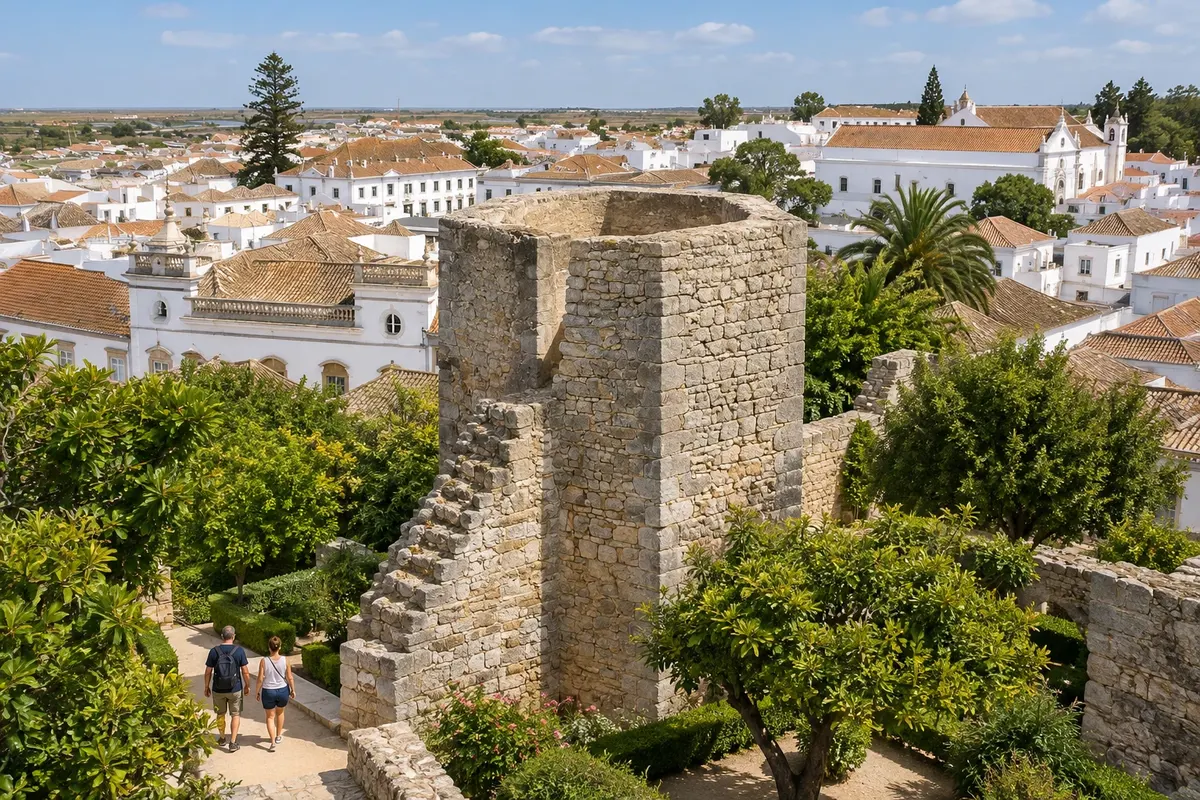
Tavira sits on the banks of the Gilão River, in the eastern Algarve. The Old Bridge, thought to be of Roman origin and in its present form from the 17th century, links the two banks. On the upper side, the castle walls overlook the roofs, the churches, the river and the salt pans. Beside them, the Church of Santa Maria do Castelo stands on the site of the former mosque and houses the tomb of D. Paio Peres Correia, who took the town in 1242. The Torre de Tavira, in a former water reservoir, contains a camera obscura with views over the town.
For Tavira Island, boats depart from Quatro Águas, following the river alongside the salt pans, and also from the center pier. The island has a beach facing the open sea.
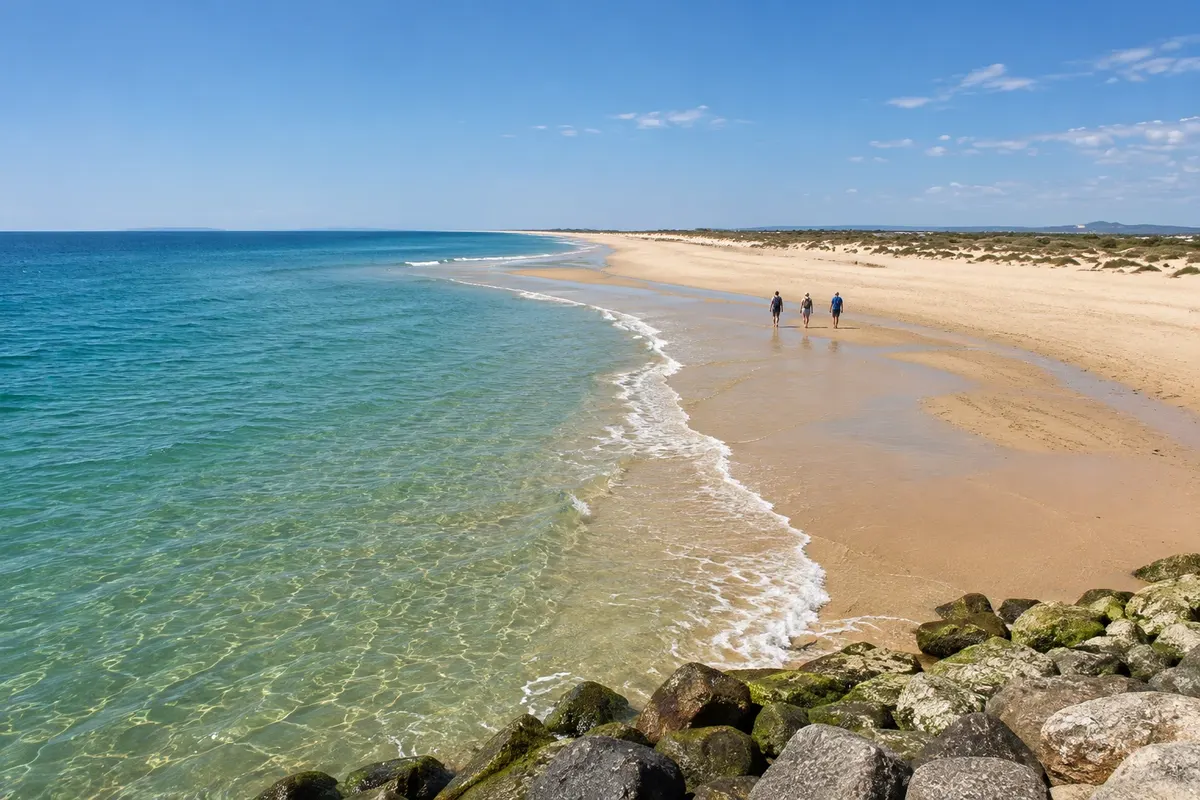
Praia do Barril is on the same island, near Santa Luzia. You cross a pedestrian bridge at Pedras d'El Rei and walk about 1 km or take the tourist train. At the beach support area, next to an old tuna-fishing frame, is the Cemetery of Anchors.
Kraji na poti: Old Bridge of Tavira, Tavira Castle, Church of Santa Maria do Castelo, Torre de Tavira, Quatro Águas, Tavira Island, Praia do Barril, Cemetery of Anchors.
Vključuje: Historic center, castle and crossing to the island. Boat and the Barril tourist train are paid separately; check the current price list.
Nasvet: Tavira has a station on the Algarve Line, about a 40-minute train ride from Faro. Boats to the island run more frequently in summer.
Najboljši čas za obisk: From May to October for the island; Tavira’s center can be visited year-round
Silves: castle and cathedral
Odhod: Silves center on foot; by car or by train to Silves station Približno 3 ure Dopoldne Lahko
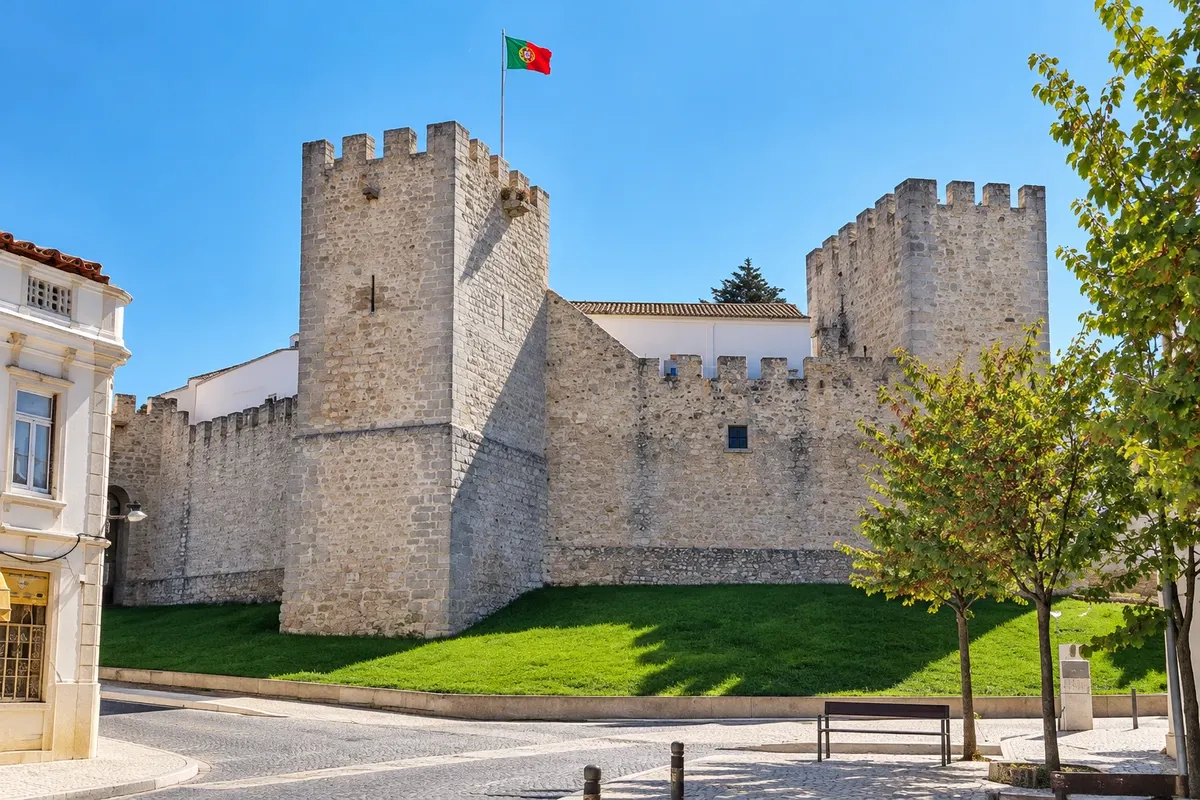
Silves was the capital of the Algarve during the Islamic period and lies inland on the banks of the Arade River, among orange groves. The Castle of Silves, made of red sandstone (grés de Silves), was built by the Arabs on top of an older fortification and is considered the largest in the Algarve. Inside the walls are the old alcáçova and two cisterns, with views over the Arade orange groves.
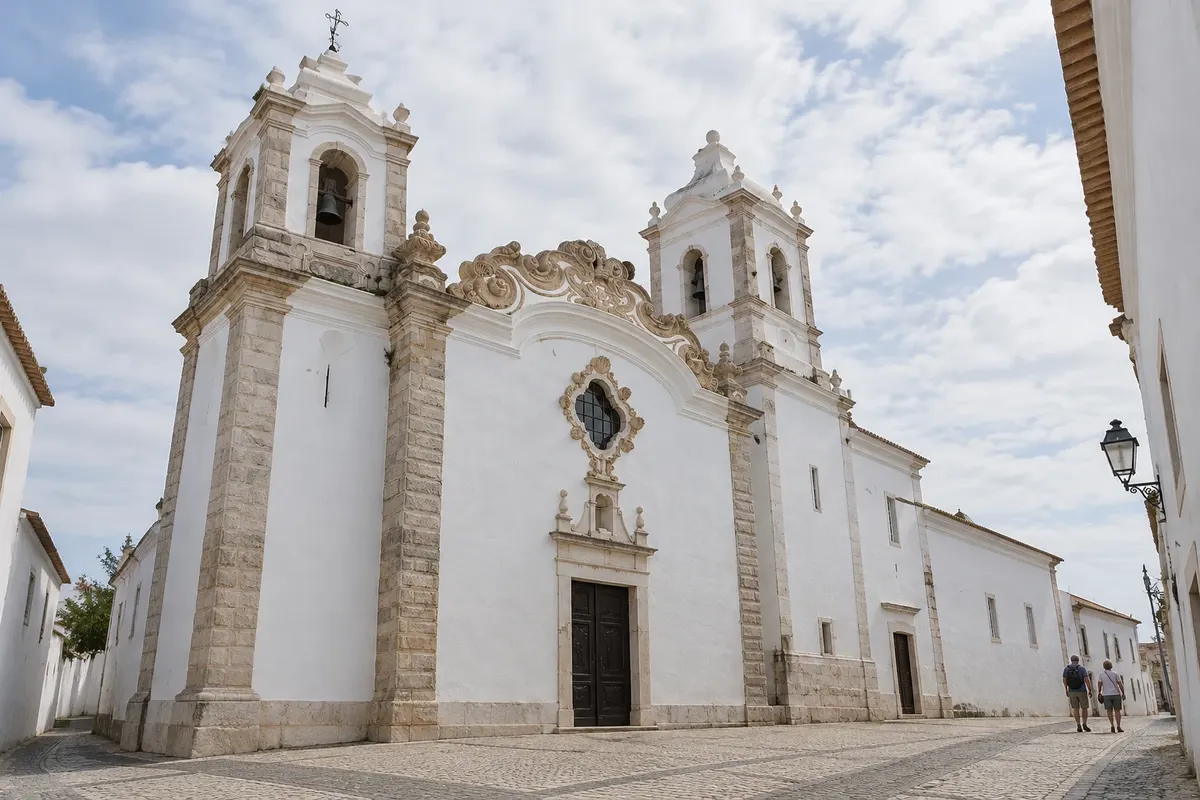
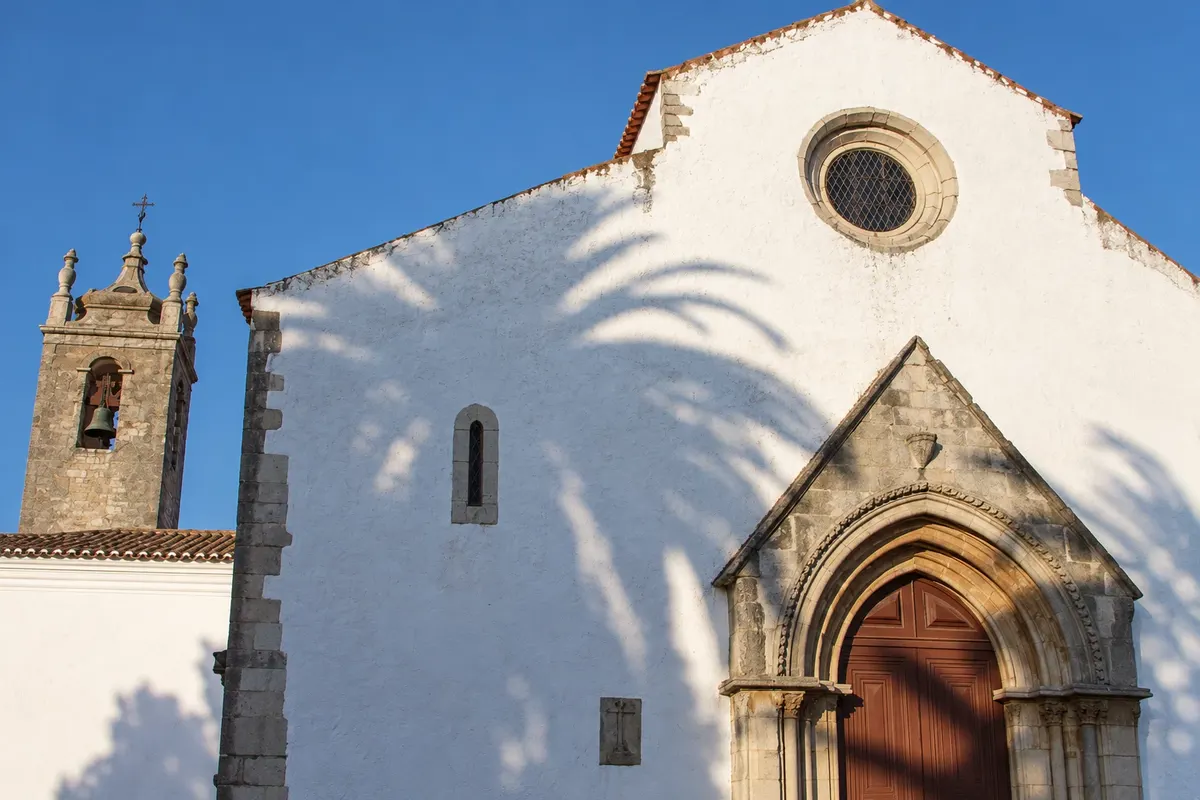
Just below, Silves Cathedral stands on the site of the old main mosque. It began as Gothic, was finished in the Baroque period and uses the same red stone as the castle. The Municipal Archaeology Museum houses an 11th-century Islamic cistern with a spiral staircase. Igreja da Misericórdia has a Manueline side portal.
Outside the walls are the bridge over the Arade and the Cruz de Portugal, a stone wayside cross.
Kraji na poti: Castle of Silves, Silves Cathedral, Silves Municipal Archaeology Museum, Igreja da Misericórdia de Silves, Arade River, Cruz de Portugal.
Vključuje: Castle, Cathedral and museum (with separate admission; check the current rates) and a walk through the streets of the old medina.
Nasvet: Silves train station is about 3 km from the center: arrange a taxi or go by car. In August, the Medieval Fair fills the streets of the center.
Najboljši čas za obisk: All year; from March to June and from September to November the heat is milder for climbing the castle
Monchique and Fóia
Odhod: Portimão or Silves by car, through the hills Približno pol dneva Dopoldne ali popoldne Lahko
The Serra de Monchique is inland in the barlavento, with wooded slopes, winding roads and small villages. Fóia, at 902 meters, is the highest point of the Algarve. At the top there is a viewpoint with wide views over the mountains and, on clear days, even the coastline.
The village of Monchique, on the way up, has steep streets and the main church.
Lower down, the Caldas de Monchique lie in a valley about 250 meters above sea level, with thermal springs used since Roman times, old buildings and a shady woodland.
Kraji na poti: Serra de Monchique, Monchique, Fóia, Fóia viewpoint, Caldas de Monchique.
Vključuje: Drive up to the top of Fóia, stroll through the village of Monchique and stop at the Caldas de Monchique.
Nasvet: At the top of Fóia it is usually cooler and windier than on the coast; bring a jacket. Fog can hide the view: check the weather before you go up.
Najboljši čas za obisk: All year; in spring the mountain is greener and in summer the ascent is a break from the beach heat
Albufeira: old town and beaches
Odhod: Albufeira center on foot; bus or car for the more remote beaches Približno pol dneva late afternoon and evening Lahko
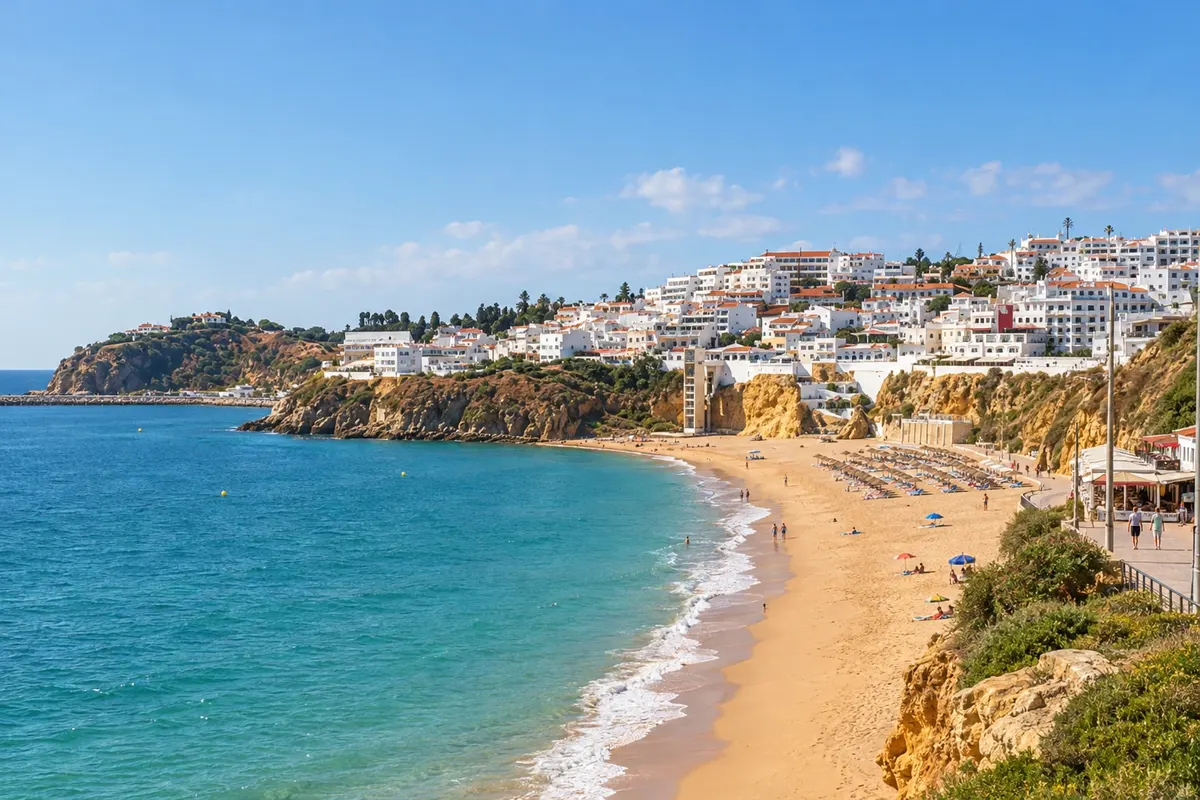
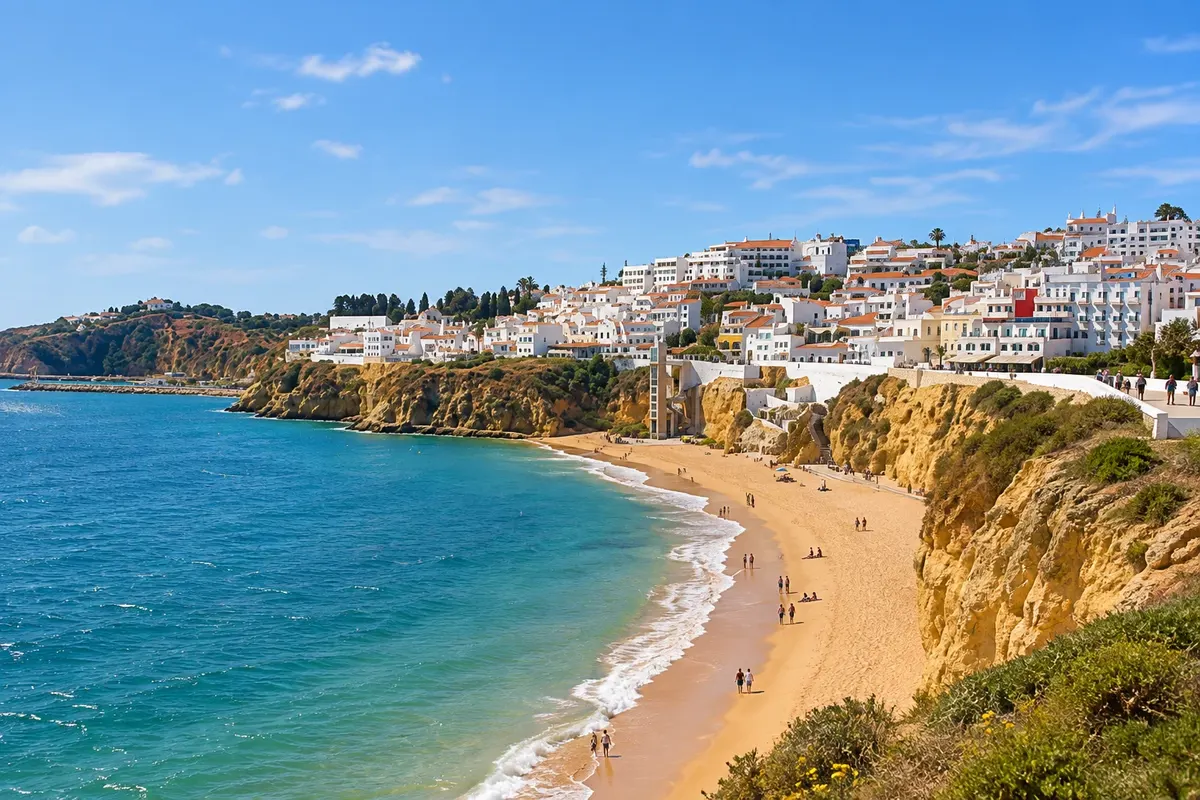
Albufeira has an old town of narrow streets and white houses on the cliff, which descends to Praia dos Pescadores, where fishing boats still sit on the sand. Escalators link the upper part, near the town hall, to the beach.
On the western side of the promenade is Gruta do Xorino, where, according to tradition, the Moors hid in the 13th century. Praia do Peneco, also called the Tunnel, is next to the center and opens into a rock amphitheater.
To the west, the beaches of Galé, do Castelo and São Rafael have rocks carved by erosion. To the east, Olhos de Água has freshwater springs in the sand, visible at low tide. Boat trips along the coast depart from the Marina de Albufeira.
At night, the old town and the area between Praia da Oura and Montechoro concentrate bars and restaurants.
Kraji na poti: Cidade Velha de Albufeira, Praia dos Pescadores, Praia do Peneco, Gruta do Xorino, Praia de São Rafael, Praia da Galé, Praia de Olhos de Água, Marina de Albufeira.
Vključuje: Walk through the old town and along the promenade and time for the beach. Boat trips depart from the marina, extra paid.
Nasvet: Albufeira-Ferreiras train station is about 7 km from the center; connections are by bus or taxi.
Najboljši čas za obisk: From May to October for the beach; from November to March the town is quieter
Praia da Falésia
Odhod: Açoteias (Albufeira) or Olhos de Água by car or bus to the access point; then on foot Približno pol dneva Dopoldne ali pozno popoldne Lahko
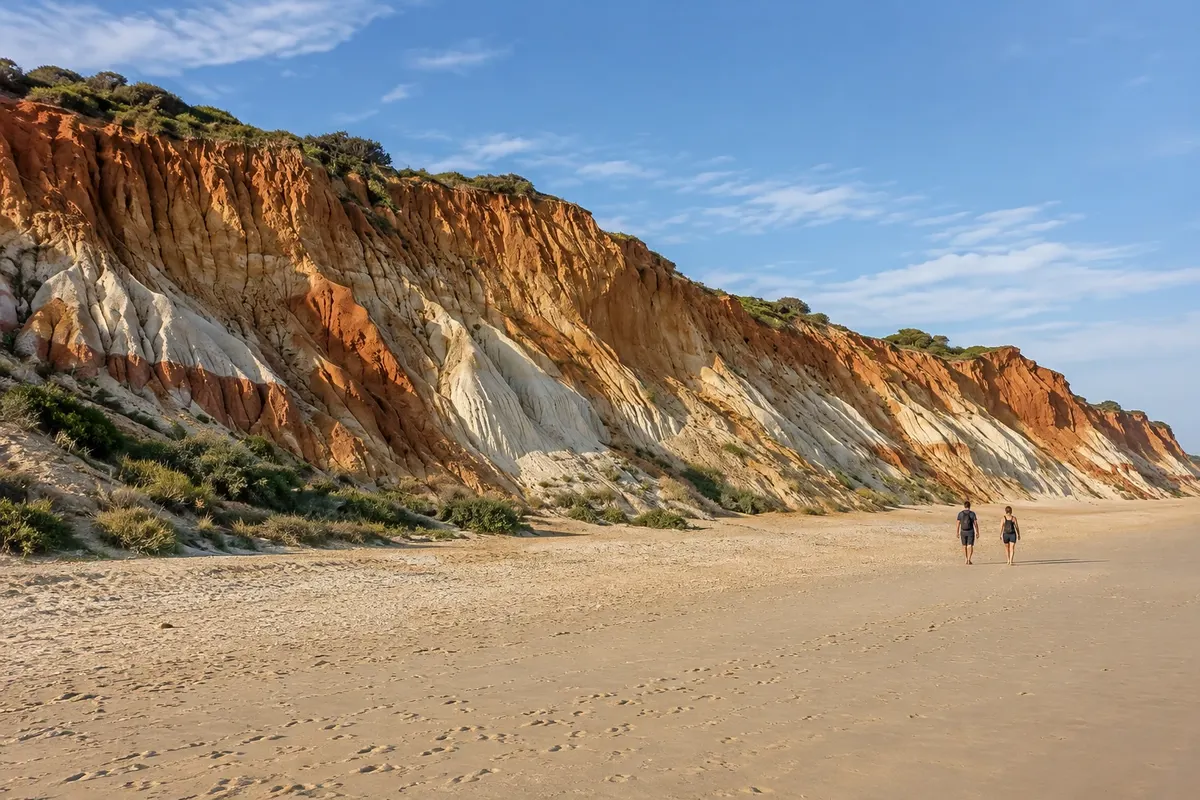
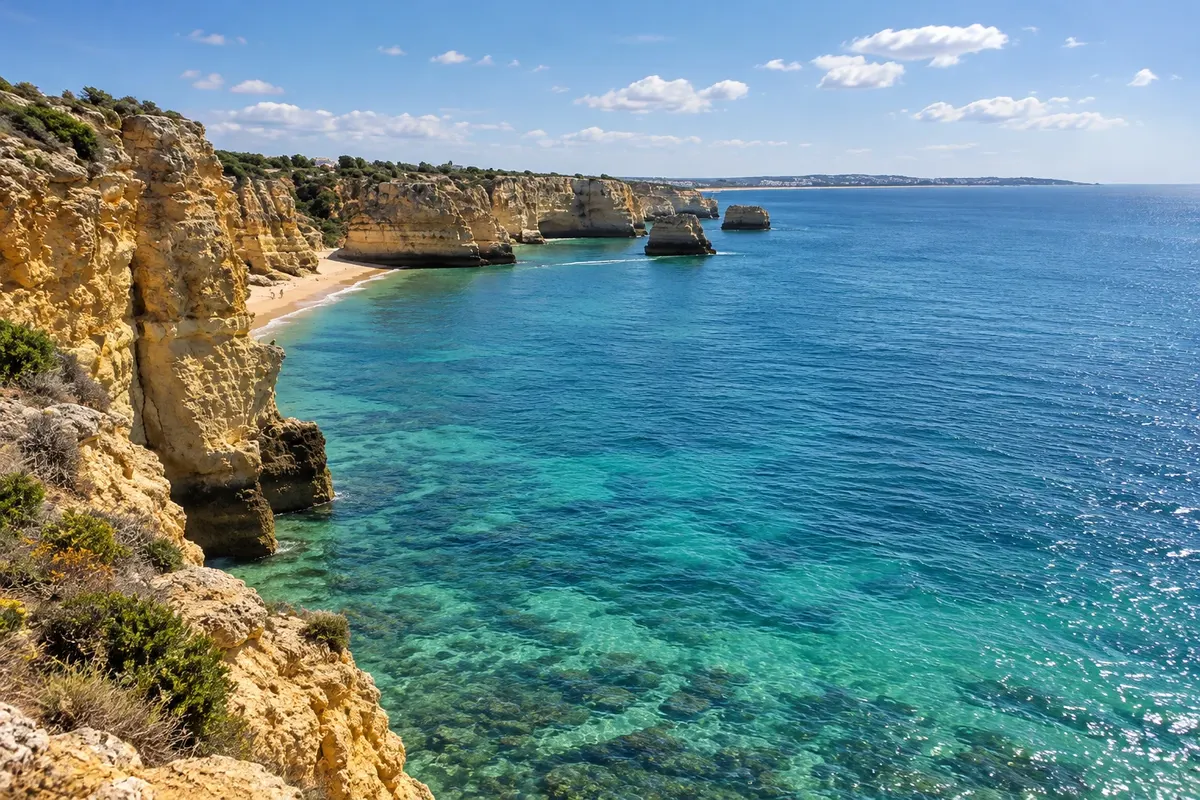
Praia da Falésia is a long stretch of sand, over 3 km, at the foot of high cliffs in shades of red, orange and white, topped with pine trees. It lies east of Albufeira, between Olhos de Água and Vilamoura, and marks the boundary between the municipalities of Albufeira and Loulé.
The most used access is via the village of Açoteias, on a paved road to a parking area; from there, wooden stairs descend to the beach. The beach is lifeguarded in season and has a bar, restrooms (casa de banho) and a first aid station.
Because it is open and long, it is good for walking along the shoreline. The colors of the cliffs change with the light and become stronger in the late afternoon.
Kraji na poti: Praia da Falésia, Açoteias, Olhos de Água, Praia de Maria Luísa.
Vključuje: Beach time and walking along the cliffs. Parking and beach facilities are more developed in summer.
Nasvet: Keep away from the base of the cliffs, where rocks can fall. Walking along the sand toward Olhos de Água shows the formations up close.
Najboljši čas za obisk: May to October for swimming; year-round for walking
Carvoeiro and Algar Seco
Odhod: Carvoeiro Beach (Lagoa) on foot, via the wooden boardwalk Približno 2 uri late afternoon Lahko
Carvoeiro is a former fishing village in the municipality of Lagoa, with white houses surrounding a small beach between cliffs. Fishing boats still sit on the sand, and some fishermen take visitors to the sea caves along the coast.
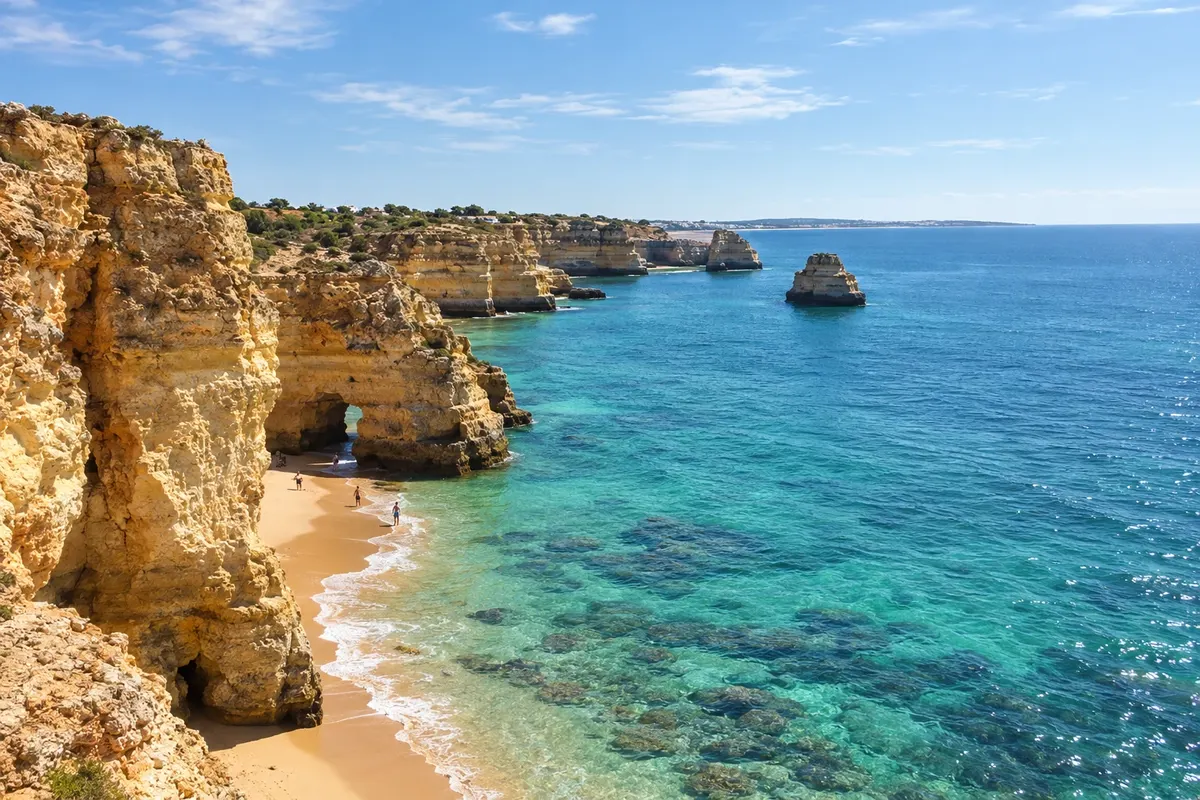
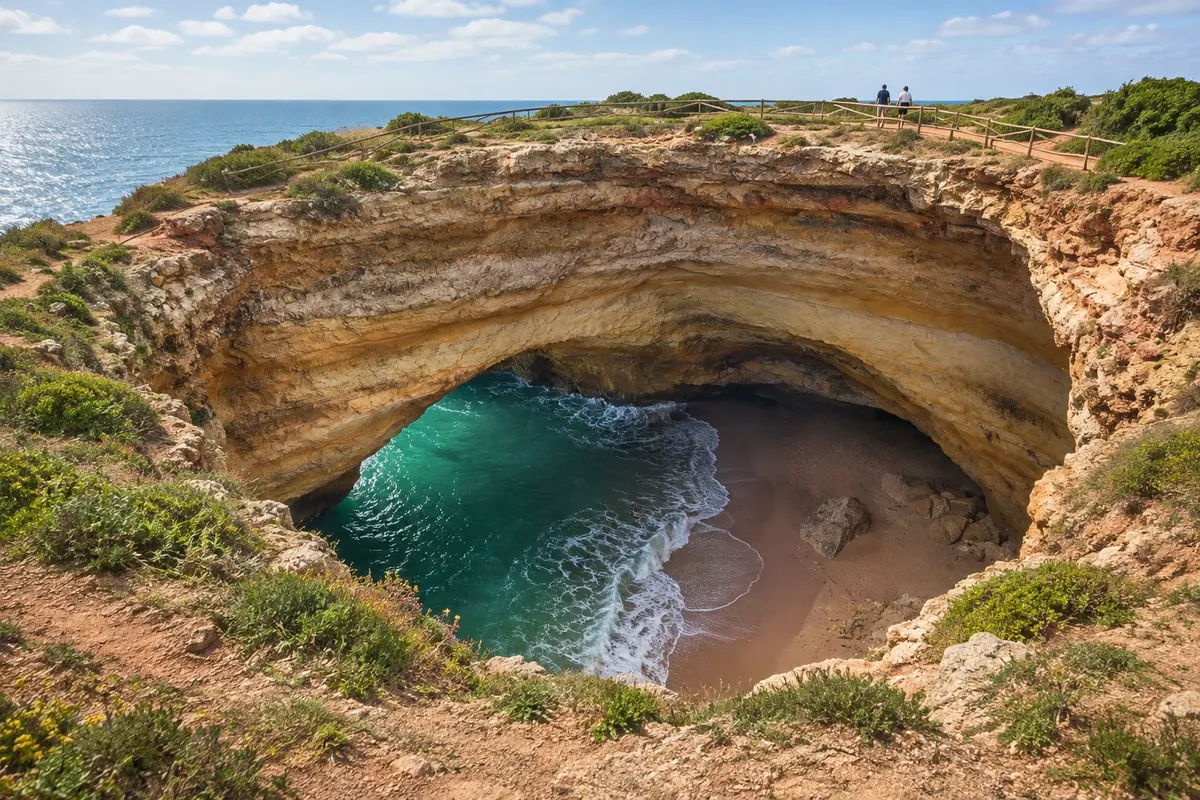
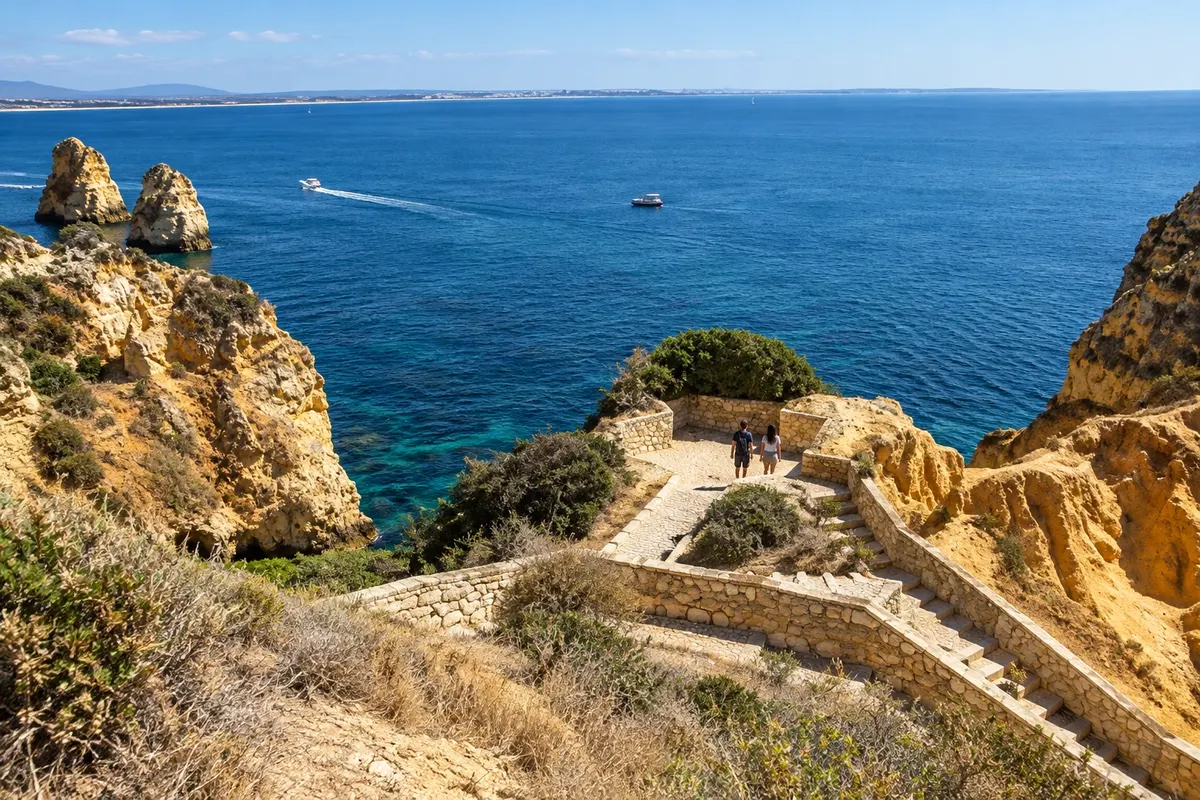
To the east of the village, a wooden boardwalk of about 600 meters runs along the top of the cliff to Algar Seco. The site formed from the joining of several algares, natural sinkholes in the limestone, and features ochre-colored rocks shaped by rain and sea, with passages and stone arches facing the ocean.
Stairs descend from the boardwalk to the rocks of Algar Seco, where you can look out to the sea through openings in the stone.
Kraji na poti: Carvoeiro, Carvoeiro Beach, Algar Seco, Algar Seco Boardwalk.
Vključuje: Walk along the boardwalk and visit the formations at Algar Seco, with free time in the village.
Nasvet: Wear shoes with firm soles for the rocks at Algar Seco. Parking in central Carvoeiro is limited; in summer, arrive early or go by bus.
Najboljši čas za obisk: year-round; from May to October the village is busier
Praia da Rocha and Portimão
Odhod: Portimão town centre on foot and by local bus to the beach Približno pol dneva Popoldne Lahko
Portimão sits at the mouth of the Arade River. The Museu de Portimão occupies an old canning factory and tells the story of the town’s fishing and industry. On the riverfront, restaurants serve grilled sardines.
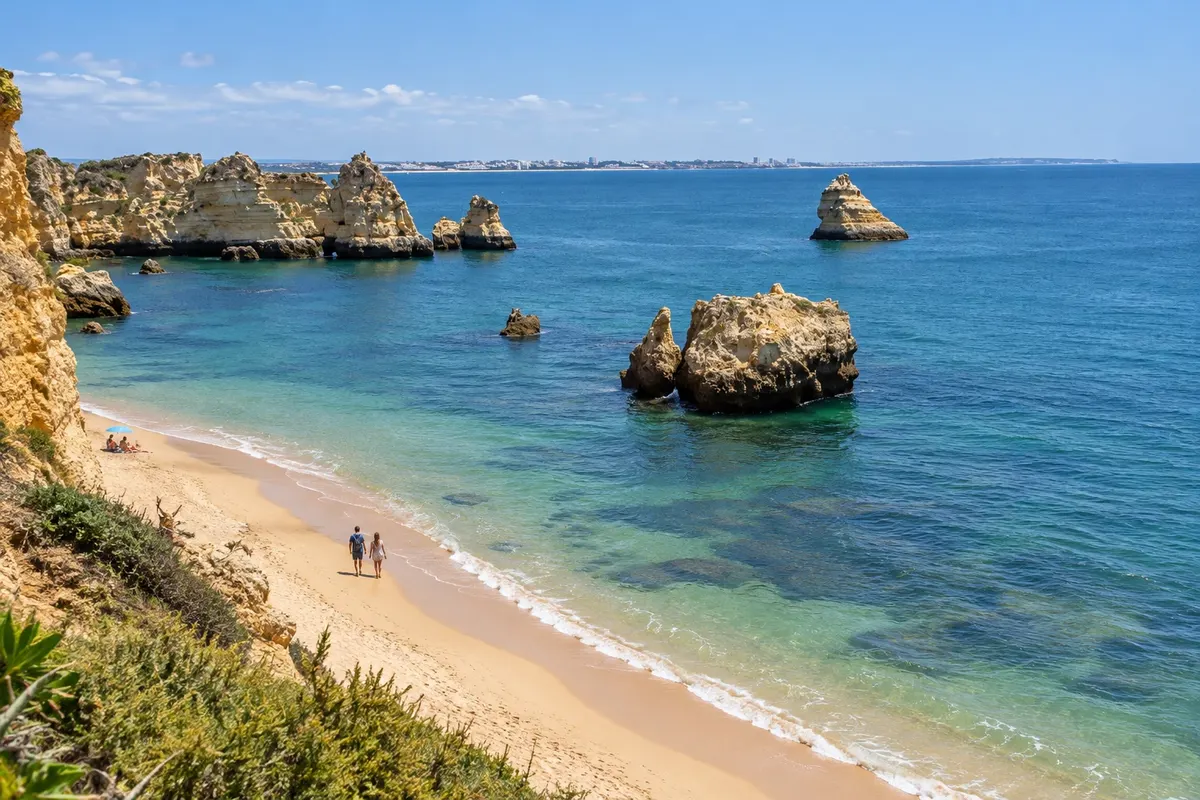
Praia da Rocha is about 3 km from the centre: a wide sandy beach at the foot of cliffs with isolated rock formations, and a promenade with bars, restaurants and a casino. At the eastern tip, the Fortaleza de Santa Catarina de Ribamar, built to defend the harbour, watches the entrance and overlooks the river, the beach and Ferragudo on the opposite bank.
Ferragudo is a fishing village on the east bank of the Arade, and Alvor, to the west, has white houses and boardwalks over the ria.
Kraji na poti: Praia da Rocha, Fortaleza de Santa Catarina de Ribamar, Portimão Museum, Ferragudo, Arade River, Alvor.
Vključuje: Visit the museum (paid admission separately; check the current schedule), late afternoon at Praia da Rocha and the fortress viewpoint.
Nasvet: The local bus Vai e Vem connects Portimão center to the beaches. Portimão has a station on the Algarve Line and is one of the departure ports for boats to Benagil.
Najboljši čas za obisk: May to October for the beach; the town center and the museum can be visited year-round
Costa Vicentina: Aljezur and Arrifana
Odhod: Lagos or Aljezur by car about 1 day Ves dan Lahka do srednje zahtevna pot
The west coast of the Algarve is part of the Southwest Alentejo and Costa Vicentina Natural Park, which runs for more than 100 km between Porto Covo, in the Alentejo, and Burgau. It is an open Atlantic coast, with high cliffs, long beaches, strong waves and little development. The white stork nests on the sea cliffs.
Aljezur lies a little inland, in a valley, with whitewashed houses and a 10th-century castle on the hill. Praia da Arrifana, at the back of a cove, features the Pedra da Agulha in the sea and is much sought after for surfing. Further south, Praia do Amado hosts surf schools and competitions, and Bordeira has a wide sandy beach and dunes. Near Vila do Bispo, Castelejo sits between dark schist cliffs.
The Rota Vicentina has walking trails in the area, such as the Caminho Histórico between Aljezur and Arrifana.
Kraji na poti: Southwest Alentejo and Costa Vicentina Natural Park, Aljezur, Aljezur Castle, Praia da Arrifana, Pedra da Agulha, Praia de Monte Clérigo, Praia do Amado, Praia da Bordeira, Praia do Castelejo.
Vključuje: Drive along the west coast, with stops at the viewpoints, at Aljezur Castle and at the beaches.
Nasvet: The sea on the west coast is usually colder and rougher than in the southern Algarve: enter the water only on lifeguarded beaches. Without a car, the region is hard to explore.
Najboljši čas za obisk: May to October for the beach; in spring the cliffs often bloom; in October there is a birdwatching festival in Sagres.
Cacela Velha
Odhod: Tavira or Vila Real de Santo António by car Približno 2 uri late afternoon Lahko
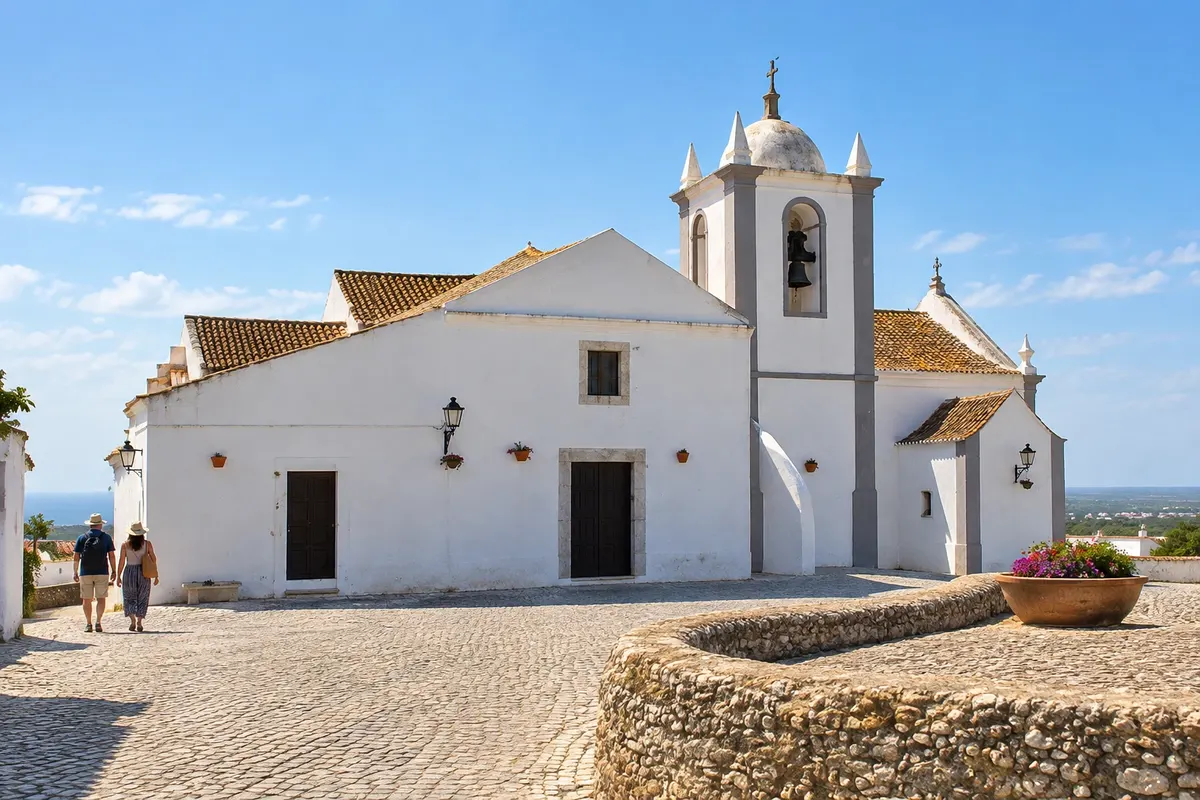
Cacela Velha is a small village of Arab origin at the eastern end of the Ria Formosa, in the municipality of Vila Real de Santo António. It stands atop a small cliff, with single-storey white houses, the Church of Nossa Senhora da Assunção, dating from 1538, and a fortress built during the reigns of D. João III and D. Sebastião.
From the square by the church and the cemetery you can see the ria, the channels and the barrier island opposite. The village core is classified as a property of public interest and is on the Portuguese Way of St. James along the coast.
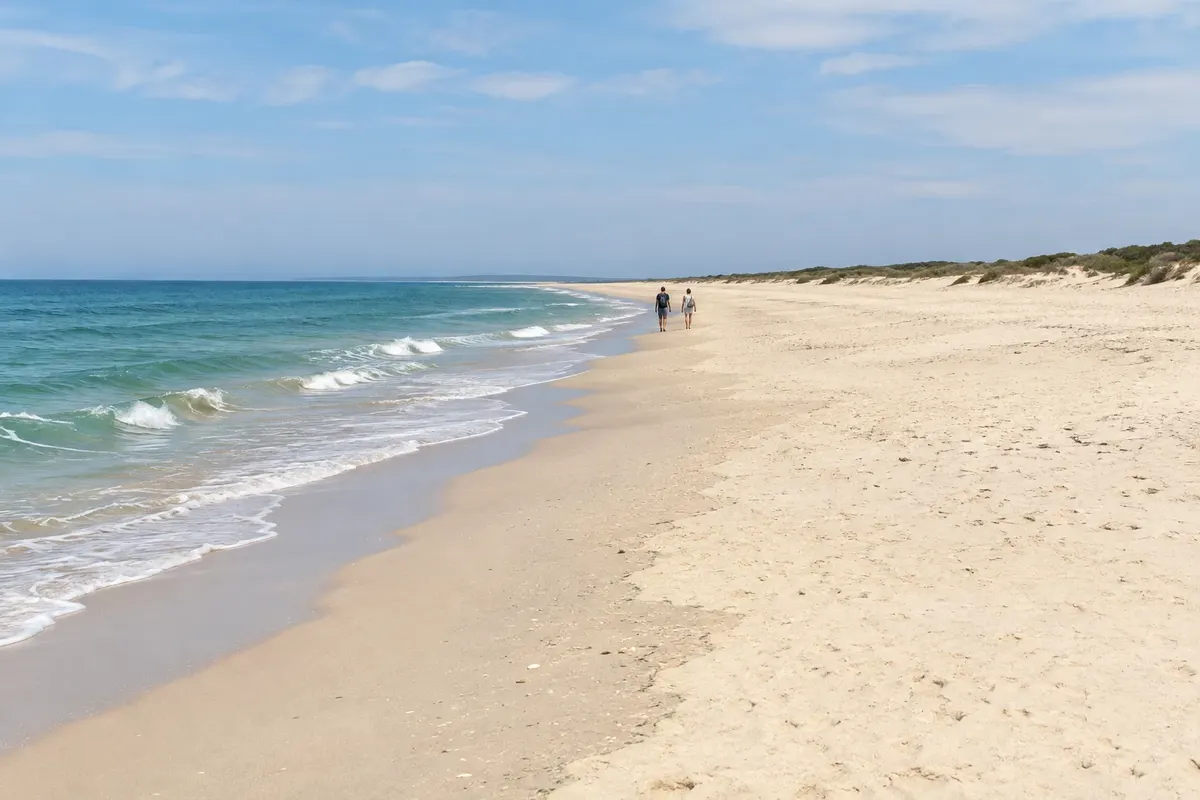
In the nearby Fábrica, small fishing boats take visitors to the beach on the island in front, a wide sandy beach with little activity.
Kraji na poti: Cacela Velha, Fortaleza de Cacela Velha, Church of Nossa Senhora da Assunção, Ria Formosa Natural Park, Fábrica.
Vključuje: Walk through the village, viewpoint over the ria and, if you wish, a boat to the island beach (extra paid).
Nasvet: Parking is outside the village; the rest is on foot. Late afternoon is usually the most popular time to view the ria.
Najboljši čas za obisk: All year; from June to September boats to the beach operate
Markets of Olhão and Loulé
Odhod: Olhão and Loulé on foot in each town centre; by car or bus between them Približno pol dneva Dopoldne Lahko
Olhão, a fishing town in the Ria Formosa, has two markets side by side on the ria’s edge: the Fish Market and the Vegetable Market. The buildings, opened in 1916, feature exposed brick, iron structure and four round turrets at the corners. At the fish market you can see the variety of the local catch, from octopus to clams; at the other market, fruits, vegetables, dried fruits and cheeses.
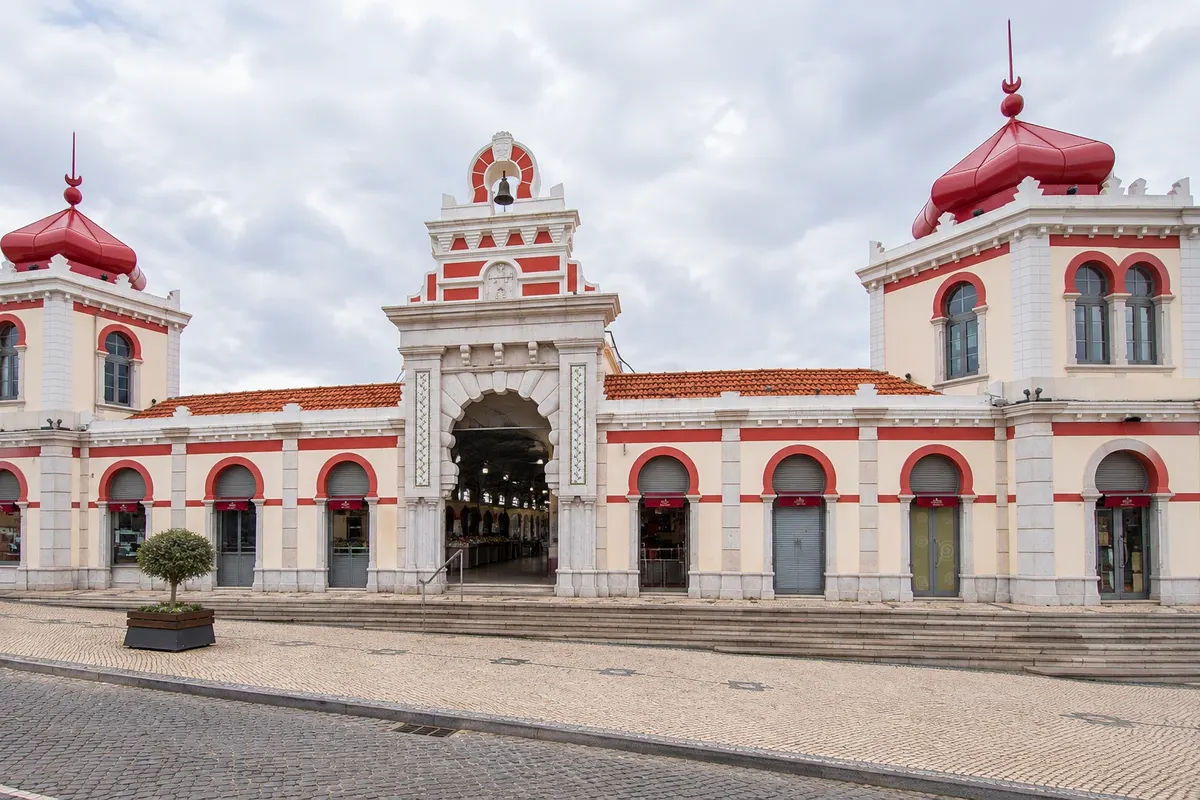
Loulé Municipal Market, opened in 1908, occupies an Arab-inspired building with domes in the town centre and brings together fish, fruits, vegetables and shops selling regional products. On Saturday mornings producers set up stalls in the surrounding streets, offering oranges, pomegranates, almonds, dried figs, carob and honey.
Loulé also has a small castle and shopping streets in the centre, and Olhão an old quarter of narrow streets next to the markets.
Kraji na poti: Markets of Olhão, Olhão Fish Market, Olhão Vegetable Market, Loulé Municipal Market.
Vključuje: Visit the markets and stroll through the centres of Olhão and Loulé.
Nasvet: Go in the morning, when the stalls are full; many close in the afternoon. On Saturdays both markets are livelier.
Najboljši čas za obisk: All year; in summer there are more seasonal fruits at the stalls


 Brazilija
 Antarktika
 Argentina
 Bolivija
 Čile
 Kolumbija
 Ekvator
 Gvajana
 Francoska Gvajana
 Falklandski otoki (Malvini)
 Paragvaj
 Peru
 Surinam
 Urugvaj
 Venezuela
 Nemčija
 Avstrija
 Belgija
 Hrvaška
 Danska
 Slovaška
 Slovenija
 Španija
 Finska
 Francija
 Grčija
 Nizozemska
 Madžarska
 Irska
 Islandija
 Italija
 Luksemburg
 Norveška
 Poljska
 Združeno kraljestvo
 Češka
 Švedska
 Švica
 Turčija
 Bermudi
 Kanada
 Združene države Amerike
 Grenlandija
 Mehika
 Sveta Peter in Mihael
 Dominikanska republika
 Japonska
 Južnoafriška republika
 Egipt
 Avstralija
 Fidži
 Nova Zelandija
 Papua Nova Gvineja