Basilica di Sant'Ambrogio and San Lorenzo: old Milan
Odhod: M2 metro Sant'Ambrogio Walk among churches Približno 2 uri Dopoldne Lahko
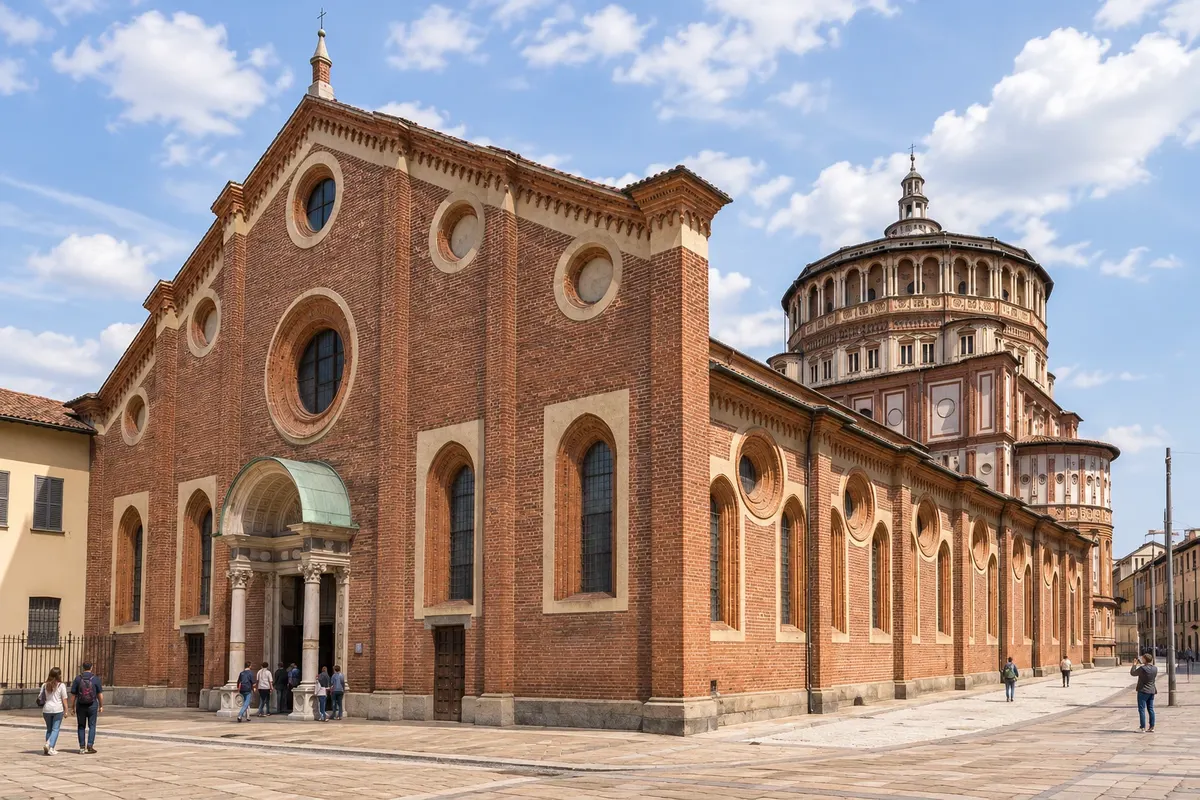
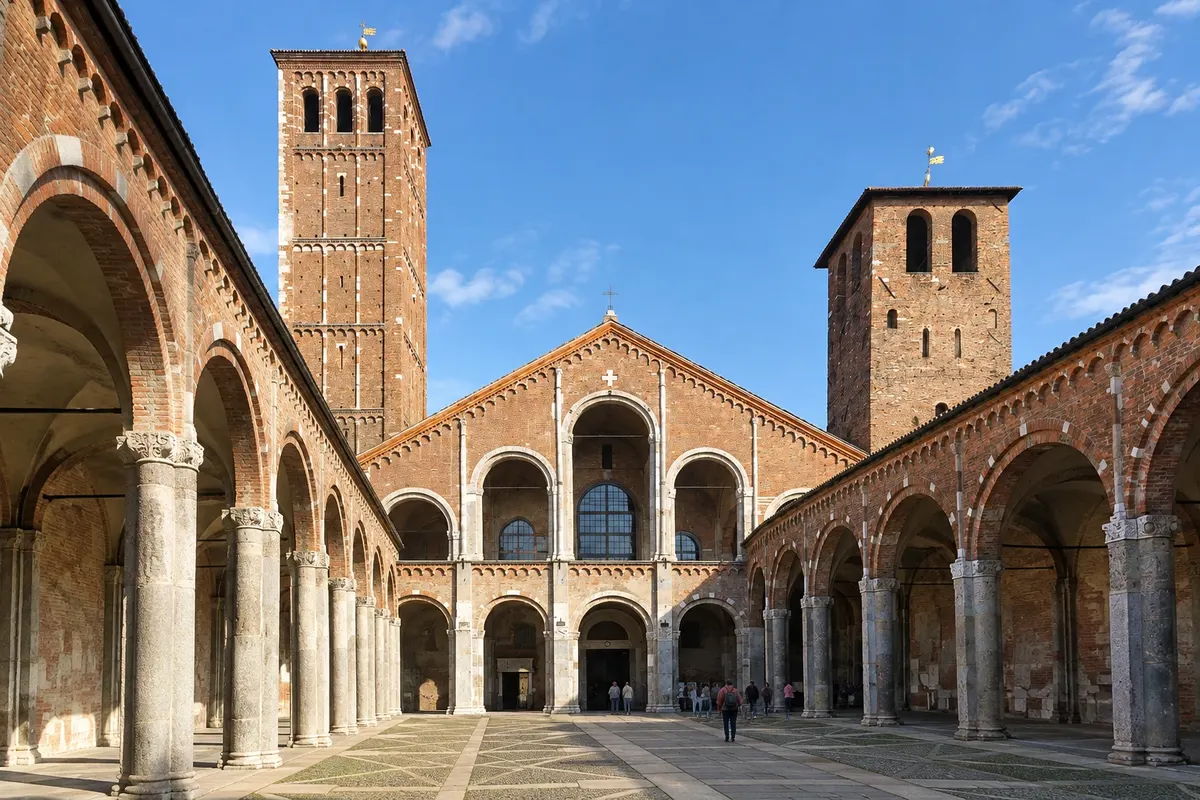
The Basilica di Sant'Ambrogio was founded in 386 by Saint Ambrose, bishop and patron of Milan, and rebuilt in Lombard Romanesque style between the 11th and 12th centuries, featuring a columned atrium, two towers of different heights and, inside, the 9th‑century golden altar by Vuolvinio, the ciborium and, in the crypt, the bodies of Ambrose and the martyrs Gervasio and Protasio in a glass reliquary. The sacello of San Vittore in Ciel d'Oro has 5th‑century mosaics. Ten minutes away is the Basilica di San Lorenzo Maggiore, from the 4th century, with 16 Roman columns in front (Colonne di San Lorenzo), a meeting place at night, and the Cappella di Sant'Aquilino with paleochristian mosaics; nearby are the Parco delle Basiliche and Sant'Eustorgio, with the Cappella Portinari. This is Milan before the Duomo, and it is little visited.
Kraji na poti: Basilica di Sant'Ambrogio.
Vključuje: Basilicas free of charge; sacello of San Vittore and Cappella di Sant'Aquilino have a small admission. Museo di Sant'Eustorgio requires a separate ticket.
Nasvet: Combine it with the Cenacolo, a 10-minute walk away, and with the Museo della Scienza e Tecnologia Leonardo da Vinci next door, which has models of Leonardo’s machines and the submarine Toti.
Najboljši čas za obisk: All year; on December 7, Saint Ambrose’s day, the “Oh bej! Oh bej!” fair fills the areas around the castle.
Quadrilatero della Moda and Cimitero Monumentale
Odhod: Metro M3 Montenapoleone Shopping walk and monumental cemetery Približno 3 ure Popoldne Lahko
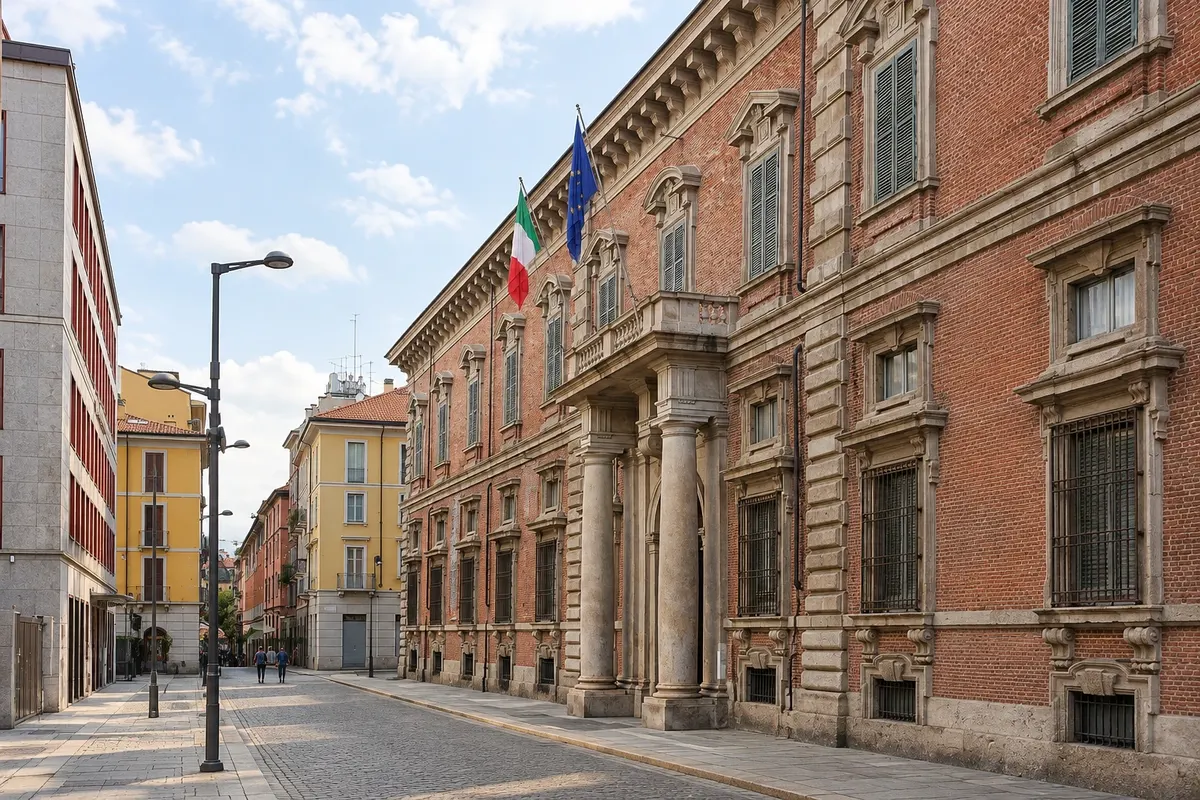
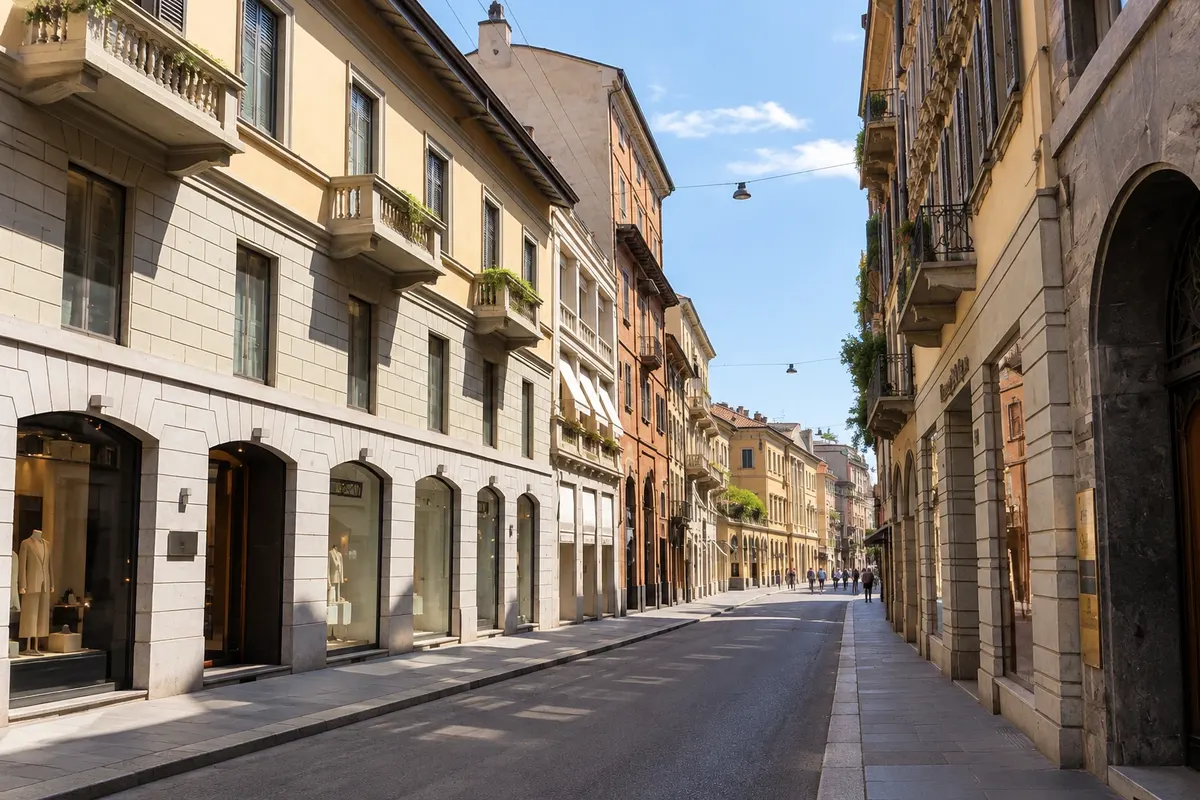
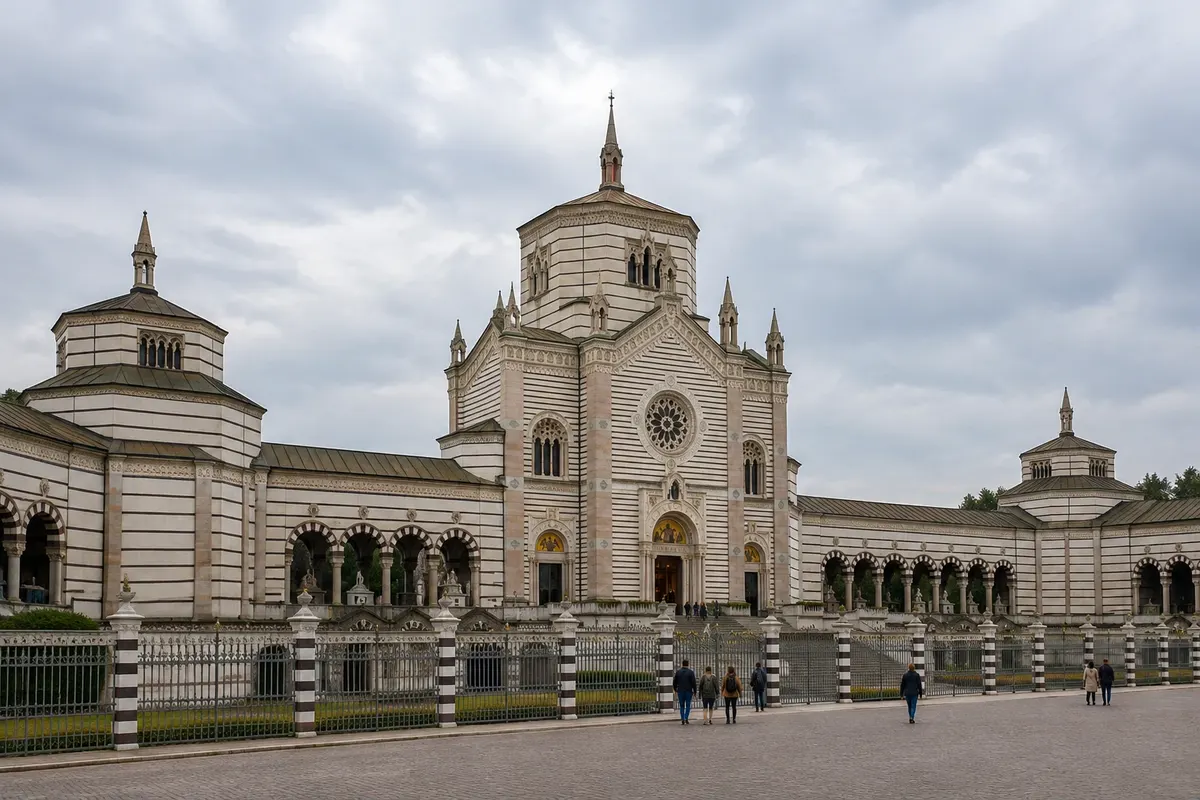
The Quadrilatero della Moda is the rectangle formed by Montenapoleone, della Spiga, Sant'Andrea and Manzoni streets, home to the flagship stores of Italian fashion houses and 19th-century house-museums: the Museo Bagatti Valsecchi, an intact neo-Renaissance palace, and the Casa Museo Poldi Pezzoli, with the Portrait of a Lady by Pollaiolo and works by Botticelli, Mantegna and Piero della Francesca. From there the metro or tram takes you to the Cimitero Monumentale, opened in 1866, an open-air museum of funerary sculpture in liberty, art déco and modern styles: the Famedio, the pantheon of notable Milanese, with Manzoni’s tomb, the Bernocchi mausoleum, the Campari family's bronze Last Supper and the tombs of Toscanini and Giorgio Gaber. The entrance includes a map of the most visited graves.
Kraji na poti: Quadrilatero della Moda, Cimitero Monumentale di Milano.
Vključuje: Self-guided walk. Poldi Pezzoli and Bagatti Valsecchi museums require separate admission. Cemetery is free (closed on Mondays).
Nasvet: Go to the Poldi Pezzoli in the morning, before the shops open; the cemetery has free guided tours on some weekends, check in advance. During fashion weeks (February/March and September) the neighborhood is closed for shows.
Najboljši čas za obisk: Vse leto.
New Milan: Bosco Verticale, Porta Nuova and Fondazione Prada
Odhod: Metro M2 Gioia or M5 Isola Architecture walk and museum Približno 4 ure Popoldne Lahko
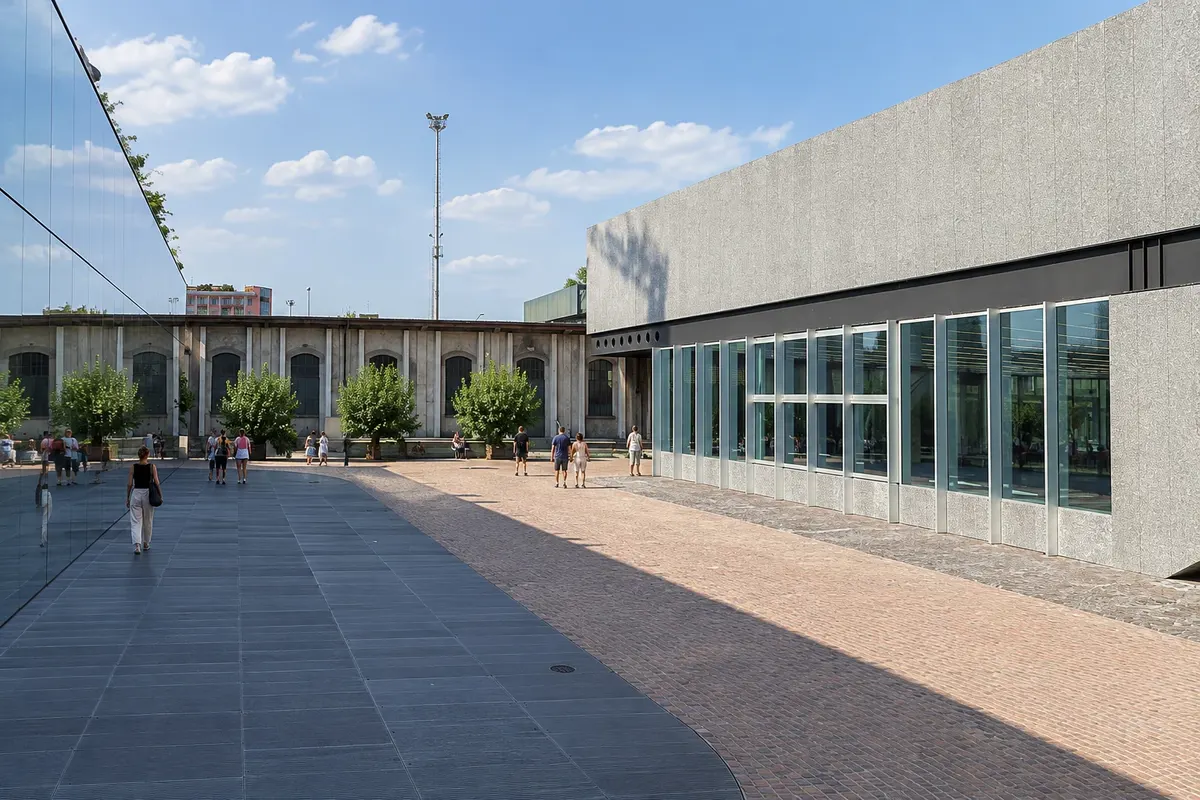
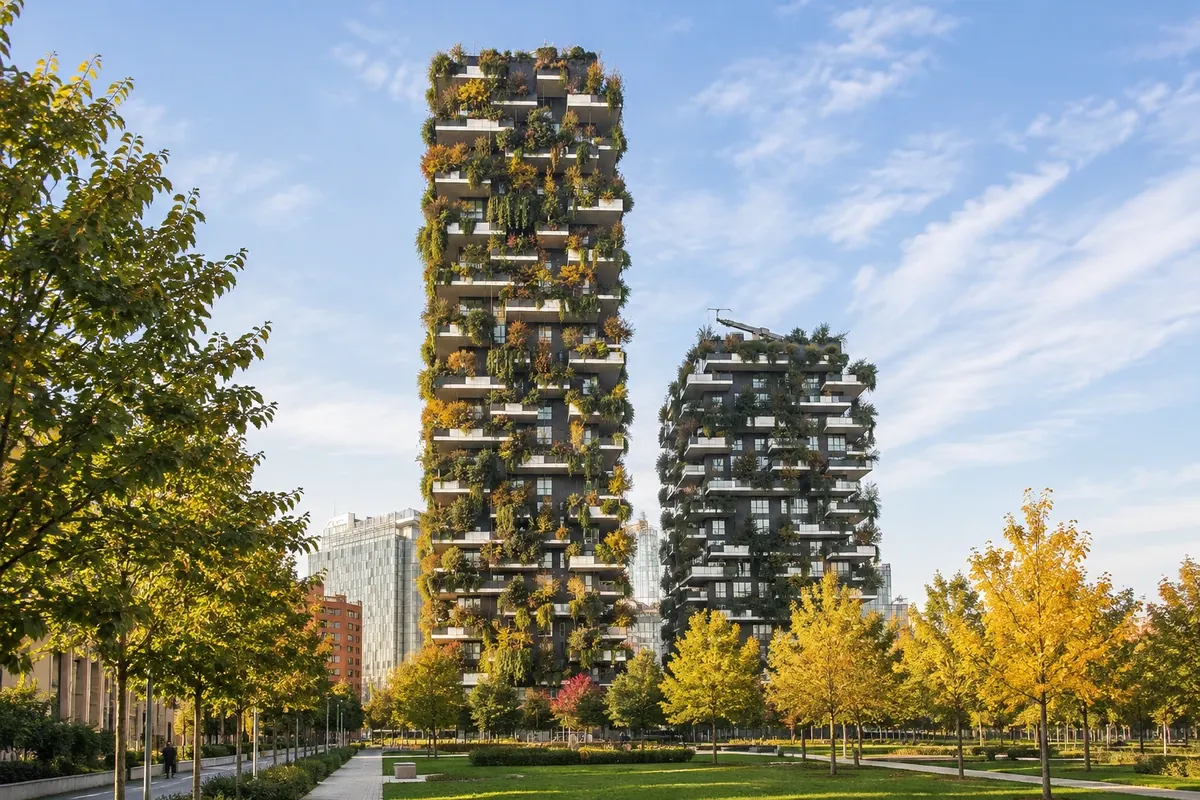
The Bosco Verticale (Vertical Forest), the two residential towers by Stefano Boeri completed in 2014 with around 800 trees and thousands of plants on the balconies, is the symbol of the Porta Nuova district, redeveloped since 2005: Piazza Gae Aulenti, raised, with the 231 m Unicredit tower, the tallest building in the country, the Biblioteca degli Alberi, a 9-hectare park, and the Isola neighborhood on the other side, with cafés and street art. At the other end of the city, in the Largo Isarco district, Fondazione Prada, designed by Rem Koolhaas in a former distillery, opened in 2015 with the Tower, the Haunted House clad in gold leaf, a cinema and Bar Luce designed by Wes Anderson; contemporary art exhibitions change throughout the year. In Milan the two areas are connected by metro in 30 minutes.
Kraji na poti: Bosco Verticale, Fondazione Prada.
Vključuje: Self-guided walk in Porta Nuova. Fondazione Prada has a separate admission fee; closed on Tuesdays.
Nasvet: Go to Porta Nuova at late afternoon, when the square lights up; the Bosco Verticale is visible from outside, from the Biblioteca degli Alberi. Reserve half an afternoon for the Fondazione Prada and finish at Bar Luce.
Najboljši čas za obisk: All year; during Design Week (April) both neighborhoods get very crowded.
How: the lakeside town, the Duomo and the Brunate funicular
Odhod: Milano Centrale or Cadorna (train to Como) Round-trip train excursion with funicular Približno 6 ur Ves dan Lahko
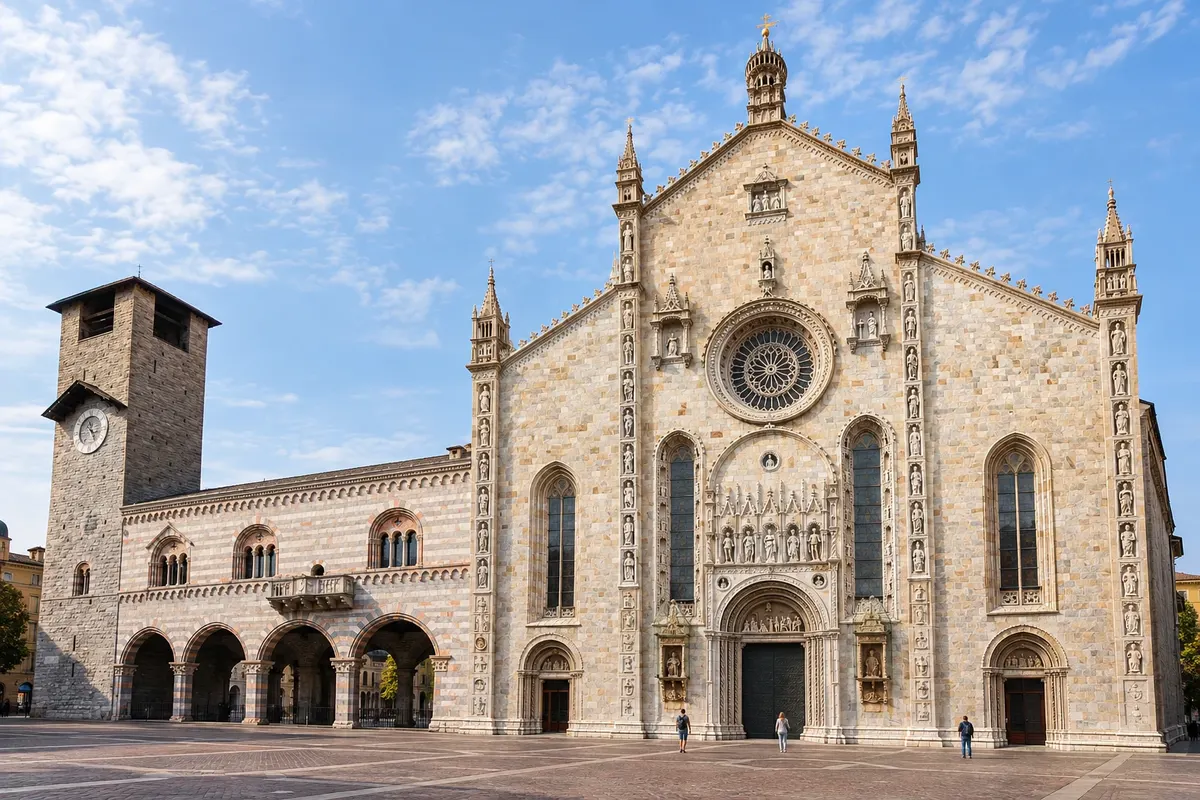
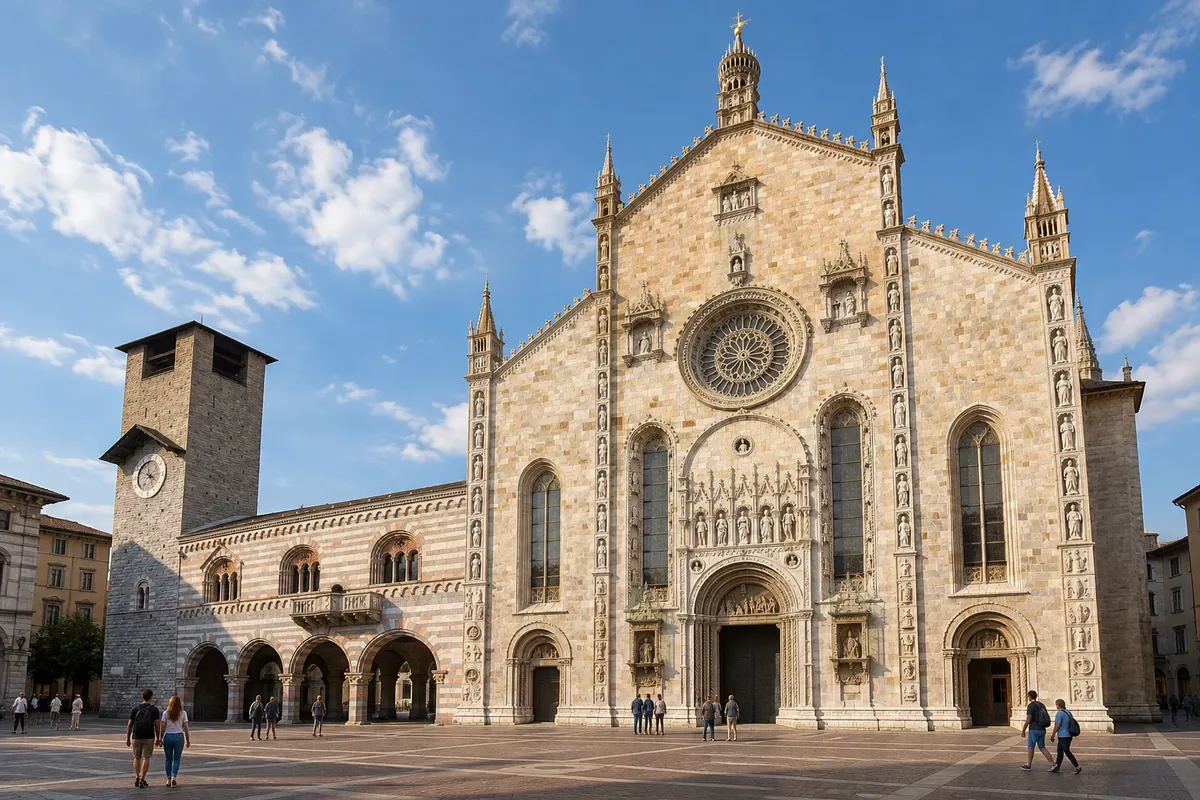
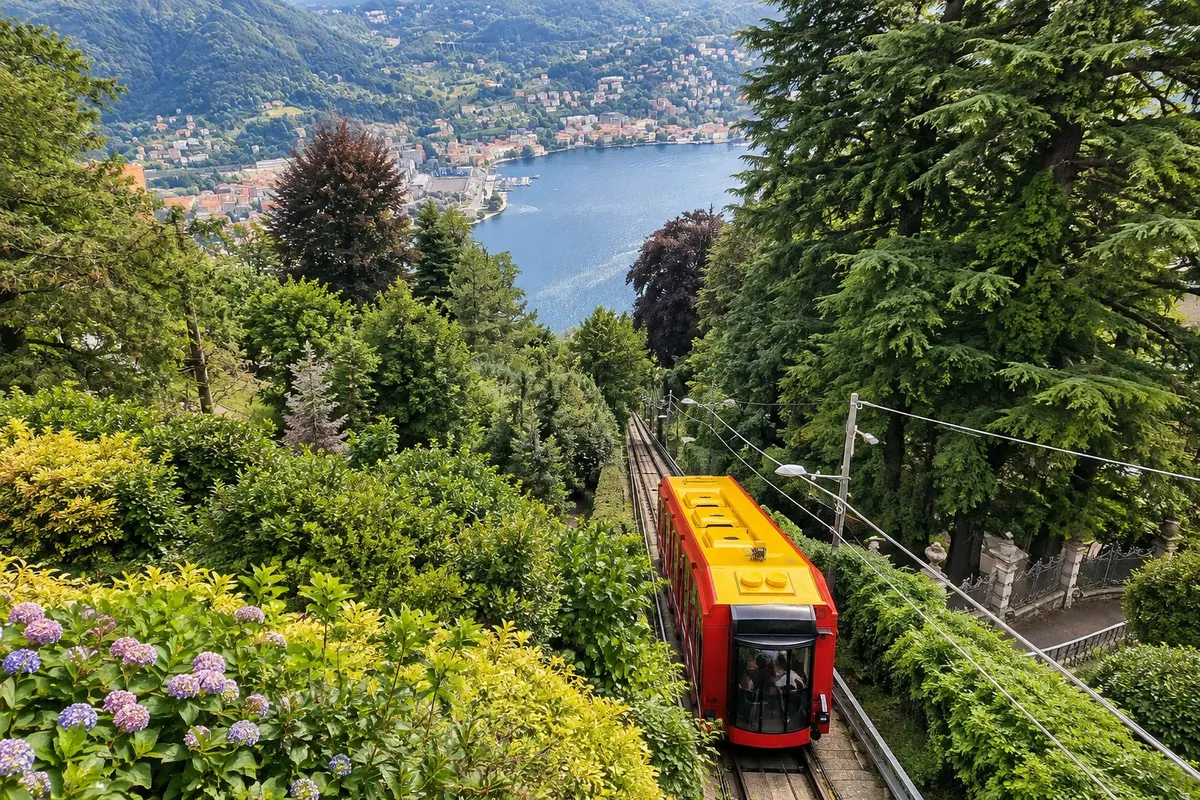
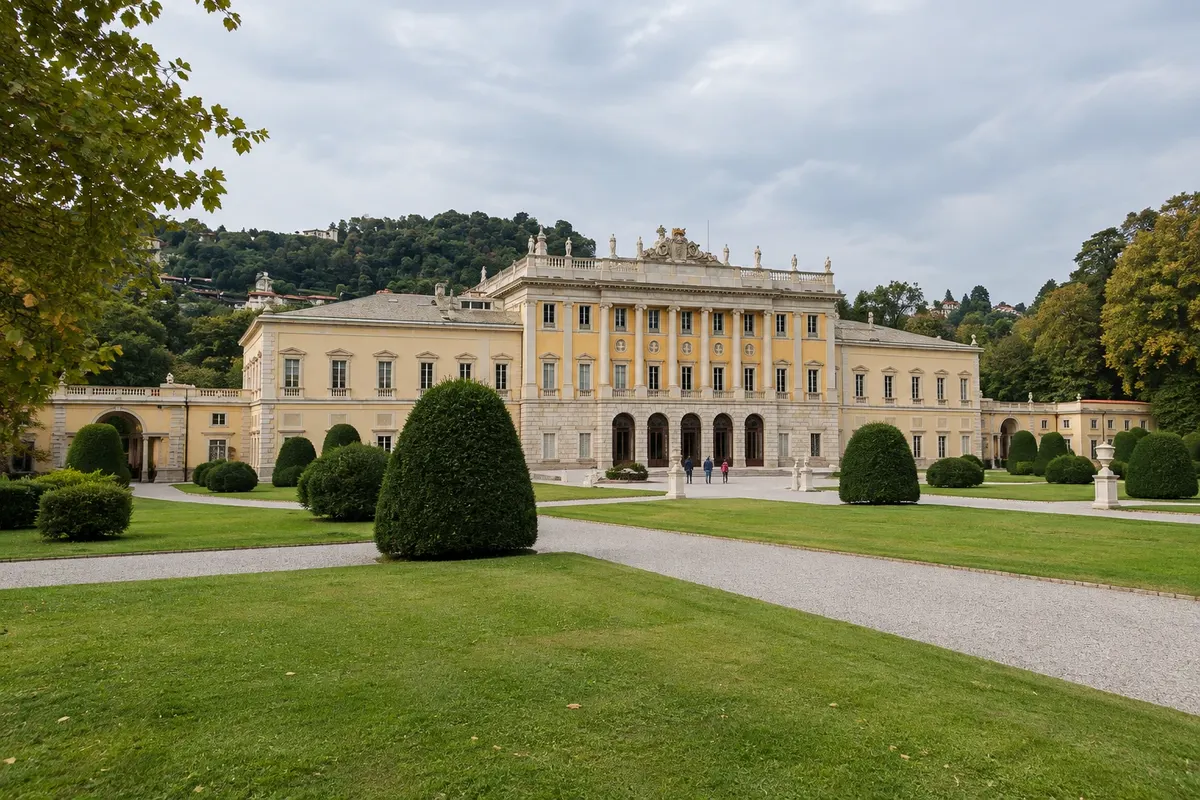
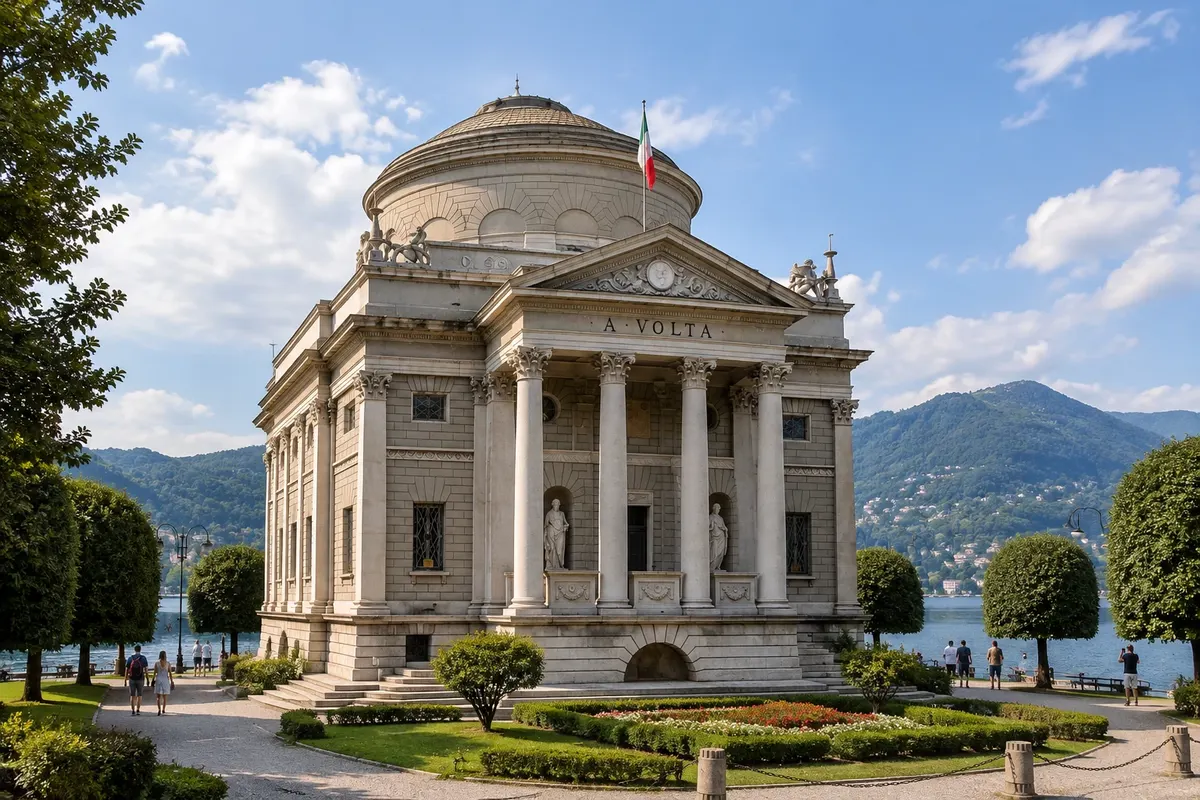
Como, at the southern tip of the lake’s western branch of Lago di Como (Lake Como), is a 40-minute to 1-hour train ride from Milan. The Duomo di Como (Como Cathedral), begun in 1396 and finished with Juvarra’s dome in 1744, mixes Gothic and Renaissance on its marble façade, with statues of the two Plinys who were born in the city; beside it is the Broletto, the striped medieval town hall. The Funicolare Como–Brunate, dating from 1894, climbs in 7 minutes to the village at 715 m, with a terrace overlooking the lake and the villas; from Brunate a 30-minute trail leads to the Voltiano lighthouse, from 1927, with views of the Alps. On the waterfront is the Tempio Voltiano, the 1928 neoclassical museum dedicated to Alessandro Volta, inventor of the battery and born in Como, and along the passeggiata by the lake is Villa Olmo, from 1797, with its open park and exhibitions. Line boats to Bellagio and the lakeside villas depart from here.
Kraji na poti: Duomo di Como, Funicolare Como–Brunate, Villa Olmo, Tempio Voltiano.
Vključuje: Train paid separately (regional, no reservation). Funicular paid separately (round trip). Tempio Voltiano with a small admission fee; Villa Olmo: park free of charge, exhibitions paid.
Nasvet: Take the train from Milano Cadorna (Trenord) to Como Nord Lago, which is on the lakeshore, rather than Como San Giovanni, which is farther away. Ride the funicular up to Brunate in the morning and walk down the trail in about 1 hour if you are up for it.
Najboljši čas za obisk: From April to October for the lake and the trails; in winter the funicular runs and the lake is quiet.
Bellagio and the lake villas: Villa Melzi, Villa Carlotta and Villa del Balbianello
Odhod: Como (by boat) or Varenna (ferry) Regular boat on the lake and garden visits about 8 hours Ves dan Lahko
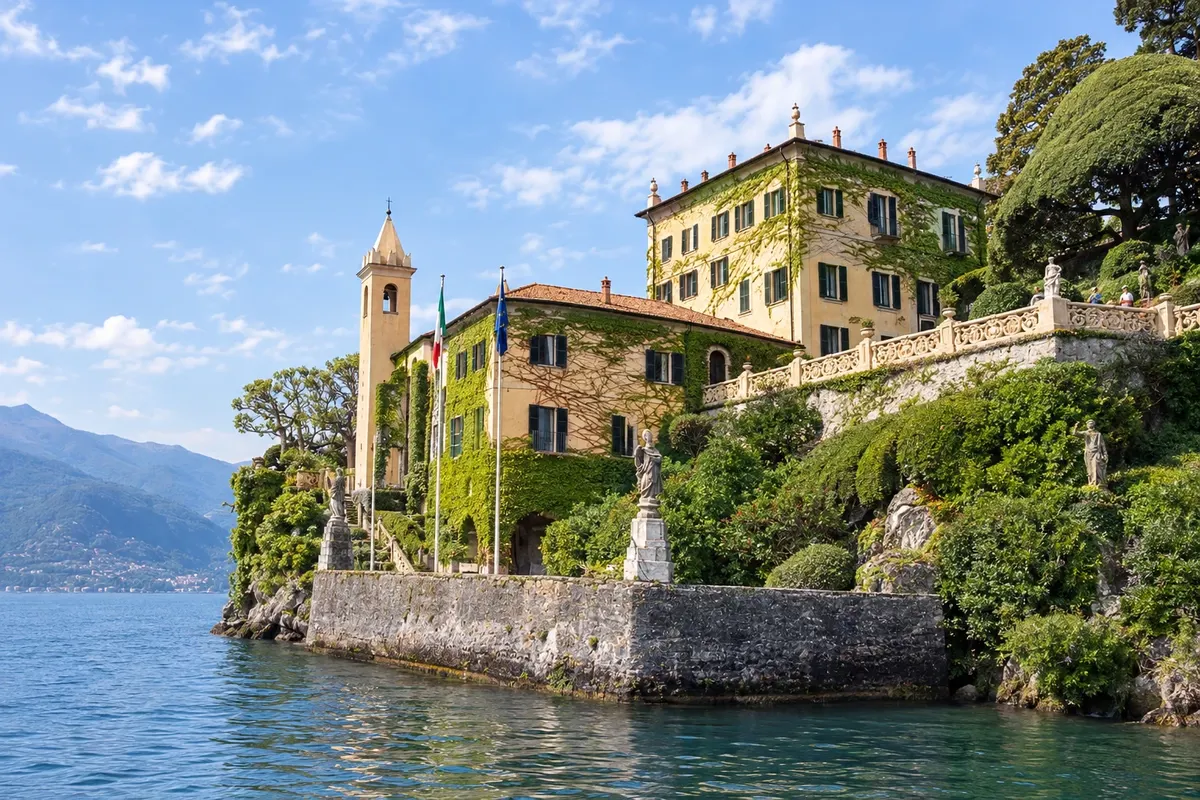
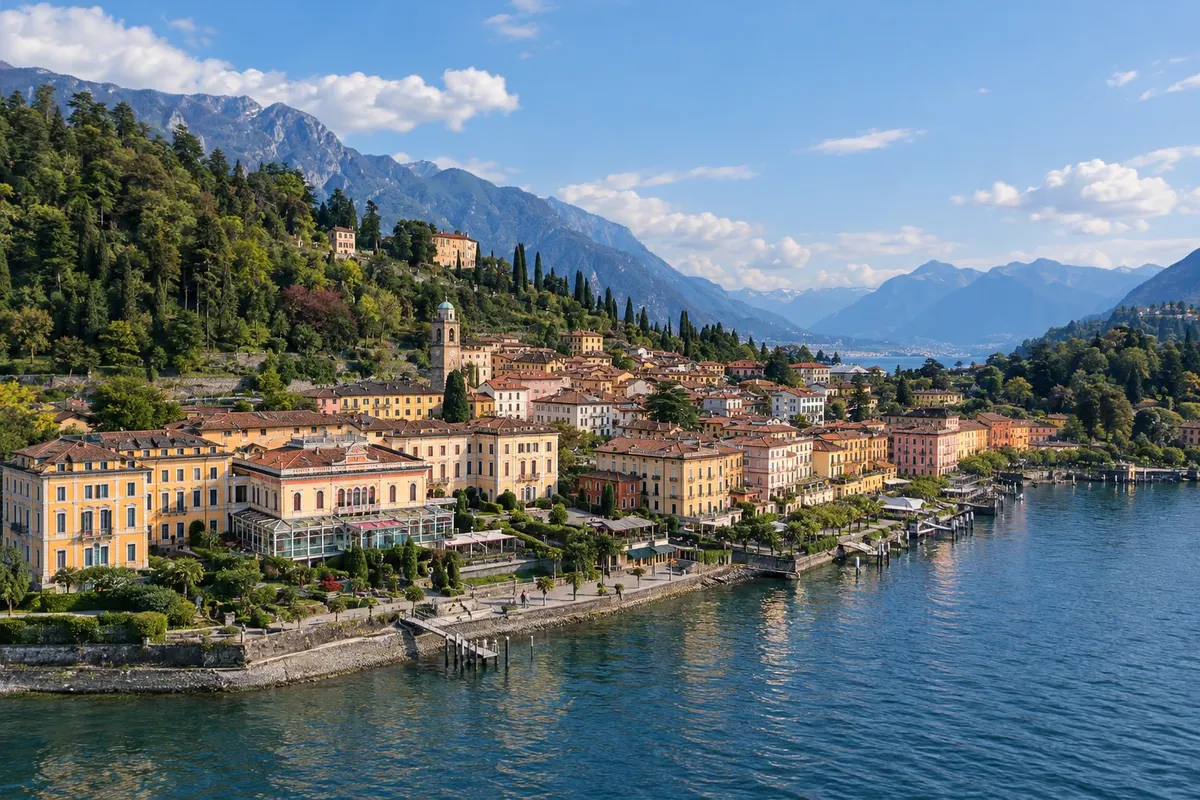
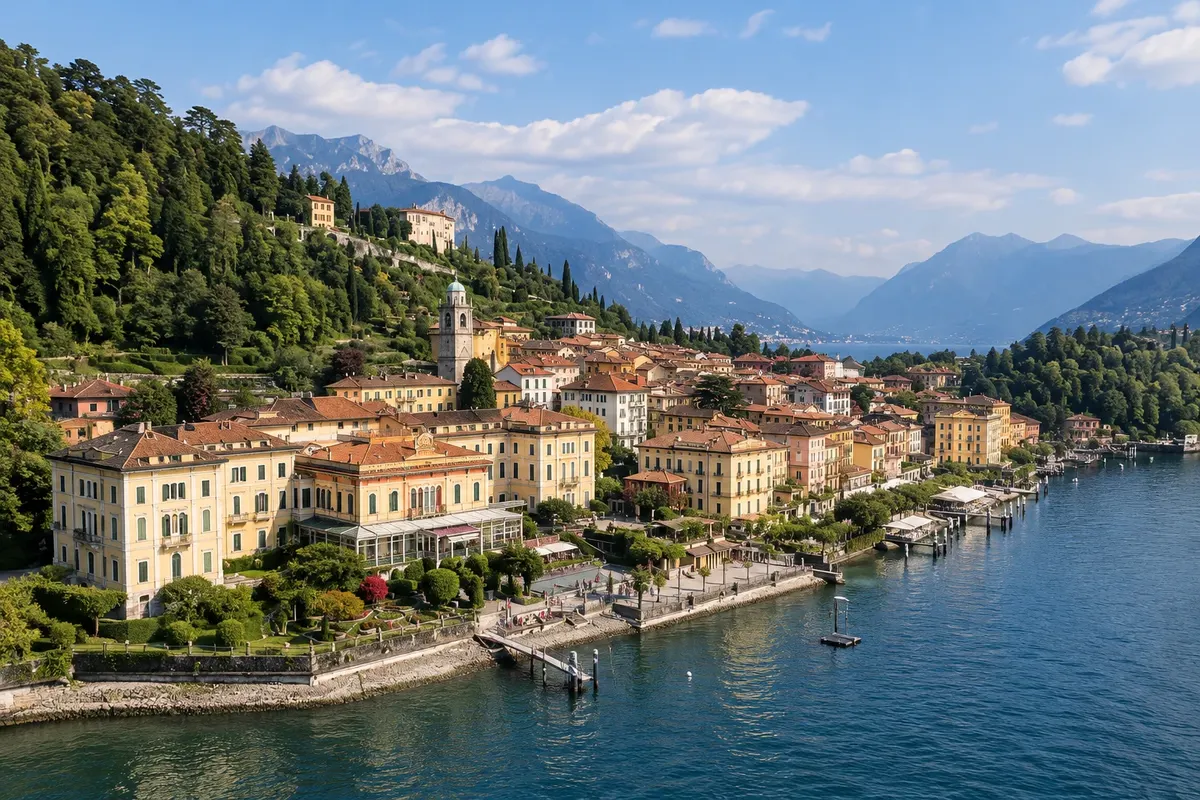
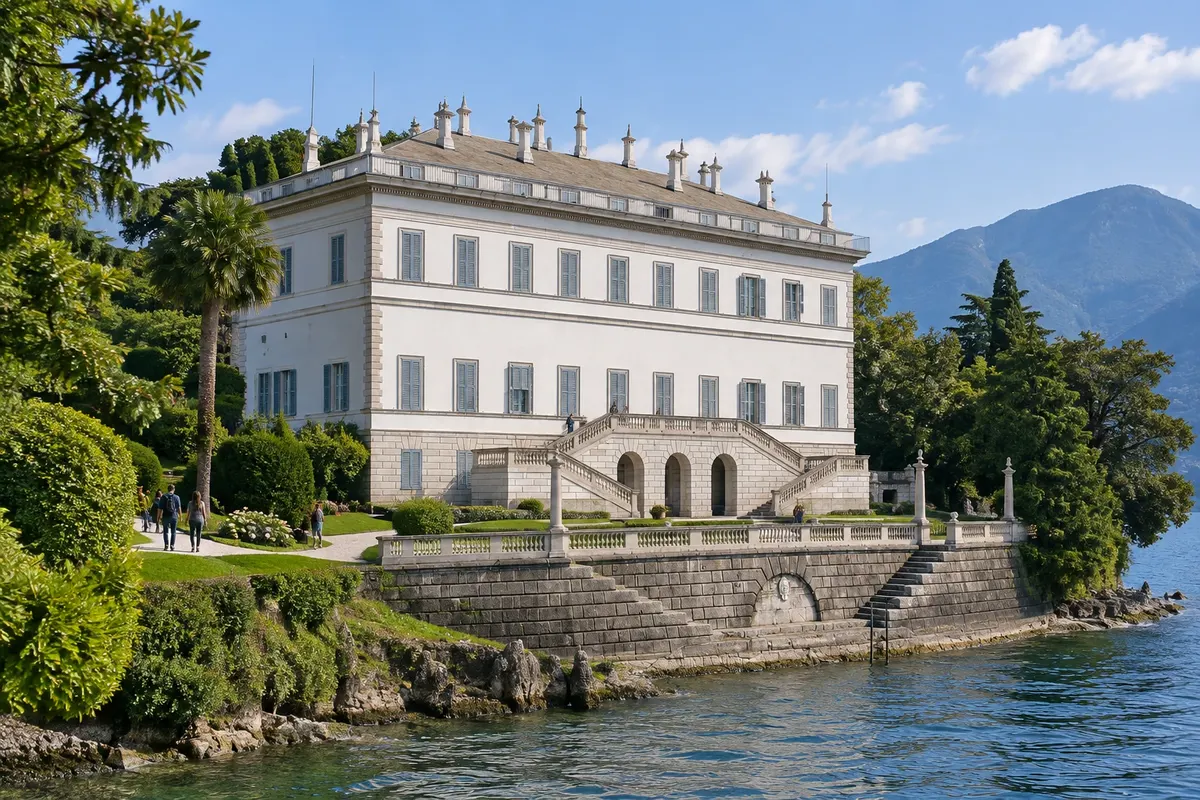
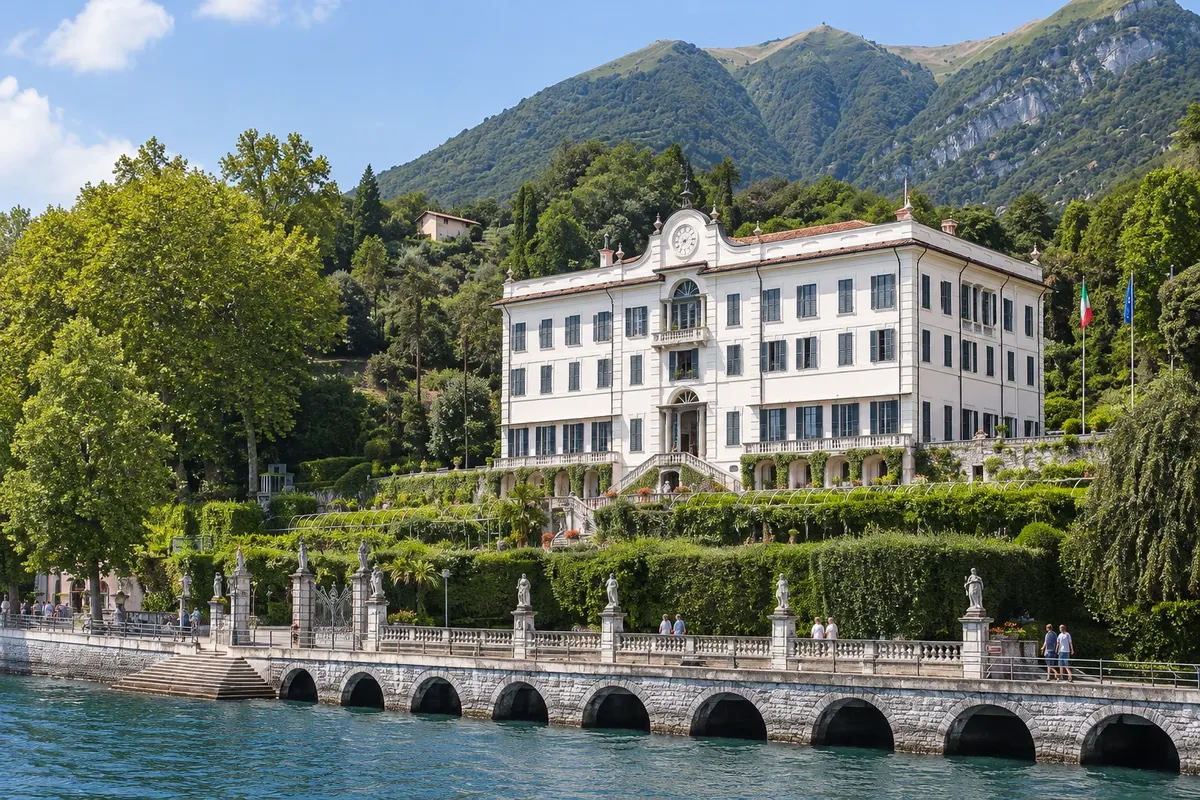
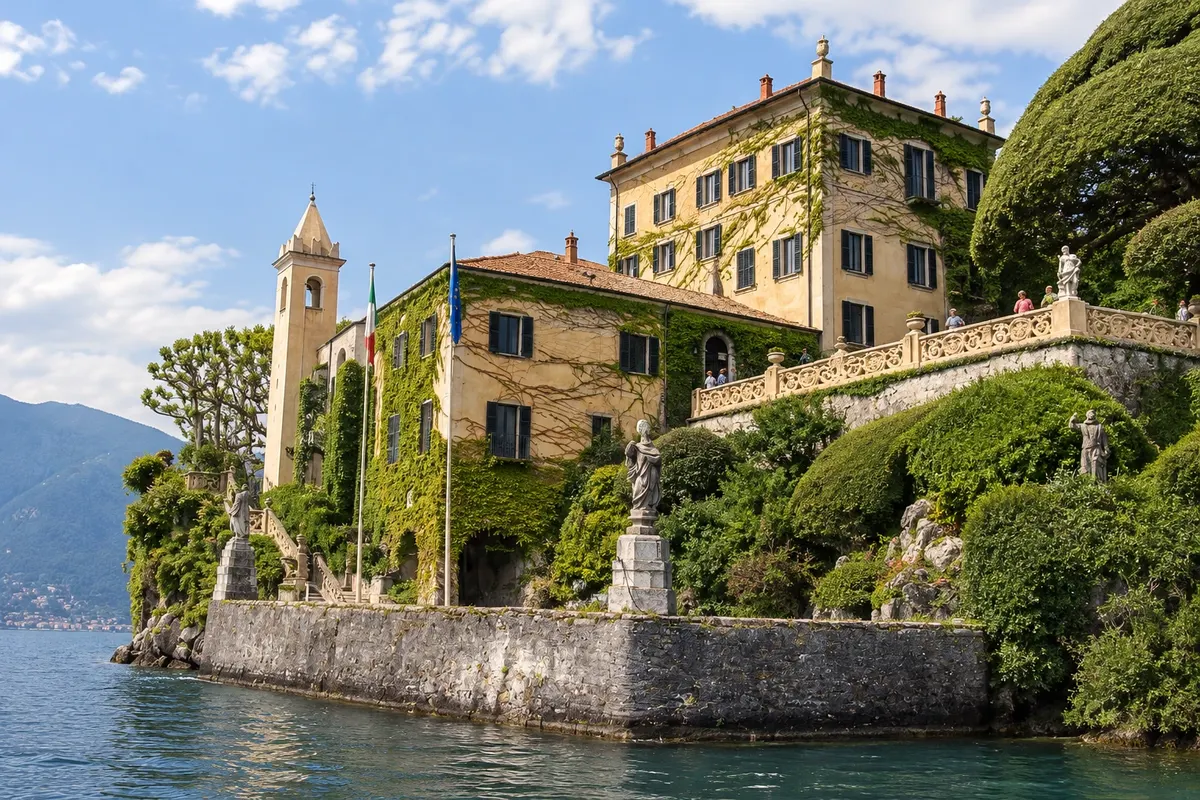
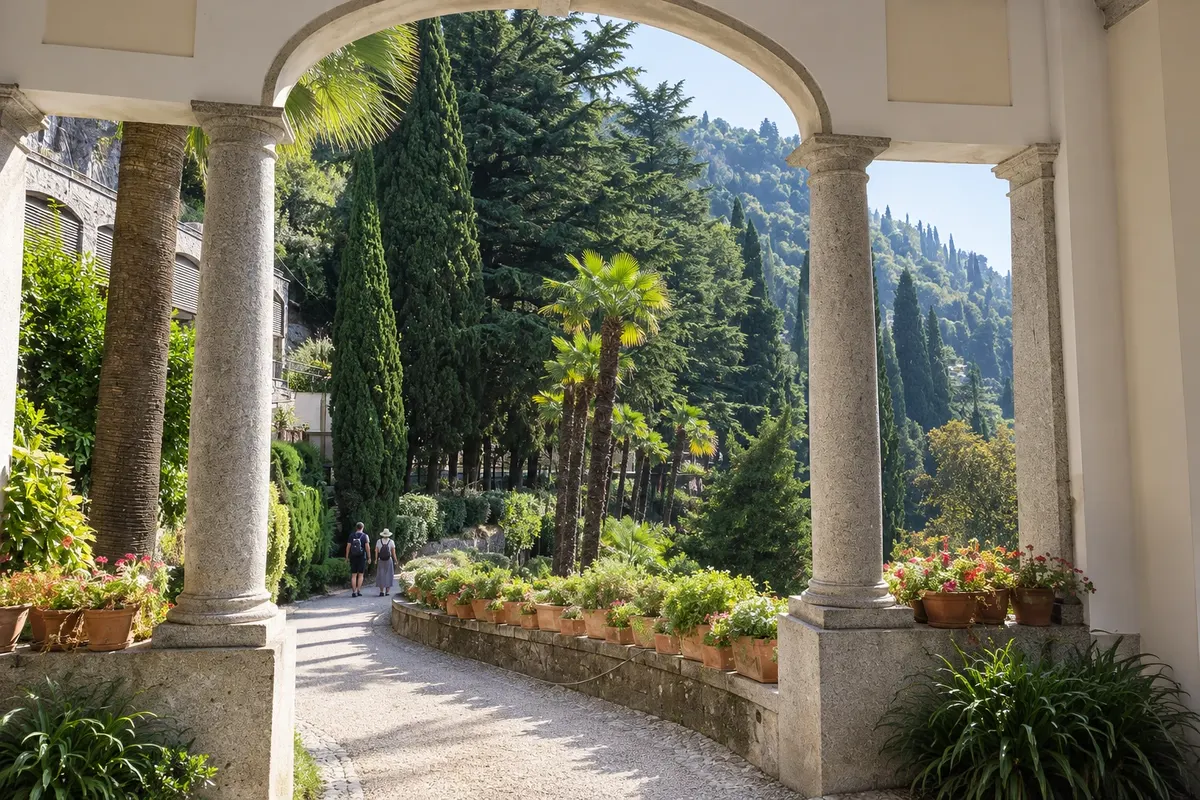
Bellagio sits on the tip of the promontory that divides Lago di Como into two arms, and the Centro storico di Bellagio rises by stone stairways (the 'salite') from the lakeside to streets of silk shops and cafés. The Giardini di Villa Melzi d'Eril, built from 1808 to 1810 on the lakefront, were the first English garden on the lake, featuring azaleas, rhododendrons, a Moorish temple and the family chapel. On the opposite shore, in Tremezzo, Villa Carlotta, from 1690, houses the museum with Canova's Amor and Psyche and an 8-hectare terraced botanical garden, famous for its azaleas in April and May; the Bellagio ferry takes 15 minutes. In Lenno, Villa del Balbianello, from 1787, on the tip of a promontory planted with pruned plane trees and lotuses, belongs to the FAI and appears in James Bond and Star Wars films; you reach it by water taxi from Lenno or on foot via a 20-minute trail, with access to the garden and, with a guide, the interior. The Navigazione Laghi ferry links Como, Bellagio, Tremezzo, Lenno and Varenna; the 'Centro Lago' is the most used route.
Kraji na poti: Centro storico di Bellagio, Giardini di Villa Melzi d'Eril, Villa Carlotta, Villa del Balbianello.
Vključuje: Regular boats require separate payment (there is a daily ticket from the Lake Center). Gardens and villas have paid admissions; Villa del Balbianello requires a reservation for interior visits and is closed on some days.
Nasvet: Buy the daily boat ticket from the Lake Center and do the triangle Bellagio, Tremezzo (Villa Carlotta) and Lenno (Balbianello) or Varenna; the fast boat (aliscafo) charges a supplement. Arrive early in Bellagio, which fills up by midday.
Najboljši čas za obisk: From April to October the villas are open; in April and May the azaleas and rhododendrons bloom; from November to March many villas close and boat services are reduced.
Varenna and Villa Monastero: the east side of the lake
Odhod: Milano Centrale (train to Varenna-Esino) Day trip by train and boat about 7 hours Ves dan easy (hills)
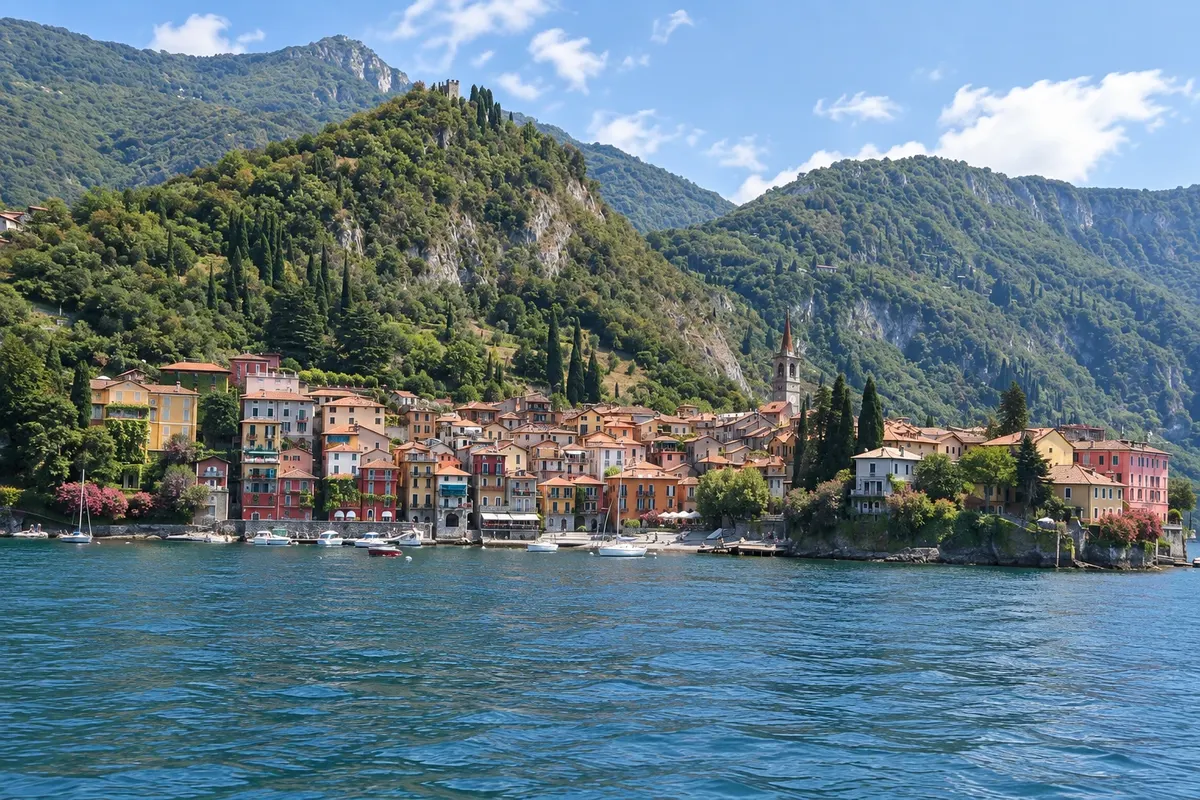
Varenna, on the east shore of the lake, is the fishing village of colorful houses and stepped alleys, 1 hour by train from Milano Centrale (Varenna-Esino station), and is the simplest gateway for visitors without a car: the ferry to Bellagio takes 15 minutes. Villa Monastero, a former 12th-century Cistercian convent converted into a residence, has a 2 km botanical garden along the shore, with cypresses, agaves and a terrace over the water, and the house-museum with 19th-century salons; Enrico Fermi taught here in 1954. Nearby is Villa Cipressi, with another terraced garden. The Passeggiata degli Innamorati, the walkway over the water, links the pier to the old part. Above, Castello di Vezio, a medieval ruin with falconry and views of the lake’s two branches, is a 30-minute climb.
Kraji na poti: Varenna, Villa Monastero, Historic center of Bellagio.
Vključuje: Regional train ticket not included. Villa Monastero: garden and house require tickets; Castello di Vezio has an entrance fee. Ferry to Bellagio paid separately.
Nasvet: Do Varenna in the morning, visit Villa Monastero, have lunch on the waterfront and take the ferry to Bellagio in the afternoon, returning to Varenna for the train. Check the last train back to Milan in the early evening.
Najboljši čas za obisk: From March to November for the villa; April and May have the garden in bloom.


 Brazilija
 Antarktika
 Argentina
 Bolivija
 Čile
 Kolumbija
 Ekvator
 Gvajana
 Francoska Gvajana
 Falklandski otoki (Malvini)
 Paragvaj
 Peru
 Surinam
 Urugvaj
 Venezuela
 Nemčija
 Avstrija
 Belgija
 Hrvaška
 Danska
 Slovaška
 Slovenija
 Španija
 Finska
 Francija
 Grčija
 Nizozemska
 Madžarska
 Irska
 Islandija
 Luksemburg
 Norveška
 Poljska
 Portugalska
 Združeno kraljestvo
 Češka
 Švedska
 Švica
 Turčija
 Bermudi
 Kanada
 Združene države Amerike
 Grenlandija
 Mehika
 Sveta Peter in Mihael
 Dominikanska republika
 Japonska
 Južnoafriška republika
 Egipt
 Avstralija
 Fidži
 Nova Zelandija
 Papua Nova Gvineja