Amalfi: the Duomo, the Cloister of Paradise and the narrow streets
Odhod: Piazza Flavio Gioia (bus stop and Amalfi pier) Walk in village Približno 2 uri in pol Dopoldne easy (staircases)
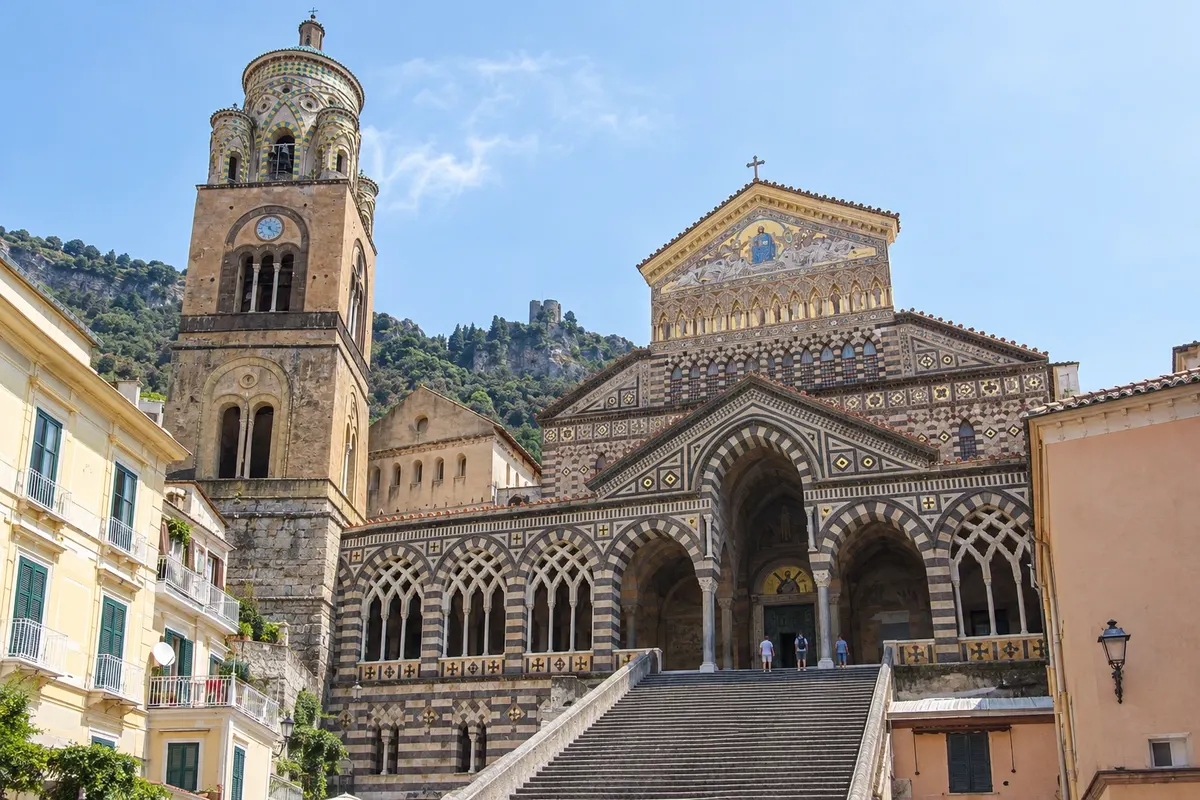
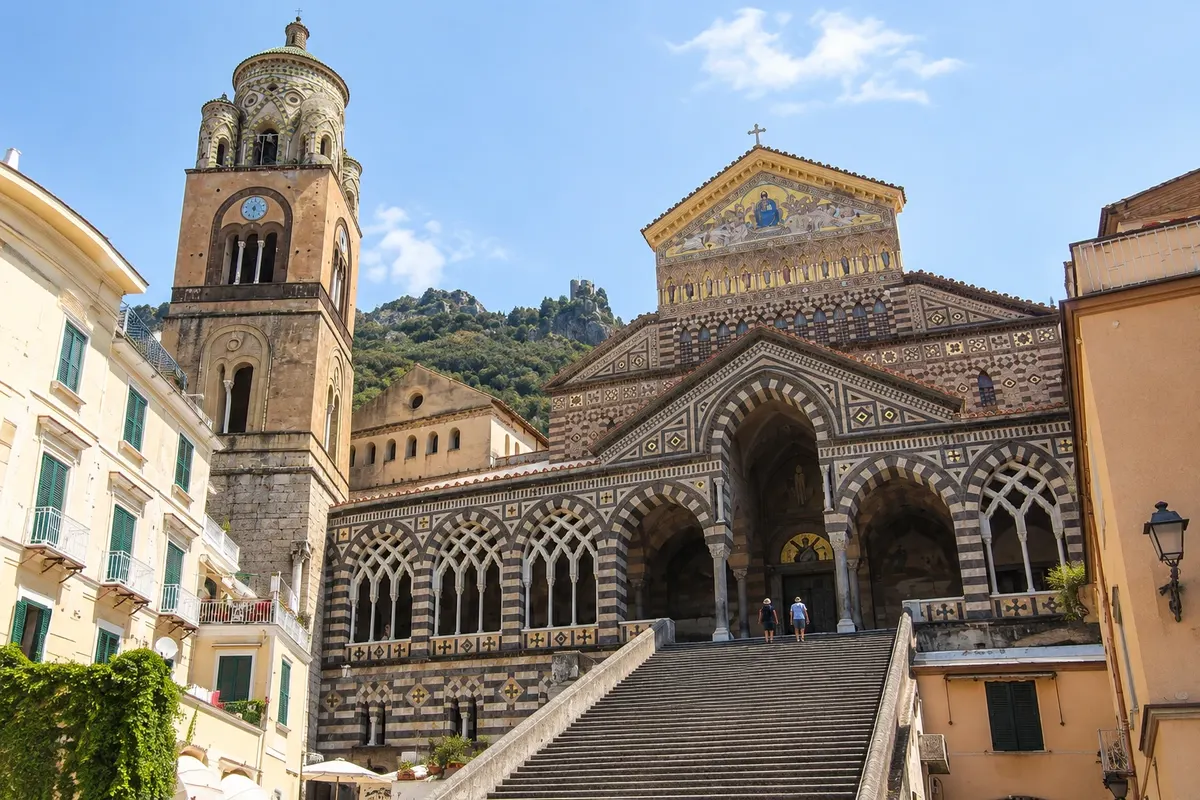
Amalfi was the first of the Italian maritime republics, a Mediterranean power between the 9th and 11th centuries, and gives its name to the coast. The Duomo di Amalfi (Cathedral of Saint Andrew), atop a staircase of 62 steps above the square, has a striped-arch façade and gilded mosaics rebuilt in the 19th century, bronze doors cast in Constantinople in 1066 and, beside it, the Chiostro del Paradiso of 1268, the cloister of interlaced arches in an Arab-Norman style that served as the nobles' cemetery; the crypt holds the remains of the apostle Saint Andrew, brought from Constantinople in 1208. The Via Lorenzo d'Amalfi, the main street, climbs the valley past limoncello and ceramics shops up to the Piazza dei Dogi and the Valle dei Mulini, the valley of the old paper mills. Piazza Flavio Gioia, on the seafront, is the hub for all buses and boats on the coast.
Kraji na poti: Duomo di Amalfi.
Vključuje: Duomo: separate paid admission for the cloister, the crypt and the museum (the church opens free of charge at mass times). Self-guided walk.
Nasvet: Go to the Duomo at opening, before the boats from Sorrento and Salerno unload the groups. Amalfi is the most convenient base on the coast: all buses and boats go through here.
Najboljši čas za obisk: All year. On June 27 and November 30, festivals of Saint Andrew with the race of the statue down the stairway.
Museo della Carta: Amalfi’s medieval paper mill
Odhod: Via delle Cartiere, Amalfi (10 min on foot from the piazza) Museum with guided tour Približno 1 uro Dopoldne ali popoldne Lahko
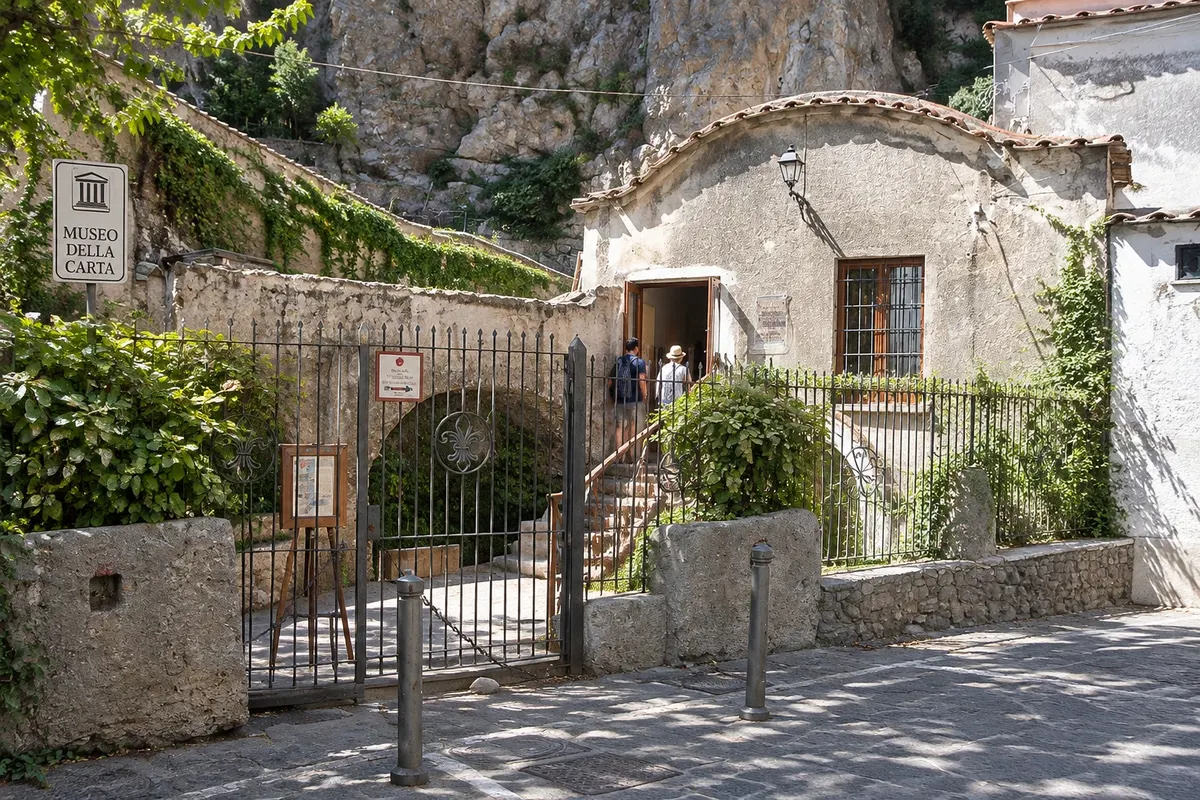
The Museo della Carta occupies a 13th-century paper mill in the Valle dei Mulini, the Canneto river valley where Amalfi produced rag paper using techniques brought from the Arab East; Amalfi’s 'carta bambagina' supplied the chancelleries of southern Italy and is still made by a local mill. The guided tour, in Italian and English, shows the wooden water-driven vats, the presses and the moulds, and ends with visitors making a sheet by hand. From there, the Valle delle Ferriere trail climbs the valley past ruins of paper and iron mills, waterfalls and humid-climate ferns to a nature reserve, about 2 hours round trip, one of the few shaded hikes on the coast.
Kraji na poti: Museo della Carta.
Vključuje: Separate paid admission, with guided tour included. Valle delle Ferriere trail free of charge.
Nasvet: The tour departs at set times and lasts about 30 minutes; arrive before the afternoon groups. Bring sneakers if you will climb the valley: the path becomes wet.
Najboljši čas za obisk: year-round; the valley is cool even in summer.
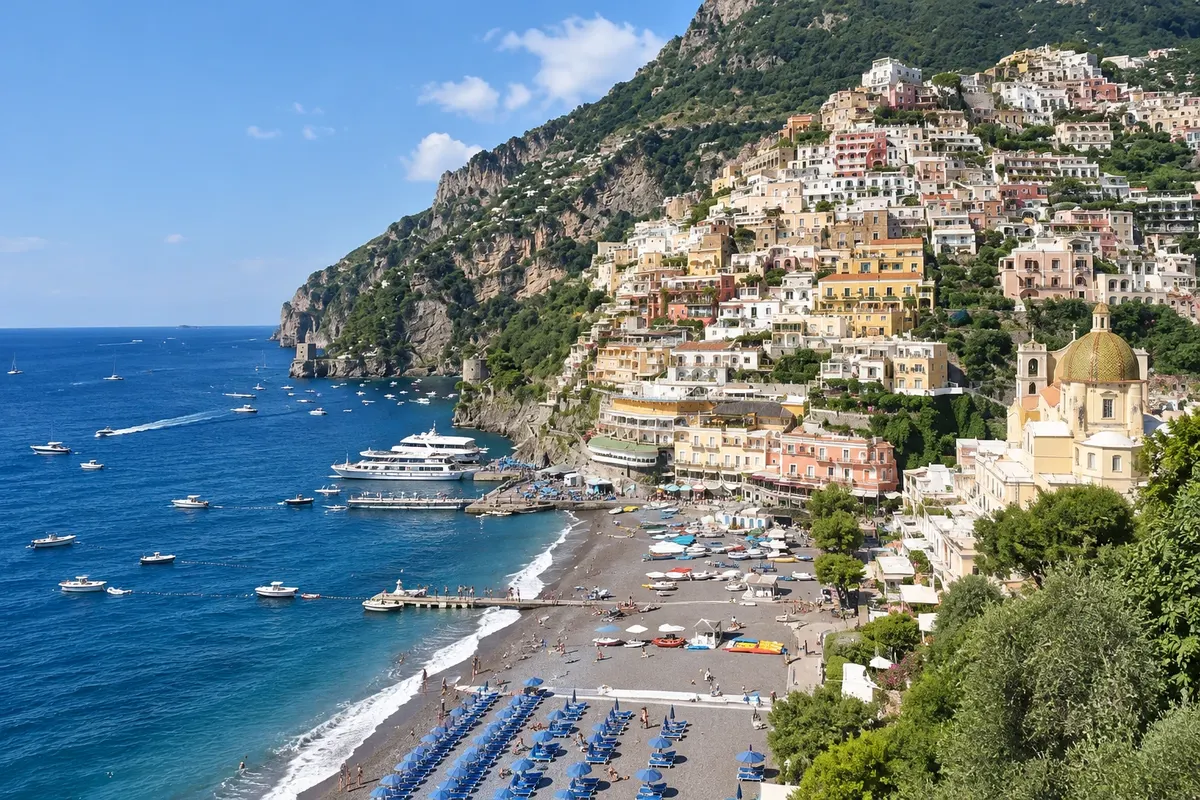
Positano: the vertical village, Spiaggia Grande and the church
Odhod: Positano (SITA bus, Sponda or Chiesa Nuova stop, or pier) Walk on stairways and beach Približno 3 ure Dopoldne ali pozno popoldne moderate (hundreds of steps)
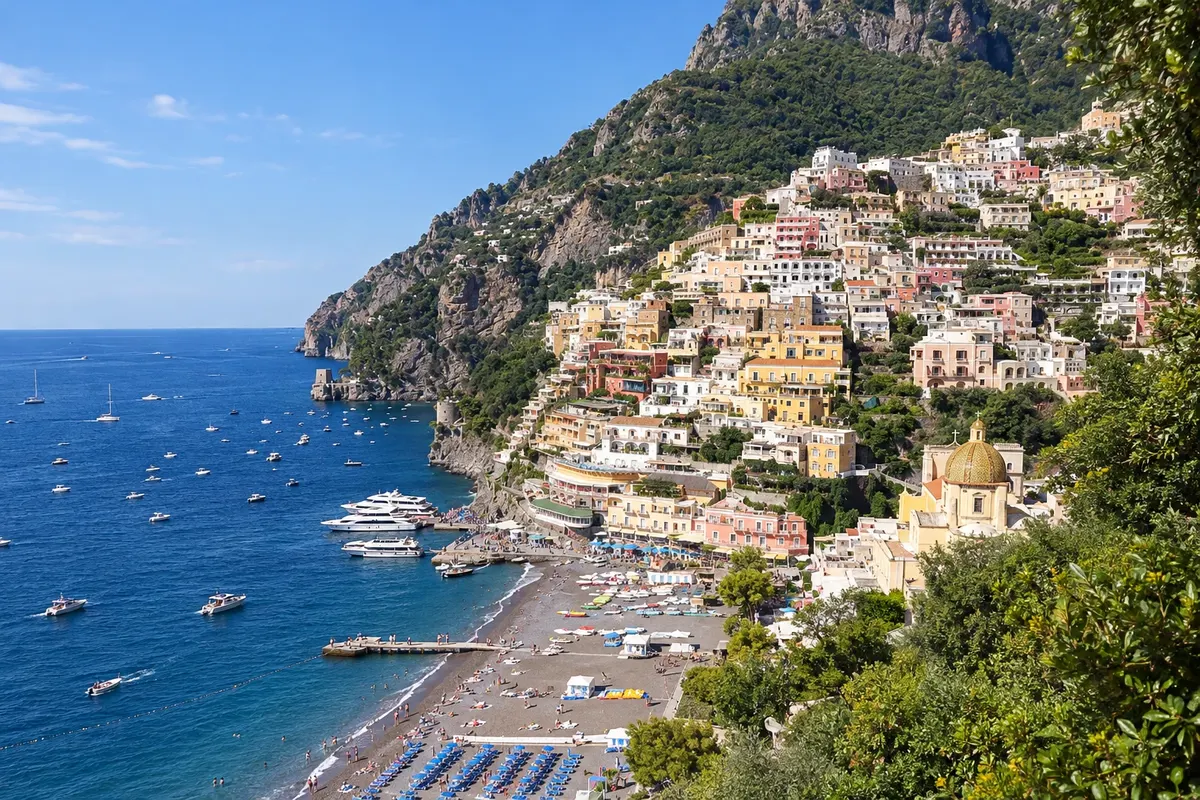
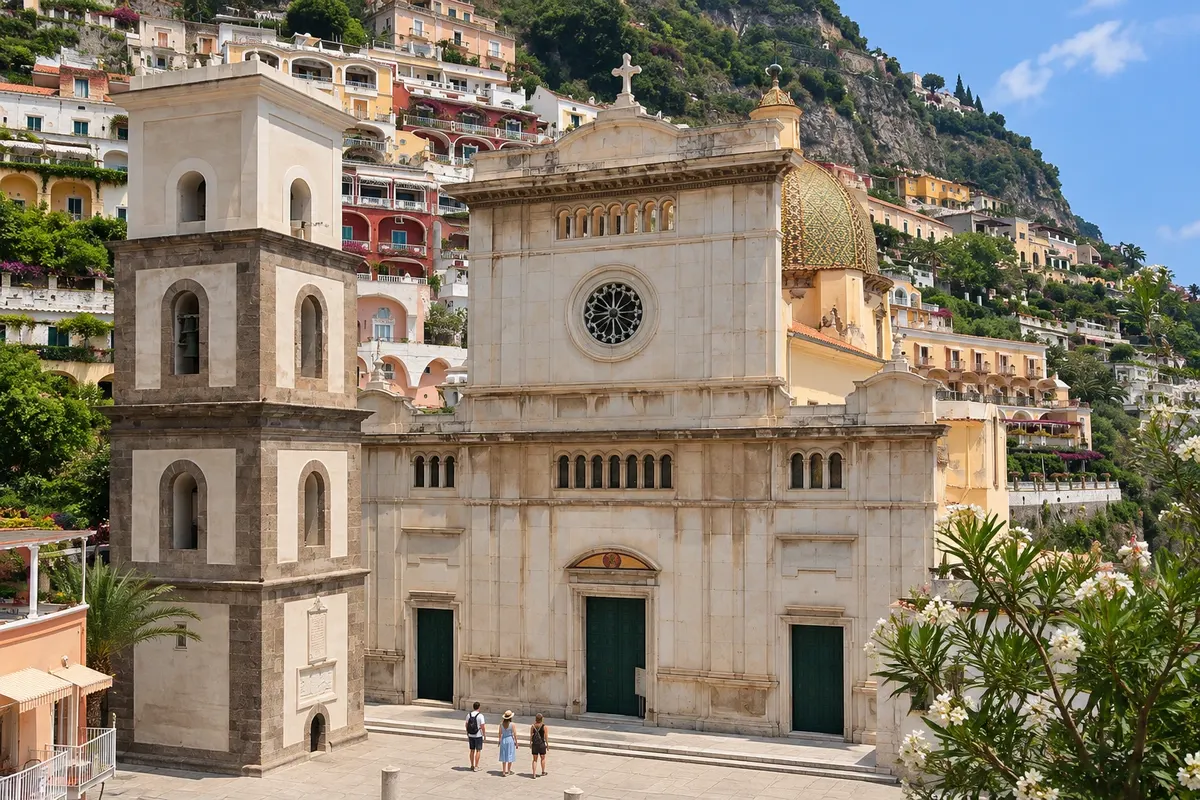
Positano is the village that descends in stairways from the road to the sea, with white, pink and ochre houses stacked on the slope and bougainvillea; there are no flat streets and taxis stop up top. The Chiesa di Santa Maria Assunta, with its green-and-yellow tiled dome, houses the Byzantine icon of the Black Madonna which, legend says, arrived by boat with a voice saying “posa, posa” (rest, rest), the origin of the name; beneath the church is the Roman villa buried by Vesuvius in 79, with frescoes, open to visitors. Spiaggia Grande, of dark pebbles, has colorful umbrella establishments and a free stretch near the pier; Spiaggia del Fornillo, 10 minutes along the cliff path, is quieter. Shops sell “Positano fashion” in linen and sandals made to order. From the boats that leave the pier you can see the whole village.
Kraji na poti: Chiesa di Santa Maria Assunta, Spiaggia Grande.
Vključuje: Small free beach area; paid umbrellas. Roman villa with ticket and opening hours. Walk is free.
Nasvet: Arrive by boat from Amalfi or Sorrento to see the seaside village and avoid the crowded bus at Sponda. Walk up in the morning, go down to the beach late afternoon. Flat sandals and steep stairways don't mix: wear sneakers.
Najboljši čas za obisk: April–October; from November to March some hotels and restaurants close.
Sentiero degli Dei: the Path of the Gods, from Bomerano to Nocelle
Odhod: Bomerano (Agerola), SITA bus from Amalfi mid-mountain trail Približno 4 ure Dopoldne moderate (7 km, 1,700 steps at the end)
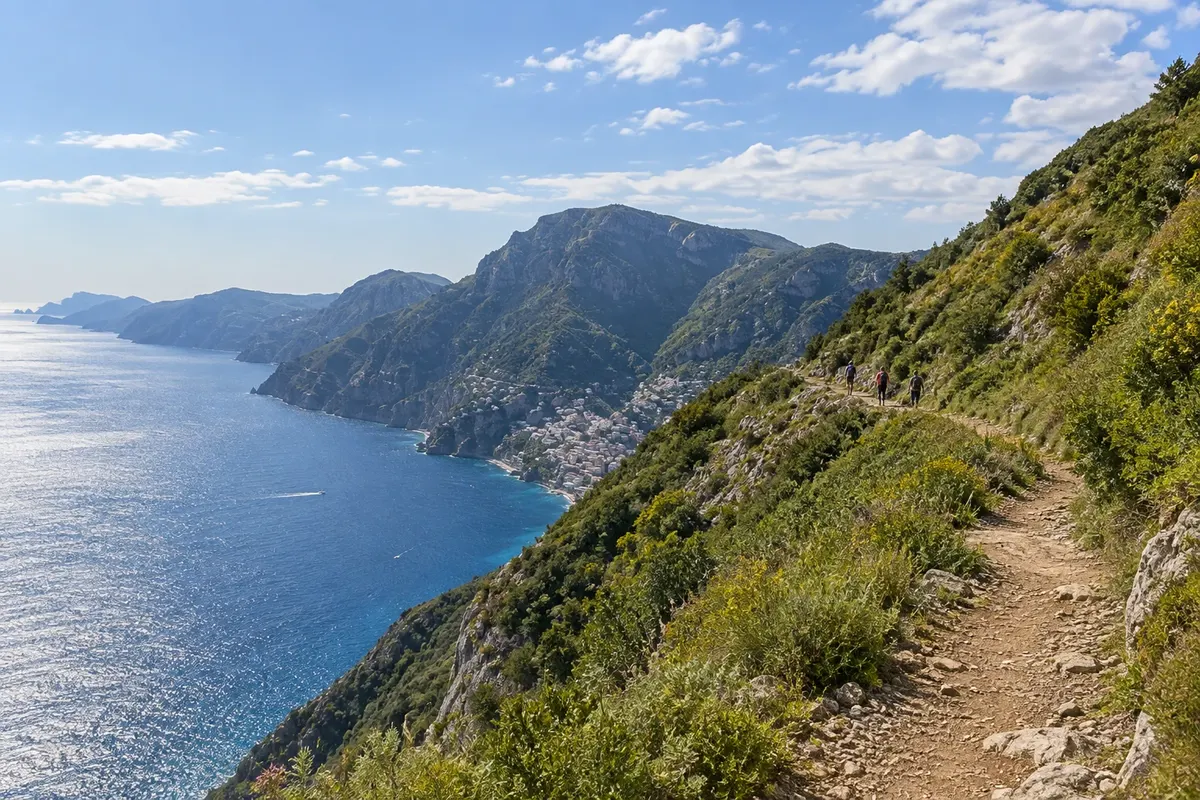
The Sentiero degli Dei (Path of the Gods) is the roughly 7 km trail running about 500 m above sea level along the slope above the sea, from Bomerano (a hamlet of Agerola) to Nocelle, a village above Positano, offering the whole coast, the Faraglioni of Capri in the distance, and goats on abandoned terraces. Heading Bomerano–Nocelle the trail is mostly a gentle descent with the sea ahead; marked in red and white, with a higher (more exposed) and a lower section that join; it takes about 3 hours to Nocelle, where there is a bar and the staircase of 1,700 steps that descends to Positano in 45 minutes (or the local bus). There are narrow sections at the cliff edge with no protection: not suitable for those with vertigo or for small children. The path is stone and dirt, with little shade for most of the route.
Kraji na poti: Sentiero degli Dei, Spiaggia Grande.
Vključuje: Trail free of charge. SITA bus from Amalfi to Bomerano paid separately (about 40 minutes); Nocelle–Positano bus paid separately.
Nasvet: Depart Amalfi on the 7:00 or 8:00 bus to Bomerano and be on the trail before 9:00; in summer the heat starts early. Bring 1.5 liters of water per person, a hat, hiking shoes, and a snack; there are no springs on the route. Do not go in rain or strong wind.
Najboljši čas za obisk: From March to June and September to November; in July and August only at dawn.
Ravello: Villa Rufolo, Villa Cimbrone and the Duomo
Odhod: Amalfi (SITA bus, 25 min) or on foot via Atrani Villa up above with two gardens Približno 4 ure Dopoldne ali popoldne easy (gentle slopes)
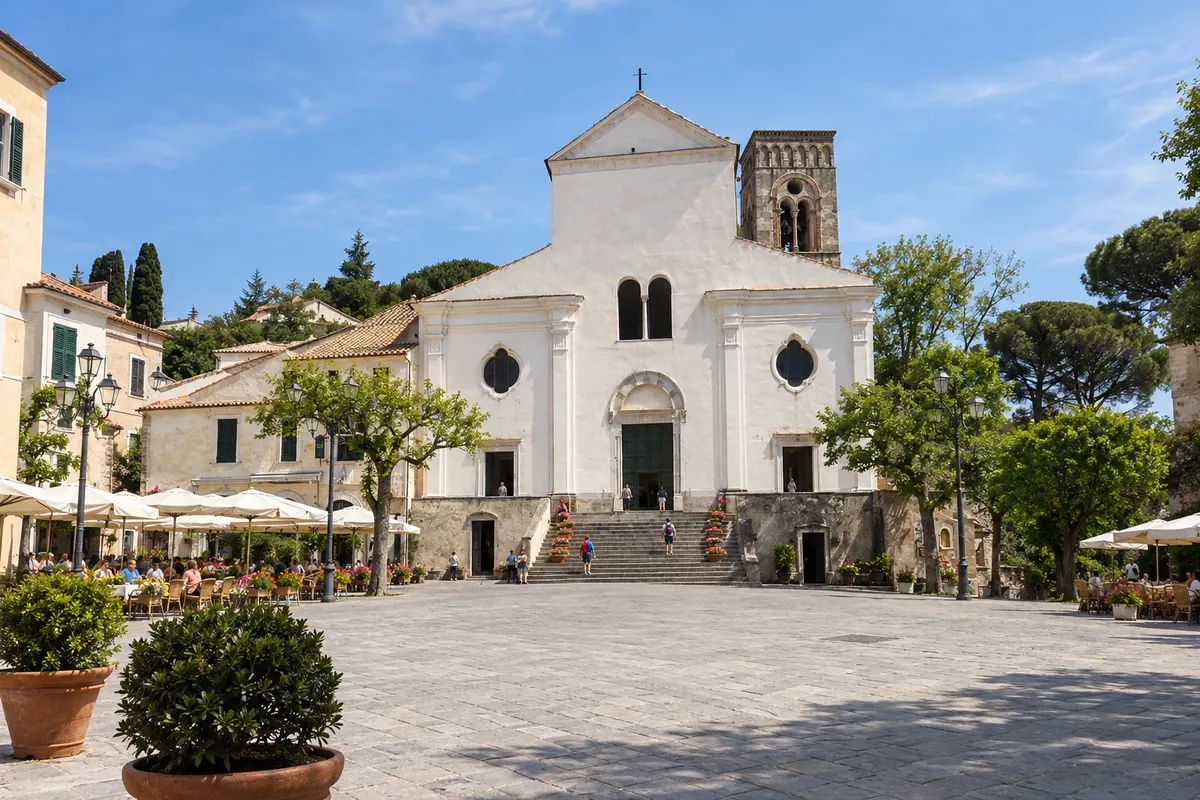
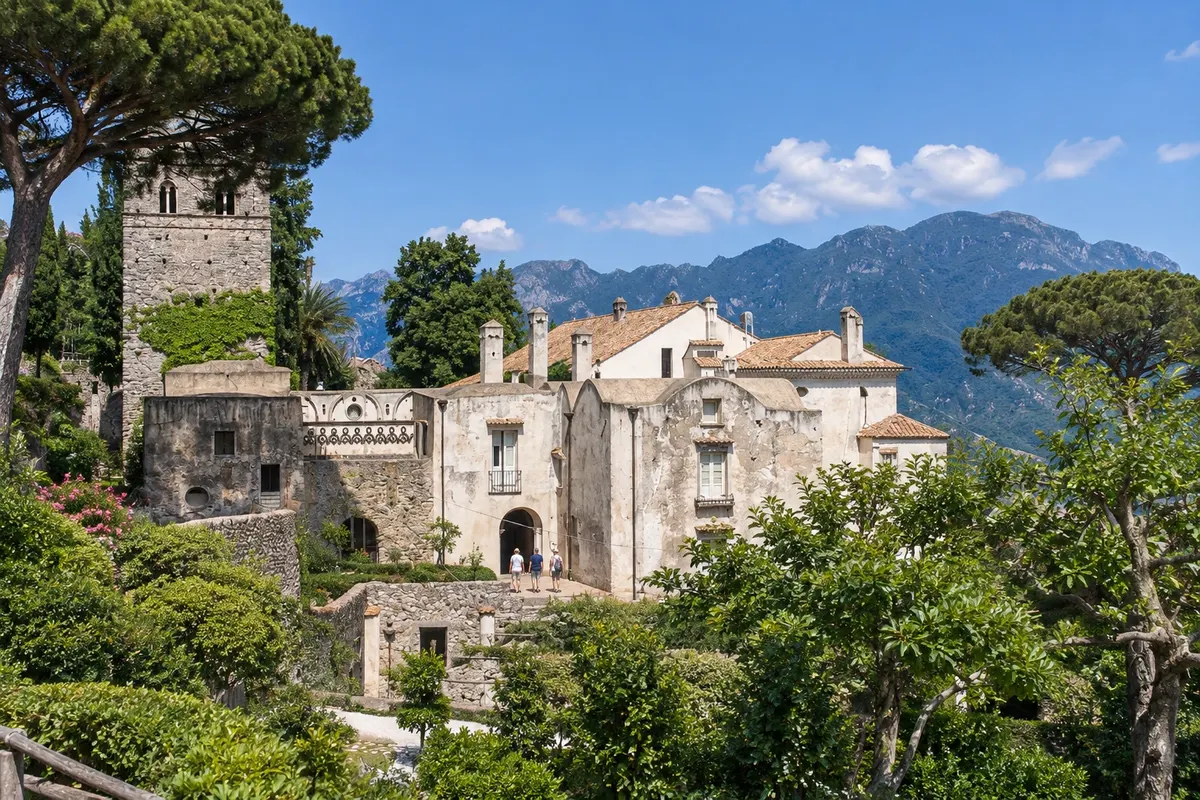
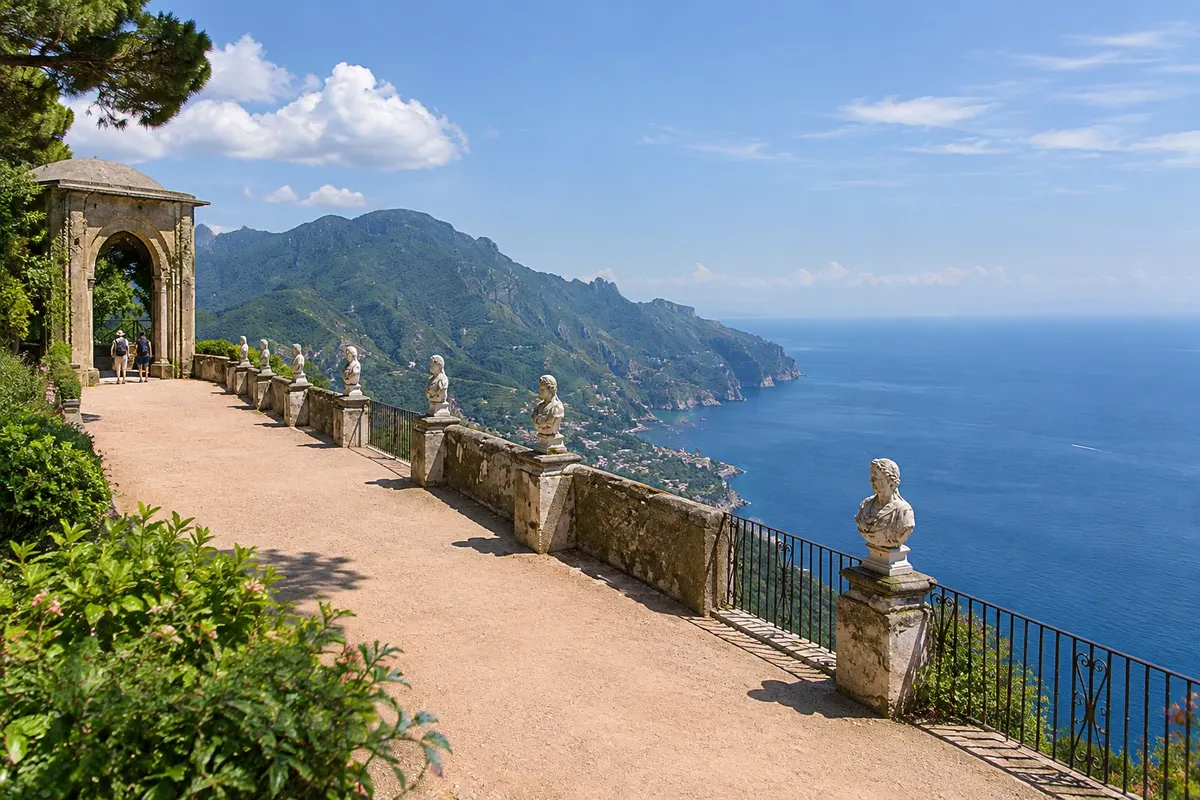
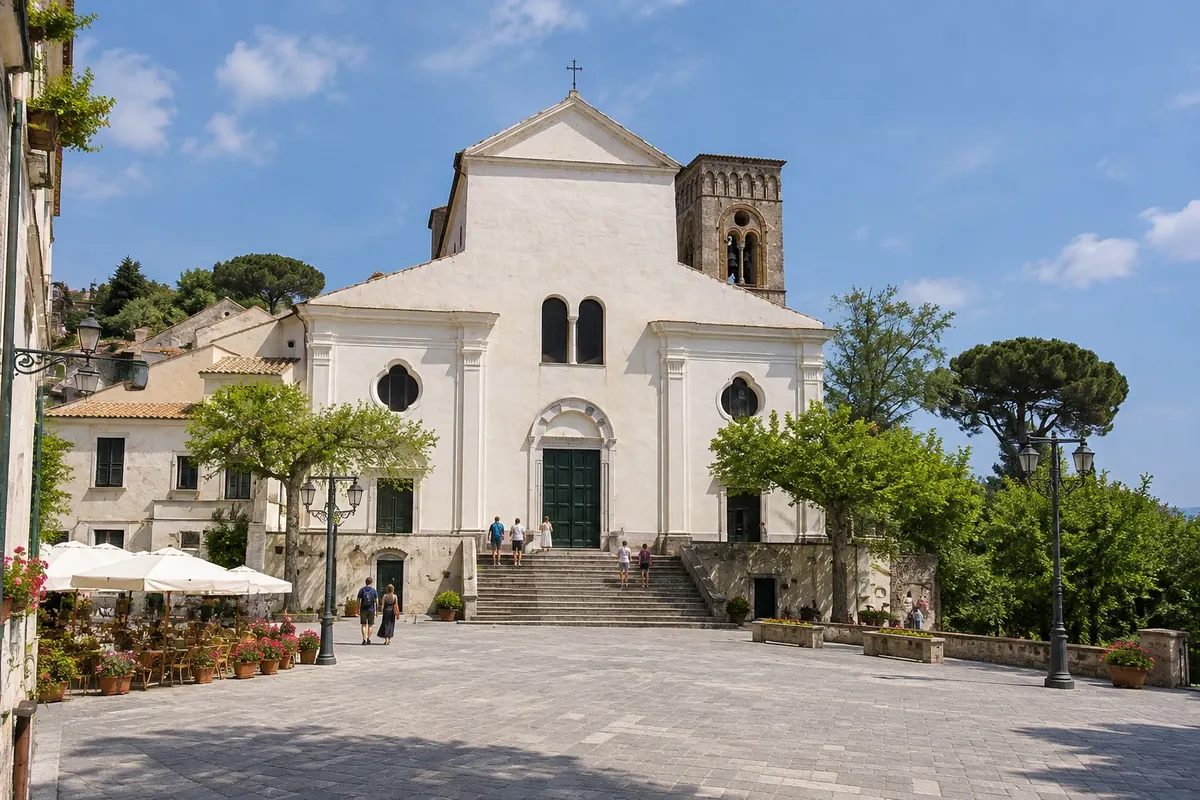
Ravello sits 365 m above the sea, on a ridge between the Amalfi and Minori valleys, and has the Piazza Vescovado as its center, with the Duomo di Ravello, from 1086, featuring bronze doors from 1179, a mosaic pulpit on six lions, and the crypt museum. Villa Rufolo, from the 13th century, with its Moorish tower and Arabic cloister, has terraced gardens over the sea that inspired Wagner in 1880 for Klingsor’s garden in Parsifal; in summer the Ravello Festival builds a stage on the cliff for sunset concerts. Villa Cimbrone, a 10-minute walk along a narrow lane, has a garden created by an English lord in 1904 and the Terrazzo dell'Infinito, the terrace of marble busts hanging 350 m above the sea, offering the most open view of the coast; the palace is a hotel, the gardens are open to all. Ravello is the quiet village of the coast, without a beach, with the best sunsets.
Kraji na poti: Villa Rufolo, Villa Cimbrone, Duomo di Ravello.
Vključuje: Villa Rufolo and Villa Cimbrone with separate paid tickets; Duomo free of charge (crypt museum paid). SITA bus paid separately.
Nasvet: Take the first morning bus from Amalfi up, or walk via Atrani and the 1,500‑step stairway (1 h 15, shaded in the morning). Buy Ravello Festival tickets (June–September) in advance on the official website.
Najboljši čas za obisk: From April to October; the festival runs June through September; the villas are open year-round.
Atrani: the smallest village on the coast, within walking distance of Amalfi
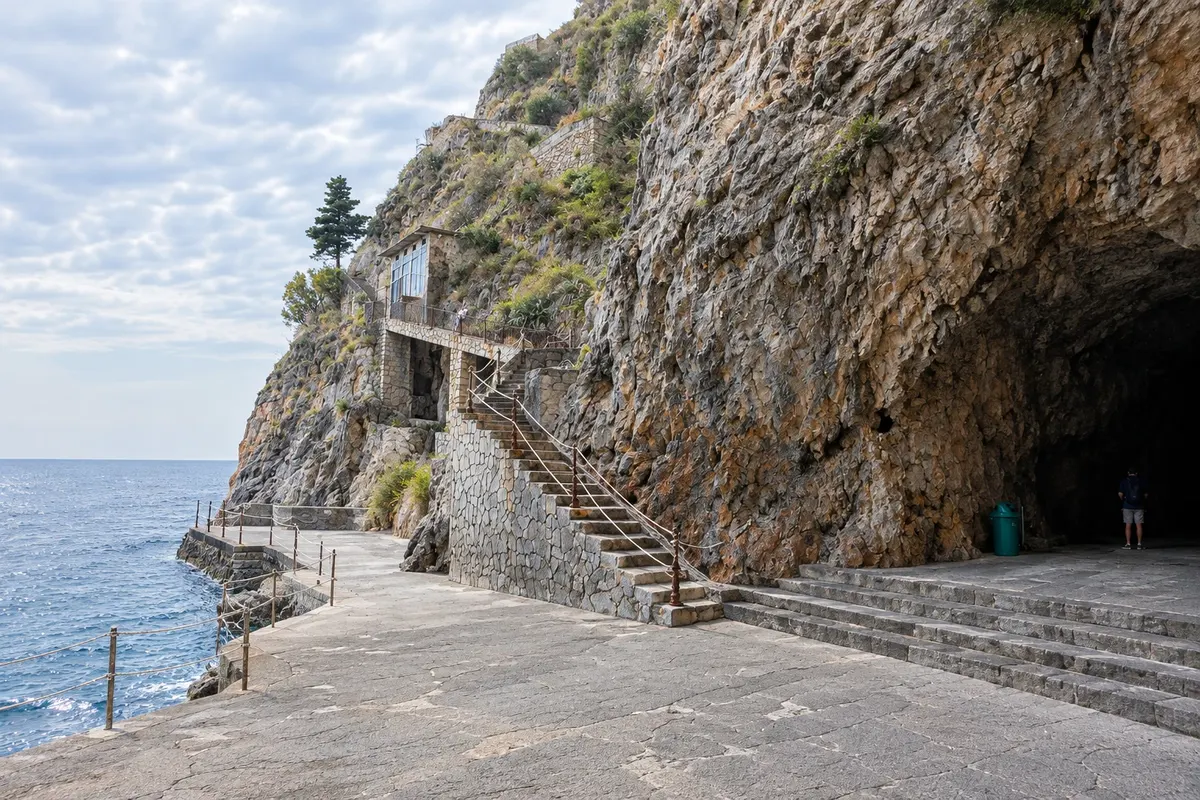
Odhod: Amalfi (10 min on foot via the tunnel or the stairway) Short walk Približno 1 uro in 30 minut late afternoon Lahko
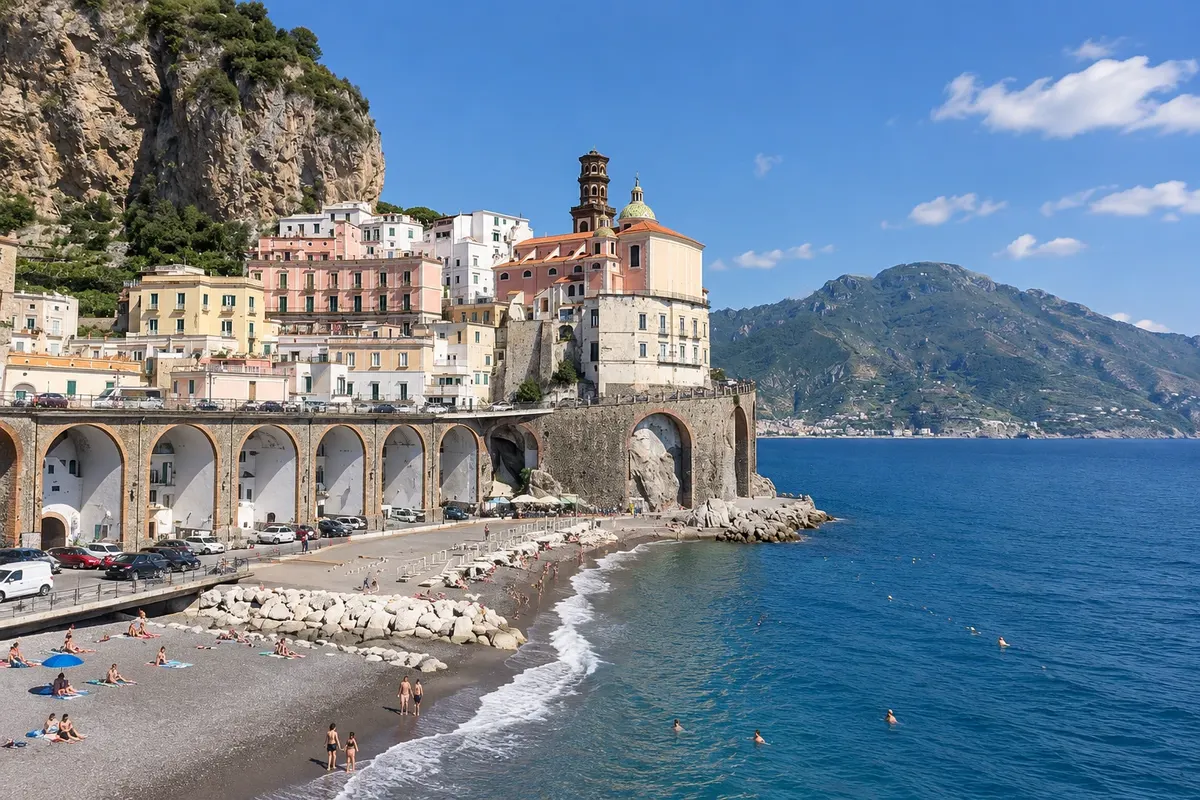
Atrani, a 10 minutes on foot from Amalfi, is the smallest comune in Italy by area, with about 800 residents, and the most intact village on the coast: Piazza Umberto I, tiny, with the fountain and the bars, is a few meters from the dark-sand beach, under the road arch that runs over the houses. The Collegiata di Santa Maria Maddalena, from 1274, with its maiolica dome, is the postcard view from the sea; the church of San Salvatore de' Birecto, from the 10th century, was where the doges of Amalfi were crowned. The vaulted alleys climb the hillside up to the Ravello stairway. It’s the village to dine in without Amalfi’s crowds, five minutes away; the beach, small, has a free (ungated) section.
Kraji na poti: Atrani, Duomo di Amalfi.
Vključuje: Self-guided walk; churches free of charge; beach free in part.
Nasvet: Walk through Amalfi via the stairway path that leaves the road behind Hotel Luna, not along the road. Dine in the square; by day, the beach is the quietest between Amalfi and Minori.
Najboljši čas za obisk: All year; May to September for the beach.


 Brazilija
 Antarktika
 Argentina
 Bolivija
 Čile
 Kolumbija
 Ekvator
 Gvajana
 Francoska Gvajana
 Falklandski otoki (Malvini)
 Paragvaj
 Peru
 Surinam
 Urugvaj
 Venezuela
 Nemčija
 Avstrija
 Belgija
 Hrvaška
 Danska
 Slovaška
 Slovenija
 Španija
 Finska
 Francija
 Grčija
 Nizozemska
 Madžarska
 Irska
 Islandija
 Luksemburg
 Norveška
 Poljska
 Portugalska
 Združeno kraljestvo
 Češka
 Švedska
 Švica
 Turčija
 Bermudi
 Kanada
 Združene države Amerike
 Grenlandija
 Mehika
 Sveta Peter in Mihael
 Dominikanska republika
 Japonska
 Južnoafriška republika
 Egipt
 Avstralija
 Fidži
 Nova Zelandija
 Papua Nova Gvineja