Escalier du Roi d'Aragon and cliff path to the Phare de Pertusato
Odhod: Haute-Ville de Bonifacio Peš Pol dneva Dopoldne ali popoldne moderate (steps and trail without shade)
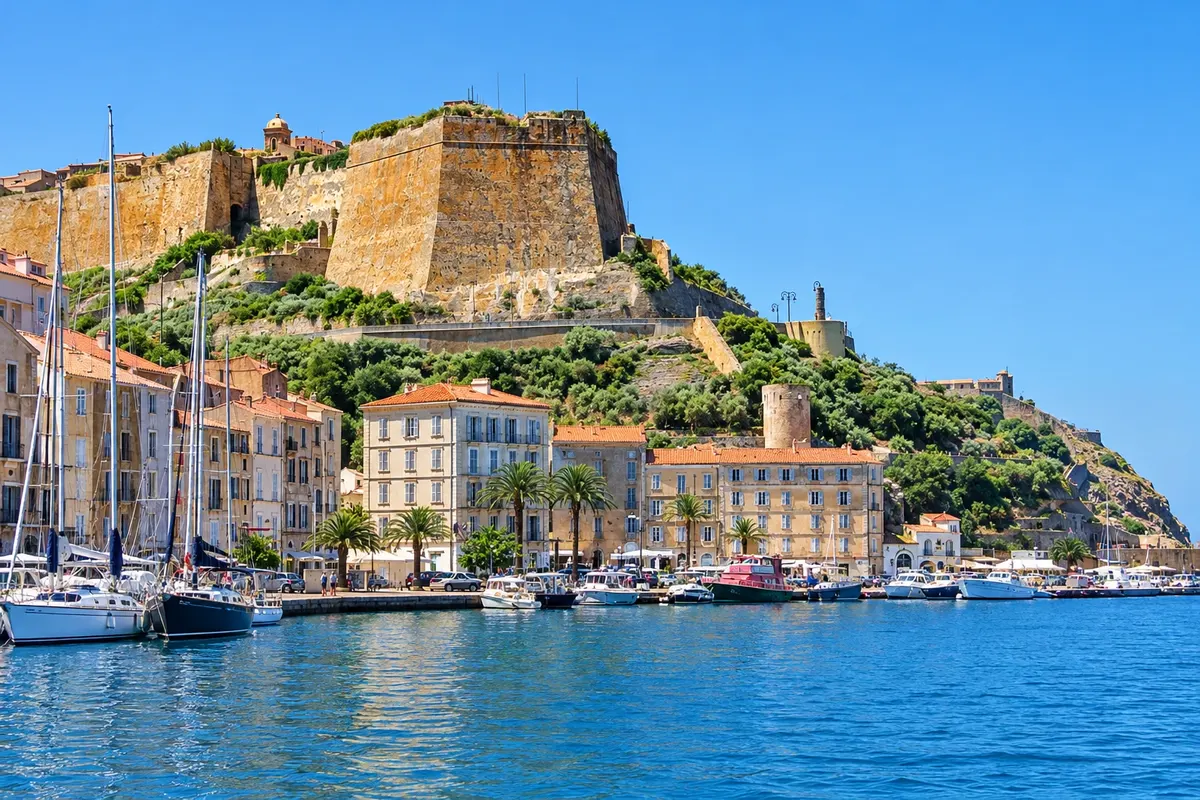
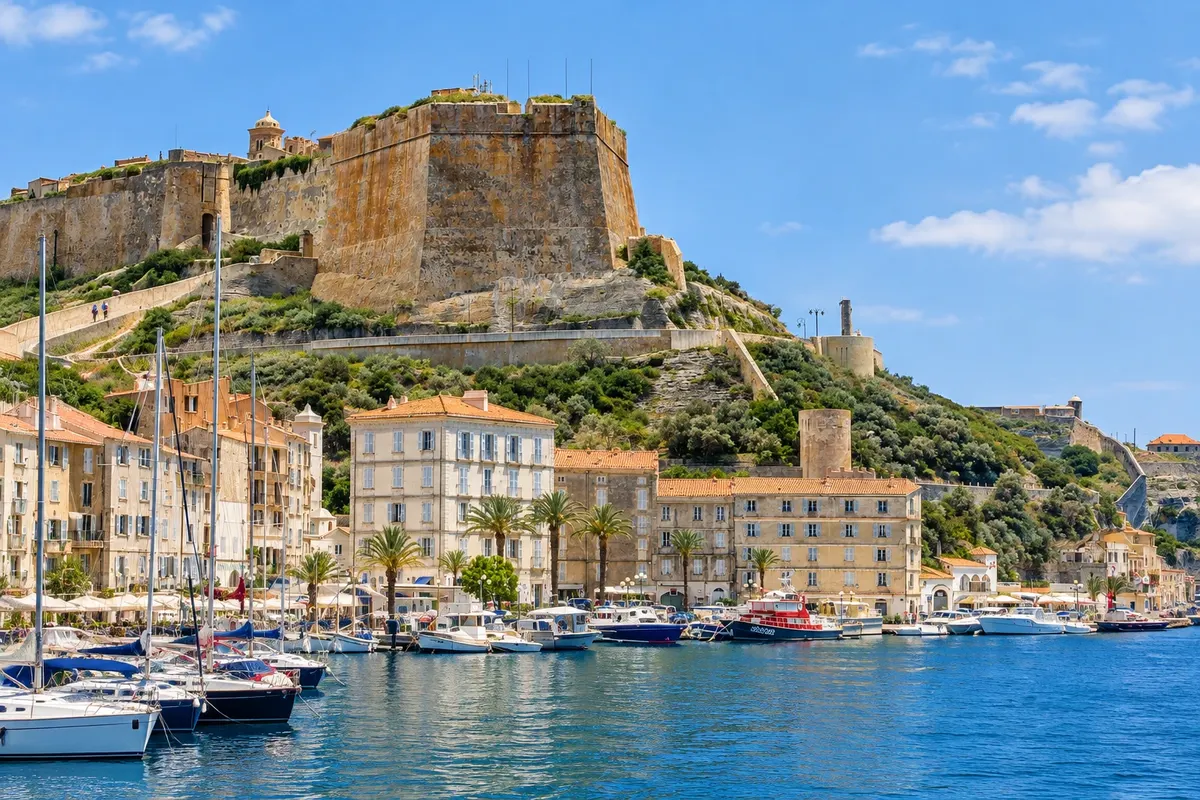
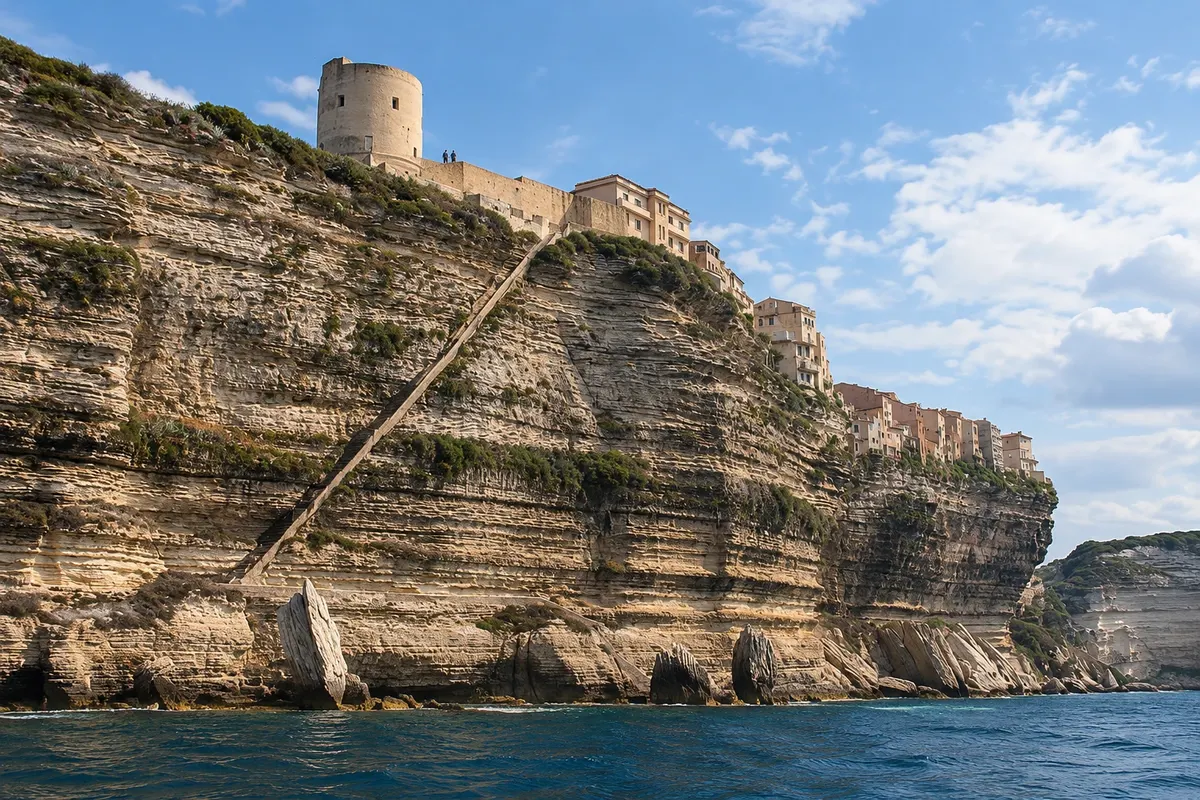
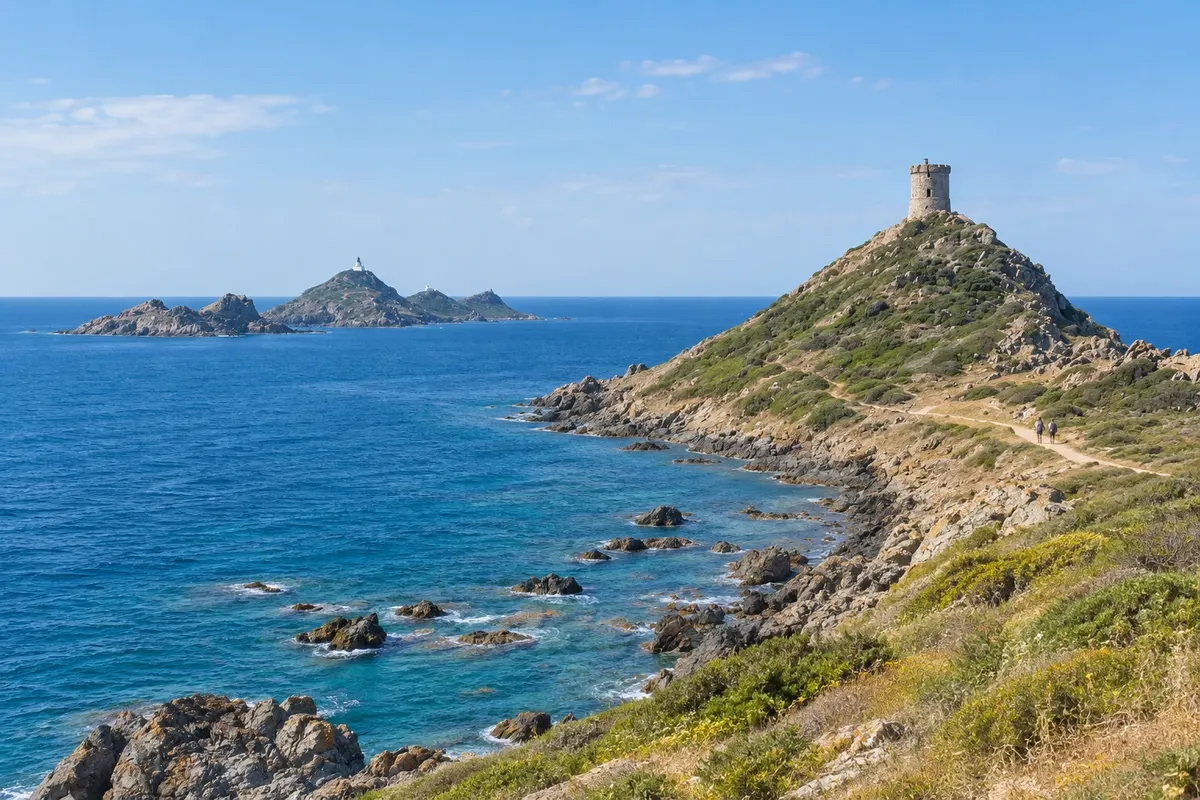
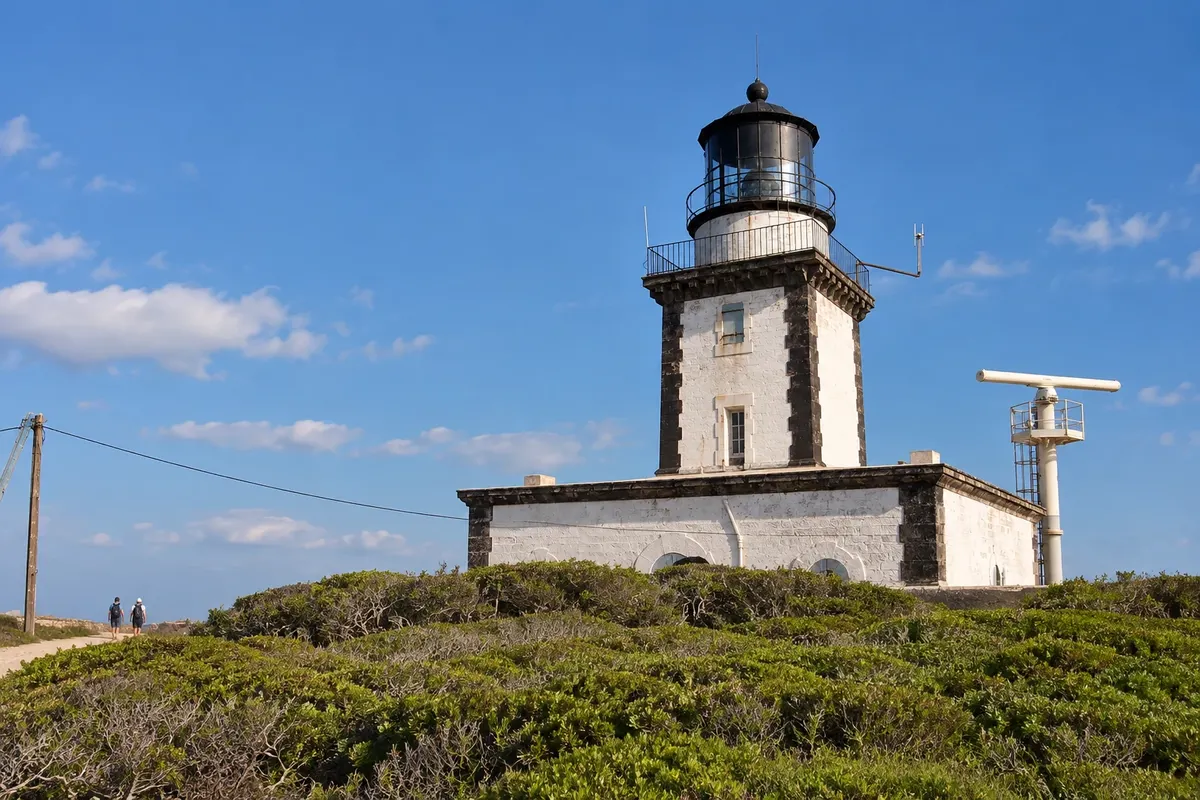
The Escalier du Roi d'Aragon is a staircase of 189 uneven steps carved into the limestone cliff, descending from the upper town almost to sea level. It sits in the Pisan quarter near the Torrione. Legend says the troops of King Alfonso V of Aragon dug it in one night during the 1420 siege. The more accepted account credits Franciscan monks who worked to reach a potable water source. Below, a narrow path runs along the rock above the sea. To view the cliffs from above, leave the upper town via the Chapelle Saint-Roch and follow the Sentier Campu Rumanilu, a trail that climbs by a stone stairway and follows the plateau edge, offering views of the Haute-Ville balanced on the rock. The trail continues south to the Phare de Pertusato and Plage de Saint-Antoine. From the lighthouse you can see the Îles Lavezzi and the Sardinian coast.
Kraji na poti: Escalier du Roi d'Aragon, Haute-Ville de Bonifacio, Chapelle Saint-Roch, Sentier Campu Rumanilu, Phare de Pertusato, Plage de Saint-Antoine.
Vključuje: The staircase requires an entrance ticket; there is a combined ticket with the Bastion de l'Étendard. The trail is free.
Nasvet: The staircase is steep and the steps are high: not suitable for people with mobility difficulties. The trail has no shade; bring water, a hat and sunscreen.
Najboljši čas za obisk: From April to June and September to October; in summer, only early or late afternoon.
Boat to the caves and cliffs of Bonifacio
Odhod: Port of Bonifacio Sightseeing boat Približno 1 uro Dopoldne ali popoldne Lahko
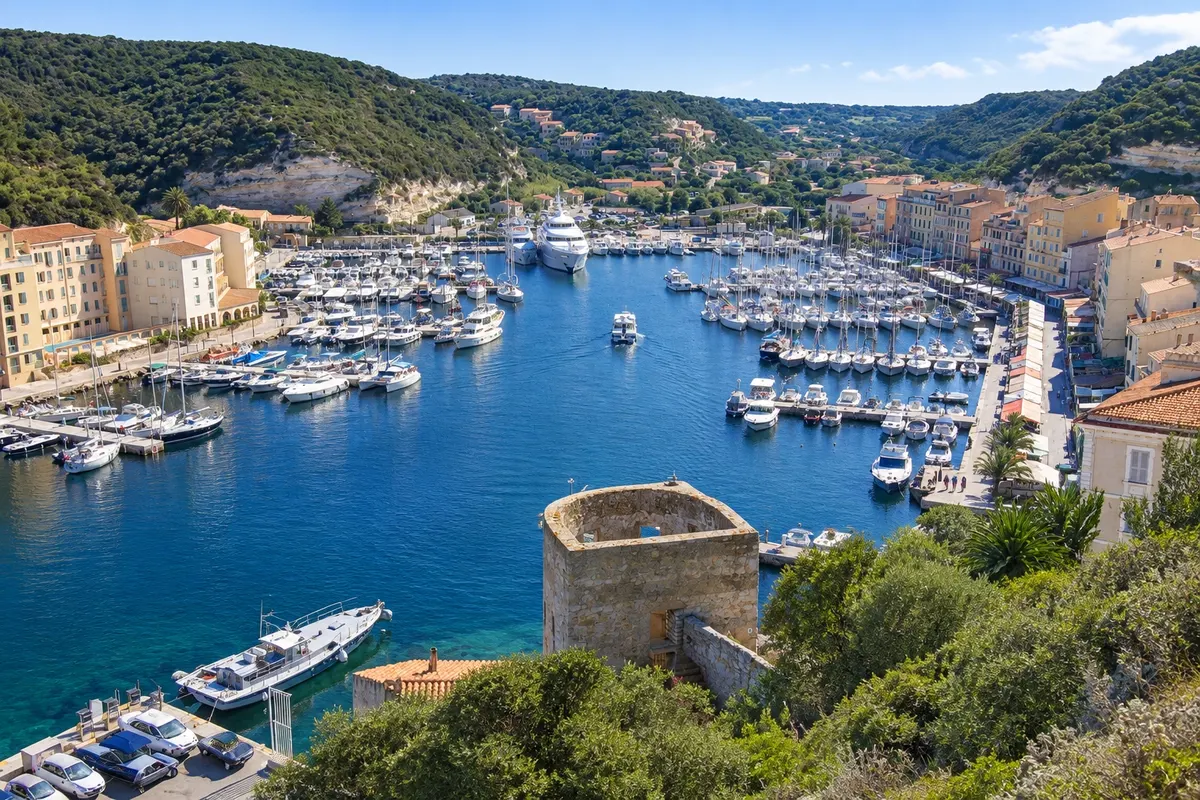
Seen from the sea, Bonifacio shows what cannot be seen from above: the whole town on the white cliff, cut in layers, with houses on the rock edge. Boats leave the port, cross the narrow entrance channel (the Goulet) and sail along the cliffs. The short route passes the Grotte de Saint-Antoine, called Chapeau de Napoléon for its shape, the rock Gouvernail de la Corse and the base of the Escalier du Roi d'Aragon. The Grotte du Sdragonato, known for the opening in the roof shaped like a map of Corsica, is no longer visited for safety reasons. The entire coast is part of the Réserve naturelle des Bouches de Bonifacio. Many companies join this trip with the Îles Lavezzi tour.
Kraji na poti: Port de Bonifacio, Grotte de Saint-Antoine, Gouvernail de la Corse, Escalier du Roi d'Aragon, Phare de la Madonetta, Réserve naturelle des Bouches de Bonifacio.
Vključuje: Boat tour with commentary on board. Paid separately. Check the current price list.
Nasvet: There are several companies on the quay offering tours from 1 hour to full day. Sit on the cliff side. To get closer to the caves there are kayak and stand-up paddle tours.
Najboljši čas za obisk: Season generally runs from April to October.
Îles Lavezzi: the archipelago of the Bouches de Bonifacio
Odhod: Port of Bonifacio Sightseeing boat or water shuttle half day or full day Dopoldne easy (rocky walking)
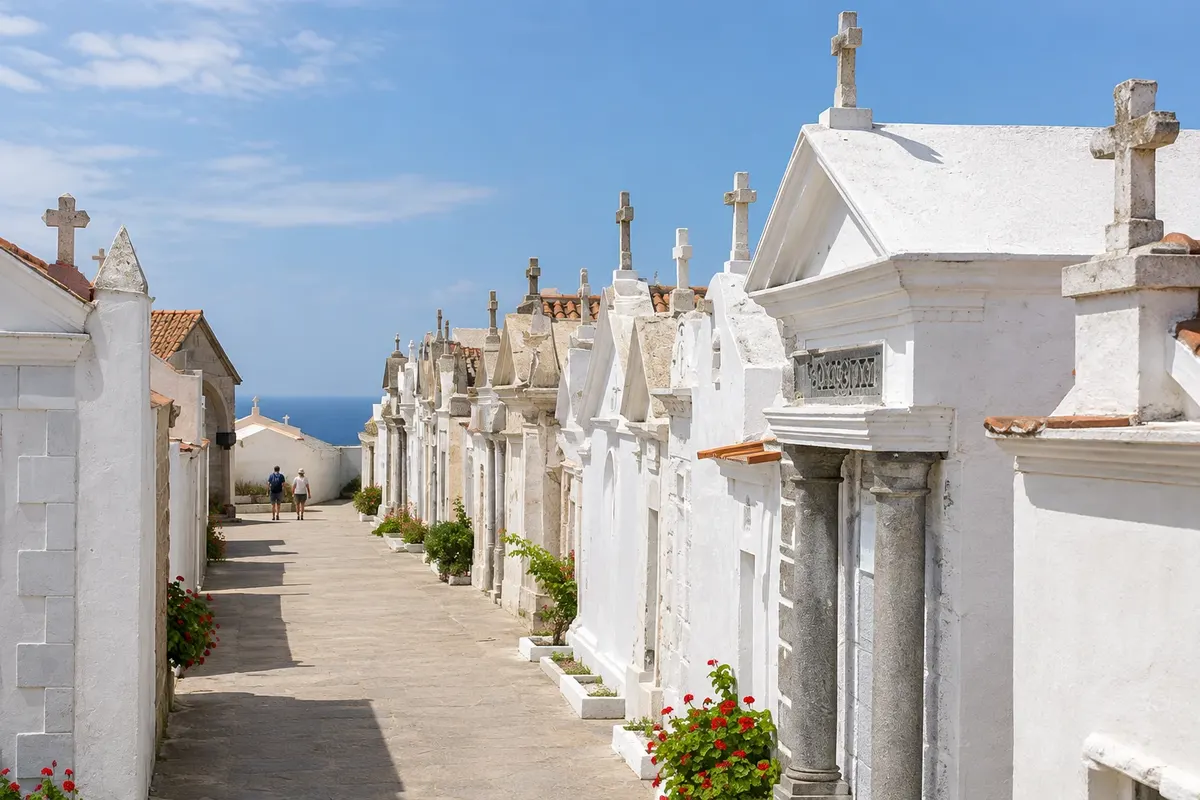
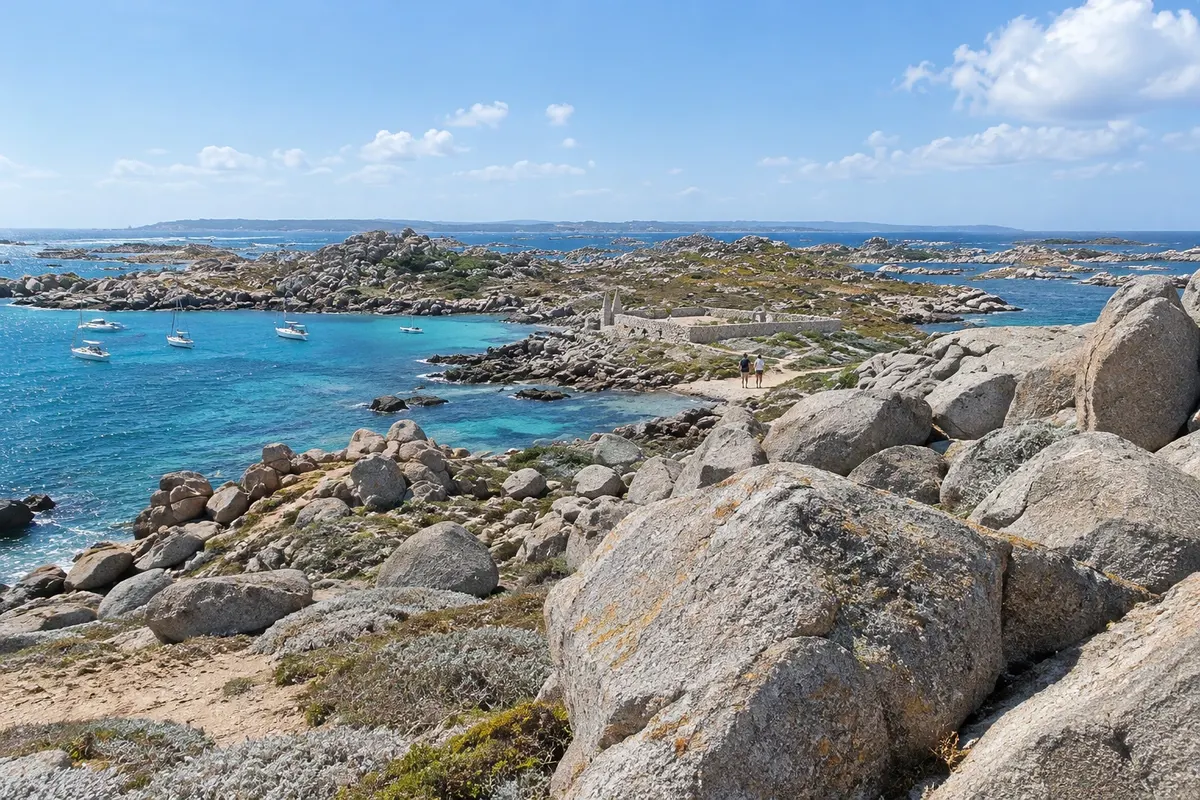
The Îles Lavezzi are an archipelago of islands and granite rocks about 10 km southeast of Bonifacio, in the strait between Corsica and Sardinia. The archipelago contains the southernmost point of metropolitan France. The crossing takes about 20 minutes. The main island, Lavezzo, has clear-water coves between rounded granite boulders, a lighthouse from 1874 and two cemeteries linked to the wreck of the frigate La Sémillante in 1855, when all 773 men on board died while bound for war in the Black Sea. A stele commemorates the tragedy. The nature reserve allows landings only on some islands; on those islands there are marked paths among the rocks and places for swimming. Many boats follow the full route: Bonifacio cliffs and a stop at the Lavezzi.
Kraji na poti: Îles Lavezzi, Île Lavezzo, Cimetière de la Sémillante, Réserve naturelle des Bouches de Bonifacio, Bouches de Bonifacio.
Vključuje: Boat crossing; some departures include the Bonifacio cliffs. Paid separately. There are no services on the island: bring water and a snack.
Nasvet: Bring water, a hat, sunscreen and shoes that can go in the water. Respect closed areas of the reserve. With strong wind, departures may be canceled.
Najboljši čas za obisk: Season generally from April to October; for swimming, June to September.
Porto-Vecchio beaches: Palombaggia and Santa Giulia
Odhod: Porto-Vecchio or Bonifacio Car full day morning and afternoon Lahko
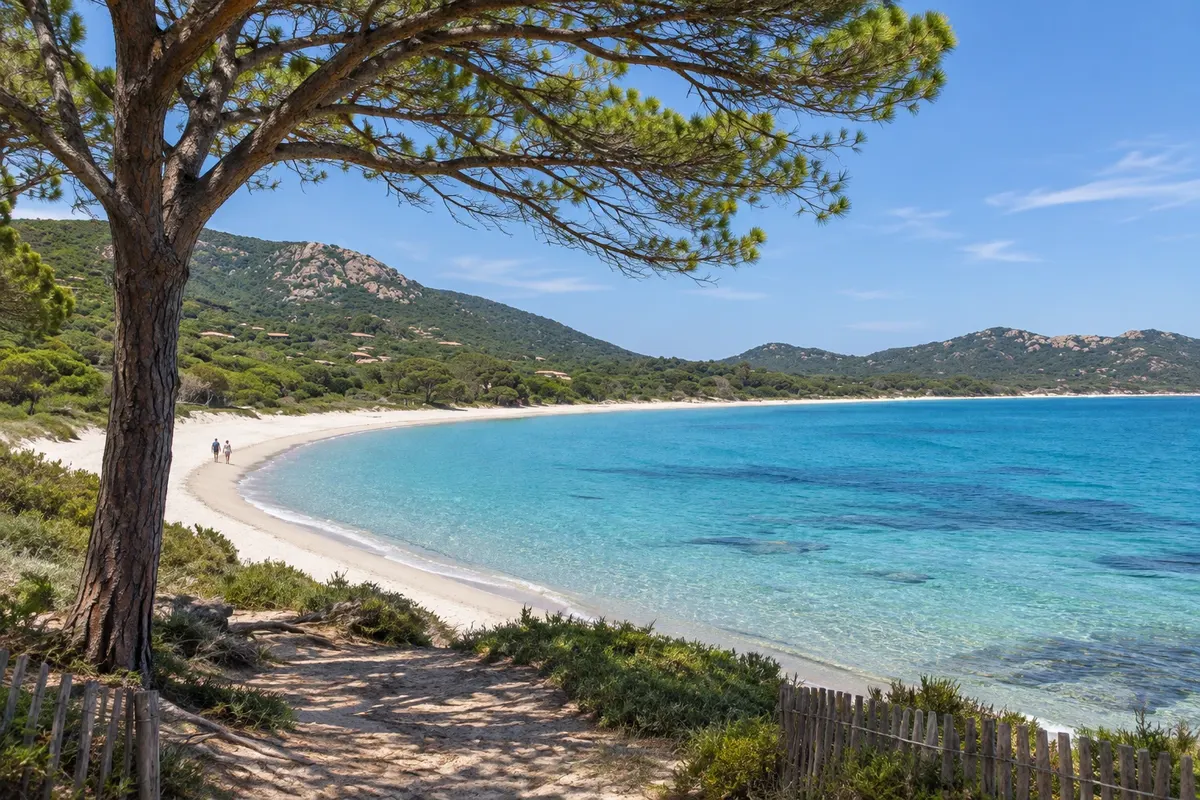
South of Porto-Vecchio, on the east coast, are Corsica’s best-known beaches. Plage de Palombaggia has white sand between red rocks, maritime pines behind it and the Îles Cerbicale offshore. Part of the land behind the beach is protected by the Conservatoire du littoral. A little further south, the Golfe de Santa Giulia has a long crescent beach of shallow, clear water, separated from a lagoon by a strip of pine woodland. The southern shore of the gulf is a protected natural area. The two beaches are a short distance from each other and a few kilometers from Porto-Vecchio. Figari airport is 19 km from Porto-Vecchio and 15 km from Bonifacio, making it easy to include the beaches on your last day.
Kraji na poti: Plage de Palombaggia, Golfe de Santa Giulia, Porto-Vecchio, Îles Cerbicale.
Vključuje: Beach access is free; paid parking applies in summer. There are beach bars and chair rentals during the season.
Nasvet: In July and August, arrive early: parking lots fill up by late morning. Bring an umbrella: there is little shade on the beach.
Najboljši čas za obisk: For swimming, June through September; the sea is usually warmer from July through September.
Aiguilles de Bavella and the Col de Bavella
Odhod: Porto-Vecchio or Bonifacio Car most of the day, with a short walk Ves dan easy to moderate (mountain road)
The Aiguilles de Bavella are sharp granite towers, up to 1,857 m high, in the southern part of Corsica’s central range. They sit above the Col de Bavella, at 1,218 m, a mountain pass linking Alta Rocca to the east coast. The most common route leaves Porto-Vecchio inland, passes the village of Zonza and climbs to the pass. At the top there is parking, wind-sculpted pines and views of the needles. Marked trails leave the pass for short hikes, from one to a few hours, among rocks and pine woods. The GR20 long-distance trail also crosses here; it runs roughly 180 km in 16 stages across Corsica and is for experienced hikers. The area is part of the Corsica Regional Natural Park; camping there is prohibited.
Kraji na poti: Aiguilles de Bavella, Col de Bavella, Zonza, Alta Rocca, GR20.
Vključuje: No entrance fee. Parking at the pass may be paid separately in season.
Nasvet: Narrow, winding road: allow more time than the distance suggests. It’s colder up high than on the coast; bring a jacket. Depart early in summer.
Najboljši čas za obisk: From May to October; in winter there may be snow at the pass.
Train from Ajaccio to Corte through the mountains
Odhod: Gare d'Ajaccio Train of the Chemins de fer de la Corse about 2 hours each way full day (round trip) Lahko
Corsica has its own rail network, on metre-gauge tracks, the Chemins de fer de la Corse, called by Corsicans u Trinichellu (the little train). There are two lines: Ajaccio–Corte–Bastia across the island’s centre, and the branch from Ponte-Leccia to Calvi in the north. The southern part of the island has no train service. Leaving Ajaccio, the train climbs the Gravona valley, passes Bocognano and crosses the mountain through the Vizzavona tunnel, 3,916 m long. Vizzavona station, set in the forest, is the starting point for hikes. After Vivario the train crosses the Pont du Vecchio, a metal viaduct from 1892 with a structure by Gustave Eiffel’s company, 94 m above the river, then descends in curves to Venaco and Corte. It’s a way to see the mountainous interior without driving. You can do a return trip the same day, with time to visit Corte.
Kraji na poti: Gare d'Ajaccio, Bocognano, Vizzavona, Pont du Vecchio, Vivario, Venaco, Corte.
Vključuje: Train fare paid separately. Check timetables and the current chart before you go.
Nasvet: Timetables change by season and there are few trains per day: check the return schedule before you leave. Bring a snack; Corte has cafés near the station.
Najboljši čas za obisk: All year; from May to October the days are longer for the round-trip outing.
Corte: citadel, Musée de la Corse and Restonica valley
Odhod: Corte (train from Ajaccio or Bastia) On foot in town; car or shuttle for the Restonica full day morning and afternoon easy; valley trails, moderate
Corte lies in the center of Corsica, amid the mountains between Ajaccio and Bastia. It was the seat of Pascal Paoli’s government in the 18th century and hosts the island university. The upper town climbs to the Citadelle de Corte, the only inland citadel in Corsica, built around a 1419 castle on a rock, the Nid d'Aigle. Inside is the Musée de la Corse, the regional anthropology museum about the island’s life, traditions and history. From the viewpoints you can see the Restonica and Tavignano valleys. The Restonica is a mountain river that springs from Lac de Melo at about 1,700 m and descends in cascades and pools down to Corte. From May 2 to September 30, private cars only reach Tuani at kilometer 6; a shuttle takes visitors from Corte to A Frassetta, 900 m up. From there long trails head to the Bergeries de Grotelle and Lac de Melo. Check access to the upper valley before you go.
Kraji na poti: Corte, Citadelle de Corte, Musée de la Corse, Gorges de la Restonica, Tuani, A Frassetta, Bergeries de Grotelle, Lac de Melo.
Vključuje: The town has no entrance fee. The Musée de la Corse charges admission. The Restonica shuttle sells tickets via the Via Corsica app (no onboard sales).
Nasvet: The trails in the upper valley are mountain routes: start early, bring water and proper hiking footwear. The river pools are cold even in summer.
Najboljši čas za obisk: Od maja do oktobra.
Sartène and the prehistoric site of Filitosa
Odhod: Ajaccio, Propriano or Bonifacio Car full day morning and afternoon Lahko
Filitosa is an archaeological site in Sollacaro, in the Taravo valley, occupied since the Neolithic and especially during the Bronze Age. It is known for the statue-menhirs: granite blocks carved with faces and, in some cases, weapons. The visit follows an outdoor route over a hill with walls of large stones, circular structures and the statue-menhirs, some grouped around an olive tree. Guided tours run from June to September. Sartène lies further south on the T40 road between Ajaccio and Bonifacio. It is a town of tall granite houses, with narrow streets and covered passages. On Good Friday the Catenacciu procession takes place there. Both sites fit into the same day trip between Ajaccio and Bonifacio, with a lunch stop in Propriano or Sartène.
Kraji na poti: Filitosa, Sollacaro, Vallée du Taravo, Propriano, Sartène.
Vključuje: Filitosa requires an entry fee. Sartène has no charge. Check the current chart.
Nasvet: Filitosa is off the main road; allow time for the detour. In Filitosa there is little shade along the route: bring a hat.
Najboljši čas za obisk: Od aprila do oktobra.
Bonifacio by boat departing from Ajaccio
Odhod: Ajaccio or Porticcio Sightseeing boat full day, with about 4 hours in Bonifacio Ves dan Lahko
If you stay only in Ajaccio and don’t want to drive south, there are full-day boat excursions to Bonifacio. The boat follows the southwest coast of Corsica and, on arrival, passes the cliffs of Bonifacio, including the Grotte de Saint-Antoine, the Escalier du Roi d'Aragon seen from below, and the Phare de la Madonetta. In Bonifacio there is a stop of about 4 hours to go up to the Haute-Ville. On some departures the tourist train to the citadel is included. It’s a long day at sea; to see Bonifacio at a relaxed pace, the ideal is to stay overnight there.
Kraji na poti: Ajaccio, Porticcio, Bonifacio, Grotte de Saint-Antoine, Escalier du Roi d'Aragon, Phare de la Madonetta.
Vključuje: Generally: sailing, onboard commentary, and the tourist train in Bonifacio. Meals paid separately. Check the current schedule.
Nasvet: If you get seasick, bring medication. Bring a jacket and sunscreen.
Najboljši čas za obisk: Season generally runs from April to October.


 Brazilija
 Antarktika
 Argentina
 Bolivija
 Čile
 Kolumbija
 Ekvator
 Gvajana
 Francoska Gvajana
 Falklandski otoki (Malvini)
 Paragvaj
 Peru
 Surinam
 Urugvaj
 Venezuela
 Nemčija
 Avstrija
 Belgija
 Hrvaška
 Danska
 Slovaška
 Slovenija
 Španija
 Finska
 Grčija
 Nizozemska
 Madžarska
 Irska
 Islandija
 Italija
 Luksemburg
 Norveška
 Poljska
 Portugalska
 Združeno kraljestvo
 Češka
 Švedska
 Švica
 Turčija
 Bermudi
 Kanada
 Združene države Amerike
 Grenlandija
 Mehika
 Sveta Peter in Mihael
 Dominikanska republika
 Japonska
 Južnoafriška republika
 Egipt
 Avstralija
 Fidži
 Nova Zelandija
 Papua Nova Gvineja