
Railway heritage · Valença, RJ
Túnel que Chora
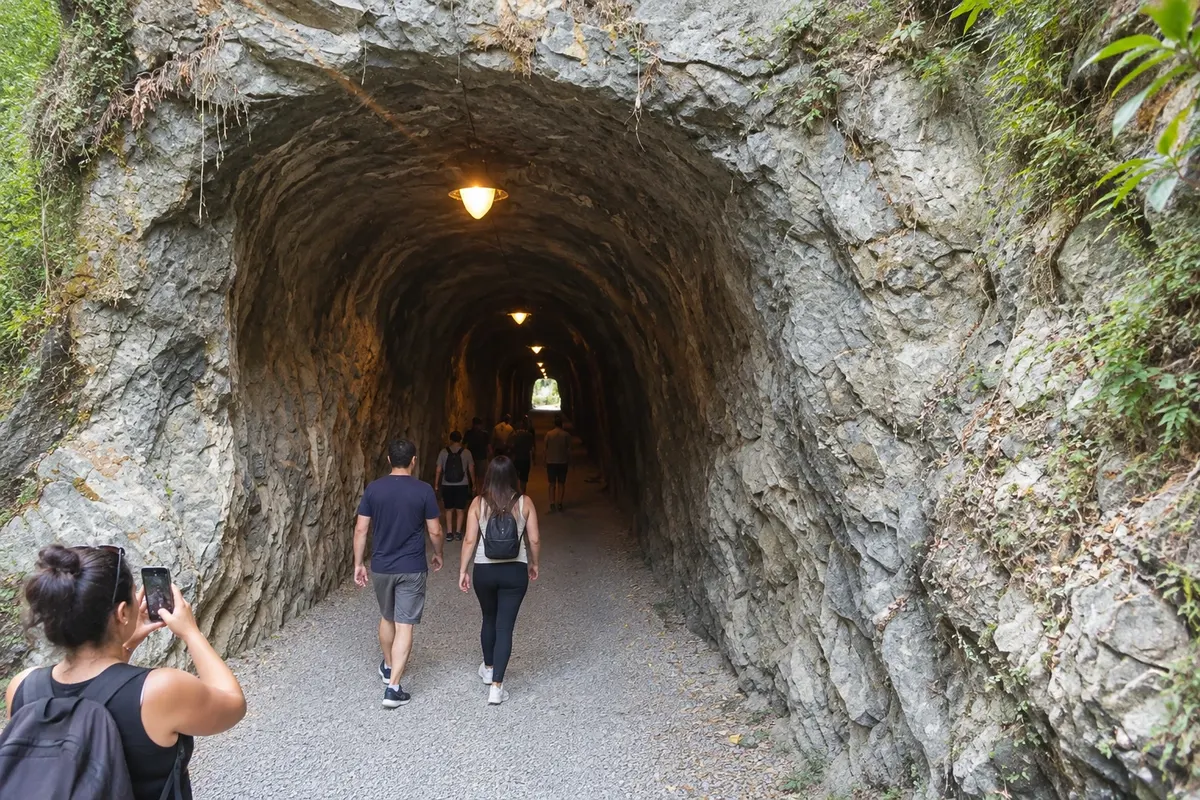
The Túnel que Chora, also called Túnel Maria Komaid Nossar, is in Conservatória, a district of Valença.
Illustrative images. The pictures in this guide are illustrations based on the real place, not photographs, and may differ from it.

Discover
About Túnel que Chora
The Túnel que Chora, also called Túnel Maria Komaid Nossar, is in Conservatória, a district of Valença. The stone passage was built for the railway in the 19th century, and the water on the walls gave rise to the popular name.
The structure reveals part of the infrastructure used in the transport of coffee. Its history includes the work of enslaved people, which is essential to understand how the construction was carried out. The place should be read beyond the picturesque nickname: excavation techniques and labor relations are also part of its memory.
Familiarize yourself with the entrance and the points where circulation is permitted, paying attention to lighting and vehicle movement. This route does not assume a pedestrian crossing in every condition. The floor may be wet and visibility limited. Respect signage and choose an observation point that does not block the passage of those who use the district access.
Before you go
Practical information
How much time to set aside
A pause at the entrance allows you to recognize the structure and the railway context.
Best time
Check the access during the day, considering humidity and vehicle traffic.
How to get there
The tunnel is located on the access route to the core of Conservatória, within the municipality of Valença.
Tip
The presence of water explains the name, but it does not make the tunnel a guaranteed pedestrian passage.
Get your questions answered
Frequently asked questions about Túnel que Chora
Why is the passage called Túnel que Chora?
The popular name is linked to the water that seeps and appears on the stone walls.
What is its relation to the history of coffee?
The work was part of the Conservatória railway and the movement of goods, built using enslaved labor.