
historic center · Paraty, RJ
Centro Histórico de Paraty
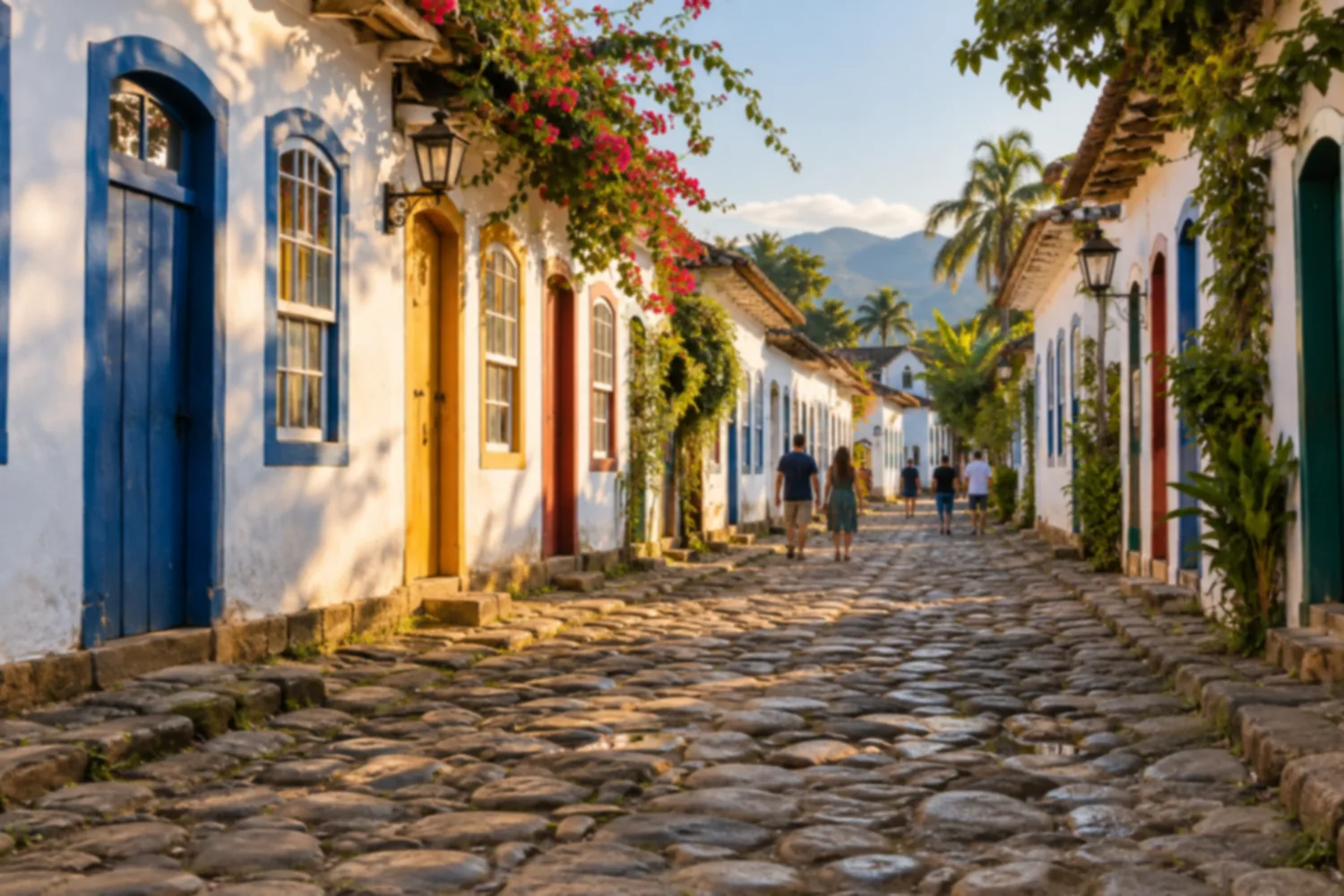
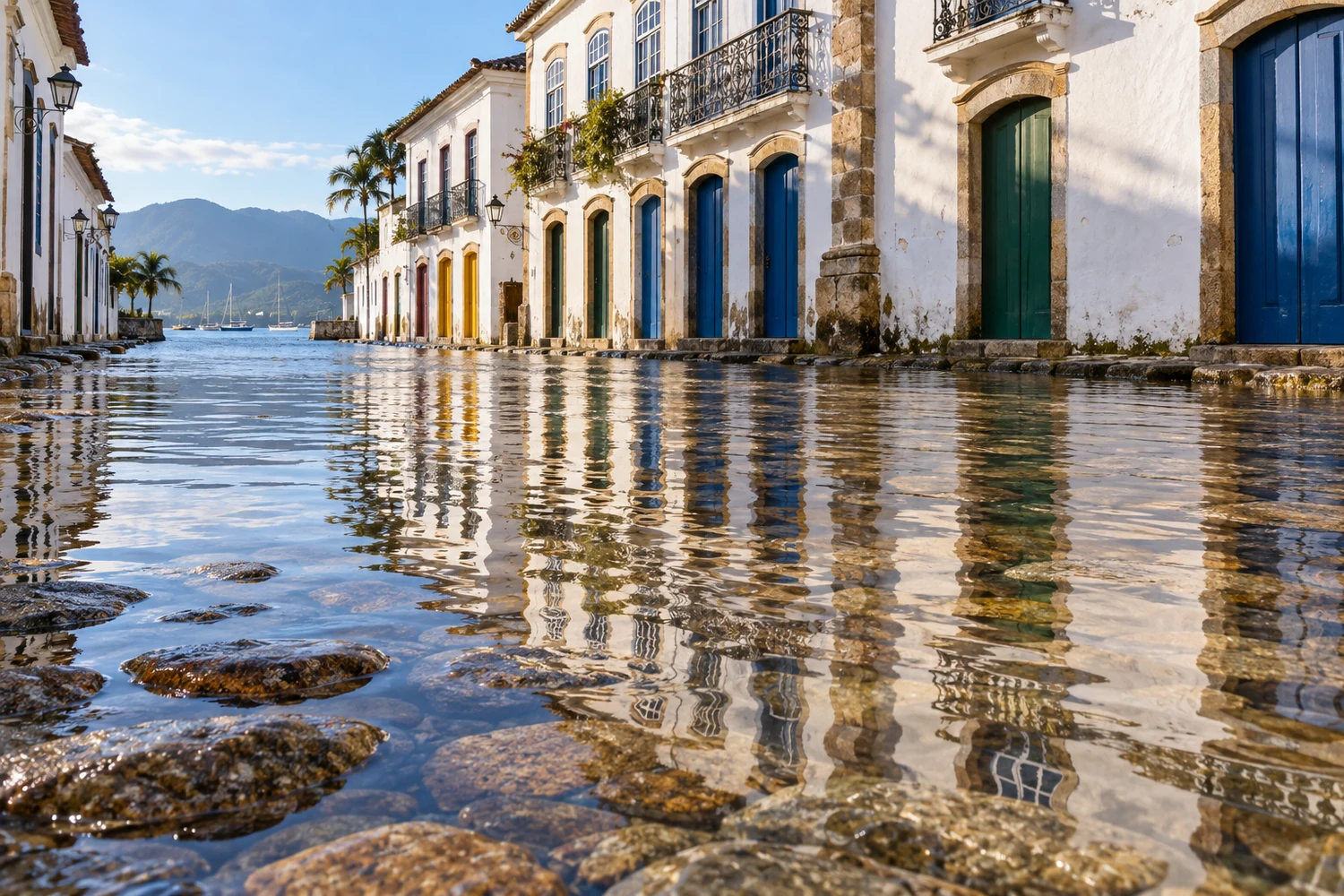
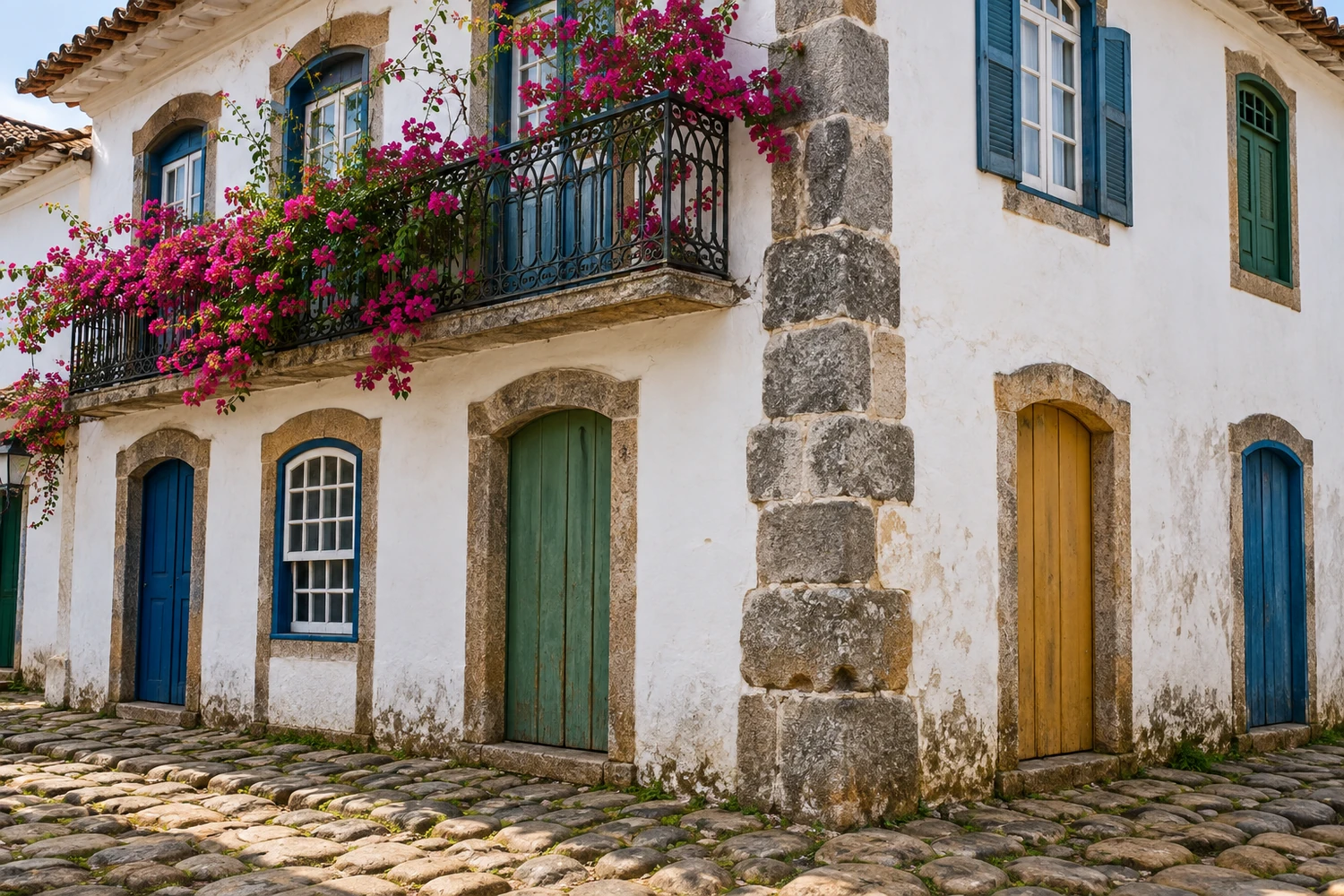
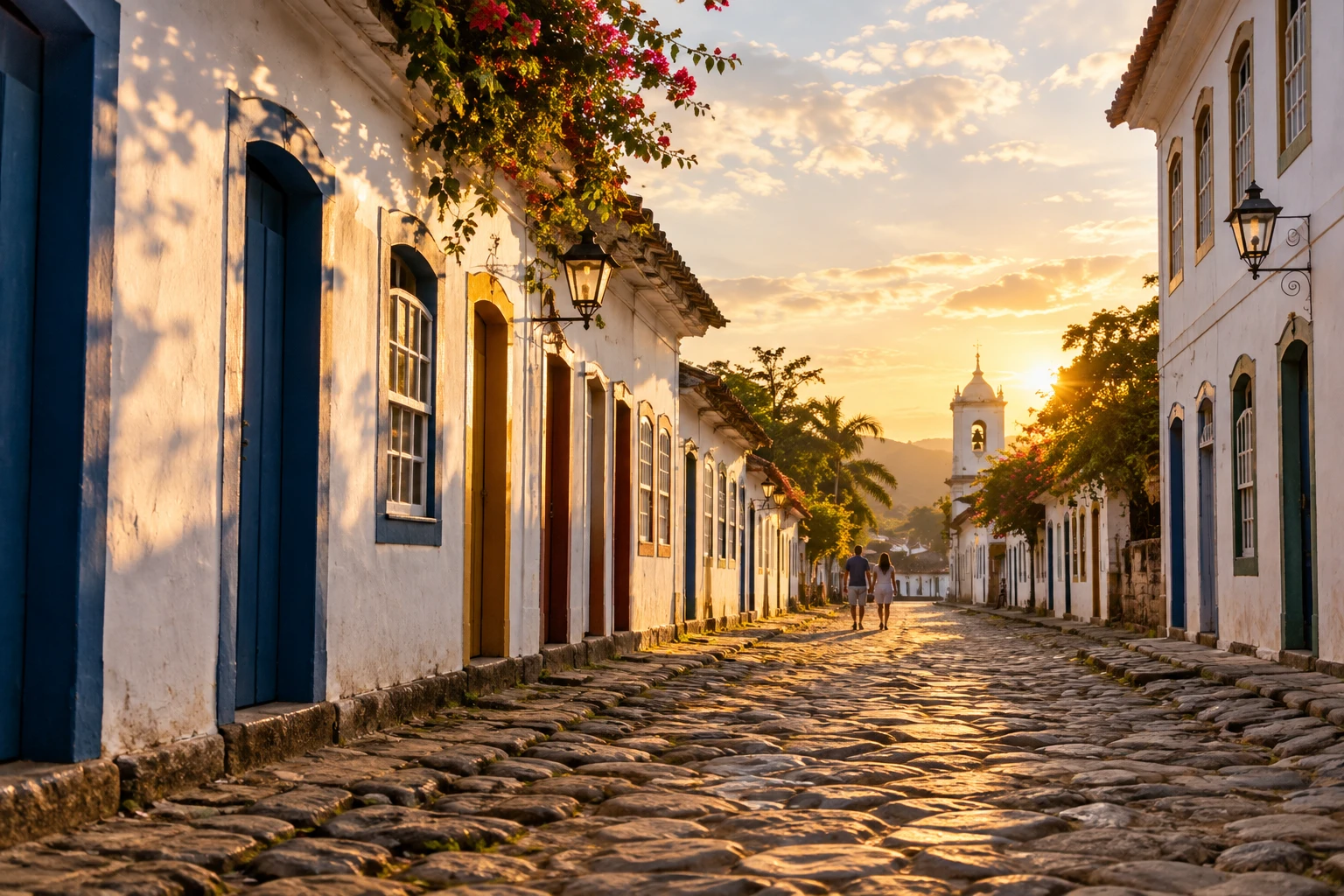
An 18th- and 19th-century colonial ensemble with pé-de-moleque (rough stone) streets laid out in a grid, whitewashed houses and doors and windows painted in bold colors, recognized by UNESCO. At full-moon high tides the water floods the streets and reflects the facades.
Illustrative images. The pictures in this guide are illustrations based on the real place, not photographs, and may differ from it.
Discover
About Centro Histórico de Paraty
Paraty's Historic Center is one of the most intact colonial ensembles in Brazil. Paraty became a town in 1667 and grew as a port: gold from Minas Gerais passed through on its way to Rio and Portugal, along the Caminho do Ouro (Gold Trail). When the gold began leaving by other routes, the town became isolated, and its houses survived almost unchanged. The ensemble was listed by Iphan in 1958, and in 2019 Paraty and Ilha Grande became the first Brazilian mixed site on UNESCO's World Heritage list, for culture and nature.
The streets are paved with large, uneven stones, the pé-de-moleque, and closed to cars. Some were designed with the tide in mind: at the highest tides, seawater flows into the streets near the pier. The houses are white townhouses with colorful doors and windows.
Four churches mark the center. Santa Rita, from 1722, by the pier, houses the Museu de Arte Sacra. The Matriz de Nossa Senhora dos Remédios is the largest. There are also Nossa Senhora do Rosário and Nossa Senhora das Dores. In 2026 the Igreja do Rosário turns 300. The Casa da Cultura has exhibitions on the town's history, and the Forte Defensor Perpétuo, the only remaining fort of Paraty's fortifications, stands on a hill nearby.
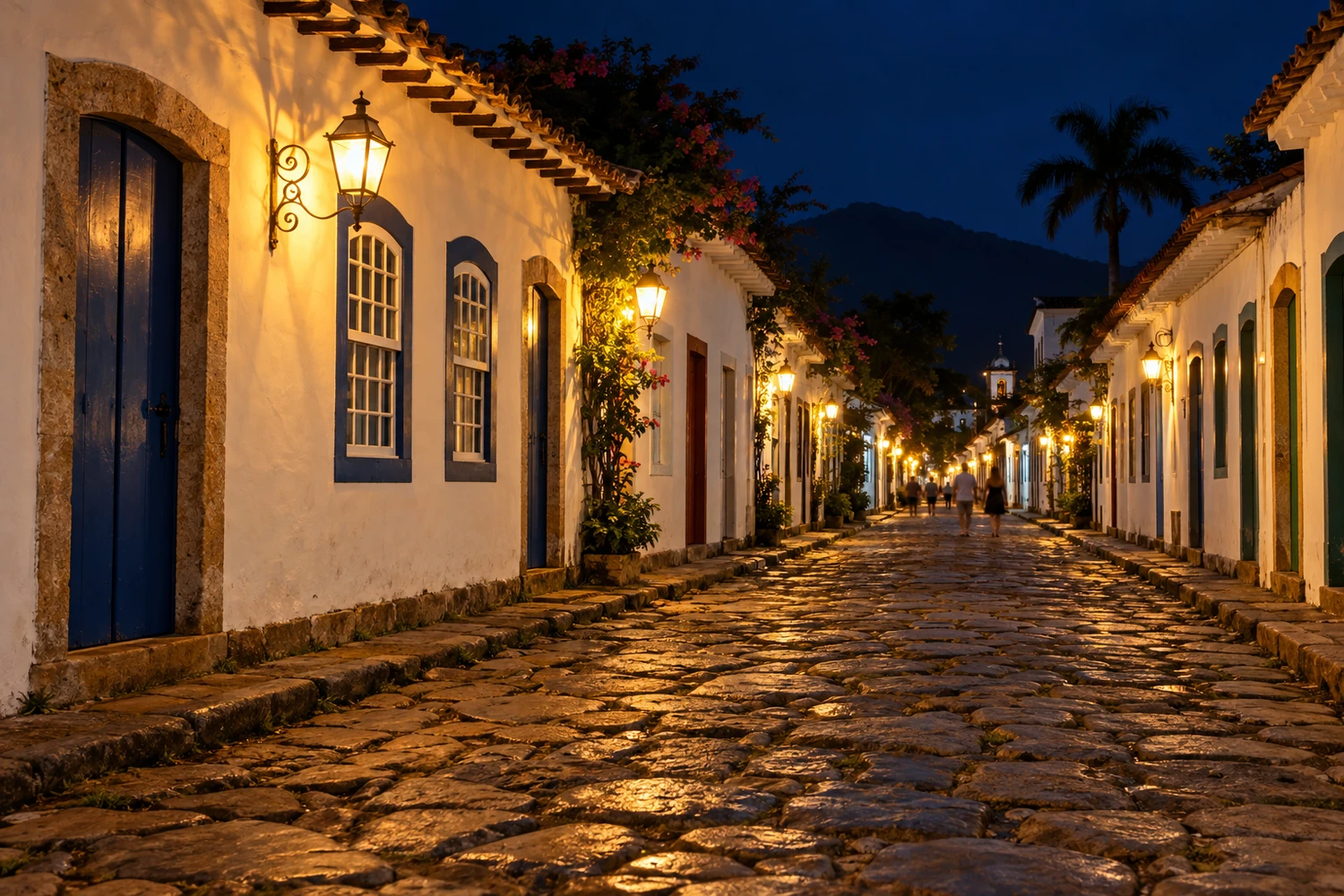
The center is small and easy to explore on foot. At night, restaurants and shops fill the townhouses, and every year the town hosts Flip, the International Literary Festival.
Before you go
Practical information
How much time to set aside
Half a day to stroll without rushing; a full day with the museums and the fort.
Best time
On weekdays, outside holidays and festivals, when there are fewer people. The Museu de Arte Sacra, in the Igreja de Santa Rita, is closed on Mondays and Tuesdays.
How to get there
The historic center is next to the Paraty bus station. Cars don't circulate on the stone streets: leave your car outside and walk. Tour buses need prior authorization from the city hall.
Tip
Wear closed shoes with firm soles: the paving stones are large and slippery, especially when wet.
A look at the place
Centro Histórico de Paraty in pictures
These pictures are illustrations based on the real place, not photographs. They may differ from the place.
Click the picture to enlarge it.
Get your questions answered
Frequently asked questions about Centro Histórico de Paraty
Can cars enter the historic center?
No. The stone streets are closed to cars. Park outside and walk.
Why do the streets flood?
Some streets near the pier lie below the level of the highest tides, and on those days seawater flows over the paving.
Is Paraty a UNESCO World Heritage Site?
Yes. Since 2019, together with Ilha Grande, as Brazil's first mixed site, for culture and nature.
Is the Museu de Arte Sacra open every day?
No. The museum, in the Igreja de Santa Rita, is closed on Mondays and Tuesdays.