Casa Pelé and Museu Terra do Rei, in Três Corações
From Centro de Três Corações on foot or by car between the points about 1h30 for both sites morning or afternoon easy
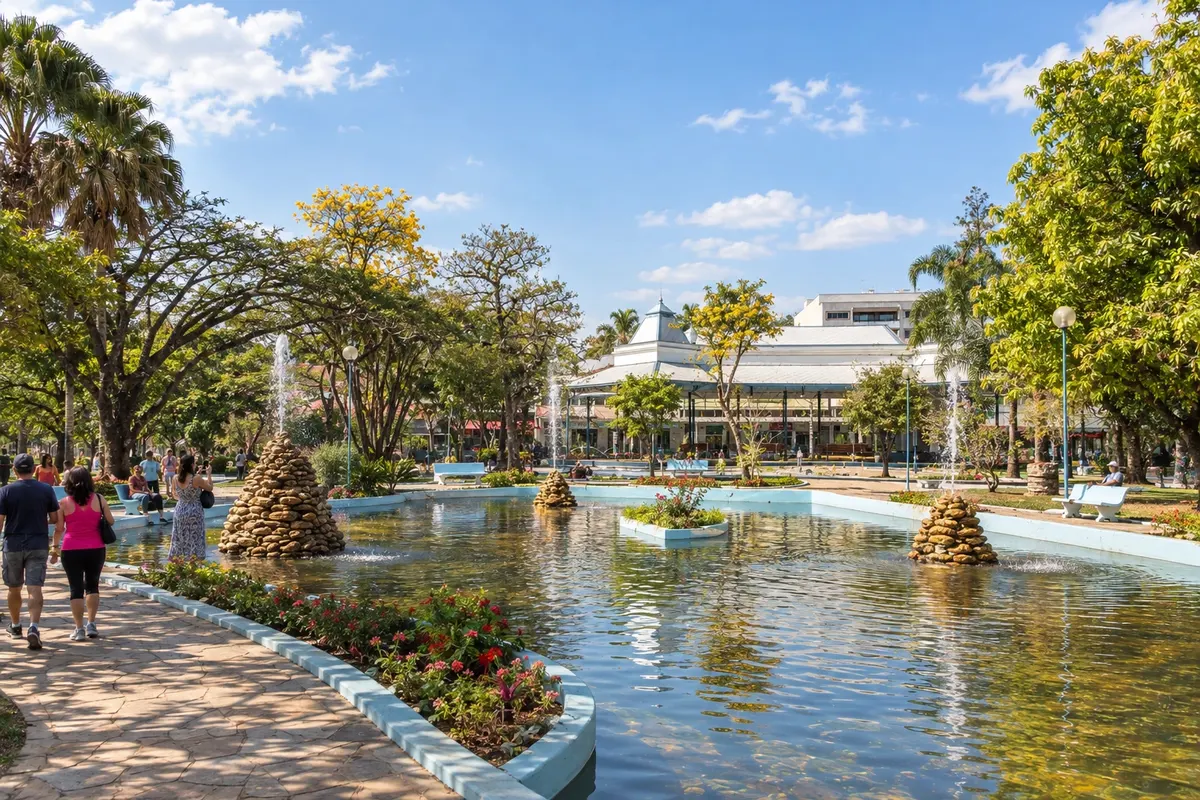
Três Corações is Pelé's hometown, and the route mixes a museum, a house, and monuments. Casa Pelé is on Rua Edson Arantes do Nascimento, number 1000, a replica of the house where he lived in early childhood. Guides accompany the visit. Museu Terra do Rei is in the center, next to Praça Pelé (Praça Coronel José Martins). It brings together objects, photos, documents, newspapers and magazines, focusing on the period he lived in the city. The museum visit is guided. In the square is the Monumento ao Tri, in honor of the 1970 three-time championship. On BR-381, at the access junction, stands the Monumento Soco no Ar, 12 meters high, visible from the highway. Parque Dondinho, with the statue of Pelé's father and of his son, can also be included in the route.
Stops: Casa Pelé, Museu Terra do Rei, Praça Pelé, Monumento ao Tri, Monumento Soco no Ar, Parque Dondinho.
Includes: Visits to Casa Pelé and Museu Terra do Rei are usually free; check before going. Outside opening hours, the museum accepts scheduled visits by appointment. Transport and meals are the visitor's responsibility.
Tip: Call ahead to confirm opening and to schedule outside normal hours. The Soco no Ar is on the highway and there is almost nowhere to stop, so don't count on photos from inside the car. Inside the house, the rule is usually no photography.
Best time: All year round; the city usually has special programming on Pelé's birthday and on the city's anniversary.
Catedral de Santo Antônio and Museu Regional do Sul de Minas, in Campanha
From Praça Dom Ferrão, Campanha on foot about 1 hour and 30 minutes morning or afternoon easy
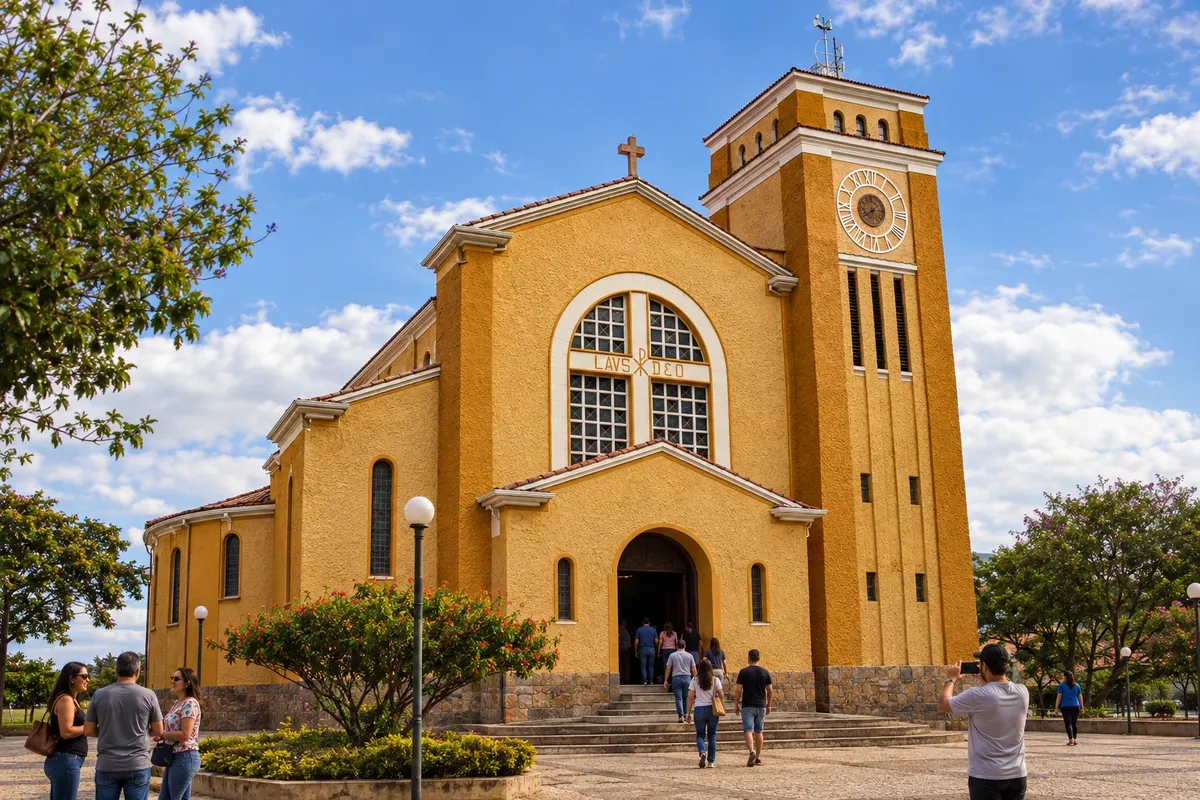
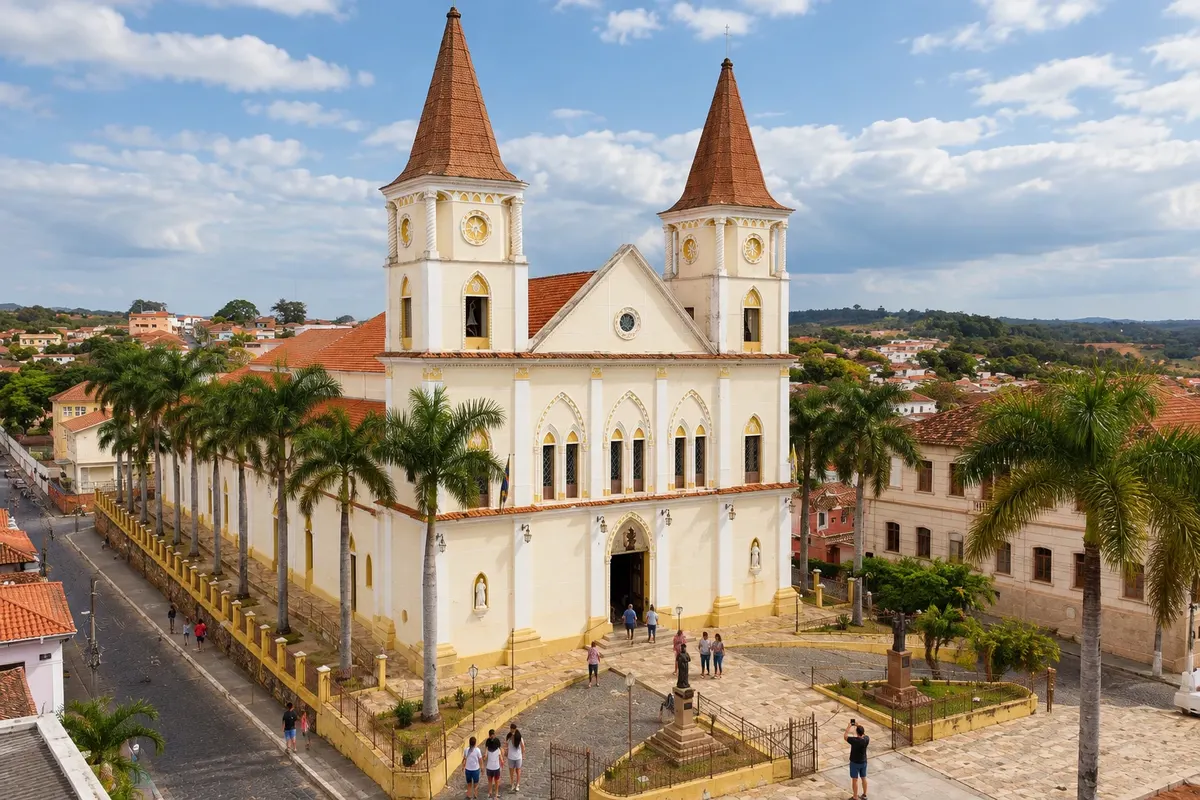
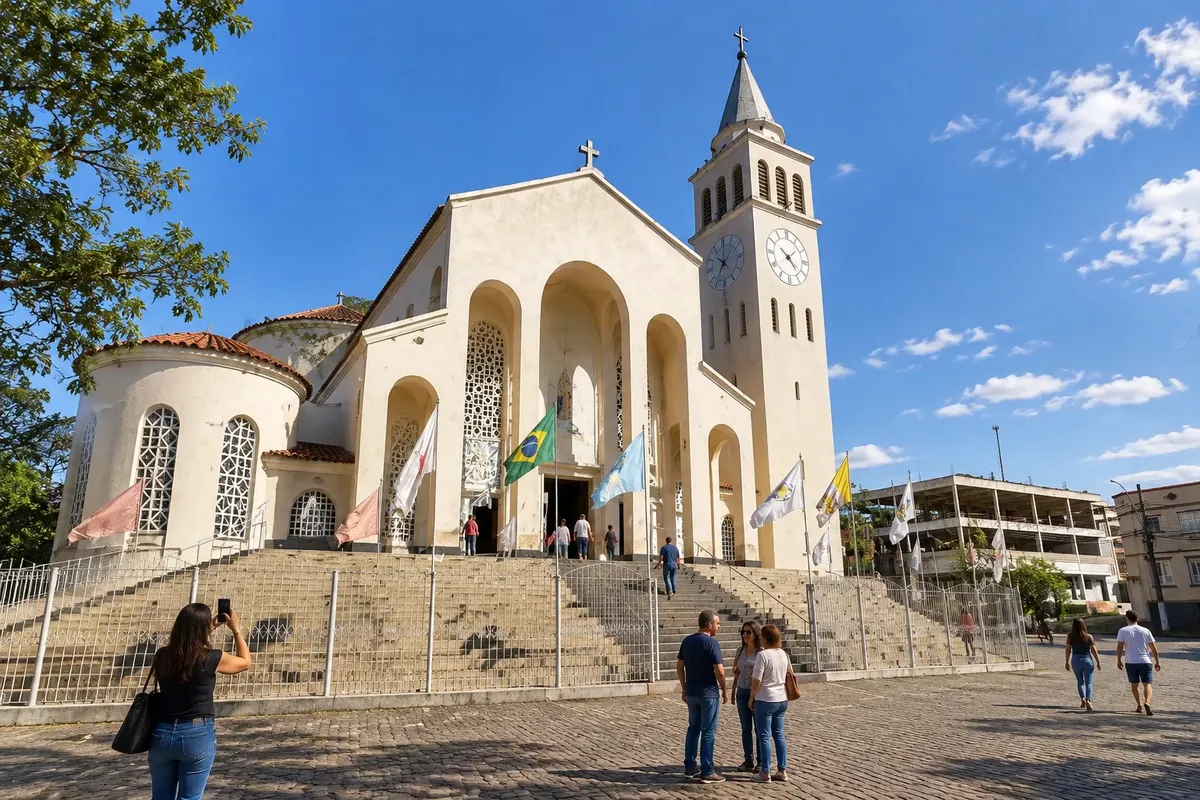
Campanha is considered the town that gave rise to the Sul de Minas region, and the historic center is explored on foot. The visit starts at Praça Dom Ferrão, where the Catedral de Santo Antônio is located. Construction began in 1787 and it was consecrated in 1822. It is one of the largest rammed-earth (taipa de pilão) structures in the country, measuring about 75 m long by 36 m high. Admission is free and the visit is self-guided. Next to the cathedral, on Rua Beato Padre Victor, is the Museu Regional do Sul de Minas. It occupies a listed colonial building and houses sacred art, mineralogy, natural sciences and objects from regional history. The museum visit is guided.
Stops: Catedral de Santo Antônio, Praça Dom Ferrão, Museu Regional do Sul de Minas.
Includes: Free admission to the cathedral and the museum, according to the official tourism registry; confirm before going. Guided tour at the museum. Food and transport not included.
Tip: Check the museum's opening days, which may change on holidays. The cathedral also holds masses and ceremonies; respect the times of the services. Arrange it with Museu Casa de Vital Brazil, in the same town center.
Best time: All year; religious festivals are listed on the municipal calendar.
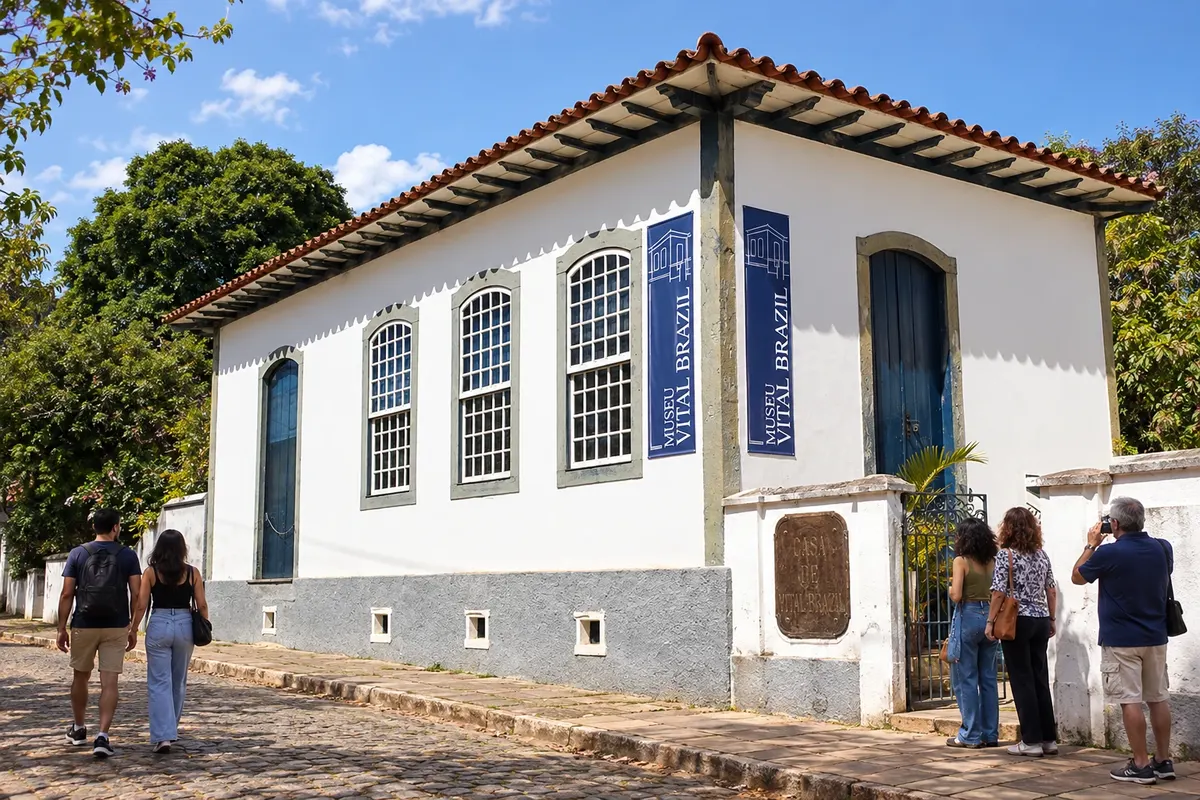
Museu Casa de Vital Brazil, in Campanha
From Centro de Campanha on foot, guided tour about 30 minutes morning or afternoon easy
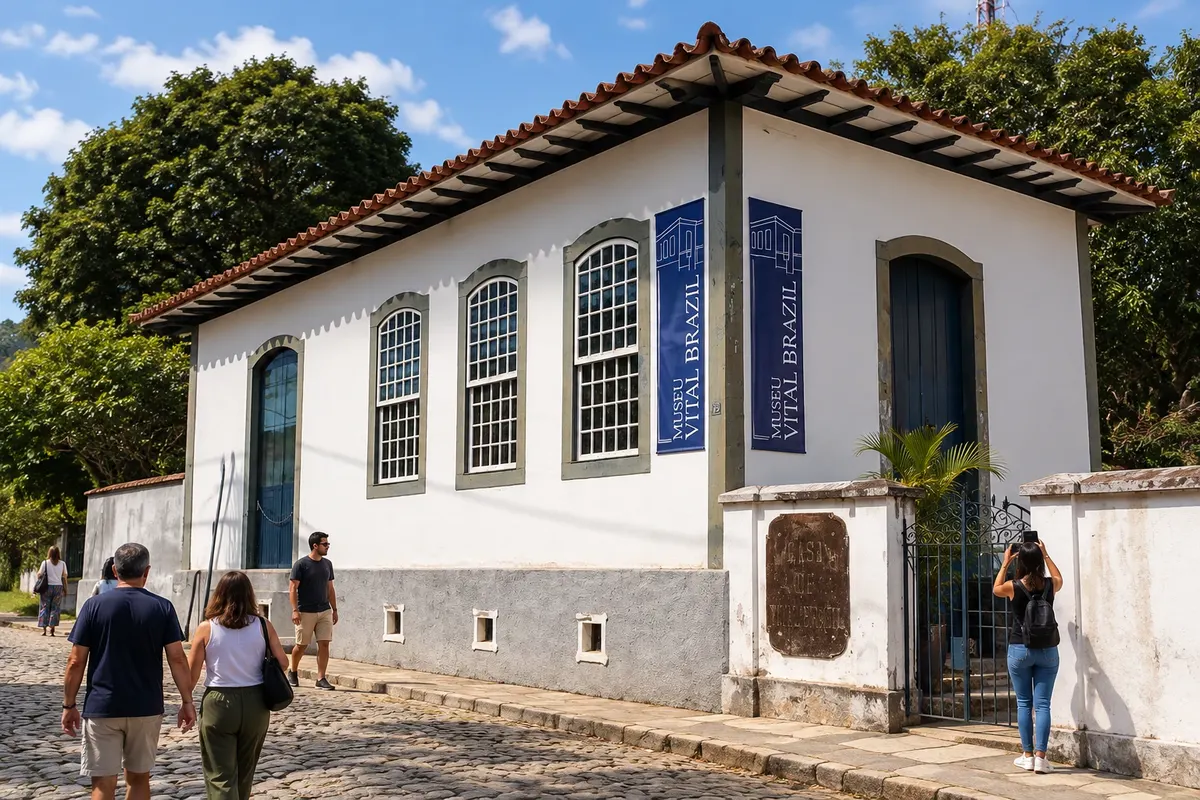
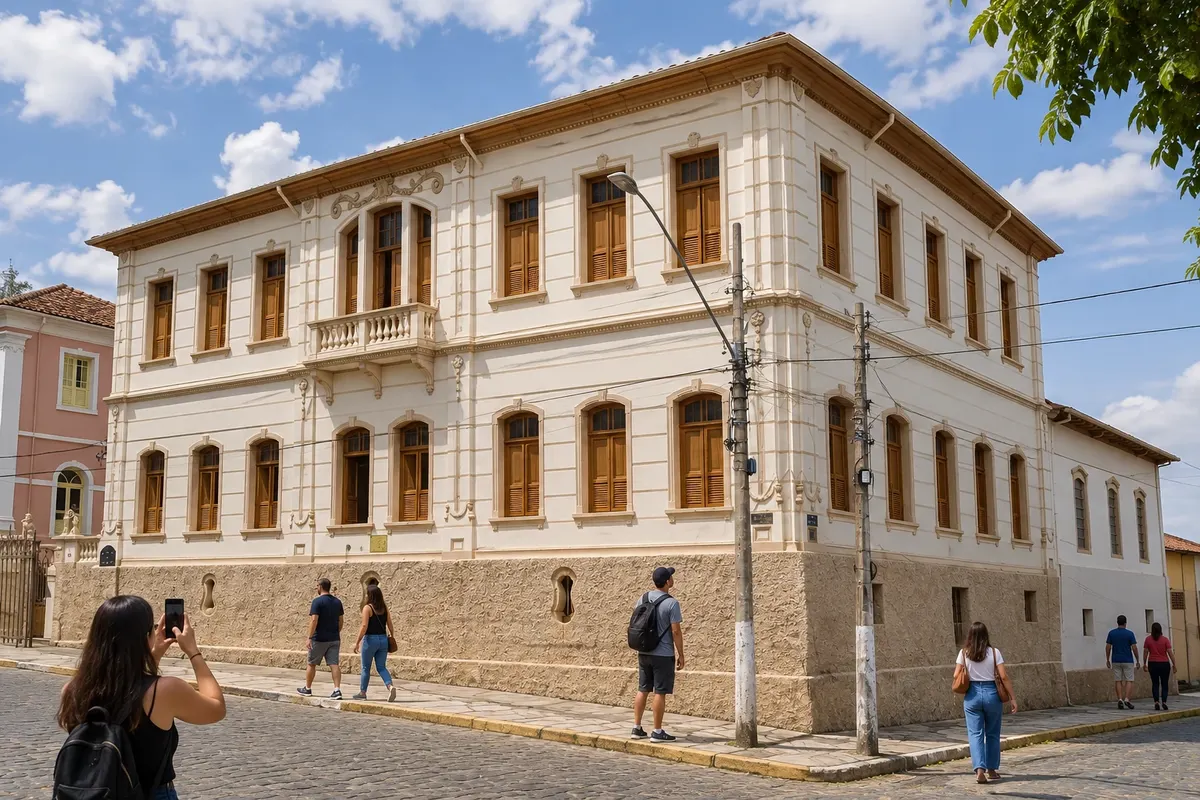
The museum is located at Rua Vital Brazil, number 45, in the house where the scientist Vital Brazil was born. He discovered the antivenom serum and founded the Instituto Butantan in São Paulo and the Instituto Vital Brazil in Niterói. The house is an 18th-century colonial building and is protected by the municipality. The visit is guided, through rooms with photographs, letters, documents, scientific works, books and the scientist's personal belongings. It is a short visit that can be combined with the Catedral and the Museu Regional in the same historic center.
Stops: Museu Casa de Vital Brazil.
Includes: Guided tour with free admission, according to the city hall; check before going. No charge for transport or food on site.
Tip: The museum is open Monday to Saturday and closed on Sundays and public holidays, according to the city hall; check before you go. Combine the visit with the Catedral de Santo Antônio on the same day.
Best time: All year round; plan your visit on a weekday or Saturday.
Cachoeira do Roncador and Poço dos Olhos, in Lambari
From Centro de Lambari car to the property; short trail on foot half day morning or afternoon easy to moderate
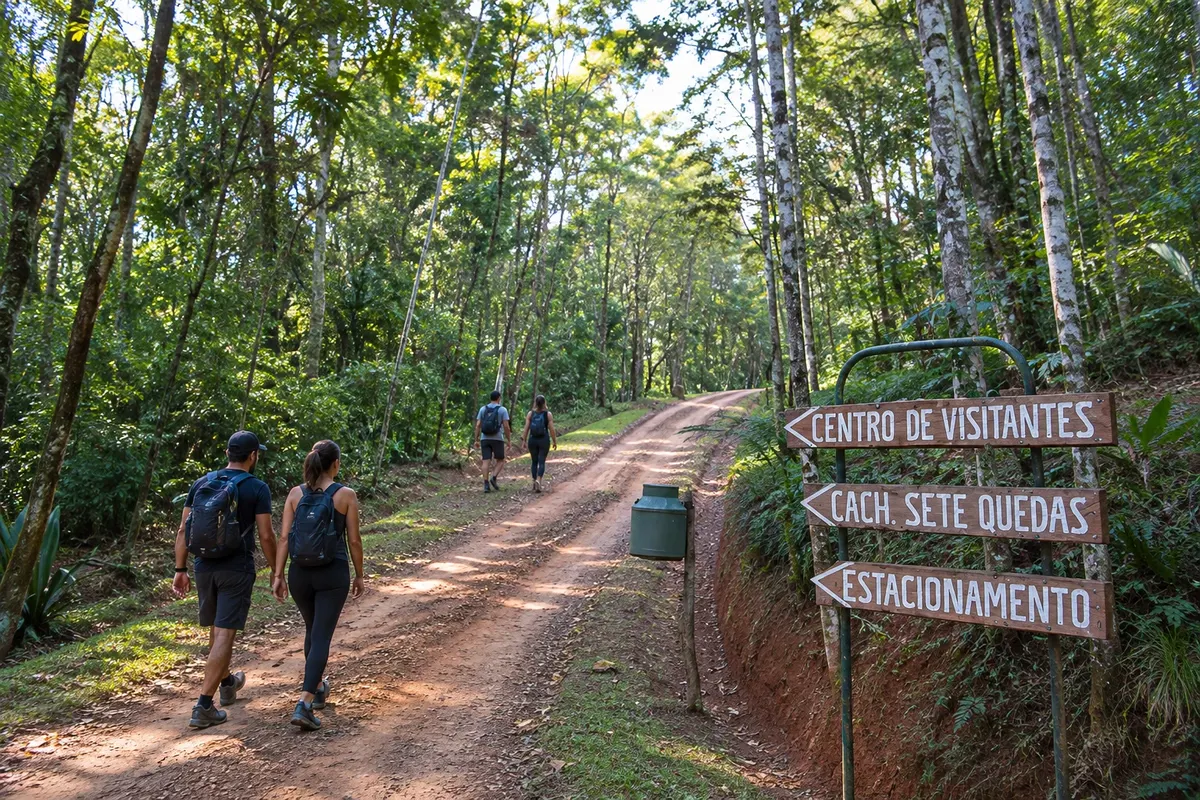
The waterfall is on private property, in the Garcias neighborhood, about 9 to 10 km from the Centro de Lambari. Access is via BR-460 toward Jesuânia, then onto a signposted dirt road for about 5 to 6 km. From the camping area the trail is short, about 300 m, and leads to the falls. The first spot is Poço dos Olhos, where many take the first swim, and the trail continues to the Roncador, which has two drops. The site offers rustic camping and a small snack bar. This is a nature and swimming outing, with no guide required.
Stops: Cachoeira do Roncador, Poço dos Olhos, Estrada das Cachoeiras.
Includes: Access is on private property, with an entrance or camping fee; check the current rate table. Transport to the site and meals are the visitor's responsibility.
Tip: Bring hiking shoes, swimwear and cash for the fee and the snack bar. The dirt road becomes more difficult on rainy days, so check conditions with the site before you depart.
Best time: Dry seasons leave the dirt road in better condition; in hot weather swimming is more popular.
Fonte do Marimbeiro and Rota das Águas, in Cambuquira
From Centro de Cambuquira car or taxi to the neighborhood; visits on foot mid-morning or afternoon morning or afternoon easy
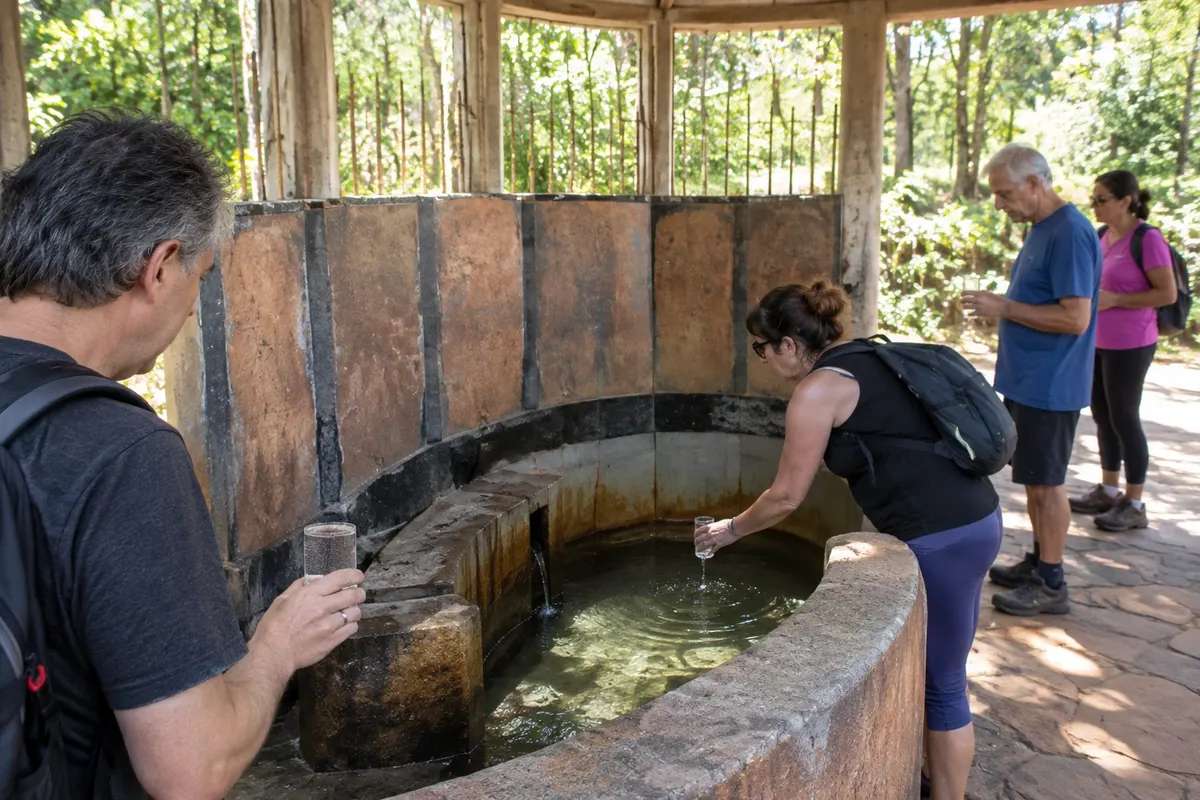
Parque do Marimbeiro is about 3 km from the center of Cambuquira, near the Clube Campestre. It is a small park, with a carbonated mineral spring and a marker of the Estrada Real. The Marimbeiro neighborhood concentrates other stops on the Rota das Águas. At Apiário Abelha Rainha, visitors wear a beekeeper suit, learn about beekeeping and about honey and propolis, with a tasting. Cachaça Paraíso, on the BR-267, offers visits with tastings of aged cachaças. Also in Marimbeiro, D’o Forasteiro arranges horseback and carriage rides.
Stops: Parque do Marimbeiro (Fonte do Marimbeiro), Marco da Estrada Real, Apiário Abelha Rainha, Cachaça Paraíso, D’o Forasteiro.
Includes: The fountain can be visited without a guide. The apiary, the cachaça distillery and horseback rides are activities paid for separately, usually by appointment; check the current price list for each.
Tip: Book the apiary visit and the horseback ride in advance. Without a car, the receptive agency in Cambuquira arranges transport. Bring a bottle for the spring.
Best time: All year; days without rain make the route easier.
Rota da Pedra Preta: trail, Paredão and Pedra da Verruga
From Centro de Cambuquira car to the gate; trail on foot half day morning or afternoon moderate
Rota da Pedra Preta brings together the rural and adventure side of Cambuquira. At Fazenda Pedra Preta, those who only want to walk to the car at the gate, where there is a route sign, do a trail of less than 1 km on foot. The path passes by the Paredão and Pedra da Verruga. For rappelling and rock climbing you need to book in advance with the guides, who accompany the activity. The route also includes the Árvore Torta and the Ponte Juca Cassimiro, built in 1942 with arches, over the Rio Lambari, in the Xororó neighborhood. These points appear on hiking and cycling tours.
Stops: Fazenda Pedra Preta, Paredão, Pedra da Verruga, Árvore Torta, Ponte Juca Cassimiro.
Includes: Rappelling and rock climbing have guides and separate fees, with prior booking; check the current table. The short trail to the Paredão and Pedra da Verruga is done on foot from the gate. Equipment and transport vary; arrange beforehand.
Tip: For rock activities, book in advance and bring closed-toe shoes and water. Without a car, Cambuquira’s receptive agency can organize the departure.
Best time: Dry days with little rain, because of the rock and the rural road.
Horseback and carriage rides in Cambuquira
From Marimbeiro, in Cambuquira on horseback or by carriage according to the agreed itinerary morning, afternoon or evening easy
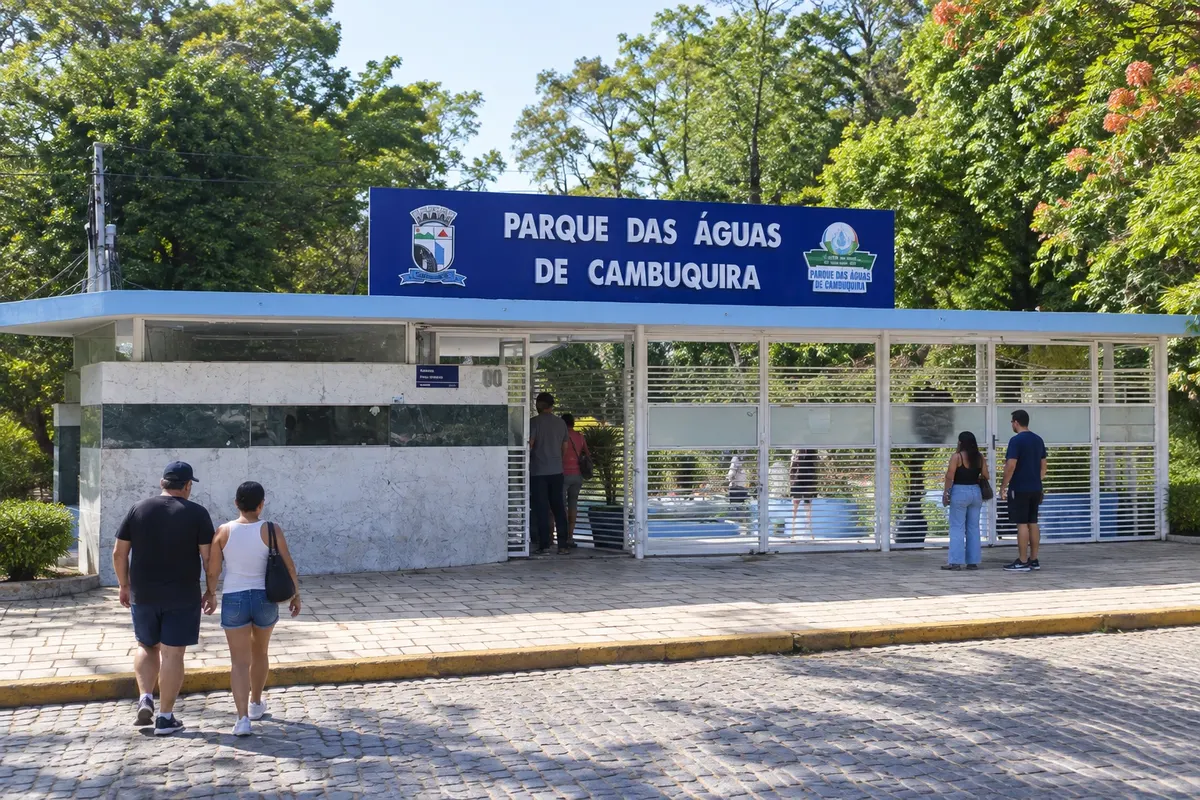
D’o Forasteiro, in the Marimbeiro neighborhood, takes visitors on horseback or by carriage along trails and rural roads. Local guides lead the group and point out the landscape and regional curiosities. There are daytime and nighttime rides. Departures are from the premises, and the route pairs well with Fonte do Marimbeiro and Apiário Abelha Rainha, in the same neighborhood. In town, the carriages also stand in front of Parque das Águas.
Stops: D’o Forasteiro, Trails and rural roads of Marimbeiro.
Includes: Local guide on the tour. The fee is charged by the operator; check the current rate and whether there is a half-price ticket for children. Food and transport to the site are separate.
Tip: Schedule the time and the modality (horse or carriage) in advance. Wear long pants and closed-toe shoes. Ask about the night ride if that is your preference.
Best time: Year-round; rain-free days are better for riding.
Visit to the lavender farm and coffee farms in Cambuquira
From Centro de Cambuquira car; guided tours by appointment half day morning or afternoon easy
Cambuquira combines rural tourism with its springs. At Lavandas de Cambuquira, on the Rota do Piripau, visitors can see a field of dentata lavender, used in artisanal oils, teas, specialty coffees and other products. Fazenda Catiguá, on the Rota da Pedra Preta, produces specialty coffees and offers guided tours of the plantation, with sensory experiences and café colonial at the farm's cafeteria. Sítio da Serra Cafés and Fazenda Santa Quitéria also welcome visitors for coffee. Visits are by appointment. The properties are in rural areas, so a car is the most practical means.
Stops: Lavandas de Cambuquira, Fazenda Catiguá, Sítio da Serra Cafés, Fazenda Santa Quitéria.
Includes: Guided tours and tastings vary by property. Admission, café colonial and products are paid separately; check the current price list for each place.
Tip: Book each visit in advance; the properties do not receive visitors without a scheduled time. Without a car, Cambuquira's receptive agency arranges the itinerary with transportation.
Best time: All year round; confirm the lavender flowering season directly with the lavender farm.
Centro de Jesuânia: churches, Ponte de Ferro and Congada
From Praça Bom Jesus, Jesuânia on foot about 1 hour morning or afternoon easy
Jesuânia is about 8 km from Lambari and is known as the Land of the Congadas. The walk goes through the town center, starting from Praça Bom Jesus. The Igreja Matriz Senhor Bom Jesus, located on a high point, offers views over the town and the surrounding area. Nearby are the Igreja do Rosário and the Ponte de Ferro. Religious tradition shapes the calendar: the Congada, held between the last week of June and the first week of July, honors São Pedro, São Paulo and Nossa Senhora do Rosário, with music, dance and colors. Outside the festival, the walk is peaceful and fits into a half-morning outing from Lambari.
Stops: Praça Bom Jesus, Igreja Matriz Senhor Bom Jesus, Igreja do Rosário, Ponte de Ferro.
Includes: The walk is self-guided. Entry to churches is free; respect service times. Food and transport are not included.
Tip: If you plan to see the Congada, check the dates on the municipal calendar for the edition you want and arrange transfers and local transport in advance, as the town is small and receives more visitors during the festival.
Best time: Between the last week of June and the first week of July for the Congada; for the rest of the year the center is quiet.
Parque Wenceslau Braz and Farol do Lago, in Lambari
From Centro de Lambari on foot or by rented bicycle about 45 minutes morning or afternoon easy
Parque Wenceslau Braz, called 'parque novo' by locals, is a woodland of eucalyptus, magnolias and pines near the town center and Lago Guanabara. Visits are on foot or by bicycle, with a walk around a small lake of waterfowl. There are two bike rental points. The complex has pools with water slides, peteca and volleyball courts, bars and snack bars. In the same area there is a waterfall and the Farol do Lago, built in the early 20th century. It's an easy outing that fits between Parque das Águas and Cassino do Lago.
Stops: Parque Wenceslau Braz, Farol do Lago, Waterfall.
Includes: Access to some areas, such as the pools with water slides, may require a fee; check what is charged separately. Bicycle rental and snacks are also additional.
Tip: Bring swimwear if you want to use the pools. Combine with a visit to Lago Guanabara on the same route.
Best time: Sunny, warm days for the pools; the woods are pleasant year-round.
Centro de Olímpio Noronha: Igreja Matriz and the square
From Centro de Olímpio Noronha on foot about 1 hour morning or afternoon easy
Olímpio Noronha is a small town about 16 km from Lambari, and the route is made on foot through the town center. Praça Coronel Joaquim Gomes Nogueira stands in front of the Igreja Matriz, the town's landmark. The town grew around the Parada de Santa Catarina, a former station of the Estrada de Ferro Sul Mineira, and maintains an identity linked to the railway. Fonte do Tororó is also among the listed attractions. Milk production is strong, and the town has a dairy that sells local products. Specialty coffees are part of the region's identity. Olímpio Noronha is still a stopping point for pilgrims on their way to Aparecida.
Stops: Igreja Matriz, Praça Coronel Joaquim Gomes Nogueira, Fonte do Tororó, Antiga Parada de Santa Catarina.
Includes: The walk is unguided. Purchases of cheese, coffee and other local products are paid for separately. Food and transportation are the visitor's responsibility.
Tip: Arrive from Lambari by local transport or by car, and combine a visit to Jesuânia on the same day. Check with the city hall which sites are open to visitors.
Best time: All year; the city's traditional festival is listed on the municipal calendar.