
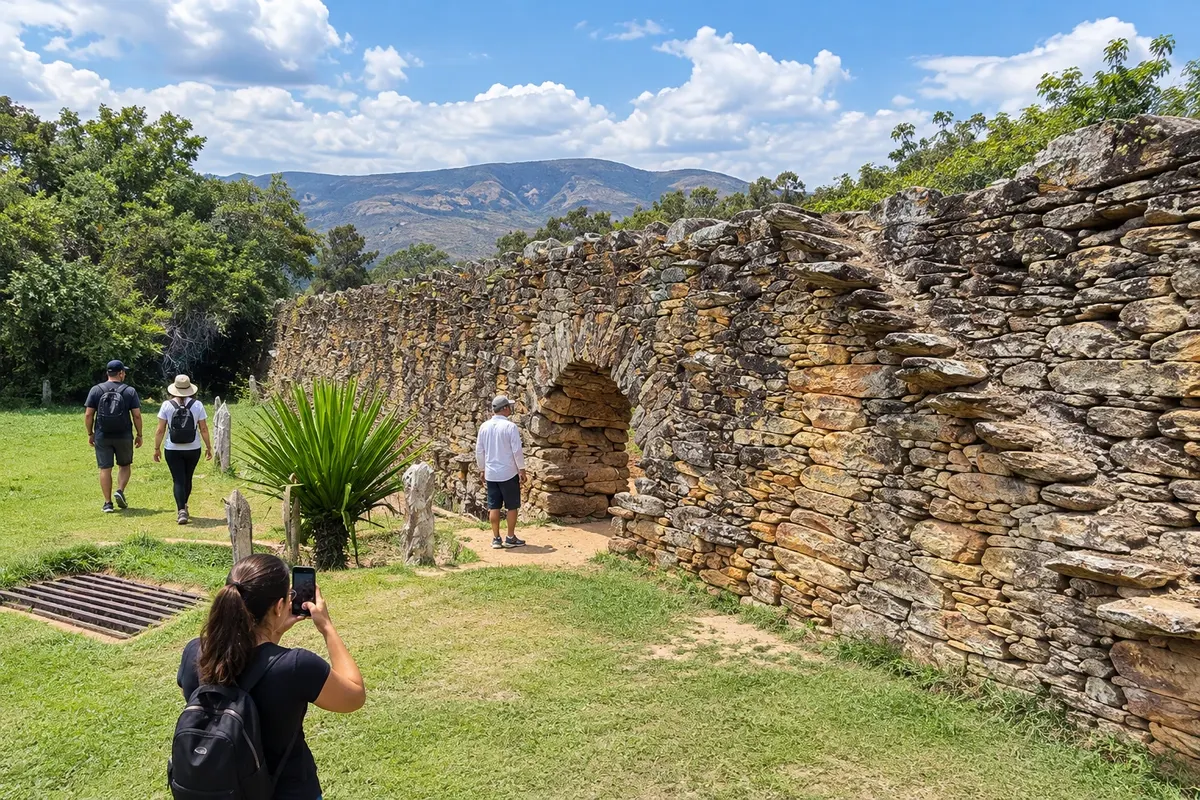
Historic aqueduct · Catas Altas, MG
Bicame de Pedras
Remnant of a dry-stone aqueduct from 1792 in the rural area of Catas Altas. The wall and the central arch show the structure that carried water from the mountains to farms and mining activities.
Illustrative images. The pictures in this guide are illustrations based on the real place, not photographs, and may differ from it.

Discover
About Bicame de Pedras
The Bicame de Pedras is a remnant of an aqueduct in the rural area of Catas Altas. The structure, dated 1792, carried water from the mountains to supply farms and support ore-washing operations. Its wall uses dry-stone construction, a technique in which the blocks are held together by their fitting, without mortar. In the preserved section, an arch crosses the structure and allows observation of the care needed to distribute the weight of the stones. At the top, part of the old channel through which the water flowed can still be seen. The visit is mainly for appreciating the historical engineering and the rural landscape. Walk around the surroundings respecting the heritage and avoid climbing on or removing stones. The route involves rural access, so check the condition of the road and allow time for the round trip.
Before you go
Practical information
Cidade Turismo reviews its information regularly, but something may have changed. Check with the place before planning your trip.
How much time to set aside
30 minutes to 1 hour on site, plus travel time.
Best time
Stable weather and daylight are recommended to observe the masonry. Confirm whether it is operational and check access before you go.
How to get there
From Catas Altas, follow the MG-129 toward Santa Bárbara and use the rural access to Estrada do Bicame. Check the final route with the tourist information office.
Tip
Observe the arch from ground level. The stones are part of the historic structure and must not be removed or used as support for climbing.
Official website
Get your questions answered
Frequently asked questions about Bicame de Pedras
What was the aqueduct used for?
It carried water from the mountains to farms and activities related to ore washing.
How were the stones joined?
The construction uses dry-stone technique, with blocks fitted together without mortar.
Is the visit on foot at the site?
Yes. Viewing is done from around the wall and the arch. Avoid climbing on the structure.