
Museum · Carambeí, PR
Parque Histórico de Carambeí
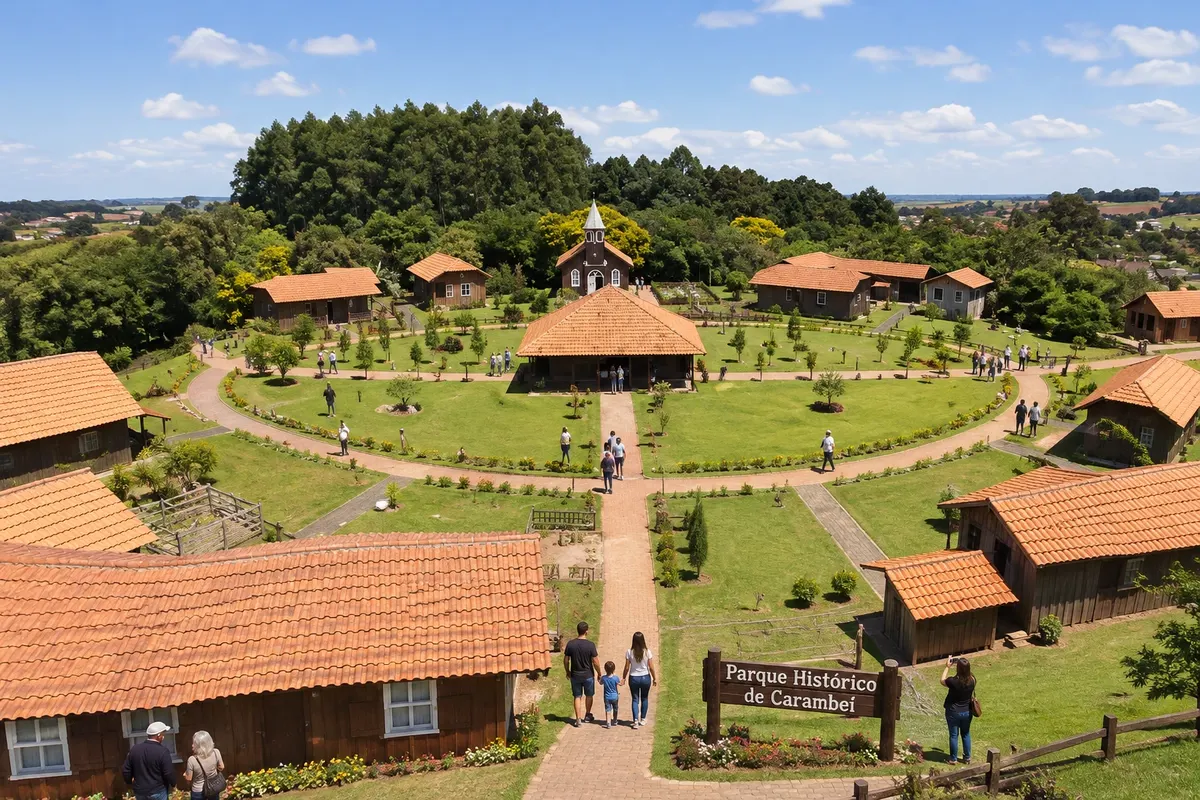
Museum complex with buildings, collections and settings linked to Dutch immigration and the formation of Carambeí.
Illustrative images. The pictures in this guide are illustrations based on the real place, not photographs, and may differ from it.

Discover
About Parque Histórico de Carambeí
The Parque Histórico de Carambeí presents the formation of the local community through buildings and collections. The Vila Histórica and the work environments help relate Dutch immigration to life in the Campos Gerais.
The ensemble is a single complex, with different interpretation spaces. Allow time to go through the settings attentively and check with reception about access to the day's exhibitions.
The visit helps distinguish the memory of immigration from a merely decorative setting. Objects, buildings and work environments can be read together. If you travel with children or with people who need breaks, spread the walk and the time spent in the exhibitions.
Before you go
Practical information
Cidade Turismo reviews its information regularly, but something may have changed. Check with the place before planning your trip.
How much time to set aside
Two to four hours.
Best time
From April to August it usually rains less for walking between the complex's settings. Between December and March, take into account the museum's outdoor routes.
How to get there
Via the urban access to the Parque Histórico, on Avenida dos Pioneiros, in Carambeí.
Tip
Consider the walk between the museum's spaces when choosing the duration of the visit.
Official website
Get your questions answered
Frequently asked questions about Parque Histórico de Carambeí
Is the park just a garden?
It is a museum complex. The visit involves buildings, exhibitions and environments related to the history of Carambeí.
Does the complex require walking between the spaces?
The buildings and exhibition spaces are spread throughout the complex. Include that travel time in your visit.
What is the main theme of the Parque Histórico?
The formation of Carambeí and Dutch immigration are presented through collections, buildings and work environments.