
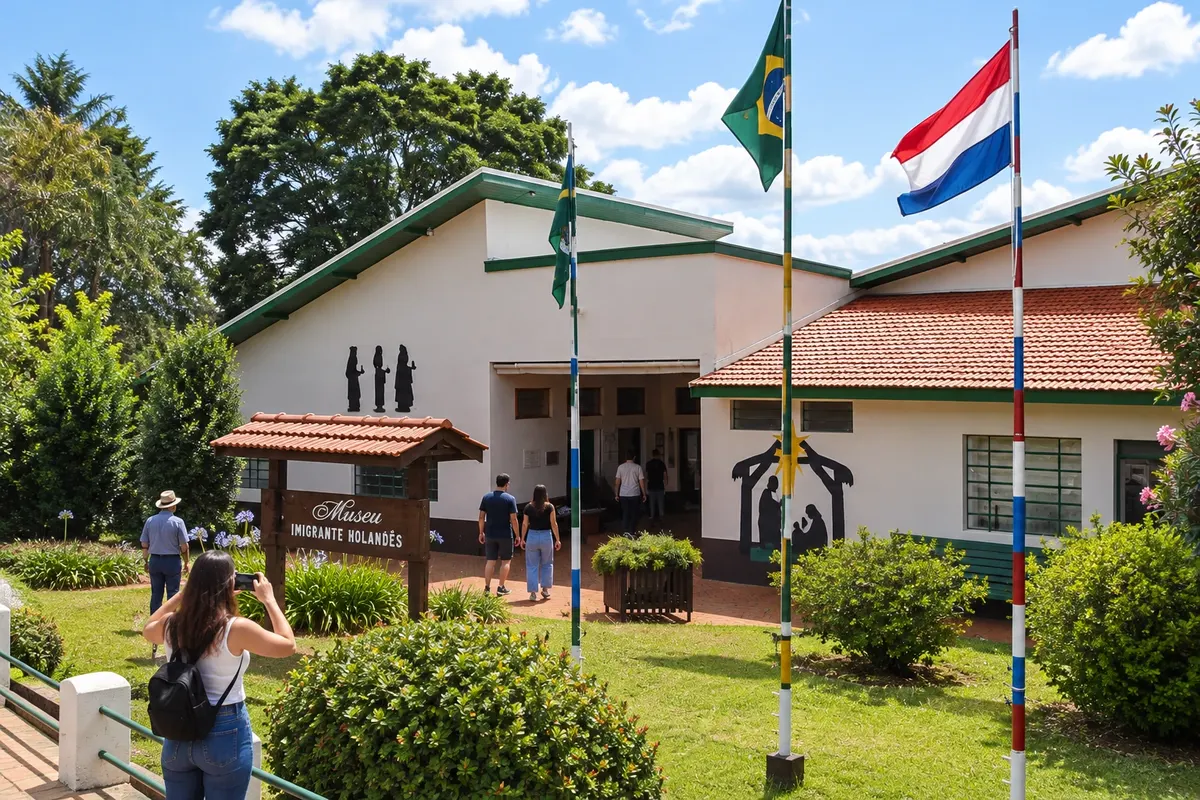
Museum · Arapoti, PR
Museu Imigrante Holandês
Community museum of Arapoti with collections and buildings linked to Dutch immigration.
Illustrative images. The pictures in this guide are illustrations based on the real place, not photographs, and may differ from it.

Discover
About Museu Imigrante Holandês
The Museu Imigrante Holandês presents the formation of the Arapoti community. Photographs, objects and buildings help connect family memories to the rural occupation of the Campos Gerais.
The museum is part of the historic ensemble maintained by the local community. Visits should be organized with the institution, especially for groups, to define the areas of the route and the available accompaniment.
The history of immigration in Arapoti has its own characteristics, even when it shares cultural references with other colonies. Consider the collection in its relation to the town and to rural production. The historic ensemble is a single visit, with complementary spaces.
Before you go
Practical information
Cidade Turismo reviews its information regularly, but something may have changed. Check with the place before planning your trip.
How much time to set aside
One to three hours.
Best time
The collection can be included in a trip in any month, with reception confirmed. From May to August, consider the cold when combining the museum with Arapoti’s outdoor route.
How to get there
Via the urban access to the Museu Imigrante Holandês in Arapoti, as directed by the institution.
Tip
Contact the museum to tailor the route to the group size.
Official website
Get your questions answered
Frequently asked questions about Museu Imigrante Holandês
Is this museum in Castrolanda?
It is located in Arapoti and presents the history of that community. Castrolanda is a different cultural ensemble, in the municipality of Castro.
Can the museum receive groups?
Group visits must be organized with the institution to define the route and accompaniment.
Does the complex count as several separate visits?
The spaces of the historic complex complement one another during a visit to the museum, as organized by the reception.