
Região dos Lagos · Rio dos Cedros, SC
Represa do Pinhal — Alto Cedros
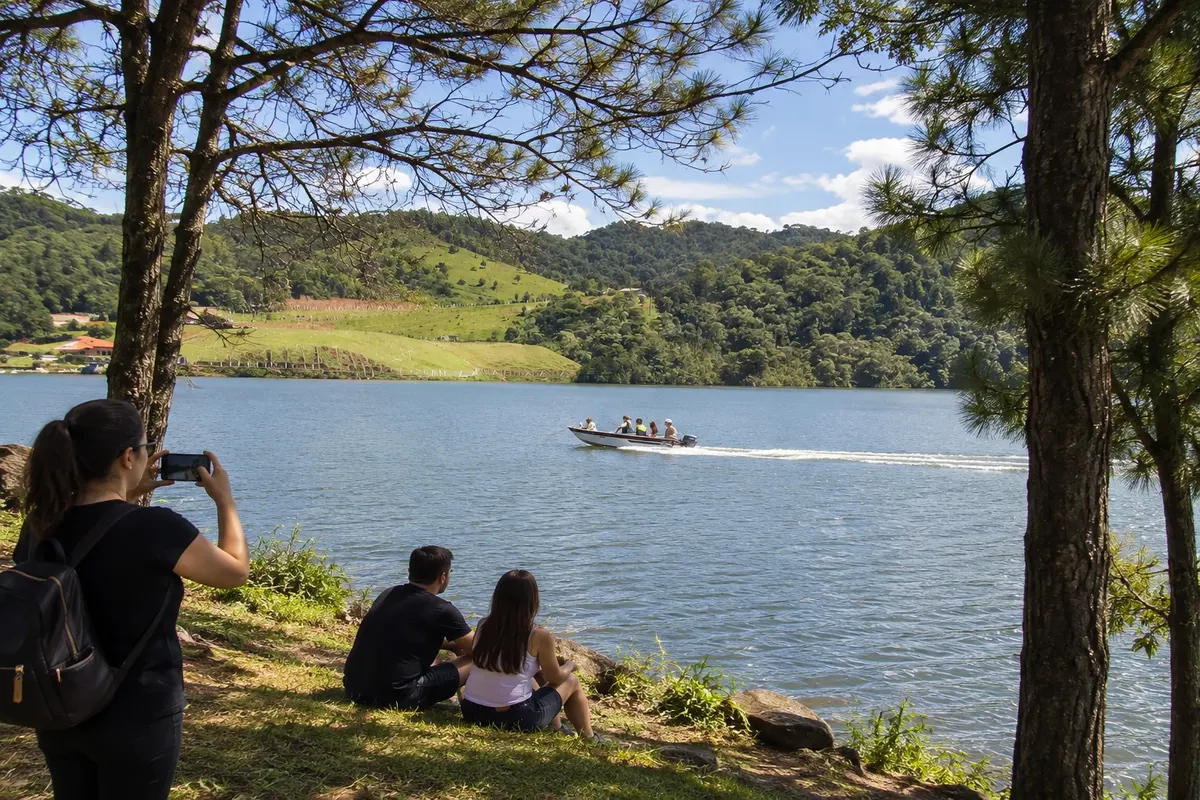
The Represa do Pinhal forms a water-and-hills landscape in the locality of Alto Cedros, in Rio dos Cedros.
Illustrative images. The pictures in this guide are illustrations based on the real place, not photographs, and may differ from it.

Discover
About Represa do Pinhal — Alto Cedros
The Represa do Pinhal forms a water-and-hills landscape in the locality of Alto Cedros, in Rio dos Cedros. The reservoir is part of the Região dos Lagos and is associated with power generation. Forest and rural properties surround the water, creating observation points with different characteristics along the shores. Alto Cedros also appears in the highland stages of the bicycle circuit, but the lake's landscape can be visited as a specific program.
Choose in advance a point with authorized access and check the rural roads to reach it. The visible shore does not mean the land is open for entry. Water activities require permission and appropriate conditions, while contemplation can focus on observing the reservoir's shape and its relationship with the hills.
Before you go
Practical information
How much time to set aside
Plan your observation of the Pinhal together with the rural transfer to Alto Cedros.
Best time
Days with good visibility favor observing the Pinhal; avoid arriving via dirt roads during heavy rain.
How to get there
Head to Alto Cedros, in the high part of Rio dos Cedros, and confirm access to the chosen viewpoint of the Represa do Pinhal.
Tip
Days with good visibility favor observing the Pinhal; avoid arriving via dirt roads during heavy rain.
Get your questions answered
Frequently asked questions about Represa do Pinhal — Alto Cedros
Is the Lago do Pinhal an artificial reservoir?
The dam is part of the reservoir system of the Região dos Lagos, connected to electricity generation.
How to organize a visit to Represa do Pinhal — Alto Cedros?
Choose in advance a point with authorized access and check the rural roads to reach it. A visible shore does not mean the land is open for entry. Water activities require permission and suitable conditions, while contemplation can focus on observing the shape of the reservoir and its relationship with the hills.