
Railway memory · Indaial, SC
Museu Municipal Ferroviário Silvestre Ernesto da Silva
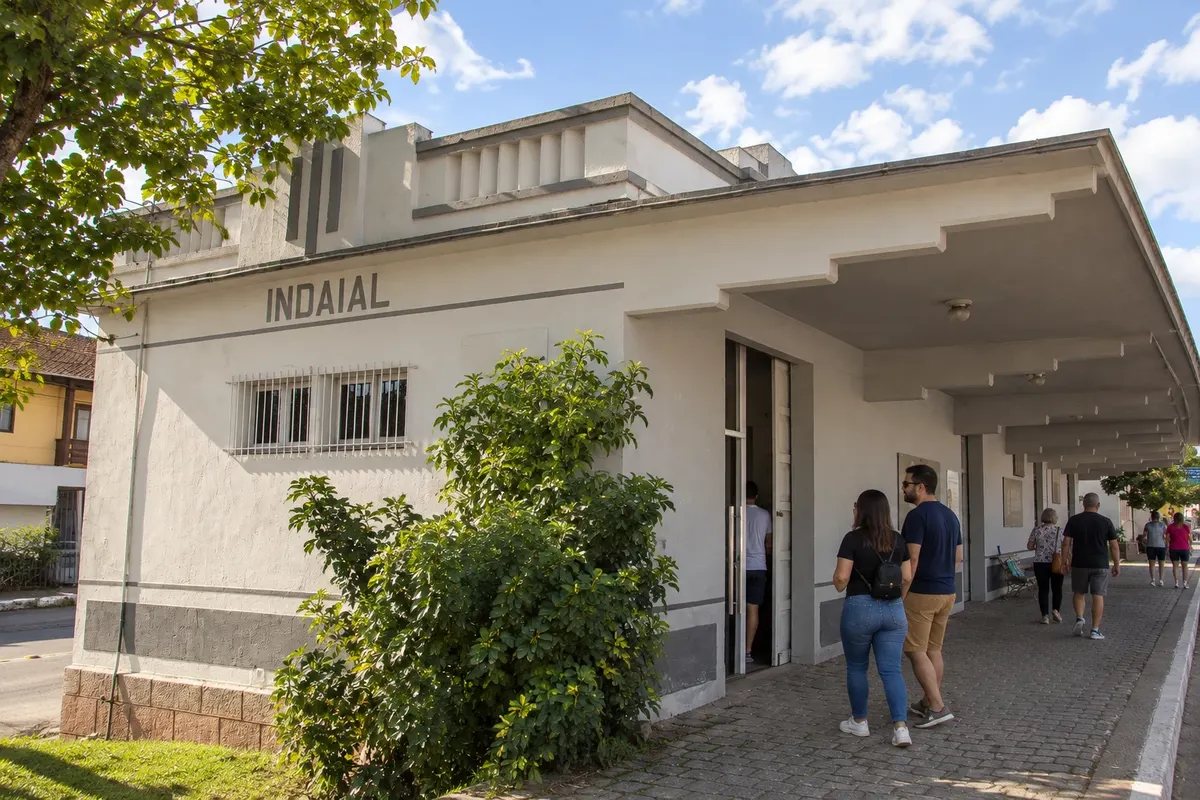
The Museu Municipal Ferroviário Silvestre Ernesto da Silva occupies the old station of Indaial.
Illustrative images. The pictures in this guide are illustrations based on the real place, not photographs, and may differ from it.

Discover
About Museu Municipal Ferroviário Silvestre Ernesto da Silva
The Museu Municipal Ferroviário Silvestre Ernesto da Silva occupies the old station of Indaial. The station building features Art Deco architecture, while the collection brings together photographs, uniforms and objects from the Ferrovia Santa Catarina. The name honors the last agent of the central station. The visit links reading the building to the work of passengers and railway workers, without depending on the operation of a tourist train.
Observe the façade and then look in the collection for the tools and records of railway operation. The objects help to understand tasks that usually remain hidden in the memory of train travel. Check the museum's opening hours and photography rules; do not confuse a visit to the station's heritage with an area of the railway authorized for free circulation.
Before you go
Practical information
How much time to set aside
The railway collection deserves attention to the photographs and to the functions of the pieces, in addition to the station façade.
Best time
An indoor visit period allows you to see the uniforms and photographs of the railway collection.
How to get there
Use the old Estação de Indaial as a reference to locate the Museu Ferroviário in the municipal seat.
Tip
An indoor visit period allows you to see the uniforms and photographs of the railway collection.
Get your questions answered
Frequently asked questions about Museu Municipal Ferroviário Silvestre Ernesto da Silva
Why is the museum named Silvestre Ernesto da Silva?
The name honors the last railway agent of Indaial's central station.
How to organize a visit to Museu Municipal Ferroviário Silvestre Ernesto da Silva?
Observe the façade and then look in the collection for the tools and records of railway operation. The objects help to understand tasks that normally remain hidden in the memory of train journeys. Confirm the museum's opening hours and photography rules; do not confuse a visit to the station's heritage with a railway area authorized for unrestricted circulation.