
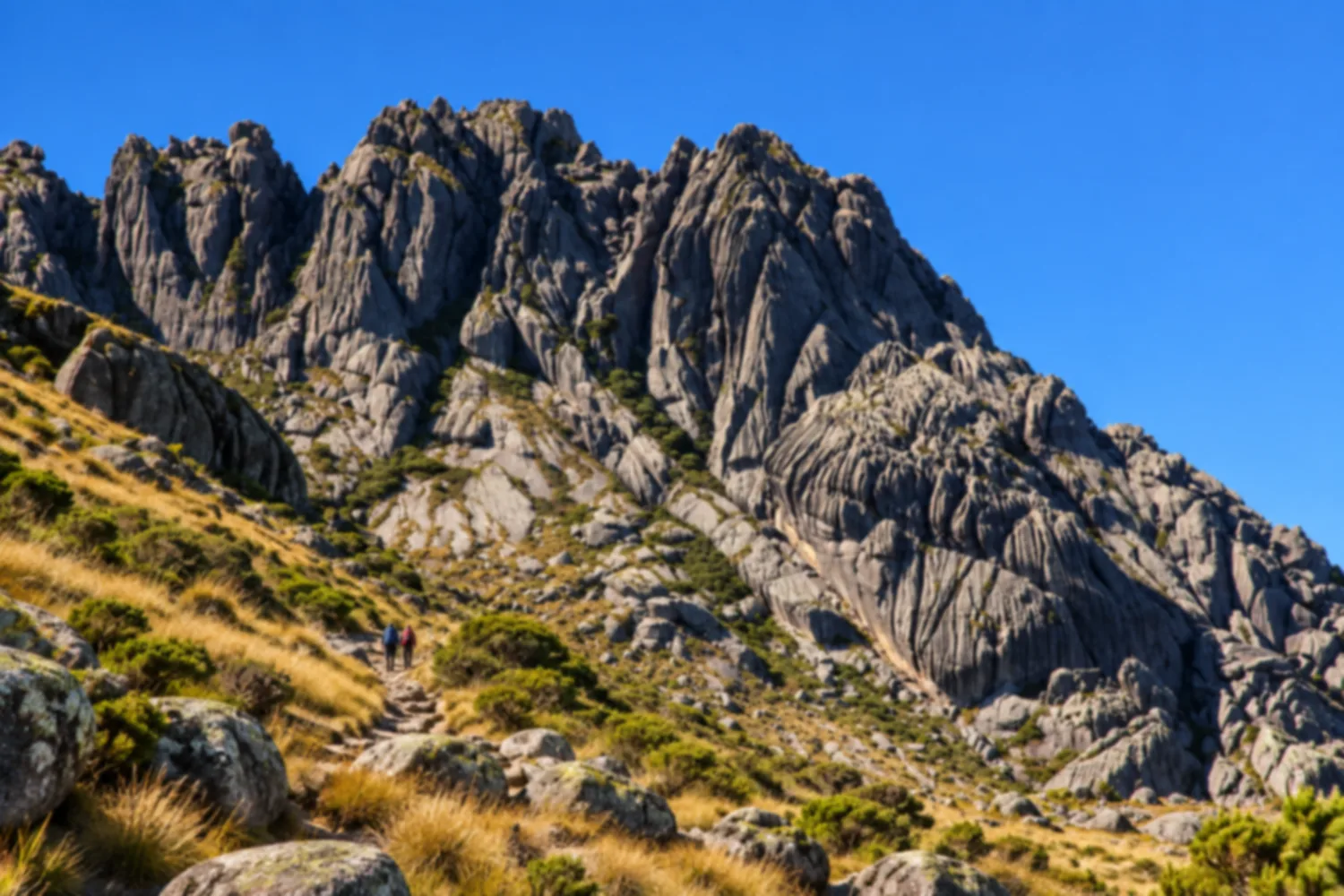
mountain and trail · Itatiaia, RJ
Pico das Agulhas Negras
One of the highest points in Brazil, in the upper section of the Parque Nacional do Itatiaia, the country's first national park, created in 1937. Reaching the summit requires stretches of rock scrambling and rewards you with a 360-degree view.
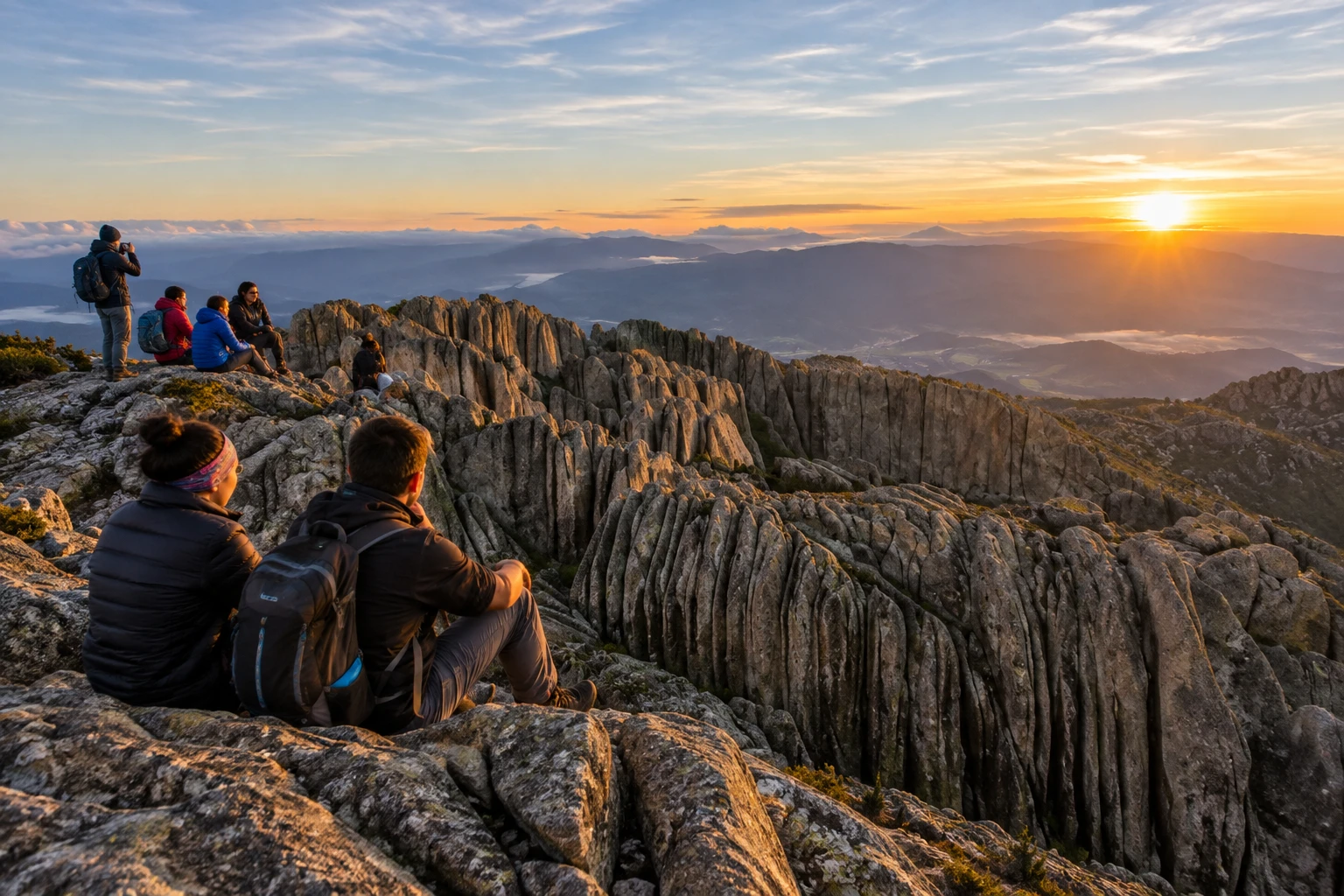
Illustrative images. The pictures in this guide are illustrations based on the real place, not photographs, and may differ from it.
Discover
About Pico das Agulhas Negras
Pico das Agulhas Negras is the highest point of the Parque Nacional do Itatiaia and one of the highest in Brazil. It is in the upper part of the park, in the Serra da Mantiqueira, near the border between Rio de Janeiro and Minas Gerais. Itatiaia, created in 1937, was the country's first national park.
Seen from afar, the peak is a rocky massif full of spires and grooves rising above the high-altitude grasslands. Around it the landscape is open, with low grass, shrubs and large scattered boulders, very different from the forest in the lower part of the park.
The hike to the base of the peak starts near the Abrigo Rebouças (mountain hut) and is of moderate difficulty. The climb to the summit is another matter: it is a rock scramble, with steep stretches, cracks and passages with ropes, requiring good fitness and experience. The park requires climbing equipment on some stretches, and hiring an accredited guide is strongly recommended.
From the top there is a sweeping view of the whole upper part of the park and the neighboring Maciço das Prateleiras. If you don't want to climb, just seeing the peak up close from the base trail makes the outing worthwhile.
Before you go
Practical information
How much time to set aside
Set aside the whole day: the trip to the base with the climb to the summit and back takes up a good part of the day, and the hike to the base alone takes a few hours.
Best time
In winter, from June to August, when there is less rain and less risk of thunderstorms with lightning; days are usually clear, but the early mornings are very cold, with frost. Start early to catch the best weather.
How to get there
The peak is in the upper part of the Parque Nacional do Itatiaia, which has its own access, separate from the lower part. Take the BR-354, between Engenheiro Passos (RJ) and Itamonte (MG), to the Garganta do Registro; from there a dirt road, called the Estrada das Flores, leads to the Posto Marcão, the entrance to the upper part. The trail to the peak starts near the Abrigo Rebouças (mountain hut).
Tip
There is a park entrance fee, and the weather in the upper part changes quickly: bring warm layers, a windbreaker and a rain jacket even on sunny days, and check visiting rules and hours on the official website before you go.
Official website
A look at the place
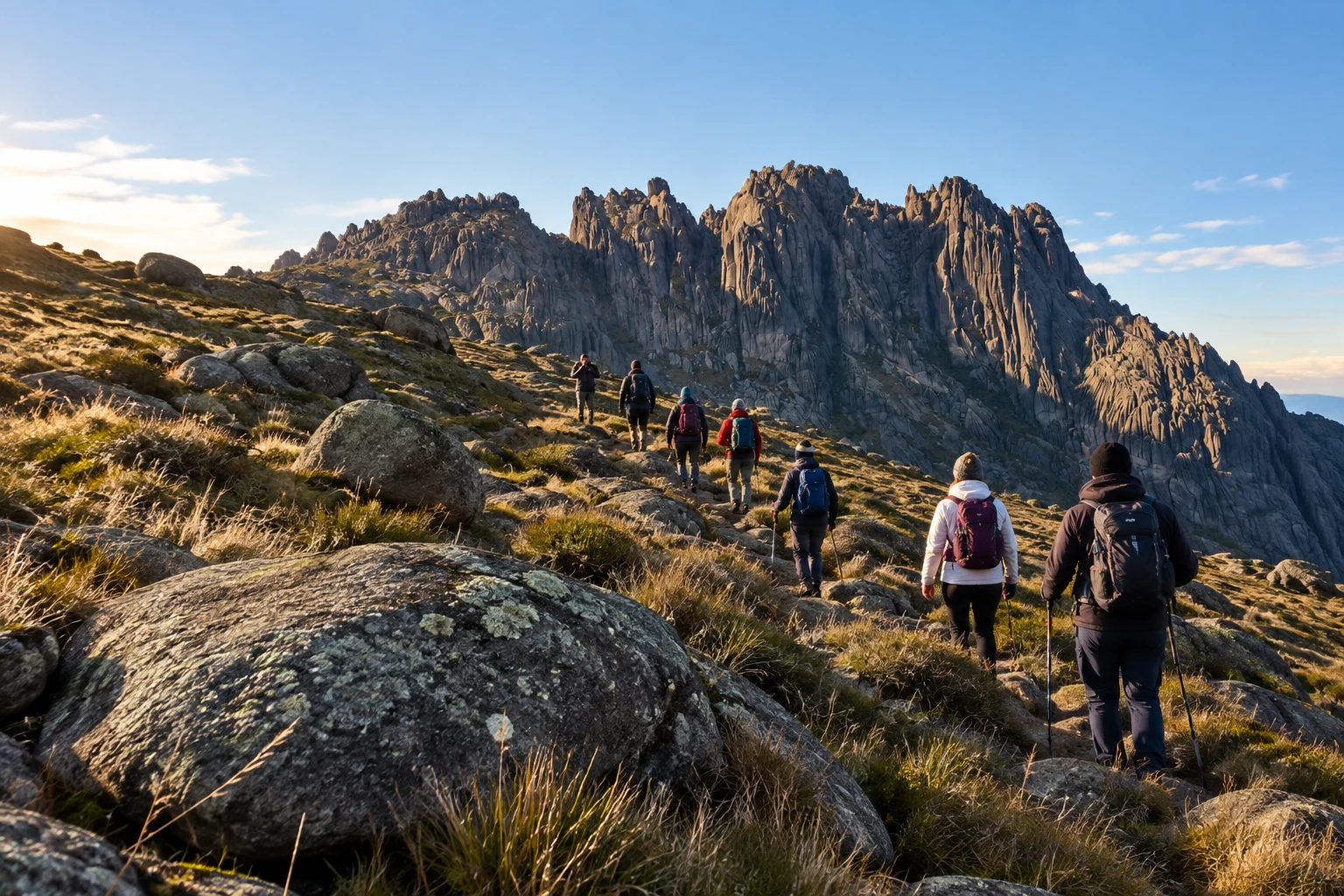
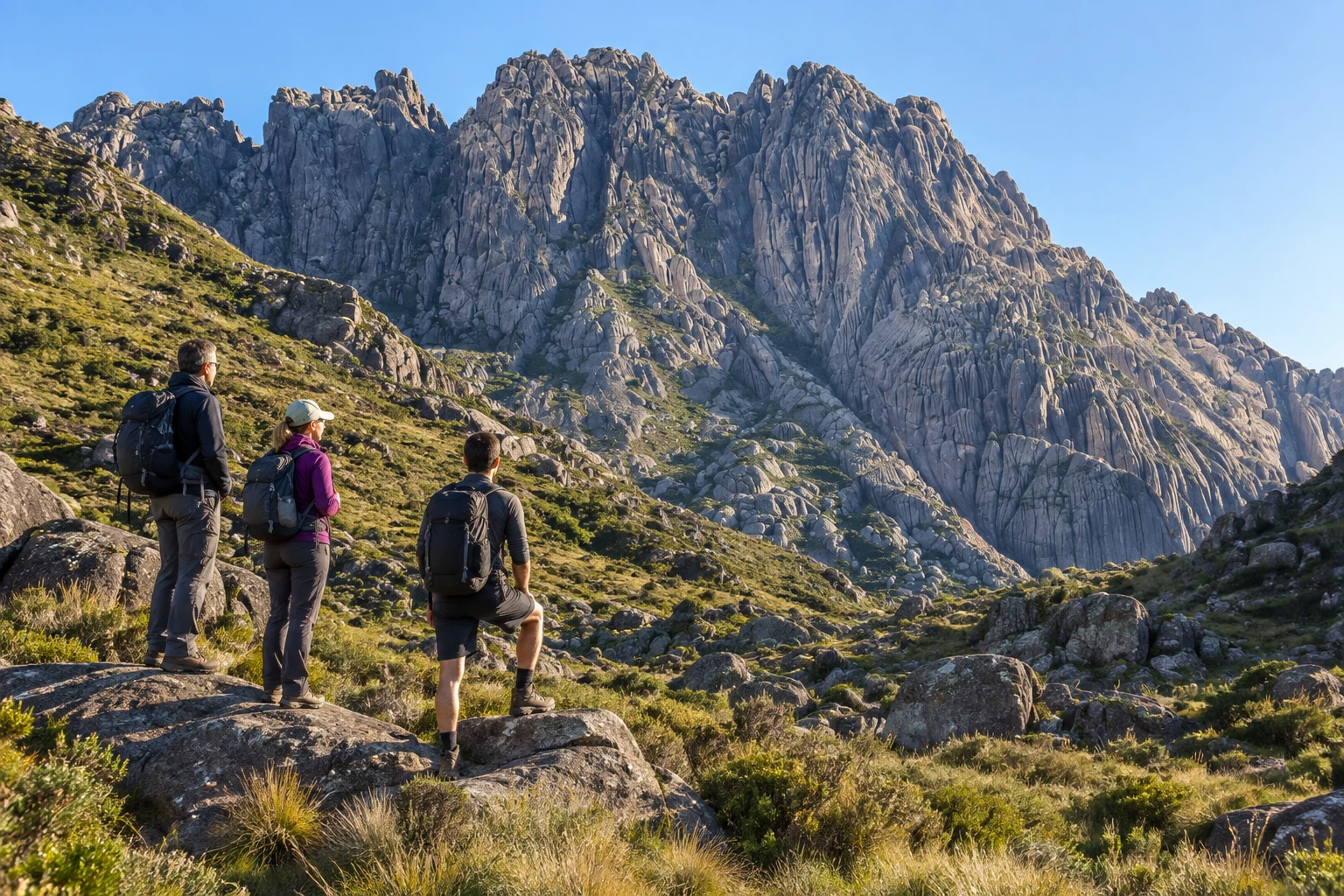
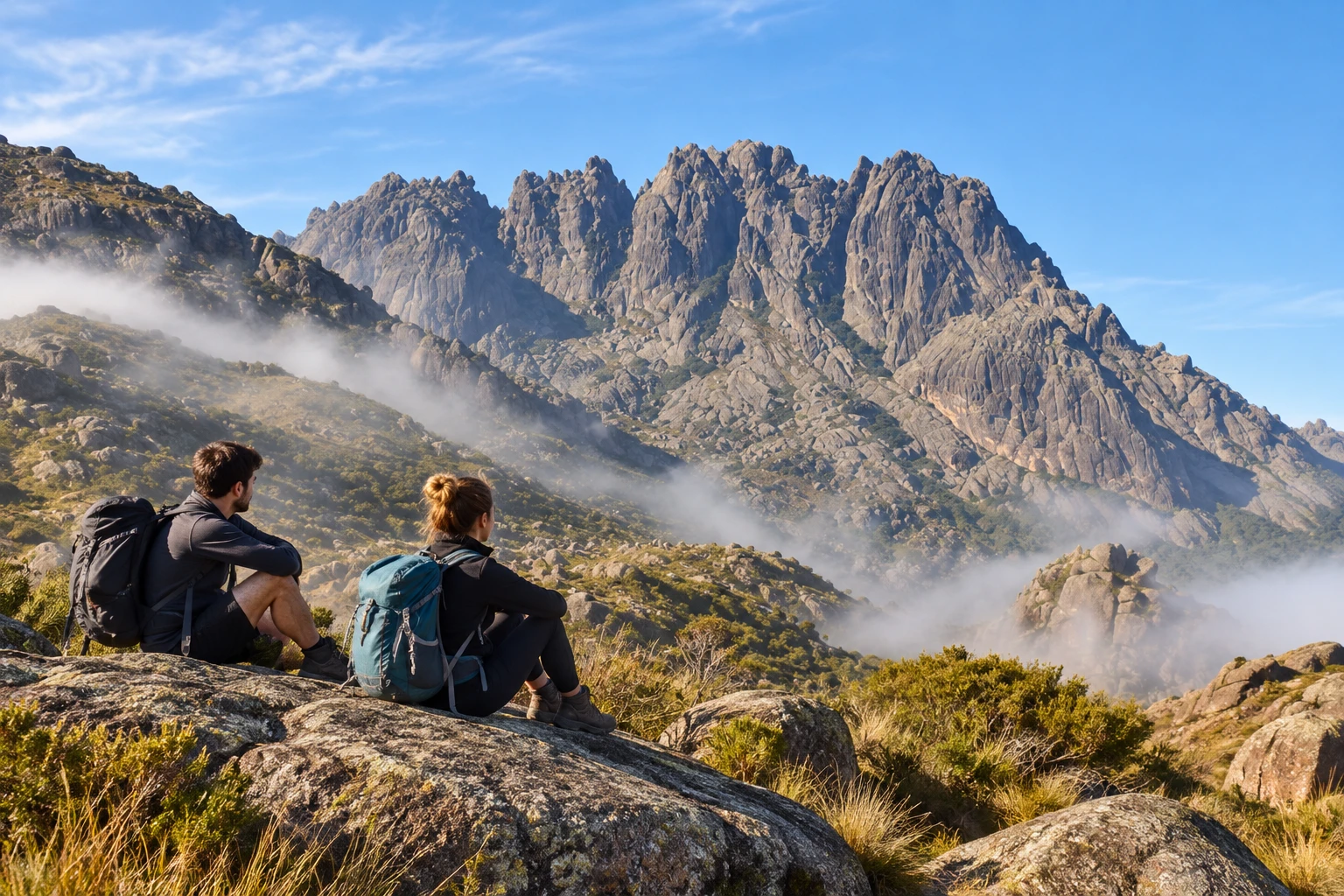
Pico das Agulhas Negras in pictures
These pictures are illustrations based on the real place, not photographs. They may differ from the place.
Click the picture to enlarge it.
Get your questions answered
Frequently asked questions about Pico das Agulhas Negras
Where is Pico das Agulhas Negras?
In the upper part of the Parque Nacional do Itatiaia, in the Serra da Mantiqueira, near the border between Rio de Janeiro and Minas Gerais. Access is via the BR-354 to the Garganta do Registro, then a dirt road to the Posto Marcão.
Can anyone climb to the summit?
It is not an ordinary hike. The climb to the summit is a rock scramble, with steep stretches, cracks and passages with ropes, and requires good fitness and experience. The trail to the base is moderate and already lets you see the peak up close.
Do I need a guide to climb Agulhas Negras?
For the summit, hiring an accredited guide is strongly recommended, and the park requires climbing equipment on some stretches. Check the current rules on the park's website before you go.
When is the best time to climb?
Winter, from June to August, when there is less rain and less risk of thunderstorms with lightning. Days tend to be clear, but the cold is intense, with frost in the early mornings.
Why is the peak called that?
The name comes from the dark, pointed rocks at the top of the massif, which look like needles. Among mountaineers, the summit rock is known as Itatiaiaçu.