
Historical heritage · São Nicolau, RS
Sobrado Silva
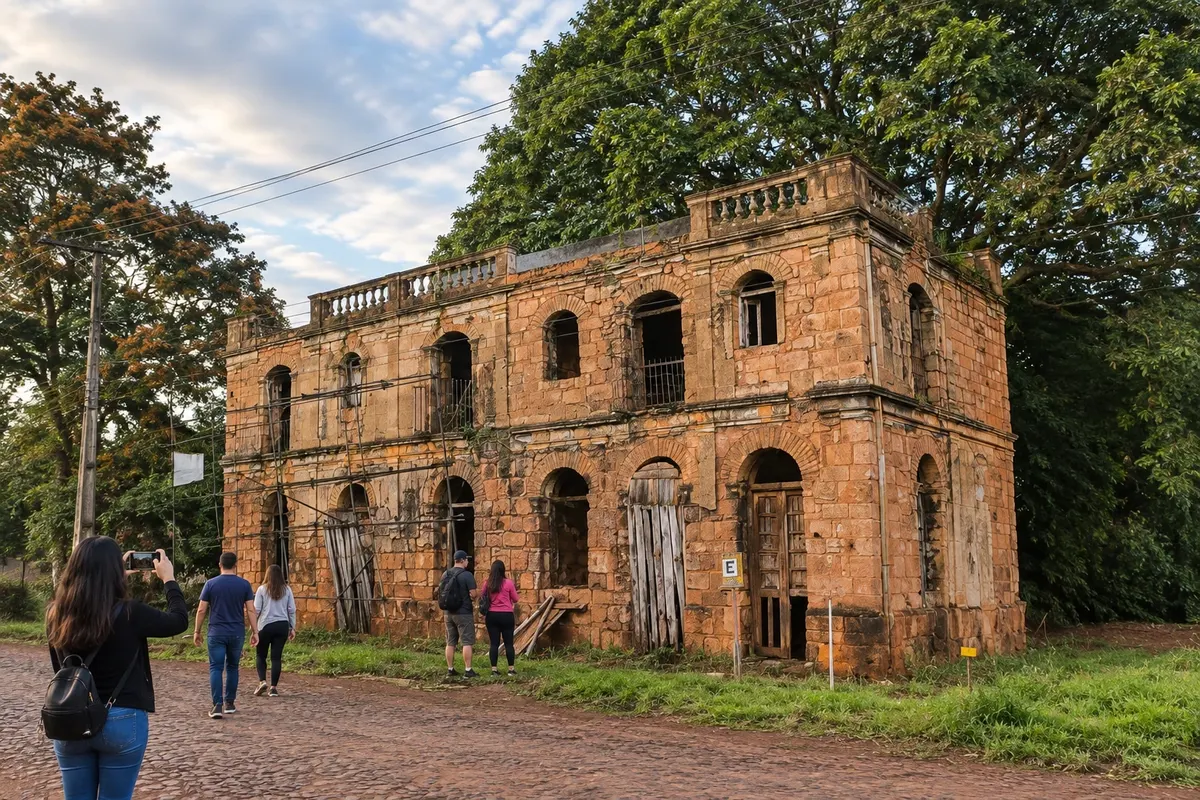
Historic building in São Nicolau built with stones from the former reduction.
Illustrative images. The pictures in this guide are illustrations based on the real place, not photographs, and may differ from it.

Discover
About Sobrado Silva
The Sobrado Silva is a historic building in São Nicolau whose construction used stones from the former Jesuit-Guarani reduction. Reuse of that material creates a visible link between different periods of the town: remains of a previous settlement became part of a residence and a commercial house. Its architecture and historical functions make the sobrado a visit distinct from the archaeological site.
Protected as state heritage, the building can be observed by the proportions of its façade and the presence of the construction material. Signs of conservation and restoration should be interpreted with information provided by the site itself, rather than concluding that every part of the building has remained unchanged.
Before planning interior access, confirm the current visitation status. Works, conservation or programming may limit circulation. External observation still requires respect for the property and its surroundings: do not touch the walls to remove material or use architectural elements as supports to climb.
Before you go
Practical information
How much time to set aside
Consider an architectural stop, extended if there is an interior visit to the Sobrado Silva.
Best time
External observation works better with light that highlights the façade and its materials.
How to get there
The sobrado is located in the center of São Nicolau, at the intersection of Rua Ademar Silva and Rua General Salvador Pinheiro Machado.
Tip
Check the visitation status of the protected building before planning entry into its interiors.
Get your questions answered
Frequently asked questions about Sobrado Silva
What material links the Sobrado Silva to the former reduction?
The historic building was constructed with stones reused from the redução de São Nicolau.