
Archaeological site · São Nicolau, RS
Sítio Arqueológico de São Nicolau
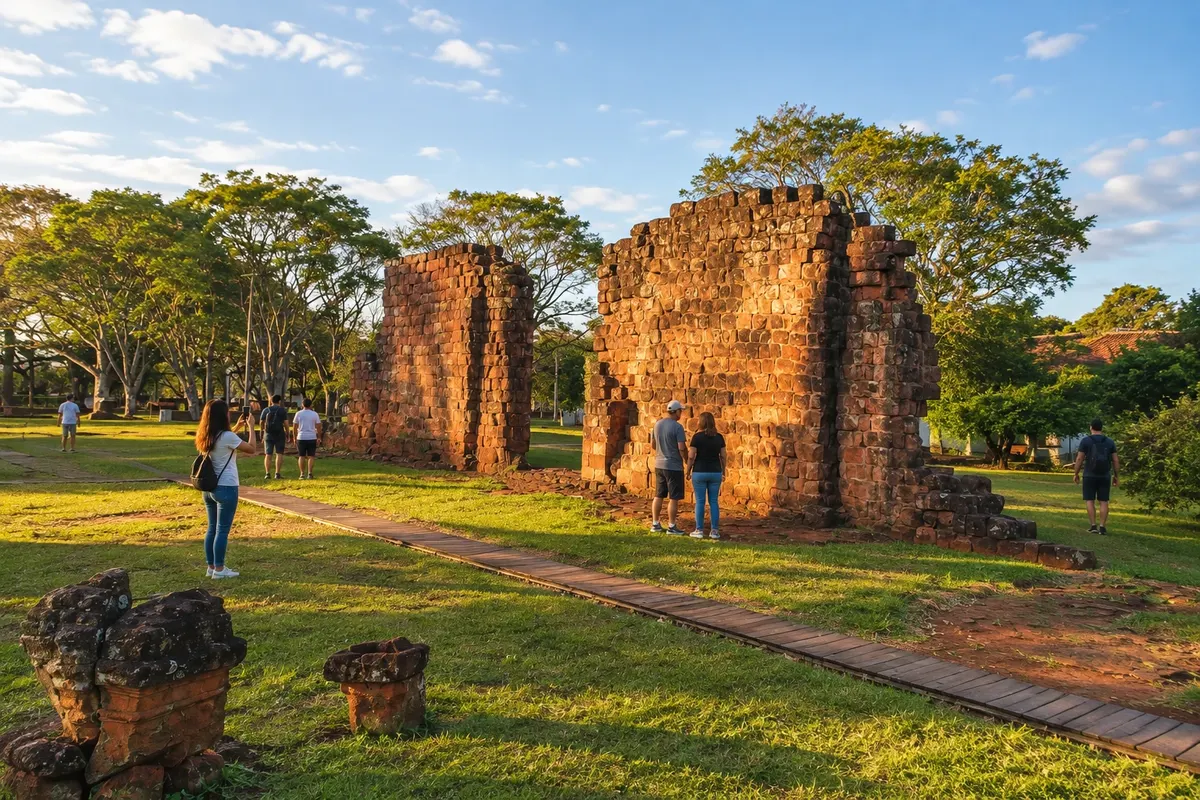
Remnants of the former mission settlement preserved in the core of São Nicolau.
Illustrative images. The pictures in this guide are illustrations based on the real place, not photographs, and may differ from it.

Discover
About Sítio Arqueológico de São Nicolau
The Sítio Arqueológico de São Nicolau preserves remains of the former Jesuit-Guarani settlement that gave rise to the town's historical memory. The visit shows surviving structures and open areas where the absence of complete buildings is also part of reading the place. It is important to distinguish walls, foundations and circulation areas, rather than imagine an ancient town entirely preserved.
The stones and other archaeological elements help to understand the organization of the reduction. Interpretation and local guidance, when available, can connect each remnant to the functions of the historic complex. Photographing a ruin without that context provides only part of the experience.
Stay on the authorized route and do not climb on the remains. Removing stones, leaning objects on the structures or moving fragments damages the heritage. An open-air visit requires clothing appropriate to the climate, while any internal spaces depend on confirmation on the day.
Before you go
Practical information
How much time to set aside
Allow for a careful visit to the remains and to the interpretation of the former settlement.
Best time
Choose a time that allows you to tour the open archaeological areas comfortably.
How to get there
The site is part of São Nicolau's historic core; confirm the entry point and the permitted route.
Tip
View the structures from the designated path, without walking on walls or removing fragments.
Get your questions answered
Frequently asked questions about Sítio Arqueológico de São Nicolau
Does the Sítio Arqueológico de São Nicolau preserve a complete settlement?
The visit encounters archaeological remains of the former redução. Disappeared structures should not be confused with preserved buildings.