
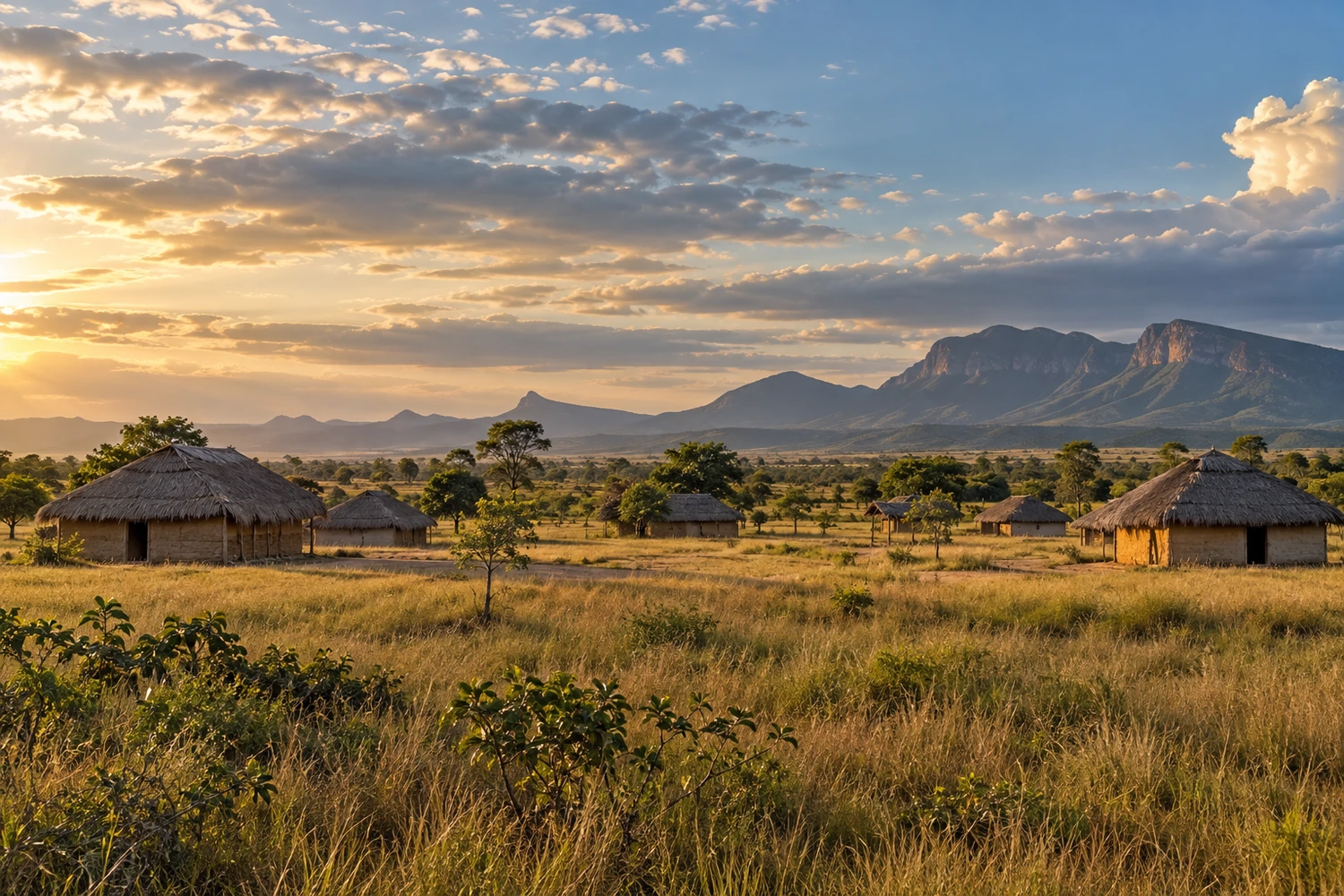
Indigenous community · Normandia, RR
Comunidade Indígena Raposa I
A Macuxi village in the Raposa Serra do Sol Indigenous Territory that pioneered a visitation plan approved by Funai; it hosts tourists in family homes, in tents or hammocks. The experience includes the parixara dance, pottery and basketry workshops and traditional cooking.
Illustrative images. The pictures in this guide are illustrations based on the real place, not photographs, and may differ from it.
Discover
About Comunidade Indígena Raposa I
The Raposa I Indigenous Community is a village of the Macuxi people in the Raposa Serra do Sol Indigenous Territory, in the municipality of Normandia, in northeastern Roraima. It was the first in the state to create a tourism visitation plan approved by Funai and began welcoming visitors in 2019. Today it is a benchmark for ethnotourism in Roraima.
Visits take place only within the itineraries organized by the community itself, according to the visitation plan. Residents lead the activities and explain the meaning of each one. Visitors stay in family homes, in tents or hammocks, and meals are also served in these homes.
The experience shows the Macuxi way of life: the parixara dance, the making of clay pots, a tradition passed down among women, the weaving of baskets, bags and sieves and archery. In the kitchen there is damurida, fish in a pepper broth, caxiri, a traditional drink, beiju (cassava flatbread) and cassava flour, with cooking workshops.
There are also nature outings, always with community guides: the Trilha Cultural to the Cachoeira da Raposa, marked by a Macuxi totem where you ask permission to begin the walk, the climb up the Serra do Arco-Íris and a trip with fishing on the Lago da Barragem.
It is an experience for those who want to get to know Indigenous culture slowly and respectfully, accepting simple lodging and the community's rules. The walks require some fitness.
Before you go
Practical information
How much time to set aside
The experience usually takes at least a full day, and it is best to spend the night in the community to take part in the activities at a relaxed pace.
Best time
In the dry season, which in Roraima runs roughly from September to March, the dirt roads are in better condition; in the rainy season the waterfalls fill up, but access can be difficult.
How to get there
The community is in the municipality of Normandia, in the Raposa Serra do Sol Indigenous Territory, in northeastern Roraima. From Boa Vista, take the BR-401 and then the BR-433, with stretches of dirt road. Entry to Indigenous land is only allowed with a visit booked on the community's itineraries.
Tip
Book your visit in advance, with the community itself or with an agency that runs the itinerary, and ask beforehand what may be photographed; bring a hammock or tent if requested, insect repellent and light clothing.
A look at the place
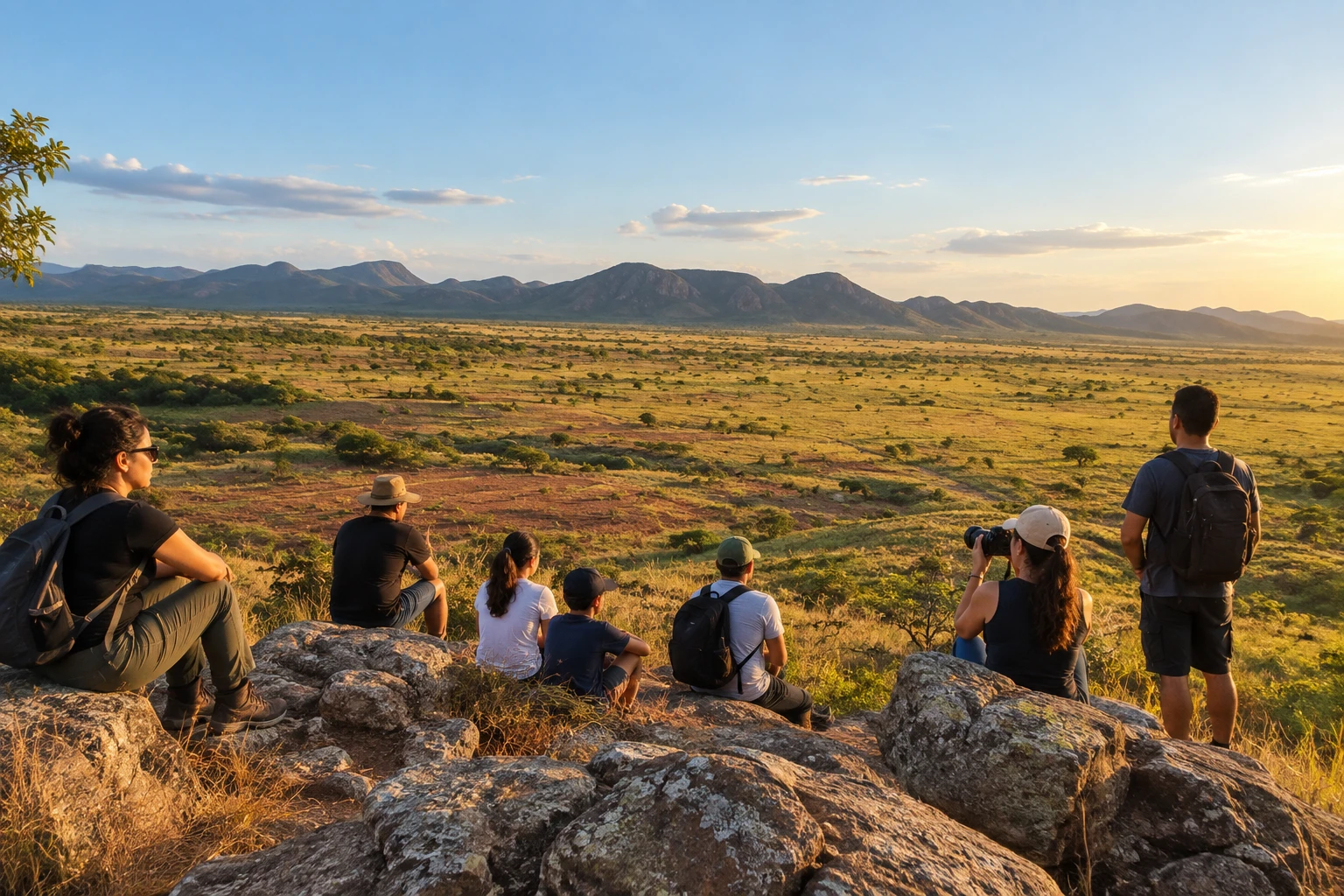
Comunidade Indígena Raposa I in pictures
These pictures are illustrations based on the real place, not photographs. They may differ from the place.
Click the picture to enlarge it.
Get your questions answered
Frequently asked questions about Comunidade Indígena Raposa I
Can I visit the Raposa I Indigenous Community without booking?
No. The community is on Indigenous land and visits only happen on itineraries organized by the residents themselves, according to the visitation plan approved by Funai. You must book in advance.
Where is the Raposa I Community?
In the municipality of Normandia, in northeastern Roraima, inside the Raposa Serra do Sol Indigenous Territory. From Boa Vista, take the BR-401 and then the BR-433.
Where do visitors sleep at Raposa I?
In the homes of community families, in tents or hammocks. Meals are also served in the homes.
What does the Raposa I experience include?
The program includes the parixara dance, clay pot and weaving workshops, archery and Macuxi cooking, such as damurida, caxiri, beiju and cassava flour. There are also guided trails, such as the Cachoeira da Raposa and Serra do Arco-Íris trails.
Which people live in the Raposa I Community?
The Macuxi people, the largest Indigenous group in Roraima.