
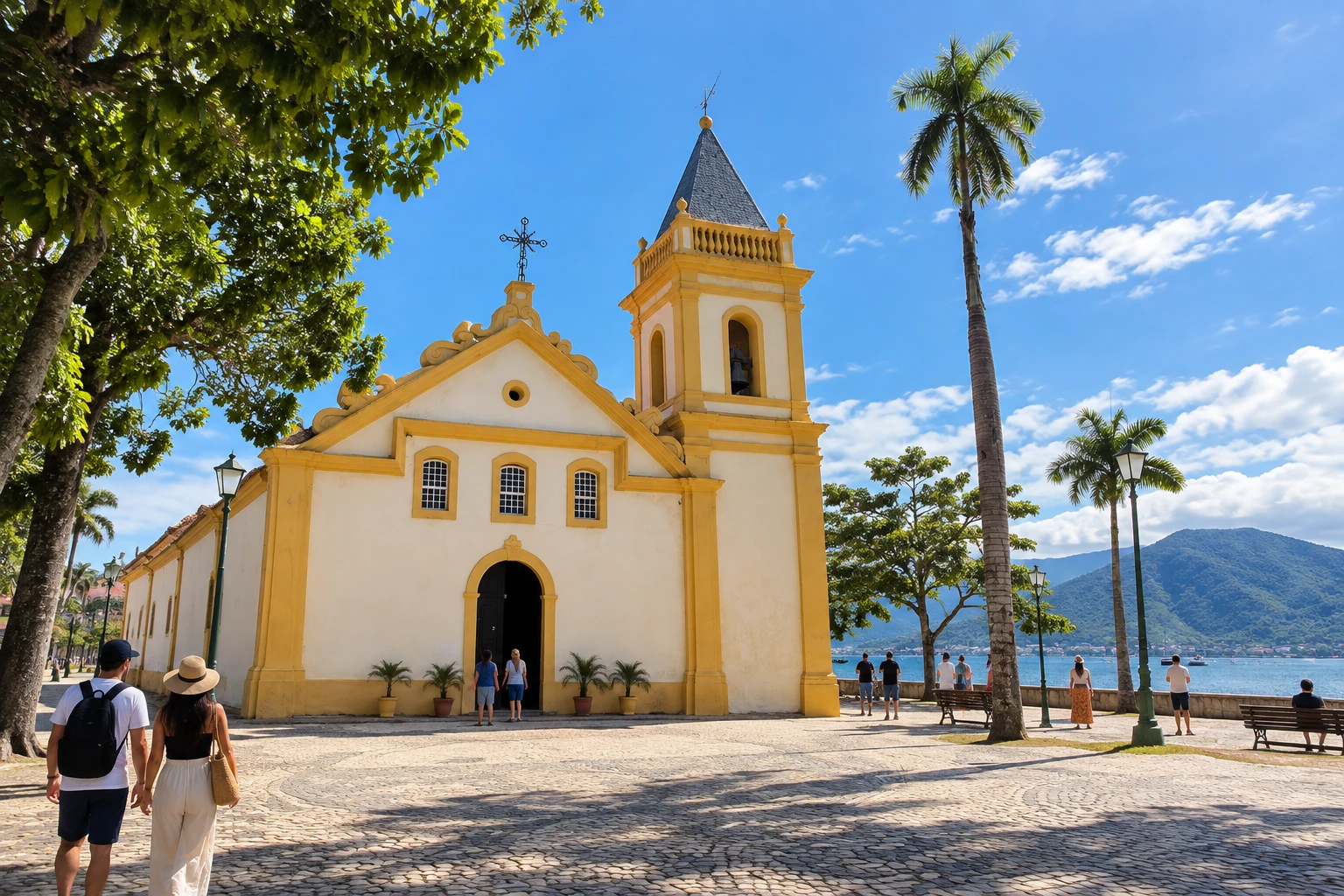
historic center · São Sebastião, SP
Centro Histórico e Igreja Matriz
Listed as a heritage site by Condephaat in 1969, the seven-block area preserves colonial townhouses built with stone and mortar made from crushed shells. The Igreja Matriz, begun in 1603, stands on the main square, and the Convento de Nossa Senhora do Amparo is nearby.
Illustrative images. The pictures in this guide are illustrations based on the real place, not photographs, and may differ from it.
Discover
About Centro Histórico e Igreja Matriz
The Centro Histórico (historic center) of São Sebastião holds the oldest streets of the town, the oldest on the São Paulo North Coast. Its seven blocks are listed by Condephaat, with colonial mansions, churches and museums facing the sea, and Ilhabela across the channel.
The story begins between 1603 and 1609, when the first Portuguese settlers built a small chapel dedicated to São Sebastião. The settlement became a town on March 16, 1636. The Igreja Matriz, on Praça Major João Fernandes, was built in the 17th century with stone, shell lime and whale oil, and was heavily remodeled in the 19th century.
You explore on foot, along cobblestone streets with single-story houses and colonial townhouses. Besides the Matriz, it is worth seeing the Capela de São Gonçalo, which houses the Museu de Arte Sacra, the Casa Esperança and the Casa de Câmara e Cadeia. The streets also have plenty of bars and restaurants. The Convento de Nossa Senhora do Amparo, another landmark of the colonial era, is outside the center, in the São Francisco neighborhood.
The ground is flat and the walk is easy, good for all ages. The cobblestones can be uneven for strollers and wheelchairs.
Before you go
Practical information
How much time to set aside
One to two hours to walk the streets and go into the Igreja Matriz; longer if you visit the museums.
Best time
Late afternoon, when the heat eases and the bars start to open; outside the summer season the streets are quieter. On January 20, the patron saint's day, there is a procession and Masses.
How to get there
It is in downtown São Sebastião, along the channel waterfront; the Igreja Matriz is on Praça Major João Fernandes. By car, access is via the Rio-Santos highway (SP-55). From the South Coast beaches, such as Maresias and Juquehy, take the same highway toward downtown.
Tip
Leave the car parked and explore everything on foot. Entry to the Igreja Matriz is free; for the museums, check opening hours on the city's official tourism website.
Official website
A look at the place
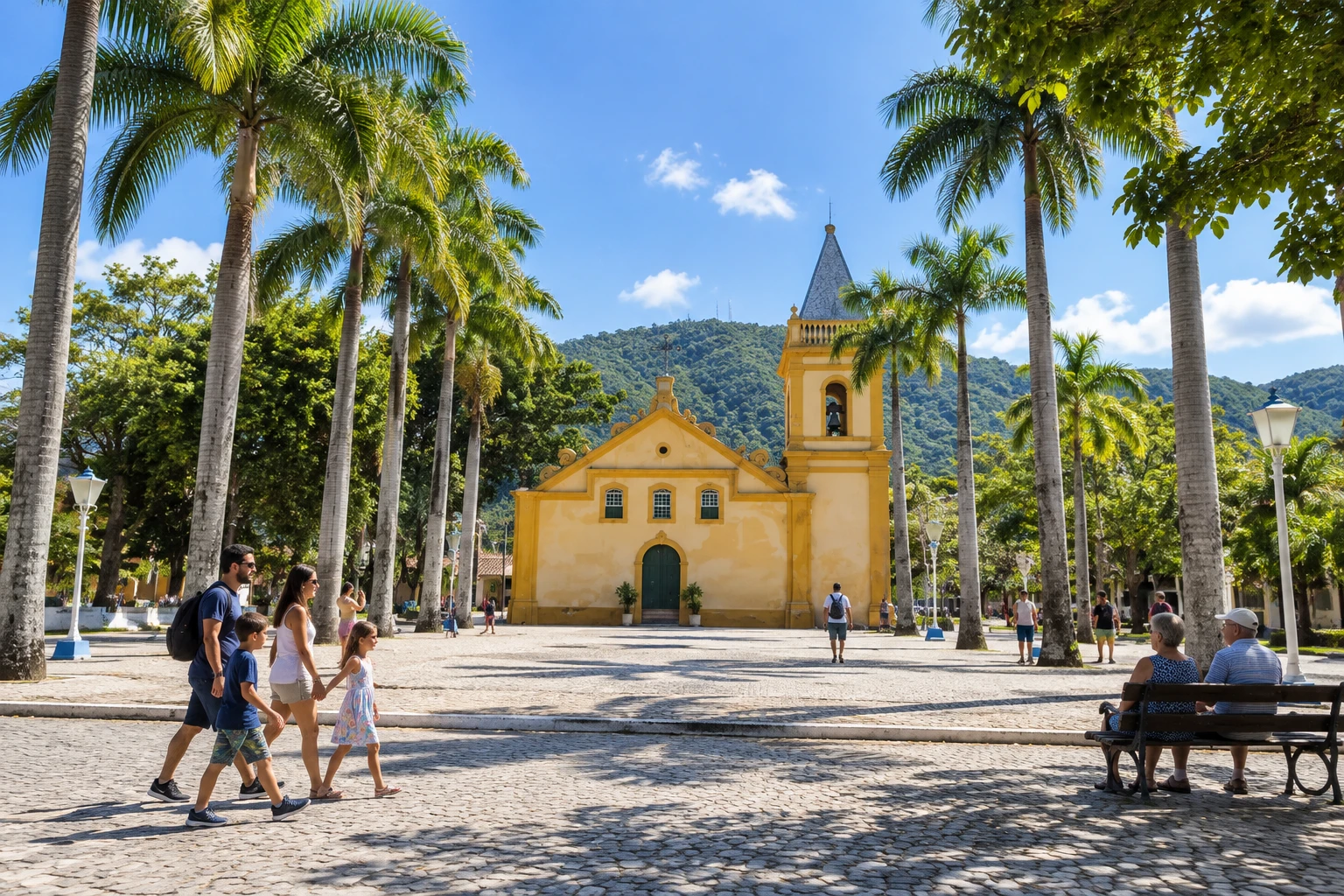
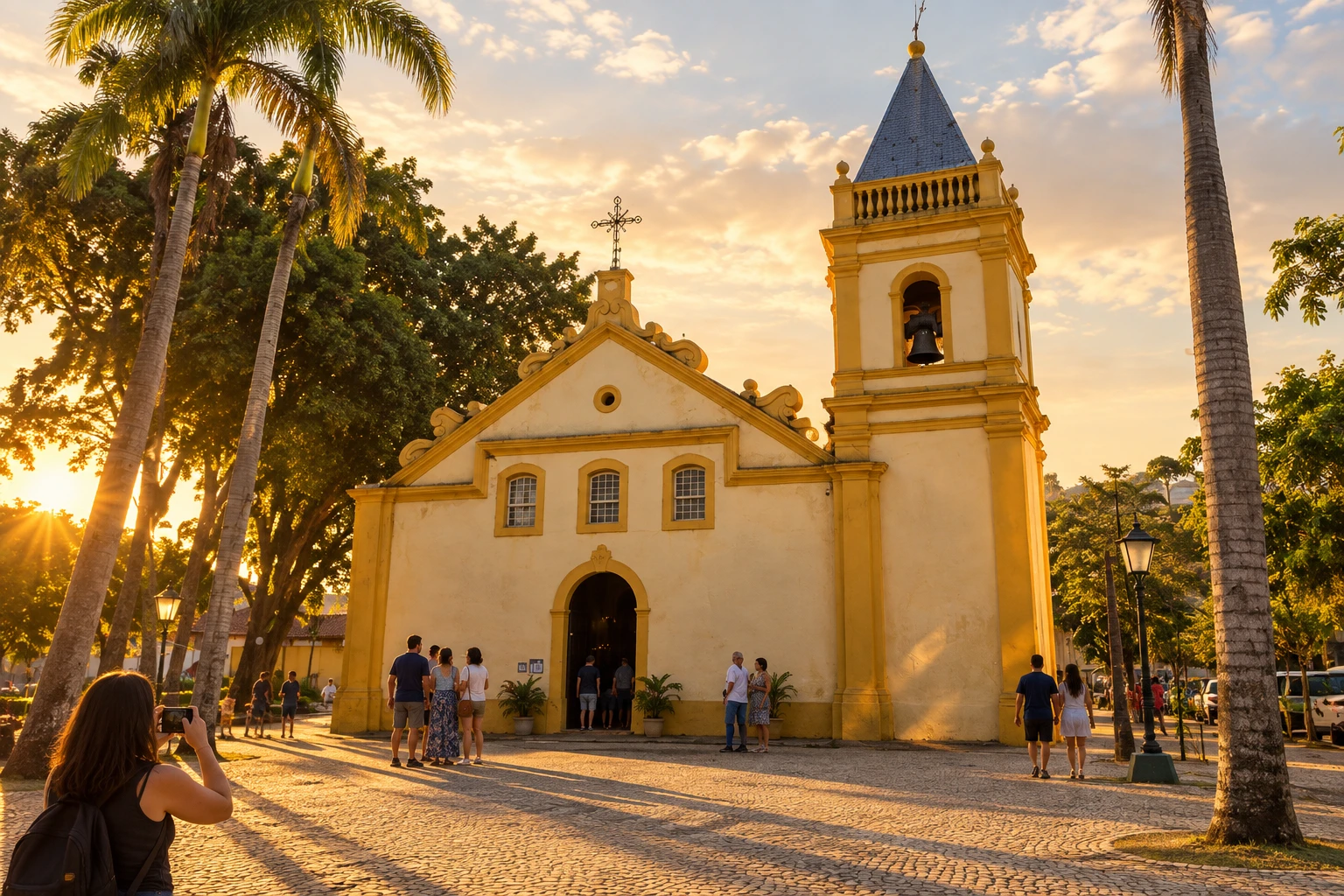
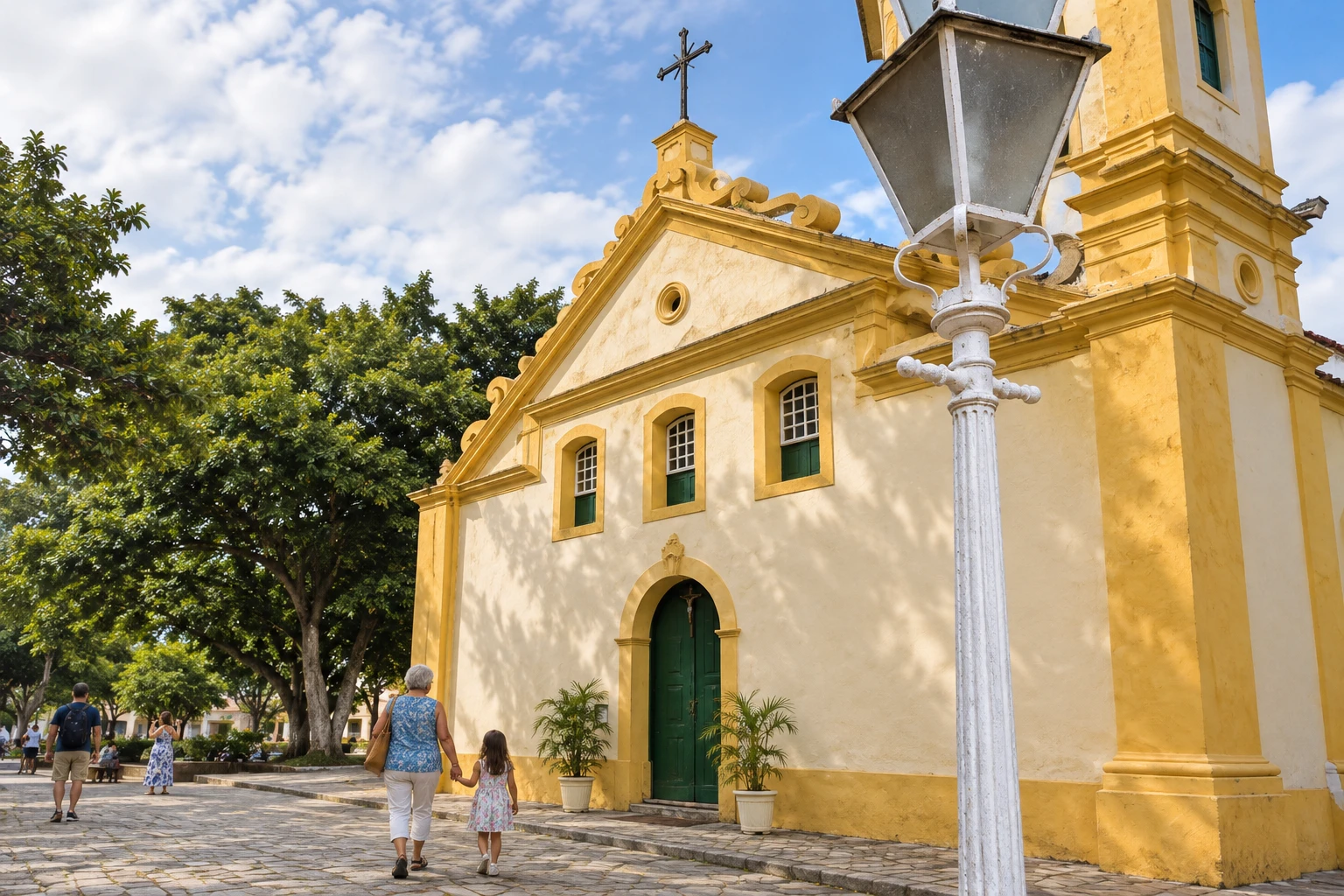
Centro Histórico e Igreja Matriz in pictures
These pictures are illustrations based on the real place, not photographs. They may differ from the place.
Click the picture to enlarge it.
Get your questions answered
Frequently asked questions about Centro Histórico e Igreja Matriz
Is there an entrance fee for the Igreja Matriz in São Sebastião?
No. Entry to the Igreja Matriz is free.
How long does a walk around the historic center take?
One to two hours on foot, with time to go into the Matriz. If you want to visit the museums, allow more time.
What is there to see in the historic center of São Sebastião?
The Igreja Matriz, the Capela de São Gonçalo with the Museu de Arte Sacra, the Casa Esperança, the Casa de Câmara e Cadeia and the streets of colonial mansions.
Is the historic center of São Sebastião a protected heritage site?
Yes. Seven blocks of the center are listed by Condephaat, the São Paulo State heritage agency.
How old is the Igreja Matriz in São Sebastião?
A first chapel was built between 1603 and 1609. The church was built in the 17th century, with stone, shell lime and whale oil, and remodeled in the 19th century.