
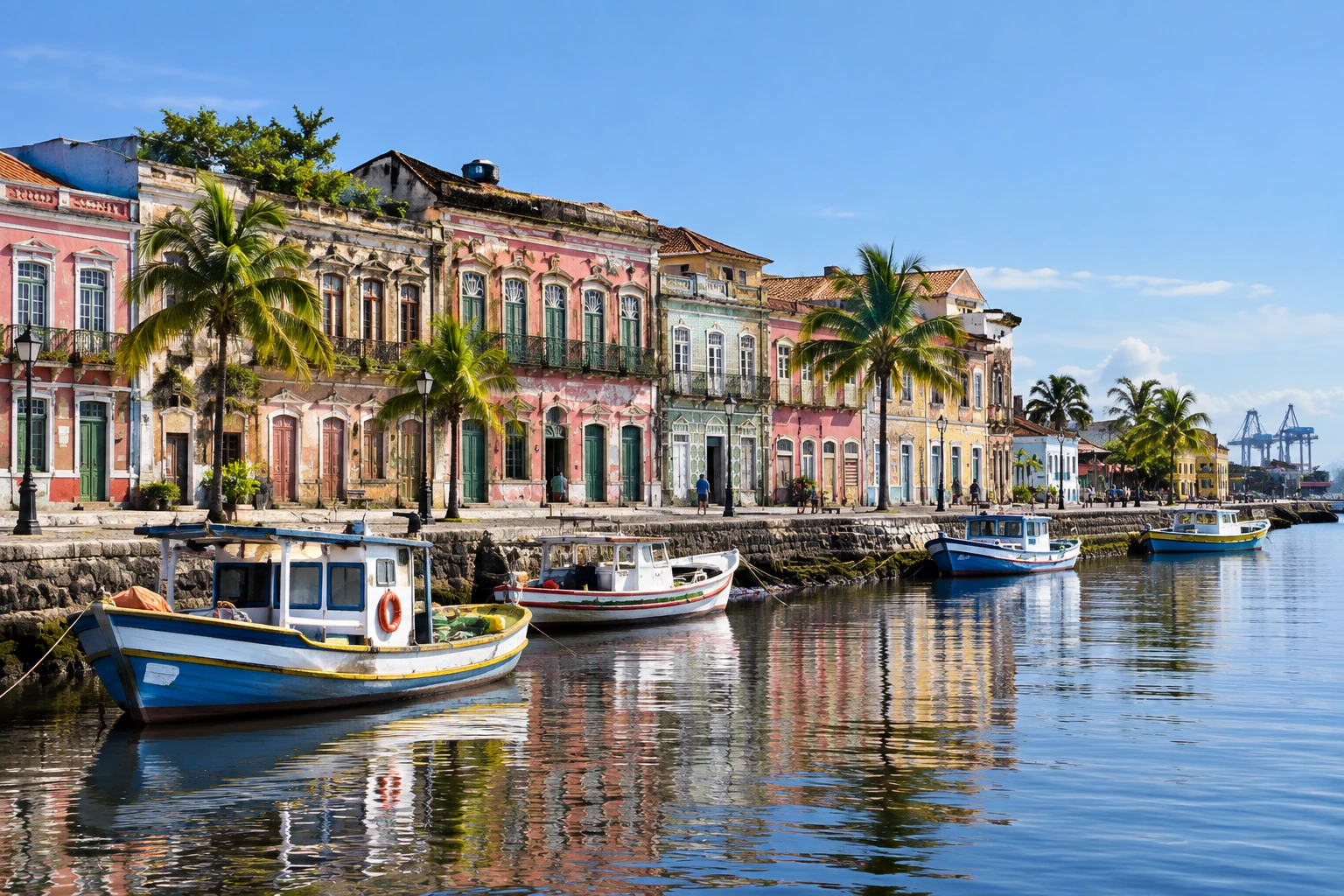
historic center · Paranaguá, PR
Centro Histórico de Paranaguá
Listed by Iphan in 2009, it was the first historic center in Paraná recognized as national heritage and is the oldest part of the city. It includes Rua da Praia, the old Colégio dos Jesuítas and the Rosário and São Benedito churches.
Illustrative images. The pictures in this guide are illustrations based on the real place, not photographs, and may differ from it.
Discover
About Centro Histórico de Paranaguá
The Centro Histórico de Paranaguá (historic center) is the oldest part of the city, on the bank of the Rio Itiberê, on the Paraná coast. Paranaguá was the state's first urban settlement, and its ensemble of narrow streets, townhouses and churches was listed as national heritage by Iphan in 2009. Before that, it was already protected by the Paraná government as a Historic District.
Settlement began in the 16th century, tied to the search for gold, and the village was officially founded in 1648. The city grew around the port, and its layout of winding streets lined with one- and two-story houses has survived almost unchanged to this day.
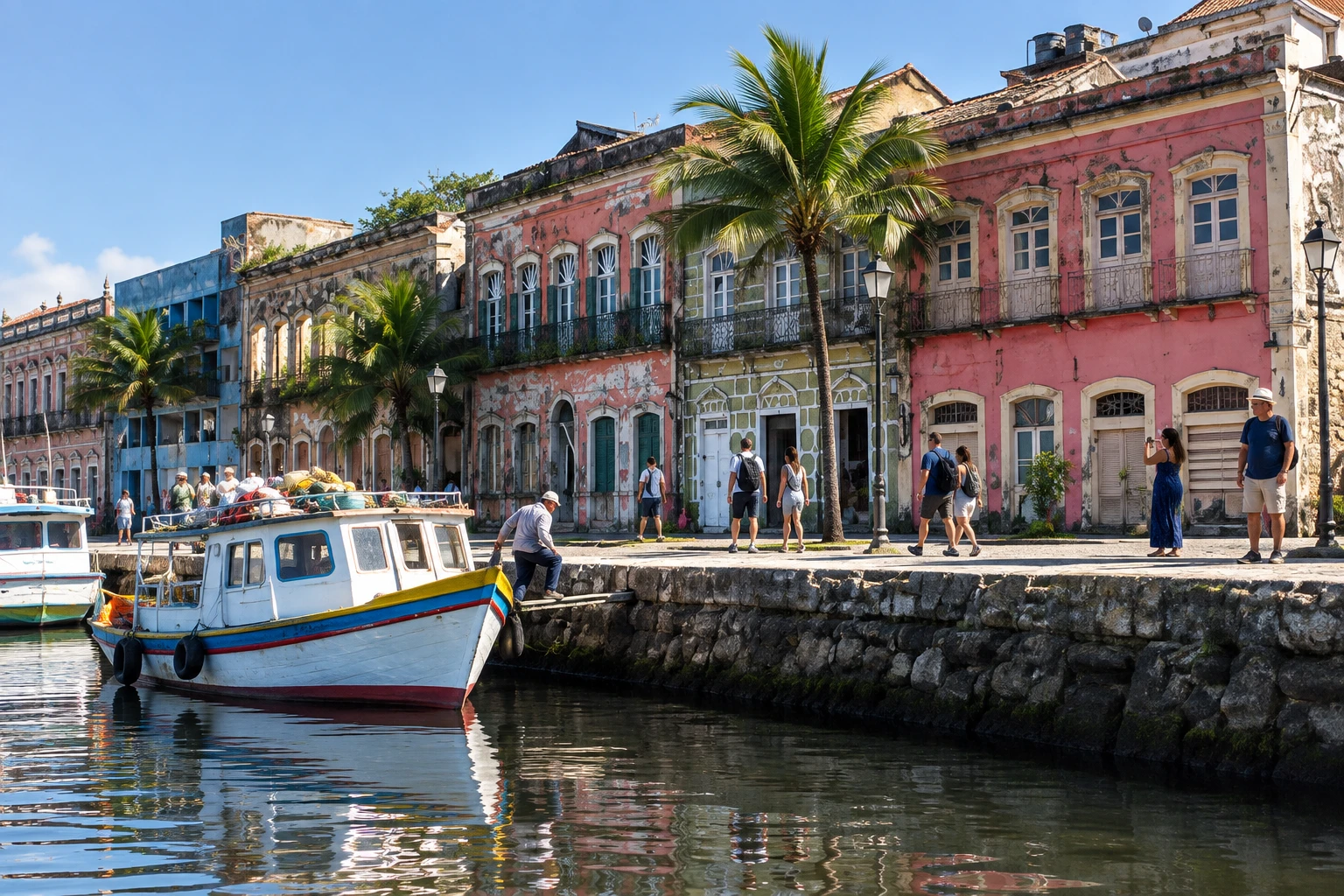
The postcard view is Rua da Praia, facing the river, with the greatest concentration of colorful colonial townhouses, moored boats and the bustle of people heading to the islands. On the streets behind are the Igreja Matriz de Nossa Senhora do Rosário, the Igreja de São Benedito, the Igreja da Ordem Terceira de São Francisco das Chagas, the Palácio Visconde de Nácar and the old Colégio dos Jesuítas, home to the UFPR Museu de Arqueologia e Etnologia.
You explore it on foot, on flat streets, much of them with uneven stone paving, which calls for care if you have reduced mobility or are pushing a stroller. You can combine the walk with museums, markets and a boat trip on the river.
Before you go
Practical information
How much time to set aside
Allow two to four hours to walk the streets and go into a church or museum; with the Museu de Arqueologia e Etnologia, plan on the whole day.
Best time
In the morning or late afternoon, in any season, when the coastal heat is milder and the low light brings out the facades on Rua da Praia; avoid days of heavy rain, which make the paving slippery.
How to get there
The historic center is in downtown Paranaguá, on the bank of the Rio Itiberê. From Curitiba, you get there by car or bus via the BR-277; downtown, everything is within walking distance.
Tip
Wear comfortable shoes because of the stone paving, and bring sunscreen and water. Check the official website for church and museum hours before you go, since not all of them open every day.
A look at the place
Centro Histórico de Paranaguá in pictures
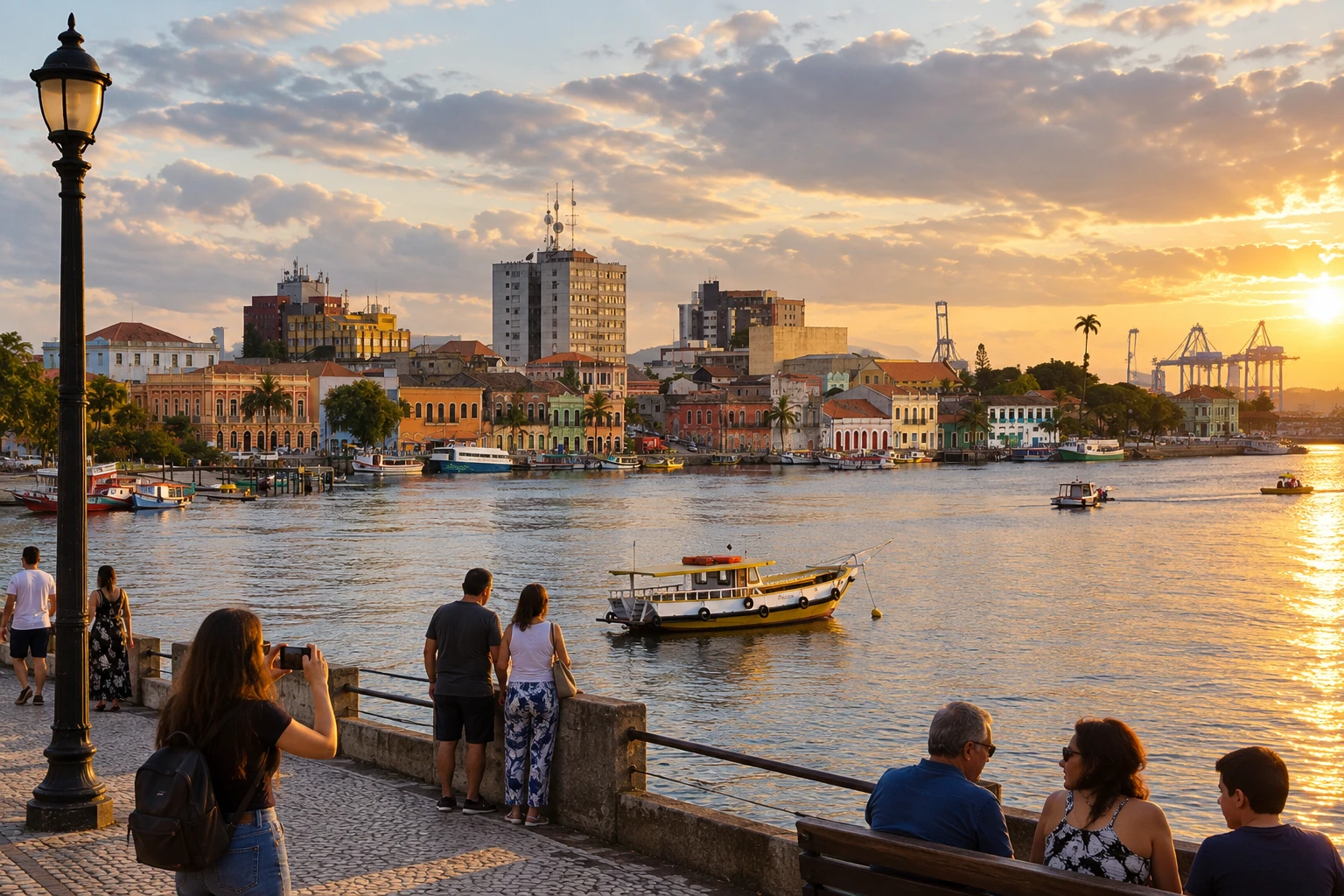
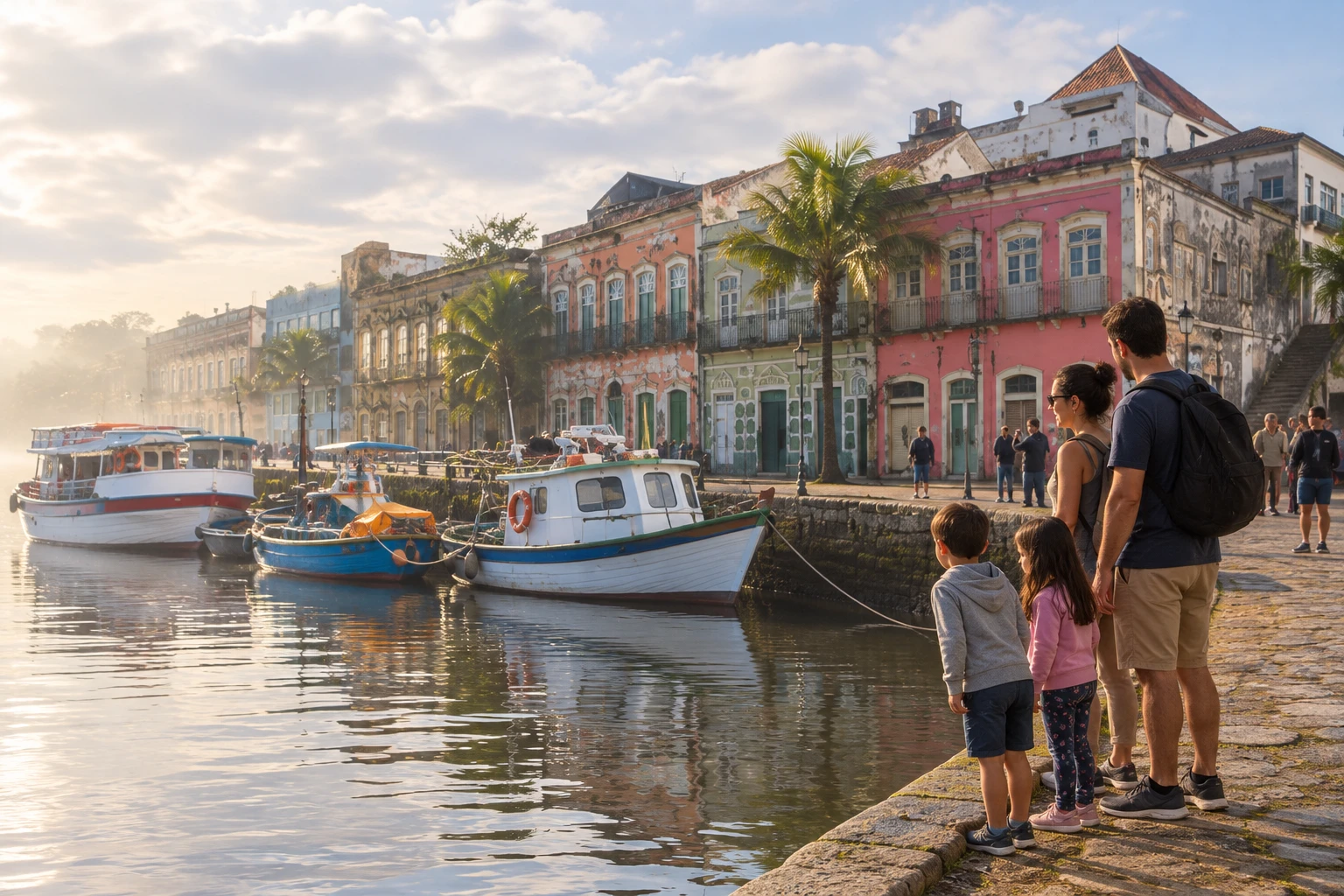
These pictures are illustrations based on the real place, not photographs. They may differ from the place.
Click the picture to enlarge it.
Get your questions answered
Frequently asked questions about Centro Histórico de Paranaguá
Is there a fee to visit the Paranaguá Historic Center?
No. The streets, the Rua da Praia waterfront and the facades can be seen freely. Museums and some venues may have their own admission rules; check beforehand.
How long does it take to see the historic center?
Two to four hours is enough for the walk and a church or museum. With the Museu de Arqueologia e Etnologia and a boat trip, it is worth setting aside the day.
Do I need a guide?
No. You can explore on your own, on foot. A guide helps you understand the history of the buildings, but it is not required.
Is Paranaguá's historic center a protected heritage site?
Yes. The ensemble was listed by Iphan in 2009 and is also protected by the Paraná government as the Paranaguá Historic District.
Is the walk accessible?
The streets are flat, but much of them have uneven stone paving and narrow sidewalks, which makes it hard for wheelchairs and strollers.