Cuiabá
Cuiabá brings together historic heritage, regional traditions and green spaces in the center of Mato Grosso. On Morro do Seminário (hill), the Igreja do Bom Despacho (church) is a highlight of the capital's religious architecture.
MT · Brazil
History of gold, churches and fish dishes where the city meets the Rio Cuiabá.
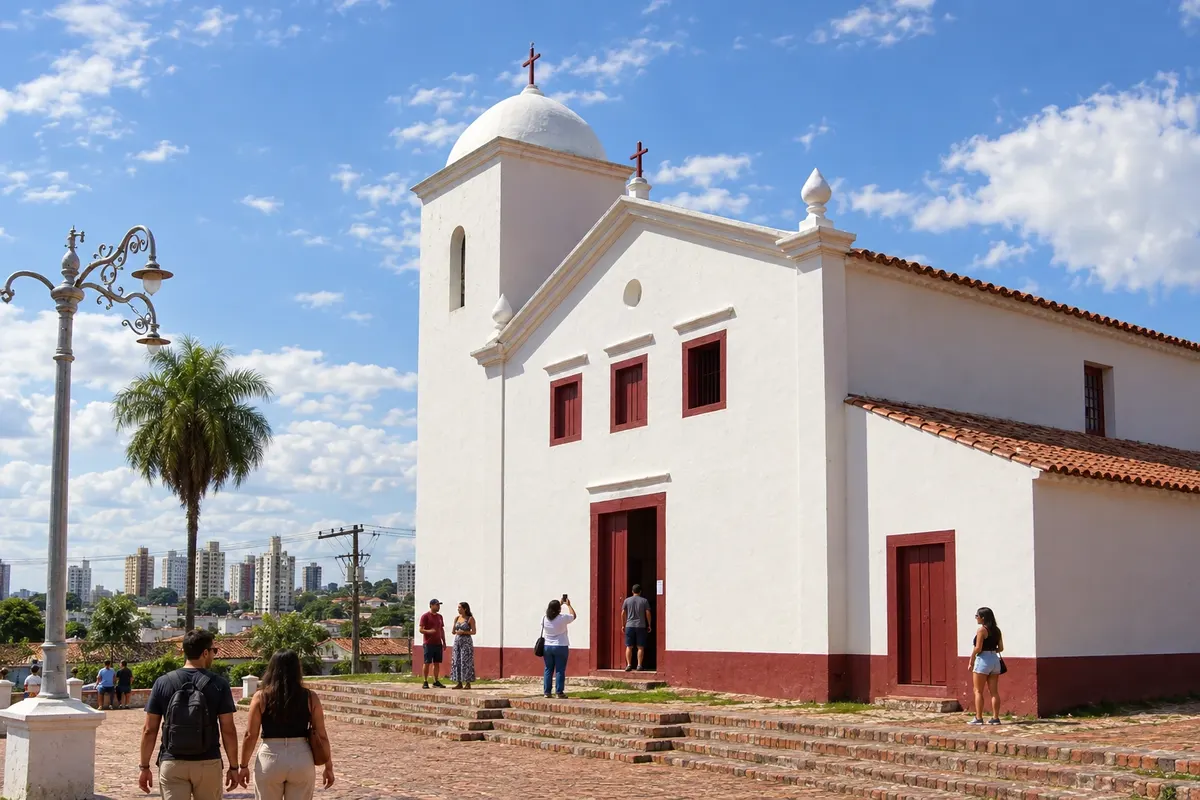
In the photo: Igreja de Nossa Senhora do Rosário e São Benedito in Cuiabá (MT).
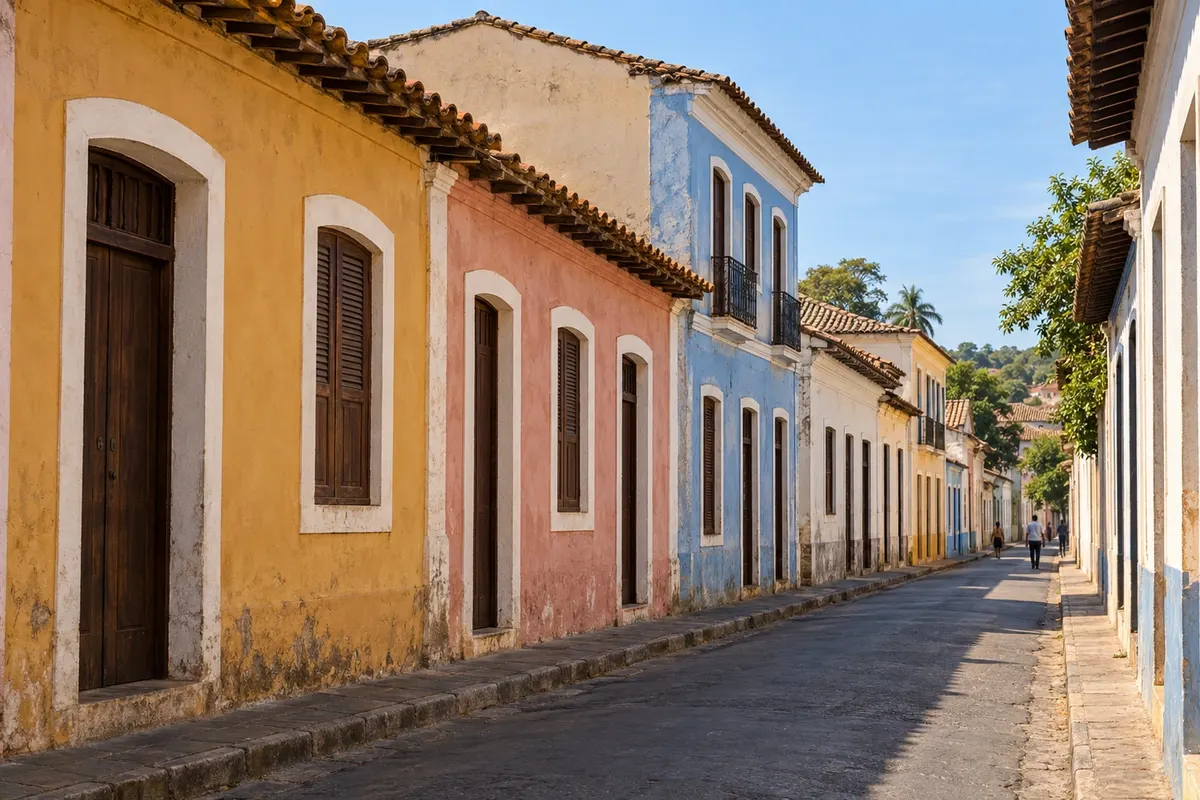
Illustrative images. The pictures in this guide are illustrations based on the real place, not photographs, and may differ from it.
Get to know the place
Cuiabá was born connected to the discovery of gold in the 18th century. The historic center preserves churches and streets that help trace that origin. The Igreja de Nossa Senhora do Rosário e São Benedito is one of the stops to observe the city's religious architecture.
The Museu do Morro da Caixa D’Água Velha adds to the route the memory of the urban water supply. After that, the tour can continue to the bairro do Porto, where the market and the waterfront bring the visitor closer to the Rio Cuiabá and everyday life.
The Mercado do Porto is a stop to discover regional products and eat. Fish, farofa de banana, Maria Izabel and bolo de arroz show different sides of cuiabana cuisine. The meal can be part of the day devoted to the neighborhood, rather than just a pause between visits.
For walking in open areas, the Parque Tia Nair and the Parque das Águas offer alternatives to the historic circuit. The first has a lake and walking spaces; the second is located in the Centro Político Administrativo area.
This destination brings together 1 city: Cuiabá.
Travelers' photos
One destination, many paths
Start with one city or combine several in your itinerary.
Mapa: @svg-maps/brazil, CC BY 4.0
The Aeroporto Marechal Rondon (CGB), which serves Cuiabá, is located in Várzea Grande. Arrival to the capital requires a transfer. Urban road access includes the BR-163 and the BR-364. Within the city, group visits by historic center, Porto and parks.
The local experience
The town core that grew up after gold was discovered in the Prainha stream in 1722 has about 400 buildings across 13 hectares listed by Iphan (Brazil's national heritage institute). Mansions, churches and narrow streets preserve the look of the old colonial town.
Built around 1730 in rammed earth, near the gold diggings of Miguel Sutil, it has been listed by Iphan (Brazil's national heritage institute) since 1975. It hosts the Festa de São Benedito, one of the most popular religious celebrations in Mato Grosso.
Discover Igreja de Nossa Senhora do Rosário e São Benedito
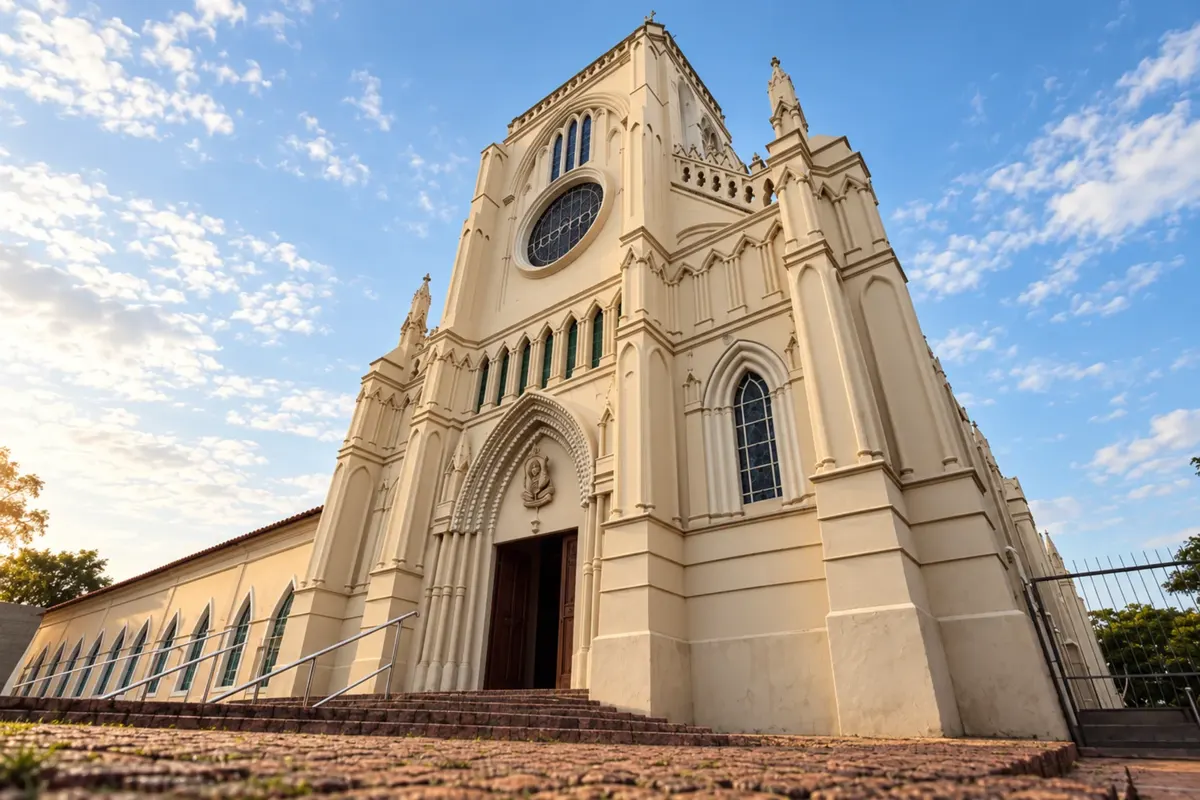
Completed in 1973 on the site of the old main church demolished in 1968, it is about 40 meters tall and 100 meters long. Inside, a 20-meter mosaic of Christ the King by Polish artist Arystarch Kaszkurewicz dominates the altar.
Discover Catedral Basílica do Senhor Bom Jesus
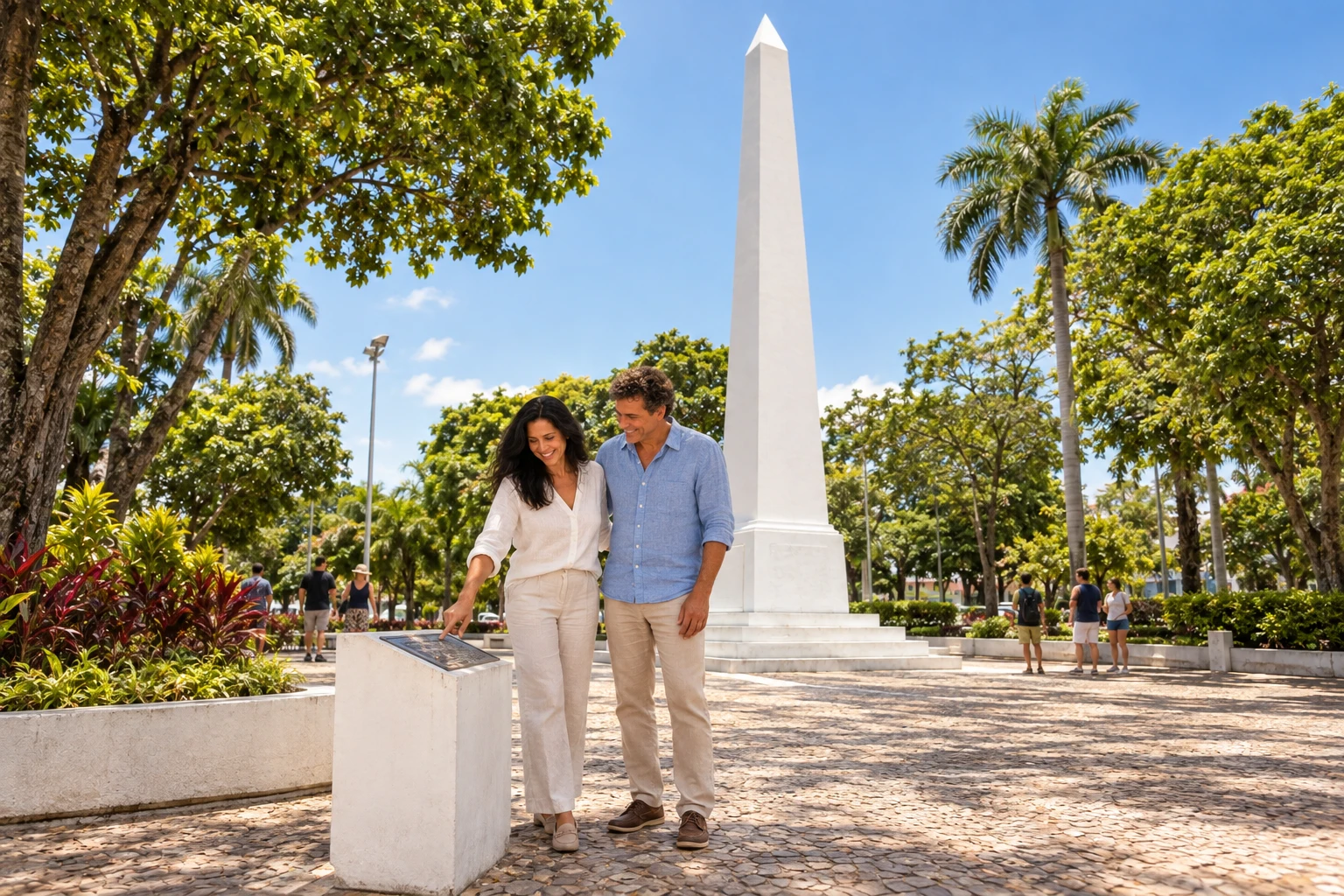
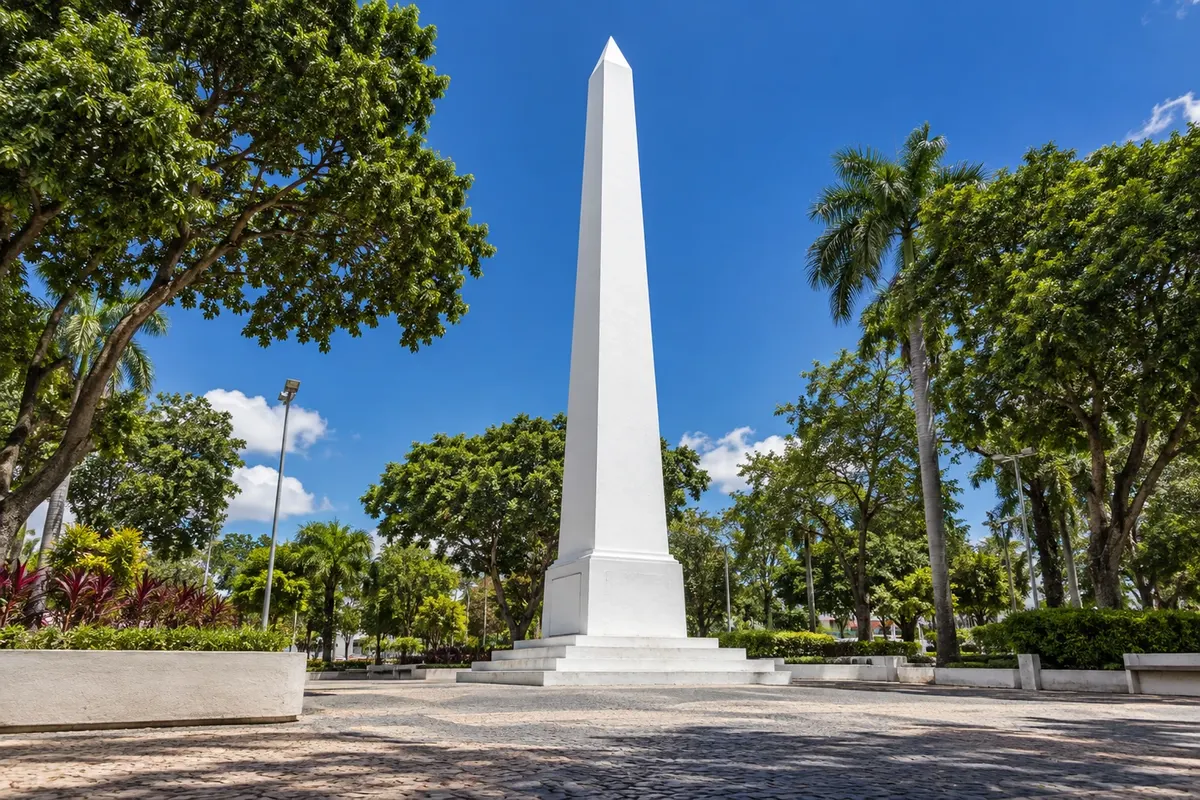
An obelisk on Praça Pascoal Moreira Cabral that marks the point Marshal Rondon calculated in 1909 as the center of the continent. The original marker is still visible inside the monument, which appears on the city flag.
Discover Centro Geodésico da América do Sul
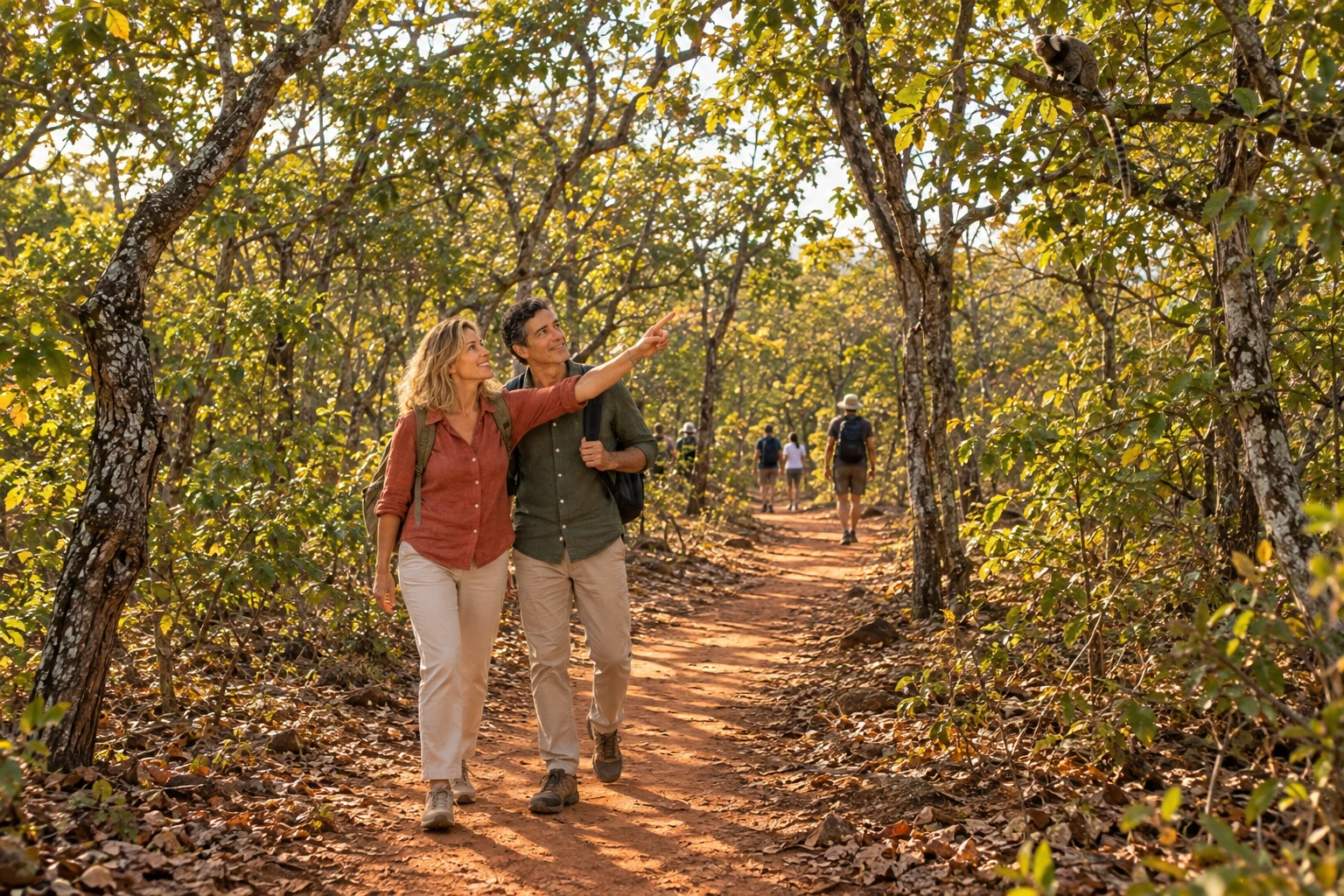
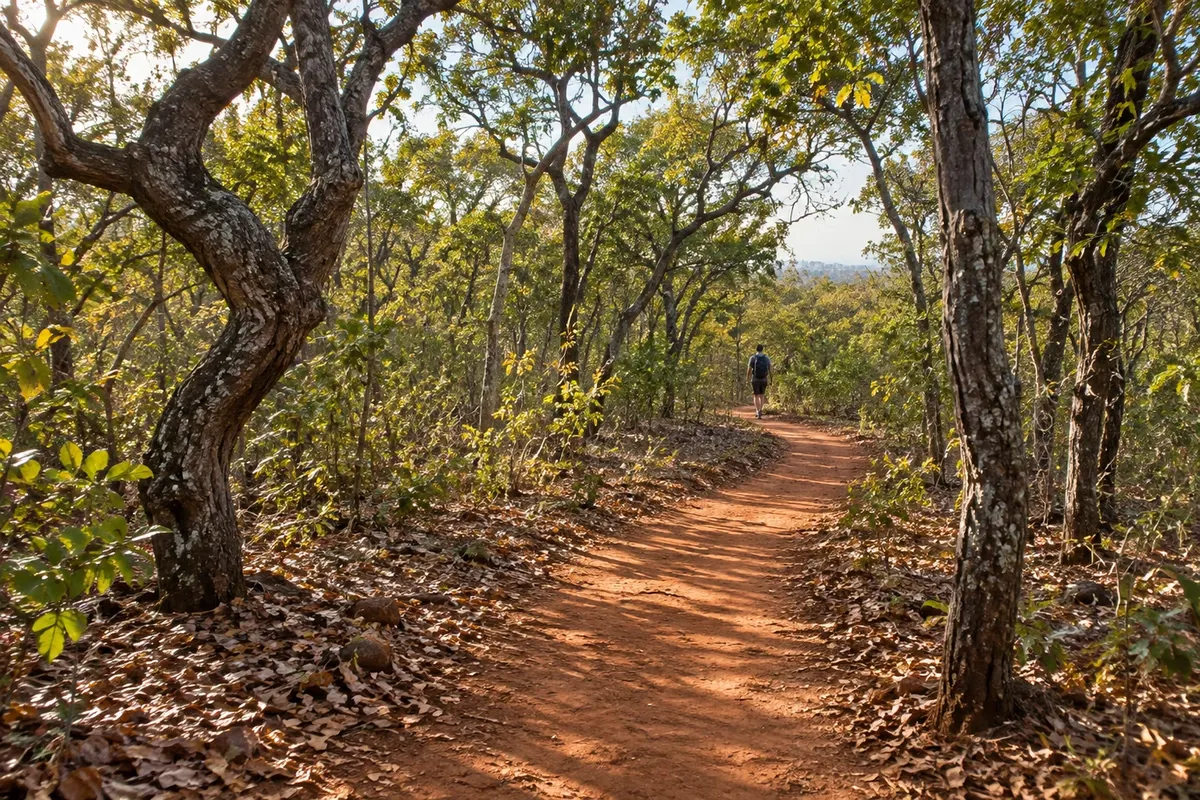
Opened in 2000, it preserves 77 hectares of cerrado (Brazilian savanna) right in the urban area, with trails, a viewpoint and an environmental education center. The name honors a Black woman who lived in the area in the 19th century and is surrounded by legends.
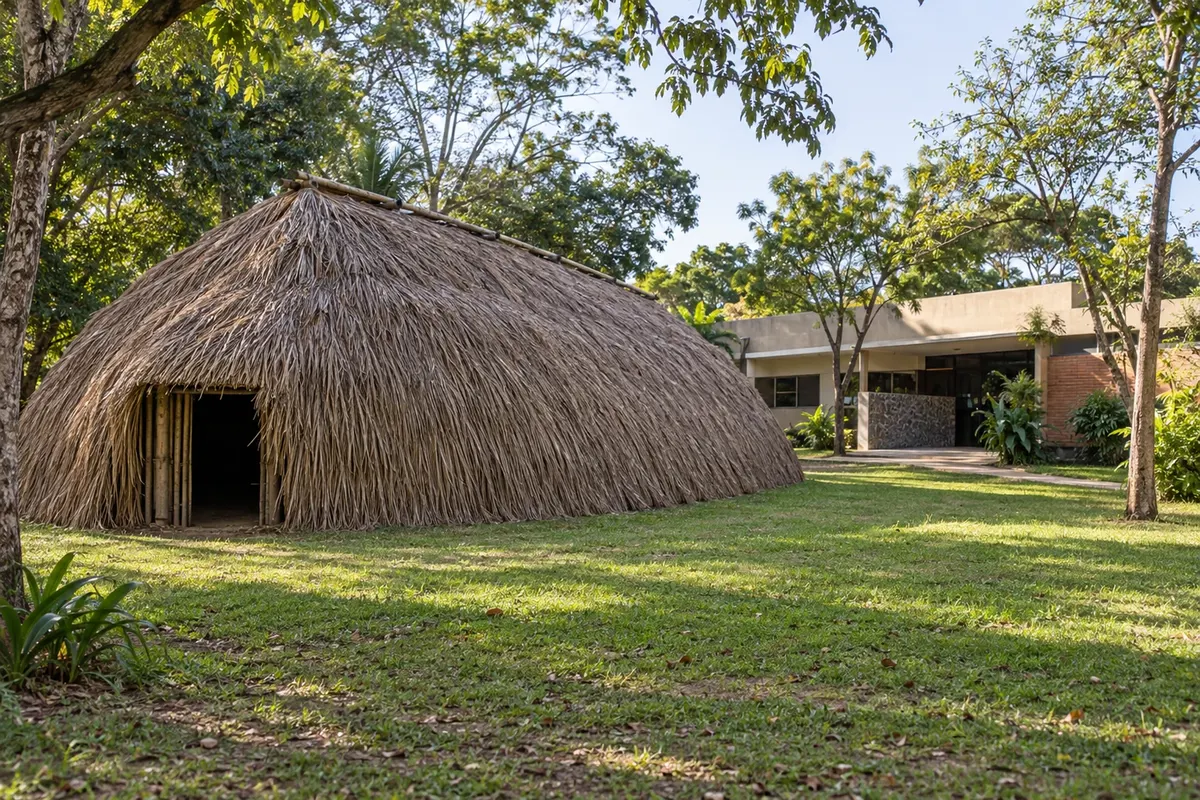
Part of the Federal University of Mato Grosso, it opened in 1973 on the capital's campus and holds a collection from the state's Indigenous peoples. Next to the building is a reference house built in 2008 with the participation of Kurâ-Bakairi Indigenous people.
Discover Museu Rondon de Etnologia e Arqueologia
It protects the springs of the Barbado stream, a tributary of the Rio Cuiabá (river), and has about 2 km of trails through native vegetation. It also has a viewpoint, a reflecting pool and the Praça Nações Indígenas (square), dedicated to the memory of the state's peoples.
Discover Parque Estadual Massairo Okamura
To choose before you go
Where each tour starts, how long it takes, how it is done, what is included and the price range.
The city tour is done by vehicle with a guide, and the route varies by operator. Generally departures are from hotels in downtown Cuiabá and Várzea Grande. The route goes through the historic center, with stops at the main churches: Catedral Metropolitana, Igreja de Nossa Senhora do Rosário e São Benedito and Igreja de Nossa Senhora do Bom Despacho. It then continues to the bairro do Porto, where the orla do Rio Cuiabá is located. Depending on the operator, the Museu do Rio, Mercado do Porto, Sesc Casa do Artesão and Arena Pantanal (2014 World Cup stadium) may also be included. Some operators run the route in a 4x4 vehicle, focusing on colonial architecture and local historical figures. The tour works well on the first day: it gives an overview of the city's origins before you choose other programs.
Stops: Catedral Metropolitana, Igreja de Nossa Senhora do Rosário e São Benedito, Igreja de Nossa Senhora do Bom Despacho, Orla do Porto, Museu do Rio Cuiabá, Mercado do Porto, Sesc Casa do Artesão, Arena Pantanal.
Includes: Usually includes transportation, a guide in Portuguese, and tickets for paid sites. Meals are paid separately. Some agencies charge reduced rates for children. Check the operator's current price list.
Tip: Book in advance: some operators run tours only on certain days of the week. Bring water, a hat and sunscreen, because Cuiabá is hot and there are walking sections. Ask the agency which stops are included in the day's itinerary.
Best time: July has the driest days. In any month, prefer the morning when temperatures are milder.
Agencies that run it: MTtour Agência de Turismo.
The Museu do Rio Cuiabá and the Aquário Municipal Justino Malheiros are side by side on the bank of the Rio Cuiabá, in the bairro do Porto. The museum occupies a building constructed in 1899 that once housed the Mercado do Peixe. Today it displays photographic exhibitions about the history of Cuiabá, handicrafts and pieces of sacred art. From the museum you can reach the aquarium, which features fish from the Amazon, Pantanal and Cerrado biomes. Inside the museum is the restaurant Regionalíssimo, known for its fish dishes. Along the waterfront there is a promenade of about 1.3 km, with bars, restaurants and a small viewpoint over the river. The stretch ends at the Museu do Rio. The visit can be combined with the Mercado do Porto, in the same neighborhood, and everything can be done on foot.
Stops: Orla do Porto, Museu do Rio Cuiabá Hid Alfredo Scaff, Aquário Municipal Justino Malheiros, Restaurante Regionalíssimo, Mercado do Porto.
Includes: Admission to the museum and the aquarium is free. Food and purchases are paid separately. Check the current price list in case there are events with fees on site.
Tip: The complex is open Tuesday through Sunday during daytime hours, and closes on Mondays for maintenance. Public holidays may change the schedule, so confirm in advance. Save the walk along the waterfront for late afternoon, when the heat lessens.
Best time: July has few rainy days. In the hot months, prefer late afternoon on the waterfront.
Chapada dos Guimarães is about 65 km from Cuiabá via the paved stretch of the MT-251, and the trip takes around an hour. Agencies sell the round-trip excursion with transport, guide and planned stops. A common itinerary starts at the Parque Nacional, with the viewpoint at Cachoeira Véu de Noiva. It then visits waterfalls such as Cachoeirinha and Cachoeira dos Namorados and reaches the Mirante do Centro Geodésico da América do Sul, about 8 km from the city center. Other frequent stops are the Complexo da Salgadeira by the roadside, and the center of Chapada, with handicrafts and cerrado fruit ice creams. Attractions like Cidade de Pedra require a guide and prior booking. Therefore, choose two or three points for the day instead of trying to see everything.
Stops: Parque Nacional da Chapada dos Guimarães, Cachoeira Véu de Noiva, Cachoeirinha, Cachoeira dos Namorados, Mirante do Centro Geodésico da América do Sul, Complexo da Salgadeira, Centro de Chapada dos Guimarães.
Includes: Transport and guide are usually included. Lunch and entrance fees vary by operator: in some offers lunch is included. Park and parking fees may be charged separately. Check the current rates table.
Tip: Visit the Véu de Noiva late in the afternoon or early in the morning during rainy months. Bring water, swimwear, sunscreen and closed-toe shoes. For Cidade de Pedra and Morro de São Jerônimo, book a guide in advance. Those who want more sights should allow two days.
Best time: Drier months, such as July, make the trails easier. The viewpoints are more pleasant late in the afternoon.
Agencies that run it: MTtour Agência de Turismo.
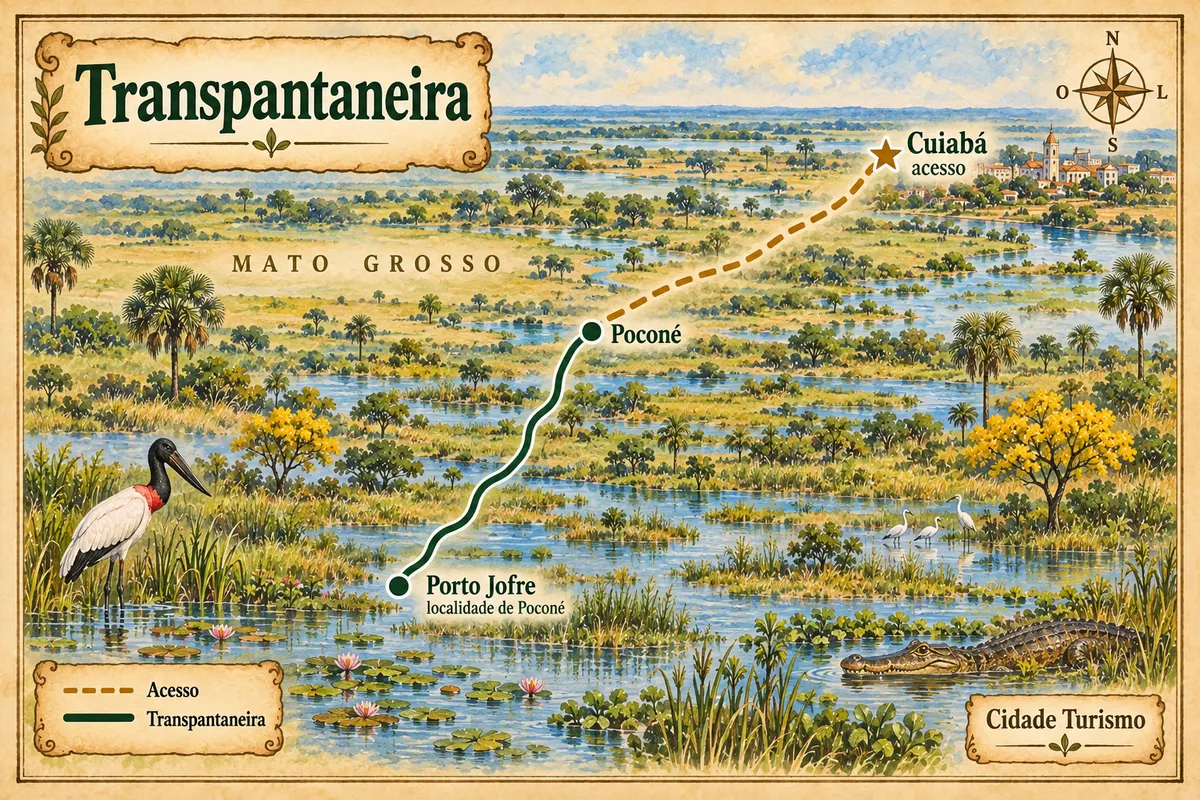
The van leaves Cuiabá via the MT-060 to Poconé, about 104 km away, where the Estrada Parque Transpantaneira begins. The road is about 145 km to Porto Jofre, is mostly unpaved and has more than 120 wooden bridges. On the day trip the group only covers the start of it, about 40 km on regular routes, on a photographic safari with stops on the bridges. This is where caimans, capybaras, jabirus, macaws and deer are observed. Around midday you arrive at a pousada, where there is a regional lunch and day use, which gives access to common areas such as the pool. In the afternoon there is usually a boat ride, and the return to Cuiabá is scheduled for the end of the day.
Stops: Poconé, Estrada Parque Transpantaneira, Rio Bento Gomes, Pousada in the Pantanal (day use).
Includes: Usually includes enclosed air-conditioned transport, water, photographic safari, day use at the lodge, regional lunch, boat trip, environmental access fee to the Transpantaneira and a certified guide. Extra drinks are paid separately. Children have reduced rates with some operators. Check the current pricing table.
Tip: Regular departures usually depend on a minimum of two paying adults and fixed days of the week, so book in advance. Bring insect repellent, a hat, sunscreen and binoculars. Those driving their own car should refuel in Poconé, as there are no gas stations along the road. During the rainy season, even 4x4 vehicles can have difficulty.
Best time: Dry season, from May to September: animals concentrate near the water and the road becomes more passable.
Agencies that run it: Chapada Pantanal Turismo.
Mercado do Porto is located on Avenida Oito de Abril, in Bairro do Porto, near the Rio Cuiabá. At the stalls there are fresh fish from the Pantanal, fruits, vegetables, meats, cereals, sweets, cheeses and medicinal roots. It's a stop to discover regional products and see the city's popular commerce. Behind the market there's a gastronomic complex with restaurants that serve regional fish, caldo de feijão, mocotó and piranha, among other dishes. The place is busier on weekends. The market is in the same neighborhood as the waterfront and the Museu do Rio, so you can combine all three in one visit.
Stops: Mercado do Porto, Complexo gastronômico do Mercado do Porto, Orla do Porto.
Includes: There is no entrance fee. Meals and purchases are paid separately.
Tip: Go in the morning: on Saturdays and Sundays the market closes earlier, and on Sundays it has reduced hours. Confirm opening hours before you go. Have lunch in the restaurants at the back and take the opportunity to try the regional fish.
Best time: All year. In the hot months, go early.
The historic center brings together, within a few blocks, the imprint of the 18th and 19th centuries. Praça da República serves as a reference point: there stands the neoclassical 1896 building of the former Tesouro do Estado, today Museu Histórico de Mato Grosso. From there the route continues past churches such as Catedral Basílica do Senhor Bom Jesus de Cuiabá, Igreja de Nossa Senhora do Rosário e São Benedito and Igreja de Nossa Senhora do Bom Despacho. It also passes mansions, alleys and squares. Praça da Mandioca, on Rua Pedro Celestino, holds memories of the 18th century, when the Palácio dos Capitães Generais operated there, and it offers cultural programming at night. Do the walk in the morning to avoid the heat and save the praça for the end of the day if there is an event.
Stops: Praça da República, Museu Histórico de Mato Grosso, Catedral Basílica do Senhor Bom Jesus de Cuiabá, Igreja de Nossa Senhora do Rosário e São Benedito, Igreja de Nossa Senhora do Bom Despacho, Praça da Mandioca.
Includes: Squares and façades have free access. Churches and museums have their own rules and visiting hours; if there is an admission fee, check the current rates.
Tip: Bring water and a hat and wear comfortable shoes. Combine the visit to the Caixa d'Áua Velha museum on the same day. Check the Praça da Mandioca cultural schedule before you go.
Best time: July, with little rain. In the other months, walk in the morning.
Véu de Noiva is located in Parque Nacional da Chapada dos Guimarães, about 12 km from the center of the town of Chapada and 65 km from Cuiabá. The waterfall, formed by the Coxipó River, has an 86 m free fall. From the parking lot, a 550 m trail leads to the viewpoint, in open field with no shade. The walk, round trip, totals 1,100 m and takes 40 minutes to 1 hour. Entering the water is not allowed. On weekends and holidays there may be a wait to enter because the circuit has a people limit. Other trails depart from the same area, such as the Circuito das Cachoeiras. Cachoeira dos Namorados and Cachoeirinha can be visited without a guide. For the other attractions, check with the park whether scheduling and an accredited guide are required.
Stops: Mirante da Cachoeira Véu de Noiva, Circuito das Cachoeiras, Cachoeira dos Namorados, Cachoeirinha, Cachoeira das Andorinhas.
Includes: The park operates under service concessions and may charge an entrance fee, with discounts for residents of Cuiabá, Várzea Grande and Chapada dos Guimarães. Check the current price table. Guides, when required, are paid separately. There is parking, restrooms and a restaurant near the entrance.
Tip: Bring water, a hat, sunscreen and closed shoes, and avoid the trails during the hottest hours. In rainy months, go early. Late afternoon provides softer light on the cliff face and is when the macaws usually return to the valley. Confirm visiting days and times before you go.
Best time: Period with less rain for the trails. Late afternoon for the viewpoint; in rainy months, early morning.
Agencies that run it: Chapada Pantanal Turismo, Rasta House Ecotour, Subiu pra Chapada.
Vila Bom Jardim, in the district of Nobres, is about 150 km from Cuiabá on a paved road, roughly a two-hour drive. The Aquário Encantado, the popular name for the Recanto Ecológico da Lagoa Azul, is 12 km from the village. From the reception, the group is taken by transport to the start of the trail and walks about 500 m through the forest. The lagoon is formed by three springs, is roughly 90 m² and reaches 6 m deep. After training and photos, the float goes 800 m down the Rio Salobra, with mask, life jacket and sandal, among piraputangas, piaus and dourados. The visit to the attraction lasts about 2 hours. Many agencies include a stop at Balneário Estivado for swimming and lunch on site.
Stops: Aquário Encantado (Recanto Ecológico da Lagoa Azul), Rio Salobra, Balneário Estivado, Vila Bom Jardim.
Includes: Generally: transport departing from Cuiabá, guide, flotation equipment (mask, life jacket and sandal), Voucher Único and lunch when the package includes it. On tours arranged directly in Bom Jardim, lunch and camera rental are usually paid separately. Minimum age 6 years. Check the current table.
Tip: In Nobres, the Voucher Único Digital is mandatory and must be purchased from an accredited agency. Attraction prices are fixed and the same at any agency. Do not use sunscreen or insect repellent before the float and do not touch the river bottom, so the water does not become turbid. Bring dry clothes and a snack.
Best time: Dry season, recommended for outdoor activities in the region. Confirm with the agency.
Agencies that run it: Chapada Pantanal Turismo.
The museum occupies Cuiabá's former caixa d'água, inaugurated in 1882. The underground galleries used to receive water directly from the Rio Cuiabá and distribute it, by gravity, to the fountain spouts spread around the city. Today the space is a cultural heritage site of Cuiabá and houses objects related to sanitation, historical photographs of the chafariz spouts and the permanent exhibition Cuiabá: Imagens da Cidade, with photographic records from the earliest up to 1960. It also hosts temporary art exhibitions. The visit is quick, and the staff explain the building and its function. It works well as a complement to the route through the churches and squares of the historic center.
Stops: Museu do Morro da Caixa D'Água Velha.
Includes: Admission is free. The visit is self-guided, with explanations from the museum staff.
Tip: The museum is open mainly on weekdays during business hours. Confirm before you go, especially on weekends and public holidays. Combine it with the walk through the historic center.
Best time: All year round. Because the visit is indoors, it's also suitable for very hot weather.
Parque Mãe Bonifácia is a 77-hectare cerrado area inside the city, on Avenida Miguel Sutil, opened in 2000. It has five walking trails through the forest, walking tracks, fitness equipment, an environmental education center, and a tree-shaped lookout with views over Cuiabá. The name honors Mãe Bonifácia, a healer who lived in the city in the 19th century and is commemorated by a statue in the park. It is common to see monkeys and birds during the walk. It makes for a short morning activity before heading to the historic center.
Stops: Parque Estadual Mãe Bonifácia, Tree-shaped lookout, Statue of Mãe Bonifácia.
Includes: There is no entrance fee. Food outside the park is paid separately.
Tip: Go early or late in the afternoon because of the heat. At dusk there are more insects, so bring insect repellent. Wear closed-toe shoes on the trails.
Best time: July, with little rain. In the hot months, go early.
The Cidade de Pedra is a set of sandstone formations sculpted by wind and rain, resembling the ruins of a city. The escarpments exceed 350 m in height, and it is common to see red macaws in the area. Visits are guided, by appointment with an authorized guide. Access is via an unpaved road in a 4x4 vehicle, followed by a trail of about 3 km, of moderate difficulty. The trail leads to viewpoints overlooking the Vale do Rio Claro and, on clear days, the Morro de São Jerônimo. The Crista de Galo is often a photo stop. There are itineraries that depart early and end at the Poço das Antas, with a floating activity on the Rio Claro. This program is usually sold by agencies in Chapada and in Cuiabá.
Stops: Cidade de Pedra, Crista de Galo, Vale do Rio Claro, Poço das Antas.
Includes: Depending on the agency, the price covers only the guide or includes 4x4 transport and a guide, even departing from Cuiabá. Ask what is included. If there is a park entrance fee, check the current rates table. Lunch is paid separately.
Tip: Book in advance, as access is controlled. Bring water, a hat, sunscreen and closed-toe shoes. Morning is the most common and coolest time for the hike.
Best time: Drier period, in the morning. On rainy days the dirt road may worsen.
Agencies that run it: MTtour Agência de Turismo, Rasta House Ecotour, Subiu pra Chapada.
At Reino Encantado, the float follows about 1,200 m of the Rio Salobra and lasts around 2 hours. The route passes hundreds of olhos d'água—springs where water bubbles up from the ground—and includes stops along the way. You can observe schools of fish and aquatic life up close. The float requires a guide. There is a self-service restaurant about 300 m from the spring serving regional food, but lunch is not included in the tour. The distance from Cuiabá to Bom Jardim is about 150 km on a paved road. Many agencies combine Reino Encantado and Aquário Encantado on the same day.
Stops: Reino Encantado, Rio Salobra, Vila Bom Jardim.
Includes: Flotation equipment is included in the tour price, as is the guide. Lunch is paid separately. In packages departing from Cuiabá, transport may be included. Check the current price table.
Tip: Those with reduced mobility may find the route tiring. The Voucher Único Digital is mandatory and must be purchased at an accredited agency; prices are standardized. Bring dry clothes and avoid sunscreen and insect repellent before entering the water.
Best time: Dry season. Confirm river conditions with the agency.
Agencies that run it: MTtour Agência de Turismo.
The tour goes down the Rio Cuiabá within the urban area in inflatable kayaks for two people. The meeting point is Passagem da Conceição in Várzea Grande. There are two routes: one of 14 km, which ends at Orla do Porto in Cuiabá, and another of 17 km, to the São Gonçalo Beira Rio community, where restaurants serve fish dishes on the riverbank. The route passes under the bridges that connect Cuiabá and Várzea Grande, with stretches of calm water and fishermen along the banks. No experience is required because it follows the current, and there are points to shorten the route.
Stops: Passagem da Conceição, Rio Cuiabá, Bridges between Cuiabá and Várzea Grande, Orla do Porto, São Gonçalo Beira Rio.
Includes: Confirm with the operator what's included (kayak, life jacket and accompaniment). Meals in São Gonçalo Beira Rio are paid separately. Check the current rates.
Tip: The tour depends on booking. Confirm date, route and meeting point with the operator before you go. Bring sunscreen, a hat, water and clothes that can get wet.
Best time: Dry season. Prefer morning or late afternoon because of the heat.
Both parks are alternatives to the historic circuit for walking outdoors. Parque Tia Nair, on Avenida Érico Prezza, has a lake with a viewpoint, walking path, bike lane, playground and lawn where people picnic. Capybaras appear there. Parque das Águas is in the Centro Político Administrativo, around Lagoa Paiaguás. It has a walking path of about 1.5 km, a bike lane with a section that passes a waterfall, sand courts and a bar and restaurant. The park usually features a water show at night, lasting about 30 minutes. Confirm the schedule before going.
Stops: Parque Tia Nair, Parque das Águas, Lagoa Paiaguás.
Includes: There is no entrance fee. Food at bars and restaurants is paid separately.
Tip: The parks are more pleasant in the late afternoon, when the temperature drops. Bring water and, if you plan to ride a bike, check whether rentals are available on site. Check the schedule for the water show.
Best time: July, with little rain. In other months, late afternoon is the most pleasant time.
Cachoeira Serra Azul is located within the Sesc Serra Azul unit, in the Bom Jardim area, and admission is charged. The trail to the fall is about 800 m and includes stairways: on the descent there are more than 200 steps, and the return is made the same way, which can be tiring. Many people prefer to return via the 700 m zip‑line. In the natural pool, flotation with a life jacket and mask lets you see the region's fish, and the depth reaches 6 m in some spots. The waterfall is about 40 m high. The site also has an arvorismo (canopy/rope) course and there are packages that combine waterfall, flotation, zip‑line and arvorismo. It is often combined with Aquário Encantado on the same day.
Stops: Cachoeira Serra Azul, Sesc Serra Azul, 700‑metre zip‑line, Canopy course.
Includes: Prices vary by activity and by package (waterfall, flotation, zip-line, canopy course). There is a discount for Sesc members and half‑price admission for children and seniors. Flotation kit and zip‑line equipment are provided. Lunch is paid separately. Check the current price table.
Tip: If you don't want to climb the stairs on the return, choose the package with the zipline. Wear swimwear underneath and bring dry clothes. Check with the agency whether the Voucher Único is required for the chosen activity.
Best time: Dry season, with less rain. Check with the agency.
Agencies that run it: Chapada Pantanal Turismo.
Morro de São Jerônimo is the highest point of Parque Nacional da Chapada dos Guimarães, at over 800 m elevation. The trail is guided and requires booking with an authorized guide. The route follows historic trails and passes by Casa de Pedra, Pedra do Jacaré and Cachoeira do Fantasma. At the top there is a 360-degree view over the plain. The distance varies depending on the source: operators cite about 16 km, and there are reports of 20 km round-trip, with steep climbs. It’s an outing for those who are physically fit and want a full day of hiking. Some agencies offer departures from Chapada and others from Cuiabá, with transportation.
Stops: Casa de Pedra, Pedra do Jacaré, Morro de São Jerônimo, Cachoeira do Fantasma.
Includes: A guide is mandatory and is paid separately or included, depending on the agency. There are options with guide only and others with transport, including departures from Cuiabá. Snacks and water are brought by the visitor. Check the current pricing table.
Tip: Leave early, bring plenty of water, snacks, sunscreen and hiking footwear. Book the guide in advance, as access is controlled. Adjust the pace to the group's level of fitness.
Best time: Drier period, with an early departure to avoid the midday heat.
Agencies that run it: MTtour Agência de Turismo, Rasta House Ecotour, Subiu pra Chapada.
Porto Jofre is at the end of the Transpantaneira: about 100 km of paved road and another 145 km of dirt road from Cuiabá. In the one-day version, departure is at dawn. Boarding the motorboat is in the morning, and the tour runs along the Cuiabá and Piquiri rivers, an arm of the São Lourenço and corixos (side channels). The region has a concentration of jaguars and giant otters, as well as other animals that may appear, such as monkeys and anteaters. Lunch is served on the boat, in picnic style. Jaguar sightings are not guaranteed. For those who prefer to split the road stretch, operators sell overnight versions, two days or more.
Stops: Porto Jofre, Estrada Parque Transpantaneira, Rio Cuiabá, Rio Piquiri, Braço do Rio São Lourenço, Corixos.
Includes: A one-day package usually includes transport from Cuiabá, the 6 to 8-hour boat trip, and lunch. There may be an extra transport fee for those departing from points outside the central area or from the airport. Check the operator's current price list.
Tip: It's a long day, with return at night. Bring insect repellent, a hat, sunscreen, binoculars and a camera with zoom. Book in advance and request the combined transfer from the hotel. Those who want more chances of sightings should consider overnight packages.
Best time: Dry season, from May to September or October, is the most recommended time for the Pantanal Norte.
Agencies that run it: Lorenzo Expeditions, Pantanal Nature.

Day by day
Suggestions to plan the trip. Change the order of the days according to the weather and tour availability.
Start in the morning at Praça da República and walk through the downtown churches, including Igreja de Nossa Senhora do Rosário e São Benedito. Finish at Praça da Mandioca and have lunch nearby. In the afternoon, visit the Museu do Morro da Caixa D'Água Velha, which documents the history of the city's water supply. Bring water and leave the exposed sections for the cooler times of day.
Arrive at Mercado do Porto in the late morning and have lunch there. Cuiabá cuisine appears in fish, banana farofa, Maria Izabel and rice cake. In the afternoon, walk along the Orla do Porto, where the Museu do Rio Cuiabá and the Aquário Municipal are located. Tickets are paid separately; check the current price list for each attraction. At the end of the day, if you have time, go to Parque Tia Nair, which has a lake and walking areas.
Leave Cuiabá early via the MT-251, the Emanuel Pinheiro highway. The entrance to Parque Nacional da Chapada dos Guimarães, with the Cachoeira Véu de Noiva (an 86-meter drop), is around km 50. The town of Chapada dos Guimarães is about 70 km from the capital. The Cidade de Pedra requires a licensed guide. A day trip with an operator handles transport and the guide. Check the park's current price list and return in the afternoon.
In the morning, walk from Praça da República to Praça da Mandioca, passing the downtown churches such as Igreja de Nossa Senhora do Rosário e São Benedito. After lunch, visit the Museu do Morro da Caixa D'Água Velha. At the end of the afternoon, stroll through Parque Tia Nair and Parque das Águas in the Centro Político Administrativo area. If you prefer, swap the walking section for a guided city tour.
Have lunch at Mercado do Porto: fish, banana farofa, Maria Izabel and rice cake are among the options. Before or after, walk along the Orla do Porto and visit the Museu do Rio Cuiabá and the Aquário Municipal. Tickets are paid separately; check the current rates. You can do everything on foot within the neighborhood at a relaxed pace and return to the hotel late in the afternoon.
Leave early via MT-251. The park entrance is around km 50, about 50 km from Cuiabá. Start at the Cachoeira Véu de Noiva and, if time allows, continue to the Cidade de Pedra, which requires a licensed guide. The town of Chapada dos Guimarães is about 70 km from the capital. Book the tour in advance and check the park's current price list. Return to Cuiabá late in the afternoon.
Bom Jardim, a district of Nobres, is about 150 km from Cuiabá. The tour takes the whole day: early departure, drive to the village, floating with a life jacket and snorkel in a clear-water river, and return late afternoon. Aquário Encantado and Reino Encantado are a few kilometers from the village on dirt roads. Book in advance and confirm with the operator what is included.
The Transpantaneira starts in Poconé, about 108 km from Cuiabá. The round-trip covers part of this dirt road, with wooden bridges, and makes stops to observe birds, caimans and other animals. It's a full day with an early departure. During the high-water season access can be affected; confirm conditions with the operator before booking.
In the morning, take a guided city tour of the historic center, the Porto and other city sights. It helps explain how Cuiabá was founded linked to gold in the 18th century. After lunch, visit the Museu do Morro da Caixa D'Água Velha, which presents the history of the city's water supply. Check with the operator what the tour includes and the current pricing for each ticket.
Go to Mercado do Porto in the late morning and have lunch: fish, banana farofa, Maria Izabel and rice cake showcase Cuiabá cuisine. In the afternoon, walk along the Orla do Porto, with the Museu do Rio Cuiabá and the Aquário Municipal. Tickets are paid separately; check the current price list. The day is concentrated in a single neighborhood, with no long transfers.
Leave early via MT-251. The park entrance is around km 50. Visit the Cachoeira Véu de Noiva, with an 86-meter drop, and continue to the Cidade de Pedra, which requires a licensed guide. The town of Chapada dos Guimarães is about 70 km from Cuiabá. Book the tour in advance, bring water, and check the park's current price list.
Bom Jardim, a district of Nobres, is about 150 km from Cuiabá. Choose between floating at Aquário Encantado, at Reino Encantado, or visiting Cachoeira Serra Azul, which combines hiking, floating and zipline. The tour takes the full day, with an early start. Book in advance and confirm with the operator what is included and the river conditions.
The safari along the Transpantaneira departs from Cuiabá, passes Poconé (about 108 km) and travels part of the dirt road with wooden bridges, making stops to observe wildlife. Between July and October, those prioritizing jaguar sightings can switch to an expedition in Porto Jofre, at the end of the road, on a very long day. Confirm the format, departure and road conditions with the operator.
In the morning, do the trails at Parque Estadual Mãe Bonifácia and climb the lookout while it's still cooler. Have lunch and rest during the hottest hours. In the late afternoon, walk in Parque Tia Nair, which has a lake and walking areas, and in Parque das Águas in the Centro Político Administrativo area. Bring water and insect repellent.
In the morning, paddle on the Rio Cuiabá, from Várzea Grande to the Orla do Porto, with a local operator. In the afternoon, walk through the center: Praça da República, churches such as Nossa Senhora do Rosário and São Benedito, and Praça da Mandioca. Keep the following morning free of commitments if your flight is early: Aeroporto Marechal Rondon is in Várzea Grande, and transfers should be arranged in advance.
Best time to go
July is a good option to concentrate walks and outdoor excursions in a period of low rainfall. The heat still affects the itinerary: alternate churches and the museum with parks and the waterfront during the cooler parts of the day.
Heavy rain · Humid heat
This is among the rainiest months: INMET's normal exceeds 230 mm. The average temperature is around 27 °C, with lows near 24 °C. Rain falls in heavy showers and the heat is humid. The Chapada's waterfalls gain volume. In the Pantanal it's flood season, and sections of the Transpantaneira may be affected. Leave churches and museums for rainy hours and confirm tours with the operator.
Frequent rain · Pantanal in flood
It's the peak of the rainy season, with monthly totals over 200 mm. The heat is humid and the sky is often overcast. River trips and trails depend on daily conditions. The Transpantaneira may have flooded sections and access to Porto Jofre is often difficult. Prefer city itineraries with museums and the market, and leave leeway to change the day of an outing.
Still heavy rain · Intense greenery
Rain remains above 200 mm on average, but tends to decrease toward the end of the month. The cerrado is green and waterfalls have good flow. Cidade de Pedra and Véu de Noiva are accessible, but trails become slippery after showers. The Pantanal remains in flood. Plan full-day outings with flexible bookings and bring a raincoat and shoes with good traction.
Rain decreases · End of the flood
Rains lose strength and clear days become more frequent. The heat continues, with highs above 30 °C. It's a transition month: the Pantanal begins to recede and dirt roads gradually improve. Nobres and Chapada become more predictable options again. Check with the operator the conditions of the Transpantaneira before booking the safari.
Start of the dry season · Clear days
Rainfall is scarce: INMET's average is about 53 mm. Days are clearer and nights slightly milder, but afternoons remain hot. It's a good time for trails in the Chapada and for river floating in Nobres. In the Pantanal the dry season begins and the Transpantaneira becomes more passable. Do outdoor walks in the morning or late afternoon.
Dry · Cooler nights
Month of little rain and clear skies. The air becomes drier and the nights cooler, especially when cold fronts come from the south. It's a good time for trails, viewpoints and walks in the historic center. In the Pantanal Norte the most sought-after window for jaguar watching begins, lasting until October. Book safaris and expeditions in advance.
Little rain · Outdoor activities
It is one of the driest months: INMET's normal is around 10 mm. The average is near 23 °C, with highs around 32 °C and lows near 17 °C. Cold fronts can bring much cooler nights. Focus on hikes, Chapada, Nobres and the Pantanal. It's school holiday season and there's demand for jaguar expeditions; book in advance.
Dry weather · Very dry air
It remains dry, with rare rain and very low humidity. On some days the air carries smoke from burnings, common in the dry season. Stay hydrated, use sunscreen and schedule walks for early morning or late afternoon. The Pantanal and the Transpantaneira are in good access condition, and jaguar watching in Porto Jofre continues in its best phase, according to local operators.
Very hot · First rains
It's one of the hottest months: highs can reach close to 40 °C. The air is still dry at the beginning of the month, and the first rains usually appear toward the end. Nobres, with floating in cool waters, and the Chapada, milder due to its altitude, help balance the heat. Visit the historic center and the Porto waterfront in the morning or late afternoon. The jaguar-watching window in Porto Jofre remains open.
Return of the rains · Heat
The rains return: INMET's average is about 129 mm, in showers that alternate with very hot days. The Pantanal is still in drought conditions at the start of the month, and the jaguar-viewing window in Porto Jofre runs until October. Chapada and Nobres operate, but check conditions before heading out. Bring a raincoat and leave flexibility in your itinerary to swap the day of an outing.
Showery rain · Flooding begins
Rains become established, with monthly totals above 150 mm. The heat remains humid and the cerrado turns green again. Waterfalls gain volume and the Pantanal enters the flood, with possible restrictions on the Transpantaneira. Prefer city tours and the Chapada, which depend less on dirt roads. Book Pantanal departures with an option to reschedule.
Heavy rain · Humid heat
The wettest period of the year begins, with volumes close to those in January. The average is about 27 °C, with humid heat and frequent showers. There is end-of-year and school-holiday movement. Prefer museums, churches, the market and parks during dry hours, and check with the operator the condition of the dirt roads to Nobres and the Pantanal before each outing.
Plan the journey
Aeroporto Internacional Marechal Rondon (CGB) serves Cuiabá but is located in Várzea Grande, a neighboring city. Flights list Cuiabá as the destination, but the terminal is in another municipality. The concessionaire is Centro-Oeste Airports.
Direct flights mainly come from Brasília, São Paulo (Guarulhos and Congonhas), Campinas, Belo Horizonte (Confins), Rio de Janeiro (Galeão), Goiânia and Porto Velho. Azul, Gol and LATAM operate at the airport. Other cities in Mato Grosso, such as Sinop and Alta Floresta, also have connections to the airport.
Routes change by season. Check direct flights with the airline before buying.
The distance from the airport to downtown Cuiabá is about 8 to 12 km, depending on the route. In a straight line, Campo Grande is roughly 560 km away and Brasília about 870 km.
Because the airport is in Várzea Grande, getting to Cuiabá requires a transfer. The journey to downtown takes about 15 to 30 minutes, depending on traffic.
Taxi: the stand is in front of the arrivals area. There is a taxi cooperative serving in front of the terminal.
Ride-hailing app: the meeting point with the driver is usually near the airport parking. Follow the app's instructions, as the location may change.
Pre-booked transfer: agencies and hotels can arrange a transfer before the trip. It's the most convenient option for arrivals at night or with large luggage.
Public bus: there are lines that pass by the airport. Check the route and timetable in the public transport app before boarding.
For arrivals outside business hours, have the transfer arranged before you travel.
Line buses arrive at Terminal Rodoviário Engenheiro Cássio Veiga de Sá, on Avenida Jules Rimet, in the Rodoviária Parque neighborhood.
From Campo Grande (MS), operators include Andorinha, Eucatur, Expresso São Luiz, Motta, Total, Ouro e Prata, Expresso Adamantina, Lopes Sul and Pevidor. The trip takes about 11 to 12 hours.
From Goiânia (GO), 2026 schedules show lines such as Expresso São Luiz, Útil, Marlim and Xavante, with trips of 15 to 17 hours. There are also connections with Brasília, Porto Velho, Sinop, Barra do Garças and Mato Grosso cities like Rondonópolis, Tangará da Serra and Cáceres.
The bus station also has lines to Chapada dos Guimarães.
Compare companies, seat types (conventional, executive and sleeper) and schedules on the carriers' websites or with ticket vendors. Prices vary by date and how far in advance you buy. On holidays and during vacation periods, purchase ahead of time.
The main road accesses are BR-163, BR-364 and BR-070. BR-070 links Cuiabá to Brasília. BR-163 and BR-364 run together on the stretch between Cuiabá and Rondonópolis, passing through Jaciara.
Approximate road distances: - Campo Grande (MS): about 700 km, via BR-163 and BR-364. - Goiânia (GO): about 960 km. - Brasília (DF): about 1,070 km, via BR-070. - Jaciara (MT): about 140 km.
The trip from Campo Grande takes more than 10 hours of driving without stops. There are toll plazas on the routes, such as on stretches of BR-163 and BR-364. Bring the amount to pay and check current rates with the concessionaires.
Chapada dos Guimarães is roughly 60–75 km from Cuiabá on paved roads.
Plan long stages with rest stops and refuel in larger towns.
The public transport system of Cuiabá and Várzea Grande has over a hundred bus lines. The Meu Ônibus MTU app shows nearby stops and the estimated arrival of the next buses. Moovit also aggregates lines and routes. The fare is paid separately and can change with adjustments; check the current fare table.
Taxis and ride-hailing apps operate in the city and usually handle trips between the historic center, Mercado do Porto and the parks.
Distances between attractions are large and the heat is a factor. Walking works in the center and along the Porto waterfront. Do walking sections at the coolest times and group visits by area: historic center, Porto and parks.
A rental car is not necessary for the urban circuit. It makes sense for those traveling independently to Chapada dos Guimarães, about 60–75 km away, or to other regional destinations. There are rental companies at the airport. Book in advance on holidays and during vacation periods.
Package with transfer: operators and agencies sell itineraries that combine Cuiabá with Chapada dos Guimarães, the Pantanal and Nobres. Many include airport pickup, shared transfer, accommodation, tours and a guide. Airfare, personal expenses and preservation fees for some attractions are usually excluded. Some packages do not include the transfer between the airport and the hotel, so read the list of what is and isn't included.
On your own: you buy the flight or bus ticket, arrange the airport transfer and book tours directly with local agencies. This gives more freedom to build an itinerary just for the city (historic center, Porto and parks).
Packages are usually more practical for the Pantanal and the Chapada, where there are long roads and tours with grouped departures. For those staying only in Cuiabá, a self-organized itinerary is simple. In both cases, arrange the transfer before arrival and check the operator's conditions.
Who takes you
Only agencies with an active registration in Cadastur, the official registry of Brazil's Ministry of Tourism, are listed. The order is not a ranking: compare the tours and book directly with the agency.
Agency founded in 2012, offering packages to Chapada dos Guimarães, Nobres, the Pantanal and other destinations in Mato Grosso. They offer city tours in Cuiabá, day trips to the Chapada departing from Cuiabá (including the Crista do Galo and Cidade de Pedras viewpoints), hiking circuits such as Morro de São Jerônimo, Cuiabá–Chapada transfers and tours in Nobres, like Reino Encantado.
Tours: Guided city tour of Cuiabá: historic center, Porto and city sights, Chapada dos Guimarães in one day, departing from Cuiabá, Cidade de Pedra, in the Parque Nacional da Chapada dos Guimarães, Floating at Reino Encantado (Rio Salobra, Bom Jardim, Nobres), Hike to Morro de São Jerônimo and Casa de Pedra.
Cadastur checked in 10/2026
Agency that organizes tours and packages to Chapada dos Guimarães, the Pantanal and Nobres (Bom Jardim). The meet-and-greet is carried out at a hotel or pousada in Cuiabá, or at the airport, in an air-conditioned vehicle with a guide. The itineraries include Cachoeira Véu de Noiva, a photographic safari along the Transpantaneira, Aquário Encantado and Cachoeira Serra Azul.
Tours: North Pantanal safari along the Transpantaneira, day trip from Cuiabá, Cachoeira Véu de Noiva and trails of Parque Nacional da Chapada dos Guimarães, Floating at the Aquário Encantado and Rio Salobra (Bom Jardim, Nobres), Cachoeira Serra Azul: trail, flotation and zip‑line (Bom Jardim, Nobres).
Cadastur checked in 10/2026
Ecotourism agency based in Chapada dos Guimarães. The website indicates a tour guide accredited in Cadastur. They sell the National Park waterfall circuit, the Cidade de Pedra tour including Vale do Rio Claro and Véu de Noiva, the trail to Morro de São Jerônimo, cave visits and itineraries in Nobres and the Pantanal.
Tours: Cachoeira Véu de Noiva and trails of Parque Nacional da Chapada dos Guimarães, Cidade de Pedra, in the Parque Nacional da Chapada dos Guimarães, Hike to Morro de São Jerônimo and Casa de Pedra.
Cadastur checked in 10/2026
Guided tour agency in Chapada dos Guimarães, with accredited local guides and insurance. They offer visits to the viewpoint of Cachoeira Véu de Noiva and the waterfall circuit, the Cidade de Pedra tour with Vale do Rio Claro and the trail to Morro de São Jerônimo.
Tours: Cachoeira Véu de Noiva and trails of Parque Nacional da Chapada dos Guimarães, Cidade de Pedra, in the Parque Nacional da Chapada dos Guimarães, Hike to Morro de São Jerônimo and Casa de Pedra.
Cadastur checked in 10/2026
Operator that reports a base in Cuiabá and logistical support in Porto Jofre. The website shows registration in Cadastur. They sell jaguar expeditions in the Northern Pantanal along the Transpantaneira, in multi-day packages with accommodation, transfers and boat departures. Departures are from Cuiabá.
Tours: One-day jaguar expedition in Porto Jofre.
Cadastur checked in 10/2026
Operator specialized in tours in the Northern Pantanal with departures from Cuiabá. They sell multi-day packages for jaguar and giant otter watching in Porto Jofre, with itineraries along the Transpantaneira.
Tours: One-day jaguar expedition in Porto Jofre.
Cadastur checked in 10/2026
Your base to explore
Before you go
A little planning leaves more time to enjoy the journey.
July is a good option to concentrate walks and outdoor excursions in a period of low rainfall. The heat still affects the itinerary: alternate churches and the museum with parks and the waterfront during the cooler parts of the day.
Two days allow you to visit the Igreja do Rosário e São Benedito and the Museu do Morro da Caixa D’Água Velha on the first day, leaving the Mercado do Porto and the waterfront for the second. A third day makes room for the Parque Tia Nair and Parque das Águas.
Choose the Centro if your priority is the church, the museum and the historic circuit. To give more space to the river and regional food, the bairro do Porto brings accommodation closer to that part of the visit. The parks are in other areas and require specific travel.
Take your trash with you, follow the signs and support local businesses. In natural areas, follow the visiting guidelines.
Get your questions answered
Marechal Rondon is in Várzea Grande. It serves the capital, but the trip to accommodation in Cuiabá needs to be organized as a separate transfer.
Start with the Igreja do Rosário e São Benedito and add the Museu do Morro da Caixa D’Água Velha. Both stops bring the traveler closer to the religious architecture and the city's urban memory.
Look for fish preparations and products of the regional cuisine. Bolo de arroz, farofa de banana and Maria Izabel are flavors associated with Cuiabá.
Devote the first part of the day to the historic center and the Igreja do Rosário. Then choose between the Museu do Morro da Caixa D’Água Velha and a visit to the Mercado do Porto, depending on the time available.
Parque Tia Nair combines a lake and walking paths. Parque das Águas, in the Centro Político Administrativo area, offers another option to round out a day with outdoor activities.
The town of Chapada dos Guimarães is about 65 km from Cuiabá via the MT-251, which is paved. By car, the trip takes around one hour. By bus, there are departures throughout the day from the rodoviária de Cuiabá and the journey lasts about 1h30. Check current schedules with the companies. The main entrance to the Parque Nacional is at km 50 on the MT-251, before the town. From there you reach the Véu de Noiva via paved access, with parking on site. For attractions on sandy roads, such as the Cidade de Pedra, the route is done with a guide and a 4x4 vehicle.
It depends on the attraction. The Véu de Noiva viewpoint has a self-guided trail of 550 m. The Circuito das Cachoeiras, with about 6 km round trip, and the trails to the Namorados and Cachoeirinha waterfalls (1,200 m) are also done without a guide. Cidade de Pedra and Crista do Galo/Vale do Rio Claro are only visited with a guide and a 4x4 vehicle, via a sand road. Cidade de Pedra is about 25 km from the town of Chapada dos Guimarães. Some trails require prior booking in the park's official system. Rules change, so check the updated visitor guide before you go.
For a long time entry was free and the Véu de Noiva viewpoint could be visited without a reservation. The park underwent a concession process whose contract provides for an entrance fee. Exemption is planned for children under 6 and a reduced rate for residents of Cuiabá, Várzea Grande and Chapada dos Guimarães. Because the fee policy may have changed, check the current schedule with the managing agency or the concessionaire before your visit. Private attractions in the region, such as bathing resorts and waterfalls outside the park, charge separate entrance fees.
No. The visit is limited to the viewpoint and entering the water is not allowed. The trail is 550 m to the viewpoint, or 1,100 m round trip if you return the same way. Allow 40 minutes to 1 hour. The level is easy and does not require special fitness, but the stretch has little shade: bring water, a hat and sunscreen. The circuit's capacity is limited and there may be a wait to enter. The activity is restricted for people with reduced mobility and for those in the postoperative period. At the park entrance there are restrooms, a regional food restaurant and a craft shop.
A day trip from Cuiabá can cover the Véu de Noiva viewpoint and one or two attractions near the MT-251, since the drive takes about an hour each way. Attractions on sand roads, like Cidade de Pedra and Vale do Rio Claro, require a guide and a 4x4 vehicle and take up most of a day each. Travelers who want to combine those outings with the Circuito das Cachoeiras and the viewpoints usually need more days in the region. There are published itineraries of 4 days to see Chapada at a relaxed pace.
The best window is June to October, during the dry season. Rivers are lower and animals concentrate along the banks, increasing sighting chances. July and August are the most popular months and bookings often fill up in advance. From November to April is the wet season: you can still see jaguars but less frequently, and some road sections may be flooded. Boat safaris navigate the Cuiabá and Piquiri rivers, usually at dawn and dusk. Early mornings in June and July can drop to around 12 °C, so bring warm clothing. Operators recommend at least 3 nights to improve your chances.
Yes, especially in the dry season. The Transpantaneira starts in Poconé, about 108 km from Cuiabá, and ends at Porto Jofre at km 145 of the road, roughly 250 km from the capital. It is an elevated dirt road with more than 120 wooden bridges. Poconé is the last town before the road begins, with a fuel station and a market. During the flood season, access by regular car can become risky or impossible in some stretches, so check road conditions with your pousada or operator before you set out. Many travelers prefer to book a transfer with airport pickup.
The float attractions are in the district of Bom Jardim, not in the town of Nobres, which is more than 50 km away. From Cuiabá to the village of Bom Jardim is about 140–150 km, depending on the source and route. From there, attractions are a few kilometers away on dirt roads. The Aquário Encantado, for example, is about 12 km from the village. The nearest airport is Cuiabá. Many attractions sell vouchers through their own team or accredited agencies, and some have one day off per week. Confirm your reservation before leaving Cuiabá.
At attractions such as Aquário Encantado and Rio Triste, the minimum reported age is 6 years, and there is a reduced rate for children up to 10 years. Each attraction sets its own rules, so check in advance. The flotation is done with a guide and equipment is provided: mask, snorkel, life jacket and water shoes. The life jacket keeps you afloat and the current carries you along the route, which usually ranges from about 700 m to 1,200 m depending on the site. To preserve the springs, stepping on the river bottom is prohibited. People who wear prescription glasses can use contact lenses.
The airport is in Várzea Grande, about 8 km from downtown Cuiabá. By car the trip takes around 15 minutes, depending on traffic. Options include taxis (there is a stand near arrivals), apps like Uber and 99, urban buses (line 007 once connected the airport to downtown; check current routes) and car rentals. Within the city, attractions are in different areas: historic center, Porto and parks. It’s therefore helpful to group visits by neighborhood and use an app or taxi between them. For Chapada dos Guimarães, Nobres and the Pantanal, the choice is between a rental car and an operator that provides transfers.
Brazilian routes
From Poconé to Porto Jofre through the Pantanal, with Cuiabá as the trip's arrival point.