
historic center · Cuiabá, MT
Centro Histórico
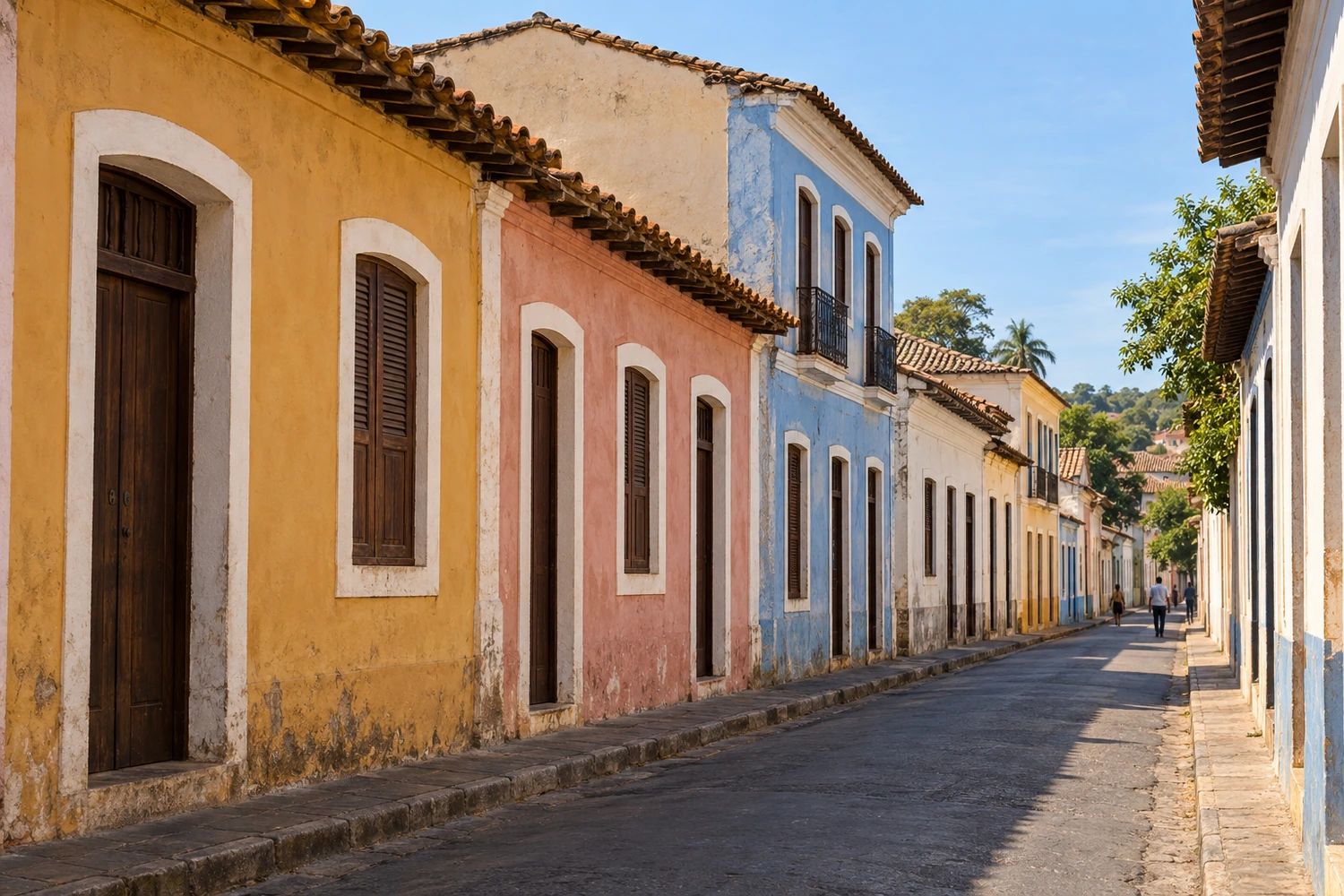
The town core that grew up after gold was discovered in the Prainha stream in 1722 has about 400 buildings across 13 hectares listed by Iphan (Brazil's national heritage institute). Mansions, churches and narrow streets preserve the look of the old colonial town.
Illustrative images. The pictures in this guide are illustrations based on the real place, not photographs, and may differ from it.
Discover
About Centro Histórico
Cuiabá's Centro Histórico is the oldest part of Mato Grosso's capital. It was born of the gold rush: in 1722 gold was found on the banks of the Prainha stream, and around the diggings grew the settlement that became a town in 1727. The narrow streets from that time still shape the city center.
The architectural, urban and landscape ensemble is listed by Iphan (Brazil's national heritage institute). The protected area covers about 13 hectares and includes nearly 400 buildings, among them mansions, two-story townhouses and churches built between the 18th and 20th centuries. The colonial street layout remains almost entirely intact.
You explore on foot. The best-preserved colonial houses are on the streets Galdino Pimentel, Ricardo Franco and Pedro Celestino. Along the way you pass the old Largo da Matriz (square), where the Catedral Basílica do Senhor Bom Jesus stands, and the Igreja de Nossa Senhora do Rosário e São Benedito, considered the oldest church in the city.
It is a relaxed route, good for anyone who enjoys history and architecture. Cuiabá is very hot, so it is best to walk at an easy pace, with water and sunscreen, in the coolest hours of the day.
Before you go
Practical information
How much time to set aside
Two to three hours is enough to walk the main streets and go into one or two churches.
Best time
Between May and September, in the dry season, there is little rain; since Cuiabá is hot all year, choose early morning or late afternoon for walking.
How to get there
It is in downtown Cuiabá, around the Catedral Basílica do Senhor Bom Jesus and the streets Pedro Celestino, Galdino Pimentel and Ricardo Franco. Several bus lines run through downtown; from there, you explore on foot.
Tip
Bring water, a hat and sunscreen: Cuiabá's heat is strong even in winter. Include the Igreja de Nossa Senhora do Rosário e São Benedito (church) on your route.
A look at the place
Centro Histórico in pictures
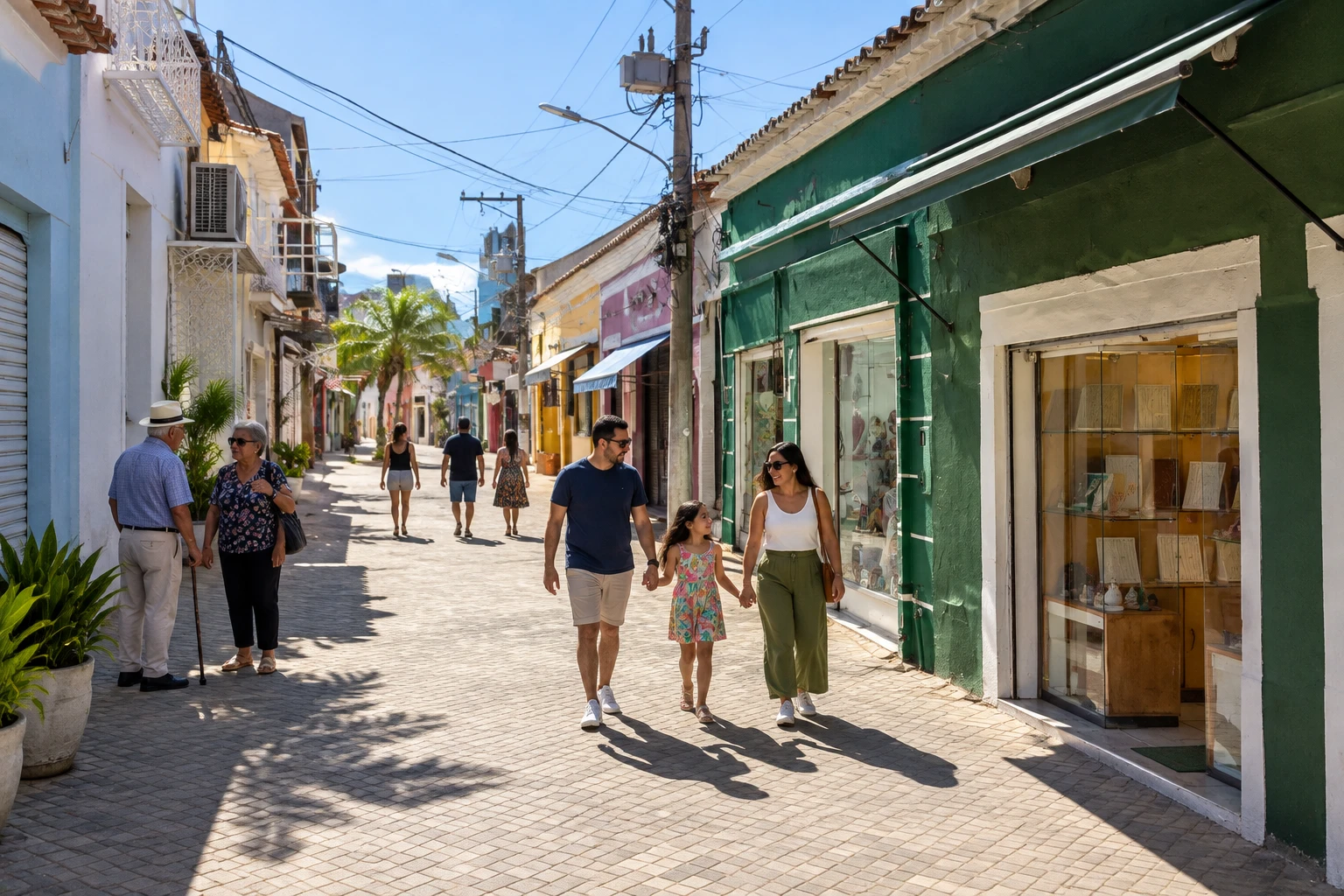
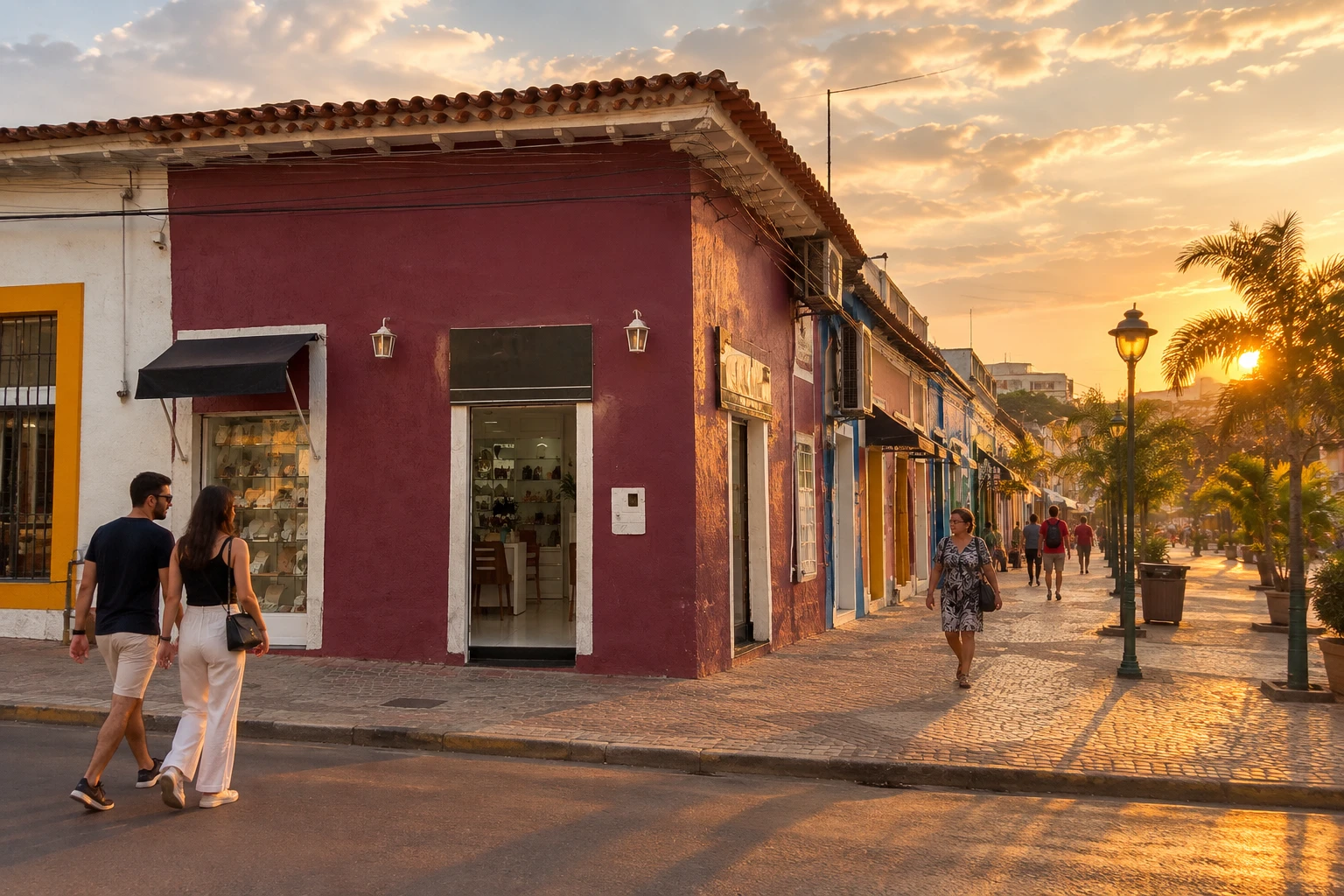
These pictures are illustrations based on the real place, not photographs. They may differ from the place.
Click the picture to enlarge it.
Get your questions answered
Frequently asked questions about Centro Histórico
Is there a fee to visit Cuiabá's Centro Histórico?
No. The streets and squares are open and free. Churches and museums in the area have their own rules; check the hours before you go.
How long does it take to see Cuiabá's Centro Histórico?
Two to three hours on foot is enough to see the main streets and go into one or two churches.
Is Cuiabá's Centro Histórico a protected heritage site?
Yes. The ensemble is listed by Iphan (Brazil's national heritage institute) and includes nearly 400 buildings across about 13 hectares.
Which streets should I see in Cuiabá's Centro Histórico?
The best-preserved colonial houses are on the streets Galdino Pimentel, Ricardo Franco and Pedro Celestino.
What is the best time of day to walk around Cuiabá's Centro Histórico?
Early in the morning or late in the afternoon, to avoid the intense midday heat.