Boa Vista
Boa Vista grew up beside the Rio Branco and has leisure spaces and historic heritage. The main church, the squares and the riverfront bring visitors close to the city's history and Roraima's landscapes.
RR · Brazil
Rio Branco, urban memory and leisure spaces in the capital of Roraima.
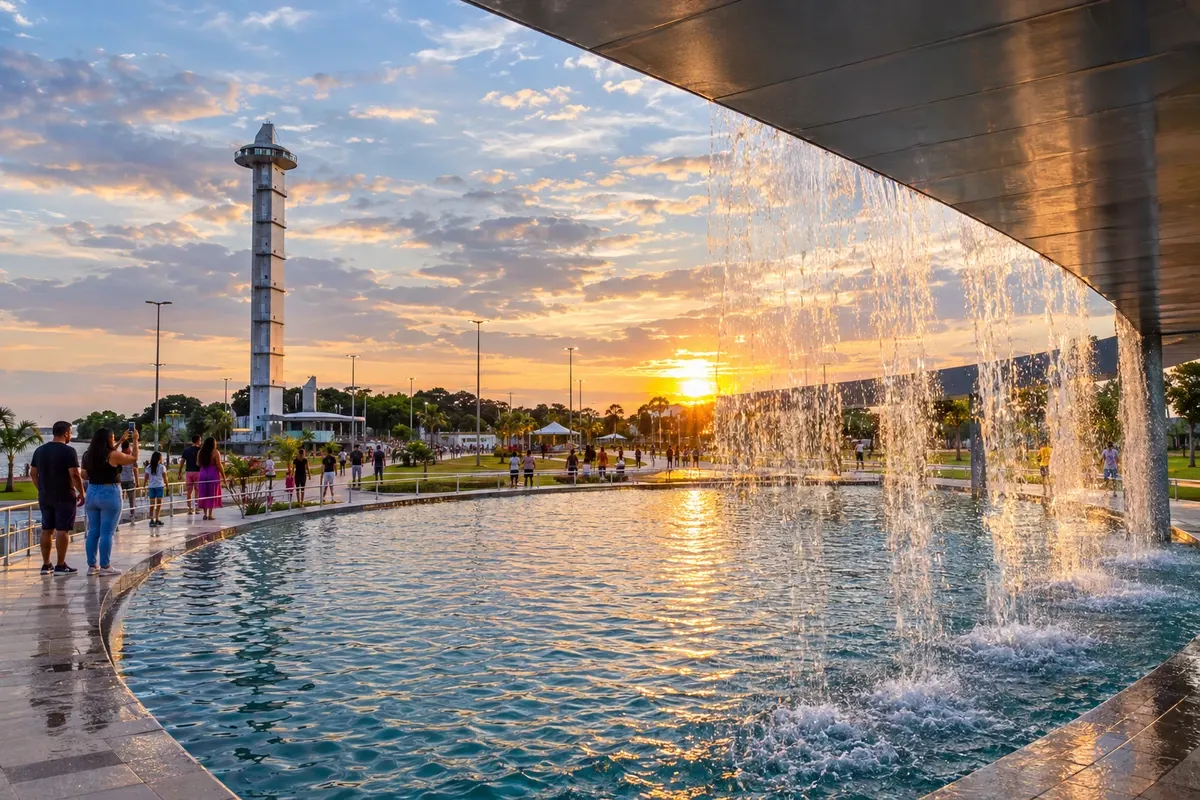
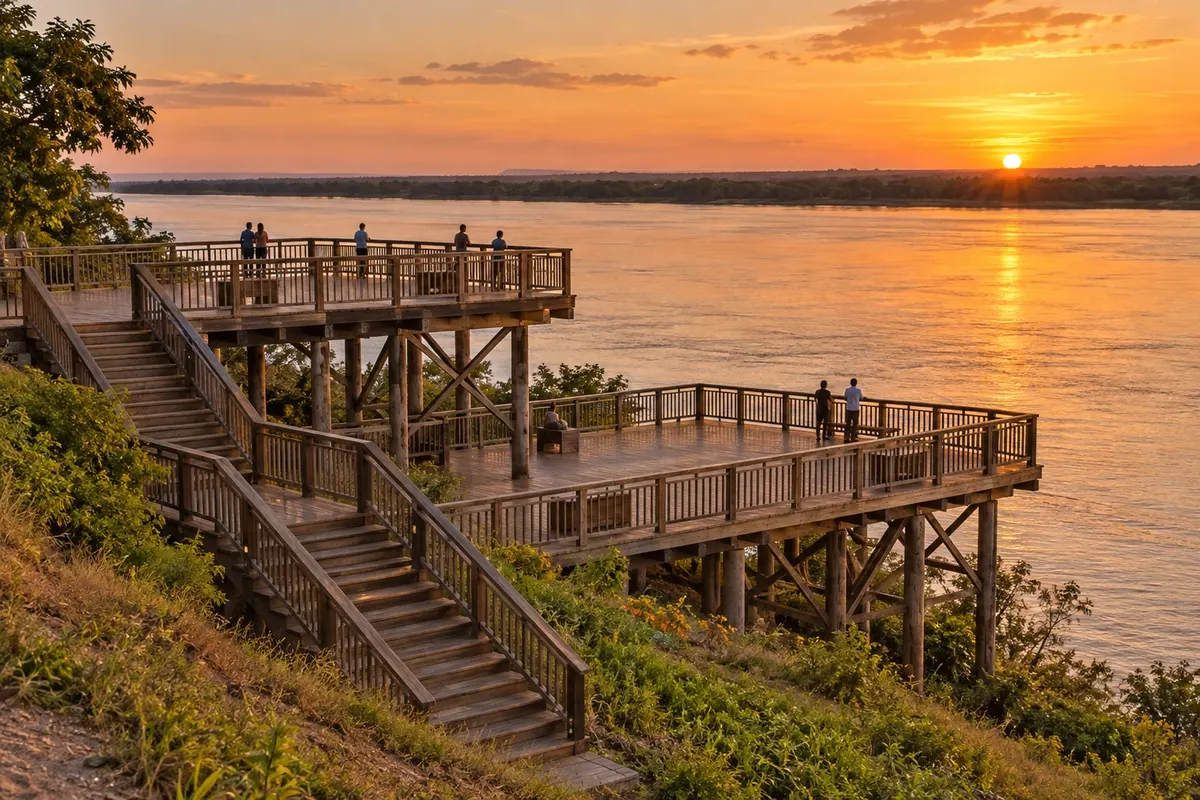
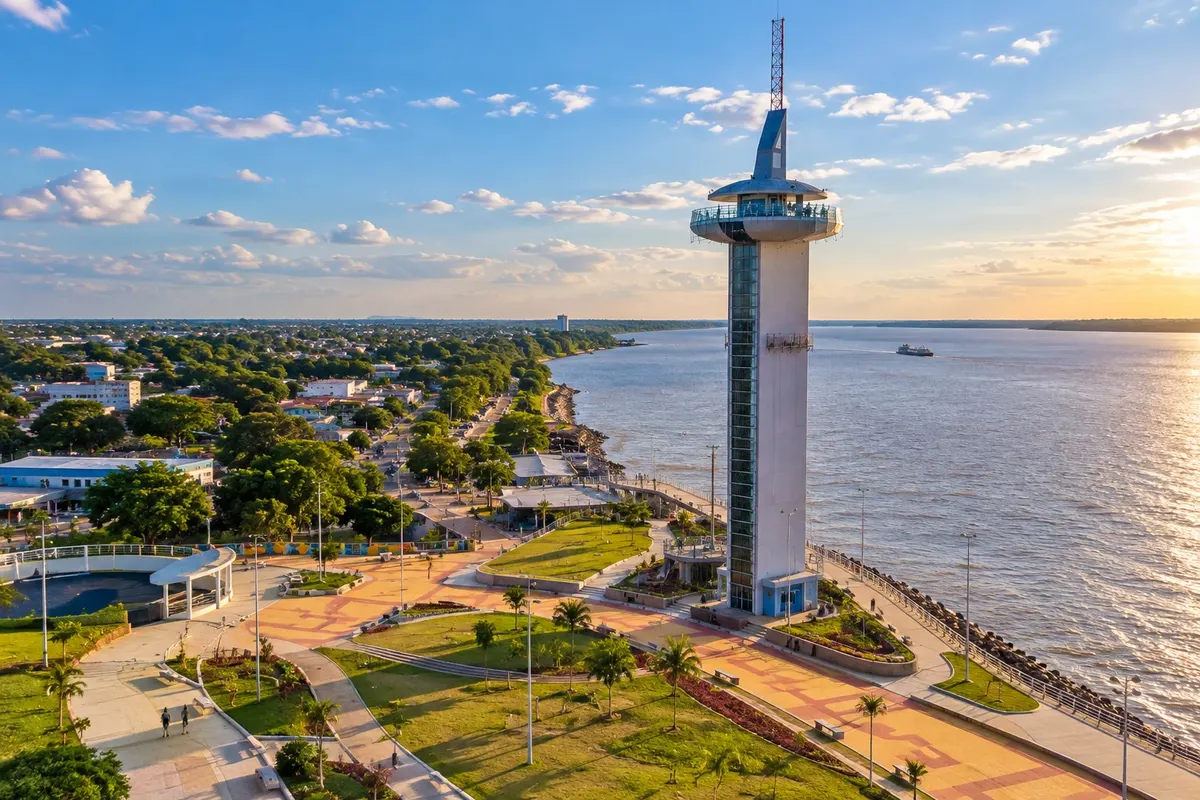
In the photo: Parque do Rio Branco and Mirante Edileusa Lóz, Boa Vista (RR).
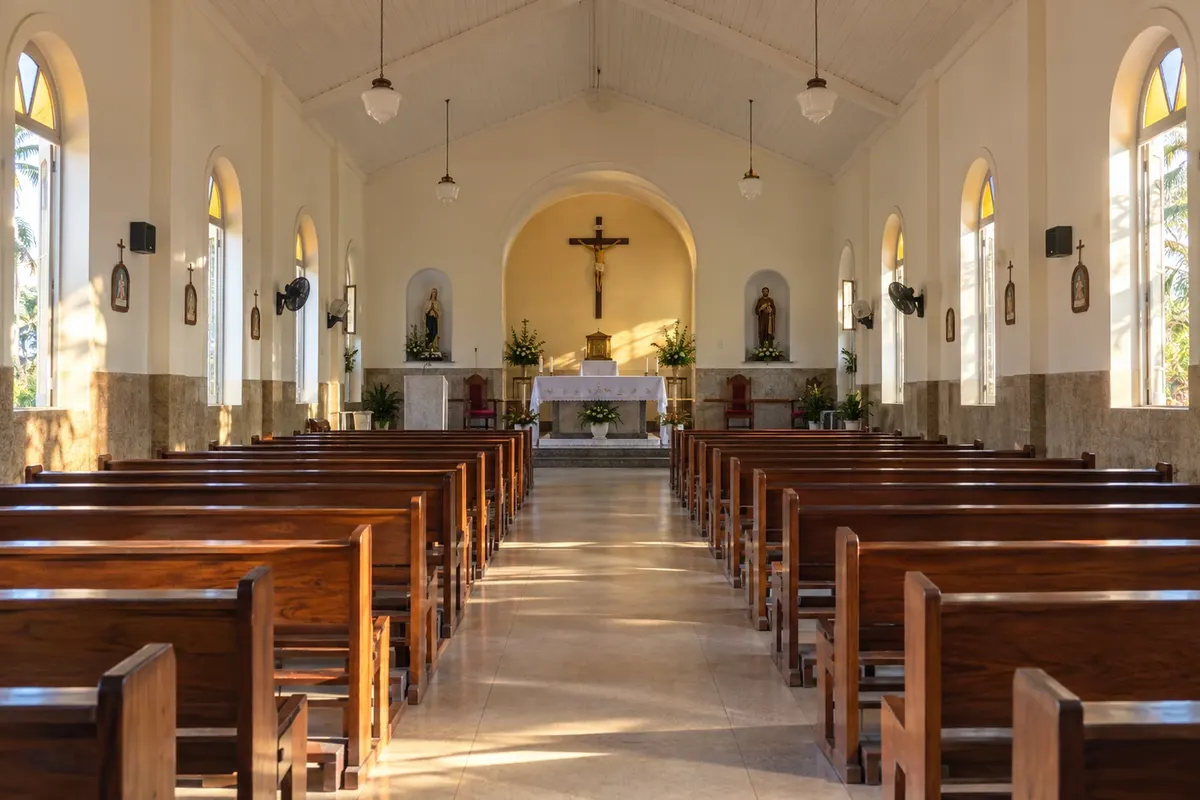
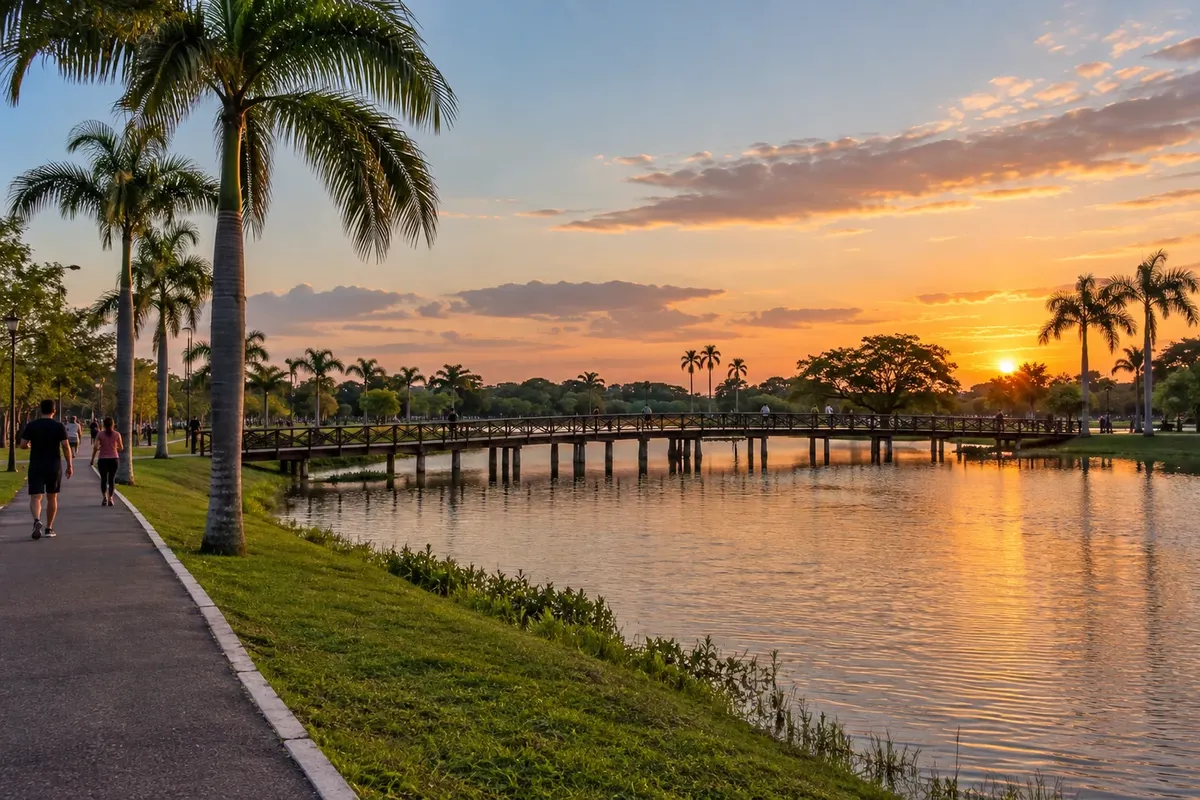
Illustrative images. The pictures in this guide are illustrations based on the real place, not photographs, and may differ from it.
Get to know the place
Boa Vista presents itself to the traveler along the banks of the Rio Branco and through its public spaces. The Igreja Matriz de Nossa Senhora do Carmo and the replica of the Intendência help identify the city's historic core. The walk can start in that stretch before continuing to the riverfront.
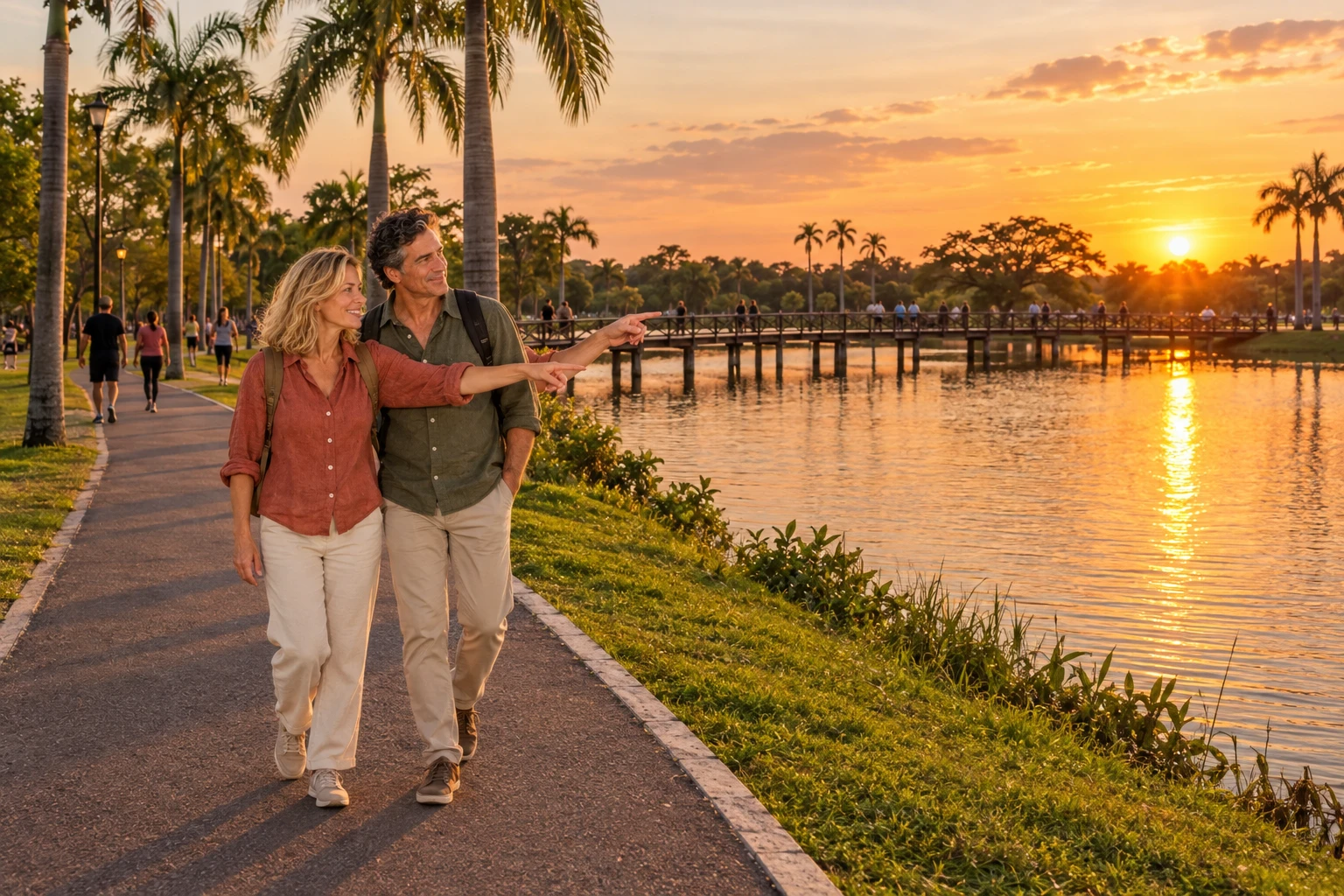
The Orla Taumanan brings together walking, dining and views of the river. The Parque do Rio Branco extends the route, and the Mirante Edileusa Lóz offers another angle over the capital. The Ponte dos Macuxi also appears in the scenery seen from this area.
The Complexo Ayrton Senna and the Praça das Águas add outdoor activities in other parts of the city. To get to know the local handicraft production, include the Centro de Artesanato Velia Coutinho and look at the pieces before continuing through the leisure areas.
In gastronomy, damurida expresses an indigenous tradition present in Roraima, made with fish and pepper. Fish meals at the riverfront are another way to bring the visit closer to life along the banks of the Rio Branco.
This destination brings together 1 city: Boa Vista.
Travelers' photos
One destination, many paths
Start with one city or combine several in your itinerary.
Mapa: @svg-maps/brazil, CC BY 4.0
Arrive at Aeroporto Internacional de Boa Vista — Atlas Brasil Cantanhede (BVB), located in the capital. The BR-174 is the road access to the municipality. Arrange your departure from the airport and transfers between the historic center, the riverbank and the Complexo Ayrton Senna.
The local experience
Opened in 2004, the structure raised over the right bank of the Rio Branco is next to the spot where the capital's original settlement began. From the platforms you can see São Sebastião island, the Ponte dos Macuxis (bridge) and, in the distance, the Serra Grande.
At 120 meters tall, the tower opened in December 2020 in the Parque do Rio Branco offers a panoramic view of the whole city and the river. Access to the observation deck requires advance online booking.
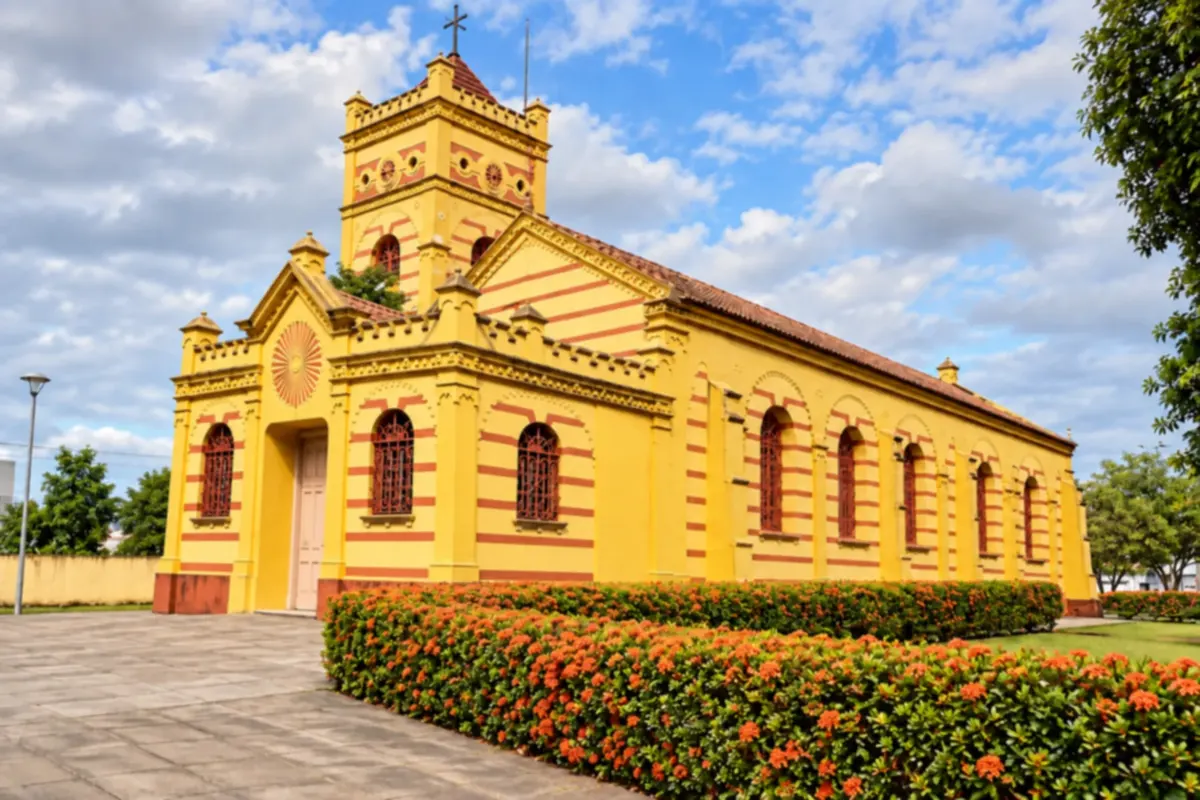
The parish dates back to 1856, and the current church was rebuilt by Benedictine monks in the 1920s, with touches of Germanic architecture. Protected by municipal law, it was restored between 2005 and 2007, when the original wall paintings were rediscovered.
Discover Igreja Matriz de Nossa Senhora do Carmo
The capital's largest green leisure area, with lakes, walking paths and event space. It is where the city gathers in the late afternoon.
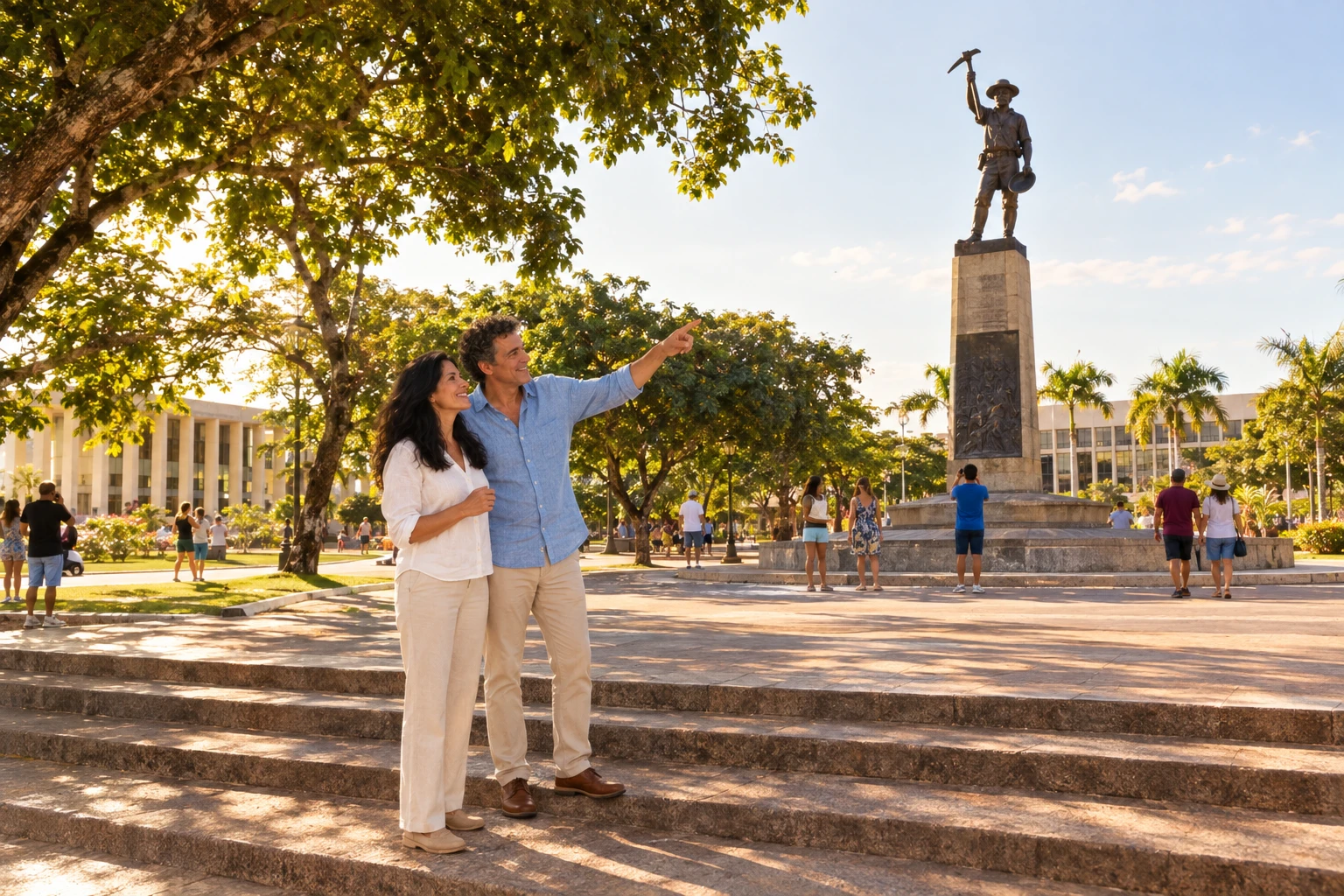
The center of the fan-shaped layout that gives Boa Vista its unique city plan, with the statue honoring the gold miners. The starting point for city tours of the capital.
Discover Praça do Centro Cívico e Monumento ao Garimpeiro
To choose before you go
Where each tour starts, how long it takes, how it is done, what is included and the price range.
The city tour brings together the historic core and the planned public spaces of the capital in an approximately three-hour itinerary, with a guide and transport. It usually starts in the Centro Histórico, with the Igreja Matriz and the Monumento aos Pioneiros, and continues to the Orla Taumanan, facing the Rio Branco, and to the Parque do Rio Branco, where the viewpoint is located. In the center, the Praça do Centro Cívico concentrates the government buildings, and the Centro de Artesanato is the stop to see local production. The route ends in the area of the Complexo Ayrton Senna, with the Praça das Águas, the Portal do Milênio and the Praça Fábio Paracat. Boa Vista is a planned city, with avenues that radiate from the Centro Cívico in a fan shape, and the tour helps to understand that layout. Stops are short, for photos and short walks.
Stops: Centro Histórico de Boa Vista, Igreja Matriz de Nossa Senhora do Carmo, Monumento aos Pioneiros, Orla Taumanan, Parque do Rio Branco, Mirante Edileusa Lóz, Centro de Artesanato, Praça do Centro Cívico, Praça das Águas, Portal do Milênio, Praça Fábio Paracat, Complexo Ayrton Senna.
Includes: Transport and tour guide are usually included. Food and purchases of handicrafts are paid separately. Check the operator's current rates.
Tip: Bring sunscreen, a cap, and water, because the heat accompanies the whole itinerary. Prefer early morning or late afternoon. Ask the operator, if you wish, to include the Museu Integrado de Roraima.
Best time: Operates year-round. From October to March, the typically drier period, outdoor stops are more rewarding.
Agencies that run it: Roraima Adventures Turismo.
The boat departs from a port in the capital and sails up the Rio Branco to the north. From the river, the city appears from a different angle, and the sunset changes the color of the horizon. Along the way you pass under the Ponte dos Macuxi, the viaduct that leads to the road to Guiana, and the operator comments on Roraima's typical fauna and flora. In the low-water season the route usually goes by river beaches. Some operators include the stretch of the igarapé Água Boa, also heading north. After the navigation, the boat returns to the starting point. There are operators with a minimum group of two people, and chartering the boat for larger groups is also possible.
Stops: Rio Branco, Ponte dos Macuxi, Rio Branco river beaches, Água Boa.
Includes: Boat, driver and life jacket are usually included. In some operators the hotel transfer is also included. Drinks and snacks are paid separately. Check the current list/table of operators.
Tip: Reserve in advance, especially for weekends. Bring insect repellent, a cap and a lightweight long-sleeve garment. Confirm with the operator the boarding point and the group size.
Best time: All year. From October to March the river is lower and beaches form.
Serra do Tepequém, in Amajari, is a former diamond-mining area with a plateau, waterfalls and lagoons. The route leaves Boa Vista via BR-174, heading toward Venezuela, and a little after km 100 turns onto RR-203 to Vila do Paiva, all paved. The waterfalls are not directly accessible by car, so each stop requires a hike. A common itinerary includes in the morning Cachoeira do Cupim, Mirante do Paiva and Cachoeira do Paiva. In the afternoon it covers Tilim do Gringo, Cachoeira do Funil and Corredeira do Cabo Sobral. Because the road takes about three hours each way, the day trip is long. There are also 2-day itineraries with an overnight in the serra, which include Cachoeira do Barata, Mão de Deus and Lago Esmeralda.
Stops: Vila do Paiva, Cachoeira do Cupim, Mirante do Paiva, Cachoeira do Paiva, Tilim do Gringo, Cachoeira do Funil, Corredeira do Cabo Sobral, Cachoeira do Barata, Mirante Mão de Deus, Lago Esmeralda.
Includes: Transport departing from Boa Vista and a guide are usually included in agency packages. Meals, attraction fees and personal expenses are paid separately. On 2-day itineraries, the guesthouse is included in the package. Check the agency's current rates.
Tip: There is no gas station or bank in the village: fill up and bring cash from Boa Vista. Leave already wearing swimwear and bring trail footwear, sunscreen, insect repellent and a raincoat.
Best time: September to December is the recommended window according to guides and operators. When it rains the trails become more slippery.
In the dry season the level of the Rio Branco falls and freshwater beaches appear. Praia Grande is on the opposite bank from the city, already in the municipality of Cantá, and can only be reached by boat. Boats depart from points in the capital such as Porto do Babazinho and Orla Taumanan, the latter being the most central. The crossing is short and part of the excursion. On the beach there is a stretch of sand, beach stalls and tables, and the plan is to spend the afternoon swimming in the river, having snacks and waiting for the sunset. Boatmen require the use of life jackets.
Stops: Praia Grande, Porto do Babazinho, Orla Taumanan, Rio Branco.
Includes: The crossing is paid separately, per person, directly to the boatman. Purchases at the beach stalls are also paid separately. Check the current price at boarding.
Tip: Bring sunscreen, flip-flops and cash for the crossing and purchases. Arrange the return time with the boatman and always wear a life jacket.
Best time: October to March, when the river is low. During the high-water season the beaches disappear.
Serra Grande is located in the municipality of Cantá, a little over 50 km from Boa Vista, via a local road that passes through the village Serra Grande 1. There is a site that serves as a base, where regional guides brief the group before entering the trail. The path climbs through the forest, with waterfalls and natural pools, including Excalibur and Véu de Noiva. Along the route it's possible to see large sumaúma trees, orchids and bromeliads, and there's a chance to spot monkeys, coatimundis, giant anteaters and birds. From higher points the Rio Branco appears in the distance. The main trail takes around five hours, and those who wish can camp in the area.
Stops: Serra Grande, Cachoeira Excalibur, Cachoeira Véu de Noiva, Rio Branco (seen from the trail).
Includes: Local guide and transport are included in agency packages. There is an access fee to the site, paid separately. Food and water are the visitor's responsibility, unless the agency states otherwise. Check the current rates.
Tip: Wear lightweight clothing and trail shoes, and bring sunscreen and plenty of water. Always go with a local guide. The access road is unpaved, so check access conditions with the agency.
Best time: In the rainy season the falls have higher flow; check trail conditions with the guide.
The trail to the top of Monte Roraima leaves from the Venezuelan side, from the indigenous community of Paraitepuy. The Brazilian park protects the mountain's eastern flank but does not have a trail to the summit. Agencies depart from Boa Vista, conduct the briefing and travel about 220 km to Santa Elena de Uairén, roughly three hours. The next day, 4x4 vehicles take the group to Paraitepuy, about two hours away. The first day of walking, around 14 km across the savanna, ends at the Rio Tek campsite, followed by the ascent to the plateau. On the top there are days of walking among rock formations, such as Vale dos Cristais and Ponto Triplo, where the borders of Brasil, Venezuela and Guiana meet. The return retraces the route back to Paraitepuy and Boa Vista.
Stops: Santa Elena de Uairén, Comunidade de Paraitepuy, Acampamento Rio Tek, Parque Nacional de Canaima, Monte Roraima, Vale dos Cristais, Ponto Triplo, Lago Gladys, Maverick Rock.
Includes: Packages usually include transport from Boa Vista, accommodation in Boa Vista and Santa Elena, guides, porters, tents, food on the mountain and park fees. Airfare, drinks, insurance and extras are usually not included. Check the agency's current price list.
Tip: Book in advance and ask for the departure schedule. Agencies state that minors under 18 are not accepted. Get in shape and confirm with the agency which documents are required for the border crossing.
Best time: Agencies run departures in several months. Ask for the schedule and the conditions for the period before choosing a date.
Agencies that run it: Clube Native, Caburaí Adventure, Roraima Adventures Turismo.

The Parque Nacional do Viruá, in Caracaraí, covers about 240,000 hectares of alluvial forests, campinaranas and terra firme forest. It is a Ramsar Site, a designation for wetlands of international importance. A day-trip itinerary from Boa Vista departs early, stops in the village of Iracema and reaches the park mid-morning. There is a presentation of the unit and then the 3.45 km ecological trail, about 1h30, to the lookout. The 230-meter boardwalk takes about 15 minutes and is accessible to people with mobility difficulties. Those departing from Caracaraí can take the boat trip on the Rio Branco, with rapids, beaches and the mouth of the Anauá river. There are no restaurants in the park area.
Stops: Parque Nacional do Viruá, Ecological trail to the lookout, 230-meter boardwalk, Rio Branco (boat trip from Caracaraí).
Includes: The managing body reports that there is no entrance fee, but the visit must be scheduled. Transport, guide and snacks are the responsibility of the visitor or the operator. Check current conditions with the park.
Tip: Schedule the visit in advance and preferably go with one of the guides on the park's list. Bring a snack, water, sunscreen, insect repellent and closed-toe shoes. The entrance is 52 km from Caracaraí.
Best time: The rainy season runs from May to August. January and February are mentioned as good months, in the dry season.
Parque Anauá is a large urban green area in Boa Vista, with lakes, trails and rest areas, including the Lago dos Americanos. Inside it operates the Museu Integrado de Roraima, in Blocks B and C of the Parque Tecnológico. The collection covers the savannas, the fauna and the geophysical environment of Roraima, as well as the state's culture. The exhibition Te Quero Ser Savana is part of the visit. The museum welcomes individual visitors accompanied by a mediator, without the need for prior booking, and school groups should book in advance. The visit pairs well with a walk through the park late in the afternoon.
Stops: Parque Anauá, Lago dos Americanos, Museu Integrado de Roraima.
Includes: The park is a public recreational area. For the museum, check the current fee schedule and entry conditions. Food is paid for separately.
Tip: The museum is open Monday through Friday during the day and on Sunday afternoons; check the museum's social media for opening days before you go. On very sunny days, leave the walk through the park for late afternoon.
Best time: All year. From October to March it usually rains less.
The tour follows BR-401 to Bonfim, the last town on the Brazilian side, about 125 km from Boa Vista. Along the route, the Roraima savanna landscape gradually changes, with hills in the background. In Bonfim you cross the bridge over the Rio Tacutu, which divides the two countries, and arrive at Lethem, in Guiana. The two towns form an urban agglomeration on the border. In Guiana the official language is English, and Lethem operates as a duty-free port, with trade in imported products. The group walks through the town and has lunch there. The return takes place in the late afternoon, arriving back in Boa Vista while it's still daylight.
Stops: Bonfim, Rio Tacutu, Ponte sobre o Rio Tacutu, Lethem (Guiana).
Includes: On an agency tour, transport is usually included. Meals, shopping and currency exchange are paid separately. There are also buses and shared taxis departing from Boa Vista bus station; check the current price list.
Tip: Bring photo ID and check beforehand the requirements to enter Guiana. Currency exchange in Boa Vista is usually available, although it is possible to exchange reais for Guiana dollars on site.
Best time: All year round. From October to March, the road tends to be drier.
Agencies that run it: Roraima Adventures Turismo.
Lago Caracaranã is in the municipality of Normandia, inside the Terra Indígena Raposa Serra do Sol, and visits follow the rules of the community that manages the site. The trip from Boa Vista takes three to four hours by road. The lake has about a 5.8 km perimeter, with light-sand beaches surrounded by native cashew trees. The wind is often strong and makes the water choppy. The program is swimming, walking along the shore and waiting for the sunset. There is usually a camping area, and those who intend to spend the night typically bring a hammock. Since the support infrastructure is basic, it's best to bring whatever you will consume.
Stops: Lago Caracaranã, Normandia, Terra Indígena Raposa Serra do Sol.
Includes: There is an entrance fee, paid separately on site, as well as parking and overnight stays. Food and other services vary and are also paid separately. Check the community's current rates.
Tip: Bring cash, water, insect repellent, sunscreen, and a bag to carry your trash back. If you plan to stay overnight, bring a flashlight and a hammock. Check access conditions and visiting rules before you go.
Best time: From September to March, according to guides; the lake can be visited year-round.
This is the longest and most strenuous trail of the Serra do Tepequém, with 4.8 km uphill, or 9 km round trip. The starting point is on the roadside, about 3 km from Vila do Paiva, next to a private property. To watch the sunrise up there, the group sets out before dawn with headlamps. The route passes through forest, rocks and stream crossings, almost entirely uphill. On the platô, the view reaches the mountain range on the border with Venezuela and the serra valley. Agencies recommend hiring a guide and having good physical fitness. Since the departure is at dawn, most groups sleep in the serra the night before. After the descent, the group usually has coffee and visits a nearby waterfall.
Stops: Platô da Serra do Tepequém, Vila do Paiva.
Includes: The guide is hired separately or is included in the agency package, depending on the case. Transport, meals and accommodation in the mountains are paid separately, unless included in the package. Check the current table of operators.
Tip: Bring a headlamp, boots or sneakers with good grip, water, and cotton gloves to brace yourself on the rocks. Sleep in the village the night before so you arrive rested for the trail.
Best time: September to December is the recommended window for the region; avoid the trail in heavy rain.
Aquamak is a natural-water water park on BR-174, between Boa Vista and Mucajaí, about 35 km from the capital. Access includes 8 km of unpaved road from km 475. The park features the Rio Lento e Rampa, where you ride on inner tubes while observing animals of the Amazonian fauna, and a natural lake with a sandy beach, covered stalls and a bar. Aquamarine is a shallow pool for children aged 2 to 7, with areas for supervising adults. There are courts for volleyball, beach soccer and water volleyball. It's a full-day activity for families on hot days.
Stops: Aquamak, Rio Lento e Rampa, Lago Natural com Praia de Areia, Aquamarine.
Includes: Tickets are sold at the gate, with prices by age group. Small children do not pay, and there are reduced rates for seniors and people with disabilities. There are discounts for purchases on the website. Food and drinks are paid separately. Check the current price list.
Tip: Confirm opening days before going, because the park is not always open every day. Bring sunscreen, a towel and swimwear. If you go by car, consider the dirt road on the final stretch.
Best time: All year round; it's an activity for hot days without heavy rain.
Day by day
Suggestions to plan the trip. Change the order of the days according to the weather and tour availability.
Start in the morning with a city tour of the historic center and the waterfront of Boa Vista. The route passes by the Igreja Matriz de Nossa Senhora do Carmo and the replica of the Intendência. Then visit the Centro de Artesanato Velia Coutinho and head to the Orla Taumanan. Lunch can be fish, with damurida as an option. At the end of the afternoon take the boat trip on the Rio Branco at sunset. The Ponte dos Macuxi appears in the landscape.
Spend the morning at Parque Anauá and the Museu Integrado de Roraima. Check the museum's visiting days in advance. In the afternoon, stop by Complexo Ayrton Senna and Praça das Águas, which are outdoor activities. Save walks for late afternoon, when the heat decreases. If you have time left, return to Orla Taumanan, Parque do Rio Branco and Mirante Edileusa Lóz.
Serra do Tepequém is in Amajari, about 200 km from Boa Vista. The route follows BR-174 and RR-203, about 3 hours by car, van or bus. Leave early, with the tour booked in advance. On the day, common stops are the Paiva, Barata and Funil waterfalls, plus viewpoints, depending on the package. Bring swimwear, closed-toe shoes, water and a snack. Return to Boa Vista is in the late afternoon.
Take the city tour through the historic center and along the waterfront in the morning. Pass by Igreja Matriz de Nossa Senhora do Carmo and the replica of the Intendência. Visit Centro de Artesanato Velia Coutinho. Have fish for lunch at Orla Taumanan. In the late afternoon, book the sunset boat tour on the Rio Branco. If you have time, walk through Parque do Rio Branco and go up to Mirante Edileusa Lóz.
In the morning, visit Parque Anauá and the Museu Integrado de Roraima. Check the museum's opening days. In the afternoon, head to Complexo Ayrton Senna and Praça das Águas. For a hotter day, Aquamak, a natural-water water park, is an alternative. Check with the park for opening days and how to get there.
Serra do Tepequém is in Amajari, about 200 km from Boa Vista, roughly a 3-hour drive via BR-174 and RR-203. Leave early. The tour includes waterfalls such as Paiva, Barata and Funil, and viewpoints. Bring swimwear, closed shoes, water and a snack. Return to Boa Vista is late afternoon. Book transportation beforehand.
Bonfim is about 125 km from Boa Vista via BR-401, roughly 1h30. The Rio Tacutu separates Brazil from Lethem, in Guiana, connected by a bridge. Bring official photo ID and check with the operator the entry and vaccination requirements. Brazilians do not need a visa. The tour usually includes shopping and a visit to the neighboring town. Return to Boa Vista in the late afternoon.
Viruá is in Caracaraí, about 190 km from Boa Vista via the BR-174 heading south. The entrance is via Estrada Perdida at km 322, followed by 7 km of dirt road to the headquarters. There is no regular public transport to the park. Check with ICMBio for visiting rules and booking. Do the trail and the lookout in the morning. Return to Boa Vista in the afternoon. Allow extra time if you have a flight the same day.
In the morning, take the city tour of the historic center and the waterfront. Pass by Igreja Matriz de Nossa Senhora do Carmo and the replica of the Intendência. Visit Centro de Artesanato Velia Coutinho. Have fish for lunch at Orla Taumanan. In the afternoon, walk through Parque do Rio Branco and go up to Mirante Edileusa Lóz. Finish with the sunset boat ride on the Rio Branco.
In the morning, take the boat crossing to Praia Grande. Confirm river conditions with the operator. In the afternoon, visit Parque Anauá and the Museu Integrado de Roraima. Check the museum's visiting days. Then head to Complexo Ayrton Senna and Praça das Águas. Aquamak, a natural-water waterpark, is an option for those who prefer a water activity.
Leave Boa Vista in the morning heading to Serra do Tepequém in Amajari, about 200 km away. The trip takes about 3 hours via BR-174 and RR-203. In the afternoon, visit waterfalls such as Paiva, Barata and Funil and a viewpoint, depending on the package. Stay overnight in the serra for the next day's excursion. Book transport and guide in advance.
The plateau of the serra reaches 1,022 m altitude and is visited with a local guide. The departure is still at dawn to see the sunrise. On the return, use the morning to visit a waterfall that was missed the previous day. Afterwards, return to Boa Vista, about a 3-hour drive. Arrive in Boa Vista in the late afternoon and rest.
Bonfim is about 125 km from Boa Vista via the BR-401, roughly 1h30. The Rio Tacutu separates Brazil from Lethem, in Guyana, connected by a bridge. Bring an official photo ID. Check with the operator for entry and vaccination requirements. Brazilians do not need a visa. Tour the neighboring town and return to Boa Vista in the late afternoon.
Viruá is in Caracaraí, about 190 km from Boa Vista via the BR-174 heading south. The entrance is via Estrada Perdida at km 322, followed by 7 km of dirt road to the headquarters. There is no regular public transport to the park. Check with ICMBio for visiting rules. Do the trail and the lookout in the morning and return in the afternoon.
Choose a full day for the trip. Serra Grande has trails and waterfalls. Lago Caracaranã is in Normandia, to the north via the BR-401. Both depart from Boa Vista and require advance reservation. Confirm the route and travel time with the operator. Book the return flight with plenty of time. Those who want Monte Roraima need a separate trip of 8 to 10 days that departs from Boa Vista via Venezuela.
Best time to go
From October to March, the typically drier period favors walks along the riverfront and in public spaces. Between April and September, rainfall usually increases. Since the heat accompanies the visit, spread outdoor outings into the cooler times of the day.
Little rain · Hot
It's one of the months with the least rain in Boa Vista, with an average of about 29 mm according to INMET's climatological normal (1991-2020). Highs are around 32 °C. Outdoor activities are more productive in the morning and late afternoon. The Rio Branco level is usually low, so confirm crossings with the operator. During school holidays, book tours in advance.
Dry season · High maximum temperatures
It remains dry, with an average of about 32 mm according to INMET (1991-2020). Highs are near 33 °C, among the highest of the year. The waterfront, parks and Complexo Ayrton Senna are best in the early morning and late afternoon. Leave waterfalls and full-day trips for the cooler hours. Bring water, sunscreen and a hat.
End of the dry season · Hot
The average is about 39 mm according to INMET (1991-2020), still low. Highs are near 33 °C. There may be isolated showers, especially at the end of the month, and heavy rain returns from April. It's a favorable period for walks along the waterfront and full-day outings. Confirm the forecast before long trips, such as Viruá and Tepequém.
Rain returns · River rises
Rain increases to about 146 mm according to the INMET normal (1991-2020). Highs are around 31 °C. City tours remain possible, with pauses for showers. On long outings, such as Tepequém, Viruá and Bonfim, it's wise to bring a raincoat and have an alternative plan. Check with the operator about road and boat conditions.
Heavy rain · Overcast
It's one of the rainiest months, with an average of about 347 mm according to INMET (1991-2020). Highs are near 29 °C. In the Serra do Tepequém there are reports of overcast conditions during this period. Book excursions with flexible dates. Museums, urban parks and fish meals on the waterfront help reorganize the itinerary when the rain intensifies.
Heavy rains · River high
Rain remains high, averaging about 336 mm according to INMET (1991-2020). Highs are near 29 °C. Rio Branco is usually higher, and operators may adjust boat tours and crossings. For parks and mountain areas, confirm the visit the day before. In the city, favor times with less rain and bring a raincoat.
Heavy showers · Adjusted outings
The average is about 308 mm according to INMET (1991-2020). In years with above-average rainfall, the city hall has recorded overloads in urban drainage. Expect slower travel and allow extra time between activities. For long trips, such as Tepequém, Viruá and Bonfim, check the forecast beforehand. Museums and the Orla Taumanan serve as alternatives.
Rain decreases · Mixed days
The average falls to about 221 mm according to INMET (1991-2020), still high. Highs are near 30 °C. Clear days alternate with days of showers. It's worth combining outdoor activities with indoor options. Confirm boat departures and trails with the operator and bring a raincoat. Toward the end of the month, the weather usually becomes more settled.
Transition · Weather settling
The average is about 98 mm according to INMET (1991-2020), much lower than at the peak of the rains. Highs are around 31 °C. Weather tends to settle and favors city tours, the waterfront and full-day outings. Reports from operators point to September as the start of the best period for the waterfalls of Serra do Tepequém. There can still be showers.
Drier weather · Warm
The average is about 67 mm according to INMET (1991-2020). Highs are near 32 °C, with some hotter days. Outings along the waterfront, in Parque do Rio Branco and at sunset on the Rio Branco are best earlier or late afternoon. For Tepequém, Viruá and Bonfim, days are usually more settled. There are expedition departures to Monte Roraima from Boa Vista during this period.
Little rain · Hot days
The average is about 70 mm according to INMET (1991-2020). Highs are around 32 °C. It's a favorable period for mountain waterfalls, trails and a day at Lago Caracaranã, but the heat calls for early starts and water on hand. For Monte Roraima, operators publish expedition dates in this period; book in advance. Check entry requirements for Venezuela.
Dry season · Year-end
The average is about 60 mm according to INMET (1991-2020). Highs are near 32 °C. Dry weather favors the waterfront, parks and full-day trips. At year-end there are expeditions to Monte Roraima from Boa Vista, and school holidays increase demand. Book tours and transport in advance and schedule outdoor activities for the coolest hours.
Plan the journey
Aeroporto Internacional de Boa Vista — Atlas Brasil Cantanhede (BVB) is located within the capital, about 3.5 km from the center. It is the northernmost airport in the country with regular scheduled flights. There is no other commercial airport to reach Boa Vista.
Airlines operating at the airport are Azul, GOL and LATAM. Direct connections are usually with Brasília, Manaus and Campinas (Viracopos), and there are records of Azul routes to Belém and Recife. Between Manaus and Boa Vista the flight takes around 1h20. Brasília–Boa Vista takes about 3h35 on a direct flight. From other cities, travel generally requires a connection in Brasília, Manaus or Campinas.
Routes and frequencies change with the season. Check current flights with the airline before finalizing your itinerary.
From the airport to the center: there is a taxi stand at the arrivals exit, and Uber and 99 operate in the city. Urban bus lines (104, 206 and 308) pass near the terminal. For the first night, arrange the ride or transfer before you travel.
The Rodoviária Internacional de Boa Vista concentrates departures and arrivals of intermunicipal and interstate buses. The main service is the Manaus–Boa Vista line via BR-174. Companies operating this route include Eucatur, Caburaí Transportes, Asatur and Amatur, with several departures per day, many in the late afternoon and at night. The journey takes on average between 11h30 and 12h, and can be longer on weekends and holidays.
There are conventional, semi‑bed, bed and sleeper seats, with different prices. Fares vary by date, company and how far in advance you buy. Check the current fare table with the companies or on a ticketing platform.
From Boa Vista, the bus station also runs lines to Pacaraima (about 4 hours), Bonfim (about 2h30), Caracaraí, Presidente Figueiredo (AM), São Luiz, Caroebe and São João da Baliza. Those continuing to Guyana (Lethem) or to Venezuela should check in advance the documents required at each border.
Boa Vista is the only capital of Roraima connected by road to the rest of Brazil, and access is via BR-174. The highway links Manaus (AM) to Pacaraima (RR), on the border with Venezuela, passing through Boa Vista. From Manaus it is about 780 km on a single‑lane paved road, generally a one‑day drive. There is no direct road connection to other state capitals besides Manaus.
The section inside the Terra Indígena Waimiri-Atroari is about 125 km and is closed at night to private vehicles. Interstate buses, ambulances and trucks carrying perishable goods are allowed to pass. Plan the crossing during daylight and do not stop inside the reserve. In other sections there are long stretches without service stations or restaurants, so refuel beforehand. In the rainy season potholes and narrowed shoulders may appear.
Leaving Boa Vista, BR-174 continues north to Pacaraima, about 212 km away. BR-401 leads to Bonfim, on the border with Guyana (Lethem).
For those coming from elsewhere, there is no ferry or unpaved section on the main Manaus–Boa Vista route reported in the sources consulted. Still, check road conditions before setting out.
Boa Vista has a planned layout, with wide avenues radiating from the center, and the terrain is flat. Urban points of interest are in nearby areas: Orla Taumanan, Parque do Rio Branco and the historic center. Those staying in the central area can combine short walks with rides via car‑app.
Options are: • Ride‑hailing apps (Uber and 99) and taxis — generally the most practical way to get around without a car. • Urban bus, with 19 lines operated by a single company, with terminals in the center. Check current fares and schedules on the city hall's or operator's website. • Bicycle: the city has bike lanes, and there is bicycle rental at Parque do Rio Branco through a local agency.
A rental car is not necessary for urban attractions. It makes more sense for those who plan to explore the interior of Roraima on their own. There are rental agencies in the city and at the airport. Book in advance in high season and carry the required documentation.
There are two ways to organize the trip.
Package with transfer: the agency or operator sells the flight, airport transfer and tours in a single contract. It helps those who want to go beyond the city, on departures that depend on a vehicle and a guide. Check what is included (transfer, guide, entrance fees) and what is paid separately.
On your own: this works for those staying in the capital. The airport is about 3.5 km from downtown, transport is by taxi, ride‑hailing app or city bus, and the city's main points are in nearby areas, such as the historic center, Orla Taumanan and Parque do Rio Branco. For trips outside the city, consult local operators.
In both cases, book in advance the transport for your first departure from the airport and the tours on high‑demand dates.
Who takes you
Only agencies with an active registration in Cadastur, the official registry of Brazil's Ministry of Tourism, are listed. The order is not a ranking: compare the tours and book directly with the agency.
Ecotourism and adventure travel agency based in Boa Vista, on Avenida Terêncio Lima. It operates itineraries to Monte Roraima, Gran Sabana, Safári Amazônico and Tepequém. Expeditions to Monte Roraima depart from Boa Vista, with transfer to the border and return to the capital.
Tours: Expedition to Monte Roraima departing from Boa Vista.
Cadastur checked in 10/2026
Adventure tourism operator offering packages to Monte Roraima, Gran Sabana, Moco Moco (Guiana), Serra do Tepequém, Rota Esmeralda and Rota Araponga. The two‑day package to Tepequém includes round‑trip transport from Boa Vista, a guide and adventure insurance.
Tours: Expedition to Monte Roraima departing from Boa Vista.
Cadastur checked in 10/2026
Inbound tourism agency and expedition operator, headquartered in downtown Boa Vista. The website indicates registration with Cadastur. They sell city tours through the historic center, the waterfront and the city's squares, a one‑day visit to Bonfim and Lethem on the border with Guiana, and expeditions to Monte Roraima departing from Boa Vista.
Tours: City tour through the historic center and the Boa Vista waterfront, Expedition to Monte Roraima departing from Boa Vista, Day trip to Bonfim and Lethem, on the border with Guiana.
Cadastur checked in 10/2026
Your base to explore
Before you go
A little planning leaves more time to enjoy the journey.
From October to March, the typically drier period favors walks along the riverfront and in public spaces. Between April and September, rainfall usually increases. Since the heat accompanies the visit, spread outdoor outings into the cooler times of the day.
Allow two days: one for the Igreja Matriz, the Intendência, the Orla Taumanan and the Parque do Rio Branco; another for the Mirante Edileusa Lóz, the Complexo Ayrton Senna, the Praça das Águas and the handicraft scene. Three days let you spread the walks into smaller stages.
The Centro area brings you close to the historic core and the walks along the Rio Branco. It’s a good choice to combine the Matriz, the Intendência and the riverfront in the same outing. If you prefer to prioritize the Complexo Ayrton Senna, look for accommodation near that axis and plan a transfer to the riverbank.
Take your trash with you, follow the signs and support local businesses. In natural areas, follow the visiting guidelines.
Get your questions answered
The Igreja Matriz de Nossa Senhora do Carmo and the replica of the Intendência are landmarks of the historic core. Combine these stops with a walk to the riverfront area.
The Orla Taumanan lets you follow the river along the bank. The Mirante Edileusa Lóz adds an elevated view over the water and the city.
It is a traditional indigenous preparation with fish and chili. It is part of Roraima’s food culture and is among the flavors visitors can seek in the capital.
The Centro de Artesanato Velia Coutinho is a stop to see pieces of local production. It can be included on the day reserved for the Complexo Ayrton Senna and the public spaces along that axis.
It changes how you schedule outdoor activities. During the typically rainy period, from April to September, check the forecast before booking a long walk along the riverfront or through the parks.
The airport is a few kilometers from the center, about 3.5 km. There is a taxi stand at arrivals, and the Uber and 99 apps also operate in the city. For the city tour, the riverfront and the historic core, a taxi, ride-hailing or a guided tour will do. A rental car pays off for trips outside the capital, such as Serra do Tepequém and Parque Nacional do Viruá. Viruá does not have regular public transport. In those cases, another option is to book a transfer or excursion with an operator in Boa Vista. Reserve transport before you arrive, especially on holidays and during vacation periods.
The urban core (historic center, waterfront, parks and handicrafts) can be done in one day. Nature outings require more time because distances are large. Serra do Tepequém is about 200 km from the capital, and Viruá about 190 km. Each one takes a full day, and doing a round trip on the same day is tiring. One suggestion: one day in the city, one day at Tepequém and one day at Viruá, or two to three days in Viruá for those who want to birdwatch at a relaxed pace. Mount Roraima is another stop: the expedition lasts about 8 days, not counting travel from Boa Vista.
Yes, you must schedule. Visits require prior authorization, requested by e-mail to the park management at least 4 days in advance. The authorization must be presented at the headquarters. There is no entrance fee. The park is open every day during daytime hours. Access is via BR-174, 190 km south of Boa Vista, with entry at Estrada Perdida at km 322, followed by 7 km of dirt road to the headquarters. There is no regular public transport there. A rental vehicle or private transport can be arranged in Boa Vista or Caracaraí.
The park administration recommends that visits be accompanied by a guide from a list it maintains. Guiding is paid separately, so agree the fee with the guide. You can stay overnight: the park has a camping area for tents and hammock spaces. Those who prefer a hotel or pousada will find options in Caracaraí, about 52 km from the park entrance. The park has trails, a lookout point and a boat trip on the Rio Branco. Bring water, insect repellent and sunscreen, because the infrastructure is basic.
Serra do Tepequém is in the municipality of Amajari, about 207 km from Boa Vista. The trip takes just over 3 hours via BR-174 and then RR-203, with a final steep climb. A well-maintained car will do, and a 4×4 offers more comfort. You can do a day trip, but the road time reduces the hours at the waterfalls and viewpoints. Those who want to see more than one attraction or the sunrise on the plateau benefit from staying overnight in the mountains. Fill the tank and bring cash from Boa Vista before the climb. There are also excursions and guides departing from the capital.
Most sources indicate the dry season, from September to March. During this period days are sunnier, trails firmer and the waterfall waters clearer for swimming. Between April and August, rains increase waterfall volume but can make trails difficult and the climb up the sierra slippery. Even in the dry season it can rain suddenly: check the forecast before you leave and bring a light jacket, because nights on the plateau are cooler than in the capital.
Partially. The village and the lagoons are accessible by car and have short entrance trails, which works for children from about 5 or 6 years old. The waterfalls require trails with rocks, and difficulty ranges from easy to moderate. For elderly people and those with reduced mobility, ask the agency or guide for an itinerary with easier-access attractions. In any case, wear closed shoes with good grip, bring water and avoid trails on days of heavy rain.
Yes, a guide is mandatory: the trail cannot be done independently. Access is via Venezuela. From Boa Vista it is about 215 km to Pacaraima at the border, roughly 3 hours. From there you continue to Santa Elena de Uairén and the community of Paraitepuy, where the trail begins. The expedition usually lasts about 8 days. Agency packages normally include a guide and transport, and many arrange transfers from Boa Vista. Required documents change over time, and the border is subject to its own rules. Before buying tickets, confirm with the agency and on the official channels of the Ministry of Foreign Affairs whether a passport or RG (national ID) and a yellow fever vaccination certificate are required.
Bonfim is about 125 to 130 km from Boa Vista via BR-401, and the Tacutu River separates it from Lethem in Guyana. Brazilians who stay within the border strip, such as in Lethem, may enter with only a valid identity card (RG), according to federal rules. To travel beyond the border region a valid passport is required. Also bring the international yellow fever vaccination certificate, required for those entering Guyana from Brazil. Rules can change: confirm with the operator before booking. If the trip includes your own vehicle, check ahead about vehicle requirements.
Urban outings are the easiest for children: the waterfront, parks and squares allow short walks and stops for meals. For nature outings, consider the travel time. Tepequém and Viruá are over 3 hours away when adding round-trip travel, with dirt-road sections on the way to Viruá. At Tepequém, the lagoons and short entrance trails are more suitable for children from about 5 or 6 years old. Mount Roraima is a multi-day expedition and requires physical preparation. Bring water, a hat, sunscreen and insect repellent on all outdoor trips, and confirm each operator's minimum age rules.